IMPORTANCEAntiretroviral therapy (ART) is the cornerstone of prevention and management of HIV infection.
OBJECTIVETo evaluate new data and treatments and incorporate this information into updated recommendations for initiating therapy, monitoring individuals starting therapy, changing regimens, and preventing HIV infection for individuals at risk.
EVIDENCE REVIEW New evidence collected since the International Antiviral Society–USA 2016 recommendations via monthly PubMed and EMBASE literature searches up to April 2018; data presented at peer-reviewed scientific conferences. A volunteer panel of experts in HIV research and patient care considered these data and updated previous recommendations.
FINDINGS ART is recommended for virtually all HIV-infected individuals, as soon as possible after HIV diagnosis. Immediate initiation (eg, rapid start), if clinically appropriate, requires adequate staffing, specialized services, and careful selection of medical therapy. An integrase strand transfer inhibitor (InSTI) plus 2 nucleoside reverse transcriptase inhibitors (NRTIs) is generally recommended for initial therapy, with unique patient circumstances (eg, concomitant diseases and conditions, potential for pregnancy, cost) guiding the treatment choice. CD4 cell count, HIV RNA level, genotype, and other laboratory tests for general health and co-infections are recommended at specified points before and during ART. If a regimen switch is indicated, treatment history, tolerability, adherence, and drug resistance history should first be assessed; 2 or 3 active drugs are recommended for a new regimen. HIV testing is recommended at least once for anyone who has ever been sexually active and more often for individuals at ongoing risk for infection. Preexposure prophylaxis with tenofovir disoproxil fumarate/emtricitabine and appropriate monitoring is recommended for individuals at risk for HIV.
CONCLUSIONS AND RELEVANCEAdvances in HIV prevention and treatment with antiretroviral drugs continue to improve clinical management and outcomes for individuals at risk for and living with HIV.
Author Affiliations:Author affiliations are listed at the end of this article.
Corresponding Author:Michael S. Saag, MD, School of Medicine, University of Alabama at Birmingham, 845 19th St S, BBRB 256, Birmingham, AL 35294 ([email protected]).
Antiretroviral
Drugs
for
Treatment
and
Prevention
of
HIV
Infection
in
Adults
2018
Recommendations
of
the
International
Antiviral
Society–USA
Panel
MichaelS.Saag,MD;ConstanceA.Benson,MD;RajeshT.Gandhi,MD;JenniferF.Hoy,MBBS;RaphaelJ.Landovitz,MD;MichaelJ.Mugavero,MD,MHSc; PaulE.Sax,MD;DaveyM.Smith,MD;MelanieA.Thompson,MD;SusanP.Buchbinder,MD;CarlosdelRio,MD;JosephJ.EronJr,MD;
N
ew drugs and new approaches to prevent and manage HIV infection necessitate an update to the International An-tiviral (formerly AIDS) Society–USA (IAS-USA) recommen-dations, last published in 2016.1This report incorporates current dataon new regimens and new approaches into recommendations for the treatment and prevention of HIV.
Methods
Recommendations were developed by an international panel of 16 volunteer experts in HIV research and care. Members were screened for expertise, involvement in research and care, financial relation-ships, and ability to work toward consensus (ie, ability to consider all available data, evidence, and group discussions or opinions to reach agreement on recommendations). The panel convened in per-son (N =2) and by conference calls (N = 10 full-panel and multiple subgroup calls) from September 2017 to June 2018. Teams for each section evaluated relevant evidence and drafted recommenda-tions for full-panel review.
New evidence used was published in the literature, presented at major conferences, or released as safety reports.1Monthly
litera-ture searches were conducted in PubMed and EMBASE between July 2016 and April 2018. Approximately 237 relevant citations were identified from more than 4490 reports. Abstracts presented at sci-entific conferences since July 2016 were identified. Relevant scien-tific publications or abstracts presented at peer-reviewed confer-ences were requested from drug manufacturers.
These updated recommendations focus on adults (ⱖ18 years) with or at risk for HIV infection in settings in which most antiretro-viral drugs are available or in late-stage development (new drug ap-plication filed). Recommendations were made by consensus and rated according to strength of the recommendation and quality of the evidence (Table 1). For recommendations that have not changed substantially or for which few new data have become available since 2016, the prior report should be reviewed.1Details about the
de-velopment process, panel, evidence collection and literature searches, and sponsor (IAS-USA) and its policies are reported in the
Supplement.
individuals were randomized to early ART with simplified counsel-ing and point-of-care CD4 cell assays or to standard care. In the in-tervention group, 80% began ART within 14 days and 71% started ART the same day of eligibility, compared with 38% and 18%, re-spectively, in the control group. Virologic suppression at 1 year was improved in the intervention group (85% vs 75%).8
Several cohorts examined the feasibility, outcomes, and chal-lenges of rapid ART start.9Meta-analyses of 8 cohorts showed an
improvement in the proportion of patients starting ART within 3 months but no benefit on retention in care.10A statistically
non-significant trend toward worse viral suppression was observed for those who started ART rapidly in 1 cohort.10San Francisco
imple-mented a citywide rapid ART program in which newly diagnosed persons were linked to care within 5 days from diagnosis and offered treatment on the day of their clinic visit. Of 265 newly diagnosed persons, 97% were linked to care (30% within 5 days) and 81% started ART; time from diagnosis to HIV RNA level below 200 copies/mL decreased by more than 50% and time from first care visit to ART decreased from 27 days to 1 day.11,12A large HIV
clinic in Atlanta implemented rapid access to ART on the day of the initial visit. Median time from initial diagnosis to HIV-1 RNA level below 200 copies/mL decreased from 67 to 41 days; how-ever, the program was not sustainable because of increased patient load and inadequate funding for staffing.13
Despite the success of rapid ART initiation in some settings, start-ing ART on the day of diagnosis requires coordination between test-ing and treatment setttest-ings and access to resources that may limit treatment uptake. All elements of conventional treatment initia-tion must be in place at the treatment site but provided in a way that ensures immediate access.12
ART initiation, including rapid start, is recommended for all infected ambulatory patients committed to starting ART (unless the patient has symptoms that suggest an opportunistic infection for which immediate ART is contraindicated) or for those with unclear HIV diagnosis (eg, discordant serologic or rapid test results) (evidence rating AIII). Because of concerns about trans-mitted drug resistance (eg, K103N mutation), immediate ART should not be nonnucleoside reverse transcriptase inhibitor (NNRTI)–based (evidence rating AIII). Dolutegravir/tenofovir alafenamide (TAF) (or tenofovir disoproxil fumarate [TDF])/ emtricitabine (or lamivudine) or bictegravir/TAF/emtricitabine or boosted darunavir TAF (or TDF)/emtricitabine (or lamivudine) are recommended for rapid initiation (AIII). Patients requiring aba-cavir should not begin until the result of testing for the HLA-B*5701 allele is available (evidence rating AIa).
When to Start ART in the Setting of Active Opportunistic Infections and Malignancies
Recommendations for initiating ART in the setting of active oppor-tunistic infections (OIs) remain unchanged.1ART should be started
within the first 2 weeks after diagnosis for most OIs (evidence rat-ing AIa). Data further support the recommendation to start ART within the first 2 weeks of initiation of tuberculosis treatment for pa-tients with CD4 cell counts below 50/μL and within the first 2 to 8 weeks for those with CD4 cell counts of 50/μL and above (evi-dence rating AIa). For patients with cryptococcal meningitis in high-resourced settings with access to optimal antifungal therapy, fre-quent monitoring, and aggressive management of intracranial
When
to
Start
Recommendationsforinitiatingantiretroviraltherapy(ART)are sum-marizedinBox1.InpatientswithestablishedHIV,ARTshouldbe ini-tiatedassoonaspossibleafterdiagnosis.1Thequestionofwhento
startARTisfocusednowonwhetherimmediateART(samedayto 14daysafterdiagnosis)ispreferred.TheWorldHealth Organiza-tionendorsedARTinitiationwithin7daysofnewdiagnosis (includ-ingsameday),citingimprovedviralsuppression.4Rapidinitiation
ofARTrequiresimprovinglinkagetocareandaddressing struc-turalbarriers(eg,staffingandservicesavailability)withinclinicsand ARTdistributionsystems.
RapidARTStart
RandomizedtrialsinLesotho,Haiti,andSouthAfricashowed sig-nificantimprovementsinviralloadsuppressionat10or12months andretentionincarewithrapidinitiationoftherapy.5-7In1study,
pressure, ART should begin within 2 weeks of diagnosis.14,15
Care-ful monitoring for immune reconstitution inflammatory syndrome is essential. For individuals diagnosed with HIV and a malignancy con-currently, ART should be initiated immediately.3Early adverse
ef-fects of ART can be monitored and managed while cancer staging and molecular testing are performed.
Primary OI Prophylaxis
With ART universally recommended, the incidence of Pneumocys-tispneumonia and major AIDS-associated OIs has declined to less than 1.45 and 0.4 per 100 person-years, respectively, in the United States.16For individuals with viral suppression while taking ART, the
incidence and overall mortality ofMycobacterium aviumcomplex dis-ease is sufficiently low17,18that primaryMycobacterium avium
com-plex prophylaxis is no longer recommended (evidence rating AIIa). Primary prophylaxis forPneumocystispneumonia is still recom-mended for patients meeting CD4 criteria (evidence rating AIa).17,19
Primary prophylaxis for cryptococcal disease is not recommended in settings where incidence is low (evidence rating AIII).
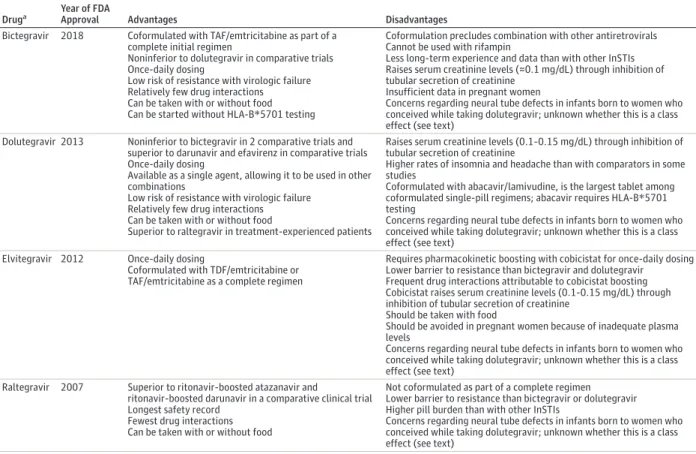
pharmacologic boosting, have a high barrier to resistance, and are part of regimens with a low pill burden and toxicity. Studies of these drugs in initial regimens have shown comparable efficacy and no emergence of resistant virus.20,21There are substantially more data
and longer-term experience with dolutegravir (approved in the United States in 2013) than with bictegravir (approved in 2018). Pre-liminary data have raised concerns regarding use of dolutegravir (and potentially other InSTIs) for individuals capable of becoming preg-nant (see below). Raltegravir is well tolerated and has fewer drug interactions than other InSTIs but has a lower barrier to resistance and a higher pill burden. Elvitegravir regimens also have a lower bar-rier to resistance and include a pharmacologic booster (cobicistat) that results in more drug interactions.
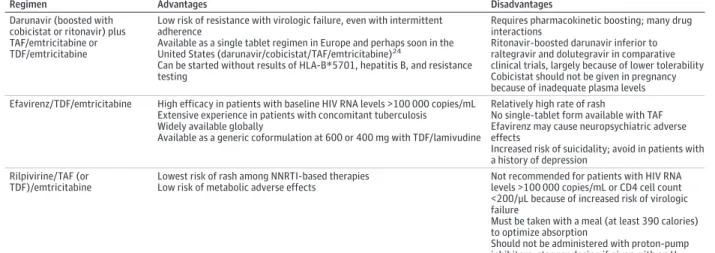
In combination with 2 nucleoside reverse transcriptase inhibi-tors (NRTIs), the NNRTIs efavirenz and rilpivirine each demon-strate high rates of virologic suppression as initial therapy. Efavirenz-based treatment was standard initial therapy for many years, but studies have demonstrated higher rates of adverse effects (rash and central nervous system adverse effects) than InSTI-based therapy. Rilpivirine has a lower rate of central nervous system adverse ef-fects and rash than efavirenz and is coformulated with TAF/ emtricitabine into the smallest single tablet for initial therapy. How-ever, rilpivirine must be taken with food, requires stomach acidity
Table 1. Strength of Recommendation and Quality of Evidence Rating Scalea
Category, Rating Definition
Strength of Recommendation
A Strong support for the recommendation
B Moderate support for the recommendation
C Limited support for the recommendation
Quality of Evidence
Ia Evidence from ≥1 randomized clinical trials published in the peer-reviewed literature
Ib Evidence from ≥1 randomized clinical trials presented in abstract form at peer-reviewed scientific meetings IIa Evidence from nonrandomized clinical trials or cohort or case-control studies published in the peer-reviewed literature
IIb Evidence from nonrandomized clinical trials or cohort or case-control studies presented in abstract form at peer-reviewed scientific meetings
III Recommendation based on the panel’s analysis of the accumulated available evidence
aAdapted in part from Canadian Task Force on Periodic Health Examination.2
Box 1. Selected Recommendations for When to Start ART
ART should be initiated as soon as possible after diagnosis, including immediately after diagnosis, unless patient is not ready to commit to starting therapy (evidence rating AIa).
Structural barriers that delay receipt of ART should be removed to allow newly diagnosed persons to receive ART at the first clinic visit after diagnosis, if they and their clinician determine that this approach is appropriate (evidence rating AIa).
Samples for HIV-1 RNA level; CD4 cell count; HIV genotype for NRTI, NNRTI, and PI; laboratory tests to exclude active viral hepatitis; and chemistries should be drawn before beginning ART, but treatment may be started before results are available. Result of testing for HLA-B*5701 allele should be available if an abacavir-containing regimen is anticipated (evidence rating AIa). NNRTIs and abacavir should not be used for rapid ART start (evidence rating AIII).
ART should be started as soon as possible but within the first 2 weeks after diagnosis for most OIs (evidence rating AIa). Primary MAC prophylaxis is no longer recommended if effective ART is initiated (evidence rating AIIa).
Primary prophylaxis forPneumocystispneumonia should be initiated for patients with CD4 cell counts below 200/μL (evidence rating AIa).
Prophylaxis for cryptococcal disease is not recommended in highly resourced settings with low prevalence of disease (evidence rating AIII).
ART should be implemented immediately in the setting of newly diagnosed malignancy, with attention to drug-drug interactions (evidence rating BIIa).3
Abbreviations: ART, antiretroviral therapy; MAC,Mycobacterium avium
complex; NNRTI, nonnucleoside reverse transcriptase inhibitor; NRTI, nucleoside reverse transcriptase inhibitor; OI, opportunistic infection; PI, protease inhibitor.
Recommended
Initial
Regimens
a better lipid profile than either efavirenz or ritonavir-boosted darunavir.22,23Thus, doravirine may be preferable to existing NNRTIs,
but no prospective studies compare it with InSTI-based regimens. Non-InSTI initial regimens are summarized inTable 3.
Abacavir is a component of the recommended regimen dolute-gravir/abacavir/lamivudine. Individuals who test positive for the HLA-B*5701 allele are at risk of a potentially life-threatening hypersen-sitivity reaction to abacavir.1Results of HLA-B*5701 testing must be
available before use (evidence rating AIa); patients who test posi-tive should not be given abacavir (evidence rating AIa), and this in-formation should be documented in the medical record.
Although some prior comparisons of abacavir/lamivudine and TDF/emtricitabine demonstrated an efficacy advantage of TDF/ emtricitabine in patients with high HIV-1 RNA levels,1the
differ-ences have not been observed in studies that use InSTIs.20
Aba-cavir has no activity against hepatitis B virus (HBV) and should not be used in patients with HIV and HBV.
TAF- and TDF-containing regimens are similar virologically. Com-pared with TDF, TAF results in a lower plasma level of tenofovir and higher intracellular concentration of the active antiviral compo-nent tenofovir diphosphate. This results in fewer tenofovir-associated renal and bone toxic effects.25These differences
be-tween TAF and TDF are accentuated when TDF is used with ritonavir or cobicistat, which increase tenofovir plasma levels.26
Two-Drug Initial Therapy
Initial 2-drug regimens are under investigation. This strategy may of-fer cost or toxicity advantages over standard 3-drug regimens, but efficacy needs to be confirmed.27Darunavir/ritonavir plus
raltegra-vir was noninferior to darunaraltegra-vir/ritonaraltegra-vir plus 2 NRTIs, but the 2-drug regimen had higher rates of treatment failure in patients with a CD4 cell count below 200/μL or an HIV RNA level above 100 000 copies/mL.28
Dolutegravir plus lamivudine and darunavir/ritonavir plus lamivudine are being studied.29,30Until further data are
avail-able, initial 2-drug regimens are reserved for the rare situation when individuals cannot take abacavir, TAF, or TDF. In this situa-tion, darunavir/ritonavir plus raltegravir (if <100 000 HIV RNA copies/mL and CD4 cell count >200/μL) or darunavir/ritonavir plus lamivudine may be used (if there is no lamivudine resistance) (evi-dence rating BIa). Short-term data from comparative trials may provide support for dolutegravir plus lamivudine as initial 2-drug therapy (NCT02831764). Dolutegravir plus rilpivirine has not yet been assessed for initial therapy.31
Unique Considerations
Pregnancy
Individuals who are pregnant should initiate ART as soon as possible for their own health and to reduce transmission to the infant (evidence rating AIa).1The NRTI options include abacavir/
lamivudine (or emtricitabine) if patient tests negative for HLA-B*5701 or TDF/emtricitabine (or lamivudine). Insufficient safety data for TAF preclude use of this drug during pregnancy.
A preliminary report revealed neural tube defects among in-fants born to women taking a dolutegravir-containing regimen at conception, suggesting, for now, that dolutegravir should be avoided in individuals of childbearing age who wish to become pregnant, are trying to get pregnant, or are sexually active and not reliably using
Box 2. Selected Recommendations for Initial ART Regimensa Generally Recommended Initial Regimens (Listed in Alphabetic Order by InSTI Component)
•Bictegravir/TAF/emtricitabine (evidence rating AIa)b •Dolutegravir/abacavir/lamivudine (evidence rating AIa)c,d •Dolutegravir plus TAF/emtricitabine (evidence rating AIa)c,e
Recommended Initial Regimens for Individuals for Whom Generally Recommended Regimens Are Not Available or Not an Option (Listed in Alphabetic Order by First Component)
•Darunavir/cobicistat plus TAF (or TDF)/emtricitabine (evidence rating AIa)e
•Darunavir boosted with ritonavir plus TAF (or TDF)/emtricitabine (evidence rating AIa)e
•Efavirenz/TDF/emtricitabine (evidence rating AIa) •Elvitegravir/cobicistat/TAF (or TDF)/emtricitabine
(evidence rating AIa)e
•Raltegravir plus TAF (or TDF)/emtricitabine (evidence rating AIa for TDF)e
•Rilpivirine/TAF (or TDF)/emtricitabine (if pretreatment HIV RNA level is <100 000 copies/mL and CD4 cell count is >200/μL) (evidence rating AIa)e
TDF is not recommended for individuals with or at risk for kidney or bone disease (osteopenia or osteoporosis) (evidence rating BIII).
Initial 2-drug regimens are only recommended in the rare situations in which a patient cannot take abacavir, TAF, or TDF (evidence rating BIa).
Pregnant individuals with HIV infection should initiate ART for their own health and to reduce the likelihood of HIV transmission to the infant (evidence rating AIa).
Abbreviations: ART, antiretroviral therapy; InSTI, integrase strand transfer inhibitor; TAF, tenofovir alafenamide; TDF, tenofovir disoproxil fumarate.
aComponents separated with a slash (/) indicate that they are available
as coformulations.
bThere are fewer long-term safety and efficacy data with bictegravir than
with dolutegravir.
cThere are important considerations related to interim reports of potential
teratogenicity of dolutegravir when initiated before conception. See text for details.
dTesting for HLA-B*5701 allele should be performed before abacavir use
(evidence rating AIa); patients who test positive should not be given abacavir (evidence rating AIa). Because it typically takes several days or longer to obtain results for HLA-B*5701 testing, tenofovir-containing regimens should be used when starting ART on the same day as HIV diagnosis or until HLA-B*5701 testing results are available. In patients with or at high risk for cardiovascular disease, a tenofovir-containing regimen, rather than an abacavir-containing regimen, should be used if possible.
eIn settings in which TAF/emtricitabine is not available or if there is a
substantial cost difference, TDF (with emtricitabine or lamivudine) is effective and generally well tolerated, particularly if the patient does not have, or is not at high risk for, kidney or bone disease.
foradequateabsorption,andisrecommendedonlyforpatientswith baselineHIVRNAlevelbelow 100000copies/mLandCD4cellcount above200/μL.
TheNNRTIdoravirineiscurrentlyunderinvestigationforinitial therapy.Inphase3trials,doravirinewasnoninferiortoefavirenzand toritonavir-boosteddarunavirinachievingvirologicsuppressionand hadfewercentralnervoussystemadverseeventsthanefavirenzand
ment and therefore should start an ART regimen with drugs that have minimal drug interactions with HCV therapies (evidence rating AIIa), such as dolutegravir/abacavir/lamivudine, dolutegravir/TAF/ emtricitabine, bictegravir/TAF/emtricitabine, or raltegravir plus TAF/ emtricitabine. Clinicians should consult current HCV treatment guide-lines (https://www.hcvguidelines.org).
Bone, Kidney, and Cardiovascular Disease
HIV is associated with osteoporosis and fractures.37Baseline bone
mineral density testing is recommended in postmenopausal women and in anyone older than 50 years (evidence rating BIII). During the first 1 to 2 years after ART initiation, patients may lose 2% to 6% of bone mineral density at the hip and spine. Patients taking TDF-containing regimens have a greater initial decline in bone min-eral density than those who take a TAF- or abacavir-containing regimen.1,20,38Accordingly, TDF is not recommended for patients
with osteopenia or osteoporosis (evidence rating BIII). Abacavir does not require dose adjustment based on renal function. TAF can be used if creatinine clearance is above 30 mL/min/1.73 m2(evidence
rating AIIa).1Dose reduction of lamivudine is recommended for
pa-tients with creatinine clearance below 50 mL/min/1.73 m2. There are
data supporting use of elvitegravir/cobicistat/TAF/emtricitabine once daily in patients with end-stage renal disease (estimated glomeru-lar filtration rate <15 mL/min) receiving long-term hemodialysis.39
HIV-infected patients with end-stage renal disease should be evalu-ated for kidney transplantation (evidence rating AIIa).
Table 2. Advantages and Disadvantages of Currently Available Integrase Strand Transfer Inhibitors
Druga
Year of FDA
Approval Advantages Disadvantages
Bictegravir 2018 Coformulated with TAF/emtricitabine as part of a complete initial regimen
Noninferior to dolutegravir in comparative trials Once-daily dosing
Low risk of resistance with virologic failure Relatively few drug interactions Can be taken with or without food Can be started without HLA-B*5701 testing
Coformulation precludes combination with other antiretrovirals Cannot be used with rifampin
Less long-term experience and data than with other InSTIs Raises serum creatinine levels (≈0.1 mg/dL) through inhibition of tubular secretion of creatinine
Insufficient data in pregnant women
Concerns regarding neural tube defects in infants born to women who conceived while taking dolutegravir; unknown whether this is a class effect (see text)
Dolutegravir 2013 Noninferior to bictegravir in 2 comparative trials and superior to darunavir and efavirenz in comparative trials Once-daily dosing
Available as a single agent, allowing it to be used in other combinations
Low risk of resistance with virologic failure Relatively few drug interactions Can be taken with or without food
Superior to raltegravir in treatment-experienced patients
Raises serum creatinine levels (0.1–0.15 mg/dL) through inhibition of tubular secretion of creatinine
Higher rates of insomnia and headache than with comparators in some studies
Coformulated with abacavir/lamivudine, is the largest tablet among coformulated single-pill regimens; abacavir requires HLA-B*5701 testing
Concerns regarding neural tube defects in infants born to women who conceived while taking dolutegravir; unknown whether this is a class effect (see text)
Elvitegravir 2012 Once-daily dosing
Coformulated with TDF/emtricitabine or TAF/emtricitabine as a complete regimen
Requires pharmacokinetic boosting with cobicistat for once-daily dosing Lower barrier to resistance than bictegravir and dolutegravir
Frequent drug interactions attributable to cobicistat boosting Cobicistat raises serum creatinine levels (0.1-0.15 mg/dL) through inhibition of tubular secretion of creatinine
Should be taken with food
Should be avoided in pregnant women because of inadequate plasma levels
Concerns regarding neural tube defects in infants born to women who conceived while taking dolutegravir; unknown whether this is a class effect (see text)
Raltegravir 2007 Superior to ritonavir-boosted atazanavir and
ritonavir-boosted darunavir in a comparative clinical trial Longest safety record
Fewest drug interactions Can be taken with or without food
Not coformulated as part of a complete regimen Lower barrier to resistance than bictegravir or dolutegravir Higher pill burden than with other InSTIs
Concerns regarding neural tube defects in infants born to women who conceived while taking dolutegravir; unknown whether this is a class effect (see text)
Abbreviations: FDA, US Food and Drug Administration; InSTI, integrase strand transfer inhibitor; TAF, tenofovir alafenamide; TDF, tenofovir disoproxil fumarate. SI conversion factor: To convert creatinine values to μmol/L, multiply by 88.4
aIn alphabetic order. The use of abacavir and TAF or TDF is described in the text.
contraception.32Allindividualsofchildbearingageshouldhave
docu-mentationofanegativepregnancytestresultbeforestarting dolute-gravirandshouldbecounseledregardingthispotentialrisk.More dataareexpected;itisnotyetclearwhetherotherInSTIsposea simi-larriskofneuraltubedefects.
RaltegraviristherecommendedInSTIforindividualswhoare alreadypregnant.Elvitegravir/cobicistatshouldnotbeusedduring pregnancy(evidenceratingAIIa).Pregnantwomenalreadytaking elvitegravir/cobicistatshouldbeswitchedtoarecommended regimen.33Bictegravirshouldnotbeusedduringpregnancy
be-causeavailablesafetydataareinsufficient.
Recommendedproteaseinhibitors(PIs)includeatazanavir/ ritonavir(oncedaily)ordarunavir/ritonavir(twicedaily).Drugs boostedwithcobicistat(eg,darunavir/cobicistatandatazanavir/ cobicistat)arenotrecommendedforuseduringpregnancy be-causeofpharmacokineticconcernsorinsufficientdata(evidence rat-ingAIIb).32Efavirenzandrilpivirinearealternativesinpregnancy.
Therewereinitialconcernsregardingpotentialneuraltubedefects withefavirenz,butaccumulateddatanowsupportthesafetyof efa-virenzduringpregnancy.
HBVandHepatitisCVirusCo-infection
HIV-infectedpatientswithHBVco-infectionshouldinitiateanART regimenthatcontainsTDForTAF(evidenceratingAIa), lamivu-dineoremtricitabine,andathirdcomponent.34-36PatientswithHIV
treat-based ART. Once-weekly rifapentine/isoniazid is also safe, well-tolerated, and has an acceptable pharmacokinetic profile when used with raltegravir. Dolutegravir-based regimens should not be used with rifapentine/isoniazid for treatment or prevention of tubercu-losis, pending further evaluation.45
When and How to Switch
Recommendations for when and how to switch ART regimens are summarized inBox 3. The most common reasons for switching therapy are regimen simplification, newly diagnosed comorbidi-ties (or to prevent comorbid conditions), and management of in-teractions with drugs or supplements. In addition to these reasons, a regimen switch may be required to minimize the patient’s insur-ance co-payments or to satisfy payer formulary requirements.
Switching from older antiretroviral regimens should be considered when there is evidence of or potential for chronic toxicity, drug-drug interactions, or emergent adverse effects with current regimens.1,31,46Proactive switching from TDF- to
TAF-containing regimens to minimize renal or bone adverse ef-fects may be beneficial.47Care should be taken when
switch-ing from regimens boosted with ritonavir to ones boosted with cobicistat because of different drug-drug interactions.48
In patients without a history of treatment failure, data support switching from regimens containing TDF to single-tablet regimens including dolutegravir/abacavir/lamivudine,46,49
dolutegravir/rilpivirine,31elvitegravir/cobicistat/emtricitabine/TAF,1
rilpivirine/emtricitabine/TAF,50darunavir/cobicistat/emtricitabine
/TAF,51and bictegravir/emtricitabine/TAF.20The switch to
TAF-containing regimens is effective in maintaining HIV and HBV sup-pression in HIV/HBV co-infection.52
Table 3. Initial Non-InSTI Antiretroviral Treatmenta,b,c
Regimen Advantages Disadvantages
Darunavir (boosted with cobicistat or ritonavir) plus TAF/emtricitabine or TDF/emtricitabine
Low risk of resistance with virologic failure, even with intermittent adherence
Available as a single tablet regimen in Europe and perhaps soon in the United States (darunavir/cobicistat/TAF/emtricitabine)24
Can be started without results of HLA-B*5701, hepatitis B, and resistance testing
Requires pharmacokinetic boosting; many drug interactions
Ritonavir-boosted darunavir inferior to raltegravir and dolutegravir in comparative clinical trials, largely because of lower tolerability Cobicistat should not be given in pregnancy because of inadequate plasma levels Efavirenz/TDF/emtricitabine High efficacy in patients with baseline HIV RNA levels >100 000 copies/mL
Extensive experience in patients with concomitant tuberculosis Widely available globally
Available as a generic coformulation at 600 or 400 mg with TDF/lamivudine
Relatively high rate of rash
No single-tablet form available with TAF Efavirenz may cause neuropsychiatric adverse effects
Increased risk of suicidality; avoid in patients with a history of depression
Rilpivirine/TAF (or TDF)/emtricitabine
Lowest risk of rash among NNRTI-based therapies Low risk of metabolic adverse effects
Not recommended for patients with HIV RNA levels >100 000 copies/mL or CD4 cell count <200/μL because of increased risk of virologic failure
Must be taken with a meal (at least 390 calories) to optimize absorption
Should not be administered with proton-pump inhibitors; stagger dosing if given with an H2
blocker Abbreviations: InSTI, integrase strand transfer inhibitor; NNRTI, nonnucleoside
reverse transcriptase inhibitor; TAF, tenofovir alafenamide; TDF, tenofovir disoproxil fumarate.
aIn alphabetic order by first component. Initial NNRTI-based regimens should not be used without baseline resistance data because of the possible presence of transmitted NNRTI-resistant virus. In the rare circumstance in which maraviroc might be included in initial therapy, initiation should not occur before confirmation of CC chemokine receptor 5 tropism.
bOf note, doravirine, an investigational NNRTI, is currently under regulatory review. If approved, doravirine/lamivudine/TDF would likely be an effective initial regimen in patients for whom use of an InSTI-containing regimen is not possible.
cSee text with regard to interchanging TDF for TAF and interchanging emtricitabine for lamivudine and vice versa.
Theassociationbetweenabacaviruseandincreasedriskof myo-cardialinfarctionremainscontroversial.1,40Giventheuncertainty,
abacavirshouldbeusedwithcautionoravoidedinpatientswhohave orareathighriskforcardiovasculardisease.
RecommendedInitialARTintheSettingofOIs andMalignancies
ChoiceofARTregimeninthesettingofOIsandmalignanciesis guidedbydrug-druginteractionswiththeantimicrobialor chemo-therapyregimen.UnboostedInSTI-basedregimensare recom-mended.Inthesettingofmalignancy,OIprophylaxisshouldbe in-stituted,regardlessofCD4cellcount,accordingtospecific chemotherapyregimensused.
TherecommendedregimensforinitialARTinthesettingof rifa-mycin-basedantituberculosistherapyare2NRTIs(excludingTAF)plus efavirenz(600 mgdaily),raltegravir(800mgtwicedaily),or dolute-gravir(50mgtwicedaily)(evidenceratingAIa).1,41Coadministration
ofbictegravir(alongwithTAF/emtricitabine)twicedailywith rif-ampinfor28daysisnotrecommended,owingtosignificantly de-creasedareaunderthecurve(AUC)andpeakserumconcentration afteradministration(Cmax)forbictegravir(evidenceratingAIIa).42
WhenTAFisadministeredwithrifampin,plasmaTAFCmaxandAUC
aswellasintracellulartenofovirdiphosphatelevelsweredecreased; however,intracellulartenofovirdiphosphateconcentrationswere higherthanthoseachievedwithstandard-doseTDF.Further evalu-ationofTAFintuberculosisco-infectionisunderway.43BoostedPIs
shouldbeusedonlyifanefavirenz-orInSTI-basedregimenisnotan option,andrifabutin(150mgdaily)shouldbesubstitutedfor rif-ampinintheantituberculosisregimen(evidenceratingAIa).1
Forlatenttuberculosis,a1-monthcourseofdailyrifapentineplus isoniazidwasequivalentto9monthsofisoniazidinpersonswith HIV.44Dailyrifapentinecanbesafelyadministeredwith
patients with 2-class drug resistance (up to 3 thymidine analogue– associated mutations but no multi-NRTI or darunavir mutations) while taking multidrug regimens.61
Monotherapy with PIs or InSTIs as a maintenance strategy is not recommended because of higher rates of virologic rebound,1,62-65
often with resistant virus (evidence rating AIIb).62,63
Virologic Failure
Virologic failure is increasingly uncommon with currently recom-mended ART regimens. Exploration for reasons of inconsistent ad-herence, drug-drug interactions, and collation of all resistance mu-tations identified by genotype, along with the ART history, are required to select a new treatment regimen.
For failure of an initial NNRTI-based regimen, dolutegravir plus NRTIs was superior to lopinavir plus NRTIs when the next regimen included at least 1 active NRTI.66For failure of initial PI-based or
InSTI-based therapy (without resistance), boosted PI- or dolutegravir-based therapy with 1 or 2 fully active NRTIs should be effective.
For virologic failure after initial raltegravir- or elvitegravir-based regimens with the presence of integrase mutations, dolutegravir (50 mg twice daily) with at least 1 other active drug may be effective, but clinical data are lacking.1For virologic failure with more complex
treatment history, therapy with at least 2 fully active drugs from
Box 3. Selected Recommendations for When and How to Switch ART Regimens
•Review of the ART treatment history, regimen tolerability, comedications, and results of prior resistance tests is recommended before any treatment switches are made (evidence rating AIa).
•In patients with NRTI mutations, switching from a boosted PI to a regimen containing a drug with a low genetic barrier to resistance (eg, NNRTI or raltegravir) is not recommended (evidence rating AIa).
•HIV viral load should be checked 1 month after switching regimens to ensure virologic suppression has been maintained
(evidence rating BIII).
Switching When Virologically Suppressed
•Patients taking older ART drugs with known toxicity should be questioned carefully to identify subtle adverse effects of which they may be unaware or that they may not attribute to the drug. The presence of these toxicities should prompt a change in regimen (evidence rating BIII).
•In general, if the older regimen is well tolerated without evidence of toxicity, there is little reason to switch to a newer regimen (evidence rating BIII).
•Proactive switching from TDF to TAF is recommended for patients at high risk of renal or bone toxicity (evidence rating BIa). Review of comedications is essential to ensure no change in dosing is required with the use of TAF.
•Switching from 3-drug regimens to certain 2-drug regimens in the setting of viral suppression, using dolutegravir/rilpivirine (evidence rating AIa), a boosted PI with lamivudine (evidence rating AIIa), or dolutegravir with lamivudine (evidence rating AIIa) can be used in patients with no prior virologic failure or transmitted drug resistance. (Longer-term follow-up is needed to confirm the durability of these strategies).
•Patients who are co-infected with HIV and HBV should receive a regimen that contains 2 drugs active against HBV, usually TAF or
TDF plus lamivudine or emtricitabine, in addition to a third ART drug (evidence rating AIIa). Such patients should generally not be switched to 2-drug ART.
•Monotherapy with boosted PIs or dolutegravir is not recommended (evidence rating AIIa).
Switching for Virologic Failure
•Resistance testing is recommended while taking the failing ART regimen or within 4 weeks of stopping
(evidence rating AIIa).
•Virologic failure should be confirmed and, if resistance is identified, a prompt switch to another active regimen using results of current and past resistance testing to prevent accumulation of additional resistance mutations is recommended (evidence rating BIIa).
•Dolutegravir, plus 2 NRTIs (with at least 1 active by genotype) is recommended after initial treatment failure with an NNRTI (evidence rating AIa).
•A boosted PI plus 2 NRTIs (with at least 1 active NRTI) are recommended for initial treatment failure of an InSTI-containing regimen (evidence rating AIII).
•Dolutegravir plus at least 1 fully active other agent may be effective in the setting of raltegravir or elvitegravir resistance. Dolutegravir should be dosed twice daily in this setting (evidence rating BIII).
•A single active agent added to a failing regimen is not recommended (evidence rating AIa).
•For multiclass resistance, the next regimen should be constructed using drugs from new classes if available (evidence rating BIII).
Abbreviations: ART, antiretroviral therapy; HBV, hepatitis B virus;
NNRTI, nonnucleoside reverse transcriptase inhibitor; NRTI, nucleoside reverse transcriptase inhibitor; PI, protease inhibitor; TAF, tenofovir alafenamide; TDF, tenofovir disoproxil fumarate.
SimplificationfromaboostedPI53orfromemtricitabine/TAF
plusdolutegravir54toasingle-tabletbictegravir/emtricitabine/TAF
regimenmaintainedviralsuppressionabove90%.Switchingto2 antiretroviraldrugshasbeenusedtoreduceNRTI-relatedbone, kid-ney,andcardiovascularcomplicationsandcost.Dolutegravir/ rilpivirinemaintainedvirologicsuppressioninpatientswithno pre-viousvirologicfailureorevidenceofresistancewhoswitchedfrom a3-drugARTregimen.31Dual-therapyregimensthatincludea
boostedPI(lopinavir,atazanavir,ordarunavir)andlamivudinewere noninferiorto3-drugregimensinmaintenanceofvirologic suppres-sionupto2years.55-57Dolutegravirandlamivudinemaintained
vi-rologicsuppressionto48weeksamongpatientswithnoprior virologicfailureortransmittedNRTIresistance.58,59
Fewer options exist for regimen simplification in virologically sup-pressedindividualsinwhomseveralpreviousregimenshavefailed overtime.PreexistentNRTIandNNRTImutationswereassociated withviralreboundafterswitchingtorilpivirine/emtricitabine/TDF.60
Darunavir/cobicistat/emtricitabine/TAF maintained virologic suppres-sioninpatientsswitchingfromaboostedPIplusemtricitabine/TDF, eveniftherewaspreviousvirologicfailure,providedtherewas nohistoryofdarunavirfailureordarunavir-resistancemutations.51
different antiretroviral classes, perhaps including maraviroc in the set-tingofCCchemokinereceptor5(CCR5)–tropicvirus,isrecommended. Ibalizumab, an anti-CD4 monoclonal antibody that inhibits HIV cell entry via CD4 binding, is active against CCR5- and C-X-C chemo-kine receptor 4 (CXCR4)–tropic HIV isolates and may be useful as a fully active agent for patients with multiclass-resistant virus (evi-dence rating BII). Almost 50% of adults with virologic failure from multidrug-resistant HIV achieved undetectable HIV RNA levels at 24 weeks after receipt of biweekly intravenous ibalizumab (800 mg) with at least 1 other active drug.67,68
mended before ART initiation, although treatment can be initiated before results are available (evidence rating AIa).
Before starting ART, recommended laboratory monitoring in-cludes HIV RNA level, CD4 cell count, and reverse transcriptase and protease genotype (InSTI genotyping generally is not recom-mended because it is not cost-effective)77; general health (testing
for kidney/liver function, lipid levels, complete blood cell count, glu-cose level, and pregnancy status); and co-infections (hepatitis A, B, and C, tuberculosis, and STIs) (evidence rating AIa). Unless preex-isting kidney or liver damage or high likelihood of transmitted drug resistance exists, the results of these tests should not delay start of ART (evidence rating BIII).78-81Testing for CCR5 tropism is
recom-mended each time when considering maraviroc, and HLA-B*5701 testing (only needed once) is recommended before starting aba-cavir (evidence rating AIa).
Monitoring During ART
Within 6 weeks of starting ART, adherence and tolerability of therapy should be assessed, along with HIV RNA level. HIV RNA suppres-sion may take up to 24 weeks, or faster with InSTI-based regimens.1,82
Once the HIV RNA level is below 50 copies/mL, monitoring is rec-ommended every 3 months until suppressed for at least 1 year. Af-ter that year, monitoring can be performed every 6 months if the patient maintains consistent medication adherence (evidence rat-ing AIII). Of note, when monitorrat-ing intervals are extended and therapy fails, resistance has more time to emerge.80
Once viral suppression occurs with ART, CD4 cell counts usu-ally increase.1,83CD4 measurements are recommended every 6
months until above 250/μL for at least 1 year with concomitant vi-ral suppression (evidence rating BIII).1,84Afterward, CD4 cell counts
need not be measured unless ART fails (defined below) or the pa-tient has an immunosuppressive condition or treatment, such as ste-roid treatments or chemotherapy (evidence rating AIII).85Patients
taking ART should have regular clinical and laboratory evaluations, including age- and risk-appropriate screening.
HIV RNA testing is used to detect if ART is failing. When HIV RNA level is above 50 copies/mL, repeating measurement of HIV RNA
Table 4. Recommended Laboratory Assessments and Monitoring Across the HIV Care Continuum
Test At HIV Diagnosis During ART At Virologic Failure
HIV RNA level ⻬ Within the first 6 weeks of starting ART or a new ART regimen, then every 3 mo until <50 copies/mL for 1 y, then every 6 mo
⻬
CD4 cell count ⻬ Every 6 mo until >250/μL for 1 y then stop as long as virus is suppressed ⻬ HIV RT-pro
genotype ⻬ ⻬
HIV integrase genotype
If failing ART regimen included an InSTI
Viral tropism Each time before the
start of ART that includes maraviroc
HLA-B*5701 ⻬(before initiating abacavir; just once)
⻬(if considering abacavir and not determined previously)
Safety testing ⻬ ⻬ ⻬
Co-infection (STIs, tuberculosis, hepatitis, Pap test)
⻬ ⻬
Health maintenance ⻬ ⻬
Abbreviations: ART, antiretroviral therapy; InSTI, integrase strand transfer inhibitor; Pap, Papanicolaou; RT-pro, reverse transcriptase and protease; STI, sexually transmitted infection.
Laboratory
Monitoring
Recommendationsforlaboratorymonitoringaresummarizedin Table4andBox4.Allindividualswhohaveeverbeensexually ac-tiveshouldbetestedforHIVatleastonceintheirlives(evidence ratingAIII).RiskforHIVoftenchangesoveraperson’slifetime;risk evaluationisrecommendedateachroutineclinicalvisit(evidence ratingAIII).Formenwhohavesexwithmen(MSM),transgender women,peoplewhoinjectdrugs,andotherswithincreasedrisk, test-ingisrecommendedatleastannuallyandperhapsasfrequentlyas every3months(evidenceratingBIII).69Diagnosisofsexually
trans-mittedinfections(STIs)andHCVcanhelpidentifyindividualswho shouldbetestedmoreregularlyforHIVandwhomightbenefitfrom preexposureprophylaxis(PrEP)(evidenceratingBIII).70-72Testing
performedwithassaysthatmeasureHIVantibodyandantigenis rec-ommendedbecauseitcantake3weeksorlongerforHIV antibod-iestobedetectedafterinitialinfection.Incontrast,HIVRNAor com-binationantibodywithp24antigenteststhatcandetectHIVwithin 10to14daysafterinfectionarerecommended(evidencerating AIIa).73Relyingonsymptomsoftheacuteretroviralsyndrometo
trig-gertestingwillmissinfectionsbecauseacuteinfectionmaybe asymptomatic.1,74,75Availablehome-basedHIVtestsdonotdetect
acuteHIVinfectionbutcanbeusefulforpeoplewithoutaccessto testingotherwise.76Allavailabletestscanhavefalse-positive
re-sults,soconfirmatorymeasurementofHIVRNAlevelis
level within 4 weeks and reassessing for medication adherence and tolerability is recommended (evidence rating AIIb). Virologic fail-ure is defined as HIV RNA level above 200 copies/mL on at least 2 consecutive measurements. Once virologic failure is diagnosed, an HIV genotype should be obtained while the patient is taking the fail-ing regimen.1If HIV genotyping is unsuccessful (eg, HIV RNA level
is <1000 copies/mL), a proviral DNA analysis using deep sequenc-ing methods may be used.86For virologic failure of
InSTI-containing ART, integrase resistance testing is recommended (evi-dence rating AIII).1,87-89Once a new regimen is started, HIV RNA level
should be checked 4 to 6 weeks after initiation, following the same schedule as for monitoring of initial therapy (evidence rating AIII).1
Optimal care for patients with persistent viremia between 50 and 200 copies/mL is unclear. The ART regimen should be contin-ued, with assessment of medication adherence (evidence rating BIII). There is no indication to intensify the regimen with additional antiretrovirals.90
to sexual partners (described as “undetectable = untransmissable” [U = U]).91,92In the United States, 22% of initial HIV diagnoses
oc-cur within 3 months of an AIDS diagnosis, indicating that persons are entering HIV care late.93Clinicians not offering HIV testing in
emergency departments and acute medical care settings appears to be a major limitation in early diagnosis of HIV.94
Monitoring successive steps on the HIV care continuum helps address barriers that impede initial linkage, subsequent retention, and successful reengagement of patients lost to care.1Missed
medi-cal care visits can be assessed in real time and are consistently as-sociated with poor HIV outcomes.95Assessment of missed visits in
the prior year predicts future risk for missing future appointments, allowing for clinic-level intervention.96Coordination of
appoint-ment data with public health surveillance systems (eg, “Data to Care”) enhances linkage to, and retention and reengagement in, care.97,98
Resource-intensive interventions among vulnerable individu-als (eg, those hospitalized or with substance use disorders) have yielded modest short-term improvements in care engagement and viral suppression.99,100Cash incentives to encourage adherence with
treatment and follow-up do not work consistently and generally are not recommended (evidence rating AIa).99,101However, noncash
in-centives as part of combination strategies are effective.102,103Tiered
strategies using risk stratification to identify high-acuity patients are recommended (evidence rating CIIb), as is providing low-threshold medical care, such as open access (ie, “walk in”) clinics, integrated with high-intensity outreach implemented in conjunction with public
Box 4. Selected Recommendations for Laboratory Monitoring
All persons who have ever been sexually active should be tested for HIV at least once in their lives (evidence rating AIII).
Risk for HIV often changes over a person’s lifetime; risk evaluation is recommended at each routine clinical visit (evidence rating AIII). For sexually active men who have sex with men and for transgender women, people who inject drugs, and others at increased risk, testing is recommended at least annually and as frequently as every 3 months (evidence rating BIII).
Diagnosis of sexually transmitted infections and hepatitis C virus can help identify persons who should be tested more regularly for HIV and who might benefit from preexposure prophylaxis
(evidence rating BIII).
HIV screening with assays that can detect recent HIV infection, either an instrument-based combination antigen/antibody assay or a combination of a stand-alone antibody assay and nucleic acid testing, is recommended (evidence rating AIIa).
Persons with ongoing condomless sexual exposures or sharing of needles or works need to be tested with assays that can detect HIV RNA or with combination antibody + p24 antigen tests
(evidence rating AIIa). Individuals with signs or symptoms of acute or primary HIV infection should be tested with HIV RNA assays. All available tests can have false-positive results, so additional testing with an HIV viral load is recommended before ART initiation, although treatment may be started before results are available (evidence rating AIa).
HIV genotype to assess transmitted NRTI and NNRTI resistance should be performed; InSTI genotyping at baseline is not recommended unless exposure to a partner with InSTI resistance is suspected (evidence rating BIII).
CCR5 tropism testing is recommended each time when considering maraviroc and HLA-B*5701 testing (only needed once) before use of abacavir (evidence rating AIa).
Once HIV RNA level is below 50 copies/mL, monitoring is recommended every 3 months until virus is suppressed for at least a year. After 1 year of viral suppression, monitoring can be reduced to every 6 months if the patient maintains consistent medication adherence (evidence rating AIII).
Measurement of CD4 cell counts is recommended every 6 months until cell counts are above 250/μL for at least 1 year with concomitant viral suppression (evidence rating BIII).
Age- and risk-appropriate screening for STIs at various anatomical sites, anal or cervical dysplasia, tuberculosis, general health, and medication toxicity is recommended
(evidence rating AIII).
Once a viral load above 50 copies/mL is detected, measurement should be repeated within 4 weeks, and reassessing for medication adherence and tolerability is recommended (evidence rating AIII).
Measurement of viral load at 4 to 6 weeks after starting a new ART regimen is recommended (evidence rating AIII).
If the viral load has not declined, adherence and toxicity should be discussed with the patient. If adherence appears to be sufficient, a genotype assay is recommended
(evidence rating AIII).
Abbreviations: ART, antiretroviral therapy; CCR5, CC chemokine receptor 5; InSTI, integrase strand transfer inhibitor; NNRTI, nonnucleoside reverse transcriptase inhibitor; NRTI, nucleoside reverse transcriptase inhibitor; STI, sexually transmitted infection.
Engagement
in
Care
and
ART
Adherence
with poor medication adherence, visit retention, and clinical outcomes.112-114Chronic depression increases the risk for missed clinic
visits, virologic failure, and a 2-fold increase in mortality risk.115
Treat-ment with antidepressants can improve virologic suppression, CD4 cell counts, and remission from clinical symptoms.116
Cost
From the patient perspective, the most relevant cost is the out-of-pocket expense of accessing treatment. The payer perspective is to use the lowest-cost medications to avoid the most expensive and severe HIV outcomes (eg, hospitalizations). The latter perspective often places greater value on immediate costly outcomes rather than prevention of events occurring remotely in time (eg, renal or car-diovascular toxicity). For example, a patient and clinician might value the renal and bone safety of TAF over that of TDF, but the payer might determine that the similar virologic efficacy does not justify the higher cost of TAF.117
The societal perspective considers the cost and outcomes for all parties involved. Since this perspective does not favor one group over another, it is adopted by most cost-effectiveness analyses for which therapies are considered in relation to each other, with the one providing the greatest return on investment being preferred. For example, despite its high cost, the benefits of ART are so large it is considered cost-effective.118-120
The availability of more generic antiretrovirals and the use of 2-drug regimens could reduce the costs of treatment substantially. Generic antiretrovirals have already reduced the cost of HIV treat-ment globally, allowing millions of patients to be treated in resource-limited settings. In developed countries, many antiretroviral agents and coformulations are available as lower-cost generics. Limita-tions include a forced switch from branded coformulated regimens to separate pills121,122; more pharmacy co-pays for separate
prescrip-tions; use of older agents that are not part of current recom-mended regimens; and high costs if an insufficient number of ge-neric manufacturers enter the market. However, a modeling study found that use of a partially generic regimen including multiple pills would be highly cost-effective.123
Ultimately, the first priority for clinicians and patients is to find the most effective and safest treatment. If multiple options exist with similar outcomes, choosing the lowest-cost options makes intui-tive sense, provided there are no additional patient cost barriers.
Prevention
Recommendations for the prevention of HIV infection are summa-rized inBox 6. Use of antiretrovirals for HIV prevention spans 3 do-mains: treatment as prevention, prophylaxis for currently unin-fected individuals (PrEP and postexposure prophylaxis [PEP]), and prevention of mother-to-child transmission.
As noted, maintaining U = U status requires continued viral sup-pression. There are 2 caveats to consider when counseling patients aboutU = U:Theonlytransmissionsthatoccurredinstudieshappened early after starting treatment and 3 to 6 months of viral suppression maythereforeberequired;anddurableviralsuppressioncannotbeas-sessed based on a single measurement.124Importantly, transmission
Box 5. Selected Recommendations for Engagement in Care and ART Adherence
Routine, opt-out HIV screening is recommended in primary medical care settings, emergency departments, and for all pregnant women (evidence rating AIIa).
Routine screening and treatment for depression is recommended (evidence rating AIIa).
Systematic monitoring of time to care linkage after initial HIV diagnosis, retention in care, reengagement in care, ART adherence, and rates of viral suppression is recommended in all care settings and at a population level (evidence rating AIIa). Brief, strengths-based case management is recommended after HIV diagnosis to facilitate linkage to care (evidence rating AIa). Systematic monitoring of missed clinic visits and rapid intervention after a missed visit is recommended (evidence rating AIIa). Personal telephone and interactive text reminders in advance of scheduled appointments and shortly after missed appointments (eg, 24-48 hours) are recommended (evidence rating AIa). Adherence monitoring using patients’ self-report obtained by validated adherence instruments and pharmacy refill data is recommended (evidence rating AIIa).
Integration of directly observed ART in methadone maintenance programs (evidence rating BIa) and as a treatment strategy among persons with substance use disorders (evidence rating BIa) and those who are incarcerated or released to the community (evidence rating CIII) is recommended to enhance adherence and viral suppression. Opioid substitution therapy for opioid-dependent patients is recommended (evidence rating AIa).
Rapid HIV test algorithms may be used to confirm a preliminary positive rapid test result, allowing for same-day referral to treatment from nonclinical settings (evidence rating AIa). Use of public health surveillance in conjunction with clinic-level data to guide individual-level linkage and reengagement in care activities is recommended (evidence rating BIIa).
Cash financial incentives for clinic appointment attendance and achievement of viral suppression are generally not recommended as a retention-in-care strategy (evidence rating AIa).
Data-driven risk stratification to identify high-acuity, high-need patients for combination intervention strategies to improve care engagement and viral suppression is recommended (evidence rating CIIb).
Screening for and addressing housing instability, food insecurity, ongoing substance use, psychiatric disorders, medication adverse effects, and pill burden is recommended (evidence rating BIIa). Abbreviation: ART, antiretroviral therapy.
healthagencies,jails,housing,andmentalhealthcase manage-ment(evidenceratingCIII).104
Guidelines exist for ART adherence monitoring and interventions.105SystematicscreeningforARTmedication
adher-enceviapatientself-reportusingvalidatedinstrumentsorusing phar-macyrefillmeasures,andnotrelyingsolelyonplasmaviralload,is recommended.1Individualswithsuboptimaladherenceshouldbe
assessedforinadequatehousing,106-108foodinsecurity,109-111
ac-tivesubstanceuse,110psychiatricdisorders,medicationadverse
ef-fects,andpillburden.
Internalizedstigma,definedasapatient’snegativefeelingsor thoughtsrelatedtotheirHIVstatus,anddepressionareassociated
of HIV-infected persons who are not consistently virally sup-pressed.127,128Unlike condoms, PrEP does not prevent other STIs.
For people who inject drugs, clean injection equipment and access to substance use treatment should be available.
Daily TDF/emtricitabine is recommended for persons at risk of HIV through sexual exposure (evidence rating AIa) and for people who inject drugs (evidence rating BIa).1Daily dosing is required for
optimal protection.129This is especially important for women, given
that tenofovir concentrates at 10-fold lower levels in vaginal tissue than in rectal tissue and clearance is faster.130
On-Demand or Event-Driven PrEP (“2-1-1”)
Pericoital TDF/emtricitabine, known as on-demand or event-driven PrEP, is effective for HIV prevention among MSM and an al-ternative to daily PrEP for MSM with infrequent sexual exposures (evidence rating AIa). The IPERGAY (Intervention Préventive de l’Exposition aux Risques avec et pour les Gays) study assessed
Box 6. Selected Recommendations for Prevention of HIV Infection
HIV-seropositive and -negative individuals should be reminded that condoms are required to prevent acquisition of non-HIV STIs (evidence rating AIIa).
Quarterly screening for asymptomatic STIs is recommended for all populations with high rates of bacterial STIs and incomplete condom use (evidence rating AIIa).
Abacavir-based PEP is not recommended unless the exposed patient is known to be negative for the HLA-B*5701 allele (evidence rating AIII). PrEP is recommended for populations whose annual HIV incidence is at least 2% (evidence rating AIII).
Daily TDF/emtricitabine is the recommended regimen for men and women (evidence rating AIa) and transgender individuals (evidence rating AIIa) at risk of sexual exposure (evidence rating AIa) and people who inject drugs (evidence rating BIa).
A 1-week lead-in time is recommended with daily dosing for rectal, penile, and vaginal exposures with daily TDF/emtricitabine to ensure adequate tissue levels are achieved (evidence rating CIII).
At PrEP discontinuation, TDF/emtricitabine should continue for 1 week after the last sexual exposure (evidence rating CIII). For individuals with active HBV infection (detectable HBsAg), discontinuation of TDF/emtricitabine PrEP could lead to acute HBV flares or hepatic decompensation, particularly for patients with hepatic cirrhosis; careful monitoring of HBV infection and liver function is recommended after discontinuation of TDF/emtricitabine (evidence rating AIIa).
Pericoital TDF/emtricitabine PrEP, also known as on-demand, event-driven, or “2-1-1” dosing may be considered as an alternative to daily PrEP for MSM with infrequent sexual exposures (evidence rating AIa). This regimen is not recommended in other risk groups or in patients with active HBV infection because of the risk of hepatitis flare and hepatic decompensation (evidence rating BIIa).
If intercourse is planned in the context of 2-1-1 PrEP regimen, the first (double) dose of TDF/emtricitabine should be taken closer to the 24-hour precoital time than the 2-hour time (evidence rating CIII). TDF/lamivudine, TAF/emtricitabine, and TDF alone arenot
recommended for PrEP (evidence rating BIII).
TDF-based PrEP is not recommended in persons with creatinine clearance below 60 mL/min/1.73 m2(evidence rating AIIa)
HIV testing, preferably with a combination antigen-antibody assay (evidence rating AIII), to confirm HIV-seronegative status is mandatory at time of initiation of TDF/emtricitabine PrEP; HIV RNA testing should be obtained if acute HIV is suspected.
Measurement of serum creatinine level, determination of estimated glomerular filtration rate, and HBsAg testing are recommended before initiation of PrEP but need not impede PrEP initiation (evidence rating BIII).
During PrEP, intervals of follow-up every 3 months are recommended to allow for HIV testing (evidence rating AIII) and STI screening (evidence rating AIIa).
HCV serologic testing should be performed at least annually and more frequently in the case of elevated transaminase levels or in high-risk individuals (eg, people who inject drugs) (evidence rating BIIa). PrEP prescription should not exceed 90 days without interval testing for HIV infection (evidence rating AIII); a visit 30 days after PrEP start is recommended for follow-up HIV testing, to assess adverse effects and support adherence (evidence rating BIII). Measurement of creatinine level should be performed at least every 6 months (evidence rating AIII) and more frequently for some patients (eg, those >50 years, taking hypertension or diabetes medications, or with glomerular filtration rates <90 mL/min) (evidence rating BIIa).
Each PrEP visit should be used to assess and troubleshoot barriers to adherence to PrEP (evidence rating BIII).
For confirmed HIV infection in the setting of PrEP use, a recommended initial antiretroviral regimen should be started, pending results of resistance testing (evidence rating AIII).
For individuals being treated with a course of 3-drug PEP for a recent exposure who are likely to be at risk of ongoing exposure, a seamless transition from PEP to PrEP is recommended (evidence rating CIII). If during PrEP treatment, exposure to HIV is known to occur, intensification of treatment with additional agent(s) is not recommended (evidence rating BIII).
Abbreviations: HBsAg, hepatitis B surface antigen; HBV, hepatitis B virus; HCV, hepatitis C virus; MSM, men who have sex with men; PEP, postexposure prophylaxis; PrEP, preexposure prophylaxis; STI, sexually transmitted infection; TAF, tenofovir alafenamide; TDF, tenofovir disoproxil fumarate.
canoccurwhenanHIV-seronegativepartnerinaserodiscordant rela-tionshiphaspartnersoutsideofthatrelationship.
Guidelinesexistforoccupational(needlestickandfluidsplash tomucousmembranes)125andnonoccupational(sexual-and
injec-tion–drugrelated)PEP.126PEPshouldbestartedassoonas
pos-sibleafterapotentialexposuretomaximizeeffectiveness.125
Abacavir-basedPEPisnotrecommendedunlesstheexposed pa-tientisknowntobeHLA-B*5701negative(evidenceratingAIII). Avail-abledataareinsufficienttorecommendTAF-basedregimensforPEP. PrEPwithTDF/emtricitabineishighlyeffectiveinpreventingHIV acquisitionfromsexualexposures.1TDFalonepreventedinfection
result in this setting should prompt immediate confirmatory test-ing with HIV RNA and genotype testtest-ing if confirmed. For suspected HIV infection or equivocal screening test results, PrEP should be stopped and other prevention methods used until HIV infection is confirmed or excluded. If HIV infection is confirmed or strongly sus-pected, fully suppressive ART should be administered as quickly as possible with a recommended regimen; resistance testing should be performed and treatment altered, as needed (evidence rating AIII). Resistance (typically with an M184V/I mutation) has been ob-served rarely, usually when PrEP with TDF/emtricitabine is initi-ated during undiagnosed acute HIV infection.
Additional Considerations
For high-risk individuals (including those who do not use safer sex or injection practices), the office visit to discuss PrEP is an oppor-tunity to reduce risk. Same-day PrEP initiation is reasonable in some clinical scenarios. Asymptomatic individuals who are HIV-seronegative by rapid assay could initiate daily oral TDF/ emtricitabine without awaiting results of the concomitant baseline testing of creatinine level, hepatitis B surface antigen level, STIs, and HIV by fourth-generation assay. Condom use should be encour-aged for all genital contact to prevent STIs (evidence rating AIIa). TDF/ emtricitabine PrEP is not fail-safe, and seroconversion despite ex-cellent adherence has been reported in cases of high inoculum or viral resistance.142,144,145
Unanticipated interruptions in PrEP delivery (eg, insurance cov-erage lapse, incarceration, and relocation) have been associated with seroconversions and should be avoided.146For individuals being
treated with a course of 3-drug PEP for a recent exposure, who are likely to be at risk of ongoing exposure, a seamless transition from PEP to PrEP is recommended (evidence rating CIII). Given a negative re-sult for a fourth-generation instrumented test (eg, combination HIV antigen-antibody test) at the conclusion of a 28-day PEP course, PrEP with daily TDF/emtricitabine may be initiated or resumed.147
Future Directions
New treatments continue to be developed, most notably long-acting formulations of antiretrovirals for treatment and preven-tion. Injectable rilpivirine combined with cabotegravir was success-ful in phase 2 studies148and is being evaluated in phase 3 clinical trials
(NCT03299049). Also in development are implantable sustained-release platforms, nanoparticles, viral vector delivery, monoclonal antibodies, and other long-acting oral agents.1
Injectable and other long-acting preparations for PrEP, such as injectable cabotegravir149and the dapivirine vaginal ring, are in
clini-cal trials (NCT01617096). Open-label trials of the dapivirine vaginal ring demonstrated higher uptake and adherence than in the blinded trials, as well as HIV-1 incidence that was half the expected rate.150,151
Broadly neutralizing antibodies (bNAbs) targeting conserved an-tigenic sites on the HIV-1 envelope trimer are being evaluated for therapy and prevention.152-154Newer approaches to increase the
po-tency, breadth,155and half-life156,157of bNAbs, evaluate different
methods of bNAb administration,158and assess the efficacy of
com-binations of bNAbs are being investigated.159,160
HIV cure efforts focus on inducing HIV expression from latently infected cells, augmenting the immune system to clear infected cells on-demandPrEPwithTDF/emtricitabinegivenas2doseswithfood
2to24hoursbeforesex,1dose24hoursafterthefirst(double)dose, and1dose24hourslater(“2-1-1”dosing).Forconsecutivesexual con-tacts,menwereinstructedtotake1pillperdayuntil2daysafterthe lastsexualencounter.Witheachnewsexualencounter,PrEPwas tobeinitiatedwithadoubledose,unlessthelastPrEPdosehad oc-curredwithin7days,inwhichcaseonly1preexposuredosewas rec-ommended.TheIPERGAYandPROUD(Pre-exposureOptionfor Re-ducingHIVintheUK:ImmediateorDeferred)trials(usingdailyTDF/ emtricitabine)reducedriskby86%.131,132AnanalysisofMSMhaving
infrequentsexualintercourseintheIPERGAYstudyand subse-quentopen-labelextensionstudiesfoundhighlevelsofefficacy, in-cludinginasubgroupwhotookanaverageof2or3dosesofTDF/ emtricitabineperweek.133,134Clinicalexperiencewithon-demand
PrEPconfirmedefficacyofthisdosingamongMSM.135,136The2-1-1
regimen achieved target exposures of tenofovir diphosphate and em-tricitabinetriphosphateincolorectaltissueatthetimeofcoitusin 81%and98%ofthepopulationwhenadministered2and24hours beforecoitus,respectively;targetexposurewassustainedforthe next10days.130,137-139Ifintercourseisplanned,thefirst(double)dose
ofTDF/emtricitabineshouldbetakenclosertothe24-hour preco-italtimethanthe2-hourtime(evidenceratingCIII).
Lackofdataamongheterosexualmenandwomen, transgen-dermenandwomen,andpeoplewhoinjectdrugsprecludes rec-ommendationofthe2-1-1regimeninthesepopulations(evidence ratingAIII).The2-1-1regimenalsoisnotrecommendedforpatients withactiveHBV,becauseofrisksofHBVreactivationandHBV re-sistance(evidenceratingBIIa).
RegimenChoiceandLaboratoryMonitoring
TDF/emtricitabineistherecommendedPrEPagent(evidence rat-ingBIII);TDF/lamivudine,TAF/emtricitabine,orTDFalonearenot recommendedforPrEPatthistime(evidenceratingBIII). TDF-basedPrEPisnotrecommendedforpersonswithcreatinine clear-ancebelow60mL/min/1.73m2(evidenceratingAIIa).Glomerular
dysfunctionmayoccurwiththerapy,particularlyinindividualsolder than50years.Thedysfunctionisusuallyreversible,and rechal-lengewithPrEPisoftenpossible.140Suchpatientsshouldhavemore
frequentcreatinineclearancemonitoring(evidenceratingBIIa). AcombinationHIVantigen-antibodyassayshouldbe per-formedwithin7daysbeforeinitiationofTDF/emtricitabinePrEPto excludeHIVinfection(evidenceratingAIII).AnHIVRNAassaymay beneededtoexcludeacuteHIVinfectioninhigh-riskpopulations. A1-monthfollow-upvisitisrecommendedtoassessadherenceand tolerabilityandtoensuretheabsenceofprimaryHIVinfection (evi-denceratingBIII).141Subsequentfollow-upisrecommendedevery
3monthstoallowforSTIscreening(urine,throat,anal,andvaginal tests)(evidenceratingAIIa)andHIVtesting(evidenceratingAIII). HCV serologic testing should be performed at least annually and more frequentlyinhigh-riskindividuals(eg,peoplewhoinjectdrugs)or thosewithelevatedtransaminaselevels(evidenceratingBIIa).PrEP prescriptionshouldnotexceed90dayswithoutintervaltestingfor HIVinfection(evidenceratingAIII).
SeroconversionintheSettingofPrEP
DiagnosingHIVinfectioninindividualstakingPrEPcanbe challeng-ingbecausePrEPcanalteranddelayantibodyresponsesand de-creaseplasmaHIVRNAlevels.142,143AnypositiveHIVscreeningtest