International Journal of Applied Linguistics & English Literature ISSN 2200-3592 (Print), ISSN 2200-3452 (Online) Vol. 4 No. 3; May 2015
Australian International Academic Centre, Australia
Promoting Second Language Learners’ Vocabulary Learning
Strategies: Can Autonomy and Critical Thinking Make a
Contribution?
Mania Nosratinia
Islamic Azad University at Central Tehran, Iran
Mojgan Abbasi
Islamic Azad University at Central Tehran, Iran
Alireza Zaker (Corresponding Author)
Islamic Azad University, Science and Research Branch, Tehran, Iran E-mail: [email protected]
Received: 16-08- 2014 Accepted: 27-11- 2014 Advance Access Published: December 2014 Published: 01-05- 2015 doi:10.7575/aiac.ijalel.v.4n.3p.21 URL: http://dx.doi.org/10.7575/aiac.ijalel.v.4n.3p.21
Abstract
Based on the findings of previous studies which highlight the role of vocabulary knowledge in English as a Foreign Language/English as a Second Language (EFL/ESL) learners’ learning process, this study investigated the relationship among EFL learners’ Critical Thinking (CT), Autonomy (AU), and choice of Vocabulary Learning Strategies (VLS). To fulfill the purpose of this study, 100 male and female undergraduate EFL learners, between the ages of 18 and 25
(Mage = 21) were randomly selected. These participants, who were receiving formal instruction by means of English as
the main language along with learners’ first language, were asked to complete three questionnaires, estimating their CT, AU, and VLS. Analyzing the collected data by Pearson’s product-moment correlation coefficient revealed significant relationships between participants' AU and CT, CT and VLS, and AU and VLS. Furthermore, a linear regression through the stepwise method revealed that between CT and AU, AU is the best predictor of VLS. The findings of this provide EFL teachers, EFL learners, and syllabus designers with insights into the nature of VLS and the way it can be promoted through other internal factors.
Keywords: critical thinking, individual factors, learning autonomy, vocabulary learning strategies
1. Introduction
Consistent with the notion that learning the first language is largely dependent on the knowledge of vocabulary (Thornbury, 2002), there is now a unanimous consensus among English as a Foreign Language (EFL) educators that the quality and quantity of EFL learners learning language are determined, to a large extent, with learners’ vocabulary knowledge (Decarrico, 2001; Hatch & Brown, 1995; Maley, 1986; Schmitt 2000). That is why many EFL educators argue that inadequacy of lexical knowledge may hamper or slow down language learning (Fan, 2003). However, for many EFL learners, vocabulary learning is an extremely challenging task (Catalan, 2003; Hiebert, 2011; Read, 2000). Traditional curriculum designs have neglected the teaching of how to learn, but instead focused on imparting knowledge and skills (Hedge, 2000; Nagy & Hiebert, 2010). Therefore, more recently, EFL researchers have begun to inspect the process of learning vocabularies (Schmitt, 2000; Singleton, 1999), and many EFL researches have attempted to provide and suggest effective techniques in order to increase the efficiency of vocabulary learning, called Vocabulary Learning Strategies (VLS) (Atay & Ozbulgan, 2007; Fan, 2003; Nation, 2001, 2004; Nation & Meara, 2002; Schmitt, 2000; Shen, 2004; Tsuchida, 2002).
Vocabulary learning is believed to be a multifaceted process which involves many factors, i.e. memorizing words, being able to recall them, and using them appropriately (Nation, 2004; Verhallen & Schoonen, 1993). Therefore, VLS are defined as the "knowledge about the mechanisms (processes, strategies) used in order to learn vocabulary as well as steps or actions taken by students (a) to find out the meaning of unknown words, (b) to retain them in long-term memory, (c) to recall them at will, and (d) to use them in oral or written mode" (Catalan, 2003, p. 56). As a result, it is believed that VLS are the processes which facilitate increasing language learners’ receptive and productive knowledge of vocabulary as one of the most important components of language learning (Coxhead, 2006; Decarrico, 2001; Lessard-Clouston, 2008).
Based on the abovementioned premises, it seems reasonable to argue that investigating the way EFL learners’ internal factors contribute to the quality and quantity of employing VLS, along with developing vocabulary learning methods
and techniques, is a logical attempt in the domain of Teaching English as a Foreign Language (TEFL). This inspection becomes more justified and valuable when considering the fact that the psychological needs, mental factors, and personal peculiarities of learners have paramount importance when we seek to develop a reliable and well-informed theory of teaching and realize pedagogical goals (Fahim & Zaker, 2014; Nosratinia & Zaker, 2014).
Autonomy (AU) is one of these internal factors which makes learners feel autonomous, competent, and related to others (O’Donnell, Reeve, & Smith, 2012). Therefore, it is no wonder to observe that, ”[C]urrent English as a foreign language (EFL) pedagogical trends seem to primarily focus on a student-centered methodology in which learner AU is given a great value” (Nosratinia & Zaker, 2014, p. 1). AU is generally defined as the capacity to take charge of, or responsibility for one's own learning (Holec, 1981). It is both a social and an individual construct, which involves the personal development of each student and, at the same time, interaction with others (La Ganza, 2001).
An autonomous person, according to Paul and Elder (2002), is not dependant on others for the direction and control of one's thinking. Little (1995) argues that the pursuit of AU in formal educational context is a matter of both learning and learning how to learn, the latter point being closely related to VLS. The basis of learner AU, according to Chang (2007), is that learner accepts responsibility for his or her learning. This responsibility, according to Nation and Macalister (2010), would enable EFL learners to become effective and independent language learner.
Critical Thinking (CT) is another significant internal factor which is believed to have a major influence on the process of learning and the way EFL learners deal with input and produce output (Chamot, 1995; Nosratinia & Zaker, 2013). CT, as a high level of cognitive function, “is a purposeful, self-regulatory judgement which results in interpretation, analysis evaluation, and inference, as well as explanations of evidential, conceptual, methodological or contextual considerations upon which the judgement is based” (Astleitner, 2002, p. 53). Such a cognitive factor, according to Wagner (1997), would enable individuals to develop expertise in many areas of life.
It is believed that promoting the development of learner AU in second language classes requires maximizing learners' potential for learning through critical reflection (Ku, 2009). Therefore, one might expect the existence of a significant relationship between CT and AU. This relationship has been confirmed in some recent studies (Fahim & Sheikhy, 2011; Nosratinia & Zaker, 2014). This point makes the inspection of the way these related factors, i.e. CT and AU, affect VLS a more research-wise valid attempt (Mackey & Gass; 2005; Springer, 2010).
The premises put forward above provide the rationale for a systematic attempt to investigate the association among CT, AU, and VLS in an ELT context. A further question also would crop up about the comparison between CT and AU in predicting VLS among EFL learners. To fulfill this objective, the following research questions were proposed:
Research Question 1: Is there any significant relationship between EFL learners' AU and CT ability?
Research Question 2: Is there any significant relationship between EFL learners' CT ability and use of VLS?
Research Question 3: Is there any significant relationship between EFL learners' AU and use of VLS?
Research Question 4: Is there any significant difference between EFL learners' CT ability and AU in predicting use of VLS?
2. Method
2.1 Participants
The participants of this study were 100 randomly selected undergraduate EFL learners (87 females, 87% and 13 males, 13%) with the age range of 18-25 (Mage = 21), majoring in English Translation and English Literature at Islamic Azad
University, Central branch. The main medium of instruction in this context was English; however, learners’ first language (L1; Persian) was occasionally used. It should be mentioned that the preliminary number of participants was 145, but 45 of them were excluded from data analysis due to careless coding, and incomplete answers, bringing the final number of participants to 100.
2.2 Instrumentation
The following instruments were utilized in this study:
1. A questionnaire of AU by Spratt, Humphreys, and Chan (2002); 2. A questionnaire of CT by Honey (2000); and
3. A Vocabulary Learning Strategies Questionnaire (VLSQ) by Schmitt (1997). 2.2.1 AU Questionnaire
This questionnaire consists of four sections. The first section (13 items) focuses on the learners' perception of their own responsibility. The second section (11 items) investigates participants' self-evaluation of their decision-making abilities. The third section (1 item) aims to measure the level of participants' motivation. The forth section (27 items) investigates the frequency of engaging in both extracurricular and in-class activities.
Respondents were asked to indicate their answers in 20 minutes in a Likert-type scale, sequentially assigning values 1, 2, 3, 4, and 5 to options of not at all, a little, some, mainly, and completely in section 1. Counting 1 for very poor to 5 for very good in section 2. Setting 5 to 1 beside the first to the last choices in section three, and attributing values of 1, 2, 3, and 4 to options of never, rarely, sometimes, and often in section four. In this regard, the result can vary from 52 to 233. It is self-evident that the higher the mark, the more autonomous the participant is.
In this study the Persian version of this questionnaire that has been translated and validated by Fahim and Sheikhy (2011) was employed to make sure that the participants fully comprehended it. In a study conducted by Nosratinia and Zaker (2014) on EFL learners, the reliability of this questionnaire was estimated to be .84 using Cronbach’s alpha coefficient. In this study, the reliability of AU questionnaire was estimated to be.79 using the Cronbach's alpha coefficient.
2.2.2 CT Questionnaire
The CT questionnaire intends to explore what a person might or might not do when thinking critically about a subject. Developed by Honey (2000), the questionnaire aims at evaluating the three main skills of comprehension, analysis, and evaluation of the participants. This questionnaire is a Likert-type with 30 items which allows investigating participants' ability in note-taking, summarizing, questioning, paraphrasing, researching, inferencing, discussing, classifying, outlining, comparing and contrasting, distinguishing, synthesizing, inductive and deductive reasoning.
The participants are asked to rate the frequency of each category they use on a 5-point Likert-type scale, ranging from
never (1 point), seldom (2 points), sometimes (3 points), often (4 points), to always (5 points). The ultimate score is computed in the possible range of 30 to150. The participants are allocated 20 minutes to complete the questionnaire. In this study, the Persian version of this questionnaire was employed, which has been translated by Naeini (2005). In a study conducted by Nosratinia and Zaker (2014) on EFL learners, the reliability of this questionnaire was estimated to be .81 using Cronbach’s alpha coefficient. In this study, the reliability of CT questionnaire was estimated to be .70 using the Cronbach's alpha coefficient.
2.2.3 VLS Questionnaire
The 60-item VLS questionnaire by Schmitt's (1997) was used in this study. Schmitt's taxonomy of vocabulary learning strategies is one of the most comprehensive and practical taxonomies in the domain of L2 vocabulary learning strategies. It contains five categories that are: metacognitive, cognitive, memory, determination, and social.
The researchers used the Persian version of this questionnaire which has been translated and validated by Fahim & Komijani (2010) in order to make sure that the participants fully comprehended it. The participants were asked to rate the frequency of each category they use on a 5-point Liker-type scale, ranging from never (1 point), seldom (2 points),
sometimes (3 points), often (4 points), to always (5 points). The time limit for the completion of the questionnaire was 35 minutes. The scores ranged in the possible range of 60 to 300. In this study the reliability of this questionnaire was estimated to be .89 using the Cronbach's alpha coefficient.
2.3 Procedure
In order to achieve the purpose of the study, the following procedures were pursued:
After obtaining a formal approval for conducting the research in the context of the study (see participants), for every session of administration, one class was randomly selected from the available classes. All the participants were then informed about the aim of the study and were given the choice whether to fill in the questionnaires or not. They were also informed that the information supplied by them will be treated as confidential.
Before administrating the questionnaires, the participants were fully briefed on the process of completing the questionnaires. This briefing was given in Persian by explaining and exemplifying the process of choosing the answers. Thereafter, the three questionnaires were administrated to the participants, and the participants were given 75 minutes to complete the questionnaires.
Subsequently, the questionnaires were scored to estimate participants' level of CT, AU, and VLS. This was followed by the statistical analyses which will be elaborated later in the following parts. It is worth mentioning here that from the initial 145 administrated questionnaires, a number of 100 sets were completely answered and were considered for statistical analyses. The data collected from the other participants were excluded from the statistical analyses.
3. Results
investigate the relationships with no manipulation of traits and behaviors (Best & Kahn, as cited in Nosratinia & Zaker, 2014). The reliability of the research instruments was calculated using Cronbach’s alpha coefficient.
3.1 Testing the Basic Assumptions
Since the present data were analyzed through Pearson’s correlation and regression analyses, three main assumptions of interval data, independence of subjects (i.e. their performance on the test should not affected by the performance of other students), and normality should be met.
The present data were measured on an interval scale, and the participants performed independently on the questionnaires. Moreover, the assumption of normality was met; the values of skewness and kurtosis rations were within the ranges of ± 1.96.
3.2 The Relationship between AU and CT
As stated in the introductory section, some studies have reported a significant relationship between CT and AU (Fahim & Sheikhy, 2011; Nosratinia & Zaker, 2014). Nevertheless, in order to investigate this relationship in this context, the following research question was posed:
Research Question 1: Is there any significant relationship between EFL learners' AU and CT ability?
In order to investigate this relationship, the results of the AU questionnaire were correlated with those of CT questionnaire. As Table 1 shows, there is a significant and positive relationship between EFL learners’ AU and CT in this context. The significant and positive correlation (r = 0.74, n = 100, p < .05) indicates how closely AU and CT ability of Iranian EFL learners are related.
Table 1. Correlation Between Autonomy and Critical Thinking Ability Correlations
Autonomy Critical Thinking
Autonomy
Pearson Correlation 1 .740**
Sig. (2-tailed) .000
N 100 100
Critical Thinking
Pearson Correlation .740** 1
Sig. (2-tailed) .000
N 100 100
**. Correlation is significant at the 0.01 level (2-tailed).
3.3 The Relationship between CT and VLS
It is believed that CT is an internal factor which has a major influence on the process of learning (Chamot, 1995; Nosratinia & Zaker, 2014). However, in order to inspect the way CT and VLS are associated, the following research question was posed:
Research Question 2: Is there any significant relationship between EFL learners' CT ability and use of VLS?
In order to investigate this relationship, the results of Learners' CT scores were correlated with those of VLSQ. As reported in Table 2, there is a significant and positive relationship between CT and overall use of VLS (r = 0.74, n = 100, p < .01) in this context.
Table 2. Correlation Between Critical Thinking and Overall Use of Vocabulary Learning Strategies Correlations
Critical Thinking VLS
Critical Thinking
Pearson Correlation 1 .846**
Sig. (2-tailed) .000
N 100 100
VLS
Pearson Correlation .846** 1
Sig. (2-tailed) .000
N 100 100
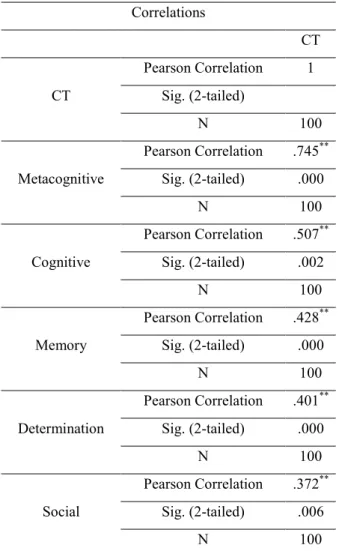
Table 3 reports the association between CT and the subcategories of VLS. All of these relationships turned out to be significant.
Table 3. Correlations Between Categories of Vocabulary Learning Strategies and Critical Thinking Ability
Correlations
CT
CT
Pearson Correlation 1 Sig. (2-tailed)
N 100
Metacognitive
Pearson Correlation .745**
Sig. (2-tailed) .000
N 100
Cognitive
Pearson Correlation .507**
Sig. (2-tailed) .002
N 100
Memory
Pearson Correlation .428** Sig. (2-tailed) .000
N 100
Determination
Pearson Correlation .401** Sig. (2-tailed) .000
N 100
Social
Pearson Correlation .372**
Sig. (2-tailed) .006
N 100
**. Correlation is significant at the 0.01 level (2-tailed).
3.4 The Relationship between AU and VLS
It has been an agreed-upon notion that AU has a positive impact on learning language (O’Donnell, Reeve, & Smith, 2012). Nonetheless, the following research question was posed in order to inspect the way AU and VLS are associated.
Research Question 3: Is there any significant relationship between EFL learners' AU and use of VLS?
In order to answer this question, learners' AU scores were correlated with those of VLSQ (Table 4). As reported in Table 4, there is a significant and positive relationship between EFL learners’ AU and overall use of VLS (r = 0.74, n = 100, p < .01).
Table 4. Correlation of Autonomy and Overall Use of VLS Correlations
Autonomy VLSQ
Autonomy
Pearson Correlation 1 .748**
Sig. (2-tailed) .000
N 100 100
VLSQ
Pearson Correlation .748** 1
Sig. (2-tailed) .000
N 100 100
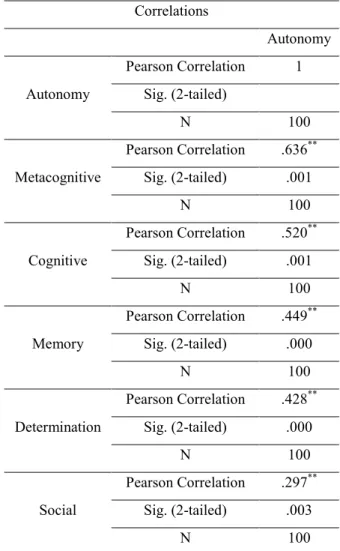
Table 5 reports the association between AU and the subcategories of VLS. All of these relationships turned out to be significant.
Table 5. Correlation of Autonomy and Subscales of VLS Correlations
Autonomy
Autonomy
Pearson Correlation 1 Sig. (2-tailed)
N 100
Metacognitive
Pearson Correlation .636**
Sig. (2-tailed) .001
N 100
Cognitive
Pearson Correlation .520**
Sig. (2-tailed) .001
N 100
Memory
Pearson Correlation .449** Sig. (2-tailed) .000
N 100
Determination
Pearson Correlation .428** Sig. (2-tailed) .000
N 100
Social
Pearson Correlation .297**
Sig. (2-tailed) .003
N 100
**. Correlation is significant at the 0.01 level (2-tailed).
3.5 VLS as Predicted by AU and CT
As the correlations between the three variables, CT, AU, and VLS, were significant, the researchers ran a multiple regression analysis between the variables to answer the following research question:
Research Question 4: Is there any significant difference between EFL learners' CT ability and AU in predicting use of VLS?
In order to investigate the difference between EFL learners' CT and AU in predicting use of VLS, a linear regression through the stepwise method was carried out. As displayed in Table 6, Learners' AU is the best predictor of VLS (r = .448, r squared = .20). That is to say, EFL Learners’ AU predicts 20 percent of VLS, whereas CT adds only 7 percent to the r-squared.
Table 6. Model Summary
Model R R Square Adjusted R
Square
Std. Error of the Estimate
1 .448a .201 .192 26.010
2 .527b .277 .262 24.858
a. Predictors: (Constant), Autonomy b. Predictors: (Constant), Autonomy, CT
Table 7. Regression Output: ANOVA Test
Model Sum of Squares Df Mean Square F Sig.
1
Regression 101501.796 1 101501.796 450.032 .000b
Residual 34303.124 98 230.796
Total 135804.92 99
a. Dependent Variable: VLS
b. Predictors: (Constant), Autonomy
4. Discussion and Conclusion
There is now a unanimous consensus among EFL researchers and educators that the quality and quantity of EFL learners’ language learning are determined, to a large extent, with learners’ vocabulary knowledge (Decarrico, 2001; Hatch & Brown, 1995; Maley, 1986; Schmitt 2000). However, for many EFL learners, vocabulary learning is a challenging task (Catalan, 2003; Hiebert, 2011; Read, 2000). Based on this premise, VLS have been suggested as techniques which would facilitate vocabulary learning among L2 learners (Coxhead, 2006; Lessard-Clouston, 2008). Knowing that EFL learners’ performance is deeply influenced by their internal factors (Fahim & Zaker, 2014; Lightbown & Spada, 2006) and that using VLS is closely related to the internal factors and mental processes (Catalan, 2003), this study attempted to systematically investigate the association among EFL learners’ CT, AU, and VLS. To fulfill this objective, the following research questions were proposed:
Research Question 1: Is there any significant relationship between EFL learners' AU and CT ability?
Research Question 2: Is there any significant relationship between EFL learners' CT ability and use of VLS?
Research Question 3: Is there any significant relationship between EFL learners' AU and use of VLS?
Research Question 4: Is there any significant difference between EFL learners' CT ability and AU in predicting use of VLS?
As stated earlier, for every session of administration, one class was randomly selected from the available classes, and the participants were informed about the purpose of the study. After collecting the data through administering three pertinent questionnaires, the statistical analyses were carried out to answer the abovementioned questions in this descriptive study. After testing the preliminary assumption, Pearson’s product-moment correlation coefficient, as a parametric test, answered the first three research question. Following this, as the correlations between the three variables were significant, a multiple regression was ran to answer the fourth research question.
It is believed that promoting AU in second language classes requires maximizing learners' potential for learning through critical reflection (Ku, 2009). However, the existence of such a relationship should be tested systematically. As suggested by the results, this study observed a significant and positive relationship between EFL learners’ CT and AU (r = 0.74, n = 100, p < .05). Put another way, EFL learners in this context demonstrated a strong association between their CT and their AU in learning English as an L2. This finding was in line with the findings of previous studies, i.e. Nosratinia and Zaker (2014) (r = 0.73) and Fahim and Sheikhy (2011) (r = 0.546), and this confirmation would make it more reasonable now to argue about a causal relationship between CT and AU (Springer, 2010).
Vocabulary learning is a multifaceted process which involves many mental processes, i.e. memorizing words, being able to recall them, and using them appropriately (Nation, 2004; Verhallen & Schoonen, 1993). On the other hand, CT is a significant internal factor which is believed to have a major influence on the process of learning and the way EFL learners deal with input and produce output (Chamot, 1995; Nosratinia & Zaker, 2014). Based on these theoretical arguments, the second analysis examined the way CT and VLS are associated. Results suggested that there is a significant and positive relationship between CT and overall use of VLS (r = 0.74, n = 100, p < .01) in this context. This is to say that, the higher level of CT a learner has the higher number of VLS s/he uses, and vice versa. This result confirmed the results of the same analysis carried out by Nosratinia, Shakoori, and Zaker (2013) (r = 0.72) in an Iranian context. Therefore, it becomes reasonable to argue that CT should be promoted in the Iranian context when a higher level of VLS use is expected.
The last research question investigated the difference between EFL learners' CT and AU in predicting use of VLS. A linear regression through the stepwise method revealed that Learners' AU is the best predictor of VLS (r = .448, r squared = .20). More specifically, EFL Learners’ AU predicts 20 percent of VLS, whereas CT adds only 7 percent to the r-squared. This higher ability of AU in predicting VLS when compared with CT has been confirmed by previous studies, e.g. Nosratinia, Shakoori, and Zaker (2013). This finding demonstrates that CT and AU can both significantly contribute to the degree of VLS among EFL learners. However, AU turned out to be a better predictor of VLS. This point seems to be in line with Dickinson’s (1992) arguments where he states that those students who depend on themselves in learning, have a higher chance to internalize vocabularies and, as a result, to succeed academically. The findings of this study have some implications for EFL teachers. According to Scharle and Szabo (2000), the class time for vocabulary is so limited when compared with the huge number of vocabulary items needed to be learned. On the other hand, for many EFL learners, vocabulary learning is a challenging task (Catalan, 2003; Hiebert, 2011; Read, 2000). Therefore, along with VLS instruction, as a direct form for promoting VLS use, EFL teachers should encourage AU and CT, as two significant internal factors (Nosratinia & Zaker, 2014), among their learners.
Fan (2003) highlights the importance of helping EFL students understand the significance of VLS and encouraging them to develop effective strategies of their own. EFL teachers are, therefore, suggested to inform EFL learners of the ways through which AU, CT, and VLS can contribute to learning more independently, reliably, lastingly, and effectively. This is due to the fact that language learners are required to play their role properly in order to facilitate and optimize the complicated process of learning. On the other hand, syllabus designers, as providers of a great portion of the language learning setting should take into consideration learners' individual differences, especially their CT ability, their AU level, and their VLS preference in their courses which can result in intellectual, active learners.
Further studies may replicate this study with a larger sample size. Moreover, it is suggested to inspect the way other mental and personality factors interact with the variables of this study. This study can also be replicated employing some qualitative instruments, e.g. interviews, in order to increase the validity and generalizability of the findings. Finally, it is suggested to replicate this study among other age groups.
References
Astleitner, H. (2002). Teaching critical thinking online. Journal of Instructional Psychology, 29(2), 53-77.
Atay, D., & Ozbulgan, C. (2007). Memory strategy instruction, contextual learning and ESL vocabulary recall. English for Specific Purposes, 26, 39-51. doi: 10.1016/j.esp.2006.01.002
Brown, H. D. (2007). Principles of language learning and teaching (5th ed.). New York: Pearson Education.
Catalan, R. (2003). Sex differences in L2 vocabulary learning strategies. International Journal of Applied Linguistics, 13(1), 54-77. doi: 10.1111/1473-4192.00037
Chamot, A. (1995). Creating a community of thinkers in the ESL/EFL classroom. TESOL Matters, 5(5), 1-16.
Chang, Y. L. (2007). The influence of group process on learners' autonomous beliefs and behaviors. System, 35(3), 322-337. doi: 10.1016/j.system.2007.03.001
Coxhead, A. (2006). Essentials of teaching academic vocabulary. Boston: Houghton Mifflin.
Decarrico, J. S. (2001). Vocabulary learning and teaching. In M. Celce-Murcia (Ed.), Teaching English as a second or foreign language (3rd ed.; pp. 285-299). Boston: Heinle & Heinle.
Dickinson, L. (1992). Learner autonomy: Learner training for language learning. Dublin: Authentik.
Fahim, M., & Komijani, A. (2010). Critical thinking ability, L2 vocabulary knowledge, and L2 vocabulary learning strategies. Journal of English Studies, 1(1), 23-38.
Fahim, M., & Sheikhy, B. R. (2011). Critical thinking ability and autonomy of Iranian EFL learners. American Journal of Scientific Research,29, 59-72.
Fahim, M., & Zaker, A. (2014). EFL learners’ creativity and critical thinking: Are they associated? Humanising
Language Teaching, 16(3). Retrieved from http://www.hltmag.co.uk/jun14/mart01.htm
Fan, M. Y. (2003). Frequency of use, perceived, usefulness, and actual usefulness of vocabulary strategies: A study of Hong Kong learners. The Modern Language Journal, 87(2), 222-241. doi: 10.1111/1540-4781.00187
Hatch, E., & Brown, C. (1995). Vocabulary, semantics, and language education. New York: Cambridge University Press.
Hedge, T. (2000). Teaching and learning in the language classroom. Oxford: Oxford University Press.
Hiebert, E. H. (2011). Growing capacity with literary vocabulary: The megaclusters framework. Retrieved from http://americanreadingforum.org/yearbook/11_yearbook/documents/Hiebert%20KEYNOTE.pdf
Honey, P. (2000). Critical thinking questionnaire. Available from http://www.peterhoney.com/
Ku, Y. L. K. (2009). Assessing students' critical thinking performance: Urging for measurements using multi-response format. Thinking Skills and Creativity, 4, 70-76. doi: 10.1016/j.tsc.2009.02.001
La Ganza, W. (2001). Out of sight – not out of mind: Learner autonomy and interrelating. Information Technology, Education and Society, 2(2), 27-46.
Lessard-Clouston, M. (2008). Strategies and success in technical vocabulary learning: Students’ approaches in one academic context. Indian Journal of Applied Linguistics,34(2), 31-63.
Lightbown, P., & Spada, N. (2006). How languages are learned (3rd ed.). Oxford: Oxford University Press. Little, D. (1991). Learner autonomy 1: Definitions, issues and problems. Dublin: Authentik.
Little, D. (1995). Learning as dialogue: The dependence of learner autonomy on teacher autonomy. System, 23(2), 175-182. doi: 0.1016/0346-251X(95)00006-6
Mackey, A., & Gass, M. S. (2005). Second language research: Methodology and design. New Jersey: Lawrence Erlbaum Associates.
Maley, A. (1986). Series editors' preface. In J. Morgan & M. Rinvolucri (Eds.), Vocabulary. Oxford: Oxford University Press.
Naeini, J. (2005). The effects of collaborative learning on critical thinking of Iranian EFL learners (Unpublished master's thesis). Islamic Azad University at Central Tehran, Iran.
Nagy, W. E., & Hiebert, E. H., (2010). Toward a theory of word selection. In M. L. Kamil, P. D. Pearson, E. B. Moje & P. P. Afflerbach (Eds.), Handbook ofreading research: Volume 4 (pp. 388-404). New York, NY: Longman.
Nation, I. S. P. (2001). Learning vocabulary in another language. Cambridge: Cambridge University Press. doi: 10.1017/CBO9781139524759
Nation, P. (2004). Evaluating your vocabulary program. In Y. Leung & Y. Chen (Eds.), Selected papers from the thirteenth international symposium on English teaching (pp. 91-97). Taipei, Taiwan: The Crane.
Nation, I. S. P., & Macalister, J. (2010). Language curriculum design. New York: Routledge.
Nation, I. S. P., & Meara, P. (2002). Vocabulary. In N. Schmitt (Ed.), An introduction to applied linguistics (pp. 35-54). London: Arnold.
Nosratinia, M., Shakoori D., N., & Zaker, A. (2013). Language learners’ internal factors and practical applications: A case of vocabulary learning strategies. IOSR Journal of Humanities and Social Science, 17(1), 100-115. doi: 10.9790/0837-171100115
Nosratinia, M., & Zaker, A. (2013). Autonomous learning and critical thinking: Inspecting the association among EFL learners. Paper presented at the First National Conference on Teaching English, Literature, and Translation, Shiraz University, Shiraz, Iran. Retrieved from http://www.civilica.com/Paper-TELT01-TELT01_226.html
Nosratinia, M., & Zaker, A. (2014). Metacognitive attributes and liberated progress: The association among second language learners’ critical thinking, creativity, and autonomy. SAGE Open, 4(3), 1-10. doi: 10.1177/2158244014547178 O' Donnell, A., Reeve, J., & Smith, J. (2012). Educational psychology: Reflection for action (3rd ed.). Hoboken, NJ: Wiley.
Oliver, H., & Utermohlen, R. (1995). An innovative teaching strategy: Using critical thinking to give learners a guide
to the future. (ERIC Document Reproduction Service No. ED389702).
O' Malley, J. M., & Chamot, A. U. (1990). Learning strategies in Second language acquisition. Cambridge: Cambridge University Press. doi: 10.1017/CBO9781139524490
Paul, R., & Elder, L. (2002).Critical thinking: Tools for taking charge of your professional and personal life. New Jersey: Financial Times Prentice Hall.
Read, J. (2000). Assessing vocabulary. Cambridge: Cambridge University Press. doi: 10.1017/CBO9780511732942 Schmitt, N. (1997). Vocabulary learning strategies. In N. Schmitt & McCarthy (Eds.), Vocabulary: Description,
acquisition, and pedagogy (pp.199-228). Cambridge: Cambridge University Press.
Schmitt, N. (2000). Vocabulary in language teaching. Cambridge: Cambridge University Press.
Shen, W. W. (2004). Does the practice of English vocabulary learning strategies follow theories? In Y. Leung & Y. Chen (Eds.), Selected papers from the thirteenth international symposium on English teaching (pp. 91-97). Taipei. Taiwan: The Crane.
Spratt, M., Humphreys, G., & Chan, V. (2002). Autonomy and motivation. Which comes first? Language Teaching
Research, 6(3), 245-266. doi: 10.1191/1362168802lr106oa
Springer, K. (2010). Educational research: A contextual approach. Hoboken, NJ: Wiley. Thornbury, S. (2002). How to teach vocabulary. Malaysia: Longman-Pearson Educational.
Tsuchida, M. (2002). The learning strategies: Helping students learn how to learn. (ERIC Document Reproduction Service No. ED463655).