16.1. THE EARTH AS MADE BY HUMANS
In Section 2.6, the anthrosphere was defined as that part of the environment made or modified by humans and used for their activities, in a sense, the earth as made by humans. The anthrosphere has become an integral part of Earth’s environment strongly influenced by and, in turn, strongly influencing the other four environmental spheres — the geosphere, hydrosphere, biosphere, and atmosphere. Therefore, the remaining chapters in this book discuss the anthrosphere including what constitutes it, what its function is, and the effects that it has. This requires consideration of the technological, engineering, and industrial aspects of human activities carried out in the anthrosphere. It is essential to recognize that humans will use technology to provide the food, shelter, and goods that they need for their well-being and survival. The challenge is to interweave technology with considerations of the environment and ecology such that the two are mutually advantageous.
Figure 2.8 in Chapter 2 illustrates the anthrosphere and some of its main constituents. These can be viewed in terms of the following three major aspects:
1. Anthrospheric constructs, including dwellings, factories, commercial centers, and mines
2. Anthrospheric flows of materials, energy, communications, and people
3. Anthrospheric conduits for the transmission of materials, energy, people and communications
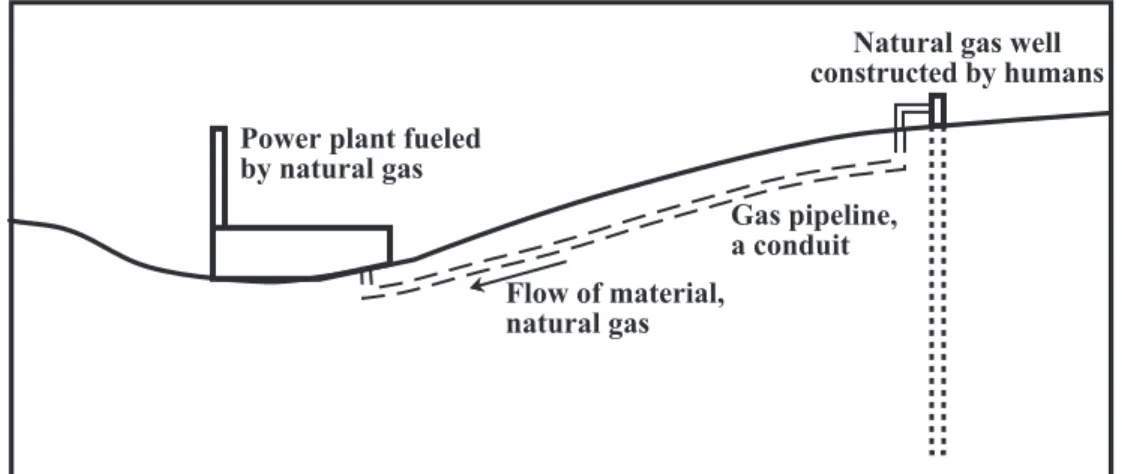
These three major aspects of the anthrosphere are summarized in Figure 16.1 and serve as the basis in this chapter for the detailed discussion of the anthrosphere and its constituents. The chapter emphasizes the relationship of the anthrosphere to green science and technology and the key role that its proper management must play in sustainability.
16.2. CONSTRUCTS IN THE ANTHROSPHERE
however, people are forced to survive with substandard dwellings that are not even safe or healthy. Acts of nature, such as the devastating Indian Ocean tsunami at the end of 2004 or the destructive U.S. Gulf Coast Hurricane Katrina of 2005 have destroyed tens of thousands of dwellings and other buildings that humans use.
Natural gas well constructed by humans
Gas pipeline, a conduit Flow of material,
natural gas Power plant fueled
by natural gas
Figure 16.1. Illustration of the three main aspects of the anthrosphere, constructs, flows, and conduits
The construction and use of modern homes and the other buildings in which people spend most of their time place tremendous strains on Earth’s support systems and cause a great deal of environmental damage. Typically, as part of the siting and construction of new homes, shopping centers, and other buildings, the landscape is rearranged drastically at the whims of developers. Topsoil is removed, hills are cut down, and low places are filled in an attempt to make the surrounding environment fit to a particular architectural scheme. The construction of modern buildings consumes large amounts of resources, such as concrete, steel, plastic, and glass, as well as the energy required to make synthetic building materials. The operation of a modern building requires additional large amounts of energy and of materials, such as water.
The good news is that there is a large potential to design, construct, and operate homes and other buildings in a manner consistent with environmental preservation and improvement. One obvious way in which this can be done is to reevaluate the kinds of materials used in buildings to minimize the use of steel, plastics, and other materials that require large amounts of resources and energy to fabricate. Substitution of renewable materials, such as wood, and nonfabricated materials, such as quarried stone, can save large amounts of energy and reduce environmental impact. In some parts of the world sun-dried adobe blocks made from soil are practical building materials that require little energy to fabricate.
Recycling of building materials and of whole buildings can save large amounts of materials and minimize environmental damage. At a low level, stone, brick, and concrete can be used as fill material upon which new structures may be constructed. Bricks are often recyclable, and recycled used bricks can make useful and quaint materials for walls and patios. Given careful demolition practices, wood can often be recycled. Buildings can be designed with recycling in mind. This means using architectural design conducive to adding stories and annexes and to rearranging existing space. Utilities may be placed in readily accessible passageways rather than being imbedded in structural components in order to facilitate later changes and additions.
conditioning systems operate with a high degree of efficiency. Automated and computerized control of building utilities, particularly those used for cooling and heating, can significantly reduce energy consumption by regulating temperatures and lighting to the desired levels at specific locations and times in the building.
Advances in making buildings airtight and extremely well insulated can lead to problems with indoor air quality. Carpets, paints, panelling, and other manufactured components of buildings give off organic vapors, such as formaldehyde, solvents, and monomers used to make plastics and fabrics. This can lead to “sick building syndrome” in which the occupants become ill due to exposure to indoor air pollutants. Advanced air purification systems with suitable filters can enable humans to live in air-tight, energy-efficient buildings without ill effects.
Other than dwellings, schools, and commercial buildings, there are many other structures that humans make in the anthrosphere that have important effects on anthrospheric sustainability. There is not room here to discuss all of these in detail. However, many factors should be considered in the construction of such facilities. As just one example, consider options for electrical power plant construction. Wind power is certainly renewable, safe and non-polluting. However, a wind power installation of a size sufficient to provide electricity to a major city could cover many square kilometers of area, although virtually all of the land upon which it is located could be used for other purposes. A large nuclear power plant of modern design scores less well in the categories of renewability, safety, and pollution (though certainly not as potentially harmful as claimed by the more strident critics of nuclear energy), but occupies a relatively miniscule area (all of which must be devoted to the power plant and its ancillary facilities).
16.3. ANTHROSPHERIC FLOWS
Throughout the anthrosphere there is a constant flow of materials, energy, information, and people. A very large share of the environmental impact of modern civilization is due to these flows. Raw materials and energy move from mines and other sources to factories in large quantities. Goods produced by factories are distributed throughout the world by ship, rail, and truck. Electricity, natural gas, and water are fed to homes and other buildings. Wastewater and refuse must be transported to recycling centers and treatment and disposal sites. People are constantly moving by private automobile, airplanes, and trains. The flux of movement of materials, energy, people, and information is arguably the best measure of how advanced a country is by conventional measures of economic development.
Much of the environmental and sustainability impact of modern civilizations is the result of moving materials, energy, and people (especially with modern technologies, movement of information, except printed media, has negligible environmental and resource impact). The most visible impact results from movement by automobile and truck. These conveyances require conversion of vast areas of land to highways and parking facilities that cannot be used for other purposes. Exhaust emissions from automobiles and trucks are the largest sources of air pollutants and carbon dioxide, which is responsible for global warming.
16.4. ANTHROSPHERIC CONDUITS
Anthrospheric conduits is a term used here to refer to the means by which materials, energy, people, and communications are moved. The choice of such means has a very large impact upon the environment and sustainability. Most anthrospheric conduits are parts of the infrastructure discussed below. The highways and streets required to distribute materials by truck cover large areas of land that cannot be used for other purposes and that are paved, preventing water infiltration into groundwater reservoirs. The same flows of material can be accommodated by rail lines that have a much smaller footprint per unit capacity and that do not cover vast areas with water-impregnable concrete or asphalt. Surface transport of fuels requires conduits that disturb Earth’s surface, consume space, and generally have major environmental impacts. Pipelines are an alternative that, although disruptive of the surface during installation, function below ground with essentially no environmental impact (except in rare cases when they break, sometimes leading to very damaging releases or even fires). Similarly, distribution of electricity or electronic communications in neighborhoods by wires mounted on poles results in unsightly distribution systems that are prone to damage and disruption by natural phenomena such as ice formation. Buried underground cables and fiber optic systems are generally immune to disruption by natural phenomena and leave essentially no surface imprint.
16.5. INFRASTRUCTURE
The infrastructure refers to the utilities, facilities, and systems used in common by members of a society and upon which the society is dependent for its normal function. The infrastructure includes both physical components — roads, bridges, and pipelines — and the instructions — laws, regulations, and operational procedures — under which the physical infrastructure operates. Parts of the infrastructure may be publicly owned, such as the U.S. Interstate Highway system and some European railroads, or privately owned, as is the case with virtually all railroads in the U.S. Some of the major components of the infrastructure of a modern society are the following:
• Transportation systems, including railroads, highways, and air transport systems
• Energy generating and distribution systems
• Buildings
• Telecommunications systems
• Water supply and distribution systems
• Waste treatment and disposal systems, including those for municipal wastewater, municipal solid refuse, and industrial wastes
For a society to be successful it is of the utmost importance to maintain a modern, viable infrastructure. Such an infrastructure is consistent with environmental protection and sustainability. Properly designed utilities and other infrastructural elements, such as water supply systems and wastewater treatment systems, minimize pollution and environmental damage. Components of the infrastructure are subject to deterioration. To a large extent this is due to natural aging processes. Fortunately, many of these processes can be slowed or even reversed. Corrosion of steel structures, such as bridges, is a big problem for infrastructures; however, use of corrosion-resistant materials and maintenance with corrosion-resistant coatings can virtually stop this deterioration process. The infrastructure is subject to human insult, such as vandalism, misuse, and neglect. Often the problem begins with the design and basic concept of a particular component of the infrastructure. For example, many river dikes destroyed by flooding should never have been built because they attempt to thwart to an impossible extent the natural tendency of rivers to flood periodically.
Technology plays a major role in building and maintaining a successful infrastructure. Many of the most notable technological advances applied to the infrastructure were made from 150 to 100 years ago. By 1900 railroads, electric utilities, telephones, and steel building skeletons had been developed. The net effect of most of these technological innovations was to enable humankind to “conquer,” or at least temporarily subdue nature. The telephone and telegraph helped to overcome isolation, high speed rail transport and later air transport conquered distance, and dams were used to control rivers and water flow.
The development of new and improved materials continues to have a significant influence on the infrastructure. From about 1970 to 1985 the strength of steel commonly used in construction nearly doubled. During the latter 1900s significant advances were made in the properties of structural concrete. Superplasticizers enabled mixing cement with less water, resulting in a much less porous, stronger concrete product. Polymeric and metallic fibers used in concrete made it much stronger. For dams and other applications in which a material stronger than earth but not as strong as conventional concrete is required, roller-compacted concrete consisting of a mixture of cement with silt or clay has been found to be useful. The silt or clay used is obtained on site with the result that both construction costs and times are lowered.
The major challenge in designing and operating the infrastructure in the future will be to construct and operate it in a manner consistent with maximum sustainability to the benefit of humankind and the Earth support systems upon which we all depend. Obvious examples of environmentally friendly infrastructures are state-of-the-art sewage treatment systems, high-speed rail systems that can replace inefficient highway transport, and renewable, environmentally-friendly public power systems. More subtle approaches with a tremendous potential for making the infrastructure more environmentally friendly include employment of workers at computer terminals in their homes so that they do not need to commute, instantaneous electronic mail systems that avoid the necessity for moving letters physically, and solar electric powered installations to operate remote signals and relay stations, which avoids having to run electric power lines to them.
parameters can be imbedded in the structural members of bridges and other structures. Information from these sensors can be processed by computer to warn of failure and to aid in proper maintenance. Many similar examples could be cited.
Although the payoff is relatively long term, intelligent investment in infrastructure pays very high rewards. In addition to the traditional rewards in economics and convenience, properly designed additions and modifications to the infrastructure can pay large returns in environmental improvement and sustainability as well.
16.6. TRANSPORTATION
Ways of getting around and of moving materials and belongings have always been central to human existence and lifestyle. From the time that humans first started using primitive tools, they have invented devices to increase their ability to move themselves and their burdens. For land transport, the earliest of these were simple poles on which slain animals or other things were carried by two people or dragged by one (devices called the travois or slide car). These developed into skis and sledges. A major advance was the domestication of animals and training them to carry and drag loads. Then came the discovery of the wheel, arguably the greatest single increment in transportation technology of all time.
On water, primitive log dugouts and rafts greatly increased human mobility. These subsequently developed into canoes and boats propelled by human-powered ores and paddles. An advance comparable to the wheel on land was the discovery of the sail and development of means to use it effectively to propel boats and ships on water.
For both land and water transport, the development around 1800 of steam engines light enough to fit on self-propelled vehicles provided an enormous impetus to transportation. Steam-powered ships and boats freed water transport from the vagaries of the wind and enabled movement of boats upstream, though at a fearful price of death and destruction from boiler explosions and fires. The marriage of the steam engine mounted on a locomotive with steel rails enabled the development of railroads, which totally revolutionized land transport and completely changed human economic and social systems. The next huge advance came with the development of successful internal combustion (gasoline) engines in the late 1800s. These relatively light and compact power plants made the automobile a practical reality and made air transport possible. In more industrialized nations in the modern era, private transport, commuting, and travel over relatively short distances are largely by automobile and goods are largely transported by trucks. The flexibility, convenience, and independence afforded by private automobiles and by trucks have made them extremely popular. Technical advances have greatly improved automobile efficiency, comfort, and safety.
The indirect environmental effects of widespread use of automobiles are enormous. The automobile has made possible the “urban sprawl” that is characteristic of residential and commercial patterns of development in the U.S., and in many other industrialized countries as well. The paving of vast areas of watershed and alteration of runoff patterns have contributed to flooding and water pollution. Discarded, worn-out automobiles have caused significant waste disposal problems. Vast enterprises of manufacturing, mining, and petroleum production and refining required to support the “automobile habit” have been very damaging to the environment.
Air transportation has become the method of choice for long-distance movement of passengers. Movement of people and high-value freight by airplane is now reliable, safe, and relatively inexpensive. Technological advances in aircraft and engine design, as well as operation and control, made possible by better materials and computers, have given a tremendous impetus to air transportation. It is clearly the mode of choice for overseas travel and long-distance travel over land, but definitely needs to be better integrated with rail transport for distances of up to a few hundred kilometers.
Advanced technology is being used, and still has a huge unrealized potential, for the improvement of transportation systems in areas such as speed, convenience, safety, and energy efficiency. High-tech computerized control has enabled automobiles to be much more efficient while emitting far smaller amounts of pollutants. Advanced air-traffic-control systems allow the operation of more aircraft in smaller spaces and at much closer intervals with much greater safety than was previously possible. Mixed modes of transport can be very successful; an example is the movement of truck trailers and their contents over long distances by rail followed by final distribution by tractor trailer truck. A systems approach in transportation enables tradeoffs to be made among speed, energy consumption, noise, pollution, convenience, and other factors. Applications of advanced engineering and technology to transportation can be of tremendous benefit to the environment. Modern rail and subway transportation systems, concentrated in urban areas and carefully connected to airports for longer distance travel, can enable the movement of people rapidly, conveniently, and safely, with minimum environmental damage. Although pitifully few in number in respect to the need for them in the U.S., examples of such systems are emerging in progressive cities, showing the way to environmentally friendly transportation systems of the future. Many European and Asian countries are relatively far advanced with respect to sustainable transportation systems.
The Telecommuter Society
A new development that has significantly reshaped the way humans move, where they live, and how they live, is the growth of a telemcommuter society, composed of workers who do their work at home and “commute” through their computers, modems, FAX machines, and the internet connected by way of high-speed telephone communication lines. These technologies, along with several other developments in modern society, have made such a work pattern possible and desirable. An increasing fraction of the work force deals with information in their jobs. In principle, information can be handled just as well from a home office as it can from a centralized location, often an hour or more commuting distance from the worker’s dwelling.
It is estimated that almost 20% of the U.S. work force, a total of around 30 million people, could work very well from their homes. This tendency has been accelerated in recent years by the downsizing of many U.S. industries and “outsourcing” of work to private parties, sometimes from the companies to the workers that have been laid off. There are disadvantages, of course. People working at home may become isolated, careless in their habits, and “desocialized” from the workplace environment and the “office politics” that can play a role in advancement and training. Indeed, it is possible to visualize another type of home workplace activity in which “telecommuter counselors” advise home workers about how to manage such problems.
The changes that will result from widespread use of telecommuting are many and profound. With properly sited housing, workers can live in a rural environment with minimal disturbance to the surroundings. The flow of information has essentially no environmental costs compared to the movement of people on daily long commutes. The potential benefits to family life are obvious and may play a strong role in reshaping society positively. Whole communities may be transformed by telecommuters. Rather than being populated by people who are gone most of the day to a job far away, telecommuter communities will be occupied by people who are available on flexible schedules during the day and who are not too exhausted by long, tiring commutes to engage in civic activities at night. Telecommuters are likely to be intelligent, ambitious, and self-motivated, with all that these characteristics imply for civic activities. Cultural activities should thrive in environmentally friendly telecommuter communities combining the best of rural, suburban, and urban life.
16.7. THE COMMUNICATIONS REVOLUTION
It has become an overworked cliché that we live in an information age. Nevertheless, the means to acquire, store, and communicate information have expanded at an incredible pace during recent years. This phenomenon is changing society and has the potential to have numerous effects upon the environment and sustainability.
The major areas to consider in respect to information are its acquisition, recording, computing, storing, displaying, and communicating. Consider, for example, the detection of a pollutant in a major river. Data pertaining to the nature and concentration of the pollutant may be obtained with a combination gas chromatograph and mass spectrometer. Computation by digital computer is employed to determine the identity and concentration of the pollutant. The data can be stored on a magnetic disk, displayed on a video screen, and communicated instantaneously all over the world by satellite and fiber optic cable.
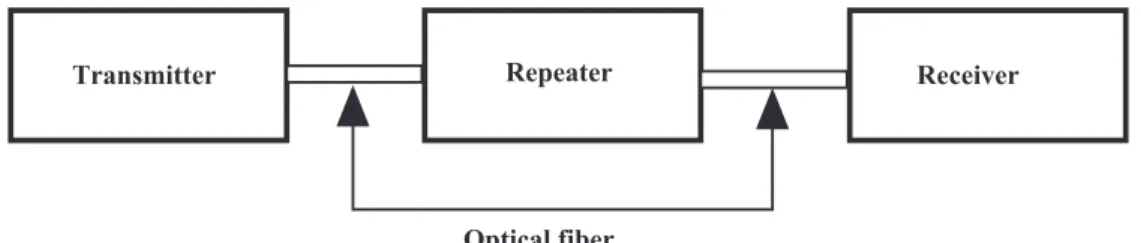
The acquisition, manipulation, and storage of information are all crucial parts of an information system. No aspect is more important, however, than the transmission of information, quickly, accurately, and over long distances. This constitutes the area of communications, now performed predominantly by telecommunications. The major constituents of a telecommunications system are illustrated in Figure 16.2. These are (1) a means of converting the information in the form in which it is found to a form that can be transmitted, (2) a means and medium for transmission, and (3) a device or system for receiving the transmitted signal and converting it to sound, video display, computer language, or other form understandable by humans or other machines. These three components may be termed, respectively, the transmitter, the medium, and the receiver.
form for transmission, then put it back into an analog form at the receiver. This is done by a process called digitization in which the analog signal is sampled at regular, closely spaced intervals, and its characteristics converted to numbers which are transmitted. This digital information may then be converted back to analog information.
1. Information taken in and translated to a form able for transmission
2. Information transmitted
3. Information received and displayed
Figure 16.2. Major aspects of communication based on telecommunication.
All the aspects of information and communication listed above have been tremendously augmented by recent technological advances. Perhaps the greatest such advance has been that of silicon integrated circuits which have had a massive impact on capabilities for recording, computing, storing, displaying, and communicating information in vast quantities. The most rapid means of manipulating massive amounts of information is to combine standard electronics with
photonics, which deals with information carried and recorded by photons of light. Using photonics, information can be acquired by a video camera, stored on compact video disks, transmitted by fiber optics, and displayed with a cathode ray tube or light-emitting diode display. Photonics relates to information transfer and storage in two major ways — optical memory, and optical communication. Somewhat misnamed, optical memory consists of information recorded on microscopic grooves of a rotating disk, the most familiar example of which is the compact disk (CD) for playing music. The information is recorded on the disk digitally in a binary system represented by series of reflective dots (to represent “1”) and nonreflective dots (to represent “0”). The amounts of information that can be so stored are staggering—a single compact video disk 9 cm in diameter can store the contents of several long books.
intervals. This is accomplished by a repeater, which detects the light signal with a photodetector and converts it to an electronic signal that is amplified electronically, then changed back to light and sent on through optical fibers with an emitter. At the receiver the light signal is again converted to an electronic signal by a photodetector, amplified, and put out in the needed form, such as sound in a telephone headset.
Transmitter Repeater Receiver
Optical fiber Figure 16.3. Three major components of an optical communications system.
The central characteristic of communication in the modern age is the combination of telecommunications with computers called telematics. Automatic teller machines use telematics to make cash available to users at locations far from the customer’s bank. Information used for banking, for business transactions, and in the media depends upon telematics.
There exists a tremendous potential for good in the applications of the “information revolution” to environmental improvement. An important advantage is the ability to acquire, analyze, and communicate information about the environment. For example, such a capability enables detection of perturbations in environmental systems, analysis of the data to determine the nature and severity of the pollution problems causing such perturbations, and rapid communication of the findings to all interested parties.
16.8. TECHNOLOGY AND ENGINEERING
Much of the remainder of this chapter is dedicated to a discussion of the ways in which humans use the anthrosphere to provide for their needs. For the most part, these needs are goods and services. Goods can include the most fundamental things such as food and shelter. Services include transportation and communication discussed above. For the most part, goods and services are provided by technology, which is discussed in this section. The provision of goods and services has enormous implications for sustainability and the environment.
Technology refers to the ways in which humans do and make things with materials and energy. In the modern era, technology is to a large extent the product of engineering based on scientific principles. Science deals with the discovery, explanation, and development of theories pertaining to interrelated natural phenomena of energy, matter, time, and space. Based on the fundamental knowledge of science, engineering provides the plans and means to achieve specific practical objectives. Technology uses these plans to carry out the desired objectives. Technology makes use of tools, techniques, and systems for carrying out specific objectives, such as manufacturing consumer goods; moving people, manufactured goods, and materials; or minimizing environmental impact of human activities. At an accelerated pace during the last several years, technology has made use of computers to accomplish its objectives.
processing of native elemental copper around 4000 B.C., followed by the widespread use of bronze, an alloy of tin and copper. The Bronze Age lasted until around 1200 B.C., when iron replaced bronze for tools and weapons. Other early technological innovations predating the rise of Greek and Roman civilizations included domestication of the horse, discovery of the wheel, architecture to enable construction of substantial buildings, control of water for canals and irrigation, and writing for communication.
A major advance during the Greek and Roman eras was the development of machines, including the windlass, pulley, inclined plane, screw, catapult for throwing missiles in warfare, and water screw for moving water. Later, the water wheel was developed to harness power from falling water, which was transmitted by wooden gears. Many technological innovations came from China, sometimes several hundred or even a thousand years before they appeared in Europe. As examples, China had rotating fans for ventilation by around 200 A.D., printing with wood blocks by around 740, and gunpowder about a century later. The 1800s saw an explosion in technology. Among the major advances during this century were widespread use of steam power, steam-powered railroads, the telegraph, telephone, electricity as a power source, textiles, use of iron and steel in building and bridge construction, cement, photography, and invention of the internal combustion engine, which revolutionized transportation in the following century. It may be argued that in a relative sense advances in technology during the 1800s were at least as great as those that have occurred since 1900, and certainly laid the groundwork for the vast advances that have taken place during the last 100 years.
Since about 1900, advancing technology has been characterized by vastly increased uses of energy; greatly increased speed in manufacturing processes, information transfer, computation, transportation, and communication; automated control; a huge new variety of chemicals; new and improved materials for new applications; and, more recently, the widespread application of computers to manufacturing, communication, and transportation. Arguably, the greatest impact during the last 100 years has been the application of electronics to technology. Modern electronics began with Guglielmo Marconi’s discovery of radio in 1896, boosted enormously in the early 1900s with the development of vacuum tubes that had the ability to control and amplify electronic signals and to make radio transmission possible over vast distances. A special vacuum tube, the cathode ray tube, made television and radar possible. Solid-state devices that are remarkably small and fast have supplanted vacuum tubes in virtually all applications and have made modern computers possible.
The development of electronics probably illustrates better than anything else the revolution in technology resulting from applications of basic and applied science. In modern times science and technology are inseparable and synergistic. The principles of science are applied to make technological advances possible. For example, radio communication and associated electronics were made possible by understanding of electromagnetic waves.
In transportation, the development of passenger-carrying airplanes has resulted in an astounding change in the ways in which people get around. In addition, large amounts of high-priority freight are now moved by air.
The technological advances of the present century are largely attributable to improved materials. For example, since shortly before World War II, airliners have been made of special strong alloys of aluminum; these are being supplanted by even more advanced composites that are lighter and stronger than metals, thereby reducing aircraft mass and increasing fuel efficiency. Synthetic materials with a significant impact on modern technology include plastics, fiber reinforced materials, composites, and ceramics.
production of goods and services that has been characteristic of the last two centuries. In so doing, technology has resulted in the displacement of entire occupations and the creation of entirely new ones. An examination of technology and all of the aspects of the modern world that it influences clearly illustrates its role in the interconnectedness of important global and societal issues, such as productivity, resource utilization, environmental impact, employment, and overpopulation.
Until very recently, technological advances were made largely without heed to environmental impacts. Now, however, the greatest technological challenge is to reconcile technology with environmental sustainability consequences. The survival of humankind and of the planet that supports it now requires that the established two-way interaction between science and technology become a three-way relationship including sustainability through the application of green science and technology. That is, of course, a major theme of this book.
Engineering
Engineering uses fundamental knowledge acquired through science to provide the plans and means to achieve specific objectives in areas such as manufacturing, communication, and transportation. At one time engineering could be divided conveniently between military and civil engineering. With increasing sophistication, civil engineering evolved into even more specialized areas, such as mechanical engineering, chemical engineering, electrical engineering, and environmental engineering. Other engineering specialties include aerospace engineering, agricultural engineering, biomedical engineering, CAD/CAM (computer-aided design and computer-aided manufacturing engineering, which are discussed below), ceramic engineering, industrial engineering, materials engineering, metallurgical engineering, mining engineering, plastics engineering, and petroleum engineering.
Mechanical engineering is the branch of engineering that deals with machines and the manner in which they handle forces, motion, and power. This discipline arose as a separate area with the development of the enormous capabilities of the steam engine in the early 1800s. The major objective of mechanical engineering is to develop and improve machines that produce goods and services. The scientific principles upon which engineering is based include consideration of the laws that govern forces and motion (dynamics); the thermodynamic laws that govern energy, power, and heat; transfer of materials and fluids; and other factors, including vibration control, materials properties, and wear minimization through proper lubrication. In addition to mechanical components, other machine components with which mechanical engineering must deal are electric, electronic, hydraulic, and fluidic components.
There are several objectives of machine design. Machines must produce whatever is needed in high quality to minimize expensive rejects. Speed of production is of utmost importance. Finally, costs must be minimized to enable adequate return on capital. An important factor involved in this endeavor is that of materials that can maintain exacting tolerances with minimum wear under sometimes severe conditions. Control of machines is particularly important. This is especially true with greatly increased use of automation and robotics. The availability of inexpensive, fast, sophisticated computers is revolutionizing control of machines and the processes that they carry out.
maximize sustainability and to improve environmental quality. Examples of this include machinery designed to minimize noise, much improved energy efficiency in machines, and the uses of earth-moving equipment for environmentally beneficial purposes, such as restoration of strip-mined lands and construction of wetlands.
Electrical engineering grew from the rapidly developing electrical power industry starting in the late 1800s. The theory of electrical engineering is largely based on the mathematical formulation of the laws of electricity by the Scotsman James Clerk Maxwell in 1864, though the profession began in a primitive manner with the invention of the telegraph in 1837. Electrical engineering is concerned with the generation, transmission, and utilization of electrical energy. Of particular importance in this area has been the early utilization of alternating current, which is more complex to use, but more efficient in some applications than direct current. Proper application of electrical engineering can be very helpful in the environmental arena. Efficient generation, distribution, and utilization of electrical energy constitute one of the most promising avenues of endeavor leading to environmental improvement. The modern practice of burying electrical transmission lines in urban areas has minimized visual pollution from unsightly overhead power lines and made the power distribution system less vulnerable to interruptions from weather events.
Electronics engineering deals with phenomena based on the behavior of electrons in vacuum tubes and other devices. As such, it is very much concerned with electromagnetic radiation (“radio waves” and microwaves) and transmission of radiofrequency signals through the air and space. Much of the early work in electronics engineering was based on fundamental studies of the behavior of electrons in vacuum tubes dating from the first decades of the 1900s. Though slow, prone to failure (because of the tendency of their hot filaments to burn out), and power consumptive by modern standards, these devices enabled development of practical radios, television, radar, and chemical instrumentation.
The fact that modern times are largely an “electronic era” is due to the invention of the solid-state electronic device known as the transistor in 1948. This enabled a truly remarkable development that has changed society enormously in the latter part of this century — the silicon integrated circuit. Integrated circuits are made by depositing and etching microscopic electronic circuits containing many transistors, capacitors, and resistors on single silicon chips as small as a pinhead and rarely larger than a dime. Although the cost of integrated circuit chips has remained about constant since 1960, the number of transistors possible on each chip has doubled regularly and may eventually reach a billion or so. This phenomenon has led to the vast array of consumer electronic devices, computers, and control systems that are a fact of modern life — and this is probably only the beginning.
The principles of electronics applied through electronic engineering for sustainability and environmental improvement are enormous. Automated factories can turn out goods with lowest possible consumption of energy and materials, while minimizing air and water pollutants and production of hazardous wastes. During the last two decades electronic control of electrical power production, distribution, and utilization has enabled greater production of light and usable energy without the construction of massive numbers of new power plants. Sophisticated electronic control and the development of electronically-based photovoltaic cells are enabling practical utilization of solar energy. Nuclear power generation, which can certainly play a major role in generating electrical energy without production of greenhouse gases, can be made virtually fail-safe by electronic systems that do not doze, daydream, or have bad habits that are always potential problems with systems that rely primarily on the performance of fallible humans.
as mixing, distillation, filtration, and heat exchange that are combined in a variety of ways to carry out chemical processes. These in turn are based on laws of thermodynamics, chemical kinetics, mass and heat transfer, and fluid flow.
Thermodynamics, the science of heat and energy phenomena, transfers, and conversions, is of crucial importance in chemical engineering. Thermodynamics enables computation of heat required and produced in chemical production, deals with the feasibility of partition of materials between phases (see mass transfer below), and provides information regarding the effects of temperature on chemical equilibrium (degree to which a reaction goes to completion). Whereas thermodynamics deals with equilibrium situations, chemical kinetics deals with speeds of chemical reactions. It explains whether or not a reaction proceeds at a sufficient rate to be practical or so rapidly as to be hazardous, and how long reactants must remain together for a desired reaction to occur. A key aspect of chemical kinetics is catalysis, in which catalysts, which enable chemical reactions to occur, are either mixed with reactant mixtures (homogeneous catalysis) or held on solid surfaces (heterogeneous catalysis).
Mass transfer involves separation of phases of materials and transfer of materials between phases. The most straightforward example of mass transfer is distillation in which one component of a liquid mixture is vaporized and condensed to a pure form. Sorption of pollutant organic matter from aqueous solution onto activated carbon, precipitation and filtration of solids, and extraction of materials from aqueous solution into an organic solvent are all unit operations involving mass transfer. Much of chemical engineering deals with heat transfer, which in chemical plants is accomplished by conduction, convection, radiation, and as latent heat (condensation/evaporation, particularly of water).
Unlike other manufacturing and assembly operations that deal with the manipulation of objects and solids, virtually all of the material transferred in a chemical plant is in the form of fluids, so fluid flow becomes a major consideration. Consideration must be given to whether or not a fluid can be induced to flow at a sufficiently rapid rate to be practical, as well as what may be done to make a fluid flow adequately. Another major consideration is the loss of energy as fluids flow through pipes, over solid catalysts, and through chemical reactors.
Control of the processes described above is of particular importance in chemical engineering; a poorly regulated process can very rapidly get out of control and ruin the product or cause a fire or explosion. The transfers of fluids and energy that occur in chemical plants are particularly amenable to automated and computerized control. Application of the principles of green engineering can make chemical engineering much more safe, sustainable, and efficient.
16.9. ACQUISITION OF RAW MATERIALS
Raw Materials
Raw materials consist of the substances required for manufacturing processes. Raw materials may be minerals, hydrocarbons from petroleum, wood, plant fibers, cellulose and other materials. Such materials can be obtained from either extractive (nonrenewable) or from renewable sources.
The extractive industries are those which take irreplaceable resources from the Earth’s crust. This is normally done by mining, but may also include pumping petroleum and withdrawal of natural gas. The raw materials extracted may be divided broadly into the categories of inorganic minerals, such as iron ore, clay used for firebrick, and gravel, and materials of organic origin, such as coal, lignite, or petroleum. Inorganic minerals that are mined include aluminum (from bauxite), antimony, asbestos, barite, beryl, bismuth, cadmium, chromite, cobalt, columbium-tantalum, copper, gem and industrial diamond, feldspar, fluorspar, gold, gypsum, iron ore, lead, magnesium, manganese, mercury, molybdenum, nickel, phosphate rock (hydroxyapatite and fluorapatite), platinum group metals, potash, selenium, silver, tellurium, tin, titanium, tungsten, uranium oxide, vanadium, and zinc.
Renewable raw materials from plant sources are discussed in some detail in Chapter 15. The prime example of a renewable material is wood. From an environmental viewpoint wood is an ideal resource. Forests conserve soil by preventing soil erosion and provide recreational areas and watersheds. The removal of carbon dioxide from air by photosynthesis carried out by trees is a significant mechanism for the removal of greenhouse-gas carbon dioxide from the atmosphere. Natural rubber and cotton are two other examples of renewable resources. The use of these substances saves irreplaceable petroleum that otherwise would be consumed in manufacturing synthetic rubber and synthetic fabrics.
Unfortunately, many resources are simply not renewable. It is impossible to grow aluminum, nickel, phosphorus, sulfur, or any of the other essential elemental resources. For these irreplaceable resources, use minimization, substitution by more abundant alternate resources, conservation, and recycling are of utmost importance in maintaining sustainability.
Materials from Earth’s Crust: Mining
Geological and geochemical factors are crucial in mining, particularly in locating ore deposits. Deposits of metals often occur in masses of igneous rock that have been forced in a solid or molten state into the surrounding rock strata; such masses are called batholiths. Other geological factors to consider include age of rock, fault zones, and rock fractures. The crucial step of finding ore deposits falls in the category of mining geology.
Surface mining, commonly called strip mining, is used to extract minerals that occur near the surface. A common example of surface mining is quarrying of rock. In some cases where stone is mined for construction, quarrying is done by cutting the stone into slabs and blocks. Most rock is loosened by blasting before being removed as irregular chunks. Although quarry blasting used to be done by expensive and potentially hazardous dynamite or gunpowder, it is now accomplished primarily by granular ammonium nitrate soaked with fuel oil. Though powerful, this explosive is particularly safe for the user because it requires a booster in addition to a simple blasting cap for detonation. Sand and gravel are sometimes surface-mined by simply digging the material from deposits. Coal is commonly strip-mined with giant shovels that are employed primarily for removing overburden, leaving the thinner coal seam to be loaded with smaller equipment.
hydraulic mining with large streams of water. One interesting approach for more coherent deposits is to cut the ore with intense water jets, then suck up the resulting small particles with a pumping system.
For many minerals underground mining is the only practical means of extraction. An underground mine can be very complex and sophisticated. The structure of the mine depends upon the nature of the deposit. It is, of course, necessary to have a shaft that reaches to the ore deposit. This is normally a vertical shaft, but for inclined beds it can be inclined. Horizontal tunnels extend out into the deposit, and provision must be made for sumps to remove water and for ventilation. In designing an underground mine many factors must be considered by the mine engineer. These include the depth, shape, and orientation of the ore body, as well as the nature and strength of the rock in and around it; thickness of overburden; and depth below the surface. Of crucial importance is support of the mine roof. In some cases roof support is accomplished with a room and pillar technique in which pillars of ore are left to support the roof. Bolts may have to be put into the roof to secure it, and posts may have to be installed to hold up the roof. In stabilizing mine structures it is important to apply rock mechanics to determine the behavior of rock under stress and how such behavior is altered by mining. The compressive and tensile strengths of the rock must be considered, along with the fact that rock behaves elastically when a load is placed on it.
Usually, significant amounts of processing are required before a mined product is used or even moved from the mine site. Even rock to be used for aggregate and for road construction must be crushed and sized. Crushing is a necessary first step for further processing of ores. Some minerals occur to an extent of a few percent or even less in the rock taken from the mine and must be concentrated on site so that the residue does not have to be hauled far. For metals mining, these processes, as well as roasting, extraction, and similar operations are covered under the category of
extractive metallurgy.
Manufactured Materials
To an increasing degree manufactured materials with special properties are being used for structures, machines and other applications. The use of such materials has both positive and negative aspects from the environmental viewpoint. For example, most such manufactured materials require significant amounts of energy and may use irreplaceable petroleum as a raw material. On the other hand, some such materials are much more enduring and suitable than those which they replace. Manufactured materials are discussed in more detail in Section 16.12, Materials Science.
16.10. AGRICULTURE—THE MOST BASIC INDUSTRY
The most basic human need is that for food. Without adequate supplies of food, the most pristine and beautiful environment becomes a hostile place for human life. The industry that provides food is agriculture, an enterprise concerned primarily with growing crops and livestock. Agriculture is absolutely essential to the maintenance of the huge human populations now on Earth. Soil on which food is grown and the agricultural enterprise by which food is produced are discussed in Chapter 11. The most productive sections of Earth’s surface are dedicated to food production making the agricultural enterprise the largest part of the anthrosphere. In this section the provision of food and its effect on the anthrosphere and other environmental spheres are discussed briefly.
fruit; vegetables; and specialty crops, such as sugarcane, sugar beets, tea, coffee, tobacco, cotton, and cacao. Livestock farming involves raising cattle, sheep, goats, swine, asses, mules, camels, buffalo, and various kinds of poultry. In addition to meat, livestock produce dairy products, eggs, wool, and hides. Freshwater fish and even crayfish are raised on “fish farms.” Beekeeping provides honey and the bees provide an essential function in pollinating fruit trees and other flowering crops.
The crops that provide for most of human caloric food intake, as well as much food for animals, are cereals, which are harvested for their starch-rich seeds. In addition to corn, wheat used for making bread and related foods, and rice consumed directly, other major cereal crops include barley, oats, rye, sorghum, and millets.
As applied to agriculture and food, vegetables are plants or their products that can be eaten directly by humans. A large variety of different parts of plants are consumed as vegetables. These include leaves (lettuce), stems (asparagus), roots (carrots), tubers (potato), bulb (onion), immature flower (broccoli), immature fruit (cucumber), mature fruit (tomato), and seeds (pea). According to this system, fruits, which are bodies of plant tissue containing the seed, are a subclassification of vegetables. Many kinds of vegetables are grown and consumed. Some others in addition to those mentioned above include beets, cabbage, celery, leek, pepper, pumpkin, spinach, squash, and watermelon.
For the most part, though not invariably, fruits and nuts (which are fruits, botanically) grow on trees. The ubiquitous peanut is actually a legume. Common fruits include apple, peach, apricot, citrus (orange, lemon, lime, grapefruit), banana, cherry, and various kinds of berries. Many kinds of nuts are grown. Among the exotic kinds of nuts are the bambarra groundnut from tropical Africa, the Chile hazel from Chile, the dika nut from West Africa, the pili nut from the Pacific tropics, and the yeheb nut from Somalia. In addition to consumption as food, nuts are also used for oil, ink, varnish, spices, ornamentals, soap substitutes, polishing (ground walnut shells), tanning, and poisons. With diminishing supplies of petroleum raw material used to make some of these substances, it is likely that nuts will come to play a stronger role as sustainable sources of some important products.
Agriculture is based on domestic plants engineered by early farmers from their wild plant ancestors over many centuries of plant breeding. Without perhaps much of an awareness of what they were doing, early farmers selected plants with desired characteristics for the production of food. This selection of plants for domestic use brought about a very rapid evolutionary change, so profound that the products often barely resemble their wild ancestors. Plant breeding based on scientific principles of heredity is a very recent development dating from around 1900. One of the major objectives of plant breeding has been to increase yield. An example of success in this area is the selection of dwarf varieties of rice, which yield much better and mature faster than the varieties that they replaced. Such rice along with dwarf varieties of wheat, barley, and other grains were largely responsible for the “green revolution” dating from about the 1950s. Yields can also be increased by selecting plants for resistance to insects, drought, and cold. In some cases the goal is to increase nutritional value, such as in the development of corn high in lysine, an amino acid essential for human nutrition.
The development of hybrids has vastly increased yields and other desired characteristics of a number of important crops. Basically, hybrids are the offspring of crosses between two different
In addition to plant strains and varieties, numerous other factors are involved in crop production. Weather is an obvious factor, and shortages of water, chronic in many areas of the world, are mitigated by irrigation. Here automated techniques and computer control are beginning to play an important, often more environmentally friendly, role by minimizing the quantities of water required. The application of chemical fertilizer has vastly increased crop yields. The judicious application of pesticides, especially herbicides, but including insecticides and fungicides as well, has increased crop yields and reduced losses greatly. Use of herbicides has had an environmental benefit in reducing the degree of mechanical cultivation of soil required. Indeed, conservation tillage agriculture (see Chapter 11, Section 11.10), which requires judicious application of herbicides, is now widely practiced on some crops.
Agriculture has enormous effects on the geosphere and other environmental spheres. The displacement of native plants, destruction of wildlife habitat, erosion, pesticide pollution, and other environmental aspects of agriculture have enormous potential for environmental damage and it is essential that agricultural practice be as environmentally friendly as possible. On the other hand, growth of domestic crops removes (at least temporarily) greenhouse-gas carbon dioxide from the atmosphere and provides renewable sources of energy and fiber that can substitute for petroleum-derived fuels and materials.
One of the most rapid and profound changes in the environment that has ever taken place was the conversion of vast areas of the North American continent from forests and grasslands to cropland. Throughout most of the continental United States, this conversion took place predominantly during the 1800s. The effects of it were enormous. Huge acreages of forest lands that had been stable since the last Ice Age were suddenly deprived of stabilizing tree cover and subjected to water erosion. Prairie lands put to the plow were destabilized and subjected to extremes of heat, drought, and wind that resulted in the blowing away of topsoil, culminating in the Dust Bowl of the 1930s.
Now, valuable farmland faces a new threat posed by the urbanization of rural areas. Prime agricultural land has been turned into subdivisions and paved over to create parking lots and streets. Increasing urban sprawl has led to the need for more highways. In a vicious continuing circle, the availability of new highway systems has enabled even more development. The ultimate result of this pattern of development has been the removal of once productive farmland from agricultural use.
In addition to the destruction of farmland to build factories, roads, housing, and other parts of the infrastructure associated with industrialization, there are other factors that tend to decrease grain production as economic activity increases. One of the major ones of these is emission of air pollutants that are toxic to plants. Water pollution can seriously curtail fish harvests. Intensive agriculture uses large quantities of water for irrigation. If groundwater is used for irrigation, aquifers may become rapidly depleted.
Food production and consumption are closely linked with industrialization and the growth of technology. It is an interesting observation that those countries that develop high population densities prior to major industrial development experience two major changes that strongly impact food production and consumption:
1. Cropland is lost as a result of industrialization; if the industrialization is rapid, increases in grain crop productivity cannot compensate fast enough for the loss of cropland to prevent a significant fall in production.
2. As industrialization raises incomes, the consumption of livestock products increases, such that demand for grain to produce more meat, milk, and eggs rises significantly.
undergoing the same changes. In each case, starting as countries that were largely self sufficient in grain supplies, Japan, Taiwan, and South Korea lost 20-30 percent of their grain production and became heavy grain importers over an approximately three-decade time period. The effects of these changes on global grain supplies and prices was relatively small because of the limited population of these countries — the largest, Japan, had a population of only about 100 million. Since approximately 1990, however, China has been experiencing economic growth at a rate of about 10% per year. With a population in 2006 of 1.3 billion people, China’s economic activity has an enormous effect on global markets. It may be anticipated that this economic growth, coupled with increases in population, will result in a demand for grain and other food supplies that will cause disruptive food shortages and dramatic price increases.
On a positive note, agriculture has seen some notable advances in sustainability during the last 50 to 75 years. largely under the umbrella of soil conservation. The need for soil conservation became particularly obvious during the Dust Bowl years of the 1930s, when it appeared that much of the agricultural production capacity of the U.S. would be swept away from drought-stricken soil by erosive winds. In those times and areas in which wind erosion was not a problem, water erosion took its toll. Ambitious programs of soil conservation have largely alleviated these problems. Wind erosion has been minimized by practices such as low-tillage agriculture, strip cropping in which crops are grown in strips alternating with strips of summer-fallowed crop stubble, and conversion of marginal cultivated land to pasture or forests. The application of low-tillage agriculture and the installation of terraces and grass waterways have greatly reduced water erosion.
As discussed in detail in Chapter 15, a huge challenge facing agriculture in the future will be the need to produce biomaterials by photosynthesis. There are several ways of meeting this challenge. Much of the biomaterial needed in the form of stalks, leaves, hulls, and other byproducts can be produced along with cereal grain, sugar, nuts, and other food products. The production of animal protein requires ten times or more grain than does the direct provision of protein from plant sources. Furthermore, reduced production of livestock to free up land for growth of biomaterials could be accomplished without any loss of nutrition (probably leading to healthier, more vegetarian oriented diets). Conversion of marginal cropland from the growth of annual grain crops to perennial crops grown for biomaterials could be better for the land.
As of 2006 the most well developed source of nonfood biomaterials was ethanol, an alcohol made by fermentation of sugar derived from corn grain. Fuel ethanol production from corn has become a major economic factor in the U.S. corn belt. At the beginning of 2006, the state of Iowa had 19 ethanol plants with eight more scheduled to go into production by the end of the year. Within approximately a one-year period, the price of ethanol fuel had increased from $1.00 per gallon to $1.75 per gallon. The prospect of a strong market for corn to produce ethanol was having a noted effect on farmers’ plans to allot farmland areas devoted to corn versus other crops. Some authorities have expressed concern that demand for fuel ethanol could lead to food shortages. However, protein byproduct of fermentation of corn-derived sugars largely conserves the value of corn for animal feed. Advocates of the production of diesel fuel from soybean oil likewise contend that about 80 percent of the soybean remains available for animal feed.
16.11. INDUSTRIES
Classification of Industries
Industries fall into various classes. In an early stage of development, basic-need industries
providing essentials of food, clothing, fuel, and shelter are emphasized, but become less important relative to more discretionary industries as wealth increases. The most common example of this is the high percentage of people engaged in agriculture at early stages of development, which dwindles to a very low figure (currently less than 3% in the U.S.) as the industrial and economic base becomes more developed. Somewhat arbitrarily, industries may be divided among the following categories:
• Food production: Agriculture and fishing
• Extractive mineral industries consisting of those involved with the mining of minerals, such as those used as sources of metals (energy sources are addressed in separate categories here).
• Renewable resource industries: Forestry, production of nonfood crops, such as cotton.
• Renewable energy industry, a small, but of necessity, growing industry dealing with the utilization of renewable energy resources, such as solar energy, wind power, and biomass energy.
• Extractive energy industry consisting of coal mining, uranium ore mining, petroleum, and natural gas.
• Manufacturing: Conversion of raw materials or articles to higher-value goods. • Construction: Building and erection of dwellings, buildings, railroads, highways, and
other components of the infrastructure.
• Utilities: Electricity distribution systems, natural gas.
• Communications: Telecommunications, media communications.
• Transportation: Rail, highway, air, barge, ship.
• Wholesale and retail trade, which provides the interface between the production of goods and their sale for consumption and use
• Finance: Banks and other entities that provide the financial resources and transactions required for industries and trade.
• Services: Law, medicine, motels, recreation, and many others.
• Government: National, regional (state, provincial), city, and local entities that provide needed services and regulation.
achieve equilibrium with the environment and the resources that must sustain it. Such a stage would be characterized by limited consumption of disposable consumer goods, highly efficient utilization of energy, land use consistent with environmental harmony, zero population growth, and a high quality of life.
Manufacturing
Once a device or product is designed and developed, it must be made — synthesized or manufactured (Figure 16.4). This may consist of the synthesis of a chemical from raw materials, casting of metal or plastic parts, assembly of parts into a device or product, or any of the other things that go into producing a product that is needed in the marketplace.
Manufacturing activities have a tremendous influence on the environment. Energy, petroleum to make petrochemicals, and ores to make metals must be dug from, pumped from, or grown on the ground to provide essential raw materials. The potential for environmental pollution from mining, petroleum production, and intensive cultivation of soil is enormous. Huge land-disrupting factories and roads must be built to transport raw materials and manufactured products. The manufacture of goods carries with it the potential to cause significant air and water pollution and production of hazardous wastes. The earlier in the design and development process that environmental considerations are taken into account, the more “environmentally friendly” a manufacturing process will be.
Energy
Transportation Communication Processing
raw material to finished
material
Raw material from extractive
sources
Fabrication and assembly of product Raw material
from renewable sources
Finished material
Recycling and disposal Recycled
material
Recycled parts
Consumer Product distribution
Spent product
Waste
Figure 16.4. General outline of an industrial process.
Automation, Robotics, and Computers in Manufacturing
into a machine. Robotics uses machines to mimic the actions of humans, often carrying out tasks that require a number of steps and may require modification of actions based upon circumstances. Computers are superfast calculating machines that can process information very rapidly and direct manufacturing processes.
16.12. MATERIALS SCIENCE
Materials science deals with the composition, properties, and applications of substances used to make devices, machines, and structures. All kinds of materials may be used for various purposes, including metals, plastics, wood, glass, concrete, and ceramics. A vast variety of characteristics of materials must be considered, including strength, weight, fire resistance, and costs. A particularly important consideration in materials science has become consideration of sustainability of sources of materials, the application of green science and technology to materials science.
Polymers
To a very large extent materials consist of polymers made up of smaller monomer molecules (see Chapter 3, Section 3.11). There are many kinds of polymers, both natural and synthetic. Among the important natural polymers classified as materials are cellulose and lignin in plant matter. Synthetic polymers include plastics (such as polyethylene), fibers used in textiles, synthetic rubber, and epoxy resins (widely used in composites, see below). One special class of polymers consists of elastomers that readily flex and stretch, like rubber. Many polymers are used to make fibers, which can be woven into fabrics. Premium plastics are polymers that have especially outstanding properties, such as high strength or resistance to heat, abrasion, or chemical attack.
Ceramics
One of the fastest growing areas of materials science has been ceramics. Ceramics are inorganic substances that usually involve ionically bound constituents, silicon, and oxygen, and that are usually formed by high temperature processes. Ceramics may contain aluminum as well as carbides, nitrides, and borides. Ceramics tend to be hard, rigid, and resistant to high temperatures and chemical attack. Because of their desirable properties, they have found increasing application in a number of areas. The major raw materials used to make ceramics are clays, of which the main types are montmorillonite(Al2(OH)2Si4O10), illite (K0-2Al4(Si8-6Al0-2)O20(OH)4,) and kaolinite (Al2Si2O5(OH)4); silica (SiO2); feldspar, such as potassium feldspar, KAlSi3O8; and various synthetic chemicals.
Ceramics are used for many purposes, including refractory bricks and linings, crucibles, furnace tubes, and as composites with metals. One of the major applications of ceramics is as electrical materials. Some ceramics are excellent insulators, and maintain their insulating properties even at high temperatures. Other ceramics, such as silicon carbide, are semiconductors that are used in transistors, rectifiers, photocells, thermistors, and electrical heating elements. Other materials can be blended with ceramics to give composites that retain the desirable properties of ceramics, such as their thermal resistance, while improving other characteristics, such as resistance to mechanical stress.