AUSTRALIAN JOURNAL OF BASIC
Open Access Journal
Published BY AENSI Publication
© 2016 AENSI Publisher All rights reserved This work is licensed under the Creative Commons BY).http://creativecommons.org/licenses/by/4.0/
ToCite ThisArticle:Chandrani Nanda KumariAdikaram, Ali Khatibi and MohdShukriAbYajid., Customer Relationship Management: Theoretical Frameworks (2003-2013). Aust. J.
Customer Relationship Management
Chandrani Nanda KumariAdikaram, Ali Khatibi
Management & Science University, University Drive, Section 13, 40100 Shah Alam, Selangor, Malaysia
Address For Correspondence:
Chandrani Nanda KumariAdikaram, Management & Science University, University Drive, Section 13, 40100 Shah Alam, Selangor, Malaysia.
E-mail:[email protected]
A R T I C L E I N F O Article history:
Received 12 February 2016 Accepted 29 March 2016 Available online 4 April 2016
Keywords:
Customer relationship management, Theoretical framework
Customer relationship management (CRM) has become a component part of business strategy and is not considered only as a marketing tool
using the existing information in the organisation and, more importantly, the use of information technology for the marketing programmes of the organisation. The negative opinions raised on the conc
percentages all over the world, and if so, it was due to a mis
CRM was solely on profit generation, and therefore, should not be the objective, but will help organisations to retain their existing customers longer. It is recommended to incorporate the same in the long
The relationship between organisation and customer is a subject that emerges with market genesis. Since the end of the 90’s a new “buzzword”, or phrase,
Customer Relationship Management (CRM). This phrase is closely connected to Relational Marketing and Enterprise Information Systems. CRM results from the increase in competitiveness amongst companie advent of the information age, higher product quality, changing life styles, globalisation, amongst other factors. Today, CRM is an item in the organisation’s agenda and a relevant subject to study in the academic environment (Strandvik, Holmlund & Grönroos 2014)
Marketing will always be the most wanted and most useful practice to prove the value that it brings to the organisation (Dibb, Simões & Wensley 2014)
practice of marketing in the modern day context: the “value of the marketing to the organisation and the potential to facilitate mutual learning about management practices and a wider dissemination among practitioners”. The consumer has become the focal point of every action that the company takes to sell more and gain higher profitability. "Customer foc
preach and practice: to be competitive in the market 2010).
AUSTRALIAN JOURNAL OF BASIC AND
APPLIED SCIENCES
ISSN:1991-8178 EISSN: 2309-8414 Journal home page: www.ajbasweb.com
© 2016 AENSI Publisher All rights reserved
This work is licensed under the Creative Commons Attribution International License (CC http://creativecommons.org/licenses/by/4.0/
Chandrani Nanda KumariAdikaram, Ali Khatibi and MohdShukriAbYajid., Customer Relationship Management: Aust. J. Basic & Appl. Sci., 10(8): 6-15, 2016
Relationship Management: TheoreticalFrameworks (2003-2013)
Chandrani Nanda KumariAdikaram, Ali Khatibi andMohdShukriAbYajid
Science University, University Drive, Section 13, 40100 Shah Alam, Selangor, Malaysia
Management & Science University, University Drive, Section 13, 40100 Shah Alam, Selangor,
A B S T R A C T
The main objective of this paper is to discuss the theoretical frameworks on customer relationship management (CRM), published from 2003 to 2013. The models are presented with the discussions and observation of each model to provide acomprehensive review. A range of online databases were search
comprehensive list of journal articles on CRM theoretical frameworks. These theoretical models explore about customer centric approach, value creation to customers, technology solution to enhance relationships, strategy perspective, knowledge management system, employee engagement in quality improvements and organisational performance. There is limited review on theoretical models on CRM and this is the effort made to review published literature and compile the same for academic and practitioners’ reference.
INTRODUCTION
Customer relationship management (CRM) has become a component part of business strategy and is not considered only as a marketing tool (Ueno 2006). The strategy supports management decision making, while using the existing information in the organisation and, more importantly, the use of information technology for the marketing programmes of the organisation. The negative opinions raised on the conc
percentages all over the world, and if so, it was due to a mis-interpretation of the concept. The understanding of CRM was solely on profit generation, and therefore, should not be the objective, but will help organisations to
r existing customers longer. It is recommended to incorporate the same in the long
The relationship between organisation and customer is a subject that emerges with market genesis. Since the end of the 90’s a new “buzzword”, or phrase, related to this topic has been present in organisations: Customer Relationship Management (CRM). This phrase is closely connected to Relational Marketing and Enterprise Information Systems. CRM results from the increase in competitiveness amongst companie advent of the information age, higher product quality, changing life styles, globalisation, amongst other factors. Today, CRM is an item in the organisation’s agenda and a relevant subject to study in the academic environment (Strandvik, Holmlund & Grönroos 2014)
Marketing will always be the most wanted and most useful practice to prove the value that it brings to the (Dibb, Simões & Wensley 2014). There are two significant outcomes of the scope and reach of the practice of marketing in the modern day context: the “value of the marketing to the organisation and the potential to facilitate mutual learning about management practices and a wider dissemination among consumer has become the focal point of every action that the company takes to sell more and gain higher profitability. "Customer focus" is the most prominent ‘buzzword’ that all the modern day marketers preach and practice: to be competitive in the market in selling what the company makes or offers
Chandrani Nanda KumariAdikaram, Ali Khatibi and MohdShukriAbYajid., Customer Relationship Management:
2013)
Management & Science University, University Drive, Section 13, 40100 Shah Alam, Selangor,
discuss the theoretical frameworks on customer relationship management (CRM), published from 2003 to 2013. The models are presented with the discussions and observation of each model to provide acomprehensive review. A range of online databases were searched to obtain a comprehensive list of journal articles on CRM theoretical frameworks. These theoretical models explore about customer centric approach, value creation to customers, technology solution to enhance relationships, strategy perspective, e management system, employee engagement in quality improvements and organisational performance. There is limited review on theoretical models on CRM and this is the effort made to review published literature and compile the same for academic
Customer relationship management (CRM) has become a component part of business strategy and is not . The strategy supports management decision making, while using the existing information in the organisation and, more importantly, the use of information technology for the marketing programmes of the organisation. The negative opinions raised on the concept were very low interpretation of the concept. The understanding of CRM was solely on profit generation, and therefore, should not be the objective, but will help organisations to r existing customers longer. It is recommended to incorporate the same in the long-term strategic plan The relationship between organisation and customer is a subject that emerges with market genesis. Since
related to this topic has been present in organisations: Customer Relationship Management (CRM). This phrase is closely connected to Relational Marketing and Enterprise Information Systems. CRM results from the increase in competitiveness amongst companies, the advent of the information age, higher product quality, changing life styles, globalisation, amongst other factors. Today, CRM is an item in the organisation’s agenda and a relevant subject to study in the academic environment
Organisations have marketing as a function, together with all other business functions. There are many different aspects of the function that have been ignored, and that do not address the concerns of top management, has less relevance to managerial decision making, has difficulties in terms of practicing a customer-centric approach and accountability in marketing activities, and are different from each other. Therefore, it is suggested that the “…significance of the managerial relevance of marketing, especially in the boardrooms” be looked into in a more focused and detailed manner (Strandvik, Holmlund & Grönroos 2014).
This paper documented knowledge base through several studies on CRM that can be of great use to researchers and practitioners in providing a direction on how to discover and adapt the existing CRM concepts with the fast changing world scenario, which is a shift from conventional personalised services to internet based services. It is paramount importance to gather information on market demands and exchange it between organisations to gain competitive advantage. Researchers and managers thrive for learning details about components of service quality in their organization of obvious reasons of customer satisfaction, increased profitability etc. In this context model gains specific importance as it not only help in learning the factors associated with it but also will provide a direction for improvements.
Many scholars have completed research on CRM and considered different definitions for their studies. The Internationally accepted definition for CRM has not definitively published and scholars have usually described the concept as a working definition for their own research work. CRM is “A comprehensive strategy and process that enables an organisation to identify, acquire, retain and nurture profitable customers by building and maintaining long-term relationships with them,” (Sin, Tse & Yim 2005). The CRM definition follows from relationship marketing and is elicited as “CRM is the values and strategies of relationship marketing – with particular emphasis on customer relationships – turned into a practical application” (Gummesson, 2002a, p. 3, cited in (Gummesson 2004)). CRM is an enterprise approach that makes the link with the organisation and customers to enhance relationships. “Customer Relationship Management is a comprehensive strategy and process of acquiring, retaining, and partnering with selective customers to create superior value for the company and the customer. It involves the integration of marketing, sales, customer service, and the supply-chain functions of the organisation to achieve greater efficiencies and effectiveness in delivering customer value,” (Parvatiyar & Sheth 2002).
All the different definitions revolve around CRM and relationship marketing perspectives, which discuss supplier / buyer-seller relationships, and the benefits that organisations accrue, as well as customers receive as a result of those relationships. Therefore, CRM would be one of the essential concepts necessary to inculcate in organisational culture/ value system as core of the organisational strategy.Moreover, information technology(IT) and information systems (IS) considered as a support to integrate the CRMprocess to satisfy the needs of the customer.
1. Methodology:
CRM is difficult to confine to specific discipline as the nature of the concept and therelevant materials are scattered across various journals. Marketing, Business andManagement, and IT and IS are some common academic disciplines for CRM research(Parvatiyar & Sheth 2002). Therefore, Emerald, Science Direct and EBSCOonline journaldatabases were searched to obtain the references of the academicliterature on CRM. Masters and doctoral dissertations, conference papers, unpublished working papers and textbooks andwere excluded, as academics and practitioners often refer journals to acquire information and publish newfindings.
A theoretical framework is a simplified description of the actual situations, which explore the relationships among the different variables relevant to the concept discussed in the research (Sekaran & Bougie 2009).It is envisaged that theoretical frameworks in CRM enable management toidentify the issues and then to plan for improvements for organisational efficiency, profitability and overallperformance.
This paper makes an effort to study various CRM models covering theaspects of service quality and customer satisfaction. The objective of thesemodels is to enable the management to understand and enhance the quality of theorganisation and its offering. Thirteen theoretical models described during the period of ten years (2003-2013) are reviewed in this paper. Each of them is representativeof a different point of view about CRM.
This literature review is organised in main four sections: the need forthe study, general view, brief discussion about each model and areas for future research.
2. Need for the study:
conclude the satisfaction levels of the service obtained. It is important to understand and practice excellent service strategically for customer satisfaction, and this contributes the ‘bottom line’ of the organisation (Lonial & Raju 2015). Today, the organisations focus isto maximise profits through increased customer satisfaction. The organisations are forced to re-visit at their process to deliver excellent services to satisfy the customers and retain them.
During past few years business scenario haschanged to meet the needs of customers. Organisations are changing from horizontal (top down) approach to vertical functional approaches, sharing information with all stakeholders, improving processes, training employees to improve service delivery, internet based transactions, adding value through product/ service customisation and so on to be competitive in the market. In this context, the subject of customer relationships needs a diverse understanding in the current business scenario. This study can help to identify the research gaps and consequently attempts to provide new direction to managers as well as researchers.
3. General view:
Customer relationship management (CRM) is a reviewed by many authors as a must concept to be practiced by every organisation. There are many definitions, models andmeasurement issues explored by several researchers with varyingperspectives and using different methodologies.
Organisations are making an effort to build and maintain long term relationships with the customers considering following comparative evaluations based on the published literature on the subject matter:
Identify the needs and wants of customers Develop customer databases
Maximum use of IT to serve customers better Collect customer feedback
Improve after service quality through CRM Improve customer satisfaction
Share organisational information with customers
Modify the organisational processes/ conditions/ environment upon request by customers Strengthen relationships with customers through continuous dialogue
Change organisation culture to be customer centric
CRM theoretical models explore with the above issues arediscussed in this study to understand the value of CRM to an organisation to be competitive while ensuring higher customer satisfaction.
4. CRM models:
The present study is an attempt to review thirteen CRM theoretical models. The models are presented with the brief discussion and the major observations on the models.
CRM1: The CRM Evaluation Model:
CRM is explained as being “…managing business interactions with customers”. The strategies and objectives of CRM can be categorised into four perspectives: namely, customer value, customer knowledge, customer interaction and customer satisfaction. The model for evaluating CRM effectiveness by using a Balanced Score Card system (Figure 1) reveals the customer-centric perspective of the above four categories. The focus of the four perspectives is to enhance customer loyalty and profits, achieve business values, promote effective channels and pursue operational excellence; and all the time, understand the customer and analyse customer information. The objectives of customer satisfaction include improving service quality and establishing relationships with customers. Customer satisfaction is measured through the SERVQUAL service quality dimensions of reliability, assurance, tangibles, assurance and responsiveness. These five service quality dimensions are considered as distinct components of CRM (Kim, Suh & Hwang 2003).
CRM2: The IDICModel:
Fig. 1: The CRM Evaluation Model. (Source: A Model for Evaluating the Effectiveness of CRM using the Balanced Scorecard, Jonghyeok Kim, EuihoSuh and Hyunseok Hwang, 2003).
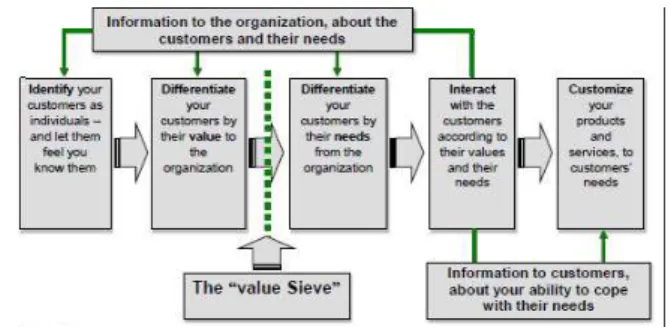
Fig. 2: IDIC model. (Source: The IDIC Methodology, D Pepper and M Rogers, 2004).
CRM3: The CRM Continuum:
The CRM continuum (Figure 3) illustrates that, at one extreme, CRM is defined as a particular technology solution, whilst at the other extreme, CRM is viewed as a holistic approach to managing customer relationships in order to create shareholder value (that is, the organisation becomes more customer-centric). CRM, therefore, emphasises the fact that managing customer relationships is a complex and on-going process, and a response to - and reflection of - a rapidly changing marketing environment. Therefore, it is advocated in order to position CRM in any organisation in a broad strategic context to the extreme right of the continuum (Payne & Frow 2005).
Fig. 3: The CRM Continuum. (Source: A Strategic Framework for Customer Relationship Management, Adrian Payne and PennieFrow, 2005).
CRM4: A Cross-functional, process-based CRM strategy framework:
CRM5: The Four dimensions of CRM:
The CRM measurement scale consists of four dimensions (Figure 5), which are broad behavioural components; namely, Key customer focus, CRM organisation, Knowledge management and Technology-based CRM. The CRM scale developed for the financial industry, with the abovementioned four main criteria, can be generalised for any industry, ranging from manufacturing to services. The authors believe that “…this is the first study to provide a comprehensive, psychometrically sound, and operationally valid measure of a firm’s CRM”, and the findings reveal that there are significant positive relationships amongst the variables, which have a high degree of reliability and validity. The findings further validate that “…the long-held belief that CRM is a critical success factor for business performance,” (Sin, Tse & Yim 2005).
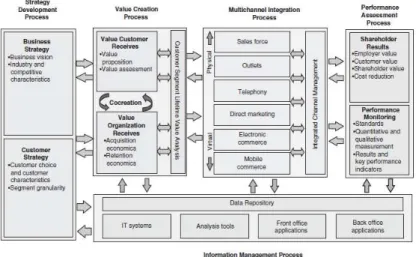
Fig. 4: A Cross-functional, process-based CRM strategy framework. (Source: A Strategic Framework for Customer Relationship Management, Adrian Payne and PennieFrow, 2005).
Fig. 5: The Four dimensions of CRM. (Source: CRM: conceptualisation and scale development, Leo Y M Sin, Alan C B Tse and Frederick H K Yim, 2005)
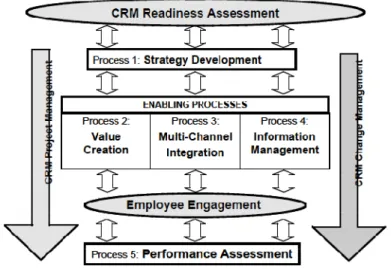
CRM6: A CRM strategy and implementation model:
The CRM strategy and implementation model (Figure 6) consists of two main components, “…four key CRM implementation elements and five cross-functional CRM processes”. Implementation elements will support the organisation in developing CRM strategies in “CRM project management, CRM change management, CRM readiness assessment, and employee engagement. The main purpose of “…CRM is to efficiently and effectively increase the acquisition, growth and retention of profitable customers by selectively initiating, building and maintaining appropriate relationships with them,” (Payne & Frow 2006).
CRM7: Integrated model for CRM scorecard:
perspectives: on infrastructure, process, organisational performance and customer performance, similar to a conventional balanced scorecard (Kim & Kim 2008).
Fig. 6: A CRM strategy and implementation model. (Source: Customer Relationship Management: From Strategy to Implementation, Adrian Payne and PennieFrow, 2006)
Fig. 7: Integrated model for CRM scorecard. (Source: A CRM performance measurement framework: Its development process and application, Hyung-Su Kim and Young-Gul Kim, 2008)
CRM8: The Quality Competitiveness Index Model (QCi Model) on Customer Management:
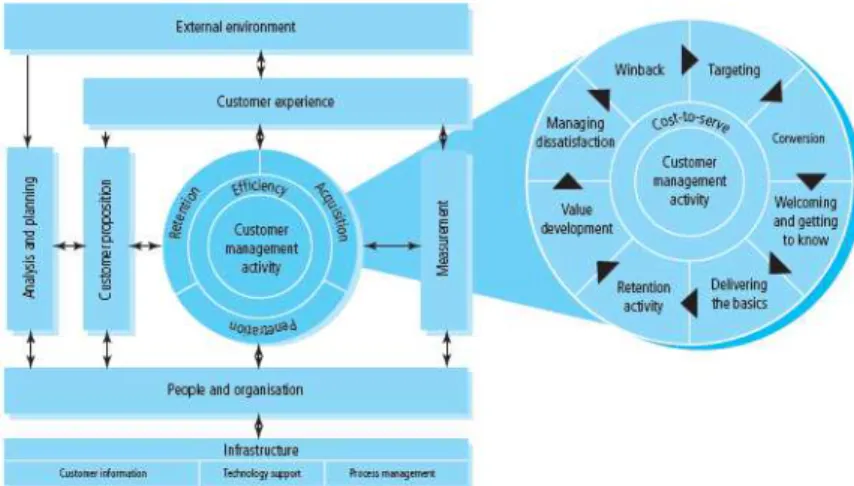
The Quality Competitiveness Index Model (QCi model) is a customer management model. The QCi model represents the different activities that organisations should perform to acquire and retain customers, as illustrated in Figure 8. This model describes the technology usage in the assisting process performed by people. TheQCimodel discuss on the customer relationships process without the external environment, and that process affects the organisation’s planning activities. Customer experience has an impact on customer proposition, measurement and customer management activity. The focus of the QCi model should be the customer, not the CRM process itself. Customer management has three distinct factors; namely, acquisition, retention and penetration, in order to be successful in the CRM implementation strategy (Buttle 2009).
CRM9: CRM value chain model:
The CRM value-chain model (Figure 9) elaborates the relationships with the customers, and more importantly, “…strategically significant customers”, in order to ensure profitability. There are five primary stages and four supporting conditions to achieve customer profitability. The primary stages are the key to success of CRM implementation and supporting conditions are there to ensure an effective and efficient functional CRM strategy (Buttle 2009).
CRM10: Gartner’s CRM competency model:
information, implementing technology and developing metrics. The model facilitates the process of understanding the organisations’ current status and future position, where that aims to satisfy the customer, and also, to maintain a lead in the industry (Buttle 2009).
Fig. 8: The Quality Competitiveness Index Model (QCi Model) on Customer Management. (Source: Customer Relationship Management: Concepts and Technologies, Second edition, Francis Buttle, 2009)
Fig. 9: CRM value chain model. (Source: Customer Relationship Management: Concepts and Technologies, Second edition, Francis Buttle, 2009).
CRM11: The CRM strategy mix:
There is a significant difference between CRM and relationship marketing. CRM strategy mixes discussions about the strategic implication on CRM implementation for organisations, which are relevant to the industry context, market position in relation to the competitors and the use of CRM as the business development strategy. There are four different alternative approaches that organisations have to consider in building relationships with customers, based on the availability of customer information and the degree of customer individualisation required, as illustrated in Figure 11(Frow & Payne 2009).
Fig. 11: The CRM strategy mix. (Source: Customer Relationship Management: A Strategic Perspective, PennieFrow and Adrian Payne, 2009).
CRM12: CRM process model:
Customer segments have to be identified, and then, develop differentiated strategies in order to develop customer strategies for the target market. Setting up the objectives in order to implement customer strategy has always been based on the customer values, customer loyalty and customer satisfaction. Corporate CRM strategies are developed with the support and commitment of top management, making the organisation focus towards the customer, not the product or service on offer (from “product-centric to customer-centric”). This may be included in the organisational culture. The model in Figure 12 clarifies the essential desires of the implementation of CRM process (Ahmadi et al. 2012).
Fig. 12: CRM process model. (Source: Customer Relationship Management Model for UTM Alumni Liaison Unit, HosseinAhmadi, Mohammad Osmani, Othman Ibrahim and MehrbakhshNilashi, 2012)
CRM13: The impact of CRM factors on Customer satisfaction:
There is a significant relationship and contribution to the behaviour of the employees towards customer satisfaction. CRM can be considered as the most efficient business strategy that can be used to create and maintain long-lasting relationships with customers. Service quality is not a significant contributor for customer satisfaction. Figure 13 illustrates the conceptual framework developed and tested to understand the relationships among the critical elements of CRM for customer satisfaction and loyalty (Long et al. 2013).
5. Discussion and conclusion:
The subject areas discussed and reviewed in the models consist of: customer centric approach, value creation to customers, technology solution to enhance relationships, strategy perspective, knowledge management system, employee engagement in quality improvements and organisational performance.
Fig. 13: Impact of CRM factors on Customer satisfaction. (Source: Impact of CRM Factors on Customer Satisfaction and Loyalty; Choi Sang Long, RahaKhalafinezhad, Wan Khairuzzaman Wan Ismail and SitiZalehaAbdRasid, 2013).
It is evident that CRM concept has attracted among the practitioners as well as academics. Research on CRM has increased during the period of last ten years, 2003 to 2013. Therefore, it can be concluded that the need for excellent CRM practices are expected from the customers for them to retain with the product/ service on offer. Organisations have to strengthen the CRM practices to be competitive and gain advantage with excellent relationships with customers. Employees of the organisations should understand the value that CRM brings in to the organisation and in return the incremental benefits on organisational performance.
Managerial conclusions comprise from the CRM models discuss is about better organisational performance towards a service-oriented culture. Service quality and customer satisfaction have to be the core of the business practices in order to satisfy customers. Customer relationship management acts as key performance indicator in the organisation’s strategic direction.
6. Future research:
There is a need to review empirical literature on the concept of CRM to complement the theoretical frameworks discussed in this article. Secondly, contents of the CRM models have to classified on broad subject areas and analyse the literature to understand the evolution of the concept since 1990. One another important area for research is to evaluate the CRM practices across different geographical boundaries. Last but not least the future research opportunities arise from this literature review is to carryout research on CRM and its effect on customer satisfaction.
REFERENCES
Ahmadi, H., M.Osmani, O.Ibrahim, M. Nilashi, 2012. 'Customer Relationship Management Model for UTM Alumni Liaison Unit', International Journal of Engineering and Innovative Technology (IJEIT), 2(5): 1-8.
Buttle, F., 2009.Customer Relationship Management: Concepts and Technologies, Elsevier Ltd, Oxford, United Kingdom.
Dibb, S., C.Simões, R. Wensley, 2014. 'Establishing the scope of marketing practice: insights from practitioners', European Journal of Marketing, 8(1/2): 380-404.
Frow, P.,A.Payne, 2009. 'Customer Relationship Management: A Strategic Perspective', jbm, 3(1): 7 - 27. Gummesson, E., 2004. 'Return on relationships (ROR): the value of relationship marketing and CRM in business-to-business contexts', Journal of Business & Industrial Marketing, 19(2): 136-148.
Kim, H.S.,Y.G. Kim, 2008. 'A CRM performance measurement framework: Its development process and application', Industrial Marketing Management, doi:10.1016/j.indmarman.2008.04.008.
Kim, J., E.Suh, H.Hwang, 2003. 'A Model for Evaluating the Effectiveness of CRM using the Balanced Scorecard', Journal of Interactive Marketing, 5-19.
Liyanage, U., 2010, 'The Sri Lankan Post-modern Consumer', Sri Lankan Journal of Management, 14(4): 15(1): 92-111. viewed 1 January 2013, <http://www.sljm.pim.lk/admin/uploads/the_sri_lankan_post-modern_consumer.pdf>.
Long, C.S., R.Khalafinezhad, W.K.W.Ismail, S.Z.A.Rasid, 2013. 'Impact of CRM Factors on Customer Satisfaction and Loyalty', Asian Social Science, 9(10): 247 - 253.
Parvatiyar, A.,J.N.Sheth, 2002. 'Customer Relationship Management: Emerging Practice, Process, and Discipline', Journal of Economic and Social Research, 3(2): 1 - 34.
Payne, A.,P. Frow, 2005. 'A Strategic Framework for Customer Relationship Management', Journal of Marketing, 69: 167–176.
Payne, A.,P.Frow, 2006, 'Customer Relationship Management: from Strategy to Implementation', Journal of Marketing Management, 22: 135-168.
Pepper, D.,M. Rogers, 2004. , viewed,
<http://wikimemoires.com/wp-content/uploads/2011/06/IDICMethodology>.
Sekaran, U.,R.Bougie, 2009.Research Methods for Business, 5th edn, John Wiley & Sons Ltd, United Kingdom.
Sin, L.Y.M., A.C.B.Tse, F.H.K.Yim, 2005. 'CRM: conceptualization and scale development', European Journal of Marketing, 39(11/12): 1264-1290.
Strandvik, T., M.H.Holmlund, C.Grönroos, 2014. 'The mental footprint of marketing in the boardroom', Journal of Service Management, 25(2): 241-252.