Project Management for Construction
Fundamental Concepts for Owners, Engineers, Architects and
Builders
1.
The_Owners'_Perspective
2.
Organizing_For_Project_Management
3.
The_Design_And_Construction_Process
4.
Labor,_Material,_And_Equipment_Utilization
5.
Cost_Estimation
6.
Economic_Evaluation_of_Facility_Investments
7.
Financing_of_Constructed_Facilities
8.
Construction_Pricing_and_Contracting
9.
Construction_Planning
10.
Fundamental_Scheduling_Procedures
11.
Advanced_Scheduling_Techniques
12.
Cost_Control,_Monitoring,_and_Accounting
13.
Quality_Control_and_Safety_During_Construction
14.
Organization_and_Use_of_Project_Information
by Chris Hendrickson, Department of Civil and Environmental Engineering, Carnegie Mellon
University, Pittsburgh, PA l52l3 Copyright C. Hendrickson 1998
First Edition originally printed by Prentice Hall, ISBN 0-13-731266-0, 1989 with co-author Tung Au.
Second Edition prepared for world wide web publication in 2000.
Version 2.2 prepared Summer, 2008.
Preface
This book is provided on the worldwide web as a service to the community of practitioners and students.
Reproduction for educational purposes is permitted with appropriate citation. If you find this work
helpful or have suggestions for additions or corrections, please email Chris Hendrickson: [email protected].
A hardcopy Instructor's Manual with problem solutions is available for a fee of $ 10 to cover
reproduction, mailing and handling. Send a check made out to Carnegie Mellon University to Ms. Patty
Langer, Department of Civil and Environmental Engineering, Carnegie Mellon University, Pittsburgh,
PA 15213.
This book develops a specific viewpoint in discussing the participants, the processes and the techniques
of project management for construction. This viewpoint is that of owners who desire completion of
projects in a timely, cost effective fashion. Some profound implications for the objectives and methods
of project management result from this perspective:
z
The "life cycle" of costs and benefits from initial planning through operation and disposal of a
facility are relevant to decision making. An owner is concerned with a project from the cradle to
the grave. Construction costs represent only one portion of the overall life cycle costs.
z
Optimizing performance at one stage of the process may not be beneficial overall if additional
http://pmbook.ce.
cmu.edu/
costs or delays occur elsewhere. For example, saving money on the design process will be a false
economy if the result is excess construction costs.
z
Fragmentation of project management among different specialists may be necessary, but good
communication and coordination among the participants is essential to accomplish the overall
goals of the project. New information technologies can be instrumental in this process, especially
the Internet and specialized Extranets.
z
Productivity improvements are always of importance and value. As a result, introducing new
materials and automated construction processes is always desirable as long as they are less
expensive and are consistent with desired performance.
z
Quality of work and performance are critically important to the success of a project since it is the
owner who will have to live with the results.
In essence, adopting the viewpoint of the owner focuses attention on the cost effectiveness of facility
construction rather than competitive provision of services by the various participants.
While this book is devoted to a particular viewpoint with respect to project management for
construction, it is not solely intended for owners and their direct representatives. By understanding the
entire process, all participants can respond more effectively to the owner's needs in their own work, in
marketing their services, and in communicating with other participants. In addition, the specific
techniques and tools discussed in this book (such as economic evaluation, scheduling, management
information systems, etc.) can be readily applied to any portion of the process.
As a result of the focus on the effective management of entire projects, a number of novel organizational
approaches and techniques become of interest. First and foremost is the incentive to replace
confrontation and adversarial relationships with a spirit of joint endeavor, partnership and
accomplishment. For example, we discuss the appropriate means to evaluate risks and the appropriate
participants to assume the unavoidable risks associated with constructed facilities. Scheduling,
communication of data, and quality assurance have particular significance from the viewpoint of an
owner, but not necessarily for individual participants. The use of computer-based technology and
automation also provides opportunities for increased productivity in the process. Presenting such
modern management options in a unified fashion is a major objective of this book.
The unified viewpoint of the entire process of project management in this book differs from nearly all
other literature on the subject. Most textbooks in the area treat special problems, such as cost estimating,
from the viewpoint of particular participants such as construction managers or contractors. This
literature reflects the fragmentation of the construction process among different organizations and
professionals. Even within a single profession such as civil engineering, there are quite distinct groups
of specialists in planning, design, management, construction and other sub-specialties. Fragmentation of
interest and attention also exists in nearly all educational programs. While specialty knowledge may be
essential to accomplish particular tasks, participants in the process should also understand the context
and role of their special tasks.
This book is intended primarily as a text for advanced undergraduates, beginning graduate students or
professionals continuing their education in engineering, construction, architecture or facilities
management. Examples and discussion are chosen to remind readers that project management is a
challenging, dynamic and exciting enterprise and not just a record of past practices. It should also be
useful to professionals who wish an up-to-date reference on project management.
Chapters 1 to 3 present an overview of the construction management and design process which should
be of interest to anyone engaged in project management for construction. One need not have detailed
knowledge about individual tasks or techniques for this part. Individuals can read these chapters and
understand the basic philosophy and principles without further elaboration.
Chapters 4 through 14 describe specific functions and techniques useful in the process of project
management. This part presents techniques and requirements during project planning, including risk
assessment, cost estimation, forecasting and economic evaluation. It is during this planning and design
phase in which major cost savings may be obtained during the eventual construction and operation
phases. It also addresses programming and financing issues, such as contracting and bidding for
services, financing, organizing communication and insuring effective use of information. It further
discusses techniques for control of time, cost and quality during the construction phase. Beginning
courses in engineering economics (including cash flow analysis and discounting), use of computers,
probability and statistics would be useful. Furthermore, access to a personal computer with spreadsheet
or equation solving software would be helpful for readers attempting some of the problems in Chapters 4
to 14. Numerous software programs could be used for this purpose, including both spreadsheet and
equation solving programs. Problems in some chapters could also be done on any number of existing
software packages for information management and project scheduling. However, the use of personal
computers in this fashion is not required in following the text material. Each instructor may exercise
discretion in omitting some of the material in these chapters if they are redundant with other classes or
too advanced for students in his or her own class.
It is our hope that students beginning their career in project management for construction will be
prepared to adopt the integrated approach emphasized in this book. Furthermore, experienced
professionals in various fields may discover in this book some surprises that even they have not
anticipated. High level decision makers in owner organizations who are not directly involved in the
project management process may find the basic philosophy and principles of interest, especially in
Chapters 1 through 3, as owners must invariably pay for constructed facilities, for better or worse. If the
book can fulfill even a small part of its promises to influence the future of project management for
construction, our efforts will have been amply rewarded.
For version 2.1 (Summer 2003), a number of new examples, updates and references have been inserted
throughout the text. For example, there are new discussions of lean construction and green buildings.
However, the basic structure and methods remain the same. The fundamentals of project management
treated here are timeless.
Numerous individuals helped with the preparation of the first and second editions of this book. In
particular, we wish to acknowledge Burcu Akinci, William J. Hall, Paul Christiano, Steven Fenves,
Daniel Rehak, Debbie Scappatura, and Shirley Knapp. Iavor Kostov, Tommy Hendrickson, Curt Yeske
and In-Soo Jung were instrumental in developing the web version of this book. This book also reflects
the contributions of numerous students and colleagues in industry who have challenged us with
problems and shared their own ideas and experience over many years. We are grateful to all of these
individuals.
Some material in this book has been taken from several papers authored by us and published by the
American Society of Civil Engineers. Materials taken from other sources are acknowledged in footnotes,
tables or figures. We gratefully acknowledge the permissions given to us by these individuals, publishers
and organizations.
A series of photographs depicting various stages of construction of the PPG building in Pittsburgh, PA is
inserted in sequence between chapters. We wish to thank PPG Industries for its cooperation in providing
these photographs.
1. The Owners' Perspective
1.1 Introduction
Like the five blind men encountering different parts of an elephant, each of the numerous participants in
the process of planning, designing, financing, constructing and operating physical facilities has a
different perspective on project management for construction. Specialized knowledge can be very
beneficial, particularly in large and complicated projects, since experts in various specialties can provide
valuable services. However, it is advantageous to understand how the different parts of the process fit
together. Waste, excessive cost and delays can result from poor coordination and communication among
specialists. It is particularly in the interest of owners to insure that such problems do not occur. And it
behooves all participants in the process to heed the interests of owners because, in the end, it is the
owners who provide the resources and call the shots.
By adopting the viewpoint of the owners, we can focus our attention on the complete process of
project
management
for constructed facilities rather than the historical roles of various specialists such as
planners, architects, engineering designers, constructors, fabricators, material suppliers, financial
analysts and others. To be sure, each specialty has made important advances in developing new
techniques and tools for efficient implementation of construction projects. However, it is through the
understanding of the entire process of project management that these specialists can respond more
effectively to the owner's desires for their services, in marketing their specialties, and in improving the
productivity and quality of their work.
The introduction of innovative and more effective project management for construction is not an
academic exercise. As reported by the "Construction Industry Cost Effectiveness Project" of the
Business Roundtable:
[1]
By common consensus and every available measure, the United States no longer gets it's
money's worth in construction, the nation's largest industry ... The creeping erosion of
construction efficiency and productivity is bad news for the entire U.S. economy.
Go Up to Table of Contents
Go To Chapter 2
(Organizing for Project
Management)
The Owners' Perspective
Introduction
The Project Life Cycle
Major Types of Construction
Selection of Professional Services
Construction Contractors
Financing of Constructed Facilities
Legal and Regulatory Requirements
The Changing Environment of the
Construction Industry
The Role of Project Managers
References
Footnotes
http://pmbook.ce.cmu.
edu/01_The_Owners'_Pe
rspective.html
Construction is a particularly seminal industry. The price of every factory, office building,
hotel or power plant that is built affects the price that must be charged for the goods or
services produced in it or by it. And that effect generally persists for decades ... Too much
of the industry remains tethered to the past, partly by inertia and partly by historic
divisions...
Improvement of project management not only can aid the construction industry, but may also be the
engine for the national and world economy. However, if we are to make meaningful improvements, we
must first understand the construction industry, its operating environment and the institutional
constraints affecting its activities as well as the nature of project management.
Back to top
1.2 The Project Life Cycle
The acquisition of a constructed facility usually represents a major capital investment, whether its owner
happens to be an individual, a private corporation or a public agency. Since the commitment of
resources for such an investment is motivated by market demands or perceived needs, the facility is
expected to satisfy certain objectives within the constraints specified by the owner and relevant
regulations. With the exception of the speculative housing market, where the residential units may be
sold as built by the real estate developer, most constructed facilities are custom made in consultation
with the owners. A real estate developer may be regarded as the sponsor of building projects, as much as
a government agency may be the sponsor of a public project and turns it over to another government unit
upon its completion. From the viewpoint of project management, the terms "owner" and "sponsor" are
synonymous because both have the ultimate authority to make all important decisions. Since an owner is
essentially acquiring a facility on a promise in some form of agreement, it will be wise for any owner to
have a clear understanding of the acquisition process in order to maintain firm control of the quality,
timeliness and cost of the completed facility.
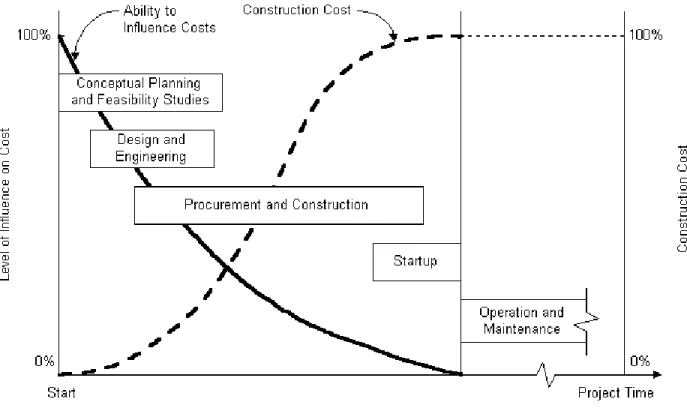
From the perspective of an owner, the project life cycle for a constructed facility may be illustrated
schematically in Figure 1-1. Essentially, a project is conceived to meet market demands or needs in a
timely fashion. Various possibilities may be considered in the conceptual planning stage, and the
technological and economic feasibility of each alternative will be assessed and compared in order to
select the best possible project. The financing schemes for the proposed alternatives must also be
examined, and the project will be programmed with respect to the timing for its completion and for
available cash flows. After the scope of the project is clearly defined, detailed engineering design will
provide the blueprint for construction, and the definitive cost estimate will serve as the baseline for cost
control. In the procurement and construction stage, the delivery of materials and the erection of the
project on site must be carefully planned and controlled. After the construction is completed, there is
usually a brief period of start-up or shake-down of the constructed facility when it is first occupied.
Finally, the management of the facility is turned over to the owner for full occupancy until the facility
lives out its useful life and is designated for demolition or conversion.
Figure 1-1:
The Project Life Cycle of a Constructed Facility
Of course, the stages of development in Figure 1-1 may not be strictly sequential. Some of the stages
require iteration, and others may be carried out in parallel or with overlapping time frames, depending
on the nature, size and urgency of the project. Furthermore, an owner may have in-house capacities to
handle the work in every stage of the entire process, or it may seek professional advice and services for
the work in all stages. Understandably, most owners choose to handle some of the work in-house and to
contract outside professional services for other components of the work as needed. By examining the
project life cycle from an owner's perspective we can focus on the proper roles of various activities and
participants in all stages regardless of the contractual arrangements for different types of work.
In the United States, for example, the U.S. Army Corps of Engineers has in-house capabilities to deal
with planning, budgeting, design, construction and operation of waterway and flood control structures.
Other public agencies, such as state transportation departments, are also deeply involved in all phases of
a construction project. In the private sector, many large firms such as DuPont, Exxon, and IBM are
adequately staffed to carry out most activities for plant expansion. All these owners, both public and
private, use outside agents to a greater or lesser degree when it becomes more advantageous to do so.
The project life cycle may be viewed as a process through which a project is implemented from cradle to
grave. This process is often very complex; however, it can be decomposed into several stages as
indicated by the general outline in Figure 1-1. The solutions at various stages are then integrated to
obtain the final outcome. Although each stage requires different expertise, it usually includes both
technical and managerial activities in the
knowledge domain
of the specialist. The owner may choose to
decompose the entire process into more or less stages based on the size and nature of the project, and
thus obtain the most efficient result in implementation. Very often, the owner retains direct control of
work in the planning and programming stages, but increasingly outside planners and financial experts
are used as consultants because of the complexities of projects. Since operation and maintenance of a
facility will go on long after the completion and acceptance of a project, it is usually treated as a separate
problem except in the consideration of the life cycle cost of a facility. All stages from conceptual
planning and feasibility studies to the acceptance of a facility for occupancy may be broadly lumped
together and referred to as the Design/Construct process, while the procurement and construction alone
are traditionally regarded as the province of the construction industry.
Owners must recognize that there is no single best approach in organizing project management
throughout a project's life cycle. All organizational approaches have advantages and disadvantages,
depending on the knowledge of the owner in construction management as well as the type, size and
location of the project. It is important for the owner to be aware of the approach which is most
appropriate and beneficial for a particular project. In making choices, owners should be concerned with
the life cycle costs of constructed facilities rather than simply the initial construction costs. Saving small
amounts of money during construction may not be worthwhile if the result is much larger operating
costs or not meeting the functional requirements for the new facility satisfactorily. Thus, owners must be
very concerned with the quality of the finished product as well as the cost of construction itself. Since
facility operation and maintenance is a part of the project life cycle, the owners' expectation to satisfy
investment objectives during the project life cycle will require consideration of the cost of operation and
maintenance. Therefore, the facility's operating management should also be considered as early as
possible, just as the construction process should be kept in mind at the early stages of planning and
programming.
Back to top
1.3 Major Types of Construction
Since most owners are generally interested in acquiring only a specific type of constructed facility, they
should be aware of the common industrial practices for the type of construction pertinent to them.
Likewise, the
construction industry
is a conglomeration of quite diverse segments and products. Some
owners may procure a constructed facility only once in a long while and tend to look for short term
advantages. However, many owners require periodic acquisition of new facilities and/or rehabilitation of
existing facilities. It is to their advantage to keep the construction industry healthy and productive.
Collectively, the owners have more power to influence the construction industry than they realize
because, by their individual actions, they can provide incentives or disincentives for innovation,
efficiency and quality in construction. It is to the interest of all parties that the owners take an active
interest in the construction and exercise beneficial influence on the performance of the industry.
In planning for various types of construction, the methods of procuring professional services, awarding
construction contracts, and financing the constructed facility can be quite different. For the purpose of
discussion, the broad spectrum of constructed facilities may be classified into four major categories,
each with its own characteristics.
Residential Housing Construction
Residential housing construction includes single-family houses, multi-family dwellings, and high-rise
apartments. During the development and construction of such projects, the developers or sponsors who
are familiar with the construction industry usually serve as surrogate owners and take charge, making
necessary contractual agreements for design and construction, and arranging the financing and sale of
the completed structures. Residential housing designs are usually performed by architects and engineers,
and the construction executed by builders who hire subcontractors for the structural, mechanical,
electrical and other specialty work. An exception to this pattern is for single-family houses which may
be designed by the builders as well.
The residential housing market is heavily affected by general economic conditions, tax laws, and the
monetary and fiscal policies of the government. Often, a slight increase in total demand will cause a
substantial investment in construction, since many housing projects can be started at different locations
by different individuals and developers at the same time. Because of the relative ease of entry, at least at
the lower end of the market, many new builders are attracted to the residential housing construction.
Hence, this market is highly competitive, with potentially high risks as well as high rewards.
Figure 1-2:
Residential Housing Construction (courtesy of Caterpillar, Inc.)
Institutional and Commercial Building Construction
Institutional and commercial building construction encompasses a great variety of project types and
sizes, such as schools and universities, medical clinics and hospitals, recreational facilities and sports
stadiums, retail chain stores and large shopping centers, warehouses and light manufacturing plants, and
skyscrapers for offices and hotels. The owners of such buildings may or may not be familiar with
construction industry practices, but they usually are able to select competent professional consultants
and arrange the financing of the constructed facilities themselves. Specialty architects and engineers are
often engaged for designing a specific type of building, while the builders or general contractors
undertaking such projects may also be specialized in only that type of building.
Because of the higher costs and greater sophistication of institutional and commercial buildings in
comparison with residential housing, this market segment is shared by fewer competitors. Since the
construction of some of these buildings is a long process which once started will take some time to
proceed until completion, the demand is less sensitive to general economic conditions than that for
speculative housing. Consequently, the owners may confront an
oligopoly
of general contractors who
compete in the same market. In an oligopoly situation, only a limited number of competitors exist, and a
firm's price for services may be based in part on its competitive strategies in the local market.
Figure 1-3
: Construction of the PPG Building in Pittsburgh, Pennsylvania (courtesy of PPG Industries,
Inc.)
Specialized Industrial Construction
Specialized industrial construction usually involves very large scale projects with a high degree of
technological complexity, such as oil refineries, steel mills, chemical processing plants and coal-fired or
nuclear power plants. The owners usually are deeply involved in the development of a project, and
prefer to work with designers-builders such that the total time for the completion of the project can be
shortened. They also want to pick a team of designers and builders with whom the owner has developed
good working relations over the years.
Although the initiation of such projects is also affected by the state of the economy, long range demand
forecasting is the most important factor since such projects are capital intensive and require considerable
amount of planning and construction time. Governmental regulation such as the rulings of the
Environmental Protection Agency and the Nuclear Regulatory Commission in the United States can also
profoundly influence decisions on these projects.
Figure 1-4:
Construction of a Benzene Plant in Lima, Ohio (courtesy of Manitowoc Company, Inc.)
Infrastructure and Heavy Construction
Infrastructure and heavy construction includes projects such as highways, mass transit systems, tunnels,
bridges, pipelines, drainage systems and sewage treatment plants. Most of these projects are publicly
owned and therefore financed either through bonds or taxes. This category of construction is
characterized by a high degree of mechanization, which has gradually replaced some labor intensive
operations.
The engineers and builders engaged in infrastructure construction are usually highly specialized since
each segment of the market requires different types of skills. However, demands for different segments
of infrastructure and heavy construction may shift with saturation in some segments. For example, as the
available highway construction projects are declining, some heavy construction contractors quickly
move their work force and equipment into the field of mining where jobs are available.
Figure 1-5:
Construction of the Dame Point Bridge in Jacksonville, Florida (courtesy of Mary Lou
Maher)
Back to top
1.4 Selection of Professional Services
When an owner decides to seek professional services for the design and construction of a facility, he is
confronted with a broad variety of choices. The type of services selected depends to a large degree on
the type of construction and the experience of the owner in dealing with various professionals in the
previous projects undertaken by the firm. Generally, several common types of professional services may
be engaged either separately or in some combination by the owners.
Financial Planning Consultants
At the early stage of strategic planning for a capital project, an owner often seeks the services of
financial planning consultants such as certified public accounting (CPA) firms to evaluate the economic
and financial feasibility of the constructed facility, particularly with respect to various provisions of
federal, state and local tax laws which may affect the investment decision. Investment banks may also be
consulted on various options for financing the facility in order to analyze their long-term effects on the
financial health of the owner organization.
Architectural and Engineering Firms
Traditionally, the owner engages an architectural and engineering (A/E) firm or consortium as technical
consultant in developing a preliminary design. After the engineering design and financing arrangements
for the project are completed, the owner will enter into a construction contract with a general contractor
either through competitive bidding or negotiation. The general contractor will act as a constructor and/or
a coordinator of a large number of subcontractors who perform various specialties for the completion of
the project. The A/E firm completes the design and may also provide on site quality inspection during
construction. Thus, the A/E firm acts as the prime professional on behalf of the owner and supervises the
construction to insure satisfactory results. This practice is most common in building construction.
In the past two decades, this traditional approach has become less popular for a number of reasons,
particularly for large scale projects. The A/E firms, which are engaged by the owner as the prime
professionals for design and inspection, have become more isolated from the construction process. This
has occurred because of pressures to reduce fees to A/E firms, the threat of litigation regarding
construction defects, and lack of knowledge of new construction techniques on the part of architect and
engineering professionals. Instead of preparing a construction plan along with the design, many A/E
firms are no longer responsible for the details of construction nor do they provide periodic field
inspection in many cases. As a matter of fact, such firms will place a prominent disclaimer of
responsibilities on any shop drawings they may check, and they will often regard their representatives in
the field as observers instead of inspectors. Thus, the A/E firm and the general contractor on a project
often become antagonists who are looking after their own competing interests. As a result, even the
constructibility of some engineering designs may become an issue of contention. To carry this protective
attitude to the extreme, the specifications prepared by an A/E firm for the general contractor often
protects the interest of the A/E firm at the expense of the interests of the owner and the contractor.
In order to reduce the cost of construction, some owners introduce
value engineering
, which seeks to
reduce the cost of construction by soliciting a second design that might cost less than the original design
produced by the A/E firm. In practice, the second design is submitted by the contractor after receiving a
construction contract at a stipulated sum, and the saving in cost resulting from the redesign is shared by
the contractor and the owner. The contractor is able to absorb the cost of redesign from the profit in
construction or to reduce the construction cost as a result of the re-design. If the owner had been willing
to pay a higher fee to the A/E firm or to better direct the design process, the A/E firm might have
produced an improved design which would cost less in the first place. Regardless of the merit of value
engineering, this practice has undermined the role of the A/E firm as the prime professional acting on
behalf of the owner to supervise the contractor.
Design/Construct Firms
A common trend in industrial construction, particularly for large projects, is to engage the services of a
design/construct firm. By integrating design and construction management in a single organization,
many of the conflicts between designers and constructors might be avoided. In particular, designs will
be closely scrutinized for their constructibility. However, an owner engaging a design/construct firm
must insure that the quality of the constructed facility is not sacrificed by the desire to reduce the time or
the cost for completing the project. Also, it is difficult to make use of competitive bidding in this type of
design/construct process. As a result, owners must be relatively sophisticated in negotiating realistic and
cost-effective construction contracts.
One of the most obvious advantages of the integrated design/construct process is the use of
phased
construction
for a large project. In this process, the project is divided up into several phases, each of
which can be designed and constructed in a staggered manner. After the completion of the design of the
first phase, construction can begin without waiting for the completion of the design of the second phase,
etc. If proper coordination is exercised. the total project duration can be greatly reduced. Another
advantage is to exploit the possibility of using the
turnkey
approach whereby an owner can delegate all
responsibility to the design/construct firm which will deliver to the owner a completed facility that
meets the performance specifications at the specified price.
Professional Construction Managers
In recent years, a new breed of construction managers (CM) offers professional services from the
inception to the completion of a construction project. These construction managers mostly come from
the ranks of A/E firms or general contractors who may or may not retain dual roles in the service of the
owners. In any case, the owner can rely on the service of a single prime professional to manage the
entire process of a construction project. However, like the A/E firms of several decades ago, the
construction managers are appreciated by some owners but not by others. Before long, some owners find
that the construction managers too may try to protect their own interest instead of that of the owners
when the stakes are high.
It should be obvious to all involved in the construction process that the party which is required to take
higher risk demands larger rewards. If an owner wants to engage an A/E firm on the basis of low fees
instead of established qualifications, it often gets what it deserves; or if the owner wants the general
contractor to bear the cost of uncertainties in construction such as foundation conditions, the contract
price will be higher even if competitive bidding is used in reaching a contractual agreement. Without
mutual respect and trust, an owner cannot expect that construction managers can produce better results
than other professionals. Hence, an owner must understand its own responsibility and the risk it wishes
to assign to itself and to other participants in the process.
Operation and Maintenance Managers
Although many owners keep a permanent staff for the operation and maintenance of constructed
facilities, others may prefer to contract such tasks to professional managers. Understandably, it is
common to find in-house staff for operation and maintenance in specialized industrial plants and
infrastructure facilities, and the use of outside managers under contracts for the operation and
maintenance of rental properties such as apartments and office buildings. However, there are exceptions
to these common practices. For example, maintenance of public roadways can be contracted to private
firms. In any case, managers can provide a spectrum of operation and maintenance services for a
specified time period in accordance to the terms of contractual agreements. Thus, the owners can be
spared the provision of in-house expertise to operate and maintain the facilities.
Facilities Management
As a logical extension for obtaining the best services throughout the project life cycle of a constructed
facility, some owners and developers are receptive to adding strategic planning at the beginning and
facility maintenance as a follow-up to reduce space-related costs in their real estate holdings.
Consequently, some architectural/engineering firms and construction management firms with
computer-based expertise, together with interior design firms, are offering such front-end and follow-up services in
addition to the more traditional services in design and construction. This spectrum of services is
described in
Engineering News-Record
(now
ENR
) as follows:
[2]
Facilities management is the discipline of planning, designing, constructing and managing
space -- in every type of structure from office buildings to process plants. It involves
developing corporate facilities policy, long-range forecasts, real estate, space inventories,
projects (through design, construction and renovation), building operation and maintenance
plans and furniture and equipment inventories.
A common denominator of all firms entering into these new services is that they all have strong
computer capabilities and heavy computer investments. In addition to the use of computers for aiding
design and monitoring construction, the service includes the compilation of a computer record of
building plans that can be turned over at the end of construction to the facilities management group of
the owner. A computer data base of facilities information makes it possible for planners in the owner's
organization to obtain overview information for long range space forecasts, while the line managers can
use as-built information such as lease/tenant records, utility costs, etc. for day-to-day operations.
Back to top
1.5 Construction Contractors
Builders who supervise the execution of construction projects are traditionally referred to as
contractors
,
or more appropriately called
constructors
. The
general contractor
coordinates various tasks for a project
while the
specialty contractors
such as mechanical or electrical contractors perform the work in their
specialties. Material and equipment suppliers often act as
installation contractors
; they play a significant
role in a construction project since the conditions of delivery of materials and equipment affect the
quality, cost, and timely completion of the project. It is essential to understand the operation of these
contractors in order to deal with them effectively.
General Contractors
The function of a general contractor is to coordinate all tasks in a construction project. Unless the owner
performs this function or engages a professional construction manager to do so, a good general
contractor who has worked with a team of superintendents, specialty contractors or subcontractors
together for a number of projects in the past can be most effective in inspiring loyalty and cooperation.
The general contractor is also knowledgeable about the labor force employed in construction. The labor
force may or may not be unionized depending on the size and location of the projects. In some projects,
no member of the work force belongs to a labor union; in other cases, both union and non-union
craftsmen work together in what is called an open shop, or all craftsmen must be affiliated with labor
unions in a closed shop. Since labor unions provide hiring halls staffed with skilled journeyman who
have gone through apprentice programs for the projects as well as serving as collective bargain units, an
experienced general contractor will make good use of the benefits and avoid the pitfalls in dealing with
organized labor.
Specialty Contractors
Specialty contractors include mechanical, electrical, foundation, excavation, and demolition contractors
among others. They usually serve as subcontractors to the general contractor of a project. In some cases,
legal statutes may require an owner to deal with various specialty contractors directly. In the State of
New York, for example, specialty contractors, such as mechanical and electrical contractors, are not
subjected to the supervision of the general contractor of a construction project and must be given
separate prime contracts on public works. With the exception of such special cases, an owner will hold
the general contractor responsible for negotiating and fulfilling the contractual agreements with the
subcontractors.
Material and Equipment Suppliers
Major material suppliers include specialty contractors in structural steel fabrication and erection, sheet
metal, ready mixed concrete delivery, reinforcing steel bar detailers, roofing, glazing etc. Major
equipment suppliers for industrial construction include manufacturers of generators, boilers and piping
and other equipment. Many suppliers handle on-site installation to insure that the requirements and
contractual specifications are met. As more and larger structural units are prefabricated off-site, the
distribution between specialty contractors and material suppliers becomes even less obvious.
Back to top
1.6 Financing of Constructed Facilities
A major construction project requires an enormous amount of capital that is often supplied by lenders
who want to be assured that the project will offer a fair return on the investment. The direct costs
associated with a major construction project may be broadly classified into two categories: (1) the
construction expenses paid to the general contractor for erecting the facility on site and (2) the expenses
for land acquisition, legal fees, architect/engineer fees, construction management fees, interest on
construction loans and the opportunity cost of carrying empty space in the facility until it is fully
occupied. The direct construction costs in the first category represent approximately 60 to 80 percent of
the total costs in most construction projects. Since the costs of construction are ultimately borne by the
owner, careful financial planning for the facility must be made prior to construction.
Construction Financing
Construction loans to contractors are usually provided by banks or savings and loan associations for
construction financing. Upon the completion of the facility, construction loans will be terminated and
the post-construction facility financing will be arranged by the owner.
construction loans and long-term mortgages can be obtained from savings and loans associations or
commercial banks. For institutional and commercial buildings, construction loans are usually obtained
from commercial banks. Since the value of specialized industrial buildings as collateral for loans is
limited, construction loans in this domain are rare, and construction financing can be done from the pool
of general corporate funds. For infrastructure construction owned by government, the property cannot be
used as security for a private loan, but there are many possible ways to finance the construction, such as
general appropriation from taxation or special bonds issued for the project.
Traditionally, banks serve as construction lenders in a three-party agreement among the contractor, the
owner and the bank. The stipulated loan will be paid to the contractor on an agreed schedule upon the
verification of completion of various portions of the project. Generally, a payment request together with
a standard progress report will be submitted each month by the contractor to the owner which in turn
submits a draw request to the bank. Provided that the work to date has been performed satisfactorily, the
disbursement is made on that basis during the construction period. Under such circumstances, the bank
has been primarily concerned with the completion of the facility on time and within the budget. The
economic life of the facility after its completion is not a concern because of the transfer of risk to the
owner or an institutional lender.
Facility Financing
Many private corporations maintain a pool of general funds resulting from retained earnings and
long-term borrowing on the strength of corporate assets, which can be used for facility financing. Similarly,
for public agencies, the long-term funding may be obtained from the commitment of general tax
revenues from the federal, state and/or local governments. Both private corporations and public agencies
may issue special bonds for the constructed facilities which may obtain lower interest rates than other
forms of borrowing. Short-term borrowing may also be used for bridging the gaps in long-term
financing. Some corporate bonds are convertible to stocks under circumstances specified in the bond
agreement. For public facilities, the assessment of user fees to repay the bond funds merits consideration
for certain types of facilities such as toll roads and sewage treatment plants.
[3]
The use of mortgages is
primarily confined to rental properties such as apartments and office buildings.
Because of the sudden surge of interest rates in the late 1970's, many financial institutions offer, in
addition to the traditional fixed rate long-term mortgage commitments, other arrangements such as a
combination of debt and a percentage of ownership in exchange for a long-term mortgage or the use of
adjustable rate mortgages. In some cases, the construction loan may be granted on an open-ended basis
without a long-term financing commitment. For example, the plan might be issued for the construction
period with an option to extend it for a period of up to three years in order to give the owner more time
to seek alternative long-term financing on the completed facility. The bank will be drawn into situations
involving financial risk if it chooses to be a lender without long-term guarantees.
For international projects, the currency used for financing agreements becomes important. If financial
agreements are written in terms of local currencies, then fluctuations in the currency exchange rate can
significantly affect the cost and ultimately profit of a project. In some cases, payments might also be
made in particular commodities such as petroleum or the output from the facility itself. Again, these
arrangements result in greater uncertainty in the financing scheme because the price of these
commodities may vary.
Back to top
The owners of facilities naturally want legal protection for all the activities involved in the construction.
It is equally obvious that they should seek competent legal advice. However, there are certain principles
that should be recognized by owners in order to avoid unnecessary pitfalls.
Legal Responsibilities
Activities in construction often involve risks, both physical and financial. An owner generally tries to
shift the risks to other parties to the degree possible when entering into contractual agreements with
them. However, such action is not without cost or risk. For example, a contractor who is assigned the
risks may either ask for a higher contract price to compensate for the higher risks, or end up in
non-performance or bankruptcy as an act of desperation. Such consequences can be avoided if the owner is
reasonable in risk allocation. When risks are allocated to different parties, the owner must understand
the implications and spell them out clearly. Sometimes there are statutory limitations on the allocation of
liabilities among various groups, such as prohibition against the allocation of negligence in design to the
contractor. An owner must realize its superior power in bargaining and hence the responsibilities
associated with this power in making contractual agreements.
Mitigation of Conflicts
It is important for the owner to use legal counselors as advisors to mitigate conflicts before they happen
rather than to wield conflicts as weapons against other parties. There are enough problems in design and
construction due to uncertainty rather than bad intentions. The owner should recognize the more
enlightened approaches for mitigating conflicts, such as using owner-controlled
wrap-up
insurance
which will provide protection for all parties involved in the construction process for unforeseen risks, or
using arbitration, mediation and other extra-judicial solutions for disputes among various parties.
However, these compromise solutions are not without pitfalls and should be adopted only on the merit
of individual cases.
Government Regulation
To protect public safety and welfare, legislatures and various government agencies periodically issue
regulations which influence the construction process, the operation of constructed facilities, and their
ultimate disposal. For example, building codes promulgated by local authorities have provided
guidelines for design and construction practices for a very long time. Since the 1970's, many federal
regulations that are related directly or indirectly to construction have been established in the United
States. Among them are safety standards for workers issued by the Occupational Health and Safety
Administration, environmental standards on pollutants and toxic wastes issued by the Environmental
Protection Agency, and design and operation procedures for nuclear power plants issued by the Nuclear
Regulatory Commission.
Owners must be aware of the impacts of these regulations on the costs and durations of various types of
construction projects as well as possibilities of litigation due to various contentions. For example,
owners acquiring sites for new construction may be strictly liable for any hazardous wastes already on
the site or removed from the site under the U.S. Comprehensive Environmental Response Compensation
and Liability (CERCL) Act of 1980. For large scale projects involving new technologies, the
construction costs often escalate with the uncertainty associated with such restrictions.
Back to top
The construction industry is a conglomeration of diverse fields and participants that have been loosely
lumped together as a sector of the economy. The construction industry plays a central role in national
welfare, including the development of residential housing, office buildings and industrial plants, and the
restoration of the nation's infrastructure and other public facilities. The importance of the construction
industry lies in the function of its products which provide the foundation for industrial production, and
its impacts on the national economy cannot be measured by the value of its output or the number of
persons employed in its activities alone.
To be more specific, construction refers to all types of activities usually associated with the erection and
repair of immobile facilities. Contract construction consists of a large number of firms that perform
construction work for others, and is estimated to be approximately 85% of all construction activities.
The remaining 15% of construction is performed by owners of the facilities, and is referred to as
force-account
construction. Although the number of contractors in the United States exceeds a million, over
60% of all contractor construction is performed by the top 400 contractors. The value of new
construction in the United States (expressed in constant dollars) and the value of construction as a
percentage of the gross national products from 1950 to 1985 are shown in Figures 1-6 and 1-7. It can be
seen that construction is a significant factor in the Gross National Product although its importance has
been declining in recent years.
[4]
Not to be ignored is the fact that as the nation's constructed facilities
become older, the total expenditure on rehabilitation and maintenance may increase relative to the value
of new construction.
Figure 1-7:
Construction as Percentage of Gross Domestic Product in the United States, 1975-1995
Owners who pay close attention to the peculiar characteristics of the construction industry and its
changing operating environment will be able to take advantage of the favorable conditions and to avoid
the pitfalls. Several factors are particularly noteworthy because of their significant impacts on the
quality, cost and time of construction.
New Technologies
In recent years, technological innovation in design, materials and construction methods have resulted in
significant changes in construction costs. Computer-aids have improved capabilities for generating
quality designs as well as reducing the time required to produce alternative designs. New materials not
only have enhanced the quality of construction but also have shortened the time for shop fabrication and
field erection. Construction methods have gone through various stages of mechanization and
automation, including the latest development of construction robotics.
The most dramatic new technology applied to construction has been the Internet and its private,
corporate Intranet versions. The Internet is widely used as a means to foster collaboration among
professionals on a project, to communicate for bids and results, and to procure necessary goods and
services. Real time video from specific construction sites is widely used to illustrate construction
progress to interested parties. The result has been more effective collaboration, communication and
procurement.
The effects of many new technologies on construction costs have been mixed because of the high
development costs for new technologies. However, it is unmistakable that design professionals and
construction contractors who have not adapted to changing technologies have been forced out of the
mainstream of design and construction activities. Ultimately, construction quality and cost can be
improved with the adoption of new technologies which are proved to be efficient from both the
viewpoints of performance and economy.
The term
productivity
is generally defined as a ratio of the production output volume to the input volume
of resources. Since both output and input can be quantified in a number of ways, there is no single
measure of productivity that is universally applicable, particularly in the construction industry where the
products are often unique and there is no standard for specifying the levels for aggregation of data.
However, since labor constitutes a large part of the cost of construction, labor productivity in terms of
output volume (constant dollar value or functional units) per person-hour is a useful measure. Labor
productivity measured in this way does not necessarily indicate the efficiency of labor alone but rather
measures the combined effects of labor, equipment and other factors contributing to the output.
While aggregate construction industry productivity is important as a measure of national economy,
owners are more concerned about the labor productivity of basic units of work produced by various
crafts on site. Thus, an owner can compare the labor performance at different geographic locations,
under different working conditions, and for different types and sizes of projects.
Construction costs usually run parallel to material prices and labor wages. Actually, over the years, labor
productivity has increased in some traditional types of construction and thus provides a leveling or
compensating effect when hourly rates for labor increase faster than other costs in construction.
However, labor productivity has been stagnant or even declined in unconventional or large scale
projects.
Public Scrutiny
Under the present litigious climate in the United States, the public is increasingly vocal in the scrutiny of
construction project activities. Sometimes it may result in considerable difficulty in siting new facilities
as well as additional expenses during the construction process itself. Owners must be prepared to
manage such crises before they get out of control.
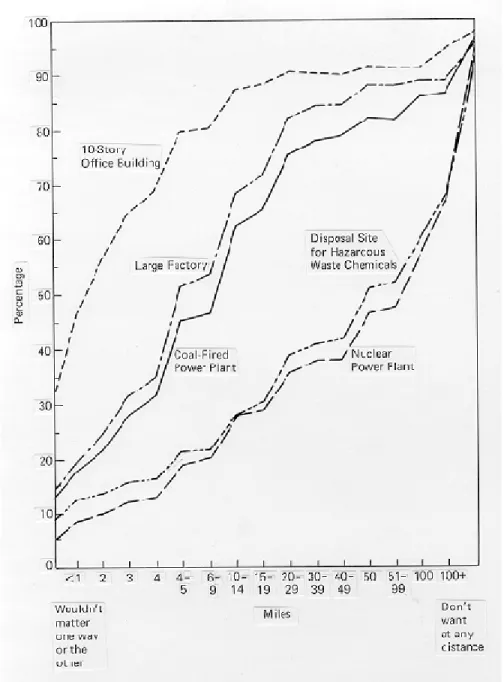
Figure 1-8 can serve to indicate public attitudes towards the siting of new facilities. It represents the
cumulative percentage of individuals who would be willing to accept a new industrial facility at various
distances from their homes. For example, over fifty percent of the people surveyed would accept a
ten-story office building within five miles of their home, but only twenty-five percent would accept a large
factory or coal fired power plant at a similar distance. An even lower percentage would accept a
hazardous waste disposal site or a nuclear power plant. Even at a distance of one hundred miles, a
significant fraction of the public would be unwilling to accept hazardous waste facilities or nuclear
power plants.
Figure 1-8:
Public Acceptance Towards New Facilities (Reprinted from
Environmental Quality - 1980
,
the Eleventh Annual Report of the Council on Environmental Quality, U.S. Government Printing Office,
Washington, DC, December 1980.)
This objection to new facilities is a widespread public attitude, representing considerable skepticism
about the external benefits and costs which new facilities will impose. It is this public attitude which is
likely to make public scrutiny and regulation a continuing concern for the construction industry.
International Competition
A final trend which deserves note is the increasing level of international competition in the construction
industry. Owners are likely to find non-traditional firms bidding for construction work, particularly on
large projects. Separate bids from numerous European, North American, and Asian construction firms
are not unusual. In the United States, overseas firms are becoming increasingly visible and important. In
this environment of heightened competition, good project management and improved productivity are
more and more important.
A bidding competition for a major new offshore drilling platform illustrates the competitive
environment in construction. As described in the Wall Street Journal:
[5]
Through most of the postwar years, the nation's biggest builders of offshore oil platforms
enjoyed an unusually cozy relationship with the Big Oil Companies they served. Their top
officials developed personal friendships with oil executives, entertained them at opulent
hunting camps- and won contracts to build nearly every major offshore oil platform in the
world....But this summer, the good-old boy network fell apart. Shell [Oil Co.] awarded the
main contract for [a new] platform - taller than Chicago's Sears Tower, four times heavier
than the Brooklyn Bridge - to a tiny upstart.
The winning bidder arranged overseas fabrication of the rig, kept overhead costs low, and proposed a
novel assembly procedure by which construction equipment was mounted on completed sections of the
platform in order to speed the completion of the entire structure. The result was lower costs than those
estimated and bid by traditional firms.
Of course, U.S. firms including A/E firms, contractors and construction managers are also competing in
foreign countries. Their success or failure in the international arena may also affect their capacities and
vitality to provide services in the domestic U.S. market.
Contractor Financed Projects
Increasingly, some owners look to contractors or joint ventures as a resource to design, to build and to
finance a constructed facility. For example, a utility company may seek a consortium consisting of a
design/construct firm and a financial investment firm to assume total liability during construction and
thereby eliminate the risks of cost escalation to ratepayers, stockholders and the management. On the
other hand, a local sanitation district may seek such a consortium to provide private ownership for a
proposed new sewage treatment plant. In the former case, the owner may take over the completed
facility and service the debt on construction through long-term financing arrangements; in the latter
case, the private owner may operate the completed facility and recover its investment through user fees.
The activities of joint ventures among design, construction and investment firms are sometimes referred
to as
financial engineering
.
This type of joint venture has become more important in the international construction market where
aggressive contractors often win contracts by offering a more attractive financing package rather than
superior technology. With a deepening shadow of international debts in recent years, many developing
countries are not in a position to undertake any new project without contractor-backed financing. Thus,
the contractors or joint ventures in overseas projects are forced into very risky positions if they intend to
stay in the competition.
Lean Construction
"Lean manufacturing" had a revolutionary effect on many industries, especially automotive assembly
companies. Characteristics of this approach include:
z
Improvement in quality and reduction of waste everywhere. Rather than increasing costs, reducing
defects and waste proved to improve quality and reduce costs.
z
Empowering workers to be responsible for satisfying customer needs. In construction, for
example, craftsman should make sure their work satisfied the design intent.
z