Perspective on deploying
hospital technology
Philips Healthcare Consulting
Executive summaryHealthcare environments offer unique challenges that must be addressed when deploying new technology. With today’s rapid pace of technology innovation, many healthcare organizations have become savvy at monitoring industry developments and optimizing the acquisition of new technologies. However, even the most sophisticated planning efforts will fail to deliver expected results without effective competencies and capabilities for deployment and execution.
At Philips, we have a long history of working with our customers to provide the most advanced technologies that enhance the quality of care delivered to patients and increases the efficiency at which this care is delivered. With this experience comes insight and learning that can be applied to technology deployment in a healthcare environment. This document will describe fundamental principles in technology delivery that healthcare organizations can use to maximize the returns on their technological investments.
Key deployment principles:
• Elicit and understand stakeholder specific requirements • Design efficient and effective processes
• Increase system integration and connectivity • Assure system flexibility/expandability • Incorporate reporting/analytics capabilities
Elicit and understand stakeholder specific requirements
As healthcare institutions implement new technologies and upgrade existing installations, it must be recognized that the reach of technology is always expanding. In the past, new systems may have been confined to a single department or even a single office. In today’s connected, performance-focused world, technology solutions can touch every stakeholder from senior leadership to department heads, physicians to patients, affiliated partners to payers, and biomed technicians to suppliers. Successful technology projects require accurate and thorough definition. In order to achieve this, all stakeholders must be engaged in the requirement gathering and documentation effort. Each stakeholder provides a unique perspective and valuable insight necessary for an inclusive and comprehensive approach.
“…recent experience has confirmed that
health IT is harder than it looks. Several
major installations of vendor-produced
systems have failed, and many safety
hazards caused by faulty health IT systems
have been reported.”
Physician requirements may differ greatly from those of a nurse or clinical technician, yet all use the same system. For example, a doctor may need to see detailed procedural and diagnostic information from the previous 24 hours to revise a diagnosis or update a treatment path, while a nurse requires summary patient data to understand the patient’s history during the previous shift. In many circumstances this is the very same data, accessed and displayed in a different format based on user input. Because of situations like these, it is imperative to gather detailed requirements from all user groups to ensure a successful solution.
One of the reasons many IT implementations fail is lack of user adoption. Users adopt technology when it is simple to interact with, provides pertinent information, and makes their job easier to perform. If a key stakeholder group is excluded in the requirements gathering process, this may result in a solution that does not satisfy a specific user group. This lack of satisfaction leads to poor adoption, and reduced benefit realization. By the time a technology deployment process has been initiated, key stakeholder groups have already likely been engaged throughout the planning, selection and purchasing process. To build stakeholder requirements begin by engaging these group members, as well as any other stakeholder groups that have been identified as integral to the success of the project, directly to define both the overall vision and business case for the technology.
Design efficient and effective processes
After the decision to acquire a technology has been made, it is imperative that healthcare institutions take time to understand how processes must change to realize the benefits of that technology. Without a clear understanding of current processes and definition of the desired future-state, organizations risk exacerbating past problems. A four step process can be used to define the necessary process flows:
Step 1: Understand the current-state processes
A thorough understanding of the existing processes and practices is critical to determine how a technology solution can positively impact the business area of focus. Some organizations may already have existing documentation that can be used to accelerate this step. However, before this documentation can be used, it must be validated. In many cases, processes and procedures may have been documented initially, but over time become vastly different than what is actually happening on the floor. Therefore, in addition to documentation review, it is important to conduct observations and interviews when developing the current-state process models.
One highly successful approach to achieve an accurate understanding of the current-state process is to conduct focus groups. These will detail the real-world process and how it differs from the documented process. It is extremely important to involve stakeholders at all levels of the organization to discover how the process is truly operating. Including lower level staff members will typically provide the greatest insight into actual operations. Also, remember that during this stage it is important to understand how users interact with existing technologies and how information flows between systems (figure 1).
Benefits of this approach include:
• A thorough understanding of current-state processes, both documented and undocumented • Identification of the constraints and inefficiencies
of the current-state process
• A detailed understanding of where and how new technology will impact the current state
With a comprehensive understanding of the current state, healthcare organizations can determine the magnitude of an issue and begin to define the solution approach.
Schedule
appointment Obtain pre-approvals
Input data into scheduling system
Manual flow
System flow
Prep patient for imaging exam
Update RIS with patient data
Conduct exam
Store exam images in PACS
Interpret exam results
Update Patient Record in EHR
Figure 1 – Developing an effective and efficient process requires a detailed understanding of both manual and system data flows.
Step 2: Understand the strengths and weaknesses of current-state processes
During investigation into the current-state processes, strengths and weaknesses of the operating model will become evident. For each strength and weakness, it is important to understand the specific contributors. As this detailed understanding is achieved, the weak components of the current process must be quantified. This quantification can be used to prioritize decisions and requirements. A thorough understanding of the strengths of a process is just as important as an understanding of its deficiencies. As strengths are identified, they should be investigated and accurately documented. These strengths should become the foundation of the future-state operating model. During this investigation it may become apparent that the strengths of a process are the technology-based components and the deficiencies are manual tasks and activities that can be revised to create a well-tuned operating model. We must keep in mind that technology may be part of the solution; however, it is not always the complete answer.
Step 3: Document the future-state vision
When evaluating technology implementations or upgrades it is extremely important to establish a vision for the environment in which this technology is to be placed. A vision defines the high-level capabilities and integration points that are necessary to establish an effective and efficient architecture for business operation. Consider this vision document as a high-level roadmap or framework, guiding decision making as it relates to technology implementation.
Future-state technology visions are living documents that should be revisited every 3-5 years. It is important to update the vision whenever new technologies are brought on-line, or as new technologies become available that can positively impact operations.
Step 4: Define and document future-state processes
After completion of the first three steps, it is possible to accurately define the future-state processes and new operating model. In step 4, detailed sub-processes must be developed with specific technical capabilities mapped to these processes.
The newly documented process map will serve as the framework for detailed technical requirements gathering and subsequent process documentation, such as operating procedures or training materials. This type of thorough documentation will allow for a design to be constructed that leverages the best of manual and technology driven processes.
Healthcare organizations that consider the input of their stakeholders, leverage their current-state operational strengths, and define their future-state vision, will find that this methodical approach is the path to success.
Maximize system integration and connectivity
As technology advances, hospital systems are capable of providing a high degree of visibility and communication not just within the hospital, but across the network of patients, providers, payors, and other third parties
(figure 2). This is the result of systems integration driven
by the use of interface standards such as DICOM or HL7. While technical integration has greatly facilitated the ability to share information between systems and people, it has also created implementation and maintenance challenges.
These challenges continue to grow given that recent legislation (in the United States) has mandated transition to an electronic healthcare record (EHR) environment. A key driver in attaining ‘meaningful use’ certification will be the ability to connect and leverage information across the various systems within a healthcare organization. Reduced reimbursements and the associated revenue pressures, along with EHR proliferation, will drive the need for workflow and process improvement across all healthcare facilities. Successful system integration provides for efficient and accurate workflows and allows healthcare organizations to realize a sustainable operating model.
Figure 2 – Healthcare organizations are becoming even more connected with the adoption of electronic healthcare records (EHR) and the need to share information externally with partners and health information exchanges.
RIS Scheduling Patient
monitoring
PACS
EHR
BillingPhysician
As your healthcare organization analyzes these issues and its technology needs, it is very important to consider several factors related to system integration. • Is this specific integration necessary to meet the
future-state vision and business requirements? • Will this integration reduce the manual burden
currently placed on staff members?
• Do the current or planned systems efficiently support integrations through integration standards such as HL7 or database connections?
• If integration is not currently necessary, does the roadmap/vision indicate it will be necessary in the future?
If the answer to all of the above questions is “yes”, then healthcare organizations must leverage appropriate methodologies to thoroughly define and document the integration capabilities that are vital to enhancing the operational abilities of the organization. Healthcare organizations must keep in mind that integrations increase complexity within the IT operations framework. This complexity leads to testing and on-going maintenance of system integrations which requires significant sustained funding and intellectual expertise. A loosely defined and implemented integration could potentially result in end user dissatisfaction and the inability to attain the expected financial benefits.
Ensure system flexibility/expandability
Technology implementations are no longer rapid projects that can be concluded in a matter of weeks. In today’s world, they are typically measured in months and in some cases years. With long, ever increasing timeframes come higher implementation costs. These substantial investment requirements can derail projects before they get started, or in the worst case scenario stop them after significant time and financial investment has been made. Because of the significant resource and financial commitments necessary, it is vital that system flexibility and expandability be a high priority when selecting and implementing technology.
Healthcare executives are dealing with many new factors creating both revenue and cost pressures. Hospitals and physicians are re-evaluating their business models, moving to new models that are more sustainable. For institutions whose business models are working well, practice processes and technology changes are being evaluated with a focus on increased cost savings. This constant evolution demonstrates the importance of system flexibility and expandability to support the business functions of the organization.
Without system flexibility and expandability, healthcare organizations will find themselves caught in a cycle of ongoing technology investments simply to keep up with business advancement. Getting caught in this cycle is very expensive and requires a significant investment in resources. Thus, the importance of developing systems with a high degree of flexibility and expandability. Hospitals are continually being asked to collect additional information from patients for legal, medical and clinical decision making purposes. When selecting a new system, IT executives must ensure that the solution is suitable in terms of integration and database design to capture this additional information without major investment.
The healthcare industry is in a transitional period where patient data is moving from physician ownership to patient ownership as electronic health records become highly portable. Healthcare IT departments must understand that older systems designed to support physicians may not be able to support a much larger and diverse user base. With this ever expanding user community, new systems must be flexible enough and have integration capabilities that will allow data sharing amongst a multitude of systems. While these capabilities may require additional up-front investment, the long term cost savings and user satisfaction levels should far outweigh the initial investment.
“The American Recovery and Reinvestment
Act of 2009 includes more than $19 billion for
health IT, and these funds will have the largest
impact if they are invested in technologies that
can communicate with each other,”
John Halamka, M.D., HITSP Chair and CIO, Beth Israel Deaconess Medical2
Incorporate reporting/analytics capabilities
Information visibility is a primary benefit of a new or enhanced technology solution. Unfortunately, when developing requirements and implementation plans, reporting and analytical capabilities are often not fully defined to the same level of detail as other system functionality. Lack of definition can significantly reduce the potential benefits of technology-based solutions. The reporting of key metrics to regulators, state, federal and local agencies has long been a burdensome task and provides little benefit to the operation of the healthcare facility. To be successful in the future, healthcare organizations must focus on the reporting and deep analysis of key performance indicators (KPIs) to develop a competency and culture of continuous performance improvement. To properly define KPIs and develop analytical capabilities three key activities must be conducted.
1. Engage the stakeholder community – Earlier in this document the importance of stakeholder engagement was described. This is pertinent when defining KPIs, and reporting and analytics. When hospitals make the decision to move from reactive environments to a culture of continuous performance improvement, it is imperative to develop a key set of metrics that accurately represent performance of the business. Only by engaging a diverse set of stakeholders can these metrics be defined.
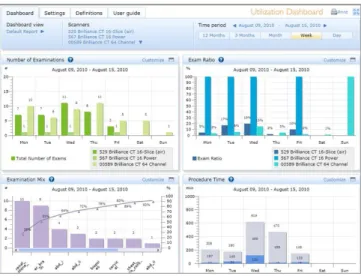
Once an organization has defined its KPIs, system reporting capabilities must be leveraged in a manner that accurately displays the information and meets stakeholder requirements for usability (figure 3). A high degree of access and usability will quickly drive adoption, leading to a focus on metrics and subsequent efforts to improve operations improvements against these metrics.
2. Select the appropriate reporting and analysis
technology – Healthcare organizations have an
extremely diverse user community, from physicians to administrators to biomed engineers, who all need access to data. Yet, reporting and analytics capabilities are typically not high priority selection criteria, as hospitals adopt new systems or enhance existing ones. Because of this, many technologies or systems are selected and the reporting and analysis capabilities do not have the comprehensive functionality that the stakeholders require.
When a hospital selects a technology, the reporting capabilities must display pertinent metrics (based on user access privileges) in an intuitive and deliberate manner for maximum user impact. Spreadsheet style reports are no longer acceptable for extremely busy doctors and hospital administrators. These key stakeholders need access to information in a dashboard fashion that allows them to immediately understand where the organization stands in respect to key metrics so actions to improve can be indentified rapidly. Many healthcare organizations have struggled to
complete performance improvement initiatives because measurement data does not exist or is not accessible. Healthcare organizations must focus on performance improvement initiatives to be competitive in the healthcare market moving forward. New or upgraded systems must provide analytics capabilities that can be leveraged to monitor the past performance of the business and provide insight into future operations. Analytical modeling capabilities will provide healthcare executives the visibility they need to predict the potential outcomes of various scenarios. Deep analytical capabilities will allow healthcare executives to determine the root cause of problems and model future implications based on changes that are made to address these root cause issues.
Figure 3 – Highly interactive dashboards provide stakeholders with targeted information that facilitates rapid decision making.
3. Leverage the information for continuous
improvement efforts – The key factor in
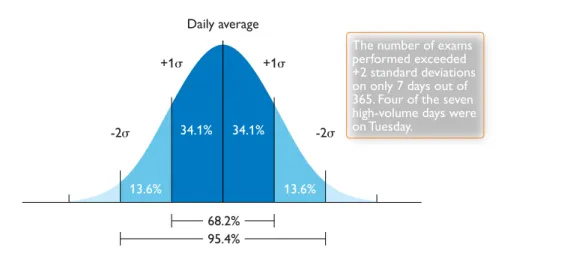
developing a culture of continuous performance improvement is having access to meaningful and well-defined data (figure 4). Healthcare facilities that make the appropriate investments in technology and leverage the input of stakeholders will typically have a robust data set that can be used as the foundation for performance improvement initiatives. All too often systems are not capable of supplying the specific data that is needed to conduct even simple operational analysis. Some organizations are reliant upon their Information Technology organizations to manually execute queries and provide the business users with raw data files.
For healthcare organizations to focus on continuous performance improvement efforts, users must be empowered with accurate and up-to-date data. The main component of a performance improvement initiative should be the analysis of quantitative historical data. In most healthcare organizations today, this effort consists of identifying data and working with IT to extract and format the data in a usable manner. Because of the effort required to accomplish this, time spent analyzing data and developing recommendations may be limited. Data empowerment is the key to successfully building an organization that is nimble and can quickly adjust to patient and regulatory demands.
When making technology decisions, healthcare organizations must focus on the data needs and the subsequent uses of data provided by systems. Doctors, administrators, staff and even patients are craving information-rich data in forms that can quickly be viewed and acted upon. Moving forward, both business and IT organizations must make data, reporting and analysis capabilities a priority in selecting technology and defining requirements.
68.2% 95.4% Daily average
13.6% 13.6%
34.1% 34.1%
The number of exams performed exceeded +2 standard deviations on only 7 days out of 365. Four of the seven high-volume days were on Tuesday.
Figure 4 – Developing a culture of continuous performance improvement requires data to be leveraged using analytical methodologies such as Six Sigma.
Conclusion
Deploying new or enhanced technology in any environment can be a very difficult task. This is more difficult in the healthcare environment which is made up of a widely diverse set of stakeholders and is subject to an intense level of scrutiny from federal, state and local agencies. By incorporating the following best practices into your technology and implementation process you will greatly enhance your chance of success:
• Gather and develop comprehensive stakeholder requirements
• Document existing processes before developing requirements
• Select and develop systems with integration in mind • Select and develop systems that are flexible and
can be expanded to meet new requirements • Develop systems that focus on providing accurate
and actionable data to all stakeholders
Leveraging the above principles will begin the process of creating a sound technical architecture that supports the business in its day-to-day operations and its focus on continually improving operations.
About the author
Trent Thacker is a healthcare technology consultant with specialization in technology strategy and business process excellence. Mr. Thacker has experience with leading technology consulting firms in the planning, design and implementation of large scale technology solutions focused on data warehousing, mining and intelligence, as well as billing, and workforce management. He is a senior manager with Philips Healthcare Consulting and can be reached at [email protected].
About Philips Healthcare Consulting
Philips Healthcare Consulting helps hospitals to achieve their management objectives by identifying and implementing targeted initiatives in support of revenue growth, expense containment, asset efficiency and organizational effectiveness. Our teams work closely with hospital leadership and staff to ensure projects are managed with the highest level of quality and customer satisfaction from initiation through completion. To ensure we maintain the broad-based skills and diverse expertise to address the challenges of healthcare providers, our staff is comprised of consulting professionals that have an average of 10 years experience across healthcare, technology and national management consulting firms. This breadth of experience assures we bring creativity and competency to each customer’s unique situation. Furthermore, customers benefit from our existing tools, techniques and templates, helping to accelerate the implementation and adoption of change.
Philips Healthcare is part of Royal Philips Electronics
How to reach us
www.philips.com/healthcare [email protected] Asia
+49 7031 463 2254 Europe, Middle East, Africa +49 7031 463 2254 Latin America +55 11 2125 0744 North America +1 425 487 7000
800 285 5585 (toll free, US only)
1. http://blogs.wsj.com/health/2009/12/01/safety-guru-health-it-is-harder-than-it-looks/.
2. http://www.himss.org/ASP/topics_News_item. asp?cid=69096&tid=3.
Please visit www.philips.com/healthcareconsulting
© 2011 Koninklijke Philips Electronics N.V. All rights are reserved.Philips Healthcare reserves the right to make changes in specifications and/or to discontinue any product at any time without notice or obligation and will not be liable for any consequences resulting from the use of this publication.
Printed in The Netherlands. 4522 962 73151 * MAY 2011