Review
Safeguarding children
A review of arrangements in the NHS
for safeguarding children
About the Care Quality Commission
The Care Quality Commission is the independent regulator of health and adult social care services in England. We also protect the interests of people detained under the Mental Health Act.
Whether services are provided by the NHS, local authorities, or private or voluntary organisations, we make sure that people get better care. We do this by:
• Driving improvement across health and adult social care.
• Putting people first and championing their rights.
• Acting swiftly to remedy bad practice.
Contents
Foreword 2
Summary 3
Introduction 6
1. Who leads the work of NHS organisations on safeguarding children? How well are
they supported? 9
2. How well trained in safeguarding are NHS staff? 14 3. What policies do NHS trusts have in place for
safeguarding and child protection? What systems
are in place to help staff protect children? 18 4. What do senior managers and trusts’ boards do
to monitor safeguarding arrangements and assure themselves that these arrangements are working? 23 5. How effective is the collaboration between
organisations? 26
6. What do NHS trusts do when they review
individual cases? 29
7. What have trusts told us about compliance
with national standards for safeguarding? 32 8. Next steps and recommendations 34
Foreword
We have carried out this review at the direct request of the Secretary of State for Health, following the legal case relating to the death of Baby P, now known as Baby Peter. The terms for the review requested us to look specifically at “board assurance around child protection systems, including governance arrangements; around training and staffing; and around arrangements for health organisations to work in partnership with others to safeguard children.” Our findings indicate that most trusts have the right people and systems in place for safeguarding children. However, we still have some concerns. For example, primary care trusts need to review their arrangements with organisations from which they commission services to improve their oversight of safeguarding, and should ensure that their GP practices have adequate leadership and training in this area.
Also, too many designated and named doctors did not have clarity over their roles, and a worrying number of eligible staff were not up to date on their basic training in safeguarding, even though this had been highlighted in previous reviews. Not enough child protection policies covered important procedures, such as following up children who miss outpatient appointments. And almost a third of trusts’ boards received no presentations from child safeguarding professionals during 2008.
We urge trusts and strategic health authorities to study our findings carefully, and to use them to reflect again on their own arrangements for safeguarding. Later this summer, we will provide the NHS with our detailed, local findings. Our aim is to equip them with the information they need to compare their arrangements for safeguarding with similar organisations and make any necessary improvements. In less than a year’s time, all NHS trusts will be required to register their services with us, and effective arrangements for the safeguarding and protection of children will be part of our requirements. We will use information gathered for this review, data from our annual health check and other sources of information as part of the NHS registration process. We will also consider how much we should limit a trust’s performance ‘score’ in our annual assessment if it has poor arrangements for safeguarding children. Clear national and statutory frameworks for
safeguarding are already in place. The boards of NHS trusts, and all those who deliver or commission healthcare, should ensure that best practice and these frameworks are followed. We will monitor progress, starting with rigorous checking of the declarations against core standards already made by NHS organisations for 2008/09. Looking ahead, the new system of registration provides an opportunity to change the culture of the NHS with regard to safeguarding. We will work closely with the NHS and national partners to ensure that this opportunity is not missed.
Barbara Young Cynthia Bower Chairman Chief Executive
Summary
This report provides the initial findings from our review of the arrangements in the NHS for safeguarding children. We have carried out the review at the request of the Secretary of State for Health, following the conclusion of the legal case relating to the death of Baby P, now known as Baby Peter. To provide a national overview, our review consisted of an online questionnaire issued to all NHS trusts in England (excluding NHS Direct). In total, we contacted 392 organisations, comprising 153 primary care trusts (PCTs), 169 acute trusts, 59 mental health trusts and 11 ambulance trusts. Trusts were asked to tell us about their arrangements for safeguarding, for the most part, as at 31 December 2008. Our findings are summarised below, with a number of recommendations for further action. Who leads the work of NHS trusts on the safeguarding of children? How well are they supported?
• The vast majority of designated and named safeguarding clinicians and professionals were substantive post-holders, who were established and senior – having been in post for more than a year and no more than two steps down from board level in their organisation.
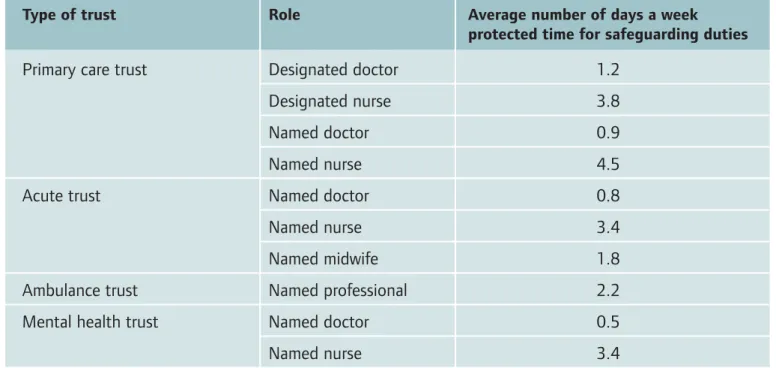
• There was a clear difference between doctors and nurses in terms of the protected time they have available for safeguarding duties. Designated and named doctors had around one day a week, whereas designated and named nurses had around three to four days.
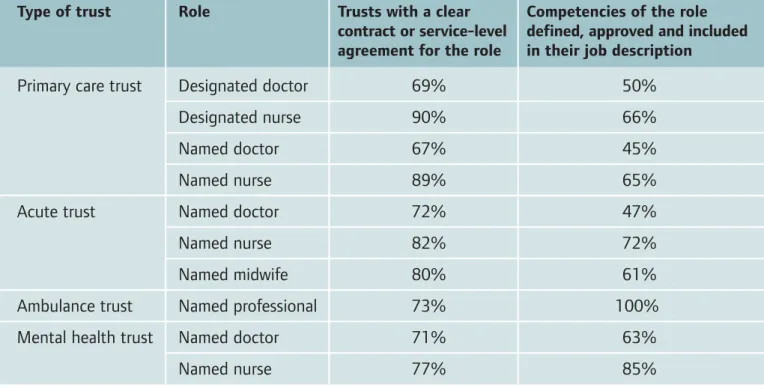
• Around 30% of named and designated doctors did not have a clear contract or service-level agreement for their safeguarding work, and around half did not have a defined and approved set of competencies for safeguarding included in their job description.
• Just 27% of PCTs said that “all” practices had a nominated lead, 8.5% said “none” had a lead, 24% said “most” and 41% “some”. Guidance from the Royal College of General Practitioners and the National Society for the Prevention of Cruelty to Children states that all practices should have a safeguarding lead and deputy.1
How well trained in safeguarding are NHS staff?
• Many trusts either did not have, or possibly found it difficult to identify, a dedicated budget for training in safeguarding. Just 37% said they had a dedicated budget.
• The average proportion of eligible staff with up-to-date training at level one, intended for all those working in healthcare, was worryingly low at just 54%.
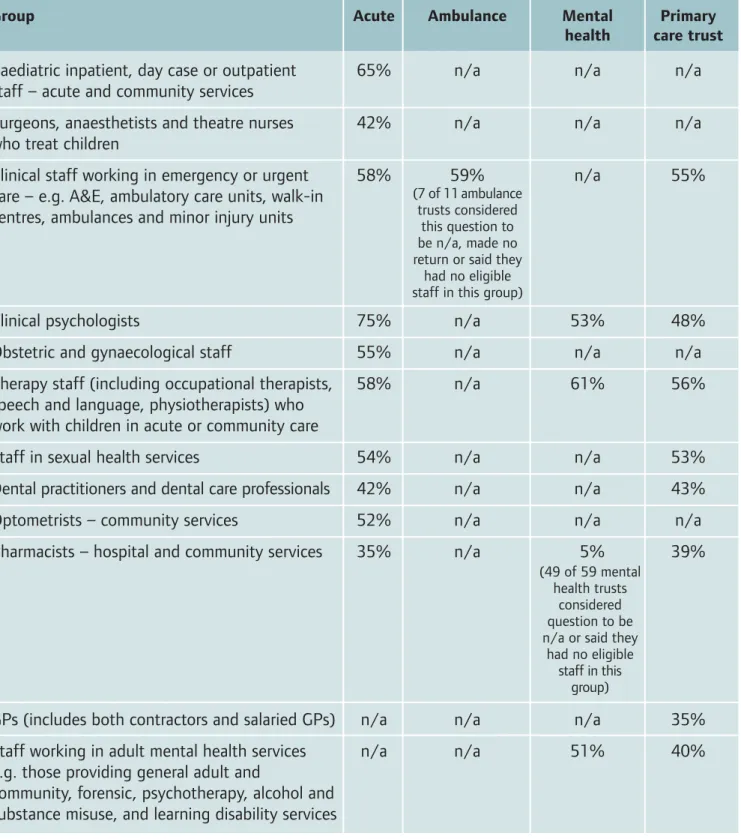
• The proportion of eligible staff, across a number of groups, who were not up to date on training at level 2, which is for those staff who have regular contact with parents, children and young people, also concerns us, particularly since this issue was highlighted in earlier reviews. For this latest review, we found that:
– In acute trusts, on average 42% of surgeons, anaesthetists and theatre nurses who were
•
•
– In acute trusts, on average 65% of paediatric inpatient, day case or outpatient staff working in acute and community services were up to date. – In PCTs, on average just 35% of those GPs who were eligible for level 2 training were up to date. What policies do trusts have in place for
safeguarding and child protection? What systems are in place to help staff protect children?
• More than a tenth of trusts did not appear to comply with the statutory requirement to carry out Criminal Records Bureau checks for all staff employed since 2002.
• There appear to be gaps in the processes covered by child protection policies. We are particularly concerned with the large proportion of trusts that do not have a process for following up children who miss outpatient appointments (32% of acute trusts, 49% of PCTs). This was highlighted as an important factor in safeguarding in the recent report Why Children Die. 2
• While access to information on families at risk appeared to be good, we have some concerns that in a minority of trusts, clinical staff may not have had 24-hour access to a child protection clinician, and about 12% of trusts did not have a reporting system to flag child protection or safeguarding concerns.
What do senior managers and trusts’ boards do to monitor safeguarding arrangements and assure themselves that these arrangements are working?
• Significantly more designated nurses (78%) met their board lead at least once every two months, than designated doctors (47%).
• Boards monitor compliance with their safeguarding responsibilities, but the frequency varied.
Discussion mainly occurred annually or when they were notified about serious untoward incidents or serious case reviews.
• As commissioners, PCTs should ensure that all of their contracts and service specifications with NHS and independent providers explicitly include safeguarding arrangements. Sixty-one per cent of PCTs said that this was the case for “all” or “most” of their contracts and service specifications and 39% said this was the case for just “some” or “none”.
How effective is the collaboration between organisations?
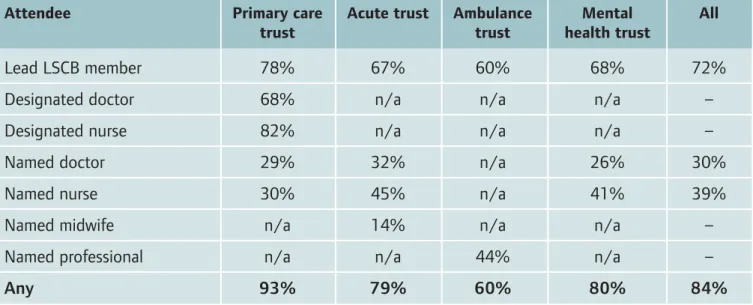
• While trusts appeared to be fairly well represented at meetings of their local safeguarding children boards, we are concerned that provider trusts may not be fully engaged.
• Ninety-five per cent of trusts said that they had protocols for sharing information on children and their families, both within their organisation and with other key organisations.
• Thirty-six per cent of applicable acute trusts said they did not have a policy for joint working between maternity services and social services.
What do trusts do when they review individual cases?
• Sixty-seven per cent of reviews of individual cases were completed and signed off within one to three months. Nineteen per cent took more than four months, suggesting, in these instances, a breach of the target set out in national guidance for the local safeguarding children board to complete the composite serious case review report within four months.
• In some instances, it appears that PCTs did not coordinate the contributions of local healthcare organisations to the overarching serious case review. And in 17% of the cases described by PCTs, the PCT had not reported the serious case review to their strategic health authority.
• In general, action plans and recommendations arising from serious case reviews were provided to responsible service managers. However, not all trusts thought that designated professionals always fulfilled their responsibility to review and evaluate the practice of health professionals and providers involved in a serious case review. What have NHS trusts told us about compliance with national standards for safeguarding? Separately to this review, NHS trusts have made their declarations for 2008/2009 on their compliance with national core standards, including the child protection standard (C2). We are cross-checking these, using information from this review and from other sources, and will publish a final assessment in October 2009. For 2008/2009, we received 539 declarations from 392 NHS trusts – PCTs were asked to make two declarations, one for their commissioning functions and a second for any services they provide. We found that 93.9% of declarations reported compliance with standard C2, a fall of 3.1% compared to 2007/2008.
Recommendations
• In light of this report, NHS trusts’ boards should urgently review their arrangements for safeguarding children – in particular the levels of up-to-date safeguarding training among their staff. Their reviews should be completed within six months of this report’s publication. Progress will be checked as part of the joint programme of inspections we will be carrying out with Ofsted.
• Organisations that commission healthcare should make certain, through their service specifications and contracts, that the
safeguarding arrangements of their providers, including GP practices, are effective. This is particularly important during a period of local change, with children’s trusts being strengthened and PCTs’ commissioning and community provider functions being separated.
• NHS trusts’ boards should pay close attention to our guidance on the requirements
for registration, including those about safeguarding. We issued the draft guidance on 1 June 2009 for a 12-week consultation period.
• We urge the Department of Health and the Department for Children, Schools and Families to use the next Children’s Services Mapping exercise to repeat key elements of the data collection carried out for this review, to provide a further update on progress, and to continue to offer local organisations useful information with which to benchmark their services.
Introduction
Background
The Healthcare Commission, a predecessor of the Care Quality Commission, began this review in December 2008, at the direct request of the Secretary of State for Health, following the conclusion of the legal case relating to the death of Baby P, now known as Baby Peter. The Commission was asked to carry out a “review of the arrangements relevant NHS organisations have in place to ensure they are meeting obligations with regard to safeguarding children”. The review was specifically asked to look at “board assurance around child protection systems, including governance arrangements; around training and staffing; and around arrangements for health organisations to work in partnership with others to safeguard children”. In parallel with this request, the Chief Executive of the NHS wrote to all NHS organisations in England asking them to review their arrangements for child protection and to ensure that their professional staff were receiving appropriate child protection training within their professional development.
In 2007, there were 11 million children aged under 19 in England.3
In 2007/08:
• There were more than 1.7 million admissions to hospital of children aged 14 and under (including babies born in hospital).4
• There were around three million attendances in A&E of children up to 16, and 4.5 million outpatient appointments.
• More than half a million children were admitted to hospital as emergency patients and a similar number went into hospital for surgery.5
• Around one in 10 consultations in GP practices were for children aged 14 and under.6
• Over 100,000 children and young people aged up to 18 years received some form of care from child and adolescent mental health services.7
• NHS trusts employed around 97,000 staff (whole-time equivalent) who were directly involved in providing care or therapy or in the promotion of health.7
There were 59,500 children “looked after” as at 31 March 2008. In 2007/08, there were 538,500 referrals to social services departments. Of these, 24% were repeat referrals within 12 months of a previous referral. Of the 34,000 children who became the subject of a child protection plan in 2007/08, 45% of cases were due to neglect, 15% due to physical abuse and 25% due to emotional abuse. In response to our questionnaire, primary care trusts told us that more than 32,700 children and young people were the subject of a child protection plan as at 31 December 2008.
This report
The findings of our review are summarised in this report, which is organised into sections designed to answer some key questions about safeguarding in the NHS. It gives a national picture, and describes some of the variation we have found between organisations – or between different types of organisation. We hope to present further, more detailed work based on this review in due course.
The review
During February and March 2009, all 392 NHS trusts (with the exception of NHS Direct) and PCTs were asked to complete a questionnaire about their arrangements for safeguarding children. For the most part, the questionnaire asked trusts to report on their position as at 31 December 2008. The questionnaire was divided into three domains: 1. Capacity, capability and systems, covering:
a. Staffing
b. Workload and capacity c. Training
2. Governance and accountability, covering: a. Structures and processes
b. Human resource issues c. Policies and procedures
d. Reporting and communications
e. Local safeguarding children boards and partnership working
f. Serious case reviews and individual management reviews
g. Auditing practice and information sharing 3. Specialist elements of service, covering:
a. PCTs and their commissioning responsibilities b. Mental health services
c. Maternity services
The main reason for carrying out such a detailed survey of safeguarding in the NHS was due to a lack of information routinely available that we could use to answer the Secretary of State’s request or that allowed local practitioners and boards to measure their work against their peers. Following this report, we will provide the NHS with the detailed results of the questionnaire so that those working in local organisations can check their arrangements for safeguarding against those of similar organisations, and against best practice.
The questionnaire was largely based on the requirements set out in Working Together to
Safeguard Children – a guide to inter-agency working to safeguard and promote the welfare of children, 8
along with other statutory and national guidance.
The Care Quality Commission
and children’s safeguarding
On 1 April 2009, we took over responsibility for this review, and more broadly, for the regulation of health and adult social care in England.
This review is part of a set of activities designed to monitor and improve arrangements for safeguarding, including our annual assessment of NHS trusts – the ‘annual health check’. This assessment includes provision for risk-based inspections against national standards for child protection and safeguarding. From 2010, all NHS and independent organisations providing healthcare must register with us. Subject to consultation, we expect that the requirements for registration will include having appropriate systems and guidance in place to comply with statutory and national guidance on safeguarding.
We will be joining our colleagues in Ofsted, the children’s inspectorate, on a programme of inspections of children’s services, which will take place over the next three years, starting during the summer of 2009. These visits will focus on children and young people who are safeguarded and/or looked after. The information we have gathered from our national review of safeguarding will directly inform these inspections. Further details are available from www.ofsted.gov.uk/Ofsted-home/Forms-and guidance/Browse-all-by/Care-and-local-services/ Local-services/How-we-inspect.
Safeguarding and registration
requirements
Our draft Guidance about compliance with the Health and Social Care Act 2008 (Registration Requirements) Regulations 2009 was published for consultation on 1 June 2009. It states that providers should minimise the risk of abuse occurring by:
• Ensuring that staff understand the signs of abuse and raise concern when those signs are noticed in a person using the service.
• Having effective means of receiving feedback from people who use services.
• Taking action to ensure that any abuse identified is stopped by:
• – Having clear procedures, and following them, for the management of alleged abuse. • – Removing the alleged abuser from the care,
treatment and support of the person. • – Reporting the alleged abuse to the
appropriate authority.
• – Reviewing the person’s plan of care to ensure that they are properly supported following the alleged abuse incident.
The guidance also proposes that people who use services receive care, treatment and support from all staff (including volunteers and ancillary staff) who:
In general:
• Are committed to maximising people’s choice, control and social inclusion and upholding their rights as an important way of reducing the potential for abuse.
• Recognise their personal responsibility in safeguarding people who use services.
In relation to safeguarding:
• Know how to identify and investigate abuse because there are clear procedures about this that are followed in practice, monitored and reviewed.
• Are aware of and understand what abuse is, the differences between supporting children and adults who are at risk of abuse, what the risk factors for abuse are, and what they must do if a person is being abused, suspected of being abused, is at risk of abuse or has been abused.
• Follow the referral process and timescales as described in local and national multi-agency procedures when responding to suspected abuse, including ‘No Secrets’ and ‘Working Together to Safeguard Children’.
• Understand the roles of other organisations that may be involved in responding to suspected abuse, as appropriate to their role.
• Contribute to whatever actions are needed to safeguard and protect the welfare of children and take part in regularly reviewing the outcomes of children against specific plans.
• Are confident to report any suspicions without fear that they will suffer as a result.
• Are aware of their rights under the Public Interest Disclosure Act (1988).
1
Who leads the work of NHS organisations on
safeguarding children? How well are they supported?
What should be in place?
NHS trusts’ boards have a legal duty relating to safeguarding and promoting the welfare of children and young people – their responsibilities are clearly set out in the Children Acts 1989 and 2004 and in the Government’s statutory guidance. Trusts’ safeguarding leadership teams must include a nominated director at board level, with clinical support and supervision provided by ‘designated’, for primary care trust (PCT) commissioners, and ‘named’, for provider organisations, clinicians and professionals. These posts are a legal requirement. ‘Named’ staff must have specific expertise in children’s health and development and in treating children who have been abused or neglected.8
Their work includes:
• Providing supervision and support to other staff in child protection issues.
• Offering advice on local arrangements within the provider organisation for safeguarding children.
• Playing an important role in promoting, influencing and developing relevant training for staff.
• Providing input from skilled professionals to child safeguarding processes, in line with the procedures of local safeguarding children boards, and to serious case reviews.8
As commissioners of healthcare, PCTs must appoint a designated doctor and a designated nurse to work with the nominated director and senior management.
These designated professionals must be accountable to the board lead for safeguarding and are required to take a strategic, expert lead on all clinical aspects of safeguarding children throughout the PCT’s local area. Designated professionals may be practising paediatricians or nurses, and so may be employed by a local provider trust or by the provider arm of the PCT. Where this is the case, the safeguarding responsibilities of the designated roles need to be made clear, ideally through service-level agreements or contracts. These should set out the requirements of the roles, how they will be managed and made accountable and how much time is needed to perform them.9
Designated professionals are a vital source of supervision and advice on matters relating to
safeguarding children for other professionals, the PCT, the local authority’s children’s services department and the local safeguarding children board. PCTs have a duty to ensure that there is sufficient resource and support for these professionals, in proportion with the number of people in the area and to the complexity of arrangements locally for the provision of healthcare.8
All NHS trusts, NHS foundation trusts, and PCTs that provide services for children must identify a named doctor and a named nurse and/or named midwife for safeguarding children. For NHS Direct, ambulance trusts and independent providers of healthcare, this post should be filled by a named professional. Named clinicians and professionals fulfil the key role within their own organisation in promoting good practice in relation to safeguarding children.
Our findings
Stability of leadership roles
We asked trusts to tell us whether their named or designated posts were filled, as at 31 December 2008, and if so, to indicate whether this was on a substantive (permanent) basis or temporarily by a locum. We found that the vast majority of designated and named posts, in all types of trust, were filled on a substantive basis. Most trusts also told us that the post-holders in their named and designated roles had been in place for more than one year. Taken together, these findings suggest that leadership on safeguarding is relatively stable. Named doctors working in PCTs had the lowest proportion of substantive post-holders (80%). They also had the lowest proportion of post-holders who had been in place for more than a year (68%). This requires further exploration, but may relate to the structural changes within PCTs as they separate their commissioning and providing roles into separate ‘arms’.
Seniority and profession
Typically, post-holders are consultants (doctors) or at Agenda for Change grade 8a or above (nurses and midwives). The exception to this was named professionals working in ambulance trusts, who were mostly at Agenda for Change grade 7. Very few named or designated safeguarding staff were more than 2 steps down from board level in their organisation’s hierarchy. Typically, designated doctors were paediatricians by profession, while designated nurses tended to be health visitors. Thirty-nine per cent of PCTs said that their named doctors were GPs, and 32% paediatricians. Seventy per cent of acute trusts said that their named doctors were paediatricians. Eighty-one per cent said that their named nurses were either registered children’s nurses or health visitors. In ambulance trusts, paramedics were the largest single group of named professionals. Protected time for safeguarding duties
We also asked trusts about the amount of protected time that designated and named staff are allocated for their safeguarding duties. Substantially more
Table 1: Protected time for safeguarding duties for designated and named staff
Type of trust Role Average number of days a week
protected time for safeguarding duties
Primary care trust Designated doctor 1.2
Designated nurse 3.8
Named doctor 0.9
Named nurse 4.5
Acute trust Named doctor 0.8
Named nurse 3.4
Named midwife 1.8
Ambulance trust Named professional 2.2
Mental health trust Named doctor 0.5
protected time is available for those filling nurse, midwife and professional roles than for those in doctor roles (see table 1). While there may be entirely valid reasons for this difference, trusts should consider whether the time available for medical leadership on safeguarding is adequate. Clarity of role and responsibilities
We have found that a minority of named and designated staff carried out their role without a clear contract or service-level agreement. This is particularly notable for those filling designated and named doctor posts. A substantial proportion of named and designated staff did not have a set of competencies defined, approved and included in their job descriptions (see table 2), despite this being a requirement of national guidance. Competencies provide clarity on the responsibilities of the designated and named roles and the skills required to perform them.
Table 2: Clarity of contract or service-level agreement and defined set of competencies in place
Type of trust Role Trusts with a clear Competencies of the role contract or service-level defined, approved and included agreement for the role in their job description
Primary care trust Designated doctor 69% 50%
Designated nurse 90% 66%
Named doctor 67% 45%
Named nurse 89% 65%
Acute trust Named doctor 72% 47%
Named nurse 82% 72%
Named midwife 80% 61%
Ambulance trust Named professional 73% 100%
Mental health trust Named doctor 71% 63%
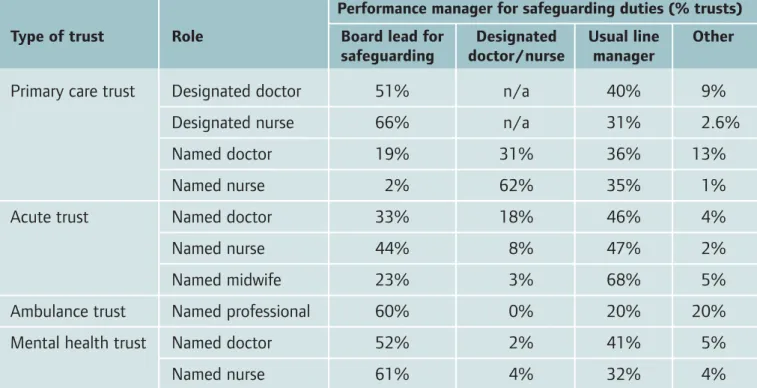
Table 3: Performance management of designated and named staff
Performance manager for safeguarding duties (% trusts) Type of trust Role Board lead for Designated Usual line Other
safeguarding doctor/nurse manager
Primary care trust Designated doctor 51% n/a 40% 9%
Designated nurse 66% n/a 31% 2.6%
Named doctor 19% 31% 36% 13%
Named nurse 2% 62% 35% 1%
Acute trust Named doctor 33% 18% 46% 4%
Named nurse 44% 8% 47% 2%
Named midwife 23% 3% 68% 5%
Ambulance trust Named professional 60% 0% 20% 20%
Mental health trust Named doctor 52% 2% 41% 5%
Named nurse 61% 4% 32% 4%
Note: Figures are rounded
We asked trusts to tell us who manages the performance of designated and named staff in relation to their safeguarding duties (see table 3). Other responsibilities
In more than 90% of PCTs and acute trusts, the safeguarding children role was separated from adult safeguarding, although some of our more recent engagement with staff suggests that roles may increasingly be combined. There was more overlap in mental health trusts, with 31% covering both children and adults. All named professionals in ambulance trusts covered both areas. In around half of PCTs, staff filling children’s safeguarding roles also provided an expert resource for looked-after children.
There is no formal guidance on whether these statutory responsibilities in relation to children’s and adults’ safeguarding should be covered by more than one person, even if the roles are part-time, as long as the board can demonstrate that its systems and
processes are effective, compliant and demonstrate improved outcomes. Separating the roles of adult protection lead and child protection lead allows staff to cover each other’s work, and provide peer support and supervision in what can be extremely challenging work. However, combining the adult and child safeguarding roles into one, potentially more senior or board-level role, may provide a more systematic approach to monitoring, resourcing and strategic planning.
We asked PCTs how many staff with safeguarding responsibilities were line managed by each designated nurse. On average, this was 4.5 whole time equivalent (wte) staff, though responses ranged from 0 to 36. Designated nurses usually carry responsibility for investigating incidents and ensuring that appropriate supervision arrangements are in place across the commissioned services, so it is important that this role is provided with sufficient support to respond quickly when needed.
Leadership on safeguarding in general practice GPs are at the heart of an effective child protection system. Their ‘gate-keeping’ role means that they should have details about all contact between a child and health services, including health visiting and A&E services. GPs should be prepared to raise alerts and take the initiative in identifying trends and causes for concern in the way that families have contact with health services. It is important that GPs and all staff working within a practice, including administrative and reception staff, are familiar with the principles of child protection and with their own role in safeguarding children. Each practice should have a nominated lead and deputy lead to promote this work.1
However, when we asked PCTs what proportion of their GP practices had a nominated safeguarding lead, the results were:
• ’All’ – 27%
• ‘Most’ – 24%
• ‘Some’ – 41%
• ‘None’ – 8.5%
Where there are a number of ‘small’ or ‘single handed’ GP practices, a ‘cluster’ arrangement can work effectively, providing each member with peer support, training and supervision of safeguarding roles and responsibilities.
Health visitors – number and caseload
As part of the review, we asked PCTs to tell us how many health visitors, as wte staff, they employed on 31 December 2008, and to tell us the ‘establishment’ or budgeted figure for health visitors at their trust. In total, PCTs reported that they employed just over 7,800 wte health visitors. The overall vacancy rate, (the gap between the number of ‘employed’ staff and the ‘establishment’ figure as a percentage of the ‘establishment’ figure) was just over 8%.
The range of vacancy rates was –30% (for a PCT with an ‘employed’ figure exceeding their ‘establishment’) to 45%. These figures differ from those shown by the most recent annual NHS workforce census and vacancy survey, though this reflects timing and methodological differences and should not necessarily be read as a contradiction. The NHS workforce census for September 2008 shows 8,764 wte health visitors employed by the NHS – not just PCTs. The vacancy survey shows a rate for March 2008 of 0.3%, but this defines a vacancy as a post that is funded and which has been unfilled for at least three months. Our vacancy rate has been calculated from the establishment and employed figures supplied by PCTs, and makes no allowance for length of vacancy. Using these figures and population data available from National Statistics, we were able to calculate caseload figures for each PCT. Nationally, there were 389 children aged up to and including four years for each wte health visitor. This is short of the figure of 400 suggested in Lord Laming’s most recent report, also the maximum proposed by Unite/CPHVA – the health visitors’ trade union and professional body, but well in excess of the ‘normal’ caseload of 250 proposed by Unite/CPHVA. Based on the figures supplied for this review, 62 PCTs have caseloads in excess of 400, including 29 with caseloads in excess of 500. Care should be taken in interpreting these figures, as the issue of caseload is complex and local factors, including those relating to levels of deprivation, skill-mix within teams, the number of vulnerable children locally and other services provided locally, need to be taken into account to determine ideal caseloads. PCTs should use this opportunity to compare their caseloads with those of their peers, taking account of these factors.
2
How well trained in safeguarding are NHS staff?
What should be in place?
Trusts are responsible for ensuring that all their staff are competent and confident in carrying out their responsibilities for safeguarding and promoting children’s welfare, as stated in Working Together to Safeguard Children. 8
These include being able to recognise when a child may require safeguarding, and knowing what to do in response to concerns about the welfare of a child. Appropriate and comprehensive training is therefore essential if staff are to be effective in safeguarding, and if trusts are to have confidence in the safeguarding skills of their staff. The minimum requirements for training for all staff are set out in the intercollegiate guidance Safeguarding Children and Young People: Roles and Competencies for Health Care Staff. 9
This guidance outlines that different groups of staff will have different training needs to fulfil their duties, depending on their degree of contact with children and young people and their level of responsibility. Staff should receive updates or refresher training at regular intervals following their initial training – every three years is recommended. They should also receive, at least once a year, written briefings of any changes in legislation and practice from named or designated professionals. Trusts should hold comprehensive staff training records to assure themselves that all their staff have been appropriately trained in safeguarding children.
Staff and managers must be able to work effectively with others, both within and outside their own trust. This is most effectively achieved through staff undertaking a combination of training that is designed specifically for one organisation (single-agency) and that which works across organisations (inter-agency).
Working Together to Safeguard Children states that employers have a responsibility to identify adequate resources and support for inter-agency training by contributing to its planning, resourcing, delivery and evaluation of training. Inter-agency training is a highly effective way of promoting a common and shared understanding of the respective roles and responsibilities of different professionals, and contributes to effective working relationships.8
Working Together to Safeguard Children also states that protecting children from harm requires staff to make sound professional judgements. It is demanding work that can be stressful and distressing and all those involved should have access to advice and support from, for example, peers, managers or named and designated professionals.8
It is important that staff working with children and families are effectively supervised to support them and to promote good standards of practice in safeguarding children. In line with Working Together, supervision should include reflecting on, scrutinising and evaluating the work carried out, assessing the strengths and weaknesses of the member of staff and providing coaching, development and support.
Our findings
Strategy and budgetNinety-two per cent of trusts said that they had a specific child protection (safeguarding) training strategy in place. Sixty per cent had last updated their strategy during 2008, and 22% during 2007. Seventy-five per cent of trusts said there was a partial link between their training strategy and a wider local safeguarding children board training strategy, and 15% said there was a combined document linking the two.
Only 37% of trusts said that they had a dedicated budget for safeguarding. This figure is troublingly low. Employers have a responsibility to identify adequate resources and support for training. Without an identifiable, dedicated budget, it is difficult to see how the delivery of this training can be guaranteed. The average training budget for safeguarding was £19,613. Comparatively few trusts were able to calculate this figure as a percentage of their overall training budget. For those who could, the average training budget for safeguarding represented 8% of the overall training budget.
Delivery of training and supervision We asked trusts to describe how safeguarding training is delivered for their staff. Ninety-seven per cent of trusts delivered safeguarding training in-house, 66% delivered training jointly with other health organisations and 88% delivered training jointly with other local safeguarding children board partners, including education and social services. It is important that named and designated staff receive appropriate and current training, and have an opportunity to meet with others in the same role to share good practice. We asked trusts how many days of training, relevant specifically to their child safeguarding duties, each group of staff attended in the year to 31 December 2008. The averages were as follows:
• Designated doctor: 5 days
• Designated nurse: 7 days
• Named doctor: 3 days
• Named nurse: 8 days
• Named midwife (acute trusts): 4 days
• Named professional (ambulance trusts): 2 days Supervision for safeguarding activity is required at all levels within a trust, and should be available for all staff who potentially come into contact with children. It should be a separate function from individual line management and performance monitoring, and supervision meetings should facilitate reflective discussion, practical advice, support and the
development of practice. We asked each organisation whether they had an agreed policy, strategy or mandate for delivering supervision in relation to safeguarding for the following groups:
• All staff who work with children – 61%
• Some staff groups who work with children – 79%
• Designated professionals (PCT only) – 74%
• Named professionals – 76%
We asked trusts how often meetings were held between local designated and named staff to discuss cases, training and planning. In 89% of trusts, these happened at least quarterly, and at least monthly in 57%. Just 6% of organisations say they have no formal meetings.
Level 1 training
Safeguarding training at level 1 is, according to national guidance,9
intended for all staff working in healthcare settings. The aim of level 1 training is to ensure that all staff understand what constitutes child abuse and to know what to do when they are concerned that a child is being abused. On average, 54% of the staff considered by trusts to be eligible for level 1 safeguarding training were up to date on
31 December 2008. The data shows relatively little variation between types of organisation, though the figure drops to 45% for ambulance trusts. Training for locum and agency staff
We asked trusts whether all their locum and agency members of staff were trained in safeguarding children. Six per cent said that all were trained and that this was checked and recorded. Twenty-nine per cent said that all were trained and that this was arranged by the staff member’s agency, and 57% said that some locum and agency staff were trained, if they were employed for a specific period. This latter result requires some further exploration at a local level, as it is not clear what roles and how long they cover. Boards should be clear about what systems are in place to ensure that locum staff are appropriately trained.
Level 2 training
Level 2 training is required for all clinical and non-clinical staff who have infrequent contact with parents, children and young people, such as the staff groups listed in table 4. This training ensures that members of staff are able to recognise child abuse and document their concerns, know who to inform and fully understand the next steps in the child protection process.9 We asked trusts to tell
us how long their level 2 training lasted. This varied greatly – in 46% of organisations it lasted half a day or less, and in 47% it lasted one full day or more, which suggests that the content may be considerably different between trusts. We also asked trusts to tell us, as at 31 December 2008, how many of their staff in key groups eligible for level 2 training were up to date (see table 4).
These figures are extremely concerning, particularly those for surgical teams, therapists and those (such as GPs and pharmacists) working in primary care.
All of these groups may come into contact with children and young people requiring safeguarding (and/or their families) and should be properly trained to recognise signs of abuse and know what to do if abuse is suspected. A higher level of training, at least at level 3, would be suitable for many of these groups. Level 3 training
Level 3 training is for staff working predominantly with children, young people and parents and includes guidance on how to assess and reduce risk and harm. It also trains staff in how to take part in, and contribute to, formal processes and procedures around child protection and safeguarding. We asked organisations whether they routinely kept records of all staff requiring and receiving training at level 3. Seventy-three per cent said “yes”, but 27% said “no”, which is of considerable concern.
As well as asking PCTs to identify the proportion of eligible GPs who are up to date with level 2 training, we asked a more general question to test whether training (at all levels) was centrally recorded, and whether PCTs could identify the proportion of GPs that were up to date. All PCTs said that they recorded this training centrally.
We asked acute trusts providing maternity services to tell us whether all staff working in these services had received training in handling domestic abuse disclosures – 71% of acute trusts said that “all” or “most” staff had received this training. Three per cent said “none” of their staff had received it. The remainder said that “some” staff had been trained. There is a proven link between households where domestic abuse is occurring and the need for child protection. If abuse is disclosed, it is important that maternity staff know how to inform relevant authorities to ensure that the appropriate
Table 4: Average percentage of eligible staff up to date on level 2 safeguarding training
Group Acute Ambulance Mental Primary
health care trust Paediatric inpatient, day case or outpatient 65% n/a n/a n/a staff – acute and community services
Surgeons, anaesthetists and theatre nurses 42% n/a n/a n/a who treat children
Clinical staff working in emergency or urgent 58% 59% n/a 55% care – e.g. A&E, ambulatory care units, walk-in
centres, ambulances and minor injury units
Clinical psychologists 75% n/a 53% 48%
Obstetric and gynaecological staff 55% n/a n/a n/a
Therapy staff (including occupational therapists, 58% n/a 61% 56% speech and language, physiotherapists) who
work with children in acute or community care
Staff in sexual health services 54% n/a n/a 53%
Dental practitioners and dental care professionals 42% n/a n/a 43%
Optometrists – community services 52% n/a n/a n/a
Pharmacists – hospital and community services 35% n/a 5% 39%
GPs (includes both contractors and salaried GPs) n/a n/a n/a 35% Staff working in adult mental health services n/a n/a 51% 40% e.g. those providing general adult and
community, forensic, psychotherapy, alcohol and substance misuse, and learning disability services
(7 of 11 ambulance trusts considered
this question to be n/a, made no return or said they
had no eligible staff in this group)
(49 of 59 mental health trusts
considered question to be n/a or said they
had no eligible staff in this
3
What policies do NHS trusts have in place for
safeguarding and child protection? What systems
are in place to help staff protect children?
What should be in place?
All trusts must have clear policies for safeguarding and promoting the welfare of children and these should be in accordance with national guidance and locally agreed inter-agency procedures. For example, all NHS organisations must have a safeguarding children work plan as well as a child protection policy that is joined-up with those of other local organisations and the local safeguarding children board.8
All staff should be made aware of their organisation’s policies and procedures on safeguarding children10
and it is good practice to have copies of these policies continually available in locations where members of staff may come into contact with children. This includes in wards, clinical assessment and treatment areas, community clinics and children’s centres, maternity units, mobile community staff bases and on GP premises. Copies of the local safeguarding children board’s policies and procedures should also be made accessible and easily available for all members of staff who may encounter children during the course of their work.10
There are key elements that should always be covered in the child protection policy and we asked organisations whether these were explicitly included. These are:
• A process for following up referrals to children’s social care.
• A process for dealing with children or young people who are at risk from domestic abuse.
• A process for ensuring that all patients are routinely asked about dependents such as children, or about any caring responsibilities.
• A process for following up children who miss outpatient appointments.
• A process for ensuring that families with children in the resident population who are not registered with a GP are offered registration.
• A process for ensuring that if there have been concerns about the safety and welfare of children or young people, they are not discharged until the consultant paediatrician, under whose care they are, is assured that there is an agreed plan in place that will safeguard the children’s welfare.
• A process for handling suspected fabricated or induced illness.
• A process for resolving cases where health professionals have a difference of opinion.
• A process or protocol that outlines when A&E staff should check whether a child is the subject of a child protection plan.
Staff lacking awareness of, or failing to follow, one or more of these specific processes is a recurring factor in many serious case reviews and was highlighted in Ofsted’s report Learning Lessons, Taking Action. 11
Trusts should also ensure that they have carried out equalities impact assessments on their child protection policies.
Our findings
Work plans and strategies
We asked trusts to tell us at what level of authority their safeguarding work plan or strategy was approved. Forty-four per cent said that it was approved at board level, 38% at a sub-committee of the board and 10% at executive team level. Eight per cent said they did not have a work plan or strategy for child protection, which should, for the organisations concerned, be extremely worrying and should be addressed as a matter or urgency. Of those trusts that had a work plan or strategy, 58% said that they reviewed progress against this at least twice a year, and 26% said they reviewed it once a year. Seventy-one per cent of trusts said that their work plan or strategy was developed with input and support from the local safeguarding children board and other key partners.
Routine Criminal Records Bureau checks and ‘safe recruitment’
All health bodies are legally required to conduct a Criminal Records Bureau (CRB) check on all staff appointed since 2002, when the scheme was launched. Many trusts also check staff routinely every three years, although this is not a statutory requirement. Eighty-seven per cent of trusts said that they met the statutory requirement on 31 December 2008, including some (24% of all
organisations) that had ensured that all staff, including those in post before 2002, had been CRB checked. Thirteen per cent said that not all staff, including some in post since 2002, had been checked. This shortfall should be addressed as soon as possible. We also asked trusts how many of their personnel involved in employing staff had ‘safe recruitment’ training. Eight per cent said “all”, 30% said “most”, 52% said “some” and 11% said “none”. Safe recruitment training was introduced as a learning package sponsored by the Department for Children, Schools and Families, and was aimed primarily at
widened to apply to all organisations employing people who work with children and young people. It requires that there is at least one person on each interview panel who is aware of the safer recruitment principles and that these are implemented when selecting and appointing an individual. The NHS is also required to comply with NHS Employers guidance on employment checks.12
Incorporation of safeguarding responsibilities in job descriptions for clinical staff
A clear line of accountability should exist within an organisation, and responsibilities for safeguarding and promoting the welfare of children should be encompassed within job descriptions.10 Thirteen per
cent of organisations confirmed that safeguarding responsibility was covered explicitly in all job descriptions for clinical staff and 41% said that this was done as job descriptions were updated. Forty-six per cent of organisations said that safeguarding responsibility was not covered in job descriptions for clinical staff.
Policies and procedures
Eighty-seven per cent of organisations said that they had a child protection policy approved by their board in the preceding three years, with around half of organisations saying that this had been approved within the last 12 months. The remainder had a draft or updated policy awaiting approval, or had a policy at the planning stage.
Availability of the child protection policy in clinical areas
It is not enough simply to have an approved child protection policy on file – it should be available to staff working in clinical areas. We asked trusts about the availability of their policy in several key clinical areas:
• In wards, clinical assessment and treatment areas – 55% of organisations said that the policy was available both online and in hard copy, 40% said it was available online.
• In community clinic and children’s centres – 45% of organisations said that the policy was available both online and in hard copy, 36% said it was available online.
• In maternity units – 56% of acute trusts said that the policy was available both online and in hard copy, 34% said it was available online.
• In mobile community staff bases – 37% said that the policy was available both online and in hard copy, 36% said it was available online.
• In GP premises – 45% of primary care trusts said that the policy was available both online and in hard copy, 41% said it was available online. What is included in the policies?
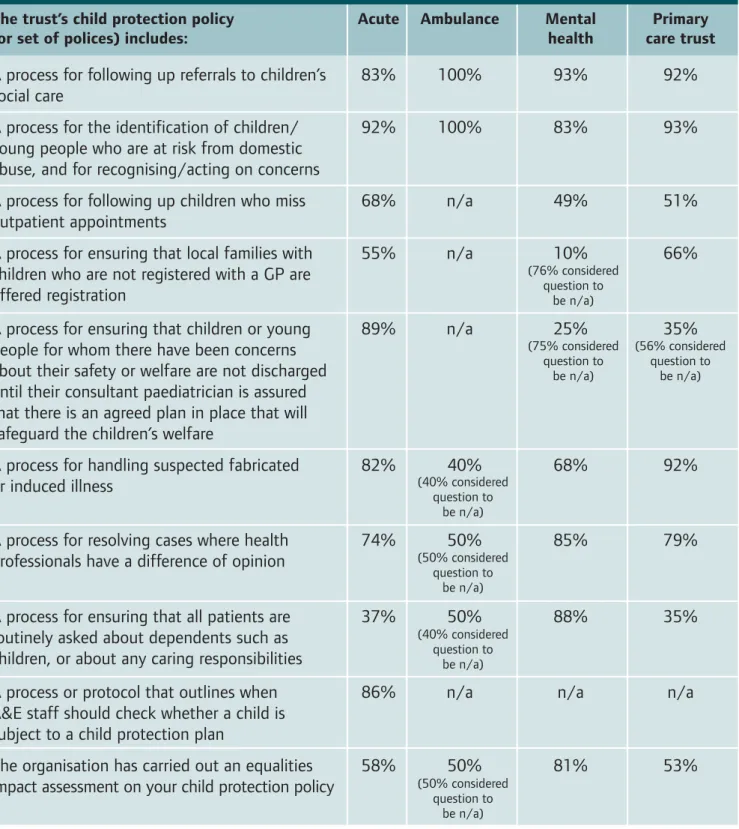
As described in our overview to this section, there are a number of processes that should be covered by an organisation’s child protection policy, or set of policies. We asked trusts to tell us whether their policies covered these processes, as applicable to their work, and also to tell us whether they had carried out equalities impact assessments on their policies (see table 5).
Ofsted’s Learning Lessons report, which evaluated serious case reviews between 1 April 2007 and 31 March 2008, highlighted that drug and alcohol misuse and domestic violence featured in many serious case reviews, and that agencies failed to adequately assess the risks posed by drug and alcohol misuse, particularly to very young babies. Agencies also failed to understand, accept and assess the impact of domestic violence on children and there was insufficient assessment of the impact of the learning difficulties of adults on their capacity as parents and on their own mental health. Our findings on questions related to these issues vary. While most trusts included in their policies processes for identifying and acting on risks relating to domestic violence, other than mental healthcare providers, most organisations did not have a process for ensuring that all patients are routinely asked about dependents or caring responsibilities.
The 2008 publication from the Confidential Enquiry into Maternal and Child Health, Why Children Die, found that a failure to follow up children who did not attend their appointments was associated in some cases with missed opportunities to prevent later death. The report recommended that health services, including primary care and child and adolescent mental health services, should proactively follow up patients who did not attend their appointments. In the light of this recommendation, the relatively low proportion of trusts that have a specific process for this follow-up included in their child protection policies is a matter of concern. The substantial proportion of trusts that told us their child protection polices did not include any process for offering non-registered families GP registration is also a matter of concern. Access to up-to-date information and
professional expertise
We asked acute trusts how their A&E staff get access to a register of those with a child protection plan. Ninety-two per cent said that their staff had online or telephone access 24 hours a day, seven days a week, and 3% said they had online or telephone access, but for less than 24 hours a day, seven days a week. Five per cent only had a hard copy of the register available in the department, which was updated regularly. We also asked trusts whether their maternity and health visiting staff have 24-hour access to
information on families at risk. In acute trusts, 98% had access – either automatically or on request – and in PCTs, 97% had access. We also asked all trusts how many of their clinical staff had 24-hour on-call access to a child protection clinician. Eighty-four per cent said that all clinicians had access, and 8% said “most” or “some” had access. We are concerned that 8% of organisations said that none of their clinical staff had 24-hour on-call access to a child protection clinician. We next asked trusts whether they had a reporting system to flag child protection/safeguarding concerns. Eighty-eight per cent said they had such a system, but worryingly 12% said they did not.
Table 5: Key processes included in child protection policies
The trust’s child protection policy Acute Ambulance Mental Primary
(or set of polices) includes: health care trust
A process for following up referrals to children’s 83% 100% 93% 92% social care
A process for the identification of children/ 92% 100% 83% 93% young people who are at risk from domestic
abuse, and for recognising/acting on concerns
A process for following up children who miss 68% n/a 49% 51% outpatient appointments
A process for ensuring that local families with 55% n/a 10% 66% children who are not registered with a GP are
offered registration
A process for ensuring that children or young 89% n/a 25% 35% people for whom there have been concerns
about their safety or welfare are not discharged until their consultant paediatrician is assured that there is an agreed plan in place that will safeguard the children’s welfare
A process for handling suspected fabricated 82% 40% 68% 92% or induced illness
A process for resolving cases where health 74% 50% 85% 79% professionals have a difference of opinion
A process for ensuring that all patients are 37% 50% 88% 35% routinely asked about dependents such as
children, or about any caring responsibilities
A process or protocol that outlines when 86% n/a n/a n/a A&E staff should check whether a child is
subject to a child protection plan
The organisation has carried out an equalities 58% 50% 81% 53% impact assessment on your child protection policy
(76% considered question to be n/a) (75% considered question to be n/a) (40% considered question to be n/a) (50% considered question to be n/a) (40% considered question to be n/a) (50% considered question to be n/a) (56% considered question to be n/a)
GPs and dentists should have access to a copy of the local safeguarding children board’s procedures. Ninety-nine per cent of PCTs said that this was the case for GPs, 86% for dentists.
Policies specific to mental health trusts Mental health trusts face a particular challenge in assessing the impact on dependent children of the treatment they provide for adults. Sixty-six per cent of mental health trusts said they had a policy for carrying out such assessments, 34% said they did not. This is concerning. All mental health trusts, including those that do not treat children, should have a clearly defined method for carrying out these assessments. According to Ofsted’s Learning Lessons
report, mental health problems often feature in serious case reviews. The report concluded that parents’ or carers’ mental health problems are not always appropriately considered as part of a risk assessment for children. Of those that had a policy, 55% had audited it since 1 January 2008. Thirteen per cent had audited their policy prior to 2008, and 36% had not audited their policy. Eighty-one per cent of mental health trusts said they had joint protocols in place for mental health and children’s services. Policies specific to maternity services
(acute trusts)
We asked acute trusts that provide maternity
services whether a ‘safe discharge’ policy was jointly adopted by acute/community teams (including health visiting). Sixty-nine per cent said “yes”, and 31% said “no”.
4
What do senior managers and trusts’ boards do
to monitor safeguarding arrangements and assure
themselves that these arrangements are working?
What should be in place?
Statutory guidance on making arrangements to safeguard and promote the welfare of children under section 11 of the Children Act 2004 states that organisations must identify a named person at senior management level or equivalent to champion the importance of safeguarding and promoting the welfare of children throughout the organisation.10
Intercollegiate guidance on the roles and
responsibilities of designated (primary care trusts) and named (providers) nurses and doctors states that the named professional in child protection will support and advise the trust’s board on safeguarding matters.9
Together, the designated/named staff and the board representative have a duty to monitor safeguarding throughout the organisation and, for designated staff, across the catchment area of the primary care trust (PCT). These individuals need to work together to ensure that the board is fully informed about safeguarding practice and
performance within the organisation.
PCTs are responsible for ensuring that the health contribution to safeguarding and promoting the welfare of children is carried out effectively across the whole local health economy, through its
commissioning arrangements. Service specifications and contracts drawn up by PCT commissioners should include clear service standards for safeguarding and promoting the welfare of children.8
National contracts drawn up by the Department of Health for commissioners to use include a section on safeguarding, and these contracts should also include details of how performance is monitored.
By monitoring the service standards of NHS foundation trusts and contracted service providers, commissioning PCTs can assure themselves that providers are meeting the required safeguarding standards.
The National Service Framework for Children, Young People and Maternity Services13
states that all agencies should have robust information systems that enable them to monitor practice and the management of work with children and families to ensure that their welfare is being effectively safeguarded and promoted. Trusts should also have a programme of internal audit and review that enables them to continuously improve the protection of children and young people from harm or neglect. Policies, procedures and practice should be refined or changed in the light of these audits and reviews.
Our findings
Mechanisms for safeguarding information to reach board level
We asked trusts to tell us who their nominated board lead for safeguarding is. In 64% of trusts it was the nurse director, in 9% the medical director, in 8% the operations director and in 2% the chief executive. Seventeen per cent selected “other”, indicating that their board lead’s role did not fall into any of these categories. Eighty-two per cent of organisations said that their nominated board lead had formal training in child protection/safeguarding, 14% said their lead had no training, and the
It is essential that staff at all levels understand their roles and responsibilities regarding safeguarding and promoting the welfare of children and that they are appropriately trained to carry these out effectively. To ensure that the board lead is aware of safeguarding, they ought to have at least level 1 training in safeguarding.
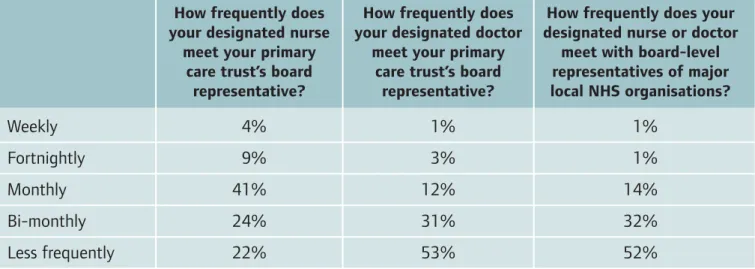
We asked PCTs how often their designated clinicians met board-level leads (see table 6). It is striking that meetings between designated doctors and board representatives are much less frequent than those between designated nurses and board representatives, but this may simply reflect the differences in protected time allocated for safeguarding duties for these roles. Thirty per cent of trusts told us that their board had received no presentations from a designated or named child protection/safeguarding professional in 2008. These trusts should consider whether in the absence of such presentations they are getting an adequate picture of safeguarding in their organisation. Thirty-one per cent had received one presentation and 29% had received two or more. Nine per cent of the responses we received were unclear.
Ninety-one per cent of organisations said that during 2008, they had discussed safeguarding or child protection at least once, as a minuted agenda item, at their executive team or full board. Seventy per cent of organisations said that regular reporting and performance monitoring to their governance committee on safeguarding happened at least on a quarterly basis. Twenty-two per cent said that this happened annually.
The main ways that boards assure themselves about compliance with their safeguarding responsibilities appear to be routine annual reporting and being notified of serious untoward incidents. Ten per cent of organisations said they used monthly routine reports, and 28% quarterly routine reports. Commissioning
PCTs must be accountable for both their own
processes for safeguarding children and those used by agencies that they commission services from. Service specifications drawn up by PCT commissioners should include clear service standards for safeguarding and promoting the welfare of children.8 We therefore
asked PCTs how many of their organisations’ contracts and service specifications with NHS and independent providers explicitly include safeguarding arrangements.
Table 6: Frequency of meetings between designated staff and board-level representatives
How frequently does How frequently does How frequently does your your designated nurse your designated doctor designated nurse or doctor
meet your primary meet your primary meet with board-level care trust’s board care trust’s board representatives of major
representative? representative? local NHS organisations?
Weekly 4% 1% 1%
Fortnightly 9% 3% 1%
Monthly 41% 12% 14%
Bi-monthly 24% 31% 32%
Table 7: Discussion at board level, or by delegated decision-making group, of incidents and reviews relating to safeguarding
Discussed? Serious untoward Individual management Serious case reviews incidents reviews
Yes, on occurrence 41% 65% 68%
Yes, at each meeting 46% 18% 19%
Yes, on a quarterly basis 11% 7% 7%
Yes, on an annual basis 1% 2% 2%
No 1% 7% 4%
Thirty per cent said “all”, 31% said “most”, 37% said “some” and 2% said “none”. We also asked PCTs whether all health organisations, including the independent health sector that they commission services from, have links with a specific local safeguarding children board. Sixty-six per cent said “yes”, and 34% said “no”.
Board-level monitoring of incidents and reviews We asked trusts to tell us how often their board or delegated decision-making group routinely monitor serious untoward incidents, individual management reviews and serious case reviews (see table 7).
Audit
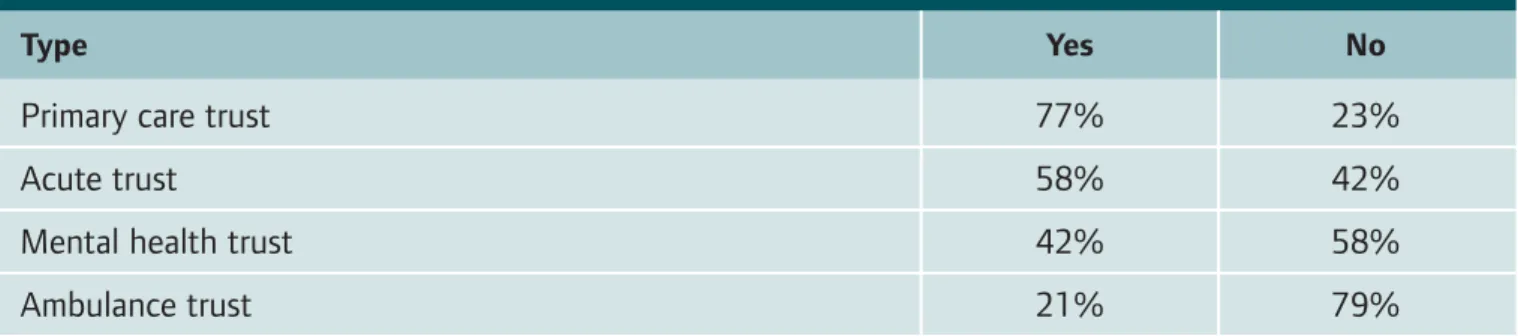
Finally, if trusts are to ensure that their policies and processes are working well, regular audit is essential. We asked trusts to tell us whether they had carried out an audit of specific safeguarding issues in 2008 (see table 8).
It is important that trusts review how their policies are implemented as part of an ongoing focus on improving outcomes. Given the recent emphasis on safeguarding arrangements, we would expect that boards will now have a programme for review of these key issues that is coordinated with their local safeguarding children board and partner organisations.
Table 8: Audit of policies relating to safeguarding in 2008
Issue Yes No
Policy relating to safeguarding 57% 43%
Documentation 77% 23%
Serious case review processes 22% 78%
Reporting systems (flagging child protection concerns) 49% 51%