ARTIGO ORIGINAL
Revista Científica da Ordem dos Médicos www.actamedicaportuguesa.com 543
Relational and Reproductive Trajectories
Leading to Adolescent Pregnancy in Portugal: a
National and Regional Characterization
Trajetórias Relacionais e Reprodutivas Conducentes à Gravidez na
Adolescência: a Realidade Nacional e Regional Portuguesa
1. Faculdade de Psicologia e de Ciências da Educação. Universidade de Coimbra. Coimbra. Portugal.
2. Unidade de Intervenção Psicológica. Maternidade Daniel de Matos. Centro Hospitalar e Universitário de Coimbra. Coimbra. Portugal. 3. Serviço de Obstetrícia. Maternidade Daniel de Matos. Centro Hospitalar e Universitário de Coimbra. Coimbra. Portugal.
4. Associação Para o Planeamento da Família. Lisboa. Portugal.
5. Centro Lusíada de Investigação em Serviço Social e Intervenção Social. Universidade Lusíada de Lisboa. Lisboa. Portugal. 6. Divisão de Saúde Sexual, Reprodutiva, Infantil e Juvenil. Direção-Geral da Saúde. Lisboa. Portugal.
Recebido: 11 de Outubro de 2013 - Aceite: 27 de Janeiro de 2014 | Copyright © Ordem dos Médicos 2014
Raquel PIRES1,2, Joana PEREIRA1,2, Anabela Araújo PEDROSA1,2,Teresa BOMBAS3, Duarte VILAR4,5, Lisa VICENTE6,
Maria Cristina CANAVARRO1,2
Acta Med Port 2014 Sep-Oct;27(5):543-555
RESUMO
Introdução: Este estudo pretendeu caracterizar as trajetórias relacionais e reprodutivas conducentes à gravidez na adolescência em Portugal, explorando a existência de especificidades regionais.
Material e Métodos: O estudo decorreu entre 2008 e 2013 em 42 serviços de saúde públicos. A amostra, nacionalmente represen-tativa, incluiu 459 grávidas com idades entre os 12 e os 19 anos. Os dados foram obtidos por autorrelato, através de uma ficha de caracterização construída para o efeito.
Resultados: Independentemente de terem tido um (59,91%) ou múltiplos parceiros sexuais (40,09%), as adolescentes engravidaram de forma mais frequente numa relação de namoro, utilizando contraceção à data da conceção e tendo identificado a falha contracetiva que esteve na origem da gravidez (39,22%). A nível regional, outras trajetórias surgiram com elevada prevalência, refletindo opções como a decisão de engravidar (Alentejo/Açores), a não utilização de contraceção (Centro/Madeira) ou a sua utilização ineficaz sem que a falha contracetiva fosse identificada (Madeira). As relações de namoro revelaram-se maioritariamente duradouras (> 19 meses), com homens mais velhos (> 4 anos) e fora do sistema de ensino (75,16%); estes resultados foram particularmente expressivos quando a gravidez foi planeada.
Discussão: O conhecimento gerado por este estudo reflete a necessidade de investir em abordagens preventivas que atendam às necessidades específicas das jovens de cada região e integrem a população masculina de maior risco.
Conclusão: Os nossos resultados podem contribuir para o delineamento de políticas de saúde mais eficazes e para uma atuação multidisciplinar mais informada ao nível da educação sexual e do planeamento familiar nas diferentes regiões do país.
Palavras-chave: Adolescente; Contraceção; Educação Sexual; Gravidez na Adolescência; Planeamento Familiar.
ABSTRACT
Introduction: The current study aimed to describe the relational and reproductive trajectories leading to adolescent pregnancy in Por-tugal, and to explore whether there were differences in this process according to adolescents’ place of residence.
Material and Methods: Data were collected between 2008 and 2013 in 42 public health services using a self-report questionnaire developed by the researchers. The sample consisted of a nationally representative group of pregnant adolescents (n = 459).
Results: Regardless of having had one (59.91%) or multiple sexual partners (40.09%), the majority of adolescents became pregnant in a romantic relationship, using contraception at the time of the conception and knowing the contraceptive failure which led to pregnancy (39.22%). In some regions other trajectories were highly prevalent, reflecting options such as planning the pregnancy (Alentejo Region/ Azores Islands), not using contraception (Centro Region/Madeira Islands) or using it incorrectly, without identifying the contraceptive failure (Madeira Islands). On average, romantic relationships were longer than 19 months and adolescents’ partners were older than themselves (> 4 years) and no longer in school (75.16%); these results were particularly significant when the pregnancy was planned. Discussion: The knowledge gained in this study shows that prevention efforts must be targeted according to the adolescents’ needs in each region and should include high-risk male groups.
Conclusion: Our results may enable more efficient health policies to prevent adolescent pregnancy in different country regions and support educators and health care providers on sexual education and family planning efforts.
Keywords: Adolescent; Contraception; Sex Education; Pregnancy in Adolescence; Portugal.
INTRODUCTION
Adolescent pregnancy is not an inevitably physical or mental adverse phenomenon.1-3 However, it has been usually related to a higher risk of preterm delivery6-9, low-birth weight infants6,7,9 and maternal depression,10 as the result of unfavourable socio-economic conditions4,5. In addition, over the last decades, social changes have considered adolescent pregnancy as increasingly inappropriate and undesirable, increasing
family planning challenges in several developed countries.5,9,11,12 In Portugal, the fertility rate in women under the age of 20 had a clear and steady decline over the last few decades. In 1981, these births represented 11.1% of the country’s total of births; in 2001, this rate had decreased to 6.1%. Since then, an annual average decline between 0.2 and 0.3% was observed and it remained unchanged even after decriminalisation of
anos
35
35 anos a p
rom o
ve
r a
s
c
iê
n cia
s b A
M
É
D
IC
A
P
OR
TU
GU
ESA
ARTIGO ORIGINAL voluntary termination of pregnancy (VTP) within the first ten weeks of pregnancy.13 In addition, a similar
decreasing tendency of the rate of VTP in adolescents has been observed since 2009.14-17 However, the latest available official data for the year 2012 present a 3.7% fertility rate in adolescent mothers13 , a disturbing
figure, both because (i) it is above the European Union average11,12 and (ii) displays a heterogeneous regional distribution across Portugal.13
Previous reports have stressed the diversity of events and decisions leading to pregnancies in adolescence. Apart from sexual initiation – a normative transition occurring in adolescence18 – these events and decisions include options regarding pregnancy planning, pregnancy control and contraceptive behaviour.5,19-22 However, the risk of pregnancy seems to be separately related not only to each of these events and decisions – as they have been addressed in most studies –, but also in the different combinations between them and underlying relational contexts. These facts suggest the presence of several possible trajectories.5,19-21,23,24
Pregnancy planning has not been properly addressed in the understanding of contraceptive behaviour in adolescents, as a higher number of non-planned pregnancies occurs in this age group25,26, usually related to a higher obstetric risk than planned pregnancies in the general population.26 As such,
different authors have underlined the need to evaluate the decision to get pregnant in studies involving adolescents.22,27-29 According to Sheeder, Tocce and Stevens-Simon,29 for instance, unlike what happens in adult women, pregnancy planning in adolescents is a cause for concern as it neither associated to better pre-natal care nor to better obstetric outcomes. In Portugal, despite the lack of national data before 1997,26 regional research has shown that pregnancy
was planned by 30% of adolescent pregnant mothers studied in the Azores4 and by 15 and 27% from those
surveyed in the Northern and the Southern regions.30 A recent study, based on a nationally representative sample of adolescent pregnant mothers, showed that approximately 22% of pregnancies were planned.22
However, the same study showed that the percentage of planned pregnancies in the Alentejo exceeded 38%. In addition, international studies found that repeated pregnancy in this stage of life-cycle is often associated to consecutive pregnancy planning.31
Among childbearing women aged 15 to 49, adolescents present the lower rates of decision regarding contraceptive use. .32 In the Azores,
contraceptive non-use seems to relate mostly to (i) adolescents non-approval of the available methods, considering that its use affects relationship, (ii) adolescents’ wish to become pregnant and (iii) an absence of information on contraception.4 We are
not aware of any data regarding the other regions of
the country. Pires et al.22 also found that 71% of the
adolescent non-planned pregnant mothers in their group of participants have described the use of contraception at the time of conception suggesting, in line with other studies, that contraceptive failures (for instance, misuse or abandoned available contraception) may also explain these pregnancies.22-24,33-35 However, the authors do not provide any information regarding the type of failure. In addition, Carvalho30 and Pires et al.22
suggest the presence of regional specificities regarding the contraceptive behaviours that lead adolescents to become pregnant. According to the most recent study, the absence of contraception has been more common in the Central region, in the Azores and in the Algarve; absence of contraception is the least frequent explanation for pregnancy in young mothers in Lisbon and the Tagus Valley region (Lisboa e Vale do Tejo – LVT).22
As regards the underlying relational context to these events and decisions, the involvement with multiple sexual partners has been considered as a risk factor for inadequate contraceptive behaviours,28 as well as occasional non-romantic relationships, when compared to romantic relationships.36 However,
national studies showed the lack of differences in the number of partners between pregnant and non-pregnant adolescent mothers living in mainland Portugal30 and found that only 2% of pregnancies occurred as a result of an occasional relationship.22 Longer-lasting romantic
relationships37 and with older men seem to be the main contributors to adolescent pregnancy.4,22,30,38 The partners are usually lower-educated adults or older adolescent school-leavers.4,30,38-40 According to some authors, the involvement of adolescents with these partners seems to be particularly related to pregnancy planning.31 However, William found that partners with
these characteristics have a lower contraceptive knowledge, which may contribute to the inefficient prevention of an unintended pregnancy.41 Nevertheless,
it is generally agreed that there is a tendency for these men to get involved in high-proximity relationships (within their social circle), to present traditional visions on gender roles and to consider the birth of a child as having a minimal impact on their lives.31,39,41
Based on these evidences, our study aimed to characterise the relational and reproductive trajectories leading to pregnancy in Portuguese adolescents, including the study of any regional specificity, as we are not aware of any research involving the understanding of the order of events, decisions and underlying contexts that may lead adolescents to become pregnant..
MATERIAL AND METHODS
ARTIGO ORIGINAL
Revista Científica da Ordem dos Médicos www.actamedicaportuguesa.com adolescent pregnant mothers aged between 12 and
1942 living in all regions of Portugal (NUTS II; 2002)
and adequately fluent in Portuguese, allowing for the evaluation protocol to be filled in.
Adolescents were invited to participate during obstetric follow-up; those who gave their consent filled in an informed consent form and a characterisation form designed for the purpose, under the supervision of a research assistant. The consent form was also signed by the legal representatives of the participants aged below 18.
The characterisation form was based on the semi-structured interview used at the Psychologic Intervention Unit (Unidade de Intervenção Psicológica) at Maternidade Daniel de Matos for patient evaluation
at the Adolescent Pregnant Outpatient43 and included
open and closed-ended questions. The variables included in relational and reproductive trajectories that lead to pregnancy were evaluated by the questions ‘With how many partners have you maintained sexual intercourse?’ ‘Com quantos parceiros já teve relações sexuais?’ one vs. multiple sexual partners), ‘Do you
have a romantic relationship [with the child’s father]?’
‘Tem uma relação de namoro [com o pai do bebé]?
[In the case of non-existing relationship] please state if this was an occasional relationship (romantic vs.
occasional relationship)’, ‘Is your pregnancy planned for this moment’ ‘A gravidez foi planeada para o momento atual?’ (planned vs. unintended pregnancy), ‘Were
you using any contraception?’ ‘Utilizava algum método contracetivo?’ (using vs. not using any contraception),
‘[If you were using] what failed?’ (identified vs.
unidentified failure). When young mothers did not identify any contraceptive failure, the response to the question ‘Which [were the contraceptive methods used]?’ ‘Quais [os métodos contracetivos utilizados]?’
has been used to codify the non-identified failure according to the used method (e.g., does not identify any failure in the use of condoms).
Statistics analysis was carried out with SPSS, version 17 software. Descriptive statistics were used for characterisation (frequencies, means and standard deviations). Chi-square (with Monte Carlo correction when the expected frequency was below five on any cell) and Kruskal-Wallis tests (with Mann-Whitney post hoc U-test and Bonferroni correction) were used to calculate regional differences regarding categorical and continuous variables, respectively; Cramer’s V and
r were calculated in order to estimate the effect size
of significance (small ≥ 0.10; intermediate ≥ 0.30; large effect ≥ 0.50).44,45 Dichotomous variables regarding events and decisions that may have explained pregnancy and regarding underlying relational contexts were included in the trajectories, according to time sequence criteria between them. Categorical variables with more than two categories and continuous variables regarding partner’s characteristics and the relationship
leading to pregnancy were subsequently analysed according to their distribution per trajectory.
RESULTS
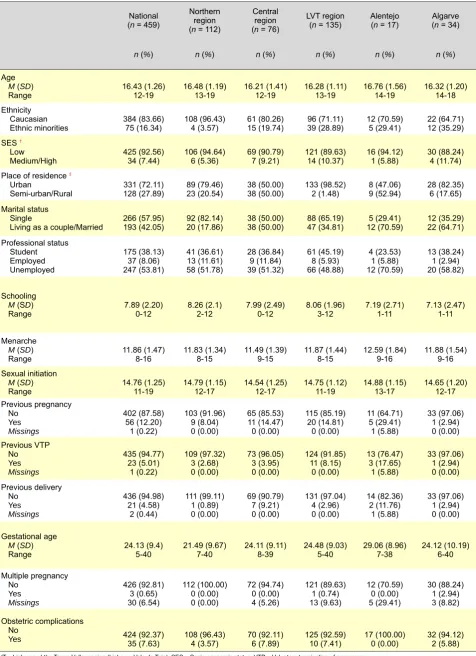
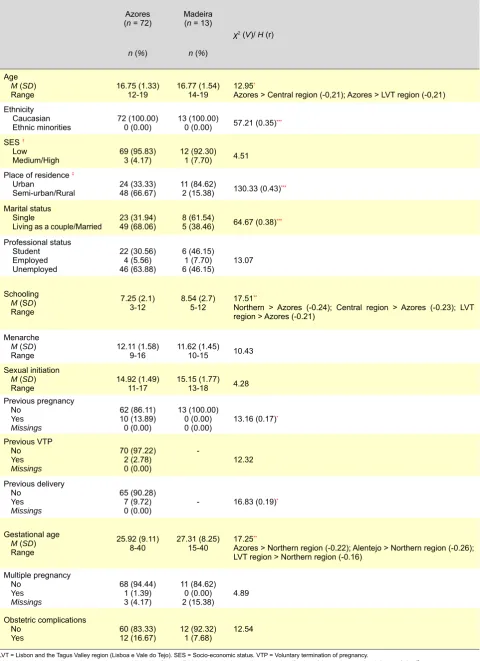
As shown in Table 1, most participants were Caucasian, with low socio-economic status and living in urban areas; most were single, usually out-of-school and unemployed, with on average 8-year schooling, with menarche at the age of 12 on average and sexual initiation starting on average three years later. Gestational age varied between 5 and 40 weeks and for most adolescents it was their first pregnancy. Pregnancy was multiple and obstetric complications were reported in a minority of cases. In contrast to the remaining regions, the adolescents in the Alentejo and in the Azores lived mostly in semi-urban or rural areas and were mostly (along with those living in the Algarve) married or living as a couple. In the Azores and in Madeira all the adolescents were Caucasian, while in the remaining regions 3.57% to 35.29% were from ethnic minorities. The adolescents living in the Azores were older than those living in the Central (U
= 2,091.00; p = 0.011) and in the LVT regions (U =
3,638.00; p = 0.002) and had lower schooling than
those living in the Northern (U = 2,745.00; p = 0.001),
Central (U = 1,869.50; p = 0.005) and in the LVT
regions (U = 3,228.50; p = 0.004). A history of previous
pregnancy was more frequent in the Alentejo and only in Madeira were all the adolescents in their first pregnancy. A previous child delivery was more frequent in the Alentejo and in the Azores. The adolescents living in the LVT region (U = 5,800.00, p = 0.014), in the
Alentejo (U = 533.00, p = 0.004) and in the Azores (U =
2,902.50; p = 0.003) reported longer gestational ages
ARTIGO ORIGINAL Table 1 - Characteristics of our group of participants: socio-demographic and clinical variables National
(n = 459)
Northern region (n = 112)
Central region (n = 76)
LVT region (n = 135)
Alentejo (n = 17)
Algarve (n = 34)
n (%) n (%) n (%) n (%) n (%) n (%)
Age
M (SD)
Range 16.43 (1.26) 12-19 16.48 (1.19)13-19 16.21 (1.41)12-19 16.28 (1.11)13-19 16.76 (1.56)14-19 16.32 (1.20)14-18 Ethnicity
Caucasian
Ethnic minorities 384 (83.66)75 (16.34) 108 (96.43)4 (3.57) 61 (80.26)15 (19.74) 39 (28.89)96 (71.11) 12 (70.59)5 (29.41) 22 (64.71)12 (35.29) SES †
Low
Medium/High 425 (92.56)34 (7.44) 106 (94.64)6 (5.36) 69 (90.79)7 (9.21) 121 (89.63)14 (10.37) 16 (94.12)1 (5.88) 30 (88.24)4 (11.74) Place of residence‡
Urban
Semi-urban/Rural 331 (72.11)128 (27.89) 89 (79.46)23 (20.54) 38 (50.00)38 (50.00) 133 (98.52)2 (1.48) 8 (47.06)9 (52.94) 28 (82.35)6 (17.65) Marital status
Single
Living as a couple/Married 266 (57.95)193 (42.05) 92 (82.14)20 (17.86) 38 (50.00)38 (50.00) 88 (65.19)47 (34.81) 12 (70.59)5 (29.41) 12 (35.29)22 (64.71) Professional status Student Employed Unemployed 175 (38.13) 37 (8.06) 247 (53.81) 41 (36.61) 13 (11.61) 58 (51.78) 28 (36.84) 9 (11.84) 39 (51.32) 61 (45.19) 8 (5.93) 66 (48.88) 4 (23.53) 1 (5.88) 12 (70.59) 13 (38.24) 1 (2.94) 20 (58.82) Schooling
M (SD)
Range 7.89 (2.20)0-12 8.26 (2.1)2-12 7.99 (2.49)0-12 8.06 (1.96)3-12 7.19 (2.71)1-11 7.13 (2.47)1-11
Menarche
M (SD)
Range 11.86 (1.47)8-16 11.83 (1.34)8-15 11.49 (1.39)9-15 11.87 (1.44)8-15 12.59 (1.84)9-16 11.88 (1.54)9-16 Sexual initiation
M (SD)
Range 14.76 (1.25)11-19 14.79 (1.15)12-17 14.54 (1.25)12-17 14.75 (1.12)11-19 14.88 (1.15)13-17 14.65 (1.20)12-17 Previous pregnancy No Yes Missings 402 (87.58) 56 (12.20) 1 (0.22) 103 (91.96) 9 (8.04) 0 (0.00) 65 (85.53) 11 (14.47) 0 (0.00) 115 (85.19) 20 (14.81) 0 (0.00) 11 (64.71) 5 (29.41) 1 (5.88) 33 (97.06) 1 (2.94) 0 (0.00) Previous VTP No Yes Missings 435 (94.77) 23 (5.01) 1 (0.22) 109 (97.32) 3 (2.68) 0 (0.00) 73 (96.05) 3 (3.95) 0 (0.00) 124 (91.85) 11 (8.15) 0 (0.00) 13 (76.47) 3 (17.65) 1 (5.88) 33 (97.06) 1 (2.94) 0 (0.00) Previous delivery No Yes Missings 436 (94.98) 21 (4.58) 2 (0.44) 111 (99.11) 1 (0.89) 0 (0.00) 69 (90.79) 7 (9.21) 0 (0.00) 131 (97.04) 4 (2.96) 0 (0.00) 14 (82.36) 2 (11.76) 1 (5.88) 33 (97.06) 1 (2.94) 0 (0.00) Gestational age
M (SD)
Range 24.13 (9.4)5-40 21.49 (9.67)7-40 24.11 (9.11)8-39 24.48 (9.03)5-40 29.06 (8.96)7-38 24.12 (10.19)6-40
Multiple pregnancy No Yes Missings 426 (92.81) 3 (0.65) 30 (6.54) 112 (100.00) 0 (0.00) 0 (0.00) 72 (94.74) 0 (0.00) 4 (5.26) 121 (89.63) 1 (0.74) 13 (9.63) 12 (70.59) 0 (0.00) 5 (29.41) 30 (88.24) 1 (2.94) 3 (8.82) Obstetric complications No
Yes 424 (92.37)35 (7.63) 108 (96.43)4 (3.57) 70 (92.11)6 (7.89) 125 (92.59)10 (7.41) 17 (100.00)0 (0.00) 32 (94.12)2 (5.88)
LVT = Lisbon and the Tagus Valley region (Lisboa e Vale do Tejo). SES = Socio-economic status. VTP = Voluntary termination of pregnancy.
† Variable coded according to the procedures established by Simões.46 ‡ Variable coded according to the classification of the Instituto Nacional de Estatística.47
ARTIGO ORIGINAL
Revista Científica da Ordem dos Médicos www.actamedicaportuguesa.com 547
Table 1 - Characteristics of our group of participants: socio-demographic and clinical variables (final)
Azores (n = 72)
Madeira (n = 13)
χ2 (V)/ H (r)
n (%) n (%)
Age
M (SD)
Range 16.75 (1.33)12-19 16.77 (1.54)14-19 12.95 *
Azores > Central region (-0,21); Azores > LVT region (-0,21) Ethnicity
Caucasian
Ethnic minorities 72 (100.00)0 (0.00) 13 (100.00)0 (0.00) 57.21 (0.35)*** SES †
Low
Medium/High 69 (95.83)3 (4.17) 12 (92.30)1 (7.70) 4.51 Place of residence‡
Urban
Semi-urban/Rural 24 (33.33)48 (66.67) 11 (84.62)2 (15.38) 130.33 (0.43)*** Marital status
Single
Living as a couple/Married 23 (31.94)49 (68.06) 8 (61.54)5 (38.46) 64.67 (0.38)*** Professional status
Student Employed Unemployed
22 (30.56) 4 (5.56) 46 (63.88)
6 (46.15) 1 (7.70)
6 (46.15) 13.07
Schooling
M (SD)
Range
7.25 (2.1)
3-12 8.54 (2.7)5-12 17.51 **
Northern > Azores (-0.24); Central region > Azores (-0.23); LVT region > Azores (-0.21)
Menarche
M (SD)
Range 12.11 (1.58)9-16 11.62 (1.45)10-15 10.43 Sexual initiation
M (SD)
Range 14.92 (1.49)11-17 15.15 (1.77)13-18 4.28 Previous pregnancy
No
Yes
Missings
62 (86.11) 10 (13.89) 0 (0.00)
13 (100.00) 0 (0.00)
0 (0.00) 13.16 (0.17) *
Previous VTP No
Yes
Missings
70 (97.22) 2 (2.78) 0 (0.00)
-12.32
Previous delivery No
Yes
Missings
65 (90.28) 7 (9.72)
0 (0.00) - 16.83 (0.19) *
Gestational age
M (SD)
Range
25.92 (9.11)
8-40 27.31 (8.25)15-40 17.25 **
Azores > Northern region (-0.22); Alentejo > Northern region (-0.26); LVT region > Northern region (-0.16)
Multiple pregnancy No
Yes
Missings
68 (94.44) 1 (1.39) 3 (4.17)
11 (84.62) 0 (0.00)
2 (15.38) 4.89 Obstetric complications
No
Yes
60 (83.33)
12 (16.67) 12 (92.32)1 (7.68) 12.54
LVT = Lisbon and the Tagus Valley region (Lisboa e Vale do Tejo). SES = Socio-economic status. VTP = Voluntary termination of pregnancy.
† Variable coded according to the procedures established by Simões.46 ‡ Variable coded according to the classification of the Instituto Nacional de Estatística.47
ARTIGO ORIGINAL
548
Revista Científica da Ordem dos Médicos www.actamedicaportuguesa.com
Figure 1
- Relational and reproductive trajectories leading to adolescent pregnancy
Sexual initiation
> 1 sexual partner (
n
= 184; 40.09%)
1 sexual partner (
n
= 275; 59.91%)
Romantic relationship
(
n
= 271; 59.04%)
Romantic relationship
(
n
= 182; 39.65%)
Unintended pregnancy ( n = 151; 32.90%) Unintended pregnancy ( n = 203; 44.23%) Planned pregnancy ( n
= 68; 14.82%)
- Strengthen the relationship (
n
= 23; 33.82%)
- Build a family/moment to have a child
(
n
= 18; 26,47%)
- Leave parent’
s house/live with the
partner (
n
= 10; 14.71%)
Planned pregnancy
(
n
= 31; 6.75%)
- Strengthen the relationship
(n
= 13; 41.94%)
- Build a family/moment to have a child
(
n
= 7; 22.58%)
- Leave parent’
s house/live with the
partner (
n
= 3; 9.68%)
W
as not using any
contraception
(
n
= 42; 9.15%)
- Did not want to use/did not like any
method (
n
= 9; 21.43%)
- Her partner did not want to use any
contraception (
n
= 5; 1
1.90%)
- Stopped taking the pill due to
health problems/bad compliance to
the method (
n
= 4; 9.52%)
W
as not using any
contraception
(
n
= 59; 12,85%)
- Did not think possible to become
pregnant (
n
= 8; 13,56%)
- Did not want to use/did not like any
method (
n
= 6; 10,17%)
- Did not have any information on
contraception (
n
= 6; 10,17%)
Failure was identified
(
n
= 105; 22.88%)
- Condom breakage
(
n
= 44; 41.90%)
- Forgot to take the pill
(
n
= 33; 31.43%)
- Antibiotics/vomiting when
pill was taken
(
n
= 15; 14.29%)
Failure was identified
(
n
= 75; 16.34%)
- Condom breakage
(
n
= 23; 30.67%)
- Forgot to take the pill
(
n
= 21; 28.00%)
-
Antibiotics/vomiting when
pill was taken
(
n
= 14; 18.67%)
Failure was
identified
(
n
= 1; 0.22%)
- Condom breakage
Failure was
identified
(
n
= 1; 0.22%)
- Condom breakage
Failure was not
identified
(
n
= 1; 0.22%)
- Condom-related
Failure was not
identified
(
n
= 1; 0.22%)
- Condom-related
(
n
= 20; 58.82%)
- Pill-related
(
n
= 14; 41.18%)
Failure was not
identified
(
n
= 1; 0.22%)
- Condom-related
(
n
= 27; 71.05%)
- Pill-related ( n = 1 1; 29.95%) 1 2 3 4 5 6 7 8 9 10 11 12 W as using contraception ( n = 109; 23.75%) W as using contraception ( n = 144; 31.37%) W as using contraception ( n = 2; 0.44%) W
as not using
any
contraception
(
n
= 3; 0.65%)
- It was her first
sexual relationship
(
n
= 1; 100,00%)
W as using contraception ( n = 1;
0.22%) Occasional relationship
(
n
= 4; 0.87%)
Occasional relationship
(
n
ARTIGO ORIGINAL
Revista Científica da Ordem dos Médicos www.actamedicaportuguesa.com 549
Table 2 - Partner’s characteristics and of the relationship underlying pregnancy, by trajectory
Trajectories
Total (n = 459)
1
(n = 68)
2
(n = 59)
3
(n = 105)
4
(n = 39)
5
(n = 1) n (%) n (%) n (%) n (%) n (%) n (%)
Partner’ schooling
Illiterate 1 (0.21) 0 (0.00) 0 (0.00) 1 (0.95) 0 (0.00) 0 (0.00)
Primary education 39 (8.50) 14 (20.59) 8 (13.56) 4 (3.81) 3 (7.69) 0 (0.00)
2nd Grade 105 (22.88) 19 (27.94) 14 (23.73) 21 (20.00) 7 (17.95) 0 (0.00)
3rd Grade 195 (42.48) 20 (29.41) 16 (27.12) 53 (50.48) 18 (46.15) 1 (100.00)
Secondary school 57 (12.42) 5 (7.35) 10 (16.95) 14 (13.33) 6 (15.38) 0 (0.00)
University 2 (0.44) 0 (0.00) 1 (1.69) 1 (0.95) 0 (0.00) 0 (0.00)
Undetermined 60 (13.07) 10 (14.71) 10 (16.95) 5 (4.76) 5 (12.82) 0 (0.00)
Partner’s professional status
Student 84 (18.30) 8 (11.76) 9 (15.25) 22 (20.95) 10 (25.64) 1 (100.00)
Employed 248 (54.03) 41 (60.29) 32 (54.24) 67 (63.81) 15 (38.46) 0 (0.00)
Unemployed 97 (21.13) 17 (25.00) 13 (22.03) 13 (12.38) 10 (25.64) 0 (0.00)
Undetermined 30 (6.54) 2 (2.94) 5 (8.47) 3 (2.86) 4 (12.26) 0 (0.00)
Couple’s age difference †
M (SD) 4.25 (3.53) 4.81 (3.91) 4.00 (4.17) 3.74 (2.78) 3.76 (3.81) -1.00
Range -2-23 -2-19 -1-23 0-16 -1-20
-Duration of relationship‡
M (SD) 19.66 (12.57) 23.11 (14,55) 21.50 (14.88) 20.59 (12.00) 21.17 (12.95) -
Range 2-84 4-72 2-67 5-84 4-60
1 = Adolescents that became pregnant from their first sexual partner, in a romantic relationship and with a planned pregnancy; 2 = Adolescents that became pregnant from their first sexual partner in a romantic relationship and with a unintended pregnancy, but without using contraception; 3 = Adolescents that became pregnant from their first sexual partner, in a romantic relationship, using contraception and having identified the contraceptive failure; 4 = Adolescents that became pregnant from their first sexual partner, in a romantic relationship, using contraception but not having identified the contraceptive failure; 5 = Adolescents that became pregnant from tehir first sexual partner, in an occasional relationship, using contraception and having identified the contraceptive failure; 6 = Adolescents that became pregnant from their first sexual partner in an occasional relationship, using contraception, but not having identified the contraceptive failure; 7 = Adolescents that became pregnant upon multiple sexual partners, in an occasional relationship, using contraception and having identified the contraceptive failure; 8 = Adolescents that became pregnant upon multiple sexual partners, in an occasional relationship, using contraception but not having identified the contraceptive failure; 9 = Adolescents that became pregnant upon multiple sexual partners, in a romantic relationship, with a unintended pregnancy, using contraception but not having identified the contraceptive failure; 10 = Adolescents that became pregnant upon multiple sexual partners, in a romantic relationship, using contraception and having identified the contraceptive failure; 11 = Adolescents that became pregnant upon multiple sexual partners, in a romantic relationship, with a unintended pregnancy, but not using any contraception; 12 = Adolescents that became pregnant upon multiple sexual partners, in a romantic relationship and having planned pregnancy.
† Measured in years and obtained by subtracting the adolescent age to the age of her sexual partner. ‡ Measured in months.
trajectory included adolescents that became pregnant upon multiple partners, in a romantic relationship and planned pregnancy (trajectory 12). The remaining trajectories, with only residual frequencies and the
most common grounds for each event or decision are also shown in Fig. 1.
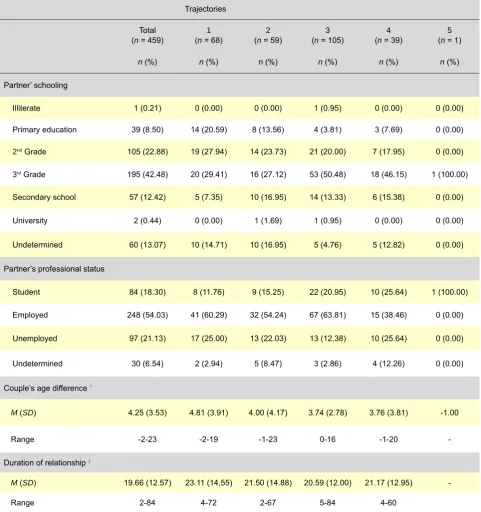
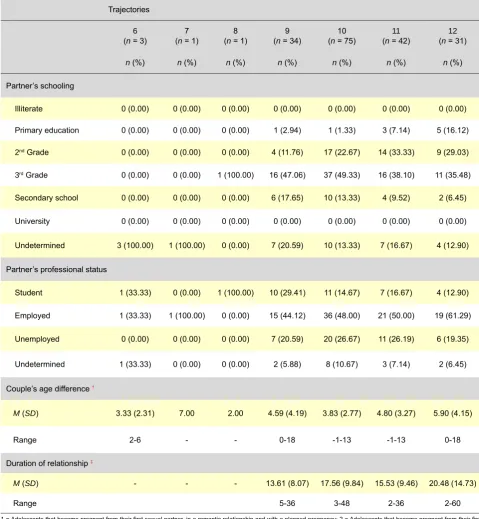
As shown in Table 2, the partners to adolescent mothers that planned their pregnancy (trajectories
Figure 1
ARTIGO ORIGINAL
550
Revista Científica da Ordem dos Médicos www.actamedicaportuguesa.com
Table 2 - Partner’s characteristics and of the relationship underlying pregnancy, by trajectory (final)
Trajectories
6
(n = 3)
7 (n = 1)
8 (n = 1)
9 (n = 34)
10 (n = 75)
11
(n = 42)
12
(n = 31) n (%) n (%) n (%) n (%) n (%) n (%) n (%)
Partner’s schooling
Illiterate 0 (0.00) 0 (0.00) 0 (0.00) 0 (0.00) 0 (0.00) 0 (0.00) 0 (0.00)
Primary education 0 (0.00) 0 (0.00) 0 (0.00) 1 (2.94) 1 (1.33) 3 (7.14) 5 (16.12)
2nd Grade 0 (0.00) 0 (0.00) 0 (0.00) 4 (11.76) 17 (22.67) 14 (33.33) 9 (29.03)
3rd Grade 0 (0.00) 0 (0.00) 1 (100.00) 16 (47.06) 37 (49.33) 16 (38.10) 11 (35.48)
Secondary school 0 (0.00) 0 (0.00) 0 (0.00) 6 (17.65) 10 (13.33) 4 (9.52) 2 (6.45)
University 0 (0.00) 0 (0.00) 0 (0.00) 0 (0.00) 0 (0.00) 0 (0.00) 0 (0.00)
Undetermined 3 (100.00) 1 (100.00) 0 (0.00) 7 (20.59) 10 (13.33) 7 (16.67) 4 (12.90)
Partner’s professional status
Student 1 (33.33) 0 (0.00) 1 (100.00) 10 (29.41) 11 (14.67) 7 (16.67) 4 (12.90)
Employed 1 (33.33) 1 (100.00) 0 (0.00) 15 (44.12) 36 (48.00) 21 (50.00) 19 (61.29)
Unemployed 0 (0.00) 0 (0.00) 0 (0.00) 7 (20.59) 20 (26.67) 11 (26.19) 6 (19.35)
Undetermined 1 (33.33) 0 (0.00) 0 (0.00) 2 (5.88) 8 (10.67) 3 (7.14) 2 (6.45)
Couple’s age difference †
M (SD) 3.33 (2.31) 7.00 2.00 4.59 (4.19) 3.83 (2.77) 4.80 (3.27) 5.90 (4.15)
Range 2-6 - - 0-18 -1-13 -1-13 0-18
Duration of relationship‡
M (SD) - - - 13.61 (8.07) 17.56 (9.84) 15.53 (9.46) 20.48 (14.73)
Range 5-36 3-48 2-36 2-60
1 = Adolescents that became pregnant from their first sexual partner, in a romantic relationship and with a planned pregnancy; 2 = Adolescents that became pregnant from their first sexual partner in a romantic relationship and with a unintended pregnancy, but without using contraception; 3 = Adolescents that became pregnant from their first sexual partner, in a romantic relationship, using contraception and having identified the contraceptive failure; 4 = Adolescents that became pregnant from their first sexual partner, in a romantic relationship, using contraception but not having identified the contraceptive failure; 5 = Adolescents that became pregnant from tehir first sexual partner, in an occasional relationship, using contraception and having identified the contraceptive failure; 6 = Adolescents that became pregnant from their first sexual partner in an occasional relationship, using contraception, but not having identified the contraceptive failure; 7 = Adolescents that became pregnant upon multiple sexual partners, in an occasional relationship, using contraception and having identified the contraceptive failure; 8 = Adolescents that became pregnant upon multiple sexual partners, in an occasional relationship, using contraception but not having identified the contraceptive failure; 9 = Adolescents that became pregnant upon multiple sexual partners, in a romantic relationship, with a unintended pregnancy, using contraception but not having identified the contraceptive failure; 10 = Adolescents that became pregnant upon multiple sexual partners, in a romantic relationship, using contraception and having identified the contraceptive failure; 11 = Adolescents that became pregnant upon multiple sexual partners, in a romantic relationship, with a unintended pregnancy, but not using any contraception; 12 = Adolescents that became pregnant upon multiple sexual partners, in a romantic relationship and having planned pregnancy.
† Measured in years and obtained by subtracting the adolescent age to the age of her sexual partner. ‡ Measured in months.
1 and 12) were those that more frequently had elementary schooling and were out-of-school. We also found a higher age difference between the couple in these trajectories, when compared to
ARTIGO ORIGINAL
Revista Científica da Ordem dos Médicos www.actamedicaportuguesa.com 4 and 9). We also found that romantic relationships
of adolescents that became pregnant from their first partner (trajectories 1, 2, 3 and 4) were characterised by lower age differences between the couple and had a tendency to last longer than romantic relationships of adolescents that became pregnant upon multiple partners (trajectories 9, 10, 11 and 12). However, we have not found any significant differences regarding these variables when equivalent trajectories between both groups were compared.
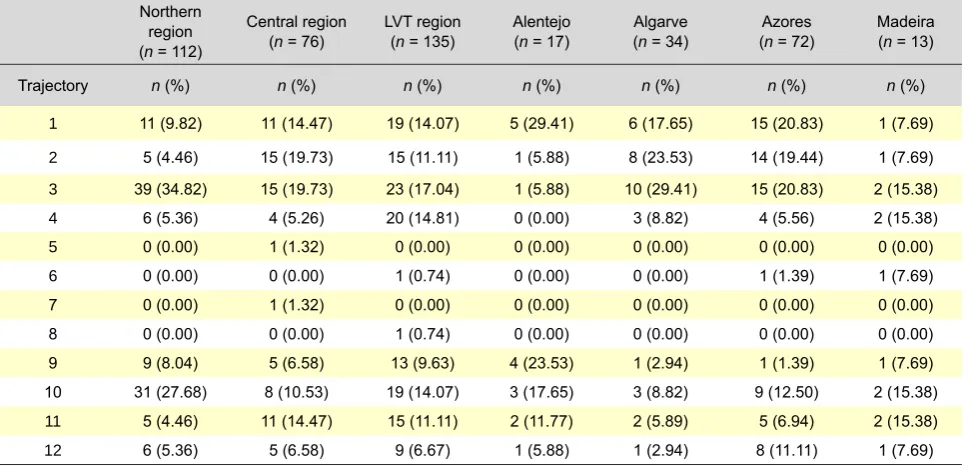
Finally, we found differences regarding most frequent trajectories in each region (Table 3). In the Northern region, LVT region and in the Algarve, the adolescents became more frequently pregnant from their first sexual partner, using contraception and having identified the contraceptive failure (trajectory 3). The adolescents living in the Central region and in the Azores became more frequently pregnant not only within trajectory 3, but also within trajectory 2 (pregnancy upon the first partner, in a romantic relationship, unintended pregnancy and not using any contraception) and trajectory 1 (planned pregnancy). In the Alentejo, the adolescents became more frequently pregnant from their first partner, in a romantic relationship and following a planned pregnancy (trajectory 1). In Madeira, we found four trajectories with the same frequency, three of them less prevalent
in the other regions: adolescents that became pregnant from their first partner, in a romantic relationship, unintended pregnancy, using contraception and having not identified the contraceptive failure (trajectory 4) and adolescents that became pregnant upon multiple partners, in a romantic relationship, unintended pregnancy, using contraception and having identified the contraceptive failure (trajectory 10) or not using any contraception (trajectory 11).
DISCUSSION
Our study aimed to characterise the relational and reproductive trajectories leading to adolescent pregnancy in Portugal, studying the presence of regional specificities. We identified twelve trajectories; the most frequent trajectories in the Northern, Central and LVT regions and in the Algarve, the Azores and in Madeira included adolescents that became pregnant from their first partner, in a romantic relationship, using contraception and having identified the contraceptive failure. However, in certain regions, we found an equally high prevalence of trajectories with planned pregnancies (Alentejo/Azores), no contraception (Central region/Madeira) or its ineffective use without the identification of the contraceptive failure (Madeira). Some aspects regarding relational contexts associated to these pregnancies were observed, requiring
Table 3 - Distribution of relational and reproductive trajectories, by region
Northern region (n = 112)
Central region (n = 76)
LVT region (n = 135)
Alentejo (n = 17)
Algarve (n = 34)
Azores (n = 72)
Madeira (n = 13)
Trajectory n (%) n (%) n (%) n (%) n (%) n (%) n (%)
1 11 (9.82) 11 (14.47) 19 (14.07) 5 (29.41) 6 (17.65) 15 (20.83) 1 (7.69)
2 5 (4.46) 15 (19.73) 15 (11.11) 1 (5.88) 8 (23.53) 14 (19.44) 1 (7.69)
3 39 (34.82) 15 (19.73) 23 (17.04) 1 (5.88) 10 (29.41) 15 (20.83) 2 (15.38)
4 6 (5.36) 4 (5.26) 20 (14.81) 0 (0.00) 3 (8.82) 4 (5.56) 2 (15.38)
5 0 (0.00) 1 (1.32) 0 (0.00) 0 (0.00) 0 (0.00) 0 (0.00) 0 (0.00)
6 0 (0.00) 0 (0.00) 1 (0.74) 0 (0.00) 0 (0.00) 1 (1.39) 1 (7.69)
7 0 (0.00) 1 (1.32) 0 (0.00) 0 (0.00) 0 (0.00) 0 (0.00) 0 (0.00)
8 0 (0.00) 0 (0.00) 1 (0.74) 0 (0.00) 0 (0.00) 0 (0.00) 0 (0.00)
9 9 (8.04) 5 (6.58) 13 (9.63) 4 (23.53) 1 (2.94) 1 (1.39) 1 (7.69) 10 31 (27.68) 8 (10.53) 19 (14.07) 3 (17.65) 3 (8.82) 9 (12.50) 2 (15.38)
11 5 (4.46) 11 (14.47) 15 (11.11) 2 (11.77) 2 (5.89) 5 (6.94) 2 (15.38)
12 6 (5.36) 5 (6.58) 9 (6.67) 1 (5.88) 1 (2.94) 8 (11.11) 1 (7.69)
LVT = Lisbon and the Tagus Valley region (Lisboa e Vale do Tejo).
ARTIGO ORIGINAL additional care in the generalisation of international results to the Portuguese reality. Our results were in line with literature suggesting the importance of contraceptive failure in adolescent pregnancy.22-24,33-35 Failures were mostly related to detectable situations – like condom breakage or a missed contraceptive pill – which however did not seem to lead adolescents to alternative behaviours, like using emergency contraception. Although we were not able to explain this fact, we think that it is possible to hypothesize that this may be related to an inadequate perception of the risk of pregnancy48 or to the absence of information and/or skills to adequately follow this strategy. According to several studies, adolescent have a reduced knowledge regarding emergency contraception, situations where it should be used and how to obtain it.48-51 Carvalho refers, in the same sense, that when questioned about the contraceptive methods capable of preventing pregnancy, emergency contraception was referred by only 1.4 to 3.6% of adolescent pregnant mothers in his group of participants; this percentage has been null in the Southern region of the country.30 In addition, the identification of the contraceptive failure occurred in romantic relationships characterised by lower age difference with the partner, which may show a higher lack of experience of the couple and not just the adolescent. According to Castro and Rodrigues,52
in adolescents with similar age, boys have a lower effective knowledge regarding contraception. Negative perceptions about secondary effects,50 cost48 and confidential availability of emergency contraception may also have stood as barriers to its use.48,50
Although future research is needed in order to clarify these hypothesis, the available results show that education of adolescents and their partners about possible contraceptive failures, the associated risk of pregnancy and the action of emergency contraception, as well as the identification and removal of barriers in availability will become priorities in health policies in Portugal aimed at the effective reduction of teenage pregnancy. Apart from the introduction of these subjects in school curricula, maximized by the implementation of the 9th April Ordonnance nº 196-A/2010, regulating the 6th August Law 60/2009, an efficient action of health services will be particularly relevant. Apart from family planning advice in Primary Healthcare and in Hospital and the Youngster Contact Centers (Centros de Atendimento Jovem), General Practitioner advice,
namely due to closer and more regular contact with this age group, may represent major opportunities for actions in this area.51
Our results also reinforce the importance of a conscious decision to become pregnant.22,27-29 The third most frequent trajectory in Portugal included adolescents that became pregnant in a romantic relationship with their first sexual partner and following
a planned pregnancy. This trajectory, predominant in the Alentejo and in the Azores, seems to be more frequent in older adolescents, from semi-urban and rural areas and from lower school grades and seems to be related to marriage/living-as-a-couple situations and to previous deliveries. These results suggest that recurrent teen pregnancy may be associated to life projects focused on marriage and maternity, namely in regions usually characterised by a lower range of opportunities of personal development/growth and to life projects school and vocational-oriented.53 Therefore,
the evaluation of portrayals and expectations of young people regarding their academic/professional career, their personal achievement and their relationship with the partner and the development of alternative projects of life other than maternity may be particularly relevant strategies in these regions.
The involvement of higher-risk adolescent’s partners in childbearing prevention seems to have useful potential within this trajectory. Our results are in line with previous studies, as they suggest that, when related to a romantic relationship, teen pregnancy occurs within longstanding relationships37 and with older
men,4,22,30,38 with low schooling and out-of-school4,30,38-40
and these results have been particularly significant when pregnancy was planned. Several authors consider that these characteristics largely determine the inefficacy of some prevention programs. These usually do not describe the male population adequately both because they occur in a school context, occur in health and/or in community context and are only aimed at adolescents.54 Our results show the need to rethink
education and health policies in order to include the higher risk male population in the designed actions and to promote safe sexuality in the community, including peer-to-peer risk in school. Advice in family planning will have a major role in the involvement of higher risk partners in pregnancy prevention. However, it would be desirable that future research clarifies the impact of these partners in the reproductive decisions of adolescents. Some authors describe that this may be related to the desire that these partners have or that is assigned by adolescents to become parents in that moment of their lives and to the high impact these assume in romantic relationships.55,56
ARTIGO ORIGINAL
Revista Científica da Ordem dos Médicos www.actamedicaportuguesa.com the adolescents from Madeira may benefit from the
promotion of negotiation skills of barrier contraception with their partners and adequate contraception advice regarding a low compliance to hormone contraceptive methods such as the contraceptive pill. In both situations, it seems important to demystify perceived disadvantages regarding their use, to clarify non-contraceptive benefits that could arise and to actively involve adolescents in choosing the method that better adapts to their own situation.34
In Madeira, the trajectories associated to the non-identification of contraceptive failure were also among those that more frequently lead to pregnancy. One of these trajectories showed to be the second more frequent in the LVT region, where teen pregnancy is particularly prevalent.13 Ability promotion and training
in identifying the possible contraceptive failures seem therefore to be top priorities in these regions. In addition to healthcare and/or community-oriented prevention programs, school programs may have a more relevant role in these situations than in those previously discussed, as these trajectories involved a larger number of in-school partners.
Finally and in contrast to international reports28,36,39 only a residual minority of adolescents became pregnant in a non-romantic occasional relationship and only in Madeira the trajectories that involved multiple partners were among the most frequent. In addition, the single discrepancy found between adolescents that described one and multiple partners was related to pregnancy planning, more common in the adolescents describing only one partner. The remaining trajectories were found to be equivalent. The integration of this knowledge in the practice of educators and health professionals may increase adequacy of their action to the needs of Portuguese adolescents, contributing to a higher compliance to implemented measures. However, the high range of age differences between couples raises relevant legal concerns regarding these relationships. Establishing a strategy for understanding the circumstances under which these are established and maintained remains an unmet important need. Some limitations must be considered in our study: the cross-sectional methodology demands great caution in generalising the results even though the time sequence of events has been ensured in the study of trajectories; future research must involve a longitudinal methodology. The retrospective character of responses may have increased the presence of typical biases of this kind of evaluation57 and the sensitive nature of the issues may have increased the odds of socially desirable responses.58,59 The simultaneous evaluation of adolescent’ partners, seeking inconsistencies between sources may be a valid strategy in future researches.
Nevertheless, our results allow for the recognition of
the relational and reproductive contexts in which teen pregnancy occurs, with major implications. The multiple trajectories and their regional variation show the need to avoid global and/or stereotyped visions of pregnant adolescents and, alternatively, to invest in health policies which are simultaneously comprehensive and diverse, taking into account particular needs of adolescents in each region. Efficient contraceptive counselling requires an understanding of the needs of the particular population to whom it is destined;34
therefore, our results may also be of interest to health professionals working with adolescents. In fact, family planning services are favoured places for adequate and advanced sexual education.60 In adolescence, the higher risk population is usually out-of-school or is retained in non-normative school years,1,30 preventing the access to an adequate sexual education for their school level, reinforcing the important role of health professionals in this domain.
CONCLUSION
Our results show the importance of reaching out to Portuguese regional diversity when planning: 1) information retrieval on contraceptive methods, 2) development of life projects as an alternative to maternity, 3) promotion of the use of contraception, 4) education on the identification of possible contraceptive failures and the underlying risk of pregnancy and 5) promotion and skill training aimed at dealing with these failures. This knowledge provides major orientations for the national prevention of teen pregnancy, placing the emphasis on investment in the prevention of risk decisions and behaviours, according to the identified regional specificities.
CONFLICTS OF INTEREST
The authors declare no conflicts of interest in writing this manuscript.
FINANCIAL SOURCES
Our study was part of the research project Adolescent pregnancy in Portugal: Aetiology, reproductive decision and adjustment (Gravidez na adolescência em Portugal: Etiologia, decisão reprodutiva e adaptação), with the responsibility of the
Line of Research Relations, Development and Health (Linha de Investigação Relações, Desenvolvimento & Saúde) at the Cognitive Psychology, Vocational and
Social Development - Coimbra University (Instituto de Psicologia Cognitiva, Desenvolvimento Vocacional e Social) (I&D Unit, PEst-OE/PSI/UI0192/2011). During
implementation, the three first authors were financed by the Fundação para a Ciência e Tecnologia under the
ARTIGO ORIGINAL REFERENCES1. Araújo Pedrosa A, Pires R, Carvalho P, Canavarro MC, Dattilio FM. Eco-logical contexts in adolescent pregnancy: the role of individual, sociode-mographic, familial and relational variables in understanding risk of oc-currence and adjustment patterns. Contemp Fam Ther. 2011;33:107-27. 2. Pires R, Araújo Pedrosa A, Canavarro MC. Examining the links between perceived pregnancy impact, depression, and quality of life during ado-lescent pregnancy: the buffering role of social support. Matern Child Health J. 2014;18:789-800.
3. da Silva MO. A gravidez na adolescência: relevância clínica da interven-ção pré-natal . Lisboa: Universidade de Lisboa; 1992.
4. Araújo Pedrosa A. Gravidez e transição para a maternidade na ado-lescência: determinantes individuais e psicossociais da ocorrência de gravidez e da adaptação. Estudo com adolescentes da Região Autóno-ma dos Açores. Coimbra: Universidade de Coimbra; 2009.
5. Canavarro MC, Pereira AI. Gravidez e maternidade da adolescência: perspectivas teóricas. In: Canavarro MC, editor. Psicologia da gravidez e maternidade. Coimbra: Quarteto; 2001. p. 323-57.
6. Derme M, Leoncini E, Vetrano G, Carlomagno L, Aleandri V. Obstetric and perinatal outcomes of teenage pregnant women: a retrospective study. Epidemiol Biostatist Publ Health. 2013;10:1-8.
7. Kashan AS, Baker PN, Kenny LC. Preterm birth and reduced birth weight in first and second teenage pregnancies: a register-based cohort study. BMC Pregnancy Childbirth. 2010;10:36-44.
8. Leppälahti S, Gissler M, Mentula M, Heikinheimo O. Is teenage pre-gnancy an obstetric risk in welfare society? A population-based study in Finland, from 2006 to 2011. BMJ Open. 2013;3:1-10.
9. Santos RS. Gravidez em mães adolescentes: estudo no distrito de Beja 1986-1991. Acta Med Port. 1997;10:681-8.
10. Figueiredo B, Pacheco A, Costa R. Depression during pregnancy and the postpartum period in adolescents and adult Portuguese mothers. Arch Womens Ment Health. 2007;10:103-9.
11. Silva MO da, Albrecht J, Olsen J, Karro H, Temmerman M, Gissler M, et al. The reproductive health report: the state of sexual and reproduc-tive health within the European Union. Eur J Contracept Reprod Health Care. 2011;16:S1-70.
12. United Nations Population Fund. The state of world population 2012: by choice, not by chance - family planning, human rights and development. New York: UNPF; 2012.
13. PORDATA. Nados-vivos de mães residentes em Portugal: total e por grupo etário da mãe – municípios. [consultado 2013 Set 09]. Disponível em: http://www.pordata.pt/Municipios/Nados+vivos+de+maes+resident es+em+Portugal+total+e+por+grupo+etario+da+mae-104.
14. Direção-Geral da Saúde. Relatório dos registos das interrupções da gravidez ao abrigo da lei 16/2007, de 17 de abril: dados referentes ao período de janeiro a dezembro de 2009. Lisboa: DGS; 2010.
15. Direção-Geral da Saúde. Relatório dos registos das interrupções da gravidez ao abrigo da lei 16/2007, de 17 de abril: dados referentes ao período de janeiro a dezembro de 2010. Lisboa: DGS; 2011.
16. Direção-Geral da Saúde. Relatório dos registos das interrupções da gravidez ao abrigo da lei 16/2007, de 17 de abril: dados referentes ao período de janeiro a dezembro de 2011 – edição revista. Lisboa: DGS; 2013.
17. Direção-Geral da Saúde. Relatório dos registos das interrupções da gravidez ao abrigo da lei 16/2007, de 17 de abril: dados referentes ao período de janeiro a dezembro de 2012. Lisboa:DGS; 2013.
18. Rafaelli M, Crockett LJ. Sexual risk taking in adolescence: the role of self-regulation and attraction to risk. Dev Psychol. 2003;39:1036-46. 19. Coley RL, Chase-Lansdale L. Adolescent pregnancy and parenthood:
recent evidence and future directions. Am Psychol. 1998;53:152-66. 20. Hawes ZC, Wellings K, Stephenson J. First sexual intercourse in the
United Kingdom: a review of the literature. J Sex Res. 2010;47:137-52. 21. Pires R, Araújo Pedrosa A, Carvalho P, Pereira J, Canavarro MC. Why do adolescents keep getting pregnant: is this due to intention to get pregnant, non-use of contraceptives, contraceptive failure or incorrect use? Int J Behav Med. 2012;19:132-3.
22. Pires R, Pereira J, Araújo Pedrosa A, Canavarro MC. Maternidade ado-lescente: escolha, aceitação ou resignação? Psicol Saúde Doenças. 2013;14:339-47.
23. Abma JC, Chandra A, Mosher WD, Peterson LS, Piccinino LJ. Fertility, family planning, and women’s health: new data from the 1995 National Survey of Family Growth. Vital Health Stat. 1997;23:1-114.
24. Jones RK, Darroch JE, Henshaw SK. Contraceptive use among U.S. women having abortions in 2000-2001. Perspect Sex Reprod Health. 2002;34:294-303.
25. Figueiredo B, Pacheco A, Magarinho R. Grávidas adolescentes e adul-tas: diferentes circunstâncias de risco? Acta Med Port. 2005;18:97-105. 26. Tavares M, Barros H. Gravidez não planeada em Portugal. Acta Med
Port. 1997;10:351-6.
27. Abma JC, Martinez GM, Mosher WD, Dawson BS. Teenagers in the United States: sexual activity, contraceptive use, and childbearing, 2002. Vital Health Stat. 2004;23:1-48.
28. Davies SL, DiClemente RJ, Wingood GM, Person SD, Dix ES, Harrington K, et al. Predictors of inconsistent contraceptive use among adolescent girls: findings from a prospective study. J Adolesc Health. 2006;39:43-9.
29. Sheeder J, Tocce K, Stevens-Simon C. Reasons for ineffective contra-ceptive use antedating adolescent pregnancies: part 2: a proxy for child-bearing intentions. Matern Child Health J. 2009;13:306-17.
30. Carvalho P. Fatores de influência individuais, psicossociais e relacionais para a ocorrência de gravidez na adolescência em Portugal Continental. Covilhã: Universidade da Beira Interior; 2012.
31. Agurcia CA, Tickert VI, Bereson AB, Volk RJ, Wiemann CM. The beha-vioral risks and life circumstances of adolescent mothers involved with older adult partners. Arch Pediatr Adolesc Med. 2001;155:822-30. 32. Instituto Nacional de Estatística. 4º Inquérito Nacional de Saúde -
2005/2006. Lisboa: Instituto Nacional de Estatística; 2007.
33. Klerman LV. The intendedness of pregnancy: a concept in transition. Matern Child Health J. 2000;4:155-62.
34. Sampaio MG, Chaves I, Dias A. Contracepção hormonal oral. Acta Med Port. 2000;13:231-6.
35. Tripp J, Viner R. Sexual health, contraception, and teenage pregnancy. BMJ. 2005;330:590-3.
36. Ford K, Sohn W, Lepkowski J. Characteristics of adolescents’ sexual partners and their association with use of condoms and other contracep-tive methods. Fam Plann Perspect. 2001;33:100-32.
37. Manning WD, Flanigan CM, Giordano PC, Longmore MA. Relationship dynamics and consistency of condom. Perspect Sex Reprod Health. 2009;41:181-90.
38. Sheeder J, Tocce K, Stevens-Simon C. Reasons for ineffective contra-ceptive use antedating adolescent pregnancies: part 1: an indicator of gaps in family planning services. Matern Child Health J. 2009;13:295-305.
39. Lindberg LD, Sonestein FL, Ku L, Martinez G. Age differences between minors who give birth and their adult partners. Fam Plann Perspect. 1997;29:61-6.
40. Taylor DJ, Chavez GF, Adams EJ, Chabra A, Shah R. Demographic characteristics in adult paternity for first births to adolescents under 15 years of age. J Adolesc Health. 1999;24:251-8.
41. William M. Adolescent males´ orientation toward paternity and contra-ception. Fam Plann Perspect. 1993;25:22-31.
42. World Health Organization. Pregnancy and abortion in adolescence. Re-port of a WHO meeting World Health Organ Tech Rep Ser. 1975;(583):1-27.
43. Araújo Pedrosa A, Canavarro MC, Pereira M. Entrevista de avaliação clínica para as utentes da unidade de intervenção psicológica da Ma-ternidade Doutor Daniel de Matos, HUC. Coimbra: Universidade de Co-imbra; 2003.
44. Cohen J. A power primer. Psychol Bull. 1992;112:155-9.
45. Field A. Discovering statistics using SPSS. 3nd ed. London: Sage Pu-blications; 2009.
46. Simões MR. Investigações no âmbito da aferição nacional do teste das Matrizes Progressivas de Raven. Coimbra: Universidade de Coimbra; 1994.
47. Instituto Nacional de Estatística. Tipologia de áreas urbanas (TIPAU). Lisboa: INE; 2009.
48. Johnson R, Nshom M, Nye AM, Cohall AT. There’s always plan B: ado-lescent knowledge, attitudes and intention to use emergency contracep-tion. Contracepcontracep-tion. 2010;81:128-32.
49. Lindberg CE. Emergency contraception for prevention of adolescent pregnancy. MCN Am J Matern Child Nurs. 2003;28:199-204.
50. Mollen CJ, Barg FK, Hayes KL, Gotcsik M, Blades NM, Schwarz DF. Assessing attitudes about emergency contracetion among urban, minor, adolescent girls: an in-depth interview study. Pediatrics. 2008;122:e329-401.
51. Nunes TM. Conhecimento e utilização da contracepção de emergência em alunas do ensino secundário em Guimarães. Rev Port Clin Geral. 2005;21:247-56.
ARTIGO ORIGINAL
Revista Científica da Ordem dos Médicos www.actamedicaportuguesa.com
à contraceção de emergência. Rev Esc Enferm USP. 2009;43:889-94. 53. Instituto Nacional de Estatística. Índice sintético de desenvolvimento
regional. Lisboa: INE; 2009.
54. Males M, Chew SY. The ages of fathers in California adolescent births, 1993. Am J Public Health. 1996;86:565-8.
55. Osorio A, López-del Burgo C, Carlos S, Ruiz-Canela M, Delgado M, Irala J. First sexual intercourse and subsequent regret in three develo-ping countries. J Adolesc Health. 2012;50:271-8.
56. Wang R-H, Chiou C-J. Relative contribution of intrapersonal and part-ner factors to contraceptive behavior among Taiwanese female adoles-cents. J Nurs Scholarsh. 2008;40:131-6.
57. Logan C, Holcombe E, Manlove J, Ryan S. The consequences of
unin-tended childbearing: a white paper. Washington: Child Trends, and the National Campaign to Prevent Teen and Unplanned Pregnancy; 2007. 58. Palen L-A, Smith E, Caldwell LL, Flisher AJ, Wegner L, Vergnani T.
Inconsistent reports of sexual intercourse among South African high school students. J Adolesc Health. 2008;42:221-7.
59. Rose E, DiClemente RJ, Wingood GM, Sales JM, Latham TP, Crosby RA, et al. The validity of teens’ and young adults’ self-reported condom use. Arch Pediatr Adolesc Med. 2009;163:61-4.
Maria Cristina CANAVARRO