A FACILE METHOD FOR TESTING ANTIOXIDANT CAPACITY
AND TOTAL PHENOLIC CONTENT OF NOTOBASIS SYRIACA
AND SCOLYMUS MACULATUS EXTRACTS AND THEIR
ANTIFUNGAL ACTIVITY
Abdullatif Azab
[a,b]*
Keywords:Notobasis syriaca;Scolymus maculatus;Rhizopus stolonifera; total phenolic content; antioxidant capacity.
In this study, three extracts of the aerial parts of Notobasis syriaca and Scolymus maculatus were prepared. Each extract was tested for antifungal activity against Rhizopus stolonifer (black mold), and its total phenolic content (TPC) and antioxidant activity were measured. As for these measurements, we report here a facile method that we developed. Our results show moderate antifungal activity for both plants extracts, notably high TPC and antioxidant capacities. They are also in very good agreement with the partial published data, and our new method is consistent and validated by very well known, yet complicated or expensive methods.
* Corresponding Authors Fax: +972-(0)4-6356168 Tel.: +972-(0)4-6357011 E-Mail: [email protected]
[a] Triangle Research & Development Center, Box 2167, Kfar-Qari, Israel 30075.
[b] Eastern Plants Company, Box 868, Arara, Israel 30026.
Introduction
Notobasis syriaca (Syrian thistle, NS) and Scolymus maculatus (Spotted golden thistle, SM) are two of the spiny, most widespread plants of the Middle eastern region, Mediterranean basin and Western Asia, yet, the habitat of SM is wider and includes most of Asia. Both plants belong to the Asteraceae family, but to different genera: NS to Notobasis (2 different subspecies)1 and SM to Scolymus (7
different subspecies).2 NS was discovered in archeological
excavations, and there are evidences that humans used this plant, mainly as food, as early as 23000 years ago.3
Interestingly enough, and despite being very sweet tasty plant (young stems), there are no published studies of archeological findings that indicate early use of SM by humans, similar to NS.
Present time traditional societies, extensively use both plants. NS is used as food in Cyprus and Italy,4,5,6 in Jordan
it is used to treat diabetes (method not described), as food and for cheese production from milk (dry immature flowrs),7
and in Turkey, ground seeds are eaten to treat liver diseases.8 SM is widely used as a sweet snack in the
Palestinian traditional society, in Spain,9 in Italy,6,7 and in
Arab folk medicine, stem decoction is used to treat intestine and kidney inflammation.10
Despite the fact that in recent years there is renewed recognition of natural products as an impotrant source for drug discovery,11 these two plants were very limitedly
studied by modern research so far. One of the earliest published studies of the medicinal activities of NS, tested the antifungal activity (Alternaria solani, Hetminthosporium sativum and Rhizoctonia solani) of shoot aqueous extract
and found it moderate.12 Antimicrobial activity of ethanolic
extract of aerial parts of NS was tested against six types of bacteria, including P. acnes.13 The results show relatively
low activity.
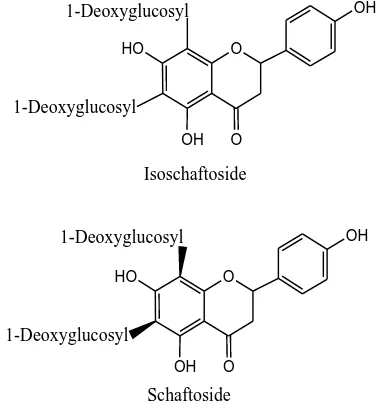
Figure 1. Structures of steric isomers schaftoside and isoschaftoside found in N. syriaca
The complete chemical composition of NS was never published, even though some partial results were reported. Mericli and Dellamonica studied the flavonoid content of the plant and they reported the presence of nine different compounds in the aerial parts, including schaftoside and isoschaftoside (Figure 1), but none of these compounds was new.14 An interesting study was published in 2007 and has
high relevance to our research since it tested the TPC and antioxidant capacity of aqueous and methanolic extracts of NS.15 The results are surprisingly low, compared with other
reports and our current study (see results and discussion sections). El-Hela and his colleageas tested TPC and antioxidant capacity of extactly same extracts indicated in reference 15. Their findings are notably higher.16 They also
OH
HO O
O
OH
OH
HO O
O
OH
1-Deoxyglucosyl 1-Deoxyglucosyl
1-Deoxyglucosyl 1-Deoxyglucosyl
tested them larvicidal activity of these extracts against Aedes aegyptii, and they were found moderately active.
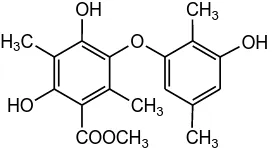
Contrary to published studies about NS that did not report new compounds, a research that investigated the chemical composition of Phomopsis sp., an endophytic fungus of NS, reported several new compounds, including phomosine K (Figure 2) that had strong antibacterial activity.17
Figure 2. Phomosine K, a novel compound found on endophytic fungus of N. syriaca
Earlier this year, we published some results in collboration with other research group, where we studied the anti-inflammatory activity of the aqueous extract of the aerial parts of NS.18 Based on these successful findings, we
performed the current study and we are continuing the investigation of this plant.
Research findings related to SM are even much less than these of NS. In one of the only two published studies, TPC and antioxidant capacity of methanolic and aqueous extracts were tested.15 The results are lower than ours and higher
than the only second published research. This was presented as a poster by Rayan et al. and never published as a research article.19 This group did not report new compounds in the
three extracts that they prepared from aerial parts of SM: methanolic, ethyl acetate and hexane. Expectedly, methanolic extract has the highest antioxidant capacity. An enzyme isolated from SM, was reported by M. Benchiheub and her colleagues as successful milk-clotting agent.20
Black mold (Rhizopus stolonifer) is one of the most common fungi, and it has been a research focus since its vast damages to human health, especially to food, but also because of the potential of isolating unique biologically active compounds from it.21 It was also reported to assist
transformations of organic compounds and peptides.22
Dozens of treatments were suggested to combat the damages of R. stolonifer. While some methods consisted of synthetic compounds,23 the latest publications report the use on
nanochemicals.24 But synthetic compounds have adverse
side effects, so most proposed antifungal treatments of R. stolonifer are plant products. Among these, essential oils,25
extracts26 and single natural products.27,28,29
Total phenolic content (TPC) and antioxidant capacity of plant materials, are among their most important properties. Several methods were developed to determine TPC, where the most commonly used is the Folin-Ciocalteu assay.30 But
variations of other methods are also used, such as in our previous work (Kumar and Jain method).31 These methods
involve many samples (or many dilutions of one sample), spectroscopic measurements and costly reagents. Testing the strongly related property of antioxidant capacity of plant
materials, involves many more experimental methods, where some use costly materials and spectroscopic measurements,31 and some use simpler methods such as
potentiometic/redox titrations.32,33,34 Some of these and other
procedures are very simple, and we used their potential to develop a new, facile method to measure TPC and antioxidant capacity of plant extracts by single titration.
Experimental
Chemicals
Gallic acid and ascorbic acid were purchased from Merck KgaA (Germany). All other chemicals were purchased locally in at least analytical grade.
Plant material and extractions
Both the studied plants (Notobasis syriaca, NS, and Scolymus maculatus, SM, aerial parts) were harvested from the wild near our laboratory in Kfar-Qari (northern Israel). The green materials were washed with distilled water and air dried for 4 weeks. The dry matter of each plant was ground into a fine powder and stored at -12 C in sealed containers.
The plant material (500 g) were stirred in 1000 mL of solvent (water, ethanol, ethyl acetate) for 24 h at 50 C. Suspensions were allowed to cool to room temperature and filtered (Munktell quant. Grade 393) to obtain clear solutions. These were evaporated to dryness with rotary evaporator: aqueous extracts at 60 C, ethanol and ethyl acetate extracts at 50 C. All six extracts were solids, and they were stored in screw-capped vials at -12 C.
Tests for Alkaloids
Presence of alkaloids in extracts was tested according to I. P. Udeozo et al., using the Wayner's reagent, with no modifications.35 In a 100 mL volumetric flask, 2 g of iodine
(I2) and 6 g of potassium iodide (KI) were dissolved in
distilled water and made up a 100 mL solution.
A sample of 0.1 g of each plant extract was placed in 20 mL test tube and dissolved in 10 mL ethanol. To the tested solution, 5 mL of Wayner's reagent were added, the tube was capped and the suspension was vigorously shaked for 30 seconds.
Antifungal activity tests
Antifungal assay was performed according to the method we reported in our previous publication, with no modifications.31 Rhizopus stolonifer was grown on whole
wheat bread and extracted with water. The center of each Petri dish was inoculated with 5 mm diameter disc of fungal mycelium, taken from pure culture (7 days old). Then, all inoculated dishes were incubated at 25 C for 6 days and the radial mycelial growth was measured. The antifungal activity of each extract was calculated in terms of inhibition percentage of mycelia growth by using the following equation (1).
CH3
O
COOCH3
HO H3C
OH
OH
CH3
% Inhibition=[(dc – dt)/dc] x100 (1)
where dc is the average increase in mycelia growth in control and dt is the average increase in mycelia growth in treated samples with extracts.
In all experiments, the control was the extraction solvent and we performed the antifungal tests using two concentrations for each extract, 10 % and 20 % (w/w).
Preparation of oxidative solution
Solution of sulfuric acid was prepared by diluting 0.89 mL of 96 % solution of concentrated sulfuric acid (approx. 18.11 M) with distilled water to final volume of 1000 mL. The resulting sultion was standardized by pH titration with 0.01 M of sodium hydroxide (NaOH) solution. The acid concentration was 0.016 M.
The 0.004 M solution of potassium permanganate (KMnO4) was prepared by dissolving 0.633 g of the salt in
800 mL of distilled water at 60 C. The solution was allowed to cool to room temperature, filtered and completed to 1000 mL.
The final oxidative solution was prepared by combining the acid (0.016 M) and permanganate solution (0.004 M), which was stored in 4 C in a sealed flask.
Calibration curve of ascorbic/gallic acid
A stock solution of 600 mg of ascorbic/gallic acid in 6 mL of distilled water was prepared (100 mg mL-1). By dilution
with distilled water, the following concentrations of tested solutions were prepared: 10, 20, 30, 40, 50, 60, 70, 80, 90, 100 mg 10 mL-1.
In a 250 mL Erlenmeyer flask that contained a magnetic stir bar, one of the ten test solutions was titrated with the oxidative solution, with pH monitoring by JK-PHM-005 pH-meter. Titration speed was 2 mL min-1 with continuous
gentle stirring. End point was determined when pH >0.1 after half way of the titration (see discussion).
Titration of plant extracts
In a 100 mL Erlenmeyer flask that contained a magnetic stir bar, 100 mg of dry plant extract were suspended with 10 mL of distilled water and stirred for 5 minutes. The solution/suspension was titrated with the oxidative solution, with pH monitoring. Totration speed was 2 mL min-1, with
continuous gentle stirring.
Validation of our method
TPC was also determined by the method we used in our previous work,31 with no modifications. The sample mixture
that contains 3 mg of extract (or standard gallic acid solutions) dissolved in 1 mL of solvent, was obtained by dilution of 0.3 g of extract in 10 mL stock solution 10 folds. Then it was added to 10 mL volumetric flask containing 8 mL of dd H2O. After that, 1mL of Folin-Ciocalteu’s reagent
was added to the mixture. After 3 min, 1 mL of 35 % Na2CO3 solution was added with mixing to reach the
reaction system to 10 mL. The reaction mixture was mixed thoroughly and allowed to stand for 90 min at 25 C in the dark. Absorbance of all the sample solutions against a blank was measured at 725 nm. Calibration curve was constructed with different concentrations of gallic acid (2–12 g mL-1)
as the standard and double-distilled water was used as reagent blank. The results were expressed as mg gallic acid equivalents (GAE) g-1 of dried extract.
Antioxidant capacity was determined according to the method we described in our previous publication, with no changes.31 0.1 mL of aliquot of test solution (100 mg
extract) was added to 1 mL of reagent solution (0.6 M sulfuric acid, 28 mM sodium phosphate, and 4 mM ammonium molybdate). The blank was 0.1 mL of ethanol. The tubes were capped and incubated in a boiling water bath at 95 C for 90 min, then allowed to cool to room temperature. Absorbance of the aqueous solution of each was measured at 695 nm. The antioxidant capacity was expressed as an equivalent of ascorbic acid (mg of ascorbic acid g-1 of dried extract).
Results
Yields of extractions
The yields of the extractions of both NS and SM with water, ethanol and ethyl acetate are shown in Table 1.
Table 1. Yields of extractions of N. syriaca and S. maculatus with three different solventsa
Plant Water Ethanol Ethyl acetate mass %a mass % mass %
NS 42.1 8.42 42.8 8.56 23.7 4.74 SM 46.9 9.38 48.0 9.60 21.5 4.30
aFor each extraction, 500 g of dry plant powder were extracted
(aerial parts).
Alkaloid presence
All six extracts showed negative results in alkaloid presence test with Wayner's reagent.
Statistical analysis
Except for extractions (Table 1) and alkaloid presence tests, that each was done in a single experiment, all data presented below, are average values of three experiments that we peformed for each test.
Antifungal activity
Table 2 Antifunfal activity of N. syriaca and S. maculatus extracts against R. stolonifer
Plant Inhibition of extracts (%)a
Aqueous Ethanolic Ethyl acetate 10 % 20 % 10 % 20 % 10 % 20 %
NS 17.2 19.4 24.3 26.8 25.9 27.2 SM 12.3 14.4 19.2 21.8 18.8 22.3
aExtraction solvent in each experiment was used as control and
resulted in 0 % inhibition.
Figure 3. Inhibition (%) of R. stolonifer by extracts of N. syriaca and S. maculatus
Calibration curves
Concentrations of titrated ascorbic/gallic and volumes of oxidative solution needed are shown in Table 3, and calibration curves are shown in figure 4.
Total phenolic content and antioxidant capacity
Each (100 mg) extract were titrated with the oxidative solution. End point volume was multiplied by 10 in order to reach the value for 1 g of dry extract, and the final values were calculated as shown in Table 4and Figure 5.
Validation of our method
Total phenolic content and antioxidant capacity were also measured by the known methods, described in the experimental section. The results of these measurements, as well as the results measured by our method are shown in Table 5.
Discussion
All the six qualitative tests for the presence of alkaloids in the extracts showed negative results that is no alkaloids present in N. syriaca or S. maculatus. In fact, this was expected since a closely related (and sometimes confused with) plant, Silybum marianum (Milk thistle), contains no alkaloids.36,37 The cultivated Artichoke (Cynara cardunculus
var. scolymus) is also closely relted to NS and SM, and it does not contain alkaloids.38
Antifungal activity of both plants, NS and SM, was found moderate and even weak, not only in comparison with plants with strong antifungal activity,39 but also with other plants
from other genera, such as Carthamus tenuis and Cephalaria joppensis.31 This can be partially understood on
the basis of the very limited presence of volatile, aromatic compounds, that we discovered while we tried to prepare essential oils of NS and SM, and we obtained negligible yields.
Total phenolic content and antioxidant capacity are of the most important medicinal properties of plants products, and they are strongly related.40 Phenols and polyphenols are
among the most powerful antioxidants in the plant kingdom.41
Based on this, we managed to develop a unified test for both properties. Our considerations included (1) use of strong oxidative solution, yet, not too strong that can cause oxidation way beyond common reagents used for this matter, (2) a facile technique that involves simple instruments and very simple and few preparations of samples and (3) Use of cheap, commercially available reagents.
We selected acidic solution of potassium permanganate. This is a strong oxidant (E0= +1.51 V) but in low concentration, this strength is even lower, so it will not exceed the power of common oxidants that are used in other methods (see experimental section: validation of our method). The molar ratio between per manganate and acid was designed according to the stoichiometry of the reaction:
MnO4- (aq) + 8 H3O+(aq) + 5 e- → Mn2+(aq) + 12 H2O(L) (2)
So the ratio of MnO4- : H+ is 1:8. Sulfuric acid was chosen
due to its stability and strength.
Our theoretical assuptions of the stoichiometry of oxidation of ascorbic acid by this oxidant, were based on the previous studies,42 and we designed the tests for MnO
4- :
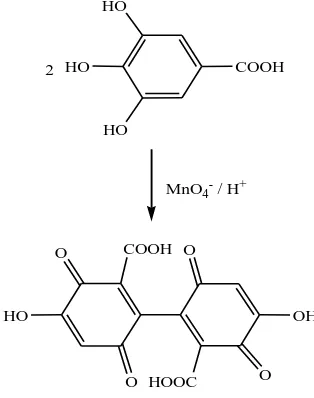
ascorbic acid = 2:5. As for gallic acid, the stoichiometry is more complicated since there are several competing reactions, even though, one of them occur as major path of the oxidation.43 This reaction is shown in Figure 6.
Figure 6. Major reaction of oxidation of gallic acid by acidic permanganate
HO HO
HO
COOH 2
MnO4- / H+
O O
OH HO
COOH O
Table 3. Titrated concentrations of ascorbic/gallic acid and oxidative solution volumes.
Titrated Concentrationa 10 20 30 40 50 60 70 80 90 100
Oxidative Solution Volumeb
AAc 10.2 26.6 33.1 42.8 58.4 65.2 80.6 91.4 103 109.4
GAd 20.4 52.4 63.2 79.6 100 108.2 145.2 180.8 199 224.8 amg 10 mL-1, bmL, cAscorbic acid, dGallic acid.
Figure 4. Calibration curves of oxidative titration of ascorbic/gallic acid with permanganate.
Table 4. Total phenolic content (TPC) and antioxidant capacity (AOC) of extracts of N. syriaca and S. maculates.
Plant Extract Volume of oxidizing solution (mL)
TPCa AOCb
Notobasis syriaca Aqueous 37.8 17.25 33.84
Ethanolic 29.7 13.6 26.58
Ethyl acetate 16.1 7.47 14.38
Scolymus maculatus Aqueous 39.6 18.02 35.37
Ethanolic 29.1 13.33 26.04
Ethyl acetate 14.9 6.39 13.30
amg of gallic acid g-1 of dry extract (according to 10y=22.175x-4.6); bmg of ascorbic acid g-1 of dry extract (according to
10y=11.147x+0.76)
Figure 5. Total phenolic content and antioxidant capacity of N. syriaca and S. maculates.
Table 5. Total phenolic content and antioxidant capacity of N. syriaca and S. maculatus, measured by our method and known methodsa. Plant Extract Total phenolic contentb Antioxidant capacityc
Our method Known method Our method Known method
Notobasis syriaca Aqueous 17.25 16.84 33.84 31.88
Ethanolic 13.6 13.2 26.58 24.23
Ethyl acetate 7.47 7.39 14.38 13.87
Scolymus maculatus
Aqueous 18.02 16.1 35.37 32.11
Ethanolic 13.33 12.55 26.04 23.74
Ethyl acetate 6.39 6.25 13.30 12.13
The formation of the bisphenyldiquinone product, involves loss of three electrons from each molecule of gallic acid. Since lower oxidations also take place but in minor amounts, we assumed that the average ratio of MnO4- : gallic acid = 1:1.2.
Titrations were monitored by pH-meter. Despite being slowly responsive, especially while titrating polyphenols,44
this method is used for various purposes, and our work was based on a successful example.45 To overcome the slow
response, we conducted very slow titrations (2 mL min-1). Initial pH gallic acid solution was 3.64. In the beginning of the titrations, pH dropped rapidly (0.1-0.15 units drop-1), but then it was much slower (0.01 units drop-1). At the end
point (pH=1.39) the pH dropped by 0.2 units. As for ascorbic acid, the initial pH was 3.45 and the final, 1.21. The titration advanced in the same course as gallic acid but was slightly faster.
Our results, using this very simple method are very good. In case of antioxidant capacity, there is a high proximity between our results, the results that we obtained by other know methods (Table 5) and published results.15,16 The
results reported by Rayan et al.,19 are lower than our results
and the results reported in references 15 and 16, so we will not take them into account. All results obtained by our method, were higher that those obtained by other known methods, and the highest difference was (2.3 mg, ethanolic extract of SM) around 9.24 %.
As for TPC, differences between our method and known methods were even higher than these of antioxidant capacity, despite the fact that they are still reasonable. And again, the highest difference was SM extract, but this time, aqueous (Table 5, 11.25 %). As far as we can explain this, our understanding is that the sweet taste of SM is a result of the presence of saccharides, and these may have been oxidized and made the results obtained by our method higher, compared to other methods. We base our explanation on similar published results, where carbohydrate content affected TPC and antioxidant capacity measurements.46,47
Conclusions
Notobasis syriaca and Scolymus maculatus, are edible plants and possess high amounts of polyphenols and other antioxdants. Chemical composition of both plants is still unkown and should be investigated. Only antioxidant capacity, total phenolic content and inti-inflammatory (NS only) activities are known. Other properties must be studied. We developed a new, very simple method for measuring TPC and antioxidant capacity, that has shown good agreement with other known methods. Notobasis syriaca and Scolymus maculatus, do not contain alkaloids. The essential oil content of Notobasis syriaca and Scolymus maculatus, is negligible.
References
1U.S National Plant Germplasm System., Taxon:Notobasis syriaca
(L.) Cass., https://npgsweb.ars-grin.gov/gringlobal/ taxonomydetail.aspx?id=447370
2Vasquez, F. M., The genus Scolymus Tourn. EXL. (Asteraceae):
taxonomy and distribution, Anales Jard. Bot. Madrid, 2000, 58, 83-100. DOI:
https://doi.org/10.3989/ajbm.2000.v58.i1.139
3Snir, A., Nadel, D., Groman-Yaroslavski, I.,Melamed, Y.,
Sternberg, M., Bar-Yosef, O., Weiss, E., The origin of cultivation and Proto-weeds, long before Neolithic farming, PLOS ONE, 2015, 10, 12 pages. DOI: 10.1371/journal.pone.0131422
4Della, A., Paraskeva-Hadjichambi, D., Hadjichambis, A. C., An
ethnobotanical survey of wild edible plants of Paphos and Larnaca countryside of Cyprus, J. Ethnobiol. Ethnomed.,
2006, 2, 9 pages. DOI: 10.1186/1746-4269-2-34
5Licata, M., Tuttolomondo, T., Leto, C., Virga, G., Bonsangue, G.,
Cammalleri, I., Gennaro, M. C., La Bella, S., A survey of wild plant species for food use in Sicily (Italy) – results of a 3-year study in four Regional Parks, J. Ethnobiol. Ethnomed.,
2016, 12, 24 pages. DOI: 10.1186/s13002-015-0074-7
6Biscotti, N., Bonsanto, D., Del Viscio, G., The traditional food use
of wild vegetables in Apulia (Italy) in the light of Italian ethnobotanical literature, Ital. Bot., 2018, 5, 1-24. DOI: 10.3897/italianbotanist.5.22297
7Qasem, J. R., Prospects of wild medicinal and industrial plants of
saline habitats in the Jordan Valley, Pak. J. Bot., 2015, 47, 551-570. www.researchgate.net/publication/275339308
8Arasan, S., Kaya, I., Some Important Plants Belonging to
Asteraceae Family Used in Folkloric Medicine in Savur (Mardin/Turkey) Area and Their Application Areas J. Food Nutr. Res., 2015, 3, 337-340. DOI: 10.12691/jfnr-3-5-8
9Tardio, J., Pardo-de-Santayana, E., Morales, R., Ethnobotanical
review of wild edible plants in Spain, Bot. J. Linn. Soc., 2006, 152, 27–71.
https://doi.org/10.1111/j.1095-8339.2006.00549.x
10Azaizeh, H., Saad, B., Khalil, K., Said, O., The State of the Art of
Traditional Arab Herbal Medicine in the Eastern Region of the Mediterranean: A Review, eCAM, 2006, 3, 229–235. DOI: 10.1093/ecam/nel034
11Kayser, O., Ethnobotany and Medicinal Plant Biotechnology:
From Tradition to Modern Aspects of Drug Development, Planta Med., 2018, 84, 834-839. DOI: https://doi.org/10.1055/a-0631-3876
12Qasem, J. R., Abu-Blan, H. A., Fungicidal Activity of Some
Common Weed Extracts Against Different Plant Pathogenic Fungi, J. Phytopathol., 1996, 144, 157-161. DOI: 10.1111/j.1439-0434.1996.tb01507.x
13Ali-Shtayeh, M. S., Al-Assali, A. A., Jamous, R. M.,
Antimicrobial activity of Palestinian medicinal plants against acne-inducing bacteria, Afr. J. Microbiol. Res., 2013, 7, 2560-2573. DOI: 10.5897/AJMR12.1875
14Mericli, A.H., Dellamonica, G., Flavonoids of Notobasis syriaca,
Fitoterapia, 1983, 54, 35-36.
https://eurekamag.com/research/005/467/005467158.php
15Alali, F. Q., Tawaha, K., El-Elimat, T., Syouf, M., El-Fayad, M.,
16El-Hela, A. A., Abdel-Hady, N. M., Dawoud, G. T., Hamed, A.
M. Morsy, T. A., Phenolic Content , Antioxidant Potential and Aedes Aegyptii Ecological Friend Larvicidal Activity of Some Selected Egyptian Plants, J. Egypt. Soc. Parasitol.,
2013, 43, 215 – 234.
https://www.researchgate.net/publication/236930939
17Hussain, H., Tchimene, M. K., Ahmed, I., Meier, K., Steinert, M.,
Draeger, S., Schulz, B., Krohn, K., Antimicrobial Chemical Constituents from the Endophytic Fungus Phomopsis sp from Notobasis syriaca, Nat. Prod. Commun., 2011, 6,1905-1906. https://www.researchgate.net/publication/221813055
18Azab, A., Nassar, A., Kaplanski, J., Mahajneh, R., Agam, G.,
Azab, A. N., Effects of aqueous extract of Notobasis syriaca on lipopolysaccharide-induced inflammation in rats, Asian Pac. J. Trop. Med., 2018, 11, 48-52. DOI: 10.4103/1995-7645.223533
19Rayan, A., Abu-Lafi, S. A., Al-Jaas, H., Abu-Farich, B., Barria,
W., Phytochemical composition and antioxidant activity of wild Scolymus maculatus L., Poster, 3rd International
Conference on Natural Products Utilization, 2017, www.researchgate.net/publication/320596004
20Benchiheub, M., Benkahoul, M., Bellil, I., Mechakra, M. A.,
Milk-Clotting properties and specific hydrolysis od Caseins of the acid protease extracted from Scolymus maculatus flowers, Int. J. Adv. Res., 2014, 2, 357-365. http://www.journalijar.com/article/1034
21Bullerman, L. B., "Fungi in Food – An Overview", Encyclopedia
of Food Sciences and Nutrition, 2nd Ed., 2003, 5511-5522.
https://doi.org/10.1016/B0-12-227055-X/01129-9
22Al-Aboudi, A., Mohammad, M. Y., Musharraf, S. G., Choudhary,
M. I., Atta-ur-Rahman, Microbial transformation of testosterone by Rhizopus stolonifer and Fusarium lini, Nat. Prod. Res., 2008, 22, 1498-1509. DOI: 10.1080/14786410802234528
23Shete, D. K., Shirote, P. J., Synthesis and Antifungal Activities of
Nonsteroidal Anti-Inflammatory Carboxylic Acid Ester Derivatives of Fluconazole, J. Pharm. Res., 2012, 5, 5197-5201.
https://pdfs.semanticscholar.org/db53/ac496ee7935a9615143 6b57e7763363a3669.pdf
24Decelis, S., Sadella, D., Triganza, T., Brincat, J-P., Gatt, R.,
Valdramidis, V. P., Assessing the anti-fungal efficiency of filters coated with zinc oxide nanoparticles, R. Soc. Open Sci.,
2017, 4, 9 pages. DOI: 10.1098/rsos.161032
25Mohammadi, S., Aroiee, H., Aminifard, M. H., Tehranifar, A.,
Jahanbakhsh, V., Effect of fungicidal essential oils against Botrytis cinerea and Rhizopus stolonifer rot fungus in vitro conditions, Arch. Phytopathol. Plant Protect.,
2014, 47, 1603-1610. DOI: 10.1080/03235408.2013.853456
26Sohail, M., Muhammad, A., Zafar, I., Sheena, A., Khan, S. M.,
Inayat, R., Khan, W., Asghar, A., Ullah, I., Numan, M., Antimicrobial activity of mycelial extracts of Rhizopus stolonifer against different fungal and bacterial pathogenic strains, Int. J. Biosci., 2014, 4, 276-281. https://www.researchgate.net/publication/272817630
27Zhou, D., Wang, Z., Li, M., Xing, M., Xian, T., Tu, K., Carvacrol
and eugenol effectively inhibit Rhizopus stolonifer and control postharvest soft rot decay in peaches, J. Appl. Microbiol., 2018, 124, 166-178. https://doi.org/10.1111/jam.13612
28Muhammad, A., Rahman, Z., Ayub, M., Durrani, Y., Ali, S.A.,
Abroo, T., Ashbala, S., Khan, M., Khan, A., Inhibitory Effect of Ginger and Turmeric on Rhizopus stolonifer Growth on Bread, J. Food Process. Technol., 2014, 5, 6 pages. DOI: 10.4172/2157-7110.1000325
29Wang, J., Cao, S., Wang. L., Wang, X., Jin, P., Zheng, Y., Effect
of β-Aminobutyric Acid on Disease Resistance Against Rhizopus Rot in Harvested Peaches, Front. Microbiol., 2018, 9, 10 pages. DOI: 10.3389/fmicb.2018.01505
30Sanchez-Rangel, J. C., Benavides, J., Basilio Heredia, J.,
Cisneros-Zevallos, L., Jacobo-Velazquez, D. A., The Folin– Ciocalteu assay revisited: improvement of its specificity for total phenolic content determination, Anal. Methods, 2013, 5, 5990-5999. DOI: 10.1039/c3ay41125g
31Azab, A., Total phenolic content, antioxidant capacity and
antifungal activity of extracts of Carthamus tenuis and Cephalaria Joppensis, Eur. Chem. Bull., 2018, 7, 156-161. DOI: 10.17628/ecb.2018.7.156-161
32Huma, F., Jaffar, M., Masud, K., A Modified Potentiometric
Method for the Estimation of Phenol in Aqueous Systems, Turk. J. Chem., 1999, 23, 415-422. https://www.researchgate.net/publication/239544616
33Yuris, A., Siow, L-F., A Comparative Study of the Antioxidant
Properties of Three Pineapple (Ananas comosus L.) Varieties, J. Food Stud., 2014, 3, 40-56. DOI: 10.5296/jfs.v3i1.4995
34Zhang, M., Liu, N., Liu, H., Determination of the Total Mass of
Antioxidant Substances and Antioxidant Capacity per Unit Mass in Serum Using Redox Titration, Bioinorg. Chem. Appl., 2014, 6 pages. http://dx.doi.org/10.1155/2014/928595
35Udeozo, I. P., Akpaba Enem S., Ugwu Okechukwu, P. C., Okoye,
N. H., Umedum, N. L., Qualitative alkaloidal analysis of some selected Nigerian medicinal plants used in herbal treatment of diseases, Int. J. Life Sci. Biotechnol. Pharm. Res.,
2013, 2, 300-305.
http://new.ijlbpr.com/jlbpradmin/upload/ijlbpr_51d44e989b0 0d.pdf
36Zahra, N., A Short Review on Ethnomedicinal Uses and
Phytochemistry of Silybum marianum, Nat. Prod. Chem. Res.,
2017, 5, 3 pages. DOI: 10.4172/2329-6836.1000292
37Bijak, M., Silybin, a Major Bioactive Component of Milk Thistle
(Silybum marianum L. Gaernt.)-Chemistry, Bioavailability, and Metabolism, Molecules, 2017, 22, 11 pages. DOI: 10.3390/molecules22111942
38Antunes, A., Amaral, E., Belgacem, M. N., Cynara
cardunculus L.: chemical composition and soda-anthraquinone cooking, Ind. Crops Prod., 2000, 12, 85-91. https://doi.org/10.1016/s0926-6690(00)00040-6
39Cerqueira Sales, M. D., Barcellos Costa, H., Bueno Fernandes, P.
M., AiresVentura, J., Dummer Meira, D., Antifungal activity of plant extracts with potential to control plant pathogens in pineapple, Asian Pac. J. Trop. Biomed., 2016, 6, 26-31. https://doi.org/10.1016/j.apjtb.2015.09.026
40Li, X., Wu, X., Huang, L., Correlation between Antioxidant
Activities and Phenolic Contents of Radix angelicae sinensis (Danggui), Molecules, 2009, 14, 5349-5361. DOI: 10.3390/molecules14125349
41Pandey, K. B., Rizivi, S. I., Plant polyphenols as dietary
antioxidants in human health and disease, Oxid. Med. Cell Longev., 2009, 2, 270-278. DOI: 10.4161/oxim.2.5.9498
42Babatunde, O. A., A Study of the Kinetics and Mechanism of
Oxidation of L Ascorbic Acid by Permanganate Ion in Acidic Medium, World J. Chem., 2008, 3, 27-31. https://www.researchgate.net/publication/238669224
43Caregnato, P., Gara, P. M., Bosio, G. N., Gonzalez, M. C., Russo,
44Rodrigues de Almeida, V., Szpoganicz, B., Humic acid
potentiometric response patterns: out-of-equilibrium properties and species distribution modeling, Chem. Biol. Technol. Agric., 2015, 2, 7 pages. DOI; 10.1186/s40538-015-0042-4
45Mir, S. A., Antioxidant activity of diosmin, daflon and rutin
tablets and extracts of dog rose fruits by permanganate reduction titrimety, Int. J. PharmTech Res., 2015, 7, 258-265.
http://sphinxsai.com/2015/ph_vol7_no2/1/(258-265)%20V7N2.pdf
46Babbar, N., Oberoi, H., Singh Uppal, D., Tumadu Patil, R., Total
phenolic content and antioxidant capacity of extracts obtained from six important fruit residues, Food Res. Int.,
2011, 44, 391-396. DOI: 10.1016/j.foodres.2010.10.001
47Kosmerl, T., Bertalanic, L., Maras, V., Kodzulovic, V., Sucur, S.,
Abramovic, H., Impact of Yield on Total Polyphenols, Anthocyanins, Reducing Sugars and Antioxidant Potential in White and Red Wines Produced from Montenegrin Autochthonous Grape Varieties, Food Sci. Technol., 2013, 1,7-15, 2013. DOI: 10.13189/fst.2013.010102
Received: 23.08.2018.