FRANCE
STABILITY
PROGRAMME
2013-2017
Contents
1.
Outline ... 5
2.
Macroeconomic scenario ... 7
2.1
Situation in 2012 ... 7
2.2
Outlook for 2013 and 2014 ... 7
2.3
Medium-term outlook (2015-2017)... 9
3.
Public finance scenario ... 11
3.1
Overall strategy and medium-term budgetary objective ... 11
3.2
The trajectory of public finance at "unchanged policy"... 13
3.3
Evolution of the structural balance ... 15
3.4
Evolution of the government balance by sub-sector ... 17
3.5
Evolution of government expenditure ... 19
3.5.1
Expenditure of general government ... 19
3.5.2
State expenditure ... 20
3.5.3
Expenditure of other central government bodies ... 22
3.5.4
Expenditure of the social security funds ... 22
3.5.5
Expenditure of local governments... 24
3.6
Evolution of government revenues ... 25
3.6.1
Revenues of general government ... 25
3.6.2
State revenues ... 26
3.6.3
Revenues of social security funds ... 27
3.6.4
Revenues of local governments ... 28
3.7
Government debt and stock-flow adjustment ... 28
4.
Compliance with the Stability and Growth Pact ... 33
4.1
Excessive Deficit Procedure (EDP) ... 33
4.1.1
Structural adjustment targets in the Council recommendations ... 33
4.1.2
Governance and quality of public finances ... 36
4.1.3
Structural adjustment in 2014 ... 37
4.2
Compliance with the Preventive Arm of the Stability and Growth Pact ... 37
4.2.1
Progress towards the medium-term budgetary objective ... 37
4.2.2
Compliance with the expenditure benchmark net of discretionary revenue
measures ... 38
4.2.3
Compliance with the debt criterion under the corrective arm of the Pact ... 38
5.
Sensitivity analysis and comparison to the previous programme ... 41
5.1.1
Impact of stronger demand for France's exports ... 41
5.1.2
Impact of higher oil prices ... 42
5.1.3
Impact of a depreciation of 10% of the euro vis-à-vis all other currencies ... 43
5.1.4
Impact of a temporary 100-basis-point rise in the ECB’s key rates ... 43
5.2
Comparison with the previous Stability Programme and the Commission’s forecasts .. 45
5.2.1
Comparison with the 2012-2016 Stability Programme from April 2012 ... 45
5.2.2
Comparison with the European Commission’s 2013 winter public finance forecasts47
6.
Quality of public finances ... 48
6.1
General strategy ... 48
6.2
Quality of government expenditure ... 48
6.2.1
The modernisation of public action ... 48
6.2.2
Strategy for research, innovation and investment ... 51
6.2.3
Optimising healthcare expenditure ... 52
6.2.4
Decentralisation and public action reform ... 52
6.3
Quality of government revenues ... 53
6.3.1
Consolidation efforts in 2012 with concern for a fair and effective tax system ... 53
6.3.2
National Pact for Growth, Competitiveness and Jobs ... 56
6.3.3
Outlook ... 57
7.
Sustainability of public finances ... 59
7.1
Sustainability of general government debt ... 59
7.1.1
Impact of the ageing population on public finances ... 59
7.1.2
Sustainability gap ... 59
7.2
Contingent liabilities ... 61
7.3
Continuation of structural reforms ... 62
8.
Institutional aspects and governance of public finances ... 63
8.1
Transposition of the Directive on “budgetary frameworks” ... 63
8.2
Enhanced governance with the Constitutional Bylaw on Public Finance Planning and
Governance, following the entry into force of the European Treaty on Stability, Coordination
and Governance in the Economic and Monetary Union and the agreement on a new
Regulation on Strengthening Public Finance Surveillance ... 65
8.3
Statistical governance ... 67
8.4
Status of this Stability Programme under internal procedures ... 68
9.
Annex ... 71
1.
Outline
Action by Governments and the European Central Bank (ECB) has eased fears about the future of the euro, but the recovery of the real economy still has not started. Since June, Governments have taken initiatives to promote growth (Growth Pact) and greater integration of the euro area (banking union), and the ECB has announced new measures as well. Despite the gradual strengthening of investor confidence, Europe’s domestic demand is still depressed as a result of the on-going process to reduce public and private debt and the slowdown in world trade. In countries facing tensions, the effects of accommodative monetary policy are not being fully transmitted to the real economy and financing terms for private economic agents are still tight. The unemployment rate in the euro area has reached its highest level since the introduction of the single currency.
However, the situation of the euro area as a whole is similar to that of other areas in the global economy, and even better in many cases, as regards government and private debt. European and national initiatives to promote sustainable improvements in growth and jobs are paving the way for a gradual recovery starting in the second half of 2013. The effects of the Growth Pact, of the emerging banking union, of stabilisation actions in countries in crisis and of the European Central Bank’s new instruments will be felt gradually. At the same time, the Member States have committed themselves to implementing policies to balance their current accounts, by improving competitiveness in countries with current account deficits and by boosting domestic demand in countries with current account surpluses.
This gradual recovery is what international organisations and the European Commission are expecting. In France, the average annual growth rate should remain low in 2013, because of weak growth at the end of 2012 and a poor start to the year in 2013, but it should gather strength in the coming months, and the economy should start creating jobs again in the second half of 2013, bringing the
unemployment rate down again towards the end of the year. The Government predicts that gross
domestic product (GDP) will grow by an annual average of 0.1% in 2013, followed by 1.2% in 2014 and then 2.0% per year, starting in 2015. The recovery will stem from an improvement in the international environment and the effects of reforms implemented by the Government to promote jobs and competitiveness.
The Government's objective is to implement ambitious structural reforms to foster stronger, more balanced and more inclusive growth. Restoring the competitiveness lost over the last ten years will require lower labour costs and support for productive investment: business finance reform, streamlining regulations, tax reform to favour SMEs and intermediate-sized enterprises, as well as innovation, sector reforms to stimulate the growth of priority sectors. Fighting unemployment, job insecurity and inequality calls for both urgent measures to support the purchasing power of the least well-off and sweeping reforms to reduce labour market segmentation, improve job security, promote jobs for young people and older workers, make job training more effective and promote gender equality at work.
The strategy to consolidate government finances presented in this Stability Programme will contribute to achieving this goal of economic recovery. The strategy is based on the principles of social justice and economic efficiency. It aims to underpin domestic demand in the short term while maintaining potential growth in the long term through a large-scale modernisation of public action.
Starting in May 2012, France’s new Government made the necessary decisions to honour the commitments that had been made, whereas the previous measures had not been sufficient to ensure that these commitments would be met. The Government implemented structural adjustment on an unprecedented scale with the amended 2012 Budget Act in July and with the Initial Budget Act and Social Security Budget Act for 2013. The government deficit was reduced to 4.8% of GDP in 2012, following a deficit of 5.3% in 2011, despite zero growth. This represents a structural adjustment of 1.2 point of GDP, as scheduled in the multiyear Public Finance Planning Act.
In 2013, structural effort should be equal to 1.9 point of GDP, as scheduled in the multiyear Public Finance Planning Act. In the four years from 2010 to 2013, France will have achieved structural adjustment of 4.6 points of GDP, with two-thirds of the progress being made in the last two years. With the sharp deterioration of the economic outlook for 2013, the nominal government deficit should stand at 3.7% of GDP in 2013. If France adopted further measures, it would tip into recession while the euro area is on average already in a recession. For this reason, the French Government has argued to its partners that its efforts should be acknowledged and that the return to a nominal deficit of less than 3% of GDP should be deferred until 2014.
The government deficit will then be lowered to 2.9% of GDP in 2014 by means of a structural effort estimated at 1.0 point of GDP, followed by structural equilibrium in 2016. After primarily relying on increases in revenue in 2012 and 2013, the Government will focus adjustment efforts on expenditure savings in 2014 and beyond, making sure that it improves government expenditure efficiency. This is a valid strategy in a difficult economic context. Furthermore, the most recent and in-depth studies of the impact of fiscal consolidation on growth show that increasing government revenues is less harmful for growth and jobs in the short term, while the most sustainable adjustments that do the most to boost growth in the medium term are adjustments that rely on curbing government expenditure and making government management more efficient.
Maintaining the structural balance trajectory will require efforts by all subsectors of general government. The French Government has initiated an ambitious endeavour to modernise public action with the objective of evaluating all of the public policies implemented by the various Government departments and agencies by 2017. The process will rely on a close partnership with the users and agents of these policies to determine their effectiveness. This will promote ownership of the process and its success, thereby contributing to the containment of government expenditure. Central government expenditure, excluding debt and pensions, will decrease by €1.5 billion in 2014, while expenditure on the Government’s priorities of promoting jobs and fighting poverty is financed by redeploying resources. Grants to local governments will be reduced by €1.5 billion in 2014, and then by another €1.5 billion in 2015. Social security funds will also take part in the effort to contain government expenditure. In addition to the efforts already announced on health insurance, employers’ and labour representatives have reached an agreement on supplementary pension schemes that will help consolidate public finances and these parties will renegotiate the agreement on unemployment insurance by the end of 2013. Work has also started to achieve equilibrium of the old-age pensions and family benefits sections of the social security system in the medium term (Fragonard Task Force and Moreau Commission). Measures regarding the tax burden will be taken to offset the declining return in 2014 from the measures introduced in 2013, which has already been embedded into the trajectory used for the Multiyear Public Finance Planning Act. These measures will also offset the lower-than-expected revenue from the Tax on Financial Transactions and the measures overturned by France's Constitutional Council. They will reduce tax exemptions, in line with the objective of stabilising such exemptions in nominal terms set out in the Multiyear Public Finance Planning Act, and step up the fight against tax fraud and evasion.
The strategy to consolidate public finances also relies on renewed governance. The Constitutional Bylaw of 17 December 2012 on public finance planning and governance, which establishes a management of public finances through the structural balance, sets up a correction mechanism to remedy significant deviations from the multiyear structural balance trajectory set out in the Public Finance Planning Act for 2012 to 2017. An independent body, the High Council on Public Finances, is now responsible for producing a public notice concerning its opinion of macroeconomic forecasts underlying the budget bill and social security finance bill as well as on the consistency of the bills with the structural balance trajectory contained in the Public Finance Planning Act. The macroeconomic forecasts underlying this Stability Programme have been submitted to the High Council for its opinion.
2.
Macroeconomic scenario
2.1
Situation in 2012
France’s economy was affected by worsening conditions in the international environment in 2012, but it did better than the euro area as a whole, posting 0.0% growth versus a decline of 0.5%1.
After a recovery in 2010, the global economy slowed in 2011 and 2012, at first because of rising commodity prices and the earthquake in Japan, then, during the third quarter of 2011, because of bad news from the United States, with a downwards revision of growth estimates and the downgrade of the country’s sovereign credit rating. In addition to these factors, there were specifically European developments: growing fears about sovereign debt and the future of the euro in the third quarter of 2011, combined with synchronised tightening of fiscal policies.
In this gloomy international environment, France’s economic growth slowed sharply in the third quarter of 2011 and was stagnant in 2012.
French exports slowed down significantly, but the dip was smaller than the decline in global demand for French exports, in particular thanks to the depreciation of the euro in 2011 and early 2012.
Weak export markets and a poor outlook for demand caused firms to draw down their inventories and cut back their investment slightly, despite an easing of financial tensions following statements by the Governor of the European Central Bank in July 2012. However, on the whole, France’s business investment was firmer than in most of the other leading euro-area countries.
Household consumption did not slip, despite job cuts and higher unemployment, which affected purchasing power. The sluggishness of consumption and the decline in the savings rate in the second half of the year stem from support measures for the most vulnerable households and tax hikes that target the most well-off households. The slight increase in average annual investment in housing actually obscures a downturn in the construction market at the start of the year.
2.2
Outlook for 2013 and 2014
As the euro-area recession persists in 2013, France's growth would remain flat at 0.1%.
After a particularly difficult winter, France's economy should gradually start to recover, according to the forward-looking indicators from business surveys, but job growth will not resume until the second half of the year.
The initial economic data available for the first months of 2013 point to an improvement in the international environment for the euro area, particularly in the United States and Japan. Yet, these external sources of growth are unlikely to be enough to bring the euro area out of the recession in the very short term. The adjustment of private-sector balance sheets in troubled economies and fiscal consolidation will continue to affect the euro area economy, with an aggregate structural adjustment of nearly one point of GDP in 2013. The ECB's continuing accommodative monetary policy is not being fully transmitted to the real economy because of the efforts to clean up banks' balance sheets in some vulnerable countries. All in all, global demand for French exports should pick up only gradually in 2013.
Renewed economic growth in France in the second half of the year should be driven by an improving international environment and by Government measures to boost jobs, competitiveness and housing construction, especially in the social housing sector.
Export sales should become firmer again, with measures to support exporting industries and the early effects of the National Pact for Competitiveness, Growth and Jobs. Business investment should take off again gradually over the year, with brighter prospects for markets, measures to support short-term financing for businesses (Cash Plan, pre-financing of the Competitiveness and Jobs Tax Credit – CICE, etc.) and streamlined regulations. However, average annual business investment is still likely to decrease slightly because of the downturn at the end of 2012. Inventories should continue to make a negative contribution to growth for the year as a whole, but, once again, primarily because of a carryover effect, following drawdowns at the end of 2012.
The French economy should start creating jobs again in the second half of the year, and the unemployment rate should start decreasing again in the last quarter, as growth gradually resumes and the effects of the many measures to boost jobs introduced over the last ten months start to be felt. These measures include such initiatives as the Jobs for the Future, Generation Contracts, the Competitiveness and Jobs Tax Credit and the National Inter-Sector Agreement on Job Security. However, average annual employment should fall slightly. Wage growth should also slow down with high unemployment and lower
inflation, which is expected to stand at 1.3%2 for 2013. This means growth of competitive sector payrolls
should slow from 1.8% in 2012 to 1.3% in 2013. The carryover effect from the end of 2012 should cause average annual purchasing power to post a further slight decline in 2013. However, the automatic stabilisers should mitigate the impact of slower payroll growth and tax hikes on households, since the hikes are more closely targeted on the most well-off households than those introduced in 2012. Household consumption should also be boosted by a decline in the savings rate, helped by the composition of fiscal adjustment and the return of confidence. Households' investment in housing in 2013 is likely to be held back by the decline in housing starts seen in 2012, given the time it takes to complete construction. However, the emergency housing investment plan should make a significant contribution to reversing the trend over the year.
The recovery will start to take root in 2014 (+1.2%).
Growth should be sustained by the Government’s structural reforms and the pick-up in global demand for French exports, which should grow by 6.5%.
The impact of continuing consolidation of public finances in France and in much of Europe on aggregate demand will probably be offset to some extent by efforts to correct imbalances and support domestic demand in countries with current account surpluses, in compliance with the new Macroeconomic Imbalance Procedure.
Business investment should pick up again as the international environment improves and companies should stabilise their market shares in global competition thanks to business financing reform, with the creation of the Public Investment Bank, banking reform, and the impact of cuts in labour taxes. Household investment should also pick up again, with the increase in available land and the elimination of structural impediments in the construction industry.
Renewed growth and policies to boost employment should enable the French economy to create some 80,000 jobs in the competitive sector in 2014. The growth rate of competitive sector payrolls should bounce back up to 2.4%, which is lower than the GDP growth rate, as is typical of the productivity cycle during a recovery. Consumption is likely to be firmer, driven by increases in purchasing power, as employment and wages start rising again and as consumers tap into employee savings plans. Domestic
demand, however, should not be as dynamic as export demand, which means that the trade balance should continue to make a positive contribution to growth.
This scenario is shrouded in uncertainty. More specifically, this outlook relies on continuing easing of financial tension in the euro area. Furthermore, the growth forecast for 2014 is lower than the potential growth rate, which means that the output gap should continue to widen. At the same time, the pace and scale of the recovery in our trading partners’ economies, especially in the euro area, will determine the pace of export growth, as will future changes in the euro exchange rate. Finally, changes in commodity prices, especially oil prices, will also be a risk to household consumption and businesses' profit margins. The European Commission’s winter forecasts saw the French economy grow by 0.1% in 2013, picking up more speed to grow by 1.2% in 2014. These are the same growth forecasts as in this Stability Programme. The Commission and the Government both forecast that France’s growth rate will be higher than the growth rate for the euro area in 2013. On the other hand, as fiscal consolidation continues, the Stability Programme scenario implies softer domestic demand than in the European Commission’s scenario, but this would be offset by the capacity of the French economy to benefit from a global economic recovery, in view of its competitiveness gains.
2.3
Medium-term outlook (2015-2017)
The economic scenario used for multi-year planning is based on a growth rate of 2.0% per year in 2015, 2016 and 2017. This is a conservative figure, since it is only slightly higher than potential growth. It relies only on a partial narrowing of the output gap that has opened up with the crisis, which will stem in part from the structural reforms implemented by the Government. This means that the French economy has strong potential to rebound. Potential growth should stand at around 1½% between 2015 and 2017, after declining during the crisis. Productivity declined sharply during the crisis, but over the last several quarters, its growth has been more in line with the previous trend. In addition, France’s National Statistics Institute, INSEE, forecasts that the labour force will grow by slightly less than ½% per year.
This scenario assumes that the adjustment of public finances will continue, that the household savings rate will decline and that the global economy will recover. Household debt levels are lower than in other countries, which means that household consumption should underpin growth as the savings rate continues to decline. Such a decline in the household savings rate would be made possible by the particularly high current savings rate and the brighter outlook on the labour market. Furthermore, export growth should be somewhat stronger than the growth trend of global demand for French exports. Exporting businesses should derive the full benefits of the Competitiveness and Jobs Tax Credit and other measures under the National Pact for Growth, Competitiveness and Jobs, which should boost their competitive strength. Net foreign trade should make a positive contribution to growth and the balance of trade in goods and services should improve gradually over the forecast period. The scenario also assumes that businesses’ profit margins will improve: payrolls should grow by an average of 4.0% per year, which is less than the increase in market sector value added.
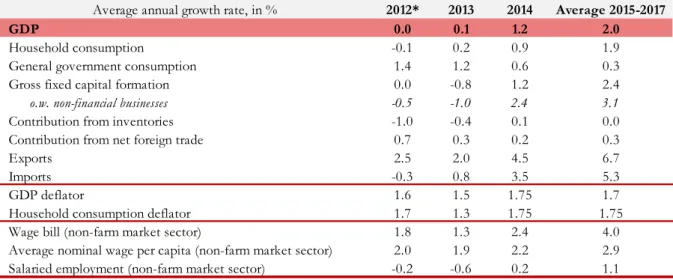
Table 1: Macroeconomic scenario, 2012-2017
Average annual growth rate, in % 2012* 2013 2014 Average 2015-2017
GDP 0.0 0.1 1.2 2.0
Household consumption -0.1 0.2 0.9 1.9
General government consumption 1.4 1.2 0.6 0.3
Gross fixed capital formation 0.0 -0.8 1.2 2.4
o.w. non-financial businesses -0.5 -1.0 2.4 3.1
Contribution from inventories -1.0 -0.4 0.1 0.0
Contribution from net foreign trade 0.7 0.3 0.2 0.3
Exports 2.5 2.0 4.5 6.7
Imports -0.3 0.8 3.5 5.3
GDP deflator 1.6 1.5 1.75 1.7
Household consumption deflator 1.7 1.3 1.75 1.75
Wage bill (non-farm market sector) 1.8 1.3 2.4 4.0
Average nominal wage per capita (non-farm market sector) 2.0 1.9 2.2 2.9
Salaried employment (non-farm market sector) -0.2 -0.6 0.2 1.1
3.
Public finance scenario
3.1
Overall strategy and medium-term budgetary objective
The Government’s objective is to reduce debt as a share of the national wealth and reach structural fiscal balance in the medium term. To achieve this, special attention is paid to the structural effort, with measures that preserve growth and mostly concern expenditure.
The multiyear public finance trajectory described in this Stability Programme distinguishes between two phases in achieving this objective, in accordance with the recommendations of the ECOFIN Council of 2 December 2009 (see Section 4) and the Public Finance Planning Act promulgated in December 2012:
In the first phase, the nominal government deficit will be reduced to less than 3% of GDP.
This means that substantial consolidation measures applying to 2012 and 2013 were passed starting in July 2012 to sustain the structural trajectory as the macroeconomic outlook worsened. A major effort will still be needed in 2014 to bring the deficit down to less than 3%. The effort in 2014 will be equivalent to approximately 1 point of GDP, among which 70% will involve savings on expenditure.
In the second phase, the medium-term budgetary objective of structural fiscal balance will be achieved. This will lead to a rapid reduction of debt as a share of GDP, leave more leeway for Government action and protect growth by allowing the automatic stabilisers to operate.
The public finance trajectory will be the result of continued expenditure savings under the rules set
out in the Public Finance Planning Act and the effects of the modernisation of public action (MAP).
Consequently, the structural deficit will be close to 0 in 2015 and reach it in 2016. Efforts to contain expenditure that are deployed over time will provide some leeway for reducing the tax burden, since a heavy tax burden could eventually undermine France's growth potential.
The Government’s strategy over the period as a whole relies firstly on a major effort to contain expenditure and on targeted tax measures. In view of the already high level of taxation, a choice was made to avoid any across-the-board tax increases. Achieving structural balance in 2016 will subsequently make it possible to reduce the tax burden as the expenditure savings efforts gradually start to produce results, following an initial increase that is needed to ensure that the objectives are reached.
Consequently, the expenditure ratio is to be cut by 3 points of GDP between 2013 and 2017, whereas the tax burden will remain stable overall, before declining towards the end of the period. Containment of government expenditure throughout the programme period will make it possible to finance the Government's priorities. The effort to contain expenditure will continue until 2017, leading to a gradual decrease in government expenditure as a share of GDP. In real terms (excluding
special accounting treatment of certain items3) expenditure growth will be limited to 0.5% on average over
the period from 2013 to 2017, which is much lower than the historic trend of slightly more than 2%. The effort will be shared by all general government entities. The French administration has launched an ambitious initiative to modernise public action with the objective of carrying out an evaluation of all the public policies implemented by the various Government departments and agencies by 2017. The process will rely on a close partnership with the user, staff and agents of these policies to promote ownership of the process and its success, thereby contributing to containment of government expenditure. Central government expenditure, excluding debt and pensions, will decrease by €1.5 billion in 2014 and the
3 The massive proceeds of spectrum auctions in 2012, standing at €2.6 billion, compared to €0.9 billion in 2011 and
zero in 2013, are recorded as a fall in expenditure. In addition, military spending is recorded in the system of national accounts at the time of delivery and not the time of payment, which can lead to major discrepancies in Government expenditure. The recapitalisation of Dexia had an impact of €2.6 billion on Government expenditure in 2012.
Government’s priorities of promoting jobs and fighting poverty will be financed by redeploying resources. Transfers to local governments will be reduced by €1.5 billion in 2014, and then by another €1.5 billion in 2015, representing a cut of €3 billion compared to 2013. Social security funds will also contribute to the effort to balance public finances. In addition to the efforts already announced on health insurance, management and labour representatives have reached an agreement on measures concerning the second-pillar pensions in the private sector that will help consolidate public finances. The same parties will also renegotiate the agreement on unemployment insurance by the end of 2013. Work has also started to balance the budgets of the old-age pensions and family benefits sections of the social security system in the medium term (Fragonard Task Force and Moreau Commission).
The aggregate tax and social security contribution rate should stabilise in 2015 and then decline towards the end of the period, after increasing up until 2014 to help bring the deficit back down to less than 3%. The higher tax burden in 2013 and 2014 will reflect the measures already called for in the Public Finance Planning Act: (i) impact of new measures for 2012 and 2013; (ii) supplementary measures to be implemented in 2014 to offset the lower return in 2014 on the measures taken for 2013 (the trajectory in the Planning Act already takes these new measures into account); (iii) measures to offset lower-than-expected returns (tax on financial transactions primarily) and measures overturned by the Constitutional Council; (iv) measures to achieve the objective set out in the Public Finance Planning Act to keep tax exemptions stable in nominal terms. In addition, revenue will be affected by the Agirc-Arrco pension agreement between labour and management representatives to increase contributions to supplementary retirement schemes in order to consolidate the system. The measures that still need to be documented include the efforts to step up the fight against tax fraud and tax evasion, and continued reductions in tax and social security contribution exemptions and other potential measures to help balance the budgets of retirement schemes in the medium term (Commission chaired by Ms Moreau).
The aggregate tax and social security contribution rate should decrease at the end of the period as the Competitiveness and Jobs Tax Credit starts to produce its effects, and as continued efforts to contain expenditure and achieve structural balance in 2016 provide some leeway to reduce the tax burden.
This strategy, which is based on a combination of reforms to boost growth, set out in detail in the National Reform Programme and sustainable containment of government expenditure, will lead to a decline in the government debt ratio starting in 2015.
This structural adjustment strategy will be implemented for the purpose of enhancing the efficiency of
public finances. This will be achieved by continuing efforts to rationalise expenditure, and, more specifically, through the modernisation of public action (see Section 6.2.1) and redeployment of Investments for the Future (see Section 6.2.2), to focus expenditure on investments producing high social and economic returns and enhance the leverage of Government action. With regard to revenues, the continuing reduction of tax expenditures and the least effective social security contribution exemptions, along with the Competitiveness and Jobs Tax Credit worth nearly €10 billion in 2014 (see Section 6.3.2), will help streamline the tax system in favour of policies that generate more growth and jobs.
At the same time, the Government will implement the enhancement of public finance governance
passed in 2012, in compliance with the European Treaty on Stability, Coordination and Governance in the Economic and Monetary Union, the European Budgetary Frameworks Directive and the latest European Regulations (see Section 8).
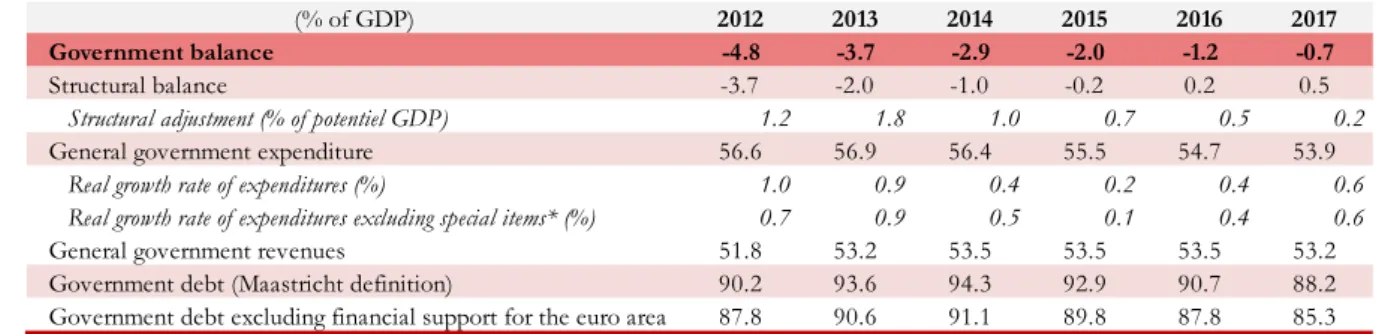
Table 2 – Multiyear public finance trajectory
(% of GDP) 2012 2013 2014 2015 2016 2017
Government balance -4.8 -3.7 -2.9 -2.0 -1.2 -0.7
Structural balance -3.7 -2.0 -1.0 -0.2 0.2 0.5
Structural adjustment (% of potentiel GDP) 1.2 1.8 1.0 0.7 0.5 0.2
General government expenditure 56.6 56.9 56.4 55.5 54.7 53.9
Real growth rate of expenditures (%) 1.0 0.9 0.4 0.2 0.4 0.6
Real growth rate of expenditures excluding special items* (%) 0.7 0.9 0.5 0.1 0.4 0.6
General government revenues 51.8 53.2 53.5 53.5 53.5 53.2 Government debt (Maastricht definition) 90.2 93.6 94.3 92.9 90.7 88.2 Government debt excluding financial support for the euro area 87.8 90.6 91.1 89.8 87.8 85.3
* Proceeds of spectrum sales, military expenditure, Dexia recapitalisation and changes in the accounting treatment of levies on revenues for the European Union
3.2
The trajectory of public finance at "unchanged policy"
In accordance with the revised Stability and Growth Pact, this Stability Programme presents a scenario at unchanged policy, i.e. the spontaneous developments in the government balance that would occur with no changes to legislation or budget practices. The scenario at unchanged policy incorporates the developments stemming from the laws and regulations already in force, which distinguishes it from a “trend-line” trajectory. It does not consider the further measures to be implemented in order to meet the public finance targets.
This programme uses the following assumptions to construct the scenario at unchanged policy.
The scenario considers revenue and expenditure measures already passed (“no legislative change”
concept) under all legislation that has an impact on public finances and, more specifically, under Budget Acts, Social Security Budget Acts and Public Finance Planning Acts. For this Programme, therefore, the scenario includes the effects of measures introduced by the 2013 Initial Budget Act, the 2013 Social Security Budget Act, the Supplementary Budget Act of December 2012 and previous Budget Acts, along with the rules that future Budget Acts must comply with set out in the 2012-2017 Public Finance Planning Act. More specifically, the Multiyear Planning Act includes ambitious fiscal objectives for expenditure, which will be met by reducing and then stabilising central government expenditure in nominal terms (excluding pensions and interest expense) and by moderating the increase in the National Healthcare Expenditure Growth Target (Ondam), which have proven to be effective instruments for containing expenditure.
The scenario also assumes no change in budget usual practices, such as index-linking of benefits
(family allowance, pensions, etc.) and of taxes. It also incorporates statistically observed patterns, such as the pattern of the local government balance over the election cycle (including capital expenditure and local direct tax rates).
On the other hand, unlike the Stability Programme scenario, the scenario at unchanged policy does not incorporate planned measures still to be passed.
This Stability Programme also presents a “spontaneous trajectory” for the deficit that shows the
spontaneous growth rates of government revenue, healthcare expenditure and central government expenditure. This trajectory is different from the trajectory at unchanged policy, because it does not consider efforts to meet fiscal requirements and measures introduced after July 2012. Without the efforts in the programme, the deficit would stand at 5½% of GDP in 2013.
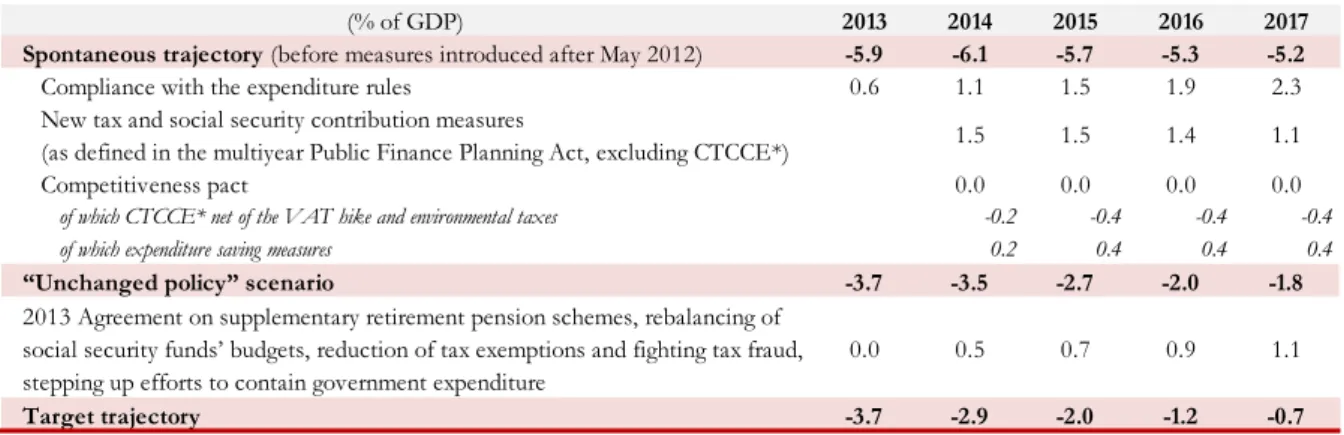
Table 3 – Trajectory at unchanged policy
(% of GDP) 2013 2014 2015 2016 2017
Spontaneous trajectory (before measures introduced after May 2012) -5.9 -6.1 -5.7 -5.3 -5.2 Compliance with the expenditure rules 0.6 1.1 1.5 1.9 2.3 New tax and social security contribution measures
(as defined in the multiyear Public Finance Planning Act, excluding CTCCE*) 1.5 1.5 1.4 1.1
Competitiveness pact 0.0 0.0 0.0 0.0
of which CTCCE* net of the VAT hike and environmental taxes -0.2 -0.4 -0.4 -0.4
of which expenditure saving measures 0.2 0.4 0.4 0.4
“Unchanged policy” scenario -3.7 -3.5 -2.7 -2.0 -1.8
2013 Agreement on supplementary retirement pension schemes, rebalancing of social security funds’ budgets, reduction of tax exemptions and fighting tax fraud, stepping up efforts to contain government expenditure
0.0 0.5 0.7 0.9 1.1
Target trajectory -3.7 -2.9 -2.0 -1.2 -0.7
* Corporate Tax Credit for Competitiveness and Employment
The 2013 scenario at unchanged policy is based on a deficit of 3.7%, which is the same as the Government's target, since all of the expenditure and revenue measures have already been passed.
Box 1 – Balancing the social security funds’ budgets
The Government is determined to preserve the French social security model, while modernising it, at the same time. Therefore, efficiency needs to be improved to ensure financial equilibrium and sustainability. Two task forces were created for this purpose.
As part of the modernisation of public action, Bertrand Fragonard was tasked with reviewing the architecture of family benefits with a view to reforms to balance the family benefits budget and enhance the targeting of benefits, while contributing to the fight against poverty. The objective is to make net savings of €1 billion in 2014, to start bringing the family benefits budget back into balance, while still providing financing for measures included in the five-year poverty reduction plan and for a major effort to provide services to parents (including infant care). The task force has just submitted its report to the Prime Minister and the measures that the Government decides to implement will be included in the 2014 Social Security Budget Bill.
According to the timetable drawn up at the labour-management conference in July 2012, a commission on the future of retirement benefits, chaired by Yannick Moreau, former Chair of the Pensions Advisory Council, was tasked with coming up with proposals to ensure the medium-term and long-term equilibrium of retirement schemes by June. In accordance with the timetable and methodology defined at the labour-management conference in July 2012, consultation will start with a view to recommending reforms in 2013. The public finance trajectory incorporates a gradual return to equilibrium for retirement schemes by 2020 at the latest, with a shift starting as early as 2014.
In 2014 and the following years, the scenario at unchanged policy incorporates the compliance with central government expenditure requirements and with the National Healthcare Expenditure Growth Target as set in the Public Finance Planning Act passed in December 2012. The scenario also includes the expenditure savings called for in the Planning Act to finance the Competitiveness and Jobs Tax Credit and the revenue measures anticipated in the Planning Act to offset the expected decline in the return on the measures introduced in 2013. The efforts needed to bring the deficit down to less than 3% of GDP in 2014 and to close the gap between the trajectory at unchanged policy and the target trajectory have already been identified. First of all, management and labour representatives reached an agreement on the two
second-pillar pension schemes – the General Association of Pension Institutions for Managerial Staff (AGIRC) and the Association of Supplementary Pension Schemes (ARRCO). The other efforts will primarily be achieved through the savings produced by the modernisation of public action, measures to keep tax expenditures steady in nominal terms, the expected returns from stepping up the fight against tax fraud and efforts to balance social security funds’ budgets (see Box 1).
3.3
Evolution of the structural balance
The measures implemented by the Government since July 2012 have increased the structural adjustment achieved over the period from 2010 to 2013 to 4.6 points of GDP4. The recommendation
made by the ECOFIN Council at its meeting on 2 December 2009 called for structural adjustment of at
least 4 points of GDP over this period (see Section 4). In 2014, our estimates show that the deficit will
be reduced to less than 3% of GDP by means of a structural effort of 1 point of GDP. Under the Commission’s very conservative potential growth assumption, this corresponds to a structural adjustment
of more than ¾ point of GDP. Structural adjustment will be more moderate in 2015 and 2016, but
still significant, at 0.6 point per year on average, to return to our medium-term budgetary objective (structural balance). Once structural equilibrium has been achieved, it will provide some leeway to reduce the tax burden, while maintaining the effort to contain expenditure. All in all, a slight structural adjustment will carry on the decline in the nominal deficit.
In 2012, the reduction of the deficit by 0.5 point of GDP (from 5.3% to 4.8%) was achieved despite one-off events that hampered improvement of the government balance, such as the recapitalisation of Dexia and the aftereffects of the fine imposed on France Télécom and recorded in 2011, and despite a very gloomy economy, with stagnant growth that deepened the cyclical deficit component by 0.5 point of GDP. The reduction of the deficit actually came from substantial structural adjustment of 1.2 point, as called for in the 2012-2017 Planning Act, with 1.3 points resulting from consolidation measures concerning revenue (1.1 point) and expenditure (0.2 point, which could have been 0.2 point more if not for adverse price effects for public finances5). The structural adjustment is slightly smaller than the efforts
made, because of spontaneous developments in non-tax revenue, which failed to keep pace with growth (more specifically, a sharp decline in dividends paid to the Government).
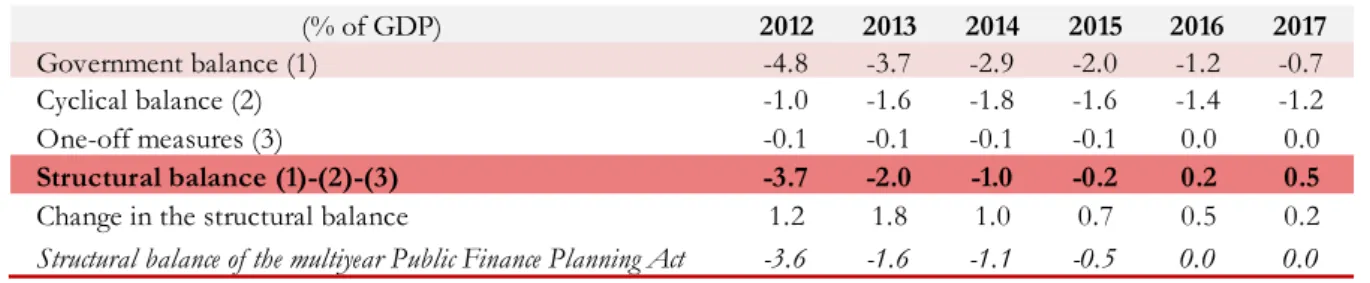
Table 4 – Multiyear structural balance trajectory
(% of GDP) 2012 2013 2014 2015 2016 2017
Government balance (1) -4.8 -3.7 -2.9 -2.0 -1.2 -0.7
Cyclical balance (2) -1.0 -1.6 -1.8 -1.6 -1.4 -1.2
One-off measures (3) -0.1 -0.1 -0.1 -0.1 0.0 0.0
Structural balance (1)-(2)-(3) -3.7 -2.0 -1.0 -0.2 0.2 0.5
Change in the structural balance 1.2 1.8 1.0 0.7 0.5 0.2
Structural balance of the multiyear Public Finance Planning Act -3.6 -1.6 -1.1 -0.5 0.0 0.0
In 2013, the deficit will shrink by 1.1 point, from 4.8% to 3.7%, which is a greater decline than in 2012, despite the persistent gloom in the economic environment. This result reflects a strong structural effort,
4 Hereinafter, structural adjustment is estimated using the same potential growth rate as in the Public Finance
Planning Act (i.e. 1.2% on average from 2010 to 2013 and 1.5% in 2014).
5 The GDP price growth was sluggish at 1.6%, compared to consumer prices (excluding tobacco), which rose by
equivalent to 1.9 point of GDP, with even greater efforts than in 2012. The effort will be equivalent to 1.9 point, compared to 1.3 point in 2011 and 2012. As was the case in 2012, the effort will stem from new tax and contribution measures (1.5 point), as well as continuing containment of expenditure (0.4 point). However, some of these efforts will be neutralised by persistently sluggish growth, which will reach only 0.1%, far less than the potential growth rate. This can be seen not only in the deepening of the cyclical deficit component by 0.6 points, but also in structural adjustment, as a result of spontaneous growth of tax revenue that is weaker than GDP growth (elasticity effects of -0.1 points). One-off measures should have a neutral effect on the government balance, since the aftereffect of the recapitalisation of Dexia will be offset by the cost of exceptional tax disputes (see Box 2). The gap compared to the structural balance in the Public Finance Planning Act stands at 0.3 point6. This gap falls below the 0.5-point threshold
triggering the correction mechanism mentioned in the Constitutional Bylaw 2012-1403 of 17 December 2012 on public finance planning and governance.
Table 5 – Breakdown of structural adjustment
(% of potential GDP) 2012 2013 2014 2015 2016 2017
Structural adjustment 1.2 1.8 1.0 0.7 0.5 0.2
Structural effort 1.3 1.9 1.0 0.6 0.5 0.3
Discretionary tax measures 1.1 1.5 0.3 0.0 0.0 -0.2
Effort in expenditure 0.2 0.4 0.6 0.7 0.5 0.5
Non discretionary component -0.1 -0.1 0.0 0.1 -0.1 0.0
In 2014, the reduction of the deficit by 0.8 point will be entirely structural (1.0 point) in view of growth that is expected to be closer to potential growth (a negative cyclical component of 0.2 point only). The expenditure requirements expressed in nominal terms for the central government and health insurance system, along with the commitments to contain expenditure above and beyond these requirements by cutting government expenditure to finance the Competitiveness and Jobs Tax Credit, in particular, and the preliminary savings made on expenditures for the purpose of balancing the budgets of social security and supplementary retirement pension schemes all mean that the main effort in 2014 will focus on expenditure (0.6 point) despite the assumption that interest rates will rise and increase interest expense. Measures to increase revenue will account for only a minor share, equal to 0.3 point of potential GDP growth, in order to offset the decline in returns in 2014 – from measures implemented in 2013, which is already anticipated in the Planning Act trajectory, lower-than-expected returns, from the financial transactions tax in particular, and measures overturned by France's Constitutional Council – and to stabilise tax exemptions in nominal terms and to step up the fight against tax fraud. Revenue measures also include the revenue aspects of the management and labour representatives' agreement on supplementary retirement pensions. Furthermore, it is estimated that tax disputes will have just as much impact on the government balance as in 2012, which means it will be neutral in terms of change in the government balance. Ultimately, 70% of the structural effort should rely on expenditure savings in 2014.
Between 2015 and 2017, the average annual reduction of the deficit by ¾ point of GDP stems from the business cycle (0.2 point), since real economic growth is greater than potential growth, thereby reducing the domestic output gap gradually, from structural adjustment (0.5 point) and the rest from the end of the losses related to tax disputes (see Box 2). Structural adjustment in 2015-2017 stems almost entirely from
6 2.0 points of GDP in the Stability Programme trajectory, compared to 1.6 point of GDP in the Public Finance
continued efforts to contain expenditure in all general government sub-sectors, which will provide leeway for measures to reduce the tax burden at the end of the period.
Box 2 – One-off and temporary measures considered in the evaluation of France's structural balance
France introduced a structural balance rule for the implementation of the Treaty on Stability, Coordination and Governance. This corresponds to the government balance adjusted for the direct effects of the business cycle and one-offs. This rule prevents the pro-cyclical effects produced by a management of government finances based on the nominal balance.
The following one-off events and measures are not included in the structural balance under the Stability Programme, in line with the method used in the Public Finance Planning Act:
On the revenue side, the losses stemming from exceptional tax disputes whose recording year in national accounts cannot be foreseen because it depends on the year and outcome of the proceedings
and the courts’ final rulings7. This involves reimbursements to foreign UCITS and reimbursements of
withholding tax (précompte mobilier).
On the expenditure side, France's €2.6-billion recapitalisation of Dexia. Following a decision by Eurostat, this amount is exceptionally recorded in the 2012 government balance.
Table 6 – Assumptions concerning tax disputes
(deviation from baseline, in € bn) 2012 2013 2014 2015 2016 2017
Total 0.0 -2.8 -2.7 -2.8 0.0 0.0
Withholding tax dispute (précompte mobilier) 0.0 0.0 -1.0 -1.0 0.0 0.0
UCITS dispute (OPCVM) 0.0 -1.5 -1.8 -1.8 0.0 0.0
Electronic communications tax dispute 0.0 -1.3 0.0 0.0 0.0 0.0 NB: the figures given in this table do not predict the outcome of the disputes; they merely reflect the conservative approach to multiyear public finance projections. Furthermore, the figures shown are subject to change as a result of the courts’ final rulings.
3.4
Evolution of the government balance by sub-sector
Consolidation of public finances will be the result of joint efforts by all general government sub-sectors over the planning period, as the economy recovers and leads to a spontaneous increase in revenue. This will improve the government balance by 4.1 points of GDP between 2012 and 2017, from a deficit of 4.8% of GDP in 2012, to a deficit of 0.7% of GDP in 2017.
The central government borrowing requirement (central government and other central government
bodies) will fall by 2.8 points between 2012 and 2017, from 4.1% of GDP in 2012 to 1.3% of GDP in
2017). This reduction will stem primarily from stabilisation, followed by a cut, in central government expenditure, excluding pensions and debt service. This represents a cut of €1.5 billion in central government expenditure, excluding pensions and debt service, in 2014. The reduction will rely on reforms
7 Expenditure and revenue are recorded in the system of national accounts on an accrual basis. According to the European System of Accounts of 1995, this means, “when economic value is created, transformed or extinguished, or when claims and obligations arise, are transformed or are cancelled”. Consequently, the impact of disputes is recorded in the year when the courts make their final ruling, whereas, in budgetary accounting, the impact is recorded on the basis of cash flows.
and savings and streamlining measures defined by the ministries, particularly within the framework of the modernisation of public action. The share of central government expenditure in GDP will decline sharply, providing leeway for measures to reduce revenue towards the end of the period. Combined with the effects of the Competiveness and Jobs Tax Credit, such tax cuts will reduce the tax burden following the tax hikes related to the consolidation measures passed since July 2012.
Table 7 – General government lending capacity (+) / borrowing requirement (-)
(% of GDP) 2012 2013 2014 2015 2016 2017
Government balance, Maastricht definition -4.8 -3.7 -2.9 -2.0 -1.2 -0.7
o.w. primary balance -2.3 -1.3 -0.4 0.7 1.6 2.1
State -3.9 -2.8 -2.2 -1.9 -1.5 -1.2
Other central government bodies -0.1 -0.1 -0.1 0.0 0.0 0.0
Local governments -0.2 -0.2 -0.2 0.0 0.0 0.0
Social security funds -0.6 -0.6 -0.5 -0.1 0.3 0.6
The budgets of other central government bodies will be nearly balanced over the period, with slight fluctuations owing to the timing of expenditure under the Invest for the Future programme (expenditure growth should widen the deficit temporarily, peaking in 2014).
The social security balance, excluding the social security debt redemption fund (CADES) and the pension reserve fund (FRR), should improve by 1.2 point of GDP between 2012 and 2017, going from a deficit of 1.1 point of GDP to equilibrium at the end of the period (the balance including CADES and FRR will go from -0.6% of GDP to +0.6% of GDP). In addition to the revenue measures introduced in 2012 and 2013, this improvement will stem mainly from the limited increase in the National Healthcare Expenditure Growth Target (Ondam), the implementation of the March 2013 agreement on supplementary retirement pensions and from measures that will follow the review of family policy and retirement schemes. The measures adopted following the Fragonard Report to balance the family benefits budget will be incorporated into the 2014 Social Security Budget Bill. The commission chaired by Ms Moreau will submit proposals for reform to the Government in June to ensure balanced retirement scheme budgets in the short, medium and long term. In accordance with the timetable and methodology defined at the labour-management conference in July 2012, consultation will start on these proposals with a view to recommending reforms in 2013.
Local governments will also do their share, since their balance should move from a deficit of 0.2 point of GDP in 2014, to financial equilibrium at the end of the period. This will be achieved primarily through expenditure reductions as central government transfers are reduced by €1.5 billion in 2014 and by a further €1.5 billion in 2015. An improving economy and a smaller deficit in the first years of the election cycle will also contribute to this improvement.
3.5
Evolution of government expenditure
3.5.1
Expenditure of general government
Table 8 – Change in general government expenditure
(annual average, in real terms and in %*) 2012 2013 2014 2015-2017
General government 1.0 0.9 0.4 0.4
Excluding proceeds of spectrum sales, military expenditure, Dexia recapitalisation and
changes in the accounting treatment of levies on revenues for the European Union 0.7 0.9 0.5 0.4
Central government (APUC) 0.0 -0.4 -0.5 -0.3
Local governments (APUL) 1.1 1.3 0.2 0.5
Social security funds (ASSO) 1.2 1.8 0.8 0.7
* Expenditure in real and like-for-like terms, including transfers between general government sub-sectors.
Major efforts to contain expenditure will be made throughout the planning period and by each of the general government sub-sectors to reduce expenditure as a percentage of GDP by 3 points from 56.9% in 2013 to 53.9% in 2017.
Government expenditure will grow by an average of 0.5% in real terms between 2013 and 2017,
which is much lower than the long-term average of 2.1%8 and much lower than potential GDP growth.
Sustainable containment of government expenditure will come from a steadfast joint effort by all of the general government sub-sectors: dropping in 2015, and then stabilising in nominal terms for central government expenditure (for aggregate spending, excluding debt service and pensions); local government spending will be limited, because of the stabilisation in nominal terms and then cuts in central government transfers in 2014 and 2015; savings achieved through the modernisation of public action; compliance with the National Healthcare Expenditure Target, whose growth rate will decline gradually; the effects of the management and labour representatives’ agreements on supplementary retirement funds (which will start to be felt in 2013 both in terms of expenditure and revenue); and the measures to be adopted following the review of family policies (task force chaired by Mr Fragonard) and the retirement pension system (commission chaired by Ms Moreau).
In 2012, government expenditure showed little growth, once exceptional events are excluded, rising by 0.7%, compared to a 0.9% increase in 2011. Aggregate expenditure growth in 2012 was driven by exceptional events that were not provided for in the 2013 Budget Act, such as the recapitalisation of Dexia, which counts as expenditure and not a financial transaction (this measure cost €2.6 billion, accounting for more than 0.1 percentage point of expenditure growth) and special treatment of military expenditure9 in the national accounts and the payments made in early 2013 under the 2012 European
Amending Budget, which will contribute nearly 0.2 point. When these measures are excluded, State and healthcare expenditures subject to the rules of the Planning Act were lower than expected, which points to the effectiveness of expenditure management. The deviation from the 0.5% real growth forecast (excluding exceptional events) in 2012 set out in the 2013 Budget Bill is due in part to lower-than-expected inflation (excluding tobacco prices), standing at 1.9% instead of 2.0%, and slightly stronger growth of local government expenditure.
8 The average annual real growth rate of Government expenditure from 2000 to 2011.
9 Military expenditure is recorded in the system of national accounts at the time of delivery and not at the time of
In 2013, aggregate expenditure (as well as expenditure excluding exceptional events10) should grow by 0.9% in real terms, which is faster than its growth in 2012 (0.7% excluding exceptional
events) reflecting a sharp drop in inflation (from 1.9% to 1.2%), which is not incorporated into State
and healthcare expenditure targets expressed in nominal terms.
Expenditure growth should be weak between 2014 and 2017, averaging 0.4%. This should primarily reflect the continued efforts to meet the budgetary rules for State and healthcare expenditure under the Public Finance Planning Act, as well as the growing savings from the modernisation of public action and the additional effort to cut State expenditure, excluding debt service and pensions, by €1.5 billion in 2014 on top of the savings called for in the Public Finance Planning Act and under the agreement on supplementary retirement pensions in 2013, which has already been signed by management and labour representatives. The reforms carried out in 2013 to balance the budgets for old age pensions and family benefits (task force assigned to Mr Fragonard and commission chaired by Ms Moreau) will contribute to containment of social security fund expenditure. Finally, a dip in local government capital expenditure is expected in 2014 and 2015, because of the elections calendar. Expenditure under the Invest for the Future programme should gradually slow after peaking in 2014.
3.5.2
State expenditure
The State’s general budget is drawn up and executed according to the "zero nominal spending growth” rule. The 2012-2017 Public Finance Planning Act of 31 December 2012 upholds this rule. At the most, the rule calls for stabilising the sum in current euros of appropriations under the general budget, levies on revenues (made on behalf of the European Union and local governments) and allocations of revenue to third parties, excluding debt service and civil service pension expenditure.
If we add debt service and pensions to these appropriations (total general budget expenditure), the annual increase in budget appropriations and levies on revenues should not exceed the inflation rate.
The freeze on nominal expenditure, excluding debt service and pensions, is particularly effective.
More specifically, this rule has ensured that all of the savings on debt service in 2012 stemming from lower interest rates have been used entirely for structural consolidation of our public finances and not to finance other expenditures.
Furthermore, although discrepancies in inflation, debt and pension forecasts make it impossible to meet the overall ceiling on aggregate expenditure, and despite the fact appropriations “excluding debt service and pensions” might comply with the “zero nominal growth” rule, the ceiling on ministries' budget appropriations will still be lowered to keep aggregate expenditure growth in line with inflation.
In 2012, State expenditure was cut substantially, both in the initial budget and in the outturn
Compared to the 2012 Budget Bill tabled in October 2011, which called for stabilising expenditure in 2012 at the level of the 2011 Initial Budget Act under the "zero nominal growth” rule, the target that was ultimately applied in 2012 was tightened up twice: once during the Parliament’s examination of the Initial Budget Act for 2012, when the target was cut by €1.2 billion, and again during the vote on the first 2012 Supplementary Budget, when the target was cut by a further €1.2 billion, bringing the total reduction to
10 The aftereffect of recapitalising Dexia and the accounting treatment of payments made under the European
budget, which hold down 2013 expenditure growth compared to 2012, are offset by the aftereffect of the proceeds of spectrum auctions received in 2012 and by the adjustment for military expenditure recorded in the system of national accounts.
€2.4 billion compared to the 2011 Initial Budget Act. Given the particularly rigorous environment for executing the budget, with the Court of Auditors reporting the risk of overruns to the order of €2 billion back in July 2012, the Government introduced preventive measures to ensure that the expenditure target was met. Following the independent audit of public finances that it commissioned from the First President of the Court of Auditors, the Government decided to freeze a further €1.5 billion of the appropriations made to ministries for 2012.
In the outturn, State expenditure, excluding debt service and pensions, were ultimately perfectly contained, coming in under the lower target by nearly €100 million. All in all, State expenditure, including debt service and pensions, posted a historic decline of €0.3 billion in nominal terms, compared to the 2011 budget outturn.
“Aggregate expenditure”, including debt service and civil service pensions, met the target initially set with some room to spare because of the efficient execution of expenditure subject to the zero nominal growth rule and favourable circumstances for debt service, where savings of €2.5 billion were made compared to the Initial Budget Act. Strict control of State expenditure planning in 2013 and the following years is critical for achieving balanced public finances.
The 2013 Initial Budget Act was drafted with the same exacting rules (zero nominal expenditure growth, excluding debt service and pensions, and aggregate expenditure growth that cannot exceed the inflation rate). A further €2 billion in appropriations was frozen back in January, in addition to the usual amount put into reserves, raising the Government's precautionary reserve to nearly €8 billion. The purpose of this reserve is to promote containment of State expenditure and even to create further savings if conditions during the fiscal year permit.
The 2012-2017 Public Finance Planning Act calls for State expenditure to remain stable in nominal terms over the period as a whole, which will constitute an unprecedented effort.
Compliance with this trajectory will require new discipline in the management of State expenditure. The Prime Minister’s Circular dated 14 January 2013 on the “rules for responsible management of government expenditure” defines this new discipline, which is built on three main principles: self-insurance, which means that each ministerial department must cover the risks it incurs; financing all new expenditure through savings on expenditure, and a ban on substituting tax expenditures for budget expenditures.
Furthermore, half of the drop in revenue caused by the Competitiveness and Jobs Tax Credit will eventually be covered by expenditure savings. The State will contribute by cutting expenditure covered by the “zero nominal growth” rule by €1.5 billion in 2014.
Compliance with this ambitious trajectory will rely on reforms and savings and streamlining measures to be identified as part of the modernisation of public action process (see Section 6.2.1). More specifically, this approach will endeavour to identify overlaps and redundant actions, modernise ministries’ operations in order to contain their operating expenditure and target expenditure more effectively.
Debt service is expected to increase over the period, but the growth of aggregate expenditure still will not exceed the inflation rate because of the decline in nominal terms of expenditure excluding debt service and pensions.
3.5.3
Expenditure of other central government bodies
Other central government bodies, in their capacity as “central government operators”11, will contribute to the effort to reduce expenditure. Most of these operators maintain fairly balanced budgets. They are not allowed to borrow from credit institutions or issue debt securities with maturities of
more than 12 months12, which helps contain their expenditure. Furthermore, a parity principle means that
central government operators will comply with the same requirements that the central government places on its own expenditure.
This means that the expenditure growth of other central government bodies over the planning period can primarily be attributed to the Invest for the Future programme, which causes faster expenditure growth at the start of the planning period, followed by stabilisation and then a reduction of expenditure at the end of the period (see Section 6.2.2.), and compensation for the cost of public service in electricity. The contribution to the cost of public service in electricity pays the French electricity utility EDF for the growing cost of public services in electricity, such as the purchase of electricity from renewable energy
sources (solar power) and lower electricity rates implemented as part of the plan to fight poverty13. The
central government operators’ expenditure also reflects the Greater Paris Corporation’s investments. This corporation (Société du Grand Paris) was founded in late 2010 to organise financing for the two automated métro loops around Paris, which are planned to start services between 2020 and 2030. In addition to continuing its preliminary studies and land acquisitions, the start of construction will lead to an increase in the Corporation’s expenditure.
This means that other central government bodies’ expenditure should grow at an average annual rate of ¾% in real terms from 2012 to 2017, both as a result of the central government operators' major efforts to reduce operating costs and, for others, their role as public investors. These bodies account for approximately half of the capital expenditure by central government.
3.5.4
Expenditure of the social security funds
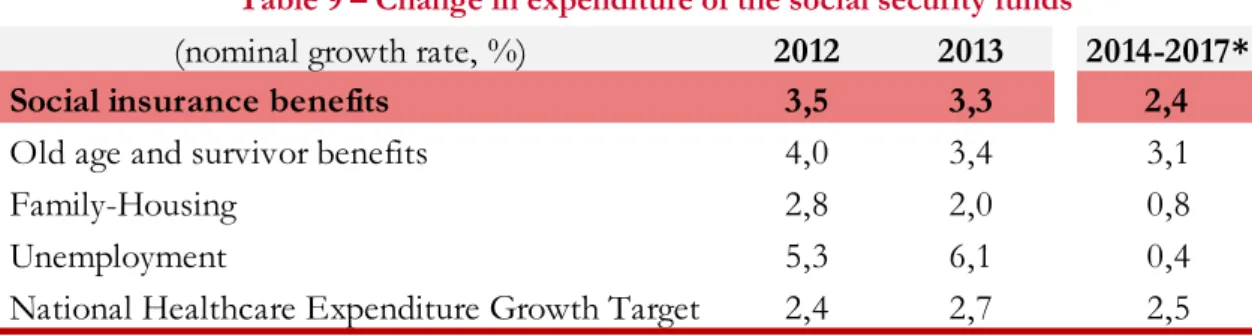
In 2012, benefits paid by the social security funds grew by 3.5% in nominal terms, which was slightly faster than their 3.1% growth in 2011. This growth is primarily attributable to the impact of the one-off €0.4-billion increase in the back-to-school bonus on family benefits, which grew at a 2.8% rate, following 1.4% in the previous year, and the increase in expenditure of unemployment benefits, which rose by 5.3%, following a decline of 0.6% in the previous year. This increase was caused by economic conditions, with zero growth of the economy in 2012, after a 1.7% growth rate in 2011. On the other hand, healthcare expenditure decelerated, as consumption turned out to be lower than initially budgeted (see below).
11 The salient features of central Government operators are that they carry on public service activities, are mostly financed by the State and are under the State's direct control. The purview of central Government operators and that of other central Government bodies are not exactly the same: the former are considered from the point of view of the budget and the latter are considered from the point of view of the system of national accounts and listed by the National Statistics Institute each year.
12 Article 12 of the 2011-2014 Public Finance Planning Act (which has not been abrogated by the December 2012
Planning Act) prohibits them from incurring debt with maturities of more than twelve months, except for the Government Debt Fund and the Corporation for Central Government Equity Holdings (Société de proses de participation de l’Etat).
13 The means-tested limit for the supplementary health insurance benefit was raised and its recipients are entitled to