POSTDOCTORAL APPOINTMENTS:
MOTIVATIONS, MARKETS, AND EXPERIENCES
Jennifer M. Miller
A dissertation submitted to the faculty of the University of North Carolina at Chapel Hill in partial fulfillment of the requirements for the degree of Doctor of Philosophy in the
Department of Public Policy.
Chapel Hill 2012
Approved by:
ABSTRACT
JENNIFER M. MILLER: Postdoctoral Appointments: Motivations, Markets, and Experiences
(Under the direction of Maryann Feldman)
This dissertation considers three research questions. Why do scientists become postdoctoral scholars (postdocs)? What role do postdocs play relative to other categories of labor in research production? What factors are associated with a postdoc being dissatisfied?
The literature review in Chapter 2 summarizes findings about which scientists are most likely to become postdocs, considering characteristics of individual scientists and doctoral institutions. The role of individual motivations in determining which students plan to become postdocs is incorporated into a conceptual model based on the social
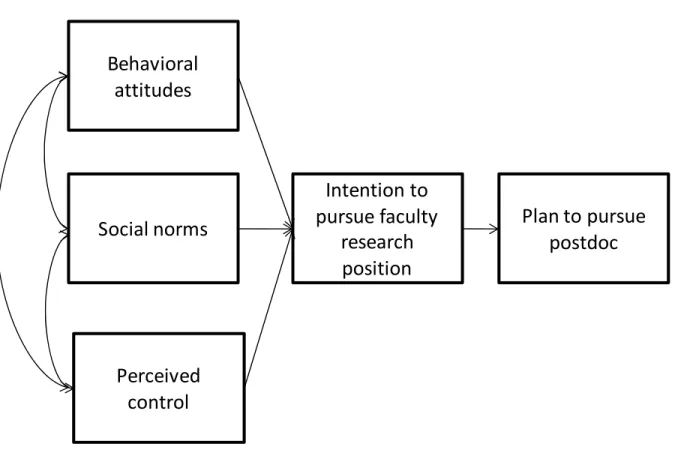
psychological theory of planned behavior. The theory frames scientists’ motivations for postdoc appointments in terms of behavioral attitudes, social norms, and perceived behavioral control, moderated by understanding that a postdoc is expected for a desired career.
complementarity. Universities appear to utilize postdocs as complements to doctoral research assistants and faculty in research production.
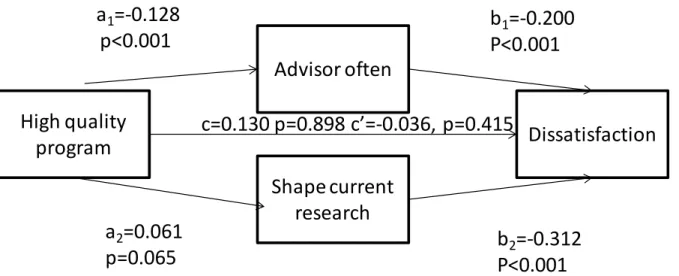
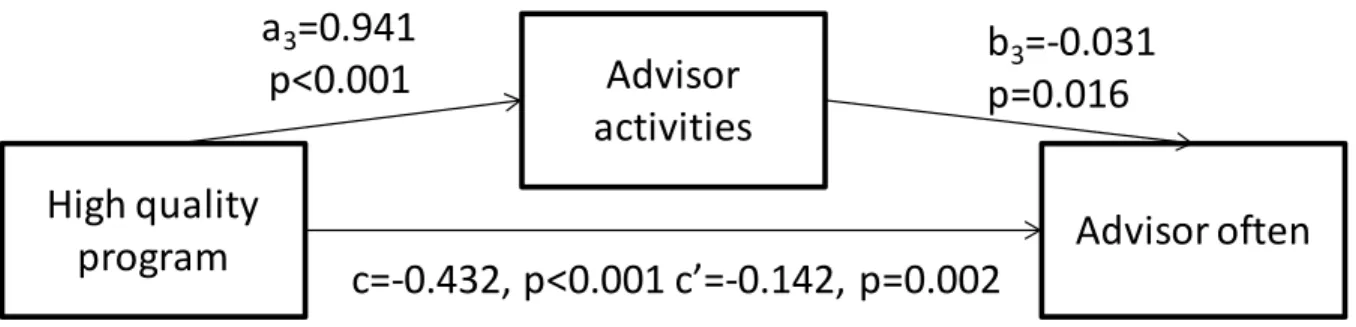
In Chapter 5, survey data from 764 postdocs in physical and mathematical, biological, and health sciences are used in an ordered probit regression to estimate effects of individual and organizational factors on the probability that a postdoc will be dissatisfied with an appointment. Postdocs are less likely to be dissatisfied when they find their current research interesting, when the appointment is consistent with interest in a faculty research career, and when the research has an applied element. Surprisingly, being at an institution with a high-quality doctoral program does not seem to prevent dissatisfaction. Mediation analyses indicate that while postdocs in high-quality programs report greater freedom to shape research projects, they interact less frequently with advisors, possibly due to advisors’ involvement in research commercialization.
DEDICATION
ACKNOWLEDGEMENTS
I would like to thank the members of my committee for their many helpful comments: Maryann Feldman (chair), Arne Kalleberg, Jeremy Moulton, Michael Roach, Henry
Sauermann. I am particularly grateful to my committee chair, Maryann Feldman, for her creativity, guidance, and leadership and to Michael Roach and Henry Sauermann for
providing access to the Science and Engineering Postdoc and PhD Survey data. I also thank John Scott for his help at the proposal stage.
My graduate student colleagues have also provided valuable feedback and moral support throughout my time at UNC. I would especially like to thank Sanya Carley, Lisa Goble, Shana Judge, Lauren Lanahan, and Stephanie Schmitt in the department of public policy. Doctoral students in the organizational behavior program at the Kenan-Flagler Business School always made me feel welcome in their seminars, and I benefited greatly from discussions with Jim Berry, Tina Juillerat, Virginia Kay, and John Sumanth. I also learned from colleagues across campus who shared my enthusiasm for workforce and economic development issues: Mary Donegan, Jason Jolley, and Jessica Pearlman.
I had the pleasure of mentoring a number of bright and enthusiastic undergraduates who provided research assistance at various stages of this work: Isabella Huang, Max McClellan, Olivia Shipp, Kumara Raj Sundar, Alex Wood, and Christopher Wang. I thank them for their work and send them my best wishes for the future.
and co-presenters at the Academy of Management, the Association of Public Policy Analysis and Management, the Atlanta Conference on Science and Innovation Policy, and the National Postdoctoral Association have contributed insights about the scientific workforce that
enhance this dissertation and suggest fruitful extensions of this research agenda. I am also grateful to two anonymous reviewers at the Journal of Postdoctoral Affairs for their comments on the literature review.
I gratefully acknowledge financial support and recognition from the Association of University Technology Managers, the Center for Environmentally Responsible Solvents and Processes, the Carolina Center for Competitive Economies, the Graduate and Professional Student Federation, the Ueltschi family, the Office of Undergraduate Research, and the Weiss Urban Livability Program.
TABLE OF CONTENTS
List of Tables ... ix
List of Figures ...x
List of Abbreviations ... xi
Chapter 1 Introduction ...1
Chapter 2 Individual and Institutional Antecedents of Postdoc Appointments ...7
Individual Level ...8
University level ...23
Cross-level Interactions ...27
Summary ...29
Chapter 3 Conceptual Model of Individual Motivations for Postdoc Appointments ...31
Theory of Planned Behavior ...32
Discussion ...44
Chapter 4 Postdocs and Production of University Research ...49
Model ...54
Data ...55
Results ...60
Chapter 5 Dissatisfaction with the Postdoc Experience: Insights from a Survey ...65
Model ...73
Data ...74
Results ...81
Discussion ...89
6. Conclusion ...91
Summary ...91
Postdoc Policy Agenda ...93
Directions for Further Research ...96
Appendix A Empirical Studies of Postdoctoral Scholars ...130
Appendix B Alternative Specifications of Postdoc Dissatisfaction Model ...156
LIST OF TABLES Table
1. Postdoctoral Scholars in the US: Large-scale Surveys ... 97
2. National Science Foundation Surveys with Data about Postdoctoral Scholars ... 99
3. Substitution and Complementarity: Selected Studies of Research Production ... 100
4. Substitution and Complementarity: Selected Studies of Contingent Employment .. 101
5. Substitution and Complementarity: Selected Studies of Immigration ... 102
6. Data Sources Used in Production Equation for University Research ... 103
7. Descriptive Statistics for Research Production Function ... 105
8. Correlations Between Variables in Seemingly Unrelated Regression Equations ... 106
9. Seemingly Unrelated Regression Results for Research Production Factor Share Equations ... 107
10. Elasticities of Factor Complementarities at the Mean of the Factor Shares. ... 109
11. Selected Published Surveys Measuring Postdoc Satisfaction in the US... 110
12. Descriptive Statistics for Total Sample and Three Fields: Biological Sciences, Health Sciences, and Physical and Mathematical Sciences .... 111
13. Correlation Table for Analysis of Postdocs’ Dissatisfaction ... 113
LIST OF FIGURES Figure
1. Primary reasons for becoming a postdoc. ... 120
2. Benefits of postdoc appointments. ... 121
3. Stay rates for 2002 temporary resident science and engineering
doctorate recipients from Asian nations. ... 122
4. Stay rates for 2002 temporary resident science and engineering
doctorate recipients from Anglo-Saxon and European nations. ... 123
5. Stay rates for 2002 temporary resident science and engineering
doctorate recipients from Anglo-Saxon and continental European nations. ... 124
6. Stay rates for 2002 temporary resident science and engineering
doctorate recipients from Latin American nations ... 125
7. Theory of planned behavior model of doctoral students’ plans
to pursue a postdoctoral appointment ... 126
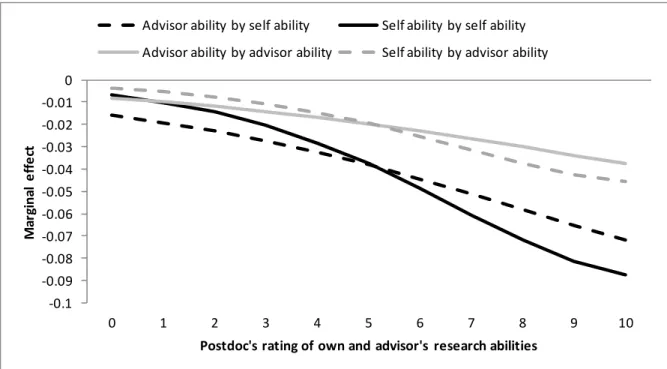
8. Marginal effects of postdoc’s own and advisor’s perceived
research ability on probability of dissatisfaction ... 127
9. Frequency of advisor interaction and freedom to shape current research
mediate relationship between program quality and postdoc dissatisfaction ... 128 10. Advisor activities mediate relationship between program quality and
frequency of advisor interaction ... 129
LIST OF ABBREVIATIONS
ARRA American Recovery & Reinvestment Act
COSEPUP Committee on Science, Engineering, and Public Policy
FTE Full-time Equivalents
NAS National Academy of Sciences
NIH National Institutes of Health
NPA National Postdoctoral Association
NRC National Research Council
NRSA National Research Scholars Award
NSB National Science Board
NSF National Science Foundation
SDR Survey of Doctorate Recipients
SED Survey of Earned Doctorates
S&T Science & Technology
Chapter 1 Introduction
Postdoctoral appointments (postdocs) are an important concern for science and technology policy because of their large numbers and the significant contributions they make to research and innovation. The National Postdoctoral Association (NPA, 2009) provides the following definition of a postdoc: “ … postdocs typically perform research under the
supervision and mentorship of a more senior researcher, often called the postdoctoral advisor. The key characteristic of a postdoc position is that it is a temporary career-building step on the path to a more permanent position.” Three aspects of this definition—the time-limited nature, mentored research, and career preparation—are consistently used to define postdoc appointments in the US (e.g., COSEPUP 2000).
A recent estimate places the number of postdocs in the US as high as 90,000
population (Stephan 2012). These postdocs include some of the most talented and productive early career scientists from doctoral programs in the US and around the world (Vogel 1999; Zumeta 1985).
There are concerns, however, that postdocs’ scientific talent, developed at substantial public and private cost, may be underutilized in these time-limited appointments that lack the stability and autonomy that would allow scientists to tackle high-risk, high-reward research during the creative early stage of their careers when their research production should be high (Stephan and Ma 2005). From their historical origins as the privilege of a respite from the demands of teaching and administrative duties before embarking on a faculty research career, some critics assert that postdocs have become a holding pattern and a source of cheap labor (Mishagina 2009; Puljak and Sharif 2009).
In the life sciences, the US annually produces over 8,000 new doctorate recipients most of whom will have at least one postdoc appointment (NSF, 2009). When the National Institutes of Health (NIH) doubled its research funding between the years of 1998 and 2003, more students were attracted to life sciences doctoral programs. This effect lagged the funding increase by a few years, with the NSF Survey of Graduate Students and
subsidizing graduate education in response to sharp increases in demand, uneven funding levels are thought to be one contributor to the prevalence of postdoc appointments.
To better inform public policy related to the funding and management of postdocs, this dissertation takes a multidisciplinary and multilevel approach to investigate the roles of individuals and organizations in the prevalence of and problems with postdoc appointments.
The six-chapter dissertation has the following structure. Chapter 2 contains a review of the literature addressing individual and organizational factors affecting whether scientists take postdoc appointments. Chapter 3 elaborates a conceptual model of social psychological motivations behind individual decisions to pursue postdoc appointments. Chapter 4 draws on microeconomic theory to present a model of the role of postdocs in the production of
university research. Chapter 5 presents an analysis of survey data revealing factors associated with dissatisfaction in postdoc appointments. Chapter 6 concludes with implications for policymakers, administrators, and early-career scientists and directions for further research on postdocs. Each chapter is summarized below.
The literature review in chapter two reviews and synthesizes the highly fragmented literature on postdoctoral appointments. It draws on the academic literature, government and professional association reports, and publicly available data to summarize what is known about who becomes a postdoc. One way to approach the question of who becomes a postdoc is by examining individual characteristics like personal motivation, human capital, and demographics. Another approach considers the role of characteristics of the doctoral
summarizes existing research on postdocs in a series of potentially testable propositions that suggest directions for future research.
Chapter 3 contributes to understanding of the influence of individual-level
motivations on PhD students’ intentions to pursue a postdoctoral appointment by placing the decision to become a postdoc in a theoretical framework based on Ajzen’s (1988) theory of planned behavior. This chapter suggests an answer to the question of why students pursue graduate degrees that may not lead directly to related career positions by describing a model of the influence of behavioral attitudes, social norms, and perceived behavioral control on intention to pursue a faculty research position in the long term and a postdoc appointment in the near term. A theoretical rationale is considered for the effect of each component of the theory of planned behavior on intentions to pursue a faculty research position. The model also includes the effect of intentions to pursue a faculty research career on plans to seek a postdoc appointment after graduation, moderated by the belief that such an appointment is a career prerequisite. Policy implications suggest specific targets for improving access to information to improve scientists’ career decisions.
unrelated regression is used to estimate the effect of each input on postdocs’ factor share in production. The results of these estimates are used to calculate coefficients of
complementarity.
Chapter 5 analyzes survey data to examine which factors are associated with a
postdoc’s dissatisfaction with an appointment. Dissatisfaction with postdoc appointments is a public concern because these appointments often represent a significant investment of public funds and dissatisfaction with postdoc appointments may deter the most talented scientists from continuing research careers. Dissatisfied postdocs are also a concern for universities and other organizations because they rely on postdocs’ research productivity and have realized the need to incorporate postdocs more fully into the community of scholars. Individual scientists also have a particular interest in avoiding poor choices at the critical juncture in their early careers where they select a postdoc appointment. This chapter draws on survey data from 764 postdocs at major US universities to examine the factors associated with dissatisfaction. Results of an ordered probit regression indicate that the type of research conducted, its connection to career goals, supervision, and demographic characteristics affect the probability that a postdoc will be dissatisfied. The study also analyzes the mediating roles of autonomy, advisor interaction, and advisor involvement in commercialization activities on the relationship between program quality and dissatisfaction. The chapter concludes with implications for public and institutional policy and for early career scientists considering postdoc appointments.
scientists. The conclusion summarizes the empirical findings to address the following questions. How do individual scientists make the decision to take a postdoc appointment? What determines whether a postdoc will be dissatisfied with the appointment? What is the economic function of postdocs in universities’ production of research? The conclusion also presents policy implications and directions for future research.
Chapter 2
Individual and Institutional Antecedents of Postdoc Appointments
As postdoctoral appointments have become more common and prolonged (Stephan and Ma 2005), policymakers seek to better understand who becomes a postdoc and why. This chapter reviews the literature and advances a series of propositions to guide future research on postdoc appointments. The review summarizes the academic literature, government and professional association publications, and publicly available data. The emphasis of the review is on US postdoc appointments. However, studies set in other countries are also included when relevant.
This review is organized in three sections. The first section reviews evidence about how individual-level factors such as motivation, ability, and demographics predict who becomes a postdoc. The second section discusses how university-level factors such as prestige of the university and features of the doctoral program predict who becomes a postdoc. The third section describes potential interactions between individual-level and university-level influences.
employment and training. In some years, the SDR includes more detailed questions about postdoc appointments.
Appendix A summarizes the empirical studies that are the main focus of this review, including methodology, key findings, and limitations. Note that many of the studies are cross-sectional or retrospective, based on secondary or archival data, reflect samples from earlier time periods, and/or are largely descriptive in nature. Several study postdocs outside the US.
INDIVIDUAL LEVEL
Prior research suggests that there are a number of individual-level factors that influence whether someone will become a postdoc. These factors, suggested by
psychological, economic, and sociological theory, can be categorized as motivational, human capital, and demographic. The following section reviews the existing literature on these factors and motivates a series of potentially testable propositions.
Motivational Factors
Perhaps the most straightforward motivation for taking a postdoc appointment is the desire for an academic career. However, it might be useful to examine this motivation more carefully and distinguish it from other motivations such as interest in a research career that is not necessarily academic, belief that a postdoc appointment is a prerequisite for a desired career, or a motivation to change direction after completing the doctorate.
career. A lack of other employment opportunities is less frequently reported and has become less frequent over time.
Postdoc appointments have long been associated with the intention to pursue an academic career in the form of a tenure-track academic appointment (Curtis and National Research Council 1969). More recent studies have also found this association (Fox and Stephan 2001). Taking a post hoc view, those who become tenured faculty are more likely to have held a postdoc appointment than scientists who follow other career paths (Zumeta 1985).
Some new PhDs become postdocs because they feel that a postdoc appointment is required or expected in their field (Curtis and National Research Council 1969). In some fields, this belief accurately reflects the reality of scientists’ career paths. Prior research suggests that doctoral students’ beliefs about career prospects are influential even when they are only partially aligned with actual career paths typical in their field (Fox and Stephan 2001). As shown in figure 1, the expectation that a postdoc appointment is required or expected is the most commonly reported reason for becoming a postdoc among SDR respondents. The percentage of respondents citing this reason showed an upward trend between 1997 and 1999 and has decreased only slightly in the subsequent two surveys.
program may use the postdoc appointment as a way to transfer their skills to a more interesting type of research, assuming that they are still interested in a research career.
Taste for science. Postdoc appointments may also attract those who aspire to a research career, rather than the traditional faculty career including teaching and research. Akerlind (2005, 2009) found that Australian postgraduate researchers often described their career aspirations in terms of research rather than faculty appointments. Recent work has found that an intrinsic motivation or taste for science can have a strong influence on scientists’ career choices (Roach and Sauermann 2010; Stern 2004). Such intrinsic
motivations were found to be stronger in fields where postdoc appointments are common, such as the life sciences (Zumeta 1985).
Career theory suggests that value motivation, such as taste for science, along with self-direction, may differentiate between those who persist in careers in science and research from those who are more likely to pursue careers in education and health fields (Briscoe and Hall 2006; Segers et al. 2008). The role of taste for science may also be interpreted from the perspective of needs-supplies fit, in that scientific careers fulfill a perceived need for a work environment consistent with scientific values (Edwards 1991). While work on values
congruence has usually focused on person-organization fit (Edwards and Cable 2009), the concept could potentially be applied to occupational choice (Blau et al. 1956). Scientists may be willing to make financial and other sacrifices to be scientists because the scientific
Proposition 1: Taste for science will be positively associated with becoming a postdoc.
Human Capital
Human capital may play a role in the motivation to become a postdoc in three ways. First, scientists’ levels of human capital upon completion of the doctorate may influence employers’ selection decisions. These selection decisions may in turn influence who becomes a postdoc. Second, scientists may perceive the postdoc appointment as an opportunity to further develop their human capital. Third, scientists may see the postdoc appointment as an opportunity to signal the human capital they have already developed.
Human capital theory initially focused on the additional knowledge and skills gained through education (Becker 1975). In the extension of this theory to the concept of science and technology (S&T) human capital, knowledge and skills are supplemented with tacit knowledge, social capital, and connections to scientific networks to better explain the role of research experiences in developing scientific capacity (Bozeman, Dietz, and Gaughan 2001). Human capital is thought to be more successfully developed when the person is
well-matched to the position or occupation (Jovanovic 1979; McCall 1990) and this results in increased productivity and other positive labor market outcomes (Allen and van der Velden 2001; Bender and Heywood 2009).
However, the further implication that the most capable scientists are more likely to find career positions and avoid postdoc appointments is generally not supported and may be overly simplistic. It is not at all uncommon for scientists of high ability to take postdoc appointments (Hornbostel et al. 2009; Zumeta 1985; Bohmer and Von Ins 2009). The role of mobility and networks in development of S&T human capital may make postdoc
appointments desirable, especially to those high-ability scientists who expect high productivity in an appointment that is a close fit to their research interests.
Several previous studies using measures that would seem to be good proxies for ability, such as pre-doctoral publications, have failed to find an effect on the probability of becoming a postdoc (McGinnis, Allison, and Long 1981; Reskin 1976; Su 2011). There are four possible interpretations. First, prior studies may not have had adequate ability measures. Second, ability may play no significant role in determining who becomes a postdoc. A third, related interpretation is that the effect of ability depends on time period, discipline, or other factors; prior studies examined widely varied contexts. Finally, it is possible that this
relationship is nonlinear, with high ability doctorate recipients becoming postdocs by choice for the opportunity to develop S&T human capital and lower ability doctorate recipients becoming postdocs by necessity (Zumeta 1985). Despite the failure of prior empirical work to demonstrate a consistent relationship between ability and becoming a postdoc, the literature suggests the following speculative proposition.
Proposition 2: Relative to doctorate recipients of average ability, both high and low ability recipients will be more likely to become postdocs.
Development of human capital. The literature has discussed development of
scientists themselves report subject matter knowledge as the greatest benefit from their postdoc appointments (See figure 2). Concerns have been expressed about knowledge and skill development. Postgraduate researchers in Australia reported that the skills they were developing were targeted toward faculty positions that combined research and teaching, but that these positions were scarce and the postdocs were often more interested in pure research positions (Akerlind 2009). Some of these Australian postdocs did not consider themselves to be in training at all. It is also not clear whether postdoc appointments serve the purpose of further developing scientists’ abilities. If postdoc appointments are holding patterns or signals (Mishagina 2009; Recotillet 2007), graduates have no rational reason to become postdocs for skill development.
In practice there has been a significant effort to improve skill development opportunities for postdocs, especially in the areas of generalist skills such as project management, communication, and proposal writing (Davis 2009). Studies have also found that those who complete a PhD quickly may be more likely to become postdocs (Recotillet 2007; National Research Council 1981; Laudel and Gläser 2008). If postdoc appointments have value for skill development, they may have greater appeal to students with less developed skill levels. Here skill does not refer to research achievement measures, such as publications, or inherent scientific ability, but to skills such as teamwork, project
skills may not be competitive for career positions, and so may find themselves in postdoc appointments by default.
The postdoc appointment may also be an important stage in the transition from student to independent researcher (Laudel and Gläser 2008). Two aspects of becoming an independent researcher are selecting research topics and obtaining grant funding. Although the sample was small, one study found that PhD students whose advisors had assigned their dissertation topics were more likely to become postdocs (Curtis and National Research Council 1969). Surveys of postdocs reveal that proposal-writing is a key skill they hope to develop during their appointments (Davis 2009; Chang et al. 2005; Helbing, Verhoef, and Wellington 1998). These findings suggest that doctoral students who have had experiences with selecting research topics and obtaining funding may be less likely to become postdocs, as they will perceive fewer new skills to be gained from the experience.
The following proposition could be tested to increase understanding of the role of
generalist skills.1
Proposition 3: Opportunities to develop generalist skills during or prior to the doctoral program will be negatively associated with becoming a postdoc.
Signalling human capital. New doctorate recipients may see postdoc appointments as not only a way to acquire human capital, but also a valuable way to signal their ability
through the norms of open science (Dasgupta and David 1994). This explanation is consistent with the high level of academic publishing achieved by many postdocs (Cheung 2008;
Corley and Sabharwal 2007; Kyvik and Olsen 2008). Dasgupta and David suggest that even scientists who eventually want to work in industrial settings where proprietary research is the norm may seek postdoc appointments that allow them to establish a track record of
publications. The potential to use the postdoc appointment to signal human capital already developed suggests the following proposition.
Proposition 4: New doctorate recipients with a high proportion of research in the pre-publication stage relative to their number of publications will be more likely to take postdoc appointments.
Demographic Characteristics
Postdoc appointments have been used to examine the extent to which universal and meritocratic norms prevail in science, as opposed to particularistic norms that judge scientists and their work based on personal characteristics (Reskin 1976; Long and Fox 1995).
Demographic factors that have been studied with regard to their relationship to postdoc appointments include gender, race, nationality, age, and discipline. Nationality may also
1 This proposition could also be explored at the university level from the perspective of
moderate the effects of gender and discipline. While the relationship between a demographic characteristic and an outcome is not usually interpreted causally, it can be seen as an
indication that particularist norms or social roles influence outcomes.
appointments should include other variables that are likely to be relevant, such as marital status and parenthood.
US native male scientists may be particularly unlikely to become postdocs due to motivation or opportunity to pursue more highly paid opportunities within and outside of academic science (Black and Stephan 2010; Stephan 2012). Martinez et al. (2007) also found an interaction between nationality, gender, and marriage, with married men from the US being less likely to make accommodations for a spouse’s career. This somewhat surprising finding may relate to cultural differences, the fact that non-US respondents had already made the decision to study in a foreign country, or possibly non-US respondents not being sure how to answer the question if the spouse did not have a career. It seems likely that the findings by Martinez et al. would generalize beyond the NIH sample they studied and to the postdoctoral career stage.
Proposition 5: Gender per se will not have a direct effect on the probability of becoming a postdoc; nationality, gender, and marital status will interact such that married men from the US are least likely to become postdocs, other factors being equal.
Implications of International Graduate Students and Postdoctoral Scholars in the United States and Board on Higher Education and Workforce 2005).
Doctoral students from some regions and countries are more likely to stay in the US after completing their degree (Thurgood, Golladay, and Hill 2006; Finn 2010). The NSF data analyzed by Thurgood and his colleagues show that doctoral scientists from Europe and Asia are more likely to stay than those from other regions. Within those regions, graduate students from China, India, and Russia are most likely to stay in the US. Since postdoc appointments take place primarily in the US, it seems likely that those who are more likely to stay are also more likely to become postdocs.
On the other hand, some scientists who have opportunities for attractive scientific careers at home may be less likely to become postdocs in the US. This may be especially true if, as described by Holzinger (2007), the opportunities in their home country are tied to native-language publications and national professional associations, as is common in continental Europe. Graduate study in the US may fulfill a home country expectation for international study and preclude the need for or benefit from being a postdoc in the US.
Figures 3-6 present stay rates for doctorate recipients by country grouped to illustrate regional patterns, which may correspond to career incentives. Figure 3 illustrates the
considerably higher stay rates for new PhDs from the large, rapidly developing Asian nations of China and India compared to the lower stay rates for those from smaller Asian nations.
between Anglo-Saxon and continental European models, France, Germany, and Spain do have lower stay rates. Greece, which might be expected to follow the same pattern, starts out with a higher stay rate but has decreased to a low rate within four years. Italy’s higher stay rates may reflect barriers to reintegration into the Italian science community (Gill 2005). The UK, Canada, and Australia all have high initial stay rates, but Canadian and Australian stay rates drop sharply after the second or third year. This pattern is consistent with a postdoctoral appointment in the US followed by return to the home country or relocation to a third
country. Disaggregated data for The Netherlands and Scandinavian nations, hypothesized to follow the Anglo-Saxon model, would help confirm the pattern. Qualitative and policy research would be useful to understand apparent outliers like Italy and Greece.
Figure 6 shows stay rates for Latin American countries. New PhDs from Argentina and Peru have higher stay rates than those from other parts of Latin America. Disaggregated data on more Latin American and developing nations as well as qualitative research could lead to a better understanding of the career incentives and institutions shaping the decisions of Latin American scientists.
The relationship between staying in the US and becoming a postdoc is likely to be endogenous, with those who stay more likely to become postdocs and those who become postdocs more likely to stay. The more interesting question is about how the underlying structure of national innovation systems and scientific and academic careers in the home country influences the decision of foreign scientists to pursue a career in the US. Quantitative data document national patterns of immigration and economic motivations have been
of international postdocs and the approach to such questions is largely speculative at this time.
Foreign students from different disciplines vary in their likelihood of remaining in the US after completing the PhD (Commitee on Policy Implications of International Graduate Students and Postdoctoral Scholars in the United States and Board on Higher Education and Workforce 2005). This finding can be attributed to the demand for specific expertise and the quality of science in those disciplines in the US. Conversely, demand for specific skills in foreign students’ home countries will also play a role. Since the US is the primary location of postdoctoral appointments, it seems likely that foreign students in disciplines that are in greater demand in the US will be more likely to become postdocs.
Empirical evidence supports the role of temporary visa status as an indicator associated with postdoctoral study, independent of the effect of nationality (Lan 2009). Permanent visa status confers a number of advantages to a job seeker that increase the probability of receiving a career position rather than a time-limited postdoc appointment.
Proposition 6: Regional patterns of institutions and incentives associated with scientific careers and other home-country political, cultural, and economic
characteristics will be systematically associated with the probability of becoming a postdoc, with students from small Asian, continental European, and most Latin American nations being less likely to become postdocs.
Other demographic characteristics. Although one study found that US
underrepresented minorities (African-Americans, Hispanics, and Native Americans) were less likely to become postdocs, possibly due to the greater availability of alternative
been that race does not influence the probability of becoming a postdoc for underrepresented minorities earning a doctoral degree. However, analysis of racial effects is limited by the small number of minority postdocs identified in even large surveys.
Older doctorate recipients have been found to be less likely to become postdocs (Zumeta 1985; Recotillet 2007), usually interpreted to indicate that older PhDs are more likely to have financial obligations that motivate them to take higher-paying positions. However, one study found this relationship to apply only to fellowships and not to research associate postdocs hired with grant funding (McGinnis, Allison, and Long 1981).
As discussed earlier, opportunities to develop generalizable skills may be negatively related to becoming a postdoc. New PhDs who had work experience before entering their doctoral program or who spent more time as doctoral students may have had more
opportunities to develop these skills. Since work experience and additional years of study both take time, they are likely to be correlated with age and may mediate the effect of age, at least partially. Although age has been found to be negatively associated with becoming a postdoc, the mechanism of its effect is not yet clear.
Discipline. The most straightforward way discipline has been related to the
probability of becoming a postdoc is through labor market conditions. Postdoc appointments are frequently interpreted as a response to a lack of career opportunities, especially in
academia (Stephan and Ma 2005). Graduate students who perceive a lack of career
observe longitudinal trends, it might also be possible to observe this effect by discipline, if there is variation in the labor markets for different disciplines. Such differences in job opportunities may be observable at the level of specific fields within broad disciplinary groupings like life sciences.
Proposition 7: A large number of new doctorate recipients relative to the number of academic positions available will be positively associated with becoming a postdoc. Postdoc appointments are more likely in some fields than in others. In addition to labor market factors, this may also be due to the type of knowledge involved in that specific field. At the most basic level, this has been attributed to some fields having more material to master (Curtis and National Research Council 1969). More specifically, postdoc
appointments may be more likely in more highly specialized fields or those closely tied to biological systems (National Research Council 1981). Biochemistry has long had a
particularly high prevalence of postdoc appointments (Nerad and Cerny 1999), possibly due to its inherent connection to two disciplines. Postdocs may also be more common in pure sciences like chemistry or physics than in transfer fields where basic and applied work are integrated, such as computer science and mechanical engineering (Zubieta 2009).
There have been numerous attempts to create conceptual maps of science. It might be possible to use such a map to predict the effect of scientific discipline on the paths of
scientific careers, including the prevalence of a postdoctoral career stage. Klavans and
It is also possible that the timing of specific scientific discoveries could make postdoc appointments particularly desirable (Kuhn 1962; Stephan and Levin 1992). Breakthroughs or paradigm shifts within a field could make a postdoc appointment an opportunity for a
scientist to become one of the first in a new regime rather than one of the last trained under an old regime. This is a speculative area of inquiry, but could potentially lead to rich models of how knowledge structures relate to the structures of careers and professions.
Proposition 8: The knowledge content of scientific disciplines will be related to the prevalence of postdoc appointments in that discipline in a predictable way, such as through complexity, specialization, or change.
Alternatively and more concretely, postdoc appointments could address a mismatch between doctoral training and existing job opportunities. For example, a biochemist might seek a postdoc appointment that develops skills in biomedical engineering. This situation could be more likely to result when training takes place in disciplinary departments but job opportunities are in interdisciplinary settings (Chang et al. 2005). Motivation to change fields may therefore be rationally motivated by labor market conditions. Data about career patterns of recent graduates would allow for a test of the following proposition.
Proposition 9: Being in a field where recent doctoral graduates have frequently changed fields will be positively associated with becoming a postdoc.
UNIVERSITY LEVEL
Studies of university-level factors influencing postdoc appointments have most frequently emphasized the role of prestige. However, other features of the doctoral institution, such as location, may also influence the likelihood of becoming a postdoc.
this context, stratification means the structure of the scientific enterprise and the relative prestige and influence of its parts. One of the most fundamental ideas in the study of stratification of science is the theory of cumulative advantage, often referred to as the “Matthew effect” (Merton 1968). Cumulative advantage refers to the tendency for scientists who have already achieved recognition to have an advantage over unknown scientists in achieving future recognition. This leads to a concentration of prestige in a small number of scientists and institutions.
Psychological, cultural, and structural mechanisms of cumulative advantage were proposed by Cole and Cole (1973). Rosen (1981) proposed an alternative model of stratification based on high returns to small increments in ability at the top of the ability range. While different mechanisms have been proposed, all of these models address the observation that science is highly stratified with prestige and influence concentrated among a few top individual and institutional contributors.
Several studies have found that new PhDs from more prestigious universities were more likely to become postdocs (Zumeta 1985; Curtis and National Research Council 1969; Zumeta 1984). However, Curtis found that the relationship with prestige was weaker in biological sciences and Zumeta found that the relationship grew weaker over time. It is possible that this relationship will not hold for a life sciences sample today, but the
Burris 2004). Burris suggests that a more prestigious postdoctoral institution may take the place of the doctoral institution in explaining future career outcomes.
A strong role for prestige is also supported by the finding that predoctoral publication productivity typically does not predict whether a graduate takes a postdoc appointment (Hornbostel et al. 2009; McGinnis, Allison, and Long 1981; Su 2011), although Reskin (1976) found it predicted prestigious postdoctoral fellowships for men only. Productivity is one of the most plausible alternative explanations to prestige, but evidence for its effect is weak. A direct effect of prestige on funding decisions does not seem to be the mechanism through which prestige influences later outcomes. Like many other studies of peer review cited by Bornmann and Daniel (2006), Viner, Powell, and Green (2004) do not find that prestige of the doctoral or proposed postdoctoral institution had an effect on funding
decisions. While the mechanism is uncertain, prior research has generally supported the idea that graduates from prestigious universities will be more likely to become postdocs.
is a potentially interesting question in particular because universities are putting structures in place to improve conditions for postdocs and to incorporate them into the university
community, sometimes as a result of postdocs’ organizing activity (Gerwin 2010). Such structures might further institutionalize the postdoctoral career stage by increasing interest in postdoc appointments among these institutions’ own graduates. Postdoctoral organizing activity and administrative oversight are relatively new phenomena, so there is not yet empirical support for specific hypotheses about their effects. Institutions that make extensive use of postdocs themselves might produce graduates who are more aware of opportunities for postdoc appointments or to consider such appointments an expected part of the research career.
However, Stephan (2012) interprets the high frequency with which graduates of small liberal arts colleges pursue graduate training in science as perhaps resulting from their lack of familiarity with the sometimes unpleasant realities of scientific careers. This phenomenon might also carry over to doctoral students’ familiarity with the realities of postdoc
appointments, with the following implication.
Proposition 10: Graduate students at universities where there are many postdocs may be more likely to become postdocs themselves, moderated by the level of satisfaction of the postdocs.
Location. Postdocs are highly concentrated in prestigious universities that receive large amounts of research funding (NSF, 2007, 2010). These universities are in turn geographically concentrated, especially in Boston and the Bay Area.
Postdoc appointments can play different roles in scientific careers. For some, they may expand networks beyond the doctoral program. For others, they may provide an
as a spouse’s career (Martinez et al. 2007). New PhDs from universities in metro areas with many postdocs at multiple institutions may be able to accomplish both of these goals at the same time. On the other hand, graduates of universities that are not located in college clusters would need to relocate, perhaps half-way across the country, for a time-limited position. These geographic considerations imply that postdoc appointments may be more common for students when there are many such opportunities available at other institutions in the local area.
Proposition 11: The likelihood of becoming a postdoc will be positively related to the number of postdoctoral appointments available in the local area.
CROSS-LEVEL INTERACTIONS
Individual-level factors may interact with university-level factors to make a postdoc position more or less likely. While research on such interactions has been limited, the literature does suggest some likely possibilities. This section briefly considers three such potential interactions.
Ability and Prestige
Scientific careers are characterized by cumulative advantage (Merton, 1968). This implies that outcomes will be better for those who combine multiple advantages, such as ability and affiliation with prestigious institutions. In discussing the hypothesized
relationship between ability and the likelihood of becoming a postdoc, a nonlinear
institutions, high ability students at high prestige schools might be expected to be the most likely to become postdocs, as they may be well positioned to persist to the eventual goal of a faculty position. Cumulative advantage, well-established in the sociology of science, implies that those who have already benefitted from high ability and the many advantages of a prestigious doctoral program will continue to accrue advantages throughout their careers, lending support to the following proposition (Merton 1968).
Proposition 12: Individual ability and institutional prestige will interact such that high ability individuals at high prestige institutions are most likely to become postdocs.
Citizenship and Location
Foreign graduate students are at a disadvantage in their ability to tap into informal labor markets in the US (Wei, Levin, and Sabik 2009). In discussing the relationship between location of the doctoral institution and the likelihood of becoming a postdoc, it seemed plausible that proximity to postdoctoral opportunities would increase the probability of becoming a postdoc. This effect may be stronger for non-US students. The concentration of postdocs on the coasts, where immigrant populations are also concentrated, may also contribute to this effect. While postdocs are clearly concentrated on the coasts, there is empirical evidence of their disadvantage in the labor market, so at this point propositions about the interactions of those factors are speculative.
Proposition 13: Location of doctoral institution and citizenship will interact in such a way that non-US students in doctoral programs far from other postdoc opportunities will be least likely to become postdocs.
Gender and Location
effect may be stronger for women, since they are more likely to seek an appointment that is compatible with a spouse’s career (Nerad and Cerny 1999). Prior research has identified the greater propensity for women scientists to concentrate in college clusters, in comparison to their male colleagues (Kulis and Sicotte 2002). It may be possible to generalize from these factors known about women’s careers to the context of postdoc appointments, anticipating that doctoral university location will have different effects on male and female scientists.
Proposition 14: Location of doctoral institution and gender will interact such that women in locations where there are many postdoc appointments will be most likely to become postdocs.
SUMMARY
Research about why new doctorate recipients become postdocs identifies influences at the individual and university levels. A better understanding of which graduate students become postdocs would be of value to those who employ, fund, and organize postdocs.
decisions made by scientists from developed countries. A third individual perspective to consider for future studies is the influence of personal characteristics such as taste for science, disposition, and knowledge of career options.
Another potentially interesting direction for individual-level research would be to examine which scientists benefit from becoming postdocs. Scientists report many benefits from postdoc appointments (see figure 2), but these self-reported benefits, primarily in specialized knowledge, are not clearly tied to outcomes. It would be useful to test outcomes explicitly. The concept of taste for science could potentially be employed to assess the benefits of becoming a postdoc. By providing a way to approximate the value of the non-monetary rewards of scientific careers in non-monetary terms, both non-monetary and non-non-monetary benefits could be considered in evaluating career outcomes from postdoc appointments.
University-level influences beyond prestige are also a fruitful area for future study. Little is known about how characteristics of doctoral programs influence who becomes a postdoc. Factors such as location, teaching and mentoring of doctoral students, interaction with current postdocs, and career placement services may influence who becomes a postdoc.
The choice of research questions at both the individual level and the university level should be guided by a consideration of how policy instruments could influence the nature of postdoc appointments. Policy interventions could be designed to encourage those most likely to benefit from postdoc appointments to pursue them and to do so with accurate information about how to seek an appropriate appointment and maximize the opportunity it provides. Targeted interventions to provide the right information to doctoral students at the right time could improve decision making and utilization of resources during the doctoral and
Chapter 3
Conceptual Model of Individual Motivations for Postdoc Appointments
Both individual and institutional factors are believed to influence which scientists take postdoc appointments. This chapter presents a conceptual model of individual decision making with regards to the choice to take a postdoc appointment, an area that is not yet well understood. Prior empirical work provides limited information about why individual
doctorate recipients become postdocs based primarily on demographics (Helbing, Verhoef, and Wellington 1998; McGinnis, Allison, and Long 1981; Nolan et al. 2004; Nerad and Cerny 1999) and ability measures (Reskin 1976; Su 2011; Zumeta 1985, 1984).
Taking a postdoc appointment because of interest in a faculty research career can be problematic, however, because few faculty positions are available. Tenure may be achieved by fewer than 30% of even a select group of postdocs in the life sciences (Levitt 2010).
By placing the decision to pursue a postdoc appointment in a framework based on the social psychological theory of planned behavior, the current chapter contributes to
understanding how this decision is influenced by individual-level motivations (Fishbein and Ajzen 2010; Ajzen 1991). In the theory of planned behavior, demographic and ability factors previously associated with postdoc appointments are expected to exert their effect through these attitudes, norms, and perceptions.
This chapter is organized in two sections. The first section describes Ajzen’s (1991) theory of planned behavior and evaluates its consistency with economic rationality. The second section applies the theory of planned behavior to the context of scientists’ postdoc appointments and advances four specific propositions about applying the model in this context. The third section concludes with discussion and directions for future research.
THEORY OF PLANNED BEHAVIOR
Ajzen’s (1991) theory of planned behavior integrates behavioral attitudes, social norms, and perceived behavioral control to explain intentional behavior. The behavioral attitudes variable incorporates beliefs about the consequences of engaging in a behavior. The social norms variable includes the individual’s perceptions of influential others’ beliefs about the behavior. The perceived behavioral control variable represents the extent to which an individual feels confident in the ability to engage in the behavior.
Sheppard, Jon, and Warshaw 1988). While past behavior is often the best predictor of behaviors that are repeated and frequent, behaviors that take place infrequently are often predicted by intention. Intention is useful to predict preparatory activities as well as the outcome of interest when the behavior is not completely under the individual’s control. The incorporation of perceived behavioral control into the earlier theory of reasoned action better accounts for behaviors that are not completely under the individual’s control, such as labor market activity (Ajzen 1991).
The theory of planned behavior has been applied to a wide range of intentional behaviors, including many studies of career-related intentions. In contexts similar to
scientific careers and postdoc appointments, the theory has been found to explain intentions to work for the National Health Service as an allied health professional (Arnold et al. 2006), to seek temporary employment (Van Hooft and De Jong 2009), to enlist in the military (Schreurs et al. 2009), and to remain in the US after graduation (Baruch, Budhwar, and Khatri 2007). Occupational intentions have also been studied using the theory of planned behavior by Giles and Larmour (2000), Giles and Rea (1999), Norman and Bonnett (1995), and Song et al. (2006). Other relevant planned behavior studies include those focused on education (Davis et al. 2002; Meyer 2002; Archer et al. 2008), entrepreneurship (von Graevenitz, Harhoff, and Weber 2010; Engle et al. 2010; Krueger and Carsrud 1993; Krueger, Reilly, and Carsrud 2000; Carr and Sequeira 2007), and investment (East 1993). Relationship to Economic Rationality
Gibbons et al. 1998), leading to considerable debate (Fishbein and Ajzen 2010). In response to these criticisms, Fishbein and Ajzen qualify their model as rational only in the sense that attitudes, norms, and perceived behavioral control follow logically from a person’s beliefs. They also acknowledge, however, that these beliefs can be intuitive, biased, or erroneous. Even the theory’s critics acknowledge its appropriateness for deliberative decisionmaking. Fishbein & Ajzen defend the application of their theory to both rational behavior and a wide variety of spontaneous behaviors, while acknowledging limitations for behaviors like reflexes and addiction.
Intentions formed according to the theory of planned behavior have been compared to an individual conducting a personal cost-benefit analysis and formulating an appropriate intention based on the result (Conner and Armitage 1998). Similarities between the theory of planned behavior and economic rationality can be seen by examining the decision to pursue a doctoral degree from both perspectives. An economically rational explanation of the decision to pursue a doctoral degree has been provided by Breneman, Jamison, and Radner (1976), who assumed that the student made the decision like an investor interested in both monetary and non-monetary returns from acquiring a necessary occupational credential. Breneman and colleagues also acknowledged, however, that the student based the assessment of costs and benefits on limited information (cf. Mangematin 2000).
behavioral control further incorporates the prospective student’s limited available information about resources and opportunities to complete the degree. In economic terms, the individual is making a decision with some degree of risk based on incomplete and possibly inaccurate information. For example, students are often unaware of the labor market they will encounter upon completion of the degree. Fox and Stephan (2001) have observed a complex
relationship among reality, perceptions, and preferences in scientific labor markets, concluding that new doctorate recipients’ perceptions were only partially accurate. The theory of planned behavior further implies that some information comes from the social norms observed in influential others. With its emphasis on beliefs and perceptions, the theory of planned behavior integrates the individual’s lived experience with economic rationality. Application to Postdoctoral Appointments
An explanation of the decision to pursue faculty research careers and postdoc appointments based on the theory of planned behavior’s attitudes, norms, and perceptions draws support from the theory’s applicability in employment, education, and other related contexts. The theory suggests a model in which the intention to pursue a faculty research
career leads to the intention to pursue a postdoc appointment (see figure 7).The intention to
pursue a faculty research career is expected to depend on behavioral attitudes, social norms, and perceptions of control over obtaining a university research position. Intention to pursue a faculty research position is the model’s key determinant of intention to pursue a postdoc appointment.
labor market. During the doctoral program, these long- and short-term intentions may influence preparatory behavior such as completion of the doctorate, publication of findings, and exploration of alternate careers. This preparatory behavior is one reason to study intentions regardless of whether the student eventually obtains a faculty research position.
The remainder of this section examines the decision to pursue a faculty research career and a postdoc appointment in relation to each of the three components of the theory of planned behavior: behavioral attitudes, social norms, and perceived behavioral control.
Behavioral attitudes. Behavioral attitudes arise from beliefs through an expectancy-value model with two components: belief strength and outcome evaluation (Fishbein and Ajzen 2010). An attitude reflects a person’s expectation that a behavior will lead to an outcome and the value a person places on that outcome. More formally, an attitude is “a latent disposition or tendency to respond with some degree of favorableness or
unfavorableness to a psychological object [such as a behavior],” (Fishbein and Ajzen 2010, 76). A behavioral attitude arises from a belief, “the subjective probability that an object has a certain attribute” (Fishbein and Ajzen 2010, 96). The beliefs that shape behavioral attitudes do not need to be accurate or rational to be influential. However, attitudes are more rational than the related but more emotional concept of affect, which a person often experiences more generally rather than with respect to a specific object or behavior (Fishbein and Ajzen 2010).
Qualities identified as influential by prior work include the norms and lifestyle that attract scientists to academic careers. Scientists have expressed preferences for work consistent with the Mertonian norms: universalism, communitarianism, organized skepticism, and objectivity (Anderson et al. 2010; Merton 1973). Challenge, freedom, autonomy, and a role in social change have been found to motivate people to pursue academic careers (Lindholm 2004). Preferences for challenge, freedom, and the ability to participate in the scientific community are associated with the concept of taste for science, which implies that a scientist will accept lower compensation to work in an environment consistent with scientific norms (Roach and Sauermann 2010; Stern 2004). Freedom and autonomy, ability to do science for its own sake, free dissemination of knowledge, and interaction with broader scientific community are norms doctoral students associate with
academic careers (Mendoza 2007).2
In addition to scientific norms, general features of job quality, such as job security and compensation, are lifestyle factors that often attract people to academic careers (Jencks, Perman, and Rainwater 1988; Finkelstein 1984). The importance students place on these aspects of job quality and their beliefs about the quality of faculty research positions are also relevant to behavioral attitudes.
The following proposition summarizes the role behavioral attitudes are thought to play in doctoral students’ career intentions.
Proposition 1: Doctoral students who perceive that the characteristics of faculty research positions match their own career preferences will express a stronger intention to pursue faculty research careers.
2 Although academic scientists also engage in commercial activities with their corresponding
Social norms. Ajzen (1991) describes his social norms variable as “[t]he likelihood
that important referent individuals or groups approve or disapprove of performing a given behavior” (p. 195). These norms can be injunctive, expressing influential others’ approval or disapproval, or descriptive, expressing influential others’ actions with respect to the target behavior (Fishbein & Azjen 2010). Both injunctive and descriptive norms are applied
subjectively, that is, as perceived by the person whose intentions are being studied. Injunctive norms are believed to influence intentions directly. Descriptive norms are believed to
influence intentions directly and indirectly through both injunctive norms and perceived behavioral control.
From a rational choice perspective, social norms can be seen as a check on self-interest potentially enforced by sanctions (Boudon 2003). Information, reward, coercion, legitimacy, expertise, and referent power are six bases of power thought to motivate compliance with social norms (Raven 2008). Social norms’ influence on intention has generally been assumed to depend on the subject’s motivation to comply. However, the role of motivation to comply does not receive strong support from empirical evidence. In practice, range restriction may result from subjects inherently choosing people who motivate them to comply with social norms when identifying influential others as referents (Fishbein and Ajzen 2010).
Doctoral students are believed to acquire social norms through two forms of
their profession, usually conceived as an academic career (Mendoza 2007). Anticipatory socialization into the academic career gains momentum once the student has achieved doctoral candidacy and is focused on completion of dissertation research (Tierney and Rhoads 1994). At the dissertation stage, students become more aware of the academic department’s core functions of publishing and basic research (Mendoza 2007). Awareness of social norms does not necessarily lead to their adoption (Antony 2002), which may depend on motivation to comply. Referent others promoting the socialization of doctoral students into academic norms and careers include influential professors (Finkelstein 1984), graduate advisors and faculty (Lindholm 2004), and faculty and other students (Weidman and Stein 2003).
Some of the social norms observed during this socialization process relate to differences between industry careers and academic careers (Mendoza 2007). A qualitative study of science and engineering doctoral students and postdocs at three universities on the West Coast of the US described students’ socialization as a combination of three cultures: strongly noncommercial, overlapping commercial and noncommercial, and strongly
commercial (Szelenyi 2007). Noncommercial culture is associated with the Mertonian norms presented earlier (Merton 1973). Noncommercial norms can be contrasted with counternorms of emotional commitment, particularism, secrecy, self-interest, and organized dogmatism (Mitroff 1974) and with commercial norms of academic capitalism (Slaughter and Rhoades 2004) and academic entrepreneurship (Shane 2004).
Proposition 2: Doctoral students who perceive that social norms in their lab favor faculty research careers will express a stronger intention to pursue such careers. Perceived behavioral control. Perceived behavioral control refers to “… the extent to
which people believe that they are capable of performing a given behavior” (Fishbein and Ajzen 2010, 154). Perceived behavioral control helps explain planned behavior because people rarely form intentions to do something if they believe it to be impossible. Perceived
behavioral control consists of two factors, capacity and autonomy.3 Capacity refers to
capability or power to perform a behavior and autonomy refers to the extent to which the behavior is under the subject’s control (Fishbein and Ajzen 2010). Again, capacity and autonomy are applied subjectively based on the subject’s perceptions. With the addition of perceived behavioral control to the earlier theory of reasoned action based on attitudes and norms, the theory of planned behavior more effectively models behavior not fully under the subject’s control (Ajzen 1991). Intention to engage in a behavior completely under the subject’s control could potentially be explained by attitudes and norms alone. When a subject does not have complete control over a behavior, perceived behavioral control is more
important for prediction of the subject’s behavioral intention.
Control’s influence on behavior has been described using a wide variety of terms. Two of the most widely known terms are locus of control (Rotter 1990) and self-efficacy (Bandura 1997, 1977). Locus of control has its conceptual origins in social learning theory and refers to an individual’s generalized expectation that events are under his own control (internal locus of control) or determined by influences beyond his control (external locus of control) (Rotter 1990). Locus of control is stable within individuals and across contexts. Self-
3 This use of the word autonomy should not be confused with its use earlier to refer to a
efficacy, or “beliefs in one’s capabilities to organize and execute the courses of action required to produce given attainments” (Bandura 1997, 3), was originally considered to be a similarly generalized concept (Bandura 1977). However, more recent work has considered self-efficacy to be specific to a given context (Bandura 1997). Thus, self-efficacy and
perceived behavioral control are conceptually similar, although they are often operationalized differently (Fishbein and Ajzen 2010).
Perceived behavioral control also differs from actual control. Perceptions of capacity and autonomy are often influenced by actual levels of ability, resources, and opportunity, but intentions are believed to be formed based on perceptions—accurate or not—rather than actual conditions (Ajzen 1991). When the theory of planned behavior is applied in studies where both behavioral intentions and behavioral outcomes are measured, perceived behavioral control affects behavior indirectly through intentions and directly, to the extent that perceptions reflect reality.
To apply the concept of perceived behavioral control to doctoral students’ career plans, it makes sense to consider students’ perceptions of their capacity to obtain a faculty research position and the extent to which they perceive that obtaining one is under their control. It is at this point in the model where structural concerns, such as labor market conditions, enter the model, albeit mediated by the student’s perceptions. Perceptions about the scientific labor market seem to matter even when they only partially reflect reality (Fox and Stephan 2001). The model predicts that students who perceive more opportunities to obtain a faculty research position will be more likely to pursue such a position.
2009). Faculty positions are generally scarce, highly competitive, and filled through a complex formal selection process, resulting in a low level of control (Vick and Furlong 2008). Postdoc positions are more widely available and often filled informally (Wei, Levin, and Sabik 2009). Because obtaining a postdoc appointment is assumed to be within most students’ control, perceived behavioral control is expected to be less relevant to
understanding pursuit of postdoc appointments than it is to faculty appointments. Career intentions are therefore thought to depend on perceived behavioral control in the following way:
Proposition 3: Doctoral students’ perceived control will be positively associated with intention to pursue a faculty research career.
Postdoc appointments are often described as prerequisites for faculty research careers. When asked their reasons for taking postdoc appointments, scientists have long reported that they saw the appointment as expected for their intended career (Foley 2008). While postdoc appointments are also available in industry, government, and non-profit organizations, most take place at universities (National Science Board 2010). Postdoc appointments as
prerequisites for faculty research careers can be understood through human capital development, human capital signaling, and labor market surplus perspectives (Bozeman, Dietz, and Gaughan 2001; Dasgupta and David 1994; Mishagina 2009).