NEW MEDIA AND POLITICAL THREATS: STANDING WITH PLANNED PARENTHOOD
John Remensperger
A thesis submitted to the faculty of the University of North Carolina at Chapel Hill in partial fulfillment of the requirements for the degree of Master of Arts in the School of Journalism and Mass Communication.
Chapel Hill 2013
Abstract
JOHN REMENSPERGER: New Media and Political Threats: Standing with Planned Parenthood
(Under the direction of Dr. Daren C. Brabham)
Much of the scholarship on the media strategies of social movement organizations (SMOs) has focused on how these organizations frame issues. More recently, scholars have written about the strategies of digitally native, online advocacy organizations like
iv
Acknowledgments
Table of Contents
List of Figures ... vi
Introduction ... 7
Literature Review ... 10
Social Movement Organizations and Political Information Cycles ... 10
New Media and Mobilization ... 12
Technology Enactment ... 14
Abortion Politics ... 15
Methods... 18
Case Analysis ... 22
Capacity Building ... 22
Response to a Threat ... 29
Organizational Learning ... 41
Discussion ... 49
Conclusion ... 52
Appendix A: Interview Questions ... 54
vi List of Figures Figure
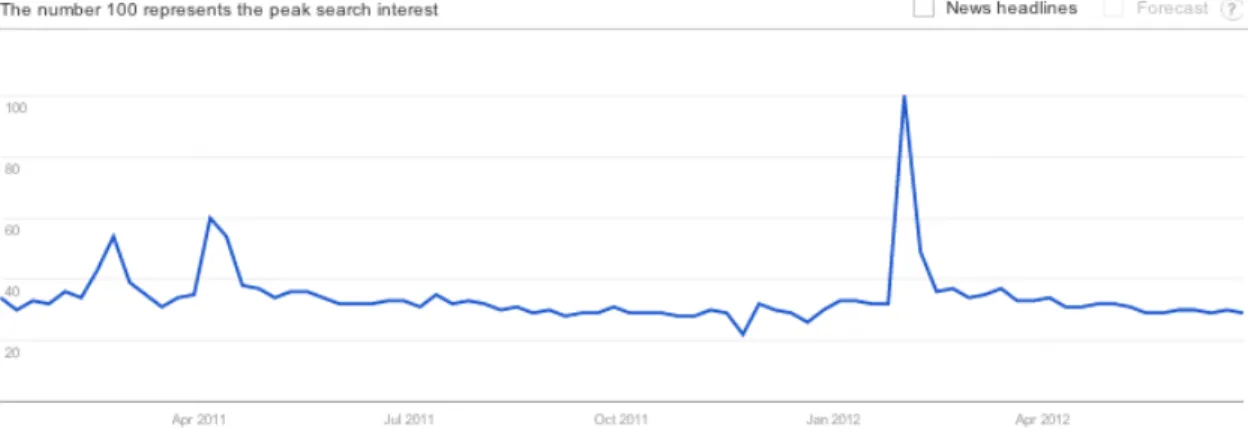
1. Google Trends output for Planned Parenthood, 2011-2012 ... 21
2. Breakdown of materials for qualitative analysis ... 21
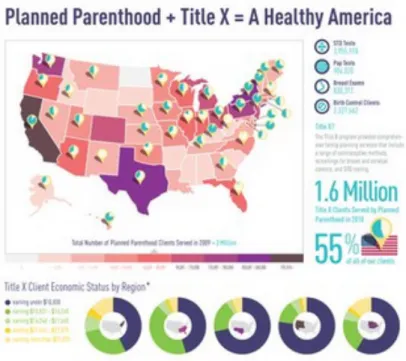
3. Planned Parenthood Title X Infographic ... 33
4. How-to call your Congressperson video ... 34
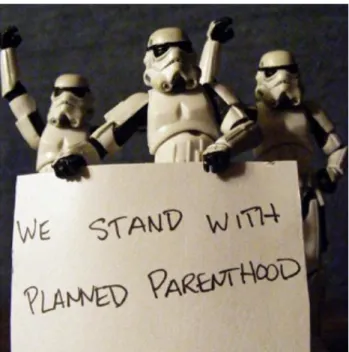
5. PPFA-created content to encourage user-generated content ... 38
6. Facebook post of PPFA staff members at Komen race ... 45
Introduction
On March 7, 2011, Planned Parenthood Federation of America (PPFA) posted to Facebook and Twitter a photo of a shiny, large, hot-pink chartered bus with the words “I Stand With Planned Parenthood” written on its side in large white letters (Planned Parenthood, 2011a). Also on the side of the bus, in the same huge white letters, statistics such as “4,000,000 STD tests” and “1,800,000 Cancer Screenings” were displayed. The caption of the photo said, “We got a pretty loud bus so that the truth about Planned Parenthood could be heard wherever we go!” The photo also was accompanied by a hyperlink forwarding users to a brand-new website entitled the “Planned Parenthood Truth Tour,” which included a blog detailing the bus’ upcoming destinations, fundraising appeals, and a link to another site, raiseyourhand.org, which aggregated photos of users physically raising their hands in support of PPFA (Planned Parenthood, n.d.-a). In the weeks that followed, PPFA used the bus as the centerpiece of events in many different cities,
highlighting each event on Facebook, Twitter, and YouTube. Articles about the bus tour were featured on liberal and conservative blogs such as The DailyKos (e.g. Eclectablog, 2011) and LifeSiteNews (e.g. Jalsevac, 2011), respectively. The tour also received coverage by local and national television and radio outlets. According to one of PPFA’s social media
8
2013). This included “tweets and updates and things like that for people who weren’t with us to . . . follow along and track the process.”
The “Planned Parenthood Truth Tour” was not a standalone publicity event, but rather part of a larger, three-month-long, coordinated campaign to quash an effort by Republicans in the United States Congress to eliminate millions of dollars in federal “Title X” funds that PPFA had been receiving annually to provide family planning services since the 1970s (Aries, 1987). PPFA’s effort included a variety of tactics, ranging from traditional lobbying of politicians to the aggregation and dissemination of user-generated online content that showcased public support for PPFA.
PPFA’s integration and use of social media to connect online supporters to live events shows how the organization was attempting to reach its audience in ways that traditional media—radio, television, and newspapers—do not provide. This campaign reveals the way in which a long-standing organization was using new media to mobilize supporters, influence politicians, and garner attention in a media environment that includes both traditional media as well as blogs and social media sites like Facebook and Twitter.
This thesis offers an inquiry into how long-established social movement organizations (SMOs) – such as PPFA – adapt to new media environments, specifically when faced with political threats. This research shows how these organizations internally prepare social media tactics and how they implement these tactics in response to political threats. This research also shows how responding to such threats can affect an organization’s capacity to engage in future conflicts. This research highlights the interaction within large organizations between traditional and digital communication teams. Finally, this thesis focuses on how
Much of the scholarship on the media strategies of SMOs has focused on how these organizations frame issues (Burns, 2005; Ferree, Gamson, Gerhards, & Rucht, 2002;
Rohlinger, 2002, 2006). More recently, scholars have written about the strategies of digitally native, online advocacy organizations like MoveOn.org (Carty, 2011; Karpf, 2012). There is a lack of research, however, on how long-standing organizations adapt to new media
environments, specifically in response to political threats. Karpf (2012) explains how single-issue legacy organizations rely on “armchair activists” (p.37) whose only interaction with the organization is the process of making annual donations. By contrast, internet-mediated political organizations such as Moveon.org engage regularly with supporters to request small donations or specific actions based on the day-to-day happenings in the political
environment. PPFA’s implementation of tactics like the “Planned Parenthood Truth Tour” and other cross-media strategies suggest that older SMOs are attempting, via new media, to take advantage of enthusiasm and interest from publics as they arise.
This thesis proceeds in four parts. First, it examines the literature on social movement organizations, abortion politics, and the use of new media to influence the political system. It then discusses the methods for this case study, which include in-depth interviews with PPFA staff and the examination of press releases and social media data. To conclude, it discusses the implications of these findings for scholarly understandings of SMOs and their
Literature Review
The study of new media and political processes is relatively new in comparison to the broad disciplines of political sociology, political communication, and political science with which it is often placed. Early scholarly discussions in this area focused on the potential for new media to disrupt long-standing political processes and institutionalized bureaucracy (cf. Tambini, 1999; Witschge, 2004). Many of them postulated that technological determinism and new media would flatten organizational structures and usher in a new era of deliberative democracy. Scholars continue to debate the validity of these claims (cf. Dahlberg, 2007). This review omits these discussions of new media’s potential and focuses on empirical studies of new media practices and their relationship to political interest groups and social movements. It also provides an overview of relevant literature about advocacy organizations, abortion politics, and online public relations.
Social Movement Organizations and Political Information Cycles
Rohlinger, 2002, 2006). However, some scholars have criticized this focus on framing as insufficient in explaining movement success. Ryan & Gamson (2006), argued that framing, while integral to movement strategy, is only effective in the context of movement building strategies such as “acquiring resources, developing infrastructure and leadership, analyzing power relations, and planning strategy” (p. 13). Scholars have shown how an organization can gain access to media over time, by establishing itself as an expert on a particular issue (Ryan, Anastario, & Jeffreys, 2005) or it can insert itself (or be inserted into) the media environment based on an issue related to the organization’s goals, assuming that issue is deemed to be newsworthy by the media (Ryan, 1991). Recent scholarship on contentious events, however, has shown that a “hybrid media system” (p. 5), created by interplay between the norms of online media and those of traditional journalistic organizations, has opened up opportunities for other actors, including activists, to gain access to and influence media (Chadwick, 2011a).
According to Chadwick (2011b), the production of news, prior to the popularity of new media, used to be almost completely based on interaction between media and political elites. While these actors continue to hold powerful positions in the media environment, the interplay between bloggers, citizen activists, politicians, and other actors has created
12
contentious event in order to achieve their political goals. In each of these cases, actors were able to extend the life of these news events to advance particular causes. While both
Chadwick (2011a) and Anderson (2010) have discussed the role of activists and other actors in influencing news production around contentious events, there has been minimal
scholarship exploring the role of formal SMOs in such episodes.
New Media and Mobilization
Several scholars have discussed ways in which activists have harnessed new media to increase participation in movement activities. These writings have focused primarily on large-scale protest events or on digital activism taking place in new media environments. Much of the research in this area has discussed the “Battle of Seattle,” in which activists in a global justice movement used new media to organize massive protests at the annual World Trade Organization meeting in 1999 (Bennett, 2003; Bimber, 2003; Kahn & Kellner, 2004; L. Lievrouw, 2011). Scholars discussed the movement’s mobilization tactics, which included the use of emails and websites to coordinate simultaneous demonstrations, as well as well as ways in which movements used new media to influence traditional media. Recently, scholars interested in technology and social protest have focused their studies on the “Arab Spring,” in which citizens engaged in collective action used social media technology as part of their mobilization tactics against repressive governments in the Middle East (Bennett &
Segerberg, 2011).
culture images or video are repurposed for societal critique. In the context of political organization and social movements, Lievrouw also discusses “mediated mobilization,” (p. 25) in which individuals use technologies like social networking sites and email listservs to build and maintain online networks based on shared goals and values, eventually mobilizing these networks to enact the desired social change.
Scholars interested in studying the use of new media by social movement organizations have focused on the emergence of “multi-issue, Internet-mediated
organizations” (Carty, 2011) that use digital media to mobilize supporters around multiple issues over long periods of time with a small staff and low overhead. Karpf (2012) argued that new media have allowed movement organizations to operate with such limited staff and overhead, reducing the costs of collective action and resulting in new types of political expression. In terms of mobilization tactics, Carty (2011) highlighted MoveOn’s successful online fundraising appeals, two-way communication with members via online forums, and increasing awareness of public issues as emblematic of this new type of organization. While these studies provide insight into new types of advocacy organizations that have emerged in recent decades, they do not focus on long-standing advocacy organizations that combine traditional and new media advocacy tactics in order to shape public opinion and influence public policy outcomes.
14
mobilization and fundraising purposes. Recently, Bimber, Flanagin, and Stohl (2012) narrowed this gap in a study of three organizations: The American Legion, the American Association of Retired People (AARP) and MoveOn. Indeed their work does provide an examination into the digital media strategies of two long-standing organizations: The
American Legion and AARP. However, neither organization is particularly contentious nor is either closely affiliated with a particular social movement (though one might argue that AARP is aligned with the movement for socialized medicine and welfare due to its support for Medicare and Social Security). Using a broad definition of collective action—
“associating voluntarily with others who share interests or identities, and it can mean
participating in solving problems at the local, national, or global scale” (p. 20)—Bimber et al. (2012) challenge the idea that traditional, membership-based civic institutions, such as
AARP and the American Legion, are failing or being replaced by Internet-mediated groups such as those discussed above. Within the extant literature there remains a gap in scholarship around the use of new media technology by long-standing social movement organizations.
Technology Enactment
The recent works by Karpf (2012) and Bimber, Flanagin and Stohl (2012) discussed above do mention briefly how organizations learn to use new technology in long-standing organizations. Organization learning surrounding the implementation of new technologies has also been examined with a systems perspective (e.g. Norris & Thompson, 1991). Some scholars argue that the study of failures and successes of public sector entities is grounded in early theories of organizational development such as those theories of organizational
1965). Kraemer & King (1986) found that the implementation of information systems in was often “mediated by organizational concerns for maintaining control and stability”. In his 1995 book, Computer Technologies and Social Issues, (Garson, 1995) discussed how
organizational elements and human factors, such as conflicting priorities between employees focused on minimizing costs and those focused on maximizing service, could potentially affect the implementation of information systems.
Fountain (2001) identified specific issues with organizational enactment of
technology. She wrote that as a technology goes from objective to enacted, it passes through two organizational filters: organizational form, including hierarchy, accountability, rules, existing processes, behavior patterns and norms, and institutional arrangements including organizational culture, formal rules, and social patterns. These filters affect the design, development, implementation, and most importantly, the use of the technology. Regarding the use, she suggested that organizations tend to “implement new information technology in ways that reproduce, indeed strengthen, institutionalized socio-structural mechanisms even when such enactments lead to seeming irrational and ostensibly sub-optimal use of
technology” (p. 57). Abortion Politics
16
spots and lectures. Staggenborg (1991) explained how affiliation with particular persons or groups, such as the Clergy Consultation Services—a group of rabbis and clergy members who supported repeal of abortion laws—provided legitimization to the abortion rights
movement in the late 1960s. She also noted how the abortion rights movement capitalized on media coverage of crises that inherently changed the discourse over abortion to one focused more narrowly on women’s health. These crises included a rash of birth deformities caused by the medication thalidomide and an outbreak of rubella, in garnering public support for their cause.
As mentioned above, most scholarly discussions of strategy by SMOs in the pro-choice movement have focused on framing. This is also true among scholarly works on abortion politics. According to Burns (2005), the abortion rights movement is extremely effective at maintaining its favorable status quo because it frames its causes with a “moral worldview,” (p. 16) an uncompromising perspective based on a particular value or ideal. He explains how this frame, rooted in feminism, is effective in mobilizing support because it links abortion restrictions to things many people find difficult to support, such as exertion of outside control over a woman’s body or misogyny. Rohlinger (2002, 2006) examined how movement organizations modified their frames for particular political environments and how these environments affected the way in which they interacted with allied organizations. To date, scholars who study the pro-choice movement have not looked at how related SMOs use new media to achieve policy goals or to influence public opinion. This thesis will contribute to scholarly knowledge of SMOs by revealing ways in which they use new media to prep for and subsequently leverage moments of political contention. It shows how, through an
Methods
To explore in-depth a long-standing SMO adapting to a new media environment, I compiled multiple sources of evidence to create a case study. Social movement research regularly has utilized case studies when the objects of study are individual movements and movement organizations (Lofland, 1996; Snow & Trom, 2002). The case study method also is regularly employed by scholars of public relations to explore the motivations of
organizations engaging in public relations strategies (Grunig & Hunt, 1984). Case studies offer the opportunity to explore social phenomenon in rich detail through the “use and triangulation of multiple methods” (Snow & Trom, 2002). The object of analysis for the case study is Planned Parenthood Federation of America (PPFA), starting with its campaign to protect its federal funding in 2011, discussed above, through the end of the conflict over its exclusion from the Susan G. Komen Foundation’s grant program in 2012. One might argue that these two events should constitute two separate cases. This argument ignores the aspects of organizational learning and adaptation that can be garnered from investigating an
organization’s tactics in two separate events, given that very little time passed between the two events. Also, scholars regularly have utilized broad boundaries in determining objects of case studies, so long as the study is indeed bounded in a particular time and space (Feagin, Orum, & Sjoberg, 1991; Ragin & Becker, 1992).
Komen Foundation was threatening to deny PPFA participation in its grant program; (2) a one-hour panel discussion between five members of PPFA’s staff from the South by
Southwest (SXSW) 2012 Digital Media conference; (3) print media articles from these same time periods; (4) press releases from PPFA and from its political arm, Planned Parenthood Action Fund; (5) posts from PPFA’s Facebook fan page.
In February of 2012, two open-ended, semi-structured interviews were conducted with two of PPFA’s communications staff members. During the time periods focused on in this study, one subject, Angela Martin, held a director-level position working in traditional communication and the other, Mary Stevens, worked on development and implementation of PPFA’s social media strategy. Participants in this study were promised confidentiality. As such, the names mentioned above and throughout the paper are pseudonyms. In addition to their statements lacking identifiable attribution, they also could ask that statements be “off the record.” This distinction allowed them to provide me with context for their statements while also maintaining their confidentiality in regard to comments that would personally identify them as interview subjects. The Institutional Review Board of the University of North Carolina at Chapel Hill granted this proposal expedited review and approved the study along with consent forms for both in-person interviews and those conducted via video chat services.
20
corroborated by interview participants or by secondary sources such as the media described above.
In order to map the contours of this case, I did a Google Trends search to find out when this issue was salient in the public’s mind (see Figure 1). Google Trends provides data on how often a search term is entered relative to Google’s total search volume. For the purposes of this study, I searched for instances of “Planned Parenthood” between July 2010 and December 2012. This provided me with two specific periods during which the public had increased interest in PPFA: December 19, 2010 through May 7, 2011, and January 28, 2012 through February 18th, 2012. To provide context for the organization’s media activity outside of these moments of contention, I broadened these periods to: (1) November 2, 2010 the day of the midterm elections, when the Republican Party took control of Congress, through April 30, 2011, twenty-two days after the proposed budget that would have cut Title X funds failed to pass the Senate; (b) January 31, 2012, the day that the Komen controversy broke in the popular press, through March 1, 2012, twenty-five days after Komen foundation altered its new grant requirements to include PPFA. The remaining data sources—newspaper articles, press releases, and Facebook posts—were collected over these two time periods.
Figure 1. Google Trends output for Planned Parenthood, 2011-2012
marginal notes were made on common language, themes, and messaging to track patterns and assure a thorough understanding of the order of events and intended message of each item.
In some cases, interviews and Facebook posts provided links to additional PPFA web properties, such as event-specific blogs, microsites, and social media sites, which were incorporated into the study and subsequently analyzed.
Period 1 November 2, 2010 –
April 30, 2011
Period 2 January 31, 2012 –
March 30, 2012.
News Articles 338 150
Press Releases 15 PPAF (Action Fund) 69 PPFA 7 PPAF (Action Fund) 17 PPFA
Facebook Posts 387 173
Case Analysis
This section, presented in chronological order and with corresponding themes, outlines PPFA’s actions during three specific periods. The first part focuses on PPFA’s development of new media strategies in the absence of a specific political crisis. The second part focuses on its application and evaluation of these strategies in a political conflict over its access to government funds. The third part focuses on PPFA’s strategies during a conflict with another organization, with a specific focus on changes made to these strategies based on the previous crisis. Each part shows both the growth of the organization’s new media
strategies and its allocation of resources for new media activities.
Capacity Building
Parenthood, 2009a). PPFA also linked to several documents, including a press release on its website, instructions for contacting U.S. senators, and a petition opposing the potential provisions. PPFA also authored identical posts on left-leaning blogs like The Daily Kos (Planned Parenthood, 2009b) and Feministing (Planned Parenthood, 2009c). These identical posts are representative of PPFA’s strategies for social media sites like Facebook and Twitter at that time. PPFA’s staff saw those social networking sites as vehicles for driving users to the organization’s website and for disseminating more crafted, formal press releases (M. Stevens, personal communication, March 14, 2013).
In November 2009, the United States House of Representatives passed the Stupak-Pitts Amendment, which aimed to exclude those private healthcare plans that provided abortion coverage from the insurance exchanges being proposed in the ACA (Friedman, 2009). In a press release, PPFA argued that the amendment would “undermin[e] the ability of women to purchase private health plans that cover abortion care, even if they pa[id] for most of the premium with their own money” (Planned Parenthood, 2009d). In the weeks and months that followed, PPFA was an extremely audible voice in opposition to such
amendments and ultimately supported the passage of the final version of the ACA, which included coverage for reproductive health services (Protection & Affordable Care Act, 2010). As PPFA worked to mobilize its supporters toward these ends, staff working on new media for PPFA argued that the organization’s Facebook page had more potential for interacting with supporters than it was being utilized for (M. Stevens, personal communication, March 14, 2013). Stevens remarked:
24
then they would care about what happened to us in the event of something going down with their local or federal [health] policy.
She noted that many members of PPFA’s management saw social media, and Facebook in particular, as “something that kids do . . . that can’t make a change or impact.”
Staff members at PPFA’s direct response team used email to disseminate messages, encourage supporters to contact legislators, and to fundraise (A. Martin, personal
March 14, 2013). Between these arguments, and research showing that social media was ineffective at driving up significant gifts, PPFA moved away from using its social media properties for regular fundraising and used it to focus on community building and information dissemination.
26
completely managed by the digital team (M. Stevens, personal communication, March 14, 2013). Though PPFA staff had installed a Twitter application on Richards’ mobile phone and encouraged her to send tweets herself, she had not made it a priority to do so herself.
While the digital team worked to add more content to PPFA’s social media properties, it still found itself struggling to prove the value of social media to the
organization’s upper management (M. Stevens, personal communication, March 14, 2013). Digital team members worked to educate management about the value of social media in general by gathering and sharing articles and testimonials from other organizations that had more fully committed to the technology. Despite this, the team struggled to garner additional resources from PPFA’s management. It was clear that in order to prove the value of social media to the organization, the team had to put more work into developing content and interacting with users online. Yet, doing so required additional staff members that would only be provided once management had been convinced of the value of social media to the organization. The team got around this issue by hiring two temporary interns. The interns did not represent to management the cost and commitment that full time employees did. Also, due to their age, the interns were predisposed to a level of familiarity with Facebook and Twitter (see Palfrey & Gasser, 2008 for a discussion of digital natives). The digital team also found internal allies in Planned Parenthood Online (PPO), the division of PPFA responsible for developing and maintaining the technical aspects of the organization’s web presence. PPO provided the digital team with technical support, such as updated graphics, allowing them to create more attractive Facebook and Twitter pages.
Stevens, personal communication, March 14, 2013). For example, Stevens noted that simply relying on high numbers of retweets, the online messages reposted on Twitter by third parties, provided only a partial view of online activity. She said, “sometimes we would have 100 retweets but they were retweets by (PPFA’s opponents).” The social media team came to rely more on soft metrics, including public online conversations that ended well, participation in online communities, and connections with allies from other organizations. By the time the ACA passed, the amount of activity taking place on PPFA’s social media properties had grown to a level where organizational leaders were starting to recognize these media as effective in facilitating engagement with supporters.
PPFA’s attempts to develop relationships with online communities were not limited to its burgeoning efforts on social media. Beginning in 2008, PPFA decided to focus specifically on building relationships with one of the ethnic communities that made up the majority of their health clinic users, Latinos (Planned Parenthood, 2009e). The
communications team expanded to include a new full-time position dedicated to this
community and launched their first Latino Outreach Initiative, aimed at increasing awareness among Latinos about reproductive health risks and the PPFA brand (A. Martin, personal communication, February 21, 2013). In its early stages, this initiative targeted Latinos primarily via print media and traditional practices of relationship building. PPFA staff built relationships with editors and reporters, helping to place stories and editorial pieces about reproductive health in prominent Spanish language newspapers, including El Diario, La Opinión, and El Sentinel. They also worked on community health projects aimed specifically
28
online spaces, culminating in a Spanish-language version of the Planned Parenthood website. PPFA employed digital outreach specialists to blog about reproductive health from a Latino perspective in online spaces, such as Being Latino, where Latinos regularly discussed cultural and entertainment issues (Bryant et al., 2012). PPFA connected with users on this site by contributing articles like, “OMG, My Girlfriend is Pregnant” (Lazzaro, 2011a) and “Ricky Martin: Being Latino and Gay (Lazzaro, 2010). In 2010, when immigration rights played a major role in several elections in the southwestern United States, PPFA supported (both online and in person) immigration reform, developing allied communities in the process.
In 2010, PPFA expanded this outreach to African Americans. PPFA hired a Director of African-American Media who originally was brought on to build relationships specifically with traditional urban, black media, including radio, magazines, and local newspapers (M. Stevens, personal communication, March 14, 2013). Quickly, however, PPFA realized that African-American communities were extremely active in digital spaces. Staff compiled a list of bloggers who were well connected within the black community, writing for online
Though PPFA’s staff members did not know it at the time, their work building relationships and maintaining ties with online communities, combined with the tactics developed throughout the fight over the ACA, particularly those related to social media, would play an instrumental role in the organization’s battle to retain federal Title X funds in 2011.
Response to a Threat
This section explains how PPFA staff members applied, in response to a threat, the new media tactics they had been developing over the previous two years. They also worked to leverage the relationships they had been building with PPFA’s partner organizations, social media followers, and with African-American and Latino online communities. This allowed the organization to capitalize on the threat by increasing fundraising and
mobilization efforts via email and social media.
30
advice to undercover actors portraying a pimp and an underage prostitute (e.g. Schmidt, 2011).
Republicans in Congress, led by Representative Mike Pence of Indiana, used these videos to attack PPFA’s reputation as a health organization and to buttress a burgeoning campaign among Republicans in the U.S. House of Representatives to eliminate federal Title X funds, a move that would effectively deny PPFA and other health providers from receiving federal funds to support family planning services (Eldridge, 2011). PPFA had been receiving these funds since the passage of the Public Health Service Act in 1970 (Aries, 1987).
On February 18, the House voted (240-185) to eliminate Title X funds, advancing the issue to the U.S. Senate and moving the federal government one step closer to effectively defunding PPFA (Mascaro & Hennessey, 2011). When the House vote finally happened, it was not a surprise to PPFA’s communications strategists (Bryant et al., 2012). Within minutes of the congressional vote, PPFA released a statement by PPFA President Cecile Richards accusing House Republicans of assaulting women’s “primary and preventive health care, including lifesaving breast and cervical cancer screenings, annual exams, family
planning visits, birth control, HIV testing, and more” (Planned Parenthood, 2011d).
The next day, PPFA’s digital team posted a 450-word note to their Facebook wall from PPFA President Cecile Richards (Richards, 2011). Despite the fact that the digital team had previously resisted fundraising via social media, the note asked for emergency
contributions to Planned Parenthood Action Fund. According to Stevens, the digital team felt that “[this] was the time to make exceptions, because . . . [there’s] a reason… [this] happened and we need your help.” The consensus among members of the digital team was that their decision to resist regularly fundraising via social media in favor of online community building had created a sense of trust between the organization and the community that allowed them to make these large, important, requests at a critical time.
In addition to fundraising via social media, PPFA also capitalized on these events by increasing their email-based fundraising efforts (A. Martin, personal communication,
February 21, 2013). The direct response team found that, despite the donor complacency that comes with having an allied democratic president in office, the threat to defund PPFA had galvanized supporters to donate money to the organization. Martin said, “If you think about the fact that the President was a Democrat but all of a sudden you have these Republicans going crazy…from a fundraising perspective that totally just changes the game.”
Historically, PPFA has positioned itself as a health provider first and an abortion provider second when lobbying (Rohlinger, 2002). However PPFA’s research showed that its most-vocal supporters, who both volunteer and contribute financially, still saw PPFA
32
simultaneously re-educated the base about the breadth of PPFA’s services. Martin explained these goals:
It really was a re-education of our base—of how to talk about how vital we were while also reassuring them that we’re still going to stand up for abortion and provide those services. It’s a really delicate balance.
As they had done while supporting the ACA, PPFA’s digital media team supported this effort by producing and disseminating infographics that, like the team’s social media posts, broke down complex issues into simple, palatable messages for PPFA's online
audience (see Figure 4). In addition to and in coordination with Facebook and Twitter, PPFA also used YouTube as a medium for directly sending out its messages. On February 14, four days prior to the House vote to eliminate Title X funds, Planned Parenthood’s YouTube channel had featured a video entitled “Stand With Planned Parenthood.” The short, simple video featured PPFA President Cecile Richards explaining the organization’s position on the upcoming House vote over Title X funds (Planned Parenthood, 2011e).
their Congresspersons via phone, and show support for PPFA and continued federal funding of family planning services. PPFA also posted videos of celebrities, such as Scarlett
Johansson and Gwyneth Paltrow stating their support for the organization. (cf. “Stars” in Luker, 1984).
Figure 3. Planned Parenthood Title X Infographic
The sense of urgency inherent in responding to political threats also revealed tactical differences between PPFA’s traditional media and digital media teams. Immediately after the release of Live Action’s controversial video, PPFA’s digital team began to receive messages on its Facebook page asking for an explanation of the incriminating content. The vice
34 Figure 4. How-to call your Congressperson video
was completed (Bryant et al., 2012). Stevens recalled the team’s opposition to this plan: Things are happening so quickly online and it’s not only my job to get the message out but to advocate for that type of [instantaneous] communication . . . . Our community was dictating it, because we had been there for them up until and then when something really hits the fan for us to just go radio silence would just be devastating.
In the end, PPFA balanced the digital team’s need to respond immediately with the
communication department’s need to properly craft the message. Staff members posted the following message:
Planned Parenthood insists on the highest standards of care, and safeguards the trusted relationship we have with patients, families and communities. What appears on edited tapes made public today is not consistent with Planned Parenthood’s practices, and is under review (Planned Parenthood, 2011g).
an active and responsive member of the community while also communicating the most effective message it could at the time.
As the crisis progressed, PPFA’s upper management began to see more benefits of engaging more directly with constituents on social media (M. Stevens, personal
communication, March 14, 2013). For example, they realized that they could test the efficacy of potential outreach strategies on the organization’s Facebook page before committing to larger, traditional media campaigns. In mid-March, PPFA’s upper management became interested in integrating social media more closely within the organization. The most significant change that happened at this time was that Cecile Richards began to post messages on her Twitter account. This served not only to add authenticity and voice to her Twitter account, but also legitimized social media as a practice within the entire Planned Parenthood organization.
Simultaneously, the digital team was pushing out testimonials by PPFA employees about positive experiences working side-by-side with Planned Parenthood’s supporters and photos of like-minded supporters holding “I Stand with Planned Parenthood” signs in front of Representative Pence’s office in Muncie, Indiana (Planned Parenthood, 2011h). Two days later, PPFA posted another video on YouTube showcasing those senators that were “standing with Planned Parenthood” (Planned Parenthood, 2011i).
36
members of the public who were being bombarded with updates urging them to call their senators on behalf of PPFA. One female staff member was urging her less-committed friend to call her senator and even showed her how easy it was. It contained melodramatic lines like “If Planned Parenthood tells me one more time to call my Senator …” and “Don’t you know how important it is?” Despite posting this video over a month into the campaign, it was picked up by the online magazine Salon with the headline, “Meet the Stars of the Planned Parenthood Movement” (Williams, 2012). These attempts to build direct connections between supporters and the faces and voices of PPFA were visible beyond the digital media strategists, eventually reaching the top of the organization (M. Stevens, personal
communication, March 14, 2013).
The digital team also utilized social media to notify online users about PPFA’s traditional media actions, including upcoming interviews with Cecile Richards (M. Stevens, personal communication, March 14, 2013). Each day they released varied content, including celebrity endorsements, requests for donations to the action fund, photos of rallies, or open letters to congresspersons. PPFA also was able to leverage their robust social media traffic to increase their potential for visibility in television media. For example, a repost on PPFA’s Facebook of a 10-minute interview with Cecile Richards on MSNBC’s The Rachel Maddow Show provided direct and indirect benefits to PPFA. First, their thousands of followers could
social properties. This allowed PPFA to show, in a measurable way, Richards’ value in terms of increased web traffic for the networks, which they could use to lobby for airtime on other programs and network.
In addition to reaching out to supporters, the digital team also worked with supporters and volunteers who were creating their own content. Using Facebook, PPFA setup a public photo album to showcase supporter-created media (Bryant et al., 2012). These included photos of supporters at rallies as well as protest art, usually created from photos found online and supplemented with additional text. The digital media team also reposted content, such as testimonials about positive experiences at PPFA clinics, created by online users in support of PPFA (M. Stevens, personal communication, March 14, 2013). The digital media team also participated in the creation of similar items. One day, two members of PPFA’s digital team walked around the office and found a variety of pop-culture items, such as Star Wars® figurines, and took photos of them holding small pieces of paper that said “I Stand With Planned Parenthood” (see Figure 5). They then created an online photo album for users to submit similar pop-culture items. Occasionally, users who opposed PPFA uploaded negative user-generated content, but these instances were few and far between and PPFA’s online community of supporters immediately responded to such behavior. For the most part, PPFA staff members did not delete negative content from their social media pages. For them, allowing an online community to mediate negative posts created a more genuine and
trustworthy environment than one in which unfavorable messages were deleted or responded to by the organization itself.
38
Figure 5. PPFA-created content to encourage user-generated content
As the debate over Title X funding moved into its third week and PPFA staff members still had no idea when the Senate vote would be, they became concerned that the tactics and messages they had been using to encourage participation were not effective enough to continue to keep supporters invigorated for even more time (Bryant et al., 2012). In daily meetings, staff members discussed new ideas for mobilizing supporters. On March 3, Live Action, the anti-abortion group that had previously released the undercover videos of PPFA employees, announced that on March 7 their staff would begin a four-day bus tour called “Women Speak Out: Defund Planned Parenthood” (Brown, 2011). The tour was to travel through 13 congressional districts, feature local pro-life speakers and thank
congressional representatives for their votes to defund PPFA. Stevens recalled a strategy meeting in which employees were discussing how to respond to Live Action. “They’ve got a bus and they’re spreading all these lies – and we need…we should get a bus and tell the truth,” a senior staff member said.
On March 7, both as a response to Live Action, and as a means of keeping their issues front and center, PPFA sent their own bus on the “Planned Parenthood Truth Tour” (Planned Parenthood, 2011j). As explained in the introduction of this thesis, PPFA’s bus tour, which followed the Live Action tour to all of its pre-determined locations, was
40
that featured a companion blog (istandwithplannedparenthood.blogspot.com), which served as an online diary of the bus’ past events and a calendar of upcoming events while also showcasing statistics about PPFA’s services, donation opportunities, and videos and photos of supporters interacting with PPFA staff who were travelling on the bus.
PPFA had planned to send its bus only to those locations where Live Action had setup its own events (M. Stevens, personal communication, March 14, 2013). As the tour progressed, however, PPFA found the bus to be effective beyond these original purposes. “People really liked the idea. They thought the bus was cool. People always wanted to come onto the bus,” said Stevens. “It turned into a way to proactively meet with people who were using our services or benefitting from our services or definitely had a stake in the game.” Specifically, PPFA staff members found the bus tour was allowing them to connect with young, politically active people who were representative of the new direction that the
organization was trying to head. The tour also allowed staff members to gather signatures for petitions, hand out t-shirts, and take photos of individuals for the ongoing “I Stand with Planned Parenthood” campaign on social media.
In late March and early April, conflict over Title X funding continued to be a major part of political conflict in Washington, D.C. As Democrats and Republicans both dug in their heels over funding for PPFA, it seemed plausible that the government would shut down, as the issue was attached to a continuing resolution that was necessary to fund ongoing government services. On April 7, Cecile Richards sent out a press release chiding the
and Twitter. On April 9, the Senate voted (58-42) not to cut Title X funding and defund PPFA (Steinhauer, 2011).
Organizational Learning
During PPFA’s conflict over Title X funds in 2011, its staff members had the opportunity to test, hone, and evaluate, in a situation of real political urgency, the digital media tactics they had been developing prior to the passage of the Affordable Care Act (ACA) in 2010. In terms of fundraising, they had found success, defined in this case by record numbers of donations, using email and social media to solicit donations from online communities during a time of financial crisis. The length of the conflict had also shown them the benefits of and tactics for garnering media coverage over an extended period of time. They also learned that relationships they built with online communities in times of political calm could be leveraged during times of increased political conflict. This section explains how PPFA staff members used these skills to navigate a conflict with an allied organization.
42
dissemination of non-political health messages to local affiliates, each of which had their own Facebook page. After the events surrounding Title X, PPFA’s national office established new “Planned Parenthood Health” social media pages to highlight specific health messages promoted by the national organization. The older national accounts, each of which had millions of followers, were re-named to specifically focus on Planned Parenthood Action Fund, the advocacy arm of PPFA. Having convinced PPFA’s upper management of the value of social media, the digital team hired several more staff and formed two teams, one for each social media program. Going forward, health-focused social media was to be run out of the New York office while the media focused on political advocacy would be run out of Washington, D.C.
On January 31, 2012, eight months after the potential government shutdown over PPFA’s Title X funding, Susan G. Komen for the Cure, the largest non-profit funder of breast exams in the United States, announced that its updated grant-making policies would exclude PPFA from receiving annual grants that PPFA and its affiliates had been receiving for years (Harris & Belluck, 2012). As with the Title X controversy, this conflict was not a surprise to PPFA communication staff members, who already had heard this news via phone days before and were ready with a public response (A. Martin, personal communication, February 21, 2013). In fact, PPFA’s upper management had known for months that Komen’s board of directors was considering the policy change.
to control the release of the news, PPFA identified and provided in advance to a news reporter specific research about the impact of Komen’s decision. As soon as the news broke, PPFA’s staff sent out a formal press release from PPFA President Cecile Richards, an email to its supporters entitled “Disappointing news from a friend,” and posted a copy of the message on its social media site (Gray, 2012). It read:
We are alarmed and saddened that the Susan G. Komen for the Cure Foundation appears to have succumbed to political pressure. Our greatest desire is for Komen to reconsider this policy and recommit to the partnership on which so many women count.
By sending out this message, PPFA was telling the public that Komen, an organization built around support women’s health, was sacrificing its cause for a political issue.
The day after the Komen story broke, an article by Richards appeared on
Huffingtonpost.com (Richards, 2012). In it, she listed the large numbers of breast exams and mammogram referrals that Komen funds allowed PPFA to provide over the prior five years. She told supporters looking to support PPFA that they could sign an open letter criticizing the Komen foundation, contribute to the PPFA Emergency Fund, and make an appointment at a PPFA clinic to have a breast exam. This combination of activism, fundraising, and concern was followed by a testimonial, collected via social media during the Title X conflict, by a grateful patient who had had a lump in her breast biopsied by PPFA doctors and paid for by Komen funds (Bryant et al., 2012). Komen did not respond to emails or phone calls (CNN Political Unit, 2012) but denied on its Facebook page that its actions were politically
44
PPFA staff members were concerned about the public relations implications of being attacked by Komen, one of the largest women’s health organizations in the United States (A. Martin, personal communication, February 21, 2013). Yet PPFA staff also saw these events as opportunities to again educate the base about PPFA’s services and, more importantly, to expand its supporter list and to fundraise from the still-invigorated supporter community. As they had done in response to the Title X conflict, PPFA staff immediately activated their fundraising networks via email and social media. They called on supporters to donate to a Breast Health Emergency Fund, aimed at “offset[ing] the support that 19 local Planned Parenthood programs [stood] to lose from Komen” (A. Martin, personal communication, February 21, 2013). As it became clear that PPFA was winning a large share of public opinion during this conflict, its staff made more aggressive communication choices. After one day, PPFA had recouped, via donations, the entire dollar amount that Komen had
withheld. In the 24 hours after the Komen funding news broke Tuesday, 6,000 online donors contributed a total of $400,000 (Kliff & Sun, 2012). On an average day, the group receives 100 to 200 donations.
many of whom had strong relationships with PPFA’s affiliates in their local areas. Many of the Komen affiliates disagreed strongly with their national organization’s actions toward PPFA (Condon, 2012). As such, according to Martin, PPFA had to:
tread a very fine line of saying that Komen does really great work and it’s too bad that their leadership has made this decision because locally they’re doing such great work. We had to manage their internal politics as well as our own because we didn’t want to in any way defame the local affiliates, who, if they had their choice would not have cut off funding.
Figure 6. Facebook post of PPFA staff members at Komen race
While Komen remained quiet, PPFA began posting on Facebook links to a supporter-written letter entitled, “I Still Stand with Planned Parenthood” (Planned Parenthood Action, 2012). The letter closed with the following lines:
Know this: When you go after Planned Parenthood and the people they serve, you go after ME. I stand with Planned Parenthood. I stand with them against anyone who wants to stop women from receiving the health care they need. I stand with them today, tomorrow, and for as long as I need to.
46
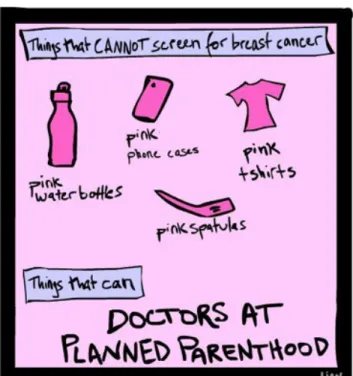
Unlike the Congressional conflict, in which PPFA needed to regularly educate and actively mobilize its supporters, the Komen situation showed that PPFA’s online community remained invigorated and had been “primed during the two-month (Title X) campaign” (Bryant et al., 2012). PPFA supporters flooded Komen’s Facebook page with negative comments. Many people wrote posts on Komen’s Facebook page saying that they were donating to PPFA money they had originally planned to donate to Komen and encouraged others to do the same. Other users used protest techniques such as “culture jamming” (L. Lievrouw, 2011), using Komen’s popular “passionately pink” line of retail items to mock the organization (see Figure 7). Hackers even clandestinely made changes to Komen’s home page, adding a text box that said, “Help us run over poor women on our way to the bank” (Wire, 2012). Planned Parenthood allies, including Credo Mobile, began running paid advertisements on Facebook urging users to “Tell Komen Not to Throw Planned Parenthood Under the Bus” (Lopatto & Armstrong, 2012).
Third-party websites with angry rhetoric about Komen began to emerge in online spaces and were shared on social media. Initially, these made PPFA’s traditional
communication team uncomfortable (A. Martin, personal communication, February 21, 2013). It was necessary for digital team members to educate traditional communication staff about these online environments. Martin recalled:
If you’re on the traditional communication side, you’re all about controlling the message . . . so it can feel a little disarming to have someone start a random Facebook page in the name of Planned Parenthood . . . . I think digital really played a role in
Figure 7. User-generated content protesting Komen
helping traditional communication really understand how to navigate—and control the message a little bit.”
48
Komen modified its grant-making rules to remove those restrictions that excluded PPFA as a recipient (Morgan & Yukhananov, 2012).
Despite being in conflict with a popular supporter of women’s health, PPFA benefited in many ways from its role in the Komen controversy. According to PPFA, its email list increased by 1.2 million people last year, half of whom were under 35 (Kliff, 2012), an age demographic PPFA had struggled to reach in the past. Even after the conflict, PPFA
continued its work to engage and support its online community. PPFA acknowledged its online community members by giving the creators of “Planned Parenthood Saved Me” a “Maggie Award” for media excellence, named after PPFA founder Margaret Sanger (Planned Parenthood, n.d.-b). PPFA had been giving these awards annually to journalists and
Discussion
Research into how organizations in the political sphere adapt to new media
environments has received much attention in recent years (e.g. Bennett & Segerberg, 2011; Bimber et al., 2012; Bimber, 2003; Carty, 2011; Karpf, 2012; Kreiss, 2012a; L. Lievrouw, 2011). However, within this scholarship there are few studies that focus on long-standing, formal social movement organizations and how they adapt to such environments, particularly in response to political threats. This is important, as studies have shown that the practice of media production is becoming increasingly intertwined with the actions of a variety actors, including activists and politicians, in online spaces (Anderson, 2010; Chadwick, 2011a). This research also shows how responding to such threats can affect an organization’s capacity to actively engage in future conflicts.
While some studies have looked at the use of new media by long-standing, member-driven, civic organizations (e.g. Bimber et al., 2012), this study offers one of the first detailed looks at the internal processes of an established, contentious organization taking steps to adopt and implement new media technologies. Though this case study offers only empirical insight into the strategic use of new media by one organization, Planned Parenthood
Federation of America, similar findings in studies of other political organizations, such as campaigns (Kreiss, 2012a) and civic organizations (Bimber et al., 2012), imply that such practices may eventually become widespread.
50
PPFA utilized skills gained during that time in a future conflict. This research shows that PPFA built, over a series of campaigns, relationships with external online communities (i.e. African-Americans and Latinos) while also building an extremely active support community around its own online properties (i.e. Facebook). One of the most substantive findings in the study concerns the promotion by movement organization staff of user-generated content by movement supporters. While studies have discussed “culture jamming,” (Dery, 1993; Leah Lievrouw, 2011), which include the appropriation and modification of popular culture images for the purpose of making a political point, these studies have not regularly found evidence of supporter engagement being modeled and encouraged in a systematic way.
In the context of scholarship on abortion politics, this thesis provides a much-needed update of the practices of a member of the pro-choice movement. Scholars have produced rich, detailed histories of the U.S. abortion rights movement starting at its inception (e.g. Luker, 1984; Staggenborg, 1991). Other scholars have looked specifically at how and when organizations in the pro-choice movement use particular frames (e.g. Burns, 2005; Rohlinger, 2002). However, focusing on a movement’s choice of media frames assumes that that
movement already has media access through which to apply its choice of frames. Among other things, this thesis provides insight into how an influential organization in the pro-choice movement uses new media to increase its level of traditional media access. For example, via links on its social media pages, PPFA drove users to the Facebook page of a major cable network—MSNBC—increasing traffic on the network’s site in a measurable way. PPFA was later able to leverage its network-verified audience size to garner additional media
Lastly, PPFA’s reported success using social media after Cecile Richards began using Twitter during the Title X conflict also highlights the importance of organizational support for media strategies, particularly those involving new technologies. This thesis supports Bimber et al.’s (2012) conclusion that traditional organizations for collective action remain relevant even in an environment that includes multi-issue organizations MoveOn (cf. Karpf, 2012). PPFA’s decisions to complement its traditional media tactics with related promotion and dialogue on social media offer a potential roadmap for movement organizations looking to leverage social media use to achieve their political goals.
Conclusion
This thesis attempts to provide an insider’s understanding into how long-standing social movement organizations adapt to an increasingly complex media environment. The in-depth interviews with staff members working for PPFA in both traditional and digital media revealed not only the specific strategies and tactics utilized by the organization in combatting political threats and protecting its public image, but also the philosophies, motivations, and decisions that led staff to make particular decisions both inside the organization and in the media arena. This study reveals that staff members working in digital media prior to the Title X conflict focused their social media practices on community building rather than on
practical short-term goals like fundraising or information dissemination. The case study also reveals how PPFA’s ability to utilize new media to respond to a major political threat was related to the staff’s commitment to developing and honing these tactics in advance of such threats.
This thesis, in particular the research of PPFA’s actions during the Komen conflict, illustrates clearly the role that online communities can play not only in supporting an
organization’s message, but also in crafting and disseminating those messages that would not be palatable to an audience coming directly from the organization. This thesis also illustrates the power that the threat of financial loss can be in crafting frames around fundraising efforts and building lists of supporters. PPFA’s strategies also bring up questions about what
mobilized its users to advocate on its behalf in online spaces through the sharing and creation of user-generated content.
54
Appendix A: Interview Questions
These are major questions and follow-ups. Additional probes may develop as interviews are
conducted, per the norms of qualitative interview research.
Organizational Role and Background
• What drew you to work for this organization?
• How did working for this organization compare with other professional roles that you have held?
o What specific challenges did you face that you did not anticipate? • Has your role with the organization changed since you first started?
o Did this change over the course of your tenure there? • Who is responsible for supervising your work?
o Has this changed over the course of your tenure there?
Non-Crisis Roles and Responsibilities
• Can you walk me through what you would call a typical day of work? • Are activists and bloggers and important audience for your work?
o Describe your interaction with activists and bloggers. • Are politicians an important audience for your work?
o Describe your interaction with politicians.
• Is the general public an important audience for your work?
• Do staff talk about media audiences?
o If so, how would you characterize these discussions?
o Was there anything that informed these discussions (for example, books, political arguments, previous political campaigns, etc.)?
• Is the professional press an important audience for your work? o Describe your interaction with professional journalists. o What outlets?
• What role does social media play in your interaction with outside groups? o Has this changed over the course of your tenure there?
o Which social media technologies do you most utilize?
Congressional Crisis Roles and Responsibilities
• What specific responsibilities did you have when Congressional leaders threatened to defund your organization in early 2011?
• Who was responsible for supervising your work?
o Is this a different person than during non-crisis time?
• How did this period differ from the typical days we’ve already discussed? • How did the organization respond publicly to these threats?
• To what degree was your organization’s response pre-planned?
o Were there aspects of these plans that were more effective than others? o When, if at all, was it necessary to deviate from these plans?
56 • Whom did you work closest with?
• Can you walk me through what you would call a typical day during this crisis? o Can you walk me through a period that marked a high point for you? o Can you walk me through a period that marked a low point for you? • What role did social media play in your crisis management strategy? • Who were the key decision makers on staff as relates to your specific job
responsibilities?
o Could you approach them with any concerns/problems you had with regard to your job?
o Did they take your input seriously?
o Can you relate a specific example of a time when you approached your superiors about your work?
• What professional or personal experiences do you believe best prepared you for your work during this crisis?
Inter-Organizational Crisis Roles and Responsibilities
• What specific responsibilities did you have when an allied non-profit organization threatened to defund your organization in early 2012?
• Who was responsible for supervising your work?
o Is this a different person than during the previous crisis?
• How did this period differ from the typical days we’ve already discussed? • How did the organization respond publicly to these threats?
o Were there aspects of these plans that were more effective than others? o When, if at all, was it necessary to deviate from these plans?
• What would you say was the biggest challenge you faced on your job? o What would have made your work easier?
• Whom did you work closest with?
• Can you walk me through what you would call a typical day during this crisis? o Can you walk me through a period that marked a high point for you? o Can you walk me through a period that marked a low point for you?
• Who were the key decision makers on staff as relates to your specific job responsibilities?
o Could you approach them with any concerns/problems you had with regard to your job?
o Did they take your input seriously?
o Can you relate a specific example of a time when you approached your superiors about your work?
• What professional or personal experiences do you believe best prepared you for your work during this crisis?
58 Reflections on the Crises
• To what degree do you feel your strategies were your various audiences? o With the press?
o With politicians?
o With allied interest groups?
• To what degree do you feel social media influenced the outcome of these crises? • Do you utilize any measurement tactics or analytical tools to gauge the success of
your strategies?
o If so, do you break these down by hour? By day?
o Are you able to gauge the impact of the tactics on specific target groups? • Does the organization’s experience with previous crises inform its planning and
References
Anderson, C. W. (2010). Journalistic networks and the diffusion of local news: The brief, happy news life of the “Francisville Four.” Political Communication, 27(3), 289–309. Aries, N. (1987). Fragmentation and reproductive freedom: federally subsidized family
planning services, 1960-80. American Journal of Public Health, 77(11), 1465–1471. Baldwin-Philippi, J. (2013). Constructing skeptical citizens: How campaign microsites foster new ways of engaging political information and understanding citizenship. Journal of Information Technology & Politics, (forthcoming).
Bennett, W. L. (2003). New media power: The Internet and Global Activism. In N. Couldry & J. Curran (Eds.), Contesting media power, 17–37. Oxford, England: Brown & Littlefield.
Bennett, W. L., & Segerberg, A. (2011). Digital Media and the Personalization of Collective Action. Information, Communication & Society, 14(6), 770–799.
Bimber, B. (2003). Information and American democracy: Technology in the evolution of political power. Cambridge, England: Cambridge University Press.
Bimber, B., Flanagin, A., & Stohl, C. (2012). Collective Action in Organizations: Interaction and Engagement in an Era of Technological Change. Cambridge, England:
Cambridge University Press.
Brown, K. (2011, March 3). “Women Speak Out” Bus Tour Attacks Planned Parenthood Funding, Rallies Pro-life Grassroots Support | SBA-List. Susan B. Anthony List. Retrieved from
http://www.sba-list.org/newsroom/press- releases/%E2%80%98women-speak-out-bus-tour-attacks-planned-parenthood-funding-rallies-pro-lif
Bryant, A., Lazzaro, G., Holdridge, H., Hansen, N., & Lauf, S. (2012). Stand with Planned Parenthood: A Crisis Response. Retrieved from
http://schedule.sxsw.com/2012/events/event_IAP9166
Burns, G. (2005). The moral veto: Framing contraception, abortion, and cultural pluralism in the United States. Cambridge, England: Cambridge University Press.
60
Chadwick, A. (2011a). The political information cycle in a hybrid news system: The British prime minister and the “Bullygate” affair. The International Journal of Press/Politics, 16(1), 3–29.
Chadwick, A. (2011b). The hybrid media system. In ECPR General Conference, Reykjavik, Iceland (pp. 25–27). Retrieved from
http://newpolcom.rhul.ac.uk/storage/chadwick/Andrew_Chadwick_Hybrid_Media_S ystem_ECPR_August_9th_2011.pdf
CNN Political Unit. (2012, January 31). Susan G. Komen drops funding for Planned Parenthood. CNN Politics. Retrieved July 16, 2013, from
http://politicalticker.blogs.cnn.com/2012/01/31/susan-g-komen-drops-funding-for-planned-parenthood/
Condon, S. (2012, February 3). Susan G. Komen reverses course on Planned Parenthood. CBS News. Retrieved April 15, 2013, from
http://www.cbsnews.com/8301- 503544_162-57371169-503544/susan-g-komen-reverses-course-will-keep-funding-planned-parenthood/
Dery, M. (1993). Culture jamming: Hacking, slashing and sniping in the empire of signs. Open Magazine Pamphlet Series, 25.
DreamActivist. (n.d.). Laura: “I’m a dreamer, a woman, and I need Planned Parenthood.” DreamActivist. Retrieved July 15, 2013, from http://www.dreamactivist.org/laura-dreamer-woman-planned-parenthood/
Eclectablog. (2011, March 27). Planned Parenthood gets a welcoming reception in Ann Arbor, MI from 500+ - Lotsa PHOTOS! Daily Kos. Retrieved from
http://www.dailykos.com/story/2011/03/27/960614/-Planned-Parenthood-gets-a-welcoming-reception-in-Ann-Arbor-MI-from-500-Lotsa-PHOTOS
Eldridge, D. (2011, February 9). Pence: Cut federal funding to Planned Parenthood. The Washington Times. Retrieved July 15, 2013, from
http://www.washingtontimes.com/news/2011/feb/9/pence-cut-federal-funding-planned-parenthood/
Emery, F. E., & Trist, E. L. (1965). The causal texture of organizational environments. Human Relations, 18(1), 21–32.