QUEER AND MOANING: QUEEN OF THE MOANERS CLARA SMITH
Caitlin Margaret Rimmer
A thesis submitted to the faculty at the University of North Carolina at Chapel Hill in partial fulfillment of the requirements for the degree of Master of Arts in the Department of American
Studies (Folklore).
Chapel Hill 2018
Approved by: Patricia Sawin Glenn Hinson Gabrielle Berlinger
© 2018
ABSTRACT
Caitlin Margaret Rimmer: Queer and Moaning: Queen of the Moaners Clara Smith (under the direction of Patricia Sawin)
This thesis begins the project of producing a functional narrative of the life of Clara Smith, the second most recorded blues singer of the classic period. Smith had significant relationships in her life with both men and women, and would now fall under the umbrella of queerness. In this thesis, for the first time, the disparate fields of information that have been known about Clara Smith are gathered in one place alongside new discoveries.
TABLE OF CONTENTS
LIST OF FIGURES ... vi
INTRODUCTION ... 1
PART ONE: CLARA SMITH 1892-1935 ... 10
SPARTANBURG ... 10
LIFE ON THE CIRCUIT ... 19
HARLEM ... 28
DETROIT ... 43
PART TWO: QUEERING CLARA’S MOAN ... 46
CONCLUSION... 60
APPENDIX A: WORKSHOP PROMOTIONAL MATERIALS ... 62
APPENDIX B: SMITH FAMILY ON 1900 CENSUS ... 64
APPENDIX C: CHILDREN OF SIMMS STREET ... 65
APPENDIX D: PRODUCO MILLS SITE... 66
APPENDIX E: ELIZABETH STREET DEED... 67
APPENDIX F: ELIZABETH STREET ORIGINAL PROPERTY ... 68
APPENDIX H: COUNTY DEED RECORD OF MARRIAGE LICENSE ... 70
APPENDIX I: NOTARY PAPERWORK WITH CLARA SMITH’S SIGNATURE ... 71
APPENDIX J: INSIDE 18 E 130TH ... 72
APPENDIX K: CLARA SMITH REMEMBERED ... 73
LIST OF FIGURES
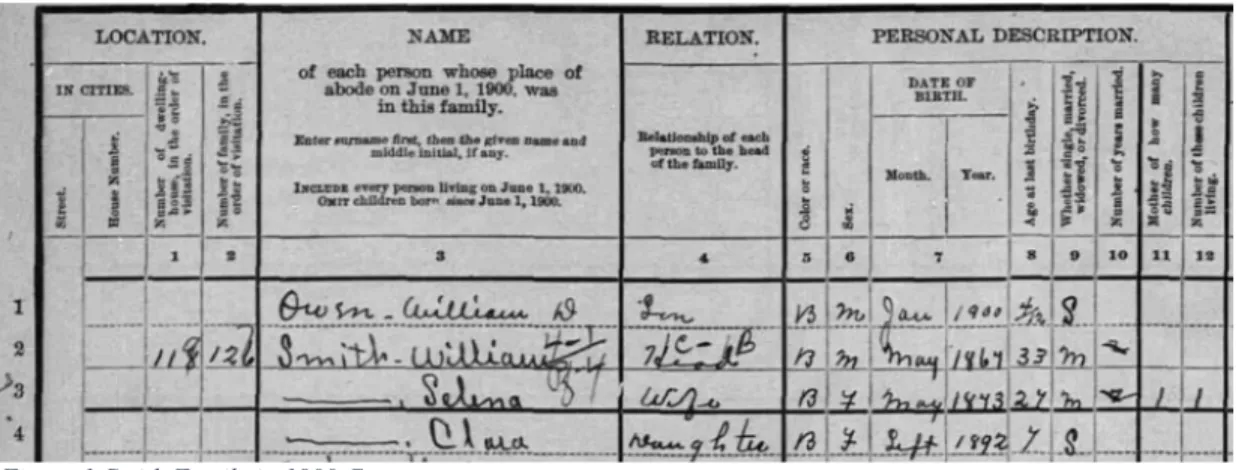
Figure 1:Smith Family in 1900 Census. ... 14
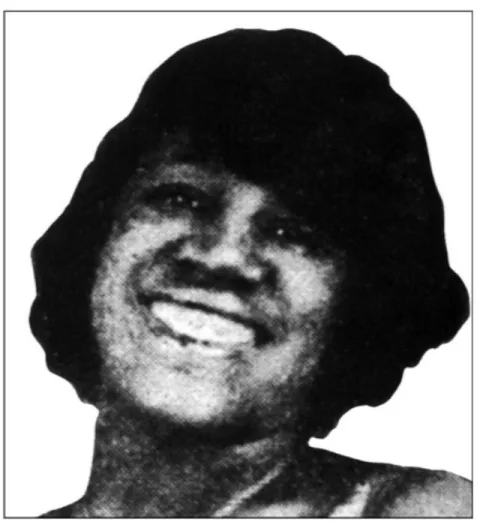
Figure 2 Clara Smith, 1923. ... 28
Figure 3:Clara Smith, 1924. ... 31
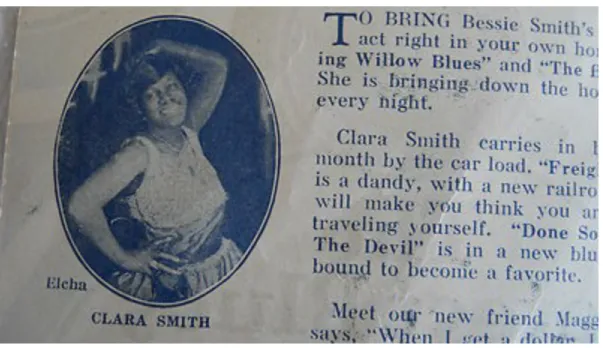
Figure 4: Clara Smith, 1925. ... 33
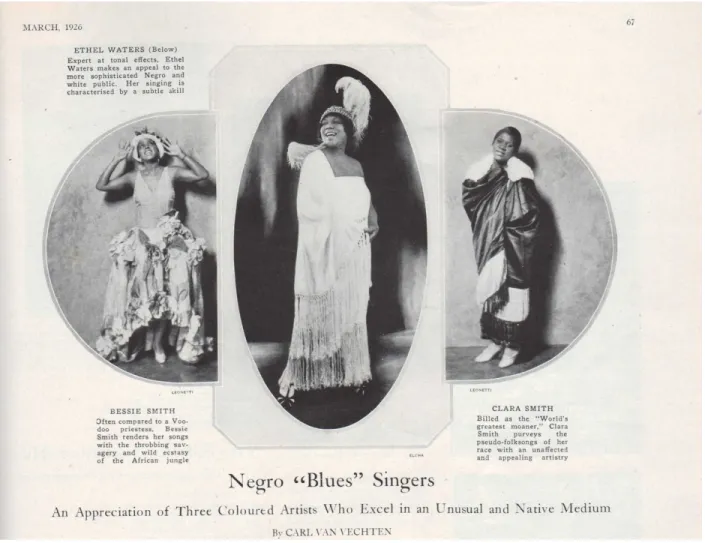
Figure 5: Clara Smith, March 1926- far right... 36
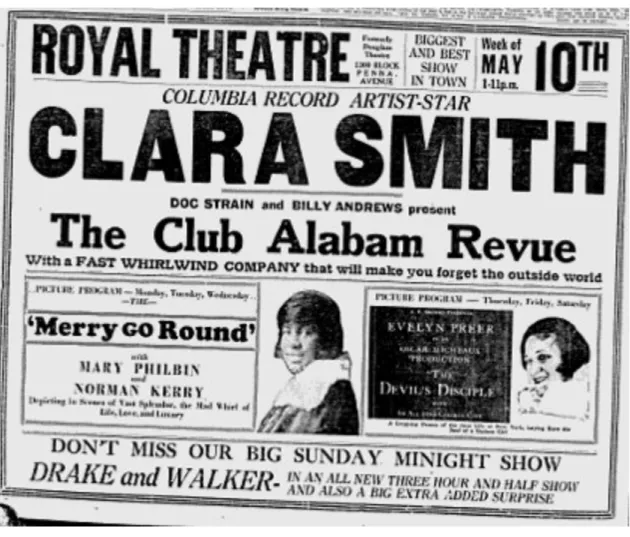
Figure 6: Clara Smith, May 1926- centre. ... 39
INTRODUCTION
Clara Smith was the second most recorded blues singer of the early blues period, and was celebrated as ‘Queen of the Moaners’ during her performing career. Born September 1892 in Spartanburg, South Carolina, she recorded a total of 151 sides between 1923 and her death in 1935. She does not, however, often come up in discussion of the blues greats, and she has not yet been inducted into the Blues Foundation’s Hall of Fame. Why is Smith’s legacy so diminished in comparison tothose of her blues artist contemporaries?
My goal in studying Clara Smith is first and foremost to produce a functional
narrative of her life.I have approached this task as a folklorist, and a queer. This perspective has intimately shaped my understanding of what a ‘functional narrative’ is and how it should be pieced together. In the pages that follow, I shall delineate my methodology for gathering materials and constructing this narrative before delving into a chronological account of Smith’s life, composed of every detail that I have been able to discover, most not previously known to other blues scholars. I shall close with a discussion of my critical framework for this project. Whilst presenting the material outcome of my work before a discussion of the critical framework in which they were produced might seem rather like putting the cart before the horse, this structure serves several important functions.
Firstly, the nature of the materials has informed my theoretical approach as much as any approach has enabled me to find these materials. I worked from the ground up,
theory first would, inevitably, push me to order the materials by the logic of theoretical interpretation and requirement, scrambling their own narrative logic. In short, to debut the story of Smith’s life and the materials from which I extrapolate it in this manner would be serving my own interests as a theorist over honouring the significance of these materials.
This leads to my second motivation. Most of the materials contained within the narrative are original archival documents pertaining to Clara Smith’s life. Of those published sources that do exist, the information contained within has not yet been compiled and viewed holistically. Prior to this thesis, the longest piece to be published with Clara Smith as the sole subject was the 6½ page entry of her discography in Blues and Gospel Records, 1890-1942.1
In this thesis, for the first time, the disparate fields of information that have been known about Clara Smith are gathered in one place alongside new discoveries. As the record of the life of a queer woman of colour, this information has been divided not by chance, but by the shaping forces of homophobia, racism and colonialism. As so little was known about Smith, hearsay, rumour and poorly referenced works have been given undue credibility. Much previous literature has relied upon information heavily filtered through other, often problematic, mediums: allowing greater opportunities for cognitive bias to shape
interpretation. To date, Smith’s music itself had been the only source of primary material relating to her. As such, interpretation of her lyrics has been used as the basis for vague and unverifiable insights into her life. I acknowledge that her lyrics do provide both a rich insight into her life and community, and an abundant source of investigatory suggestions. However,
1Robert M. W Dixon, John Godrich and Howard Rye. Blues and Gospel Records, 1890-1943, Fourth Edition
I wished to use the scope of this project to look beyond the pale of current research and prioritise seeking out additional primary materials relating to Smith’s life.
I have predominately focussed on the erasure Smith has experienced as queer person. The intersecting powers of racism and sexism—compounded with the force of colonialist imposition—have greatly amplified the erasure she has experienced in this aspect. I shall address this in more depth following the narrative of Smith’s life. Preceding this work with a lengthy discussion of the specific ways in which Clara Smith’s legacy has been fractured under the duress of social structures of power would, I worry, revive the power of these divides.
In working theories in from the ground up, I have been influenced by what Dorothy Noyes describes as the ‘trinity’ of the folklorist’s experience; ‘The ethnographer, the
practitioner, and the theorist are mutually dependent and mutually constitutive: they cohabit, to different degrees, in singular folklorist bodies.’2 Whilst archival work is often the realm of
the theorist, perhaps practitioner, I have also been mindful to not overlook the value of the ethnographer. As ethnographers we encounter material culture before it has become catalogued and transformed into archival material. Whilst one might see this as merely a technical distinction, the impact of this process is not to be understated. The institutional aura that gathers around archival materials with time suggests that they are objective records from which we extract information—distinct from the resonant, suggestive process
interpretation we allow ourselves of material culture. In working through the lens of material culture, I have refocussed conscious reflection upon the act of interpretation, rather than dismissing it under the guise of an objective reading. The power of the interpretative process
is not be overlooked, as folklorist Margaret A. Mills perfectly articulates; “Aptness, resonance, and suggestive power become criteria of productive theory, rather than
exclusiveness, comprehensiveness, or level of abstraction.”3 Reinstating the significance of
conscious interpretation required me to be both reflective and responsive in my interactions with these materials and to blur the arbitrary boundary between ‘archival materials’ and ‘material culture.’
In constructing the narrative that follows, I shored up a conventional archival skillset with some unconventional research techniques, both in gathering my primary sources and interpreting them. Firstly, I supplement and expand upon traditional archival research by utilising what I call ‘community archives’ (explained below) in areas where Clara Smith lived and visited. Secondly, before, during, and after my research process, I interrogated the impact of previously used modes of knowledge production on Smith’s legacy. Finally, in the interest of transparency and accountability, before committing my interpretations of these archival materials to text, I proposed them and received feedback in a public-facing setting. I created a series of creative non-fiction writing workshops, teaching participants how to bring the skillset of creative nonfiction writing to bear on archival documents when constructing life narratives. Using the archival materials of this project as writing prompts for our exercises, I was personally able to explore the subjectivity of my own deductions.
Participants were made aware that I was both teaching them various techniques to approach non-fiction writing and exploring how to present Clara Smith’s life narrative in this thesis. [Appendix A] Running these workshops often required me to see the documents from alternate perspectives and to critique my own interpretations.
As I explain the methodological practice behind my research, I ask the reader to keep in mind that these three paths of research are simultaneous with one another, rather than occurring sequentially. Results in one aspect would create fruitful leads in another. Moving as a triquetra— a Celtic trefoil of three interlaced arcs—each path cannot exist without flowing into and out of its peers. The overall structure gains its strength by the parts’ moving into and out of one another.
I had already had a longstanding interest in Clara Smith when I began my research in September 2015. I flew over from the UK for a period of three weeks, traveling through Georgia, North Carolina, and South Carolina to conduct archival research and gather contemporary field recordings at locations visited by Smith. Upon arriving in an area, I conducted traditional archival work—visiting local town archives and museum spaces to search for traces of Smith’s presence in the town. Alongside research in ‘official institutions’ of record keeping such as local libraries, town hall records offices, etc., my traveling
combining the community outreach of fieldwork with archival practice, I was able to locate multiple resources relevant to the project. This process created the basis of the network of places and people that continued to support my ongoing archival research. Looking for materials that had been overlooked in places we didn’t know,this experimental approach of incorporating contemporary fieldwork into archival research was the invention of necessity rather than of grand design.
I was incredibly surprised by the large amount of content we discovered in such a short time. I uncovered much previously ‘unknown’ information on Clara’s life. In this, I realised that the apparent lack of information about Smith had as much to do with research practice as an actual absence of materials. Analysing methodological practice from the blues revival to the present day makes the significant role played by the informal transmission of knowledge in British blues scholarship practice extremely apparent. Much of the data I found was not so much unknown or undiscoverable as un-included or unsought-for. The blurred line between formal and informal practice, formal field and record collectors’ hobby, has bred a very specific culture that enables the erasure of a figure such as Smith.
interrogate the biases that go into constructing narratives of the lives of historical figures, including my own.
I decided to circumvent traditional, exclusionary methods of interpreting the histories of queer people in favor of a culturally productive alternative. With so little material
available relating to Smith, I wanted to work in a framework that focussed on the potentialities of the materials, rather than its limits. José Esteban Muñoz has theorized extensively on such approaches, and formulated the concept of ‘Disidentification’ which he explores through multiple case studies of queer performers in his book Disidentifications: Queers of Color and the Performance of Politics. Whilst the process is not concisely explained within its pages, the blurb for this text reads;
There is more to identity than identifying with one’s culture or standing solidly against it. José Esteban Muñoz looks at how those outside the racial and sexual mainstream negotiate majority culture—not by aligning themselves with or against exclusionary works but rather by transforming these works for their own cultural purposes. Muñoz calls this process “disidentification,” and through a study of its workings, he develops a new perspective on minority performance, survival, and activism.
Disidentifications is also something of a performance in its own right, an attempt to fashion a queer world by working on, with, and against dominant ideology. 4
Muñoz demonstrates the essential nature of creativity to the queer history-making project; he writes “doing, performing, engaging the performative as force of and for futurity is queerness’s bent.”5 Queer people have historically constructed our history and our legacies
in the margins, queerly communicating a future for ourselves through art.6
4José Esteban Muñoz. Disidentifications: Queers of Color and the Performance of Politics. (University of
Minnesota Press, 1999,) blurb.
5José Esteban Muñoz. Cruising Utopia: The Then and There of Queer Futurity. (New York University Press,
2009.) 32.
6For more on this concept, see Kay Turner and Pauline Greenhill. Queering the Grimms. (Wayne State
I hired dramaturg James Varney to help develop my creative non-fiction writing workshops. Varney specialises in developing accessible theatre; when developing these workshops, I wanted to explore storytelling techniques that involve multiple layered forms of communication. Working with a dramaturg also functioned to keep my development process grounded in a queer, creative environment and to physically move me beyond the library space so that I could approach the development process with the mindset of creating something publicly engaging, such as theatre. Varney and I have worked together on previous creative projects that were quite similar to this, only not aimed for an eventual academic audience.
Varney and I initially decided upon a format of four, two-hour long workshops over a two-week period. Each workshop would build upon the last to explore and problematise a different aspect of writing about Smith. Our first workshop was an exploration of both the materials and how individuals approach archival documents. I was very interested in unpacking the Benjaminian ‘aura’ that surrounds archival documents. Discussing
participants' differing subjective responses to original archival documents and copies, this workshop explored the slippage between the ‘inherent objectivity’ of the original and its power to evoke subjective response in the audience, which I believe to be an essential part of mythmaking.7
Our second workshop was an exploration into the ways in which we remember and misremember our histories, especially as queer people. The participants and I worked
7Walter Benjamin. The Work of Art in the Age of Mechanical Reproduction. 43503rd edition. Translated by J.A
together to develop a timeline of Smith’s life and we collaboratively produced writing pieces. The third focused on the presentation of legacy and persona, both within the field of blues scholarship and in the queer community, with the final workshop set aside to bring all of these elements together, aiming to produce a final tangible creative product.
Approaching this problem through a folkloric lens, attuned to the importance of material culture, aesthetic expression and community impact, allows a new space to open for this dialogue. Folklore has always been ‘folk’ centred; folklorists work with people. Whilst I have no personal connection with Clara Smith, drawing upon research frameworks that have been used in such instances allows personal accountability to become an essential part of the research model. I have drawn upon folklore’s best practices for both ethnography and for interaction with material culture. In using both concepts beyond their originally intended context, my research illuminates the wide applicability of folklore methodology. In addition, the application of folkloric understanding to the life of a queer person, whilst not new, in every instance expands our field. Combining the intellectual histories of folklore and queer theory to concepts centred by both (such as group, identity, time, culture, the aesthetic) proves reciprocally beneficial.
My goal for this project is not to provide an all-encompassing narrative. In
PART ONE: CLARA SMITH 1892-1935
SPARTANBURG
Records from the beginning of Smith’s life are, aptly, very murky. The first widely circulated reference to her birth is attributed to a source lauded for accuracy in recall, the Jazz trombonist Clyde Bernhardt;
Clara was born in Spartanberg, [sic] South Carolina, in 1895; that’s what I heard from some friends who knew her well. She was an excellent blues singer, and good at putting over her songs.8
Taking the quote at face value, we see that Bernhardt’s friends knew Smith, suggesting she circulated with jazz musicians; that she mentioned her home town to those who knew her well; that she told people she was born in 1895, and that she was a respected and effective artist, “good at putting over her songs.” Though Bernhardt’s recollections have often proven to be a reliable source for blues scholars, this quoted recounting is brief and distilled through other unnamed informants. Compounding this issue of evasiveness, the source is difficult to verify. The quote appears in Ma Rainey and the Classic Blues Singers by Derick Stewart-Baxter, who prefaces the quote with, “Clyde Bernhardt, in a letter to Bill Daynes-Woods, is probably correct when he writes…”9
This letter, like all primary materials in that commercially-facing book, is uncited, removing knowledge of the contents, date and context of the letter from the public sphere. Stewart-Baxter provides only an approximation to a bibliography in the acknowledgments at the end of the book. He writes, “the musicians and singers gave generously of their time to advise me, and I am especially indebted to blues singer and trombonist, Clyde Bernhardt.”10
The addressee of the letter, Daynes-Wood, worked closely with Stewart-Baxter on this book and as a fellow writer for the British publication Jazz Journal in the late 60s,11 so we may
guess Daynes -Wood asked Bernhardt specifically what he knew of Clara Smith on behalf on Stewart-Baxter. Significantly, however, Stewart-Baxter’s unscholarly and proprietary
approach ensures that we do not, and cannot, know crucial things about this piece of evidence; perhaps the letter is quoted verbatim, perhaps copied inaccurately, perhaps it is from a decade earlier.
I begin my account here because this “fact” and the way it is offered are emblematic of Smith’s life as it has been told so far. Stewart-Baxter’s telling forces dependency on the teller, instating a hierarchy of knowledge. This is the only quote in Stewart-Baxter’s chapter on Smith that alludes to her personal life, a piece of writing that has formed the cornerstone of Smith’s biographies for the past half-century. Without citation, this first lead is buried in the private papers of English middle-class men, and unlikely to be shared beyond a circle of friends. Stewart-Baxter's self-assurance in his reading, and lack of scholarly rigour, prevents alternate interpretations of the materials. Without citation, no more can be (or, indeed, has
10Stewart-Baxter, 110.
been) said on the matter—Stewart-Baxter’s hubris places his interpretation above the further pursuit of knowledge regarding Smith.
Clara Smith’s beginnings emerged for me slowly, hazily, in searching through piles of near identical birth records. Taking the shaky premise of Bernhardt’s reference as a start, I entered the search ‘Clara Smith,’ ‘birthplace Spartanburg,’ ‘1895’ into the genealogy website Family Search, which yielded over 11,000 results.12Although there are many shadowy
presences that might be her, none of the certificates I found match the criteria closely enough to be for the Clara Smith we’re searching for—in fact, very few even correspond with the search criteria. Whilst offering no leads, this process is not without benefit—in an important act of recontextualization. Hundreds of times a possible hit elicited a sense of her start for me. As leads emerge and fizzle out it is evident that Clara Smith’s name and social position were not unique. I came to envision Smith as one among thousands of run of the mill, mundane individuals, although she is no less special for this.
I finally found a firm root by moving forward in time and looking back. The first concrete lead to Smith’s roots in Spartanburg comes, aptly, from Spartanburg; in writing about Clara Smith for the local newspaper, the Spartanburg Herald- Journal, Linda Conley sourced primary materials from the town archive:13
Records from the 1900 census show two Clara Smiths living in the county, but only one in the city of Spartanburg. Born in September of 1892, she was the daughter of William and Selena Smith. The family lived on Sims [sic; Simms] Street near where Harris Automotive stands today off Daniel Morgan Avenue. It was a neighborhood of black laborers.14
12Family Search, accessed June 6 2018. https://www.familysearch.org 13Linda Conley, email message to author, June 26 2018.
14Linda Conley. ‘Clara Smith: ‘Queen of the Moaners.’’ Spartanburg Herald (Spartanburg, South Carolina),
The Smith household covers lines two through five on page six of the census.15
[Appendix B] At line 4 there is an entry for a seven-year-old Clara Smith. Pulling at this document more, we can detect layers of information about Smith’s early life compacted into it. The head of household is her father, William Smith, 33 years old at the time of the census. Her mother is Selena Smith, twenty-seven years old. Clara Smith is listed as her only child, living or dead. Her parents would have been around twenty-six and twenty years old at the time of Smith’s birth. It would be unsurprising if they did not have other children later, but this is the last document that I have found on which they appear. Whilst answering many questions, the 1900 document is not without its mysteries; her father has the letters ‘c-b’ over his position as ‘head of household’, an abbreviation that is unaccounted for in the official instructions to enumerators for that year.16 Each head of household on this form has a
combination of letters and numbers written above their title, a particular idiosyncrasy of this enumerator. The ‘No. years married’ for Smith’s parents is represented by a symbol that looks to be a seven or a two that has been crossed out, but it doesn’t look like the other sevens and twos on this sheet, for example the ‘27’ of Selena Smith’s age, so is perhaps a crossed through ‘z’? [Figure 1] Like the ‘c-b’ over her father’s position, this code is also unaccounted for in the official instructions,17 and no other couples on this census have this
symbol. With the absence of the 1890 census (Alongside many other records, the 1890
15‘United States Census, 1900,’ Spartanburg City Ward 2-3, Spartanburg, South Carolina, United States;
enumeration district 107, sheet 7A, family 127, June 7, 1900. NARA microfilm publication T623 (Washington, D.C.: National Archives and Records Administration, 1972.); FHL microfilm 1,241,542.
16Department of the Interior, Census Office. ‘Instructions to Enumerators: Twelth Census of The United States.
June 1, 1900.’ Washington, Government Printing Office, 1900.
https://www.census.gov/history/pdf/1900instructions.pdf
census for Spartanburg was burnt in a 1921 fire and ultimately destroyed in 1935.18) there is
no way of knowing whether they were married before Smith’s birth or not; or whether they were indeed formally married at this time.
Interestingly, whilst neither of Smith’s parents is described in this census as being able to read or write, columns 22, 23 and 24 ‘Can Read, Can Write, Can Speak English’ have been answered for Smith, but scored from the surface of the paper. The Instructions state that these columns are to be left blank for persons under ten; 19 luckily for us, this census taker
often includes these details for children and later redacts the information to fall back in line with protocol. I believe that it is answered affirmatively given that the space where the text was is longer than other ‘no’ answers, combined with my knowledge that Smith was able to read and write in later life. No census lists Clara Smith as having attended a school. This prompts the question, who taught Clara Smith to read?
18Kellee Blake, ‘“First in the Path of the Firemen:” The Fate of the 1890 Population Census, Part 1.’ Genealogy
Notes Vol. 28, No. 1 (1996): accessed May 20, 2018.
https://www.archives.gov/publications/prologue/1996/spring/1890-census-1.html
19‘Instructions to Enumerators: Twelfth Census of The United States. June 1, 1900.’ 39, paragraph 225-228.
Below the family’s listing is an entry for Linie Carter, ‘boarder’, sixteen years old, born April 1884, who can read and write, and works as a servant. It seems to me most likely that Linie taught Smith to read. There are sixteen other residents of Simms street listed that are under sixteen. [Appendix C] Of those, the only ones that can read and write are white children, who were unlikely to have taught Smith, two other black sixteen-year-old girls who also worked as servants, and Linie Carter. Unfortunately, her entry in the 1890 census would have been destroyed, so we cannot guess the length of their relationship, and I have been unable to trace her further into the future. Given how important penmanship was to Smith in later life, it would be nice to know if Linie remained in Smith’s social circle.20
Neither of Smith’s parents has an entry for ‘Occupation,’ ‘Owned or Rental,’ or ‘Owned Free of Mortgage,’ despite this information being provided for their direct
neighbours. It is very likely, given the location of their house, that one or both parents’ work was connected to the Produco Mills oil mill nearby. Simms Street falls just below the area covered by the Sanborn maps for Spartanburg of 1898. However, its contemporary location is a three-minute walk along West Henry St from the Produco Mills site.21 [Appendix D]
Work at the mills is not listed as an occupation for any of the surrounding properties, and many other entries for both employment and unemployment in the area are left blank, so I suggest it was considered an ‘unmarked category’ for work in the neighbourhood. Months not employed are meticulously entered for other individuals in the area, so I find it unlikely that a blank entry for ‘Occupation’ would signal unemployment.
Cotton oil processing was a relatively new industry to the area; the Annual Report of the Railroad Commissioner of the State of South Carolina, 1893, notes a connection “with the industry in this state since the first mill was erected in 1881.”22 Smith’s parents may have
moved to the city for a job in a developing industry at a modern factory. Born in May 1867 and 1873, respectively, her parents came into adulthood amidst a climate of rising racial discrimination as Jim Crow laws were being instated and secure jobs were increasingly hard to come by for people of colour.
As no maiden name is listed for Selena Smith, I have been as yet unable to trace her beyond 1890. However, this census entry indicates that she and her parents were all born in South Carolina. Perhaps Selena’s family were local, perhaps visiting them instilled a taste for travel in the young Clara. William’s past has been somewhat easier to unearth. The 1880 census brings two plausible contenders, both are called William Smith, black, unable to read or write and could be thirty-three years old by 1900. The first lives in Union County, directly southeast of Spartanburg, with his uncle James Byrd, who is a farmer, and his family. He is thirteen years old at the time of the census and works as a ‘labourer.’23 The second, from
York County, east of Spartanburg, is ‘Willie’ Smith, who lives with his immediate family.24
Willie is listed as ten years old in 1880, but in tracing this same family back to the 1870
22D’arcy P Duncan, H. R. Thomas, Jefferson A. Sligh, Marcellus T. Bartlett. Fifteenth Annual Report of the
Railroad Commissioner of the State of South Carolina, 1893. Charles A. Calvo, Jr., State Printer, 1893.
23‘Tenth Census of the United States, 1880.’ Goshen Hill, Union, South Carolina, United States; enumeration
district ED 155, sheet 508B, NARA microfilm publication T9 (Washington D.C.: National Archives and Records Administration, n.d.), roll 1242; FHL microfilm 1,255,242. [William Smith in household of James Byrd.]
24‘Tenth Census of the United States, 1880,’ Kings Mountain, York, South Carolina, United States; citing
census he is listed as three.25 I am more inclined to trust this earlier age, given there is less
room for error in estimating the age of an infant: making him thirty-three at the time of the 1900 census. The 1880 census shows only other one other black, thirteen-year-old, William Smith in the area. 26 However, he can read, unlike Smith’s father.
Whilst we are unsure of exactly which William Smith will eventually become Smith’s father, the striking similarities between two cases give plenty of common ground. The
paternal figures were both farmers in rural areas, with nearly ten years’ difference in seniority to their wives, who had 3 children. They were born in South Carolina like their parents. Neither family’s being listed on the 1860 census makes it very likely they were enslaved peoples before emancipation in 1865.27
The only difference is potentially in the colour of their skin, and therefore their pre-emancipation heritage: In 1870, Willie’s mother Emily Smith, is listed as ‘M’ (mulatto [sic]) along with her children, however in 1880, Emily remains listed as ‘M’, but the children are now listed as ‘B’ (Black). The census is self-aware of the leaky nature of this category: ‘Be particularly careful in reporting the class Mulatto.[sic]The word is here generic, and includes quadroons, octo-roons, and all persons having any perceptible trace of African blood.’28
25‘Ninth Census of the United States, 1870,’, South Carolina, United States; page 13, family 85, NARA
microfilm publication M593 (Washington D.C.: National Archives and Records Administration, n.d.); FHL microfilm 553,011. [William Smith in household of Wesley Smith.]
26‘Tenth Census of the United States, 1880, Wadmelen Island, Charleston, South Carolina, United States; citing
enumeration district ED 92, sheet 392C, NARA microfilm publication T9 (Washington D.C.: National Archives and Records Administration, n.d.), roll 1224; FHL microfilm 1,255,224. [William Smith in household of Cooper Smith]
27Debra Newman Ham, Black History: A Guide to Civilian Records in the National Archives. National Archives
Trust Fund Board, 1984.
28‘Ninth Census of the United States, 1870: Instructions to Assistant Marshalls.’ Department of the Interior,
Comparing the same family between the 1870 and 1880 censuses, inaccuracy of early census data for people of colour is striking, alongside changing race there are multiple discrepancies within age. 29 Most notable is Willie’s father, Wesley, who is listed as twenty-four and then
forty.
Whilst being able to trace Smith’s paternal family back, “Her parents don’t appear in the 1910 or later censuses. It raises the question: Did one or both of them die before she turned 18?”30 The 1910 census reveals a Clara Smith living with Ed Foster and his family in
Union County and working as a farm labourer. In the absence of her parents she may have moved with relatives in Union County. However, Ira Tucker of the Dixie Hummingbirds “believes Clara Smith lived with a Beacham family for a short time on St. John Street.”31
29Newman Ham, 13. 30Conley.
LIFE ON THE CIRCUIT
Multiple accounts say that Smith was a star on the Vaudeville circuit by 1918. Derick Stewart-Baxter writes, “by 1918 she was a headline attraction on the T.O.B.A circuit
(Theatre Owners Booking Agency), and by 1921 she was filling the house at the Dream Theatre in Columbus, Georgia. […] she made appearances at the Lyric, New Orleans, the Bijou Theatre at Nashville and, by 1923, we find her at the Booker T. Washington Theatre in St Louis.”32 Daphne Duval Harrison echoes this: “by 1918, she was a headliner on the TOBA
and appeared with various tent shows and at major theatres.”33 Smith had to have made this
rise from somewhere, so was likely performing for a much longer earlier period. She was twenty-six in 1918, leaving nearly twenty years of her life formally unaccounted for. I would conjecture that during this period she moved around a lot; doing stints on the circuit for as long as possible and coming home to Spartanburg as a safety net, knowing she could stay with family friends and neighbours. The knowledge that she was breaking into the
T.O.B.A whilst still being remembered as present in town by Ira Tucker supports this conjecture, especially when coupled with the harsh conditions of working on the T.O.B.A at the time. With 80 theatres on the circuit between Philadelphia and Dallas, working the T.O.B.A meant long journeys with short stops and little rest. Booking black acts for black audiences, whilst primarily organised by white businessmen, many came to joke that Tough On Black Acts (or Asses) was a more apt explanation for the acronym.34
32Stewart-Baxter, 64.
33Daphne Duval Harrison. Black Pearls: Blues Queens of the 1920s. Rutgers, 1988. 240.
Smith was known to be an experienced traveller by the 1920s; for example, Josephine Baker informs us that when they began travelling together, “Clara Smith travelled with her own clean sheets”35 to reduce the nuisance of bed bugs. Given her success at this period in
time, it may also be possible that she is coming home to Spartanburg purely out of a desire to do so. I would not like to place too much stock in conjecture based on Smith’s fondness for her hometown, however, as there does come a point where she stops returning. The 1920 census shows a Clara Smith boarding in the city with the Hawkins family and working as a ‘laundress’ although her age was listed as twenty 36 and she cannot read and write. There is
one other Clara Smith listed nearby who can read and write, but is married to a Tom Smith. At twenty-three, she is closer to Smith’s real age of twenty-seven at the time, but if Smith were in the area it was more likely as a temporary residence, making the first, if either, of these two Clara Smiths most likely.
Waiting at Spartanburg station during my first research trip there, I imagined a grand and final exit: Smith, waiting for a train to take her from her home town forever, is off to make it on her own. An excerpt from my field notes reads: “Sat on the platform at Spartanburg station, same place Clara would have come through. It looks out on an old graveyard; some of the graves date 1870. Would have been the same graveyard and the same big old trees she would have looked at. Part of me imagines her waiting for the train out of here, looking at all these people who lived and died in Spartanburg.”37 In actuality, given
35Jean-Claude Baker. Josephine: The Hungry Heart. Cooper Square Press, 2001. 42. 36Conley.
Smith’s comings and goings, there probably was no grand departure; she most likely left town for work one day and just never ended up returning.38
Later in 1920, Clara Smith first meets Josephine Baker in St Louis.39 By this time,
Smith is the star of the show Twenty Minutes in Hell, which “told the story of a man who dreamed he had sold his soul to the devil.”40 In 1924, Smith would become the first blues
musician to cut a track on this theme. The year before they meet, Baker, aged 13, married steelworker Willie Wells who her family said was “too old for her. He was about twenty-five or thirty.” They separate after Baker splits his head open with a beer bottle after fabricating a pregnancy, and Baker returns to using her family name: Tumpy.41
At approximately twenty-eight, Smith is twice Baker’s age and well established in the entertainment business. If Smith was misreporting her age on the census, Baker may never have known her exact age. Bernhardt’s inaccuracy in recalling her birth year does suggest that Clara Smith may have been flexible in discussing her age. Baker had only been in intimate relationships with significantly older men at his point; her earlier marriage to Willie Wells was in part an attempt to distance her from a “brush with Mr. Dad,” an older man she briefly lived with who “loved young girls.”42 More worryingly, it is obvious that before
meeting her Baker idolised Clara Smith: “she [Baker] had spent eight years mimicking every line, every gesture she had observed onstage […] she watched Clara Smith pick out the
38I came to this realisation through the communal timeline making process of the writing workshops. 39For ease, I use Josephine’s later name ‘Baker’ throughout, rather than switch between Tumpy, Wells and
Baker.
40Jean-Claude Baker. Josephine: The Hungry Heart. Cooper Square Press, 2001. 39. 41Baker 37.
ugliest man in the audience and sing a love song to him; later, she would work the same trick into her own act.”43
Smith overtly used her influence to get Baker closer; Baker biographer Amy Cuomo contends that:
Clara Smith, billed as ‘The South’s Favorite Coon Shouter [sic],’ took a fancy to her [Baker]. Smith insisted that the manager Bob Russell hire her to join their vaudeville troupe, The Dixie Steppers. Baker started as a dresser, but she quickly found her way onto the stage, eventually performing in the chorus. According to an associate
of Russell’s, she was Clara Smith’s ‘lady lover’. Clara Smith also played a significant role in Baker’s career by introducing her to ‘black glamour.’44
Booth Marshall was a Drag Queen on this circuit and a close friend of Russell’s. He recalls that Smith spotted Baker waiting tables at the Chauffeur’s club;
She had become Clara’s protégée, you know, her lady lover as we called it in those days. Bob did not like that kind of hanky-panky, but Clara was a big draw, and anyhow, better a steady date than a fight in every city. Josephine had no real experience, you know, but Bob saw she had potential, and Clara did the rest.45
Smith was a mentor to a young Josephine Baker, providing her first introduction to the queer world that would become a central part of Baker’s identity. Through working on this show with Smith, Baker would have been given connections to other queer community members. Biographer Jean Claude Baker casually reflects, “once in a while—starting with Clara Smith—there would be a lady lover in Josephine’s life.”46 Ean Woods’ account of
Baker’s life gives tremendously precise details of the two’s time together; “they took to
43Baker 38.
44Amy Cuomo, The Gay and Lesbian Theatrical Legacy: A Biographical Dictionary of Major Figures in
American Stage History in the Pre-Stonewall Era. Ed. Billy J. Harbin, Kim Marra, Robert A. Schanke, University of Michigan Press 2005 39.
45Baker 38.
spending their afternoons together, when Clara would help Baker improve her reading and writing and would buy her little gifts of liquorice, peppermint sticks and sweet-potato
pie.”47 Baker herself reflects on this sweet potato pie “…she made me eat them too. As I had
a sweet tooth, I loved sugar… and I fell sick.”48 Baker’s tone toward Smith as she recalls
Bob Russell’s aggravation also reveals her reverence: “He wasn’t paying me to spend hours in Mama Smith’s dressing room improving my penmanship.”49 Whilst tongue in cheek,
Baker speaks fondly of the value Smith placed on her continuing education. Smith is potentially able to pass along the lessons of Linie Carter, a resonance that frames this interaction as an act of familial intimacy. In the very least, this report confirms Smith’s literacy prior to this date.
Smith’s teaching moments with Baker also allude to Smith’s own performance styles. Smith was a comedian as well as a singer.50 She shared Baker’s humour and may have taught
her how to work it into her stage act. Smith certainly taught her plenty about performing. Baker’s son writes in her biography, “it wasn’t only Clara’s voice that Josephine loved, but the long silk handkerchief Clara used as a prop, and her blue feather boa. Blue was
Josephine’s favourite colour,”51 and, “borrowing from the art of Clara Smith she had worked
with a handkerchief, and she had worked with an electric guitar before electric guitars were
47Ean Wood, The Josephine Baker Story, Omnibus Press, London, 2000. 48Baker, 44.
49Josephine Baker, Jo Bouillon Josephine Harper and Row, 1977, 24.
50Sheldon Harris. Blues Who’s Who: A Biographical Dictionary of Singers. Arlington House Publishers, 1979.
467.
common.” 52 Smith clearly worked hard on creating a performance style unique and
innovative enough to be seen as distinctly hers. The use of a handkerchief and feather boa in particular suggests a more sexually charged performance than other reports let on. No other descriptions allude so specifically to the physicality of Smith’s performances.
The use of a handkerchief in particular indicates a heavily coded performance. Handkerchiefs were used for signaling amongst the upper and middle classes in late 19th and
early 20th century straight culture, which was often reported on in local newspapers.53
Specifically blue handkerchiefs were used in gay cowboy culture in the mid to late 19th
century. Apocryphally, the disproportionate number of men on the west coast after the gold rush led to men wearing bandanas around their left or right arms to denote whether they were willing to lead or follow respectively. This led to gay men who would signify to one another by using specifically blue and red handkerchiefs54 The large resurgence of the ‘hanky code’
as a queer flagging55 technique in the late 1970’s as leather daddy culture expanded indicates
that it was kept alive in queer memory during this hundred-year difference. The show Twenty Minutes in Hell was a particularly queer place; many of the contemporary accounts quoted in Baker’s biographies of this time come from drag queens and noted queer performers, making it likely these references would have been appreciated and read. I can’t help but appreciate the queered resonance this prompts in Smith’s performance, even if it may be anachronistic.
52Baker, 354.
53For example: ‘Handkerchief Signals.: Here Is the Code Lovers Are Using to Communicate With in Public.’ St
Louis Post (St Louis, Missouri.) November 22, 1895:16.
Sunday, January 30th, 1921, it is the final show of Twenty Minutes in Hell. Just after
midnight Smith and Baker catch the last train to Memphis together; “the weather is fair and cold, thirty degrees, and Josephine runs along the platform, following Clara.”56 Baker has run
away from home to join Smith. This kind of relationship was not unusual at this time. Maude Russell, a great favourite at Harlem's Cotton Club, describes the ubiquity of their situation
We girls would share a room because of the cost. … Well, many of us had been kind of abused by producers, directors, leading men—if they liked girls. In those days, men only wanted what they wanted, they didn’t care about pleasing a girl. … And girls needed tenderness, so we had girl friendships, the famous lady lovers, but
lesbians weren’t well accepted in show business, they were called bull dykers. I guess we were bisexual, is what you would call it today.57
Lucille Bogan’s B.D. Woman’s Blues is sung from a bull dyker’s perspective, and expresses this same objection to the treatment of women by men:
Comin' a time, B. D. Women ain't going to need no men/ Oh the way they treat us is a lowdown and dirty sin.58
The phrase ‘lady lover’ skirts around the social ostracising of the term ‘bull dyker,’ but also functions to couch these relationships in a series of excuses. We can see these cropping up in this quote from Maude Russell. She proffers that women were in bisexual relationships for cost, for safety, because men couldn’t express tenderness. Smith and Baker’s relationship fails to be explained by each of these. Smith doesn’t need to share a room to save money and besides, I doubt she was expecting Baker to cough up. Baker at this point has no history in show business, so would have unlikely learnt the necessity of
56Baker, 39. 57Baker, 63-4.
protecting herself from the abuses of show business by lodging with Smith. She joined show business through joining Smith. Smith, on the other hand, though apocryphally beaten up by Bessie Smith, might look for a better protectorate than the slim, young Baker.59
What this quote from Maude Russell doesn’t address is the difference in age. Framing this as a relationship of convenience erases their queerness whilst being a very convenient way of overlooking a twenty-eight-year-old woman’s desire for a fourteen-year-old. It cannot be denied that, in this relationship, Smith held all the cards. Looking at Smith’s life through her time with Baker, though troubling, can bring more human and personal details into the frame of our understanding of her.
Baker and Smith’s time together was seemingly short-lived; the troupe went from Memphis to New Orleans and up to Philadelphia. Here Baker is a featured act alongside stars such as Butterbeans and Susie:
By April of 1921 the Dixie Steppers were playing in Philadelphia, and Josephine Baker had risen from dresser to comic chorus girl. Demonstrating already her extraordinary energy and her evident desire to please the audience, she enlivened every show with the crazy antics and frantic dancing of the chorus girl on the end who kept forgetting the steps and messing up the routine.60
This successful trip for Baker drew them apart; Jean-Claude Baker noted that ‘Clara Smith had stayed behind—she never came north if she could help it.’61 Whilst in
Philadelphia for the show’s run, Baker met Billie Baker, and on September 17th of that year they would elope to Camden, New Jersey, to marry. Moving east with Billie proved a success
59Albertson, Chris. Bessie: Revised and Expanded Edition. Yale University Press, 2003.
60‘Josephine Baker and Le Revue Negre’ Africana: The Encyclopedia of the African and African American
Experience edited by Anthony Appiah and Henry Louis Gates. 2005, Oxford University Press: 338.
for her career and provided relative stability in Baker’s life; from August 1922 through Autumn 1923, Baker worked in ‘Shuffle Along’ as a chorus girl and garnered attention from many other casting directors. The show waited for her to turn 16, and toured across the country in 1924. Shuffle Along changed the attitudes of many and was a breakthrough moment in African American performance history and was revived in 1933, 1952 and 2016. Whilst billed as a chorus girl, Baker adapted the role to bring her unique skills into the limelight, subverting the traditional role of chorus girl with perfectly timed comedic missteps and fumbles.
In March 1924 she opened the minstrel show, ‘The Chocolate Dandies,’ billing as ‘The Highest Paid Chorus Girl in The World’ (earning $125 compared to the other girls’ $30.)62 During this early rise in Baker’s popularity, there are no mentions in her biographies
of her meeting with Clara Smith. 63
62‘Josephine Baker and Le Revue Negre’ Africana: The Encyclopedia of the African and African American
Experience edited by Anthony Appiah and Henry Louis Gates. 2005, Oxford University Press: 338.
63Josephine Baker, Jo Bouillon Josephine Harper and Row, 1977; Ean Wood, The Josephine Baker
HARLEM
In 1923, Clara Smith moves to Harlem and begins her recording career under contract for Columbia, overcoming her apparent distaste for the north.64 Aptly, her first record is titled ‘I
Got Everything a Woman Needs.’ Here, she lodged at her Aunt’s house, and it appears she was notably sensible with her money. Carl Van Vechten describes the modesty of the house she lived in at the height of her fame in the mid-twenties; “there never seemed to be a carpet on the floor.”65 This is not to say it was not a warm home, “there were always
64Daphne Duval Harrison. Black Pearls: Blues Queens of the 1920s. Rutgers, 1988. 240.
65Carl Van Vechten. “Keep A-Inchin’ Along": Selected Writings of Carl Van Vechten about Black Art and
Letters. Edited by Bruce Kellner. Greenwood Press, 1979. 173.
neighbours running in and out, in addition to her business visitors and ofays like myself who paid attention to her because they liked her.”66 Vechten also recalls her hosting a rent party (a
common occurrence in the 20s, where food and entertainment would be provided for a small fee at someone’s house) though he crucially adds “as the house in which Clara resided belonged to her aunt, the idea of a rent party seemed a trifle odd. It is possible the idea only occurred to Clara after I had telephoned from downtown that I was about to call on her with a few pleasant people.”67 It seems Smith was wealthy enough that Van Vechten finds it ‘a trifle
odd’ for her to charge guests. I also suspect that Van Vechten’s privilege prevents him from considering that Smith’s aunt might still have to charge her rent. Following this
description Van Vechten adds that, unlike the rest of the house, her front room was lavishly furnished; ‘there must have been an upright piano in this room, too, but I do not remember Clara ever singing at home. In the first place an accompaniment was lacking during
my visits and in the second place Clara was not one to sing unless she were getting well paid for it.’68 Smith knew the value of her time.
Looking at contemporary accounts from this time and first-hand recollections of Smith, the amount of respect and esteem in which people held her is evident. Langston Hughes described her as a “great black artist,”69 and from trumpet player Doc Cheatham;
“Clara outdrew Bessie Smith in Nashville all the time … because she was mean, and she
66Van Vechten, 173. 67Van Vechten, 173. 68Van Vechten, 173.
sang mean. She would give everybody hell, give the men hell, give the women hell, in her blues singing. She was a mean woman but she was a great blues singer.”70
Considering what people include and exclude in their commentaries, I can’t help but feel Smith’s quiet self-confidence influencing them. Most notably, it seems she had even influenced the New York ‘tastemaker’ Carl Van Vechten, as the “uncomfortable
condescension”71 with which he treated other black artists is greatly limited in reference to
Smith. Van Vechten was a heavy force of curation in the early 20th century black art world
through his patronage of artists. Van Vechten used his wealth and social platform to promote his racist view of blackness as modernist primitivism, and his writing on Smith reflects the oscillating paternalism and deep othering that he felt toward each of the “Black literati,” to whom he consistently refers as “those people,” that he gathered around himself with his paternalistic patronage. The largest source of information on Smith is thus the most unreliable. In a letter to Walter White, Van Vechten others Smith through glowing praise, “she epitomizes the tragic moments in the love lives of those [sic] people. But she is expert in her delineation of comedy songs too. Personally, as you know, I consider her an important artist.”72
Van Vechten wrote surprisingly little about Smith for publication, and significantly less than he did about Bessie. Interestingly, his writing on Smith both public and personal doesn’t provide any compromising statements about her—a kindness he doesn’t extend to other black performers of the period. In light of this, I feel that his lack of published material
70Baker, 43.
71I thought this turn of phrase by editor of Keep A-Inching Along, Bruce Kellner, an excellent way to summarise
the particular breed of racist undertones in Van Vechten’s writings.
on Smith is a kind of self-censorship; it seems he felt uncomfortable talking about Smith’s personal business, full stop. The piece in Keep A Inchin’ Along begs for comparison with the third section of his March 1926, Vanity Fair piece “‘Negro’[sic] Blues Singers,’ on which it seems clearly to be an expansion; both begin “When we listen to Clara Smith we are
vouchsafed another manifestation of the genius of the Negro [sic] for touching the heart through music...”73 The Vanity Fair piece contains much florid description of her artistic
prowess, “her voice is powerful or melancholy, by turn, it tears the blood from one’s heart.”5 It contains, however, no indication of personal association, no hint of Smith’s life.
73Carl Van Vechten, ‘Negro ‘Blues’ Singers’ Vanity Fair. March, 1926: 67.
In 1924 the Clara Smith Theatrical Club opened in New York. It stayed in operation until 1932.74 Smith toured regularly and kept recording as one of the most successful women
of the time. Perhaps unknown to Van Vechten, Smith’s frugality was not out of necessity, but rather an invention of his racist perception.
A recording from this time that I wish to draw particular attention to is her 1924 ‘Done Sold my Soul to the Devil,’75 which made her the first blues singer to record a variant
of this popular theme. Smith revisits the theme of her starring role in Bob Russell’s play
Twenty Minutes in Hell that was at the start of her relationship with Baker in 1920, but by 1924 Baker has completed her run in Shuffle Along, one of the most popular and successful shows of the day and has become ‘The Highest Paid Chorus Girl in The World’ in ‘The Chocolate Dandies’- with no evidence found of continued contact between the two women.
In her moving this now classic trope from a queer theatre setting to the blues sphere, we see how Smith blurs these two worlds: they are not entirely distinct social spheres. Smith’s prior claim to the track provides increasing evidence of the fluidity between these two worlds, unpacking the whiteness so often backgrounded onto queerness. This knowledge interestingly recontextualises the history and meanings of this trope. Because the trope of selling your soul to the Devil is most often associated with masculine figures such as Charley Patton and Robert Johnson, standard interpretations in the world of blues scholarship imbue the act with a sense of bravado and masculine recklessness. Smith’s prior claim to the trope,
74The Gay and Lesbian Theatrical Legacy: A Biographical Dictionary of Major Figures in American Stage
History in the Pre-Stonewall Era. Edited by Billy J. Harbin, Kim Marra, Robert A. Schanke. University of Michigan Press, 2007.
however, suggests that it might better be regarded as a reflection on the compromises a person has to make when society views that which is inherently part of you as evil.
Figure 4: Clara Smith, 1925.
In 1925 Josephine Baker moves to Paris with her act La Revue Nègre, to wide critical acclaim.76 Whilst there is no evidence that Baker and Smith kept in contact before, both were
living in the New York area and performing on a very similar circuit. Past 1925, we can be definitively sure that they no longer saw one another.
In the Washington Memorial Library in Macon, Georgia, I found a telegram dated April 19th, 1925, at 7 pm, from a Sam E Reeves to C H Douglass of the Douglass
Theatre requesting to “confirm today” a payment for $275 to be made for “Clara Smith and accompanist,” playing on the twenty seventh, 77 followed by a deed from May 2nd 1925
76A comprehensive account can be found in: Karen C. C. Dalton, Henry Louis Gates. ‘Josephine Baker and Paul
Colin: African American Dance Seen through Parisian Eyes.’ Critical Inquiry, Vol. 24, No.4 The University of Chicago Press (Summer, 1998): 903-934.
77Sam E Reeves, Telegram to C H Douglass of the Douglass Theater, April 19th, 1925, 7 pm. Courtesy of the
revealing that Clara Smith purchased a house on Elizabeth St. in Macon, Georgia.78
[Appendix E] I imagine the urgency of this earlier confirmation was related to exactly this upcoming expense. Elizabeth Street has since been named Emory Avenue, and the site of Smith’s home is now within the bounds of a gated community complex. A section of this road has not been subsumed by the gated community, however, and I was able to take a photograph of what looks to be an original property. [Appendix F] Though the house has suffered the effects of time, it is wonderful to see the kind of home that Smith would
presumably have bought. Looking at town records, I found no evidence to suggest that Smith actually lived in this house, so I surmise, rather, that she bought it as an investment and let the place out. From Van Vechten’s report, we can assume that she then lived at her aunt’s house in New York and used her tenants’ rent money to pay off the mortgage on the house that she had purchased. It has been rumoured in the community of British blues scholars that Smith used the money from her fame to purchase multiple properties; the discovery of a signed deed for Elizabeth St. is a step in uncovering the facts behind this rumour.
Another symbol of Smith’s prosperity at his time was to be found in Macon, with evidence of her career as a comedian. Sheldon Harris’ Blues Who’s Who lists ‘Jolly Clara’ as an alternate comedic billing, and Van Vechten describes her as “expert in her delineation of comedy songs.”79 Reference to Smith’s comedy act is significant in its rarity; it is a side of
her that has been greatly left by the wayside. She also earned significantly less for this aspect; comparing the $275 from April 19th 1925, her comedy stage name merits just $50 on
78“Index to Realty Deeds and Mortgages – Bibb County, Ga.” Housed in The Washington Memorial Library:
Macon, Georgia. Dated May 2nd 1925. Courtesy of the Middle Georgia Archives, Washington Memorial Library, Macon Ga.
79Sheldon Harris. Blues Who’s Who: A Biographical Dictionary of Singers. Arlington House Publishers, 1979.
July 1st of the same year.80 Why did she keep performing as a comedian? It seems then that
Smith did this work out of enjoyment rather than monetary reward, which is a strong statement of self-governance and empowerment.
With the security of this investment in real property, Smith then starts a family. An article in The Baltimore Afro-American from 1926 contains reference to a marriage between Clara Smith and Charles Wesley, and also to a daughter between the two, “little Willie Lee Smith, who is a smaller edition of the mother, and who may succeed to the mantle worn by her illustrious mother.”81 I find it indicative of Smith’s character that the first three quarters
of the piece focuses on her career and how she wishes to be perceived as “just a singer,” while news of her new husband and child are left to the final paragraph.
I have found no evidence of this child elsewhere. Unfortunately, it seems most likely that Willie Lee died young. An alternative possibility is that Charles took her with him after separating from Smith. This seems unlikely, however, both because taking a child from its mother seems an odd choice for a transient baseball player early in his career, and because neither Clara nor this child appears to have taken Charles Wesley’s name (which further suggests that he might not have been Willie Lee’s biological father).82
80Theatre Owners Booking Association, ‘Contract’, Signed C.H. Douglass, Manager of Douglass Theatre. 1st
July, 1925. Courtesy of the Middle Georgia Archives, Washington Memorial Library, Macon Ga.
81‘Clara Smith is No Blues Singer.’ Baltimore Afro-American, (Baltimore, Maryland.) May 22,1926.
82Prior to the writing workshop process I had not at all actively considered this sparse mention of Smith’s child,
Figure 5: Clara Smith, March 1926- far right.
Smith and Wesley’s marriage can be traced to Florida. Here, dated March 19th, 1926,
is a Marriage License [Appendix G], the County deed record of Marriage Licenses
[Appendix H], and finally notary paperwork from the day revealing Clara Smith’s signature [Appendix I]. Definitively identifying Clara Smith’s signature opens a myriad of possibilities toward future research.
nothing to indicates the nature of their relationship to the couple. The address 18 W 130th
NYC, Harlem, is listed for both of them on their marriage certificate, which runs parallel to where The National Jazz Museum stands today. An apartment in this building was recently on the market, and the real estate listing provided excellent historical detail for the property:
These were among the first speculative townhouses built in Harlem, and their design is very unusual. The houses are set back from the street and all have front yards, an oddity in Manhattan, and all have wooden porches. The effect is southern, and has been compared to the appearance of parts of Savannah, Georgia. The houses were built on land that had been purchased by John Jacob Astor in 1844 for $10,000, but the development was driven by his grandson, William Backhouse Astor, who hired architect and builder Charles Buek to oversee the project. The houses were all built between 1880 and 1883.83
The southern appeal of the design was likely of comfort to Smith. Many of the apartments still have their original features, making it far more possible to imagine how they looked during Smith and Wesley’s time there whilst reading Van Vechten’s descriptions of the space. [Appendix J]
The front parlour made up for the meagre furnishing of the rest of the apartment. It contained two complete “suites” … of upholstered furniture, one in green, the other in red plush, probably about fourteen pieces in all. The room was not large, and these suites were packed in together so closely that it was not easy to make your way about it to inspect the framed photographs of Clara and her forebears on the table or the not too skilfully executed oil paintings on the red papered walls.84
The quality of light falling into these rooms would have created a warm, rich glow falling against the red papered walls and crowd of plush furniture. I imagine the room felt cozy and secluded on even the brightest morning. Learning about the specifics of this house
83‘18 W 130th St, New York, NY 10037, 3 Beds, 1 Bath, 3000sqft.’ Zillow. 2017.
https://www.zillow.com/homedetails/18-W-130th-St-New-York-NY-10037/31547253_zpid/
makes me insatiably curious about Smith’s aunt who owned it, and I have as yet found nothing to lead me to her.
It seems that Clara and Charles were happy living together here. The 1926 newspaper article finishes, “hubby was not present during the interview, but a far away [sic] look that was noticeable in the wife’s eyes, seemed to say: ‘I wish he were.’” In a slightly less saccharine tone the subheading of the article reads “married to Memphis ball player and is really proud of him.”85 Van Vechten also speaks of “her husband, to whom she referred …
affectionately as Tootie.”86
Wesley was complicit in Smith’s teasing of Van Vechten: “once she invited me [Van Vechten] to buy him [her husband] an overcoat … but when I refused she retained her habitual good humor.”87 Here Smith’s dry humour coincides with fiscal savvy to leave Van
Vechten second guessing her intent. On several occasions Smith toys with Van Vechten’s patronage in this way. Her knowledge that his pockets are far deeper than his knowledge of her forms a punchline to many of their interactions.
I would argue that Wesley’s role is historically underplayed in writing on Smith because the presence of both Baker and Wesley as romantic partners muddies the waters. I personally think that there’s no evidence to suggest that she wasn’t happy with both of these individuals, spending some of her earlier years with Josephine Baker, and marrying Wesley after Baker had moved to France. This bias in knowledge about Smith stems perhaps
85Clara Smith is No Blues Singer’ in Baltimore Afro-American, May 22nd 1926, 4. 86Van Vechten, 173.
more out of an institutional lack of understanding of bisexuality than of any firm knowledge of an unhappy rift between her and her husband.
Figure 6: Clara Smith, May 1926- centre.
In the late 20s Smith becomes more and more overtly involved in the emerging ‘Pansy Craze,’ an early form of the drag ball that we know today.88 As prohibition created a
world of deregulated nightlife, queerness followed blackness as a sought-after commodity for white patrons and “pansies increasingly became part of the exotic spectacle clubgoers and
88For more on the Pansy Craze I have found invaluable George Chauncey’s Gay New York: Gender, Urban
tourists expected to see.”89 George Chauncey describes the intersecting racist and
homophobic fetishization that the Pansy Craze navigated:
If whites were intrigued by the “primitivism” of black culture, heterosexuals were equally intrigued by the “perversity” of gay culture. As the gay world of Greenwich Village and Harlem grew and became more visible in the wake of World War I and the imposition of prohibition, it evoked growing curiosity.90
Whilst married to Wesley, Clara Smith became a leading figure on the queer Harlem scene. Given that she was married to an owner in the business, it may be that her increased involvement was simply the result of her increased capacity to put on shows—motivated either by a desire to support the community or simply market savvy as the demand for queer performers increased. These queer activities may have placed a strain on their marriage, but we cannot ultimately know with the evidence we currently have. Smith’s eminence on the queer New York scene is perhaps why she didn’t want to be pigeonholed as a blues singer; the Pansy Craze had produced spaces for the creation of art beyond the category of race.91
The same article that states her gooey-eyed attachment to her husband emphasises her work
89George Chauncey, Gay New York: Gender, Urban Culture and the Makings of the Gay Male World. (New
York: Basic Books, 1994), 309.
90Gay New York, 309.