WHAT ROLE DO FATHERS’ CULTURAL EXPERIENCES PLAY IN THE DECISION TO SUPPORT BREASTFEEDING?
Muswamba Aimé Mwamba
A dissertation submitted to the faculty at University of North Carolina at Chapel Hill in partial fulfillment of the requirements for the degree of Doctor of Public Health in the Department of
Health Policy and Management in the Gillings School of Global Public Health.
Chapel Hill 2019
Approved by: Sandra B. Greene Asheley Cockrell Skinner Becky Spencer
ii © 2019
iii ABSTRACT
Muswamba Aimé Mwamba: What Role Do Fathers’ Cultural Experiences Play in the Decision to Support Breastfeeding?
(Under the direction of Sandra B. Greene)
Breastfeeding is a global concern and a public health priority. Male breastfeeding support is evidenced to influence breastfeeding behaviors. Fathers play a vital role in determining women’s choice to breastfeed. Many studies regarding fathers’ breastfeeding influence included
participants from a variety of ethnic backgrounds. Only a few studies examined African American men’s breastfeeding attitudes. Within the U.S. disparity context, Black African immigrant
breastfeeding experiences have not been measured.
This study examined what role fathers’ cultural experiences play in the decision to support breastfeeding. The social and cultural breastfeeding experiences of Congolese Immigrants compared to those of African Americans were explored, analyzed, and contrasted. Focus group analysis was performed separately to highlight the breastfeeding support distinctions of two Black groups. African American fatherhood practitioners were interviewed as Key informants to augment the knowledge on how to bring breastfeeding awareness in African American
iv
In the immigrant study, the visibility of the breastfeeding cultural practice enable the
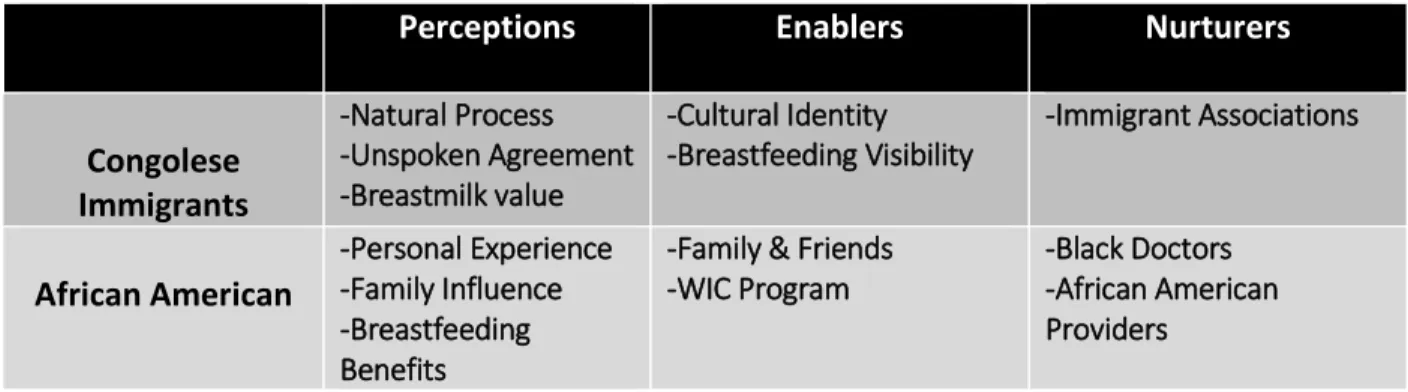
breastfeeding perceptions of Congolese fathers. They identify their Congolese origin as a warrant for breastfeeding decision and practice. Breastfeeding is a natural process that does not require prior deliberations between expectant couples. Breastmilk is valued for its God-given virtues rather than its medical benefits.
In the cultural context of African American, family and friends enable breastfeeding support perceptions. Personal experiences and knowledge of breastfeeding benefits are predictors of breastfeeding decision. However, there is not a cultural, existential framework supporting breastfeeding. African American fatherhood practitioners help frame the lack of those existential attributes within their communities such as the breakdown of the urban family unit or the lack of breastfeeding nurturers.
v
To my wife Ndaya, for the unconditional support.
To my breastfed children Mbuyi, Nsanza, Muleba, Thsinsuya, and Nsesa, for the sustained motivation.
vi
ACKNOWLEDGEMENTS
I grew up in exceptional circumstances that offered me opportunities to grow and strive. People that surrounded me saw in me the gift of learning, that I often took for granted. And they reminded me that I possess potential to reach higher altitudes and made sure that I never settle for mediocrity.
My father, the late Dr. Tshinsuya Mwamba has gone to be with our Lord since 1992. Its influence continues to reverberate in my soul and spirit. Academic achievement was its prized measuring stick for success as it boosts personal self-esteem, the foundation of all elevations. From, its shoulders, I envision how I would affect my family, my community, and my country, one person at the time. He promoted courage, consistency, and integrity as the qualities on which many other attributes are built, such as respect, dignity, and trust.
vii
TABLE OF CONTENTS
LIST OF TABLES……….…..…xiv LIST OF FIGURES……….………xvi LIST OF ABBREVIATIONS……….………xvii
CHAPTER I: INTRODUCTION………..1
1. Background………1
2. Significance………2
2.1. Meaning of Heath Disparity……….3
2.2. Being Black in the USA………..………4
2.3. Black African Immigrants in USA………..5
2.4. Immigrant Health Studies……….6
2.5. Father-directed Breastfeeding Intervention………7
3. Purpose………8
4. Theoretic framework………..10
5. Application of the PEN-3 Model………..13
6. Significance of the Study………..15
7. Research Questions……….15
viii
CHAPTER II: REVIEW OF LITERATURE………..……….18
1. Literature Review Methodology………18
1.1. Source………18
1.2. Key Words………..19
1.3. Search Strategy………20
1.4. Inclusion and Exclusion Criteria………..21
1.5. Preliminary Results………..21
1.6. Literature Map………22
2. Men and Breastfeeding………..25
3. Breastfeeding in the African American Context………26
3.1. Breastfeeding and Race………26
3.2. National Breastfeeding Rates of African American………..27
4. Defining “Blacks” in Health Studies………28
4.1. African American versus Black……….28
4.2. Black Meaning and Scope in Health Studies………..29
4.3. Black Immigrants in the US………30
4.4. Healthy Immigrant Effect………30
5. Breastfeeding and Immigrant Status……….31
5.1. The Hispanic Paradox………..31
5.2. Immigrant Breastfeeding Behaviors……….32
6. Literature Result Summary………33
ix
6.2. Gap in Literature……….34
6.3. Conclusion………..35
CHAPTER III: RESEARCH DESIGN AND METHODOLOGY………..37
1. Purpose and Research Questions……….………37
2. Research Design……….………..38
3. Qualitative Research ………39
4. Focus Groups………..40
4.1. African American Study ………41
4.2. Congolese Immigrant Study………43
5. Key Informant Interview……….44
5.1. Afrocentric Approaches………44
5.2. Participants and Sampling………..45
5.3. Data Collection and Analysis……….45
6. Qualitative Analysis Plan……….45
6.1 Analysis Plan………..45
6.2. PEN-3 Model Analysis Tool………...46
7. Summary of Methods………..48
8. Limitations………49
9. Institution Review Board………51
CHAPTER IV: RESULTS……….52
x
1.1. Primary Codes for Immigrant Study……….52
1.2. Description of Emergent Themes of Immigrant Fathers………..53
1.3. Emergent Theme Discussion………54
1.4. Immigrant Study Findings Synthesis………60
Aim 2: What are breastfeeding experiences of African American fathers of breasted infants?...62
2.1. Primary Codes for African American study……….62
2.2. Description of Emergent Themes for African American study……….…62
2.3. Discussion of Emergent Themes for African American study………63
2.4. African American Study Findings Synthesis………71 Aim 3: What are the common and contrasting experiences of African American and Congolese Immigrant in Dallas County?...73
3.1. Commons Emergent Themes………73
3.2. Contrasting Themes……….74
3.3. Findings Synthesis……….75
3.4. Results Synthesis with the PEN-3 Cultural Model………..76
3.4.1. Relationships and Expectations……….…76
3.4.2. Cultural Empowerment………..79
3.4.3. Developing Culturally Sensitive Interventions……….80
Aim 4. Key Informant Interviews with African American community leaders and Practitioners……….………..82
4.1. Key Informants………..………82
xi
Relationships & Expectations………..………84
4.4. Key Informant Emergent Themes Synthesis………..87
4.5. Emergent Themes discussion………..88
4.5.1. Rural versus Urban……….88
4.5.2. Practitioners versus Participants………..89
4.5.3. Church versus Church………..90
4.5.4. Education versus Mentorship……….92
4.5.5. African American versus American……….93
4.6. African American Cultural Relevance……….….94
4.7. African American Breastfeeding Support Relevance………96
CHAPTER V: DISCUSSION……….……….99
1. The Research Question………..99
2. The PEN-3 Cultural Model……….………..99
3. The Congolese Immigrant Cultural Role………..101
4. The African American Cultural Role………102
5. Key Informants Cultural Affirmations………102
5.1. Participant World……….104
5.2. Responsible Fatherhood……….105
5.3. Sexual Education Reform………108
5.4. Church Reform in Black Community……….…...109
6. Scope and Limitation………110
xii
6.2. Cultural Disparity……….111
6.3. Building on Existing Structures………..113
CHAPTER VI: PLAN FOR CHANGE To develop a Men Breastfeeding Toolkit to be marketed in the African American community of South Dallas……….……….115
1. Introduction………115
2. Goals and Objectives………116
3.Needs and Problem Assessment………118
3.1. The State of Breastfeeding……….118
3.2. Technology………119
3.3. Gamifications Principles………..121
3.4. The Human Touch………122
3.5. Legislation………..122
3.6. Social Factors………..124
3.7. Gender Roles………..125
4. Stakeholder Analysis……….127
5. African American Men Breastfeeding Toolkit………..128
5.1. Engaging Men and Fathers……….128
5.2. Defining “Fathers”………128
5.3. Defining the toolkit……….129
5.4. Toolkit Approaches……….129
5.5. Toolkit Components………131
xiii
6.1. Basic Statistics……….133
6.2. Population by Race………..134
7. Positioning………134
8. Market Research……….136
9. Pricing………..137
10. Marketing Communications……….137
11. Branding……….139
12. Digital Marketing………..141
13. Budget for Online Toolkit Development……….141
14. Timetable………..144
APPENDIX A: SUMMARY OF ARTICLES……….146 APPENDIX B: KEY INFORMANT INTERVIEW INSTRUMENTS……….149 APPENDIX C: EMERGENT THEMES AND REPRESENTATIVES QUOTES OF IMMIGRANT FATHERS……….152
APPENDIX D: EMERGENT THEMES AND REPRESENTATIVE QUOTES OF AFRICAN AMERICAN FATHERS………..157
APPENDIX E: COMPARATIVE LISTS OF EMERGENT THEMES……….………170
APPENDIX F: EMERGENT THEMES AND REPRESENTATIVE QUOTES OF KEY INFORMANTS………174
APPENDIX G: BREASTFEEDING TOOLKIT THEMES AND REPRESENTATIVE QUOTES……….178
APPENDIX H: AFRICAN AMERICAN MEN BREASTFEEDING TOOLKIT………..182
xiv LIST OF TABLES
Table 2.1.: Databases………..19
Table 2.2.: Key terms organization……….…20
Table 2.3.: Keywords for immigrant………..21
Table 2.4.: Preliminary Results………..22
Table 3.1. African American Fathers Demographic Data………42
Table 3.2. Questions Asked……….42
Table 3.3. Congolese Immigrant Fathers Demographic Data……….43
Table 3.4. Cultural Empowerment and Relationships & Expectations……….47
Table 3.5. Qualitative description of fathers’ cultural experiences to support breastfeeding…………..………48
Table 4.1. Focus group questions and primary Codes……….53
Table 4.2. Relationships and Expectations………..78
Table 4.3. Cultural Empowerment……….80
Table 4.4. Key Informants………83
Table 4.5. Representative Quotes for PEN-3 Categories………85
Table 4.6. Emergent Themes Generated in each PEN-3 Category……….….88
Table 5.1. PEN-3 Domains and Emergent themes……….………..100
Table 6.1. Stakeholder Analysis……….…….125
Table 6.2. Toolkit Components………..132
Table 6.3. Basic Statistic in MLK Area……….………133
xv
Table 6.6. Hourly rate for requested personnel……….143
xvi LIST OF FIGURES
Figure 1.1. The PEN-3 Cultural Model………..11
Figure 2.1. The review process of articles……….……….23
Figure 2.2. Literature Theme Map……….24
Figure 4.1. Key Informant Locations………..83
Figure 6.1. Rates of initiation of breastfeeding by race/ethnicity from 2000 to 2007………..……….117
Figure 6.2. Rates of breastfeeding at 6 months by race/ethnicity from 2000 to 2007………..……….117
Figure 6.3. Toolkit Dynamic Approaches……….130
Figure 6.4. Population by Race in Dallas Area………..………134
Figure 6.5. Positioning Plan……….……….135
xvii
LIST OF ABBREVIATIONS
CDC Centers for Disease Control and Prevention IRB Institutional Review Board
MLK Martin Luther King
1
CHAPTER I: INTRODUCTION
1. Background
Breastfeeding is a global concern and a public health priority [1]. The U.S. Department of Health and Human Services through the Office of the Surgeon General issued a call in the Blueprint for Action on Breastfeeding for research “that identifies the social, cultural, economic,
and psychological factors that influence infant feeding behaviors, especially among African American and other minority and ethnic groups [2]. The 2011 Surgeon General’s Call to Action to Support Breastfeeding decreed breastfeeding as a fundamental public health issue and
galvanized national attention on breastfeeding and breastfeeding support. Informal sources of support, particularly the male partner, have been demonstrated to have a more significant influence on breastfeeding behaviors than formal support from health care providers [3].
Breastfeeding education for men has been documented for the last 30 years. In their review of the literature addressing fathers and breastfeeding, Bar-Yam and Darby (1997) [4] found a strong association between fathers’ positive attitudes toward breastfeeding and mothers’ intentions to breastfeed. Fathers play a central role in influencing a woman’s choice to
2
for breastfeeding had the greatest impact on mothers’ choice to breastfeed [8]. Similarly, negative attitudes toward breastfeeding and lack of support from fathers have been associated with the decision to formula feed infants. Besides, such studies generally focused on men's knowledge of the nutritional value of breastfeeding rather than their awareness of the social and cultural barriers experienced by some breastfeeding mothers [8].
Many studies regarding fathers’ influence and attitudes towards breastfeeding have included predominantly white male participants or male participants from a variety of racial or ethnic backgrounds. However, few studies have been conducted that specifically examine African American men’s influence and attitudes regarding breastfeeding. So far, no studies have been focused on African immigrant breastfeeding experiences within the U.S. minority and disparity context.
2. Significance
3
immigrant families experience breastfeeding in the U.S. within the context of the African American minority group.
2.1.Meaning of Health Disparity
Health disparity literature is somewhat weaker in providing concrete, actionable steps that may be taken to remedy these disparities. The first attempt at an official definition for "health disparities" was developed in September 1999, in response to a White House initiative. The National Institutes of Health, charged with developing a strategic plan for reducing health disparities, developed the first definition of health disparities: “Health disparities are differences in the incidence, prevalence, mortality, and burden of diseases and other adverse health
conditions that exist among specific population groups in the United States” [9]. This definition does not evoke the societal roots of disparities such as segregation, racism, or nativism that cause emotional and physical stress to the body.
4
Although much is yet to be learned about the specific pathways by which the social environment creates disease, much progress can be made toward eliminating disparities by acting on current knowledge [11]. The importance of breastfeeding to child survival and development is unquestionable. Breastfeeding levels the playing field so that every infant can get the best start in life. Breast milk is free, and interventions can reach communities with limited access to health systems and infrastructure, thus narrowing the gap in health disparities. A male breastfeeding support intervention is one of the identified health-enhancing resources that may reduce some of the adverse effects of psychosocial factors in African American communities.
2.2.Being Black in the USA
Racial disparities in health in the United States are substantial. As noted by Williams and Jackson [11], "race is a marker for differential exposure to multiple disease-producing social factors. Thus, racial disparities in health should be understood not only regarding individual
characteristics but also in light of patterned racial inequalities and exposure to societal risks and
resources."
5
Americans, just Africans because the tribes and nations were intermixed preventing cohesion through language and national identity.
Following the emancipation proclamation, a new form of slavery became social law, the one-drop rule. The one-drop rule is a social and legal principle of racial classification that was historically prominent in the U.S. It derived from the social idea that any person of mixed slave ancestry constituted a person [12]. This created a unique class of people regardless of their ethnic identity. One is considered "Black" no matter the color of skin. This is a uniquely American creation. Since there was no motherland identity, this community of Blacks without a specific African cultural heritage beyond slavery must depend mostly on each other socially for many years until recently. The X generation may be the first group of Blacks that experienced a more leveled social experience since slavery.
Anti-Blackness is considered the effort of distancing oneself from anything that can be considered Black. Many African communities in the U.S. experience Anti-Blackness. They try to distance or more accurately to distinguish themselves from American-born Blacks. When asked about their ethnicity, Black African immigrants would often respond, “I am not African American, I am African!
2.3. Black African Immigrants in the U.S.
6
metropolitan areas with the largest black populations, roughly a third of blacks (34%) living in the Miami metro area are immigrants. In the New York metro area, that share is 28%. Moreover, in the Washington, D.C., area, it is 15% [13].
Black African immigrants generally fare well on integration indicators. Overall, they are well educated, with college completion rates that greatly exceed those for most other immigrant groups and U.S. natives [14]. African immigrants come from a more extensive array of nations. While arriving in the U.S. with some unique health problems, they are generally healthier than African Americans of the same age[14]. Relatively little research has focused on this diverse population. Previous research [15-17] has shown substantial racial/ethnic and socioeconomic disparities in U.S. breastfeeding initiation and duration rates. However, the role of immigrant status in understanding such disparities has not been well studied. There is evidence for
significant variation in breastfeeding practices among ethnic subgroups of Hispanic women. For example, breastfeeding rates are significantly higher for Mexican Americans than for Puerto Ricans [16]. However, U.S. national data do not typically report breastfeeding rates for individual subgroups, which can mask sizeable between-group variation.
2.4.Immigrant Health Studies
7
of African American fathers. The examination of the similarities and differences in breastfeeding support experiences of African American and black immigrants is not yet addressed in the existing literature. This study would document a better understanding of the role of culture in disparities research within black minority groups and provide valuable insight into tailoring targeted interventions.
One insight would be to use existing public health structures to generate new knowledge and augment the provision of culturally competent models of interventions that would be accessible to all sectors of the Black population in the USA. These data would help to plan and invest in a local African American community as well as in communities of immigrants. This approach would allow recognizing the barriers to breastfeeding interventions in disadvantaged communities and populations. Moreover, secondly, it would allow working with these
communities to develop action plans that address those gaps. This would require researchers to address these findings to the need and concerns of these communities ‘relevant stakeholders
and decision makers.
2.5.Father-directed Breastfeeding Intervention
8
the mother-to-mother counseling from their peers had sustained their breastfeeding practice for a longer time [20].
The anticipation of birth and the actual birth of a baby is a period of maximum
opportunity to engage with fathers. There is enough empirical research on the role of fathers in breastfeeding choice, but there is not yet a coherent intervention approach. A descriptive study on father’s cultural experiences in supporting breastfeeding may lead to the development of measurable tools for public health actions. Studying breastfeeding experiences of Congolese Immigrant and African American fathers should be built upon the shared understanding of what works for diverse minority groups, and therefore help design innovative tools for breastfeeding support in distinctive communities.
3. Purpose
Broad terms such as Black, African, or Black African are entrenched in scientific writings although there is considerable diversity within African descent populations and such terms may be both offensive and inaccurate[21]. To elucidate the U.S. Black-White health disparities, Jen’nan et al. (2005) [22] separated black Americans into the following subgroups: U.S.-born blacks, black immigrants from Africa, black immigrants from the West Indies, and black
immigrants from Europe. Their findings suggest that grouping together foreign-born blacks miss essential variations within this population. Rather than being uniform, the black immigrant health advantage varies by region of birth and by health status measure [22].
9
for obtaining accurate representations of infant feeding behavior in diverse Black populations. Understanding how ethnicity and cultural norms in black communities in the U.S. affects health behaviors such as breastfeeding could help design breastfeeding promotion, education, and counseling initiatives that are specific and targeted to the needs of the heterogeneous black communities in the U.S. However, little attention has been paid to the importance of race, ethnicity, and nativity in evaluating breastfeeding behaviors
In comparing breastfeeding behaviors for immigrant versus nonimmigrant participants, Gibson et al. (2006) found that immigrants were significantly more likely to breastfeed than were non-immigrants[23]. Overall, nearly 9 of 10 immigrants' mothers breastfed compared with 1 of 2 nonimmigrant mothers. There is an adverse effect of living in the U.S.: for every year, a foreign-born mother or father resided in the United States, the odds of breastfeeding decreased by 4%. Additionally, there are more substantial differences in breastfeeding rates by immigrant status than by ethnicity. This suggests that immigration status may be a more critical factor in
determining breastfeeding than is ethnicity.
10
research to establish a "better understanding of the underlying factors contributing to the racial/ethnic differences in breastfeeding" [15].
4. Theoretical framework – the PEN-3 Model
The PEN-3 cultural model consists of three primary domains: (1) Cultural Identity, (2) Relationships and Expectations, and (3) Cultural Empowerment. Each domain includes three factors that form the acronym PEN; Person, Extended Family, Neighborhood (Cultural Identity domain); Perceptions, Enablers, and Nurturers (Relationship and Expectation domain); Positive, Existential and Negative (Cultural Empowerment domain) [20].
11 Figure 1.1. The PEN-3 Model (Airhihenbuwa, 1995)
The first dimension of the PEN-3 model is the Cultural Identity, the three categories of which are Person, Extended Family, and Neighborhood. The second dimension of the PEN-3 are the Relationships and Expectations. Relationships and Expectations have been used by researchers to attempt determination of the factors that influence the individual, and community health actions. The three categories of this second dimension are comprised of perceptions, enablers, and nurturers.
12
Enablers. Enablers are cultural, societal, systematic, and structural influences or forces that may enhance or be barriers to change, such as the availability of resources, accessibility, referrals, employers, government officials, skills, and types of services. Nurturers. Another critical element is the degree to which health beliefs, attitudes, and actions are influenced and mediated, or nurtured, by extended family, kin, friends, peers, and the community. The concept of nurturers emphasizes the importance of increasing significantly the number of African American health care professionals who understand and respect African American culture and communities. It is also essential to promote an understanding of cultural beliefs and practices among non-African Americans.
The third and most critical dimension of the PEN-3 model is the cultural empowerment of health behavior. This dimension is pivotal to the development of a culturally sensitive health education program. This final dimension consists of the categories of positive, existential, and negative behaviors.
Positive behaviors. These are behaviors that are based on health beliefs and actions that are known to be beneficial and must be encouraged. These behaviors are critical in the empowerment of persons, extended families, and neighborhoods. Affirmation of these behaviors is critical to program success and sustainability, and mainly because they are examples of these cultures' contributions to the global production of knowledge and meaning.
13
thus need not be targeted for change and should not be blamed for program failure merely because they are ill understood.
Negative Behaviors. Negative behaviors are based on health beliefs and actions that are known to be harmful to health. Health providers must, therefore, examine and
understand them within their cultural, historical, and political contexts before attempting to change them.
In PEN-3, the Es – extended family, enablers, and existential behaviors – are the most potent influences on and for cultural production. The enablers speak to power, politics, and history; the existential speaks to the affirmation of humanity and cultural empowerment; and the extended family speaks to the vitality of sustained positive traditions and influence as well as a significant contribution to the global production of knowledge, meaning, and interpretation. Health educators should focus on both positive (cultural empowerment process) and negative behaviors in a health program. Very often, too much attention is focused on negative behaviors, with few or no rewards offered for positive behaviors. In some instances, educators arrogantly blame the failure to change negative behaviors on the presence of existential behaviors.
5. Application of the PEN-3 Model
14
contribute to health disparities. Mostly absent from current formulations of culture in immigrant health research are those that consider the cultures of societal institutions that reproduce inequalities. The use of static definitions of culture in public health research risks homogenizing entire ethnic and immigrant groups and perpetuating racial/ethnic stereotypes [25]. Therefore, the concept, methodology, and language of the research need to determine the question of meanings and relevance for African American and Black immigrants as well. The PEN-3 is
appropriate to address both the individual health behavior and the cultural context in which such behavior is expressed and experienced.
The Cultural Identity domain highlights the intervention points of entry. These may occur at the level of persons (e.g., expecting mothers), extended family members (expecting fathers), or neighborhoods (communities). With the Relationships and Expectations domain, perceptions or attitudes about men breastfeeding support, for instance, may be modulated by the societal or structural resources such as breastfeeding myths and beliefs. These societal properties could enable or discourage effective lactation practices, as well as influence family and friends in nurturing breastfeeding decisions and management.
With the Cultural Empowerment domain, health problems are explored first by
15
The PEN-3 cultural model offers an opportunity to promote and respect the notion of multiple truths by examining cultures and behavior and by beginning with and identifying the positives—fathers’ breastfeeding support—before identifying the negative. In this way, men breastfeeding interventions would promote more positive values as they are changing negative ones.
The PEN-3 model was demonstrated to be significant with exploring not only how cultural context shapes health beliefs and practices, but also how family systems play a critical role in enabling or nurturing positive health behaviors and health outcomes[26]. To date, the PEN-3 cultural model has been used to address problems associated with HIV, cancer, hypertension, diabetes, malaria, nutrition, smoking, and other issues requiring an understanding not only of behavior but also of related cultural contexts [26]. This model could provide the framework to respond to the question: “What role do fathers ‘cultural experiences play in the decision to support breastfeeding?”
6. The significance of the study
16
population. Increases in breastfeeding rates and duration in the African American population will directly impact the health of the community; thus, narrowing the health disparity gap for African Americans.
7. Research Questions
What role do fathers' cultural experiences play in the decision to support breastfeeding? Aim 1: What are breastfeeding experiences of Congolese Immigrant fathers of breastfed infants? Aim 2: What are breastfeeding experiences of African American fathers of breastfed infants? Aim 3: What unifies and contrasts the breastfeeding experiences of African American and Congolese Immigrant fathers in Dallas County?
Aim 4. Plan for change: To develop a Father-directed Breastfeeding Toolkit to be marketed in African American communities.
8. Definitions of terms
“Breastfeeding" is defined as the feeding of a mother's breast milk to her infant. The feeding could occur by the infant suckling at the mother’s breasts or by consuming breast milk that the mother hand-expressed or pumped and provided by the bottle or another delivery system. Infants that received a combination of artificial baby milk, or formula and breastmilk are
considered breastfed. Breastmilk could derive from the infant's mother own milk, donor milk, or informal milk sharing.
17
when the mother begins hand-expressing or pumping and providing milk to her infant. Duration ends with the complete cessation of either suckling at the breast or pumping breast milk for the infant.
In this study, the emphasis is not put on the medical perspective of breastfeeding
experiences, instead of the socio-cultural perspective. Fathers of breastfed infants would self- define their own interpretation of breastfeeding success rather than the American Academy of Pediatrics recommendations for breastfeeding duration.
“African American” is a self-identified U.S. born person with ancestry from Africa.
“Congolese Immigrant” is an individual born and raised in the Democratic Republic of Congo
18
CHAPTER II: REVIEW OF THE LITERATURE
1. Literature Review methodology
The research question - “Whatrole do fathers ‘cultural experiences play in the decision to support breastfeeding?” – is examined. Four keys words have been entered to review the literature:
1. Breastfeeding 2. Black
3. Immigrant 4. Men
The effect of culture is what is intended to be measured in this study. Culture represents a set or sets of shared behaviors and ideas that are symbolic, systematic, cumulative, and transmitted from generation to generation[24]. Culture comprises a vast structure of language, customs, knowledge, ideas, and values that provides people with a general design for living and patterns for interpreting reality. It was anticipated that the word culture, because of its broader and complex scope, could generate an exhaustive list of articles that might not be pertinent for our research questions. Hence the word culture was not entered in the systematic review of the literature.
1.1. Source
19
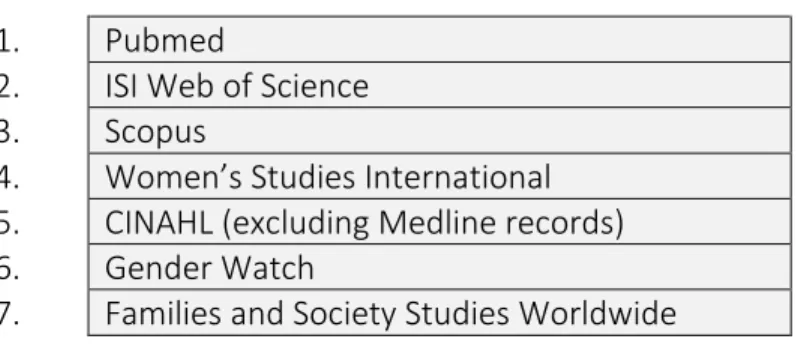
from these databases, bibliographies were explored to access supplemental relevant documents about men and breastfeeding. To ensure that the maximum literature on the research question was captured, representative journals such as "The Journal of Human Lactation," "Breastfeeding Medicine," and the “International Breastfeeding Journal” were also searched. The following table lists the electronic databases searched:
Table 2.1. Databases 1. Pubmed
2. ISI Web of Science 3. Scopus
4. Women’s Studies International 5. CINAHL (excluding Medline records) 6. Gender Watch
7. Families and Society Studies Worldwide
1.2. Key Words
Four keywords and their related peers were combined in such a way to maximize the candidates' articles for the research question. Words such as "nursed or nursing" were not included in the research terms as they had the potential to pull data from the nursing and medical profession. Such clinical information would not be directly beneficial to the
understanding of the social and cultural impact of Black African immigrants. In the same manner, the words such as "male or males" were avoided as they had the likelihood to bring up studies on animals.
20 1.3. Search Strategy
Phase 1
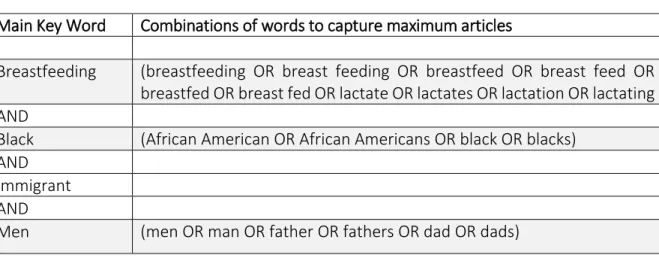
The first phase of the search strategy was intentionally broad. The combination terms for Breastfeeding and Men have included as well a broad designation of term Black. The immigrant terms were not inserted in this first phase. Table 2 shows how the key terms were organized. Their combinations were entered in the seven selected databases.
Table 2.2. Key terms organization
Main Key Word Combinations of words to capture maximum articles
Breastfeeding (breastfeeding OR breast feeding OR breastfeed OR breast feed OR breastfed OR breast fed OR lactate OR lactates OR lactation OR lactating AND
Black (African American OR African Americans OR black OR blacks) AND
Immigrant AND
Men (men OR man OR father OR fathers OR dad OR dads)
Phase 2
In the second phase of the research strategy, the keywords for immigrant were
21 Table 2.3. Keywords for immigrant
Main Key Word Combinations of words to capture maximum articles
Breastfeeding (breastfeeding OR breast feeding OR breastfeed OR breast feed OR breastfed OR breast fed OR lactate OR lactates OR lactation OR lactating AND
Black (Africa OR Caribbean OR South America OR Latin America OR Central America OR Angola OR Antigua OR Barbuda OR Argentina OR Barbados OR Benin OR Botswana OR Brazil OR Burkina Faso OR Burkina Fasso OR Upper Volta OR Burundi OR Urundi OR Cameroon OR Cameroons OR Cameron OR Camerons OR Cape Verde OR Central African Republic OR Chad OR Chile OR Congo OR Zaire OR Cote d'Ivoire OR Ivory Coast OR Cuba OR Djibouti OR French Somaliland OR Eritrea OR Ethiopia OR Gabon OR Gabonese Republic OR Gambia OR Ghana OR Grenada OR Guinea OR Guiana OR Guyana OR Haiti OR Jamaica OR Kenya OR Lesotho OR Basutoland OR Liberia OR Madagascar OR Malagasy Republic OR Malawi OR Nyasaland OR Mali OR Mozambique OR Namibia OR Nepal OR Niger OR Nigeria OR Rwanda OR Ruanda OR Senegal OR Sierra Leone OR Sudan OR Tanzania OR Togo OR Togolese Republic OR Trinidad OR Tobago OR Uganda OR Zambia OR Zimbabwe OR Rhodesia OR Western Sahara OR South Africa OR black OR blacks)
AND
Immigrant (immigrant OR immigrants) AND
Men (men OR man OR father OR fathers OR dad OR dads)
1.4. Inclusion and Exclusion Criteria
Anticipating the dearth of studies on Black immigrants in the field of breastfeeding, no restrictions on time window, geographic locations, and study designs were suggested. The strategy was to maximize the accessibility of existing documentation about the research question.
1.5. Preliminary Results
22
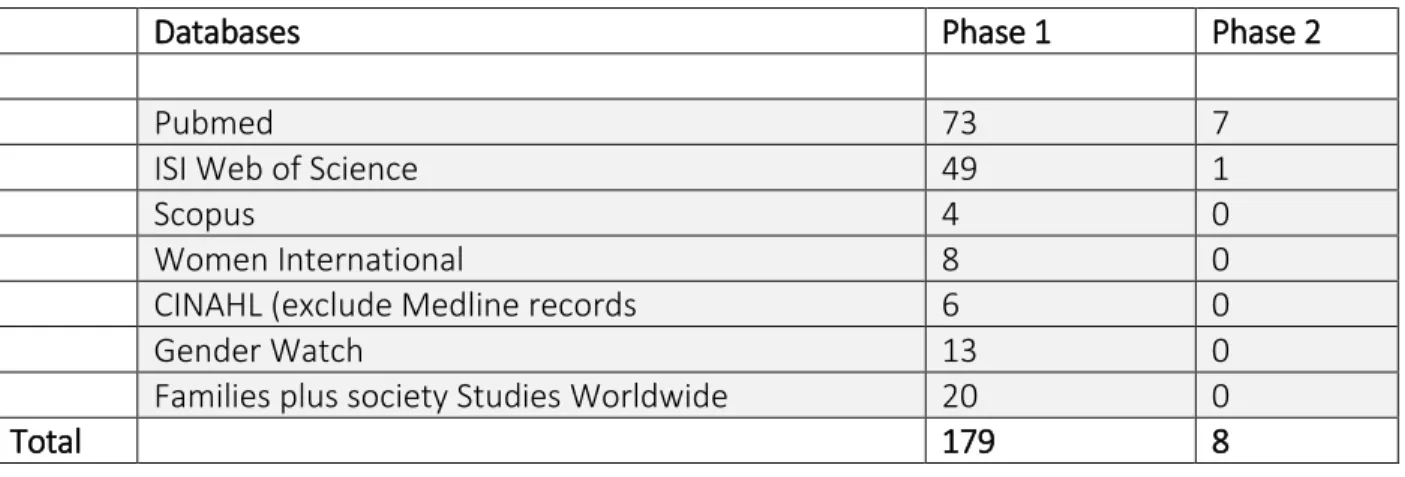
items from phase 1 all disappeared informing us that those items were already included in phase 1. After eliminating duplicated papers, the total count went from 187 to 120. When reviewing the title, the number counted 47 documents left. The following table compares the count of articles generated from the two research strategies.
Table 2.4. Preliminary Results
Databases Phase 1 Phase 2
Pubmed 73 7
ISI Web of Science 49 1
Scopus 4 0
Women International 8 0
CINAHL (exclude Medline records 6 0
Gender Watch 13 0
Families plus society Studies Worldwide 20 0
Total 179 8
1.6. Literature Theme Map
From the 187 articles generated from seven selected databases, 23 articles were reviewed in detail. Figure 1 shows how the elimination process used which resulted in a reduction from 187 articles to 23. Since there have been only a few studies examining African American men influence on breastfeeding and no study has yet explored Black African
Immigrants and their role in breastfeeding, the literature was organized in 4 areas: 1. Men’s role in breastfeeding
2. African American/ black women breastfeeding studies 3. “Black” Men breastfeeding studies
23
Figure 2 gathers the different themes covered in the four areas of literature to inform the need to further study African American men as well as black African immigrants and their role in breastfeeding.
25 2. Men and Breastfeeding
In their review of the literature addressing fathers and breastfeeding, Bar-Yam and Darby (1997)[4] found a strong association between fathers’ positive attitudes toward breastfeeding and mothers’ intentions to breastfeed. Fathers played a central role in influencing a woman’s choice to breastfeed. Several studies have examined the impact of fathers’ attitudes and
encouragement toward breastfeeding on mothers’ decision to breastfeed their infants [27]. One study found that beyond mothers’ demographic characteristics and biomedical factors, fathers’
preference for breastfeeding had the greatest impact on mothers’ choice to breastfeed [8]. Similarly, negative attitudes toward breastfeeding and lack of support from fathers have been associated with the decision to formula feed infants. Also, such studies generally focused on men's knowledge of the nutritional value of breastfeeding rather than their awareness of the social and employment-related barriers experienced by some breastfeeding mothers [8].
Other researchers have reported that men had a strong desire for their infants to be breastfed and wanted to be included in the breastfeeding decision [8]. Moreover, most of these investigators researched current fathers or fathers-to-be in birthing classes, hospitals, and prenatal clinic settings [28]. Most studies that linked men's attitude and their role in
26 3. Breastfeeding in the African American Context 3.1. Breastfeeding and Race
The analysis of demographic variables shows that race is significantly associated with the men’s preference to have their infant breastfeed. In their study of Men of Diverse Cultures,
Pollock et al. (2002) [8] found that African American men scored lower on their preference for breastfeeding compared with all other men in the study. The number of African American men in the study who indicated they preferred their infants to be breastfed was much higher than previously reported in the literature. In all race categories, men who were breastfed themselves were more likely to want their infant breastfed.
Differences were found with the variables of race and age to the items measuring attitudes about breastfeeding in public. African American men, followed by White men, felt that breastfeeding in public was embarrassing. The level of education was not shown to affect their attitudes about breastfeeding in public. African American men's main reasons for wanting their infant to be bottle-fed were (a) breastfeeding in public is embarrassing, (b) breast milk and formula are equally beneficial to the baby, and (c) the mother's health and diet are "not good." On the other hand, many of these same men said that the reason breastmilk was better was that it "made the baby stronger and healthier" and increased attachment between the mother and baby [8].
As stated earlier, researchers identified the male partner's support as an essential factor in a mother's decision to breastfeed [27, 29, 30]. However, researchers evaluating men’s
27
that formula was more convenient and viewed that breastfeeding has social limitations for mothers [31]. Studies published before 2005 included populations with only teens, no teens, a rural rather than urban setting, a small sample size, or a different ethnic group [28, 32]. In comparison to older studies, recent studies found that much of low-income inner-city African-American women interviewed were very well informed about the benefits of breastfeeding and that few were deterred by concerns raised in prior studies, such as breastfeeding in public. However, the lack of useful knowledge about the actual process of breastfeeding was still a significant impediment. Both older and more current literature has identified the influence of the father as important to breastfeeding choice [33].
3.2. National Breastfeeding Rates of African Americans
While most countries' governments collect breastfeeding data per demographics including age, education level, socioeconomic level, and region, only the United States
28
Somewhat surprisingly, Lee et al. (2005) [35] discovered that native-born, non-Hispanic African American women were significantly more likely to report that they intended to
breastfeed than non-Hispanic white women. Even after adjusting for maternal
socio-demographic and behavioral characteristics, native-born, non-Hispanic African Americans were about 60% more likely to anticipate breastfeeding than non-Hispanic whites. This finding stands in contrast to results from nationally representative surveys, which show lower rates of
breastfeeding among African American women than among white women. Lee et al. (2005) postulated that the processes involved in carrying out behavioral intentions are likely to be influenced by many factors, such as the availability of social support from partners and other family members, work and time constraints, issues of personal privacy and space, perceived inconvenience, or embarrassment regarding public exposure of breasts. It is also possible that non-Hispanic African American women are less likely than non-Hispanic white women to receive support services, such as a lactation consultation during the postpartum period.
4. Defining “Blacks” in Health Studies 4.1. African American versus Black
29
Spaulding (2007) on Black Women’s Experience of Breastfeeding [36]. Four reported their ethnic background as West Indian/Caribbean, three as African, and one as American. From the sample of the two studies, what lessons can be learned about breastfeeding behaviors knowing the complex psychosocial determinants of breastfeeding disposition?
4.2. Black Meaning and Scope in Health Studies
Both race and ethnicity are complex, socially constructed and entrenched concepts. While there is a conceptual distinction between race and ethnicity, these terms are often used interchangeably or as synonyms. The traditional scientific concept of race refers to biological homogeneity as defined by a few phenotypical features. In the USA the collection of data on race is well established and is used widely for epidemiological, clinical, and planning purpose [21]. However, the bulk of genetic differences (90% to 95%) occur within populations, and not between continental grouping, and the genes responsible for different physical characteristics (such as skin color and facial features) that underpin race are few and rarely relate to either behavior or disease.
Ethnicity is a multidimensional concept, which is being used frequently in medical research. It is neither simple nor consistent. It comprises one or more of the following: shared origins or social background; shared culture or tradition that are distinctive, maintained between generations, and lead to a sense of identity and group; and a common language or religious tradition. The characteristics that define ethnicity are, however, not fixed and may change over time, which makes ethnicity challenging to measure and use in research. The concept of
30
proxy indicator for socioeconomic deprivation, which ignores for example, economically advantaged African Americans or new black immigrants. There is considerable diversity within and between U.S. populations who are of African descent, so that black must not be averaged as a homogenous group.
4.3. Black Immigrant in the U.S.
A record 3.8 million black immigrants live in the United States today. Black immigrants now account for 8.7% of the nation’s black population. Rapid growth in the black immigrant population is expected to continue [13]. The U.S. Census Bureau projects that by 2060, 16.5% of U.S. Blacks will be immigrants. Much of the recent growth in the size of the black immigrant population has been fueled by African immigration. Africans now make up 36% of the total foreign-born black population. Among Back immigrants from Africa, virtually all are from sub-Saharan African countries [37].
This large and increasing presence of immigrants highlights the importance of monitoring immigrant health. As the immigrant population grows, his health, as well as the health of his descendants, would have a significant impact on the overall health outcomes of the American population [38]. Contrary to the researcher preconception, it is well documented that
immigrants are in better health upon arrival in the U.S. than their American counterparts. This health advantage erodes over time. This phenomenon is known as the healthy immigrant effect.
4.4. Healthy Immigrant Effect
31
immigrant self-selection whereby the healthiest members of a population are more likely to migrate [39]. This last explanation, however, would not account for the documented phenomena of worsening health and health outcomes with greater acculturation once the immigrant resides in the new country; which is precisely an essential feature of the Immigrant Health Effect [40].
Social support and social capital have been documented to have a protective influence on health and health outcomes. Social networks and support that often characterize immigrant communities may be critical to the healthy immigrant effect. In comparing breastfeeding behaviors for immigrant versus nonimmigrant participants, Gibson et al. (2006) found that immigrants were significantly more likely to breastfeed than were non-immigrants [23]. With the Healthy Immigrant Effect, African Immigrants will soon display the same lower rates. A greater understanding of the healthy immigrant effect has the potential to help improve breastfeeding rates by highlighting what unifies and contrasts the contribution and attribution of Black immigrants in minority breastfeeding data.
5. Breastfeeding and Immigrant Status 5.1. The Hispanic Paradox
As stated earlier, socioeconomic status does not entirely determinate breastfeeding behaviors. For example, Hispanics, who tend to have low educational achievement and
32
Rates of breastfeeding among Hispanic mothers appear to be only weakly correlated with socioeconomic status. Hispanic breastfeeding behaviors may be evidence of the “Hispanic paradox,” the phenomenon in which health outcomes of Hispanics are better than their income
levels would indicate in comparison to other populations with comparable socioeconomic status. Proponents of the paradox believe that low levels of acculturation may protect some Hispanics from engaging in damaging American health behaviors [23].
However, beyond the well-documented finding that non-Hispanic Blacks are less inclined to breastfeed, little attention has been paid to the importance of race and ethnicity in evaluating breastfeeding behaviors. It is therefore unknown whether other immigrant mothers who are similar in socioeconomic status to Hispanics have comparable breastfeeding rates and how differences in country of origin may influence breastfeeding [23]. Additionally, although surveys indicate that Hispanic mothers breastfeed at rates like those of non-Hispanic Whites, those surveys do not distinguish between immigrant and nonimmigrant Hispanics. Consequently, it is possible that the Hispanic paradox applies only to Hispanic mothers who immigrated to the US, but that US-born Hispanic mothers have breastfeeding rates commensurate with their lower socioeconomic status. Furthermore, the Hispanic paradox literature is concentrated on Mexicans, so it is unknown if the paradox applies to non-Mexican Hispanic families.
5.2. Immigrant Breastfeeding Behaviors
33
a foreign-born mother or father resided in the United States, the odds of breastfeeding
decreased by 4%. Additionally, there are more considerable differences in breastfeeding rates by immigrant status than by ethnicity.
Immigrant women, both Hispanic and foreign-born black women, were about six times as likely to intend to breastfeed as non-Hispanic white women. This difference was not explained by differences in educational levels, marital or cohabiting status, household income, or health-related behaviors. According to Gibson et al. (2006) [23], this finding likely reflects the fact that the immigrant mothers in their sample came mostly from countries where breastfeeding is a culturally and socially normative behavior. This suggests that immigration status and therefore the cultural norms of the native country may be a more critical factor in determining
breastfeeding than ethnicity. Indeed, because there was no difference in breastfeeding initiation for non-Hispanic and Hispanic immigrants, the Hispanic paradox may be true of other immigrant groups.
6. Literature Result Summary 6.1. Summary of Articles
Early studies involving fathers in breastfeeding decisions dated from 1992. Until 2005, most studies were surveyed questionnaires that were handed or mailed to identify participants who were mostly middle to upper-middle class whites. Samples were of small sizes, and the settings were primarily hospitals. Blacks participants counted in those studies were not
34
categories. For instance, research done in Canada classified Canadian-born from non-born Canadians without specifying if participants were white, Asians, or Blacks.
Studies published after 2005 were cross-sectional designs and focus groups. African American would be distinguished from non-U.S. born blacks. The study design criteria would ask participants to self-select as African American or Caucasian to be included in the study. A sample of African Americans in more recent studies is therefore not biased with the presence of blacks from different ethnic backgrounds. No research has focused explicitly on Black immigrants from other countries. Appendix A provides a summary of reviewed articles.
6.2. Gap in the literature
35 6.3. Conclusions
Studies that include fathers show that they have a great deal of influence on women’s early
infant-feeding decisions. Fathers can provide emotional and practical support to new mothers. Unfortunately, little data are available about how black men perceive their roles as fathers and partners in the context of early infant feeding. No study looks specifically at black African Immigrants and their role in breastfeeding. Black Africans are among the fastest-growing groups of U.S. immigrants, increasing by about 200 percent during the 1980s and 1990s and nearly 100 percent during the 2000s. Black African immigrants are often indistinguishably included in African American minority category. It is therefore imperative to study the extent of how black immigrant families experience breastfeeding in the U.S. within the context of a minority group.
Within the African American breastfeeding rate, there are disparities based on the nativity of black African immigrants. Understanding the heterogeneity of the Black community is an essential step of addressing the reality of health disparities in the U.S. Understanding how ethnicity and cultural norms in black communities in the U.S. affects health behaviors such as breastfeeding could help design breastfeeding promotion, education, and counseling initiatives that are specific and targeted to the needs of the heterogeneous black communities in the U.S.
36
37
CHAPTER III: RESEARCH DESIGN AND METHODOLOGY 1. Purpose and Research Questions
This study proposes to examine the following research question: What role do fathers’ cultural experiences play in the decision to support breastfeeding. The nature of qualitative approach helps to explore how breastfeeding is situated and interpreted in the daily lives of black fathers. Using the PEN-3 cultural model for theoretical guidance, the research questions will be addressed with four aims:
Aim 1. What are breastfeeding experiences of Congolese Immigrant fathers of breastfed infants?
Method: A secondary analysis of focus groups that were conducted to assess the social and cultural breastfeeding experiences of Congolese Immigrant fathers of breastfed infants.
Aim 2. What are breastfeeding experiences of African American fathers of breastfed infants?
Method: A secondary analysis of focus groups that were conducted to assess the social and cultural breastfeeding experiences of African American men.
38
Method: The PEN-3 cultural model will guide the comparisons of the two studies to highlight their findings.
Aim 4. Plan for change: To develop a Father-directed Breastfeeding Toolkit to be marketed in African American communities.
Method: semi-structured interviews of Key informants to guide the development of the plan for change.
Focus group studies of both Congolese Immigrant and African American fathers of breastfed children were conducted in the Dallas County area in 2014. Collected and transcribed data from these two studies will be first analyzed separately to explore the daily breastfeeding experiences of two Black groups and identify commons themes while highlighting what makes them unique. Using the PEN-3 model cultural framework, the analyzed data of the two groups of fathers will be then contrasted and compared to assess their cultural roles in breastfeeding support. Key informants in this study are African American community experts who will provide insights on father-directed breastfeeding support and give recommendations for the plan for change.
2. Research Design
39
breastfeeding practice and behaviors. The scientific literature abounds with evidence that supports breastfeeding for the health benefits for mother and child, yet, the literature lacks sufficient exploration of the social and cultural context of breastfeeding particularly for the African American minority. The examination of the socio-cultural context of breastfeeding must come from a social, or mainstream, context rather than a medical context. A qualitative design that is grounded in the participants’ experiences, rather than a medical perspective bridges the divide between what is medically recommended versus what is socio-culturally experienced regarding breastfeeding in the African American population.
3. Qualitative Research
The research questions of this study extend over the domain of male breastfeeding perspective to the specific understanding of the cultural contribution of breastfeeding choice and practice. A qualitative approach is an appropriate method to explore and then elucidate the influence on men in breastfeeding culture. Qualitative research is defined in the Creswell’s book
[41] as an approach for exploring and understanding the meaning individuals or groups ascribe to a social or human problem. The primary generation of meaning is always social, arising in and out of interaction with a human community. Reaching black fathers of breastfed infants in their communities may generate insights and meaning that can educate the development of
40
Immigrant), cultural meanings of their behaviors regarding their breastfeeding experience can be coded.
Creswell [41] discussed that meanings are varied and multiple, leading to look for the complexity of views rather than narrowing meanings into a few categories or ideas. The goal of the research is to rely as much as possible on the participants’ views of breastfeeding
experiences. The questions asked were broad and general so that the participants could construct the meaning of a situation, typically forged in discussions or interactions with other persons. Hence, conducting focus groups on men breastfeeding views seem to be the indicated method.
The more open-ended the questioning, the better, as carefully listening to what people say or do in their life settings connects to their social and historical contexts. Meanings are not merely imprinted on individuals but are formed through interaction with others and through historical and cultural norms that operate in individuals' lives. Therefore, the historical and contextual expectations and roles of African American males in breastfeeding are to be distinguished from those of black immigrants in the U.S.
4. Focus Groups
41
University of Cincinnati to examine the Immigrant African Fathers’ roles in the decision-making process to breastfeed. In this second study, only Congolese Immigrants fathers of breastfed infants were recruited. Focus groups interviews and observations were also the primary sources of data collection.
4.1. African American Study
The African American Study was funded by a grant from Baylor University Research
42
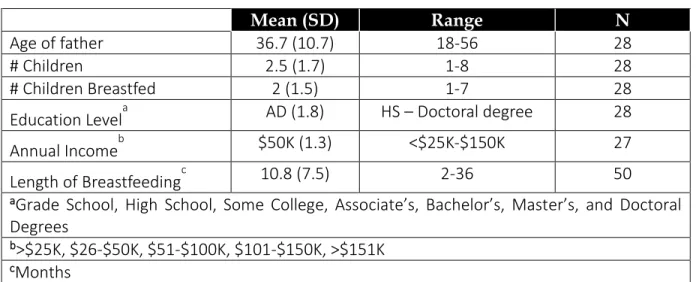
Table 3.1. African American Fathers Demographic Data
Mean (SD) Range N
Age of father 36.7 (10.7) 18-56 28
# Children 2.5 (1.7) 1-8 28
# Children Breastfed 2 (1.5) 1-7 28
Education Levela AD (1.8) HS – Doctoral degree 28
Annual Incomeb $50K (1.3) <$25K-$150K 27
Length of Breastfeedingc 10.8 (7.5) 2-36 50
aGrade School, High School, Some College, Associate’s, Bachelor’s, Master’s, and Doctoral Degrees
b>$25K, $26-$50K, $51-$100K, $101-$150K, >$151K cMonths
Table 3.2. Questions Asked
(Opening) 1. Tell us your name and how many children you have.
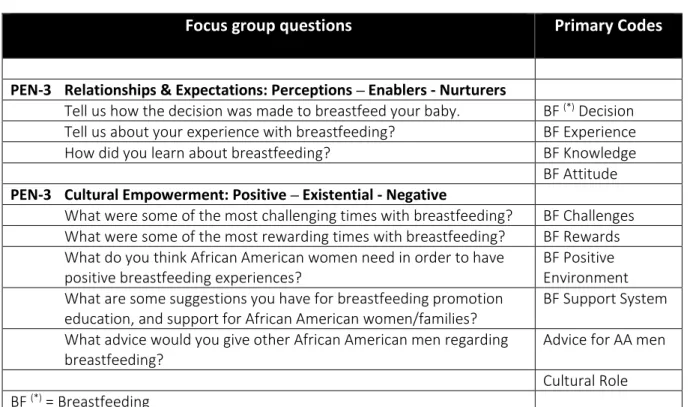
PEN-3 Relationships & Expectations: Perceptions – Enablers - Nurturers (Introductory) 2. Tell us how the decision was made to breastfeed your baby. (Transition) 3. Tell us about your experience with breastfeeding?
(Key) 4. How did you learn about breastfeeding?
PEN-3 Cultural Empowerment: Positive – Existential - Negative
5. What were some of the most challenging/rewarding times with breastfeeding?
6. What do you think African American women need in order to have positive breastfeeding experiences?
7. What are some suggestions you have for breastfeeding promotion education, and support for African American women/families?
8. What advice would you give other African American men regarding breastfeeding?
(Closing) 9. Is there anything else that you would like to share with the group regarding fathering a breastfed child?
43 4.2. Congolese Immigrant Study
“Congolese Immigrant” is defined in this study as an individual who was born and raised in the Democratic Republic of Congo and migrated in the US as a young adult (early twenties). The Congolese Immigrant study was funded by the Taft Research center in association with the Africana Studies Department of the University of Cincinnati to examine the Immigrant African Fathers’ roles in the decision-making process to breastfeed. Four focus groups of 20 Congolese immigrants’ fathers of breastfed children were conducted in summer 2014.
In this study, the researcher was the facilitator for all the focus groups. The researcher originated from the same country as the participants, the Democratic Republic of Congo. Similar questions as the ones listed in table 2 were asked to Congolese immigrant fathers with a
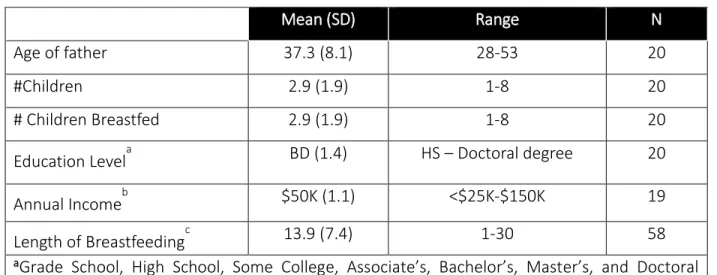
perspective of immigration realities. Table 3 synthesizes Congolese immigrant fathers’ biographic data.
Table 3.3. Congolese Immigrant Fathers Demographic Data
Mean (SD) Range N
Age of father 37.3 (8.1) 28-53 20
#Children 2.9 (1.9) 1-8 20
# Children Breastfed 2.9 (1.9) 1-8 20
Education Levela BD (1.4) HS – Doctoral degree 20
Annual Incomeb $50K (1.1) <$25K-$150K 19
Length of Breastfeedingc 13.9 (7.4) 1-30 58
aGrade School, High School, Some College, Associate’s, Bachelor’s, Master’s, and Doctoral Degrees
44 5. Key Informant Interviews
Key informant interviews are qualitative in-depth interviews with people who are profoundly encultured and has significant experience with the phenomenon of concern[43]. African
American community leaders or practitioners who operate with father involvement programs were approached according to Afrocentric principles that place African value systems, culture, and experiences at the center of this study. These leaders and practitioners represented the key informants because of their ability to translate the cultural realities and languages of African American fathers regarding breastfeeding support. They brought invaluable insights and
recommendations for the plan of change. Following the PEN-3 cultural framework, these leaders and practitioners were interviewed in a semi-structured format about their knowledge and understanding about father-directed breastfeeding support.
5.1. Afrocentric Approaches
An essential aspect of the application of Afrocentric approaches to work with African
American fathers is gaining the understanding of the associations between African American and African culture. P.E. Stewart [44] stated that: “it is the continued and sometimes unconscious practice of African traditions and values that make the use of Afrocentric approaches appropriate
45
key informants. One Afrocentrism principle is to move individuals and families to a sense of interconnectedness and wholeness while building on positive attributes of each community [44]. To this end, community leaders and practitioners should be consulted and included in the plan for change.
5.2. Participants and Sampling
The participants interviewed were champions in the field of African American men
involvement programs. Their names and organizations were identified through online search as well as through referrals following the snowball sampling technique. In selecting these African American leaders, the researcher made sure that they had both successful and unsuccessful experiences developing their programs and also how they measured success in their
collaborative practices. Through the lenses of the PEN-3 theoretical model, the researcher inquired about the enablers and nurturers of breastfeeding perceptions in the African American men. Appendix B displays the interview instruments used.
5.3. Data Collection and Analysis
The software program NVivo 12 (QSR International, 2018) was used to transcribe the recorded interviews and perform the data analysis. Permission to disclose the names and the information provided in the interviews was not required. Names and identifying information were removed from the quotes to protect anonymity. The PEN-3 cultural model was the guide to uncover factors that influenced the African American men breastfeeding perceptions and
46 6. Qualitative Analysis
6.1. Analysis Plan
The qualitative content analysis was applied to examine the breastfeeding experiences of black fathers of breastfed children. The qualitative content analysis was the preferred method for this study because the researcher intended to formulate a comprehensive description of the experience of breastfeeding for Congolese Immigrant fathers versus African American fathers. Qualitative analyses were conducted through the lenses of the PEN-3 cultural framework to emphasize similarities or contrast differences between African American and Congolese Immigrant. Their breastfeeding behaviors in their social and historical contexts have helped inform the appropriateness of cultural approach to educate, equip, and empower fathers for breastfeeding support.
All audio-recordings of the focus group were transcribed by a professional transcription service that specializes in transcription services for academia. The units of analysis are the 12 transcripts of the focus group – eight for the African American study and four for the Congolese American study - as well as the written observations by the researcher. The 12 transcripts
counted 512 pages and were uploaded into the qualitative data management software NVivo 12. 6.2. PEN-3 Model Analysis Tool
The PEN-3 model as a theoretical framework has been used to centralize culture in the study of health behaviors and to integrate culturally relevant factors in the development of
47
analyze data on African American and Congolese American fathers separately. The model was also used for the presentations of results and the interpretation of the findings.
Data analytical approaches that emerged with the use of PEN-3 include (1) Categorization, (2) Cross-Tabulation, and (3) Re-contextualization. With categorization, it is common for studies to utilize the PEN-3 model as an organizing framework to categorize themes generated from qualitative data into one of the three domains of the model: Cultural Identity, Relationships & Expectations, and Cultural Empowerment. Some studies utilized all three domains of the model to categorize the themes generated for data analysis. This study considered also the three domains of the model. How African American and Congolese American men identify themselves vis-à-vis of breastfeeding behaviors. What are their relationships and expectations on
breastfeeding practices, and how their empowerments are experienced?
Since the analyzed data were generated from Black fathers of breastfed children, a cross-tabulation between the Relationships & Expectations (i.e., perceptions, enablers, nurturers) domain and the Cultural Empowerment (i.e., positive, existential, and negative) domain was executed to generate a 3 × 3 table containing nine categories as shown in table 3.9.
Table 3.4. Cultural Empowerment and Relationships & Expectations
PEN-3 Domains Positive Existential Negative
Perceptions Enablers Nurturers
This approach, which is referred to as the assessment phase of the PEN-3 model,
48
Expectations domain with the Cultural Empowerment domain helped capture the full range of black men breastfeeding experiences from positive to negative. Re-contextualization suggests that the goal is to locate the themes generated from qualitative data within the context of established knowledge. This third approach was considered for the development of the plan for change to propose a culturally appropriate toolkit to educate, equip, and empower Back fathers for breastfeeding support.
7. Summary of Methods
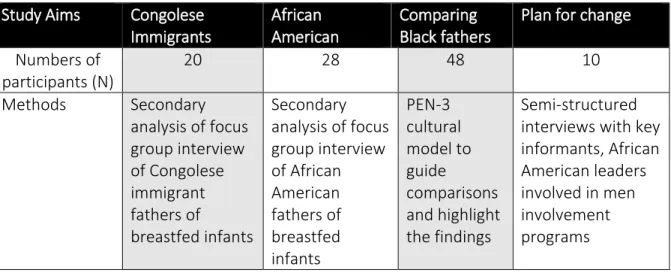
Focus group studies of both Congolese Immigrant and African American fathers of breastfed children were analyzed separately to highlight the particularities of breastfeeding experiences of two Black groups. The PEN-3 model cultural framework guided the comparison of the two groups. Key informants augmented the knowledge on how to intervene in African American communities. The following table summarizes the qualitative methods used to describe Black fathers’ cultural experiences to support breastfeeding.
Table 3.5. Qualitative description of fathers’ cultural experiences to support breastfeeding
Study Aims Congolese
Immigrants
African American
Comparing Black fathers
Plan for change
Numbers of participants (N)
20 28 48 10