TEAM DYNAMICS AND LEARNING BEHAVIOR IN HOSPITALS: A STUDY OF ERROR REPORTING BY NURSES
Lindsay Thompson Munn
A dissertation submitted to the faculty at the University of North Carolina at Chapel Hill in partial fulfillment of the requirements for the degree of Doctor of Philosophy in the School of Nursing.
Chapel Hill 2016
© 2016
ABSTRACT
Lindsay Thompson Munn: Team Dynamics and Learning Behavior in Hospitals: A Study of Error Reporting by Nurses
(Under the direction of Cheryl B. Jones)
Error reporting is the primary way that hospitals identify errors and near misses, and it is essential for organizational learning and improvement to occur. However, it is widely recognized that errors in hospitals are significantly underreported. As a result, there are numerous lost opportunities for health care organizations to learn from errors and improve the care delivered to patients.
The purpose of this study was to use the model of work-team learning as the theoretical foundation to examine the error reporting behaviors of nurses. The study examined the team factors of safety climate, leader inclusiveness, and psychological safety and their effect on nurses’ error reporting.
A cross-sectional, descriptive design was used for the study. Data were collected from nurses and nurse managers through self-administered surveys. The research questions of the study were answered with data from up to 814 nurses and 43 nurse managers using methods for modeling correlated outcomes. Bootstrap confidence intervals with bias correction were used to determine the mediating effect of psychological safety.
team factors of safety climate, leader inclusiveness, and psychological safety negatively predicted the number of error reports that nurses reported submitting over a 12-month period. The study findings also showed that psychological safety mediated the relationship between the interprofessional relationships dimension of the safety climate and nurses’ perceptions of error reporting frequency on their unit as well as the relationship between leader
inclusiveness and nurses’ perceptions of error reporting frequency on their unit.
This study’s findings underscore the complexity of error reporting in hospitals and the need for more advanced research methods that allow for deeper investigation and explanation of error reporting in hospitals. This study lays the groundwork for future study by
To my husband, Andy, and my son, George.
ACKNOWLEDGEMENTS
There are so many individuals who have been integral to my success. I would like to especially thank my committee. Cheryl, I cannot imagine a more supportive, capable, and genuine mentor. You have challenged my thinking, encouraged me in my research, and helped me in every way possible. I could not have persevered through this program without your continual optimism and support. Thank you for all that you have invested in me, I look forward to many years of collaboration as friends and colleagues. George, I am so grateful that you were on my committee. You have taught me so much. Thank you for so kindly and patiently answering my countless statistical questions. Mary, at the outset of this study, I had no idea the extent to which I would rely on your expertise. Thank you for your help with scales and unexpected factor analyses. Your humor made it a more enjoyable experience. Celeste, your knowledge of patient safety and organizations has been invaluable. Thank you for the many ways that you helped shape the study, especially with your practical suggestions about data collection and help with interpreting findings. Tina, I am so appreciative to you for serving on my committee. I have enjoyed working with you as a physician in the PICU, on numerous quality and safety projects, and on my dissertation. Your passion for quality and safety in patient care is inspiring, and your advice and help with this study has been extremely valuable.
would not have been successful without your help. I am also grateful to the nurses and nurse managers who participated in this study. There would be no study without your
participation, thank you for your willingness to take part in this research study.
I am also grateful to my family. Sue and Cliff, I am so thankful for your love and support. Thank you for keeping George every Thursday, almost since he was born, so that I could go to Chapel Hill. He loves spending time with you, and it has given me peace of mind to know that he is loved and taken care of while I was working. To my parents, you have always encouraged me to do my best and have modeled what hard work looks like. Thank you for your love and for continually praying for me. Thank you for driving to Charlotte for months to keep George and take him on fun outings as well as doing the
TABLE OF CONTENTS
LIST OF TABLES ... xvi
LIST OF FIGURES ... xvii
Chapter I. INTRODUCTION ...1
Background ...1
Errors and Error Reporting ...3
Error-Reporting Systems ...4
Past Studies of Error Reporting ...5
Safety climate ...8
Leader inclusiveness ...8
Psychological safety ...9
Nurses and Error Reporting ...10
The Nursing Unit ...11
Purpose ...11
Theoretical Foundation and Conceptual Model ...12
Significance...13
Chapter Summary and Outline of This Dissertation ...13
II. REVIEW OF THE LITERATURE AND THEORETICAL FRAMEWORK...15
The Nursing Unit as a Team ...16
Safety Climate ...18
Leader Inclusiveness ...21
Psychological Safety ...23
Knowledge Gaps ...25
Theoretical Foundation of the Study...26
Group and Organizational Influences on Learning from Mistakes ...26
Learning Behavior in Work Teams...28
The Learning Process in Interdisciplinary Action Teams...30
Summary of Key Studies by Edmondson ...33
The Model of Work-Team Learning...33
Antecedent Conditions: Team Structures ...34
Team Beliefs: Team Safety and Team Efficacy ...34
Team Behaviors: Team Learning Behavior ...36
Outcomes ...36
The Model of Work Team Learning Applied to This Study of Error Reporting...36
Team Structures ...38
Context support ...39
Team leadership behavior ...40
Team Beliefs ...40
Team learning behavior ...42
Relationships of the Model ...42
Context support and team leadership behavior ...42
Team safety belief ...44
Covariates ...47
Nursing characteristics ...47
Nurse education ...47
Nurse experience ...48
Nurse tenure ...49
Nursing unit characteristics ...50
Nurse manager education ...51
Nursing manager tenure ...51
Unit size ...51
Type of unit ...52
Summary of the Conceptual Model ...53
Chapter Summary ...56
III. METHODOLOGY ...57
Study Design ...57
Setting and Sample ...58
Power Analysis ...58
Instrumentation ...59
Variables and Their Measurement ...59
Safety Climate ...63
Leader Inclusiveness ...66
Psychological Safety ...67
Covariates ...69
Nursing characteristics ...69
Nurse education ...69
Nurse experience ...70
Nurse tenure ...70
Nursing unit characteristics ...70
Nurse manager education ...70
Nurse manager tenure ...71
Unit size ...71
Type of nursing unit ...71
Study Survey ...72
Human Subjects Protection ...73
Procedures ...74
Study Site Coordinator ...74
Recruitment Activities ...74
Data Collection ...75
Survey Implementation ...76
Nurse surveys ...76
How Do Safety Climate and Leader Inclusiveness Affect
Error Reporting? ...80
How Do Safety Climate and Leader Inclusiveness Affect Psychological Safety? ...81
How Does Psychological Safety Affect Error Reporting? ...81
Do Safety Climate and Leader Inclusiveness Indirectly Affect Error Reporting Through Psychological Safety? ...82
Summary ...84
IV. FINDINGS ...85
Description of the Sample ...85
Response Rate and Sample Size ...85
Missing Item Values ...86
Description of the Variables ...87
Sample Characteristics ...87
Descriptive Statistics of Study Variables ...87
Relationships Between Study Variables ...88
Covariate Selection ...89
Covariate analysis for psychological safety ...89
Covariate analysis for error reporting (nurses’ perceptions) ...90
Covariate selection for error reporting (number of reports submitted) ...91
Major Study Findings ...92
Inclusiveness Affect Psychological Safety? ...95
Research Question 3: How Does Psychological Safety Affect Error Reporting? ...96
Research Question 4: Do Safety Climate and Leader Inclusiveness Indirectly Affect Error Reporting Through Psychological Safety? ...98
Additional Analyses ...103
Summary of Study Results...103
Chapter Summary ...105
V. DISCUSSION ...107
Summary and Interpretation of Major Study Findings ...108
The Effect of Safety Climate and Leader Inclusiveness on Error Reporting ...108
The Effect of Safety Climate and Leader Inclusiveness on Psychological Safety ...110
The Effect of Psychological Safety on Error Reporting ...111
The Mediating Effect of Psychological Safety ...112
Study Covariates ...114
Nurse characteristics ...114
Nursing unit characteristics ...115
The Relationships between the Two Measures of Error Reporting...117
Summary of Major Findings ...118
Limitations ...119
Implications of the Findings to Theory ...128
Summary and Conclusions ...129
APPENDIX 1: FREQUENCY OF EVENT REPORTING SCALE ...130
APPENDIX 2: SAFETY CLIMATE SURVEY ...131
APPENDIX 3: DIMENSIONS AND ITEMS OF THE SAFETY CLIMATE SURVEY ....133
APPENDIX 4: INCLUSIVE LEADERSHIP SCALE ...135
APPENDIX 5: PSYCHOLOGICAL SAFETY SCALE...136
APPENDIX 6: NURSE CONSENT TO PARTICIPATE ...137
APPENDIX 7: NURSE MANAGER CONSENT TO PARTICIPATE ...138
APPENDIX 8: SAMPLE CHARACTERISTICS ...139
APPENDIX 9: DESCRIPTIVE STATISTICS FOR VARIABLES IN THE STUDY ...140
APPENDIX 10: PEARSON CORRELATION COEFFICIENTS FOR CONTINUOUS STUDY VARIABLES AND COVARIATES ...141
APPENDIX 11: PEARSON CORRELATION COEFFICIENTS FOR NURSING UNIT LEVEL COVARIATES ...142
APPENDIX 12: COVARIATE ANALYSIS FOR PSYCHOLOGICAL SAFETY...143
APPENDIX 13: COVARIATE ANALYSIS FOR NURSE PERCEPTIONS OF ERROR REPORTING ...144
APPENDIX 14: COVARIATE ANALYSIS FOR THE NUMBER OF ERROR REPORTS SUBMITTED BY NURSES ...145
APPENDIX 15: THE INDIRECT EFFECT OF SAFETY CLIMATE AND LEADER INCLUSIVENESS ON ERROR REPORTING THROUGH PSYCHOLOGICAL SAFETY ...146
APPENDIX 16: THE INDIRECT EFFECT OF SAFETY CLIMATE AND LEADER INCLUSIVENESS ON ERROR REPORTING1 THROUGH PSYCHOLOGICAL SAFETY WITH SIGNIFICANT COVARIATES ...147
LIST OF TABLES
Table
1 Definitions of the Study Concepts and Variables Used in this Study
of Error Reporting ... 55 2 Study Variables, Level of the Variable, Type of Variable, and Source
of the Variable... 72 3 Details on the Implementation of the Nurse Survey ... 77 4 Details for the Implementation of the Nurse Manager Survey ... 78 5 The Effect of Safety Climate and Leader Inclusiveness on Perceptions
of Error Reporting ... 93 6 The Effect of Safety Climate and Leader Inclusiveness on the Number
of Error Reports ... 95 7 The Effect of Leader Inclusiveness and Safety Climate on Psychological
Safety ... 96 8 The Effect of Psychological Safety on Nurses’ Perceptions of Error
Reporting... 97 9 The Effect of Psychological Safety on Number of Error Reports
Submitted ... 98 10 Steps 1-3 of the Mediation Analysis for Psychological Safety... 100 11 Step 4 of the Mediation Analysis for Psychological Safety ... 101 12 Steps 1-3 of the Mediation Analysis for Psychological Safety with
Significant Covariates ... 102 13 Step 4 of the Mediation Analysis for Psychological Safety with
LIST OF FIGURES
Figure
1 A model of work-team learning (Edmondson, 1999, p. 357) ... 33 2 Conceptual model of error reporting, derived from Edmondson’s model
of work-team learning ... 38 3 Illustration of the derivation of underlying conceptual components of
CHAPTER 1
INTRODUCTION
The identification of errors that occur in the treatment of patients is central to the ability of hospitals to learn from errors and thereby improve the quality and safety of care delivered to patients (Institute of Medicine [IOM], 2000; Leape, 2002). However, research indicates that errors in hospitals are grossly underreported (Levinson 2012; Sari, Sheldon, Cracknell, & Turnbull, 2006). As a result, countless opportunities to improve quality and safety in hospitals by learning from errors are missed because errors are not reported. Past studies of error reporting have often lacked a strong theoretical foundation to inform the relationships and variables of study examined (Holden & Karsh, 2007; Russo, Buonocore, & Ferrara, 2015). This study will assess unit/team level factors that affect error reporting, specifically the variables of safety climate, leader inclusiveness, and psychological safety derived from the model of work-team learning (Edmondson, 1999). Such an approach will enhance our understanding of clinician error reporting behaviors and help to identify improvements that may foster better error reporting in hospitals.
Background
In 2000, the IOM released a landmark report, To Err is Human, the first in a series of reports on quality and safety of patient care. This report brought national attention to the number of patient care errors that occur in the U.S. health care system, particularly in
near misses, and gives healthcare leaders the knowledge needed to improve the safety and quality of care delivered to patients. This report also called for the expansion of error-reporting activities in hospitals to enhance organizational learning1 (IOM, 2000; Leape, 2002). The IOM recommendations have led to the universal adoption of error-reporting systems in hospitals nationwide as a mechanism to facilitate clinicians’ reporting of errors as they occur, and as a way for organizations to learn from these recorded errors (Farley, Haviland, Haas, & Pham, 2010; Levinson, 2012; Mitchell, Schuster, Smith, Pronovost, & Wu, 2016).
From an organizational learning perspective, error reporting is viewed as valuable because it provides an opportunity to learn from failures and near misses (Edmondson, 2004). However, it is difficult for leaders of organizations to take actions that promote learning from errors because organizational structures often prevent error identification and social factors may inhibit transparent discussion and analysis of errors in a way that
facilitates collective learning by the organization (Canon & Edmondson, 2005). Subsequently, relatively few organizations truly learn from their errors (Canon &
Errors and Error Reporting
Error-related events in patient care include both actual errors and near misses in preventive care, diagnosis, and treatment (Garrouste-Orgeas et al., 2012; IOM, 2000; Taylor et al., 2004). Errors are defined as the unintended outcome of care that may or may not result in physical harm to the patient, while near misses are defined as potential errors that could have resulted in actual harm to a patient if not intercepted by clinicians or other means (Garrouste-Orgeas et al., 2012; IOM, 2000). Error reporting is the communication of errors and near misses to managers and healthcare administrators (Leape, 2002). Throughout this dissertation, the term “errors” encompass both near misses and errors because error reporting typically captures both types of events.
Errors in healthcare are caused by both human error and system factors (Garrouste-Orgeas et al., 2012; IOM, 2000). James Reason (2008), a noted patient safety researcher and theorist, said the following:
Fallibility is part of the human condition. Errors cannot be eradicated but they can be anticipated and managed accordingly. We can’t fundamentally change the human condition, but we can change the conditions under which people work in order to make errors less likely and more easily recoverable. (p. 34)
As Reason (2008) asserted, human error is a relatively unchangeable characteristic of individuals that renders admonitions for increased vigilance or individual efforts by
healthcare providers ineffective in reducing error (Garrouste-Orgeas et al., 2012). Instead, system factors, elements of the work environment, and the processes in organizational systems must be changed in a way that shifts the culture from one of blaming and punishing individuals to one that examines and encourages organizational learning through
Error-Reporting Systems
Error-reporting systems are put in place by organizations as a mechanism to formally collect error reports. An estimated 90% of hospitals have such systems in place (Mitchell, Schuster, Smith, Pronovost, & Wu, 2016). The majority of error-reporting systems are voluntary, but some are mandatory (Robinson & Hughes, 2008). Almost all error-reporting systems are confidential, meaning that no legal action can be taken for the reports filed. Some systems go a step further and are anonymous, keeping the identity secret of the
individual reporting the error (Agency for Healthcare Research and Quality [AHRQ], 2014). Medication errors and patient falls generally account for the largest number of error reports submitted to error reporting systems (AHRQ, 2014). Ideally, the purpose of error reporting systems is to promote organizational learning and improve the safety and quality of care. In reality, however, error-reporting systems are often used for risk management purposes
because errors that cause harm to patients also pose the threat of substantial litigation costs to hospitals (Helmreich, 2000).
Error-reporting systems in hospitals necessarily rely on clinicians (e.g., nurses, physicians, pharmacists, etc.) to report errors. Because individual clinicians are directly involved with errors by identifying them, observing them, or contributing to them, they are the ones who must ultimately report errors. However, because most error reporting systems are voluntary; individuals may choose whether to report an error and how to report it. Thus, error reporting in hospitals has both an organizational component through the formal
Error-reporting systems are the formal, primary way through which healthcare professionals report errors in hospitals (Garrouste-Orgeas et al., 2012; Levinson, 2012). Unfortunately, error-reporting systems are not always used in the way or to the degree intended. Research demonstrates that healthcare professionals sometimes engage in
“informal” reporting practices that include verbally discussing an error-related event with a manager or team colleague instead of making a formal report, which allows clinicians the opportunity to acknowledge that something happened while protecting themselves from being exposed for reporting or committing an error (Espin, Lingard, Baker, & Regehr, 2006; Espin et al., 2007; Hewitt & Chreim, 2015; Lederman, Dreyfus, Matchan, Knott, & Milton, 2013). Sometimes clinicians may forgo formal error reporting altogether if they are unsure of what constitutes an error (Levinson, 2012; Sari et al., 2006). The reasons that individuals engage in formal or informal reporting practices or choose not to report an error at all are sometimes complex.
Past Studies of Error Reporting
We know that knowledge deficits related to what should be reported and the time-consuming nature of error reporting are common reasons cited by clinicians for not reporting errors (Hartnell, MacKinnon, Sketris, & Fleming, 2012; Jeffe et al., 2004; Kaldjian et al., 2008; Mayo & Duncan, 2004). Past studies have also documented surprising findings related to error reporting. In a study examining how healthcare professionals (e.g., nurses,
they could either fix themselves or were so common that the problem was accepted as part of the everyday work routine (Hewitt & Chreim, 2015). These findings are similar to Tucker and Edmondson’s (2003) study of nurses in nursing units where they inferred that a lack of organizational learning from failures may be explained, in part, by empowerment of nurses to fix problems themselves.
In a mixed-methods case study examining the effects of an electronic error-reporting system in two large Australian hospitals, researchers identified several barriers that inhibited error reporting. These obstacles included the need for further training and familiarity with the system, fear of blame from others for reporting errors, and the use of informal error reporting (Lederman et al., 2013). The researchers also found that clinicians sometimes engaged in error reporting system for more unexpected reasons, such as using it as a
defensive tool to justify their clinical decisions or to protect themselves from the possibility of perceived future threats (e.g., threats of blame from the manager for clinical decisions). These findings are consistent with other qualitative studies reporting that clinicians used error-reporting systems as legal protection or to protect themselves from managers or physicians who they feared (Hartnell et al., 2012). Studies have also documented that clinicians sometimes used the reporting system as a way to complain to upper management about problems in the work place that were not being addressed (Lederman et al., 2013). Thus, clinicians do or do not report error-related events for reasons that seem counter-intuitive but reflect the complicated nature of error reporting.
error, documenting the error in a clinical note in the patient’s chart, or discussing the error with the multidisciplinary healthcare team during patient rounds (Espin et al., 2006, 2007; Lederman et al., 2013). Studies indicate that these informal reporting practices fulfill clinicians’ felt obligations to report errors and thus explain why they may refrain from
research on error reporting has failed to do. Based on past error reporting research, the variables of safety climate, leader inclusiveness, and psychological safety are especially relevant to understanding error reporting in hospitals, particularly in patient care units.
Safety climate. Past studies of error reporting indicate that the environment of the patient care unit where clinicians work is an important influence on error reporting
(Edmondson, 1996); in particular, work environments where safety is prioritized encourage more error reporting (Kagan & Barnoy, 2013). Past studies demonstrate that the safety climate, which is defined as the shared perceptions and experience of employees about the practices, policies, and procedures related to the safety of patients (Katz-Navon, Naveh, & Stern, 2005; Vogus, Sutcliffe, & Weick, 2010), is a characteristic of patient care units that have a higher incidence of error reporting. A few past studies have examined the safety climate and similar concepts in relationship to error reporting. These studies lend support for safety climate as an important factor to consider relative to error reporting (Naveh, Katz-Navon, & Stern, 2006).
Leader inclusiveness. Past studies of error reporting have also demonstrated that leadership behavior is another important influence on error reporting. In a study that examined how the behaviors of healthcare leaders (e.g., nurse managers, physicians, etc.) influenced error reporting and error management among their subordinates in hospital teams, findings demonstrated that leadership behavior related to safety was a more important
Past organizational and team research underscores that leader inclusiveness is important to the functioning of patient care teams. In particular, a past study demonstrated that leader inclusiveness led to greater team engagement in quality improvement intitiatives on nursing units (Nembhard & Edmondson, 2006). Similarly, some of the key behaviors embodied in leader inclusiveness (i.e., availability and accessibility of nurse managers) have been demonstrated to positively affect the willingness of clinicians to report errors (Edmondson, 1996). More research is needed to determine the effect of leader inclusiveness on error reporting, but findings from past team studies support the use of this variable to study error reporting.
Psychological safety. Past studies of error reporting also show that fear of reporting errors and speaking up about unsafe practices greatly inhibits error reporting. In a study employing focus groups of clinicians to determine the facilitators and barriers to error reporting, researchers found that fear of retribution was one of the factors inhibiting error reporting (Hartnell et al., 2012). Similarly, another study examining the use of an electronic error-reporting system in two hospitals in Australia found that fear of negative repercussions over reporting was a significant barrier to error reporting (Lederman et al., 2013).
reporting at the organizational level, the findings support the relationship between psychological safety and error reporting as well as demonstrate the need for more study.
In summary, past research on error reporting supports numerous reasons that clinicians do and do not report errors. Research on error reporting has not yet sufficiently explained the complexities of error reporting in hospitals. Knowledge of this information is critical for addressing errors and improving the quality and safety of care in hospitals. Research from organizational and team science may help better explain the organizational and relational factors that affect error reporting. Based on past research from these fields and research on error reporting, the variables of safety climate, leader inclusiveness, and
psychological safety seem to be particularly important factors to consider in relationship to error reporting.
Nurses and Error Reporting
The Nursing Unit
The structure of patient care delivery and work in hospitals is hierarchical in nature. Both patients and nurses are admitted or report to work on nursing units in hospitals. Nursing units are grouped into departments, which are then organized in clusters within the hospital. In recent years, hospitals are often part of a larger hospital system or affiliation of hospitals. Importantly, the fundamental work group of the hospital is the nursing unit (Leppa, 1996). That is, the care delivered to patients is predominantly delivered within the context of nursing units; moreover, the professional and institutional identity of nurses is tied to the unit where they work (Leppa, 1996).
Nursing units are also unique, with distinctions that can vary from unit to unit. For example, past studies demonstrate that error-reporting rates can vary significantly between units in a hospital (Edmondson, 1996). In a study of learning from errors conducted in different nursing units across several hospitals, Edmondson (1996) found that error detection rates, which were measured in part by the number of errors reported, varied between units of a hospital. In explaining the variation, Edmondson (1996) observed that the climate of the unit and the leadership behaviors of the nursing unit manager were important influences on error detection. Thus, the study findings suggested that not only can error reporting vary by nursing unit, but the factors that affect error reporting may also vary by unit. This study examines error reporting at the nursing unit level and conceptualizes the nursing unit as a team.
Purpose
examined the team dynamics of safety climate, leader inclusiveness, and psychological safety and their effects on error reporting by nurses. The model of work-team learning provided the theoretical foundation by informing the development of the conceptual model used in this study and the relationships and variables examined.
Theoretical Foundation and Conceptual Model
The theoretical foundation used in this study was the model of work-team learning from which the study’s conceptual model was derived. The model of work-team learning was developed and tested by Amy Edmondson (1999) to study learning behavior in work teams and provides an explanation for how team structures (conceptualized as organizational context and team leader coaching) and interpersonal dynamics (described as the construct of team beliefs and conceptualized as team safety) affect the specific team behavior of learning. The conceptual model operationalizes the concepts of organizational context, team leadership behavior, team safety, and team learning behavior in this study as safety climate, leader inclusiveness, and psychological safety, and examines how these factors affect the team learning behavior of error reporting.
affect error reporting are team level factors, this theoretical model is ideal for studying the phenomenon of error reporting.
Significance
In order for organizational learning to take place in response to errors, awareness that errors have occurred is essential. Organizational awareness of errors can only happen if nurses, physicians, or other clinicians report that an error or near miss happened. This study sought to identify and explain factors that influence error reporting by nurses. By identifying factors that encourage nurses to report errors and uncovering the underlying reasons for error reporting, nurses and healthcare leaders can begin to work in tangible ways to improve the reporting of errors. By applying the model of work-team learning to error reporting in hospitals, this study also further contributes to theory development and adds to the cumulative understanding of how this theoretical model might be adapted to studying the phenomenon of error reporting in nursing units of hospitals.
Chapter Summary and Outline of This Dissertation
This chapter described the need for the present study, developed a better
understanding of the multiple factors that influence error reporting, and outlined the general nature and direction of the research. The study’s findings will point to important suggestions for organizational leaders and policy makers as well as significant implications for future research and theory.
methodology for the study including the research design, study setting and sample,
CHAPTER 2
REVIEW OF THE LITERATURE AND THEORETICAL FOUNDATION
This chapter presents a summary of the literature on factors affecting error reporting in hospitals, and presents the theoretical foundation and conceptual model of the study. The chapter begins with a discussion of the conceptualization of the nursing unit as a team followed by a review of the literature on the key variables of the study: safety climate, leader inclusiveness, and psychological safety. Next, there is a discussion of the theoretical
foundation of the study and the model of work-team learning (Edmondson, 1999). This is followed by an explanation of how the conceptual model of the study was derived from the theory with support from the literature for the operationalization of the key variables of the study. Chapter 2 concludes with a discussion of the study covariates and rationale for their inclusion in this study.
Literature Review
safety may be particularly important to error reporting. Past research demonstrates variability in error reporting between units and because the factors that may affect error reporting can differ between units of study, the team perspective is particularly important to error reporting.
The section that follows examines the relevant literature to explain how patient care units in hospitals relate to the context of teams. Next, key variables identified from the literature on patient safety and errors at the unit level—safety climate, leader inclusiveness, and psychological safety—are examined in relationship to error reporting. After a review of the literature, gaps in past research are identified, followed by a discussion of how this study seeks to fill these gaps through an examination of error reporting.
The Nursing Unit as a Team
Traditionally, scholars have defined teams as groups having a distinct and stable membership, where team members have clearly-defined roles, work in close coordination to carry out their work, and share resources to achieve common goals (Chen, Kirkman, Kanfer, Allen, & Rosen, 2007; Wageman, Gardner, & Mortensen, 2012). More recently, scholars have pushed for new conceptualizations of team that move beyond this strict definition of “a bounded, stable set of individuals interdependent for a common goal” (Wageman et al., 2012, p. 311). Broader definitions of teams have been proposed, recognizing that teams of
Nursing units fit this broader conceptualization of team. First, nursing units are bounded entities. As such, they have separate and distinct operating budgets, supplies, and for the most part, permanent staff members. There is generally a single nurse manager who leads the nursing unit, manages the budget and personnel, and oversees the day-to-day operations of the unit. Second, current conceptualizations of teams acknowledge that conventional definitions of stability may not necessarily apply to all teams (Wageman et al., 2012). This is true of the nursing unit. Nurses may enter and depart from nursing units at various times because of hiring and turnover or to “float” to other units during periods of organizational need.
Overall, however, nursing unit leaders desire a relatively stable work group. In order to achieve adequate staffing to care for patients 24 hours a day, seven days a week, nurses typically work in shifts. This means that the same nurses do not work the same shift all the time, all possible shifts, or even every day of the week. So while the traditional definitions of stability in teams may not perfectly fit nursing units in hospitals, these entities function as a collective and, generally, as stable groups.
Safety Climate
The environment of patient care units is important to error reporting, especially as it relates to the safety of patients. Researchers however are divided in how to study the safety environment, which has been described as having both a safety culture and a safety climate. There is a great deal of overlap and even confusion in the literature regarding the use of the terms “safety culture” and “safety climate” (Zaheer, Ginsburg, Chuang, & Grace, 2015). The two terms are often used interchangeably, which has led to confusion on the part of
researchers and those in practice (Mearns & Flin, 1999). This confusion in terminology can be traced back to longstanding debates in organizational research over the related but broader concepts of organizational culture and organizational climate (Denison, 1995; Mearns & Flin, 1999; Schneider, Ehrhart, & Macey, 2013). The fundamental difference between culture and climate in the literature is that there are two differing, theoretical schools of thought—organizational sociology and organizational psychology—that lead researchers to study culture versus climate (Denison, 1995). Organizational culture typically focuses on the organizational system, while organizational climate typically focuses on the impact of the organization on individuals within the organization.
separate out the employee and their perceptions from the organizational context (Denison, 1995; Glick, 1985).
In contrast, organizational climate is rooted in the field of organizational psychology (Denison, 1995). Organizational climate is defined as the shared beliefs and perceptions of employees about the practices, policies, and procedures of an organization, and focuses more on the influence of the organizational system on individuals (Denison, 1995; Schneider et al., 2013). Thus, the strength of the climate perspective is in studying the influence of
organizational context on individuals (Denison, 1995) versus culture, which tends to focus on the values and beliefs within organizations. An additional strength of the climate perspective is that climate is thought to be more amenable to change than culture because it is a more surface level concept (Vogus et al., 2010). This perspective puts forth the idea that managers and organizational leaders are the creators of the organizational climate, and employees are subordinates in power who do not exert influence or control over the organizational climate (Denison, 1995). As a result, organizational climate research typically focuses on
employees’ perceptions of the organizational climate (Denison, 1995).
While the present study examines safety climate in relation to error reporting, past research on both safety culture and safety climate and their relationship to error reporting is relevant to this study. The majority of research on error reporting has examined safety culture rather than safety climate. In the discussion that follows, the literature on safety culture in relationship to error reporting is reviewed first, followed by a review of the literature on safety climate and error reporting.
that safety culture is positively associated with error reporting. A study by researchers in Israeli hospitals examined the association between its patient safety culture and the incidence of error reporting. It found that patient safety culture was postively associated with increased levels of error reporting (Kagan & Barnoy, 2013). Similarly, a large study that used data from hospitals across the U.S. to determine how safety culture affected error reporting found that dimensions of the safety culture (e.g., management support, teamwork across units, etc.) were positively associated with clinicians’ perceptions about the frequency of error reporting on their patient care unit (Richter, McAlearney, & Pennell, 2014).
A study of pharmacists in the United Kingdom revealed that pharmacists were more willing to report errors when they believed that the hospitals valued and welcomed error reports as a way to learn and improve. Conversely, a negative safety culture was seen as a barrier to error reporting when the pharmacists believed that individuals were blamed for errors (Williams, Phipps, & Ashcroft, 2013). Similarly, a study that examined the
perspectives of clinicians (i.e., nurses and physicians) regarding error reporting found that a significant barrier to reporting was a culture of blame for errors (Jeffe et al., 2004). Thus, past studies of safety culture suggest that cultures that hold systems rather than individuals accountable for errors increase error reporting markedly.
Evidence from the literature suggests that work teams that perceive better safety climates exhibit better error reporting behaviors (Naveh et al., 2006) and commit fewer errors (Hoffman & Mark, 2006; Naveh, Katz-Nevon, & Stern, 2005). In a study of error reporting by clinicians in 44 units within three hospitals in Israel, the investigators found that certain aspects of the safety climate on the unit significantly predicted the clinicians’ readiness to report medical treatment errors (Naveh et al., 2006). Specificially, the safety climate
dimensions of safety procedures and safety information flow were positively linked with the total number of error reports submitted over the course of a year to the risk management system. Based on this past evidence, coupled with the knowledge that climate is ideal for studying the influence of the organizational context on individuals, the present study examines the effect of safety climate on error reporting.
Leader Inclusiveness
Research indicates that leadership behavior is important to error reporting. One study showed leadership behaviors of healthcare leaders (e.g., nurse managers, physicians, etc.) related to safety, not the verbal directives about safety, to be a far more important influence on error reporting by the staff they managed (Van Dyck et al., 2013). These findings are further supported by additional studies that have established the importance of team
leadership behavior to error reporting (Ko & Yu, 2015; Pfeiffer, Briner, Wehner, & Manser, 2013). For example, Ko and Yu (2015) examined the relationships among nurses’
clinicians’ willingness to report errors. They found that managers’ support for error
reporting positively influenced clinicians’ willingness to report errors. Thus, findings from past studies demonstrate that leadership behavior is significantly related to error reporting, but these studies have examined different leadership behaviors (i.e., leadership behaviors related to safety, nurse leader coaching, and management support for error reporting).
An operationalization of leadership behavior found in more recent organizational and team literature is that of leader inclusiveness. Leader inclusiveness is when leaders
demonstrate availability, openness, and accessibility to team members by inviting input and offering appreciation for their employees’ contributions (Hirak et al., 2012; Nembhard & Edmondson, 2006). Nembhard and Edmondson (2006) first introduced leader inclusiveness in a study that examined its effects with professional status on psychological safety, and the improvement efforts in health care teams working in neonatal intensive care units. The researchers of the study found that leader inclusiveness positively predicted team engagement with quality improvement work. Another study examined how leader inclusiveness promoted employee creativity in Research and Development teams of high-technology organizations and found that leader inclusiveness positively affected
promote improved team functioning by engaging members in quality improvement initiatives, workplace creativity, and team learning and performance.
Past study findings suggest that leader inclusiveness may be an important factor in promoting team learning behaviors related to error reporting. The study of leader
inclusiveness is relatively new (Carmeli et al., 2010; Mitchell et al., 2016), so there is only a limited number of studies that have examined leader inclusiveness. Moreover, no previous studies have examined the relationship between leader inclusiveness and error reporting. Despite the lack of study in this area, research that ties leader behaviors to error reporting suggests that leader inclusiveness should also positively influence error-reporting behavior. Psychological Safety
Psychological safety has been defined as
individuals’ perceptions about the consequences of interpersonal risks in their work environment. It consists of taken-for-granted beliefs about how others will respond when one puts oneself on the line, such as by asking a question, seeking feedback, reporting a mistake, or proposing a new idea. (Edmondson, 2004, p. 241)
The ideas represented by the concept of psychological safety are seen in much of the literature on error reporting. Specifically, much of the past research on error reporting indicates that fear is a significant barrier to error reporting, which could be interpreted as poor psychological safety.
physicians who were asked to evaluate a scenario that clearly portrayed the hospital as the source of error, not the individual, a theme emerged from the nurse focus groups of fear to speak up and report the error (Jeffe et al., 2004). Other studies have documented that nurses were particularly hesitant to report errors they observed physicians commit because they perceived physicians to be more powerful (Espin et al., 2006, 2010). As a result, nurses felt more comfortable informally reporting errors committed by physicians by verbally
discussing the events with a peer or nurse manager, or by documenting the events in the clinical note of a patient’s chart rather than formally submitting an error report through the voluntary error reporting system. In another study that examined error reporting by nurses working in pediatric units of hospitals (Stratton, Blegen, Pepper, & Vaughn, 2004), nurses indicated that fear related to reporting (e.g., fear of losing their nursing license, fear that colleagues would think they were incompetent) were primary reasons for not reporting errors.
In the healthcare literature, there is growing support for the role of psychological safety as an important positive influence on error reporting and the ability to speak up about safety concerns in healthcare (Leroy et al., 2012). A recent study conducted in the Veterans Health Administration (VHA) demonstrated a positive relationship between psychological safety and error reporting. Specifically, individuals working in hospitals with higher and more positive psychological safety scores indicated a greater willingness to report errors (Derickson et al., 2015).
about unsafe conditions they encountered (Schwappach & Gehring, 2015). Similarly, a study conducted on nursing units of a hospital examined the relationships among nurse managers’ behavioral integrity for safety, team priority for safety, and team psychological safety, and the number of treatment errors reported by nurses (Leroy et al., 2012). The study findings indicated that more positive team psychological safety resulted in greater reporting of treatment errors by nurses.
Past research indicates that there is a significant relationship between psychological safety and error reporting (Derickson et al., 2015; Leroy et al., 2012). Therefore, this study used existing research indicating that psychological safety inhibits error reporting by including psychological safety in this study of error reporting.
Knowledge Gaps
to gain better knowledge of how to improve the hospital system in order to prevent future errors from occurring. Therefore, this study of error reporting addresses significant gaps in the research by examining safety climate, psychological safety, and error reporting with the model of work-team learning.
Theoretical Foundation of the Study
The theoretical foundation for this study of error reporting is the model of work-team learning, which emphasizes team level factors that are believed to affect error reporting. This model reflects the work of Amy Edmondson (1999). In particular, there are three past
studies conducted by Edmondson that are relevant to a discussion of the model of work-team learning. Each of these studies is reviewed in the following sections.
Group and Organizational Influences on Learning from Mistakes
In 1996, Edmondson explored how group and organizational factors affected learning from mistakes in hospitals. The study used both quantitative and qualitative methods to better understand whether some hospital work-teams were better than others at finding and correcting errors before serious harm occurred. The study also examined which teams were more capable of learning from the errors they identified, and thereby avoided similar
mistakes in the future. In particular, the study sought to explain what accounted for the differences in performance between the teams. The quantitative component of the study examined 12 variables in five organizational categories: leadership behavior, organization context, unit characteristics, unit outcomes, and individual satisfaction. The results of the analyses showed that higher perceptions of unit performance, the quality of unit
reporting system). Noting that she expected to find the opposite, Edmondson questioned whether her findings indicated that better nursing leadership led to higher error rates, or whether units with leaders who created a climate of openness to facilitate the discussion of errors encouraged employees to be more willing to report errors. Furthermore, the study demonstrated considerable variability in error reporting rates among the units, which led Edmondson to propose that there were at least two influences on detected error rates in hospital units: the number of actual errors that occur and the willingness of unit employees to report the actual errors made.
Qualitative data for the study were collected from clinicians (e.g., nurses, physicians, and pharmacists) and manager interviews on eight patient care units in two different
hospitals, and provided further support for Edmondson’s quantitative findings. These data were used to identify several factors that helped to explain the variation between units: the climate of the unit; the characteristics of the nurse manager as perceived by staff (i.e., openness, attire, and trustworthiness); perceived supportiveness among nurses of each other and of the nurse manager; and nurses’ willingness to collaborate across disciplines (e.g., nurses with physicians). Thus, the qualitative findings of Edmondson’s study supported the conclusions she reached about the quantitative results, suggesting that nurse managers’ leadership behaviors were an important influence on clinicians’ beliefs about discussing errors. Higher rates of error detection were found on units with more positive leadership characteristics.
manager—were important to clinicians’ willingness to speak up about mistakes or problems in their unit and the ability of the team to then learn from the mistakes reported. This study emphasizes the importance of both the climate of the unit and leadership behavior as well as the effect of these two factors (climate and leadership behavior) on error-reporting rates. Second, the study highlights that the climate of the unit, the leadership behaviors of nurse managers, the error reporting rate, and team learning all varied widely between the units studied. Edmondson recommended continued study of errors and reporting from a team level in organizations. She found that team factors on these nursing units seemed to affect error identification and learning in teams. Finally, Edmondson recognized that employees must feel safe to speak up before they are willing to report mistakes and share information that might challenge the status quo, a concept that becomes more fully articulated in the model of work-team learning as psychological safety.
Learning Behavior in Work Teams
Edmondson explained the concept of psychological safety by noting that there is a natural proclivity on the part of all individuals to protect themselves from potentially embarrassing situations, something that most individuals accomplish by not challenging conventional practices, discussing problems, or reporting their own mistakes. However, this natural tendency, she noted, poses a threat to organizational learning because the very information individuals are apt to suppress (e.g., mistakes, problems, challenging conventionality) is essential for learning and enacting improvements in teams and
organizations. She also noted that research has demonstrated that the tendency to withhold potentially embarrassing or uncomfortable information is counteracted, to some degree, by familiarity and comfort with the teams where individuals worked. She cited findings from her 1996 study in support of this assertion, noting that clinicians’ willingness to report errors was associated with the climate of the unit and the leadership behaviors of the manager. Thus, the concept of psychological safety in teams was more purposefully explored in this study than in her previous work.
In this study of psychological safety and learning behavior in work teams, Edmondson introduced the model of work-team learning as the theoretical basis for the study. The model included the constructs of team structures (operationalized as context support and team leader coaching) and team beliefs (operationalized as team safety and team efficacy) on team behaviors (operationalized as team learning behavior) and team outcomes (operationalized as team performance). The model is more fully explained later in this chapter.
model of work-team learning as a theoretical foundation for studying learning behaviors in teams. The study demonstrated that the team structures of context support and team leader coaching were important antecedents to psychological safety, and that psychological safety positively affected team learning behavior and ultimately team performance. The only portion of the model of work-team learning that was not supported by the study findings was the concept of team efficacy, which Edmondson had hypothesized was related to team learning behavior when controlling for the variable of psychological safety. She had also hypothesized that team efficacy acted as a mediator between team structures (team leader coaching and context support) and team learning behavior. Neither of these hypotheses were supported by the model, and in response Edmondson wrote, “. . . the theoretical premise that lies at the core of the team learning model does not appear to require the supplementary effects of team efficacy” (p. 376). Based on study findings, Edmondson suggested that team efficacy was not important in future studies using the model of work-team learning.
This 1999 study by Edmondson provided support for the concept of psychological safety and for the importance of this variable in studying learning behavior in teams. Furthermore, the study affirmed the utility of the model of work-team learning, with the exclusion of team efficacy as a theoretical foundation for the study of learning behavior in teams.
The Learning Process in Interdisciplinary Action Teams
and reflection, boundary spanning), and the successful implementation of a new technology for cardiac surgery. This study was particularly focused on how team leader behaviors and the organizational context2 affected the team learning process and the implementation success of the new technology. The study used multiple case comparison methods to gather both quantitative and qualitative data and was conducted with 16 teams and 150 individuals from hospitals across the U.S. in the process of implementing a new, minimally invasive cardiac surgery. This new technology was implemented in interdisciplinary action teams, and therefore provided a unique opportunity to study learning and change in a different type of team situation.
Results of the study showed that multiple factors were important to the successful implementation of the technology. Specifically, quantitative data demonstrated that team leader coaching, team preparation, the ease with which team members could speak up about problems, and the boundary spanning of team members (i.e., the ability to communicate and coordinate both within the team context and outside the team) were all related to the
procedure’s implementation success. The study findings emphasized the important role of team leadership behaviors in team members’ willingness to speak up and ultimately to the successful implementation of the technology. In discussing the results, Edmondson noted that the study findings suggested that the team leadership behaviors of engaging team members and directing their behaviors to the goal or task were closely aligned with the leaders’ invitations for team members to speak up. She noted that employing motivating
2 In the original model of work-team learning, Edmondson (1999) uses context support. In this particular study
behaviors and promoting psychological safety by inviting input and downplaying power differentials enabled leaders to promote learning within the team. Of particular note, the study did not find a significant relationship between the organizational context and
implementation success, suggesting that the importance of the organizational context to team outcomes may differ depending on the type of team and the nature of their work.
Interestingly, this study did not use the model of work-team learning as the theoretical basis, but instead used some of the model constructs, particularly the constructs of team leadership and organizational context. The findings of this study with respect to team leadership highlight the importance of the relational aspects of leadership (e.g., emotional and social factors) to the team members’ willingness to speak up (e.g., psychological safety). The organizational context was therefore not important to the learning process or to the teams’ successful implementation of the technology in this study. These findings
demonstrate that teams vary in their goals and contexts in such a way that team factors that are important for success in one arena may not be essential in another.
Summary of Key Studies by Edmondson
This review of relevant studies conducted by Amy Edmondson (1996, 1999, 2003) helps to explain the model of work-team learning from which this study’s conceptual model was derived. In general, there is support for the use of the model of work-team learning to study learning behavior in teams. In particular, these studies are relevant to understanding the role of team structures in the team members’ perceptions of psychological safety and team learning. In the section that follows, the model of work-team learning is described and explained by examining the constructs and concepts of the model.
The Model of Work-Team Learning
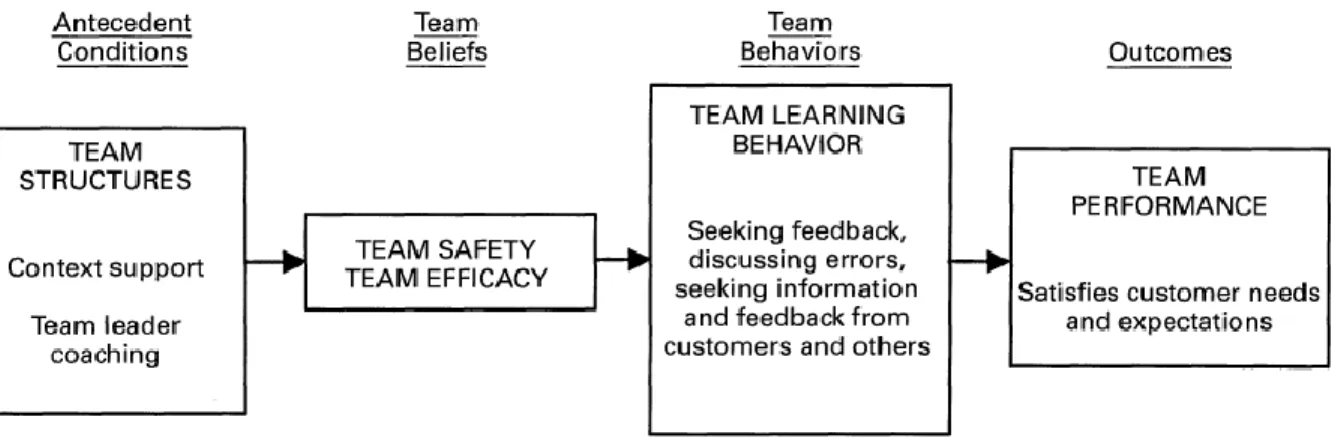
The model of work-team learning(Figure 1) demonstrates how structural and interpersonal dynamics of the team influence team learning and team performance
(Edmondson, 1999). The model of work-team learning is a mid-range or intermediate theory that addresses the relationships between abstract and operational elements (Edmondson, 2003; Edmondson & McManus, 2007).
From “Psychological safety and learning behavior in work teams,” by A. C. Edmondson, 1999, Administrative Science Quarterly, 44(2), p. 357. Copyright 1999 by ASQ. Reprinted with permission.
The model reflects the major constructs of antecedent conditions, team beliefs, team behaviors, and outcomes. Antecedent conditions are considered to be team structures while team beliefs are team safety and team efficacy, team behaviors are team learning behavior, and outcomes are team performance. These constructs, along with related concepts and variables, will be discussed below using Edmondson’s three prior studies to describe the model of work-team learning (Edmondson 1996, 1999, 2003).
Antecedent Conditions: Team Structures
The first construct in Edmondson’s model of work-team learning is antecedent conditions. This construct is manifested as the team structures, defined as properties of the team that inform team beliefs, team behaviors, and ultimately team outcomes (Edmondson, 1996, 1999). In the model of work-team learning, team structures are conceptualized as context support and team leader coaching (Edmondson, 1999). Context support refers to the shared beliefs among team members that they are supported in their work in tangible ways (i.e., informational needs are met) and intangible ways (i.e., rewards are given for hard work) (Edmondson, 1999). Team leader coaching refers to the way leaders behave, and whether they are perceived to be open to team members’ ideas and supportive of the team as a whole (Edmondson, 1999). There is support from past research that context support and team leader coaching are important factors in creating an environment that team members believe is safe to share their ideas or admit mistakes (Edmondson, 1996, 1999).
Team Beliefs: Team Safety and Team Efficacy
team beliefs predicted team behaviors and outcomes (Edmondson, 1999). Team beliefs are defined as the shared group perspectives that arise from individuals’ perceptions about a group (Knott, 2009), and include team safety and team efficacy.
The concept of team safety, measured by the variable of psychological safety, reflects team members’ shared perceptions of trust and mutual respect that enable team members to take certain risks, such as reporting mistakes, asking questions, seeking feedback, and challenging the status quo (Edmondson, 1999, 2004). The concept of team efficacy is team members’ shared perceptions of the work team’s ability to accomplish team goals.
Edmondson (1999) theorized that both team safety and team efficacy influenced team behaviors and in particular, team learning behavior. Findings from her study of team learning behavior in the manufacturing industry supported the relationship between team safety and team learning behavior, showing that beliefs about mutual respect in the team and the ability of team members to speak up about unsafe practices enabled learning behavior that ultimately influenced team performance (Edmondson, 1999). Additionally,
Team Behaviors: Team Learning Behavior
The next construct in the model is team behaviors, which is conceptualized as the actions of the team that allow for improvement and learning (Edmondson, 1999; Knott, 2009). Team behaviors are conceptualized as team learning behavior and viewed as the learning process that occurs at the unit or team level of the organization (Edmondson, 1999, 2003). While some scholars of organizational learning have defined learning as an outcome, Edmondson (1999) views learning as an ongoing process that involves seeking feedback and information via team reflection, from clients, and from others relevant to team performance. Information sharing has long been recognized as an essential aspect of learning (Argyris, 1976; Levitt & March, 1988), and was included by Edmondson (1999) as part of the concept of team learning behavior. Her analysis of team learning behavior in manufacturing work units demonstrated that team learning behavior was positively related to team performance. Outcomes
The final construct in Edmondson’s model of work team learning is outcomes, operationalized as team performance and conceptualized as the result of team structures, team beliefs, and team behaviors (Edmondson, 1999). While team learning behavior is the overall process through which the team learns, the ultimate outcome is team performance (Edmondson, 1999). The achievements of the team might include outcomes such as
customer satisfaction or successful team implementation of a new technology (Edmondson, 1999, 2003).
The Model of Work Team Learning Applied to This Study of Error Reporting
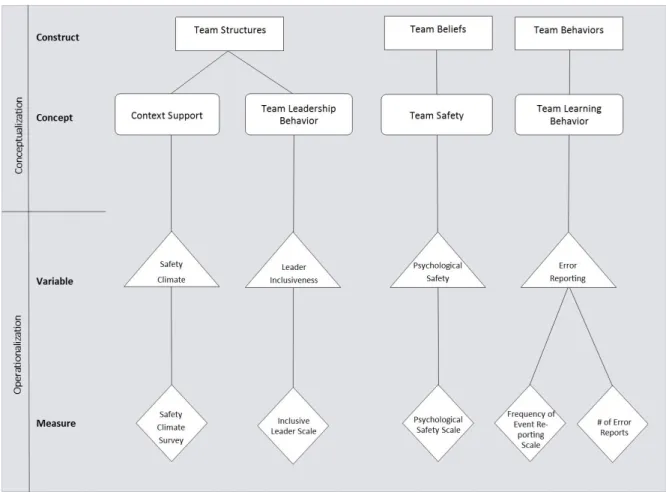
this study. Three of the four constructs from the model of work-team learning were used in the conceptual model: team structures, team beliefs, and team behaviors. Like Edmondson’s model, these constructs are believed to be related to one another. Team structures inform team beliefs which in turn affect team behaviors.
The construct of outcome, conceptualized as team performance, was not examined in this study because the utility of the work-team learning model largely depends on the
phenomenon of study, and in this study, the focus was on the team learning behavior of error reporting. Also, it is difficult to tease out the outcomes per se that might be associated with error reporting. For example, many studies of patient safety or quality use patient outcomes (e.g., length of stay, infection rates, mortality rates, etc.) or nurse outcomes (e.g., nurse satisfaction, nurse turnover, staffing mix, etc.) to reflect unit or team performance. However, there was no support found in the literature documenting a relationship between error
reporting and any of these commonly studied outcomes. In fact, after a review of the literature, error reporting was not found to be clearly related to any patient or nurse
outcomes, and this lack of support in the literature suggests that common outcome measures are not linked to error reporting, and argues against including these outcome variables in this study of error reporting. The relationship between team learning behavior and outcomes also has not been supported through prior research. This lack of support from prior research for a relationship between team learning behavior and outcomes of care can be explained by the fact that team learning with respect to error reporting instead likely leads to organizational learning, versus the outcomes of care typically studied in patient safety and quality.
learning were applied to develop the conceptual model, and provides an explanation of how the concepts were operationally defined. The relationships in the conceptual model are then discussed with a presentation of the research questions of the study. Finally, the covariates believed to be important in the study of error reporting on patient care units are reviewed.
Figure 2. Conceptual model of error reporting, derived from Edmondson’s model of work-team learning.
Team Structures
in high-technology firms of the Fortune 100 to determine how team structure influenced team learning. They found that team structure, by establishing psychological safety, positively influenced team learning.
Team structure is commonly examined in the research on teams, but there is no clear consensus among researchers and theorists on the best way to conceptualize team structure. In Edmondson’s (1999) study of teams in manufacturing organizations, the study where she introduced and used the model of work-team learning, she conceptualized team structure as context support and team leader coaching. Other researchers have used the sociology and organizational literature to conceptualize team structure as specialization (e.g., roles and responsibilities of the team members or the vertical distribution of work), hierarchy (e.g., the vertical relationship between the team leader and the employees), and formalization (e.g., priorities and procedures that regulate and govern work). Like the model of work-team learning, this study conceptualizes team structures as context support and team leadership behavior. This conceptualization differs slightly from Edmondson (1999), by using team leadership behavior instead of team leader coaching.
Context support. The first element of team structure included in this conceptual model is context support, which Edmondson (1996, 1999, 2003) has described as team goals, team design, resources, information, and climate. The idea of context support can be
Team leadership behavior. The second element of team structure in this conceptual model is team leadership behavior. This concept differs slightly from Edmondson (1999) who instead used team leader coaching. Team leadership behavior was chosen for use in this study because it is a broader definition of team structure derived from earlier work by
Edmondson (1996). In her 1996 study of learning from mistakes in hospital units,
Edmondson used both qualitative and quantitative methods to understand the differences in teams that helped to explain why some teams identified and learned from errors better than others. Among her findings, she identified leadership behaviors by the unit managers (i.e., nurse managers) that positively affected error detection and learning. These positive behaviors included openness, accessibility, and engaging with staff, which she then seemed to both conceptualize and operationalize as “team leader coaching” (Edmondson, 1996, 1999). While Edmondson used the term “team leader coaching,” the behaviors she described are not limited to merely coaching. This study describes “team leadership behavior” instead, which recognizes a wider array of leadership behaviors that can positively influence the team belief about safety and the learning behavior of teams. Therefore, the second element of team structure in this model is defined as team leadership behavior, which is conceptualized as leader inclusiveness and discussed earlier in the chapter.
Team Beliefs
and other health professionals working in nursing teams found that team beliefs influenced team behaviors, specifically team learning behavior (Ortega, Sanchez-Manzanares, Gil, & Rico, 2013). In this study of error reporting, team belief is conceptualized as team safety belief, which is in keeping with the work of past scholars (Edmondson, 1999; Ortega et al., 2013).
Team safety belief. The concept of team safety is a shared perception among team members of trust and mutual respect that empowers individuals in the team to take
interpersonal risks like reporting mistakes, challenging the status quo, asking questions, and seeking feedback (Edmondson, 1999, 2004). In a study conducted in nursing units of hospitals, Edmondson (1996) used both qualitative and survey methods to examine the differences in medication errors detected between eight nursing work teams. Through qualitative interviews, she discovered that shared perceptions among team members about the consequences of making an error influenced the rate of error reporting. She identified this notion of willingness to speak up or willingness to discuss mistakes. In later research, Edmondson further refined this concept of willingness to speak up as team safety, and measured as psychological safety, noting that team safety influences both team learning behavior and team performance (Edmondson, 1999, 2003). She operationally defined team safety as psychological safety and developed a valid measure of this variable (Edmondson, 1999). Similarly, this study of error reporting conceptualizes team safety as psychological safety.
Team Behaviors