DISSECTING THE EFFECTS OF SELECTIVE PRESSURES ON THE GENOMES OF CO-ENDEMIC PLASMODIUM VIVAX AND PLASMODIUM FALCIPARUM IN CAMBODIA
Christian Michael Parobek
A dissertation submitted to the faculty at the University of North Carolina at Chapel Hill in partial fulfillment of the requirements for the degree of Doctor of Philosophy in the
Curriculum of Genetics and Molecular Biology in the School of Medicine.
Chapel Hill 2016
Approved by:
Steven R. Meshnick
Jeffrey A. Bailey
Kristina De Paris
Corbin D. Jones
Jonathan J. Juliano
© 2016
ABSTRACT
Christian Michael Parobek: Dissecting the Effects of Selective Pressures on the Genomes of Co-endemic Plasmodium vivax and Plasmodium falciparum in Cambodia
(Under the direction of Jonathan J. Juliano)
Each year, the malaria parasites Plasmodium vivax and Plasmodium falciparum together infect hundreds of millions of people and cause hundreds of thousands of deaths. In Cambodia, these two parasites are co-endemic, transmitted by the same vectors, and cause disease in the same populations. Recently, pointed efforts have been made in western Cambodia to eliminate malaria. This selective pressure provides a natural experiment that enables direct comparison of P. vivax and P. falciparum populations. Here, we explore the genetic similarities and differences between co-endemic P. vivax and P. falciparum from Cambodia through three questions to be answered. First, we conducted a pilot study in which we deep sequenced two important antigens - pvmsp1 and pvcsp - from 48 P. vivax clinical isolates and explored the contrasting population genetics of these two antigens. We discovered that, in population genetic studies, marker choice has a profound effect on study outcomes, and that P. vivax and P.
ACKNOWLEDGEMENTS
First, thank you to each person who has contributed to these projects and to my graduate education. You have made these last several years fun.
I am particularly grateful to my advisor, Jonathan Juliano. Jon has created a nurturing lab environment and equipped me with the tools and connections needed to become a successful scientist. In the five years I have been working with him, he has been an excellent role model for how a physician can balance clinical and scientific responsibilities. He has been generous with his time and provided me seemingly endless opportunities to work on exciting projects, present my research, and travel. Someday, I hope to be a mentor like him.
I would also like to thank the members of the Meshnick Lab and of our Infectious Diseases, Epidemiology and Ecology Lab (IDEEL@UNC) group. This larger group has provided an incredibly enriching and diverse environment. Though there are too many mentors and friends to thank, Steve Meshnick, Steve Taylor, and Jessica Lin have been particularly engaged and supportive role models. I have learned so much from them, and I am deeply grateful for their interest and attention. Many others from our group (including Jaymin Patel and Nick Hathaway) have provided critical support and friendship that have made most days at the lab fun.
The work presented in this document would not have been possible without the dedication of our collaborators at the Armed Forces Research Institute for Medical Sciences. I have learned so much from Dr. Saunders, Dr. Lanteri, Dr. Chuang, Dr. Jongsakul, and many, many others. Thank you for your collaboration, your hospitality, and your friendship.
interpretation. Drs. Meshnick and Bailey have been close at hand from the inception of this work, and have offered guidance at critical junctures. Dr. Jones has been a wealth of knowledge pertaining to sequencing options and population genetics concepts. Drs. De Paris and Sethupathy taught excellent infectious-disease and population-genetics courses, and have brought their expertise to bear on this project.
Many others deserve recognition. I would like to thank my past mentors, Kenneth Poss and Viravuth Yin, who gave me foundational skills that I have been able to build on at UNC. Throughout graduate school, Andrew Morgan has provided stimulating conversation and thoughtful commentary pertaining to these projects. And, of course, none of this work would have been possible without the administration and administrative support provided by the MD/PhD program and the Genetics and Molecular Biology curriculum.
TABLE OF CONTENTS
LIST OF TABLES ... ix
LIST OF FIGURES ... x
LIST OF ABBREVIATIONS ... xii
Chapter 1: The Clinical Burden, Causes, and Pathogenesis of Malaria ... 1
1.1 Epidemiology ... 1
1.2 Malaria Biology, Lifecycle, and Host Responses ... 1
1.3 Clinical Characteristics and Treatment ... 2
1.4 Malaria Prevention ... 3
1.5 Emerging Drug Resistance and Elimination Efforts in Southeast Asia ... 4
1.6 The Genetics of Artemisinin and Partner-Drug Resistance ... 5
1.7 Plasmodium vivax in an Era of Artemisinin Resistance ... 6
1.8 Summary and Questions to be Answered ... 7
Chapter 2: Differing Patterns of Selection and Geospatial Genetic Diversity within Two Leading Plasmodium vivax Candidate Vaccine Antigens ... 8
2.1 Introduction ... 8
2.2 Materials and Methods ... 10
2.3 Results ... 14
2.4 Discussion ... 19
Chapter 3: Genetic Architecture of Artemisinin-Resistant Malaria in Cambodia Associates with Partner-Drug Resistance ... 41
3.1 Introduction ... 41
3.2 Materials and Methods ... 42
3.3 Results ... 44
3.4 Discussion ... 48
Chapter 4: Differing mechanisms of population-level resilience for co-endemic Plasmodium vivax and Plasmodium falciparum ... 64
4.1 Introduction ... 64
4.2 Materials and Methods ... 66
4.4 Discussion ... 76
Chapter 5: Discussion and Future Directions ... 99
5.1 Principal Findings ... 99
5.2 Primary Limitations and Strengths ... 101
5.3 Unanswered Questions and Future Directions ... 102
LIST OF TABLES
Table 2.1 Summary population genetic data for Plasmodium vivax antigens. ... 26
Table 2.2 pvmsp1 and pvcsp sequences included in this study. ... 27
Table 2.3 McDonald-Kreitman test for selection in pvmsp1. ... 28
Table 2.4 Interpopulation F-statistics for pvmsp1... 29
Table 2.5 SNN statistics for the pvmsp1 42 kDa region and the pvcsp central repeat region. ... 30
Table 3.1 Inferred parameters for demographic models. ... 52
Table 4.1 Demographic history of P. vivax monoclonals. ... 84
Table 4.2 Demographic history of P. vivax entire population ... 84
Table 4.3 Demographic history for the core P. falciparum population (CP2). ... 84
Table 4.4 Top fifteen P. vivax genomic regions under recent directional selection. ... 85
Table 4.5 Loci falling within the principal P. vivax selective sweep, occurring on chromosome 14. ... 86
LIST OF FIGURES
Figure 2.1 Protein domains and immunologically-relevant regions of pvmsp1 42 kDa region and pvcsp. ... 31 Figure 2.2 Geographic distribution of P. vivax populations contributing to this study. ... 32 Figure 2.3 Haplotype rarefaction curves for the Cambodian cohort. ... 33 Figure 2.4 Nucleotide diversity and Tajima's D across the pvmsp1 42 kDa
region and the whole pvcsp gene. ... 34 Figure 2.5 FST values at polymorphic sites within the pvmsp1 42 kDa intervening region. ... 35 Figure 2.6 Neighbor-joining tree of 42 kDa regions from pvmsp1 isolates
shows significant admixture across geography. ... 36 Figure 2.7 Jackknifed consensus trees demonstrate reproducible geographic
clustering in pvcsp VK210 and VK247 isolates, but not pvmsp1. ... 37 Figure 2.8 Median-joining network of diverse pvmsp1 populations proposes
multiple mutational paths between geographically diverse populations. ... 38 Figure 2.9 Neighbor-joining tree of pvcsp VK210 repeat arrays shows genetic
clustering according to geography. ... 39 Figure 2.10 Neighbor-joining tree of pvcsp VK247 repeat arrays shows genetic
clustering according to geography. ... 40 Figure 3.1 Piperaquine and mefloquine IC50 values associate with parasite
subpopulations in Cambodia... 53 Figure 3.2 Allele frequency spectrum demonstrates an excess of low-frequency and intermediate-frequency alleles. ... 54 Figure 3.3 Principal components analysis demonstrates distinct clusters
with non-overlapping resistance profiles. ... 55 Figure 3.4 Eigenanalysis demonstrates that the majority of genetic diversity
is described by the top three principal components. ... 56 Figure 3.5 K-means clustering identifies four genetic clusters. ... 57 Figure 3.6 Recrudescence after DHA-PPQ therapy is associated with the CP4 cluster. ... 58 Figure 3.7 Parasites in drug-resistant subpopulations have extended
linkage disequilibrium (LD), supporting clonal expansion. ... 59 Figure 3.8 Parasites in drug-resistant subpopulations have decreased
Figure 3.9 Pairwise FST comparison of four P. falciparum subpopulations
pinpoints identical and divergent genomic regions between subpopulations. ... 61
Figure 3.10 Comparisons of P. falciparum clusters with previously described Cambodian subpopulations. ... 62
Figure 3.11 Haplotype map describing associations between piperaquine and mefloquine IC50 values and genotypes of known and candidate markers of resistance. ... 63
Figure 4.1 Multiplicity of infection for P. vivax and P. falciparum. ... 88
Figure 4.2 Principal components analysis of P. vivax and P. falciparum populations from Cambodia. ... 89
Figure 4.3 K-means clustering provides evidence for the number of subpopulations in P. vivax and P. falciparum populations. ... 90
Figure 4.4 Allele-frequency spectra suggest strong, sustained growth for the P. vivax population, but muted population expansion for P. falciparum. ... 91
Figure 4.5 Allele-frequency spectra for P. falciparum CP2 founder population and P. vivax monoclonal isolates... 92
Figure 4.6 Five one-population models were used for demographic inference. ... 93
Figure 4.7 Haplotype sweep provides evidence of positive selection in Cambodian P. vivax. ... 94
Figure 4.8 Evidence of recent positive selection centered around an AP2-domain containing transcription factor. ... 95
Figure 4.9 Additional haplotype-based scans for directional selection in P. vivax... 96
Figure 4.10 Distributions of P. vivax and P. falciparum gene-wise Tajima’s D values. ... 97
LIST OF ABBREVIATIONS AND SYMBOLS 3D7 Plasmodium falciparum reference-genome strain
ACT artemisinin-combination therapy AFS allele-frequency spectrum AIC Akaike information criterion AL artemether-lumefantrine, an ACT AMA apical merozoite antigen
AMOVA analysis of molecular variation AS-AQ artesunate-amodiaquine, an ACT AS-MQ artesunate-mefloquine, an ACT BIC Bayesian information criterion CNV copy-number variation
CP population identifier prefix
CQ chloroquine
CR central-repeat region of the circumsporozoite surface protein CSP circumsporozoite protein
DALY disability-adjusted life year
DHA-PPQ dihydroartemisinin-piperaquine, an ACT
dN/dS the ratio of nonsynonymous to synonymous mutations EHH extended-haplotype homozygosity
FST Wright’s fixation index
FWS measure of within-isolate clonality G6PD glucose-6-phosphate dehydrogenase GATK genome-analysis toolkit
GDP gross domestic product
HARB high-affinity reticulocyte binding cluster
HRP2 histidine-rich protein 2, the target antigen for a malaria rapid diagnostic test HTA heteroduplex tracking assay
IC50 half-maximal inhibitory drug concentrations
iHS integrated haplotype score, a haplotype-based test for detecting sweeps IQR interquartile range
IRS indoor residual spraying ITN insecticide-treated bednets LD linkage disequilibrium
MDR multidrug-resistance transporter MK McDonald-Kreitman test MOI multiplicity of infection
MQ mefloquine
MSP major surface protein / merozoite-stage protein Neff effective population size
nSL a haplotype-based test for detecting sweeps
P. Plasmodium
PCA principal components analysis PCT parasite clearance time
PPQ piperaquine
RBC red blood cell RDT rapid diagnostic test
Sal1 Plasmodium vivax reference-genome strain SNN Hudson’s nearest-neighbor statistic
ηG/ηD factor of population size expansion or contraction θ population mutation rate
CHAPTER 1: THE CLINICAL BURDEN, CAUSES, AND PATHOGENESIS OF MALARIA 1.1 Epidemiology
Malaria is a mosquito-borne, parasitic illness that affects hundreds of millions of people each year. Although global efforts to eliminate malaria have reduced its burden, in 2015 there were still 214 million malaria cases (range: 149 - 303 million) and 438,000 deaths (range: 236,000 - 635,000) [1]. Thus, despite recent advances in the fight against the disease, malaria is still a leading cause of morbidity and mortality throughout much of the world.
Malaria is a disease of poverty [2]. Of the 106 countries with reported active malaria transmission in 2000 [1], nearly all were tropical or subtropical low-income developing countries. Within these
countries, the most affected individuals are children under five [3] (who are at increased risk prior to developing partial immunity), the immunocompromised and pregnant women [4] (as malaria parasites find a home in the placenta), and people who spend time outdoors (for example farming or in forested areas) (eg. [5,6]). In 2010, malaria cost nearly 70,000,000 disability adjusted life years (DALYs) globally [3], and it is estimated that persistent malaria infection during childhood is associated with up to a 50% decrease in adult income [7]. Globally, countries with nationwide malaria transmission have 1.6%
decreased growth in gross domestic product (GDP) than countries with less of a malaria burden [2]. These trends likely hold true in Southeast Asia, and specifically in Cambodia, where the present studies take place. In 2013, the last year for which there is published data, the Cambodian Ministry of Health and the National Malaria Programme reported there were roughly 2000 confirmed malaria cases per month [8], with some evidence of recent case-incidence increases [9].
1.2 Malaria Biology, Lifecycle, and Host Responses
transmitted by mosquitos of the genus Anopheles, which are ubiquitous throughout the world. Five of these Plasmodium species can cause disease in humans: P. falciparum, P. vivax, P. ovale, P. malariae, and P. knowlesi. Together, P. falciparum and P. vivax cause the majority of cases globally, with P. falciparum being more lethal.
All Plasmodium parasites share a similar, and complex, lifecycle. The meiotic and sole diploid stage occurs in the Anopheles midgut. After meiosis, haploid sporozoites are produced, which migrate to the mosquito salivary glands. While the mosquito draws a bloodmeal from a potential host, sporozoites deposit in the host interstitial space, from which they migrate into the bloodstream and infect hepatocytes [10]. After several days of intra-hepatic development (variation is species specific), infected hepatocytes release schizonts into the bloodstream. Schizonts rupture, each releasing numerous merozoites, which infect circulating red blood cells (RBCs). Infected RBCs undergo multiple cycles of parasite replication, rupture, and re-infection, causing both a recurring fever and a rapid increase in parasitemia. As a
byproduct of bloodstage infection, sexual forms, called gametocytes, are produced, which are ingested by mosquitoes, repeating the lifecycle.
With repeated Plasmodium infections, hosts develop partial immunity that may be strain transcending; however, absent continued exposure this immunity wanes, though it does not completely disappear [11]. Consistent with this, most malaria cases occurring in the United States are among travellers returning from visiting friends and relatives who live in malaria endemic settings. Many of these travellers formerly lived in malaria endemic settings and presumably had partial immunity to malaria, which was lost after immigrating to the United States [12]. Importantly, the correlates of immunity to malaria (both P. falciparum-type and P. vivax-type) remain unknown, hindering vaccine development.
1.3 Clinical Characteristics and Treatment
present as uncomplicated or severe. In general, malaria lacks a pathognomonic feature, but rather presents as an undifferentiated fever. Patients presenting with uncomplicated disease have a fever that often abates and recurs with some periodicity, and can also present with headache, nausea, hepatomegaly, and
splenomegaly. Severe cases can present with evidence of organ dysfunction including a dramatic anemia due to erythrocyte lysis, acute respiratory distress, renal compromise, shock, or neurologic symptoms due to sequestration of infected erythrocytes in the cerebral vasculature resulting in severe inflammation.
Treatment guidelines are species-specific and are determined on a country-by-country basis (dictated by each nation’s health ministry or malaria control program). Global and national guidelines are frequently updated in response to updated drug resistance profiling. Since 2001, artemisinin-combination therapy (ACT) has been the WHO-recommended first-line therapy for P. falciparum. ACT is now also a WHO-recommended therapy for P. vivax, and is the preferred treatment for P. vivax in areas of high P. vivax chloroquine resistance [15]. The importance of artemisinin for global public health was recently recognized when the 2015 Nobel Prize for Medicine was shared by the scientist who isolated artemisinin, Tu Youyou.
1.4 Malaria Prevention
Beyond treating active malaria cases, prevention strategies are effective at reducing transmission and cases [16]. The primary preventative strategies are methods of vector controls, including indoor residual spraying (IRS), distribution and use of insecticide-treated bednets (ITNs), mass-screen-and-treat or mass-drug-administration campaigns, prophylactic pharmacotherapy in pregnant women, the use of transmission-blocking pharmaceutical agents in malaria patients, deployment of malaria village workers, and continued efforts to develop an effective vaccine.
transmission-blocking. Two vaccines against the pregnancy-specific P. falciparum antigen var2csa are also undergoing active development.
Anti-P. falciparum vaccine candidates have progressed further than vaccines against P. vivax, with a pre-erythrocytic (CSP-based) [17,18] and an erythrocytic candidate (AMA1-based) [19] having completed advanced clinical trials in Africa. Both of these vaccines, however, showed disappointing efficacy, due in large part to standing antigenic diversity leading to vaccine escape [19,20]. Novel antigens with more constrained genetic diversity have been identified and are now being pursued for vaccine development [21,22]. Going forward, longitudinal studies of antibody titers against the entire array of potential malaria antigens as immunity develops in children hold great potential for identifying and quantifying the antigenic correlates of protection against malaria. Protein microarray and antigen phage displays are enabling this work [21,23,24].
1.5 Emerging Drug Resistance and Elimination Efforts in Southeast Asia
In 2009, a significant number of P. falciparum clinical cases with a delayed parasite clearance time (PCT) in response to artemisinin treatment were recognized in western Cambodia [25]. The assertion that these cases were “artemisinin resistant” (despite the lack of outright treatment failure), spurred a debate over the inappropriate use of the term “resistance” [26,27]. Unfortunately, there is now evidence of true artemisinin and ACT treatment failures in P. falciparum cases [28]. In some parts of Cambodia, ACT failure rates now approach 40% [29]. For simplicity, I will use “artemisinin resistant” and “artemisinin resistance” to refer both to cases of delayed clearance and outright failure, unless otherwise specified.
To neutralize the threat of potential artemisinin resistance, the WHO, with funding support from the Gates Foundation, developed the Global Plan for Artemisinin Resistance Containment [30]. The stated goal of this ambitious plan was to eliminate artemisinin-resistant drug alleles from western Cambodia. In focal areas of artemisinin resistance, it called for increased use of vector-control tools like insecticide-treated bednets. It also provided for increased availability of authentic antimalarial
Although this effort reduced the number of P. falciparum cases in western Cambodia, the frequency of artemisinin-resistant infections increased [31]. The resistance phenotype has now been reported in five countries within the Mekong region [1,32]. Unfortunately, elimination of artemisinin and partner-drug resistance is no longer a realistic goal of malaria-control. Rather, control efforts are focused on treating with enhanced cocktails of antimalarial drugs, and new efforts are underway to test out new treatment regimens in Cambodia. Moreover, there is much discussion regarding the development of new pharmacotherapies, and there are a number of new compounds in development [33–35].
1.6 The Genetics of Artemisinin and Partner-Drug Resistance
Despite the early fears of artemisinin-resistant malaria, years passed before a “resistance marker” was identified. Early association studies identified several genomic regions that were associated with resistance phenotypes, including a portion of chromosome 13 [36,37]. In 2013, a large population-based sequencing study identified multiple populations of genetically distinct artemisinin-resistant parasites circulating in Cambodia [38], but did not identify a genetic resistance marker. Then, in 2014 Ariey et al. found that parasites subjected to continuous artemisinin exposure developed non-synonymous mutations in the P. falciparum kelch K13 propeller domain (located on chromosome 13). The authors especially noted the presence of a C580Y mutation, and found that this mutation increased in frequency from 2001-2012 [39]. Follow-up work demonstrated unequivocally that C580Y and other K13-domain mutations do confer resistance to artemisinin in vitro [40]. Several mechanisms for P. falciparum kelch K13-mediated artemisinin resistance have been proposed. First, it was recognized that mutations in the human homolog KEAP1 are implicated as driver mutations in non-small-cell lung cancer [41]. Malaria-specific studies have shown associations between P. falciparum kelch mutations and increased phosphatidylinositol-3-kinase levels [42] and delayed parasite maturation through the intraerythrocytic stage [43].
A great concern is that artemisinin resistance in P. falciparum will spread to or develop in Africa. The fact that there have been multiple independent origins of artemisinin resistance in Southeast Asia [44] heightens the urgency of monitoring African P. falciparum clinical isolates for evidence of novel
although there is deep genetic diversity at the kelch locus in African isolates, there is no evidence of a selective sweep around this locus among African P. falciparum populations [45–47]. This surprising finding could be due to (1) the lack of requisite haplotype background that enhances the selective
advantage conferred by kelch mutations [48] from African isolates, or (2) disadvantageous allele pairings that could hinder the transmission of resistance alleles from Southeast Asian isolates to African isolates, similar to a mechanism uncovered previously in South American P. falciparum parasites [49].
Even as the threat of artemisinin resistance grows, its combination-therapy partner drugs are also losing effectiveness due to growing resistance. In Cambodia, increasing failure of artemisinin plus mefloquine (MQ) led to the adoption of artemisinin plus piperaquine (PPQ) as front-line therapy in 2012 [28]. Now, artemisinin/piperaquine combination therapy is also losing its effectiveness [28,50]. Though not a closed book, the molecular basis for MQ resistance in P. falciparum parasites is better understood than artemisinin. Numerous studies have found that MQ resistance is associated with copy-number variations or mutations at drug-resistance transporters [51–53]. Studies are ongoing to identify validated PPQ molecular resistance markers. However, in vitro and ex vivo resistance testing of parasites in Cambodia has shown dramatic increases in IC50 to piperaquine among parasite isolates.
1.7 Plasmodium vivax in an Era of Artemisinin Resistance
increased in Cambodia, even as P. falciparum cases have fallen dramatically [8]. There is growing concern - both in Cambodia and around the world - that the burden of P. vivax malaria is increasing and that it will be more difficult to eliminate than P. falciparum malaria.
1.8 Summary and Questions to be Answered
Malaria is a widespread and potentially deadly infectious disease caused by Plasmodia spp. parasites. Though control efforts in the last decade have dramatically reduced the burden of malaria, it still infects hundreds of millions of people a year, and kills hundreds of thousands. Despite these advances, there are some concerning trends:
1. Resistance to first-line combination therapies is becoming more prevalent among P. falciparum from Southeast Asia, raising fears that resistance alleles may spread to other parts of the world, increasing global malaria-attributable morbidity and mortality.
2. Even as the incidence of P. falciparum malaria has decreased by >80% in parts of Cambodia, cases of P. vivax malaria have increased, raising concerns P. vivax will be more difficult to eliminate.
These trends raise several questions that must be answered to build on the successes of malaria-elimination programs:
1. To what extent does next-generation sequencing marker choice affect the conclusions drawn from these studies?
2. What are the selective pressures that shape global genetic diversity at P. vivax antigens, and how does this compare with the pressures on P. falciparum orthologs?
3. Why is P. vivax more resilient to control measures than P. falciparum, and what are the genetic mechanisms of this enhanced resilience?
4. What are the genetic determinants of ACT partner-drug resistance, and how do partner-drug and artemisinin resistance interact?
CHAPTER 2: DIFFERING PATTERNS OF SELECTION AND GEOSPATIAL GENETIC DIVERSITY WITHIN TWO LEADING PLASMODIUM VIVAX CANDIDATE VACCINE
ANTIGENS1 2.1 Introduction
Plasmodium vivax causes 80 to 300 million infections per year and over 2.5 billion people remain at risk of infection despite malaria elimination efforts [57]. Now, concern over P. vivax is growing due to reports of increasingly severe disease [58], emerging chloroquine resistance [59], and multidrug
resistance [60]. Ultimately, an effective vaccine will be important for controlling P. vivax malaria [61]. The fact that humans naturally develop partial immunity to P. vivax and P. falciparum lends hope for effective vaccines against these parasites; however, because the majority of global malaria research funding targets P. falciparum [54,62], only a handful of P. vivax antigens are currently being considered for vaccine development [63]. Among these are P. vivax merozoite surface protein 1 (pvmsp1) and circumsporozoite protein (PvCSP).
PvMSP1, an erythrocytic vaccine candidate, plays an important role in reticulocyte invasion [64]. Its C-terminus contains a 42 kDa region, which is processed into 33 and 19 kDa fragments (Figure 2.1A). The 33 kDa fragment contains two high-affinity reticulocyte binding clusters (HARBs) (20 kDa and 14 kDa), and antibodies against the HARBs confer protection in monkeys [65]. In humans, antibodies to the 42 kDa region have also been associated with clinical protection, making this region an attractive vaccine candidate [66–69]. Another vivax protein, PvCSP, is a pre-erythrocytic vaccine candidate and is critical in sporozoite motility and hepatocyte invasion [70]. P. vivax circumsporozoite protein has an immunogenic central repeat, consisting of two major types of nonapeptide repeats (VK210 and VK247 – there is also a
1
rarer repeat type termed vivax-like) flanked by highly conserved 59 and 39 regions (Figure 2.1B). The P. falciparum ortholog of pvcsp, as formulated in RTS,S, is the most advanced P. falciparum vaccine candidate to date, showing modest efficacy at one year interim analysis in a Phase III trial [17].
Despite this knowledge of pvmsp1 and PvCSP, little is known about the geospatial genetic diversity of these antigens. Variation in these antigens may become a mechanism of vaccine resistance if strain-specific immunity is important for protection, as has been seen in some P. falciparum vaccine candidates [71]. Vaccine trials of P. falciparum AMA1 and MSP2 as well as genetic crosses using P. chabaudi underscore the importance of strain-specific immunity as a determinant of outcome [19,72–74]. Additionally, despite initial evidence that strain-specific immunity may not impact RTS,S efficacy [75– 77], the incomplete protection afforded by the RTS,S vaccine in Phase II and III trials [17,78,79] has prompted a careful examination of strain-specific responses to this vaccine. Thus, as momentum grows for field trials of P. vivax vaccine antigens, carefully designed population genetic studies of P. vivax vaccine candidates will be key to assess the need for multivalent vaccine formulations.
To better understand the selective forces on, and geospatial genetic diversity associated with pvmsp1 and pvcsp, we used the Illumina sequencing platform to determine haplotypes for 42 kDa region of pvmsp1 (n=44) and we used the PacBio and Illumina platforms to sequence the complete pvcsp gene (n=47) from Cambodian isolates [80]. To dissect the immune selection acting on these regions, we studied these sequences using population genetic tests of selection and models of tandem repeat
2.2 Materials and Methods 2.2.1 Parasite isolates
Clinical samples from a previous study were used for this study [81]. Written informed consent was acquired from each individual and the study was approved by the IRB at University of North Carolina, the IRB of the Naval Medical Research Unit #2, Jakarta, Indonesia, and the Cambodian National Ethical Committee for Health Research. Briefly, blood spots were collected from 109 patients with
uncomplicated P. vivax malaria, presenting to a clinic in Chumkiri, Cambodia during 2006–07. We selected 48 subjects with a multiplicity of infection (MOI) of one (n=20) or two (n=28) for sequencing. MOI was determined by heteroduplex tracking assay (HTA) [80,82]. Briefly, in an HTA, radiolabeled DNA probes are annealed to genomic DNA and drawn through a non-denaturing gel matrix. The number of bands observed represents the number of conformational differences present among heteroduplexes, and is a proxy for the number of infection clones (MOI). Details of the method have been published elsewhere [83].
2.2.2 Amplification of pvmsp1 and pvcsp
10 µL of the initial amplification. The cycling conditions were: 95℃ x 15m; 25 cycles of 95℃ x 45s, 54℃ x 45s, 72℃ x 3m; and 72℃ x 10m.
2.2.3 Amplicon sequencing and sequence determination
pvmsp1 and pvcsp amplicons were fragmented by acoustic shearing (Covaris, Woburn, MA) using the following settings: 10% duty cycle, 5.0 intensity, 200 cycles per burst, and frequency sweeping mode. Forty-eight barcoded libraries were prepared using the NEXTflex multiplex library kit (Bioo Scientific, Austin, Texas), each containing the pooled pvmsp1 and pvcsp amplicons from one patient. Libraries were sequenced on the Illumina HiSeq2000, using the paired-end 100 base pair chemistry (Illumina, San Diego, CA). We used Lasergene SeqMan NGen v.3.1.1 (DNASTAR, Madison, WI) to assemble pvmsp1 short reads de novo and to determine SNP frequency within each assembly. For purposes of comparison and confirmation, we re-sequenced 9 pvmsp1 amplicons with differing MAFs: 3 samples with all MAFs>90%; 3 samples with all MAFs between 60% and 90%; 3 samples with
frequency variation/stuttering in the repeat region. Haplotype repeat type was then determined by translation and the most frequent haplotype of each major repeat type (VK210 and VK247) present was kept >0.5%. Additional haplotypes of major repeat types were kept if they were common (>20%) and thus unlikely to be due simply to low frequency slippage events. In total, across all samples, 4081 of the 8430 reads clustered contributed to utilized haplotypes.
The long-read haplotypes determined through consensus clustering were used as templates for short-read alignment using Bowtie2 v2.1.0 [85], with very-sensitive alignment parameters and stringent filtering for Mapping Quality Score and Alignment Score. Final sequence predictions were used for the analyses in this paper and were deposited in GenBank under accession numbers JX461243-JX461285 and KJ173797- KJ173802 for pvcsp, and JX461286-JX461333 for pvmsp1.
Rarefaction curves of haplotypes were calculated using EstimateS v9.0. Individual-based curves using sampling without replacement were estimated [86] and extrapolated to 2x the actual sample number [87]. Rarefaction plots were visualized in the R base package (http://cran.us.r-project.org/).
2.2.4 Acquisition of published sequences for inter-population comparisons
GenBank was queried for population sets published prior to August 1, 2013, which included sequence data for the 42 kDa region of pvmsp1 and the whole-gene of pvcsp. Sequences from a recent publication [88] were excluded because the isolates were collected over the course of a 12 year period. The authors provide evidence that the haplotype distribution of this population changed substantially over time, making this population inappropriate for our analysis of selection.
2.2.5 Assessing selection on pvmsp1 and pvcsp
Population datasets with >25 sequences that were collected over a span of ≤4 years were included for analysis of selection. We used DnaSP v5.1 to perform tests of selection [89]. We calculated
(two tailed). For the pvmsp1 42 kDa region amplicons reported here and by others, 15 Plasmodium knowlesi pkmsp1 isolates from Thailand [92] (accession numbers JF837339-JF837353) were used as the interspecies outgroup. Three insertions and deletions occurred in the 42 kDa region of pvmsp1 relative to pkmsp1, and were not considered. We could not obtain MK estimates for pvcsp sequences due to
numerous insertions and deletions relative to pkcsp. For analysis of pvcsp repeats, we performed pairwise comparisons of untranslated repeat units within individual pvcsp sequences [93]. We calculated skewness and mean nucleotide differences between repeat units, as previously reported [94]. Similar to the methods of Dias et al., 2013, we also calculated dN/dS on the first 1–459 bases of all 32 VK210 repeat regions and the first 1–540 bases of all 15 VK247 repeat regions. This analysis was performed in MEGA5, using the Nei-Gojobori method [95].
2.2.6 Phylogenetics and statistics to determine population structure
Interpopulation heterogeneity was first assessed using Wright’s fixation index (FST). Pairwise fixation values between pvmsp1 populations were calculated in DnaSP. Site-specific fixation values for pairwise comparisons among Cambodia, NW Thailand, S Thailand, India, and Turkey were generated using the analysis of molecular variance (AMOVA) function within Arlequin v3.11 [96].
form of a pairwise distance matrix between all haplotypes for each phylogeny. For this statistic, highly distant populations have values approaching 1 while panmictic populations have values near 0.5. To test the reproducibility of the geographic clustering predicted by SNN, 1000 jackknife samplings were constructed for both pvmsp1 and pvcsp VK210 and VK247 populations using Fast UniFrac [104]. For each jackknife replicate, 5 individuals, based on the size of the smallest population, were randomly selected from each population and used to redraw trees. Observed splits between geographic populations were quantified and used to assign confidence to predicted geographic clusters. To evaluate potential mutational paths connecting all pvmsp1 haplotypes, we constructed a median-joining network using NETWORK v4.6 (Fluxus Engineering, Suffolk, England) [105]. This method expresses multiple plausible evolutionary paths in the form of cycles. A similar analysis was not completed for pvcsp due to the variable length of CR haplotypes.
2.3 Results
2.3.1 pvmsp1 sequences
2.3.2 Detecting signatures of selection within pvmsp1
kDa fragment (Sal1 nucleotide positions 4918–5239) also showed limited diversity, with only a K1709E substitution, and no evidence of balancing selection.
2.3.3 Geospatial genetic diversity at the pvmsp1 42 kDa region
network shows extensive admixture of parasite populations from diverse locales, with numerous
mutational paths connecting haplotypes (Figure 2.8). With the exception of populations from S Thailand and Turkey, which have undergone recent bottlenecks, these data provide further evidence that there is no clustering by geography.
2.3.4 pvcsp sequences
We sequenced the complete pvcsp gene from 43 isolates using the PacBio and Illumina platforms. De novo assembly of the Illumina paired-end short reads was not possible, due to over-collapse in the central repeat (CR) region, resulting in inappropriately short CRs. In contrast, PacBio long reads allowed the gene to be sequenced in its entirety and, after clustering, predicted 47 pvcsp haplotypes within the 43 samples. Reported error rates for PacBio sequencing have been high, especially for indels [115]; however, the use of Circular Consensus Sequencing allows single DNA fragments to be read multiple times,
decreasing the error rate of the final predicted sequence. To check the accuracy of PacBio haplotypes, individual haplotypes were used as a template for alignment of Illumina reads from the same clinical isolate. The addition of Illumina reads corrected only a single 1-bp deletion in a single haplotype. Therefore, after clustering, PacBio-predicted haplotypes have an error rate of 1/(~1200
basepairs/sequence x 47 sequences), or approximately 0.002%.
2.3.5 Detecting signatures of selection within pvcsp
In contrast to pvmsp1, the 5’ and 3’ non-repeat regions of pvcsp had no significant signatures of selection either by the MK test (data not shown) or Tajima’s D test (Table 2.1). The 5’ non-repeat region in the Cambodian cohort showed a non-significant signature of balancing selection (Table 2.1 and Figure 2.3D), which was due to a G38N amino acid polymorphism. This polymorphism also was observed in 6/16 parasites from the Latin Pacific region (JQ511263-JQ511276, JQ511279, JQ511286) and 2/27 parasites from Colombia (GU339072 and GU339085). The 39 non-repeat region had little evidence of balancing selection, with Tajima’s D values <0 (Table 2.1 and Figure 2.4D). Within pvcsp, an 18 amino-acid C-terminal motif known as Region II (amino amino-acid residues 311–328 in Sal1) is important for parasite invasion of hepatocytes [123] and purportedly contains both B and T-cell epitopes [124,125]. Among all Cambodia and Colombia parasite isolates, this motif is completely conserved at the nucleotide and protein level, with an amino-acid sequence of EWTPCS VTCGVGVRVRRR, similar to previous reports [113].
To better understand the selective forces acting upon the pvcsp CR, we assessed the dN/dS ratio for Cambodian VK210 and VK247 [118]. Strikingly, synonymous substitutions were strongly favored in both VK210 (dN/dS = 0.267; Z test p<0.001) and VK247 (dN/dS = 0.166; Z test p<0.001) repeats. This is consistent with the finding that VK210 and VK247 isolates from around the world consistently
2.3.6 Geospatial genetic diversity at the pvcsp central repeat
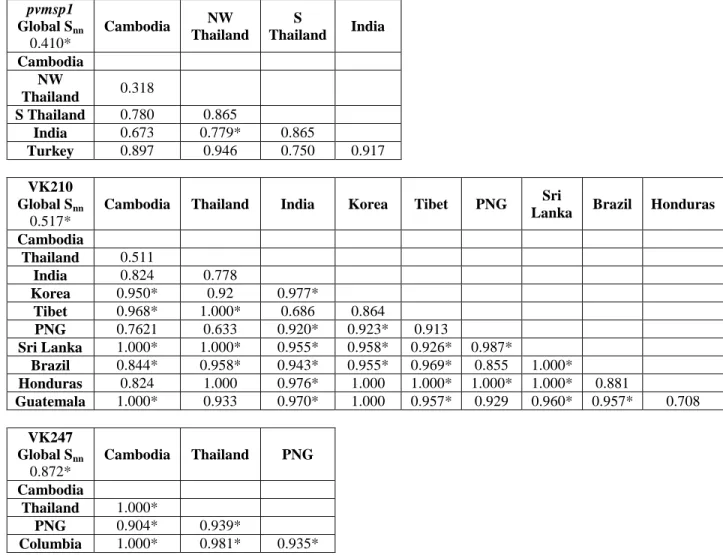
A recent study assessed global genetic diversity in the pvcsp CR, but did not define the correlates of differentiation between populations [118]. Moreover, this report investigated CR diversity by using a subset of the repeat region that was invariant in length. This approach may not reflect true population structure as it only assesses repeats early in the CR. Indeed, we have found that certain repeat types do cluster in locations within the repeat arrays (data not shown). To more rigorously study the global diversity of the pvcsp CR, we modeled CR repeat expansion, contraction, and substitution using MS_Align, which calculates an event-based genetic distance between CR haplotypes [98]. From these data, we constructed neighbor-joining trees for global VK210 and VK247 repeat arrays isolates (Figure 2.9 and Figure 2.10). In contrast to pvmsp1, the VK210 and VK247 trees revealed striking geographic clustering by country and continent. We quantified clustering using Hudson’s SNN, and observed strong genetic differentiation between most geographically diverse parasite populations, in contrast to pvmsp1 (Table 2.5). To confirm this finding, neighbor-joining consensus trees for both VK210 and VK247 were subjected to 1000 jackknife replicates and the reproducibility of predicted splits between populations was tested demonstrating a strong correlation between genetic distance and geography (Figure 2.7B–C).
We were able to define the peptide sequence basis of the clustering observed among pvcsp CR repeats. For VK210 repeats, almost all (81/84) Latin American repeat arrays contained either a 59 (GDRADGQPA) 4 or an internal (GDRADGQPA) 3–4, while very few (11/278) of the Asian sequences contained one or both of these features. Similarly, for VK247 repeat arrays, all (34/34) Latin American sequences began with a single EDGAGDQPG repeat, while only one (1/44) Asian sequence began with this repeat. These sequence features may represent a reliable method to assign sequences to a geographic region.
2.4 Discussion
genetic diversity for these genes. We also demonstrate the feasibility of using a next-generation sequencing approach to study the genetic diversity of malaria antigens.
A distinguishing feature of this study is the use of next-generation sequencing methods to generate P. vivax amplicon sequence data from clinical isolates. This work represents a first step into this largely unexplored territory. As a relatively new technology, next-generation sequencing methods must be validated before use in molecular epidemiological studies. We provide evidence that the dominant
Illumina-predicted pvmsp1 haplotypes are consistent with Sanger sequencing, and are fit for comparison with population sets generated by traditional sequencing methods. Methods for predicting multiple haplotypes from short-read sequencing are under development and will need further validation. We also demonstrate the ability of combined PacBio-Illumina haplotypes to predict pvcsp VK210 and VK247 haplotypes out of individual mixed infections. As next-generation sequencing methods are utilized more frequently for population genetic studies of infectious diseases, the methods introduced here will be further improved and will help to provide greater insight into Plasmodia population genetics. 2.4.1 Evidence of selection in both pvmsp1 and pvcsp
We found compelling genetic evidence that the pvmsp1 42 kDa intervening region is under strong immune pressure in multiple panmictic populations. Results from the MK test suggested that this region is under sustained selective pressure (Table 3); however, because a positive MK test can signify balancing selection or weak negative selection [126,127], we tested the hypothesis that this region is under
balancing selection using Tajima’s D test of neutrality. Since multiple populations showed strong
Because pvmsp1 is a merozoite surface antigen, it is highly accessible to antibodies and
complement. The predicted structure of the 42 kDa region shows that the 33 kDa fragment covers the 19 kDa fragment [66,128], limiting its exposure to the human immune system relative to the 33 kDa fragment. This observation could explain the extensive balancing selection present in the 33 kDa fragment (specifically, the intervening region) but not in the 19 kDa fragment. Additionally, this finding suggests that the sliding window approach for evaluating polymorphism and balancing selection may help generate hypotheses about functionally important (19 kDa fragment, for example) or immunologically dominant (the intervening region, for example) regions of P. vivax proteins.
For pvmsp1, Tajima’s D and FST were inversely correlated. Populations with strong evidence of high Tajima’s D in the pvmsp1 intervening region showed a low genetic differentiation by FST. This suggests that in naturally evolving populations, diversification of this region is extensive and maintains a similar range of genetic diversity despite geographic distance. Populations that have undergone a recent bottleneck show a low Tajima’s D with relatively few variants and strong genetic differentiation from more diverse populations. This suggests that if strain-specific immune responses are important in vaccine efficacy, vaccines may work more effectively if other interventions can be used to bottleneck the
population, thus decreasing its genetic diversity [106].
The central repeat region (CR) is a primary immunodominant region of PvCSP. Though alignment-based methods to assess for selection (Tajima’s D, for example) cannot be employed in a tandem repeat region, there is wide-ranging evidence that selective pressures shape the genetic
composition of the pvcsp CR [129–133], including new evidence hinting that hosts develop strain-specific immunity to P. falciparum NANP repeats of varying lengths [134]. Indeed, the presence of two distinct repeat types (VK210 and VK247) may itself be evidence of selection as suggested in a study of the P. cynomolgi csp CR [132].
al.’s study of pvcsp isolates from Brazil [120,135], and provides further evidence that both VK210 and VK247 repeat arrays may continuously evolve via slipped-strand mispairing [94]. Furthermore, consistent with a recent study of selection in worldwide pvcsp isolates [118], we found that Cambodian pvcsp VK210 and VK247 isolates have a strong bias toward synonymous substitutions. This signature of purifying selection is consistent with reports from pfcsp [136–138] and suggests that there are a limited number of amino acid polymorphisms allowable within this repeat region. Taken together, these findings suggest that expansion, contraction, and rearrangement of repeat units, rather than generation of novel repeat units through mutation, maintain genetic diversity at the pvcsp locus in both VK210 and VK247 variants. This phenomenon may be responsible for immune evasion [120,135].
Although these two P. vivax genes are orthologs of well-characterized vaccine candidate antigens from P. falciparum malaria, substantial differences are seen in the effects of immune selection between these genes and their orthologs. Previous reports have shown that the functionally similar pfmsp1 42 kDa fragment has relatively low nucleotide diversity and lacks evidence of balancing selection by Tajima’s D [139]. P. falciparum csp, on the other hand, shows a high level of nucleotide diversity [140–142] and modest Tajima’s D elevations in the C-terminal T cell epitopes [140,143]. These patterns are in stark contrast to our observations in P. vivax, and this highlights the need for P. vivax-specific studies to determine appropriate candidate vaccine antigens.
Finally, our analysis of the pvmsp1 42 kDa region underscores the importance of selecting an appropriate parasite population for population-genetic studies. We did not observe signatures of balancing selection in pvmsp1 populations from S Thailand or Turkey. This is likely due to bottlenecks secondary to robust malaria control measures employed in S Thailand [106] and limited human migration in Turkey [110]. Thus, appropriate selection of panmictic populations for these studies is critical.
2.4.2 Differing patterns of geospatial genetic diversity at pvmsp1 and pvcsp
maintains similar pvmsp1 alleles around the globe. Notably similar findings have been described in Duffy Binding Protein and Thrombospondin-related anonymous protein in P. vivax malaria [113], while a recent global survey of diversity in the Apical Membrane Antigen 1 found evidence of geographically restricted haplotypes [145]. In contrast to pvmsp1, we found that pvcsp variants demonstrate strong evidence of geographic clustering. This juxtaposition between pvmsp1 and pvcsp sequences is similar to what has previously been described for merozoite and sporozoite antigens in P. falciparum [146]. The population sets included in this survey were collected in different years. While it is known that novel P. vivax surface antigen types can appear in the course of a decade [109], it is difficult to
assess the magnitude of this effect on our analyses. As more pvmsp1 and pvcsp population sets are collected, this will become clearer.
It is interesting that the CR of pvcsp shows evidence of multiple forms of selection: (1) the depressed number of non-synonymous mutations suggests purifying selection, (2) the differences in CR genotypes between geographic locations suggests directional selection, and (3) the genetic composition of the repeats suggests rapid expansion and contraction, possibly due to immune selection. It is unclear what drives the first two signatures of selection. We hypothesize a model in which purifying selection within a population limits the amino acid composition of repeats due to functional constraints of the protein, while directional selection between populations is driven by environmental factors.
One environmental factor that may explain both the purifying and directional selection of parasite pvcsp CR sequences is the mosquito vector. The circumsporozoite protein is expressed in the mosquito during oocyst development [147] and in the salivary glands [148,149]. It is also critical in sporozoite motility [70]. We found no overlap in the distribution of Anopheline species between the countries from Asia and Latin America included in this study (data not shown) [150–152]. Furthermore, there is substantial evidence that different Anopheline species and strains show differential ability to be infected by malaria [153–156].
just beginning to unravel how antigenic diversity within a single parasite population can reduce vaccine efficacy [157]. Our findings highlight an additional level of complexity that will hinder the
implementation of a P. vivax vaccine – antigenic variability. While the effects of immune cross-reactivity against different antigenic variants aren’t fully known, the extensive intrapopulation variability seen in pvmsp1 may necessitate a highly multivalent pvmsp1 vaccine, while the dramatic interpopulation variability seen in pvcsp suggests that a PvCSP-based vaccine that is effective in one part of the globe may not be effective in other regions. Thus, a thorough understanding of the geospatial genetic diversity of candidate vaccine antigens must inform antigen selection for vaccine design.
2.4.3 Data Availability
The pvcsp sequences generated through this work are deposited at GenBank under accession numbers JX461243-JX461285 and KJ173797-KJ173802. The pvmsp1 sequences generated through this work are deposited at GenBank under accession numbers JX461286-JX461333.
2.4.4 Author Contributions
Conceived and designed the experiments: JJJ CMP JAB. Performed the experiments: CMP. Analyzed the data: CMP JJJ JAB NJH. Contributed reagents/materials/analysis tools: DS WOR NJH. Wrote the paper: CMP JJJ JAB.
2.4.5 Declaration of Interests
The authors declare no conflicts of interest. 2.4.6 Funding
This work was supported by the US Department of Defense Global Emerging Infections Surveillance and Response System (DoD-GEIS) Program (for funding of the clinical trial), the University of North
views expressed in this paper are those of the authors and do not represent the official position of the U.S. Department of Defense, NIH, or UNC Chapel Hill. The funders had no role in study design, data
pvmsp1: 42 kDa region
Cambodia 44 62 24.8 0.020 26 0.950 2.081
India 28 64 24.9 0.021 27 0.997 1.321
NW Thailand 65 62 24.9 0.020 34 0.968 2.421
S Thailand 67 42 6.46 0.005 5 0.336 -0.986
Turkey 30 33 8.33 0.007 3 0.536 -0.001
pvcsp: N- and C-terminal domains
Cambodia 47 - - - 24 - -
N-terminal non-repeat 3 0.971 0.003 3 0.500 0.901
C-terminal non-repeat 2 0.318 0.001 2 0.159 -0.538
Columbia 27 - - - 27 - -
N-terminal non-repeat 2 0.285 0.001 2 0.143 -0.954
C-terminal non-repeat 0 - - 1 0.000 -
Table 2.1 Summary population genetic data for Plasmodium vivax antigens.
This table includes all population sequence sets which contained sufficient numbers to perform allele-based tests of neutrality. Population sets which included sequence data only for pvcsp repeat regions alone
Gene Region Country Year Loci Included N Accession No. Reference
pvmsp1 SE. Asia Cambodia 2006-2007 42 kDa region 44 JX461286-JX461333 Present Study
SE. Asia NW Thailand 2006-2007 Whole gene 65 GQ890872-GQ890916;
AF435595-AF435615 Jongwutiwes 2010 SE. Asia S Thailand 2006-2007 Whole gene 67 GQ890975 - GQ891041 Jongwutiwes 2010 SE. Asia N Thailand 1997-1998 Whole gene 19 AF435595-AF435614 Putaporntip 2002 SE. Asia Bangkok 1997 Whole gene 1 AF435615 Putaporntip 2002
Asia
Pacific Vanuatu 1996,1998 Whole gene 2 AF435632, AF435634 Putaporntip 2002 S. Asia India 2004-2007 42 kDa 28 EU430452-EU430479 Thakur 2008 S. Asia India 1999 Whole gene 1 AF435639 Putaporntip 2002 S. Asia Bangladesh 1994 Whole gene 5 AF435616-AF435620 Putaporntip 2002
E. Asia S. Korea 1996-2009 Whole gene 8 HQ171934-HQ171941 Han 2011
E. Asia S. Korea 1998 Whole gene 4 AF435635-AF435638 Putaporntip 2002
W. Asia Turkey 2007-2008 Whole gene 30 AB564559-AB564588 Zeyrek 2010 S. Amer NW. Brazil 1995,1997 Whole gene 8 AF435622-AF435631 Putaporntip 2002
pvcsp Asia
Pacific Cambodia 2006-2007 Whole gene 47
JX461243-JX461285,
KJ173797-KJ173802 Present Study Asia
Pacific Thailand 2009* CR 45 HQ011279-HQ011323 N/A S. Asia India 2008* CR 79 FJ491063-FJ491141 N/A
E. Asia Korea 2006* CR 20 DQ859736-DQ859767 N/A E. Asia Tibet 2008* CR 37 FJ601724-FJ601761 N/A
Oceania Papua New Guinea
1999,
2001-2003 CR 18 EU031819-EU031836
Henry-Halldin 2011 S. Asia Sri Lanka 1998-2000 CR 60 JQ362595-JQ362654 Dias 2013
S. Amer Columbia 2009 Whole gene 27 GU339059-GU339086 Hernandez-Martinez 2011 S. Amer Brazil 2004-2005 CR 45 FJ845383-FJ845391 Patil 2010
S. Amer Guatemala 2012* CR 7 KC154040-KC154046
Mendizabal-Cabrera† S. Amer Latin Pacific 2012* CR 24 JQ511263-JQ511286 Gonzalez-Ceron†
S. Amer Brazil 1997-1999 CR 41 DQ978649-DQ978689 Santos-Ciminera
2007 S. Amer Honduras 2010-2011 CR 9 JQ903593 - JQ903601 Lopez 2012
Table 2.2 pvmsp1 and pvcsp sequences included in this study.
The PlasmoDB gene identifier is PVX_099980 for pvmsp1 and PVX_119355 for pvcsp.Indicates the year the sequences were made available in GenBank. †Indicates study unpublished but sequences available in
Inter-species McDonald-Kreitman comparisons
42 kDa region 42 kDa intervening region Synonymous Non-synonymous Synonymous Non-synonymous
Fixed 96 93 32 28
Polymorphic 34 39 10 31
p=0.681 p=0.00427
Table 2.3 McDonald-Kreitman test for selection in pvmsp1.
Evidence for long-term selective pressure on the pvmsp1 42 kDa region and the 42 kDa intervening region was assessed with the McDonald-Kreitman test, using P. knowlesi msp1 as the outgroup
pvmsp1 Global FST 0.340
pvmsp1 Pairwise Cambodia India NW Thailand S Thailand
India 0.031
NW Thailand 0.000 0.043
S. Thailand 0.449 0.433 0.366
Turkey 0.361 0.329 0.403 0.796
Table 2.4 Interpopulation F-statistics for pvmsp1.
FST values compare the relatedness of a gene among different populations of the same species. Reported values compare the relatedness of pvmsp1 42 kDa alleles for pairwise comparisons between Cambodia, India, NW Thailand, S Thailand, and Turkey. FST values approaching 0 indicate greater relatedness, while
values approaching 1 indicate substantial interpopulation variability. Global FST statistic calculated between all pvmsp1 populations with n>25 indicates that relatively little genetic distance exists between
the sampled populations. However, pairwise comparisons demonstrate that some populations exhibit a high degree of genetic similarity (Cambodia and India, for example) while other populations are more
pvmsp1
Global Snn 0.410*
Cambodia NW Thailand
S
Thailand India
Cambodia NW
Thailand 0.318
S Thailand 0.780 0.865
India 0.673 0.779* 0.865
Turkey 0.897 0.946 0.750 0.917
VK210 Global Snn
0.517*
Cambodia Thailand India Korea Tibet PNG Sri
Lanka Brazil Honduras
Cambodia
Thailand 0.511
India 0.824 0.778
Korea 0.950* 0.92 0.977*
Tibet 0.968* 1.000* 0.686 0.864
PNG 0.7621 0.633 0.920* 0.923* 0.913
Sri Lanka 1.000* 1.000* 0.955* 0.958* 0.926* 0.987*
Brazil 0.844* 0.958* 0.943* 0.955* 0.969* 0.855 1.000*
Honduras 0.824 1.000 0.976* 1.000 1.000* 1.000* 1.000* 0.881
Guatemala 1.000* 0.933 0.970* 1.000 0.957* 0.929 0.960* 0.957* 0.708
VK247 Global Snn
0.872*
Cambodia Thailand PNG
Cambodia
Thailand 1.000*
PNG 0.904* 0.939*
Columbia 1.000* 0.981* 0.935*
Table 2.5 SNN statistics for the pvmsp1 42 kDa region and the pvcsp central repeat region. SNN values approaching 1 indicate genetic isolation while values near 0.5 indicate that two geographically disparate population may approximate panmixia global and pairwise SNN values show stronger geographic
Figure 2.1 Protein domains and immunologically-relevant regions of pvmsp1 42 kDa region and pvcsp.
For both genes, numbers indicate coordinates according to the Sal1 reference genes. Sequences for pvmsp1 (PVX_099980) and pvcsp (PVX_119355) were accessed August 14, 2012 from PlasmoDB.org.
(A) The pvmsp1 42 kDa region is composed of two primary subunits – a 33 kDa and a 19 kDa subunit. Other sub-regions, including the 20 kDa and 14 kDa HARBs have been previously defined and studied.
Here, we define the region between the HARBs as the “intervening region.” (B) The pvcsp gene is composed of three regions – an N-terminal non-repeat region, a central repeat region, and a C-terminal
non-repeat region. The central repeat region consists of two major nonapeptide repeat types, termed VK210 and VK247. Approximate locations of pvcsp regions I and II are noted with horizontal lines in the
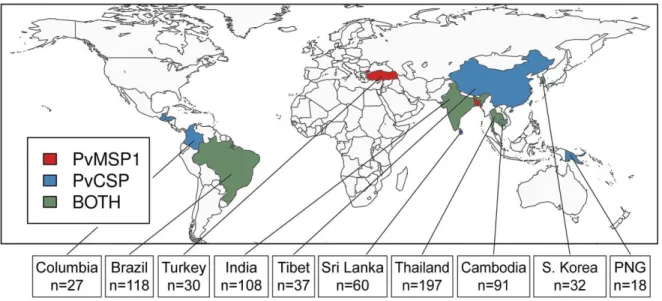
Figure 2.2 Geographic distribution of P. vivax populations contributing to this study. In total, we identified 13 populations with pvmsp1 42 kDa fragment sequences and 13 populations with
pvcsp central repeat or whole-gene sequences. These populations were collected from 14 countries,
Figure 2.3 Haplotype rarefaction curves for the Cambodian cohort.
Calculated rarefaction curves are depicted by solid blue (pvmsp1) and red (pvcsp) lines. Dotted lines represent rarefaction values extrapolated according to the methods of Cowell, et al. The 95% CIs of
Figure 2.4 Nucleotide diversity and Tajima's D across the pvmsp1 42 kDa region and the whole pvcsp gene.
Polymorphism (nucleotide diversity, π) (A) and Tajima's D (B) were calculated across the pvmsp1 amplicon for five diverse populations. A sliding window (50 bp window and 25 bp step size) was used to achieve a high resolution analysis. Grey hatches demark the intervening region (nucleotides 4348–4731). For pvcsp, N-terminal and C-terminal non-repeat regions were analyzed for nucleotide polymorphism (C)
and evidence of balancing selection (D) using a sliding window. Putatively panmictic populations are marked with a solid line, while populations known to be subject to strong selective forces are marked with
Figure 2.5 FST values at polymorphic sites within the pvmsp1 42 kDa intervening region. Available parasite populations with n>25 individuals (Cambodia, India, NW Thailand, S Thailand, and
Turkey) share 42 variable sites within the 42 kDa intervening region of pvmsp1. FST values for each variable site were calculated in a pairwise manner between all five populations. FST values approaching 0
Figure 2.6 Neighbor-joining tree of 42 kDa regions from pvmsp1 isolates shows significant admixture across geography.
Figure 2.7 Jackknifed consensus trees demonstrate reproducible geographic clustering in pvcsp VK210 and VK247 isolates, but not pvmsp1.
The reproducibility of population clustering was assessed using 1000 jackknifed phylogenies. Individual populations clustered together or apart in each of the 1000 jackknifed phylogenies, and the frequency of a
split between any two populations was quantified. Populations with grey bars (<50% splits) were genetically similar, while populations with red bars (>99.9% splits) were highly genetically distinct. Phylogenies were built from the pvmsp1 42 kDa region (A), the pvcsp VK210 central repeat (B), and
Figure 2.8 Median-joining network of diverse pvmsp1 populations proposes multiple mutational paths between geographically diverse populations.
286 pvmsp1 42 kDa sequences from diverse geographical regions were used as input to create an unrooted median-joining network. This network is a visual representation of the mutational paths that may explain the observed sequence diversity. Each node represents an allele, node size represents the frequency of that
allele (range n = 1 to n = 54), and node color corresponds to country of origin. Cycles within the diagram represent alternative evolutionary pathways. Corners represent obligate intermediate sequences that were
Figure 2.9 Neighbor-joining tree of pvcsp VK210 repeat arrays shows genetic clustering according to geography.
All unique repeat array haplotypes from each pvcsp VK210 population set were plotted on a single unrooted, neighbor-joining phylogenetic tree. Visual inspection reveals strong geographic clustering by
Figure 2.10 Neighbor-joining tree of pvcsp VK247 repeat arrays shows genetic clustering according to geography.
All repeat array haplotypes from each pvcsp VK247 population set were plotted on a single unrooted, neighbor-joining phylogenetic tree. Latin American sequences are in shades of red, South East Asian
CHAPTER 3: GENETIC ARCHITECTURE OF ARTEMISININ-RESISTANT MALARIA IN CAMBODIA ASSOCIATES WITH PARTNER-DRUG RESISTANCE2
3.1 Introduction
Mortality due to malaria nearly halved over the last fifteen years, due in part to the adoption of artemisinin-based combination therapy (ACT) as first-line therapy. Resistance to ACT represents a major threat to malaria control efforts worldwide and has now been reported in five countries in Southeast Asia [158]. Efforts are underway to stem the rising tide of resistance in the region, and new antimalarial regimens are desperately needed.
One strategy that has been proposed is the use of triple ACT (TACT) regimens [159]. ACT is traditionally comprised of a potent, short-acting artemisinin derivative paired with a longer-acting partner drug, such as piperaquine, mefloquine, or lumefantrine. This allows ACT to be administered over just three days, but leads to a terminal phase of partner drug monotherapy [160,161]. It has long been recognized that, as artemisinin resistance increases and parasites take longer to clear, the probability of developing resistance to the partner drug also increases. TACTs would combine two partner drugs with artemisinin based on the epidemiologic observation that resistant parasites seem to display sensitivity to piperaquine when mefloquine resistant and visa versa [162–164].
In western Cambodia, increasing rates of artesunate-mefloquine (AS-MQ) treatment failure led Cambodia to adopt dihydroartemisinin-piperaquine (DHA-PPQ) as its first-line ACT in 2012 [163,165]. DHA-PPQ failure in Cambodia appears to be due to emerging piperaquine resistance in the setting of already established artemisinin resistance [162,163,165,166]. Research into the genetics of artemisinin
2
This chapter is currently in submission. Full citation: Parobek CM*, Parr JB*, Balasubramanian S,
resistance in Southeast Asia has borne fruit with the discovery of specific resistance markers and their association with genetically distinct, clonally expanded parasite populations [166–168]. However, the role of ACT partner drugs in shaping these parasite populations has not been explored.
Using 78 samples collected from three provinces of Cambodia collected between 2011-2014, we investigated the genetic architecture of the P. falciparum population using whole genome sequencing. We confirmed the genotype of several loci using Sanger sequencing, in particular candidate indels, and assessed copy number of resistance loci using real-time PCR and digital droplet PCR. Finding stark genetic structuring among the samples, we used population modeling to deduce the origins and recent histories of parasite clusters. We then correlated the genetic findings to available ex vivo susceptibility data to piperaquine and mefloquine and in vivo response to dihydroartemisinin-piperaquine (DHA-PPQ) therapy. We found that piperaquine and mefloquine resistance developed in genetically distinct parasite populations that have expanded clonally from a central ancestral population. Our genome-wide data confirm that - at present - malaria strains that are highly resistant to piperaquine remain sensitive to mefloquine, and vice versa. These findings suggest that ongoing trials to test triple combination therapies containing both piperaquine and mefloquine may, in the short term, be effective. However, the emergence of triple-therapy resistant P. falciparum remains a distinct threat.
3.2 Materials and Methods 3.2.1 Study population
We studied parasites collected from 78 adults with uncomplicated P. falciparum infection from three provinces of Western Cambodia: Oddar Meanchey in the North (n = 61), Battambang (n = 8) in the West and Kampot in the South (n = 9). These samples were collected between June 2011 and December 2013. Sixty of the samples in Oddar Meanchey came from an in vivo efficacy study of DHA-PPQ in which 54% of patients developed recrudescent parasitemia requiring rescue therapy with AS-MQ (clinical trial protocol WR1877 [NCT01849640]) [169]. An additional 18 P. falciparum clinical isolates from inside and outside of Oddar Meanchey Province were selected at random from an in vitro
studies were approved by the Cambodian National Ethics Committee for Health Research and the Walter Reed Army Institute of Research Institutional Review Board. The molecular studies described herein were approved by the University of North Carolina Institutional Review Board (14-0419). All subjects provided informed consent.
3.2.2 Drug susceptibility testing
Immediate ex vivo drug susceptibilities to piperaquine and mefloquine were measured using a histidine-rich protein 2 (HRP-2) enzyme-linked immunosorbent assay [171–173].
3.2.3 Whole-genome sequencing
Leukodepleted DNA from 91 P. falciparum infections was used for whole-genome sequencing. The ratio of parasite DNA to host DNA was determined using a quantitative PCR assay, and isolates with ≥20% P. falciparum DNA were sequenced on the HiSeq2000 Sequencing System (Illumina, San Diego, CA) [174]. Sequence reads were aligned to the P. falciparum 3D7 (v3) genome using the bwa mem algorithm. Isolates with 5-fold coverage at ≥60% of the genome were considered for variant calling, resulting in calls for 78 isolates. Variant calling was performed using the GATK UnifiedGenotyper utility. 3.2.4 Candidate markers for piperaquine, mefloquine and artemisinin resistance.