A NEW TYPOLOGY OF MAGIC DOLLS
Amanda Cates Ball
A thesis submitted to the faculty at the University of North Carolina at Chapel Hill in partial fulfillment of the requirements for the degree of Master of Arts in the Department of Classics in
the College of Arts and Sciences.
Chapel Hill 2019
Approved by:
ABSTRACT
Amanda Cates Ball: A New Typology of Magic Dolls (Under the direction of Jennifer Gates-Foster)
TABLE OF CONTENTS
I. Introduction………...1
II. A Discussion of Scholarship on Ancient Magic……….3
III. Ancient Images………..9
IV. A Proposed Typology………14
Divine vs Persuasive………..15
Anthropomorphic Divine Dolls……….18
Anthropomorphic Persuasive Dolls………...19
Zoomorphic Divine Dolls………..20
Zoomorphic Persuasive Dolls………22
V. A Case Study: the Twisted Hermes………..22
VI. Material Culture of Magic………...25
Lead Binding Doll in Coffin of Kerameikos……….29
Louvre Voodoo Doll………..30
Karystos Gingerbread Doll………32
Karanis Doll………...33
VII. Conclusions………34
APPENDIX 1: FIGURES………..………37
APPENDIX 2: TYPOLOGY APPLIED TO SPELLS FEATURING MAGIC DOLLS…..……39
I. Introduction
Em vobis, quem scelestus ille sceletum nominabat… hiccine est sceletus, haeccine est larva, hoccine est quod appellitabatis daemonium? Magicumne istud an sollemne et commune simulacrum est?
“There you have the figure that scallywag called a skeleton… Is this a skeleton? Is this an evil ghost? Is this what you kept calling an evil little demon? Is this effigy a magical one or common-or-garden religious one?”1
Apuleius, author, philosopher and rhetorician of the mid-2nd century CE, responds to an accusation of practicing magic with these words. His prosecutor has produced many pieces of evidence of Apuleius’ magic use: Arabian spices, his marriage to a rich woman, the mirrors he owns, et cetera. One piece of evidence is a skeleton doll. The prosecutor claims that Apuleius might put this doll in a coffin either to incite ghosts or to magically bind a human target. Apuleius, gesturing at his skeleton figurine in the court, cites a distinction which must not have been obvious to his audience at first sight. The black skeleton statue is threatening as a potential magic doll, but harmless once the doll is deemed a “common-or-garden” statue of Hermes. Apuleius insists that his image is a religious statue, not an evil effigy, a difference which paints him as an everyday pious man rather than a malicious magician. Even though the same image could serve multiple purposes, the distinction between these interpretations is vital to the maintenance of Apuleius’s reputation.
The modern audience of Apuleius’ work must accept this distinction with no visual reference. Apuleius’ skeleton doll does not survive and the skeleton dolls and images that do survive appear morbid to the western audience, even though they are often entreating the viewer
to live well. The modern viewer might readily accept the accusation of magic based on the morbid appearance of artifact, before considering the potential of the skeleton as a religious icon. This same misunderstanding is often produced in the study of the surviving spells of the magical papyri. The distinction between religious and magical materials was blurred in the ancient world, as demonstrated in the descriptions of the magical papyri and the artifacts required for spell casting. The magic dolls of these spells are key to understanding the multivalent quality of ancient artifacts.
With this thesis I present a new lens through which to assess magic dolls, those described in the Egyptian magical papyri and those extant in the archaeological record. I begin my paper by considering the history of the Greek Magical Papyri, the study of ancient magic and the importance of material culture and images to magical practice. I then introduce my typology, distinguished by human or animal shape, further differentiated by their type of power associated with their treatment. I follow my typology with a case study to demonstrate its application to the textual evidence. In the final section, I discuss magic dolls in the archaeological record and analyze four examples of magic dolls.
I classify the dolls according to their description and how they were believed to exercise power. By analyzing the dolls described in the spells preserved in the magical papyri, the modern reader may approach an understanding of power of magic dolls in the ancient world; this
As more papyri are recovered, translated and published, more spells may be found to feature magic dolls. If these spells are approached with preconceived associations, such as that between dolls and erotic magic, then new spells may be misinterpreted to fit ill-founded expectations. Most scholars of magic work primarily with the preserved texts, on papyri and curse tablets. For this reason, the material evidence of magic is not often considered. In archaeological contexts, magical dolls are only classified as such by their irregularity; for this reason, the only dolls considered magic are binding dolls, which have been physically
manipulated, usually twisted or pierced. Small figurines that appear more canonical are most often categorized as religious or decorative, without consideration of their magic potential. I hope that this typology will inspire a reconsideration of both magical texts and images and further the study of how both these elements can enrich our understanding of ancient magic.
II. A Discussion of Scholarship on Ancient Magic
So, what is magic?2 Magic in any culture is marked by mechanistic gestures and speech, which are intended to compel supernatural or divine forces to achieve a goal. Malinowski discusses the “coefficient of weirdness” required in magic, which Frankfurter and Wilburn have applied to the material culture of ancient magic.3 Tambiah has discussed the two elements of magic which he defined as “the word”, logos, and “the deed”, praxis.4 The logos would be the words spoken, such as the chants required in many of the magical papyri, and the praxis would be the ritual, such as the creation of the magic dolls. The combination of the right words and the
2 The very category of “magic” in the ancient world has been called into question. This nebulous category is often used to signify otherness and to denigrate outsiders in ancient literature. People did accuse each other of magic, such as in Apuleius’ Apology, and we do find artifacts that reflect magical practice in different contexts. Bohak finds magic a productive label, especially as the emic approach is not a productive analysis for the archaeology of magic, asserting broad trends of ritual practice over individual agency (Bohak 2008, 62).
right deeds are necessary for effective magic.
Some have argued that magic is always a private matter. However, some forms of ancient magic, such as protective amulets, were worn visibly. Some types of magic were more accepted than others. Magic typically borrows from religious practices broadly, to lend legitimacy or exoticism.5 Magicians and spell casters also relied upon persuasive analogy6 to transfer the action done to the doll to the target of the spell, though the action may have been, as it seems it usually was, translated as metaphor. Magic dolls, as Apuleius’ skeleton might have been, are found all over the ancient world. The most recognizable of these magic dolls are the so-called “voodoo dolls”, ancient dolls that have been twisted or pierced.7 Dolls pierced with needles are described in magical papyri8 and seen in surviving material culture.9
Despite knowledge of ancient magic dating back to the Renaissance, the study of magic did not flourish until the mid-20th century.10 E.R. Dodds’ Greeks and the Irrational is seen as a turning point toward an acceptance of magical practice in the ancient Mediterranean.11 Since this
5 Wilburn 2012, 9.
6 This term was coined by Stanley J. Tambiah and first applied to “voodoo dolls” by Christopher Faraone (Tambiah 1968; Faraone 1988a).
7 The term “voodoo doll” has been used in English scholarship to refer to Graeco-Roman magic dolls due to the visual similarities between these dolls and those used in West African and Haitian voudun tradition. However, the similarities between ancient Graeco-Roman binding dolls and voudun culture only exist in certain binding dolls, not all binding dolls and certainly not all magic dolls of the archaeological record or of the magical papyri. “Voodoo dolls” is a cheap visual reference and should not be used in formal studies of the material culture of magical practice. For this reason, I instead choose to use the term “magic dolls” in this study to denote the purpose of the images as well as their quotidian nature.
8PGM IV.296-466.
9 Gager 1997, 97-101, fig. 12, no. 28.
10 The magical papyri were collected in the mid-19th century, as discussed below. However, ancient spells were translated and published, but not studied as a cohesive unit due to the preference for works considered to be of higher literary quality.
seminal work, there has been an influx of scholars who focus on various aspects of ancient magic, not all of which can be noted here. Interest in the subject grew in the 1960s, led by Angelo Brelich, Walter Burkert and Jean-Pierre Vernant. Their work inspired a generation of scholars of magic; Hans Dieter Betz renewed interest in the Magical Papyri with his team’s publication of the translation in 1996. David Frankfurter, primarily a scholar of religion,
published on magic in Roman Egypt as Egyptian religious practice viewed through an emic lens; he interprets the Papyri Graecae Magicae, or PGM, as typical Egyptian priestly literature, rather than an imported Graeco-Roman magic practice.12 A series of works accessible to students of ancient magic followed, including Graf’s Magic in the Ancient World13, Gager’s Curse Tablets14, and Obbink and Faraone’s Magika Hiera.15 Recently, Eleni Pachoumi has published on the divine figures which feature in the PGM and in the Demotic Magical Papyri, or PDM.16
Christopher Faraone is the foremost authority on magic dolls, with his many works on defensive and erotic dolls.17 His dissertation, dating to 1988, is still the most comprehensive catalogue of magic dolls from the ancient world and is consistently referenced in the
scholarship.18 More recently, Haluszka has looked at the semiotics of the Papyri Graecae Magica, where she considers the animating ingredients of magic images.19 Andrew Wilburn’s
12 Frankfurter 1998, 230-231.
13 Graf (1997) published first in French, later in English. 14 Gager 1992.
15 Faraone and Obbink 1991. 16 Pachoumi 2017.
17 Faraone 1988a; 1988b; 1989; 1991a; 1991b; 1992; 1999; 2018. 18 Faraone 1988a.
Materia Magica has re-contextualized magical objects, particularly those in Roman Egypt, in the archaeological record.20 Following Wilburn, Caitlín Barret has expanded the study of religious figurines by considering domestic terracottas as evidence of domestic religion and magic.21 Frankfurter’s Religion in Roman Egypt considers the persistence of Egyptian religion under the Roman empire.22 As interest in the Hellenistic and Roman periods in Egypt has grown in recent years, our understanding of ancient magic has increased.23 This heightened awareness leads to secure contexts for magical objects found in excavation, which can only advance our
understanding of the lived experience of ancient magic. The experience of ancient magic, however, must have differed among individuals in the ancient world, from the amateurs who would commission small protective amulets to the archivists who compiled the magical papyri.
The compilation of magic spells written in Greek can be traced to the Hellenistic period and continued into the Roman period. Both these Greek and related Demotic manuals were compiled by Egyptian priests.24 Frankfurter has argued that these manuals are evidence of standard expertise in ritual among the Egyptian priesthood under the Roman empire, not some new, imported wizardry.25 The PGM includes texts that have been dated from the 2nd century
20 Wilburn 2012.
21 Barret forthcoming. 22 Frankfurter 1998.
23 Roman Egypt was a particularly good crucible for ancient magic because of the use of stereotype appropriation (Frankfurter 1998, 225). Magic practice thrives on the appearance of strange and foreign language and behavior. Individuals of the Mediterranean world were increasingly in contact with foreign cultures in the Hellenistic period. This awareness allowed for the incorporation of aspects of foreign religions, such as the names of gods and depositional practices, to add the appearance of foreign power to magic practice
BCE through the 5th century CE.26 These magical papyri constitute only a small sample of the immense amount of similar material that must have existed in antiquity. Most of the written magic materials were destroyed in the Roman period, if historical sources are to be believed.27
These papyri were considered an aberrant topic until recently.28 Many of the Greek and Demotic magical papyri were collected by Giovanni d’Anastasi, a Greek merchant and Consul General, from 1828 to 1857, in Alexandria.29 Eleven handbooks were in his collection, dated to the 3rd and 4th centuries CE.30 Most of the magical papyri were found in or near tombs, the majority from a tomb in Thebes; this collection is now dubbed the Theban Magical Library.31 The three Demotic handbooks date to the 3rd century CE and show the influence of Egyptian religion. Though the papyri are typically separated into Greek and Demotic, the bilingual handbooks of the Anastasi collection prove this modern division between the languages was not reflected in this compilation.32 Whoever collected the papyri did not separate papyri according to language.
In 1928 and 1931, Karl Preisendanz collected and translated the Papyri Graecae Magicae from Greek into German in two volumes.33 In the second volume, Preisendanz, Diehl and Eitrem included Demotic texts, which were not given a separate numbering system until Hans Dieter
26 Betz 1996, xli.
27 Suet. Aug. 31.1; Acts 19:19-20. 28 Graf 1997, 11-12.
29 Pachoumi 2017, 2.
30 See: Pachoumi 2017, 2-4 for a more in-depth discussion of the history of the papyri. 31 Pachoumi 2017, 3.
Betz’s work. A revised edition of Preisendanz’s volumes was published by Albert Heinrichs in 1973-1974 and these were reprinted in 2001. The collections of the magical papyri were
supplemented by the Supplementum Magicum volumes I and II, edited by Robert Walter Daniel and Franco Maltomini in 1990-1992. In 1996, Betz translated the papyri into English, making the collection more widely accessible to a primarily English-speaking audience. Scholarship on the papyri continues to be published and has been influenced by the papyri’s complicated object biographies. This scholarship is also influenced by the depictions of magic and magic practitioners in ancient literature.
While ancient magic was long disregarded as a subject of research in classical studies, it was far from a marginalized topic in ancient literature. Magical references pepper ancient Greek and Roman literature. Depictions of magicians are sometimes condemnatory and sometimes sympathetic, with the magical acts they perform varying from wearing amulets to court
proceedings to chanting around fires in the darkest night. I began this paper with an excerpt from Apuleius’ defense, which is the best-known surviving depiction of ancient accusations against someone thought to be practicing magic. His Apology was written in the 2nd century CE and lists all the evidence the prosecution brought against Apuleius, including evidence of illegal magic practice.
Ancient authors often wrote about the danger of magic and magic dolls. For instance, Plato in his Republic takes the time to curse magicians.34 He also comments on the practices of leaving wax figurines at the crossroads as a magic practice.35 Pliny in his Natural Histories states that everyone fears magic.36 Tacitus in his Annals discusses magical artifacts as evidence of
Germanicus’ magical murder.37 Lucian in his Dialogue of the Courtesans describes hetairai who turn to witchcraft in order to capture the attention of men.38 Horace and Theocritus both
composed poems about witches trying to ensnare and punish men with magic dolls. Horace’s witches, who use a wax and a wooden doll, are grotesque and comical.39 Theocritus’ Simaetha in his second Idyll is more sympathetic, because she is hapless and unlucky in love; she achieves catharsis through magical acts, including melting like the wax she throws into the fire.40 All these works paint pictures of high emotion and supernatural power, which could be safely mocked in literary texts, but must be feared in the real world. The manipulation of binding dolls, with their high weirdness coefficient, to borrow the phrase from Malinowski,41 had to be
especially evocative and fearsome if encountered at a crossroads or in a cemetery.
III. Ancient Images
In formulating a typology of magical objects in the texts, my initial approach was to organize the descriptions according to the vocabulary used in the papyri. Alain Schnapp has written that each Greek word defined as an image has a more specific meaning, implying the
37 Tacitus Ann. 2.69.
38 Lucian Dialogues of the Courtesans 4. 39 Horace, Epode 5; Satire 1.8.
40 Theocritus, Idyll 2.
image’s type and reason.42 However, as Verity Platt has written, the 2nd and 3rd centuries CE saw the most development in the beliefs about the relationship between gods and their images.43 The relationship between words and images must have changed over time, with the surviving
evidence only dimly reflecting significance at certain points in time. The Greek word σώματα, “little bodies”, is frequently used to refer to figurines of humans. Plato defines εἴδωλον as objects that are images.44 In Latin, Apuleius uses simulacrum to describe his little doll. But εἴδωλον is also used to mean ghost, such as the image of a dead person.45 The word κολόσσοι can be used for both large statues and small, personal images. The Cyrenaean inscription for dispelling ghosts called the male and female figurines made of wood or earth κολόσσοι.46 Aγάλμα usually refers to statues in honor of the gods. Platt has commented that this term refers to its function as, “something separate from itself but to which it has a certain relation”.47 It is possible that the use of the word αγάλμα in the magic papyri speaks to the divinity that can be expressed by the magic dolls, as otherworldly power can be harnessed through ritual.48 However, in the magical papyri we are limited by the small vocabulary of koine Greek. Each word had different meanings, with inferences that are often lost to us.
In the majority of the magic doll spells of the magical papyri, the practitioner is asked to make a very specific type of image, such as “make a Hermes” in PGM IV.2359-72 and “make a
42 Schnapp 1994, 41; Vernant 1974. 43 Platt 2011, 7.
44 Plato, Sophist 240a, trans. Schnapp 1994, 40. 45 Homer Od. 24: The ghosts of the suitors are εἴδωλα. 46SEG 9, no. 72, lines 11-121.
hippopotamus” in PGM XIII.310-319. These reference an iconography so well-known to the intended audience that this shorthand required no clarification. In PGM IV.3125-3171, the practitioner is asked to make an ἀνδριάντα, a little image of a man. In the spells themselves, the word ζῴδια is frequently used for magic dolls, but also for the small illustrations on the papyri or on inscribed gems.49 ζῴδια is an unusual word choice; the diminutive appears in the 3rd century BCE at the earliest, but it is also used infrequently until the 3rd century CE in Egypt.50 The use of ζῴδια could be a marker of the spells transcription, if not origin, in Roman Egypt, considering that is where it came into common usage. If the spells were compiled by Egyptian priests and not intended for distribution, nuance of language may not have been considered. Alternatively, the papyri may be reflecting the local dialect of the region in which they were compiled. Despite the differences of vocabulary used to reference the dolls, the use of magic dolls is common in the magical papyri.51
The corpus of spells with dolls and the preserved ancient dolls prompts the question, why use dolls as praxis in a magic spell?Gager wrote that figurines would be used if the spell casters were not satisfied with simply inscribing a spell on a papyrus or lamella, a lead tablet.52 This desire for visual media to intensify a spell may have also been expressed by using magic gems or by using the drawings on the papyri. Several scholars of ancient magic have suggested that creating an image and manipulating it must have been cathartic enough to make a spell effective
49PGM IV.298; V.370-420; XIII.31-32. 50 Liddell and Scott 1968, 758-759.
51 Sixteen spells are recording requiring the use of dolls in the collected PGM and PDM. These are listed in the chart appendix below.
in the amelioration of emotional pain.53 Images, even small, crudely made ones, have power, especially in an ancient, mostly illiterate, world. Stewart has written that a toy “repeats the still-life’s theme of arrested life… But once the toy becomes animated, it initiates another world”.54 Stewart is discussing toy dolls, intended for children, but the principle of inanimate miniature which may be given life holds here. She adds: “The miniature… presents a diminutive, and thereby manipulatable, version of experience”.55 The creation of a miniature, a doll, is the creation of a powerful image.
The power of images inspires myriad questions that cannot be answered in the scope of this paper. However, magic dolls, a category which includes multipurpose icons, reveal the value of expanding our conception of how images were conceived, created and imbued with power in the ancient world. Once the power of images is considered, we then must turn to the
identification of these images, through likeness or through different methods, in the material record.
In recent years, the question of how best to identify magic in the material record has been raised. Many of the ingredients required by spells of the magical papyri are common, everyday objects. These could easily be repurposed, before or after use in a spell. Wilburn uses the example of lamps used in divining spells, which could be any of the lamps found on
archaeological sites in ritual or in mundane contexts.56 A household lamp could be temporarily used for divination and then returned to more utilitarian purpose. Extant lead curse tablets were often made of stolen sections of water pipe, so this idea of repurposing materials is not entirely
53 Wilburn 2012, 75; Malinowski 1954, 79-81; Lloyd 1979, etc. 54 Stewart 1993, 57.
novel. The ease in returning magic items to daily life further indicates a comfort with encountering a certain level of magic use by honorable individuals.
By the Hellenistic period, the vast majority of houses contained small terracotta figurines.57 The tourist industry, formed around famous religious centers, produced and disseminated small copies of famous cult statues beginning in the Hellenistic period and
continuing through the Roman period. Xenophon wrote about the proliferation of representations of the cult statues of Artemis of Ephesus.58 These souvenirs may very well have been used for domestic religion, magic or a combination of both.59 In Egypt during the Roman period, the impoverishment of the temples resulted in the domestication of religious practice. 60 This rise in domestic religion easily might have incorporated these religious figurines.
Small god figurines are often interpreted as religious; “actor” figurines are interpreted as decorative; neither type is allowed the affordance of magic by archaeologists and museum curators. When encountered in the archaeological record, dolls are usually interpreted as magical when they feature obvious binding characteristics. A doll must have twisted limbs or be pierced with needles for an archaeologist to conclusively deem it magical. Caitlín Barrett has confronted this issue regarding domestic terracotta figurines in the archaeological record of Roman Egypt.61 According to the varied descriptions in the magical papyri, many different doll-types could have been used for magical purposes. The question of whether a doll was religious, decorative or magical in nature is a question that cannot truly be answered due to the multiple affordances of
57 Barrett 2011; Tsakirgis 2005, 77-78; Lynch 2011, 76-77.
58 Xen. Anab. V.7-13; Gaifman 2006 discusses many potential examples of these representations. 59 Barrett forthcoming.
artifacts. A fine-tuned analysis is necessary to identify magic as the purpose behind an
archaeological feature.62 Once artifacts are disassociated from their assemblages, the depositional act of the spell is destroyed. This artifact is then examined in isolation, where it can lose its purpose. Alternatively, depositions can be interpreted in different ways; a protective spell that incorporates several artifacts can easily be mistaken for a religious foundation deposit, not to be further analyzed. Many artifacts are described as “ritual” or “religious” at first sight, when a more nuanced interpretation of their deposition and affordances could reveal magic potential.
IV. A Proposed Typology
To encourage a reconsideration of the dolls, both described in the magical papyri and preserved in the archaeological record, I have created a typology based on their treatment and description. I reconsider the figurines used to conduct magic as images and ritual objects, rather than approaching them from the traditional viewpoint of the spellcaster’s intention. Therefore, I avoid the association of the spell’s intention with the artifact and focus on the method by which the caster believed they could harness supernatural power. This typology is purposefully open-ended, leaving room for debate; some of the examples of my chart do not fit neatly into my given categories. This division is intended to foster new perspectives.
In this typology, I establish a primary dichotomy: anthropomorphic and zoomorphic. These labels are inspired by the description of the dolls and their appearance. I then separate these categories into divine and persuasive, based on how the images are treated, and how they are referenced. Divine images represent powerful supernatural beings, a visual association that is sometimes bolstered by the insertion of animating ingredients, such as human bone fragments, herbs or inscribed objects. This supernatural being could then be controlled and directed through
the doll. This supernatural was appealed to through treatment of the doll, similar to the treatment of a cult statue.
Persuasive images are typically inscribed with the name of the target or contain an object inscribed with the name of the target. This written reference, rather than a visual reference, makes the connection between doll and target. The creation of the doll is meant to channel supernatural force toward a certain purpose. Persuasive dolls are then physically manipulated to act out the metaphor of the desired effect. Through the creation of these divisions, I hope to propose a new lens through which to approach spells with magic dolls in the magical papyri.
Magic Doll Typology
Anthropomorphic Zoomorphic
Divine Persuasive Divine Persuasive
Treatment
No physical manipulation of the dolls; only ritual
treatment (prayers,
sacrifices) or deposition manipulation Physical
No physical manipulation of
the dolls; only ritual treatment (prayers, sacrifices) or deposition Physical manipulation Description
Described in reference to divine figures: Hermes,
Osiris, etc.
Usually no visual reference, excluding name of human
target Vague visual references; sometimes animals or theatrical types Usually no visual reference
Divine vs Persuasive
Divine dolls are sometimes animated with the insertion of pharmaka, herbs usually related to the divine figure they represent, or with the insertion of papyri, in a method similar to how cult statues were animated. The materials are inserted into the chest cavity through a hollow in the back of the figurine, designed for this purpose. Religious statues were often made out of specific media to capture the power of the intended divinity, laurel for Apollo, mulberry wood for Eros. Hekate statues were supposed to be made of a mixture of plant and animal material, including lizards, myrrh, gum and frankincense.63 These ingredients and the name of the divinity assisted the caster in creating a powerful image, with a believed connection to a deity. With this forged connection, the caster could appeal to a homemade divine doll for magic purposes.
Images of divine beings mentioned in the magical papyri are not limited to the Graeco-Roman pantheon. In an example of the adoption of an Egyptian religious theme, in PDM LXI.112-27, an anthropomorphic divine doll, depicting Osiris, is buried under a doorstep in order to affect an erotic attraction. This burial evoked the Egyptian myth of the sexual relationship between Isis and the dead Osiris.64 The burial is not a method of physical manipulation, of persuasive magic, but is a method of ritual deposition. This spell therefore should not be read as an instance of sympathetic magic at play, but rather an appeal to a divinity. Certainly, dolls representing Egyptian gods are manipulated in the manner of persuasive dolls, but these examples must be understood in their religious context. The rule that divine dolls were always treated with care, and not harmed, is one that is complicated by reports of cult statues being publicly harmed.
Despite this typology’s attention to treatment, it is worth noting that Graeco-Roman cult
63Chaldean Oracle, frag. 224.
statues were sometimes physically manipulated in persuasive analogy.65 These manipulated statues could be found in public settings, so the persuasion or the catharsis resulting from persuasive action could apply to large groups of people. As Versnel has noted, instances of hurting images of gods are rare.66 Though these occurrences are atypical, they make my division of the dolls a little less clear. If religious icons can be manipulated, as in the examples above, why can’t a manipulated doll also be a divine doll? This is an area for further discussion.
Persuasive dolls are bound, twisted or pierced to affect the target that they represent and embody. The human target is connected to the doll by inscription of the name or οὐσία, a piece of hair or clothing belonging to the target of the spell. This ritual violence done to the dolls is persuasive magic in nature, also known as similia similibus.67 Faraone has argued that magic dolls using persuasive magic were used by individuals in positions of weakness against those in positions of power.68 Individuals frustrated by their circumstances, which may have included power differentials, may have felt driven to magic use. This lack of power may be true in terms of emotional or social disadvantage, but the hypothesis is impossible to prove.
The texts explain that the purpose behind the piercing is not violence, but control. The intention is not the target’s pain or destruction.69 PGM IV.296-466 reads, “I am piercing such a
65In the city of Syedra, there was a statue of Ares bound and kneeling in front of a standing Dike (Versnel 1988, 288; Robert 1966, 91-100). This statue group is understood as a method of effecting respite from pirates through the subduing of the god of war (Faraone 1999, 51). Pausanias wrote of a bound statue of the god Enyalius at Sparta (Pausanias 3.15.7). These examples are similar to the bound images of foreign enemies in Egyptian religious contexts (Raven 1983, 7-47; Ritner 1993, 111-180). Three bound statues were reportedly uncovered in Thrace in the 4th century CE, and these statues were intended to hold off three tribes. Olympiodorus of Thebes in FHG 4.63.27 as cited in Faraone 1991b, 9, n. 41.) The same can be said for bound images in the Greek and Roman worlds, where a bound Ares could be an analogy for the end of war and thus, victory.
66 Versnel 1988, 291. 67 Faraone 1988b, 280-282. 68 Faraone 1991b.
member of her, NN, so that she may remember no one but me, NN, alone.”70 The persuasive doll in an erotic spell is pierced to gain control over the target’s sense and thought, not to maim the object of affection. In a non-erotic binding spell, the target was intended to be paralyzed or made ineffectual in business practices or competition. The very violent appearance of the dolls belies the more personal motivations of the spellcaster.
Two types of persuasive dolls are identified in the material record. The term, aversi, or twisted, dolls describe dolls which are twisted to affect the binding.71 These dolls were employed to paralyze the target, whether that be in court, in business or in another social matter. Transpecti describes those dolls with pins or stuck through with nails.72 Transpecti dolls are most often erotic, though erotic dolls have also been found entwined like lovers to affect the desired result.73 This type of manipulation was probably the least metaphorical use of magic dolls. Aversi dolls have famously been found in some of the graves of Kerameikos, discussed below. The Louvre Voodoo Doll (Fig. 1) is the most famous example of a transpecti doll.
Anthropomorphic Divine Dolls
Anthropomorphic divine dolls are dolls in the shape of humans that represent divine figures. They are typically treated and appealed to as religious icons, with offerings and prayers; these dolls are not twisted, bound or pierced by the spell caster. In the magical texts,
anthropomorphic divine dolls are often referred to by the deities’ names, e.g. “Hermes” and
70 Betz 1996, 44: PGM IV.296-466; In the spells of the Papyri Grecae Magicae, the ‘NN’s act as blanks for the insertion of the name of the target.
71 I borrow the categories aversi and transpecti from Fritz Graf (Graf 1997, 136-137).
72 Pierced curse tablets have been found as well, suggesting the act of piercing carried weight even on not figurines. This piercing has been connected to everyday violence. Hairpins were used as weapons by women in Greek and Roman sources (Wilburn 2012, 137: Euripides Hecuba 1170; Herodotus 5.87; Euripides Oedipus 1269). From this connection, it has been suggested that the implements used to stab dolls may have been part of the beloved’s toilet, in cases of erotic transpecti dolls.
“Eros.” But at times the references can be vague, and the instructions will call for an image of a “beggar” or a “dog.” Despite the parallels with cult statues of the Graeco-Roman world, the divinities the dolls represented were not always drawn from the Graeco-Roman pantheon. PGM IV.3125-71 features a three-headed god, which represents the Egyptian god Pantheos,
assimilated with the Greek god Agathos Daimon.74 Discussed below are zoomorphic divine dolls that represent Egyptian deities. These dolls are hard to identify as magic dolls in the
archaeological record, as they could be repurposed divine figurines or interpreted as religious figures with no other purposes.
Anthropomorphic Persuasive Dolls
Anthropomorphic persuasive dolls are the magic dolls best-known in the archaeological record. Any human-shape doll that has been recognizably manipulated in some way is an Anthropomorphic persuasive doll. This includes every example of a physically-preserved doll that I discuss below.
Some erotic spells demand the use of dolls which were intended to represent the
beneficiary of the spell. The best example has been found in Egypt and consists of two wax dolls twisted together, wrapped in a papyrus.75 According to the papyrus wrapped around the dolls, one doll represents the caster, Theon, and the other, Euphemia. This raises the question of
whether the creation of a doll representing oneself would be a dangerous thing, leaving the caster vulnerable. This representation of one’s self as a magic doll is an example of what Faraone has called “self-manipulation”.76 The manipulation of the self and of rogue emotions appears as a form of persuasive magic. The “self-manipulation” indicates a desire to regain control in a
74 Faraone 2018, 144-146.
situation of unrequited desire.
In PGM IV.296-466, a female doll, representing the target, is paired with a male doll, named Ares in the spell. The Ares, an anthropomorphic divine doll, is shaped to hold a sword to the neck of the female doll, an anthropomorphic persuasive doll, in a physically threatening stance. The caster of the spell is then instructed to pierce the female doll with needles in many parts of her anatomy, including her genitals. These different anthropomorphic dolls are paired to channel different types of magic. The Ares doll is intended by the caster to intensify the spell, while the unnamed female doll, the anthropomorphic persuasive doll, is intended to target the spell at the individual.
Zoomorphic Divine Dolls
Many of the zoomorphic dolls of the magical papyri reference Egyptian gods who are often represented in animal form. PGM XIII.310-319 features a hippopotamus, representative of Thoeris, a goddess who had a hippopotamus form. PDM Suppl. 117-130 features a jackal, meant to represent Anubis, the jackal-headed god. Crocodile dolls, such as that in PGM XIII.321-326 reference Sobek, a god which was associated with the Dioscuri in Roman Egypt.77 The jackal and the hippopotamus, both used for dream sending, are zoomorphic divine dolls, treated as small cult statues to achieve the intended result. Another zoomorphic divine doll is the baboon from PGM VIII.1-63. This doll is a clear result of syncretism, wearing a helmet of Hermes and animated by a papyrus labeled “Hermes.” Hermes is associated with Thoth in Graeco-Roman Egypt.
Why are these deities referred to by animal species rather than the name of the Egyptian god? The answer may be that the perspective of the inventor of these spells; the author of the
magical papyri may be essentially Graeco-Roman, borrowing elements of Egyptian religion to exoticize the spells. In some spells, the Egyptian gods are named, as in the Osiris spell discussed above. As Haluszka has written, “we should not mistake an influx of Egyptian concepts into… magical spells for wholesale adoption of Egyptian techniques.”78 A god foreign to the central Mediterranean may have held magical potential similar to a daimon or ghost but may have had a more sacred valence in its place of origin, even among a diverse population that included
Egyptians, Greeks or Romans. It would be for the spell caster to choose aspects of the familiar and the strange. Accordingly, the spells draw from diverse traditions. Magic depends on
weirdness writ large, so elements would be selected to increase the power of the spell. As stated above, I would interpret this variance of attitude towards and adaption of Egyptian deities as an illustration of the diverse origins of the spells of the magical papyri.
One zoomorphic divine doll does not fit well into my typology. The waxen dog of PGM IV.1872-1927, called Kerberos in the spell, is animated by the insertion of a murdered man’s bone.79 Cerberus is a divine figure, but hardly one that would be typically entreated.
Additionally, the animating ingredients are pieces of a dead man. The caster entreats the spirits of the dead: “Barking dog, I adjure you, Kerberos, by those who have hanged themselves, by the dead, by those who have died violently: attract to me her, NN, whose mother is NN.”80 The spirits of the dead and Cerberus together are employed to draw a beloved to the house. This appears to be an appeal to active ghosts as well as to a Divine figure.81 This spell provokes
78 Haluszka 2008, 483.
79 “Insert into the dog’s mount a piece of skull from a man dead by violence” (Betz 1996: PGM IV.1875-1888). 80 Betz 1996, 72: PGM IV.1911-1916
questions about the stability of “divine” as a category. Zoomorphic Persuasive Dolls
Zoomorphic persuasive dolls are the least common type of dolls in my typology. For this type of doll, an animal-shaped doll must be manipulated. Typically, persuasive dolls use
sympathetic magic to metaphorically act on the target of a spell. It is atypical for a human target to be represented by an animal doll, so the animal form must have another dimension of
meaning. Zoomorphic: Persuasive dolls appear two times in my typology: PGM IV.2943-66 and PGM XIII.321-326.
In PGM XIII.321-326, a crocodile doll is bound as the human target is intended to be bound by magic. The spell is labelled as, “If you want your wife not to be had by another man”. The caster is instructed to form a terracotta crocodile and place it in a lead coffin. Though the crocodile is neither pierced nor twisted, the coffin is the method of binding the target. The lead binding doll of the Kerameikos (Fig. 2)is the product of the exact same formula, but to bind a legal opponent.
V. A Case Study: The Twisted Hermes
The potential application of this typology can be seen in the twisted Hermes spell, P. Oxy. 50.4 B23J (1-3) b. This spell has been the focus of much philological discussion.82 I choose to highlight the two publications by Christopher Faraone and H.S. Versnel, produced in
conversation with one another; Versnel asserts that his reading is not superior to Faraone’s, but an alternative. Faraone and Versnel both interpret this spell as a binding curse but disagree over whether or not the spell uses a magic doll. I believe the application of my typology can further
IV.1872-1927 and PGM IV.2943-2966). Modern bias may have colored the interpretation of these dolls and the spells which describe them.
support Faraone’s reading.
The spell reads as follows:
ὥσπερ στρέφεται ὁ ἑρμῆς τοῦ μυελου καὶ ἀλήθεται τοῦ- το τὸ πιττάκιον, οὕτως στρέψον
τὸν ἐγκέφαλον καὶ τὴν καρδίαν καὶ πᾶσαν διά- νοιαν Ζητοῦν <τ>ῆ<ς> ἐπικα-
λουμένης Καλημέρας. ἤδη ἤδη ταχύ ταχύ83
The spell sets up a persuasive analogy. The ὥσπερ… οὕτως… formula is seen throughout curses, usually in reference to a corpse with which a tablet is buried or the lead material of which the doll or tablet is made. On its face, the spell suggests that just as the ἑρμῆς turns, so must the brain and heart of the target be turned.
Versnel, among others, reads the ἑρμῆς as a doll shaped as the god Hermes, made of animal fat or marrow. This doll would then be twisted in order to bind the target of the spell, which he understands as the target of erotic intent.84 Versnel traces the use of marrow in erotic magic to Egyptian magic, as sperm was believed to be produced in marrow in Egyptian beliefs.85 Versnel reads the papyrus and the magic dolls as separate elements of the spell.86 Versnel is persuaded by the appearance of Hermes dolls in the magical papyri. However, Versnel admits in
83 Translation from Faraone 1988b, 285: “Just as the “Hermes” of the mill is turned and this pittakion is bruised, so too turn (and bruise) the brain, the heart and all the mind of Zetous, who is also known as Kalemera. Instantly instantly, quickly quickly.” Versnel prefers the traditional translation of the first three lines of the spell, “As Hermes turns in his marrow and vouches for the truth of this chit” (Turner 1976, 169-173).
84 Versnel 1988, 288: “Just as the Hermes του μυελού is twisted and this piece of papyrus is bruised, so too twist the brain, heart… etc.”
his publication that manipulating dolls of gods is rare in the magical papyri.87
Faraone’s argument is that the ἑρμῆς does not refer to Hermes, as other translations have accepted, but instead to the rotating part of a mill, either a millstone or a shaft; this requires an understanding of μυελού being a mistake for μυλος or μυλαιον, both of which mean mill.88 The first lines of the spell are then translated as “Just as the ἑρμῆς of the mill is turned…”.89 This alternative explains the twisting analogy, similar to a iunx, a small magic wheel used in erotic spells. But the twisting analogy is not enacted upon a magic doll. Faraone instead suggests the papyrus was twisted.90 He further argues that this is not an erotic spell, as Versnel asserts, but could be a judicial spell or some other type of social spell.91 Faraone’s reading of the spell means no magic doll is required and an anthropomorphic divine Hermes doll is not harmed.
The application of this typology of magic dolls further supports Faraone’s interpretation of the spell. The Hermes reference might suggest that the caster requires the use of an
anthropomorphic divine doll. However, the physical manipulation of the doll that is called Hermes is irregular. Why would a caster make a Hermes doll to represent a rival he is binding? Furthermore, the spell does not read as erotic with Hermes as a key player; Hermes is not a famous lover in mythology, unlike Ares or Eros, gods who are used in erotic spells.
In the context of other doll spells, it is improbable that a magician would manipulate an anthropomorphic divine over the course of a binding spell, outside of Egyptian religious practices. To manipulate these dolls would be to attempt to manipulate a supernatural force,
which could be understood as bringing supernatural consequences to the caster. The reading that the papyrus itself was manipulated is much more probable. Thus, Faraone’s argument is
supported by the body of magic doll spells and their types.
VI. Material Culture of Magic
The complement to the magical papyri is the magical material culture found throughout the Mediterranean world. The magic dolls of the archaeological record are most commonly found deposited in graves, though they are also found in houses, sanctuaries, bodies of water and at forks in ancient roads.92 Ancient sources suggest that the material culture of magic consisted of written or inscribed objects, figurines and representations, biological material, including parts of the human victim, as well as household objects repurposed for magical use.93 The earliest magic dolls date to the Archaic period of Greece (800-480 BCE).94 The latest date to the 4th century CE; the eventual diminishment of magic practice in the 4th century CE is attributed to the rise of Christianity.95
Above I have noted the difficulty in identifying magic in the archaeological record. Some of the spells of the magical papyri recommend a place of deposition where the caster could easily retrieve the magical object if they wish to undo the spell. Final deposition suggests the
practitioner desired to maintain the spell, forgot about the spell, was unable to retrieve and retire the object or decided the object and spell was not worth retrieving.96 The problem with
identifying artifacts in magical depositions is compounded by the media used. Of the variety of
92 Ogden 1999, 72; Wilburn 2012, 21. 93 Wilburn 2012, 26.
94 Ogden 1999, 71.
materials – wax, unfired clay, wood, marble, lead – used for dolls, only fired clay and lead typically survive in the archaeological record; wax dolls survive in rare circumstances.97
To the student of cognitive archaeology, perhaps the most interesting aspect of the magical papyri is their nature as instruction manuals. The spells which incorporate magic dolls describe how to create images that have the potential for power. The instructions of the magical papyri suggest the creation of a religious icon and thus, a conduit to the gods, was not a privilege reserved for skilled artisans or holy people; according to the papyri, this feat could be easily accomplished by anyone with the right ingredients. To describe the creation of images, the spells use the verb πλάσσειν, meaning to form or mold, corresponding to fingere in Latin.98 This is a word typically used for artisans working in clay or wax. Ποιεῖν is also used in places, but is generally understood as more of a catch-all term for creation of objects in Greek.99 The term σχηματίζειν is also used to refer to the creation of a Selene in PGM VII.862-918. The use of this verb may specifically refer to the creation of a doll in a well-known form, for example in the style of a famous cult statue. The choices of these verbs of creation may have held greater meaning to the composers of the spells than is apparent to modern scholars. Unfortunately, the visual vocabulary and the vocabulary of image creation may hold meanings inaccessible to the modern reader.
The instructions of the magical papyri lead the reader to think that crafting the dolls was a vital part of the effecting of the spell. This may, however, be a misreading of the papyri. In reality, the magical papyri may have acted more as handbooks for practitioners who would be consulted by people in need. For example, a cache of lead bound dolls was found in Palestine;
97 Gager 1992, 101-106, no. 30, fig. 14.
98PGM IV.298; PGM IV.2945; PGM IV.3130; PGM VII.872-883.
this collection has been understood as a professional magician’s collection of extra dolls to use when needed, rather than a binding spell on a mass scale.100 Magic was practiced by amateurs at home as well as by professionals.101 The Karanis magic doll is a clear example of domestic magic; it is an example of a terracotta magic doll being formed and fired in the low temperature of a hearth or a candle by the caster himself or herself.102 Tablets, curse bowls and gems have been found to mimic curse formulas, but without recognizable words, which suggests some professional practitioners or casters were not literate.103 The question of the nature of ancient magicians is beyond the scope of this paper.104
Wilburn has pointed out the tendency for scholars to examine isolated artifacts instead of assemblages, exemplified by the numerous catalogues of individual magic artifacts. This habit has increased the challenge of finding magic in the archaeological record.105 It is widely accepted that converting an artifact to magical use was often the final stage in its life cycle, to be taken out of circulation. However, small icons were used and reused in many different contexts, even after
100 Gager 1992, 204-205, no. 108, fig. 23.
101 It is impossible to tell whether quality mattered or not in magic dolls. They vary from extremely crude to quite well-made. The Louvre Voodoo Doll (fig. 1) is a clear outlier in detail and artistry. However, generalizations about magic materials over centuries and continents are ill-advised.
102 Barrett forthcoming.
103 Wilburn 2012, 146-147: Dolls may have been more attractive to illiterate practitioners. This preference is of course impossible to prove.
104 The discussion of the nature of magicians in the ancient world both ongoing and fraught. Most relevant to this paper, the discovery of a cache of lead dolls in Palestine (Gager 1992, 204-205, no. 108, fig 23) has led some to believe that, as with curse tablets with blank spaces for names, professional travelling magicians peddled their wares, including voodoo dolls ready for animation to the buyer’s purpose. Ancient practitioners may have been itinerant visitors to multiple villages or exchanged ritual technologies (Wilburn 2012, 105). Many of the sources named above rail against witches and magicians, who may or may not be for hire, as they are often depicted working for personal gain. Faraone has commented that the four lead magic dolls found in Kerameikos appear to have been made by the same person and made crudely (Faraone 1997, 4). This paper does not attempt to join the fray but does emphasize the likelihood of magic being an itinerant domestic pastime that required no professional service, at least in some cases. For further reading, see Graf 1997, 20-117.
their magical use. A small religious statue for household religion would be difficult to
differentiate from a dream-sending figurine and, as Barrett has discussed, a doll may be used for dual purposes.106 For example, in PGM XIII.103, the spell asks the caster to use an Apollo that is already made, not to make one from scratch.107 An archaeologist finding this small Apollo in archaeological context might not consider the magical possibility of the small statue.
The multi-valent properties of artifacts can be seen in different types of dolls as well. In Roman Egypt, many dolls, identified as toy dolls, have been found in the archaeological record. Karen Johnson describes in her dissertation how toys are identified in the archaeological record, as props for “pretense activities” for play or for ritual.108 Many of these objects classified as dolls, animal figurines, cloth dolls, Harpokrates representations and miniatures, could easily have been used by both adults and children, in circumstances magical or otherwise.109 Terracotta figurines have stretched out “arms”, but not articulated limbs like other dolls.110 Wooden and textile dolls are more abstract in nature, with minimal features. Johnson asserts that textile figurines may have been related to pregnancy and related to the protection of unborn or newborn children.111 Any number of these dolls may also have been used as magic dolls.
In his dissertation, Christopher Faraone compiled the quintessential catalogue of what he
106 Barrett forthcoming.
107 Betz 1996, 188-189; PGM XIII.646-734. 108 Johnson 2007, 79.
109 Johnson 2007, 102-104: On the site of Karanis, 47 terracotta female figurines, 24 wooden figurines and 19 textile figurines were categorized as dolls.
called “voodoo dolls”.112 This catalogue remains the best reference for students of magic dolls, despite the fact that three decades have passed since its production. The majority of the dolls of this catalogue have no context, having been looted and sold, frequently ending up in museum collections with no confirmed context. The magic dolls which have been identified by collectors and archaeologists are anthropomorphic persuasive dolls; they were manipulated for persuasive magic, to violent purpose or for erotic magic. I will now highlight four magic dolls as exempla of the recognized material culture of magic. I choose these dolls because of their varied shape and media, as well as the variety of purpose. I do not include any dolls that have not been previously associated with magic practice, though this study posits that these examples must exist.
Lead Binding Doll in Coffin of Kerameikos
This lead doll was found at the site of its original deposition during excavations of the Kerameikos cemetery. (Fig. 2)The magic doll and coffin were found in a grave with the
disturbed remains of a human skeleton and a red-figure vase.113 The doll was placed at the pelvis of the skeleton, covered by its coffin. The grave is dated to 400 BCE and the names on the doll and tablet are of public figures in the late 5th century.114
This lead doll from Kerameikos is contained in a lead coffin, which also acts as curse tablet.115 The doll itself is of the aversi type: the arms are twisted behind the back of the figure. The right leg in inscribed with the name “Mnesimachus”. The lead doll has no clear facial
112 Faraone 1988a: This paper does not attempt to compile a new catalogue of identified magic dolls. The best catalogue is still Faraone 1988a catalogue, referred to as VD. There is a need for a more current catalogue to encompass finds of the last thirty years and dolls identified as magic due to new modes of thought, such as Wilburn’s Karanis doll.
113 Gager 1992, 127. 114 Gager 1992, 127.
features or detail work. The doll has very prominent genitals, which may have been a choice to mark the gender of the target as clearly as possible.
The roughly-made coffin is constructed of two inscribed lead sheets. One of the sheets has no writing and the other acts as a curse tablet, in conjunction with the binding doll. The tablets curse many individuals, including Mnesimachos.116 The text does not invoke gods or daimons and the formula, as well as the mention of a witness, suggests that this is a judicial curse, a curse which concerns a lawsuit. Beneath and to the right of the text of the curse tablet are small holes, the result of piercing. The act of twisting the doll, piercing the curse tablet and then depositing the doll in a lead coffin doubly binds the individual it targets.
This doll dates to the Classical period and was discovered in Attica, far flung
chronologically and geographically from the magical papyri. There is no direct correspondence between this doll and any spell in the known magical papyri. However, in PGM XIII.321-326, a crocodile is placed within a lead coffin as part of a binding spell. This lead doll is human-like, not a crocodile, but the shared method of binding and deposition shows a continuity of practice. This Kerameikos binding doll, like the crocodile doll, is a persuasive doll. The doll is not representative of a divinity or supernatural being, but of a human target. The doll was treated to twisted limbs and encasement, with an intent to metaphorically paralyze Mnesimachos.
Louvre Voodoo Doll
The Louvre Voodoo Doll is the most famous transpecti doll from the ancient world. (Fig. 1) The original location of the Louvre Voodoo Doll is unknown, though it is believed to have been found north of Oxyrhynchus.117 The doll was discovered in an assemblage which also
116SGD no. 9; VD no. 5.
contained a clay vase and a lead tablet with an erotic spell. The objects were placed in the vase and buried; this choice of deposition has been related to the Pharaonic execration rituals. These rituals were intended to quell rebellion or dominate enemies through by artifact substitutes.118 Gager believes the assemblage was originally deposited in a cemetery and dates the artifacts to the 3rd or 4th century CE.119
This doll is made of unbaked clay and, despite the lack of firing, it is skillfully sculpted. The facial features are indistinct, but the anatomy was made carefully, showing plump limbs and pubic hair. The woman’s hair is carefully crafted, and the doll wears oval earrings. The high level of detail suggests that the doll was modelled after a specific human subject. The doll was stuck with thirteen nails as part of the spell.
The tablet calls the caster Sarapammon and the target Ptolemais. The spell invokes many deities, including chthonic deities. The supernatural force meant to carry out the spell is a restless ghost, that of a man named Antinous. The caster promises the restless ghost may rest after the completion of the spell. Gager suggests that the caster desires a long-term relationship with the target.120 Unlike most erotic spells, the caster does not seem to be try to access an inaccessible woman, but instead was meant to retrieve the wandering affection of a spouse.
This transpecti erotic doll is the best correspondence between material culture and the magical papyri. This doll appears to be the female doll of PGM IV.296-466. This female doll is both threatened by an anthropomorphic divine doll, an Ares doll and pierced by the caster; this female doll is a clear anthropomorphic persuasive doll. PGM IV.296-466 is unique in that divine and persuasive dolls are used in conjunction to add power to the spell. The divine doll, an Ares,
adds to the persuasive nature of the spells. The power of the divinity is then compounded by the caster’s piercing of the doll, a treatment which places the female doll firmly in the
anthropomorphic persuasive category. There is a noticeable discrepancy between this spell and the doll: PGM IV.296-466 asks for a female doll, with no required features, but the Louvre voodoo doll features many details, which may have resembled the mortal target. I would argue this is an example of personal modification of the spells of the papyri by individual spell casters. Karystos Gingerbread Doll
The Karystos Gingerbread Doll (Fig. 3) is believed to have been found at Karystos on the island of Euboea, but it was removed from its original context.121 This doll has been dated to the 4th century BCE. This flat lead figurine has no sex characteristics and the limbs are flat oval shapes; the result resembles a gingerbread man cookie, the inspiration for its name.122 However, one arm is connected to the head by a strip of lead; this loop could have been a means of
suspending the doll in air or lowering it into a place of meaningful deposition. This doll is unique because it marries the flat curse tablet and the three-dimensional magic doll that could be used alternatively or in conjunction in spells.
Both sides of the doll were inscribed, though the two inscriptions on Side A are the only ones preserved. The two inscriptions cover the upper part of the body, the head and right arm, and the lower part of the body, the left leg and lower torso. The spell invokes Hermes the Restrainer, a common deity in binding spells. In the spell, a woman named Isias is being bound, though the occasion that prompted the binding is unclear. Gager suggests that the binding is
121 Gager,86, no. 19; Robert 1936, no. 13.
erotic.123 However, the language does not make the occasion clear, so this may alternatively have concerned a legal proceeding concerning Isias.
The Karystos Gingerbread doll is the least anthropomorphic of the Anthropomorphic dolls featured here. The doll is not three dimensional, but two dimensional, more like a curse tablet than a religious icon. The shape is undeniably anthropomorphic, with identifiable limbs and head. The doll does not appear to have been treated as a traditional Persuasive doll. The doll was neither twisted nor pierced. The carving of the letters of the curse may have been part of the persuasive treatment, as the suspension from the loop may have been. I do not believe that the lack of twisting or piercing threatens my categorization of this doll, but again believe this is the product of local or individual magic practice.
Karanis Doll
In his Materia Magica, Wilburn identifies a potential magic doll from Karanis.124 (Fig. 4) At the time of its excavation in 1933, it was identified as a child’s toy and a small idol. The small figurine is made of unbaked clay. The doll has roughly-made hair and breasts and eyes, nose, mouth, nipples and genitals picked out with a tool. The color variation of the doll is evidence of its having been burned, either baked over an open flame or burned as part of a magic rite.125 The doll was part of an assemblage that also contained beads, ostraca and three bone pins. One of the accompanying bone pins was used to shape this doll. The burning and needle holes in the doll suggest that it may have been used in an erotic spell like that of the Louvre Voodoo Doll. Its prominent sex characteristics and the traces of burning on the surface suggest that it was part of a
123 Gager 1992, 86.
erotic spell, cast in a domestic context.126 This doll was not accompanied by a curse tablet or any other magical material culture that could clarify its use, but Wilburn’s assertion of magical affordance is well-argued.
The Karanis doll is an anthropomorphic persuasive doll. The doll was pierced and burned. The burning of magic dolls is not attested in the magical papyri but is attested in ancient literature. These treatments are clearly persuasive magic. The doll was made with no identifying features beyond sex characteristics. Wilburn suggests that this doll was created for erotic magic, but this may be projecting assumptions about typical use of magic dolls onto the material culture. This doll may have been used for erotic magic or for another sort of spell of competition, in law or in business. The most that can be firmly concluded is that this is an anthropomorphic
persuasive doll.
VII. Conclusions
The practice of binding enemies and ghosts using magic spans Mediterranean cultures. Daimons, ghosts and enemies were dispelled in Assyrian maqlu ceremonies.127 In Cyrene, wax dolls were melted in oath-making and ghost-laying ceremonies.128 Though the correspondence between the practices of these different cultures is clear, the meager amount of surviving
evidence prevents us from clearly divining the origins of any of these practices.129 The subject of this study, the practices of the magical papyri and magic dolls, are clearly part of larger
traditions, stretching beyond the central Mediterranean or even Roman Egypt.
This paper provides a new method of approaching papyrological and material evidence of
126 Wilburn 2012, 75, 131. 127 Faraone 1993, 63.
magic and is one of many recent calls for advancement in modern approaches to the study of ancient magic. There is much work to do on finding magic in archaeological contexts, as Andrew Wilburn and Caitlín Barrett have argued. The reassessment of terracotta figurines found in previous excavations is a fruitful task which can increase our corpus of known magic artifacts. In turn, excavators in the field must become better aware of the fragility of deposits of magic material culture.130 The papyri themselves are magical artifacts and products of local cultures. The archaeological contexts of magical papyri found in future should be considered in our understanding of magic practices.
Wilburn has argued that we cannot rely on text or archaeological materials alone to understand ancient magic. We must study ancient magic in context, on local levels and in larger contexts.131 It is rewarding when dolls are discovered that correspond well with the magical papyri. However, dolls that do not correspond with known spells should not be rejected as outliers. Studying the magical papyri allows for pattern recognition, from which the ephemeral ritual of deposition can be extrapolated. Local practices can be determined through the study of magical assemblages, which may not be direct reflections of the papyri but may show variations of known themes.
Apuleius’ black skeleton doll was believed by his accuser to be inhabited by a restless ghost put to magical use by Apuleius. This would make the skeleton an anthropomorphic divine doll. A black skeleton doll may have been a more common household item in the ancient world than today, but it undeniably has a high coefficient of weirdness. Apuleius’ retort clarifies how easily people lived with artifacts that could be used for magic.
130 Wilburn 2012, 163.
With this typology, I hope to encourage the consideration of the figurines described in the magical papyri as magical objects. Dolls used in ancient magic are not dissimilar or even
APPENDIX 1: FIGURES
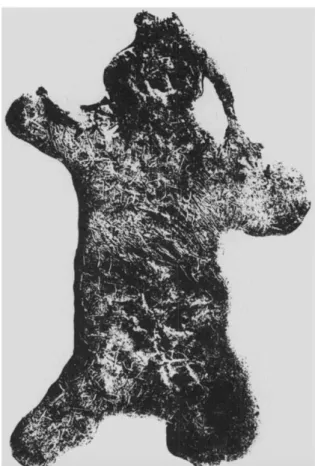
Fig. 1: Louvre Voodoo Doll (Musée du Louvre, 27145 ABC)
Fig. 3: Karystos Gingerbread Doll (Gager 1992, 87, fig. 11)
APPENDIX 2: TYPOLOGY APPLIED TO SPELLS IN FEATURING MAGIC DOLLS132
Spell Number Type of
Spell Doll Description Anthropomorphic or Zoomorphic Power Type Animating ingredient Action upon the doll PGM
IV.296-466 Erotic Ares and female Anthropomorphic Ares: Female: DivinityPersuasive Ares: nothing
Female: inscription of voces magicae, magic material (οὐσία)
Ares: nothing
Female: Inscription of voces magicae and piercing with needles
PGM IV.1716-1870
Erotic Winged Eros Anthropomorphic Divinity Inserted
gold tablet
Insert a gold tablet, make offerings to it, tell it to take the shape of the target’s god or daimon, speak a spell of invocation
PGM
IV.1872-1927 Erotic Dog (Kerberos) Zoomorphic Divinity Possession by a OR ghost?
Bone from a
dead man Insert the bone of a murdered man into the wax dog and say “Barking dog, I adjure you, Kerberos, by those who have hanged themselves, by the dead”
PGM
IV.2359-72 Commerce Hermes Anthropomorphic Divinity Papyrus Insert a papyrus and sacrifice to it
132 All translations from Betz 1996.