Research
Publication Date: 14 December 2007 ID Number: G00153256
© 2007 Gartner, Inc. and/or its Affiliates. All Rights Reserved. Reproduction and distribution of this publication in any form without prior written permission is forbidden. The information contained herein has been obtained from sources believed to be reliable. Gartner disclaims all warranties as to the accuracy, completeness or adequacy of such information. Although Gartner's research may discuss legal issues related to the information technology business, Gartner does not provide legal advice or services and its research should not be construed or used as such. Gartner shall have no liability for errors, omissions or inadequacies in the information contained herein or for interpretations thereof. The opinions expressed herein are subject to change without notice.
Magic Quadrant for WAN Optimization Controllers, 2007
Andy Rolfe, Joe Skorupa
The WOC market is maturing rapidly, but remains dynamic with a high level of innovation from vendors. Organizations looking to acquire WOC capabilities should identify their specific needs and conduct real-life trials before committing to any purchase.
Publication Date: 14 December 2007/ID Number: G00153256 Page 2 of 18 © 2007 Gartner, Inc. and/or its Affiliates. All Rights Reserved.
WHAT YOU NEED TO KNOW
Optimization techniques for wide-area networks (WANs) can improve most organizations' application response times, particularly where network latency is high, which is often due to centralization of servers and IT resources. Typically, WAN optimization controllers (WOCs) serve to prevent network latency having a severe impact on the performance of applications and underlying protocols. Through data reduction and prioritization techniques, WOCs can also help organizations avoid costly bandwidth upgrades.
The WOC market is rapidly maturing, but it is still dynamic with a high level of vendor innovation. This has led to different vendors offering different combinations of features. So, before choosing a vendor, ensure you understand the applications and services running on your network, and the protocols they use. Also conduct a detailed analysis of your network traffic to identify specific problems — for example, excessive latency, bandwidth oversubscription or lack of prioritization for certain types of traffic. Finally, insist on a real-life trial before committing to any purchase. At present, WOC capabilities are delivered by dedicated equipment, usually purchased by the user organization. As the market develops, we expect to see increasing deployment of managed WAN optimization services, and some integration of WOC features into other network equipment such as routers. Our advice on stand-alone WOC equipment selection should therefore be considered in light of these anticipated changes in the market, and we recommend that selection is made on the basis of relatively short payback times (typically less than three years) and on current and near-term product capabilities.
Note: as the inclusion criteria and feature expectations have changed since our "Magic Quadrant for WAN Optimization Controllers, 2006," one cannot compare a vendor's absolute position on the 2006 Magic Quadrant with its position in the 2007 edition. A shift in the absolute position of a vendor since the 2006 version does not imply that Gartner's opinion of the vendor has improved or deteriorated.
Publication Date: 14 December 2007/ID Number: G00153256 Page 3 of 18 © 2007 Gartner, Inc. and/or its Affiliates. All Rights Reserved.
MAGIC QUADRANT
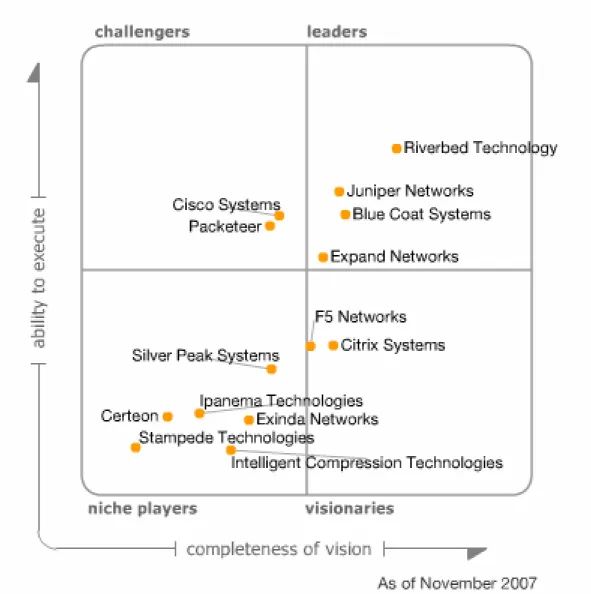
Figure 1. Magic Quadrant for WAN Optimization Controllers, 2007
Source: Gartner (November 2007)
Market Overview
WAN optimization is about improving the performance of business applications over WAN connections. Most networks carry a variety of types of traffic, of differing characteristics and importance. Many organizations are striving to manage this traffic to optimize the response times of critical applications and reduce costs, given that bandwidth continues to represent a significant proportion of operating expenditure for wide-area data networks. But the cost of bandwidth isn't the only consideration — matching the allocation of WAN resources to business needs is also important. And as resources are increasingly centralized, minimizing the effect of latency on application response times is becoming a critical requirement. In addition, new application
Publication Date: 14 December 2007/ID Number: G00153256 Page 4 of 18 © 2007 Gartner, Inc. and/or its Affiliates. All Rights Reserved.
environments, like browser-based applications and Web services, can put an unexpected strain on the network.
Different types of traffic and IT architecture present both difficulties and opportunities for improving the response times of essential applications. For example:
• Traffic that isn't time-sensitive, like e-mail, backups and personal Web access, can swamp WAN links, leading to slow response times from business-critical applications. • Global centralization of branch office servers and data centers can expose
latency-sensitive protocols, again leading to slow response times.
• File transfers, operating system patch distribution and similar applications, such as the delivery of training videos, can quickly saturate WANs.
• Repeated transmission of the same, or similar, files, objects or data patterns can create opportunities for data compression.
Since optimizing overall application response times is a requirement for many organizations, this Magic Quadrant reviews vendors that address the common need to make more efficient and effective use of wide-area connections, regardless of the type of traffic or application. The predominant need is still to optimize the connection between users in remote branch locations and IT centralized resources. However, we are also beginning to see the emergence of requirements to optimize connections between data centers, and between single remote users and centralized resources. In addition, we see early signs of a need to optimize traffic to mobile devices.
The development of the application acceleration market has been driven by customer demand for highly integrated solutions that employ a wide range of techniques to optimize network traffic, and that offer greater scalability and fault tolerance. Vendors in this space initially addressed either the traffic shaping/quality of service (QOS) market or the compression/caching market. These two segments have now largely merged, with most products supporting both sets of capabilities. While these capabilities address the problem of inadequate bandwidth, network latency is increasingly becoming a limiting factor on remote application performance. We therefore see an increasing need for both generic and application-specific optimizations to mitigate the impact of network latency on remote application performance. For instance, most WOC vendors have added specific acceleration features for TCP, HTTP and Microsoft Common Internet File System (CIFS) file access. CIFS is the protocol used by Windows applications to gain access to remote files and printers and other resources.
Some vendors are now merging their enterprise content delivery network (ECDN) and WOC products, or are adding ECDN features to their WOC products. ECDN offers the capability to deliver live and on-demand streaming media content, by pre-positioning content in the cache. This helps to improve response times for semi-static content, such as business procedures and software upgrades. The ECDN market is now merging into the WOC market.
In addition, the following WOC product trends are emerging:
• Soft WOC clients are emerging, allowing single remote PC users to take advantage of a subset of WOC capabilities.
• In branch offices, the capabilities of WOCs will evolve to the point where they can support server-less branch operations, also described as branch office boxes (BOBs). This will require the addition of supporting features including Dynamic Host
Configuration Protocol (DHCP), Domain Name System (DNS), Active Directory caching and print serving.
Publication Date: 14 December 2007/ID Number: G00153256 Page 5 of 18 © 2007 Gartner, Inc. and/or its Affiliates. All Rights Reserved.
• Monitoring and enforcing application-specific service levels that are visible to end users will emerge as a key requirement for WOC equipment.
• Increasing user demand for security capabilities such as Secure Sockets Layer (SSL) optimization and, in some environments, encrypted tunnels between WOCs and encrypted discs.
• Increasing integration of router features into WOC equipment, such as policy-based routing and route selection.
At present, WOC capabilities are delivered by dedicated equipment, usually purchased by the user organization. As the market develops, we expect to see increasing deployment of managed WAN optimization services, and some integration of WOC features into other network equipment such as routers.
Market Definition/Description
A WOC can be either a piece of customer premises equipment, typically connected to the LAN side of WAN routers, or a software application integrated with client devices and servers. Some basic functions of WOCs may also be available in WAN routers. WOCs are typically deployed symmetrically — in data centers and remote locations — and improve the performance of applications that are accessed across a WAN. They address application performance problems caused by bandwidth constraints and latency or protocol limitations. The primary function of WOCs is to improve the response times of business-critical applications over WAN links, but they can also help to maximize return on the investment in WAN bandwidth, and sometimes avoid the need for costly bandwidth upgrades. To achieve these objectives, WOCs use a combination of techniques, including:
• Ensuring fair access for mission-critical applications during periods of congestion by prioritizing business-critical traffic, through QOS policing and traffic shaping, for example.
• Minimizing the effects of network latency using methods like protocol- and application-specific optimization.
• Reducing the bandwidth required to transfer WAN traffic by compressing it, for example. Note that when WOCs are deployed to support server centralization, bandwidth requirements may need to be increased to provide quick response times for file open operations and to accommodate the demands of Web browser-based applications.
Inclusion and Exclusion Criteria
To help organizations with their WAN optimization needs, Gartner has assessed vendors that offer generic, multifunction controllers or software, rather than those that offer only application- or protocol-specific ones for Web caching, HTTP compression or remotely mounted file systems, or single functions such as QOS.
Since WOC technology is still maturing, and there remain significant variations between
implementations, we are focusing on evaluating the different feature sets available. Therefore we have only included vendors that were substantially the original developers of their WOC products (either directly or through acquisition). We have excluded vendors that source the bulk of their technology under OEM or resale agreements.
As this market develops, we expect vendors that offer a combination of techniques, both generic and application- or protocol-specific, to be the most successful. To be included in the 2007 Magic
Publication Date: 14 December 2007/ID Number: G00153256 Page 6 of 18 © 2007 Gartner, Inc. and/or its Affiliates. All Rights Reserved.
Quadrant, vendors' products must include capabilities in at least three of the four broad categories of WAN acceleration techniques:
• Traffic management capabilities such as WAN QOS classification and enforcement or traffic shaping.
• Compression, caching and/or data replication or reduction capabilities. • Generic protocol acceleration (for TCP or HTTP, for example).
• Application-specific optimization features, such as acceleration of the CIFS file-sharing protocol.
Effectively, this means that we now expect to see either generic or application-specific optimization/acceleration in the minimum WOC feature set. This reflects the increased importance of latency as a limit on remote application performance that we are hearing about from our clients.
We have included vendors with measurable market share, plus some smaller suppliers that either offer broad capabilities or have generated interest among Gartner's clients. We have only
included vendors that had shipped revenue-generating products by 13 September 2007. Due to the wide geographical reach of the networks that will benefit most from this technology, included vendors need to have, or demonstrate that they will soon have, a global installation and support capability. As this Magic Quadrant is intended to inform enterprise purchasing decisions, we have only included vendors that have a specific focus on enterprise customers.
Added
No vendors have been added.
Dropped
Streamcore Systems and Converged Access have been dropped, as their products do not meet the revised inclusion criteria. Streamcore's focus is on QOS and reporting, particularly for service providers, while Converged Access addresses the small and midsize business market, with a particular emphasis on voice over Internet Protocol (VoIP). Both vendors lack features to mitigate the impact of network latency on network and application protocols.
Evaluation Criteria
Ability to Execute
Gartner analysts evaluate technology providers on the quality and efficacy of the processes, systems, methods or procedures that enable IT provider performance to be competitive, efficient and effective, and to positively impact revenue, retention and reputation. Ultimately, technology providers are judged on their ability and success in capitalizing on their vision.
Product/Service
Core goods and services offered by the technology provider that serve the defined market. These include current product and service capabilities, quality, feature sets and skills, whether offered natively or through OEM agreements and partnerships, as defined in the market definition and detailed in the subcriteria. For the WOC market, this criterion evaluates both the capabilities of the product (as fully released and generally available at 13 September 2007) as well as the underlying hardware and software platform(s) upon which the vendor's products are based, the breadth of the product range, and products' suitability for supporting additional features in future.
Publication Date: 14 December 2007/ID Number: G00153256 Page 7 of 18 © 2007 Gartner, Inc. and/or its Affiliates. All Rights Reserved.
Overall Viability (Business Unit, Financial, Strategy, Organization): Financials
Viability includes an assessment of the overall organization's financial health, the financial and practical success of the business unit, and the likelihood that the individual business unit will continue to invest in and offer the product, and advance the state of the art within the organization's portfolio of products.
Sales Execution/Pricing
The technology providers' capabilities in all pre-sales activities and the structure that supports them. This includes deal management, pricing and negotiation, pre-sales support and the overall effectiveness of the sales channel. For the WOC market, the sales-execution sub-criterion is more highly rated than the pricing sub-criterion.
Marketing Execution
The clarity, quality, creativity and efficacy of programs designed to deliver the organization's message in order to influence the market, promote the brand and business, increase awareness of products, and establish a positive identification with the product/brand and organization in the minds of buyers. This "mind share" can be driven by a combination of publicity, promotional, thought leadership, word-of-mouth and sales activities. We consider the success and mind share of products in the WOC market, including the installed base and market share, as well as the maturity and breadth of the organization's distribution channels. Also considered are the quality of customer case studies and the level of interest from Gartner clients.
Customer Experience
Relationships, products and services/programs that enable clients to be successful with the products evaluated. Specifically, this includes the ways customers receive technical support or account support. This can also include ancillary tools, customer support programs (and the quality thereof), availability of user groups and service-level agreements. For the WOC market, the vendor's global installation and support capabilities are a key component of the customer experience. This can extend to considerations such as products' ease of use, ancillary tools, customer support programs (and their quality), availability of user groups and service-level agreements. Also considered is the quality of customer references, and the experience of the vendor among Gartner clients.
The following evaluation criteria have not been used:
• Market Responsiveness and Track Record is evaluated under Marketing Execution. • Operations is covered under Overall Viability.
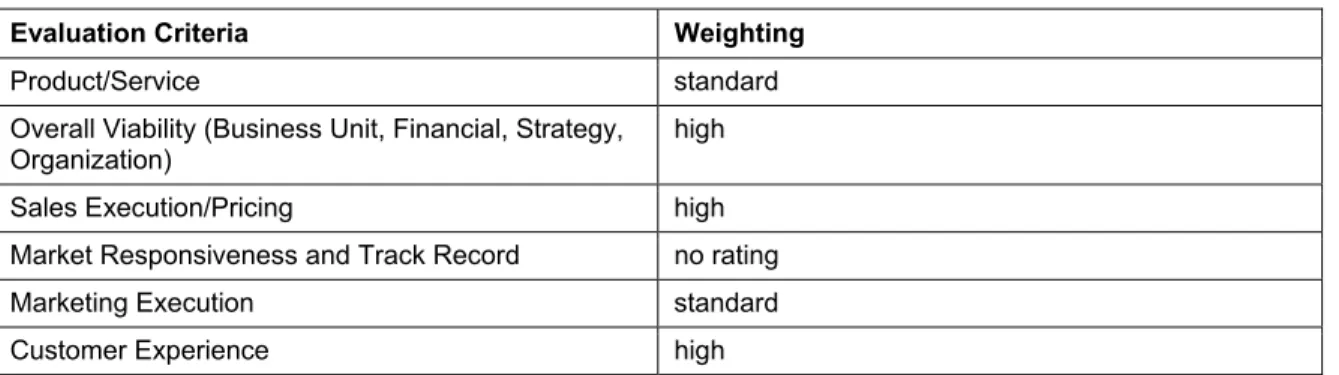
Table 1. Ability to Execute Evaluation Criteria
Evaluation Criteria Weighting
Product/Service standard Overall Viability (Business Unit, Financial, Strategy,
Organization) high
Sales Execution/Pricing high
Market Responsiveness and Track Record no rating
Marketing Execution standard
Publication Date: 14 December 2007/ID Number: G00153256 Page 8 of 18 © 2007 Gartner, Inc. and/or its Affiliates. All Rights Reserved.
Evaluation Criteria Weighting
Operations no rating
Source: Gartner
Completeness of Vision
Gartner analysts evaluate technology providers on their ability to convincingly articulate logical statements about current and future market direction, innovation, customer needs, and
competitive forces and how well they map to Gartner's position. Ultimately, technology providers are rated on their understanding of how market forces can be exploited to create opportunity for the provider.
Market Understanding
Ability of the technology provider to understand buyers' needs and to translate these needs into products and services. Vendors that show the highest degree of vision listen and understand buyers' wants and needs, and can shape or enhance those wants with their added vision. For the WOC market, we expect to see a consistent track record of feature enhancements, together with a sound product road map.
Marketing Strategy
A clear, differentiated set of messages consistently communicated throughout the organization and externalized through the Web site, advertising, customer programs and positioning statements.
Sales Strategy
The strategy for selling product that uses the appropriate network of direct and indirect sales, marketing, service, and communication affiliates that extend the scope and depth of market reach, skills, expertise, technologies, services and the customer base.
Business Model
The soundness and logic of a technology provider's underlying business proposition. Innovation
Direct, related, complementary and synergistic layouts of resources, expertise or capital for investment, consolidation, defensive or pre-emptive purposes. WOC vendors with a track record of early introduction of new features and capabilities will be highly rated. As well as feature innovation in the four broad categories defined in the inclusion criteria, we expect to see innovation in the scope of product availability (for instance, breadth of product range, including data center, branch and remote access products), in high-availability options, and in
manageability and maintainability. Geographic Strategy
The technology provider's strategy to direct resources, skills and offerings to meet the specific needs of geographies outside the "home" or native geography, either directly or through partners, channels and subsidiaries, as appropriate for that geography and market. For the WOC market, we expect to see a sales and support strategy that recognizes the global nature of many user organizations' WOC needs.
Publication Date: 14 December 2007/ID Number: G00153256 Page 9 of 18 © 2007 Gartner, Inc. and/or its Affiliates. All Rights Reserved.
• Offering (Product) Strategy is covered under Market Understanding and Innovation. • Vertical/Industry Strategy is not relevant because WOC equipment is being adopted across a broad range of industries, and is a generic technology that is not industry-specific.
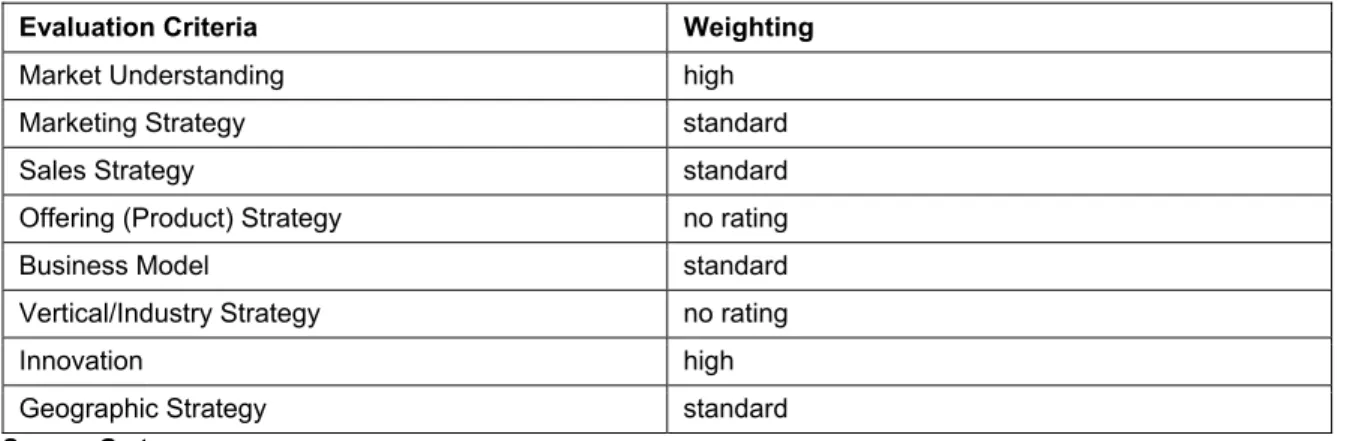
Table 2. Completeness of Vision Evaluation Criteria Evaluation Criteria Weighting
Market Understanding high
Marketing Strategy standard
Sales Strategy standard
Offering (Product) Strategy no rating
Business Model standard
Vertical/Industry Strategy no rating
Innovation high
Geographic Strategy standard
Source: Gartner
Leaders
Leaders exhibit an ability to shape the market by introducing additional capabilities in their product offerings and by raising awareness of the importance of these features. We expect a Leader to be growing the market as a whole, and to have solutions that resonate with an
increasing number of enterprises. Leaders in the WOC market need to have a broad feature set, including QOS, generic compression, protocol acceleration and file system acceleration, with the majority of features proven in substantial real-world implementations. They also need to be able to offer sales and support on a global basis.
Challengers
A Challenger in this market is a follower from a product or innovation perspective, but has
demonstrated the ability to take its products into the market and to show their relevance to a wide audience. Challengers may have less-complete feature sets than Leaders, or they may have new products that are as yet unproven in substantial real-world implementations.
Visionaries
Visionaries need to address the whole market and must exhibit strong market understanding and innovation. They can be pointers to the market's future. However, they currently lack the ability to influence a large portion of the market, and have yet to expand their sales and support
capabilities globally. In addition, they may have new products that are as yet unproven in substantial real-world implementations, or may lack the funds to execute with the same capabilities as a vendor in the Leaders quadrant.
Niche Players
Niche Players provide a more limited set of capabilities, and have not demonstrated enough vision or focused execution to warrant a stronger position in our analysis. They may be indicative of emerging requirements and features. Niche Players have yet to expand their sales and support capabilities globally. Additionally, they may have new products that are as yet unproven in
Publication Date: 14 December 2007/ID Number: G00153256 Page 10 of 18 © 2007 Gartner, Inc. and/or its Affiliates. All Rights Reserved.
substantial real-world implementations or may lack the funds to execute with the same capabilities as a vendor in the Leaders quadrant.
Vendor Strengths and Cautions
Blue Coat Systems
Strengths
• For a late entrant to the market, Blue Coat has executed well in the last year, ramping up both product capabilities and sales execution. Blue Coat's Mach5 WOC features are available as a software upgrade for existing Blue Coat SG appliance customers. As well as orders for upgrades, Blue Coat has secured a substantial number of new WOC customers in the past year.
• Blue Coat has strong market understanding, demonstrated through its broad WOC range and feature set. This includes HTTPS acceleration, ECDN, a software client ("SoftWOC") and support for streaming media.
• Blue Coat and its distribution partners have good application delivery and security credibility.
Cautions
• Mach5 has weaker reporting and monitoring capabilities than some other leading vendors' products.
• Blue Coat SG appliances offer only average acceleration and WAN performance, and lack the performance necessary for data center-to-data center acceleration. Hardware and software upgrades to enhance performance were announced just before this analysis was completed.
Certeon
Strengths
• Certeon offers encrypted disks in its WOC appliance, and HTTPS acceleration. • The Certeon product accelerates applications, with specific emphasis on Microsoft
applications including Microsoft SharePoint and Office, and EMC Documentum. • Certeon has a strong marketing focus on verticals, and application-specific channels
and partnerships.
Cautions
• Privately-held Certeon lacks financial strength compared with leading vendors. This limits its ability to develop its product, sales and support capabilities. For example, Certeon has limited distribution channels and geographic reach, leading to weak sales and marketing execution.
• Certeon focuses on a small number of applications, and has limited appreciation of overall market requirements.
Publication Date: 14 December 2007/ID Number: G00153256 Page 11 of 18 © 2007 Gartner, Inc. and/or its Affiliates. All Rights Reserved.
Cisco Systems
Strengths
• Cisco has extensive worldwide support and distribution capabilities.
• Layer 3 and Layer 4 header preservation comes as a standard feature, which may minimize the changes that have to be made to security and network monitoring configurations when implementing WAN optimization.
Cautions
• Successful implementation often requires multiple days by on-site Cisco engineers, due to the solution's complexity. There is no single view of configuration, policy or WAN optimization features that are split across Wide Area Application Services (WAAS) and several router-based Internetwork Operating System (IOS) software options.
• Cisco has been slow to understand emerging market needs, resulting in WAAS feature releases usually following other vendors' innovations. For instance, WAAS lacks advanced features such as acceleration for HTTPS and Messaging Application
Programming Interface (MAPI), and Cisco does not offer a software WOC client. Each of these features is available from other vendors.
Citrix Systems
Strengths
• Transparency — there are no tunnels, and Layer 3 and Layer 4 header preservation comes as a standard feature, which may minimize the changes that have to be made to security and network monitoring configurations when implementing WAN optimization. • Citrix offers a SoftWOC.
• Citrix has application delivery credibility and application-savvy channels. • Citrix's Microsoft partnership should deliver strong mid-market BOB capability.
Cautions
• There has been slow progress since Citrix's acquisition of Orbital Data in 2006. • Citrix's WANScaler WOC is unproven in networks with large numbers of sites.
Exinda Networks
Strengths
• Exinda is focusing on the mid-market, supported by an innovative portal-based software as a service (SaaS) management console and a channel-friendly offering.
• Exinda offers the lowest-entry-cost disk-based appliances on the market. • Exinda delivers good QOS and reporting and application visibility.
• Exinda offers an option to preserve Layer 3 and 4 headers, which may minimize the changes that have to be made to security and network monitoring configurations when implementing WAN optimization.
Publication Date: 14 December 2007/ID Number: G00153256 Page 12 of 18 © 2007 Gartner, Inc. and/or its Affiliates. All Rights Reserved.
Cautions
• As a privately-held company, Exinda has limited funds compared with other vendors analyzed in this report. This limits its ability to develop its product, sales and support capabilities. Additional funding will likely be required for Exinda to extend its limited distribution channels and somewhat limited geographic reach.
• Exinda has been slow to respond to changing market needs. Its recently launched CIFS acceleration feature is unproven in large networks, and advanced acceleration features (such as SSL and MAPI acceleration, and SoftWOC) are lacking.
Expand Networks
Strengths
• Expand has strong market understanding, demonstrated through a broad feature set and the best mix of QOS, reporting and acceleration features.
• There is a low-priced entry-level CIFS model, and a CIFS proxy supporting disconnected operation and service message block (SMB) signing.
• Expand offers a Layer 3 and Layer 4 header preservation mode, which may minimize the changes that have to be made to security and network monitoring configurations when implementing WAN optimization.
Cautions
• Although Expand has strong sales channels in Europe, the Middle East and Africa (EMEA) and Asia/Pacific, its sales and support channels are weaker in the U.S. To improve its ability to serve global customers, Expand must increase its sales and support capabilities in North America. This expansion may be limited by Expand's weaker financial position, compared with other leaders.
• Expand has limited WAN capacity at high end.
• Expand lacks HTTPS acceleration and SoftWOC features.
F5 Networks
Strengths
• F5 has shown good market understanding, supported by application delivery and security credibility.
• TMOS, F5's software platform for multiple application acceleration products, will enable feature portability and management integration.
• F5 has application-savvy distribution channels.
Cautions
• F5 has been late to market with proven, competitive products, resulting in low sales so far.
• The company's WANJet product lacks advanced features such as acceleration for HTTPS and MAPI. Also, F5 does not offer a SoftWOC, although some SoftWOC-type features are provided by its BIG-IP WebAccelerator.
Publication Date: 14 December 2007/ID Number: G00153256 Page 13 of 18 © 2007 Gartner, Inc. and/or its Affiliates. All Rights Reserved.
• WOC capabilities are split between WANJet and symmetrical deployment of WebAccelerator.
Intelligent Compression Technologies
Strengths
• Intelligent Compression Technologies (ICT) has an excellent understanding of the enterprise and mobile client segments (Win32 and Windows Mobile).
• ICT's technology is proven in large consumer and ISP deployments. • The company offers HTTPS, MAPI and RPC optimization.
• ICT offers file-specific compression algorithms.
Cautions
• ICT's product is for niche clients only.
• A bias toward OEM and service provider customers may result in slower responses to changing needs in the enterprise market.
• ICT has limited distribution channels and geographical reach.
Ipanema Technologies
Strengths
• Ipanema has good QOS and reporting capabilities, including Mean Opinion Score (MOS) and Application Quality Score (AQS) metrics for VoIP and application performance monitoring.
• The company has good capabilities in meshed and Multiprotocol Label Switching (MPLS) networks.
Cautions
• Privately-held Ipanema lacks financial strength compared with leading vendors. This limits its ability to develop. For instance, Ipanema has limited distribution channels, and somewhat limited geographic reach. We expect the company to continue to work with service provider partners to complement its own distribution channels.
• Ipanema's market understanding is slanted by the company's success with European managed service providers, resulting in slower responses to changing enterprise needs. • The company's recently launched CIFS acceleration is unproven in large networks, and
advanced acceleration features are lacking.
Juniper Networks
Strengths
• Juniper has shown strong market understanding, and was an early compression innovator.
Publication Date: 14 December 2007/ID Number: G00153256 Page 14 of 18 © 2007 Gartner, Inc. and/or its Affiliates. All Rights Reserved.
• The WX and WXC WOC products have a broad feature set, including User Datagram Protocol (UDP) and MAPI acceleration, and capable QOS and reporting. Support for HTTPS acceleration, ECDN and SMB signing became available just before this analysis was completed.
• Juniper has extensive worldwide support and distribution capabilities.
Cautions
• Juniper's WOC products have limited WAN capacity at the high end, compared with those of some other leading vendors.
• This vendor has failed to grow its WOC business faster than the overall market. • Juniper lacks a SoftWOC.
Packeteer
Strengths
• Packeteer has excellent QOS, reporting and application visibility, including MOS, which shows strong vision in this area.
• Features include SoftWOC and BOB capabilities.
• Packeteer's acquisitions of Mentat (SkyX), Mobiliti and Tacit Networks were sound, and enhanced its overall capabilities.
• The company's partnership with Microsoft should deliver strong mid-market BOB capabilities.
Cautions
• Packeteer was slow to understand the importance of file-system acceleration.
• The features of the vendor's PacketShaper and iShared product ranges are converging in the iShaper range, but the iShaper range lacks low-cost models for small branches. • Packeteer's HTTPS acceleration is incomplete (currently Web caching only).
• Packeteer has limited WAN capacity at the high end.
Riverbed Technology
Strengths
• Riverbed has demonstrated excellent enterprise market understanding and innovation, especially for the demands of CIFS applications.
• Riverbed's Steelhead is the broadest lineup of appliances on the market, ranging from a low-cost entry model to a high-end cluster.
• Steelhead's comprehensive features include acceleration for HTTPS and MAPI, and a SoftWOC client. Disk encryption was announced just before this analysis was
completed.
Publication Date: 14 December 2007/ID Number: G00153256 Page 15 of 18 © 2007 Gartner, Inc. and/or its Affiliates. All Rights Reserved.
Cautions
• Less-capable QOS and reporting features than some leading vendors. • Steelhead lacks UDP support.
• Depending on the configuration and WAN speeds, licensing can be costly.
Silver Peak Systems
Strengths
• Silver Peak has shown particularly good understanding of the acceleration needs of data replication and backup.
• The resulting good features for data center applications include UDP (used by data synchronization applications), Network File System (NFS), redundant array of independent disks (RAID), high performance, recovery of lost and out-of-sequence packets, and large disk capacity.
• Silver Peak offers encrypted disks featuring hardware encryption.
Cautions
• Silver Peak lacks financial strength compared with the market leaders, which may limit its ability to develop its product, sales and support capabilities.
• Silver Peak is primarily focused on data center-to-data center and very high-end large branch office applications, and lacks a complete branch office strategy. For instance, it does not have a low-entry cost model for smaller branches, or advanced branch office features such as SoftWOC and HTTPS acceleration.
Stampede Technologies
Strengths
• Stampede has a strong focus on the retail segment, of which it has excellent understanding.
• This company is an innovator in Web 2.0 optimization. • Stampede offers HTTPS optimization.
• Stampede supports Win32, Windows Mobile and Linux clients.
Cautions
• Privately-held Stampede has limited funding compared with most other vendors. This will limit its ability to develop its product, sales and support capabilities. We expect Stampede to continue to rely on its OEM and independent software vendor (ISV) partners, and to expand its own reseller base.
• Stampede has a narrow product range with a client software (SoftWOC) focus. Its branch appliance is unproven in significant implementations.
Publication Date: 14 December 2007/ID Number: G00153256 Page 16 of 18 © 2007 Gartner, Inc. and/or its Affiliates. All Rights Reserved.
• The focus on the retail vertical market influences Stampede's market understanding and innovation. Although the company serves this sector well, it might not address the needs of other industries so effectively.
• Stampede has limited distribution channels, support hours and geographical reach.
RECOMMENDED READING
"Magic Quadrants and MarketScopes: How Gartner Evaluates Vendors Within a Market"
Vendors Added or Dropped
We review and adjust our inclusion criteria for Magic Quadrants and MarketScopes as markets change. As a result of these adjustments, the mix of vendors in any Magic Quadrant or
MarketScope may change over time. A vendor appearing in a Magic Quadrant or MarketScope one year and not the next does not necessarily indicate that we have changed our opinion of that vendor. It may be a reflection of a change in the market and, therefore, changed evaluation criteria, or a change of focus by a vendor.
Evaluation Criteria Definitions
Ability to Execute
Product/Service: Core goods and services offered by the vendor that compete in/serve the defined market. This includes current product/service capabilities, quality, feature sets and skills, whether offered natively or through OEM agreements/partnerships as defined in the market definition and detailed in the subcriteria.
Overall Viability (Business Unit, Financial, Strategy, Organization): Viability includes an assessment of the overall organization's financial health, the financial and practical success of the business unit, and the likelihood that the individual business unit will continue to invest in and offer the product, and advance the state of the art within the organization's portfolio of products. Sales Execution/Pricing: The vendor's capabilities in all pre-sales activities and the structure that supports them. This includes deal management, pricing and negotiation, pre-sales support and the overall effectiveness of the sales channel.
Market Responsiveness and Track Record: Ability to respond, change direction, be flexible and achieve competitive success as opportunities develop, competitors act, customer needs evolve and market dynamics change. This criterion also considers the vendor's history of responsiveness.
Marketing Execution: The clarity, quality, creativity and efficacy of programs designed to deliver the organization's message in order to influence the market, promote the brand and business, increase awareness of products, and establish a positive identification with the product/brand and organization in the minds of buyers. This "mind share" can be driven by a combination of
publicity, promotional, thought leadership, word-of-mouth and sales activities.
Customer Experience: Relationships, products and services/programs that enable clients to be successful with the products evaluated. Specifically, this includes the ways customers receive technical support or account support. This can also include ancillary tools, customer support programs (and the quality thereof), availability of user groups and service-level agreements.
Publication Date: 14 December 2007/ID Number: G00153256 Page 17 of 18 © 2007 Gartner, Inc. and/or its Affiliates. All Rights Reserved.
Operations: The ability of the organization to meet its goals and commitments. Factors include the quality of the organizational structure, including skills, experiences, programs, systems and other vehicles that enable the organization to operate effectively and efficiently on an ongoing basis.
Completeness of Vision
Market Understanding: Ability of the vendor to understand buyers' wants and needs and to translate those into products and services. Vendors that show the highest degree of vision listen and understand buyers' wants and needs, and can shape or enhance those with their added vision.
Marketing Strategy: A clear, differentiated set of messages consistently communicated throughout the organization and externalized through the Web site, advertising, customer programs and positioning statements.
Sales Strategy: The strategy for selling product that uses the appropriate network of direct and indirect sales, marketing, service and communication affiliates that extend the scope and depth of market reach, skills, expertise, technologies, services and the customer base.
Offering (Product) Strategy: The vendor's approach to product development and delivery that emphasizes differentiation, functionality, methodology and feature set as they map to current and future requirements.
Business Model: The soundness and logic of the vendor's underlying business proposition. Vertical/Industry Strategy: The vendor's strategy to direct resources, skills and offerings to meet the specific needs of individual market segments, including verticals.
Innovation: Direct, related, complementary and synergistic layouts of resources, expertise or capital for investment, consolidation, or defensive or pre-emptive purposes.
Geographic Strategy: The vendor's strategy to direct resources, skills and offerings to meet the specific needs of geographies outside the "home" or native geography, either directly or through partners, channels and subsidiaries as appropriate for that geography and market.
Publication Date: 14 December 2007/ID Number: G00153256 Page 18 of 18 © 2007 Gartner, Inc. and/or its Affiliates. All Rights Reserved.
REGIONAL HEADQUARTERS
Corporate Headquarters 56 Top Gallant Road Stamford, CT 06902-7700 U.S.A. +1 203 964 0096 European Headquarters Tamesis The Glanty Egham Surrey, TW20 9AW UNITED KINGDOM +44 1784 431611 Asia/Pacific Headquarters Gartner Australasia Pty. Ltd. Level 9, 141 Walker Street North Sydney
New South Wales 2060 AUSTRALIA +61 2 9459 4600 Japan Headquarters Gartner Japan Ltd. Aobadai Hills, 6F 7-7, Aobadai, 4-chome Meguro-ku, Tokyo 153-0042 JAPAN +81 3 3481 3670
Latin America Headquarters Gartner do Brazil
Av. das Nações Unidas, 12551 9° andar—World Trade Center 04578-903—São Paulo SP BRAZIL