D
EVELOPMENT OF A
C
ONCEPTUAL
I
NTEGRATED
T
RAFFIC
S
AFETY
P
ROBLEM
I
DENTIFICATION
D
ATABASE
December
1999
Licensing Operations Division Author: Paul Choate
California Department of Motor Vehicles Research and Development Branch RSS-99-186
2. REPORT DATE
4. TITLE AND SUBTITLE 5. FUNDING NUMBERS
6. AUTHOR(S)
7. PERFORMING ORGANIZATION NAME(S) AND ADDRESS(ES) 8. PERFORMING ORGANIZATION
REPORT NUMBER
11. SUPPLEMENTARY NOTES
9. SPONSORING/MONITORING AGENCY NAME(S) AND ADDRESS(ES)
13. ABSTRACT (Maximum 200 words)
19. SECURITY CLASSIFICATION OF ABSTRACT 20. LIMITATION OF ABSTRACT 15. NUMBER OF PAGES 16. PRICE CODE 14. SUBJECT TERMS
1. AGENCY USE ONLY (Leave blank) 3. REPORT TYPE AND DATES COVERED
10. SPONSORING/MONITORING AGENCY REPORT NUMBER
12a. DISTRIBUTION/AVAILABILITY STATEMENT 12b. DISTRIBUTION CODE
18. SECURITY CLASSIFICATION OF THIS PAGE
17. SECURITY CLASSIFICATION OF REPORT
suggestions for reducing this burden, to Washington Headquarters Services, Directorate for Information Operations and Reports, 1215 Jefferson Davis Highway, Suite 1204, Arlington, VA 22202-4302, and to the Office of Management and Budget, Paperwork Reduction Project (0704-0188), Washington, DC 20503.
December 1999 Development of a Conceptual Integrated Traffic Safety Problem Identification Database
Paul Choate
California Department of Motor Vehicles Research and Development Branch - F126 P.O. Box 932382
Sacramento, CA 94232-3820
crash data, crash information system, risk-management information system, crash statistical database, crash reporting system
The project conceptualized a traffic safety risk management information system and statistical database for improved problem-driver identification, countermeasure development, and resource allocation.
The California Department of Motor Vehicles Driver License (DL) and Vehicle Registration (VR) database systems, the California Highway Patrol Statewide Integrated Traffic Records System (SWITRS), and the National Highway Traffic Safety Administration (NHTSA) Fatality Analysis Reporting System (FARS) each provide valuable information on crashes in California for conducting problem identification analyses, developing and evaluating traffic safety programs, and allocating resources. The project explored these four primary systems and investigated several additional data sources suggested by the project advisory committee, including the California Department of Transportation Traffic Accident Surveillance and Analysis System, the Department of Health Services Hospital Discharge Database, and the Department of Justice Criminal Justice Information System.
Based on a review of the existing systems and inputs from a project advisory committee of representatives of leading national and state traffic safety research interests, the department has decided to develop a prototype ITSPID system that would integrate the DL, VR, SWITRS, and FARS databases.
RSS-99-186
PREFACE
This report is the final product of a project entitled Development of a Conceptual Integrated Traffic Safety Problem Identification Database. This project is part of the California Traffic Safety Program and was funded by the National Highway Traffic Safety Administration through the California Office of Traffic Safety (Engineering and Traffic Records, Traffic Records Project TR9902).
This report includes information and advice provided by many individuals. Although the author attempted to represent their inputs as accurately as possible, some details may not be fully presented or stated in the context or form originally provided. The opinions, findings, and conclusions expressed in this report are those of the author and not necessarily those of the State of California or the National Highway Traffic Safety Administration.
ACKNOWLEDGMENTS
The author wishes to acknowledge with appreciation the many individuals who contributed to this project.
Thanks are extended to representatives of the many data systems that were investigated during this project. Foremost are Gus Callao and Bev Christ of the California Highway Patrol (CHP) who produced Statewide Integrated Traffic Records System (SWITRS) datasets for the project, provided relevant documentation, and answered many questions about the system. Shell Culp of CHP invited the author to participate in the SWITRS redesign project, which provided much information of value to the Integrated Traffic Safety Problem Identification Database (ITSPID) project. Barry Eisemann of National Highway Traffic Safety Administration (NHTSA) provided information about the operations of the Fatality Analysis Reporting System (FARS). Michael Sowvlen of CHP spent several hours discussing the California FARS unit processes, providing much insight and helpful documentation.
Special thanks are given to several representatives of the Department of Motor Vehicles (DMV). Mike Gebers explained the details of DMV’s Driver License (DL) automated record system. Len Marowitz, Patrice Rogers, and Helen Tashima also helped explain DL system components. Bart Furtado explained the mechanics of the department’s Vehicle Registration (VR) automated record system. Chris Terwilliger supplied the VR file documentation, a data extract, and suggested additional reading on the VR system. Jan Ochida gave detailed explanations of the financial responsibility crash reporting system and the process for creating records for unlicensed drivers. Diana Lacroix explained DMV procedures for processing unlicensed drivers identified on CHP crash reports.
Ed Fitzgerald of California Department of Transportation (CalTrans) provided an extract of data from the California Traffic Accident Surveillance and Analysis System and supporting documentation. Ed also provided references to several roadway system publications used during the project. Forrest Council of the University of North
Carolina Highway Safety Research Center and Yusuf Mohamedshah of the Federal Highway Administration explained the Highway Safety Information System and provided extensive documentation.
Thanks are extended also to Lynda Nance and Bonnie Collins of the Department of Justice Special Request Unit for discussing the Monthly Arrest and Citation Register. Candace Diamond, Ginger Cox, and Mike Tagupa of the Office of Statewide Health Planning and Development explained the Hospital Discharge Database, medical codes relating to traffic crashes, and the procedures for requesting data extracts from the system. Sheri Schoenenberger and Pat Andrews of the Center for Health Statistics (CHS) explained the CHS Death Statistical Master File. Yolanda Apodaca of Department of Health Services (DHS) explained the DHS fatality code system and Coroner/Medical Examiner Fatality Reports database. Ed Armitage of the Emergency Medical Services Authority explained the Emergency Care Data Record that is legislated to be developed and also provided information on emergency transit in California. The project was guided in part by an advisory committee of individuals selected to represent leading state and national traffic safety interests. Committee members are thanked for their generous and insightful responses in both project surveys: Craig Anderson and Phyllis Agran, University of California at Irvine, Health Policy and Research; Jesse Bhullar, California Department of Transportation; Ray Biancalana and Chris Murphy, California Office of Traffic Safety; Daniel Blower, University of Michigan, Transportation Research Institute; Mike Calvin, American Association of Motor Vehicle Administrators; Bev Christ, California Highway Patrol, Information Management; Craig A. Copelan, California Department of Transportation; Forrest Council, University of North Carolina, Highway Safety Research Center; Barnie Jones, Oregon Department of Transportation, Transportation Development; Bill Kennedy, Michigan Department of State; Jess F. Kraus, University of California at Los Angeles’ Southern California Injury Prevention Research Center; Ed Milton, United States Department of Transportation, National Highway Traffic Safety Administration; Phil Salzberg, Washington State Traffic Safety Commission; Allan F. Williams, Insurance Institute for Highway Safety; and John J. Zogby, Transportation Safety, Policy and Management.
The study was conducted under the guidance of Robert Hagge, Research Manager in R&D’s Research and Development Branch. The project was originally conceived and generally directed by Raymond C. Peck, Chief of Research (retired), Department of Motor Vehicles. Mary Janke, Acting Chief of Research, reviewed and suggested edits to an early draft of this report. Mark Bertacchi of the Office of Traffic Safety was very helpful in guiding the project’s grant process. Finally, appreciation goes to Debbie McKenzie, Associate Government Program Analyst, and Douglas Luong, Management Services Technician, of the DMV for their help in producing and distributing the surveys and project reports.
PROJECT PERSONNEL
Paul Choate, Research Program Specialist I Principal Investigator
Robert Hagge, Research Manager I Project Supervision
Ray Peck, Chief of Research (retired) Project Inception
Debbie McKenzie, Associate Government Program Analyst Project Time Reporting, Proofreading, and Report Production
EXECUTIVE SUMMARY Background
California’s high volume of drivers and vehicles and dependence on the automobile make traffic safety an important concern to the state. In 1998 1.5 million California drivers were involved in reported crashes resulting in 3,478 deaths and 291,731 injuries. During the same year, approximately 1 million drivers were under license suspension or revocation.
The only management information mechanism presently available in California to obtain both current driver record statistics and crash-risk indices is the Department of Motor Vehicles (DMV) Driver Record Study Database, which contains a one-percent longitudinal sample of driving history records extracted from the Driver License (DL) automated record system. This sample database does not include enough crash-event cases to adequately study very small subgroups of drivers.
The DL system provides driver population data that can be used by management and other decision-makers for identifying general safety problems and allocating resources. However, driver record data for specific driver groups (e.g., commercial drivers, motorcycle operators, handicapped drivers, young drivers, aged drivers, and drunk drivers) are not readily available from this system, and can only be obtained through expensive and complex data extraction and processing programs. Data that have been extracted from this system for past projects are usually very outdated and may not be in a form that makes them of much practical use in contemporary research projects. California Highway Patrol’s (CHP’s) Statewide Integrated Traffic Records System (SWITRS) is a good source of data on fatal/injury crashes and provides annual statistics for some driver groups, but it does not contain information on each driver’s prior driving record or license status.
National Highway Traffic Safety Administration’s (NHTSA’s) Fatality Analysis Reporting System (FARS) provides very detailed crash information but only on crashes involving fatalities. Like SWITRS, the FARS database contains data on the characteristics of all involved parties, vehicles, traffic conditions, and other variables related to the crash. FARS also contains some information that is not available in SWITRS, such as driver license status.
DMV’s Vehicle Registration (VR) system contains detailed data on all motor vehicles registered in the state, including information on registered- and legal-owners. The importance of vehicle information has increased greatly with the enactment of vehicle impoundment and forfeiture laws. Combining information on the characteristics of
vehicles involved in crashes with information on the involved parties and traffic conditions would enable more comprehensive research to be conducted on the contributing causes of traffic crashes. Assessing the incidence of registered and non-insured vehicles in injury and fatal crashes would also be helpful in identifying traffic safety problems, developing countermeasures, and allocating resources.
Several other systems are known to contain relevant traffic safety information. Among them are the California Department of Transportation (CalTrans) Traffic Accident Surveillance and Analysis System (TASAS), the Department of Health Services (DHS) Hospital Discharge Database, emergency transportation and treatment databases, and Department of Justice (DOJ) files. All of these data sources were investigated during this project.
Combining data from SWITRS, FARS, the DL and VR systems, and possibly other traffic safety-related information sources into a single unified management information system would provide California with a rich and presently untapped resource for conducting problem-identification analyses, developing and evaluating traffic safety programs, and allocating resources. The integrated database would include all injury and non-injury police reported crashes contained in SWITRS, plus all self-reported crashes identified by DMV’s financial responsibility reporting system that are not included in the SWITRS database. This increased crash volume would make possible the creation of problem identification indicators that would be much broader in scope and more accurate than those achievable from the smaller volume of crashes recorded in SWITRS (and FARS) alone. It is also envisioned that the ITSPID system would produce an annual report for California similar to the annual FARS report.
Three traffic safety information systems were considered as possible models for this project: FARS, the Federal Highway Administration Highway Safety Information System (HSIS) and the NHTSA Crash Outcome Data Evaluation System (CODES). Each of these systems was investigated during this project.
Methods
The project was guided by an advisory committee of representatives from national and state traffic safety and research organizations through two surveys. The first survey provided committee members with a description of the source data systems under consideration and obtained their input on the selection of data elements to include in ITSPID, how these data would be organized, and whether additional database systems should be explored for possible integration into ITSPID. The second survey summarized the results from the first survey, described the additional systems that were explored, described the two ITSPID designs that were selected for use in developing a prototype system, and questioned the committee regarding the likely utility, value, and user demand for each system design option.
For each source or model data system that was explored in this project, representatives were contacted, documentation was requested, and the processes used to extract and provide data were investigated. Extracts were requested and, if available, reviewed for content. Where possible, the data extracted from the different source systems were compared and investigated for common linkage identifiers. Data matching (linkage) rates between systems were calculated, and a description of the crash universe was
created. The department’s financial responsibility reporting system was also reviewed, and the crash data reported by that system were scrutinized and compared to data in SWITRS.
Results
The project originally proposed integrating data from the DL, VR, SWITRS, and FARS systems. Based on advice received from the advisory committee in the first survey, five additional systems were explored as possible sources of data that could be included in ITSPID.
All of the additional data systems recommended by the committee offered potentially useful information. Medical injury-recovery data and roadway data were considered as the top candidates for inclusion in ITSPID because of their significance to policy-level decision making. Many of the data systems were found to have identifiers that would enable file information to be linked to ITSPID. The chief obstacles to linking to these systems are the additional resources that would be needed to collect, integrate, and maintain this additional information. The health and justice data systems were found to require very stringent approval processes for release of data, which would be a problem. The emergency treatment information system is under development and will not be implemented until at least year 2002.
The committee also recommended the FARS, HSIS, and CODES systems as models for the ITSPID project. Each of these systems were found to be very large projects employing several programming, research, and administrative staff devoted to data collection, linkage, storage, retrieval, and dissemination. In contrast, ITSPID as currently conceived would be significantly limited in the resources available to it, possibly employing only a single staff position.
Conclusions and Recommendations
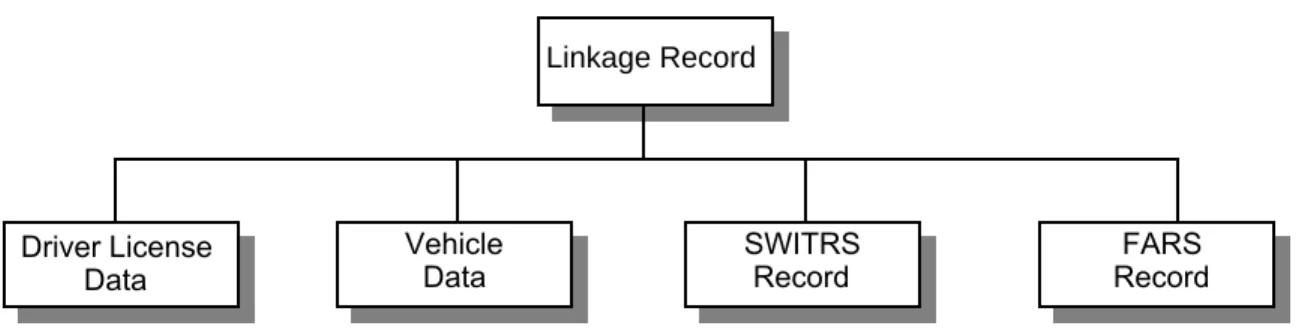
Based on a review of the systems and inputs from the advisory committee, the department has decided to develop a prototype ITSPID system that will integrate data only from SWITRS, FARS, and the DL and VR systems. It has also been decided that the full contents and formats of the FARS and SWITRS files will be preserved in ITSPID so that responsibility for their accuracy, reliability, and documentation can be assumed by the administrators of those systems. Two versions of a prototype system will be developed. One will keep the four source data files separated but linked by a fifth file containing linkage identifiers and summary information. The other will interleave all five files into a single database.
OTS funding for the development of the prototype system has been requested as an extension (Stage II) of the current project.
TABLE OF CONTENTS PAGE PREFACE... i ACKNOWLEDGMENTS... ii EXECUTIVE SUMMARY... v Background ... v Methods ... vii Results ... vii
Conclusions and Recommendations ... viii
INTRODUCTION... 1
Background ... 1
Problem Statement... 3
Solution Statement ... 3
Project Goal and Objectives ... 4
Operational Phases... 5
METHODS... 8
Advisory Committee... 8
First Survey ... 9
Second Survey... 10
Investigation of Additional Data Sources ... 10
Investigation of Model Data Systems... 11
RESULTS... 12
First Survey ... 12
Review of Source Data Systems... 14
Review of Model Data Systems... 21
Second Survey... 23
PROPOSED PROTOTYPE ITSPID SYSTEM... 26
Data Contents and File Structure... 26
Proposed Organization of Data in ITSPID... 27
Proposed ITSPID Data Elements ... 33
System Documentation ... 34
Implementation Schedule... 34
SUMMARIZED ACCOMPLISHMENTS OF PROJECT GOAL AND OBJECTIVES ... 36
Project Goal ... 36
Project Objectives ... 36
APPENDICES NUMBER A Text of Advisory Committee Surveys... 40
B Driver License System Standard Record ... 50
C Vehicle Registration System Standard Record ... 61
D SWITRS Standard Record... 65
TABLE OF CONTENTS (continued) LIST OF TABLES
NUMBER PAGE
1 Example Haddon Matrix for a Crash Event... 12 2 ITSPID Prototype Source Data Systems Existing
Linkage Identifiers ... 31 3 Additional Available Source Data Systems Existing
Linkage Identifiers ... 32 LIST OF FIGURES
1 Proposed structure of ITSPID prototype using linked but
separate files... 27 2 ITSPID prototype merged-file example... 28 3 SWITRS case record horizontal data structure ... 29 4 Structure of FARS “vertical” flat-file case record for an
INTRODUCTION Background
The Department of Motor Vehicles (DMV) Research and Development Branch (R&D) uses data from a variety of sources for its traffic safety research projects. These sources include the department’s Driver License (DL) and Vehicle Registration (VR) automated record systems, California Highway Patrol’s (CHP’s) Statewide Integrated Traffic Records System (SWITRS), National Highway Traffic Safety Administration’s (NHTSA’s) Fatality Analysis Reporting System (FARS), and ad hoc sources including process-oriented datasets from DMV field offices, justice records from local courts, hospital patient records, and crash reports from other states.
The DL system is the primary data resource used by R&D for conducting traffic safety research. This database contains driving-history records for over 20 million drivers, including information on crash involvements, traffic law violations, licensing actions, and driver demographic characteristics. In addition to capturing data on selected drivers directly from the DL system, R&D occasionally extracts a 1% random sample of driver records from the system and stores them in an offline database for research purposes, such as developing longitudinal and cross-sectional profiles of the California driver population and high-risk driver groups. The branch has also developed several computer software programs that process data extracted from the DL system into a format that makes them useful for traffic safety research studies. For example, the software programs create counts of crashes, citations, and other driving incidents occurring within specified time periods for use in risk modeling and program impact studies.
The VR system contains detailed data on all motor vehicles registered in the state, including information on registered- and legal-owners. The importance of vehicle information has increased greatly with the enactment of vehicle impoundment and forfeiture laws. As noted in a recent paper by Simon (Is license plate impoundment easier, faster and just as effective as vehicle impoundment? Transportation Research Board, Session 314, January 1997), the incidence of driving unregistered vehicles is increasing, particularly among high-risk drivers. Combining information on the characteristics of vehicles involved in crashes (e.g., body type, weight, and model year) with information on the involved parties and traffic conditions would enable more comprehensive research to be conducted on the contributing causes of crashes. Assessing the incidence of unregistered and uninsured vehicles in injury and fatal crashes would also be helpful in identifying problems, developing countermeasures, and allocating resources.
SWITRS contains records on all CHP-reported fatal and injury crashes in California. The system stores information on all parties involved in the crash, the severity of injuries, the use or non-use of restraints and safety equipment, the date and time of the crash, whether alcohol or drugs were involved, and other data useful to traffic safety research. R&D relies heavily on SWITRS data for many of its studies. In the past R&D would typically request CHP to make a special extraction from SWITRS to capture the data needed from this system. These requests require special programming by CHP that can delay DMV from getting the data for several weeks. More recently, however, R&D has been requesting the entire SWITRS file for selected years and writing its own computer programs to obtain the needed data more quickly.
FARS provides information on fatal crashes occurring throughout the nation. Like SWITRS, it contains detailed data on characteristics of all involved parties, vehicles, traffic conditions, and other variables related to the crash. Although the annual national report produced by FARS contains limited information for individual states, the system makes available a separate data file that can be accessed by requesters who wish to generate more in-depth statistics and data at the state level.
An example of a federally funded project involving the linkage of data from multiple data sources is the Crash Outcome Data Evaluation System (CODES) project, which evolved from the 1991 Intermodal Surface Transportation Efficiency Act (ISTEA). The ISTEA legislation mandated NHTSA to prepare a report to Congress evaluating the benefits of using safety belts and motorcycle helmets. To obtain the crash and bodily injury criterion measures for the study, NHTSA sponsored the CODES project, awarding grants to Hawaii, Maine, Missouri, New York, Pennsylvania, Utah, and Wisconsin. Each grantee linked available crash, hospital emergency, hospital discharge, insurance, and other records related to traffic crashes occurring in their state. The project demonstrated that use of the integrated data system resulted in more useful information being available at a lower cost and with less delay than would normally be the case when capturing data from each source separately.
Problem Statement
A primary function of R&D is to provide information to departmental management for identifying safety problems and allocating resources. The DL masterfile provides a wealth of driver information for this purpose. However, driver record data on specific driver groups (e.g., commercial drivers, motorcycle operators, low-vision drivers, young drivers, elderly drivers, and drunk drivers) are not readily available from this system and can only be obtained through complex programming and extraction processes that are very expensive and time consuming. Such data often come from driver record samples that were originally selected for purposes other than those of the current application and are usually several years old. Studies using such data often must, out of practical necessity, imitate the design characteristics of the predecessor project, which in many instances are not adequate. Another limitation of the DL record system is that it provides a restricted view of crash events. For example, it does not contain information on the characteristics of involved vehicles nor on environmental and ecological factors such as traffic and road conditions and geographical location. CHP provides annual statistics for some driver subgroups, but this information is confined to fatal and injury crash data it collects or that are reported to it by local allied law enforcement agencies. An additional limitation of SWITRS is that it does not contain information on each driver's prior driving record or license status.
Solution Statement
This project investigated the possibility of integrating available California and national traffic crash data resources into a single unified information system that will support crash analysis, driver risk modeling, and program evaluation studies. The proposed system would include data from the department's DL and VR master record files, SWITRS, and FARS. The project also explored the possibility of establishing linkages with several other databases including the California Office of Statewide Health
Planning and Development’s Hospital Discharge database and the California Department of Transportation's Traffic Accident Surveillance and Analysis System. The project as originally proposed was also to include an evaluation of the feasibility of establishing a central record system for identifying all impounded and forfeited vehicles, but this effort was discontinued because it will be undertaken as part of a separate Office of Traffic Safety project that is being proposed by R&D, Feasibility of a Statewide Vehicle Impoundment Database (2000 OTS project number TR0007).
The proposed system, to be named the Integrated Traffic Safety Problem Identification Database (ITSPID), would provide a wide array of data from historically disjointed systems for conducting comprehensive problem identification analyses, pinpointing targets of opportunity for developing risk countermeasures, and deciding how resources will be allocated. In California, prospective users would include DMV, OTS, CHP, University of California researchers, and insurance companies among others. In addition, it is envisioned that the system would make possible the production of an annual report for California, similar to NHTSA's FARS report and CHP's Annual Report of Fatal and Injury Motor Vehicle Traffic Crashes.
This project represents the first of three planned stages to conceptualize and develop an ITSPID system. The second stage would involve collecting a full year of data from each source database, creating linkage records for matching the data between systems, and producing mock-up reports to be generated by ITSPID. The final operational ITSPID system would be developed in the third stage.
Project Goal and Objectives
The degree to which the purposes of this project are achieved are evidenced by how well the project goal and objectives were met. The project goal and each objective are presented.
Project goal. To develop a conceptual model of a risk management information system and statistical database for improved problem driver identification, countermeasure development, and resource allocation.
Project objectives. Project objectives are the steps that need to be taken to meet the project goal. For this project, the objectives were to:
1. Identify the major potential end users of the system. 2. Determine the data needs of potential end users.
3. Identify available data sources and evaluate the suitability of the data and the feasibility of obtaining and using data from each source.
4. Determine the data elements to be contained in the system.
5. Determine the general system configuration (data and reporting structures, indexing methods, etc.).
6. Determine the general data processing requirements for data linkages, data structuring, and other system functions.
7. Evaluate end-user acceptability of the proposed data elements and system design. 8. Identify the task-flow schedule and resource requirements necessary to implement
a prototype of the conceptualized system.
9. Prepare a report documenting the work products completed pursuant to project objectives and recommending whether to further develop and implement a prototype of the conceptualized system.
10. Fax to OTS, at least 2 weeks in advance, a short description of any new traffic safety event or program related to the project; addressing the FAX to the OTS public information officer and OTS program coordinator.
11. Perform all activities outlined in the “Method of Procedure” in accordance with the project agreement.
12. Ensure the project is cost effective. Operational Phases
This project involved the following five phases:
Phase I – Determine data needs, identify data sources, and determine database contents. A sample of major public and private traffic safety research organizations, traffic safety program administrators, and other likely primary end users of ITSPID was surveyed to determine what types and formats of data would be of value to them. Each survey participant (i.e., advisory committee member) was sent a list of data elements currently available from SWITRS, FARS, and the department's DL and VR files and asked to rate the potential usefulness of the data items and to identify any additional information that they would like to have included in the system.
This phase of the project also included a search for additional existing data sources (hospital record systems, census data, transportation databases, etc.) that might help meet or supplement user information needs identified in the survey.
A final list of data elements to be included in the system was developed based on a consideration of identified user needs, available data sources, and the suitability of data from each source.
Phase II – Determine system configuration and data processing requirements. Alternative system configurations and data structures were considered, and an optimal solution was selected for further development. In addition, a determination was made of the requirements and computer software tools for processing (matching, cleaning, formatting, etc.) the data elements extracted from the various source databases, creating the desired file configuration, generating output reports, and performing other system functions. Input from data processing experts involved with the model data systems was solicited during this phase of the project. It is emphasized that the work
product was to be a conceptualization of the system design and processing requirements and not the computer programs that would be necessary to actually create and maintain the system.
Phase III – Evaluate user acceptability of proposed system. The members of the advisory committee were sent a final list of data elements to be included in the system and an outline of the proposed system design emanating from Phase II of this project. Each participant was asked to evaluate the potential usefulness of the system to themselves and others involved in traffic safety programs and research, and to give their opinion on which configuration would best meet their information needs.
Phase IV – Develop system implementation schedule. The tasks that would be necessary to actually design, create, implement, debug, and evaluate a prototype of the conceptualized system were determined and put into a time schedule. The personnel, hardware, and software resources that would be necessary to put the prototype system into operation and to produce report prototypes, and the funding required to implement these downstream tasks, were also determined during this phase of the project.
Phase V – Report preparation. A final report (this one) was produced that documents the work products completed during Phases I - IV of the project. The report contains conclusions and recommends the development and testing of a prototype ITSPID system.
METHODS Advisory Committee
An advisory committee was formed consisting of representatives from a wide variety of national and state traffic safety research interests. An initial list of 350 potential end-users was compiled from a Traffic Safety Research Board membership list, research bibliographies, DMV mailing lists, a California traffic safety researcher list developed for an earlier study, and personal contacts of the department’s Research Chief (Raymond C. Peck). From this initial candidate pool, 15 individuals were selected and accepted an invitation to be part of the ITSPID advisory committee. These individuals represented the following transportation and safety research organizations:
• American Association of Motor Vehicle Administrators
• California Department of Transportation
• California Highway Patrol
• California Office of Traffic Safety
• Health Policy and Research, University of California at Irvine
• Highway Safety Research Center, University of North Carolina
• Insurance Institute for Highway Safety
• National Highway Traffic Safety Administration, United States Department of Transportation
• Oregon Department of Transportation
• Southern California Injury Prevention Research Center, University of California at Los Angeles
• Traffic Safety and Research, Office of Planning and Policy, Michigan Department of State
• Transportation Research Institute, University of Michigan
• Transportation Safety Policy and Management, Pennsylvania
• Washington State Traffic Safety Commission
Two surveys of the advisory committee were made to guide the project. The responses were used to identify and choose existing systems to use as models for the project, to choose source data systems for exploration, to develop alternative system designs, to estimate the effort in manpower and funds that would be required for different ITSPID designs, to choose software and hardware platforms that would integrate well with existing methodologies, and to rate the relative value of the alternative system designs under consideration.
First Survey
The first survey presented advisory committee members with a description of the source data systems under consideration, and asked them to rate the value of the separate data elements and identify additional data sources they believed should be explored. The full text of the survey is presented in Appendix A. The survey had the following five parts.
Part I, Determining Data Usefulness, requested respondents to assess the traffic safety research value of data elements from the DL, VR, SWITRS, and FARS systems, and to describe how any of the elements might be recombined or modified to be of greater research value.
Part II, Organization of Accident Data, described a proposed categorization of the data elements into a logical framework corresponding to crash event, location, participants, injuries, and vehicles. The committee members were asked to judge the usefulness of this ITSPID data structure and were asked to describe alternative formats that they thought might be better.
Part III, Other Data Items and Systems, explored data elements and systems outside of the original four proposed systems (DL, VR, SWITRS, and FARS). Respondents were asked if they knew of other sources of the listed data elements or of additional data resources. Part IV, Utility and Value, investigated possible applications of the ITSPID database and the value of such a system. Respondents were asked whether the proposed integrated database would be of substantially greater value than individual existing systems, and also to comment on the increased utility and value an integrated system might provide. Part V, Comments, requested additional insights or opinions regarding the project.
Second Survey
The second survey presented advisory committee members with the results of the first survey, a proposed set of data elements to be included in ITSPID, and two alternative ITSPID designs, and then questioned them about the usefulness of the proposed data and system designs. The survey had the following three parts.
Part I, Summary of First Survey, presented the committee’s earlier inputs on the usefulness of data elements, other data items and systems that should be explored in the project, organization of data in ITSPID, and the likely utility and value of the system.
Part II, Proposed Initial System Design, presented the committee members with two proposed ITSPID system designs. This presentation included a description of the data contents, file structure, and collision case-matching identifiers for each design option. Part III, Survey Questions, asked respondents to give their preferences between the two ITSPID design options and to estimate the likely value of each system alternative to themselves and other traffic safety interests. The committee members were also asked what time period for counting prior driver collisions and citations would best meet their needs.
Investigation of Additional Data Sources
The project originally proposed to integrate data from the DL, VR, SWITRS and FARS systems. Based on the advice of committee members in the first survey, it was decided to explore several additional systems as possible data sources. Representatives of these systems were contacted, documentation was collected, data extracts were requested if the data were readily available, and any captured data were explored to find possible linkages between the systems. These systems are listed below.
• California Department of Transportation Traffic Accident Surveillance and Analysis System (TASAS) was considered for roadway segment data related to crash events.
• RL Polk VIN decoding information was investigated as part of the project in an effort to understand vehicle data.
• Office of Statewide Health Planning and Development Hospital Discharge Database was explored for inpatient care data related to traffic crash injuries.
• Office of Statewide Health Planning and Development Emergency Care Database was explored for emergency treatment data related to traffic crash injuries.
• Department of Health Services Emergency Medical Services Authority was contacted for information regarding emergency care delivered at the collision scene and emergency transportation to medical care providers.
• Department of Justice Monthly Arrest and Citation Register was considered for citation and arrest data relating to motor vehicle operation.
Investigation of Model Data Systems
Three data systems were considered as possible models for the ITSPID project: FARS, the Federal Highway Administration’s Highway Safety Information System (HSIS), and CODES. (CODES is not really an information system per se but was explored anyway because it uses probabilistic matching methods for combining data across source systems, which has possible application to ITSPID.) These model systems were investigated to learn about their methods of data collection, transfer, storage,
documentation, extraction, and delivery and the possible use of these in the ITSPID system.
RESULTS First Survey
Part I - Data usefulness. The advisory committee members were asked to assess the potential usefulness of data elements from SWITRS, FARS, DL, and VR automated systems. All 15 responded, and most said that the majority of data elements would be useful for traffic safety research and policy evaluation, each emphasizing their particular research interests. Some respondents questioned the accuracy and reporting consistency of certain data items, and others said they wanted data in greater detail than offered by SWITRS and in some cases even by FARS.
Part II - Organization of collision data. Two respondents suggested structuring ITSPID like FARS, using separate data tables with linkage identifiers. Two others recommended organizing data in ITSPID along the same dimensions used in injury-collision epidemiology as represented by the Haddon Matrix, which in some ways is similar to how data are organized in FARS and SWITRS. An example application of the Haddon Matrix for organizing data related to a crash event is shown in Table 1.
Table 1
Example Haddon Matrix for a Crash Event
Referent Human factors
Vehicle or agent Physical environment Socio-cultural environment
Pre-event Alcohol Speed Visibility Attitudes
Event Inattention Mass Roadway Laws
Post-event Recovery Salvage EMS time Driver controls
None of the respondents recommended particular system architectures or processing platforms beyond making general reference to methods used in FARS or HSIS, which contains a standardized set of eight yearly statewide combined roadway and collision datasets. Both HSIS and FARS were found to use combinations of flat-files, SAS files, and relational databases during different stages of each system. (A flat-file is defined here as a standard ASCII, EBCDIC, or similarly formatted electronic file containing raw data accessible by common computer language input formats.) In the CODES project, participating states were found to use whatever resources were available, which included these three storage methods. In addition, the HSIS, FARS, and CODES systems were found to use several other application packages and programming languages including structured query language (SQL) for data retrieval and file transfer protocol (FTP) for transmission of data files.
Part III - Other data items and systems. Most of the committee members recommended that ITSPID include information from systems other than the SWITRS, FARS, DL, and VR databases. These included the roadway design, emergency response, emergency treatment, and hospital treatment data systems listed above. Some members recommended the use of existing VIN-decoding tables to capture relevant vehicle information. Several respondents also identified systems and standards that might be used as models for the development and implementation of ITSPID. Their suggestions included HSIS, CODES, and the crash data standards Model Minimum Uniform Crash Criteria (MMUCC) created during the development of CODES. All of these systems were subsequently investigated and the results are presented below.
Part IV - Utility and value. All but one respondent commented on the broad potential applications of ITSPID. Policy studies, program evaluation, and problem identification were all mentioned, and repeated references were made to human factors study in roadway, injury recovery, and injury cost research. Committee members also expressed concern regarding authority to collect and release data, ensuring appropriate use of the information, system cost, and human resource requirements. These concerns were addressed as each system was investigated and are discussed below in the section for each system.
Part V - Comments. Committee members shared insights regarding their particular research interests and the data systems of use in their research. Roadway, emergency response, and medical treatment data were discussed and suggested for inclusion in ITSPID.
Review of Source Data Systems
Driver License System. The DL system collects licensing information on over 20 million drivers and stores it in an on-line mainframe database at the Stephen P. Teale Data Center in Sacramento. Traffic violation and collision data are stored in subrecords that are indexed to the case record by use of the driver license number. The driving history information is retained for a minimum of 39 months, and may be kept longer depending on the type of collision or violation and the current retention policy.
The DL system contains information on individual driver characteristics, 3-year prior collision involvements and traffic law violations, licensing and control actions, and other information. Elements of primary interest include license renewal date, license class, age, sex, residence address, citations, driver-reported collisions, police-reported (SWITRS) collisions, a unique collision event identifier, vehicle plate number of the vehicle driven by the licensee, collision date and time, counts of injuries and fatalities, license probations, suspensions, and revocations, driving restrictions, negligent-operator point count, and physical and mental condition type indicators. A full list of the data elements available in the DL system is presented in Appendix B.
The collision data in the DL system come from SWITRS and/or collision reports submitted by crash-involved drivers. SWITRS crash data are merged into the DL database on a regular basis. Crash data reported by drivers themselves—as required by California law for all collisions involving a fatality, a personal injury, or over $500 in property damage—are submitted on an SR-1 form to the Financial Responsibility (FR)
unit at DMV headquarters. Data from SWITRS and FR collision reports pertaining to the same collision are combined in the DL system, but these crash cases (reported from both sources) account for only about 20% of the known collision universe. Of the unmatched collision reports (crashs reported from only one source), half are from SWITRS and half are from the FR system.
Drivers who do not report a collision of the type required by law on an SR1 form face license suspension. To identify non-reporters, DMV cross-references SR1 reports with the driving records of all parties identified on the form, but does not use the SWITRS system data for this purpose. Thus, if none of the drivers in a SWITRS crash report submit an SR1 form, the noncompliance with the FR reporting requirement would go undetected by the department.
In summary, a large proportion of FR collisions are not reported through SWITRS and conversely a large proportion of SWITRS collisions are not self-reported in the FR system. Thus both systems contain incomplete crash data and are subject to reporting bias. By combining reports from the two systems, a much more complete picture of the total crash universe can be achieved.
Vehicle Registration System. The VR system collects information on over 27 million private and commercial vehicles and trailers from DMV field offices and by mail or electronically. In year 2000, DMV is expected to begin vehicle registration transactions on the Internet, which will enable the mainframe system to be updated more quickly. VR data are stored as subrecords that are indexed to the case by the vehicle license plate number. The vehicle identification number (VIN), as well as the registered owner name and legal owner name, are also used to identify vehicle records in the VR system. The VR system can be accessed on a case-by-case basis directly through either mainframe and network software look-up and data-entry applications or through batch file extracts.
While the VR system does not store collision data other than salvage information, it does contain other important information that is not available in the DL, SWITRS, and FARS systems. For example it contains the VIN, which can be used to obtain several descriptive elements for each vehicle. (VIN-decoding software developed by RL Polk can be used to determine body type, model, and other vehicle characteristics from the VIN.) The odometer reading and purchase price at time of most recent sale is also stored. Other elements of interest include vehicle registration date, payment status, registered and legal owners and addresses, vehicle plate number, model year, model make, and body type. For commercial vehicles the elements include cylinders, fuel type, number of axles, and unladen weight. A full list of the standard elements extracted from the VR system is in Appendix C.
SWITRS. This system contains data from police reports on crashes in California that involve death, injury, major property damage, or blocking of roadways, or that are considered hazardous or important for some other reason. CHP and local-allied policing agencies report collisions on a standardized Traffic Collision 555 report, and also on supplemental reports for commercial vehicles. The 555 report contains information on the collision, involved parties, and the victims. CHP collects selected data elements from the report, CalTrans adds roadway information including the
sequence of collision events, and portions of the information are then input to SWITRS and subsequently merged to TASAS and the DL system.
SWITRS contains four levels of information: collision, party, victim, and roadway. The collision-level record contains date, time, location, road surface and conditions, direction of travel, intersection and ramp description, number of lanes, presence of road dividers, light and weather conditions, signal control devices, violation category, first collision object, collision type, pedestrian action, and a hit-and-run indicator.
The party-level record contains vehicle plate number, age, sex, fault, injury severity, sobriety, other impairments, violation category, type of vehicle movement prior to collision, contributing factors, vehicle direction of travel, vehicle make, vehicle year, towed vehicle information for vehicles with trailers, number killed, number injured, and indicators for hazardous materials, tire failure, and car fire.
The victim-level record contains seating position/pedestrian indicator, sex, age, injury, ejection, and safety equipment.
The roadway-level record contains data added by CalTrans: party, movement preceding, direction of travel, collision objects, and road areas. Many of the SWITRS roadway data elements provided by CalTrans are contained only in specially created SWITRS system files, and are not available on the SWITRS files that are normally distributed. A list of data elements contained in the standard distributed SWITRS dataset is presented in Appendix D.
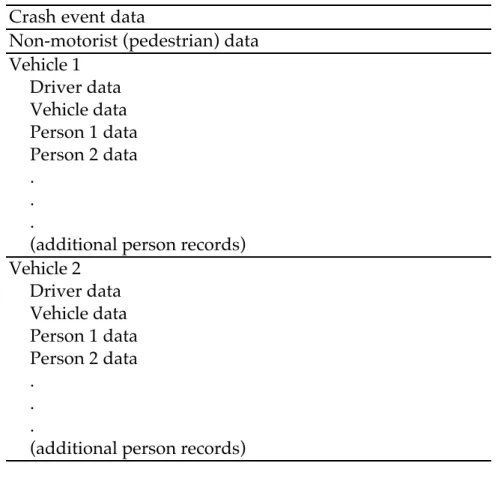
FARS. This systems contains highly detailed information on fatal collisions occurring in California and other states. FARS collects information similar to that available in SWITRS, although it is more detailed and thoroughly investigated. The collision-level record reports data on the roadway and the nature of the collision. The vehicle record contains vehicle information including enhanced vehicle type data, speed at impact, and extent of vehicle body deformation. The driver record has historical information including licensing, collisions, and convictions spanning 3 years before the crash. Unlike SWITRS, FARS has person-level data for all involved vehicle occupants. FARS also has more detailed data on safety equipment, injury, and seating position than does SWITRS. Another difference is that FARS has data for all occupants involved in the crash, while SWITRS frequently does not have victim segments for non-injured occupants. Because both systems carry minimal victim characteristics, victims cannot be uniquely identified between the two systems. This problem is heightened in certain collision profiles, such as fatal collisions involving teenage drivers where occupants often are the same age and gender.
The collision-level elements in FARS include crash location, date, time, roadway type, special jurisdiction (military base, Indian reservation, etc.), first harmful event, manner of collision, junction area, road area, lanes, road division, speed limit, road alignment (curvature), road profile (grade, hillcrest, etc.), road surface and condition, hit-and-run, light and weather conditions, construction zone information, a school bus-related indicator, and a rail-crossing indicator.
The vehicle-level elements include number of occupants, vehicle make, vehicle model, body type, model year, VIN, registration state, registered owner, rollover, jackknife, speed, hazardous cargo, heavy vehicle configuration, axles, cargo body type, special vehicle, emergency vehicle, initial impact point, vehicle body deformation, role of vehicle in collision, manner in which vehicle left scene, occurrence of fire, vehicle-related factors (defective equipment, etc.), prior vehicle maneuver, crash avoidance maneuver, and most harmful event.
The driver-level data elements include license state, non-CDL license status, commercial vehicle license status, compliance with license endorsements, compliance with license type, compliance with license restrictions, violations charged, driver-level counters (prior citations, collisions, etc.), dates of first and last collisions, whether license privileges are suspended, driver ZIP Code, physical/mental conditions, and miscellaneous factors.
Person-level data are collected for all occupants, drivers, and non-motorists involved in the crash. The elements include vehicle striking non-motorist victim, age, sex, person type, seating position, use of restraint, air-bag availability/function, ejection, ejection path, extrication, non-motorist location, police-reported alcohol involvement, method of alcohol determination (by police), alcohol test result, police-reported other drug involvement, method of other drug determination by police, drug test type, drug test results, injury severity, whether taken to hospital or treatment facility, death date, death time, death certificate number, and indicator of fatal injury while at work. A full list of the FARS standard file elements is presented in Appendix E.
Review of Secondary Data Systems
Several additional data systems were explored during the project. The California Department of Transportation Traffic Accident Surveillance and Analysis System (TASAS) was considered for roadway segment data related to crash events. Information on the composition of the VIN was collected from DMV staff and from RL Polk Inc. The information carried within a VIN was found to be used by both the VR system and FARS. The Office of Statewide Health Planning and Development Hospital Discharge Database (OSHPD HDD) was explored for inpatient care data related to trarffic crash injuries. The planned OSHPD Emergency Care Database (ECD) was explored for emergency treatment data on crash injuries. The Department of Health Services Emergency Medical Services Authority (DHS EMSA) was contacted for information regarding emergency care delivered at the collision scene and emergency transportation to medical care providers. Department of Justice Criminal Justice Information System (CJIS) and Monthly Arrest and Citation Register (MACR) were considered for citation and arrest data relating to motor vehicle operation. What was learned in the review of each of these systems is described below.
Department of Transportation TASAS. This system combines roadway information describing state route segments indexed by post-mile location and a historical count of police-reported collisions for each corresponding segment. Currently, there are approximately 4,200 route segments dividing 15,000 miles of roadway. About 35% of collisions in SWITRS are on state routes, and 79% of these are reported by CHP. CalTrans assigns a risk level to each roadway segment based on the historical number of collisions occurring on a segment, the traffic volume, and the segment’s roadway
characteristics. (CHP creates a related report for local agencies that summarizes collision frequencies by surface-street intersection.) Roadways are added to this database as they are created or realigned. TASAS maintains a 10-year, 1.6-million record history of collisions and roadways information.
TASAS contains detailed roadway segment data including average traffic flow, number of lanes, design speed, grade type, terrain, and crash rates for all state route highways and intersections. These data are combined with collision data in the TASAS system. The federal HSIS captures and disseminates the TASAS information and similar data from seven other states.
VIN tables. The VIN identifies vehicle characteristics such as weight, original value, wheel base, engine size, and other collision-relevant information. The DMV VR system automatically decodes the VIN using annually updated lookup tables and stores the decoded information on the VR system. FARS analysts use VIN lookup software (PC VINA, RL Polk VIN identifier, and Code Assist) to complete the vehicle-level sections of FARS reports.
OSHPD Hospital Discharge Database (HDD). The HDD system records the reason for each inpatient stay as an event code (E-code). This code indicates which inpatient injuries were caused by a vehicle collision. HDD data elements include patient date of birth, sex, race, ZIP Code, SSN, pre-hospital care and resuscitation, admission date, source of admission, type of admission, discharge date, principal diagnosis, other diagnoses, external cause of injury, principal procedure, other procedures, total charges, disposition of patient, and expected source of payment.
This hospital treatment information could provide some injury and recovery information for ITSPID, although only on the small proportion of collision injuries that result in inpatient treatment. While matching to this database would be hindered by the limited victim-identification information (gender, age, and injury severity) on SWITRS and FARS, the system might still provide useful data for policy decisions in health and emergency resource allocation. The goal of the CODES project, described elsewhere, is to merge such treatment recovery and cost data with crash data using either direct linkage or probabilistic matching. This application of probabilistic matching was investigated during this project. Although at this stage of the project it is planned that ITSPID will require direct linkages, probabilistic matching will be kept under consideration for possible future application in a final ITSPID system. Another obstacle to capturing HDD data is that obtaining the person-level identifiers is controlled by strict confidentiality laws that require yearly oversight through two independent processes.
OSHPD Emergency Care Database (ECD). The Office of Statewide Health Planning has been mandated by the state legislature to develop a system similar to the HDD that will collect emergency room treatment information for injuries not resulting in inpatient treatment. Emergency treatment probably represents the bulk of collision injury treatments and would be useful for policy studies and resource allocation. This database is scheduled to be implemented in 2002 and will require confidentiality oversight.
DHS Emergency Medical Services Authority (EMSA). The response time of emergency vehicles to crash scenes and the additional transit time to hospitals have been shown to be predictors of the probability and cost of recovery in severe injury collisions. The FARS system collects these data in states where they are available. In California, emergency response is funded at the local level and there is no centralized statewide emergency response information available. The EMSA oversees the statewide functioning of emergency response agencies but does not collect transit times or response times into any centralized database.
DOJ Criminal Justice Information System (CJIS) and Monthly Arrest and Citation Register (MACR). While DMV already collects some information on convictions for vehicle code law violations, a more complete record of arrests and convictions for collision-involved drivers could find application in certain traffic safety studies. For example, the California Department of Insurance has a fraud investigation unit that uses SWITRS data to identify possible staged collisions. Also, there are over 240,000 incarcerated adults (160,000 in prison and 80,000 in jail) who exit and re-enter the driver population, and having data on these drivers may be of some use in traffic safety studies where there is need to control for or examine this driver sector.
CJIS contains arrest and conviction information on all persons booked for a crime in California, and is tied to national and international databases. MACR is a periodic extract from CJIS used for criminal justice research. Neither of these files contained information of sufficient interest to this project to warrant in-depth study at this time. Review of Model Data Systems
HSIS, FARS, and CODES are each legislatively mandated cooperative federal and state systems, with staff and system hardware and software funded through federal and state budget line items. What was learned about each of these model systems is discussed below.
Highway Safety Information System (HSIS). HSIS is the product of a collaborative effort between the Federal Highway Administration, the University of North Carolina, and several states. The system collects, warehouses, and provides collision, roadway, and traffic information from the selected states, including California, on a yearly basis. The HSIS staff work directly with each state and serve as a primary information resource to the Federal government and both public and private agencies conducting roadway crash-related studies and as input to program and policy decisions. The HSIS is used to analyze a large number of safety problems ranging from the more basic "problem identification" issues to modeling efforts that attempt to predict future collisions from roadway characteristics and traffic factors. This system is probably the best model of data collection methodology, storage, and delivery for the conceptual design of ITSPID.
HSIS stores state roadway and collision data in formats that are standardized across eight states. The system provides documentation of each source state but refers users to the individual states for additional data from the source files. Each of the eight selected states provide the FHWA with crash files, roadway inventory files, and traffic files, such as SWITRS and TASAS. HSIS starts with roadway data and then adds collision data. For California, HSIS can only collect data on state route collisions.
HSIS is administered and maintained by two computer scientists, two analysts, and a research administrator. Data are stored in HSIS using the database software Sybase. Data extractions, loading, and processing are accomplished with SAS Access. DBMS/Copy software is used to create output datasets in most of the common extract formats. Once extracted, HSIS transports the data via many common methods including Internet FTP, CD-ROM, and 8mm tape. HSIS staff recommended using SAS for all ITSPID data processing, computation, and ad hoc work, and Sybase or a similar database product such as Oracle for storage and security. HSIS stores approximately one gigabyte of data per year. This is accomplished on a SUN Ultra Sparc II computer with a large data storage capacity. The SUN system is attached to a Microsoft NT network that is used as a front-end to access the database using SAS for Windows. A mandatory data request form is used to request information from HSIS. Data requests must be approved by HSIS staff. Each request is evaluated and the precise information needs assessed. The data are extracted and delivered to the requestor with documentation. An innovative method of maintaining the quality of research conducted using HSIS information is that all data users agree to publish their research results in a peer-reviewed journal, if possible. These research products are listed in the annual publication HSIS Summary Reports.
The administration at HSIS has offered their roadway information for use as an adjunct database to ITSPID, and recommended that at the very least users of ITSPID be told of the availability of HSIS data.
Fatality Analysis Reporting System (FARS). FARS contains data on crashes that result in a fatality within 30 days of the crash. The final FARS file for a given year is normally completed and available for use by Memorial Day of the following year. To protect individual privacy, no personal information, including name, address, or specific crash location, is entered into the system. Data are available for every year since FARS was established in 1975. Congress budgets several million dollars annually to maintain FARS, which is staffed by over 100 state and federal employees nationwide.
FARS collects preexisting state fatal crash data and enhances it through manual lookups and investigations. Although FARS relies more heavily on source data collection than would ITSPID, its use of linked SAS tables and Internet-based SQL queries makes it a good model of a modern data-delivery system. FARS data collection spans the US, with staff in every state and six regional offices.
Users can obtain FARS data in several ways. The on-line FARS Query System guides users through a series of choices and produces the requested subset of data in table or file format. It enables users to perform their own custom queries, such as generating case listings and cross tabulations of selected subsets of data, and access to a library of frequently requested tables. FARS data, reports, and documentation are also available for download via the Internet (FTP). FARS data are available on a CD-ROM directly from the Bureau of Transportation Statistics. The files on CD-ROM and computer tape are available in several formats including both the source flat-files and SAS datasets.
Crash Outcome Data Evaluation System (CODES). CODES is an ongoing series of projects and cooperating agencies whose aim is to foster the linkage and use of motor vehicle crash data (police reports) and health data (EMS, hospital, claims, vital statistics, etc.) to support motor vehicle safety research and public policy. As of 1999, over 100 CODES facts sheets, studies, and management reports had been produced related to injury prevention, traffic safety, highway safety, and crash data quality.
As previously indicated, CODES is a good example of applied probabilistic data matching, joining normally separate data systems (crash data and medical treatment data) to support policy involving both traffic safety and injury treatment. In conjunction with the CODES project, NHTSA helped sponsor the development of Model Minimum Uniform Crash Criteria (MMUCC). MMUCC is a model of crash data elements with standardized definitions proposed as a national standard for collision reporting. It was developed in 1997 by selected private and public safety, engineering, transportation, and research experts at the local, state, and federal levels.
Second Survey
The second survey had three parts: Part I - Summary of First Survey, Part II - Proposed Initial System Design, and Part III - Survey Questions. Part I summarized responses gathered in the first survey. Part II described two proposed system prototype designs including the data sources and contents under consideration, the time period to be used for counting prior driver record entries, planned system linkages, the organization of data in the two prototype designs, and the intended system documentation. The information provided to the survey committee in Parts I and II is discussed more fully in the Proposed Prototype ITSPID System section of this report.
Following are the six questions posed in Part III and the responses.
Question 1: We do not plan to incorporate roadway data systems, emergency response, emergency treatment, or hospital treatment systems in the prototype ITSPID system. Given this, in your opinion, would the ITSPID prototype provide enough added value to previously existing systems to justify its development?
Each of the eleven committee members who responded to the second survey thought that the ITSPID prototype would provide enough added value to previously existing systems to justify its development, despite the decision not to include the additional data suggested by respondents in the first survey. One respondent suggested that we promote the use of the HSIS system as an adjunct to ITSPID. Several respondents emphasized that we should be sure to provide as many linkage elements as possible so users could attempt to match ITSPID data to date files they already have. Roadway information and medical treatment information were the most frequently recommended additions to the proposed data system.
Question 2: We plan to leave the existing flat-file structures of SWITRS and FARS unmodified, although we may interleave the existing files by collision event. Given the choice between a set of separate files linked by an identifier record and a single ITSPID file containing interleaved data sets from the source systems, which of the two options would best meet the needs of your traffic safety research studies?
Six respondents preferred linked but separate files, four preferred the interleaved file option, and one did not state a preference. Three of the respondents said they preferred the separate files because of the inherent flexibility of using only parts of the system. One respondent expressed a preference for a relational database that could be queried with SQL, even though this choice was not offered to the committee as an option.
Question 3: If the ITSPID configuration was not your preferred choice in the question above, would your organization be technically unable to use the data to meet the needs of your traffic safety research studies?
All but one committee member (who did not answer this question) said that they could use ITSPID based on either design.
Question 4: Would your organization be likely to request accident data from an ITSPID system as conceptualized for the prototype? Please describe briefly the nature and frequency of the requests you might make.
Although one respondent felt that his organization might potentially use ITSPID data several times each year, most committee members replied that they would expect to use the system no more than once or twice per year. Two respondents said they would not be able to use the data because it was not local to their state, and three others stated that they would not use the data but knew colleagues who would. One respondent did not answer this question.
Question 5: The DL component of ITSPID will contain citation and collision counts for a fixed prior time period. Given the low frequency of repeated citations and collisions each year (approximately 5% of involved drivers having two or more collisions), what time period(s) might best meet your research needs?
The shortest specific length of time chosen was 2 years and the longest was 10 years. Several respondents said their choice was similar to the time length used in their existing datasets. One suggested that we should use several fixed time periods, such as each year prior to the accident going back several years. One researcher expressed concern that the use of too long of a time span (e.g., 5 years) would result in the same collisions being reported on several separate ITSPID files across adjacent years, creating redundancies when counts are added across multiple years. Another respondent recommended that citation counts be categorized by citation type (alcohol-related violations, driving while suspended, etc.).
Question 6: Please make additional comments as desired. Attach separate sheets if necessary.
Two respondents emphasized the need for additional detail in citation and collision categories, one respondent repeated his belief that a relational database would serve as a better resource, and two others made additional comments in support of the project.