DEMOGRAPHIC RESEARCH
VOLUME 32, ARTICLE 47, PAGES 1299
−
1328
PUBLISHED 3 JUNE 2015
http://www.demographic-research.org/Volumes/Vol32/47/ DOI: 10.4054/DemRes.2015.32.47
Research Article
The problem group? Psychological wellbeing of
unmarried people living alone in the Republic of
Korea
Jeong-Hwo Ho
This publication is part of the Special Collection on “Living alone: One-person households in Asia,” organized by Guest Editors Wei-Jun Jean Yeung and Adam Ka-Lok Cheung.
© 2015 Jeong-Hwo Ho.
This open-access work is published under the terms of the Creative Commons Attribution NonCommercial License 2.0 Germany, which permits use, reproduction & distribution in any medium for non-commercial purposes, provided the original author(s) and source are given credit.
1 Introduction 1300
2 Background 1302
2.1 Living arrangements and psychological wellbeing 1302 2.2 Solo living in young adulthood 1303 2.3 Attitudes towards marriage 1305
3 Data and methods 1306
3.1 Data 1306
3.2 Variables 1307
3.3 Methods of analysis 1310
4 Results 1311
4.1 Life satisfaction 1311
4.2 Suicidal ideation 1314
5 Discussion 1317
The problem group? Psychological wellbeing of unmarried people
living alone in the Republic of Korea
Jeong-Hwa Ho1
Abstract
BACKGROUND
The number of unmarried one-person households has increased rapidly among young adults living in the Republic of Korea since 2000. How this rise in solo living is related to psychological wellbeing is of importance to both individuals and society as a whole. OBJECTIVE
This study examined how living alone is related to psychological wellbeing and how this association differs across attitudes toward marriage among young adults aged 25– 39.
METHODS
We relied on repeated cross-sectional data from the Korea Social Survey (2010 and 2012) to compare unmarried solo residents to both unmarried and married individuals living with family members. Psychological wellbeing was measured in terms of life satisfaction and suicidal ideation over the past twelve months.
RESULTS
In general, unmarried solo residents experienced greater life satisfaction than did unmarried family coresidents. Of those with a positive attitude toward marriage, unmarried solo residents had lower life satisfaction than did married family coresidents. For those with a non-positive attitude toward marriage, however, there was no difference in the level of life satisfaction between unmarried solo residents and married family coresidents. Suicidal ideation did not differ by living arrangement.
CONCLUSIONS
Unmarried solo living does not necessarily relate to lower psychological wellbeing among young adults in Korea. Life stage and attitudes toward marriage should be considered when examining the association between living arrangements and psychological wellbeing.
1. Introduction
The term “one-person household” (OPH) has become a key phrase in describing the pervasive family-related changes that have occurred in the Republic of Korea since 2000. The proportions of OPHs compared to the region’s total number of households have increased almost fivefold, from 4.8% in 1980 to 23.9% in 2010 (Korea National Statistical Office 2014a). The rapid increase in OPHs signals a change not only in living arrangements, but also in the very sociocultural background of the heavily family-oriented Korean society in which marriage and familial coresidency have been key family norms. Social and academic discussions on solo living in Korea have focused on the older adult population, and found a negative association between living alone and quality of life. This is not surprising, given that family is the main, and for some people the only, source of financial resources and social support during old age as a result of Korea’s weak public old-age welfare system (Ann 2005; Ban 2012; Lee and Kim 2014; Lee and Oh 2008).
The OPH increase, however, has been not only witnessed among older adults, but also on the other end of the age spectrum: those between the ages of 25 and 39. These individuals comprised approximately 30.9% of the total OPH population in 2010 (Korea National Statistical Office 2014a). The general social discourse on solo living among young adults in Korea has been negative, reflecting the experience of older adults. Solo living is often identified with loneliness and feelings of emptiness, or at least a separation from conventional living practices (Nho 2014; Ryu and Wang 2010; Yi and Park 2003). This especially applies to those that have completed their education and are at prime marital age. This unfavorable view also reflects social concerns that unmarried solo living is one of the main causes of low marriage rates and very low fertility in Korea, where childbearing is closely related to marriage. Surprisingly, however, no study has examined how solo residents fare in terms of psychological wellbeing in comparison to other forms of living arrangements, such as unmarried individuals living with family and married individuals living with family (Nho 2014). In general, research on the links between living arrangements and psychological wellbeing in an Asian context are sparse (Fukuda 2009; Park 2013), despite the social expectations and patterns of solo residency substantially differing from those of Western societies.
Moreover, studies on Western societies in which residential independence among young adults is common have shown that living alone can increase feelings of self-sufficiency and independence, both of which are critical for achieving an independent adult status (Galambos and Krahn 2008; Jordyn and Byrd 2003; Kins and Beyers 2010). This is increasingly relevant in Korea, as it is taking longer for them to achieve markers of full adulthood as a result of the demands of higher education, rising unemployment rates, and delayed marriage and parenthood (Nahm and Namgoong 2012; Xenos et al. 2006). It is important to understand how young adults at prime marital age perceive this new trend in living arrangements, especially considering that Korea has experienced rapid changes in family behaviors, such as delayed marriage and ultra-low fertility (Jones 2007). Such an understanding will also expand our comprehension of the associations between living arrangements and wellbeing in various cultural backgrounds and socioeconomic environments.
How young adults perceive marriage is an important factor in examining the relationships between their living arrangements and psychological wellbeing. Although marriage is starting to be postponed and/or avoided (Jones 2007), it is still considered a normal, if not mandatory, life status achievement in Korea. As the late 20s and 30s are now seen as the prime marital period, unmarried young adults in this age group often feel the expectations or pressures placed on them by either family members or the overall sociocultural atmosphere (Nho 2014). Unmarried young adults in Korea are expected to live with their parents until they marry, only after which they are free to form their own household and move away. Thus, evaluations or assessments of current living arrangements are contingent on how close or how far one is from what is perceived as ideal or normative. If an unmarried solo resident perceives marriage as a positive norm to follow, one may perceive current living arrangements less favorably.
2. Background
2.1 Living arrangements and psychological wellbeing
A large body of research has examined how living arrangements and marital status relate to wellbeing in adulthood, and most studies have found that those who are married and coreside with family have a better quality of life than those who are not married and live alone. Married individuals are likely to have better subjective health status (Liu and Umberson 2008), lower mortality rates (Manzoli et al. 2007), more feelings of happiness (Sassler and Schoen 1999; Soons, Liefbroer, and Kalmijn 2009), a fewer number of depressive symptoms (Jang et al. 2009; Yan et al. 2011), and a lower likelihood of suicidal ideation and attempts (Crump et al. 2014). Research on the benefits of family coresidency in adulthood has heavily focused on the older population, as family is the main source of support in old age (Li 2013). Older adults living alone are more likely to experience loneliness (Greenfield and Russell 2011) and suicidal ideation or attempts (Crawford, Kuforiji, and Ghosh 2009; Lee and Oh 2008).
The positive associations between marriage, family coresidency, and quality of life are attributed to the fact that spouses and family members provide economic, social, and emotional support and serve as a buffer against distress. The sharing of a residence and everyday household goods enables economy of scale, with the family serving as the key distributor of economic resources. In Korea, for example, the proportion of households under absolute poverty line in 2010 was 41.4% for solo households, and 10.1% for multiple-person households (Ban 2012). People living with a spouse and/or other family members are more likely to have better health, as the family motivates and monitors health behaviors (Lee et al. 2005). Families also provide affection and emotional support during times of distress, thus reducing loneliness (Yang and Victor 2008) and minimizing the negative consequences of distress.
significant differences in health by marital status. Never-married women are likely to have even better life satisfaction compared to their married counterparts.
2.2 Solo living in young adulthood
Associations between living arrangements and wellbeing also vary across life stages. A body of research conducted in Western societies has shown that living alone is positively related to wellbeing among young adults. For young adults, especially for those in their late teens and early 20s, gaining a sense of self and the social identity of being an independent adult is a major developmental task that needs to be accomplished (Jordyn and Byrd 2003; Kins and Beyers 2010). In Western societies, leaving the parental home often initiates a transitional process towards adulthood, followed by other role transitions, such as completing education, starting a career, and getting married and having children (Aassve, Arpino, and Billari 2013; Spéder, Murinkó, and Settersten Jr. 2014). The accomplishment of the main markers for adulthood, such as residential independence, securing a job, and starting a romantic relationship, are related to better psychological wellbeing in young adulthood (Galambos and Krahn 2008; Kins and Beyers 2010; Schulenberg, Bryant, and O’Malley 2004). By making everyday decisions away from the control of their parents, young adults living alone may gain a sense of independence that, in turn, is related to better psychological wellbeing (Galambos and Krahn 2008). Additionally, living alone does not predict poor economic status and/or social isolation for young adults as they are economically independent and have wider and more active non-family social networks, such as friends and professional networks within the workplace (Wrzus et al. 2013).
main reasons behind delayed marriage and low fertility that, in turn, exacerbates the burden of rapid population aging.
The negative views on solo living in Korea, however, are in need of re-examination due to demographic and socioeconomic changes. The proportion of OPHs among those aged 25 to 39 has risen rapidly from 7.7% to 14.1% for men, and from 4.3% to 8.8% for women, between 2000 and 2010 (Korea National Statistical Office 2014a). Although these figures are much lower compared to those of European countries and neighboring Asian countries, such as Japan and China (Fukuda 2009; Iacovou 2010; Yi et al. 1994), this transition has never been witnessed before in Korea. High tertiary education enrollment rates, increased job attainment away from home, delayed marriages, and the weakening of the sanctity of marriage, have been suggested to be the main causes of this increase in OPHs among young adults (Ban 2012; Nahm and Namgoong 2012). In 2013, about 70.7% of high school graduates have continued to tertiary-level education (Korea National Statistical Office 2014b). As educational institutions and job opportunities for young adults are concentrated in large cities, increasing numbers of young adults leave their parental homes and move to cities in search of better educational and career opportunities (Byun et al. 2008).
Conducting research in Korea will contribute to our understanding of the relationship between living arrangements and wellbeing. Increasing numbers of studies have shown cultural and temporal variations on the association between living arrangements and psychological wellbeing in Western societies (Billari and Liefbroer 2010; Furstenberg Jr. 2013). Reher (1998) argued that two broad patterns of family ties exist in Europe: areas with strong family ties where family has priority over individuals, and areas with weak family ties where individual needs and independence are highly valued. The former pattern can be found in Southern European countries, such as Italy, and the latter in Northern areas. Norms and actual patterns of home-leaving vary across these regions (Aassve, Arpino, and Billari 2013; Luetzelberger 2014; Spéder, Murinkó, and Settersten Jr. 2014). The relationship between living arrangements and psychological wellbeing depend on cultural expectations and societal situations. For example, in Portugal, where a relatively high proportion of emerging adults live with their parents, leaving the nest late is not related to poor intergenerational relationships (Mendonça and Fontaine 2013).
2.3 Attitudes towards marriage
Satisfaction with current living arrangement is often influenced by how similar the arrangements are to what is regarded as the ideal or the norm. If current living arrangements are similar to the ideal, feelings of satisfaction or psychological wellbeing may result. If the current situation deviates from what one thinks of as normal or ideal, such individuals may view themselves less favorably (Warr et al. 2004). In the same way, the link between living arrangements and psychological wellbeing may be contingent on attitudes toward marriage. For unmarried solo residents that perceive marriage as a positive norm to follow, current marital and living arrangements may not be satisfactory. The same living arrangement, however, may be linked to improved psychological wellbeing among individuals that do not perceive marriage as a desired norm.
serve as an important indicator from which to gauge the general perspective held toward traditional family norms. For example, Kim and colleagues (2007) demonstrated that unmarried solo residents who are more open to non-traditional families, such as stepfamilies and single parenthood, are likely to perceive their current solo living situation more favorably.
In general, Koreans have favorable attitudes toward marriage and this remains an important social norm. About 69.0% of men and 56.6% of women aged 15 and older held a positive attitude towards marriage in 2012, saying that “people must marry,” or “it is good to marry” (Korea National Statistical Office 2014b). The responsibility of supporting aging parents and younger siblings, however, is also cited as one of the main reasons among young adults for delaying marriage (Kim 2013). With positive marital norms and worsening economic conditions in which to secure stable economic status and start a family (Nahm and Namgoong 2012), current unmarried young adults often describe themselves as a generation involuntarily giving up three things ( sahm-pho-sae-dae): intimate relationships, marriage, and children.
Attitudes toward marriage may vary across living arrangements. Solo residents in Korea tend to have a less traditional marital value system. Compared to their married counterparts that live with their family, solo residents are less likely to have a positive attitude toward marriage and are more open to divorce (Ho 2014). At the same time, unmarried young adults with a positive attitude toward marriage are more likely to have marital intentions at a younger age (Chin and Chung 2012) and are more likely to marry (Sassler and Schoen 1999). Caution is needed, however, in understanding living alone as an expression of a preference for individualism and a denial of family care responsibilities (Ryu and Wang 2010). Studies on solo residents and the unmarried suggest that marriage and family continue to be a central foci of their lives (Byun et al. 2008; Kim et al. 2007).
3. Data and methods
3.1 Data
and living alone (unmarried solo residents), never married and living with family members (unmarried family coresidents), and married and living with family members (married family coresidents). We chose this age group as the late 20s to 30s is considered to be the prime age range for marriage and family formation. This is the period when most individuals have completed their education and are entering the labor market. The mean age of first marriage in Korea was 32.2 years for men and 29.6 years for women in 2013 (Korea National Statistical Office 2014c). This period extends to the late 30s, as the proportion of the never married among people aged 35 to 39 is 26.7% for men and 12.6% for women (Korea National Statistical Office 2014a). We excluded students from the analytic sample because the relative meaning of living alone and expectations of marriage are different among those that have completed their education. The age and order norms of adulthood transition indicate that marriage usually occurs after education has been completed (Nahm and Namgoong 2012); thus, students are generally expected to be unlikely to wed. Further, living alone away from parents for the purposes of education is generally considered to be a temporary arrangement and may have different implications for psychological wellbeing.
A total of 17,279 respondents who were aged 25–39 and were not in school at the time of the survey completed either wave of the KSS. Among married people, living separately from the family is not common, and experiences of divorce or widowhood are quite rare among young adults. These conditions result in sample sizes that are too small to warrant meaningful findings and may introduce confounding factors of subjective wellbeing. Thus, we excluded 132 respondents who were married and lived alone and 454 respondents who were either divorced or widowed. We also excluded 127 cases of individuals living in a non-family household setting, such as dormitories. After further excluding 79 cases of missing or incorrect information pertaining to the variables used in the analyses, the final study sample consisted of 16,487 respondents.
3.2 Variables
Living arrangements. Living arrangements were a key independent variable in the analyses. As stated earlier, participants were grouped into three categories: unmarried solo residents (n = 1,299), unmarried family coresidents (n = 4,299), and married family coresidents (n = 10,889). The majority of unmarried family coresidents (81.8%) were living with their parents.
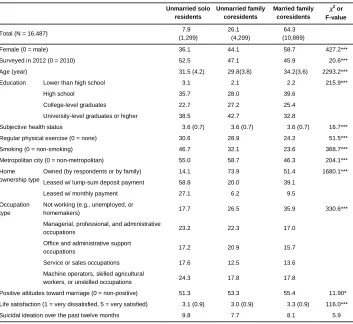
marry,” “It is okay either to marry or not to marry,” “It is better not to marry,” “One must not marry,” and “I don’t know.” The first two responses were grouped into the positive attitude toward marriage category, and the remaining responses were classified as non-positive attitudes toward marriage. Only 2.8% of all respondents had negative attitudes toward marriage (answering either “it is better not to marry” or “one must not marry”). As inclusion of this subgroup may have resulted in a sample size too small to ensure reliable statistical analysis, the expressed negative attitudes were grouped together with ambivalent attitudes into the category of “non-positive attitudes.” Sensitivity tests with different categorizations of responses yielded similar results. Detailed descriptions and variable distributions by living arrangements included in the analysis are presented in Table 1.
Table 1: Variable descriptions and distributions Unmarried solo residents Unmarried family coresidents Married family coresidents χ2 or F-value
Total (N = 16,487) 7.9
(1,299)
26.1 (4,299)
64.3 (10,889)
Female (0 = male) 36.1 44.1 58.7 427.2***
Surveyed in 2012 (0 = 2010) 52.5 47.1 45.9 20.6***
Age (year) 31.5 (4.2) 29.8(3.8) 34.2(3.6) 2293.2***
Education Lower than high school 3.1 2.1 2.2 215.9***
High school 35.7 28.0 39.6
College-level graduates 22.7 27.2 25.4
University-level graduates or higher 38.5 42.7 32.8
Subjective health status 3.6 (0.7) 3.6 (0.7) 3.6 (0.7) 16.7***
Regular physical exercise (0 = none) 30.6 28.9 24.2 51.5***
Smoking (0 = non-smoking) 46.7 32.1 23.6 368.7***
Metropolitan city (0 = non-metropolitan) 55.0 58.7 46.3 204.1***
Home ownership type
Owned (by respondents or by family) 14.1 73.9 51.4 1680.1***
Leased w/ lump-sum deposit payment 58.8 20.0 39.1
Leased w/ monthly payment 27.1 6.2 9.5
Occupation type
Not working (e.g., unemployed, or
homemakers) 17.7 26.5 35.9 330.6***
Managerial, professional, and administrative
occupations 23.2 22.3 17.0
Office and administrative support
occupations 17.2 20.9 15.7
Service or sales occupations 17.6 12.5 13.6
Machine operators, skilled agricultural
workers, or unskilled occupations 24.3 17.8 17.8
Positive attitudes toward marriage (0 = non-positive) 51.3 53.3 55.4 11.90*00
Life satisfaction (1 = very dissatisfied, 5 = very satisfied) 3.1 (0.9) 3.0 (0.9) 3.3 (0.9) 116.0***
Suicidal ideation over the past twelve months 9.8 7.7 8.1 5.90
Note: Variable means and standard deviations are presented in parentheses. P-values: *** <.001, ** <.01, and * <.05.
was divided into four categories: less than high school, high school, 2-year college, and 4-year university-level education or higher. Subjective heath status was measured on a five-point Likert scale based on the following question: “In general, how is your health?” Health-related behaviors were measured by the two binary variables of regular exercise participation and current smoking status. City residency was included in the analysis, as individuals living in urban areas tend to have less traditional attitudes towards family and marriage. This was measured using a binary variable where 1 indicated residency in one of the eight metropolitan cities of Korea. One limitation of the KSS is its lack of detailed information related to economic status, such as individual income and household wealth. Therefore, we used types of occupation and home-ownership to gauge economic status. Type of occupation had five categories: managerial, professional, and administrative occupations; office and administrative support occupations; service and sales workers; plant and machine operators; and not working. The last category of “not working” included both homemakers and the unemployed. Type of home ownership included owning a house, having leased a house by making a lump-sum payment, and having leased a house by making monthly payments. Leased homes with monthly payments often indicate lower residential stability and a poor economic situation in Korea (Choi and Nam 2008; Kim 2010). The KSS did not include any information with which to identify the actual homeowner, thus the home could belong to either the young respondents or their family members, usually the parents. In the case of unmarried family coresidents, it may be reasonable to assume that the home would belong to the parents of the respondents, since most of them were young and living with their birth family.
3.3 Methods of analysis
interaction terms and improved model fit indicated that the associations between living arrangements and psychological wellbeing vary by attitudes toward marriage.
4. Results
4.1 Life satisfaction
Table 2 presents ORs from the ordered logistic regression analysis of life satisfaction. Model 1 estimated baseline associations between living arrangements and life satisfaction. The reference category of living arrangements was unmarried solo residents. The results suggest that living arrangement is significantly related to wellbeing in young adulthood. In line with previous studies on the positive association between marriage and psychological wellbeing (Liu and Umberson 2008; Sassler and Schoen 1999), unmarried solo residents had lower levels of life satisfaction than did married family coresidents. Unmarried solo residents however, tended to have greater life satisfaction than unmarried family coresidents. This is in contrast to the prevalent social discourse in Korea in which solo residents are supposed to demonstrate poor psychological wellbeing compared to their unmarried counterparts that live with family (Ryu and Wang 2010). Attitudes toward marriage were significantly related to life satisfaction so that those with positive attitudes toward marriage demonstrated higher odds of having higher life satisfaction than their non-positive counterparts.
(Liu and Umberson 2008; Sassler and Schoen 1999). Young adults living alone, however, were likely to enjoy more life satisfaction than were their unmarried counterparts living with family members, as is the case in Western societies (Galambos and Krahn 2008; Kins and Beyers 2010).
Table 2: Odds ratios from the ordered logistic regression analysis of life satisfaction
Model 1 Model 2
Surveyed in 2012 (0 = 2010) 1.23 (0.030)*** 1.22 (0.030)***
Female (0 = male) 1.31 (0.040)*** 1.31 (0.040)***
Age 1.00 (0.004) 0.99 (0.004)
Education (0 = high school graduates)
Less than high school 0.80 (0.101)* 0.80 (0.101)*
College-level graduates 1.22 (0.039)*** 1.22 (0.039)***
University-level graduates or higher 1.79 (0.039)*** 1.79 (0.039)***
Subjective health status 3.12 (0.022)*** 3.12 (0.022)***
Regular physical exercise (0 = none) 1.38 (0.035)*** 1.39 (0.035)***
Smoking (0 = non-smoking) 0.80 (0.042)*** 0.80 (0.042)***
Metropolitan city (0 = non-metropolitan) 0.92 (0.030)** 0.92 (0.030)**
Home ownership type (0 = owned)
Leased w/ lump-sum deposit payment 0.76 (0.033)*** 0.76 (0.033)***
Leased w/ monthly payment 0.64 (0.053)*** 0.64 (0.053)***
Occupation (0 = managerial/professional)
Not working 0.69 (0.045)*** 0.69 (0.045)***
Office and administrative support occupation 0.92 (0.049) 0.92 (0.049)
Service or sales occupations 0.80 (0.055)*** 0.80 (0.055)***
Machine operators, skilled agricultural, or unskilled workers 0.79 (0.054)*** 0.80 (0.054)*** Positive attitudes toward marriage
(0 = non-positive) 1.42 (0.031)*** 1.02 (0.105)
Marital and living arrangements (0 = unmarried solo residents)
Unmarried family coresidents 0.64 (0.064)*** 0.60 (0.089)***
Married family coresidents 1.39 (0.059)*** 1.10 (0.082)
Interaction terms
Positive attitudes toward marriage × Unmarried family
coresidents 1.13 (0.120)
Positive attitudes toward marriage × Married family
coresidents 1.57 (0.111)***
-2 Log Likelihood (df) 39017.04 (19) 38983.99 (21)
LR test Model 1 vs. Model 2 (df) 34.06 (2) ***
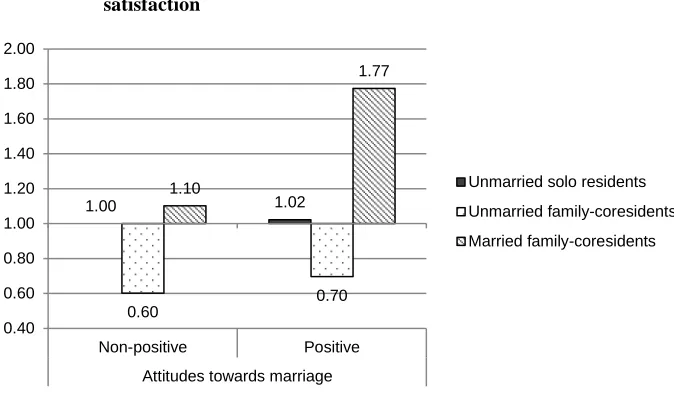
Figure 1: Odds ratios from the ordered logistic regression analysis of life satisfaction
Note: This figure is a graphical presentation of the odds ratios for the key variables of Model 2 shown in Table 2. The first three bars from the left show the odds ratios for each group of living arrangements for individuals with non-positive attitudes towards marriage, in the following order: unmarried solo residents (the reference category), unmarried family coresidents, and married family coresidents respectively. The next three bars show the odds ratios for those with positive attitudes towards marriage in the same order of living arrangements.
Somewhat different patterns emerged for respondents with non-positive attitudes toward marriage. Unmarried solo residents with a non-positive attitude continued to demonstrate greater life satisfaction than unmarried family coresidents. Unlike for individuals with a positive attitude toward marriage, however, there was no statistically significant difference in life satisfaction between unmarried solo residents and married family coresidents. The difference in the relationship between living arrangements and life satisfaction by attitude toward marriage was statistically significant. Additionally, results of the likelihood ratio test between Models 1 and 2 (presented in the last row of Table 2) indicated that Model 2 fit the data significantly better. This is because married family coresidents, as well as unmarried family coresidents, with non-positive marriage attitudes tended to have less life satisfaction than those with positive attitudes, while unmarried solo residents had similar levels of life satisfaction irrespective of their attitudes toward marriage. Thus, the level of life satisfaction demonstrated by married family coresidents with non-positive attitudes was similar to that of unmarried solo residents. This suggests that attitudes toward marriage play an important role in understanding life satisfaction among both unmarried and married family coresidents
1.00 1.02
0.60
0.70 1.10
1.77
0.40 0.60 0.80 1.00 1.20 1.40 1.60 1.80 2.00
Non-positive Positive
Attitudes towards marriage
Unmarried solo residents
Unmarried family-coresidents
whose living arrangements conform to traditional family norms of marriage and family coresidency. The life satisfaction of unmarried solo residents, however, did not differ by attitudes to marriage, suggesting that traditional marital norms may not be an important factor related to life satisfaction. This is in line with public and academic discussions that suggest that unmarried solo residents in Korea have less traditional family norms (Ho 2014; Ryu and Wang 2010).
The covariates, in general, were related to life satisfaction as would be expected. Both women and individuals with higher educational attainment were likely to report greater life satisfaction than either men or individuals with lower educational attainment. Respondents who had good health and who adopted health-promoting lifestyles, such as regular physical exercise, and did not smoke, were likely to report better life satisfaction. Those living in metropolitan areas tended to report lower life satisfaction. Individuals living in their own houses were likely to report higher life satisfaction than those living in leased homes. Those in managerial or professional occupations were also better off regarding life satisfaction compared to those in other occupational groups and those not in work. This suggests that residential stability and economic status are important factors for life satisfaction.
In Korea, family norms and the pressure to abide by them differ across gender and age (Chang and Song 2010; Kim 2013). For example, the norms of marriage and family coresidency are more strongly enforced for women than they are for men. Residential independence is more favorably accepted for individuals in their late 30s compared to those in their 20s. Therefore, we conducted additional analysis in order to examine whether, and to what extent, the association between living arrangements and life satisfaction differ by gender and age. Results not presented in this paper, however, suggest that the associations between life satisfaction, living arrangements, and marriage attitudes did not differ significantly by gender or age group.
4.2 Suicidal ideation
previous literature on older Korean adults that have shown that solo living is associated with suicidal thoughts (Lee and Oh 2008). Attitudes toward marriage were significantly related to a lower likelihood of suicidal ideation such that respondents with positive attitudes were less likely to experience such thoughts than to those with a non-positive attitude. This finding is in line with the results of previous studies on the relationship between a positive outlook on life and an optimistic anticipation of marriage possibilities (Li et al. 2011).
In Model 2, we introduced interaction terms between living arrangements and attitudes toward marriage in order to examine whether the association between living arrangements and suicidal ideation differed by attitudes toward marriage. We found no statistically significant interaction term, suggesting that the relationship between living arrangements and suicidal thoughts are similar across attitudes toward marriage. Our finding that living arrangements are not significantly related to suicidal ideation is in contrast to previous research pertaining to the older population, in which living alone has been found to be related to decreased wellbeing and increased suicidal ideation (Fukuchi et al. 2013; Han, Kang, and Jeong 2012; Masocco et al. 2008). Additionally, our findings do not support the current social discourse on the negative psychological implications of living alone in young adulthood (Nho 2014). This suggests that the relationship between living arrangements and psychological wellbeing may vary by life stage. As discussed earlier, individuals in different stages of life have different needs and resources and the same living arrangement may have a different impact on psychological wellbeing on different individuals.
Table 3: Odds ratios from the binary logistic regression analysis pertaining to suicidal ideation
Model 1 Model 2
Surveyed in 2012 (0 = 2010) 1.14 (0.059)* 1.14 (0.059)*
Female (0 = male) 1.84 (0.087)*** 1.84 (0.087)***
Age 0.98 (0.008)** 0.98 (0.008)**
Education (0 = high school graduates)
Less than high school 1.56 (0.151)** 1.56 (0.151)**
College-level graduates 0.83 (0.078)* 0.83 (0.078)*
University-level graduates or higher 0.81 (0.079)** 0.81 (0.079)**
Subjective health status 0.47 (0.041)*** 0.47 (0.041)***
Regular exercise (0 = none) 0.93 (0.075) 0.93 (0.075)
Smoking (0 = non-smoking) 1.35 (0.092)** 1.34 (0.092)**
Metropolitan city (0 = non-metropolitan) 1.05 (0.060) 1.05 (0.060)
Home ownership type (0 = owned)
Leased w/ lump-sum deposit payment 1.09 (0.067) 1.09 (0.067)
Leased w/ monthly payment 1.41 (0.094)*** 1.42 (0.094)***
Occupation (0 = managerial/professional)
Not working 1.18 (0.091) 1.18 (0.091)
Office and administrative support occupation 0.84 (0.110) 0.84 (0.110)
Service or sales occupations 1.05 (0.112) 1.04 (0.112)
Machine operators, skilled agricultural, or
unskilled workers 0.86 (0.118) 0.86 (0.118)
Positive attitudes toward marriage
(0 = non-positive) 0.57 (0.062)*** 0.59 (0.201)**
Marital and living arrangements (0 = unmarried solo residents)
Unmarried family coresidents 0.83 (0.121) 0.78 (0.151)
Married family coresidents 0.84 (0.111) 0.87 (0.136)
Interaction terms
Positive attitudes toward marriage ×
Unmarried family coresidents 1.18 (0.233)
Positive attitudes toward marriage × Married
family coresidents 0.89 (0.214)
-2 Log Likelihood (df) 8496.71 (19) 8500.71 (21)
LR test Model 1 vs. Model 2 (df) 4.00 (2)
5. Discussion
Unmarried solo living is on the rise in Korea, and this challenges the traditional family norms of mandatory marriage and family coresidency during singlehood. This study aimed to examine the psychological wellbeing of unmarried solo residents, relying on data from the most recent waves of KSS data (2010 and 2012). Unmarried and married family coresidents were selected as comparison groups, as they represent conformity to traditional family norms and living arrangements. We also examined whether the association between living arrangements and psychological wellbeing varies by attitude towards marriage.
Our results suggest that unmarried solo residents are likely to have higher life satisfaction than are unmarried family coresidents. In fact, unmarried family coresidents had the lowest life satisfaction among the three groups examined, and this association did not vary across attitudes toward marriage. This finding is contrary to what has been discussed in previous academic literature and the prevalent public discourse on the negative association between living alone and quality of life (Nho 2014; Ryu and Wang 2010; Yi and Park 2003). As discussed earlier, a large body of literature on living arrangements in Korea has focused on older adulthood, in which the family is the main provider of the resources that contribute to individuals’ wellbeing. Young adults have needs and resources different from those of older adults, and have access to financial resources from their own work, participate actively in non-family networks, and maintain close contact with their families of origin. Thus, living alone is not necessarily associated with poor economic status, loneliness, or social isolation. At the same time, with higher unemployment rates and delayed marriage and childbearing becoming more common, the traditional transitional period to adulthood has become longer and more blurred (Nahm and Namgood 2012; Xenos et al. 2006). Residential independence may help young adults gain a sense of self and social identity as autonomous adults and thus be related with better psychological wellbeing. The relatively low life satisfaction among unmarried family coresidents suggests that the traditional norms of family coresidency may not be adequately addressing the changing needs and preferences of the unmarried young. The number of young adults living alone is likely to continue to increase, since this lifestyle is related with better psychological wellbeing than the traditional arrangement of living with parents, as well as the aforementioned socioeconomic changes.
non-positive attitude toward marriage, however, unmarried solo residents have similar levels of life satisfaction to married family coresidents. This is presumably because married people with non-positive attitudes tend to have lower life satisfaction than their married counterparts with positive attitudes. This lower level of life satisfaction is similar to that of unmarried solo residents. Unlike their married and unmarried counterparts living with family, unmarried solo residents have similar levels of life satisfaction across attitudes toward marriage. One of the reasons of this non-responsiveness of life satisfaction by attitudes toward marriage among unmarried solo residents is that they are likely to have a less traditional orientation of family values (Ho 2014) and hence marital norms may not be a critical factor in the formation of life satisfaction for unmarried solo residents. Married family coresidents, however, are likely to value more traditional and positive marital norms and, hence, life satisfaction is significantly related to attitude toward marriage. It is also possible that, among married family coresidents, individuals with better marital satisfaction tend to have more positive attitudes toward marriage and to experience greater life satisfaction. Explanatory analysis of married family coresidents, however, suggested that attitude toward marriage is significantly related to life satisfaction after controlling for marital satisfaction (results not shown). This means that the degree to which married people perceive marriage to be the norm is related to life satisfaction, independent of their current satisfaction with marital life. Research on living arrangements and family values is limited both in Korea and in Asian societies in general, and it has not yet been extensively investigated why and to what extent the experience of solo living is related to different family value orientations in comparison to other living situations (Ho 2014; Park 2013). More research is needed on the relationship between living arrangements and family value orientations.
feeling of happiness varies across societies according to the perceived societal importance of marriage and children (Vanassche, Swicegood, and Matthijs 2013).
We would like to note several limitations of this paper and, based on these, propose areas for future research. First, since we relied on pooled data from a repeated cross-sectional survey, it was not possible to examine within-individual changes in key variables. How psychological wellbeing changes following transitions to different types of living arrangements was not examined in this study. Thus, it is not clear whether the experience of solo living leads to more life satisfaction in comparison to individuals engaged in unmarried family coresidence, or if individuals with better psychological wellbeing deliberately choose solo living over living with their families. Longitudinal data are needed in order for future studies to observe changes in psychological wellbeing and living arrangements within individuals so as to identify causal relationships. Second, the economic resources of both young adults and their families are important correlates, both of the probability of living alone and of psychological wellbeing. With little public support in establishing solo households for young adults, such as a small housing unit with affordable rent, the opportunity to live alone relies heavily on the economic capacities of young adults and their families (Jung and Lee 2011). Familial economic resources are also an important covariate of psychological wellbeing. Due to a lack of information on financial specifics, such as individual earnings or household wealth, economic factors were not extensively examined in this study. Finally, it would be important to assess the relationship between the voluntariness of living alone and psychological wellbeing. If current living arrangements are voluntary, then this is likely to be associated with greater psychological wellbeing. Related to the previous discussion on the positive associations between economic resources and opportunities for independent living, the relatively low psychological wellbeing of unmarried family coresidents may be due to the low possibility of realizing their preference for independent living.
References
Aassve, A., Arpino, B., and Billari, F. (2013). Age norms on leaving home: multilevel evidence from the European Social Survey. Environment and Planning 45(2): 383–401. doi:10.1068/a4563.
Ann, K.S. (2005). Study on the quality of life and social support of married couples and single households elderly. Journal of the Korean Gerontological Society 25(1): 1–19.
Ban, J. (2012). Il-in gagooui sahoi-kyungjegeok teukshung byeonhwa (in Korean).
Monthly Labor Review: Korea Labor Institute 85: 55–67.
Bhullar, N., Schutte, N.S., and Malouff, J.M. (2013). The Nature of Well-Being: The Roles of Hedonic and Eudaimonic Processes and Trait Emotional Intelligence.
Journal of Psychology: Interdisciplinary and Applied 147(1): 1–16. doi:10.1080/ 00223980.2012.667016.
Billari, F.C. and Liefbroer, A.C. (2010). Towards a new pattern of transition to adulthood? Advances in Life Course Research 15(2–3): 59–75. doi:10.1016/j.alc r.2010.10.003.
Byun, M., Sin, S., Cho, K., and Park, M. (2008). Single Person Household and Urban Policy in Seoul. Seoul: Development Institute.
Chang, K.-S. and Song, M.-Y. (2010). The stranded individualizer under compressed modernity: South Korean women in individualization without individualism. The British Journal of Sociology 61(3): 539–564. doi:10.1111/j.1468-4446.2010.013 25.x.
Chin, M. and Chung, H. (2012). The effects of family values on intentions of marriage and expected age at first marriage. Korean Journal of Population Studies 33(3): 31–51.
Choi, J. and Park, Y. (2012). A study on the network residence of single career women in Korea. Korea Spatial Planning Review 73(1): 63–82. doi:10.15793/kspr.2012. 73..004.
Choi, Y.-M. and Nam, J. (2008). Analysis on the elements of housing choice by household attributes: Focusing on the features of variation from 1996 to 2006.
Crawford, M.J., Kuforiji, B., and Ghosh, P. (2009). The impact of social context on socio-demographic risk factors for suicide: a synthesis of data from case–control studies. Journal of Epidemiology and Community Health 64(6): 530–534. doi:10 .1136/jech.2008.084145.
Crump, C., Sundquist, K., Sundquist, J., and Winkleby, M.A. (2014). Sociodemographic, psychiatric and somatic risk factors for suicide: a Swedish national cohort study. Psychological Medicine 44(2): 279–289. doi:10.1017/S00 33291713000810.
Ek, E., Sirviö, A., Koiranan, M., and Taanila, A. (2014). Psychological Well-Being, Job Strain and Education Among Young Finnish Precarious Employees. Social Indicators Research 115(3): 1057–1069. doi:10.1007/s11205-013-0263-5. Eun, K.-S. and Lee, Y.-S. (2006). Family values in Korea from a comparative
perspective. Korean Journal of Population Studies 28(1): 107–132.
Fukuchi, N., Kakizaki, M., Sugawara, Y., Tanji, F., Watanabe, I., Fukao, A., and Tsuji, I. (2013). Association of marital status with the incidence of suicide: A population-based Cohort Study in Japan (Miyagi cohort study). Journal of Affective Disorders 150(3): 879–885. doi:10.1016/j.jad.2013.05.006.
Fukuda, S. (2009). Leaving the parental home in post-war Japan: Demographic changes, stem-family norms and the transition to adulthood. Demographic Research 20(30): 731–816. doi:10.4054/DemRes.2009.20.30.
Furstenberg Jr., F.F. (2013). Transitions to Adulthood: What We Can Learn from the West. Annals of the American Academy of Political and Social Science 646(1): 28–41. doi:10.1177/0002716212465811.
Galambos, N.L. and Krahn, H.J. (2008). Depression and Anger Trajectories During the Transition to Adulthood. Journal of Marriage and Family 70(1): 15–27. doi:10.1 111/j.1741-3737.2007.00458.x.
Greenfield, E.A. and Russel, D. (2011). Identifying Living Arrangements That Heighten Risk for Loneliness in Later Life: Evidence From the U.S. National Social Life, Health, and Aging Project. Journal of Applied Gerontology 30(4): 524–534. doi:10.1177/0733464810364985.
Han, S.-S., Kang, S.-W., and Jeong, S.-H. (2012). Experience of depressive symptoms and suicidal thinking between the elderly living alone and the elderly couples.
The Korean Journal of Health Service Management 6(3): 29–38.
Ho, J.-H. (2014). A study of marriage values system among Korean young adults across marital status and living arrangements. Korean Journal of Population Studies
37(4): 25–59.
Iacovou, M. (2010). Leaving home: Independence, togetherness and income. Advances in Life Course Research 15(4): 147–160. doi:10.1016/j.alcr.2010.10.004.
Jamieson, L. and Simpson, R. (2013). Living Alone: Globalization, Identity and Belonging. Basingstoke: Palgrave Macmillan. doi:10.1057/9781137318527. Jang, S.-N., Kawachi, I., Chang, J., Boo, K., Shin, H.-G.., Lee, H., and Cho, S.-I.
(2009). Marital status, gender, and depression: Analysis of the baseline survey of the Korean Longitudinal Study of Ageing (KLoSA). Social Science and Medicine 69(11): 1608–1615. doi:10.1016/j.socscimed.2009.09.007.
Jeong, C.-J., Lee, S.-O., Kang, J.-H., Kim, J., Kim, H.-R., Oh, K.-O., Lee, S.-J., Jun, H.-Y., and Hong, S.-K. (2012). A study on social support networks for each life-cycle stage of adults. Journal of Korean Academic Society of Nursing Education
18(3): 436–445. doi:10.5977/jkasne.2012.18.3.436.
Jones, G.W. (2007). Delayed Marriage and Very Low Fertility in Pacific Asia.
Population Development Review 33(3): 453–478. doi:10.1111/j.1728-4457.2007 .00180.x.
Jordyn, M. and Byrd, M. (2003). The relationship between the living arrangements of university students and their identity development. Adolescence 38(150): 267– 278.
Jung, M.-W. and Lee, N.-Y. (2011). Questioning the meaning of normative home: Youth experience living in Gosiwon. Korean Journal of Sociology 45(2): 130– 175.
Kim, H.-K. (2013). Failure of the patrilineal stem family system?: Familialism and individualization among the generation of economic crisis of Korea in 1998.
Korean Journal of Sociology 47(2): 101–141.
Kim, L. (2010). A study in change of residence stability through analyzing home-ownership rate: A case study in Seoul, Republic of Korea, 1985–2005. Seoul Studies 11(1): 43–59.
Kins, E. and Beyers, W. (2010). Failure to Launch, Failure to Achieve Criteria for Adulthood? Journal of Adolescent Research 25(5): 743–777. doi:10.1177/07435 58410371126.
Korea National Statistical Office (2014a). Korea Census database [electronic resource]. Korea: Korea National Statistical Office. [kostat.go.kr]
Korea National Statistical Office (2014b). Index of Korea [electronic resource]. Korea: Korea National Statistical Office. [kostat.go.kr]
Korea National Statistical Office (2014c). Statistics of Marriage and Divorce 2013 [electronic resource]. Korea: Korea National Statistical Office. [kostat.go.kr] Korea National Statistical Office (2014d). Causes of Death Statistics 2013 [electronic
resource]. Korea: Korea National Statistical Office. [kostat.go.kr]
Lee, B. and Oh, Y. (2008). Household types and suicide ideation among elderly people in Korea. Journal of the Korean Home Economics Association 46(10): 49–57. Lee, M. and Kim, K. (2014). Prevalence and Risk Factors for Self-Neglect among Older
Adults Living Alone in South Korea. International Journal of Aging and Human Development 78(2): 115–131. doi:10.2190/AG.78.2.b.
Lee, S., Cho, E., Grodstein, F., Kawachi, I., Hu, F.B., and Colditz, G.A. (2005). Effects of marital transitions on changes in dietary and other health behaviours in US women. International Journal of Epidemiology 34(1): 69–78. doi:10.1093/ije/dy h258.
Lee, Y.-S. (2013). Marital status, health behaviors and health status for middle-aged men and women in Korea. Korean Journal of Population Studies 35(2): 103– 131.
Li, N.P., Patel, L., Balliet, D., Tov, W., and Scollon, C.N. (2011). The Incompatibility of Materialism and the Desire for Children: Psychological Insights into the Fertility Discrepancy Among Modern Countries. Social Indicators Research
101(3): 391–404. doi:10.1007/s11205-010-9665-9.
Li, W.D.H. (2013). East Asian welfare model refocus? A case study on economic support for the elderly living alone in Taiwan. International Journal of Social Welfare 22(3): 260–268. doi:10.1111/j.1468-2397.2012.00899.x.
Liu, H. and Umberson, D. (2008). The Times They Are a Changin’: Marital Status and Health Differentials from 1972 to 2003. Journal of Health and Social Behavior
Luetzelberger, T. (2014). Independence or interdependence: Norms of leaving home in Italy and Germany. European Societies 16(1): 28–47. doi:10.1080/14616696.20 12.717634.
Manzoli, L., Villari, P., Pirone, G.M., and Boccia, A. (2007). Marital status and mortality in the elderly: A systematic review and meta-analysis. Social Science and Medicine 64(1): 77–94. doi:10.1016/j.socscimed.2006.08.031.
Marks, N. (1996). Flying Solo at Midlife: Gender, Marital Status, and Psychological Well-Being. Journal of Marriage and Family 58(4): 917–932. doi:10.2307/3539 80.
Masocco, M., Pompili, M., Vichi, M., Vanacore, N., Lester, D., and Tatarelli, R. (2008). Suicide and Marital Status in Italy. Psychiatric Quarterly 79(4): 275– 285. doi:10.1007/s11126-008-9072-4.
Mendonça, M. and Fontaine, A.M. (2013). Late Nest Leaving in Portugal: Its Effects on Individuation and Parent–Child Relationships. Emerging Adulthood 1(3): 233– 244. doi:10.1177/2167696813481773.
Nahm, C.-H. and Namgoong, M.-H. (2012). A research on the de-standardization of life course: Focused on the structural change in the transition to adulthood. Korean Journal of Regional Studies 20(2): 91–128.
Nho, M.W. (2014). Honja Sandhaneun Geosea Daehayeo (in Korean) Seoul: April Books.
Organization for Economic Cooperation and Develompent (2013). Health at a Glance 2013: OECD Indicators. Paris: OECD Publishing.
Park, H. (2013). The Transition to Adulthood among Korean Youths: Transition Markers in Productive and Reproductive Spheres. Annals of the American Academy of Political and Social Science 646(1): 129–148. doi:10.1177/0002716 212467947.
Reher, D.S. (1998) Family Ties in Western Europe: Persistent Contrasts. Population and Development Review 24(2): 203–34. doi:10.2307/2807972.
Roothman, B., Kirsten, D.K., and Wissing, M.P. (2003). Gender Differences in Aspects of Psychological Well-Being. South African Journal of Psychology 33(4): 212– 218. doi:10.1177/008124630303300403.
Sassler, S. and Schoen, R. (1999). The Effect of Attitudes and Economic Activity on Marriage. Journal of Marriage and Family 61(1): 147–159. doi:10.2307/3538 90.
Schulenberg, J., Bryant, A., and O’Malley, P. (2004). Taking hold of some kind of life: How developmental tasks relate to trajectories of well-being during the transition to adulthood. Development and Psychology 16(4): 1119–1140.
Seo, J.H. (2010). Effects of gender role attitudes and lifestyles of unmarried employed women on position about marriage. [Master’s thesis] Seoul: Sungshin Women’s University, Living Culture and Consumer Science Program.
Soons, J.P.M., Liefbroer, A.C. and Kalmijn, M. (2009). The Long-Term Consequences of Relationship Formation for Subjective Well-Being. Journal of Marriage and Family 71(5): 1254–1270. doi:10.1111/j.1741-3737.2009.00667.x.
Spéder, Z., Murinkó, L., and Settersten Jr., R. (2014). Are Conceptions of Adulthood Universal and Unisex? Ages and Social Markers in 25 European Countries.
Social Forces 92(3): 873–898. doi:10.1093/sf/sot100.
Vanassche, S., Swicegood, G., and Matthijs, K. (2013). Marriage and Children as a Key to Happiness? Cross-National Differences in the Effects of Marital Status and Children on Well-Being. Journal of Happiness Studies 14(2): 501–524. doi:10.1 007/s10902-012-9340-8.
Warr, P., Butcher, V., Robertson, I., and Callinan, M. (2004). Older people’s well-being as a function of employment, retirement, environmental characteristics and role preference. British Journal of Psychology 95: 297–224. doi:10.1348/000712604 1528095.
Wrzus, C., Hänel, M., Wagner, J., and Neyer, F.(2013). Social network changes and life events across the life span: A meta-analysis. Psychological Bulletin 139(1): 53–80. doi:10.1037/a0028601.
Xenos, P., Achmad, S., Sheng Lin, H., Keung, P., Podhisita, C., Raymundo, C., and Thapa, S. (2006). Delayed Asian Transitions to Adulthood: A perspective from national youth surveys. Asian Population Studies 2(2): 149–185. doi:10.1080/17 441730600923117.
Yang, K. and Victor, C.R. (2008). The prevalence of and risk factors for loneliness among older people in China. Ageing and Society 28(3): 305–327. doi:10.1017/S 0144686X07006848.
Yi, Y.S. and Park, K.R. (2003). Stereotypes of the single women held by university students. Family and Environmental Research 41(10): 173–184.