by
Sheri Lyn Conklin
A dissertation
submitted in partial fulfillment of the requirements for the degree of Doctor of Education in Educational Technology
DEFENSE COMMITTEE AND FINAL READING APPROVALS
of the dissertation submitted by
Sheri Lyn Conklin
Dissertation Title: Students Perceptions of Interactions in a Blended Synchronous Learning Environment: A Case Study
Date of Final Oral Examination: March 17, 2017
The following individuals read and discussed the dissertation submitted by student Sheri Lyn Conklin, and they evaluated her presentation and response to questions during the final oral examination. They found that the student passed the final oral examination.
Jesús Trespalacios, Ph.D. Chair, Supervisory Committee Chareen Lee Snelson, Ed.D. Member, Supervisory Committee Patrick R. Lowenthal, Ph.D. Member, Supervisory Committee
iv
ACKNOWLEDGEMENTS
I would like to express my gratitude to my committee. Sincere thanks goes to Dr. Jesús Trespalacios for his support, guidance, and reassurance throughout the entire process. I would also like to thank Dr. Patrick Lowenthal for his support and guidance, in addition to the invaluable corrections he gave me. I was able to expedite the analysis process due to data analysis software recommendations made by Dr. Chareen Snelson. In addition, I would like to thank my husband, Chris for his support throughout this process. This endeavor would not have been possible without his love and
v ABSTRACT
Social presence has been analyzed in online asynchronous environments within higher education. The current study was designed to garner insight into students’ perceptions of social presence within the Blended Synchronous Learning Environment (BSLE). This environment is unique since it includes both the face-to-face classroom and an online synchronous classroom in one environment. The research described in the current paper was a case study designed to examine the experiences of graduate students in two blended synchronous classes. Specifically, the research examined students’ perceptions of interactions within the BSLE. Analysis included an examination of how students described interactions with their peers, the instructor, designed interactions and social presence. Participants were students taking classes in the BSLE. Observations, interviews, and an open-ended survey were used to collect data.
Findings indicated that students preferred to interact with the instructor during whole class discussion but stated that social presence was an important aspect to their learning. Students also described a process of forming social bonds with their peers in terms of designed interactions, activities designed by the instructor to promote
collaboration. The web camera was described by the students as a means for beginning to form relationships through the ability of being able to physically identify their colleagues. Further, students were able to form relationships with their peers through designed
vi
vii
TABLE OF CONTENTS
ACKNOWLEDGEMENTS ... iv
ABSTRACT ...v
LIST OF TABLES ... xii
LIST OF FIGURES ... xiv
CHAPTER ONE: INTRODUCTION ...1
Statement of Problem ...3
Theoretical Framework ...5
Moore’s Transactional Distance ...6
Community of Inquiry and Social Presence ...6
Blended Synchronous Learning Design Framework ...8
Purpose of the Study ...9
Research Questions ...9
Overview of Methods ...10
Definition of Terms...11
Chapter Summary ...11
CHAPTER TWO: LITERATURE REVIEW ...13
History of Blended Learning Environments ...13
Blended Learning ...14
viii
Learner to learner ...17
Learner to instructor ...17
Learner to content ...18
Blended Synchronous Learning Environments ...19
Designed Interactions...20
Social Presence Theory ...21
Community of Inquiry ...21
Social Presence ...23
History of Social Presence ...24
Definition of Social Presence...24
Challenges and Opportunities in the BSLE ...26
Social presence in the BSLE ...29
Summary ...35
CHAPTER THREE: METHODS ...37
Context ...39
BSLE Classroom ...39
Participants ...41
Pilot Study ...47
Participants ...47
Instruments ...48
Results of interactions ...49
Data Collection ...50
ix
Methods for Trustworthiness Validation ...62
Summary ...64
CHAPTER FOUR: RESULTS AND FINDINGS ...65
Classrooms Organization ...66
Instructional Technology classroom ...66
Leadership Theory Classroom ...68
Virtual Classroom ...70
Instructors ...71
EDL Instructor ...72
Student Interaction ...73
MIT Instructor ...76
Participants ...80
Research Question One ...81
Technology ...82
Instructor Knowledge with Technology ...85
Summary for Question One ...86
Research Question Two ...86
Attention among groups of students ...87
Active learning ...93
Instructor Nonverbal cues ...94
Summary for Question Two...96
Research Question Three ...96
x
Group activities ...99
Research Question Three Summary...101
Research Question Four ...101
Research Question Four Summary ...104
Research Question Five ...104
Use of Video ...107
Collaborative Activities ...108
Grouping Students for In-Class Work ...109
Research Question Five Summary ...111
Chapter Summary ...111
CHAPTER FIVE: DISCUSSION ...114
Summary of Findings ...114
Research Question #1: What are Students’ Experiences in Within the Live BSLE? ...116
Research Question #2: How Do Students Describe Interactions (Student and Instructor) Within the Live BSLE? ...119
Research Question #3: How Do Students Describe Interactions (Student and Student) Within the Live BSLE? ...121
Research Question #4: How Do Students Describe Designed Interactions Within the Live BSLE? ...123
Research question #5: How Do Students Describe Social Presence Among the Face-to-Face and Online Students Within The BSLE? ...125
Implications for Practice ...130
Blended Synchronous Framework ...130
Social Presence ...132
xi
Implications for Research ...136
Limitations of the Study...137
Conclusions ...138
REFERENCES ...141
APPENDIX A ...153
APPENDIX B ...155
APPENDIX C ...159
APPENDIX D ...162
APPENDIX E ...164
APPENDIX F...166
APPENDIX G ...168
xii
LIST OF TABLES
Table 1 The various blended synchronous learning environments explored by
Hastie, Hung, Chen, and Kinshuk (2010). ... 15
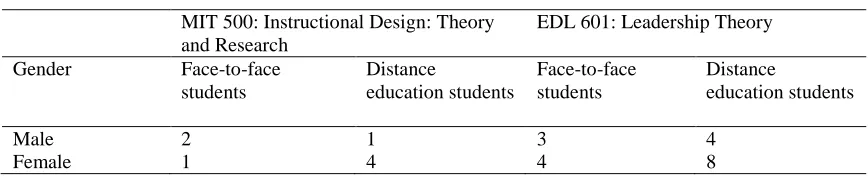
Table 2 Number of students registered and classification for MIT 500 and EDL 601 students. ... 43
Table 3 Number of students who attended online and face-to-face for MIT 500 throughout the observation period ... 46
Table 4 Number of students who attended online and face-to-face for EDL 601 throughout the observation period ... 46
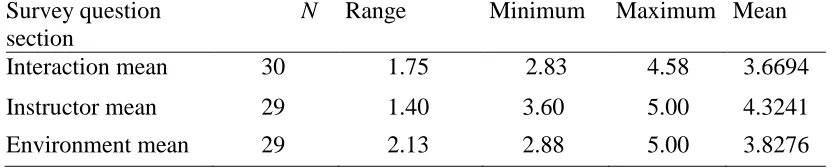
Table 5 The overall mean of instructor, environment, and interaction. ... 50
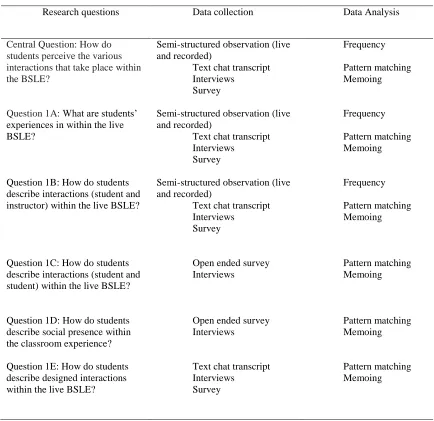
Table 5 Research questions and methods of data collection to address each question. ... 51
Table 6 Data collection methods and timeline MIT 500: Instructional Design: Theory and Research... 51
Table 7 Data collection methods and timeline for EDL 601: Leadership Theory . 52 Table 8 Data collection methods and method for trustworthiness ... 62
Table 9 Table depicting the age range of the students who completed the electronic survey. ... 80
Table 10 Student preference for attending class in the BSLE. ... 81
Table 11 Technical questions from MIT and EDL students. ... 84
Table 12. Frequency of interactions by class. ... 89
Table 13 Average number of students attending the EDL and MIT classes in the online and face-to-face environment. ... 90
xiii
Table 15 Interactions between the instructor, class, face-to-face students and online students in the Instructional Technology class (MIT). ... 92 Table 16 Student interaction from both the MIT and EDL classes (10 class
sessions). ... 98 Table 17 Student perceptions of social presence based on webcam, and
collaborative activities. ... 106 Table 18 The Blended Synchronous Learning Design Framework with the practices
used in this study bolded. ... 118 Table 19 The Blended Synchronous Design Framework with additional
recommendations from this case study research project. Additional
xiv
LIST OF FIGURES
Figure 1. Various definitions and degrees of social presence. ... 26
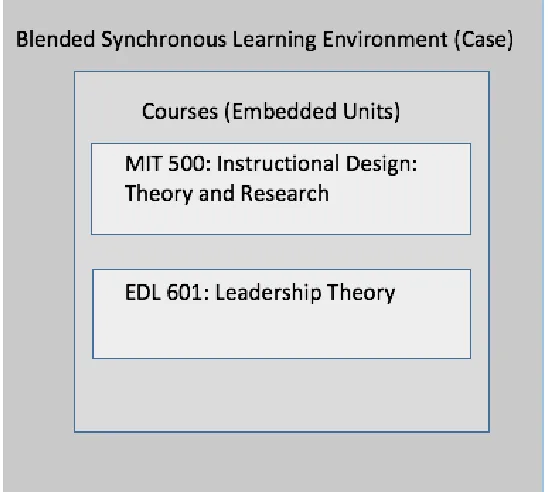
Figure 2. The bounded cased of the BSLE and the embedded units which are the individual classes who volunteered for this case study research. Both classes are introduction core classes. ... 40
Figure 3. The Instruction Technology Blended Synchronous classroom for Instructional Technology. Cisco telepresence was used to outfit the classroom including the instructor’s station, classroom cameras, microphones (located on each table), and projection screen. WebEx is a web-based software that is used on the instructor’s station computer and projected onto the projection screen so the face-to-face students can see the online students... 41
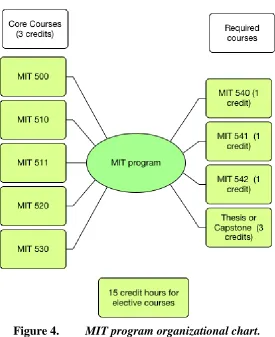
Figure 4. MIT program organizational chart. ... 44
Figure 5. EDL Program organization chart. ... 45
Figure 6. Example of operational diagram use to move from first cycle coding to second cycle coding ... 58
Figure 7. Example of codebook from first cycle coding with categories ... 61
Figure 8. Screenshot from Nivio 11 depicting the nodes or themes that emerged... 61
Figure 9. Diagram of the MIT distance education classroom ... 67
Figure 10. View of instructor from online student perspective ... 68
Figure 11. View of the face-to-face student table with microphone from online student perspective ... 68
Figure 12. Diagram of the Leadership Theory classroom ... 70
Figure 13. View of the EDL classroom from the online student’s perspective ... 70
CHAPTER ONE: INTRODUCTION
Online course enrollments have continued to increase over time (Allen & Seaman, 2015). Online course offerings are also growing to accommodate diverse non-traditional student audiences such as deployed military or other working adults
(Schornack & Beck, 2016).
Online learning environments can take many forms (Szeto & Cheng, 2014). For instance, there are online learning environments that use asynchronous tools such as discussion boards, synchronous tools such as Skype, and blended forms of
communication technologies. In learning environments using asynchronous
communication technologies, students and the instructor(s) usually do not meet online or face-to-face at the same time; instead, they use a variety of communication media, such as email and discussion boards, to correspond with one another. In synchronous
environments, on the other hand, students and the instructor(s) are separated by distance, but not time. The instructor and students gather as a whole at a certain time of day through the use of synchronous communication technologies (e.g., Cisco WebEx, Adobe Connect, Blackboard Collaborate). Finally, there are learning environments, often called blended or hybrid learning environments, that incorporate both synchronous or
asynchronous tools in face learning environments to reduce time in the
Blending learning environments are growing in popularity and have been adopted
by an increasing number of educational institutions in order to offer flexibility to students
(Christensen & Evamy, 2011; Pelliccione & Broadley, 2010). Higher education is no
longer defined by physical boundaries. Keppell, Souter, and Riddle (2012) have
suggested that instructors facilitating instruction in technology enriched environments be
aware of the benefits and constraints of the various technologies and how these
technologies can be utilized to positively affect student learning. Blended learning
environments can take many forms. The most popular form is where asynchronous
communication technologies are used to reduce face-to-face classroom meetings. Another
type of blended learning environment is the blending of online and face-to-face students
within one classroom; this type is often called the Blended Synchronous Learning
Environment (BSLE) (Osguthorpe & Graham, 2003).
BSLEs combine the face-to-face environment with synchronous technologies or
virtual classrooms where students can participate in one class together. For instance,
students can opt to attend class in the physical classroom environment or they can attend
via virtual classroom. This environment provides the face-to-face and online students an
opportunity to interact with one another and the instructor. BSLE allows for flexibility for
students at a distance who prefer live interaction with the instructor and peers. It also
allows those students who live in the proximity of the face-to-face environment to attend
class physically. Convenience has been cited as a reason for students to participate in the
blended synchronous environment as many work full time, have to tend to children, or
among all students (Bower et al., 2015). Interaction among students and instructors can happen through both audio and/or text chat. Students and instructors use microphones to talk so students in the virtual environment can listen. Classrooms should be equipped with speakers so face-to-face students can also hear the online students. Typically, virtual classrooms contain a text chat option which allows students to also communicate with the instructor and peers in a text-based format.
Statement of Problem
With the growth of distance education, universities are experimenting with various types of blended learning that will enable students at a distance to have a similar experience as attending a face-to-face class. The BSLE presents a unique environment where students are both face-to-face and at a distance concurrently. The BSLE allows for students locally and at a distance to participate in engaging activities with the instructor and their peers in real time. The BSLE is different from both the face-to-face
environment and online synchronous environment since it combines the face-to-face and online synchronous environment in one setting.
Although, blended synchronous learning environments have been around since early 2000’s, there has been little research conducted on students’ experiences in these environments, specifically in terms of instructor-student and student-student interaction and especially between those in the face-to-face environment and those at a distance (Bower et al, 2015; Szeto & Cheng, 2014; Szeto, 2015). Some researchers have analyzed the patterns of interactions within the BSLE to determine how these interactions affect
the students’ and instructors’ experiences (Rasmussen, 2003; Szeto, 2015; Szeto &
only on the frequency of interactions and not the quality of interactions. For instance,
Szeto and Cheng (2014) analyzed a BSLE class to determine the frequency of pedagogic
interactions. They used a coding framework based on the Community of Inquiry (CoI),
developed for asynchronous learning environments (see Garrison & Anderson, 2003; Ice et al, 2007; Rourke et al., 2001); therefore, these codes may not be the best way to analyze interaction in blended synchronous learning environments. The codes developed
for the asynchronous learning environments may not translate well to a synchronous
environment. Rasmussen (2003), on the other hand, analyzed the frequency of
interactions based on Moore’s three types of interactions (i.e. learner,
learner-content, learner- instructor). Rasmussen, however, did not delve deeper into how
interactions affected students’ educational experiences. By elaborating on students’
experiences, one can ascertain on whether these types of interactions are beneficial to
student learning and how the interaction contributed to creating social presence among
students.
Other researchers have done some initial research into strategies for conducting a
class in the BSLE and the impact on both students’ and instructors’ experiences (Bower
et al., 2015; Cunningham, 2014). Bower et al. (2015) conducted a comprehensive
research project that analyzed seven cases of classes taught in the BSLE in order to
develop a pedagogic framework for practitioners: Blended Synchronous Design
Framework. This framework guides instructors through best practices before, during and
after implementation. They postulated that activities should be well designed prior to
implementation and technology should be thoroughly tested. Students should also be
implementing active learning strategies will assist with students reaching the intended
learning outcomes, increase student satisfaction, and increase social presence.
Although these studies provide insight into the BSLE, research on how
interactions shape both the students’ and instructors’ experiences is lacking. This is important because many educators are not versed in teaching in the BSLE. These
educators, and even many with experience teaching in BSLE, need more research on how best to organize and manage a class to facilitate student learning and interaction in order to achieve intended learning outcomes and student satisfaction (Bower et al., 2015).
Theoretical Framework
In past decades, researchers have explored how social presence, or the extent to which students connect with other students in the course, affects the students’ educational experiences particularly in the asynchronous environment (Anderson et al., 2001;
Garrison, Anderson, & Archer, 2000; Gunawardena, 1995; Gunawardena & Zittle, 1997; Lowenthal, 2009; Picciano, 2002; Richardson & Swan, 2003). The ability to create cohesive social groups among learners has been heavily researched particularly in
analyze how interactions in the BSLE can contribute or hinder the ability to create a cohesive group among learners.
Moore’s Transactional Distance
Transactional distance is a pedagogical concept that emerged in 1972 that describes the instructor to learner relationship in terms of being physically separate, which affects structure, dialogue, and autonomy (Moore, 1993). Transactional distance theory proposes that distance in online courses is transactional not spatial. Structure (learner-content) refers to course design or in the case of the BLSE, the design of the environment in terms of activities, assignments, and planned interactions. Dialogue refers to the communication between and among the instructor and students. Moore (1989) identified learner-instructor interactions within dialogue construct. Finally, autonomy is a technique used by learners to manage learning as self-reliant manner (Moore, 1989). According to Moore (1993), transactional distance is reduced when there is an increase of interaction between the student and instructor. Moore (1989) went on to define three core types of interaction: learner-learner, learner-instructor, and learner-content. These types of interactions will be the basis for understanding the patterns of interactions that occur during the BSLE.
Community of Inquiry and Social Presence
environment (Garrison, 2011). The framework suggests that the online experience happens at the intersection of the three constructs. Social, cognitive and teaching presence if designed in balance, create a collaborative environment of a community of learners (Akyol, Garrison, & Ozden, 2009). This study will focus on social presence. There is no one agreed upon definition of social presence as researchers continue to redefine social presence. Social presence refers to the degree to which people are perceived as real when using Computer Mediated Communications (CMC) (Picciano, 2002) or the ability to project themselves (Garrison et al., 2000). Social presence initially was researched in text-based asynchronous environments. Research has also used social presence in the web-enhanced blended and synchronous environments (Garrison & Anderson, 2003; Rourke et al., 2001; Szeto, 2015; Szeto & Cheng, 2014).
A sense of group commitment where students see themselves as part of a whole rather than an individual is described as group cohesion. The construction of group cohesion typically uses conversational strategies such as humor and joking banter (Garrison, Anderson, & Archer, 1999). This category is important as students have a sense of belonging, which is important to sharing personal meaning and developing discourse. The development of discourse through information sharing is essential to knowledge construction (Garrison et al., 1999; Swan & Shih, 2005).
Picciano (2002) postulated that interactions alone do not create social presence among the class; one also needs to consider the quality of interactions. The organization and design of effective interactions is essential to the success of creating a cohesive class
among the face-to-face, online students and instructor while lessening instructor
2012). Therefore, it is essential to continue to explore designed interactions in the BSLE
as well as social presence and hence student’s perceptions and rationale for their
perceptions on designed interactions and social presence.
Blended Synchronous Learning Design Framework
Bower et al. (2015) developed the Blended Synchronous Learning Design
Framework. This framework is developed for instructors and is divided into three stages: presage, process, and product. Each stage consists of three categories: pedagogy,
technology, logistic/setup. The presage reviews components to be complete prior to classroom instruction. The process stage consists of activities to be completed during class time, and the product are the outcomes of following the framework.
Purpose of the Study
The purpose of this study was to investigate students’ perceptions of designed interactions, interactions that are intentionally created by the instructor to provide students an opportunity to collaborate, among the instructor and students within the BSLE. The researcher applied Moore’s three types of interactions, social presence theory, and the blended synchronous design framework to evaluate how designed interactions may influence social presence within the virtual classroom. Moore’s types of interactions were used to frame the frequencies of interactions. The frequencies of interactions were compared to student responses to validate student responses and perceptions. The various definitions of social presence theory were applied to student responses and analyzed to determine how students described social presence. The suggested strategies from the blended synchronous design framework were analyzed according to the data collected. The suggestions from the blended synchronous design framework insinuated that if the methods are employed students will have a positive experience in the BSLE and as a result, there will be an increase in social presence among the students. Subsequently, in the end, this study was to gather student perceptions of designed interactions and social presence in the BSLE. Furthermore, students’ perceptions towards these types of interactions were studied, and recommendations for best practices in the BSLE were evaluated based on the blended synchronous design framework.
Research Questions Central question:
What are students’ experiences within the live BSLE?
How do students describe interactions (student and instructor) within the live BSLE? How do students describe interactions (student and student) within the live BSLE? How do students describe designed interactions within the live BSLE?
How do students describe social presence within the BSLE? Overview of Methods
The research utilized a qualitative case study approach to understand how interactions affect student perceptions of social presence and rationale for student
Definition of Terms
Virtual classroom – synchronous space where students can attend class from a distance at a certain time (e.g. WebEx, Bb Collaborate, Adobe Connect).
Social presence – degree of salience of the other person in the interaction and the consequent salience of the interpersonal relationship (Short et al., 1976).
Blended Synchronous Learning Environment – one class where students can attend virtually through a virtual classroom or physically face-to-face simultaneously. Designed Interactions – interactions that are intentionally created by the instructor to provide students an opportunity to collaborate.
Chapter Summary
CHAPTER TWO: LITERATURE REVIEW
The purpose was to discover students’ perceptions of designed interactions in the Blended Synchronous Learning Environment (BSLE). The purpose of this review is to define the BSLE and examine the underlying aspects that support interactions in this environment such as Moore’s Transactional Distance, social presence, and blended synchronous design framework. Levels of interaction will be identified, social presence will be discussed to highlight the importance of interactions, and finally, a framework for blended learning design will be discussed.
History of Blended Learning Environments
Distance education, a concept that has been around since the late 19th century, was originally developed around one-way communication. At first, distance education
consisted of correspondence courses which relied on the postal service for exchanging communication, however, as radio and television became more prominent in the 1950’s more college credit courses began to be offered via broadcast television (Simonson et al., 2014). One drawback of one-way communication was the amount of time needed to create interaction between the student and instructor (Porter, 1994). As new innovative technologies emerged such as the Internet, blended learning began to take shape with the combination of face-to-face and online environments. The success and satisfaction of blended learning has been attributed to the interactive capabilities of Internet
communication increased educational possibilities including blended learning environments (Garrison & Kanuka, 2004).
Blended Learning
The term “blended learning” is used in academic journals and conferences frequently however often this term can be used to describe a myriad of different environments (Osguthorpe & Graham, 2003; Reece & Lockee, 2005; Picciano, 2006). Many definitions have emerged to describe blended learning and include: an environment with more than one delivery mode (Singh & Reed, 2001), a mix of instructor led training with technology based learning (Bielawski & Metcalf, 2005), and a mix of traditional training and innovative technologies (Thorne, 2003). Quinn et al. (2012) identified three levels of blended learning: (1) the blending of instructor expertise and approaches, (2) mode of delivery (3) inter-institutional collaboration. Blended learning can take on many forms ranging from the blending of activities, students, model of interaction, and
instructors.
Osguthorpe and Graham (2003) analyzed blended learning to define the various types blended learning that can occur. Osguthorpe and Graham (2003) analyzed the learning activities, students, and instructors to develop three models of blended learning that can occur: (1) blending of online and face-to-face activities, (2) the blending of online and face-to-face students in one environment, and (3) the blending of multiple instructors either face-to-face or from a distance. The blending of online and face-to-face activities refers to the blending of activities. For example, students may participate in
in-class activities and then have another activity such as an online discussion. In the case
online and face instructors when one instructor is online and the other is
face-to-face. Model two, the blending of online and face-to-face students will be the learning environment of this study’s focus.
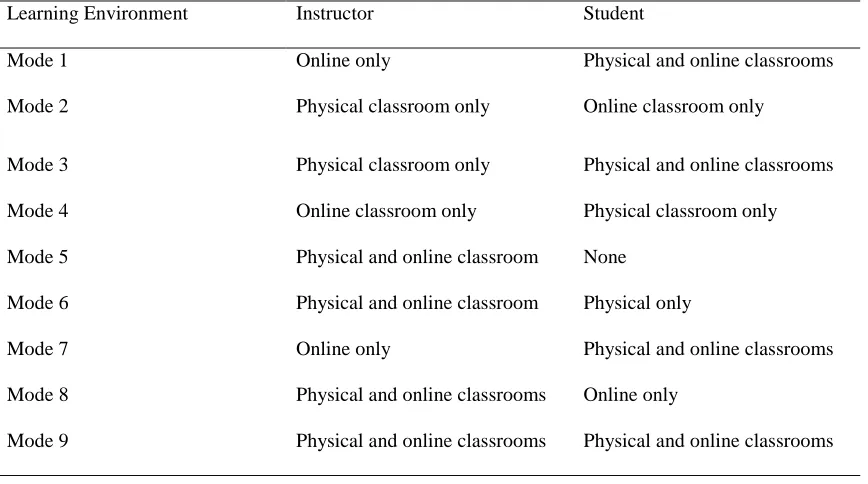
Hastie et al., (2010) explored a variety of blended learning environments that involved students and instructors connecting through multiple combinations of the virtual and physical classrooms to engage in educational collaborations (Table 1).
Table 1 The various blended synchronous learning environments explored by Hastie, Hung, Chen, and Kinshuk (2010).
Learning Environment Instructor Student
Mode 1 Online only Physical and online classrooms
Mode 2 Physical classroom only Online classroom only
Mode 3 Physical classroom only Physical and online classrooms
Mode 4 Online classroom only Physical classroom only
Mode 5 Physical and online classroom None
Mode 6 Physical and online classroom Physical only
Mode 7 Online only Physical and online classrooms
Mode 8 Physical and online classrooms Online only
Mode 9 Physical and online classrooms Physical and online classrooms
web conferencing, or virtual worlds” (p. 1). The BSLE combines two or more learning settings in one flexible environment and includes audio/visual technologies, whiteboard, chat, and desktop sharing that resemble a face-to-face classroom (Hastie et al., 2010; Oyarzun & Martin, 2013). Both the face-to-face students and the online students have the ability to interact with the instructor and their online and face-to-face peers. This type of environment gives students who are unable to attend class due to a geographical distance the opportunity to take part in live class sessions.
Transactional Distance
Moore (1989) laid the groundwork for interaction through this transactional distance theory and it is defined as a pedagogical concept that describes the instructor to learner relationship in terms of being physically separate which affects structure,
dialogue, and learner autonomy which represents the psychological distance of space and time between the instructor and the students (Moore, 1993). Structure refers to the
course’s rigidity or flexibility in terms of educational goals, instructional strategies, assessment, and addressing individual needs. Dialogue refers to the communication between and among the instructor and students. Autonomy is a technique used by learners to manage learning in a self-reliant manner. According to Moore, (1993) transactional distance is reduced when there is an increase of interactions between the student and instructor. Moore (1989) then suggested three types of interaction dyads: (1) learner to learner (2) learner to instructor (3) learner to content. These dyads are further defined in the following sections.
objects and events mutually influence one another” (p. 8). Interactions have continued to be analyzed with the increase of distance education courses and information and
communication technologies (ICT). Moore’s (2013) Transactional Distance theory emerged as a prevalent theory for defining distance education as a type of transaction, and the distance between the learning and teachers as psychological rather than physical. Learner to learner
Learner to learner interaction is an exchange and collaboration between individual
and/or groups of students (Moore, 1989). This can occur within instructor designed
activities or within learner created activities without instructor knowledge (Anderson et
al., 2000). Instructors often provide students with the opportunity for learner to learner
interaction in online classes through group projects and threaded discussion boards.
Collaborative projects of this nature encourage students to analyze various cases or
prompts in order to build new knowledge (Ravenna, Foster, & Bishop, 2012). Through
learner to learner interaction, students are able to share in the knowledge creation
process. Moore (1993) referred to the shared learning experience between and among
students as “collective intelligence” which he further described as the most advanced
form of the instructional process (Medeiros et al., 2014). Student to student interactions has been linked to increased student satisfaction with the online environment (Akyol et al., 2009; Arbaugh & Benbunan-Fich, 2006; Garrison & Akyol, 2013; Richardson & Swan, 2003).
Learner to instructor
instructor interaction may add emotional or motivational support which assists in stimulating students’ interests in course content (Moore, 1989). Adding a synchronous component such as audiovisual calls or chats increases instructor presence since the students typically have direct interaction with the instructor (Baker, 2010). In asynchronous systems, the instructor may use discussion boards and emails to
communicate direct instruction or clarification and additionally interject personality and humor (Moore, 1989). Learner to instructor interaction has been linked to student satisfaction (Wise et al., 2004), sense of community, and increased instructor presence (Shea, Li, & Pickett, 2006).
Learner to content
Learner to content refers to how the student interacts with the course content to construct meaning. Learner to content interactions can include course readings, watching videos, interacting with computer based instruction or simulations. It can also include searching for materials and completing projects/assignments (Bernard et al., 2009). The learner to content interaction facilitates the perspective and cognitive structure of the student (Moore, 1989).
Blended Synchronous Learning Environments
Many terms have been associated with the blending of face-to-face and online students in one environment. Oyarzun and Martin (2013) dubbed this environment multi-modal course delivery. This is the combination of face-to-face and simultaneous
synchronous online delivery with asynchronous materials. Bower, Cram & Groom (2010) defined the combination of the physical and virtual environment as blended reality. This combination included participants in both the physical and virtual space simultaneously. Hastie et al. (2010) coined the term blended synchronous learning environment (BSLE). The BSLE consists of five components: a teacher, physical classroom, cyber classroom, and a number of classrooms and/or participants.
Blended synchronous learning environments are created using an array of
instructor. (Oyarzun & Martin, 2013). These interactions can assist with the facilitation of creating social presence among the students and instructor.
Designed Interactions
Designed interactions emphasize active constructive and reciprocal engagement between both peers and instructors (Parker et al., 2013). Pallof and Pratt (2007) suggested that students will experience meaningful learning in a participatory learning environment which will assist the students with developing social presence. Designed interactions are beneficial since it encourages students to actively construct new meanings related to the course content (Lehman & Conceicao, 2010). Examples of designed interactions include active learning strategies.
Active learning is an umbrella term for pedagogies focusing on student activity and engagement (Chickering & Gamson, 1987). Teaching methods that support active learning strategies are those that engage students in doing things and thoughtful participation that emphasize the learning outcomes (Ritchhart, Church, & Morrison, 2011). Active learning methods require students to utilize higher order thinking skills and are typically collaborative in nature. Zayapragassarazan and Kumar (2012) referenced four broad categories for active learning: individual activities, paired activities, informal small groups, and cooperative student projects. These methods may employ various activities such as brainstorming, collaborative writing, case-based instruction, cooperative learning, and peer teaching.
(2015) found that technology enabled instructors to design active learning which included collaborative evaluation tasks, group report activities, collaborative problem solving activities, and class discussions. They also stated that for active learning to occur, tasks needed to include student participation. The addition of active learning tasks increase student satisfaction (Bower et al, 2015; Richardson & Swan, 2003).
Social Presence Theory Community of Inquiry
The Community of Inquiry (CoI) is a framework developed as a critical thinking model for online courses (Garrison et al., 2000). CoI is used to achieve higher order critical thinking skills and create a community of students and instructors. There are three essential elements to CoI: social, cognitive, and teaching presence (Garrison, 2009). Grounded in specific philosophical and epistemological assumptions, and learning theories, CoI aims to encourage higher order cognitive processing through a
collaborative/constructivist environment (Garrison, 2011). Social, cognitive and teaching presence, if designed in balance, create a collaborative environment of a community of learners who will achieve deep and meaningful learning (Akyol & Garrison, 2008).
Social presence is the extent to which students feel connected with other students in the course (Garrison et al., 2000). Creating social presence within online courses requires deliberate planning on the part of the instructor to ensure the learning
environment promotes probing questions, skepticism, and the contribution of ideas. The social environment should develop naturally and progressively. Once students begin to identify with a group and a purpose, they become more productive through the
shown a link between social presence and student satisfaction (Akyol et al., 2009; Arbaugh & Benbunan-Fich, 2006; Garrison & Akyol, 2013; Richardson & Swan, 2003).
Teaching presence is directly related to both social and cognitive presence through the design and organization, facilitation and encouragement, and materials and learning activities. Through these three categories students can reach meaningful and educational outcomes (Anderson, et al., 2001). Design and organization refers to the macro level structure. Both the design and the delivery are interrelated and require effective responsiveness to developing needs and events. Facilitating reflection and discourse develops cognitive understanding in a positive environment and involves pedagogical, interpersonal, and organizational skills. Through reflection, students construct personal meaning of the content and confirm a mutual understanding. Direct instruction contradicts being a “guide on the side” but is needed to diagnose
misconceptions and brings expertise to the class (Garrison & Akyol, 2013). Teaching presence is important for perceived learning and satisfaction (Akyol et al., 2009; Richardson & Swan, 2003; Swan & Shih, 2005) and the development of a community (Ice et al., 2007; Shea et al., 2006). As defined by Garrison and Akyol (2013), “Teaching presence is the unifying force in CoI” (p. 113).
Cognitive presence is the intellectual engagement with course content and the ability to create meaning out of ideas and facts (Garrison et al., 2000) and is formed when meaning is constructed and confirmed through reflection and discourse. Cognitive
processes of critical thinking (Figure 3). The PI model which is an influence on cognitive presence has four phases: triggering events, exploration, integration, and resolution (Anderson et al., 2001). Students need to move through all four phases to reach higher order cognitive skills and should be aware of the inquiry process. Students need to conceptualize a problem (triggering) which should be a well thought out plan to generate students’ curiosity. The next phase, the students begin searching for information such as an explanation for the problem (exploration). Next, students must construct meaning of the problem through critical discourse. Finally, finding a solution (integration) and testing the solution through implementation (resolution) (Garrison & Akyol, 2013; Garrison & Anderson, 1993).
The underlying tenant in CoI is all three presences work in tandem to create a community of inquirers. Garrison and Arbaugh (2007) postulate that a community begins with social presence, followed by the integration of teaching presence which then
produces cognitive presence. The CoI has been employed as a theoretical framework to understanding the complexities of technology enhanced learning environments to emphasize critical thinking (Garrison & Akyol, 2013). As seen in Figure 2, the
educational experience is created in an environment which is supportive both socially and intellectually, under the guidance of a knowledgeable instructor, where students engage with course content to develop meaningful, deep learning (Garrison et al., 2000). Social Presence
and course satisfaction (Gunawardena, 1995; Gunawardena & Zittle, 1995; Richardson & Swan, 2003). Thus, educational environments should be able to foster learning through social practices (Shea et al., 2001). In the next section, the history and definition of social presence will be reviewed.
History of Social Presence
Many researchers credit Short, Williams, and Christie (1976) with the initial definition of social presence to explain the effect of communication media can have on communication. They defined social presence as the “degree of salience of the other person in the interaction and the consequence salience of the interpersonal relationships . . .” (p. 65). They argued that social presence was a critical factor in person-to-person communication and the medium can affect perceptions of immediacy and intimacy. As the popularity of communication media grew in the late 1980’s and early 1990’s, social presence began to be heavily researched (Garrison, et al., 2000; Gunawardena, 1995; Gunawardena & Zittle, 1997; Swan, 2002; Walther, 1996). Researchers began to question whether the attributes of a communication medium determined its social presence or if it was the ability of the user to project their persona defined social presence. In the
following section, the various definitions of social presence will be discussed. Definition of Social Presence
project their identities through a communication media and build an online community through the use of interaction skills and techniques. Gunawardena and Zittle (1997) went on to state that users project their presence by developing skills to incorporate their personality. The characteristics of communication media did not determine the social presences levels; it is the student perceptions of the social presence created by both the instructor and the students. Thus, she argued the ability of the participants to project their “self” through a communication media creates social presence. Other researchers such as Picciano (2002) defined social presence in an online course as “a student’s sense of being in and belong in a course and the ability to interact with other students and an instructor” (p. 22). Picciano (2002) went a step further and the person is not just able to project their “self” but also feel a sense of belonging.
and sensory impression of others. At the other end of the continuum, students are merely projecting themselves (Garrison et al., 2000) Although this is not a comprehensive
overview of all the definitions that have emerged, it provides an indication of the range of social presence definitions.
Figure 1. Various definitions and degrees of social presence. Throughout the years, social presence has been linked to student satisfaction (Gunawardena, 1995; Gunawardena & Zittle, 1995; Richardson & Swan, 2003), increased interaction (Tu, 2000), and perceived learning (Picciano, 2002; Wise et al., 2004). Thus, it is necessary for instructors and instructional designers to recognize the importance of intentionally designed activities to facilitate social presence in an online educational environment (Pallof & Pratt, 2007).
Challenges and Opportunities in the BSLE
who have a demanding life outside of their educational studies have stated that the convenience of being able to attend class either face-to-face or online as well as have the ability to review the class recording at a later time has contributed to student satisfaction of this environment (McCue & Scales, 2007). The ways in which the blended
synchronous tools are configured may vary. Students may be connected from one location to another, point-to-point, or multipoint, where students at multiple locations stream to one location such as a classroom. As a result, the blended synchronous environment allows for a flexible education environment.
One of the main advantages of the blended synchronous learning environment is the enhanced notion of creating social presence among both face-to-face and online learners. It has been hypothesized that participants in the blended synchronous learning environment experience high levels of social presence which may be attributed to the immediacy that real-time communication offers joined with the dynamic and spontaneous nature of interactions it supports (Cunningham, 2014; Park & Bonk, 2007). The
heightened sense of social presence may be attributed to the ability to form a larger cohort of students that can bring a variety of perspectives and expertise (Bower et al., 2015).
Many educators are not versed in teaching in the blended synchronous learning environment, therefore it is imperative to understand what the blended synchronous learning environment is and how to organize and manage a class to facilitate student learning and interaction (Bower et al., 2015). Organization and design of effective interactions are imperative to the success of creating a cohesive class among the
teaching (Teng et al., 2012). During the implementation of the lesson, instructors need to engage students to keep them involved with the course content and each other (Bower et
al., 2015; Szeto & Cheng, 2014), and balance the contributions of the students between
the face-to-face group and the online students (Bower et al, 2015; Szeto & Cheng, 2014;
Szeto, 2015). For this reason, the design of lessons and planning on the instructor’s part is
essential.
Research has identified many challenges associated with the blended synchronous
learning environment such as technology (Szeto 2014; Szeto & Cheng, 2014), promoting
interaction between the face-to-face and online students (Stewart, Harlow, & DeBacco,
2011), and the ability of the instructor to give equal attention to both the online and
face-to-face students (Cunningham, 2014, Szeto, 2014; Szeto & Cheng, 2014). Both
Ramussen (2003) and Szeto and Cheng (2014) found that student to instructor interaction
was unequally distributed between the online and face-to-face students. Ramussen (2003)
found the face-to-face students had a much higher interaction frequency with the
instructor whereas Szeto and Cheng (2014) found the online students had a much higher
interaction frequency with the instructor. Both Ramussen (2003) and Szeto and Cheng
(2014) found that there was also a much higher frequency of interactions within groups.
The students preferred to interact with their peers who were in the same learning
environment. For example, face-to-face students interacted with their face-to-face peers.
Technology is also an important aspect of the blended synchronous learning
environment, and professional development is essential for the instructor and students
(Szeto, 2015). Both online and face-to-face students should become familiar with the
communication between the two groups of students and the instructor. Students can be
resentful when technology fails and the instructor takes class time to assist online
students (Cunningham, 2014). Other researchers have noted that audio lags can be
detrimental to group cohesion due to the interference it can cause for group activities
(Bower et al., 2015; Szeto & Cheng, 2014). Both face-to-face students and the instructor
also need to be aware of the camera and microphones in the room to ensure the online
students are able to view and hear the class discussion (Cunningham, 2014). With this in
mind, it is important for the instructor to consider the type of technologies utilized as well
as incorporating student training into the design of the course.
Social presence in the BSLE
With social presence being such a predominant factor in education to foster
collaboration and higher-order thinking (Garrison et al., 2000), researchers have been
interested with how the dynamics of teaching students in dual modes, face-to-face and
online, affects interactions and social presence. The quantity of interactions between the
instructor, online students, and face-to-face students have been analyzed (Ramussen,
2003), as well as the interactions between the face-to-face and online students
(Cunningham, 2014; Szeto & Cheng, 2014; Szeto, 2015). Often the quantity of
interactions has been established to determine a pattern to then support additional
findings through qualitative methods such as observations and interviews (Ramussen,
2003; Szeto & Cheng, 2014).
Ramussen (2003) conducted a multiple case study and based the quantity of
interactions on Moore’s three types of interactions and developed eight groups:
face-to-face-face-to-face, face-to-face-instructor, face-to-face-technical assistant, and
instructor-technical assistant, under four categories: administrative, content, social, and instructor-technical
support. He found that the use of text chat connected the distance students but did not
connect the distance students with the face-to-face students. It was also noted that
students preferred audio interactions when the interaction was content related and used
text chat when the interaction was social. In this study, the chat tool was only available
for the distance students in case one. In case two, the chat tool was integrated for all
students. Once the chat tool was integrated for the face-to-face students, the number of
interactions dropped between the online students and increased among the face-to-face
students.
Szeto and Cheng (2014) also conducted a case study and used Moore’s three
types of interactions to determine a pattern. They classified the interactions into three
participant groups: online students, face-to-face students, and instructor. Within each
group were student-student, student-instructor, student-content. Under the instructor
group, interaction types were classified as instructor-student and instructor-content. They
suggested there is much higher intra-group interactions (student to student) for the
face-to-face group but the online group had much high inter-instructor interactions (student to
instructor). The face-to-face group was more apt to seek consultation from their peers
whereas the online students preferred to consult with the instructor. Student-student
interactions did not happen outside their immediate vicinity (Szeto & Chang, 2014).
Although these studies findings contrast one another, they are similar with regards to low
interactions among the face-to-face and online students. Thus, demonstrating the two
Bower et al. (2015) researched the design and implementation of teaching in the
blended synchronous learning environment and how that influenced the quality of
instruction, which included social presence of the students using a multiple case study
approach. Pedagogy was the focus of this study to determine successful collaborative
strategies for the BSLE. All cases included collaborative activities such as group work or
whole class collaboration. Instructors used various techniques for collaboration. Some
instructors preferred to establish grouping strategies prior to class while others allowed
students to self-group. During instructor interviews, many of the instructors stated that
preparation was essential for successful classes including, pre-loading materials and
creating clear instructions. Also important is the ability to direct students to answer
questions through the use of names. Face-to-face students were also strongly encouraged
to be logged into the distance environment in order to contribute to chat conversations
with their online peers. Overall, providing active learning strategies enabled students to
collaborate and engage with one another.
BSLE strategies
Interactions have been a subject of study in the blended synchronous environment
(Cunningham, 2104; Szeto & Cheng, 2014; Szeto, 2015), and have been heralded as a
significant component of pedagogy to obtain intended learning outcomes (Ravenna et al.,
2012). Furthermore, these interactions can facilitate peer rapport between online and
face-to-face students. Yet, interactions alone are not enough for learning attainment and
the blended synchronous learning environment offers new forms of interaction. Moore
(1993) postulated three types of interaction that can occur: student to student, student to
additional types of interactions can also occur: face-to-face student-face-to-face student,
face-to-face student-online student, instructor-face-to-face student, and instructor-online
student. It is these types of interactions that can influence the social presence and group
cohesion of the class and thus attaining intended learning outcome (Swan, 2004).
Interactions between face-to-face and online students does not happen
spontaneously; therefore, attention to the design of in-class activities is essential as well
as stimulating meaningful communication and collaboration between both groups (Bower
et al., 2015; Szeto, 2015; Szeto & Cheng, 2014). Interactions in the blended synchronous
environment can happen in many ways through audio, text, and visual cues. Grouping
strategies such as grouping online students with face-to-face could potentially “level the
playing field” and creating more interactions between the online and face-to-face students
(Bower et al., 2015).
The instructor has to be aware of both groups of students and ensure equal
attention is given. This can cause cognitive overload for the instructor; therefore,
instructors should design lessons for active learning (Bower et al., 2015). Szeto (2015)
found the face-to-face students felt neglected due to the instructor focusing on the online
students for skill demonstration. Some students reported that it is difficult to hold an
audio conversation with the online students due to audio delay which resulted in
interruptions (Stewart et al., 2011). In order to incorporate both online and face-to-face
students and reduce cognitive load for both instructor and students, instructors can
employ various strategies. First instructors can direct communication to one mode (e.g.
audio, text). For example, when the instructor asks a question, they can direct the students
student to monitor the chat and ensure questions are answered, or comments are made
aware to the whole class (Bower et al., 2015). Overall, the instructor must be aware of
any potential audio lags and ensure equal attention is given to both the online and
face-to-face students.
Blended synchronous learning design framework
In order to overcome the many challenges of the BSLE, Bower et al. (2015)
developed the Blended Synchronous Learning Design Framework which offers
pedagogical, technological and logistical recommendations. The framework is designed
around three constructs: presage (design), process (implementation), and product
(outcomes). The premise for the development of the framework is to compile innovative
practices and tool selection to create a media-rich environment for collaborative learning
experiences (Bower et al., 2015).
During the presage or design stage of conducting a blended synchronous class, the
instructor should determine the learning outcomes for the class and design activities for
active learning. At this stage, the instructor should determine student groupings (e.g.
group students according to location, mix face-to-face students with online students). The
technologies used during class need to match the lesson requirements and need to be
setup and tested in advanced. Logistically, the instructor should have all materials
organized prior to class instruction. If group work will be required, any supplementary
materials need to be provided to the students either prior to class or via a Learning
Management System (LMS). Students need to be informed of any technical requirements
for their computer or technologies needed such as a webcam or microphone. Through
concepts and collaborative activities rather than navigating the technology (Bower et al.,
2015).
During the process or implementation of the class, instructors need to continually
monitor students while being aware of any potential technology issues. Some pedagogical
recommendations offered include distributing attention among the face-to-face and online
students, encourage regular contributions from students, and to be flexible and adaptive.
Some students may have technology difficulties during class, therefore, the instructor
needs to have knowledge of troubleshooting techniques. Finally, start class ten minutes
early to ensure the technology works for all students (Bower et al., 2015).
The recommendations for pedagogy, technology, and logistics set forth by Bower
et al. (2015), will lead to more active learning for both face-to-face and online students
while at the same time enhancing the sense of community among learners. Overall, this
will lead to student satisfaction and achievement of learning outcomes (Garrison et al.,
2000; Gunawardena, 1995). The Blended Synchronous Learning Design Framework was
developed based on previous literature and a comprehensive research case study project,
yet, the framework needs to be validated and refined through future research.
Social presence has been linked to student satisfaction (Gunawardena, 1995;
Gunawardena & Zittle, 1995; Richardson & Swan, 2003) and perceived learning
(Richardson & Swan, 2003). Social presence is an integral part of the blended
synchronous learning environment yet, it has been noted that although students are
perceived as real through webcams. Interaction between online and face-to-face students
is typically short and transactional (Bower et al., 2015; Szeto & Cheng, 2014; Szeto,
community of learners (Szeto & Cheng, 2014) and validate the Blended Synchronous
Learning Design Framework (Bower et al., 2015). Further research needs to be conducted
to validate and develop strategies that increase social presence in the blended
synchronous environment.
Summary
This chapter described the important components of the BSLE as well as the research findings and issues related to this type of learning environment. Research pertaining to the BSLE is just beginning to scratch the surface. Several studies offer insight into creating one community of learner within two separate learning environments through the analysis of interactions between the students and the students and instructor. While research has shown that there has been a disproportionate number of interactions between the instructor and online and face-to-face students as well as between groups of students, many of the studies have been unable to develop strategies to level the
interactions or if it is even necessary to increase social presence among students in both learning environments.
2014). As Picciano (2002) stated, it is not just the interactions that create a sense of community but the design of the interaction. Bower et al. (2015) focused on active learning pedagogy to enhance the BSLE and create a community and increase student satisfaction to obtain learning objectives. This research is relatively new and therefore needs to be validated.
CHAPTER THREE: METHODS
This study investigated students’ perceptions of interactions within a Blended
Synchronous Learning Environment (BSLE). Research suggests that there is often an
imbalance of interactions between the instructor, distance students, and face-to-face
students in BSLE classes (Bower et al, 2015; Szeto & Cheng, 2014). However, little if
any research has investigated students’ perceptions of this imbalance and the implications
it has on perceptions of social presence. Given this gap in the literature, this study investigated students’ perceptions of designed interactions in a Blended Synchronous Learning Environment (BSLE) classroom. The methodology employed to address this problem is outlined in this section. The following chapter is divided into the following
sections: (1) context (2) participants (3) data collection, and (4) data analysis.
Qualitative research is a means for studying social or human problems in a real-world setting. It assists with constructing meaning and understanding of the real-world or understanding a phenomenon which can include multiple forms of data such as
This study took place in a natural environment and utilized multiple forms of data collection (i.e., observations and interviews) to investigate patterns of interactions and student perceptions of interactions and social presence in the BSLE. Therefore, a case study that utilized qualitative methods of data collection was optimal for this study. The researcher was interested in understanding how the students made sense of their
educational environment and their experiences (Merriam, 2009). Case study research is a type of qualitative research which studies a real-world phenomenon that utilizes a variety of methods such as interviews, direct observation, and document analysis (Creswell, 2012; Yin, 2014). Case study is conducted when an investigator is answering “how” or “why” questions in a real-world situation where the behaviors cannot be manipulated (Yin, 2014).
The unit of analysis for this study was interactions that occur within the BSLE during class time (Merriam, 2009). Within the BSLE, the interactions between students and instructors during class time were the phenomenon being researched. This included both verbal and text chat. The ability to predict or control interactions in a live classroom is difficult, therefore qualitative research in the form of case study was the best method (Yin, 2014).
An embedded, single case study approach was utilized for this research.
Embedded approach is when subunits within the case are also included in the analysis. Figure 3 depicts the case study design. A single case embedded approach is justified since this case is limited to classes within the BSLE. This common case was the
Master of Instructional Technology and Educational Leadership, therefore, this is a common case.
Context BSLE Classroom
The Instructional Technology and Educational Leadership programs use a Cisco Telepresence system along with WebEx for their BSLE (Figure 4). The Cisco
Telepresence system provides high definition video of the classroom and quality audio feeds to allow the face-to-face and online students to feel as if they are in the same room. The classroom is equipped with an instructor station computer that can be projected on to a screen. The face-to-face students have access to laptops in the classroom. Cisco
Figure 2. The bounded cased of the BSLE and the embedded units which are the individual classes who volunteered for this case study research. Both classes are introduction core classes.
Figure 3. The Instruction Technology Blended Synchronous classroom for Instructional Technology. Cisco telepresence was used to outfit the classroom including the instructor’s station, classroom cameras, microphones (located on each table), and projection screen. WebEx is a web-based software that is used on the instructor’s station computer and projected onto the projection screen so the face-to-face students can see the online students.
Participants
Theory. These courses were chosen since both courses were the introduction core class for their respective programs and most of the students would have minimal exposure to this type of environment. For this reason, students were not overexposed to the
environment to the point where they have formulated opinions based on previous instructors. Yet, since the students are new to the environment, it also may take time for them to develop opinions of the educational environment. Overall, twenty-seven students and two instructors were part of the study. MIT 500: Instructional Design: Theory and Research had five female students and three males. EDL 601: Leadership Theory had twelve females and seven males. Students who live within the vicinity of the university campus have the choice of attending either face-to-face, online, or a combination throughout the duration of the semester (see Table 2).
MIT 500: Instructional Design: Theory and Research is a core class and also the introduction course for the program. This class met weekly and had fourteen meetings throughout the Fall semester. Students in the MIT program had taken two or more classes while students in the EDL program had taken one or none. EDL 601: Leadership Theory was also a core introduction class therefore; the students were new to the program and were also new to this type of learning environment. Due to program design, EDL 601 had six live meeting times during the Fall semester. The Educational Leadership program combines asynchronous and synchronous environments where students also have to participate in asynchronous discussions during the weeks they do not meet
Table 2 Number of students registered and classification for MIT 500 and EDL 601 students.
MIT 500: Instructional Design: Theory and Research
EDL 601: Leadership Theory
Gender Face-to-face students
Distance
education students
Face-to-face students
Distance
education students
Male 2 1 3 4
Female 1 4 4 8
Each course had a different instructor. MIT 500: Foundations of Distance
Education was taught by an instructor who founded the Master of Science in Instructional Technology program. She was a tenured faculty who had taught in the BSLE since the inception of this learning environment at the university ten years ago. The instructor for EDL 601: Leadership Theory was also a tenured faculty and had taught in the BSLE for the past four years.
Figure 4. MIT program organizational chart.
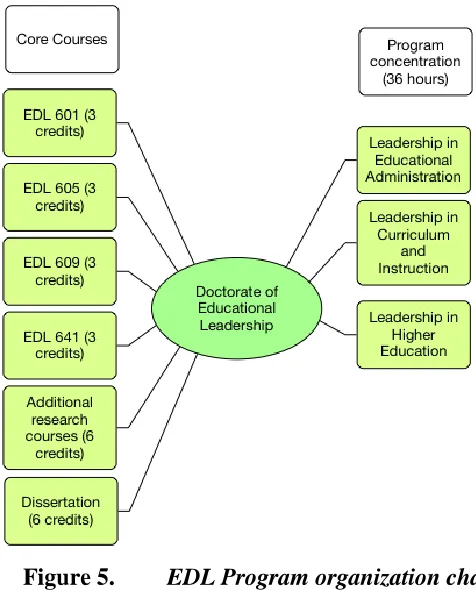
Figure 5. EDL Program organization chart.
for the on-campus section (e.g. 001). Students who lived at a distance (e.g. outside of Wilmington) registered for the distance education section (800). Although students may live outside of the Wilmington area and registered for the distance section, if they chose to, the student may drive to campus to attend class face-to-face. The on-campus students could also choose whether they attend on-campus or online. The designation of distance education student means that those students do not have the opportunity to use the on-campus resources and thus have reduced tuition. None of the distance education students opted to attend the face-to-face sessions during the observation period. In MIT 500, three of the face-to-face students decided to attend class online starting in week three (Table 3). Two students moved to the online environment in EDL 601 for the third class (Table 4). The motivations for students to attend online ranged from medical reasons, moving overseas, and overall preference for attendance.
Table 3 Number of students who attended online and face-to-face for MIT 500 throughout the observation period
Class observation (CO)
Face-to-face Online
Male Female Male Female
CO 1 2 2 1 3
CO 2 2 2 1 3
CO 3 0 1 3 4
CO 4 0 1 3 4
CO 5 1 1 2 4
CO 6 0 2 3 3
CO 7 0 1 3 4
Table 4 Number of students who attended online and face-to-face for EDL 601 throughout the observation period
Class observation (CO)
Face-to-face Online
Male Female Male Female
CO 1 4 6 3 6
CO 2 3 4 4 8