R E S E A R C H A R T I C L E
Open Access
Development and validation of a score for
evaluating comprehensive stroke care
capabilities: J-ASPECT Study
Akiko Kada
1*, Kunihiro Nishimura
2, Jyoji Nakagawara
3, Kuniaki Ogasawara
4, Junichi Ono
5, Yoshiaki Shiokawa
6,
Toru Aruga
7, Shigeru Miyachi
8, Izumi Nagata
9, Kazunori Toyoda
10, Shinya Matsuda
11, Akifumi Suzuki
12,
Hiroharu Kataoka
13, Fumiaki Nakamura
2, Satoru Kamitani
14, Koji Iihara
15and the J-ASPECT Study Collaborators
Abstract
Background:Although the Brain Attack Coalition recommended establishing centers of comprehensive care for stroke and cerebrovascular disease patients, a scoring system for such centers was lacking. We created and validated a comprehensive stroke center (CSC) score, adapted to Japanese circumstances.
Methods:Of the selected 1369 certified training institutions in Japan, 749 completed an acute stroke care capabilities survey. Hospital performance was determined using a 25-item score, evaluating 5 subcategories: personnel, diagnostic techniques, specific expertise, infrastructure, and education. Consistency and validity were examined using correlation coefficients and factorial analysis.
Results:The CSC score (median, 14; interquartile range, 11–18) varied according to hospital volume. The five
subcategories showed moderate consistency (Cronbach’s α= 0.765). A strong correlation existed between
types of available personnel and specific expertise. Using the 2011 Japanese Diagnosis Procedure Combination database for patients hospitalized with stroke, four constructs were identified by factorial analysis (neurovascular surgery and intervention, vascular neurology, diagnostic neuroradiology, and neurocritical care and rehabilitation) that affected in-hospital mortality from ischemic stroke, intracerebral hemorrhage, and subarachnoid hemorrhage. The total CSC score was related to in-hospital mortality from ischemic stroke (odds ratio [OR], 0.973; 95% confidence interval [CI], 0.958–0.989), intracerebral hemorrhage (OR, 0.970; 95% CI, 0.950–0.990), and subarachnoid hemorrhage (OR, 0.951; 95% CI, 0.925–0.977), with varying contributions from the four constructs.
Conclusions:The CSC score is a valid measure for assessing CSC capabilities, based on the availability of neurovascular surgery and intervention, vascular neurology, diagnostic neuroradiology, and critical care and rehabilitation services.
Keywords:Ischemia, Stroke, Hemorrhage, Cerebrovascular circulation, Risk factors
Background
Stroke is the fourth leading cause of mortality and the most common cause of permanent morbidity in Japan, causing an enormous socioeconomic burden. The public health implications of stroke care globally, including in Japan, are profound. Despite accelerating progress in stroke therapy, implementation of appropriate acute
treatment remains essential for decreasing the associated mortality and permanent morbidity. In 2000, the Brain Attack Coalition discussed the concept of primary stroke centers and later proposed the design of comprehensive stroke centers (CSCs) [1, 2]. Most stroke patients can be adequately treated at a primary stroke center (PSC), and the Joint Commission established programs for the certi-fication and performance measurement of PSCs [3]. The concept and recommended key components of a CSC enable intensive patient care and the use of specialized techniques that are not available at most PSCs [1, 4]. To continuously monitor the efficiency of care, reliable
* Correspondence:[email protected]
1Department of Clinical Trials and Research, Clinical Research Center, National
Hospital Organization Nagoya Medical Center, 4-1-1 Sannomaru, Naka-ku, Nagoya, Aichi 460-0001, Japan
Full list of author information is available at the end of the article
measures of hospital capabilities and performance are needed. Although the Joint Commission and several US states have started certification processes for PSCs and CSCs [5–8], an established, simple scoring system does not exist to evaluate the comprehensive acute stroke care capabilities of CSCs. To this end, a simple tool for assessing CSC capabilities would be useful for monitor-ing service quality and enablmonitor-ing its improvement [4]. In 2010, we started the J-ASPECT study (Nationwide sur-vey of Acute Stroke care capacity for Proper dEsignation of Comprehensive stroke cenTer in Japan) to establish optimal nationwide implementation of stroke centers to improve acute stroke outcomes. We modified the above recommendations to reflect the specific circumstances in Japan and developed a CSC score; this tool was vali-dated using the nationwide Diagnosis Combination Pro-cedure (DPC) database, created during the first year of this study.
Methods
Content validity
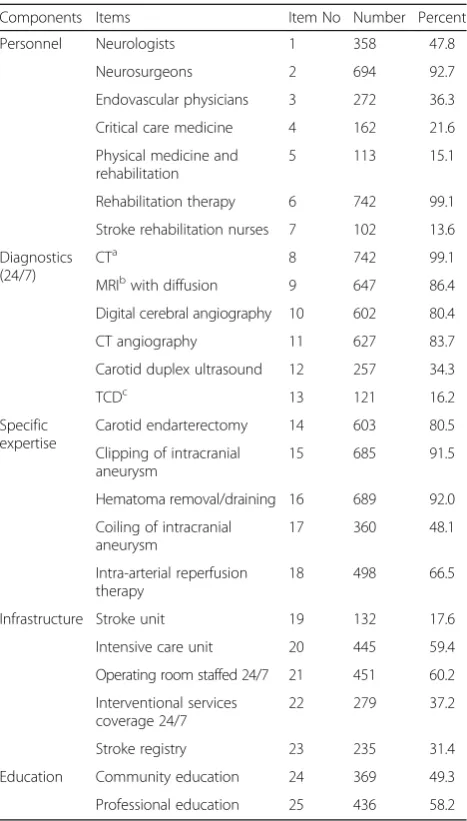
In the first step of the J-ASPECT study, we investigated the current conditions of stroke hospitals in Japan. We created a 49-item questionnaire examining various as-pects of stroke care, including medical systems, emer-gency systems, stroke rehabilitation, education, and medical performance. Some recommended items, such as ventriculostomy availability, were excluded from our questionnaire for the sake of simplicity and to increase the survey response rate since the items seemed identi-cal to the recommendations of board-certified (BC) neu-rosurgeons in Japan. Other items, such as availability of transesophageal echocardiography, were excluded be-cause of their very low expected usage, which would make an evaluation of their impact on mortality rates difficult. In February 2011, the questionnaire was mailed to 1369 certified training institutions belonging to the Japan Neurosurgical Society, the Japanese Society of Neurology, and the Japan Stroke Society. Based on this questionnaire, the overall organizational and staffing levels of the hospitals, in terms of CSC capacity, were scored following the Brain Attack Coalition recommen-dations, after reviewing the literature describing CSCs and conducting a thorough discussion with an expert panel [9]. Advanced acute stroke care capabilities were assessed based on 25 items divided into 5 subcategories (listed in Table 1). One point was assigned for each rec-ommended item that the hospital met, resulting in a maximum total score of 25; subcategory scores were also calculated.
Consistency
Cronbach’sα was calculated to evaluate the consistency between the 5 CSC score subcategories used for
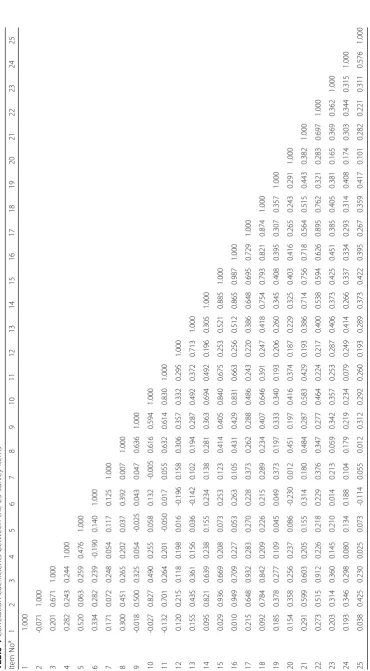
assessing CSC capabilities. To determine the influence of each subcategory,α-values were also calculated for all combinations of the four subcategories. Correlations be-tween the 25 CSC score items were determined using tetrachoric correlation coefficients to evaluate individual items measured with different constructs.
Construct validity
Factorial analysis, based on tetrachoric correlation coef-ficients [10], was performed using principal factor ana-lysis to explore possible potential groupings of the 25 items into a more limited number of components. The selection of the number of components was based on the Eigen values. To understand the meaning of the components, promax rotation was used.
Table 1The availability of comprehensive stroke center score components
Components Items Item No Number Percent
Personnel Neurologists 1 358 47.8
Neurosurgeons 2 694 92.7
Endovascular physicians 3 272 36.3
Critical care medicine 4 162 21.6
Physical medicine and rehabilitation
5 113 15.1
Rehabilitation therapy 6 742 99.1
Stroke rehabilitation nurses 7 102 13.6
Diagnostics (24/7)
CTa
8 742 99.1
MRIbwith diffusion 9 647 86.4
Digital cerebral angiography 10 602 80.4
CT angiography 11 627 83.7
Carotid duplex ultrasound 12 257 34.3
TCDc 13 121 16.2
Specific expertise
Carotid endarterectomy 14 603 80.5
Clipping of intracranial aneurysm
15 685 91.5
Hematoma removal/draining 16 689 92.0
Coiling of intracranial aneurysm
17 360 48.1
Intra-arterial reperfusion therapy
18 498 66.5
Infrastructure Stroke unit 19 132 17.6
Intensive care unit 20 445 59.4
Operating room staffed 24/7 21 451 60.2
Interventional services coverage 24/7
22 279 37.2
Stroke registry 23 235 31.4
Education Community education 24 369 49.3
Professional education 25 436 58.2 a
computed tomography;b
magnetic resonance imaging;c
Predictive validity
Using the Japanese DPC database for patients hospital-ized with strokes during the 2011 fiscal year, we exam-ined the differential effects of the items on mortality and poor outcomes (modified Rankin Scale: 3–6, at dis-charge) associated with ischemic stroke (IS), intracere-bral hemorrhage (ICH), and subarachnoid hemorrhage (SAH). This cross-sectional survey used the DPC dis-charge database for the institutions participating in the J-ASPECT study. The DPC database is a mixed-case classification system that is linked with the lump-sum payment system, launched in 2002 by the Ministry of Health, Labor and Welfare of Japan [11]. In 2010, ap-proximately 1388 acute care hospitals, representing about 50% of the total hospital beds, had adopted the DPC data system. Data regarding practices were ob-tained from the DPC database; the attending physician is responsible for each patient’s clinical data entry. The de-tails of this database have been described elsewhere [12]. Of the 749 hospitals that responded to the institutional survey of advanced stroke care capabilities, 256 agreed to participate in the DPC discharge database study. Con-secutive patients, hospitalized between April 1, 2010 and March 31, 2011, were identified in the annual discharge database using the International Classification of Dis-eases (ICD)-10 diagnosis codes related to IS (I63.0-9), nontraumatic ICH (I61.0-9, I62.0-1, I62.9), and SAH (I60.0-9). Patients with scheduled admissions were ex-cluded from analysis. This research was approved by the Institutional Review Board of the National Cerebral and Cardiovascular Center and, if required, by the participat-ing hospitals.
We used hierarchical logistic regression models to de-termine relationships between hospital CSC scores, reflecting the capacities they were equipped with, and mortality. Each model had two levels of hierarchy (hos-pital and patient), and considered the random effects of hospital variables as well as the fixed effects of CSC scores, patient age and sex, and Japan Coma Scale (JCS) scores. Interactions such as those between the JCS and CSC scores were not included in the model. The ana-lyses were performed using SAS, version 9.3 (SAS Insti-tute, Cary, NC, USA), and R, version 3.2.0 (R Core Team, R Foundation for Statistical Computing, Vienna, Austria).
Results
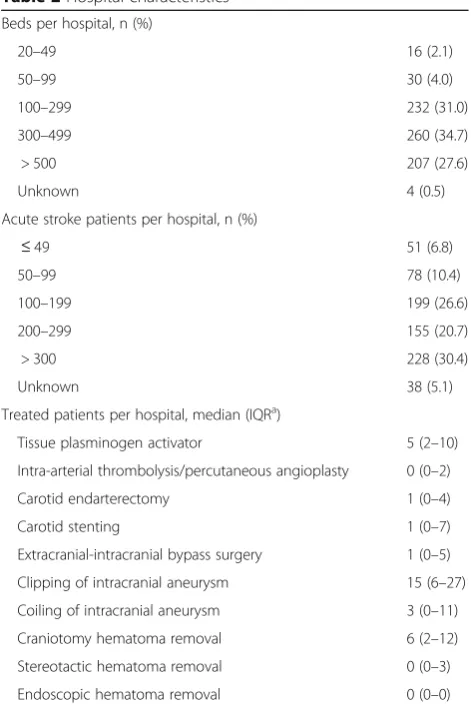
Of the selected 1369 certified training institutions, 749 (55%) responded to the acute stroke care capability sur-vey. Among the surveyed hospitals, 62% had more than 300 beds, and 51% had more than 200 acute patients (Table 2). Clipping of intracranial aneurysms (IAs) was performed more frequently than any other procedure (median/hospital, 15), followed by craniotomy removal
of ICH (6), intravenous infusion of recombinant tissue plasminogen activator (5), and coiling of IAs (3). The availability of each item is shown in Table 1. Even within the same component, the availability of each item varied. Low availability values were noted for IA coiling (48.1%) in the specific expertise component and for stroke units (17.6%) in the infrastructure component.
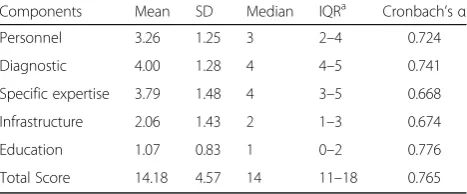
The distribution of CSC score components, by hos-pital, is shown in Table 3. The median CSC score was 14 (interquartile range, 11–18). These components showed moderate consistency (Cronbach’sα= 0.765, for the total score). Removal of any one component resulted in Cron-bach’s α falling in the range of 0.668–0.776, indicating the absence of substantial influence of individual compo-nents. High correlations between the survey components pertaining to personnel and specific expertise were ob-served (Table 4). For example, there were high correla-tions between neurosurgeon availability and carotid endarterectomy (r = 0.821; items 2 and 14), clipping of IAs (r = 0.936; items 2 and 15), and hematoma removal/ drainage (r = 0.949; items 2 and 16). Similarly, endovas-cular physician availability was strongly correlated with
Table 2Hospital characteristics
Beds per hospital, n (%)
20–49 16 (2.1)
50–99 30 (4.0)
100–299 232 (31.0)
300–499 260 (34.7)
> 500 207 (27.6)
Unknown 4 (0.5)
Acute stroke patients per hospital, n (%)
≤49 51 (6.8)
50–99 78 (10.4)
100–199 199 (26.6)
200–299 155 (20.7)
> 300 228 (30.4)
Unknown 38 (5.1)
Treated patients per hospital, median (IQRa)
Tissue plasminogen activator 5 (2–10)
Intra-arterial thrombolysis/percutaneous angioplasty 0 (0–2)
Carotid endarterectomy 1 (0–4)
Carotid stenting 1 (0–7)
Extracranial-intracranial bypass surgery 1 (0–5)
Clipping of intracranial aneurysm 15 (6–27)
Coiling of intracranial aneurysm 3 (0–11)
Craniotomy hematoma removal 6 (2–12)
Stereotactic hematoma removal 0 (0–3)
Endoscopic hematoma removal 0 (0–0)
a
coiling of IAs (r = 0.932; items 3 and 17) and intra-arterial reperfusion therapy (r = 0.842; items 3 and 18). Other relationships regarding diagnostics, infrastructure, and education did not stand out.
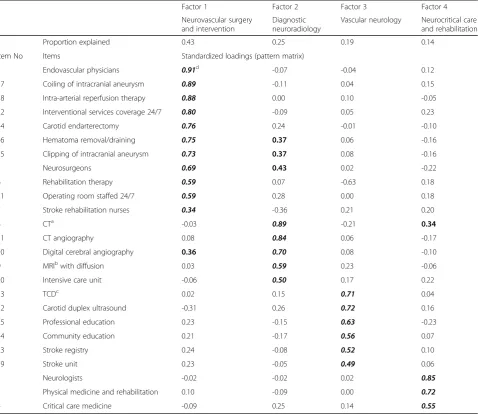
Factorial analysis, based on promax rotation, revealed four constructs (Table 5). The first pattern contained items pertaining to neurovascular surgery and interven-tion, such as endovascular physician availability, coiling of IAs, intra-arterial reperfusion therapy, 24/7 interven-tional services coverage, carotid endarterectomy, hematoma removal/drainage, clipping of IAs, neurosur-geon availability, rehabilitation therapy, 24/7 operating room staffing, and stroke rehabilitation nurse availability. The first pattern had the largest explained variance (43% of total variance). The second pattern included imaging modalities mainly associated with diagnostic neuroradi-ology (e.g., computed tomography, computed tomog-raphy angiogtomog-raphy, digital cerebral angiogtomog-raphy, and diffusion-weighted magnetic resonance imaging) and in-tensive care units. The third pattern contained items re-lated to vascular neurology: transcranial Doppler, carotid duplex ultrasound, professional education, community education, stroke registry, and available stroke units. The fourth pattern represented neurocritical care and re-habilitation, and included the availability of neurologists, physical medicine and rehabilitation, and critical care medicine.
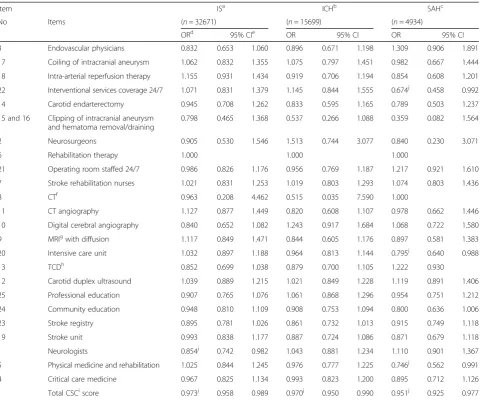
A total of 53,170 patients in the cohort were analyzed; the in-hospital mortality was 7.8% for IS, 16.8% for ICH, and 28.1% for SAH (Table 6). Table 7 shows the impact of hospital capacity for each of the 25 items on mortal-ity. Among the four constructs obtained using factorial analysis, the availability of neurologists in neurocritical care and rehabilitation was significantly associated with reduced mortality of patients with IS (P < 0.05). The 24/ 7 availability of interventional service coverage in neuro-vascular surgery and intervention (P < 0.05), availability of intensive care units in diagnostic neurology, and phys-ical medicine and rehabilitation in neurocritphys-ical care and rehabilitation (P < 0.05) were related to SAH mortality. The total CSC score was related to the mortality associ-ated with IS (OR, 0.973; 95% CI, 0.958–0.989), ICH (OR,
0.970; 95% CI, 0.950–0.990), and SAH (OR, 0.951; 95% CI, 0.925–0.977).
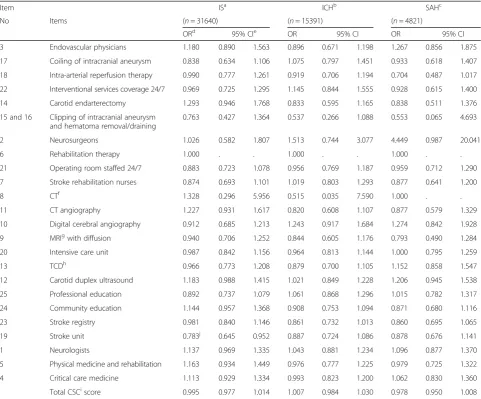
The proportions of poor outcomes (modified Rankin Scale, 3–6) were 49.2% for IS, 65.3% for ICH, and 56.4% for SAH (Table 6). In contrast to mortality, the total CSC score was not significantly associated with poor outcomes in patients having any type of stroke (Table 8). The impact of hospital capacity for each of the 25 items on poor outcomes differed from that for mortality in some aspects. For example, among patients with IS, stroke unit availability were significantly associated with a reduced proportion of poor outcomes (P < 0.05). Among patients with ICH and SAH, no significant association was observed between the availability of any item and poor outcomes.
Discussion
We evaluated the consistency and validity of the CSC score; based on the Cronbach’sαvalue of 0.765, the five components were moderately consistent [13]. The valid-ity of the score was evaluated using factorial analysis, which revealed four major constructs. Although the four constructs were determined by the five components: personnel, diagnostic techniques, specific expertise, in-frastructure, and education, this study showed a high correlation between the survey components pertaining to personnel and specific expertise. The unique fact that BC neurosurgeons comprise more than 95% of BC endovascular physicians, in Japan, may explain why personnel, specific expertise, and infrastructure compo-nents closely related to these different treatment aspects were grouped into the same construct (neurovascular surgery and intervention). Considering their influence on the variance of the CSC scores, temporal trends and geographical disparities focused on this construct may provide critical information for proper accreditation and implementation of CSCs.
With regard to the predictive validity of the CSC score, the four constructs had different effects on mortality and poor outcomes in patients with IS, ICH, and SAH. The availability of neurologists involved in neurocritical care and rehabilitation was significantly associated with re-duced in-hospital morality in patients with IS. Recently, the treatment paradigm for acute IS has been changing rapidly, such that the critical role of endovascular inter-vention following tissue plasminogen activator infusion, for acute IS, has been established by several recent ran-domized controlled trials (MR Clean, ESCAPE, EXTEND-IA) [14–16]. Of note, however, the acute stroke care survey used in this study and the DPC database were both implemented before these evidences were published in 2015. The availability of BC neurosurgeons at more than 90% of the participating hospitals suggests the importance of multidisciplinary acute stroke care [17].
Table 3The distribution of comprehensive stroke center score components and their consistency
Components Mean SD Median IQRa Cronbach’sα
Personnel 3.26 1.25 3 2–4 0.724
Diagnostic 4.00 1.28 4 4–5 0.741
Specific expertise 3.79 1.48 4 3–5 0.668
Infrastructure 2.06 1.43 2 1–3 0.674
Education 1.07 0.83 1 0–2 0.776
Total Score 14.18 4.57 14 11–18 0.765
a
The association between the availability of a stroke care unit and the increased proportion of favorable out-comes after IS, observed in this study, is consistent with a 2009 Cochrane review conducted by the Stroke Unit Trialists' Collaboration that showed the benefits of stroke unit care in terms of reducing death, dependency, and institutional care [18].
The SAH-associated mortality was higher than that as-sociated with IS or ICH, and the condition of the pa-tients with SAH was also more severe and required more urgent intervention. Accordingly, the availability of items representing SAH treatment, such as 24/7 inter-ventional service coverage, intensive care unit, and BC physical medicine and rehabilitation, showed the greatest effects on mortality. The critical role of endovascular coil embolization for ruptured IAs was previously
established by the International Subarachnoid Aneu-rysms Trial [19]. Using Nationwide Inpatient Survey data, Qureshi et al. reported a significant increase in endovascular treatment as well as a decrease in in-hospital mortality (2000–2002, 27%; 2004–2006, 24%) in patients with SAH after publication of the International Subarachnoid Trial (ISAT) in 2002 [20]. However, whether the ISAT results can be generalized to all pa-tients with SAH is questionable because most of the patients enrolled in the study were patients with good clinical grades, having small, anterior circulation aneurysms.
The second common cause of SAH-related death and poor functional outcome is rebleeding [21], and early treatment of the ruptured aneurysm is known to lower the incidence of rebleeding. Intensive care unit and 24/7
Table 5Factor analysis
Factor 1 Factor 2 Factor 3 Factor 4
Neurovascular surgery and intervention
Diagnostic neuroradiology
Vascular neurology Neurocritical care and rehabilitation
Proportion explained 0.43 0.25 0.19 0.14
Item No Items Standardized loadings (pattern matrix)
3 Endovascular physicians 0.91d -0.07 -0.04 0.12
17 Coiling of intracranial aneurysm 0.89 -0.11 0.04 0.15
18 Intra-arterial reperfusion therapy 0.88 0.00 0.10 -0.05
22 Interventional services coverage 24/7 0.80 -0.09 0.05 0.23
14 Carotid endarterectomy 0.76 0.24 -0.01 -0.10
16 Hematoma removal/draining 0.75 0.37 0.06 -0.16
15 Clipping of intracranial aneurysm 0.73 0.37 0.08 -0.16
2 Neurosurgeons 0.69 0.43 0.02 -0.22
6 Rehabilitation therapy 0.59 0.07 -0.63 0.18
21 Operating room staffed 24/7 0.59 0.28 0.00 0.18
7 Stroke rehabilitation nurses 0.34 -0.36 0.21 0.20
8 CTa -0.03 0.89 -0.21 0.34
11 CT angiography 0.08 0.84 0.06 -0.17
10 Digital cerebral angiography 0.36 0.70 0.08 -0.10
9 MRIbwith diffusion 0.03 0.59 0.23 -0.06
20 Intensive care unit -0.06 0.50 0.17 0.22
13 TCDc 0.02 0.15 0.71 0.04
12 Carotid duplex ultrasound -0.31 0.26 0.72 0.16
25 Professional education 0.23 -0.15 0.63 -0.23
24 Community education 0.21 -0.17 0.56 0.07
23 Stroke registry 0.24 -0.08 0.52 0.10
19 Stroke unit 0.23 -0.05 0.49 0.06
1 Neurologists -0.02 -0.02 0.02 0.85
5 Physical medicine and rehabilitation 0.10 -0.09 0.00 0.72
4 Critical care medicine -0.09 0.25 0.14 0.55
a
interventional coverage availability were significant fac-tors associated with decreasing in-hospital mortality after SAH. These findings are explained by the import-ance of early obliteration of ruptured aneurysms for pre-venting rebleeding and by the early detection and appropriate treatment of vasospasms, another important cause of morbidity and mortality in patients with SAH. The study provided additional evidence that the availability of endovascular treatment and surgical clipping may reduce in-hospital mortality in patients with SAH [22]. Another recent study also showed that an early mobilization program for patients with aneurysmal SAH is feasible and safe [23]. In addition, appropriate nutritional care from the acute stage is reported to be essential for improving functional out-comes and reducing post-SAH mortality [24]. Taken together, the significant association between the avail-ability of BC physical medicine and rehabilitation and reduced mortality observed in our study reinforces the importance of comprehensive care capabilities, in-cluding early rehabilitation and nutritional care for patients with SAH, to prevent complications. Further investigation is required to understand the role of BC physical medicine and rehabilitation in reducing SAH-associated mortality.
Finally, the total CSC score correlated with reduced mortality for all types of stroke, supporting the useful-ness of this score as a comprehensive measure of acute stroke care capabilities. Another study showed that hemorrhagic stroke patients admitted to CSCs were more likely to receive neurosurgical and endovascular treatments and to be alive at 90 days than patients ad-mitted to other hospitals. The authors used certification by the New Jersey Department of Health and Senior Services to identify CSCs. The impacts of CSCs on mor-tality determined in that study are similar to the results obtained using our simple scoring system [25].
In contrast to its impact on in-hospital mortality, the total CSC score did not show a significant impact on poor functional outcomes in patients with any type of stroke. Similarly, no specific item had a significant im-pact on poor outcomes in patients with hemorrhagic stroke. In patients with IS, the significant role of the presence of a stroke unit in reducing poor outcomes, observed in the present study, was consistent with the results of a previous report [26]. A validation study in-vestigating functional outcomes using the DPC database may be necessary to explain the disparities between the total CSC scores (and specific items) on mortality and poor functional outcomes.
Table 6Demographics of the patient cohort at diagnosis, mortality, and severe disability at discharge
Total ISa ICHb SAHc
(n= 53170) (n= 32671) (n= 15699) (n= 4934)
N % N % N % N %
Male 29353 55.2 18816 57.6 9030 57.5 1584 32.1
Age (years)
18–50 3515 6.6 1328 4.1 1271 8.1 927 18.8
51–60 5824 11.0 2742 8.4 2171 13.8 934 18.9
61–70 11744 22.1 6894 21.1 3640 23.2 1242 25.2
71–80 15825 29.8 10342 31.7 4466 28.4 1048 21.2
81–106 16262 30.6 11365 34.8 4151 26.4 783 15.9
Hypertension 39918 75.1 22531 69.0 13281 84.6 4229 85.7
Diabetes mellitus 13725 25.8 9318 28.5 3278 20.9 1174 23.8
Hyperlipidemia 15015 28.2 11104 34.0 2529 16.1 1412 28.6
Smoking (n = 44842) 12761 24.0 8188 25.1 3540 22.5 1074 21.8
Japan Coma Scale
0 19635 36.9 15027 46.0 3620 23.1 1024 20.8
1-digit code 19371 36.4 12375 37.9 5934 37.8 1117 22.6
2-digit code 6937 13.0 3396 10.4 2705 17.2 852 17.3
3 digit code 7227 13.6 1873 5.7 3440 21.9 1941 39.3
Emergency admission by ambulance 31995 60.2 17336 53.1 10909 69.5 3830 77.6
Mortality 6522 12.3 2535 7.8 2630 16.8 1384 28.1
Poor outcome (modified Rankin Scale 3–6) at discharge. (N= 51719)
28238 54.6 15566 49.2 10044 65.3 2721 56.4
a
ischemic stroke;b
intracerebral hemorrhage;c
Strengths and limitations of the present study
First, this study is limited by a possible selection bias because hospitals actively working to improve stroke care were more likely to respond to the questionnaire. However, the coverage of the J-ASPECT Study group, which collaborates with the Japan Neurosurgical Society and the Japanese Congress of Neurological Surgeons, was broad enough to provide a reliable study sample. Second, information bias might have existed (self-report-ing, recall, and nonresponse). Third, the CSC score mainly evaluated structural measures and did not con-sider their utilization, supported with real data. To as-sess clinical practice quality, the use of process measures is preferred [27], but process measures, such as electro-cardiogram monitoring and pulse oximetry, were not considered in this scoring system [4, 28]. However,
strong correlations between survey components pertain-ing to personnel and specific expertise (e.g., availability of neurosurgeons and carotid endarterectomy) were observed in this study, suggesting that these items may not be considered as purely structural, but may have characteristics of both structural and process measures. We are planning to develop a new registry system in the J-ASPECT Study to include key metrics required for certification of CSCs in the US, in addition to the DPC database, to study and monitor the association of such quality metrics on mortality and morbidity of acute stroke patients, in Japan. Fourth, in-hospital mortality was selected as an outcome measure to test the validity of the CSC score. A recent systematic review showed that hospital mortality does not necessarily reflect the quality of clinical practice because mortality is affected
Table 7The effect of items on mortality
Item ISa ICHb SAHc
No Items (n= 32671) (n= 15699) (n= 4934)
ORd 95% CIe OR 95% CI OR 95% CI
3 Endovascular physicians 0.832 0.653 1.060 0.896 0.671 1.198 1.309 0.906 1.891
17 Coiling of intracranial aneurysm 1.062 0.832 1.355 1.075 0.797 1.451 0.982 0.667 1.444
18 Intra-arterial reperfusion therapy 1.155 0.931 1.434 0.919 0.706 1.194 0.854 0.608 1.201
22 Interventional services coverage 24/7 1.071 0.831 1.379 1.145 0.844 1.555 0.674j 0.458 0.992
14 Carotid endarterectomy 0.945 0.708 1.262 0.833 0.595 1.165 0.789 0.503 1.237
15 and 16 Clipping of intracranial aneurysm and hematoma removal/draining
0.798 0.465 1.368 0.537 0.266 1.088 0.359 0.082 1.564
2 Neurosurgeons 0.905 0.530 1.546 1.513 0.744 3.077 0.840 0.230 3.071
6 Rehabilitation therapy 1.000 1.000 1.000
21 Operating room staffed 24/7 0.986 0.826 1.176 0.956 0.769 1.187 1.217 0.921 1.610
7 Stroke rehabilitation nurses 1.021 0.831 1.253 1.019 0.803 1.293 1.074 0.803 1.436
8 CTf 0.963 0.208 4.462 0.515 0.035 7.590 1.000
11 CT angiography 1.127 0.877 1.449 0.820 0.608 1.107 0.978 0.662 1.446
10 Digital cerebral angiography 0.840 0.652 1.082 1.243 0.917 1.684 1.068 0.722 1.580
9 MRIgwith diffusion 1.117 0.849 1.471 0.844 0.605 1.176 0.897 0.581 1.383
20 Intensive care unit 1.032 0.897 1.188 0.964 0.813 1.144 0.795j 0.640 0.988
13 TCDh
0.852 0.699 1.038 0.879 0.700 1.105 1.222 0.930
12 Carotid duplex ultrasound 1.039 0.889 1.215 1.021 0.849 1.228 1.119 0.891 1.406
25 Professional education 0.907 0.765 1.076 1.061 0.868 1.296 0.954 0.751 1.212
24 Community education 0.948 0.810 1.109 0.908 0.753 1.094 0.800 0.636 1.006
23 Stroke registry 0.895 0.781 1.026 0.861 0.732 1.013 0.915 0.749 1.118
19 Stroke unit 0.993 0.838 1.177 0.887 0.724 1.086 0.871 0.679 1.118
1 Neurologists 0.854j 0.742 0.982 1.043 0.881 1.234 1.110 0.901 1.367
5 Physical medicine and rehabilitation 1.025 0.844 1.245 0.976 0.777 1.225 0.746j 0.562 0.991
4 Critical care medicine 0.967 0.825 1.134 0.993 0.823 1.200 0.895 0.712 1.126
Total CSCiscore 0.973j 0.958 0.989 0.970j 0.950 0.990 0.951j 0.925 0.977
a
ischemic stroke;b
intracerebral hemorrhage;c
subarachnoid hemorrhage;dOR
odds ratio adjusted by hierarchical logistic model including patient age, sex, Japan Coma Scale scores, and hospital variables;eCI
confidence interval;f
computed tomography;g
magnetic resonance imaging;h
transcranial Doppler;i
comprehensive stroke center;jP
to a greater extent by the patients’condition rather than by the quality of practice [29]. Possible correlations between specific items and mortality in patients with IS may have been missed because of the relatively low in-hospital mortality associated with these patients; a larger study is necessary to resolve this issue. Fifth, the DPC-based payment system contains limited informa-tion regarding patient condiinforma-tion severity beyond post-discharge data and the National Institute of Health Stroke (NIHSS) Scale, Glasgow Coma Scale (GCS), ICH-, or Hunt-Hess severity scoresICH-, upon admission. Never-theless, the JCS is a useful tool for evaluating stroke severity. Notably, the importance of the JCS, published in 1974, for predicting stroke outcomes has been re-cently reconfirmed [9, 30]. Further study is necessary to validate the results of the present study with other
patient-level measurements, such as the NIHSS, GCS, etc. Despite the above limitations, clear correlations were revealed between the CSC score and in-hospital mortality in patients with all types of strokes. In future work, the score’s components should be weighted according to stroke type, based on their influence on patient outcomes.
Conclusions
The CSC score is a valid measure for assessing the capabilities of CSCs with regard to the availability of neurovascular surgery and intervention, vascular neur-ology, diagnostic neuroradineur-ology, and neurocritical care and rehabilitation. The total CSC score was associated with mortality in patients with IS, ICH, and SAH, with varying contributions from the four abovementioned constructs.
Table 8The effect of items on poor outcome (modified Rankin Scale 3–6)
Item ISa ICHb SAHc
No Items (n= 31640) (n= 15391) (n= 4821)
ORd 95% CIe OR 95% CI OR 95% CI
3 Endovascular physicians 1.180 0.890 1.563 0.896 0.671 1.198 1.267 0.856 1.875
17 Coiling of intracranial aneurysm 0.838 0.634 1.106 1.075 0.797 1.451 0.933 0.618 1.407
18 Intra-arterial reperfusion therapy 0.990 0.777 1.261 0.919 0.706 1.194 0.704 0.487 1.017
22 Interventional services coverage 24/7 0.969 0.725 1.295 1.145 0.844 1.555 0.928 0.615 1.400
14 Carotid endarterectomy 1.293 0.946 1.768 0.833 0.595 1.165 0.838 0.511 1.376
15 and 16 Clipping of intracranial aneurysm and hematoma removal/draining
0.763 0.427 1.364 0.537 0.266 1.088 0.553 0.065 4.693
2 Neurosurgeons 1.026 0.582 1.807 1.513 0.744 3.077 4.449 0.987 20.041
6 Rehabilitation therapy 1.000 . . 1.000 . . 1.000 . .
21 Operating room staffed 24/7 0.883 0.723 1.078 0.956 0.769 1.187 0.959 0.712 1.290
7 Stroke rehabilitation nurses 0.874 0.693 1.101 1.019 0.803 1.293 0.877 0.641 1.200
8 CTf 1.328 0.296 5.956 0.515 0.035 7.590 1.000 . .
11 CT angiography 1.227 0.931 1.617 0.820 0.608 1.107 0.877 0.579 1.329
10 Digital cerebral angiography 0.912 0.685 1.213 1.243 0.917 1.684 1.274 0.842 1.928
9 MRIgwith diffusion 0.940 0.706 1.252 0.844 0.605 1.176 0.793 0.490 1.284
20 Intensive care unit 0.987 0.842 1.156 0.964 0.813 1.144 1.000 0.795 1.259
13 TCDh
0.966 0.773 1.208 0.879 0.700 1.105 1.152 0.858 1.547
12 Carotid duplex ultrasound 1.183 0.988 1.415 1.021 0.849 1.228 1.206 0.945 1.538
25 Professional education 0.892 0.737 1.079 1.061 0.868 1.296 1.015 0.782 1.317
24 Community education 1.144 0.957 1.368 0.908 0.753 1.094 0.871 0.680 1.116
23 Stroke registry 0.981 0.840 1.146 0.861 0.732 1.013 0.860 0.695 1.065
19 Stroke unit 0.783j 0.645 0.952 0.887 0.724 1.086 0.878 0.676 1.141
1 Neurologists 1.137 0.969 1.335 1.043 0.881 1.234 1.096 0.877 1.370
5 Physical medicine and rehabilitation 1.163 0.934 1.449 0.976 0.777 1.225 0.979 0.725 1.322
4 Critical care medicine 1.113 0.929 1.334 0.993 0.823 1.200 1.062 0.830 1.360
Total CSCiscore 0.995 0.977 1.014 1.007 0.984 1.030 0.978 0.950 1.008
a
ischemic stroke;b
intracerebral hemorrhage;c
subarachnoid hemorrhage;dOR
odds ratio adjusted by hierarchical logistic model including patient age, sex, Japan Coma Scale scores, and hospital variables;e
CI: confidence interval;f
computed tomography;g
magnetic resonance imaging;h
transcranial Doppler;i
comprehensive stroke center;jP
Abbreviations
BC:Board-certified; CI: Confidence interval; CSC: Comprehensive stroke center; DPC: Diagnosis combination procedure; GCS: Glasgow coma scale; IA: Intracranial aneurysm; ICH: Intracerebral hemorrhage; IS: Ischemic stroke; ISAT: International subarachnoid trial; JCS: Japan coma scale; NIHSS: National institute of health stroke; OR: Odds ratio; PSC: Primary stroke center; SAH: Subarachnoid hemorrhage
Acknowledgements
We thank Drs. Manabu Hasegawa, Tomoatsu Tsuji, and Yasuhiro Nishijima for their helpful discussions, Profs. Takamasa Kayama and Nobuo Hashimoto for their supervision of the Japan Neurosurgical Society collaboration, and Ms. Arisa Ishitoko for her secretarial assistance.
Funding
This work was supported by Grants-in-Aid from the Ministry of Health, Labor and Welfare of Japan and JSPS KAKENHI Grant Number 25293314 (principal investigator: KI). This research was partially supported by the Practical Research Project for Life-Style related Diseases, including Cardiovascular Diseases and Diabetes Mellitus, from the Japan Agency for Medical Research and Development.
Availability of data and materials
The datasets for this manuscript will not be shared, based on agreements between the principal investigator and the presidents of the participating hospitals.
Authors’contributions
KI initiated the collaborative project. AK, KN, SK, and KI designed the study, drafted and revised the article. AK, KN, SK monitored data collection and analyzed the data. JN, KO, JO, YS, TA, SM, IN, KT, SM, AS, HK, FN designed the study, and validated the survey questions from the views of physicians and experts. All authors read and approved the final manuscript.
Competing interests
KI has received grants from Nihon Medi-Physics, AstraZeneca, and Otsuka Pharmaceutical. JN has received an unrestricted research grant from Nihon Medi-Physics. IN has received lecture honoraria from Otsuka Pharmaceutical and Sanofi.
Consent for publication Not applicable.
Ethics approval and consent to participate
Ethical approval was provided by National Cerebral and Cardiovascular Center in Japan.
Author details
1Department of Clinical Trials and Research, Clinical Research Center, National
Hospital Organization Nagoya Medical Center, 4-1-1 Sannomaru, Naka-ku, Nagoya, Aichi 460-0001, Japan.2Center for Cardiovascular Disease Information, National Cerebral and Cardiovascular Center, Suita, Japan.3Integrative Stroke Imaging Center, National Cerebral and Cardiovascular Center, Suita, Japan. 4Department of Neurosurgery, Iwate Medical University, Morioka, Japan.5Chiba
Cardiovascular Center, Ichihara, Japan.6Department of Neurosurgery, Kyorin University, Mitaka, Japan.7Showa University, Tokyo, Japan.8Department of Neurosurgery, Osaka Medical College, Takatsuki, Japan.9Kokura Memorial Hospital, Fukuoka, Japan.10Departments of Cerebrovascular Medicine, National Cerebral and Cardiovascular Center, Suita, Japan.11Department of Preventive Medicine and Community Health, University of Occupational and Environmental Health, Kita-Kyushu, Japan.12Akita Prefectural Hospital Organization Research Institute for Brain and Blood Vessels, Akita, Japan. 13
Department of Neurosurgery, National Cerebral and Cardiovascular Center, Suita, Japan.14Department of Public Health, Graduate School of Medicine, The University of Tokyo, Tokyo, Japan.15Department of Neurosurgery, Graduate School of Medical Sciences, Kyushu University, Fukuoka, Japan.
Received: 25 July 2016 Accepted: 8 February 2017
References
1. Alberts MJ, Hademenos G, Latchaw RE, Jagoda A, Marler JR, Mayberg MR, et al. Recommendations for the establishment of primary stroke centers. Brain Attack Coalition. JAMA. 2000;283:3102–9.
2. Alberts MJ, Latchaw RE, Selman WR, Shephard T, Hadley MN, Brass LM, et al. Recommendations for comprehensive stroke centers: a consensus statement from the Brain Attack Coalition. Stroke. 2005;36:1597–616. 3. Reeves MJ, Parker C, Fonarow GC, Smith EE, Schwamm LH. Development of
stroke performance measures: definitions, methods, and current measures. Stroke. 2010;41:1573–8.
4. Leifer D, Bravata DM, Connors 3rd JJ, Hinchey JA, Jauch EC, Johnston SC, et al. Metrics for measuring quality of care in comprehensive stroke centers: detailed follow-up to Brain Attack Coalition comprehensive stroke center recommendations: a statement for healthcare professionals from the American Heart Association/American Stroke Association. Stroke. 2011;42:849–77. 5. Markovchick VJ, Moore EE. Optimal trauma outcome: trauma system design
and the trauma team. Emerg Med Clin North Am. 2007;25:643–54. 6. Joint Commission on Accreditation of Healthcare Organizations. Updated
Primary Stroke Center Certification appendix for the disease-specific care manual. Jt Comm Perspect. 2005;25:3–6.
7. Gropen TI, Gagliano PJ, Blake CA, Sacco RL, Kwiatkowski T, Richmond NJ, et al. Quality improvement in acute stroke: the New York State Stroke Center Designation Project. Neurology. 2006;67:88–93.
8. Stradling D, Yu W, Langdorf ML, Tsai F, Kostanian V, Hasso AN, et al. Stroke care delivery before vs after JCAHO stroke center certification. Neurology. 2007;68:469–70.
9. Iihara K, Nishimura K, Kada A, Nakagawara J, Toyoda K, Ogasawara K, et al. The impact of comprehensive stroke care capacity on the hospital volume of stroke interventions: a nationwide study in Japan: J-ASPECT Study. J Stroke Cerebrovasc Dis. 2014;23:1001–18.
10. Kubinger KD. On artificial results due to using factor analysis for dichotomous variables. Psychol Sci. 2003;45:106–10.
11. Yasunaga H, Ide H, Imamura T, Ohe K. Impact of the Japanese Diagnosis Procedure Combination-based Payment System on cardiovascular medicine-related costs. Int Heart J. 2005;46:855–66.
12. Iihara K, Nishimura K, Kada A, Nakagawara J, Ogasawara K, Ono J, et al. Effects of comprehensive stroke care capabilities on in-hospital mortality of patients with ischemic and hemorrhagic stroke: J-ASPECT Study. PLoS ONE. 2014;9:e96819. 13. Terwee CB, Bot SD, de Boer MR, van der Windt DA, Knol DL, Dekker J, et al.
Quality criteria were proposed for measurement properties of health status questionnaire. J Clin Epidemiol. 2007;60:34–42.
14. Berkhemer OA, Fransen PS, Beumer D, van den Berg LA, Lingsma HF, Yoo AJ, et al. A randomized trial of intraarterial treatment for acute ischemic stroke. N Engl J Med. 2015;372:11–20.
15. Goyal M, Demchuk AM, Menon BK, Eesa M, Rempel JL, Thornton J, et al. Randomized assessment of rapid endovascular treatment of ischemic stroke. N Engl J Med. 2015;372:1019–30.
16. Campbell BC, Mitchell PJ, Kleinig TJ, Dewey HM, Churilov L, Yassi N, et al. Endovascular therapy for ischemic stroke with perfusion-imaging selection. N Engl J Med. 2015;372:1009–18.
17. Decker C, Chhatriwalla E, Gialde E, Garavalia B, Summers D, Quinlan ME, et al. Patient-centered decision support in acute ischemic stroke: Qualitative study of patients’and providers’perspectives. Circ Cardiovasc Qual Outcomes. 2015;8 Suppl 3:S109–16.
18. Sun Y, Paulus D, Eyssen M, Maervoet J, Saka O. A systematic review and meta-analysis of acute stroke unit care: what's beyond the statistical significance? BMC Med Res Methodol. 2013;13:132.
19. Molyneux AJ, Kerr RS, Yu LM, Clarke M, Sneade M, Yarnold JA, et al. International subarachnoid aneurysm trial (ISAT) of neurosurgical clipping versus endovascular coiling in 2143 patients with ruptured intracranial aneurysms: a randomized comparison of effect on survival, dependency, seizures, rebleeding, subgroups, and aneurysm occlusion. Lancet. 2005; 366:809–17.
21. Broderick JP, Brott TG, Duldner JE, Tomsick T, Leach A. Initial and recurrent bleeding are the major causes of death following subarachnoid hemorrhage. Stroke. 1994;25:1342–7.
22. Spetzler RF, McDougall CG, Albuquerque FC, Zabramski JM, Hills NK, Partovi S, et al. The Barrow Ruptured Aneurysm Trial: 3-year results. J Neurosurg. 2013;119:146–57.
23. Olkowski BF, Devine MA, Slotnick LE, Veznedaroglu E, Liebman KM, Arcaro ML, et al. Safety and feasibility of an early mobilization program for patients with aneurysmal subarachnoid hemorrhage. Phys Ther. 2013;93:208–15. 24. Nagano A, Yamada Y, Miyake H, Domen K, Koyama T. Increased resting
energy expenditure after endovascular coiling for subarachnoid hemorrhage. J Stroke Cerebrovasc Dis. 2016;25:813–8.
25. McKinney JS, Cheng JQ, Rybinnik I, Kostis JB, for the Myocardical Infarction Data Acquisition System Study Group. Comprehensive stroke centers may be associated with improved survival in hemorrhagic stroke. J Am Heart Assoc. 2015;4:e001448.
26. Minematsu K, Uehara T, Yasui N, Hata T, Ueda T, Okada Y, et al. Effects of stroke unit on patient outcome: a prospective multicenter study in Japan. Jpn J Stroke. 2007;29:59–64.
27. Lilford RJ, Brown CA, Nicholl J. Use of process measures to monitor the quality of clinical practice. BMJ. 2007;335:648–50.
28. Uehara T, Yasui N, Okada Y, Hasegawa Y, Nagatsuka K, Minematsu K. Which should be the essential components of stroke centers in Japan? A survey by questionnaires sent to the directors of facilities certified by the Japan Stroke Society. Cerebrovasc Dis. 2014;37:409–16.
29. Pitches DW, Mohammed AM, Lilford RJ. What is the empirical evidence that hospitals with higher-risk adjusted mortality rates provide poorer quality care? A systematic review of the literature. BMC Health Serv Res. 2007;7:91. 30. Shigematsu K, Nakano H, Watanabe Y. The eye response test alone is
sufficient to predict stroke outcome–reintroduction of Japan Coma Scale: A cohort study. BMJ Open. 2013;3:e002736.
• We accept pre-submission inquiries
• Our selector tool helps you to find the most relevant journal
• We provide round the clock customer support
• Convenient online submission
• Thorough peer review
• Inclusion in PubMed and all major indexing services
• Maximum visibility for your research
Submit your manuscript at www.biomedcentral.com/submit