Brief Report:
The Effectiveness of Mirror Therapy on
Upper Limb Function in Stroke Patients: A Single Case
Experimental Design
Mehdi Rassafiani1, 2 * , Aisha Al-Fraij2 , Abrar Al-Mahri2 , Fahad Manee1
1. Occupational Therapy Department, Faculty of Allied Health, Kuwait University, Kuwait.
2. Occupational Therapy Department, Physical Medicine and Rehabilitation Hospital, Ministry of Health, Kuwait.
* Corresponding Author: Mehdi Rassafiani, PhD.
Address: Occupational Therapy Department, Faculty of Allied Health, Kuwait University, Kuwait.
Tel: +965 (246) 36972
E-mail: [email protected]
Objectives: To assess the effectiveness of Mirror Therapy (MT) on Upper Limb (UL) function
of sub-acute stroke patients.
Methods: This study is a single case experimental design with two participants. Twenty
minutes of MT were implemented four times a week over a period of four weeks. For baseline phase, repeated measurements were performed six times for one participant and four times for the other participant using Fugl-Meyer Motor Function Assessment (FMA), and it was applied twice a week during the intervention phase. Brunnstrom Recovery Stages (BRS) and Barthel Index (BI) were applied once before the baseline phase, as well as prior and after the intervention phase.
Results: Based on Percentage of Non-overlapping Data (PND) for FMA subtests, MT had
questionable effectiveness on UL for both participants, and MT was unreliable intervention on wrist function. For the hand, of the second participant, MT had questionable effectiveness, whereas for the first participant it was unreliable intervention. For coordination, MT was fairly effective for the first participant and had questionable effectiveness for the second participant. BRS-Arm scores indicated improvements for the second participant from 3 (out of 6) to 4. BRS-Hand scores indicated improvements for the first participant from 5 (out of 6) to 6. No changes were shown in BI.
Discussion: This study revealed that MT had positive effects on some sections of UL motor
function and coordination, whereas no change in wrist motor function was observed. No functional improvements in BI and slight difference in BRS were noticed.
A B S T R A C T
Article info:
Received: 10 Jan 2019 Accepted:13 Mar 2019 Available Online: 01 Sep 2019
Keywords:
Stroke, Upper Limb, Therapy
Citation: Rassafiani M, Al-Fraij A, Al-Mahri A, Manee F. The Effectiveness of Mirror Therapy on Upper Limb Function in Stroke Patients: A Single Case Experimental Design. Iranian Rehabilitation Journal. 2019; 17(3):285-292. http://dx.doi. org/10.32598/irj.17.3.285
:
http://dx.doi.org/10.32598/irj.17.3.285
Use your device to scan
Highlights
● Mirror therapy is an easy to apply and low cost of intervention method.
● Proximal section of the upper limb responded to four weeks of Mirror therapy better than distal section.
● Mirror therapy improved upper limb coordination.
● Mirror therapy was not influential on functional skills of participants within four weeks of intervention.
Plain Language Summary
Mirror therapy is an easy to applied intervention for people with stroke. Therapists can apply this intervention with low cost. Only a mirror with an experienced therapist is required to apply this therapy in a clinic and at home. Mir-ror therapy applied for two people with stroke for four weeks. The results of the study showed that the movements in elbow was improved, but not for the wrist and finger. Also it helped to improved upper limb coordination. However, participants’ daily activities were not improved. Further research is necessary to understand if this therapy can be more effective on daily activities if we increase the duration.
1. Introduction
orldwide, stroke is a major contributor to chronic disabilities in adults caus-ing Upper Limb (UL) dysfunctions that leading to functional deficits in activities of daily living [1]. There-fore, different rehabilitative interventions such as M ir-ror Therapy (MT) have been established to improve the functional performance of the UL [2].
MT can be implemented in three procedures, all of which involve a mirror in the midsagittal plane with the affected limb blocked by the mirror, and the patient fac-ing the reflection of the non-affected limb movements
[3]. MT is based on the concept of neuroplasticity of the brain. It is assumed that observing and executing an ac-tion might facilitate neural reorganizaac-tion of the brain necessary for motor recovery [4,5]. The effectiveness of MT on patients with stroke was studied widely and showed mixed results. In 2012, results of a systematic review of literature showed that MT is moderately effec-tive in improving motor performance of the hemiplegic UL, especially for sub-acute stroke patients [6].
Other two subsequent systematic reviews demonstrated similar results and showed improvement in UL function, activities of daily living and pain reduction. However, the certainty of evidence is not yet achieved requiring further research [5,7]. Following these reviews, another randomized controlled study with sham group was
con-ducted recently and did not show any significant differ-ences [8]. The previous studies showed that MT had positive effects on the UL function of stroke patients, especially if conducted within six months after the on-set of stroke. However, there is no strong conclusions on which sections (distal or proximal) of UL function, it has more effectiveness. Therefore, this study aimed to assess the effectiveness of 20-minute sessions of MT on UL function (considering two sections) for sub-acute stroke patients. The results of this study will provide fur-ther evidence and improve our understanding about the effectiveness of MT on UL function and differences on its various sections.
2. Methods
MethodologyThis study is a multiple baseline single case experi-mental design [9]. This method produces relatively high level of evidence when available resources are low and access to patients are limited.
Participants
Two sub-acute stroke patients from the neuro-inpatient department in the Physical Medicine and Rehabilitation (PMR) hospital that is a referral center for rehabilitation in Kuwait were recruited. They were included in the study if the onset of hemiplegia was within 6 months, had a Mini-Mental State Examination (MMSE) score of 24 or above, was between stages 3 and 4 of recovery
for UL according to the Brunnstrom Recovery Stages (BRS), and had level 2 or lower in UL according to the Modified Ashworth Scale. Participants were excluded from the study if they had aphasia, and/ or accompany-ing disablaccompany-ing problems, such as vision or hearaccompany-ing impair-ments.
Measurement tools
Three measurement tools were utilized in this study. The first assessment was the Fugl-Meyer Motor As-sessment (FMA) for measuring motor recovery after stroke. It contains 33 items for UL motor function that are scored based on a 3-point ordinal scale (0=cannot perform, 1=can partially perform, 2=can perform fully), and then scores are totaled to provide a maximum score of 66 [10,11]. FMA has an excellent construct validity, inter-rater reliability (r=0.97), and intra-rater reliability (r=0.99) [11].
The second assessment used was the BRS with high level of reliability (0.91-0.92) [12]. It is used to identify the stage of motor recovery in post-stroke patients based on the current level of spasticity and voluntary move-ment [13]. This test involves two items for UL (arm and hand), and is based on a 6-level Likert-type scale.
The third assessment was the Barthel Index (BI), which assesses the level of independency in activities of daily living and mobility. BI has high inter-rater reli-ability and responsiveness for stroke patients [14]. The BI yields five levels of function: 1. Very severe disabil-ity (BI=20); 2. Severe disabildisabil-ity (BI=25-45); 3. M od-erate disability (BI=50-70); 4. Mild disability (BI=75-95); 5. No disability (BI=100) [14].
Procedure
Ethical approval was obtained from the Institutional Review Boards of Kuwait University (Approval num-ber: 1863). All participants were informed about the whole process, purpose of the study, and their right to withdraw from the study at any time. At first, a pilot study with one participant with stroke was conducted and he received two weeks of MT. This pilot aimed to identify the time required to conduct the assessments and to ensure the client’s safety and appropriate application of the intervention. Then, the main study was conducted with two participants that were randomly assigned into two different baseline periods in order to increase the in-ternal validity [10].
The first participant was measured six times by FMA during three weeks of the baseline phase. This baseline was two weeks and four times of measurement for the second participant. In addition, at the beginning of the baseline phase for both participants, BI and BRS were administered once. After the baseline establishment, in-tervention started for four weeks, during this time FMA was applied twice a week and both BI and BRS were applied once at the beginning and once at the end of the intervention phase.
Intervention protocol
Twenty minutes of MT was implemented four times a week over a period of four weeks. The participants were positioned on a chair in front of a table, and the mirror was placed in the mid-sagittal plane, where the participant was only able to see the reflection of the unaffected arm. Then, participants were asked to mimic the movements of the unaffected arm with the affected arm if possible, or at least mentally imagin-ing the movement. Every movement was executed in three sets; each set involved repeating the movement 20 times, and they had 30-second breaks after each set and between the tasks. Each week, a different set of exercises was performed started from proximal (prona-tion and supina(prona-tion) to distal [15].
Analysis
FMA scores were marked and recorded on a graph for visual analysis. Percentage of Non-overlapping Data
(PND) was also calculated. PND is the percentage of data points during the intervention that are above the highest data point during the baseline. Results of the PND are interpreted as follows: the intervention is highly effec-tive if PND exceeds (90%); PND between (70%) and (90%)indicates a fairly effective intervention; For the results between (50%) and (70%), the intervention has questionable effectiveness; and results lower than (50%) mean the intervention is unreliable [16].
3. Resuts
Figure 1. Fugl-Meyer Motor assessment subtest results for participants 1 and 2 0 5 10 15 20 25 30 35 13-M ar 15-M ar 17-M ar 19-M ar 21-M ar 23-M ar 25-M ar 27-M ar 29-M ar 31-M ar 02-Ap r 04-Ap r 06-Ap r 08-Ap r 10-Ap r 12-Ap r 14-Ap r 16-Ap r 18-Ap r 20-Ap r 22-Ap r Uppe r L im b s ub -te st Sc or e
Date of sessions client 1
Phase A Phase B
0 1 2 3 4 5 6 7 8 9 10 11 12 13 14 13 -M ar 15 -M ar 17 -M ar 19 -M ar 21 -M ar 23 -M ar 25 -M ar 27 -M ar 29 -M ar 31 -M ar 02 -A pr 04 -A pr 06 -A pr 08 -A pr 10 -A pr 12 -A pr 14 -A pr 16 -A pr 18 -A pr 20 -A pr 22 -A pr Ha nd s s ub -te st sc or e
Date of sessions
Client 1
Phase A Phase
B 0 1 2 3 4 5 6 7 8 9 10 13 -M ar 15 -M ar 17 -M ar 19 -M ar 21 -M ar 23 -M ar 25 -M ar 27 -M ar 29 -M ar 31 -M ar 02 -A pr 04 -A pr 06 -A pr 08 -A pr 10 -A pr 12 -A pr 14 -A pr 16 -A pr 18 -A pr 20 -A pr 22 -A pr W rist su b-te st sc or e
Date of sessions
client 1
Phase A Phase B
0 1 2 3 4 5 6 13 -M ar 15 -M ar 17 -M ar 19 -M ar 21 -M ar 23 -M ar 25 -M ar 27 -M ar 29 -M ar 31 -M ar 02 -A pr 04 -A pr 06 -A pr 08 -A pr 10 -A pr 12 -A pr 14 -A pr 16 -A pr 18 -A pr 20 -A pr 22 -A pr Co or di na tio n s ub -te st sc or e
Date of sessions
Client 1
Phase A Phase B
0 5 10 15 20 25 30 35 19 -M ar 21 -M ar 23 -M ar 25 -M ar 27 -M ar 29 -M ar 31 -M ar 02 -A pr 04 -A pr 06 -A pr 08 -A pr 10 -A pr 12 -A pr 14 -A pr 16 -A pr 18 -A pr 20 -A pr 22 -A pr Up pe r L im b s ub -te st sc or e
Date of sessions
client 2
Phase A Phase B
0 2 4 6 8 10 12 14 19 -M ar 21 -M ar 23 -M ar 25 -M ar 27 -M ar 29 -M ar 31 -M ar 02 -A pr 04 -A pr 06 -A pr 08 -A pr 10 -A pr 12 -A pr 14 -A pr 16 -A pr 18 -A pr 20 -A pr 22 -A pr Ha nd su b-te st S co re
Date of sessions client 2
Phase A Phase B
-1 0 1 2 3 4 5 6 7 8 9 10 19 -M ar 21 -M ar 23 -M ar 25 -M ar 27 -M ar 29 -M ar 31 -M ar 02 -A pr 04 -A pr 06 -A pr 08 -A pr 10 -A pr 12 -A pr 14 -A pr 16 -A pr 18 -A pr 20 -A pr 22 -A pr W rist su b-te st sc or e
Date of sessions client 2
Phase A Phase B
0 1 2 3 4 5 6 19 -M ar 21 -M ar 23 -M ar 25 -M ar 27 -M ar 29 -M ar 31 -M ar 02 -A pr 04 -A pr 06 -A pr 08 -A pr 10 -A pr 12 -A pr 14 -A pr 16 -A pr 18 -A pr 20 -A pr 22 -A pr Co or di na tio n s ub -te st sc or e
Date of sessions
client 2
Phase A Phase B
left shoulder joint pain before admission to the study. Therefore, he received a subscapular nerve injection to minimize the pain. This was done in the third week and prior to the last three data points in the baseline phase. However, no change in UL function was recognized af-ter the injection.
The second participant was a 21 year-old right-handed female, who had right-side hemorrhagic stroke due to arteriovenous malformation three months prior to the study, which resulted in left hemiplegia. She was admit-ted to the hospital two months prior to the study. She received four physical therapy sessions and four occupa-tional therapy sessions per week. The participant missed two MT sessions and one assessment. Both participants received elbow and wrist supports in order to guide their movements only.
Figure 1 demonstrates the results of FMA for both
participants during the two phases. The scores started to increase in the UL subtest for both participants between the 8th and 10th session. However, no progress was in-dicated in the wrist subtest. Increase in hand scores was limited in the last sessions for both participants. In regard to the coordination subtests, both participants showed positive change during the intervention.
Table 1 presents PND for FMA subtest scores for each
participant. The results showed that MT varies between being as “an unreliable intervention” to a “fairly effec-tive intervention” on the scores of FMA subtests.
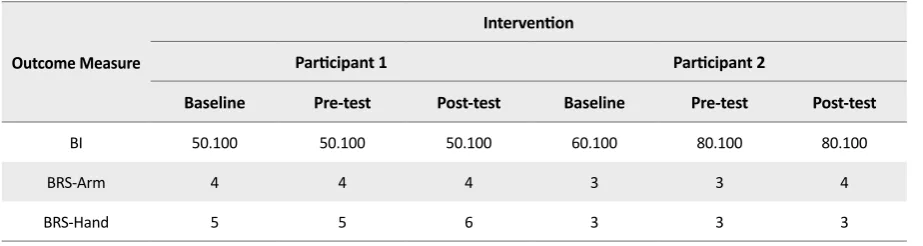
Table 2 shows the results of BI and BRS scores for the
participants. The results showed no change in BI during the intervention phase for both participants. BRS-Arm scores showed improvement in the second participant from 3 (out of 6) to 4. However, no improvement was noticed for the first participant in the BRS-Arm scores. BRS-Hand scores increased for the first participant from 5 (out of 6) to 6, but no improvement was noticed for the second participant in BRS-Hand scores.
4. Discussion
This study revealed that MT has positive effects on UL motor function. The proximal section of the UL showed higher improvement compared to the distal. This might be due to the sequence of motor recovery after stroke [17]. Such improvements in both sections of UL functions were congruent with the study undertaken by Lee et al. [18]. Ad-ditionally, both clients demonstrated noticeable improve-ment in coordination, which supports the results of Yun et al. [19]. In contrast, no change in wrist motor function was observed. Brunetti et al., in 2015 conducted a study to deter-Table 1. PND Results for FMA subtests
FMA Subtest
Participant Number Upper Limb Wrist Hand Coordination
1 57 14 43 86
(Questionable effectiveness) (Unreliable) (Unreliable) (Fairly effective)
2 57 0 57 57
(Questionable effectiveness) (Unreliable) (Questionable effectiveness) (Questionable effectiveness)
PND: Percentage of Non-overlapping Data; FMA: Fugel-Meyer Assessment
Table 2. Results of BI and BRS
Outcome Measure
Intervention
Participant 1 Participant 2
Baseline Pre-test Post-test Baseline Pre-test Post-test
BI 50.100 50.100 50.100 60.100 80.100 80.100
BRS-Arm 4 4 4 3 3 4
BRS-Hand 5 5 6 3 3 3
mine the factors affecting the outcome of MT in sub-acute stroke patients with severe hemiparesis as responders and non-responders to MT.
This study concluded that the base level of voluntary movement is one main factor that affects potential motor recovery after MT [20]. As the participants in our study had very minimal voluntary movement in the wrist, we can interpret it as a potential reason for this result in their wrist motor function.
The results of this study demonstrated no functional improvement according to the Barthel Index. The inter-vention of this study was mainly used simple MT and this result is in-line with the previous studies within which their results showed that task-oriented MT was more beneficial in terms of self-care and motor recovery compered to simple MT [17,21].
The results also showed a slight difference in BRS among the two participants. This might be due to the low sensitivity of the Brunnstrom scale as the participants had to achieve all the movements in the higher stage to move to that stage [12].
From the psychological aspect, both participants re-ported their satisfaction with MT as it gave them more sense of control in the affected UL, even though it was the reflection of the unaffected one. However, this is a report of the participants and further research to investi-gate the effects of MT on clients’ psychological aspects is recommended. Due to limited resources, this study was conducted with two participants limited its gener-alizability to the population of the study. Therefore, it is suggested to repeat this study with more participants.
5. Conclusion
MT is non-invasive technique that can be easily im-plemented in a clinic or as a part of a home program. This study was able to provide more evidence and support for the effectiveness of 20-minute sessions of MT on UL function in sub-acute stroke patients. How-ever, further well-designed experimental studies with follow-up are recommended on larger populations and over longer periods.
Ethical Considerations
Compliance with ethical guidelines
All participants were informed about study objectives and thoseagreeing to participate signed the informed
consent forms. Ethical approval was obtained from the Institutional Review Boards of Kuwait University (Ap-proval number:1863).
Funding
This This research was extracted from the research project (No: 2012.207) and was not supported finan-cially.
Authors' contributions
Designing the study, analyzing the data, and preparing the draft of the article: Mehdi Rassafiani; Contributing in the research proposal and the first draft of the manu-script, collecting the data: Al-Fraij Aisha, Abrar Al-Mah-ri; Contributing in the research proposal and drafting the manuscript: Farhad Manee.
Conflict of interest
The authors declared no conflict of interest.
Acknowledgments
Much appreciation to Mihir Prasad for his contribution and to the participants for their cooperation in this study.
References
[1] Centers for Disease Control Prevention. Prevalence of stroke-United States, 2006-2010. Morbidity and Mortality Weekly Report. 2012; 61(20):379-82. [PMID]
[2] Hatem SM, Saussez G, della Faille M, Prist V, Zhang X, Dispa D, et al. Rehabilitation of motor function after stroke: a multiple systematic review focused on techniques to stimu-late upper extremity recovery. Frontiers in Human Neurosci-ence. 2016; 10:442. [DOI:10.3389/fnhum.2016.00442] [PMID] [PMCID]
[3] Harmsen WJ, Bussmann JB, Selles RW, Hurkmans HL, Ribbers GM. A mirror therapy-based action observation protocol to improve motor learning after stroke. Neu-rorehabilitation and Neural Repair. 2015; 29(6):509-16. [DOI:10.1177/1545968314558598] [PMID]
[4] Selles RW, Michielsen ME, Bussmann JB, Stam HJ, Hurk-mans HL, Heijnen I, et al. Effects of a mirror-induced visual illusion on a reaching task in stroke patients: Implications for mirror therapy training. Neurorehabil Neural Repair. 2014; 28(7):652-9. [DOI:10.1177/1545968314521005] [PMID]
[6] Fong Mei Toh S, Fong KNK. Systematic review on the effec-tiveness of mirror therapy in training upper limb hemiparesis after stroke. Hong Kong Journal of Occupational Therapy. 2012; 22(2):84-95. [DOI:10.1016/j.hkjot.2012.12.009]
[7] Thieme H, Morkisch N, Mehrholz J, Pohl M, Behrens J, Bor-getto B. et al. Mirror therapy for improving motor function after stroke. Cochrane Database of Systematic Reviews. 2018; 2018(7):CD008449. [DOI:10.1002/14651858.CD008449.pub3] [PMID] [PMCID]
[8] Antoniotti P, Veronelli L, Caronni A , Monti A, Aristidou E, Montesano M, et al. No evidence of effectiveness of mirror therapy early after stroke: An assessor-blinded randomized controlled trial. Clinical Rehabilitation. 2019; 33(5):885-93. [DOI:10.1177/0269215518824737] [PMID]
[9] Rassafiani M, Sahaf R. Single case experimental design: An
overview. International Journal of Therapy and Rehabilita-tion. 2010; 17(6):285-9. [DOI:10.12968/ijtr.2010.17.6.48151]
[10] Gladstone DJ, Danells CJ, Black SE. The Fugl-Meyer Assess-ment of motor recovery after stroke: A critical review of its measurement properties. Neurorehabilitation and Neural repair. 2002; 16(3):232-40. [DOI:10.1177/154596802401105171] [PMID]
[11] Sanford J, Moreland J, Swanson LR, Stratford PW, Gowland C. Reliability of the Fugl-Meyer assessment for testing motor performance in patients following stroke. Physical Therapy. 1993; 73(7):447-54. [DOI:10.1093/ptj/73.7.447] [PMID]
[12] Huang CY, Lin GH, Huang YJ, Song CY, Lee YC, How MJ, et al. Improving the utility of the Brunnstrom recovery stages
in patients with stroke: Validation and quantification. Medi
-cine. 2016; 95(31):e4508. [DOI:10.1097/MD.0000000000004508] [PMID] [PMCID]
[13] Naghdi S, Ansari NN, Mansouri K, Hasson S. A neuro-physiological and clinical study of Brunnstrom recovery stages in the upper limb following stroke. Brain Injury. 2010; 24(11):1372-8. [DOI:10.3109/02699052.2010.506860] [PMID]
[14] Duffy L, Gajree S, Langhorne P, Stott DJ, Quinn TJ. Re-liability (inter-rater agreement) of the Barthel Index for assessment of stroke survivors: Systematic review and meta-analysis. Stroke. 2013; 44(2):462-8. [DOI:10.1161/ STROKEAHA.112.678615] [PMID]
[15] Lim KB, Lee HJ, Yoo J, Yun HJ, Hwang HJ. Efficacy of mirror therapy containing functional tasks in poststroke pa-tients. Annals of Rehabilitation Medicine. 2016; 40(4):629-6. [DOI:10.5535/arm.2016.40.4.629] [PMID] [PMCID]
[16] Morgan DL, Morgan RK. Single-case research methods for the behavioral and health sciences. London: SAGE Publica-tions; 2008. [DOI:10.4135/9781483329697]
[17] Park JY, Chang M, Kim KM, Kim HJ. The effect of mirror therapy on upper-extremity function and activities of daily liv-ing in stroke patients. Journal of Physical Therapy Science. 2015; 27(6):1681-3. [DOI:10.1589/jpts.27.1681] [PMID] [PMCID]
[18] Lee MM, Cho HY, Song CH. The mirror therapy program enhances upper-limb motor recovery and motor function in acute stroke patients. American Journal of Physical Medi-cine & Rehabilitation. 2012; 91(8):689-700. [DOI:10.1097/ PHM.0b013e31824fa86d] [PMID]
[19] Yun GJ, Chun MH, Park JY, Kim BR. The synergic effects of mirror therapy and neuromuscular electrical stimulation for hand function in stroke patients. Annals of Rehabilitation
Medicine. 2011; 35(3):316-21. [DOI:10.5535/arm.2011.35.3.316] [PMID] [PMCID]
[20] Brunetti M, Morkisch N, Fritzsch C, Mehnert J, Steinbrink J,
Niedeggen M, et al. Potential determinants of efficacy of mir
-ror therapy in stroke patients: A pilot study. Restorative Neu-rology and Neuroscience. 2015; 33(4):421-34. [DOI:10.3233/ RNN-140421] [PMID] [PMCID]