Medical Journal of the Islamic Republic of Iran (MJIRI)
Med J Islam Repub Iran. 2019(30 Apr);33.37. https://doi.org/10.34171/mjiri.33.37
______________________________
Corresponding author: Dr Shahnaz Rimaz, [email protected]
1.Student Research Committee, Iran University of Medical Sciences, Tehran, Iran 2.
Preventive Medicine and Public Health Research Center, Iran University of Medical Sciences, Tehran, Iran
3.Department of Biostatistics, School of Public Health, Iran University of Medical Sciences, Tehran, Iran
4.
Department of Epidemiology, School of Public Health, Iran University of Medical Sciences, Tehran, Iran
5.Minimally Invasive Surgery Research Center, Rasoul Akram Hospital, Iran University of Medical Sciences, Tehran, Iran
6.
Endocrinology Research Center, Institute of Endocrinology and Metabolism, Iran University of Medical Sciences, Tehran, Iran
↑What is “already known” in this topic:
Previous studies have investigated the challenges of clinical trials only in the conducting step. Most of these studies reported challenges in developing countries.
→What this article adds:
This study provided a comprehensive review of the challenges of clinical trial studies in different steps including design, conducting, analysis, and reporting in both developing and developed countries.
Challenges in the design, conduct, analysis, and reporting in
randomized clinical trial studies: A systematic review
Fatemeh Varse1, Leila Janani2, 3, Yousef Moradi4, Masoud Solaymani‐Dodaran5, Hamid Reza Baradaran6, 7, Shahnaz Rimaz*1, 8
Received: 21 Aug 2018 Published: 30 Apr 2019
Abstract
Background: Randomized clinical trials havebeen considered as the gold standard for evaluating the effectiveness and safety of medical interventions; however, there are major barriers to their design, conduct, analysis, and reporting. They are multidisciplinary and involve different steps and face a variety of challenges that may vary from one country to another. The aim of this study was to provide a comprehensive presentation of the challenges of clinical trial studies in different steps including design, conducting, analysis, and reporting.
Methods: In this study, all original articles conducted during 1991-2017 that reviewed the barriers to clinical trial studies at one of the steps of design, conducing, analysis, and reporting of the results in Medline (through PubMed), Embase, Web of Sciences, Scopus, and Google Scholar were considered. The searched keywords were as follow: challenges, barriers, and randomized clinical trial. Results: The following barriers in different steps of randomized clinical trials were identified: general barriers include insufficient knowledge and understanding of clinical research and research methodology, barriers to ethical and regulatory systems, and lack of funding. The investigator-initiated trials may face similar problems to those of sponsor-initiated trials, such as handling regulatory systems, administrative and financial issues, multiple languages, and different patient compensation approaches. The challenge related to design was poor planning. Other challenges were lack of manpower and financial resources, inappropriate statistical methods for analysis (analysis challenges), and challenges related to reporting which include selective reporting.
Conclusion: Based on the results of this systematic review, the most important challenges were barriers related to handling ethical and regulatory systems, patient recruitment, and lack of budget and skilled staff for conducting clinical trials. Training to improve the quality of randomized clinical trial studies in different steps and levels was the most important recommendation in these studies.
Keywords: Barriers, Challenges, Clinical trials, Systematic review
Conflicts of Interest: None declared
Funding: Iran University of Medical Sciences
*This work has been published underCC BY-NC-SA 1.0 license. Copyright© Iran University of Medical Sciences
Cite this article as:Varse F, Janani L, Moradi Y, Solaymani‐Dodaran M, Baradaran HR, Rimaz S. Challenges in the design, conduction, analysis, and reporting randomized clinical trial studies: A systematic review. Med J Islam Repub Iran. 2019 (30 Apr);33:37. https://doi.org/10.34171/mjiri.33.37
Introduction
Randomized clinical trials (RCTs) are considered as the gold standard for evaluating the effectiveness and safety
of medical interventions (1). These types of studies are known as the basis for evidence-based decision making and the gold standard for clinical research. In recent years,
Challenges of randomized clinical trial studies
a major scientific revolution to decide on evidence-based health care has led to the development of clinical trials (2). A well-conducted randomized clinical trial can be the most reliable method for measuring the effectiveness of clinical interventions (3).
Although clinical trial studies have been considered as the gold standard, the emphasis on the quality of these studies for their effects has always been taken into ac-count. These studies are multidisciplinary and involve different steps, so they may face a variety of challenges that vary from one country to another.
One of the basic principles for conducting a clinical trial is that the collected data should be monitored; such regu-lar monitoring helps to ensure that the risks to the partici-pants are not more than expected and the study is done properly (4). Many universities have less awareness of the research priorities of clinical studies (5). Conducting these studies in developing countries often causes ethical, or-ganizational, cultural, and infrastructural barriers for re-searchers, pharmaceutical companies, sponsors, and regu-latory agencies (2).
Due to the unique social and economic conditions of In-dia (low literacy, poverty, lack of public medical facili-ties) and the unique relationships between doctors and patients in this country, patients are exposed to the most vulnerable conditions in the process of clinical trials. The main concerns are related to the process of obtaining in-formed consent and compensation for participants due to injury or death (6). Patient recruitment is one of the main barriers to conducting these studies. Performing a trial of all medical expertise, issues on inequality, representation, and access to health care services may raise problems in patient recruitment, but the barriers to research partner-ships for minorities are through the frameworks of cultural and therapeutic misconception, poor health literacy, lack of trust in the therapeutic system, or fear of relevance of the experiments (7, 8). Even if the costs of randomized clinical trials are comparable to the costs of standard care, lack of insurance coverage will prevent entry or registra-tion (6).
The randomized clinical trials (RCTs) reviewed and published in leading journals are considered as the highest level of evidence in medicine. However, this is not always the case and RCTs, even when reported in these journals, can be misleading by 2 mechanisms: (1) timeliness or poor design in RCTs; (2) misinterpretation of even well-designed RCTs.
Several limitations may decrease the value of these studies: defects in patient selection, physician competence, randomization, applicability, endpoints, and the population being studied. Another problem with arti-cles describing RCTs is the potential for the conclusions of the trial report to be misleading because of error or bi-as. This together with subsequent misinterpretation of the trial results or conclusions by others can make the effect
of the trial misleading with an unintended detrimental result on medical practice (9).
Although the researcher may limit biasing through ran-dom allocation or blinding methods, clinical trial results may still be less acceptable (3).
Clinical trial studies have 4 steps of design, conducting, analysis, and reporting of results. Also, in these studies, different people are involved with different majors, which may result in some challenges associated with the condi-tions of each country. Therefore, the aim of this study was to provide a comprehensive review of the challenges in conducting different steps of clinical trial studies (design, conducting, analysis, and reporting) in both developing
and developed countries.
Methods
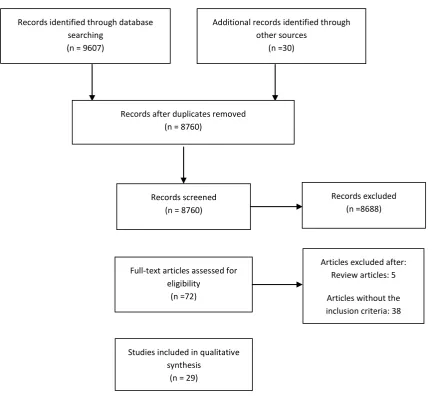
This systematic review was prepared and reported based on the Preferred Reporting Items for Systematic Reviews and Meta-Analyses (PRISMA) checklist and flow diagram (10) (Fig. 1).
All original articles presenting the barriers to clinical trial studies at one of the steps of design, conducting, analysis, and reporting of the results and meeting the in-clusion and exin-clusion criteria have been included in this review.
Inclusion criteria
•Studies that reported challenges in 4 steps of clinical
trials (design, conducting, analysis, reporting)
•Studies published in English
•Studies published during 1991-2017
Exclusion criteria
•Studies that reported clinical challenges in the con-ducting of clinical trials in different areas of diseases.
Search strategy
The search syntax was developed based on PubMed (Medline) and included 45 related keywords and was modified based on other international databases. Data-bases (Medline-PubMed, Embase, Web of Sciences, Sco-pus, and Google Scholar) were sought for relevant scien-tific evidence up to October 2017. The search strategy was limited to English articles published during 1991– 2017 (Table 1).
Article screening and selection
In the first stage, titles and abstracts of all articles were evaluated by 2 researchers (FV, YM) independently. Then, full-texts were assessed to decide on relevancy of the articles. The researchers discussed the disagreement, if any, and in case an agreement was not reached, the third author (LJ) evaluated the study.
Quality Assessment
The quality of each study was assessed according to Kuper (11). The criteria contain 6 major questions that address different key areas (design sample, data collec-tion, analysis, reporting), each of which are answered as ‘good’, ‘fair’, and ‘poor’. Based on the literature, a quali-ty score was given for each question using the following definitions: Good: sufficient details are provided and well
contribution to the review (12).
Data extraction
All papers included in the present study were evaluated independently by 2 researchers (FV, YM). They dis-cussed the disagreements, if any, and in case an agree-ment was not reached, a third author (LJ) evaluated the study. A structured checklist was used to extract the data
Records identified through database searching
(n = 9607)
Additional records identified through other sources
(n =30)
Records after duplicates removed (n = 8760)
Records screened (n = 8760)
Records excluded (n =8688)
Full‐text articles assessed for
eligibility (n =72)
Articles excluded after: Review articles: 5
Articles without the inclusion criteria: 38
Studies included in qualitative synthesis
(n = 29)
Fig. 1.PRISMA 2009 flow diagram for study selection
Table 1. Search strategy PubMed/Medline
(“clinical trial”[tiab] OR “Clinical study” [tiab] OR “Controlled clinical trial” [tiab] OR “randomized clinical trial”[tiab] OR “randomized controlled trial” [tiab] OR “Cross Over Design” [tiab] OR “Cross Over Studies” [tiab] OR “Crossover procedure” [tiab] OR "Field Trial"[tiab] OR RCTs[tiab] OR “Community Trial” [tiab] OR “Factorial Design” [tiab] OR “Cluster randomized design” [tiab] OR “Open trial” [tiab] OR “open study” [tiab] OR “Mega trial” [tiab] OR “Intervention Studies” [tiab] OR “interventional study” [tiab] OR “intervention trial” [tiab] OR “interventional studies” [tiab] OR “Pragmatic Clinical Trial” [tiab] OR “Zelen’s design” [tiab] OR “Single Arm Trials” [tiab] OR “Parallel Group Design” [tiab] OR “parallel design” [tiab] OR “clinical epidemiology” [tiab]) AND (Barriers[tiab] OR Limitations[tiab] OR Problems[tiab] OR Challenges[tiab] OR Difficulties[tiab] OR mistakes[tiab] OR setback[tiab] OR hitch[tiab] OR trouble[tiab] OR hassle[tiab] OR Defects[tiab] OR Bugs[tiab] OR flaws[tiab] OR weaknesses[tiab] OR faults[tiab] OR restriction[tiab] OR imperfection[tiab] OR wrongs[tiab] OR blunders[tiab] ) AND 1991/01/01[DP]:2017/10/20[DP])
Challenges of randomized clinical trial studies
Results
In the first step, 9637 studies were evaluated, of which 877 were duplicate articles and excluded. Then, 8760 re-maining articles were evaluated based on their abstracts and 8688 irrelevant articles were excluded. In the next stage, full-texts were assessed and 43 articles were re-moved. Finally, after examining the studies and applying the inclusion and exclusion criteria, 29 studies remained and their results were evaluated. The following barriers in different steps of randomized clinical trials were identi-fied: investigator-initiated trials may face similar difficul-ties with trials sponsored by international bodies. These difficulties will be related to handling of the regulatory bodies, administrative and financial bottlenecks, multiple languages, patient compensation options, interviewer compensation modalities, and additional documents re-quired to facilitate data collection. Among the 4 stages of design, conducting, analysis, and reporting, the greatest challenges were related to conducting the randomized clinical trial. Challenges related to conducting were as follow: ethical and regulatory system obstacles (2, 5, 6, 13-19); financial bottle necks (2, 5, 6, 14-16, 20-22); lack of skilled personnel (6, 14-16, 18, 21, 22); barriers to pa-tient recruitment (5-7, 23-26); lack of infrastructure (5, 6, 15, 16, 21, 22); lack of awareness and motivation (6, 15, 16, 18, 27); lack of time (5, 14-16, 27); lack of knowledge of the general population (6, 24-27); lack of knowledge among the research professionals (25, 26, 28); lack of insurance coverage (24, 26); conflict of interest concerns (4, 25); lack of registry (28, 29); barriers to blinding (19, 30); issues in compensation calculation (2, 6); administra-tive bottle necks (2, 18); lack of integration between clin-ical trials and patient care (20); lack of research environ-ment (5); lack of transparency (17); lack of tools (20);
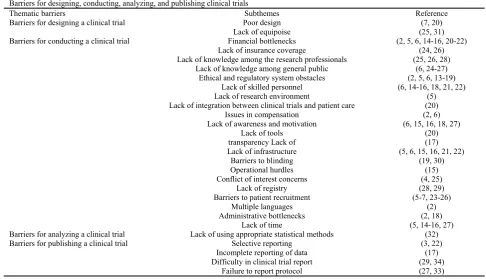
operational hurdle (15); and multiple languages (2). Other challenges were poor planning (7, 20), lack of equipoise (25, 31) (design challenges), non-use of appropriate sta-tistical methods for analysis (32) (analysis challenges) and challenges related to reporting which include selec-tive reporting (3, 22), failure to report protocol (27, 33), incomplete data reporting (17), and difficulty in clinical trial report (29, 34) (Table 2).
Discussion
As clinical trials usually affect patient care and man-agement more than other types of studies do, it is highly important to consider the highest standards for writing, conducting, analyzing, and reporting these studies (35). In this study, the literature on barriers facing clinical trial studies in different steps (design, conducting, analysis, reporting) were reviewed. The greatest barriers were ethi-cal and regulatory system obstacles, financial bottlenecks, lack of skilled personnel, and barriers to patient recruit-ment. In addition, several other challenges emerged from the research literature: lack of infrastructure, lack of awareness and motivation, lack of time, lack of knowledge among the general public, and lack of knowledge among the research professionals. By contrast, an article discussed the opportunities and challenges in conducting clinical trials globally. Informed consent, data quality, differences in medical practice, acceptability of foreign data, and ethical factors were global clinical trials challenges (36). A systematic review related to barriers for conducting clinical trials in developing countries indi-cated that the greatest challenge that researchers faced in developing countries was lack of financial and human capacity (37). However, a systematic review on physician barriers in RCTs for cancer and other illnesses in the
de-Table 2.Barriers for designing, conducting, analyzing, and publishing clinical trials Barriers for designing, conducting, analyzing, and publishing clinical trials
Reference Subthemes
Thematic barriers
(7, 20) Poor design
Barriers for designing a clinical trial
(25, 31) Lack of equipoise
(2, 5, 6, 14-16, 20-22) Financial bottlenecks
Barriers for conducting a clinical trial
(24, 26) Lack of insurance coverage
(25, 26, 28) Lack of knowledge among the research professionals
(6, 24-27) Lack of knowledge among general public
(2, 5, 6, 13-19) Ethical and regulatory system obstacles
(6, 14-16, 18, 21, 22) Lack of skilled personnel
(5) Lack of research environment
(20) Lack of integration between clinical trials and patient care
(2, 6) Issues in compensation
(6, 15, 16, 18, 27) Lack of awareness and motivation
(20) Lack of tools
(17) transparencyLack of
(5, 6, 15, 16, 21, 22) Lack of infrastructure
(19, 30) Barriers to blinding
(15) Operational hurdles
(4, 25) Conflict of interest concerns
(28, 29) Lack of registry
(5-7, 23-26) Barriers to patient recruitment
(2) Multiple languages
(2, 18) Administrative bottlenecks
(5, 14-16, 27) Lack of time
(32) Lack of using appropriate statistical methods
Barriers for analyzing a clinical trial
(3, 22) Selective reporting
Barriers for publishing a clinical trial
(17) Incomplete reporting of data
(29, 34) Difficulty in clinical trial report
(27, 33) Failure to report protocol
veloped world identified lack of time as a major barrier (38). Another study discussed barriers to the conduct of randomized clinical trials within all disease areas. In that study, inadequate knowledge of clinical research and trial methodology, lack of funding, excessive monitoring, restrictive privacy law, lack of transparency, complex regulatory requirements, and inadequate infrastructures were barriers to randomized clinical trials (39).
Ethical and regulatory barriers were the most commonly cited reasons reported in the included studies. Developed countries perform a number of clinical trials in developing countries. In developing countries, such as India, these trials indicated that most Indians do not have access to good quality and affordable care and therefore may accept offers that might provide better quality and free treatment. They were conducted on people who were vulnerable because they could not afford good quality treatment or the most effective drugs (6). On the other hand, medications that are experimented in clinical trials in developed countries may not be used by people in developing countries due to their high cost. This subject can be an ethical problem because there is a principle in clinical trials that says the benefits of clinical trials must be more than their disadvantages and people should benefit from the result of these studies.
Another challenge was financial bottlenecks, which is reflective of the 10/90 gap in which less than 10% of health research funds in the world are directed toward problems that affect 90% of the world’s population, and an even smaller percentage goes to fund researchers and health problems of developing countries (6, 40, 41). Funding for clinical trials in developing countries comes mostly from Western countries and the pharmaceutical companies based there (42). In most low-income countries, research is a luxury because of economic constraints (43). Scarce resources in developing countries are nearly all spent on program implementation, and allocating funds for research is almost out of the equation in most development plans. Contrary to existing beliefs and practices, the lack of resources in low- and middle-income countries paradoxically increases the need for reliable health care evidence to prioritize the use of these scarce resources (44).
Conducting clinical trials is essential for evaluating therapeutic interventions, but at the same time, taking care of patients is also of crucial importance. To address this necessity, numerous international statements and guidelines on protection of human subjects have been drafted and implemented. However, the results of a study conducted in India showed that in clinical research activi-ty, because of the unique socioeconomic conditions in India (low literacy, poverty, general lack of medical facil-ities) and the unique doctor-patient relationship, the pa-tient ends up being the most vulnerable in the clinical trial process. The culture and socioeconomic conditions of any
ward by proactively responding to such challenges with suitable clarifications and/or amendments without com-promising the well-being of trial participants (6).
Conducting clinical trials and obtaining informed con-sent in any country are subject to the cultural conditions of that country. For example, the results of a study con-ducted in sub-Saharan Africa showed that the collection of blood samples from individuals in clinical trial projects could be challenging and may be one of the considerable reasons for local rumors of "blood theft" or "blood sale". Such attitudes and cultures could potentially have a pro-found effect on the success of research projects (45). Par-ticipants’ knowledge is also highly important in properly implementing and collecting data of a clinical trial. To confirm these results, a study conducted in the United States showed that at least 40% of Americans did not un-derstand the idea of a clinical trial.
For various reasons, knowledge can be a major factor in participation. First, low knowledge or confusion about the key facts of trial methods (random allocation, informed consent, standard treatment) can disrupt participation (46). Secondly, patients are often reluctant to participate in something about which they have little knowledge (47).
The lack of knowledge is not limited to patients. One of the most frequent probable reasons for the lack of report-ing was lack of awareness and shortage of knowledge about clinical trials (48, 49). Prior to the conduction of trials, a protocol is conducted to specify the exact steps of the task. Due to the unpredictable nature of interventions in health sciences, some changes may occur during the implementation of the trials with respect to the approved protocols. Therefore, researchers need to include these changes in their reports (50). However, excessive defects of a protocol may result in patient damage and occurrence of errors in clinical trial outcomes. Although the CON-SORT statement provides a comprehensive guide to pro-tocol defect reports, the reports of studies are not com-plete. Hence, as the first step to improve reporting, au-thors are recommended to report protocol defects based on the CONSORT statement.
The results of the studies indicated that most research-ers lacked knowledge and awareness even in the early definitions of the principles of a trial. For example, a study by Schulz et al showed that most researchers failed to recognize blinding and allocation concealment, and this suggested their lack of knowledge (51).
It is recommended that this issue be continually taught to researchers, as lack of knowledge may affect all stages of clinical trials and their outcomes. A study by White et al showed that knowledge rather than attitude is the lead-ing factor impedlead-ing registration. Investigators were very unfamiliar with international registration tools other than clinicaltrials.gov (28).
Registration of clinical trials may prevent publication
Challenges of randomized clinical trial studies
on this information in their evidence-based decision mak-ing (3). Thus, accordmak-ing to WHO, registration of a clinical trial is "a scientific, ethical and moral responsibility" (52). It is, therefore, highly important to promote the registra-tion of clinical trials as part of the naregistra-tional research poli-cy. However, a study conducted in Argentina showed that the current percentages of internationally registered trials and participants' responses were insufficient to achieve the desired goals (28). It is important that all registrations, including integrated information elements, be electroni-cally and widely searchable (53).
It should always be taken into consideration that clini-cal trial management is a public responsibility and re-quires a deep understanding of statistical methods.
This systematic review had limitations and strengths. It provided a comprehensive presentation of the challenges of clinical trial studies in different steps including design, conducting, analysis, and reporting, in both developing and developed countries. Because of the limited number of articles in the review, the study did not examine the similarities and differences between barriers among the different countries. Most of the included studies were qualitative. Those articles not written in English were ex-cluded, as because the cost of translation was not feasible.
Conclusion
Among the 4 stages of design, conducting, analysis, and reporting, the most challenges were related to conduct of randomized clinical trial. The main barriers identified in the present systematic review were as follow: barriers related to handling ethical and regulatory systems, patient recruitment, lack of budget and skilled staff, lack of infra-structure, lack of knowledge among the general public, lack of awareness and motivation, and lack of time for conducting clinical trials. Barriers may vary widely de-pending on the context in which the clinical trials are conducted. There are several intercountry differences in culture, socioeconomic, and political contexts. Thus, find-ings of this review may not reflect the situation in any specific country. Providing training in different steps and levels to improve the quality of randomized clinical trial studies was the most important recommendation in these studies.
Acknowledgments
This study was funded by Iran University of Medical Sciences (grant number 97-01-27-33259).
Conflict of Interests
The authors declare that they have no competing interests.
References
1. London L, Hurtado-de-Mendoza A, Song M, Nagirimadugu A, Luta G, Sheppard VB. Motivators and barriers to Latinas' participation in clinical trials: the role of contextual factors. Contemporary clinical trials. 2015;40:74-80.
2. Mbuagbaw L, Thabane L, Ongolo-Zogo P, Lang T. The challenges and opportunities of conducting a clinical trial in a low resource setting: the case of the Cameroon mobile phone SMS (CAMPS) trial, an investigator initiated trial. Trials. 2011;12(1):145.
3. McKenzie JE, Herbison GP, Roth P, Paul C. Obstacles to researching the researchers: A case study of the ethical challenges of undertaking methodological research investigating the reporting of randomised controlled trials. Trials. 2010;11(1):28.
4. Ellenberg SS. Protecting clinical trial participants and protecting data integrity: are we meeting the challenges? PLoS Medicine. 2012;9(6):e1001234.
5. Hummers-Pradier E, Bleidorn J, Schmiemann G, Joos S, Becker A, Altiner A, et al. General practice-based clinical trials in Germany-a problem analysis. Trials. 2012;13(1):205.
6. Gupta YK, Pradhan AK, Goyal A, Mohan P. Compensation for clinical trial-related injury and death in India: Challenges and the way forward. Drug safety. 2014;37(12):995-1002.
7. Spaar A, Frey M, Turk A, Karrer W, Puhan MA. Recruitment barriers in a randomized controlled trial from the physicians' perspective–A postal survey. BMC Medical Research Methodology. 2009;9(1):14. 8. Borno H, Siegel A, Ryan C. The problem of representativeness of
clinical trial participants: understanding the role of hidden costs. SAGE Publications Sage UK: London, England; 2016.
9. Veith FJ. How can good randomized controlled trials in leading journals be so misinterpreted? Journal of Vascular Surgery. 2013;57(2):3S-7S.
10. Moher D, Liberati A, Tetzlaff J, Altman DG, Group P. Reprint— preferred reporting items for systematic reviews and meta-analyses: the PRISMA statement. Physical Therapy. 2009;89(9):873-80. 11. Kuper A, Lingard L, Levinson W. Critically appraising qualitative
research. BMJ. 2008;337:a1035-a.
12. Lorenc T, Petticrew M, Whitehead M, Neary D, Clayton S, Wright K, et al. Quality assessment for the systematic review of qualitative evidence. 2014.
13. Osrin D, Azad K, Fernandez A, Manandhar DS, Mwansambo CW, Tripathy P, et al. Ethical challenges in cluster randomized controlled trials: experiences from public health interventions in Africa and Asia. Bull World Health Organ. 2009;87(10):772-9.
14. Siegfried N, Volmink J, Dhansay A. Does South Africa need a national clinical trials support unit? SAMJ. 2010;100(8):521-4. 15. Franzen SR, Chandler C, Enquselassie F, Siribaddana S, Atashili J,
Angus B, et al. Understanding the investigators: a qualitative study investigating the barriers and enablers to the implementation of local investigator-initiated clinical trials in Ethiopia. BMJ open. 2013;3(11):e003616.
16. Franzen SR, Chandler C, Atashili J, Angus B, Lang T. Barriers and enablers of locally led clinical trials in Ethiopia and Cameroon: a prospective, qualitative study. The Lancet. 2013;382:14.
17. Koenig F, Slattery J, Groves T, Lang T, Benjamini Y, Day S, et al. Sharing clinical trial data on patient level: opportunities and challenges. Biom J. 2015;57(1):8-26.
18. Sulthan N. Perception of clinical research among clinical investigators in Saudi Arabia. Asian J Pharm Clin Res. 2015;8:243–6. 19. di Ruffano LF, Deeks J. Barriers to blinding: an analysis of the feasibility of blinding in test-treatment RCTS. Trials. 2015;16(S2):O30.
20. Kukafka R, Allegrante JP, Khan S, Bigger JT, Johnson SB. Understanding facilitators and barriers to reengineering the clinical research enterprise in community-based practice settings. Contemporary Clinical Trials. 2013;36(1):166-74.
21. Cardoso A, Breugelmans G, Manville C, Chataway J, Cochrane G, Snodgrass J. Africa mapping: current state of health research on poverty-related and neglected infectious diseases in Sub-Saharan Africa.[Internet]. 2014 [cited 2015 Jun 28].
22. Ioannidis JP, Caplan AL, Dal-Ré R. Outcome reporting bias in clinical trials: why monitoring matters. BMJ. 2017;356.
23. Buis LR, Janney AW, Hess ML, Culver SA, Richardson CR. Barriers encountered during enrollment in an internet-mediated randomized controlled trial. Trials. 2009;10(1):76.
24. Kim SH, Tanner A, Friedman DB, Foster C, Bergeron CD. Barriers to clinical trial participation: a comparison of rural and urban communities in South Carolina. Journal of Community Health. 2014;39(3):562-71.
25. Donovan JL, Paramasivan S, de Salis I, Toerien M. Clear obstacles and hidden challenges: understanding recruiter perspectives in six pragmatic randomised controlled trials. Trials. 2014;15(1):5. 26. Tanner A, Kim SH, Friedman DB, Foster C, Bergeron CD. Barriers
to medical research participation as perceived by clinical trial investigators: communicating with rural and African American
communities. Journal of Health Communication. 2015;20(1):88-96. 27. Chan AW, Hróbjartsson A. Promoting public access to clinical trial
protocols: challenges and recommendations. Trials. 2018;19(1):116. 28. White L, Ortiz Z, Cuervo LG, Reveiz L. Clinical trial regulation in
Argentina: overview and analysis of regulatory framework, use of existing tools, and researchers' perspectives to identify potential barriers. Revista Panamericana de Salud Pública. 2011;30:445-52. 29. Walker KF, Stevenson G, Thornton JG. Discrepancies between
registration and publication of randomised controlled trials: an observational study. JRSM Open. 2014;5(5):2042533313517688. 30. Pocock SJ, Clayton TC, Stone GW. Challenging issues in clinical
trial design: part 4 of a 4-part series on statistics for clinical trials. J Am Coll Cardiol.2015;66(25):2886-98.
31. Deng C, Hanna K, Bril V, Dalakas MC, Donofrio P, van Doorn PA, et al. Challenges of clinical trial design when there is lack of clinical equipoise: use of a response-conditional crossover design. Journal of Neurology. 2012;259(2):348-52.
32. Howard KI, Krause MS, Vessey JT. Analysis of clinical trial data: The problem of outcome overlap. Psychotherapy: Theory, Research, Practice, Training. 1994;31(2):302.
33. Sweetman EA, Doig GS. Failure to report protocol violations in clinical trials: a threat to internal validity? Trials. 2011;12(1):214. 34. Cole GD, Shun-Shin MJ, Nowbar AN, Buell KG, Al-Mayahi F,
Zargaran D, et al. Difficulty in detecting discrepancies in a clinical trial report: 260-reader evaluation. Int J Epidemiol. 2015;44(3):862-9. 35. Hutton J, Williamson PR. Bias in meta‐analysis due to outcome
variable selection within studies. J Royal Stat Soc. 2000;49(3):359-70.
36. Bansal N. The opportunities and challenges in conducting clinical trials globally. Clinical Research and Regulatory Affairs. 2012;29(1):9-14.
37. Alemayehu C, Mitchell G, Nikles J. Barriers for conducting clinical trials in developing countries-a systematic review. International Journal for Equity in Health. 2018;17(1):37.
38. Ross S, Grant A, Counsell C, Gillespie W, Russell I, Prescott R. Barriers to participation in randomised controlled trials: a systematic review. J Clin Epidemiol. 1999;52(12):1143-56.
39. Djurisic S, Rath A, Gaber S, Garattini S, Bertele V, Ngwabyt SN, et al. Barriers to the conduct of randomised clinical trials within all disease areas. Trials. 2017;18(1):360.
40. Moon S, Bermudez J, Hoen Et. Innovation and access to medicines for neglected populations: could a treaty address a broken pharmaceutical R&D system? PLoS Medicine. 2012;9(5):e1001218. 41. Davey S. The 10/90 report on health research 2003-2004: Global
Forum for Health Research; 2004.
42. Gaillard J. Measuring research and development in developing countries: main characteristics and implications for the Frascati manual. Science, Technology and Society. 2010;15(1):77-111. 43. Harris E. Building scientific capacity in developing countries:
Simply transferring knowledge and instrumentation is not enough to help developing countries build their own research base. Such efforts must be tied to national and local needs to create trust and services for society in the long term. EMBO Reports. 2004;5(1):7-11.
44. McMichael C, Waters E, Volmink J. Evidence-based public health: what does it offer developing countries? Journal of Public Health. 2005;27(2):215-21.
45. Grietens KP, Ribera JM, Erhart A, D'Alessandro U, editors. Doctors and Vampires in Sub-Saharan Africa: Ethical Challenges in Clinical Trial Research. Tropical Medicine & International Health; 2013: Wiley-Blackwell 111 River St, Hoboken 07030-5774, NJ USA. 46. Frank G. Current challenges in clinical trial patient recruitment and
enrollment. SoCRA Source. 2004;2(February):30-8.
47. Jones JM, Nyhof-Young J, Moric J, Friedman A, Wells W, Catton P. Identifying motivations and barriers to patient participation in clinical trials. Journal of Cancer Education. 2007;21(4):237-42. 48. Kao LS, Tyson JE, Blakely ML, Lally KP. Clinical research
methodology I: introduction to randomized trials. Journal of the American College of Surgeons. 2008;206(2):361-9.
49. Stommel M, Wills C. Clinical research: Concepts and principles for
got what. The Lancet. 2002;359(9307):696-700.
52. Organization WH. International Clinical Trials Registry Platform (ICTRP) 2012. 2012.
53. Kelsall D. Stand and declare: Opportunity and challenge of clinical trial registration. Can Fam Physician. 2006;52(10):1189.