©2018 Academia Publishing
Research Paper
In-vitro evaluation of anti-inflammatory and anti-urolithiatic activity of Cichorium
intybus leaves extract
Accepted 8th June, 2018
ABSTRACT
Cichorium intybus commonly called as Chicory (Tamil name – Kasini), is an erect perennial herb belonging to the family Asteracea. Due to its prevalent distribution, different parts of the plant have been used in traditional medicines globally. Important phytochemicals that might have a positive effect in preventing many chronic diseases are distributed in the entire plant. Species belonging to the family Astereacea have been found to possess outstanding inflammatory and anti-urolithiatic activities. From this hypothetical idea, an in-vitro experimental study was conducted using the leaves extract to treat urolithiasis and inflammation. In the current study, two different methods of extraction were carried out using the leaves of the plant C. intybus. The yield percentages of crude extract through maceration and from soxhlet extraction were 33 and 15.1%, respectively. The comparisons were made and the best method for extraction chosen. Further studies were carried out to test the plant extract for inflammatory and anti-urolithiatic activity. The anti-inflammatory activity was studied using membrane stabilization activity and inhibition of albumin denaturation. The percentage inhibition of hemolysis obtained for membrane stabilization (49%) was compared against Aspirin (53%) used as the standard. The percentage Inhibition for albumin denaturation of C. intybus leaves extract (50%) was compared against Aspirin (55%) which was used as the standard. The results showed that the leaves of C. intybus plant possessed moderate anti-inflammatory activity. The C. intybus leaves showed good anti-urolithiatic activity against calcium oxalate and calcium phosphate stones. The percentage inhibition of mineralization of calcium oxalate stones (78%) were higher compared to calcium phosphate stones (75%). This study concludes the suitable method for the extraction of C. intybus plant. It also concludes that, the leaves extract effectively inhibit the progress of urolithiasis and inflammaiton and that it could be used as a prolific resource for drugs.
Key words: Cichorium intybus, chronic diseases, inflammatory, anti-urolithiatic activity.
INTRODUCTION
Inflammation is considered as a primary physiologic defense mechanism that helps the body to protect itself against infection, burn, toxic chemicals, allergens or other noxious stimuli. An uncontrolled and persistent inflammation may act as an etiologic factor for many of
these chronic illnesses. Although it is a defence mechanism, the complex events and mediators involved in the inflammatory reaction can induce, maintain or aggravate many diseases. An inflammatory response that lasts for a long duration is referred to as chronic inflammation. Nanditha R., Yamini Swetha N.,
Lakshminarayanan C. P and Sukumaran Prabhu*
Department of Biotechnology, Anna University, Sri Venkateswara College of Engineering, Sriperumbudur, Tamil Nadu 602 117, India.
Upon tissue injury, vasoconstriction (small blood vessels in the damaged area constrict momentarily) occurs followed by vasodilation, that is, the blood vessels dilate increasing the blood flow in the area. The two events allow the blood vessels to become permeable, allowing exudates to exit the tissues. This leads to more white blood cells to adhere to the blood vessels. Neutrophils, a type of WBC must exit through the blood vessels, actively towards tissue damage. This movement is made possible by chemotaxis. The chemical factors such as histamine and prostaglandins, etc are released upon vascular and cellular changes. These components trigger vasodilation and increases vascular permeability. The other factors that increase vascular permeability are lysosomes that are released from neutrophils. These eventually lead to healing and repair, suppuration and chronic inflammation, if the infection cannot be eliminated (Leelaprakash et al., 2011).
Inflammation is a major cause for suffering. The most common method of treatment for inflammation are available in the form of drugs known as NSAID, that is, nonsteroidal anti-inflammatory drugs that act by inhibiting the function of prostaglandin. Prostaglandin is an autocoid that is released extracellularly and initiate pain. Anti-inflammatory agents block this autocoid synthesis by either inhibiting COX enzyme or protecting lysosomal membrane from breakdown. However, the NSAIDs have side effects such as stomach pain, heart attack, ulcers, headaches and dizziness and high blood pressure and also leads to other chronic diseases (Steinmeyer, 2000).
Urolithiasis is one of the most prevailing chronic diseases in the world. The kidney stones are quite common and usually affect people between 30 and 60 years of age, with men being more affected than women. It has been estimated that 10 to 20% men are affected while women being 3 to 5%. The major common problem with kidney stones is their recurrent stone formation. The rate of occurrence is triple the times higher in men than in women. This is because of enhancing capacity of testosterone and inhibiting capacity of oestrogen in stone formation (Vijaya et al., 2013). Urinary supersaturation, which is due to stone forming minerals, is the first step in kidney stone formation which leads to Crystal nucleation, Crystal growth, Crystal aggregation and finally, Crystal retention. Calcium stones crystallization occurs more commonly in the urinary tract (Khan, 2018).
Treatment of urolithiasis includes conservative, surgical treatment and treatment with extracorporeal shock wave lithotripsy (ESWL) depending on the evaluation by professional medical team, but these conventional methods cause side effects and also additional interventions. Recurrent stone formation is a common problem with all types of stones and therefore an important part of the medical care of patients with stone disease (Sofia et al., 2016).
In recent years, more people are considering alternative therapies for complete cure of chronic ailments. Medicinal
plants have been a host of a variety of biological compounds with therapeutic properties (Rates et al., 2001). Scientists are regarding it as a safe source of active compounds for treatments of various diseases compared to synthetic drugs (Farnsworth et al., 1985). Hence, plants are considered to be a prolific resource for modern day drugs (Rates et al., 2001).
Cichorium intybus belongs to the Asteraceae family and it is found in parts of Asia, Europe and North America (Bais et al., 2001). C. intybus is an erect, perennial and woody herb which elevates to a height of 80 to 90 cm and has a fleshy taproot which develops up to a length of 75 cm. The plant bears blue, white or pink flowers (Jančić, et al., 2016). The plant also consists of two different types of leaves, the basal leaves and the stem leaves. The stem leaves and basal leaves share some similarities (Al-Snafi et al., 2016). C. intybus plant and its parts have been used for different medicinal purposes in different cultures. Traditionally, it has been used for curing diabetes, as a depurative, laxative, anti-pyretic, in the treatment of kidney disorders, malaria, diarrhoea, cancer and liver disorders, as a depurative and for healing wounds and for treating Jaundice etc (Street et al., 2013).
The literatures were examined and it indicated that no systemic approach has been made to evaluate the anti-inflammatory and anti-urolithiatic potential of the plant C. intybus. The present study involves the determination of anti-inflammatory and anti-urolithiatic activity of C. intybus by inhibition of albumin denaturation, membrane stabilization and in vitro mineralization.
MATERIALS AND METHODS
Preparation of Cichorium intybus leaves powder
The C. intybus leaves were collected from the district of Kanchipuram in Tamil Nadu. The collected plant leaves were subjected to washing, thrice in tap water and once in distilled water subsequently. It was thereafter shade dried for two weeks until the leaves were completely dried. The plant leaves were then crushed to make fine powder.
Preparation of Cichorium intybus leaves extracts
filtrate was later added to the previous crude extract. Finally, 200 ml volume of distilled water was added to the residue, boiled for 2 h under reflux condenser, and then filtered. The hot water filtrate was combined with the previous crude extract to form the hydro-alcoholic crude extract. The final hydro-alcoholic extracts was evaporated to dryness at 60°C and stored in a deep freezer until use.
Soxhlet extraction was carried out as reported in the study of Basa’ar et al. (2016) with slight modifications. 20 g of the leaf powder was used for soxhlet extraction with 200 ml of ethanol and water at 1:1 ratio. After extraction for 14 h, the crude extract was placed in hot air oven at 60°C for excess solvent evaporation. The extract was thereafter stored in deep freezer until use.
Phytochemical screening of the prepared Cichorium intybus leaves extract using qualitative analysis
The confirmatory test for the phytochemicals flavonoids, saponins and tannins were done following the method as described by Abbas et al. (2015).
Tannins
Distilled water was added to a known amount of the extract and then boiled for a few minutes. It was filtered and the filtrate mixed with a few drops of 0.1% ferric chloride solution. Brownish green color confirmed the presence of tannins.
Saponins
A known amount of the extract was boiled in distilled water for a few minutes and then filtered. The filtrate was mixed with a known amount of distilled water and shaken vigorously until a stable persistent froth appeared. The frothing was collected and mixed with about 2 drops of olive oil and vigorously shaken. The formation of emulsion indicated the presence of saponins.
Flavonoids
To a known amount of the extract, few drops of 1% aluminum solution was added. The appearance of a yellow color indicated the presence of flavonoids.
Determination of in-vitro anti-inflammatory activity of
Cichorium intybus leaves extract
The anti-inflammatory activity was performed as reported in the study of Leelaprakash et al. (2011).
Membrane stabilization
Preparation of human red blood cells (HRBC) suspension
Alsever’s solution was prepared by dissolving 2% dextrose,
0.8% sodium citrate, 0.05% citric acid and 0.42% sodium chloride in water and the mixture was sterilized. The freshly collected human blood was an equal volume of Alsever’s solution added to it and was centrifuged for 10 min at 3000 rpm. Thereafter, isosaline (0.85%, pH 7.2) was used to wash the packed cells thrice. The blood was then mixed with isosaline to make a 10% v/v suspension.
Heat induced hemolysis
The reaction mixture was prepared with 1 ml of the leaves extract at different concentrations ranging from 100 to 500 μg/ml and 1 ml of 10%v/v blood suspension. The control test tube contained saline instead of the leaves extract. The standard drug used was Aspirin. The tubes were placed in the water bath at 56°C for 30 min. After incubation the tubes were subjected to cold water. The centrifuge tubes with the mixture were then centrifuged at 2500 rpm for 5 min and the pellets were discarded. The absorbance for the supernatants was taken at 560 nm. The experiment was repeated in triplicates.
The percentage of hemolysis of HRBC membrane was calculated using the formula:
Percentage inhibition = (Abs control –Abs sample) × 100
Abs control
Inhibition of albumin denaturation
1% aqueous solution of bovine albumin fraction and the test extracts at different concentrations (100 to 500 μg/ml) were considered as the reaction mixture; the pH was adjusted using small amount of 1N HCl. The extracts were then incubated at 37°C for 20 min and heated at 51°C for 20 min. After cooling, the turbidity of the mixture was measured at 660 nm. The experiment was repeated in triplicates.
The percentage inhibition of protein denaturation was calculated as follows:
Percentage inhibition = (Abs control – Abs sample) × 100
Abs control
Determination of anti-urolithiatic activity Cichorium intybus leaves extract
Table 1: Confirmatory tests for phytochemicals.
S/No Phytoconstituents Hydro-alcoholic extract
1 Flavonoids +
2 Saponins +
3 Tannins +
0 20 40 60 80 100
100 200 300 400 500
P
er
ce
n
ta
ge
i
n
h
ib
it
io
n
o
f
h
em
o
ly
si
s
b
y
Ci
c
hor
ium
i
nt
y
bus
le
a
v
es
e
xt
ra
ct
Concentration of the leaves extract (µg/ml)
Percentage inhibition
of hemolysis by
Cichorium intybus
leaves extract
Aspirin
Percentage inhibition
of albumin
denaturation by Cichorium intybus leaves extract
Figure 1: Percentage inhibition of hemolysis of human red blood cells.
(25 ml). Thereafter, the mixture was kept in a hot water bath for 10 min and then cooled to room temperature. The supernatant was then discarded. The precipitate was collected into a pre-weighed beaker; the beaker was dried in a hot air oven at 120°C, cooled and weighed. Weight of the precipitates was noted and the percentage inhibition calculated.
The percentage inhibition was calculated using the formula:
Percentage inhibition = (Weight of precipitation blank set -Weight of precipitation experimental set x 100) / -Weight of precipitation blank set
RESULTS AND DISCUSSION
The hydro-ethanolic leaves extract was prepared and the yield percentage of the crude extract by maceration and Soxhlet extraction method was found to be 33 and 23.1%, respectively. Among the two extraction techniques, maceration and soxhlet (using the same solvent), the comparison of the yield of the extracted amounts were performed and it was shown that percentage yield of the crude extract from the soxhlet extraction was low compared to the yield from maceration. Therefore, among the two methods, maceration is a more efficient method for
the extraction of C. intybus leaves. These findings are in line with the study on Ashwagandha, where the extraction yield was highest with maceration (Jain et al.,2010).
Table 1 shows the presence of tannins, saponins and flavonoids in the hydro-ethanolic leaf extract were confirmed. The present findings are in accordance with the report of Abbas et al. (2015) which revealed the presence of flavonoids, saponins and tannins in the leaves extract of C. intybus.
From the data given in Figure 1, there was a dose dependent increase in percentage protection of HRBC membrane by hydro-ethanolic extract of C. intybus leaves extract. The results showed that C. intybus leaves extract at concentration 500 μg/ml give protection to the erythrocyte. However, the percentage inhibitions of lysis shown by the extract doses were lower than that obtained for 100 μg/ml of Aspirin. As the human erythrocyte membrane resembles the lysosomal membrane the HRBC membrane stabilization has been used to study the in-vitro anti-inflammatory activity. The lysosomal contents of the neutrophils include bactericidal enzymes and proteinases, which on further extracellular release cause tissue inflammation and damage. Therefore, stabilization of the lysosomal membrane is important in limiting the inflammatory response (Leelaprakash et al.,2011).
0 10 20 30 40 50 60 70
100 200 300 400 500
P e r c e n tage i n h ib iti o n o f al b u m in d e n atu r ati o n b y Ci c h or iu m i n ty bu s le av e s
Concentration of the leaves extract (µg/ml)
Aspirin
Percentage inhibition of
albumin denaturation by
Cichorium intybus
leaves extract
Percentage inhibition of albumin denaturation by Cichorium intybus leaves extract
Figure 2: Percentage inhibition of albumin denaturation.
0
20
40
60
80
1000
2000
3000
4000
5000
6000
7000
8000
9000 10,000
P
er
ce
n
ta
ge
i
n
h
ib
it
io
n
o
f
ca
lc
ium
ph
o
sph
a
te
c
ry
st
a
ll
iz
a
ti
o
n
Concentration of the leaves extract (µg/ml)
Percentage inhibition of calcium phosphate crystallization
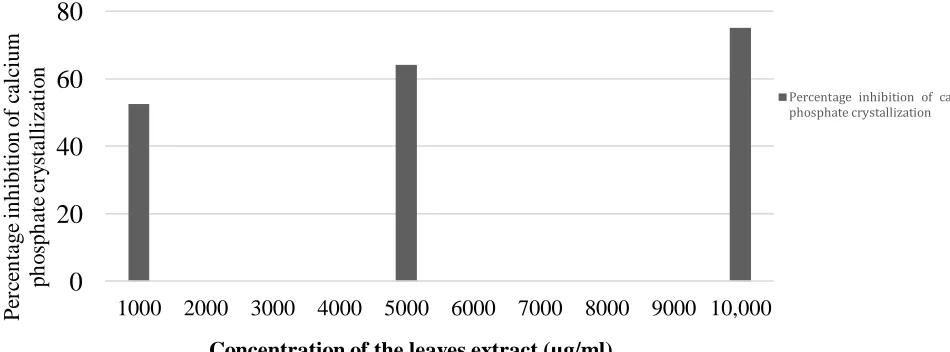
Figure 3: Percentage inhibition of calcium phosphate crystallization.
increase in the surface area/volume ratio of the cells which could have been brought about by an expansion of membrane or by the shrinkage of the cell, and an interaction with membrane proteins (Shinde et al.,1999). Based on the results from the current study, it indicates that C. intybus leaves extract could be of use in the treatment of inflammation based on the dosage. These results are in accordance with the study on Enicostemma axillare, where the fractions showed dose dependent anti-inflammatory activity (Leelaprakash et al.,2011).
From the data given in Figure 2, there was a dose dependent increase in percentage inhibition of albumin denaturation by hydro-ethanolic extract of C. intybus leaves extract. The results showed that C. intybus leaves extract at concentration 500 μg/ml give significant protection. However, the percentage inhibitions of albumin denaturation shown by the extract doses were lower than that obtained for 100 μg/ml of Aspirin. The proteins denatured through heat treatment expresses antigens that
are related to type β hypersensitivity. Though denatured, these proteins work as effective as a native protein and they are involved in the stimulation of delayed hypersensitivity. The denaturations of proteins are considered to be one of the reasons for inflammation. Due to the production of auto-antigen, inflammatory diseases such as rheumatoid arthritis take place due to the denaturation of protein in vivo. A number of NSAIDs are involved in the prevention of denaturation of proteins, along with the inhibition of COX enzyme (Sen et al.,2015). Based on the results from the current study, it indicates that C. intybus leaves extract could be of use in the treatment of inflammation based on the dosage. These results are in accordance with the study on E. axillare, where the fractions showed dose dependent anti-inflammatory activity (Leelaprakash et al.,2011).
0 10 20 30 40 50 60 70 80 90
1000 2000 3000 4000 5000 6000 7000 8000 9000 10,000
P
er
ce
n
ta
ge
i
n
h
ib
it
io
n
o
f
ca
lc
ium
o
xa
la
te
c
ry
st
al
li
za
ti
o
n
Concentration of the leaves extract (µg/ml)
Percentage
inhibition of
calcium oxalate
crystallization
Figure 4: Percentage inhibition of calcium oxalate crystallization.
protection against the calcium phosphate and calcium oxalate mineralization. The extract at concentration 10,000 (µg/ml) was found to have a significantly high potential in controlling calcium phosphate and oxalate crystallization. Thus, the extract may aid in the prevention of nucleation, aggregation, growth and retention of calcium phosphate stones in the urinary tract. Due to supersaturation of urine, the calcium crystallization takes place within the urinary tract. This process triggers a series of events, which includes nucleation, growth and aggregation (Patel et al., 2011).
For the research on urolithiasis, in vitro crystallization models have been widely used. The extract prevents the precipitation of the calcium phosphate and calcium oxalate crystals. The nucleation is inhibited through the adsorption of the compounds present in the extract on the surface of the crystals (Phatak et al.,2015). The leaves of the plant C. intybus have proved to possess the capacity to prevent the stone formation by inhibiting the nucleation process with increasing concentrations of the fractions. The results of this study are in accordance with the inhibitory activity of the leaf extract of Kalanchoe pinnata on the nucleation and aggregation of calcium crystals as reported in the study of Phatak et al. (2015).
The results obtained from the studies have shown that C. intybus leaves possess a potential to inhibit inflammation and urolithiasis. This indicates that the leaves of C. intybus could be used in the formulations of drugs against inflammation related chronic diseases and urolithiasis.
Conclusion
In this study, the extraction for the plant C. intybus was carried out and tested for inflammatory and anti-urolithiatic activity. From this study, it is concluded that maceration was the suitable method of extraction of C. intybus plant and it shows efficient anti-inflammatory and anti-urolithiatic activity. Thus, the plant C. intybus could be used as a prolific resource for drugs.
ACKNOWLEDGEMENTS
The authors are grateful to Dr. S. Prabhu for his valuable guidance and suggestions. With great pride, we would like to take this opportunity to thank everyone who has been with us throughout the discussion and planning of this project.
REFERENCES
Abbas ZK, Saggu S, Sakeran MI, Zidan N, Rehman H, Ansari AA (2015). Phytochemical, antioxidant and mineral composition of hydroalcoholic extract of chicory (Cichorium intybus L.) leaves. Saudi J. Biol. Sci. 22(3): 322-326.
Al-Snafi AE (2016). Medical importance of Cichorium intybus–A review. IOSR J. Pharm. 6(3): 41-56.
Basa’ar O, Fatema S, Alrabie A, Farooqui M (2016). Supercritical Fluid Extraction of Cichorium intybus (L) and it’s Characterization. Int. J. Chem. Pharm. Sci. 9(4): 2936-2944.
Farnsworth NR, Akerele O, Bingel AS, Soejarto DD, Guo Z (1985). Medicinal plants in therapy. Bulletin of the World Health Organization. 63(6): 965. Bais HP, Ravishankar GA (2001). Cichorium intybus L.—cultivation,
processing, utility, value addition and biotechnology, with an emphasis on current status and future prospects. J. Sci. Food Agric. 81(5): 467– 484.
Jain H, Parial SD, Jarald E, Daud AS, Ahmad S (2010). Extraction of Ashwagandha by conventional extraction methods and evaluation of its anti-stress activity. Int. J. Green Pharm. 4(3): 183-184
Jančić D, Todorović V, Basić Z, Šobajić S (2016). Chemical composition and nutritive potential of Cichorium intybus L. leaves from Montenegro. J. Serbian Chem. Society. 81(10): 1141-1149
Khan A (2018). Prevalence, pathophysiological mechanisms and factors affecting urolithiasis. Int. Urol. Nephrol. 50(5): 799-806.
Leelaprakash G, Dass SM (2011). In vitro anti-inflammatory activity of ethanol extract of Enicostemma axillare. Int. J. Drug Dev. Res. 3(3): 189-195
Mandavia DR, Patel MK, Patel JC, Anovadiya AP, Baxi SN, Tripathi CR (2013). Anti-urolithiatic effect of ethanolicextract of Pedalium murex linn. fruits on ethylene glycol-induced renal calculi. Urol. J. 10(3): 946-952.
Patel MA, Patel PK, Seth AK (2011). Inhibitio of calcium oxalate crystallization by the fruit extracts of Piper longum L. Pharmacologyonline. 2: 1169-1177.
Phatak RS, Hendre AS (2015). In-vitro antiurolithiatic activity of Kalanchoe pinnata extract. International Journal of Pharmacogn. Phytochem. Res.
7(2): 275-279.
Saggu S, Sakeran MI, Zidan N, Tousson E, Mohan A, Rehman H (2014). Ameliorating effect of chicory (Chichorium intybus L.) fruit extract against 4-tert-octylphenol induced liver injury and oxidative stress in male rats. Food Chem. Toxicol. 72:138-146.
Sen S, Chakraborty R, Maramsa N, Basak M, Deka S, Dey BK (2015). In vitro
anti-inflammatory activity of Amaranthuscaudatus L. leaves. Indian J. Nat. Prod. Resour. 6(4): 326-329.
Shinde UA, Phadke AS, Nair AM, Mungantiwar AA, Dikshit VJ, Saraf MN (1999). Membrane stabilizing activity—a possible mechanism of action for the anti-inflammatory activity of Cedrusdeodara wood oil. Fitoterapia. 70(3): 251-257.
Sofia NH, Walter TM (2016). Prevalence and risk factors of kidney stone. Glob. J. Res. Anal. 5(3)
Steinmeyer J (2000). Pharmacological basis for the therapy of pain and inflammation with nonsteroidal anti-inflammatory drugs. Arthritis Res. 2(5):379–385.
Street RA, Sidana J, Prinsloo G (2013). Cichorium intybus: traditional uses, phytochemistry, pharmacology, and toxicology. Evid. Based Complement. Alternat. Med. doi: 10.1155/2013/579319
Vijaya T, Kumar MS, Ramarao NV, Babu AN, Ramarao N (2013). Urolithiasis and its causes-short review. J. Phytopharmacol. 2(3): 1-6.
Cite this article as:
Nanditha R, Yamini SN, Lakshminarayanan CP, Sukumaran P (2018). In-vitro evaluation of inflammatory and anti-urolithiatic activity of Cichorium intybus leaves extract. Acad. J. Med. Plants. 6(6): 115-121.
Submit your manuscript at: