The Open Journal of Occupational Therapy
The Open Journal of Occupational Therapy
Volume 7
Issue 4 Fall 2019 Article 10
October 2019
Effect of Verbal Directions on Grip Strength Evaluated Using the
Effect of Verbal Directions on Grip Strength Evaluated Using the
Handheld Dynamometer
Handheld Dynamometer
Laura Walsh
Thomas Jefferson University - USA, [email protected]
Marie-Christine Potvin
Thomas Jefferson University - USA, [email protected]
Follow this and additional works at: https://scholarworks.wmich.edu/ojot
Part of the Occupational Therapy Commons
Recommended Citation Recommended Citation
Walsh, L., & Potvin, M. (2019). Effect of Verbal Directions on Grip Strength Evaluated Using the Handheld Dynamometer. The Open Journal of Occupational Therapy, 7(4), 1-5. https://doi.org/10.15453/
2168-6408.1584
This document has been accepted for inclusion in The Open Journal of Occupational Therapy by the editors. Free, open access is provided by ScholarWorks at WMU. For more information, please contact
Abstract Abstract
Background: Grip strength measurement using the handheld dynamometer is a key aspect of the evaluation of an upper extremity injury. The handheld dynamometer manufacturer has established research-based guidelines outlining body positioning during grip strength measurement. However, verbal direction guidelines, while provided, have not yet been shown to be most effective through research. This study seeks to determine whether the use of one of two types of verbal directions, with and without encouragements, resulted in greater grip strength as measured by the handheld dynamometer.
Method: The grip strength of healthy females (n = 60) was compared using two sets of prerecorded verbal directions administered in random order. All other procedures were constant and closely followed a standardized procedure.
Results: A statistically significant difference in the right- and left-hand grip strength (mean difference: 5.55 and 5.74 lb, respectively) was found between the two sets of verbal directions with verbal encouragement eliciting higher strength (p < 0.0001).
Conclusions: Verbal directions significantly affect grip strength scores in healthy females when evaluated using the handheld dynamometer. Evaluators should use verbal directions with encouragements when seeking to elicit maximum grip strength.
Comments
The authors report that they have no conflicts of interest to disclose.
Keywords Keywords
dynamometer, grip strength, verbal directions
Credentials Display
Laura Walsh, OTD, OTR/L, CHT Marie-Christine Potvin, PhD, OTR/L
Copyright transfer agreements are not obtained by The Open Journal of Occupational Therapy (OJOT). Reprint permission for this Applied Research should be obtained from the
corresponding author(s). Click here to view our open access statement regarding user rights and distribution of this Applied Research.
DOI: 10.15453/2168-6408.1584
Grip strength measured by the handheld dynamometer is imperative in the evaluation of patients who have suffered an upper extremity injury. It provides objective information regarding patients’ responses to treatment, functional ability, and prediction of recovery (MacDermid, Kramer, Woodbury, McFarlane, & Roth, 1994; Peters et al., 2011). Grip strength measurement is a factor that helps
determine a patient’s recovery in areas of fitness and return to work after injury (Hamilton, Balnave, & Adams, 1994). In addition, it is often used to detect submaximal effort by individuals whose sincerity in reporting inability to work is questioned (Sindhu, Shechtman, & Veazie, 2012; Tredgett & Davis, 2000). Grip strength is used not only to evaluate individuals who have suffered upper extremity injuries, but also as a predictor of the degree of disability in older men and of overall quality of life (Sayer et al., 2006).
The manufacturer of the handheld dynamometer and the American Society of Hand Therapists (ASHT) provide a recommendation for the positioning of the patient’s shoulder, elbow, forearm, and wrist while grip strength is being evaluated (Fess, 1992; Lafayette Jamar Hand Dynamometer User’s Manual, 2004). The handheld dynamometer manufacturer user’s manual references an article by Mathiowetz and colleagues (1985)regarding the verbal directions to be given during grip strength evaluation. These authors did not test which verbal directions result in patients displaying the greatest grip strength (Mathiowetz et al., 1985). Instead, they reference a prior study, which itself states that “future studies are needed to determine whether . . . non-standardized verbal directions would
significantly affect hand strength scores” (Mathiowetz, Weber, Volland, & Kashman, 1984, p. 226). The ASHT’s Clinical Assessment Recommendations (2015) also reference the article by Mathiowetz and colleagues (1984) in terms of which verbal directions should be used during testing of grip strength with a handheld dynamometer. Several studies have been conducted to determine the effect of different upper extremity positions on grip strength evaluation using the handheld dynamometer, but there is of yet no published study that investigates the effect of different verbal directions (MacDermid et al., 1994; Parvatikar & Mukkannavar, 2009).
One study has investigated the effect of verbal directions on static grip strength and found that verbal directions have a statistically significant impact on the grip strength when measured by an isokinetic wrist dynamometer (Jung & Hallbeck, 1999). This study confirms that verbal directions impact measured grip strength, although it is unclear whether this effect would occur with a handheld dynamometer. Thus, the lack of tested verbal directions when measuring maximal grip strength with a handheld dynamometer might affect therapists’ ability to compare values of grip strength between studies, comparison of a patient’s results to norms or before/after intervention, and between therapists (Roberts et al., 2011). Considering the value of grip strength measurement clinically, a standardized set of verbal directions that generates maximal grip strength in patients should be established.
The objective of this study was to determine whether the use of one of two types of verbal directions would result in greater grip strength as measured by the handheld dynamometer. It was
hypothesized that verbal encouragement would elicit significantly higher grip strength values (p < 0.05).
Method Design
A methodological study was conducted to further establish the reliability and validity of the verbal directions given when using the handheld dynamometer for maximal grip strength measurement (Portney & Watkins, 2009).
1 Walsh and Potvin: Effect of verbal directions on grip strength
Subjects
A convenience sample of 60 healthy female university students and faculty was used. A sample size estimation was conducted that determined that 60 was the number of subjects needed to find a statistically significant difference between the two sets of verbal directions, if one was truly present. The subjects were recruited from the university student center. The study inclusion criteria required
participants to be female, between 20 and 50 years of age, and with no prior or present upper extremity injury or disease that might cause hand or arm weakness. The use of healthy subjects assists in
documenting the efficacy of the verbal directions without influence from concomitant symptoms, such as muscle fatigue, that may occur from a prior or present injury or pathological conditions (Pasqualetti, Gori, Blandizzi, & del Tacca, 2010). The study was approved by the university’s institutional review board and all subjects provided informed written consent.
Data Collection Procedure
Data collection procedure for each subject consisted of two separate testing sessions 5 min apart. Each session consisted of three grip strength trials using a handheld hydraulic dynamometer to measure grip strength in each hand starting with the right hand. The dynamometer was calibrated prior to each testing day. The grip strength value to the nearest pound was recorded on the data collection sheet. The subjects’ grip strength was assessed using the body position described in the manufacturer’s user manual with the dynamometer position described by ASHT (Fess, 1992).This standardized positioning includes asking the subject to sit with her shoulder adducted and rotated neutrally, her elbow flexed at 90°, and her forearm and wrist in a neutral position (Fess & Moran, 1981).The following directions were read by the first author to each of the subjects prior to testing:
Your hand strength is going to be measured with this tool called the handheld dynamometer. There will be two sessions. In each session, you will be asked to squeeze this tool three times with each hand. You will be given a 5-min break between the two sessions.
Then, each subject was given, in random order, one set of verbal instructions during one test session and the other set of verbal instructions during the other test session. Random assignment was determined by simple draw of papers identified as Group A or Group B. The subjects were given a 30 s break between each grip strength trial to minimize fatigue.
The verbal directions for the grip strength evaluation were prerecorded in a neutral tone of voice to minimize potential confounding bias. For Condition 1 (i.e., Verbal Directions 1), the verbal directions with encouragements described by Mathiowetz and colleagues (1984) were used. Specifically, Verbal Directions 1 were, “Are you ready? Squeeze as hard as you can,” and as the subject began to squeeze. The recording continued with the encouragements, “Harder! Harder! Relax.” After the first trial, the score was recorded, and the test was repeated with the same instructions for the second and third trials and for the other hand, according to the protocol established by Mathiowetz and colleagues (1984).For Condition 2 (i.e., Verbal Directions 2) the same directions, but without encouragements, were used (i.e., “Are you ready? Squeeze. Relax”). After the first trial, the score was recorded, and the test was repeated with the same instructions for the second and third trials and for the other hand. Group A was given Verbal Directions 1 in the first test session, whereas Group B was given Verbal Directions 2 in the first test session. The prerecorded direction was played by the first author who also recorded the grip
strength.
2 https://scholarworks.wmich.edu/ojot/vol7/iss4/10
Data Analysis Plan
The grip strength scores from the two sets of verbal directions were compared through a two-tail paired t-test. A p-value cut-off of 0.05 was used to determine statistical significance. Cohen’s D effect size was computed to determine the clinical significance of the results. In addition, a two-tailed paired t -test was run to determine if receiving verbal directions with encouragement versus verbal directions with no encouragement first or second had a significant impact on grip scores.
Results
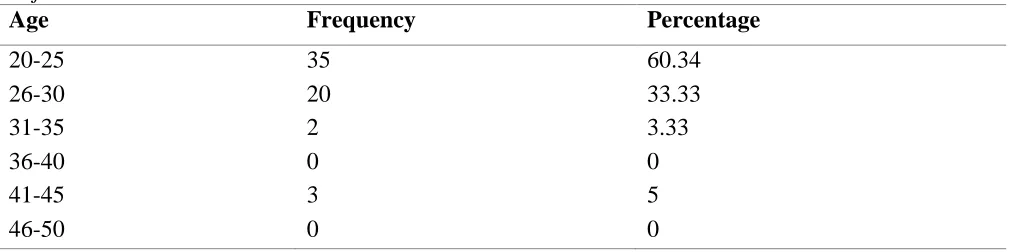
Sixty right-hand dominant (96.66%) healthy females ranging from 20 to 45 years of age participated in the study (see Table 1). The results of the study were nonequivocal. Verbal directions with encouragement yielded statistically significant greater grip strength in both the right and left hand (p < 0.0001) compared to verbal directions without encouragements (see Table 2). Simple
encouragement with verbal direction results in healthy females producing an average grip strength of 5.55 and 5.74 lb greater in the right and left hand, respectively. This corresponds to an average grip strength of 8% and 9% higher when verbal encouragement was given. In fact, the Cohen D effect size of using verbal direction with encouragement was .52 for the right hand and .51 for the left hand. In
addition, there was no statistically significant difference in comparing right hand and left hand grip strength when verbal encouragement was given first or second, with a p < .2826 for the right hand and a p < .3650 for the left hand. This supports that the order of the directions did not have an impact on grip strength scores and, therefore, the statistical difference was based on the verbal directions.
Table 1
Subjects Characteristics
Age Frequency Percentage
20-25 35 60.34
26-30 20 33.33
31-35 2 3.33
36-40 0 0
41-45 3 5
46-50 0 0
Table 2
Mean and Standard Deviation of Maximal Grip Strength
Mean SD Range
Right hand with verbal encouragement 69.72 13.50 28-106 Right hand without verbal encouragement 64.17 13.00 25-101 Left hand with verbal encouragement 64.17 13.00 16-105 Left hand without verbal encouragement 58.43 16.37 12-102
Discussion
This study established that verbal directions have an impact on maximum grip strength measured by the handheld dynamometer. Specifically, verbal directions with simple encouragement (i.e., “Harder! Harder! Relax”) elicited statistically significant higher maximal grip strength values. These verbal
3 Walsh and Potvin: Effect of verbal directions on grip strength
directions with encouragement resulted in an average grip strength that was approximately 5.5 lb, or 8% greater, than verbal directions without encouragement, an effect size of .51. Effect size between .5 and .8 are indicative of a moderate impact of the intervention, or in this case, verbal directions on the outcome, grip strength (Portney & Watkins, 2009). In simple terms, a moderate effect size means that the
difference between the two groups is, on average, about half of the baseline standard deviation (Portney & Watkins, 2009).
The results from this study confirm those of Jung and Hallbeck (1999), who found that in healthy males, verbal directions with encouragement yielded greater measured grip strength when measured by an isokinetic wrist dynamometer. Thus, in healthy males and females, regardless of the tool used to measure grip strength, verbal direction with encouragement yields statistically significant greater grip strength. Further, the verbal directions with encouragements used in this study were those proposed in other studies (Mathiowetz et al., 1984; Mathiowetz and colleagues (1985). Thus, this study confirmed these previous’ authors assumptions that these verbal directions with encouragement would elicit higher grip strength scores (Mathiowetz et al., 1985; Mathiowetz et al., 1984). The verbal directions proposed by Mathiowetz and colleagues (1984) have since been included in ASHT’s Clinical Assessment
Recommendations with the modification that the latter suggest that the word harder should be said three times instead of two (MacDermid, Solomon, & Valdes, 2015). The health care community is encouraged to adopt verbal directions with encouragement as standard to ensure consistency with testing grip
strength using the handheld dynamometer.
Although the difference of 5.5 lb, or 8%, found in this study may appear large, and clearly the verbal direction with encouragement yielded greater maximum strength, the difference should be examined with consideration for clinical importance. The smallest difference in grip strength that a person would notice as an improvement, known as minimally clinically important difference (MCID), was estimated to range between 13.66 and 14.33 lb in people who have had a stroke and an upper extremity fracture (Lang, Edwards, Birkenmeier, & Dromerick, 2008).
Limitations of the Study
The authors acknowledge the potential limitations of this study. The results of this study should be generalized with caution beyond the population under study, as gender, age, and health status may impact the degree to which verbal encouragement affects maximum grip strength. Thus, it is unclear whether older adults and individuals with health impairments would also exert higher maximum grip strength when given verbal encouragement. Although this study included only females, since it confirms a similar study’s results that included only males, it is unlikely that gender has an impact on response to verbal encouragements (Jung & Hallbeck, 1999).Furthermore, since the average measured grip strength in this study was similar to those of a population-based study of healthy females, it is unlikely that occupation has an impact on response to verbal encouragement (Massy-Westropp, Gill, Taylor, Bohannon, & Hill, 2011). In addition, to eliminate the possibility of researcher bias, using a data collector who is blinded to the study hypothesis would be preferable in future studies.
Conclusion
This study found that verbal directions with encouragement yield statistically significant greater grip strength in healthy females. Verbal directions with encouragement had, in fact, a moderate effect (0.5) on measured grip strength resulting in healthy subjects generating, on average, approximately 5 lb more of strength. Hence, for the time being, it is recommended that therapists and researchers who want to elicit maximum grip strength in their patients or subjects using the handheld dynamometer provide
4 https://scholarworks.wmich.edu/ojot/vol7/iss4/10
encouragement with the verbal directions. In addition, those reading existing literature should pay attention to whether the verbal directions in the studies included encouragement to determine whether results can be compared. In ideal situations, a standardized set of verbal directions would be used across all clinical settings and research studies when testing grip strength with the handheld dynamometer.
References
Fess, E. E. (1992). Grip strength (2nd ed). Chicago, IL: American Society of Hand Therapists.
Fess, E. E., & Moran, C. A. (1981). Clinical assessment
recommendations. Indianapolis, IN: American
Society of Hand Therapists.
Hamilton, A., Balnave, R., & Adams, R. (1994). Grip strength testing reliability. Journal of Hand
Therapy, 7(3), 163-170.
https://doi.org/10.1016/s0894-1130(12)80058-5 Jung, M. C., & Hallbeck, M. S. (1999). The effects of
instruction, verbal encouragement, and visual feedback on static handgrip strength.
Proceedings of the Human Factors and Ergonomics Society Annual Meeting, 43(12), 703-707.
https://doi.org/10.1177/154193129904301215 Lafayette Instrument Jamar Hand Dynamometer User’s
Manual. (2004). Retrieved from https://www.si-instruments.com.au/ Lang, C. E., Edwards, D. F., Birkenmeier, R. L., &
Dromerick, A. W. (2008). Estimating minimal clinically important differences of upper-extremity measures early after stroke. Archives
of Physical Medicine and Rehabilitation, 89(9),
1693-1700.
https://doi.org/10.1016/j.apmr.2008.02.022 MacDermid, J. C., Kramer, J. F., Woodbury, M. G.,
McFarlane, R. M., & Roth, J. H. (1994). Interrater reliability of pinch and grip strength measurements in patients with cumulative trauma disorders. Journal of Hand Therapy,
7(1), 10-14.
https://doi.org/10.1016/s0894-1130(12)80035-4 MacDermid, J. C., Solomon, G., & Valdes, K. (2015).
Clinical Assessment Recommendations (3rd ed.).
Mount Laurel, NJ: American Society of Hand Therapists.
Massy-Westropp, N. M., Gill, T. K., Taylor, A. W., Bohannon, R. W., & Hill, C. L. (2011). Hand grip strength: Age and gender stratified normative data in a population-based study.
BMC Research Notes, 4(127), 1-5.
https://doi.org/10.1186/1756-0500-4-127 Mathiowetz, V., Kashman, N., Volland, G., Weber, K.,
Dowe, M., & Rogers, S. (1985). Grip and pinch strength: Normative data for adults. Archives of
Physical Medicine and Rehabilitation, 66(2),
69-74. Retrieved from
https://pdfs.semanticscholar.org/70bb/13c8924c9 1c61c4c0141f4b45308d4e0f4ca.pdf
Mathiowetz, V., Weber, K., Volland, G., & Kashman, N. (1984). Reliability and validity of grip
and pinch strength evaluations. Journal of Hand
Surgery, 9(2), 222-226.
https://doi.org/10.1016/s0363-5023(84)80146-x Parvatikar, V. B., & Mukkannavar, P. B. (2009).
Comparative study of grip strength in different positions of shoulder and elbow with wrist in neutral and extension positions. Journal of
Exercise Science and Physiotherapy, 5(2), 67-75.
Retrieved from
http://medind.nic.in/jau/t09/i2/jaut09i2p67.pdf Pasqualetti, G., Gori, G., Blandizzi, C., & del Tacca, M.
(2010). Healthy volunteers and early phases of clinical experimentation. European Journal of
Clinical Pharmacology, 66(7), 647-653.
https://doi.org/10.1007/s00228-010-0827-0 Peters, M. J. H., van Nes, S. I., Vanhoutte, E. K., Bakkers,
M., van Doorn, P. A., Merkies, I. S. J., & Faber, C. G. (2011). Revised normative values for grip strength with the Jamar dynamometer. Journal of
thePeripheral Nervous System, 16(1), 47-50.
https://doi.org/10.1111/j.1529-8027.2011.00318.x
Portney, L. G., & Watkins, M. P. (2009). Foundations of
clinical research: Applications to practice (3rd
ed.). Upper Saddle River, NJ: Pearson.
Roberts, H. C., Denison, H. J., Martin, H. J., Patel, H. P., Syddall, H., Cooper, C., & Sayer, A. A. (2011). A review of the measurement of grip strength in clinical and epidemiological studies: Towards a standardised approach. Age and Ageing, 40(4), 423-429. https://doi.org/10.1093/ageing/afr051 Sayer, A. A., Syddall, H. E., Martin, H. J., Dennison, E. M., Roberts, H. C., & Cooper, C. (2006). Is grip strength associated with health-related quality of life? Findings from the Hertfordshire cohort study. Age and Ageing, 35(4), 409-415. https://doi.org/10.1093/ageing/afl024 Sindhu, B. S., Shechtman, O., & Veazie, P. J. (2012).
Identifying sincerity of effort based on the combined predictive ability of multiple grip strength tests. Journal of Hand Therapy, 25(3), 308-319.
https://doi.org/10.1016/j.jht.2012.03.007 Tredgett, M. W., & Davis, T. R. C. (2000). Rapid repeat
testing of grip strength for detection of faked hand weakness. Journal of Hand Surgery, 25(4), 372-375. https://doi.org/10.1054/jhsb.2000.0433
5 Walsh and Potvin: Effect of verbal directions on grip strength