doi: 10.15171/rdme.2019.017 https://rdme.tbzmed.ac.ir
Measuring knowledge and experience sharing status of faculty
members while designing and validating tools
Maryam Akbarilakeh1ID, Masoomeh Jahani1ID, Fatemeh Jahani2*ID
1Department of Medical Education, Shahid Beheshti University of Medical Sciences, Tehran, Iran
2Scientific Resources Management, Central Library and Archives, Shahid Beheshti University of Medical Sciences, Tehran, Iran
Introduction
Organizations look at knowledge as a strategic resource in order to maintain their dynamism and survival in the course of environmental changes and developments, and such an important asset can add to organizational flexibility so that organizations can achieve their strategic goals in challenging environments. This valuable asset, knowledge, cannot be competitive for the organization by itself, but it can be managed for optimal use. Through knowledge management, organizations can manage their employees’ knowledge and apply this to the organization’s goals. One important strategy for deploying and applying knowledge management in organizations is a robust knowledge-sharing process through which individuals transfer their knowledge and experience to one another.1 Universities
play a key role in disseminating cultural and knowledge-sharing structures in both public and private sectors as trustees of knowledge production as well as knowledge sharing. Qualitative and quantitative improvement of knowledge sharing in institutions and expansion of the culture of knowledge sharing among faculty members, students and university staff can improve the performance of knowledge sharing at other levels and sectors of society. Therefore, knowledge sharing in universities and among educational and research institutions plays a basic role in achieving the goals of the organization as a key element.2
One of the most prestigious methods of behavior forecasting is the planned behavior model, which can be used to examine beliefs, values and attitudes that exist in the context of knowledge sharing behavior due to having
*Corresponding author: Fatemeh Jahani, Email: [email protected]
PPuubblliisshhiinngg G Grroouupp TUOMS
Article Type:
Original Research
Article History:
Received: 19 June 2019 Accepted: 7 Oct. 2019 epublished: 30 Dec. 2019
Keywords:
Knowledge management Faculty member University
Abstract
Background: The knowledge and experience sharing of faculty and staff at universities
and research institutes with their communities is a key element of success in achieving the organizational goals. Faculty members play a key role in universities. Accordingly, recognizing the importance of this capability in faculty members, this study aimed to investigate the status of knowledge and experience sharing based on the Ajzen model in faculty members at the Shahid Beheshti University of Medical Sciences in 2018.
Methods: This descriptive-analytical study was conducted with 300 faculty members at the Shahid Beheshti University of Medical Sciences using stratified random sampling and simple random sampling. Data was gathered using a researcher created questionnaire and the analysis was conducted using SPSS 25 and LISREL 8.8.
Results: The results showed that the significance level of a test for the relationship between knowledge and experience sharing components was less than α = 0.05, and there was a positive and significant correlation between knowledge and experience sharing components in faculty members at the Shahid Beheshti University of Medical Sciences. Most of the respondents’ agreement regarding “knowledge and experience sharing” were related to behavioral control (mean=3.87; SD=0.353), behavior (mean=3.56; SD=0.328), attitude (mean=3.30; SD=0.344) subjective norm (mean=3.16; SD=0.435) and intention (mean=2.76; SD=0.284).
Conclusion: This tool can be used by managers and university presidents to manage and translate knowledge in medical sciences universities.
Article info
structures that examine the important dimensions of behavior. The theory of “planned behavior” is a cognitive-social theory designed to understand and predict whether human behavior is enacted. Behavioral beliefs create favorable or unfavorable attitudes toward certain behaviors. The result of normative beliefs is expressed in the subjective norm, and control beliefs determine perceived behavioral control. In general, attitudes about behavior, subjective normality and perceived behavioral control lead to the formation of behavioral intention; as a general rule, the more desirable attitude toward behavior and subjective norm, the greater the perceived behavioral control, and the stronger the person’s intention to perform the behavior should be, given a sufficient degree of actual control over the behavior.3
In this regard, the Shahid Beheshti University of Medical Sciences, as a knowledge-based organization, is interested in managing the knowledge and knowledge sharing of faculty members, who are valuable assets to the organization and play a central role in the education and training of students in various medical sciences disciplines as well as health services among different classes of society. Faculty members can increase their efficiency and effectiveness by being encouraged to share their knowledge and experience, ultimately increasing the productivity and performance of the educational, health, and treatment systems.
This study was conducted to determine the current status of sharing knowledge and experience from the viewpoints of faculty members at the Shahid Beheshti University of Medical Sciences. It includes a discussion and review of the components knowledge and experience sharing based on the Ajzen model. Knowledge management is a principal concern of knowledge-based organizations. According to reports and documentation provided by the education and research section of Ministry of Health, Treatment and Medical Education, the ministry faces major challenges regarding the weakness of knowledge approaches such as knowledge management, lack of knowledge and expertise regarding the use of knowledge capacities of faculty members, weakness in applying effective human resources strategies in the university, and low motivation of faculty members in terms of promoting a participatory culture and the spirit of cooperation and innovation. To date, no study has been conducted on this issue from the viewpoint of faculty members at the Shahid Beheshti University of Medical Sciences; thus, addressing this issue can be very valuable not only for the Shahid Beheshti University of
Medical Sciences but also for other organizations.
Materials and Methods
This descriptive-analytical study was performed among 300 faculty members at the Shahid Beheshti University of Medical Sciences using stratified random sampling along with simple random sampling. According to the literature, Ajzen’s model is useful for assessing knowledge and experience sharing status, but there was no valid and reliable tool for assessing knowledge sharing status in Persian. Therefore, this study designed and constructed a valid tool in Persian and investigated the status of knowledge and experience sharing among faculty members of the Shahid Beheshti University of Medical Sciences. The Knowledge Sharing Questionnaire – the Ajzen model of Lotfi Translation, 2013,4 consisting of 22
items, was the basis of the present research tool. However, there was no validity and reliability associated with the base questionnaire. Therefore, other items were used, gathered from a systematic review of the literature. The validity and reliability of the designed instrument were tested. The items related to the Ajzen model components used in other studies were validated in terms of their connection and correlation with each component. In the present study, the reliability and validity of the content, face and structure of the newly designed questionnaire was again assessed. The face and content validity of the researcher-made questionnaire was evaluated by the thesis supervisor, the thesis statistical advisor, and 15 knowledge management researchers. Factor analysis was used to assess the construct validity. The test statistic for all coefficients was greater than 1.96, supporting the construct validity. Cronbach’s alpha was used to measure reliability. The reliability of the entire questionnaire was 0.875, indicating the reliability is acceptable.
Among a population of 1480, a sample of 300 people was calculated using Cochran’s formula and applied using stratified random sampling and simple random sampling. Considering the probability of missingness in some questionnaires, a total of 325 questionnaires were distributed among faculty members of basic and clinical sciences with the academic rank of instructor, assistant professor, associate professor and full professor. A total of 300 questionnaires were returned, for a return rate of 92% (Table 1).
The questionnaire consisted of two parts. The first part of the questionnaire contained demographic information, including age, sex, highest academic degree, academic
Table 1. Population and sample calculation
Academic Rank Number in Population Percentage Number of Samples
Instructor 86 5.8 18
Assistant professor 765 51.6 155
Associate professor 405 27.3 82
Full professor 224 15.1 45
rank, and job experience. The second part consisted of 36 items to assess knowledge and experience sharing based on the Ajzen model with five subscales. These subscales consisted of the following: the five dimensions of knowledge and experience sharing behavior (Questions 1 to 8), intention to share knowledge and experience (Questions 9 to 16), attitude toward sharing knowledge and experience (Questions 17 to 23), behavioral control
in sharing knowledge and experience (Questions 24 to 30) and the subjective norm in sharing knowledge and experience (Questions 31 to 36). The items were extracted from the Ajzen model’s knowledge sharing questionnaire (4) and the research of Ramayah,5 Hosseini Sarkhosh et
al,6 Akhavan et al,7 and Bock et al,8 whose measures were
confirmed in previous studies. The items used a 5-point Likert scale where 1 was the lowest and 5 the highest. A score of 1 indicates a low level and 5 indicates a high level. The research questionnaire was developed to be similar to standard questionnaires, and face, content and structure validity were included in its development. In order to enhance the face and content validity of the measurement tool, the content was examined by the supervisor, a statistical advisor and some researchers in the field of knowledge management in terms of content, ambiguity, etc, and their feedback was considered in creating the final version of the questionnaire.
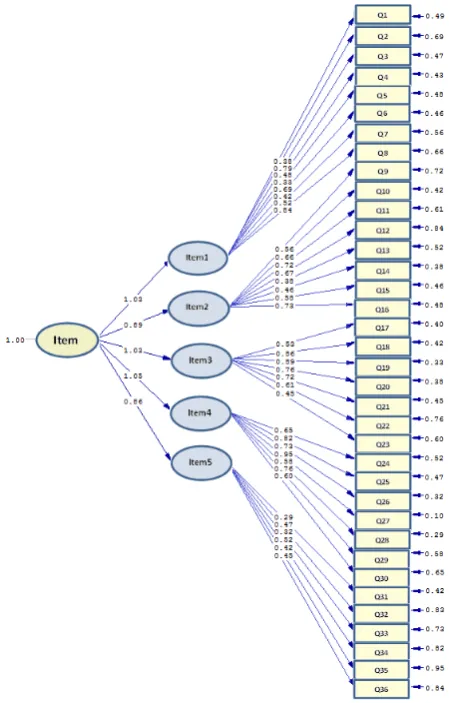
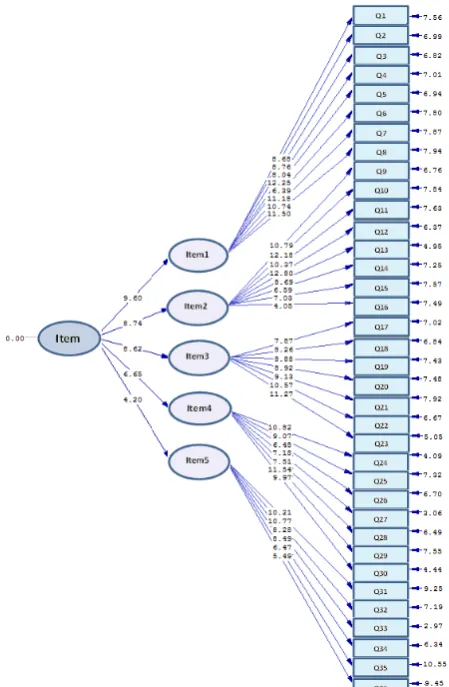
The face and content validity of Akhavan et al’s research questionnaire was ratified by eight experts in the field of knowledge management at various research centers. The face and content validity of Bock et al’s research questionnaire, as well as Hosseini Sarkhosh et al’s were approved by a number of experts in the field of knowledge management. The data were analyzed using SPSS 25 and LISREL 8.8. The findings show that the test statistic of all coefficients was greater than 1.96 and the average score of faculty members was 3.33. In defining the indicator of “sharing knowledge and experience,” all items were meaningful. The behavioral control component, with a coefficient of 1.05, had the highest effect, while the subjective norm component, with a coefficient of 0.86, had the lowest effect (Figures 1 and 2; Tables 2 and 3).
In this research, Cronbach’s alpha was used to measure the reliability of each section of the instrument prior to data collection. To assess Cronbach’s alpha, 30 copies of this questionnaire were completed by 30 participants. According to the results, the Cronbach’s alpha coefficient was 0.875 for the whole questionnaire. Therefore, the reliability of the questionnaire was favorable (Table 4). Akhavan et al,7 Bock et al,8 and Hosseini Sarkhosh et al6
reported Cronbach’s alpha coefficients of 0.883, 0.899, and 0.780, respectively. Generally, 0.70 is considered an acceptable level that indicates reliability.
Results
This study was conducted with the participation of 300 faculty members at the Shahid Beheshti University of
Medical Sciences in Tehran, Iran. The demographic data included age, sex, highest degree, academic rank, and job experience. Based on the findings, 58.9% respondents were male and 41.1% were female. In terms of age, 14.0% of respondents were 35 or under, 27.3% were between 36 and 45, 34.5% were between 46 and 55, and 24.3% were over 55. In terms of academic degree and practice, 8.1% of respondents held a master’s degree, 17.2% were general practitioners, 58.9% were specialists, and 15.8% were subspecialists. Considering academic rank, 6.3%
Figure 1. Factor analysis of the “knowledge and experience sharing” indicator in the state of standard coefficients. Note: Chi-square = 176.61, df = 65, P value = 0.000, RMSEA = 0.007.
Table 2. Coefficients of factor analysis for the knowledge and experience
sharing indicator
Variables Standard factor valueT
Knowledge and experience behavior 1.03 9.60
Intention to share knowledge and experience 0.89 8.74
Attitude toward sharing knowledge and experience 1.03 8.62
Behavioral control in sharing knowledge and
experience 1.05 6.65
Subjectivenorm in sharing knowledge and
were instructors, 46.6% were assistant professors, 26.6% were associate professors and 20.5% were full professors. In terms of job experience, 18.6% of respondents had 10 years or less job experience, 21.4% had between 11 and 20 years, 28.8% had between 21 and 30 years, and 32.2% had over 30 years. The number of male respondents, the age group of 46-55, specialists, and assistant professors comprised the majority of respondents. In an analysis of the correlation between knowledge and experience sharing components with a mean of 3.33 and a standard deviation of 0.348, the dimensions of knowledge and experience sharing were classified and studied.
Figure 2. The factor analysis of the indicator of sharing knowledge and
experience in a significant state. Note: Chi-square = 176.61, df = 65, P value = 0.000, RMSEA = 0.007.
Table 3. Characteristics of goodness of fit of factor analysis for the knowledge and experience sharing indicator
Goodness of fit criteria of the model Indicator Estimated value Favorable value
Chi-square χ2/df 2.717 maximum3
Root mean square error of approximation RMSEA 0.007 Maximum 0.1
Normed fit index NFI 0.99 Minimum 0.9
Non-normed fit index NNFI 0.99 About 1
Comparative fit index CFI 0.99 Minimum 0.9
Relative fit index RFI 0.98 Minimum 0.9
Goodness fit index GFI 0.97 Minimum 0.9
Adjusted fit index AGFI 0.93 Minimum 0.9
Considering the data distribution, Pearson’s correlation coefficient was used to express the relationship between variables. The correlation related to behavioral control in sharing knowledge and experience was 3.0 ± 87.35 and the least amount was related to intention to share knowledge and experience (2.0 ± 76.284; P > 0.05). Therefore, at a 95% confidence level, it can be said that there is a positive and significant correlation between the components of knowledge and experience sharing from the viewpoints of faculty members at the Shahid Beheshti University of Medical Sciences, and the correlation between knowledge and experience sharing components is direct and more than random: that is, the more each component increases, the more other component increase as well (Table 5).
A one-sample t test shows that the average of the “knowledge and experience sharing” variable was 3.33, which is higher than the expected mid-value (3) with a 0.275 deviation. The significance level of the test is less than P = 0.10. Therefore, with 90% confidence, it can be said that the status of sharing knowledge and experience among faculty members at the Shahid Beheshti University of Medical Sciences is desirable (Table 6).
Discussion
This study aimed at reviewing the status of sharing knowledge and experience based on the Ajzen model from the viewpoint of faculty members at the Shahid Beheshti University of Medical Sciences. The results of this study indicate that there is a positive and significant correlation among the components of knowledge and experience sharing from the viewpoint of faculty members at the Shahid Beheshti University of Medical Sciences. Based on the results of the calculations, with 95% confidence, knowledge and experience sharing in dimensions of behavior, attitude, behavioral control and subjective norm were favorable but in the intention towards knowledge and experience sharing was less than expected/unfavorable. Alipour Darvishi9 found that the variables of intention,
found a positive and significant effect in attitude, mental norms and perceived behavioral control on the intention to share knowledge. In addition, the results of the research showed a positive and significant effect of the intention and perceived behavioral control on knowledge sharing behavior. These results are consistent with our study in the dimensions of behavior, attitudes, behavioral control and the subjective norm towards sharing knowledge and experience, but inconsistent with the intention towards sharing knowledge and experience. Rajaeiazarkourani et al1 found that there was a significant and positive
difference in knowledge sharing among faculty members of selected universities in Isfahan based on sex, academic rank, job experience, and university; these results are inconsistent with the present study in terms of behavior towards sharing knowledge and experience. The highest mean was reported in the tendency towards knowledge sharing in the study of Bohlulet al10 and the components of
behavior, normative beliefs, control beliefs and behavioral beliefs towards sharing knowledge were the second highest. The results of a hierarchical linear regression showed that normative beliefs and control beliefs both directly and indirectly play a determinant role in creating
a tendency and a behavior in teachers’ knowledge sharing, while behavioral beliefs did not have a significant effect on the intention and behavior of knowledge sharing. The results of this research are in line with the present study for the dimensions of behavior, behavioral control and the subjective norm in sharing knowledge and experience, but inconsistent in terms of intention.
Kafashankakhaki et al11 showed that attitudes, mental
norms, behavioral beliefs, and normative beliefs affect the intention to share knowledge. Knowledge sharing intention has a direct and significant effect on the variety of individual behaviors; knowledge sharing attitude directly affects mental norms, knowledge sharing intention and input and output behaviors. The results of this study are in line with the present study on the dimensions of behavior, attitude, behavioral control and the subjective norm in sharing knowledge and experience, but not in intention. Armon et al12 found that attitudes of faculty
members at the Ardabil University of Medical Sciences, the status of information technology facilities, and their behavior towards knowledge sharing with colleagues were positive and favorable. In addition, based on the data, the organizational culture of the Ardabil University of
Table 4. Reliability of instrument
Scales Number of questions Cronbach's alpha
Knowledge and experience behavior 8 0.765
Intention to share knowledge and experience 8 0.971
Attitude toward sharing knowledge and experience 7 0.760
Behavioral control in sharing knowledge and experience 7 0.837
Subjective norm in sharing knowledge and experience 6 0.900
Knowledge sharing (Overall scale) 36 0.875
Table 5. Pearson’s correlation test of research hypothesis
Dimensions Behavior Intention Attitude Behavioral control Subjective norm Knowledge sharing
Behavior 1
1.000 0.4520.045 0.7590.000 0.6680.002 0.5900.006 0.6830.001
Intention 0.452
0.045 11.000 0.5420.014 0.7420.000 0.9540.000 0.9440.000
Attitude 0.759
0.000 0.5420.014 11.000 0.7520.025 0.5260.017 0.7300.000
Behavioral control 0.668
0.002 0.7420.000 0.7520.025 11.000 0.6420.002 0.6090.004
Subjective norm 0.590
0.006 0.9540.000 0.5260.017 0.6420.002 11.000 0.9520.000
Knowledge sharing (Overall scale) 0.683
0.001 0.9440.000 0.7300.000 0.6090.004 0.9520.000 11.000
Table 6. One-sample t-test: “Sharing knowledge and experience”
Variable N Distribution parameters Test statistic P value
Mean Standard deviation
Medical Sciences was also at a moderate level of knowledge sharing. According to the findings of this study, the faculty members’ attitude and behavior, as well as the status of information technology facilities for sharing knowledge were desirable, but organizational culture was at a lower level than other components. These results are consistent with the present study on the attitude toward sharing knowledge and experience.
Farrokh and Shahtalebi13 showed that there was a
significant relationship between self-directed learning and knowledge sharing behavior, self-efficacy and knowledge sharing behavior, and information literacy and knowledge sharing behavior. The results also showed that there was a significant relationship between the tendency to learn, self-management, and self-control dimensions with knowledge sharing behavior. The results of this research in behavioral control dimension in sharing knowledge and experience is in line with the present study. Akhavan et al7 found that intrinsic and extrinsic motivational
factors and the intention of knowledge sharing play an important role in the behavior of knowledge sharing. In other words, simultaneous supplying of motivational factors and knowledge sharing methods for employees leads to knowledge sharing behavior. The results of this study are consistent with the results of our study in the field of behavior in sharing knowledge and experience, but not in the intention toward knowledge and experience sharing.
Yeo and Gold14 have shown that the relationship
between knowledge sharing and attitude and behavior was positive, and the role of trust was identified as a catalyst. The results of this study are consistent with the present study in the dimensions of behavior and attitudes towards sharing knowledge and experience. Shahzadi et al15
showed that individual motivational factors had positive and significant relationships with optimistic behaviors of knowledge sharing among faculty members. The study also showed that the intention to share knowledge acts as an interface between the attitude towards knowledge sharing and knowledge sharing behavior; the results of this study are consistent with results of our study in the dimensions of behavior and attitude toward sharing knowledge and experience, but not in intention.
Rahman et al16 showed that attitudes and mental norms
both significantly and positively affect knowledge sharing behavior. Furthermore, it has been shown that the variables of the intention to share knowledge plays an important role as a mediator variable in these relationships. The results of this study are in line with the results of the present study in terms of attitudes and the subjective norm in sharing knowledge and experience, but not in intention. Bibi and Ali17 found that 24% of the change in knowledge sharing
behavior was due to changes in all independent variables, intrinsic motivation, external motivation, interpersonal trust, job participation, job satisfaction, and continuous commitment, which is in line with the results of the present
study in the field of behavior in sharing knowledge and experience. Nguyen et al18 found that knowledge sharing
intention is influenced by the place of knowledge sharing: the more comfortable the instructors feel, the more knowledge sharing takes place. The results of this research did not match the results of our study in the intention to share knowledge and experience. Samadi19 showed
that the components of the planned behavior theory significantly depend on the knowledge sharing. These components also had a significant and positive impact on knowledge sharing. The study showed that distributive justice significantly moderated the relationship between the two components of attitude and the subjective norm of the theory of planned behavior and knowledge sharing. The results of this study are consistent with the results of the present study in terms of attitudes and the subjective norm in sharing knowledge and experience.
Yilmaz20 showed that increasing the factor and reducing
the level of behavior by itself in community members improved knowledge sharing behavior; the highest factor load in the knowledge sharing behavior scale was derived from the Facebook acceptance scale. Today, Facebook is one of the most popular social networking services for creating virtual communities. In addition, the impact of Facebook behaviors by community members and the virtual sense of loneliness resulting from the use of Facebook was examined. The results of this study are in line with the results of the present study in terms of behavior in sharing knowledge and experience.
Conclusion
The results of this study indicate that there is a positive and significant relationship between knowledge and experience sharing components. The consensus among the sample respondents related to sharing knowledge and experience were, from highest to lowest, behavioral control, behavior, attitudes toward and experience, the mental norm and the intention towards sharing knowledge and experience, respectively. It is recommended that the strengths and weaknesses of the organization be identified, and training and retraining courses could be provided for faculty members along with an effective reward system to incentivize faculty members to share knowledge and experience within the university. Ultimately, the attention of authorities to this focus across different parts of the organization will lead to organizational excellence and increased productivity. One limitation of this study is that results of the research are derived from the faculty members at the Shahid Beheshti University of Medical Sciences and therefore cannot be generalized to other sectors. Further research is suggested in other aspects of academic and medical institutions.
Ethical approval
of Management and Medical Education Sciences of Shahid Beheshti University of Medical Sciences.
Competing interests
There is no conflict of study for authors in this study.
Authors’ contributions
MA designed and supervised the research. MJ collected the data and performed the study. FJ analyzed data and co-wrote the paper. The article was reviewed and approved by all authors.
Acknowledgements
The authors wish to thank all participants and the staff at the School of Management and Medical Education Sciences of Shahid Beheshti University of Medical Sciences.
References
1. Rajaeiazarkourani A, Rajaeipour S, Hoveyda R. Determining multiple relationships between knowledge sharing and capacity to attract knowledge by improving academic quality from the viewpoints of the faculty members of selected universities of Isfahan. Development of Medical Science Teaching. 2014;20(4):37-46. [Persian]. 2. Sohrabi B, Forouzandeh S, Raisi Vanani A. Providing a
comprehensive model for assessing knowledge sharing in project-based governmental organizations based on human, organizational and technical factors. Governmental Management. 2011;3(7):95-114. [Persian].
3. Mathieson K. Predicting user intentions: comparing the technology acceptance model with the theory of planned behavior. Inf Syst Res. 1991;2(3):173-91.
4. Knowledge Sharing Questionnaire - Ajzen Model (Trnslated by Lotfi). 2013. Available from: http://porseshname. com/?id=302. Accessed 23 November 2019.
5. Ramayah T. Factors influencing intention to share knowledge in an organization. Available from: http://www. ramayah.com/tutorialmaterials_0809/material_1.doc. Accessed 5 July 2016.
6. Hosseini Sarkhosh SM, Akhavan P, Kia A, Aminpour A. Examining Knowledge-sharing Behavior in a High-Tech Firm Based on the Theory of Planned Behavior. Innovation Management Journal. 2016;4(4):61-80. [Persian].
7. Akhavan P, Rahimi A, Mehralian G. Developing a model for knowledge sharing in research centers. VINE Journal of Information and Knowledge Management Systems. 2013;43(3):357-93. doi: 10.1108/VINE-06-2012-0020. 8. Bock GW, Zmud RW, Kim YG, Lee JN. Behavioral intention
formation in knowledge sharing: examining the roles of extrinsic motivators, social-psychological factors, and organizational climate. MIS Q. 2005;29(1):87-111. doi: 10.2307/25148669.
9. Alipour Darvishi Z. A compound model of Islamic Azad University academic member’s intent to knowledge sharing
with the approach of perceptual factors (Survey around North Branch of Tehran and Science and Researches Campus). Journal of Information Technology Management. 2014;6(1):107-26. doi: 10.22059/jitm.2014.50053. [Persian]. 10. Bohlul M, Hosseingholizadeh R, Karami M. The role
of individual, organizational and technical factors in forecasting behavioral, normative and controlling beliefs of teachers toward knowledge sharing. Education and Training. 2015;31(3):137-42. [Persian].
11. Kafashankakhaki M, Kamalzadeh S, Naji A, Rajabi M. Preconditions and consequences of intention to knowledge sharing among postgraduate students at the Shiraz University of Medical Sciences. Library and Information Science. 2016;19(3):73-97. [Persian].
12. Armon A, Pirzade K, Mahdavi A. Assessment of knowledge sharing among faculty members at the Ardabil University of Medical Sciences. 8th Annual Student Research Congress of Ardabil Medical Sciences University; 2017; Ardabi, Iran. [Persian].
13. Farrokh B, Shahtalebi B. The study of the relationship between self directed learning self efficacy and information literacy on the knowledge. Research in Curriculum Planning. 2018;15(56):148-61. doi: 10.30486/ jsre.2018.539730. [Persian].
14. Yeo RK, Gold J. Knowledge sharing attitude and behaviour in Saudi Arabian organisations: why trust matters. International Journal of Human Resources Development and Management. 2014;14(1-3):97-118. doi: 10.1504/ IJHRDM.2014.068082.
15. Shahzadi I, Hameed RM, Kashif AR. Individual motivational factors of optimistic knowledge sharing behavior among University academia. Bus Manag Rev. 2015;6(1):122-33. 16. Rahman MS, Osmangani AM, Daud NM, AbdelFattah
FAM. Knowledge sharing behaviors among non academic staff of higher learning institutions: attitude, subjective norms and behavioral intention embedded model. Libr Rev. 2016;65(1-2):65-83. doi: 10.1108/LR-02-2015-0017. 17. Bibi S, Ali A. Knowledge sharing behavior of academics in
higher education. J Appl Res High Educ. 2017;9(4):550-64. doi: 10.1108/JARHE-11-2016-0077.
18. Nguyen TP, Do HH, Nham PT, Nguyen MH, Nguyen TT. Knowledge sharing behavior in Vietnam telecommunication companies. Int Bus Manag. 2017;11(3):692-702. doi: 10.36478/ibm.2017.692.702.
19. Samadi S. Theory of planned behavior and knowledge sharing among nurses in patient computer management system: the role of distributive justice. Manag Sci Lett. 2018;8(5):427-36. doi: 10.5267/j.msl.2018.4.003.