DOI: 10.7324/JAPS.2020.102014 ISSN 2231-3354
Development and validation of the Vi-Med
®tool for medication
review
Thi Ha Vo1,2*, Tra Linh Hoang3, Erwin Martinez Faller4,5, Dang Thoai Nguyen1 1Faculty of Pharmacy, Pham Ngoc Thach University of Medicine, Ho Chi Minh 70000, Vietnam. 2Department of Pharmacy, Nguyen Tri Phuong Hospital, Ho Chi Minh 70000, Vietnam.
3Faculty of Pharmacy, Hue University of Medicine and Pharmacy, Hue University, Hue 49000, Vietnam. 4Research Management Center, Tagum Doctors College, Tagum City 8100, Philippines.
5Pharmacy Department, San Pedro College, Davao City 8000, Philippines.
ARTICLE INFO Received on: 23/09/2019 Accepted on: 09/12/2019 Available online: 05/02/2020
Key words:
Medication review, pharmacist intervention, documentation, tools, Vietnam.
ABSTRACT
Clinical pharmacy practice in Vietnam is unregulated by standard procedures, thus motivating this study, which developed and validated a tool called Vi-Med® for use in supporting medication review (MR) in Vietnamese hospitals. Six clinical pharmacists from six hospitals used the tool, which comprises three forms: Form 1 for the collection of patient information, Form 2 for the implementation of MR, and Form 3 for the documentation of pharmacist interventions (PIs). The tool also comes with eight pre-identified drug-related problems (DRPs) and seven PIs. The pharmacists were asked to categorize 30 PI-associated scenarios under appropriate DRPs and corresponding interventions. Concordance among the pharmacists was assessed on the basis of agreement level (%) and Cohen’s kappa (κ). We also evaluated the user-friendliness of the tool using a four-point Likert scale.Concordance in the panel with respect to DRPs and PIs was substantial (κ = 0.76 and 80.4% agreement) and almost perfect (κ = 0.83 and 87.6% agreement), respectively. All the experts were satisfied with the structure and content of Vi-Med®. Five of them evaluated the tool as very suitable, very useful, and definitely fitting for everyday use. Vi-Med® satisfactorily achieved consistency and user-friendliness, enabling its use in daily clinical pharmacy practice.
INTRODUCTION
Drugs are used to prevent, diagnose, and/or treat diseases, but their usage is also potentially harmful. In the US alone, medication errors account for the third leading cause of death (Makary and
Daniel, 2016). The importance of preventing medication errors drove developed countries to establish effective clinical pharmacy services (Rotta et al., 2015), but the same cannot be said for nations such as China (Yao et al., 2017) and Vietnam (Vo et al., 2012), where the overall coverage of clinical pharmacy services is low.
Clinical pharmacy first developed in Vietnam in the 1990s, but the most recent development in the sector is
the Ministry of Health’s release of the Guidelines on Clinical Pharmacy Practice in Hospitals in 2012 to encourage and develop clinical pharmacy activities (Vietnamese Ministry of Health, 2012). Among the key undertakings in this regard is the review of prescriptions and patient records by pharmacists (Vietnamese Ministry of Health, 2012). Medication review (MR) is a structured, critical examination of drugs prescribed to a patient, with the objective of optimizing health (Vo et al., 2012) through pharmacist interventions (PIs) intended to prevent drug-related problems (DRPs). A DRP is “an event or circumstances involving drug treatment that actually or potentially interferes with the patient’s desired health outcome” (Hepler and Strand, 1990), and PIs are “any action by a pharmacist that directly resulted in a change to patient management or therapy” (The Society of Hospital Pharmacists of Australia Committee of Specialty Practice in Clinical Pharmacy, 2005).
The lack of validated MR tools leads to poor-quality evaluations of issues related to medication, difficulties in detecting *Corresponding Author
Thi Ha Vo, Faculty of Pharmacy, Pham Ngoc Thach University of Medicine, Ho Chi Minh 70000, Vietnam; Department of Pharmacy, Nguyen Tri Phuong Hospital, Ho Chi Minh 70000, Vietnam. E-mail: havt @ pnt.edu.vn
DRPs, and inadequate communication among pharmacists, doctors, and nurses. Our survey of 48 Vietnamese hospitals (Hoang,
2016) revealed that only 18 of the institutions have formalized forms that support MR. The rest have unsatisfactory documents that abound with insufficient, unstructured, and time-consuming data entries. In consideration of these issues, the present study was conducted to develop and validate a structured, comprehensive, and practicable instrument that facilitates and supports periodic MRs by clinical pharmacists.
MATERIALS AND METHODS Developing the tool
The tool, called Vi-Med®, was developed in four
steps. First, information on previously developed MR tools was searched in PubMed and Google using the keywords “MR form,” “MR tools,” and “MR guide.” We found and used tools that were developed in the UK (Clinical Commissioning Group – NHS, 2014; Taskforce on Medicines Partnership, The National Collaborative Medicines Management Services Programme, 2002; The Northern Health and Social Services Board, 2003), the US (McCurdy, 1993), France (Allenet et al., 2006), Australia (National Prescribing Service, 2000), and Vietnam (Nguyen, 2015; Vietnamese Ministry of Health, 2012) to acquire insights into the development of our tool. Second, MR forms used in Vietnamese hospitals were collected through an online survey administered over a professional website. We received 18 different forms from 18 hospitals. Third, existing tools were adapted, and experts’ experiences were referred to in the development of Vi-Med®. We designed the tool in such a
way that not only covers a coding system that satisfies the main requirements defined by van Mil et al. (2004) (i.e., a coding form and definitions/descriptions of DRPs and PIs) but also supports the collection and analysis of patient data during the MR process. Finally, Vi-Med® was piloted in two hospitals for modification by
two clinical pharmacists, who used the tool in clinical practice and provided feedback. Vi-Med® was modified several times
until a final version was established.
Validating Vi-Med®
A panel of six pharmacists who practice clinical pharmacy on a daily basis were selected from six national hospitals in Vietnam. The selection criteria were (1) having a postgraduate diploma in pharmacology – clinical pharmacy or pharmacy management, (2) currently practicing clinical pharmacy in a hospital, and (3) having at least seven years of work experience. From data on daily practice and clinical references, we randomly selected 30 PI cases, each comprising a brief description of a given medical context, all relevant information concerning a potential or identified DRP, and intervention(s) suggested by a pharmacist. The pharmacists were asked to categorize 30 PI-associated scenarios under appropriate DRPs and corresponding interventions.
Concordance among the panel members was determined using the kappa coefficient of concordance (κ) and the percentage of agreement (%) among the experts as regards the classification of DRPs and PIs. Percentage (%) and kappa (κ) were calculated for the evaluations of each expert pair, after which the mean of the results for 15 expert pair assessments was computed. The interpretation of kappa values was based on the Landis and Koch
scale: κ <0 = poor agreement; 0.00–0.20 = slight agreement; 0.21–0.40 = fair agreement; 0.41–0.60 = moderate agreement; 0.61–0.80 = substantial agreement; 0.81–1.00 = almost perfect agreement (Landis and Koch, 1977; Sim and Wright, 2005). Acceptability and ease of use
The tool’s ease of use and acceptability (whether the experts believe they would be happy using the tool in everyday practice) were rated on the basis of six clinical pharmacists and a four-point Likert scale (very good = 3, quite good = 1, not enough = −1, not at all = −3). The clarity and rationality of structure and satisfaction with content were assessed, and overall opinions about suitability, usefulness, and willingness to use the tool were determined.
Ethical considerations
The study assessed a retrospective database of PIs and did not change the healthcare processes of patients. Ethical approval was not necessary.
Data analysis
Statistical analysis was performed using the Stata statistical package (version 9.1) (StataCorp LP, College Station, TX, USA).
RESULTS AND DISCUSSION Developing Vi-Med®
Vi-Med® comes with three forms (Appendix 1):
• Form M1: This form, which consists of two pages, is intended for the collection of important patient data by pharmacists. The information resources accessed in this regard are prescriptions, medical records, and discussions with physicians, nurses, or patients.
• Form M2: This form is for the review of drug use and provides a space for pharmacists to write down critical perspectives regarding drugs prescribed to patients, detected DRPs, and proposed PIs.
• Form M3: This form, also comprising two pages, is meant for PI documentation. It contains essential information on a PI that needs to be recorded, such as patient information, short descriptions and classifications of DRPs and PIs, methods by which a pharmacist and a physician communicate with respect to PI-related recommendations, and a physician’s acceptance of PIs. Only one DRP and one PI are recorded in this form. At the back of the form is an appendix that lists eight-core DRPs with definitions, descriptions, or examples, which are meant to help pharmacists recall issues that are important to MRs.
human resources and facilities, general and patient-centered duties/tasks of professionals, and responsibilities of hospitals and pharmacy departments. The guidelines point out 15 primary DRPs and provide two forms for documenting PIs (one for incorporation into patient medical records and one for storage in pharmacy departments) (Vietnamese Ministry of Health, 2012). However, these DRP classifications are of poor quality. The existence of 15 types of issues may cause difficulties in categorization as a given DRP may be confused with PIs (e.g., “answering the question of a healthcare provider” is stated both as a DRP and a PI.), and some DRPs overlap (e.g., “inappropriate indication” and “contraindication”). Furthermore, the classification of PIs includes both suggestions on changes in drug use and “general concrete activities,” such as the “organization of multidisciplinary committees,” “counseling for patients,” “answering the questions of a healthcare provider,” and “re-checking patient medical records/preparing counseling at discharge.”
Some tools that support MR for clinical practice have been developed in Vietnam, as evidenced by our collection of 18 such forms from 18 Vietnamese hospitals (Hoang, 2016). The problem is that these documentations are incomplete. Some focus on patient information collection and are designed to identify administrative issues related to drug use (e.g., physician signature, availability of a committee’s opinion on the use of a specific antibiotic), but these do not reflect the exercise of clinical critical thinking. Others document only the recommendations of pharmacists. No tool has been rigorously assessed and tested in the country.
Vi-Med® presents advantages over other tools reviewed
in previous studies. To begin with, it is the first in Vietnam to support the entire MR process, from data collection and analysis to documentation on the basis of Western guidelines (Clinical Commissioning Group – NHS, 2014; The Northern Health and Social Services Board, 2003). Because it is comprehensive, the inputting of large amounts of data and the review process are highly structured, thereby ensuring that both are cost-effective and practicable (Allenet et al., 2006; The Northern Health and Social Services Board, 2003). In particular, the standard forms that accompany Vi-Med® are easy to use by pharmacy students or
new clinical pharmacists in their implementation of MR in daily practice. The forms are also convenient for documentation, quality accreditation, and training.
Second, we developed our own simple but exhaustive system of codifying DRPs and PIs to best meet the requirements of the Vietnamese setting. Our review of the literature yielded numerous tools for the classification and documentation of DRPs and PIs on the grounds of implicit (Pharmaceutical Care Network Europe Foundation, 2010; Schaefer, 2002; Vo et al., 2018) or explicit (Levy et al., 2010; Mast et al., 2015) criteria. Our approach to creating the coding system adheres to the fundamental requirements defined by van Mil et al. (2004); that is, a tool should comprise a coding form, descriptions of PIs, and definitions of DRPs. We did not establish an excessive number of categories as this would cause difficulties in recall. However, to ensure that no problems are missed, each type of DRP in our tool encompasses subtypes. For example, the DRP “adverse drug reaction” consists of subtypes “adverse drug effects,” “drug allergies,” and “drug
intoxication.” In our previous work (Vo et al., 2018), a summary of the main validated coding system found in our literature review indicated that the underlying coding system had four to 10 DRP types and 11 to 48 subgroups as well as four to 11 PI types and 15 to 56 subgroups. By contrast, Vi-Med® consists of eight DRPs
and 23 subgroups as well as seven PIs—a composition similar to a tool developed for the French context (Allenet et al., 2006).
Third, the DRPs encompassed in Vi-Med® center on
concrete drug therapy issues, and the PIs are related only to concrete suggestions regarding modifications to drug therapy. We excluded “patient non-compliance” as a type of DRP because this issue is a complicated problem that is associated with multiple factors; it, therefore, requires more dedicated intervention from healthcare providers and patient participation. “Counseling for patients” and “answering the question of a healthcare provider” were excluded as PIs because these indicators can be quantified easily as process-related indicators but do not demonstrate whether these interventions change drug use by patients. In validating Vi-Med®, an expert recommended that we add some types of
DRPs or PIs related to nursing practice, such as reconstitution, dilution, and length of administration. These problems, however, are classified under one of the eight DRPs called “suboptimal administration mode.”
Validating Vi–Med® Reliability criteria
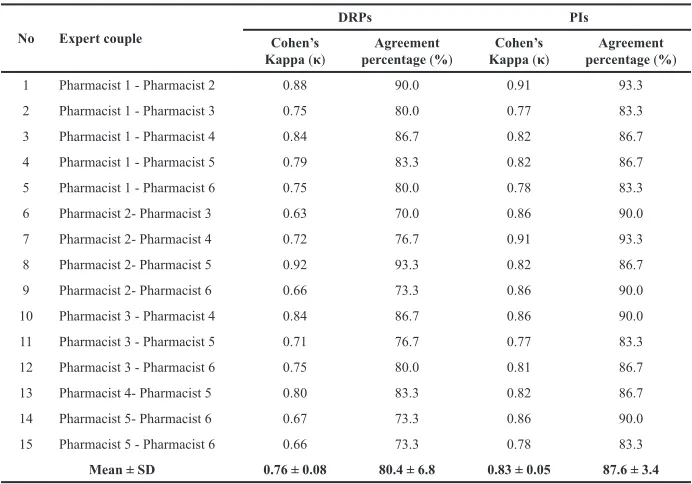
Table 1 shows the level of agreement among the experts. The kappa coefficient for the coding of DRP types was substantial (κ = 0.76; 80.4% agreement), and that for the coding of PI types was almost perfect (κ = 0.83; 87.6% agreement).
A summary of the main validated coding systems found in the literature search was provided by Vo et al. (2018). Previous studies employed a range of 20 to 106 cases rated by two to 92 coders, and in our research, we used 30 cases coded by six clinical pharmacists. The substantial agreement among the panel members in terms of DRP classification was better than that obtained by Hohmann et al. (2012) (κ = 0.58–0.68) and similar to and worse than the levels derived by Allenet et al. (2006) (κ = 0.73–0.82) and Fernandez-Llamazares et al. (2012) (κ = 0.87; 95% agreement). The almost perfect agreement as regards intervention classification was slightly lower than that observed for a French hospital tool (κ = 0.87–0.91) (Allenet et al.,
2006). Note, however, that comparing the κ statistics of different coding systems is difficult because such component depends on the cases themselves, the number and profile of encoders, and the characteristics of the tool being tested (number of types, subtypes) (Landis and Koch, 1977;Sim and Wright, 2005).
Acceptability and ease of use
Table 2 presents the opinions of the experts regarding the acceptability and ease of use of Vi-Med®. Most of them
Limitations
The limitations of the research are worth noting. Vi-Med®
is accompanied with paper-based forms that provide a fixed amount of free space to be filled in, but complicated clinical cases require more space for notes or explanations. To solve this problem, we intend to develop electronic forms that can be automatically printed. Form 2 could be designed in more detail to support clinical critical thinking by pharmacists during MRs. With regard to the validation of the tool, we implemented the test on the basis of only a small sample of scenarios and involved only a few pharmacists. Another limitation is that no test was conducted to verify intra-rater reliability (degree of agreement among repeated coding rounds).
CONCLUSION
Vi-Med® was validated as a tool for supporting the MR process in Vietnamese hospitals, from data collection and clinical analysis to documentation. The high level of concordance between the users (κ = 0.76 for DRPs and κ = 0.83 for PIs) and the tool’s user-friendliness was satisfactory, thus enabling the use of the tool in daily clinical pharmacy practice.
REFERENCES
Allenet B, Bedouch P, Rose FX, Escofier L, Roubille R, Charpiat B, Just M, Conort O. Validation of an instrument for the documentation of clinical pharmacists’ interventions. Pharm World Sci, 2006; 28(4):181–8.
Clinical Commissioning Group – NHS. Medicines optimisation: clinical medication review - a practice review, 2014. [ONLINE] Available via: https://www.sps.nhs.uk/wp-content/uploads/2016/08/ Brent-CCG-Medication-Review-Practice-Guide-2014.pdf (Accessed 15 September 2019).
Fernandez-Llamazares CM, Manrique-Rodriguez S, Perez-Sanz C, Duran-Garcia ME, Sanjurjo-Saez M, Calleja-Hernandez MA. Validation of a method for recording pharmaceutical interventions. J Clin Pharm Ther, 2012; 37(4):459–63.
Hepler CD, Strand LM. Opportunities and responsibilities in pharmaceutical care. Am J Hosp Pharm, 1990; 47(3):533–43.
Hoang TL. Development and validation of tool for supporting medication review [Bachelor thesis]. Hue, Vietnam: Hue University of Medicine and Pharmacy, 2016.
Hohmann C, Eickhoff C, Klotz JM, Schulz M, Radziwill R. Development of a classification system for drug-related problems in the hospital setting (APS-Doc) and assessment of the inter-rater reliability. J Clin Pharm Ther, 2012; 37(3):276–81.
Landis JR, Koch GG. The measurement of observer agreement for categorical data. Biometrics, 1977; 33(1):159–74.
Levy HB, Marcus EL, Christen C. Beyond the beers criteria: a comparative overview of explicit criteria. Ann Pharmacother, 2010; 44(12):1968–75.
Makary MA, Daniel M. Medical error-the third leading cause of death in the US. BMJ, 2016; 353:i2139.
Mast R, Ahmad A, Hoogenboom SC, Cambach W, Elders PJ, Nijpels G, Hugternburg JG. Amsterdam tool for clinical medication review: development and testing of a comprehensive tool for pharmacists and general practitioners. BMC Res Notes, 2015; 8:642.
McCurdy M. Oral anticoagulation monitoring in a community pharmacy. Am Pharm, 1993; NS33(10):61–70; quiz 10–2.
National Prescribing Service. Medication Review, 2000. [ONLINE] Available via: http://www.mps.org.my/html/MedicationReview. pdf (Accessed 15 September 2019).
Nguyen THT. Sharing Experience of Clinical Pharmacy Practice In Bach Mai Hospital, 2015. [ONLINE] Available via: http://www.facm.ucl. ac.be/cooperation/Vietnam/WBI-Vietnam-March-2015/symposium-2015/
Table 2. Perceptions of raters about Vi-Med®.
Item Very (3) Quite (1) Not enough (-1) Not at all (-3)
Structure of tool
Clarity 5 1 -
-Rationality 4 2 -
-Content of tool
Satisfaction of Form M1 3 3 - -Satisfaction of Form M2 4 2 - -Satisfaction of Form M3 2 4 -
-Overall opinion
Suitability 5 1 -
-Usefulness 5 1 -
-Ready to use 5 1 -
-Table 1. Results on the reliability of Vi-Med®.
No Expert couple
DRPs PIs
Cohen’s
Kappa (κ) percentage Agreement (%) Kappa Cohen’s (κ) percentage Agreement (%) 1 Pharmacist 1 - Pharmacist 2 0.88 90.0 0.91 93.3 2 Pharmacist 1 - Pharmacist 3 0.75 80.0 0.77 83.3 3 Pharmacist 1 - Pharmacist 4 0.84 86.7 0.82 86.7
4 Pharmacist 1 - Pharmacist 5 0.79 83.3 0.82 86.7
5 Pharmacist 1 - Pharmacist 6 0.75 80.0 0.78 83.3
6 Pharmacist 2- Pharmacist 3 0.63 70.0 0.86 90.0 7 Pharmacist 2- Pharmacist 4 0.72 76.7 0.91 93.3 8 Pharmacist 2- Pharmacist 5 0.92 93.3 0.82 86.7
9 Pharmacist 2- Pharmacist 6 0.66 73.3 0.86 90.0
10 Pharmacist 3 - Pharmacist 4 0.84 86.7 0.86 90.0 11 Pharmacist 3 - Pharmacist 5 0.71 76.7 0.77 83.3
12 Pharmacist 3 - Pharmacist 6 0.75 80.0 0.81 86.7
13 Pharmacist 4- Pharmacist 5 0.80 83.3 0.82 86.7
14 Pharmacist 5- Pharmacist 6 0.67 73.3 0.86 90.0
15 Pharmacist 5 - Pharmacist 6 0.66 73.3 0.78 83.3
VN/2-Nguyen-Thi-Hong-Thuy-Bach-Mai-17-03-2015.pdf (Accessed 15 September 2019).
Pharmaceutical Care Network Europe Foundation – Drug-related problems working group. Classification for Drug-Drug-related Problems (Revised 14-01-2010 vm) V6.2, 2010. [ONLINE] Available via: http:// www.pcne.org/working-groups/2/drug-related-problems (Accessed 15 September 2019).
Rotta I, Salgado TM, Silva ML, Correr CJ, Fernandez-Llimos F. Effectiveness of clinical pharmacy services: an overview of systematic reviews (2000–2010). Int J Clin Pharm, 2015; 37(5):687–97.
Schaefer M. Discussing basic principles for a coding system of drug-related problems: the case of PI-Doc. Pharm World Sci, 2002; 24(4):120–7.
Sim J, Wright CC. The kappa statistic in reliability studies: use, interpretation, and sample size requirements. Phys Ther, 2005; 85(3): 257–68.
Taskforce on Medicines Partnership. The National Collaborative Medicines Management Services Programme. Room for review: a guide to medication review. The Agenda for Patients, Practitioners and Managers, 2002. ONLINE] Available via: http://www.npc.nhs.uk/ review_medicines/intro/resources/room_for_review_briefing.pdf (Accessed 15 September 2019).
The Northern Health and Social Services Board. A guide to patient medication review, 2003. [ONLINE] Available via: http://www. polypharmacyawareness.weebly.com/uploads/2/0/2/7/20270991/guide_to_ medication_review_by_northern_health_and_social_services_board.pdf. [Accessed 15 September 2019].
The Society of Hospital Pharmacists of Australia Committee of Specialty Practice in Clinical Pharmacy. SHPA Standards of Practice for Clinical Pharmacy. J Pharm Pract Res, 2005; 35(2):122–46.
Van Mil JW, Westerlund LO, Hersberger KE, Schaefer MA. Drug-related problem classification systems. Ann Pharmacother, 2004; 38(5):859–67.
Vietnamese Ministry of Health. Circular 31/2012/ TT-BYT - Guidelines on Clinical Pharmacy Practice in Hospitals, 2012. [ONLINE] Available via: http://vbpl.vn/boyte/Pages/vbpq-van-ban-goc. aspx?ItemID=71552 (Accessed 15 September 2019).
Vietnamese Ministry of Health. National guideline on pharmacovigilance, 2015. [ONLINE] Available via: http://canhgiacduoc.org. vn/Thongtinthuoc/TinYDuoc/419/B%E1%BB%98-Y-T%E1%BA%BE- BAN-H%C3%80NH-H%C6%AF%E1%BB%9ANG-D%E1%BA%AAN- QU%E1%BB%90C-GIA-V%E1%BB%80-C%E1%BA%A2NH-GI%C3%81C-D%C6%AF%E1%BB%A2C.htm (Accessed 15 September 2019).
Vo TH, Bardet JD, Charpiat B, Leyrissoux C, Gravoulet J, Allenet B, Bedouch P. Validation of a tool for reporting pharmacists’ interventions in everyday community pharmacy. J Clin Pharm Ther, 2018; 43(2):240–8.
Vo TH, Bedouch P, Nguyen TH, Phan QL, Pham TTV, Calop J, Allenet B. The 2011 National Survey on Clinical Pharmacy Services in Vietnamese Central and Provincial Hospitals. Int J Clin Pharm, 2012; 35(5).
Yao D, Xi X, Huang Y, Hu H, Hu Y, Wang Y, Yao W. A national survey of clinical pharmacy services in county hospitals in China. PLoS One, 2017; 12(11):e0188354.
How to cite this article:
Vo TH, Hoang TL, Faller EM, Nguyen DT. Development and validation of the Vi-Med® tool for medication review. J Appl
1. General: ____________________________________ ______________________________________________ ______________________________________________
5. Genitourinary: _______________________________ _____________________________________________ _____________________________________________ 2. Cardiovascular: ______________________________
______________________________________________ ______________________________________________
6. Musculoskeletal: ______________________________ _____________________________________________ _____________________________________________ 3. Respiratory: _______________________________
______________________________________________ ______________________________________________
7. Central Nervous: _____________________________ _____________________________________________ _____________________________________________ 4. Gastrointestinal: ______________________________
______________________________________________ ______________________________________________
8. Others: ___________________________________ _____________________________________________ _____________________________________________
FORM FOR PATIENT INFORMATION
Version 1
Drugs for Chronic disease OTC drugs
Herbal medicines/ Traditional medicines
____________________________________________ ____________________________________________
MEDICATION HISTORY
REVIEW OF CLINICAL SYMPTOMS Drugs Food Animal Plant
Allergic agent: __________________________________ Descriptions: ___________________________________ ______________________________________________
ALLERGY HISTORY
Date of review: / / Review No: __________ Pharmacist: ____________________
Name: ______________________________________ Age: ____________________________ Male/Female Weight: ___________ kg Height: ___________ cm
Department: ________________ Room: _____________ Doctor: _______________________________________ Date of admission: / / Code: ______________
Diagnosis: ______________________________________________________________________________________ _______________________________________________________________________________________________
Vi-Med
®MEDICATION REVIEW
M1
Pregnant Breastfeeding Smoking: ...pack/year Alcoholic: ...ml/day
Chief Complaints: _______________________________________________________________________________ ______________________________________________________________________________________________ ______________________________________________________________________________________________ ______________________________________________________________________________________________
Past medical history: _____________________________________________________________________________ ______________________________________________________________________________________________
Family history: __________________________________________________________________________________
______________________________________________________________________________________________
______________________________________________________________________________________________
______________________________________________________________________________________________
______________________________________________________________________________________________
______________________________________________________________________________________________
______________________________________________________________________________________________
______________________________________________________________________________________________
______________________________________________________________________________________________
______________________________________________________________________________________________
______________________________________________________________________________________________
______________________________________________________________________________________________
______________________________________________________________________________________________
______________________________________________________________________________________________
______________________________________________________________________________________________
______________________________________________________________________________________________
______________________________________________________________________________________________
______________________________________________________________________________________________
______________________________________________________________________________________________
______________________________________________________________________________________________ LABORATORY AND DIAGNOSTIC TESTS
Version 1 Drug
(Name/Dosage form/Dose)
Date
______________________________________________________________________________________ ______________________________________________________________________________________ ______________________________________________________________________________________ ______________________________________________________________________________________ ______________________________________________________________________________________ ______________________________________________________________________________________ ______________________________________________________________________________________ ______________________________________________________________________________________ ______________________________________________________________________________________ ______________________________________________________________________________________ ______________________________________________________________________________________ ______________________________________________________________________________________ ______________________________________________________________________________________ ______________________________________________________________________________________ ______________________________________________________________________________________ ______________________________________________________________________________________ ______________________________________________________________________________________ ______________________________________________________________________________________ ______________________________________________________________________________________ ______________________________________________________________________________________ ______________________________________________________________________________________ ______________________________________________________________________________________ ______________________________________________________________________________________ ______________________________________________________________________________________ ______________________________________________________________________________________ ______________________________________________________________________________________ ______________________________________________________________________________________ ______________________________________________________________________________________ ______________________________________________________________________________________
FORM FOR MEDICATION REVIEW
Vi-Med
®MEDICATION REVIEW
Version 1
M2
______________________________________________________________________________________ ______________________________________________________________________________________ ______________________________________________________________________________________ ______________________________________________________________________________________
II. DESCRIPTION OF A DRUG-RELATED-PROBLEM (DRP)
Version 1
DOCUMENTATION OF PHARMACIST INTERVENTION
Vi-Med
®MEDICATION REVIEW
M3
Diagnosis: ___________________________________ ____________________________________________
Related Drug(s): ______________________________ ____________________________________________
I.REVIEW
Outpatient
InpatientAdmission Discharge Treatment process
III. TYPE OF DRP
Unnecessary indication
Non conformity indication
Missing indication
Dosage
Administration mode
Drug side effect
Drug Interaction
Drug monitoringVI. SUGGEST TO
Doctor
Patient
Nurse
Others:...
VIII. FOLLOW-UP
Accepted
Non assessable
Non acceptedSign: ...
VII. COMMUNICATION WAY
Face-to-face
Phone
Text
Others:
Email ……….. IV. DESCRIPTION OF PHARMACIST INTERVENTION (PI)(References)
Date of review: / / Review No: ___________ Pharmacist: ____________________
PIs No: ________________
V. TYPE OF PI
Drug discontinuation
Drug switch
Drug addition
Dose increasing
Dose decreasing
Administration modeoptimisation
Drug monitoring optimisation Name: ______________________________________Age: ____________________________ Male/Female Weight: __________ kg Height: ___________ cm
Drug-related-problems Definition/ Description/ Example
Unnecessary indicationNon indication The patientis not asthmatic and was prescribed asthama drugs.
Duplicate prescription Two drug both containing Paracetamol were prescribed.
An ADR can be prevented instead of being treated Levodopa was prescribed for Parkinsonian symptom - the ADR caused by using valproic acid to treat epilepsy. While this ADR can be avoided by using other epileptic drugs.
Non conformity indicationNon conformity of the drug choice compared to the Drug Formulary Prescribe a drug not available in the Drug Formulary List.
Non conformity of the drug choice compared to guidelines An antihistamine was prescribed for pruritus caused by bilirubin increasing in biliary obstruction.
Contra-indication The patientis asthmatic and was prescribed with beta-blockers.
Other drug is less costly for the same effectiveness Prescibe an inappropriatebrand name of a drug
Missing indicationValid indication without drug prescripted Patient with hypokalaemia was not prescribed with potassium supplements.
The patient was not given any pre-medication Patient taking Methotrexate was not prescribed with Acid folinicin order to prevent Methotrexate’s ADRs.
Missing drug combination Only one beta-lactam antibiotic was prescribed without one Aminoglycoside in severe infections.
Dosage( Inappropriate dosage according to recommendationsfor the general orspecial patient)
Subtherapeutic dosage Levothyroxin dose was too lowin a child with congenital hypothyroridism.(Base on age and weight)
Supratherapeutic dosage Prescribe Paracetamol more than 4g per day.
Administration modeInappropriate route/ drug form Oral medications were prescribed to patient who has vomited.
Inappropriate duration Prescribe antibiotics for more than 1 week to prevent infection after surgery.
Inappropriate timing of administration
(compared to meal or other drugs...)
Take Vitamin A before meal. Take Hydrocortison in the evening.
Take Sulcrafat and Cimetidin at the same time for gastric ulcer. Incomplete information on the drug regimen
(guidelines for breaking or crushing tablets;
mode of reconstitution…)
Break/chew/crush modified-release drugs.
Do not explain how to use powder for oral suspension.
Drug side effectADR Drug causes ADR at normal dose: NSAID may cause gastric ulcer.
Allergy Drugs causes allergy not dose-relatedantibiotics. : Anaphylactic shock by
Toxicity Overdosage of the drug causes toxicity in patientsoverdosage causes hepatic necrosis. : Paracetamol
Drug InteractionDrug – drug interaction Steroids bleeding. – NSAIDs combination increases the risk of gastrointestinal
Drug – food/beverage interaction Cabbage, cauliflower (containing vitamin K) inhibitthe effect of oral anticoagulants.
Drug – test interaction Third-generation Cephalosporins caused false-positive Coombs tests.