Evaluating the feasibility and
effectiveness of a critical care discharge
information pack for patients and
their families: a pilot cluster
randomised controlled trial
Suzanne Bench,1Tina Day,2Karina Heelas,3Philip Hopkins,3Catherine White,4 Peter Griffiths5
To cite:Bench S, Day T, Heelas K,et al. Evaluating the feasibility and effectiveness of a critical care discharge information pack for patients and their families: a pilot cluster randomised controlled trial.BMJ Open2015;5: e006852. doi:10.1136/ bmjopen-2014-006852
▸ Prepublication history and additional material is available. To view please visit the journal (http://dx.doi.org/ 10.1136/bmjopen-2014-006852).
Received 9 October 2014 Revised 10 July 2015 Accepted 20 July 2015
1Florence Nightingale Faculty of Nursing and Midwifery, King’s College, London, UK 2Florence Nightingale Faculty of Nursing and Midwifery, King’s College, London, UK 3Critical Care Unit, King’s College Hospital NHS Foundation Trust, London, UK
4ICU Steps Charity, Milton Keynes, UK
5Faculty of Health Sciences, University of Southampton, Southampton, UK
Correspondence to Dr Suzanne Bench; [email protected]
ABSTRACT
Objectives:To evaluate the feasibility and
effectiveness of an information pack, based on self-regulation theory, designed to support patients and their families immediately before, during and after discharge from an intensive care unit (ICU).
Design and setting:Prospective assessor-blinded
pilot cluster randomised controlled trial (RCT; in conjunction with a questionnaire survey of trial participants’experience) in 2 ICUs in England.
Participants:Patients (+/−a family member) who
had spent at least 72 h in an ICU, declared medically fit for discharge to a general ward.
Randomisation:Cluster randomisation (by day of
discharge decision) was used to allocate participants to 1 of 3 study groups.
Intervention:A user-centred critical care discharge
information pack (UCCDIP) containing 2 booklets; 1 for the patient (which included a personalised discharge summary) and 1 for the family, given prior to discharge to the ward.
Primary outcome:Psychological well-being
measured using Hospital Anxiety and Depression Scores (HADS), assessed at 5±1 days postunit discharge and 28 days/hospital discharge. Statistical significance ( p≤0.05) was determined usingχ2and Kruskal-Wallis (H).
Results:158 patients were allocated to: intervention
(UCCDIP; n=51), control 1: ad hoc verbal information (n=59), control 2: booklet published by ICUsteps (n=48). There were no statistically significant differences in the primary outcome. The a priori enrolment goal was not reached and attrition was high. Using HADS as a primary outcome measure, an estimated sample size of 286 is required to power a definitive trial.
Conclusions:Findings from this pilot RCT provide
important preliminary data regarding the circumstances under which an intervention based on the principles of UCCDIP could be effective, and the sample size required to demonstrate this.
Trial registration number:Current Controlled Trials
ISRCTN47262088; results.
INTRODUCTION AND BACKGROUND
Providing information is an important element of effective critical illness rehabilita-tion care,1 2yet at the time of discharge from an intensive care unit (ICU) to a general care environment (ward), some patients and relatives report not receiving any informa-tion3 4 or receiving ad hoc verbal informa-tion, sometimes accompanied by a leaflet or booklet.5
Patient-focused healthcare provision, which promotes shared decision-making, is widely advocated.6–9 Guidelines from the Department of Health in England ( p.16) recommend that acutely ill patients should be “encouraged to actively participate in decisions related to their recovery…”10; this, however, requires the provision of appropri-ate information. To be effective, ICU dis-charge information needs to take account of the cognitive problems and fatigue apparent in many patients recovering from critical illness.11 Any written information must also
Strengths and limitations of this study
▪ This is one of few randomised controlled trials that have evaluated critical care discharge infor-mation resources and the first to evaluate the use of an intervention, which includes a perso-nalised patient discharge summary.
▪ Results suggest that information based on self-regulation theory is feasible to deliver, may improve patients’ understanding of their critical illness and may help optimise critical illness rehabilitation.
▪ The a priori enrolment goal was not reached and attrition was high.
▪ The study had insufficient statistical power to determine any outcome benefit.
on September 22, 2020 by guest. Protected by copyright.
acknowledge the heightened anxiety experienced by both patients and relatives at this time11 and reflect the differing information needs of both groups at various time points.4 5 Our intervention was designed to address all of these elements, in contrast to the inter-ventions described in the few studies which have previ-ously evaluated written ICU discharge information resources.12–15
There is currently little evidence to support best prac-tice with regard to ICU discharge information delivery.5 Data from the few studies, which have evaluated written resources, suggest that it can improve family members’ knowledge and satisfaction13 14 and reduce their anxiety15 during and after ICU discharge. The results of a multicentre UK randomised controlled trial (RCT) also suggest that written information may help lower patients’ levels of depression and symptoms of post-traumatic stress disorder (PTSD), when provided as part of a broader rehabilitation strategy.12 These limited data justify further investigation of the key elements of ICU discharge information that lead to positive health outcomes.
OBJECTIVES
This paper reports a RCT designed to (1) provide an initial evaluation of a user-centred critical care discharge information pack (UCCDIP), (2) inform decisions
regarding its further development and evaluation, and (3) estimate the sample size required to power a defi ni-tive trial.
METHODS Design
We designed an external pilot pragmatic RCT (figure 1) to provide initial data regarding the feasibility and effect-iveness of UCCDIP. In accordance with the definition of an external pilot,16 an assessment of the primary outcome was included. To reduce the chance of between-group contamination, the design also incorpo-rated cluster randomisation, where groups of partici-pants (as opposed to individuals) were allocated to study arms. During the trial, a questionnaire survey was con-ducted to determine the experiences of trial participants and nursing staff.
In line with best practice,17 18 a former patient and Trustee of ICUsteps (an ICU patient and relative support charity) was included on the project team. Recruitment took place between 8 August 2011 and 4 May 2012, and informed patient consent was obtained prior to data collection. The trial was registered on The International Standard Randomized Controlled Trial
Number (ISRCTN) database (ISRCTN47262088)
5 months after recruitment of the first patient. This delay was due to an administrative problem between trial
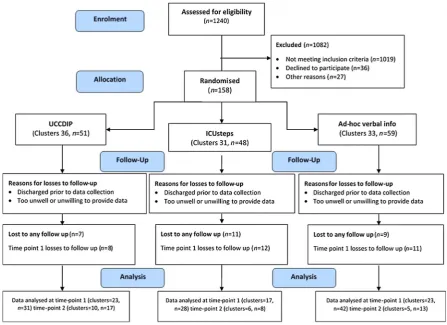
Figure 1 Flow of participants (ICU, intensive care unit; UCCDIP, user-centred critical care discharge information pack).
on September 22, 2020 by guest. Protected by copyright.
registry and the funding body. The full trial protocol is available in online supplementaryfile 1.
Setting and participants
The study took place in two ICUs (medical n=14 beds and surgical n=18 beds) within a single teaching hospital in central London, England; providing care for a mixed medical, surgical and trauma patient population, requir-ing level 2 (high dependency) or level 3 (intensive) care.19 Both units functioned as one department; staff rotated between units and patients were allocated to a bed based on availability; regardless of whether they required medical or surgical care. Patients over 18 years were considered for inclusion into a cluster if they had spent at least 72 h in the ICU (table 1). The intention was to recruit all eligible patients, declared medicallyfit for discharge to a general ward Monday to Friday (08:00–20:00) and a nominated relative. Inclusion cri-teria were based on best practice guidelines surrounding ICU discharge,1 with an aim to avoid including over-night stay elective surgical patients whose discharge had been delayed due to the unavailability of a ward bed.
All participants ( patients and relatives) were recruited while the patient was in ICU. Potential patient partici-pants were consented the day prior to a formal dis-charge decision wherever possible. For patients unable to provide informed written consent at the point of ICU discharge, personal consultee declarations,20 usually from the patient’s next of kin, were sought. Informed consent from the patient was then obtained prior to data collection on the ward. The relatives of all recruited patients were given study information when they visited the ICU, or telephoned and invited to participate. Written consent was obtained from relatives who agreed to participate during their next hospital visit. All partici-pants were allocated a trial number. All members of a family unit were given the same number, prefixed by either a P or R (eg, P1 for the patient and R1 for the
relative). The assigned trial number was used across all data collection forms, enabling anonymised data from all sources to be matched and comparisons made between patient participants (and their relatives), their characteristics and the outcome data.
Intervention
Drawing on self-regulation theory (SRT),21 22 our inter-vention (UCCDIP) was developed using data from a pre-vious focus group study.4 UCCDIP consists of two booklets, one for the patient and one for the relatives (see online supplementaryfile 2). The front page of the patient booklet includes an individualised patient dis-charge summary, written by ICU bedside nurses; trained to use a template designed by the project team (CW, PH). The pack also contains information aimed at pre-paring the patient/family for ICU discharge and the transition to the ward. It encourages active participation by offering space for expression of individual questions and concerns. It also includes diary pages for both the patient and family to record their thoughts and feelings during the in-hospital recovery period, if they wish. In accordance with SRT, UCCDIP was designed as an infor-mation resource, to help users develop revised illness perceptions, more consistent with effective coping.22 23 The intervention is further described in Benchet al.24
Participants in all three study arms received usual care, which consisted ‘ad hoc’ verbal ICU discharge information provided by a variety of healthcare profes-sionals. No guidance was given for this and the quality and quantity of information delivered was totally dependent on each staff member’s usual practice. To minimise the risks of additional attention, given to parti-cipants in the intervention group having a placebo effect,25 26in addition to the‘ad hoc’information given to all participants, a second ‘attention control’ group received alternative written information in the form of a booklet produced by the ICUsteps charity.27 In contrast to UCCDIP, the information in the ICUsteps booklet covered the whole trajectory of critical illness from ICU admission to after hospital discharge. In addition, the ICUsteps booklet did not offer opportunities for partici-pants to reflect on their experience or feelings, or prompt them to consider their individual information needs.
Intervention delivery
Immediately after recruitment, patient participants in all clusters were given an identical looking folder contain-ing a covercontain-ing letter, study information and, where applicable, written discharge information (either UCCDIP or the ICUsteps booklet). These folders accom-panied patients when they were discharged to the ward.
For participants randomised to a cluster receiving the intervention, the bedside ICU nurse orientated the patient to the contents of the UCCDIP and the research nurse (KH) checked that the patient discharge summary was completed according to agreed guidelines.24
Table 1 Inclusion/exclusion criteria for individual participants
Inclusion criteria
▸ Adult patients (>18 years)
▸ Adult family members of eligible patients (>18 years)
▸ Elective or emergency admissions in the ICU≥72 h
▸ Patients identified for discharge to a general ward setting within the hospital ▸ Elective discharges between 08:00 and
20:00 Monday to Friday Exclusion
criteria
▸ Patients for whom active treatment had been withdrawn
▸ Inability to verbally communicate in or read English
▸ Involvement in a phase I focus group study4
ICU, intensive care unit.
on September 22, 2020 by guest. Protected by copyright.
The bedside nurse did not go through the written booklet given to participants in the cluster allocated to receive the ICUsteps booklet.
Recruited relatives were allocated to the same study group as the patient, but it was left up to the patient to pass the information on to their family. Although UCCDIP contained an information book specifically for relatives, they were not included in the discussion between the bedside nurse and the patient, unless they happened to be present on the unit at the time.
Outcomes
The primary outcome was individual patients’ sense of psychological well-being (specifically anxiety and depres-sion), measured using the internationally validated Hospital Anxiety and Depression Score (HADS) tool28 with a threshold ≥8 used to identify possible clinical cases of anxiety and/or depression.29 Secondary out-comes included individual patients’ perceptions of coping, measured using the Brief Coping Orientations to Problems Experienced (BCOPE) tool30 and relatives’ sense of psychological well-being (anxiety, depression and coping assessed using HADS and BCOPE). In add-ition, patients’ perceptions of their ability for self-care
were measured using the Patient Enablement
Instrument (PEI).31 A locally designed questionnaire survey described the discharge experiences of all recruited patients and their relatives. The views of the ICU and ward nursing staff about UCCDIP were also explored using the questionnaire survey and have been previously published.32 Face and content validity of the questionnaire were reviewed by the patient advisory group, but no pilot was undertaken prior to its use.
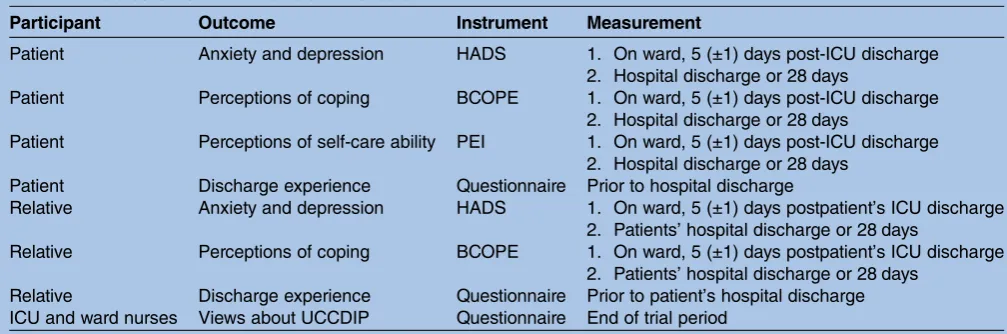
Table 2 details the instruments and measures used to assess both primary and secondary outcomes.
To assess the effects of the intervention on early in-hospital psychological well-being, outcome data from patient and relative participants were collected on the ward on two occasions after ICU discharge: 1 week
(defined as 5±1 day) and at hospital discharge or 28 days, whichever was sooner. The questionnaire survey was completed prior to a patient’s hospital discharge ( participants) or at the end of the trial period (nurses) (table 2).
Data were collected by one researcher (SB), with back-up provided (TD). To maximise the chance of retrieving a full data set, researchers facilitated comple-tion of forms (by reading quescomple-tions and writing responses) for some of the less able patients. Relatives were asked to complete forms on the ward or at home, and to return them directly to the research team (by email or post) or to leave them for collection at the patient’s bedside.
Demographic information, length of ICU stay, ICU readmissions, medical history, Acute Physiology and Chronic Health Evaluation (APACHE) II scores,33 ther-apies received and complications pertinent to the crit-ical illness period were retrieved from local databases and medical notes immediately after each patient par-ticipant was recruited. At this point, participating rela-tives were also asked to complete a form detailing their demographics, previous experiences of critical illness and relevant medical history (such as anxiety and/or depression). The number of unit discharges per day during the trial period and other feasibility data, such as comments received from staff and challenges associated with intervention delivery, were also recorded by the research nurse. All completed discharge summaries were photocopied and retained.
Sample
Based on data from a previous RCT by Gammon and Mulholland,34which examined the effect of information giving on the HADS of a sample of perioperative patients, the sample size calculation for the present trial was carried out using G*Power V.3.1.2. To detect a mod-erate effect size of 0.6 (mean difference of 3 units, SD 5) with a power of 80% and α set at 0.05, a minimum of
Table 2 Data collection instruments and measures
Participant Outcome Instrument Measurement
Patient Anxiety and depression HADS 1. On ward, 5 (±1) days post-ICU discharge 2. Hospital discharge or 28 days
Patient Perceptions of coping BCOPE 1. On ward, 5 (±1) days post-ICU discharge 2. Hospital discharge or 28 days
Patient Perceptions of self-care ability PEI 1. On ward, 5 (±1) days post-ICU discharge 2. Hospital discharge or 28 days
Patient Discharge experience Questionnaire Prior to hospital discharge
Relative Anxiety and depression HADS 1. On ward, 5 (±1) days postpatient’s ICU discharge 2. Patients’hospital discharge or 28 days
Relative Perceptions of coping BCOPE 1. On ward, 5 (±1) days postpatient’s ICU discharge 2. Patients’hospital discharge or 28 days
Relative Discharge experience Questionnaire Prior to patient’s hospital discharge ICU and ward nurses Views about UCCDIP Questionnaire End of trial period
BCOPE, Brief Coping Orientations to Problems Experienced; HADS, Hospital Anxiety and Depression Scale; ICU, intensive care unit; PEI, Patient Enablement Instrument; UCCDIP, user-centred critical care discharge information pack.
on September 22, 2020 by guest. Protected by copyright.
45 participants in each group were required. To account for attrition and the likely variation in ICU discharges in each cluster (discharge day), our accrual target was 50 participants in each of three study arms.
Sample size was not based on an intracluster correl-ation (ICC) calculcorrel-ation, as insufficient information was available to determine the real extent of any homogen-eity between clusters. As only those discharged on week-days were recruited, it was anticipated that every day would produce a fairly similar and randomly determined clinical case load (local data 2010/2011), thus limiting the likelihood of homogeneity (eg, similar diagnoses) within and heterogeneity (eg, care led by different medical teams) between clusters. The intervention for each cluster was also preallocated on a random basis, thus minimising (although not eradicating) the chance of clusters being homogeneous.
There was no opportunity to influence cluster size, and so to maximise the chance of recruiting the required number of participants, data collection was planned to continue for at least 132 days, providing 44 potential clusters in each of the three study arms, signifi -cantly greater than the minimum offive recommended by the UK Medical Research Council.35
Randomisation
As described by Hayes and Moulton,36 this trial used cluster randomisation for pragmatic reasons, with an aim to reduce the risk of cross-contamination between study arms. All patient participants (and their relative where applicable) discharged from either ICU on a par-ticular day (a cluster) were allocated to one of the three study groups (figure 1). Particular days of the week were not allocated to specific arms; instead each day was ran-domly allocated to a study arm and treated as a distinct cluster, based on the allocation schedule.
To ensure that the sequence of allocation was not predictable, the day on which the intervention, control and attention control was used was randomly assigned using a computer-generated random sequence, pre-pared by a statistician. This involved simple randomisa-tion with no blocking or stratification for defined variables.
The allocation schedule was prepared by persons inde-pendent of the trial and concealed by being wrapped in a blank piece of paper and placed inside sequentially numbered, sealed envelopes. These envelopes were signed across the seal and opened by the research nurse (KH), in the presence of another member of the research team, only after a recruited patient was
identi-fied for discharge to the ward on a particular day. The clinical ICU staff only became aware of which study group the patient was allocated to when the bedside nurse was provided with a study pack to give to the patient. Allocation concealment for the whole cluster was revealed after thefirst envelope was opened on any day.
Blinding
It was not possible to achieve full blinding during this trial as intervention delivery required input by health-care staff and trial participants. Those collecting and analysing data were, however, blinded by the use of codes, which were not broken until after data analysis. Blinding was compromised if participants revealed their information pack to the data collector. In most instances, however, as all participants received a folder, identical on the outside, data collectors (SB/TD) remained blinded to the allocation.
Statistical methods
Data analysis was based on an ‘intention-to-treat’ strat-egy37 and statistical significance was set at p≤0.05. Average values for sample characteristics, HADS, BCOPE, PEI scores and questionnaire responses in each of the study groups were compared usingχ2for categor-ical data and Kruskal-Wallis (H) for data of at least ordinal level. In addition, Friedman’s test (χ2r) was used to explore associations between the different types of coping. Difference in HADS (the primary outcome) between the three study groups was also tested using the Statistical Analysis System (SAS) V.9.3 (SAS Institute Inc, Cary, North Carolina, USA), Generalised Mixed Models procedure (GLIMMIX) that adjusted for clustering (by
fitting a random intercepts model) and recruitment weekday. At time point 2, it was not possible to fit random intercepts because the G-side matrix was always not positive definite. We followed the CONSORT guid-ance and did not conduct baseline statistical compari-sons between study groups.38
This paper reports outcome data from the patient par-ticipants only, with reference to the demographics and attrition data collected from the sample of relatives.
RESULTS
Two hundred and twenty-one (18%) of the 1240 screened patients met the inclusion criteria and 158 of these were recruited in 100 clusters, each containing 1–5 patients (table 3). The distribution by cluster size was as follows: one patient (n=66), two patients (n=21), three
Table 3 ICU patients discharged and recruited per weekday
Recruitment day
Clusters, n (%)
Patient participants recruited, n (%)
Patients discharged, n (%)
Monday 31 (31) 56 (35) 161 (16) Tuesday 20 (20) 30 (19) 216 (22) Wednesday 10 (10) 14 (9) 189 (19) Thursday 16 (16) 18 (11) 226 (23) Friday 23 (23) 40 (25) 198 (20) Totals 100 (100) 158 (100) 990 (100) ICU, intensive care unit.
on September 22, 2020 by guest. Protected by copyright.
patients (n=6), four patients (n=3) and five patients (n=4). Fifty-one (32%) patient participants were allo-cated to the intervention group (UCCDIP), 59 (37%) to control group 1 (ad hoc verbal information) and 48 (30%) to control group 2 (ICUsteps booklet; figure 1). Eighty relatives of the recruited patient participants also agreed to take part.
Sample demographics
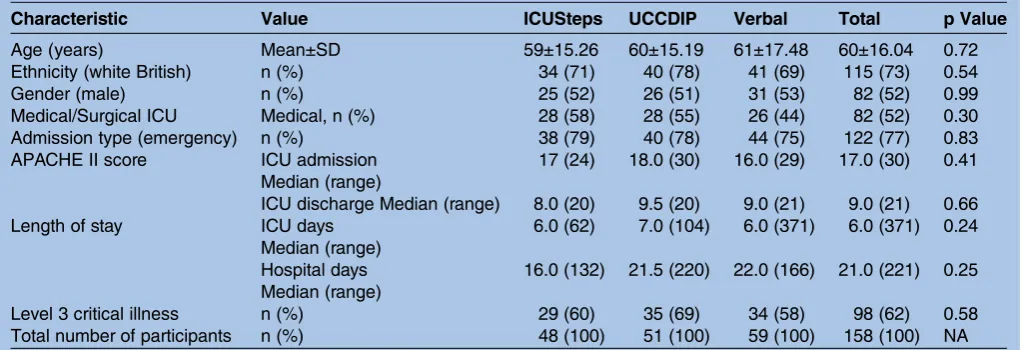
The mean age of patients was 60 (SD 16.04) years (table 4). Participants were predominantly white British/ Irish (n=115, 73%) and 82 (52%) were male. Median length of ICU stay was 6 days (range 371). Severity of illness on admission (measured by the APACHE II score) ranged from 4 to 34 (median 17) and on discharge to a ward between 0 and 21 (median 9). Ninety-eight (62%) participants received at least 1 day of level 3 (ICU) care.
For the majority of the sample (n=122, 77%), admis-sion to the ICU was unplanned. Twenty-nine (18%) had experienced previous ICU admissions; 9 of these partici-pants were from the ICUsteps group (n=48, 19%), 10 were from the UCCDIP group (n=51, 20%) and 10 from the ad hoc verbal information group (n=59, 17%). A recorded history of depression with or without anxiety was evident in 14 (9%) of the total patient sample and the presence of delirium while in the ICU was recorded in 11 (7%) participants’medical notes.
Relatives (n=80) were aged between 18 and 94 years (mean 55 years, SD 14.6), predominantly white British/ Irish (n=63, 79%) and female (n=52, 65%). Most were spouses or long-term partners (n=37, 46%) of the recruited patient. A history of anxiety and/or depression was reported by 20 (25%) of the sample.
Patient participants in the UCCDIP sample were more frequently admitted from an in-hospital bed and received more days of level 3 care. They also had higher APACHE II scores on both admission and discharge and stayed in the ICU for longer than participants in either
of the other two groups, even when outliers with a ICU stay of >100 days were removed (n=2). None of these dif-ferences were statistically significant.
Participant follow-up
One hundred and one (64%) patient participants pro-vided primary outcome data at time point 1 (5±1 day post-ICU discharge). Fifty-four (34%) were still in hos-pital and eligible for data collection at time point 2 (28 days or hospital discharge and at least 7 days after theirfirst data collection point). Of these, 38 (70%) pro-vided some data. A total of 48 (60%) patients’ relatives provided at least one set of outcome data.
Twenty-seven (17%) patients and 32 (40%) relatives were lost to any follow-up. By time point 1 (5±1 day), 17 (11%) of the patient sample had already been dis-charged or transferred from the hospital, and in a further 15 (10%) cases, the patient was either too unwell or unwilling to provide data. In the case of patients’ relatives, the most significant follow-up problem was due to a failure to return data collection forms within the protocol timeframe (n=29, 36%).
Hospital anxiety and depression
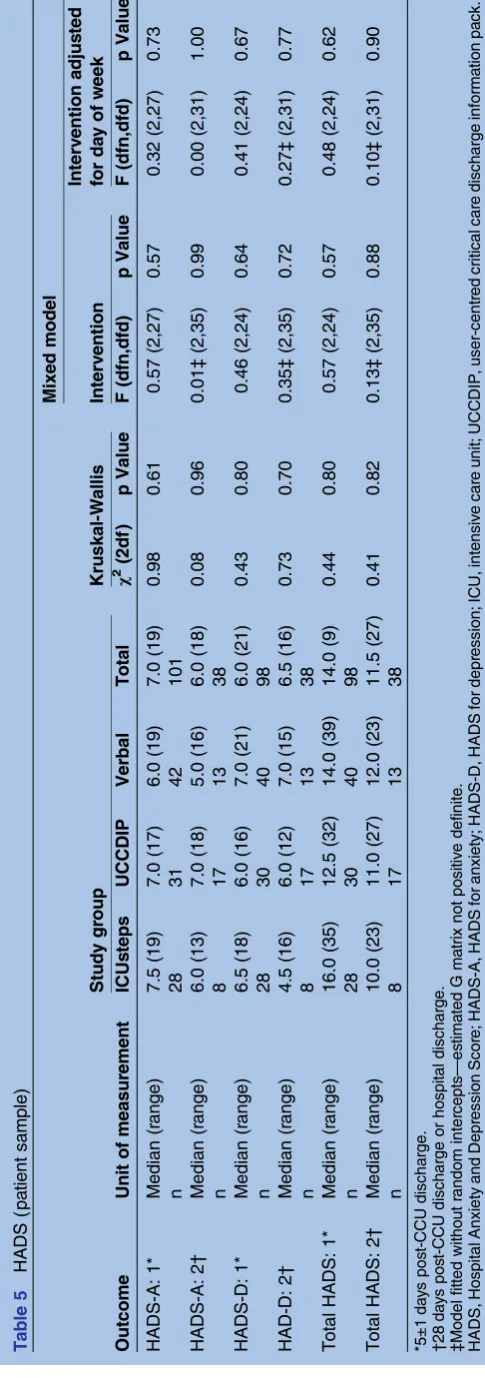
One week postdischarge (time point 1), median HADS for patients was 7 for anxiety (HADS-A) and 6 for depression (HADS-D). There were no significant differ-ences ( p≥0.05) between study groups (table 5). There was, however, a wide range in individual HADS, with almost half the total patient sample (44%) reaching or exceeding the trigger for disorder (≥8). At time point 1, where it was possible to fit a random intercepts model, the estimated ICCs were all low (HADS-A 0.14, HADS-D 0.00, total HADS 0.07).
Coping and enablement
No significant differences between groups ( p≥0.05) for emotion-focused, problem-focused and dysfunctional
Table 4 Sample characteristics (patients)
Characteristic Value ICUSteps UCCDIP Verbal Total p Value
Age (years) Mean±SD 59±15.26 60±15.19 61±17.48 60±16.04 0.72 Ethnicity (white British) n (%) 34 (71) 40 (78) 41 (69) 115 (73) 0.54 Gender (male) n (%) 25 (52) 26 (51) 31 (53) 82 (52) 0.99 Medical/Surgical ICU Medical, n (%) 28 (58) 28 (55) 26 (44) 82 (52) 0.30 Admission type (emergency) n (%) 38 (79) 40 (78) 44 (75) 122 (77) 0.83 APACHE II score ICU admission
Median (range)
17 (24) 18.0 (30) 16.0 (29) 17.0 (30) 0.41
ICU discharge Median (range) 8.0 (20) 9.5 (20) 9.0 (21) 9.0 (21) 0.66 Length of stay ICU days
Median (range)
6.0 (62) 7.0 (104) 6.0 (371) 6.0 (371) 0.24
Hospital days Median (range)
16.0 (132) 21.5 (220) 22.0 (166) 21.0 (221) 0.25
Level 3 critical illness n (%) 29 (60) 35 (69) 34 (58) 98 (62) 0.58 Total number of participants n (%) 48 (100) 51 (100) 59 (100) 158 (100) NA APACHE, Acute Physiology and Chronic Health Evaluation; ICU, intensive care unit; NA, not available; UCCDIP, user-centred critical care discharge information pack.
on September 22, 2020 by guest. Protected by copyright.
coping categories or PEI scores were identified at either time point. Over time, the median PEI score for the total patient sample did, however, drop from 12 to 10, indicating that patients felt less enabled the longer they stayed in hospital.
Questionnaire findings
Patient participants in the ad hoc verbal information control group reported significantly more chance of worrying a lot (χ2=11.16 (df 2), p=0.03) than those in either other study group. However, after using GLIMMIX to adjust for clustering, the effect of the inter-vention on ‘worry about leaving the Critical Care Unit (CCU)’ was not statistically significant (F (2,39)=0.23, p=0.80). There were no other statistically significant dif-ferences in reported feelings or experiences between study groups. However, more participants from the medical as opposed to surgical unit reported that their written information had helped their recovery on the ward, with a result approaching statistical significance (χ2=3.69 (df 2), p=0.06).
Adverse effects
One patient asked to be withdrawn from the trial after data collection point 1 as she felt that completion of the HADS had triggered deterioration in her mental health status. A note was made in her medicalfile, and she was referred to her primary medical team. There were no other reports of any adverse effects.
The impact of protocol violations
Twenty-five (16%) patients and 10 (13%) of the patients’ relatives had data collected outside of the time period stated by the protocol for time point 1. At time point 2, the mean time from ICU discharge to data collection was 23±6 days for patients and 25±8.36 days for the relatives.
Including these data produced no change in HADS or PEI outcomes compared with the analysis, which excluded them. At the first follow-up point, however, some significant differences in the scores given for indi-vidual questions in the emotion and problem-focused coping categories of the BCOPE were identified. UCCDIP sample data reflect significantly less use of reli-gion (question 12; p=0.01), active coping (question 2; p=0.04) and planning (question 9; p=0.01) strategies, than those participants in either of the other two study groups. Analysis of the composite scores for each coping category (emotion, problem and dysfunctional) also revealed that those in the UCCDIP group used signifi -cantly fewer problem-focused coping strategies (H=6.49, p=0.04).
DISCUSSION
Despite some limited data from previous research, which suggest that written resources may lower levels of patients’ anxiety, depression and symptoms of PTSD,12
T able 5 HADS (p a tient sample) Outcome Unit of measur ement Study gr oup Kruskal-W allis Mixed model Interv ention Interv ention adjus ted for da y of w eek ICUs teps UCCDIP V erbal T otal χ 2 (2df ) p V alue F (dfn,dfd) p V alue F (dfn,dfd) p V alue HADS-A: 1* Median (r ange) 7.5 (19) 7.0 (17) 6.0 (19) 7.0 (19) 0.98 0.61 0.57 (2,27) 0.57 0.32 (2,27) 0.73 n 28 31 42 101 HADS-A: 2 † Median (r ange) 6.0 (13) 7.0 (18) 5.0 (16) 6.0 (18) 0.08 0.96 0.01 ‡ (2,35) 0.99 0.00 (2,31) 1.00 n 8 17 13 38 HADS-D: 1* Median (r ange) 6.5 (18) 6.0 (16) 7.0 (21) 6.0 (21) 0.43 0.80 0.46 (2,24) 0.64 0.41 (2,24) 0.67 n2 8 3 0 4 0 9 8 HAD-D: 2 † Median (r ange) 4.5 (16) 6.0 (12) 7.0 (15) 6.5 (16) 0.73 0.70 0.35 ‡ (2,35) 0.72 0.27 ‡ (2,31) 0.77 n 8 17 13 38 T otal HADS: 1* Median (r ange) 16.0 (35) 12.5 (32) 14.0 (39) 14.0 (9) 0.44 0.80 0.57 (2,24) 0.57 0.48 (2,24) 0.62 n2 8 3 0 4 0 9 8 T otal HADS: 2 † Median (r ange) 10.0 (23) 11.0 (27) 12.0 (23) 11.5 (27) 0.41 0.82 0.13 ‡ (2,35) 0.88 0.10 ‡ (2,31) 0.90 n 8 17 13 38 *5±1 da y s pos t-CCU discha rge. † 28 da y s pos t-CCU dischar ge or hospi tal dischar ge. ‡ M odel fitted witho ut random inter cepts — es tima te d G ma trix not positiv e def inite. HADS, Hospital Anxi ety and Depr ession Scor e; HA DS-A, HADS for anxi ety; HADS-D, HADS for depr ession; ICU, intens iv e car e unit; UCC DIP , user-centr ed critical car e dis charge informa tion pa ck.
on September 22, 2020 by guest. Protected by copyright.
the health benefits of providing written ICU discharge information remain inconclusive.5Our trial did notfind sufficient evidence to determine whether UCCDIP improves patients’ or relatives’ health outcomes or experiences (anxiety, depression, coping, patient enable-ment) compared with the ICUsteps booklet and/or the delivery of ad hoc verbal information. However, our survey data suggest that those who receive written infor-mation may feel less worried about going to a ward than those who receive ad hoc verbal information alone.
The UK Medical Research Council point out that eva-luations of draft complex interventions are frequently undermined by numerous practical and methodological problems, and recommend a period of feasibility testing and piloting prior to full scale evaluation.39 Using these design principles, data collected during our RCT has identified some important future considerations.
Deciding the optimal time to provide ICU discharge information is an important issue for future practice, particularly considering that recovery rates for physical and emotional recovery may differ.40 We gave our inter-vention to patients immediately prior to their discharge from the ICU. However, the survey data that we collected alongside the trial indicate that many felt unable to engage with the information at this point or during the early days on the ward, and that some of the patients allocated to UCCDIP or the ICUsteps booklet were unaware of having received any written material.32 Retention of information is a common problem for ICU patients.3 4 Having a family member present when UCCDIP was discussed with the patient may have increased participants’ awareness of and engagement with the intervention. Where possible, such practice is encouraged, particularly if a patient’s cognitive function is compromised.
The intention of this trial was to determine the effect of adding UCCDIP into the usual care provided during discharge; thus, after discharge to the ward, no specific instructions were given to ward nurses or other health-care staff about their role in facilitating its use. Knowledge of the intervention, obtained due to contam-ination of the allocation concealment after recruitment of thefirst patient on any day may, however, have infl u-enced staff members’ verbal information delivery, both its quality and quantity. In addition, follow-up personnel, such as discharge coordinators and critical care out-reach nurses, have been shown to aid patients’ and rela-tives’ interaction with written information.41 Not providing this support as part of the intervention in this trial may account for some of the problems with engage-ment that we encountered, particularly for those with English as a second language, poor literacy and/or cog-nitive impairment. It may also have contributed to the excessive loss to follow-up we experienced, which in turn may have influenced our outcome data. We did not collect data on these participant characteristics and thus are unable to validate these assumptions. These issues are further discussed in Dayet al.42
UCCDIP is a multicomponent intervention, which includes an individualised patient discharge summary written by ICU nurses. Survey data (reported in Bench
et al32) suggest that this element of UCCDIP was of
par-ticular value to the patients, relatives and ward nurses who took part in our study. In the protocols for the Scottish RECOVER and RELINQUISH trials,43 44 dis-charge summaries, similar to those used in the present trial, but written by doctors are also included as part of the intervention. In addition, ‘lay summaries’ are now being written by physiotherapists in some parts of the UK ( personal communication from Williams N, Edinburgh Critical Care Research Group 6th annual meeting; 26 June 2013). Healthcare professionals’ inter-est in using patient discharge summaries is also evident by the number of ‘discharge summary training packs’, designed by our project team, being downloaded from the ICUsteps website.32 Based on thesefindings, we rec-ommend that reflective opportunities, such as diaries, are included as part of all individualised rehabilitation programmes.
Our results suggest that medical as opposed to surgical patients may value interventions such as UCCDIP more; perhaps because this group have an increased tendency for psychological problems such as PTSD.45 Elective sur-gical patients may also be better prepared for an ICU admission and their stay is generally expected to be shorter. In our trial, it must be acknowledged, however, that most admissions to the surgical ICU were unplanned. Further, admission to the medical or surgi-cal unit was not always reflective of a patient’s condition as beds were usedflexibly to meet demand. Despite this limitation, defining subpopulations of critical care (eg, medical vs surgical, ventilated vs non-ventilated) that may benefit most from such an intervention remains an important future consideration, particularly where resources are limited.
Future research
Evaluating any complex intervention is practically and methodologically difficult.39 UCCDIP contains a number of different components, making it difficult to isolate those aspects likely to be most effective. Although
findings from the questionnaire survey suggest that the patient discharge summary was considered valuable,32 future research is required to examine its effectiveness as a stand-alone intervention.
In this trial, the patients and relatives in all clusters received ad hoc verbal information as part of usual care practice. Ad hoc information delivery can be inconsist-ent and its quality can differ between healthcare profes-sionals. As in other studies,13–15 it was unclear who was delivering the ‘ad hoc’ verbal information during our trial, what was being said or whether it was actually pro-vided at all. Although challenging, attention to qualify-ing and quantifyqualify-ing these data is a recommendation for further research.
on September 22, 2020 by guest. Protected by copyright.
The high prevalence of anxiety and depression experi-enced by patients and their families in our study sug-gests that a higher threshold (≥11) on the HADS tool, as used by other researchers12 46 47 is required to differ-entiate the effects of interventions such as UCCDIP on participants. The relationship between emotional status, cognitive appraisal and coping behaviours is complex and individualised. Outcome assessment measures, more closely aligned with the theoretical basis of the interven-tion (in this case SRT) may, therefore, be better suited to evaluate information interventions in recovering crit-ically ill patients. Development of a validated tool to provide more rigorous data to support the positive views of UCCDIP reported in the locally designed question-naire survey32is also required.
Our data collection points were specifically chosen to identify any early effects of the intervention on psycho-logical well-being that might influence ongoing recov-ery. However, the effects of our intervention on patients’ and relatives’ perceived anxiety, depression, coping and enablement may not have been visible during the early stages of recovery.48 A longer follow-up period would enable both the early and ongoing impact of different methods of ICU discharge information to be better explored. The common problem of delayed discharge from ICU49 should also be considered. Delays can have both positive ( physically stronger) and nega-tive effects (increased dependency) on psychological well-being at the point of ICU discharge, and thus may have important implications for evaluating information provision.
It is widely acknowledged that in complex intervention studies such as this, the risk of follow-up bias is high.39 Reasons for low follow-up in this study were multifactor-ial, but key reasons included patients being discharged from hospital earlier than anticipated and relatives failing to return data collection forms. These factors need to be considered in the design of future trials. Including relatives in the evaluation of any critical illness rehabilitation intervention is important, as the family unit often provides substantial support to the patient and close relatives can also be affected by the patient’s critical illness.50 51 Our experience suggests, however, that once a patient leaves ICU, it is very difficult to main-tain communication with relatives and that their com-mitment to completing study requirements is reduced. Alternate methods of data collection, such as individual telephone interviews, may help reduce the level of attri-tion we experienced in this study.
In line with best practice recommendations, one of the purposes of this pilot RCT was to inform the power calculation for future work.52 Mean HADS-A and HADS-D was 7 (SD 5) in the patient sample. Based on a power of 95% and 0.05% level of significance, to achieve an effect size of 0.4 (difference of 2), a total sample of 286 (143 in each of two groups) would be required for a definitive trial. The different numbers of participants recruited on each weekday (table 1) should also be
accounted for. The recruitment rates we observed suggest that this would require a multicentre study to achieve. Given our attrition, it is difficult to judge if such a study would represent value for money although pos-sible benefits for patients include an improved under-standing of their critical illness experience, use of more positive coping strategies and improved psychological well-being during the rehabilitation period. Considering the feasibility challenges we experienced and have previ-ously described,49 future research could focus on asses-sing patients’ and relatives’ perceived usefulness of written information resources and the extent to which specific information deemed important is successfully transmitted and retained.
Limitations
This was a single-centre pilot trial, with a short follow-up period and a high rate of attrition ( particularly in the sample of relatives). Only recruiting patients discharged during weekdays and daytime hours may have led to a selection bias, as poorer outcomes are associated with night-time and weekend discharges.1 Other potential biases may also have influenced our results. There were some pretest differences between study groups which might have attenuated any potential benefits. HADS were skewed and the sample was small at time point 2. This should be borne in mind when interpreting the statistical model; however, the results were consistent whichever approach was used. There was also a failure to maintain allocation concealment after recruitment of the first patient in each cluster and a possible Hawthorne effect, where staff may have provided verbal information differently from normal because they were aware of the nature of the study.
Results must therefore be viewed with caution and may not be generalisable to the wider critical care popu-lation. The study has, however, provided important data, which can inform future trials evaluating interventions like UCCDIP, enabling processes to be streamlined and a sample size based on a more accurate power calcula-tion to be used.52–54
CONCLUSION
This single-centre pragmatic pilot RCT used cluster ran-domisation to undertake an initial evaluation of UCCDIP, a discharge information pack designed by the project team. We were unable to prove the effectiveness of UCCDIP, supporting the view that information giving to those recovering from critical illness is a complex intervention. This research has, however, provided important preliminary data regarding how, when and for whom an intervention based on the principles of UCCDIP could be most effective and what it would look like.
To increase the likelihood of similar interventions improving health outcomes, key considerations for future work are: (1) medical as opposed to surgical
on September 22, 2020 by guest. Protected by copyright.
critical care patients may be more likely to benefit from such interventions; (2) after discharge to the ward, patients need further input and support to help them engage fully with written information resources; (3) data collection time points should reflect the potential effects on both early and later recovery; and (4) outcome mea-sures more sensitive to the effects of UCCDIP should be used for future evaluations.
AcknowledgementsThe authors would like to acknowledge Professor Alison
Metcalfe, Associate Dean (Research) at the Florence Nightingale Faculty of Nursing and Midwifery, King’s College, London, who acted as principal academic PhD supervisor for SB during the period of the project. They would also like to acknowledge the contribution of the rest of the project team: Peter Milligan (Statistician, King’s College, London) and Professor Lucy Yardley (Heath Psychologist, University of Southampton).
Contributors SB conceived, designed and coordinated the study as part of a
PhD, collected and analysed the data and drafted the manuscript. PG was principal investigator, supervised SB and provided critical comment on the drafted manuscript. TD participated in the design and coordination of the study, was second supervisor to SB, assisted with data collection and provided critical comment on the drafted manuscript. KH recruited and consented trial participants, collated baseline data, assisted with intervention delivery and provided critical comment on the drafted manuscript. PH participated in the design and local coordination of the study, co-drafted guidelines for the patient discharge summary and provided critical comment on the drafted manuscript. CW was the service user representative for the project, participated in the design of the study, co-drafted guidelines for the patient discharge summary and assisted with their analysis, and provided critical comment on the drafted manuscript. All authors read and approved the final manuscript.
Funding This report presents independent research commissioned by the
NIHR under its Research for Patient Benefit (RfPB) Programme (Grant Reference Number PB-PG-0110-21026).
Disclaimer The views expressed are those of the authors and not necessarily
those of the NHS, the NIHR or the Department of Health.
Competing interests None declared.
Ethics approval Central London Research Ethics Committee (REC 3) (10/
H0716/75) on 23 December 2010.
Provenance and peer review Not commissioned; externally peer reviewed.
Data sharing statement Additional unpublished data from this trial are
available in the final report submitted to the NIHR or via the corresponding author.
Research reporting guidelines This trial has been reported in accordance
with the CONSORT extension for cluster trials guidelines: Campbell MK, Piaggio G, Elbourne DR,et al, CONSORT Group. Consort 2010 statement: extension to cluster randomised trials.BMJ2012;345:e5661. PMID: 22951546.
Open Access This is an Open Access article distributed in accordance with
the terms of the Creative Commons Attribution (CC BY 4.0) license, which permits others to distribute, remix, adapt and build upon this work, for commercial use, provided the original work is properly cited. See: http:// creativecommons.org/licenses/by/4.0/
REFERENCES
1. National Institute for Health and Clinical Excellence (NICE).
Rehabilitation after critical illness. 2009. http://www.nice.org.uk. (accessed Oct 2014).
2. Harvey MA, Davidson J. Long term consequences of critical illness:
a new opportunity for high impact critical care nurses.Crit Care
Nurse2011;31:12–15.
3. Bench S, Day T. The user experience of critical care discharge;
a meta-synthesis of qualitative research.Int J Nurs Stud
2010;47:487–99.
4. Bench S, Day T, Griffiths P. Involving users in the development of
effective critical care discharge information: a focus group study.
Am J Crit Care2011;20:443–52.
5. Bench S, Day T, Griffiths P. Effectiveness of critical care discharge
information in supporting early recovery from critical illness.Crit Care
Nurse2013;33:41–52.
6. Department of Health (DH). Making Partnership Work for Patients,
Carers and Service users: a strategic agreement between the Department of Health, the NHS and the voluntary and community sector. 2004. http://webarchive.nationalarchives.gov.uk/+/www.dh. gov.uk/en/Publicationsandstatistics/Publications/Publications PolicyAndGuidance/DH_4089515. (accessed Oct 2014).
7. Department of Health (DH).Self care; a real choice. Self care
support—a practical option. London: Crown copyright, 2005.
8. Coulter A, Ellis J.Patient Focused Interventions; a review of the
evidence. London: The Health Foundation, 2006.
9. Department of Health (DH).Our health, our care, our say; a new
direction for community services. London: Crown copyright, 2006.
10. National Institute for Health and Clinical Excellence (NICE). Acutely
Ill patients in hospital; recognition and response to acute illness in adults in hospital. 2007. http://www.nice.org.uk. (accessed Oct 2014).
11. Cutler L, Hayter M, Ryan T. A critical review and synthesis of
qualitative research on patient experiences of critical illness.
Intensive Care Nurs2013;29:147–57.
12. Jones C, Skirrow P, Griffith RD,et al. Rehabilitation after critical
illness: a randomized controlled trial.Crit Care Med
2003;31:2456–61.
13. Mitchell M, Courtney M. Reducing family members’anxiety and
uncertainty in illness around transfer from intensive care: an
intervention study.Intensive Care Nurs2004;20:223–31.
14. Paul F, Hendry C, Cabrelli L. Meeting patient and relatives’
information needs upon transfer from an intensive care unit: the
development and evaluation of an information booklet.J Clin Nurs
2004;13:396–405.
15. Kitchens J. Effectiveness of an intensive care unit transfer brochure
on family members’associated knowledge and anxiety.Clin Nurse
Spec2009;23:99.
16. National Institute for Health Research (NIHR) Evaluation, Trials and
Studies Coordinating Centre (NETSCC). Research methods; feasibility and pilot studies. 2013. http://www.netscc.ac.uk/glossary/ #glos8. (accessed Octr 2014).
17. INVOLVE. Briefing Notes for Researchers: public involvement in
NHS, public health and social care research. 2012. http://www.invo. org.uk/wp-content/uploads/2012/04/INVOLVEBriefingNotesApr2012. pdf. (accessed October 2014).
18. Morrow E, Boaz A, Brearley S,et al.Handbook of service user
involvement in nursing and healthcare research. Chichester: Wiley-Blackwell, 2012.
19. Department of Health (DH).Comprehensive critical care; a review of
adult critical care services. London: Crown copyright, 2000.
20. Her Majesty’s Stationary Office (HMSO). Mental Capacity Act. 2005.
http://www.legislation.gov.uk/ukpga/2005/9/contents. (accessed Oct 2014).
21. Leventhal H, Meyer D, Nerenz D. The common sense representation
of illness danger. In: Rachman S, eds.Contributions to medical
psychology. Vol 2. New York: Pergamom press, 1980:7–30.
22. Johnson J, Lauver D. Alternative explanations of coping with
stressful experiences associated with physical illness.Adv Nurs Sci
1989;11:39–52.
23. Hagger M, Orbell S. A meta-analytic review of the common
sense model of illness representations.Psychol Health2003;18:
141–84.
24. Bench S, Day T, Griffiths P. Developing user centred critical care
discharge information to support early critical illness rehabilitation
using the Medical Research Council’s complex interventions
framework.Intensive Care Nurs2012;28:123–31.
25. Fogg L, Gross D. Threats to validity in randomized clinical trials.
Res Nurs Health2000;23:79–87.
26. Finiss DG, Kaptchuk TJ, Miller F,et al. Biological, clinical and ethical
advances of placebo effects.Lancet2010;375:686–95.
27. ICUsteps: Intensive care; a guide for patients and relatives. 2010.
http://www.icusteps.org. (accessed Oct 2014).
28. Zigmond A, Snaith R. The hospital anxiety and depression scale.
Acta Psychiatr Scand1983;67:361–70.
29. Bjelland I, Dahl AA, Haug TT,et al. The validity of the hospital
anxiety and depression scale; an updated literature review.
J Psychosom Res2002;52:62–77.
on September 22, 2020 by guest. Protected by copyright.
30. Carver C. You want to measure coping but your protocol’s too long:
consider the Brief COPE.Int J Behav Med1997;4:92–100.
31. Howie JG, Heaney DJ, Maxwell M,et al. A comparison of a Patient
Enablement Instrument (PEI) against two established satisfaction
scales as an outcome measure of primary care consultations.Fam
Pract1998;15:165–71.
32. Bench SD, Heelas K, White C,et al. Providing critical care patients
with a personalised discharge summary: a questionnaire survey and retrospective analysis exploring feasibility and effectiveness.
Intensive Care Nurs2014;30:69–76.
33. Knaus WA, Draper EA, Wagner DP,et al. APACHE II: a severity of
disease classification system.Crit Care Med1985;13:818–29.
34. Gammon J, Mulholland CW. Effect of preparatory information prior to
elective total hip replacement on psychological coping outcomes.
J Adv Nurs2006;24:303–8.
35. Medical Research Council (MRC). Cluster randomised trials:
methodological and ethical considerations. 2002. http://www.mrc.ac. uk/Utilities/Documentrecord/index.htm?d=MRC002406 -. (accessed Oct 2014).
36. Hayes R, Moulton L.Cluster randomised trials, Interdisciplinary
statistics series. Florida: Chapman & Hall, 2009.
37. White I, Carpenter J, Horton N. Including all individuals is not
enough: lessons for intention-to-treat analysis.PLoS Clin Trials
2012;9:396–407.
38. CONsolidated Standards of Reporting Trials (CONSORT). Baseline
data. 2010 guideline. Section 15. http://www.consort-statement.org/ checklists/view/32-consort/510-baseline-data. (accessed May 2015).
39. Medical Research Council (MRC). Developing and evaluating
complex interventions: new guidance. 2008. http://www.mrc.ac.uk/ Utilities/Documentrecord/index.htm?d=MRC004871. (accessed Oct 2014).
40. Desai S, Law T, Needham D. Long-term complications of critical
care.Crit Care Med2011;39:371–9.
41. Chaboyer W, Thalib L, Alcorn K,et al. The effect of an ICU liaison
nurse on patients and family’s anxiety prior to transfer to the ward:
an intervention study.Intensive Care Nurs2007;23:362–9.
42. Day T, Bench S. Griffiths P. The role of pilot testing for a randomised
control trial of a complex intervention in critical care.J Res Nurs
2015;20:167–78.
43. Ramsay P, Huby G, Rattray J,et al. A longitudinal qualitative
exploration of healthcare and informal support needs among
survivors of critical illness: the RELINQUISH protocol.BMJ Open
2012;2:pii e001507.
44. Walsh TS, Salisbury LG, Boyd J,et al. A randomised controlled trial
evaluating a rehabilitation complex intervention for patients following
intensive care discharge: the RECOVER study.BMJ Open2012;2:
pii e001475.
45. Jackson J, Hart R, Gordon S,et al. Post-traumatic stress disorder
and post-traumatic stress symptoms following critical illness in medical intensive care unit patients: assessing the magnitude of the
problem.Crit Care2007;11:R27.
46. Knowles R, Tarrier N. Evaluation of the effect of prospective patient
diaries on emotional well-being in intensive care unit survivors:
a randomized controlled trial.Crit Care Med2009;37:184–91.
47. Garrouste-Orgeas M, Coquet I, Périer A,et al. Impact of an intensive
care unit diary on psychological distress in patients and relatives.
Crit Care Med2012;40:2033–40.
48. Eddleston J, White P, Guthrie E. Survival, morbidity, and quality of life
after discharge from intensive care.Crit Care Med2000;28:2293–9.
49. Mellinghoff J, Rhodes A, Grands M. Factors and consequences
associated with a delay in the discharge process of patients from an
adult critical care unit.Crit Care2011;15:463.
50. Davidson JE, Jones C, Bienvenue OJ. Family response to critical
illness: post intensive care syndrome-family.Crit Care Med
2012;40:618–24.
51. Griffiths J, Hatch R, Bishop J,et al. An exploration of social and
economic outcome and associated health-related quality of life after critical illness in general intensive care unit survivors: a 12 month
follow up study.Crit Care2013;17:R100.
52. Lancaster G, Dodd S, Williamson P. Design and analysis of pilot
studies: recommendations for good practice.J Eval Clin Pract
2004;10:307–12.
53. Arnold D, Burns K, Adhikari N,et al. The design and interpretation of
pilot trials in clinical research in critical care.Crit Care Med2009;37:
S69–74.
54. Arain M, Campbell MJ, Cooper CL,et al. What is a pilot or feasibility
study? A review of current practice and editorial policy.BMC Med
Res Methodol2010;10:67.
on September 22, 2020 by guest. Protected by copyright.