2019, 5(1): 7-14
Detection of ERG11 point mutations in Iranian
fluconazole-resistant Candida albicans isolates
Ali Sardari
1, Hossein Zarrinfar
2, Rasoul Mohammadi
3*1Department of Medical Parasitology and Mycology, School of Medicine, Isfahan University of Medical Sciences, Isfahan, Iran 2Allergy Research Center, Mashhad University of Medical Sciences, Mashhad, Iran
3Department of Medical Parasitology and Mycology, School of Medicine, Infectious Diseases and Tropical Medicine Research Center, Isfahan University of Medical Sciences, Isfahan, Iran
Article Info A B S T R A C T
Article type: Original article
Background and Purpose: Candidiasis is referred to a group of superficial and deep-tissue fungal infections often caused by Candida albicans. The superficial infections affect the oral, oropharynx, esophagus, and vaginal mucosa. The treatment of choice for these infections is the use of azoles, such as fluconazole. However, the increased use of these antifungal agents has led to the emergence of azole-resistant isolates of C. albicans. Different mechanisms have been suggested for the development of drug resistance, such as mutations in the encoding gene ERG11. Mutations in ERG11 result in changes in the ERG11p spatial construction and reduce the affinity between the protein and azole. This study aimed to determine the susceptibility profile of C. albicans clinical isolates to fluconazole using microdilution method. The present research was also targeted toward the detection of mutations that might be related to fluconazole resistance by the amplification and sequencing of ERG11 gene.
Materials and Methods: This study was conducted on a total of 216 clinical isolates obtained from Mashhad, Isfahan, and Tehran cities in Iran, during 2016-2018. The clinical isolates were identified using molecular techniques. Furthermore, minimum inhibitory concentration (MICs) was determined according to the clinical and laboratory standards institute M27-A3 and M27-S4 documents. The concentration range for fluconazole was obtained as 0.063-64 μg/ml. In the resistant strains, ERG11 genes were amplified by specific primers. Subsequently, cycle sequencing reactions were performed on purified polymerase chain reaction (PCR) products in forward and reverse directions. Finally, the results were analyzed by MEGA (version 7) and Gene Runner software (version 6.5.30).
Results:Out of 216 strains, 100 (46.3%) species were identified as C. albicans. The MIC values for fluconazole had a range of 0.125-16 μg/ml with the MIC50 and MIC90 values of 0.5 and 1 μg/ml, respectively. Totally, 41 nucleotide changes were detected among 4 resistant isolates. In this regard, 4 out of 41 mutations in codons caused changes in ERG11p; however, these mutations did not lead to fluconazole resistance.
Conclusion: Fluconazole resistance among clinical isolates is not merely due to the changes in ERG11p. This resistance may be also related to some other mechanisms, such as the prevention of the intracellular accumulation of the antifungal agent and alteration of the target enzyme to diminish drug binding.
Keywords: Candida albicans, ERG11 gene, Fluconazole, Minimum inhibitory concentration
Article History:
Received: 15 October 2018 Revised: 28 November 2018 Accepted: 14 January 2019
* Corresponding author
:
Rasoul Mohammadi
Department of Medical Parasitology and Mycology, School of Medicine, Infectious Diseases and Tropical Medicine Research Center, Isfahan University of Medical Sciences, Isfahan, Iran.
Email: [email protected]
How to cite this paper
SardariA, ZarrinfarH, MohammadiR. Detection of ERG11 point mutations in Iranian fluconazole-resistant Candida albicans
isolates. Curr Med Mycol. 2019; 5(1): 7-14.DOI:10.18502/cmm.5.1.531
Introduction
andida albicans
is an important opportunistic
yeast that can cause mucosal infections, such as
thrush and oropharyngeal candidiasis (OPC) in
AIDS patients, as well as systemic
life-threatening infections in immunocompromised patients
[1]. The use of potent antifungal agents is crucial for
the management of these potentially fatal infections.
Azole antifungal agents, such as fluconazole, are the
treatment of choice for these infections [2].
However, the increased use of these antifungal
agents, especially in HIV/AIDS patients receiving
long-term therapy, has resulted in the emergence of
azole-resistant isolates of
C. albicans
. Azole resistance
mechanisms are different and may contribute to
mutations in encoding gene
ERG11
. It is based on the
spatial configuration alterations of the target enzyme
14a-demethylase (ERG11p) [3, 4]. Erg11p is a
significant
protein of the cytochrome P450 superfamily
enzyme and has an important role in the ergosterol
synthesis pathway of
C. albicans
. Ergosterol
(ergosta-5,7,22-trien-
3β-ol) is a kind of sterol found in the
fungal cell membranes and play a major role in
maintaining the integrity and function of
C. albicans
membrane [5].
Mutations in
ERG
11 result in changes in the
ERG11p spatial construction and reduce the affinity
between the protein and azole [6]. The aim of the
present study was to determine the susceptibility
pattern of
C. albicans
clinical isolates to fluconazole
using microdilution method. This study was also
targeted toward the detection of mutations that might
be responsible for fluconazole resistance by the
amplification and sequencing of
ERG
11 gene.
Materials and Methods
Clinical Isolates
This study was conducted on a total of 216 clinical
isolates obtained from Tehran (n=67), Isfahan (n=37),
and Mashhad (n=112) cities in Iran, from July 2016 to
February 2018. All strains were sub-cultured on
Sabouraud glucose agar (SGA; Difco, Detroit, MI,
USA) and incubated at 37°C for 24-48 h.
Molecular Identification
DNA Extraction
Genomic DNA was extracted using the boiling
method. Briefly, a bit of fresh colonies were
suspended in 80 µL of distilled water and boiled for
20 min. They were then centrifuged for 5 min at
6,000 rpm. The resultant supernatant was used for
polymerase chain reaction (PCR). Clinical isolates of
Tehran and Isfahan were identified using the
PCR-restriction fragment length polymorphism
(PCR-RFLP) of the ITS1-5.8S-ITS2 regions as described
previously [7, 8]. Furthermore, the identification of
the clinical samples of Mashhad was performed
through matrix-assisted laser
desorption/ionization-time of flight (MALDI-TOF or MT-MS) mass
spectrometry (Bruker Daltonics, Bremen, Germany),
which is a new method.
In vitro antifungal susceptibility testing
Minimum inhibitory concentration (MICs) was
determined according to the clinical and laboratory
standards institute M27-A3 and M27-S4 documents [9,
10]. Antifungal effect of fluconazole (Pfizer Central
Research, Sandwich, United Kingdom) was evaluated
on the clinical isolates of
C. albicans
. To this end,
fluconazole was diluted in the RPMI-1640 medium
(Sigma Chemical Co.), buffered to pH 7.0 with 0.165
M morpholinepropanesulfonic acid (MOPS; Sigma)
with L-glutamine without bicarbonate.
A final concentration of 0.063-
64 μg/ml was
considered for fluconazole. The MIC results were read
after 24 h of incubation at 35°C. These values were
determined visually as the lowest concentration of drug
that caused a significant (>50%) reduction in the
microorganism growth. According to the M27-S4
document, a fluconazole concentration of > 8 was
considered for the resistant isolates [10].
Amplification of ERG11 gene and sequencing
Three pairs of primers were used for the
amplification of
ERG11
gene [6]. ERGSec1A
(50-TTAGTGTTTTATTGGATTCCTTGGTT-30) and
ERGSec1B (50-TCTCATTTCATCACCAAATAAA
GATC-30) yielded an amplicon expanding from 295 to
777 bp of the
ERG11
gene. Furthermore, ERGSec2A
(50-ACCAGAAATTACTATTTTCACTGCTTCA-30)
and ERGSec2B (50-AAGTCAAATCATTCAAAT
CACCA CCT-30) yielded a product extending from
723-1204 bp of the
ERG11
gene. Finally, ERGSec3A
(50-AGGTGGTGATTTGAATGATTTGACTT-30) and
ERGSec3B (50-GAACTATAATCAGGGTCAGGCA
CTTT-30) provided an expected PCR product
extending from 1179-1667 bp of the
ERG11
gene.
One susceptible isolate (No. 27) was used as the
control strain. The PCR mixture included 2.5 μl of 10X
reaction buffer,
0.5 ml of 30 pmol/ml of each primer,
0.5 ml of 10 mM dNTP, 0.25 ml of Taq polymerase
(5U/ml), and 2 μl of extracted DNA in a final volume
of 25 μl. The PCR products were purified by means of
the ethanol purification method. The cycle sequencing
reactions were performed in forward and reverse
directions (Bioneer, Korea).
The sequencing products were aligned and
analyzed in comparison with the nucleotide sequence
of cytochrome P450 L1A1 (lanosterol 14
alpha-demethylase) from
C. albican
[11] and published
ERG
11 sequence in GenBank by Lai and Kirsch
(accession number: X13296) using MEGA (version 7)
and Gene Runner software.
Results
Out of 216 strains, 100 (46.3%) species were
identified as
C. albicans
. The majority of the patients
(23%) were in the age group of 31-40 years. Most of
the specimens were collected from vaginitis (30%),
onychomycosis (26%), and bronchoalveolar lavage
(BAL; 21%) cases. The study population had a male to
female ratio of 31:69. The most frequent predisposing
factors among the patients included pregnancy (29%),
cancer (9%), and diabetes mellitus (9%). An MIC
range of 0.125-
16 μg/ml was obtained for fluconazole
having the MIC50 and MIC90 values of 0.5 and 1
μg/ml, respectively.
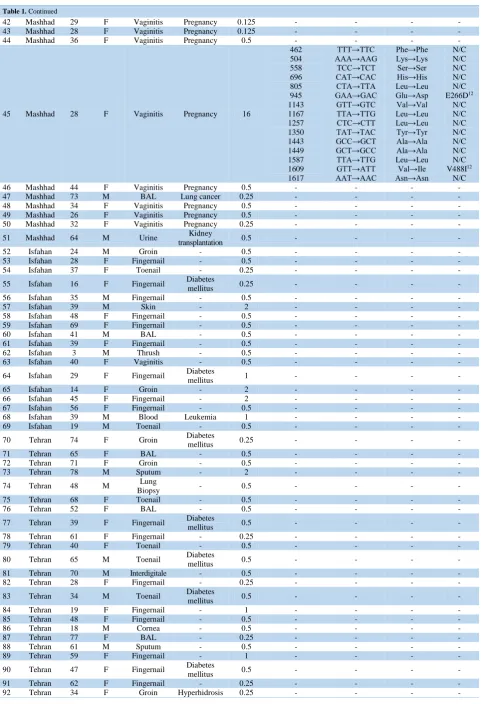
Table 1. Characteristics of patients with candidiasis and nucleotide changes and mutations of Candida albicansERG11 gene and correlated changes in ERG11p among resistant isolates in the present study
No City Age Gender Source of
specimen Risk factor
MIC (µg/ml) Site of nucleotide (bp) mutation Nucleic acid mutation Amino acid substitution Change in ERG11p
1 Mashhad 80 F BAL - 0.125 - - - -
2 Mashhad 39 F Vaginitis Pregnancy 0.25 - - - -
3 Mashhad 55 M BAL Hepatitis 16 - - - -
4 Mashhad 39 F Bladder
Biopsy - 0.25 - - - -
5 Mashhad 65 M BAL Lung Cancer 0.25 - - - -
6 Mashhad 52 M BAL - 0.125 - - - -
7 Mashhad 42 F Vaginitis Pregnancy 0.125 - - - -
8 Mashhad 39 F Vaginitis Pregnancy 0.25 - - - -
9 Mashhad 28 F Vaginitis Pregnancy 0.25 - - - -
10 Mashhad 48 M BAL - 0.125 - - - -
11 Mashhad 28 F Vaginitis Pregnancy 16
462 558 696 805 1143 TTT→TTC TCC→TCT CAT→CAC CTA→TTA GTT→GTC Phe→Phe Ser→Ser His→His Leu→Leu Val→Val N/C N/C N/C N/C N/C
12 Mashhad 55 F BAL Lung cancer 0.125 - - - -
13 Mashhad 63 M BAL Leukemia 0.25 - - - -
14 Mashhad 44 M BAL Lung cancer 4 - - - -
15 Mashhad 45 M Joint Rheumatic
diseases 16
462 504 558 805 945 1143 1167 1257 1350 1443 1449 1587 1609 1617 TTT→TTC AAA→AAG TCC→TCT CTA→TTA GAA→GAC GTT→GTC TTA→TTG CTC→CTT TAT→TAC GCC→GCT GCT→GCC TTA→TTG GTT→ATT AAT→AAC Phe→Phe Lys→Lys Ser→Ser Leu→Leu Glu→Asp Val→Val Leu→Leu Leu→Leu Tyr→Tyr Ala→Ala Ala→Ala Leu→Leu Val→Ile Asn→Asn N/C N/C N/C N/C E266D12 N/C N/C N/C N/C N/C N/C N/C V488I12 N/C
16 Mashhad 65 M BAL Lung cancer 0.25 - - - -
17 Mashhad 79 F BAL - 0.25 - - - -
18 Mashhad 45 F BAL Lung cancer 0.25 - - - -
19 Mashhad 29 F Vaginitis Pregnancy 0.25 - - - -
20 Mashhad 39 M BAL Kidney
transplantation 0.25 - - - -
21 Mashhad 53 F Urine Kidney
transplantation 0.25 - - - -
22 Mashhad 53 M BAL - 0.125 - - - -
23 Mashhad 74 F BAL Lung Cancer 16
696 805 1143 1287 1350 1443 1449 CAT→CAC CTA→TTA GTT→GTC TTT→TTC TAT→TAC GCC→GCT GCT→GCC His→His Leu→Leu Val→Val Phe→Phe Tyr→Tyr Ala→Ala Ala→Ala N/C N/C N/C N/C N/C N/C N/C
24 Mashhad 70 F Biopsy Diabetes
mellitus 0.25 - - - -
25 Mashhad 35 F Vaginitis Pregnancy 0.5 - - - -
26 Mashhad 45 F Vaginitis Pregnancy 0.25 - - - -
27 Mashhad 29 F Vaginitis Pregnancy 0.125 - - - -
28 Mashhad 44 F Vaginitis Pregnancy 0.5 - - - -
29 Mashhad 29 F Vaginitis Pregnancy 0.5 - - - -
30 Mashhad 35 F Thrush Lupus 0.25 - - - -
31 Mashhad 40 M BAL Rheumatic
diseases 0.25 - - - -
32 Mashhad 28 F Vaginitis Pregnancy 0.125 - - - -
33 Mashhad 33 F Vaginitis Pregnancy 0.125 - - - -
34 Mashhad 26 F Vaginitis Pregnancy 0.5 - - - -
35 Mashhad 21 F Vaginitis Pregnancy 0.125 - - - -
36 Mashhad 32 F Vaginitis Pregnancy 0.25 - - - -
37 Mashhad 22 F Vaginitis Pregnancy 0.25 - - - -
38 Mashhad 31 F Vaginitis Pregnancy 0.5 - - - -
39 Mashhad 43 F Vaginitis Pregnancy 0.25 - - - -
40 Mashhad 22 F Vaginitis Pregnancy 0.25 - - - -
Table 1. Continued
42 Mashhad 29 F Vaginitis Pregnancy 0.125 - - - -
43 Mashhad 28 F Vaginitis Pregnancy 0.125 - - - -
44 Mashhad 36 F Vaginitis Pregnancy 0.5 - - - -
45 Mashhad 28 F Vaginitis Pregnancy 16
462 504 558 696 805 945 1143 1167 1257 1350 1443 1449 1587 1609 1617
TTT→TTC AAA→AAG
TCC→TCT CAT→CAC CTA→TTA GAA→GAC GTT→GTC TTA→TTG CTC→CTT TAT→TAC GCC→GCT GCT→GCC TTA→TTG GTT→ATT AAT→AAC
Phe→Phe Lys→Lys Ser→Ser His→His Leu→Leu Glu→Asp Val→Val Leu→Leu Leu→Leu Tyr→Tyr Ala→Ala Ala→Ala Leu→Leu Val→Ile Asn→Asn
N/C N/C N/C N/C N/C E266D12
N/C N/C N/C N/C N/C N/C N/C V488I12
N/C
46 Mashhad 44 F Vaginitis Pregnancy 0.5 - - - -
47 Mashhad 73 M BAL Lung cancer 0.25 - - - -
48 Mashhad 34 F Vaginitis Pregnancy 0.5 - - - -
49 Mashhad 26 F Vaginitis Pregnancy 0.5 - - - -
50 Mashhad 32 F Vaginitis Pregnancy 0.25 - - - -
51 Mashhad 64 M Urine Kidney
transplantation 0.5 - - - -
52 Isfahan 24 M Groin - 0.5 - - - -
53 Isfahan 28 F Fingernail - 0.5 - - - -
54 Isfahan 37 F Toenail - 0.25 - - - -
55 Isfahan 16 F Fingernail Diabetes
mellitus 0.25 - - - -
56 Isfahan 35 M Fingernail - 0.5 - - - -
57 Isfahan 39 M Skin - 2 - - - -
58 Isfahan 48 F Fingernail - 0.5 - - - -
59 Isfahan 69 F Fingernail - 0.5 - - - -
60 Isfahan 41 M BAL - 0.5 - - - -
61 Isfahan 39 F Fingernail - 0.5 - - - -
62 Isfahan 3 M Thrush - 0.5 - - - -
63 Isfahan 40 F Vaginitis - 0.5 - - - -
64 Isfahan 29 F Fingernail Diabetes
mellitus 1 - - - -
65 Isfahan 14 F Groin - 2 - - - -
66 Isfahan 45 F Fingernail - 2 - - - -
67 Isfahan 56 F Fingernail - 0.5 - - - -
68 Isfahan 39 M Blood Leukemia 1 - - - -
69 Isfahan 19 M Toenail - 0.5 - - - -
70 Tehran 74 F Groin Diabetes
mellitus 0.25 - - - -
71 Tehran 65 F BAL - 0.5 - - - -
72 Tehran 71 F Groin - 0.5 - - - -
73 Tehran 78 M Sputum - 2 - - - -
74 Tehran 48 M Lung
Biopsy - 0.5 - - - -
75 Tehran 68 F Toenail - 0.5 - - - -
76 Tehran 52 F BAL - 0.5 - - - -
77 Tehran 39 F Fingernail Diabetes
mellitus 0.5 - - - -
78 Tehran 61 F Fingernail - 0.25 - - - -
79 Tehran 40 F Toenail - 0.5 - - - -
80 Tehran 65 M Toenail Diabetes
mellitus 0.5 - - - -
81 Tehran 70 M Interdigitale - 0.5 - - - -
82 Tehran 28 F Fingernail - 0.25 - - - -
83 Tehran 34 M Toenail Diabetes
mellitus 0.5 - - - -
84 Tehran 19 F Fingernail - 1 - - - -
85 Tehran 48 F Fingernail - 0.5 - - - -
86 Tehran 18 M Cornea - 0.5 - - - -
87 Tehran 77 F BAL - 0.25 - - - -
88 Tehran 61 M Sputum - 0.5 - - - -
89 Tehran 59 F Fingernail - 1 - - - -
90 Tehran 47 F Fingernail Diabetes
mellitus 0.5 - - - -
91 Tehran 62 F Fingernail - 0.25 - - - -
Table 1. Continued
93 Tehran 46 F Toenail - 0.25 - - - -
94 Tehran 58 M Fingernail - 0.25 - - - -
95 Tehran 70 F Toenail - 0.5 - - - -
96 Tehran 86 F Groin - 0.25 - - - -
97 Tehran 27 M Esophagitis - 0.25 - - - -
98 Tehran 10 M Thrush Diabetes
mellitus 0.5 - - - -
99 Tehran 65 F BAL - 0.5 - - - -
100 Tehran 58 M Skin Hyperhidrosis 0.5 - - - -
*BAL: Bronchoalveolar lavage, MIC: minimum inhibitory concentration, M: male, F: female, N/C: no change, aa: amino acid, Phe: phenylalanine, Ser: serine, His: histidine, Leu: leucine, Val: valine, Lys: lysine, Glu: glutamine, Asp: aspartic acid, Tyr: tyrosine, Ala: alanine, Ile: isoleucine, Asn: asparagine
Discussion
Candidiasis is referred to both superficial and
deep-tissue fungal infections often caused by
C. albicans
.
Based on the epidemiological surveys performed in the
Europe [18], United States [19], and the Middle East
[20], the superficial types can affect the oral,
oropharynx, esophagus, and vaginal mucosa.
Candida
albicans
is the main cause of invasive
Candida
infections in the majority of obtained clinical specimens,
accounting for 50-70% of the cases [21]. The treatments
of
Candida
infections differ considerably and are based
on the patients' underlying disease and immune status,
anatomic location of the infection,
Candida
species
responsible for infection, predisposing factors, and, in
some cases, the susceptibility of
Candida
species to
antifungal agents [22, 23].
Nystatin, itraconazole, miconazole, voriconazole,
echinocandins, flucytosine, and amphotericin B are the
anti-
Candida
agents applied for the management of
this infection. However, the most prevalently
recommended antifungal used for the majority of
C.
albicans
isolates is fluconazole, which is a member of
the azole class [24]. Azoles inhibit 14-
α-sterol
demethylase encoded by
ERG11
gene, which is a
significant enzyme involved in the biosynthesis of
ergosterol (i.e., fungal-specific membrane sterol).
Some investigations have shown the ability of
Candida
species to expand high resistance to azole
agents [25, 26]
. Prior fluconazole exposure has been
shown to increase the risk of fluconazole resistance in
Candida
species [26]. Increased resistance to
fluconazole is caused by different factors, such as the
change of the target enzyme to diminish drug binding,
reduction of the toxic effects of the antifungal,
enhancement of the amount of the target enzyme,
prevention from the intracellular accumulation of the
antifungal agent [27], raised expression of
ERG11
as a
result of activating mutations in the gene encoding the
zinc-cluster transcriptional regulator Upc2p [28],
overexpression of drug efflux pumps [29], and
inactivation of
ERG3
gene [30].
Candida albicans
strains isolated from patients
with candidemia have the lowest incidence of azole
resistance (0-5%) [31, 32]. However, the incidence of
fluconazole resistance among the
C. albicans
clinical
isolates of OPC is higher and is associated with prior
OPC infections and previous fluconazole treatment
[33]. Out of the 100
C. albicans
clinical isolates, 5
isolates were resistant to fluconazole (MIC=16 μg/ml).
Interestingly, all resistant strains belonged to Mashhad.
Resistant isolates were obtained from BAL (n=2),
vaginitis (n=2), and joint (n=1). One isolate (from
BAL) did not grow after re-passaging on SGA;
therefore, it was excluded from the study. Amino acid
substitutions have been delineated in 61 parts of the
ERG11p due to mutations in
ERG11
gene [6]. Erg11p
mutations, such as D153E, E266D, D116E, K128T,
K147R, E266Q, K287R, G129A, and G303D, do not
cause fluconazole resistance [12-14, 34, 35]. However,
ERG11p mutations, such as G464S, Y132H, S405F,
R467K, T315A, and I471T, have been shown to cause
resistance to azoles [34, 36-40].
The C-terminal and N-terminal of ERG11p are on the
protein surface rather than on the active site; therefore,
the 295-1667 bp part of
ERG11
gene was amplified to
look for possible mutations. Biofilms, multidrug
transporters in
Candida
species, multiple drug resistance
gene
MDR1
, drug segregation
within intracellular
vacuoles, and also overexpression of
CDR1
and
CDR2
as
Candida
drug-resistant genes can significantly
reduce the intracellular drug concentration [4, 41, 42].
Susceptibility to fluconazole in
C.
albicans
isolates
may reach to 95.8% [43, 44]. However, as indicated in
a number of investigations, the fluconazole resistance
of such clinical isolates might be as high as 35% [45,
46]. In the present study, the incidence rate of
fluconazole resistance in
C. albicans
was 5%. This low
rate may be related to the administration of an
appropriate dosage of antifungal agents or completion
of the therapeutic course.
In this study, two types of mutations, including
E266D and V488I, were detected among the resistant
isolates. E266D mutation was also reported previously;
nonetheless, this mutation does not result in
fluconazole resistance [12]. V488I (G1609A) mutation
may not also lead to fluconazole resistance because
V488 is located far from the active center of ERG11p
[47]. Khademi et al. found four resistant
C. albicans
strains among patients in Guilan, Iran. Missense
mutations, such as C470G, K291N, and Q474R, were
detected in all resistant isolates.
Similar to our results, Teymori et al. [48] detected
5 (5.1%) resistant
C. albicans
isolates (MIC≥64
μg/ml) out of 97 clinical samples. They revealed that
albicans
isolates was up-regulated 4.15-5.84 folds,
compared to the control strain. Eftekhari et al. [49]
isolated 4 resistant
C. albicans
out of 40 strains and
screened
ERG
11 gene mutations by PCR sequencing.
Their isolated strains had D116E and V456G
polymorphisms.
In another study carried out during April
2015-April 2016, Alizadeh et al. [50] isolated 28 strains
of
C. albicans
from muco-cutaneous candidiasis
among immunocompromised patients in Omidiyeh,
Khuzestan, Iran. In the mentioned study, all isolates
were resistant to fluconazole. They evaluated
ERG
gene expression by semi-quantitative reverse
transcriptase-(RT) PCR. In line with the results of the
present study, they showed no significant changes in
fluconazole-resistant isolates in comparison with
untreated controls and
ERG
11 reference sequence.
In 2017, Balabandi et al. [51] detected two
missense mutations (i.e., D116E and E266D) in
ERG
11
gene among 20 resistant
C. albicans
in Rasht, Iran.
Furthermore, Peron et al. [52] found two
fluconazole-resistant
C. albicans
isolates from oral cavity (MIC=8
μg/ml) and esophageal cavity (MIC=64 μg/ml). They
found six mutations encoding distinct amino acid
substitutions (i.e., E116D, T128K, E266D, A298V,
G448V, and G464S) that were previously reported to
be associated with fluconazole resistance.
Moron and Cabrera [53] isolated 26 clinical strains
from two tertiary hospitals in Metro Manila,
Philippines, during November 2016 to January 2017.
Out of 26
C. albicans
, a high percentage of the isolates
(73.08%) showed resistance to fluconazole. They
detected the presence of point mutations T462C,
A369C, and C558T. Mutations A369C and T462C
have been also identified as possible factors associated
with resistance to azole agents [54].
Conclusion
In accordance with many investigations in this
field, our results demonstrated that the majority of
C.
albicans
isolates were susceptible to fluconazole. Since
the main mechanism of azole resistance is the mutation
occurring through the
ERG11
gene in
C. albicans
, this
gene was selected for analysis in the present study. Our
analysis resulted in the detection of 41 mutations in
codons, only 4 of which caused changes in ERG11p.
Nonetheless, these mutations (i.e., E266D and V488I)
cannot lead to fluconazole resistance. Resistance
among these isolates could be due to other
mechanisms, such as the prevention of the intracellular
accumulation of the antifungal agent and alteration of
the target enzyme to diminish drug binding.
Acknowledgments
This study was supported by Isfahan University of
Medical Sciences, Isfahan, Iran, under a thesis number
396246.
Author’s contribution
R. M., A. S., and H. Z. collected the clinical
samples, R. M. managed the project and wrote the first
draft of the manuscript, and A. S. performed the tests.
All authors approved the final version of the
manuscript.
Conflicts of interest
The authors declare no conflicts of interest.
Financial disclosure
No financial interests related to the material of this
manuscript have been declared.
References
1. Naglik JR, König A, Hube B, Gaffen SL. Candida albicans– epithelial interactions and induction of mucosal innate immunity. Curr Opin Microbiol. 2017; 40:104-12.
2. Arendrup MC, Patterson TF. Multidrug-resistant Candida: epidemiology, molecular mechanisms, and treatment. J Infect Dis. 2017; 216(Suppl 3):S445-51.
3. Hampe IA, Friedman J, Edgerton M, Morschhäuser J. An acquired mechanism of antifungal drug resistance simultaneously enables Candida albicans to escape from intrinsic host defenses. PLoS Pathog. 2017; 13(9):e1006655. 4. White TC, Holleman S, Dy F, Mirels LF, Stevens DA.
Resistance mechanisms in clinical isolates of Candida albicans. Antimicrob Agents Chemother. 2002; 46(6):1704-13.
5. Dupont S, Lemetais G, Ferreira T, Cayot P, Gervais P, Beney L. Ergosterol biosynthesis: a fungal pathway for life on land? Evolution. 2012; 66(9):2961-8.
6. Xu Y, Chen L, Li C. Susceptibility of clinical isolates of Candida species to fluconazole and detection of Candida albicans ERG11 mutations. J Antimicrob Chemother. 2008; 61(4):798-804.
7. Mirhendi H, Makimura K, Khoramizadeh M, Yamaguchi H. A one-enzyme PCR-RFLP assay for identification of six medically important Candida species. Nihon Ishinkin Gakkai Zasshi. 2006; 47(3):225-9.
8. Yazdani MR, Foroughifar E, Mohammadi R. Identification of Candida species isolated from renal transplant recipients with candiduria. Int J Organ Transplant Med. 2016; 7(4):206-11. 9. Clinical and Laboratory Standards Institute. Reference method
for broth di-lution antifungal susceptibility testing of yeasts. 3rd ed. Wayne, PA: Clinical and Laboratory Standards Institute; 2008.
10. Clinical and Laboratory Standards Institute. Reference method for broth dilution antifungal susceptibility testing of yeasts: fourth informational supplement M27-S4. CLSI, Wayne, PA, USA: Clinical and Laboratory Standards Institute; 2012. 11. Lai MH, Kirsch DR. Nucleotide sequence of cytochrome P450
L1A1 (lanosterol 14 alpha-demethylase) from Candida albicans. Nucleic Acids Res. 1989; 17(2):804.
12. Löffler J, Kelly SL, Hebart H, Schumacher U, Lass-Flörl C, Einsele H. Molecular analysis of cyp51 from fluconazole-resistant Candida albicans strains. FEMS Microbiol Lett. 1997; 151(2):263-8.
13. Perea S, López-Ribot JL, Kirkpatrick WR, McAtee RK, Santillán RA, Martı́nez M, et al. Prevalence of molecular mechanisms of resistance to azole antifungal agents in Candida albicans strains displaying high-level fluconazole resistance isolated from human immunodeficiency virus-infected patients. Antimicrob Agents Chemother. 2001; 45(10):2676-84. 14. Wang Y, Wang H, Guo H, Zhao Y, Luo S. Analysis of ERG11
gene mutation in Candida albicans. Di Yi Jun Yi Da Xue Xue Bao. 2005; 25(11):1390-3.
15. Long F, Zhang Y, Lan H. The point mutation of cytochrome P-450 lanosterol 14-? Demethylase ERG11 gene in Fluconazole-resistant Candida albicans. Chinese J Infect Dis. 1997(4):2002-4. 16. Li X, Brown N, Chau AS, López-Ribot JL, Ruesga MT, Quindos G, et al. Changes in susceptibility to posaconazole in clinical isolates of Candida albicans. J Antimicrob Chemother. 2004; 53(1):74-80.
Yoshida Y. Formation of azole-resistant Candida albicans by mutation of sterol 14-demethylase P450. Antimicrob Agents Chemother. 1999; 43(5):1163-9.
18. Klingspor L, Tortorano AM, Peman J, Willinger B, Hamal P, Sendid B, et al. Invasive Candida infections in surgical patients in intensive care units: a prospective, multicentre survey initiated by the European Confederation of Medical Mycology (ECMM) (2006–2008). Clin Microbiol Infect. 2015; 21(1):87.e1-10. 19. Cleveland AA, Harrison LH, Farley MM, Hollick R, Stein B,
Chiller TM, et al. Declining incidence of candidemia and the shifting epidemiology of Candida resistance in two US metropolitan areas, 2008–2013: results from population-based surveillance. PLoS One. 2015; 10(3):e0120452.
20. Sharifzadeh A, Khosravi AR, Shokri H, Asadi Jamnani F, Hajiabdolbaghi M, Tamami IA. Oral microflora and their relation to risk factors in HIV+ patients with oropharyngeal candidiasis. J Mycol Med. 2013; 23(2):105-12.
21. Arendrup MC. Epidemiology of invasive candidiasis. Curr Opin Crit Care. 2010; 16(5):445-52.
22. Poikonen E, Lyytikäinen O, Anttila VJ, Koivula I, Lumio J, Kotilainen P, et al. Secular trend in candidemia and the use of fluconazole in Finland, 2004-2007. BMC Infect Dis. 2010; 10(1):312.
23. Pfaller MA, Messer SA, Moet GJ, Jones RN, Castanheira M. Candida bloodstream infections: comparison of species distribution and resistance to echinocandin and azole antifungal agents in Intensive Care Unit (ICU) and non-ICU settings in the SENTRY Antimicrobial Surveillance Program (2008–2009). Int J Antimicrob Agents. 2011; 38(1):65-9.
24. Pfaller M, Diekema D, Gibbs D, Newell V, Ellis D, Tullio V, et al. Results from the ARTEMIS DISK global antifungal surveillance study, 1997 to 2007: a 10.5-year analysis of susceptibilities of Candida species to fluconazole and voriconazole determined by CLSI standardized disk diffusion. J Clin Microbiol. 2010; 48(4):1366-77.
25. Lortholary O, Renaudat C, Sitbon K, Madec Y, Denoeud-Ndam L, Wolff M, et al. Worrisome trends in incidence and mortality of candidemia in intensive care units (Paris area, 2002–2010). Intensive Care Med. 2014; 40(9):1303-12.
26. Oxman DA, Chow JK, Frendl G, Hadley S, Hershkovitz S, Ireland P, et al. Candidaemia associated with decreased in vitro fluconazole susceptibility: is Candida speciation predictive of the susceptibility pattern? J Antimicrob Chemother. 2010; 65(7):1460-5.
27. Morschhäuser J. The development of fluconazole resistance in Candida albicans–an example of microevolution of a fungal pathogen. J Microbiol. 2016; 54(3):192-201.
28. MacPherson S, Akache B, Weber S, De Deken X, Raymond M, Turcotte B. Candida albicans zinc cluster protein Upc2p confers resistance to antifungal drugs and is an activator of ergosterol biosynthetic genes. Antimicrob Agents Chemother. 2005; 49(5):1745-52.
29. Coste AT, Karababa M, Ischer F, Bille J, Sanglard D. TAC1, transcriptional activator of CDR genes, is a new transcription factor involved in the regulation of Candida albicans ABC transporters CDR1 and CDR2. Eukaryot Cell. 2004; 3(6):1639-52.
30. Morio F, Pagniez F, Lacroix C, Miegeville M, Le Pape P. Amino acid substitutions in the Candida albicans sterol Δ5, 6-desaturase (Erg3p) confer azole resistance: characterization of two novel mutants with impaired virulence. J Antimicrob Chemother. 2012; 67(9):2131-8.
31. Pfaller MA, Rhomberg PR, Messer SA, Jones RN, Castanheira M. Isavuconazole, micafungin, and 8 comparator antifungal agents' susceptibility profiles for common and uncommon opportunistic fungi collected in 2013: temporal analysis of antifungal drug resistance using CLSI species-specific clinical breakpoints and proposed epidemiological cutoff values. Diagn Microbiol Infect Dis. 2015; 82(4):303-13.
32. Ying Y, Zhang J, Huang S, Liu F, Liu J, Hu X, et al. Fluconazole susceptibility of 3,056 clinical isolates of Candida species from 2005 to 2009 in a tertiary-care hospital. Indian J Med Microbiol. 2015; 33(3):413-5.
33. Berberi A, Noujeim Z, Aoun G. Epidemiology of oropharyngeal candidiasis in human immunodeficiency virus/acquired immune
deficiency syndrome patients and CD4+ counts. J Int Oral Health. 2015;7(3):20-3.
34. Maebashi K, Kudoh M, Nishiyama Y, Makimura K, Kamai Y, Uchida K, et al. Proliferation of intracellular structure corresponding to reduced affinity of fluconazole for cytochrome P‐450 in two low‐susceptibility strains of Candida albicans isolated from a Japanese AIDS patient. Microbiol Immunol. 2003; 47(2):117-24.
35. Goldman GH, da Silva Ferreira ME, dos Reis Marques E, Savoldi M, Perlin D, Park S, et al. Evaluation of fluconazole resistance mechanisms in Candida albicans clinical isolates from HIV-infected patients in Brazil. Diagn Microbiol Infect Dis. 2004; 50(1):25-32.
36. Sanglard D, Ischer F, Koymans L, Bille J. Amino acid substitutions in the cytochrome P-450 lanosterol 14α-demethylase (CYP51A1) from azole-resistant Candida albicans clinical isolates contribute to resistance to azole antifungal agents. Antimicrob Agents Chemother. 1998; 42(2):241-53. 37. Lamb DC, Kelly DE, Schunck WH, Shyadehi AZ, Akhtar M,
Lowe DJ, et al. The mutation T315A in Candida albicans sterol 14α-demethylase causes reduced enzyme activity and fluconazole resistance through reduced affinity. J Biol Chem. 1997; 272(9):5682-8.
38. Lamb DC, Kelly DE, White TC, Kelly SL. The R467K amino acid substitution in Candida albicans sterol 14α-demethylase causes drug resistance through reduced affinity. Antimicrob Agents Chemother. 2000; 44(1):63-7.
39. Kakeya H, Miyazaki Y, Miyazaki H, Nyswaner K, Grimberg B, Bennett JE. Genetic analysis of azole resistance in the Darlington strain of Candida albicans. Antimicrob Agents Chemother. 2000; 44(11):2985-90.
40. Kamai Y, Maebashi K, Kudoh M, Makimura K, Naka W, Uchida K, et al. Characterization of mechanisms of fluconazole resistance in a Candida albicans isolate from a Japanese patient with chronic mucocutaneous candidiasis. Microbiol Immunol. 2004; 48(12):937-43.
41. Park S, Perlin DS. Establishing surrogate markers for fluconazole resistance in Candida albicans. Microb Drug Resist. 2005; 11(3):232-8.
42. Maebashi K, Kudoh M, Nishiyama Y, Makimura K, Uchida K, Mori T, et al. A novel mechanism of fluconazole resistance associated with fluconazole sequestration in Candida albicans isolates from a myelofibrosis patient. Microbiol Immunol. 2002; 46(5):317-26.
43. St-Germain G, Laverdiere M, Pelletier R, Bourgault AM, Libman M, Lemieux C, et al. Prevalence and antifungal susceptibility of 442 Candida isolates from blood and other normally sterile sites: results of a 2-year (1996 to 1998) multicenter surveillance study in Quebec, Canada. J Clin Microbiol. 2001; 39(3):949-53.
44. Bedini A, Venturelli C, Mussini C, Guaraldi G, Codeluppi M, Borghi V, et al. Epidemiology of candidaemia and antifungal susceptibility patterns in an Italian tertiary-care hospital. Clin Microbiol Infect. 2006; 12(1):75-80.
45. Akbar DH, Tahawi AT. Candidemia at a university hospital: epidemiology, risk factors and predictors of mortality. Ann Saudi Med. 2001; 21(34):178-82.
46. Whaley SG, Berkow EL, Rybak JM, Nishimoto AT, Barker KS, Rogers PD. Azole antifungal resistance in Candida albicans and emerging non-albicans Candida species. Front Microbiol. 2017; 7:2173.
47. Marichal P, Koymans L, Willemsens S, Bellens D, Verhasselt P, Luyten W, et al. Contribution of mutations in the cytochrome P450 14α-demethylase (Erg11p, Cyp51p) to azole resistance in Candida albicans. Microbiol. 1999; 145(Pt 10):2701-13. 48. Teymuri M, Mamishi S, Pourakbari B, Mahmoudi S, Ashtiani
MT, Sadeghi RH, et al. Investigation of ERG11 gene expression among fluconazole-resistant Candida albicans: first report from an Iranian referral paediatric hospital. Br J Biomed Sci. 2015; 72(1):28-31.
49. Eftekhari AD, Anvari M, Ranji N. Investigation of ERG11 gene mutation in fluconazole resistant Candida albicans isolated from a number of Rasht hospitals. Modares J Med Sci. 2015; 18(3):97-107.
ergosterol content and gene expression profile of ERG11 gene in fluconazole-resistant Candida albicans. Curr Med Mycol. 2017; 3(1):13-9.
51. Balabandi S, Khazaei KZ, Ranji N. Correlation between ERG11 gene mutations and fluconazole resistance in Candida albicans strains isolated from Rasht in Years 2015-2016. Arak Med Univ J. 2017; 20(124):13-22.
52. Peron IH, Reichert-Lima F, Busso-Lopes AF, Nagasako CK, Lyra L, Moretti ML, et al. Resistance surveillance in Candida albicans: a five-year antifungal susceptibility evaluation in a
Brazilian University Hospital. PLoS One. 2016; 11(7):e0158126. 53. Moron LS, Cabrera EC. Detection of azole resistance and
ERG11 point mutations in Candida albicans isolates from tertiary hospitals in the Philippines. Curr Res Environ Appl Mycol. 2018; 8(3):298-305.