Background and Objectives: Statins are inhibitors of 3‑hydroxy‑3‑methylglutaryl coenzyme A (HMG‑CoA) reductase, used for the management of hypercholesterolemia and related atherosclerotic diseases. Several studies have indicated the neuroprotective effects of statins on several neuropathological conditions. However, the role of these medications in epilepsy is still unclear. The purpose is to evaluate and summarize the level of evidence on the efficacy of statins in neuronal hyperexcitability and the neuroinflammatory processes of epilepsy. Methods: A systematic review was performed. Eligibility Criteria: This review involved studies conducted in humans and nonhuman experimental models, covering the use of an inhibitor of HMG‑CoA reductase, alone or accompanied by another medication, in epilepsy. Information Sources: A systematic literature search was performed in PubMed, Embase, Ebsco Host, Scopus, Science Direct, Medline, and LILACS. Risk of Bias: It was evaluated with the Newcastle–Ottawa Scale and the experimental studies were evaluated using
the GRADE tool. Results: Twenty articles of the 183 evaluated were included.
Sixteen studies were conducted in animal models and four studies in humans. Most studies in mice reported a reduction in epileptiform activity and reduction in systemic inflammation with the treatment of statins, potentially influencing epilepsy control. Few studies in humans were performed in the geriatric population with variable results (neuroinflammation, seizure prevention, cell death, prevention of kindling, increase in convulsive threshold, increase in latency, decrease in frequency of crisis, and reduction in mortality) related to reduction in the rate of hospitalizations, mortality, and prevention of epilepsy. Studies in mice found a decrease in
interleukin‑1β (IL‑1β), IL‑6, and tumor necrosis factor alpha and an increase in
IL‑10 and endothelial nitric oxide synthase. Conclusions: The possible antiepileptic
mechanism of statins may be related to the reduction in neuroinflammation mediated by a decrease in pro‑inflammatory cytokines and action in the nitrergic system. Further studies evaluating the impact of statins on seizure control are necessary.
Keywords: Brain, epilepsy, seizure, statins
The Effect of Statins in Epilepsy: A Systematic Review
Loraine De Jesús Quintana‑Pájaro1,2, Yancarlos Ramos‑Villegas1,2, Eileen Cortecero‑Sabalza1,2, Andrei F. Joaquim3, Amit Agrawal4, Alexis Rafael Narvaez‑Rojas5, Luis Rafael Moscote‑Salazar1,2,6
Access this article online Quick Response Code:
Website:
www.ruralneuropractice.com
DOI:
10.4103/jnrp.jnrp_110_18
Address for correspondence: Dr. Luis Rafael Moscote‑Salazar, University of Cartagena, Cartagena de Indias, Colombia. Centro de Investigaciones Biomédicas, Faculty of Medicine, University of Cartagena, Cartagena de Indias, Colombia. E‑mail: [email protected]
Original Article
Introduction
E
pilepsy is a neurological disease generated by anabnormal brain electrical activity in certain regions of the brain that predisposes to recurrent unprovoked attacks. Worldwide, a prevalence of 1%–2% is estimated, affecting between 50 and 65 million people, with 50,000– 100,000 new cases per year. In addition, it is estimated that 30%–40% are refractory to seizure treatment.[1‑3] Epilepsy is considered a public health problem worldwide
and is one of the most frequent neurological disorders.[3]
1Department of Medicine,
University of Cartagena,
2Centro de Investigaciones
Biomédicas,Faculty of Medicine, University of Cartagena, 6Department of
Neurosurgery, University of Cartagena, Cartagena de Indias, Colombia,
3Department of Neurology,
Division of Neurosurgery, State University of Campinas, Campinas, Sao Paulo, Brazil,
5Department of Medicine,
National Autonomous University of Nicaragua, Managua, Nicaragua,
4Department of Neurosurgery,
MM Institute of Medical Sciences and Research, Maharishi Markandeshwar University, Ambala, Haryana, India
Abs
tract
This is an open access journal, and articles are distributed under the terms of the Creative Commons Attribution-NonCommercial-ShareAlike 4.0 License, which allows others to remix, tweak, and build upon the work non-commercially, as long as appropriate credit is given and the new creations are licensed under the identical terms.
For reprints contact: [email protected]
How to cite this article: Quintana-Pájaro LD, Ramos-Villegas Y,
Cortecero-Sabalza E, Joaquim AF, Agrawal A, Narvaez-Rojas AR, et al. The
effect of statins in epilepsy: A systematic review. J Neurosci Rural Pract
2018;9:478-86.
disease.[1,4,5] The enzyme HMG‑CoA reductase catalyzes the conversion of HMG‑CoA to L‑mevalonate; statins prevent the biological activities of L‑mevalonate due to
the aforementioned inhibitory effect.[5] Statins perform
pleiotropic actions on the endothelium, the inflammatory response, or the production of free radicals. The inhibition of obtaining endogenous cholesterol induces a positive regulation of low‑density lipoprotein (LDL) receptors on the cell surface. Obtaining a higher absorption of LDL from the blood and therefore a decrease in its concentration. In addition, high‑density lipoprotein levels
increase and triglyceride levels decrease.[6]
Several studies have indicated the neuroprotective effects of statins on several neuropathological conditions. The anticonvulsive activity has been explained by suppressing reactive astrogliosis with neuroinflammation in the crises; by stimulating GABAergic activity and inhibiting glutamatergic; by
modulating the glycogen synthase kinase‑3β pathway;
and by decreasing the infiltration of monocytes in the neuronal death of the hippocampus and pro‑inflammatory gene expression.[1,4]
The lipophilic statins (atorvastatin [ATV], lovastatin, fluvastatin, pitavastatin, and simvastatin) can passively pass through the blood–brain barrier (BBB); in addition, the hydrophilic statins can also enter the
neuroparenchyma.[6,7] All statins are substrates for
organic anion transporter polypeptides (OATPs), of which OATP1A2 and OATP1C1 are expressed in the brain. Despite this, the selectivity of hydrophilic statins for these subtypes has not been explored to determine their mechanism of entry to the central nervous system (CNS). In addition, the existence of monocarboxylic acid transporters in the BBB can constitute an alternate route of entry to the CNS although there are no specific studies for the CNS either. Independently of the specific transporters, it is feasible that statins are deposited at different speeds and concentrations within the CNS according to their
different lipid solubility alone.[7]
Methods
Objectives
The objective of this review is to answer the following question: What is the level of evidence on the efficacy of statins to decrease neuronal hyperexcitability and neuroinflammatory processes of epilepsy?
To develop the review, the steps of the patients, intervention, comparison, outcomes, and study design strategy were followed.
Inclusion criteria Types of participants
This review involved studies conducted in humans and nonhuman experimental models.
Type of intervention
It covered the use of inhibitors of HMG‑CoA reductase, alone or accompanied by another medication.
Types of studies
The qualitative component of the review included studies that described the molecular mechanisms of statins in the CNS, the pharmacokinetic aspects, and the changes derived from the use of these drugs in neurotransmitters and cerebral cholesterol. The quantitative component included randomized and nonrandomized controlled trials, quasi‑experimental designs, prospective or retrospective cohort studies, and nested case–control studies.
Types of results
The benefit of the therapy was defined as the decrease in neuroinflammation derived from seizures, decrease in neuronal death after the seizure, prevention of seizures, decrease in mortality after a seizure episode, increase in seizure threshold, reduction in the frequency, and increase in the latency of the crises.
Search and selection of studies strategy
This systematic review followed the recommendations of the Cochrane Collaboration (PRISMA). A bibliographic search was carried out in the databases: PubMed, Embase, Ebsco Host, Scopus, ScienceDirect, Medline, and LILACS, considering all the publications made up to February 2, 2018. The search was carried out in five steps: First, the keywords using the Medical Subject Headings and DeCs (Health Descriptors), then proceeded to use the descriptors of the subject (hydroxymethyl glutaryl‑CoA reductase inhibitors, statins, epilepsy, epileptogenesis) in the databases mentioned. Subsequently, the duplicate records were eliminated (Step 2) and an analysis of the titles and abstracts thrown by the search was continued (Step 3), then the full‑text review of the selected articles was proceeded (Step 4), and finally, the references were reviewed of the included articles to identify those studies that also met the eligibility criteria (Step 5). Letters to the editor and studies with a language other than English or Spanish were excluded.
Method of revision
Data collection
The following data were extracted from the studies that met the eligibility criteria: authors, year of publication, number of participants, type of study, study objective, statin used, statin dose, epilepsy inducer used, route of administration of the statin, duration of treatment, and results of the study. These data were compiled in Microsoft Excel and were divided into two: collection of human studies and collection of non‑human studies.
Assessment of quality and risk of study sessions
The assessment of the risk of bias in human studies was performed using the Newcastle–Ottawa Scale [Figures 1 and 2], while experimental studies in animal models were evaluated using the GRADE tool [Figure 3].
Data synthesis and additional analysis
An analysis of the studies was carried out in nonhuman experimental models that only involved the use of statins, excluding from this analysis those studies that applied a drug or substantial addition to the statin and the studies that did not specify the duration of the treatment. With the Epi‑info 7.2 programs, (CDC, Atlanta, Georgia, USA) the median duration of treatment, absolute and relative frequency of the variables were determined:
statin used, statin dose, epilepsy inducer used, and route of administration.
Results
Selection of studies
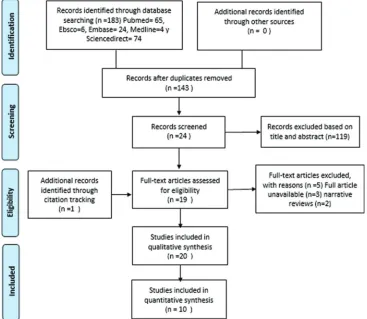
The selection process of the studies was based on the PRISMA foundations as shown in Figure 4. Twenty articles of the 183 included in the bibliographic search were considered.
Characteristics of the studies Studies in animal models
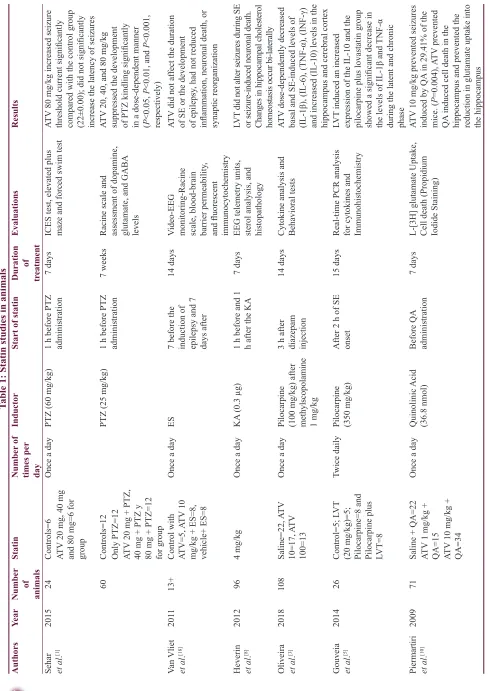
We identified 16 studies in animal models (mice), of
this total only 10 studies (n = 626 mice) met the criteria
for descriptive analysis [Table 1]. We excluded three studies that used an additional substance to the statin; one study that did not clearly specify the duration of the treatment and two studies that did not clarify the number of participants. The median duration of treatment with statins was 14 days (IQR = 7–15), the inducers of epilepsy used were pilocarpine, kainic acid, quinolinic acid, pentylenetetrazole (PTZ), and electroshock test, as
shown in Figure 5. Sehar et al.’s study was performed
in two phases: acute and chronic, for statistical analysis were taken as two studies. On the other hand, as can be seen Figure 6, the most used route of administration was
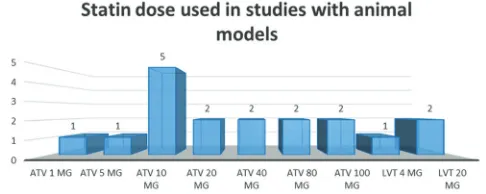
oral. In addition, the most commonly used statin dose was 10 mg of ATV [Figure 7]. In Table 2, it is observed that most of the studies reported a positive change of statin treatment.
Human studies
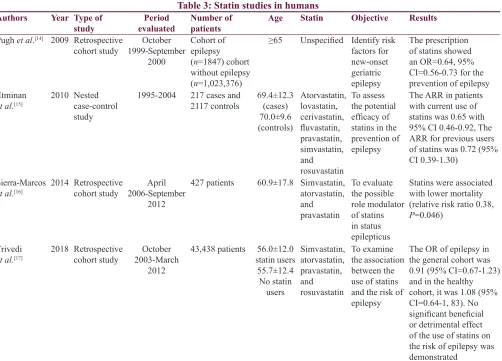
We identified four studies in humans (n = 1,071,422): 3 (75%) of retrospective cohort and 1 (25%) of nested
cases and controls. The results are shown inTable 3.
Evaluation of the risk of bias
The results of the evaluation of the bias are shown in Figures 2‑4.
Statins and brain cholesterol
One study quantified sterol levels in the hippocampus of an animal model with unilateral hippocampal lesion induced by kainic acid. The lovastatin treatment was performed 3 days before and 3 days after the induction of status epilepticus (SE). There were no significant changes in the levels of sterols (lanosterol and desmosterol) at 24 h after the SE, but it did detect a bilateral reduction in the hippocampus of the metabolite 24‑OHC and cholesterol levels at 48 h
and 14 days (P < 0.001 and P < 0.01, respectively). These
periods in which changes were identified corresponded to the preepileptogenic and to the appearance of daily seizures. On the other hand, lovastatin was not associated with
alteration of seizures during status.[8]
Statins and neuroinflammation
We identified three studies related to the role of statins in neuroinflammation mediated by cytokines. Two studies used lovastatin and one study used ATV. All three studies administered postinduction
statin with pilocarpine. The study by Oliveira et al.
found a reduction of the pro‑inflammatory cytokines:
interleukin‑1β (IL‑1β), IL‑6, tumor necrosis factor
alpha (TNF‑α), and interferon‑γ in cortex and
hippocampus, 14 days after induction (P < 0.05)
together with an increase in the levels of the anti‑inflammatory cytokine IL‑10. These results were better with the dose of ATV 100 mg/kg compared to the dose of 10 mg/kg. In addition, the control group of ATV without induction with pilocarpine also showed a reduction in pro‑inflammatory cytokines. In this same study, it was found that mice needed higher doses of the statin to achieve an increase in IL‑10, unlike rats, which in turn had higher levels of pro‑inflammatory cytokines.[3] Gouveia et al.found
similar results in both 2011 and 2014.[5,9] The two
Figure 2: Risk of bias for experimental studies in animal models using GRADE
Figure 3: Risk of bias using Newcastle–Ottawa Scale for cohort studies
Figure 4: Risk of bias using Newcastle–Ottawa Scale for case–control
Contd...
Table
1: Statin studies in animals
Authors
Year
Number of animals
Statin
Number
of
times per day
Inductor
Start of statin
Duration of tr eatment Evaluations Results
Sehar et al
.
[1]
2015
24
Controls=6
Once a day
PTZ (60 mg/kg)
1 h before PTZ administration
7 days
ICES test, elevated plus maze and forced swim test
ATV
80 mg/kg increased seizure
threshold current significantly compared with the control group (22±0.00); did not significantly increase the latency of seizures
ATV
20 mg, 40 mg
and 80 mg=6 for group
60
Controls=12
PTZ (25 mg/kg)
1 h before PTZ administration
7 weeks
Racine scale and assessment of dopamine, glutamate, and GABA levels
ATV
20, 40, and 80 mg/kg
suppressed the development of PTZ kindling significantly in a dose‑dependent manner (P<0.05,
P
<0.01, and
P
<0.001,
respectively)
Only PTZ=12 ATV
20 mg + PTZ,
40 mg + PTZ y 80 mg + PTZ=12 for group
Van Vliet et al
.
[18]
201
1
13+
Control with ATV=5, A
TV
10
mg/kg + ES=8, vehicle+ ES=8
Once a day
ES
7 before the induction of epilepsy and 7 days after
14 days
Video
‑EEG
monitoring‑Racine scale, blood‑brain barrier permeability
,
and fluorescent immunocytochemistry
ATV
did not af
fect the duration
of SE or the development of epilepsy
, had not reduced
inflammation, neuronal death, or synaptic reor
ganization
Heverin et al
.
[8]
2012
96
4 mg/kg
Once a day
KA
(0.3 µg)
1 h before and 1 h after the KA
7 days
EEG telemetry units, sterol analysis, and histopathology
LVT
did not alter seizures during SE
or seizure‑induced neuronal death. Changes in hippocampal cholesterol homeostasis occur bi‑laterally
Oliveira et al
. [3] 2018 108 Saline=22, ATV 10=17, ATV 100=13
Once a day
Pilocarpine (100 mg/kg) after met
hyl
scopola
m
ine
1 mg/kg
3 h after diazepam injection
14 days
Cytokine analysis and Behavioral tests
ATV
dose‑dependently decreased
basal and SE‑induced levels of (IL‑1β), (IL‑6), (TNF‑α), (INF‑γ) and increased (IL‑10) levels in the hippocampus and cerebral cortex
Gouveia et al
. [5] 2014 26 Control=5; L VT
(20 mg/kg)=5; Pilocarpine=8 and Pilocarpine plus LVT=8
Twice daily
Pilocarpine (350 mg/kg) After 2 h of SE onset
15 days
Real‑time PCR analysis for cytokines and Immunohistochemistry
LVT
induced an increased
expression of the IL‑10 and the pilocarpine plus lovastatin group showed a significant decrease in the levels of IL‑1β and
TNF‑α
during the latent and chronic phase
Piermartiri et al
.
[10]
2009
71
Saline + QA=22
Once a day
Quinolinic
Acid
(36.8 nmol)
Before QA administration
7 days
L‑[3H] glutamate Uptake, Cell death (Propidium Iodide Staining)
ATV
10 mg/kg prevented seizures
induced by QA
in 29.41% of the
mice. ( P =0.004), A TV prevented QA
induced cell death in the
hippocampus and prevented the reduction in glutamate uptake into the hippocampus
ATV
1 mg/kg +
QA=15 ATV
10 mg/kg +
Table
1
: Contd...
Authors
Year
Number of animals
Statin
Number
of
times per day
Inductor
Start of statin
Duration
of
tr
eatment
Evaluations
Results
Lee et al
.
[1
1]
2008
28
Control=9
Once a day
KA
(10 mg/kg)
Before KA injection‑
ATV
pre‑SE group; 0.5 h after KA in A
TV
Post‑SE
group
7 days
Racine scale
Treatment with
ATV
efficiently
decreased convulsive events induced by KA, the neuronal death of the hippocampus, infiltration of monocytes and proinflammatory gene expression
ATV
10 mg/kg
pre‑SE=1
1
ATV
10 mg/kg
Post‑SE=8
Gouveia et al
.
[9]
201
1
20
Control=5, Solo LVT
20 mg=5,
Solo pilocarpine=5, pilocarpine plus LVT=5 2 h after the onset of SE and 12 h after the first dose
Pilocarpine (350 mg/kg)‑ 1 mg/kg before scopolamine methyl nitrate After pilocarpine injection
0,5 days
Quantitative real‑time PCR (for cytokines and kinin B1 and B2 receptors) and corporal temperature
LVT
significant decrease in
mRNA
expression of IL‑1β,
IL‑6,
TNF‑α, and kinin B1
receptor
, also reduced SE‑induced
hyperthermia
Campos et al
.
[19]
2017
152
Control=14,
ATV
10
mg/kg=10,
ATV
100 mg/kg=10, Solo
SE=13, A
TV
10 + SE=18,
ATV
100 mg/kg + SE=15
Once a day
Pilocarpine 100 mg/kg and Pilocarpine (30 mg/kg) After pilocarpine injection
14 days
Giemsa staining
The
ATV
regarded against
tonic‑clonic seizures caused by PTZ on the 14th post‑SE.
The
protective ef
fects were similar in
female and male mice, requiring a higher amount of
ATV
in females
(100 mg/kg versus 10 mg/kg in males)
PTZ:
Pentylenetetrazole,
ICES:
Increasing
current
electroshock,
ATV
: Atorvastatin,
ES:
Electrical
stimulation,
EEG:
Electroencephalography
, SE:
Status
epilepticus,
LVT
: Levetiracetam,
PCR:
Polymerase
chain
reaction,
TNF‑α:
Tumor
necrosis
factor
alpha,
IL‑1β:
Interleukin‑1β,
INF
γ:
Interferon
gamma,
GABA:
gamma
‑Aminobutyric
acid,
KA:
Kainic
acid,
QA:
Quinolinic
studies used ATV with a difference in the duration of treatment. However, both studies found a reduction in
IL‑1β and TNF‑α.[5,9]
Statins and nitric oxide
Four studies evaluated the effect of statins on nitric oxide. Three studies used PTZ as an inducer and
one used penicillin G ATV.[13,16,17,20] Akgün Dar et al,
administered ATV 30 min before induction found that pretreatment with this statin reduced the inducible nitric oxide synthetase and matrix metalloproteinase 2 that
have been related to a proconvulsant activity (P < 0.001)
and also found a reduction in frequency and an increase
in latency of seizures (P < 0.001).[2] These findings agree
with the results of the study by Shafaroodi et al., who
used PTZ and electrical stimulation as inductors and Table 2: Positive results reported in experimental studies
Study Neuro‑
inflammation preventionSeizure deathCell Prevention of kindling convulsive thresholdIncrease in decrease in frequency of crisisIncrease in latency and in mortalityReduction
Sehar et al.[1] • •
Oliveira et al.[3] •
Akgün et al.[2] • • • •
Gouveia et al.[9] •
Piermartiri et al.[10] • •
Lee et al.[11] • •
Gouveia et al.[5] •
Shafaroodi et al.[12] • •
Seker et al.[13] •
Moezi et al.[21] • •
•The study evaluated the respective parameter, finding positives results after the statin administration
Table 3: Statin studies in humans
Authors Year Type of
study evaluatedPeriod Number of patients Age Statin Objective Results
Pugh et al.[14] 2009 Retrospective
cohort study 1999‑September October 2000
Cohort of epilepsy
(n=1847) cohort
without epilepsy
(n=1,023,376)
≥65 Unspecified Identify risk
factors for new‑onset geriatric epilepsy
The prescription of statins showed
an OR=0.64, 95% CI=0.56‑0.73 for the
prevention of epilepsy Etminan
et al.[15] 2010 Nested case‑control
study
1995‑2004 217 cases and
2117 controls 69.4±12.3 (cases)
70.0±9.6
(controls)
Atorvastatin, lovastatin, cerivastatin,
fluvastatin,
pravastatin, simvastatin, and rosuvastatin
To assess the potential
efficacy of
statins in the prevention of epilepsy
The ARR in patients with current use of
statins was 0.65 with 95% CI 0.46‑0.92, The
ARR for previous users
of statins was 0.72 (95%
CI 0.39‑1.30)
Sierra‑Marcos
et al.[16] 2014 Retrospective cohort study 2006‑September April
2012
427 patients 60.9±17.8 Simvastatin,
atorvastatin, and pravastatin
To evaluate the possible role modulator of statins in status epilepticus
Statins were associated with lower mortality (relative risk ratio 0.38,
P=0.046)
Trivedi
et al.[17] 2018 Retrospective cohort study 2003‑March October
2012
43,438 patients 56.0±12.0
statin users
55.7±12.4
No statin users
Simvastatin, atorvastatin, pravastatin, and rosuvastatin
To examine the association between the use of statins and the risk of epilepsy
The OR of epilepsy in the general cohort was
0.91 (95% CI=0.67‑1.23)
and in the healthy cohort, it was 1.08 (95%
CI=0.64‑1, 83). No significant beneficial
or detrimental effect of the use of statins on the risk of epilepsy was demonstrated
administered ATV of 10 and 20 mg/kg; this treatment increased the threshold for tonic seizures caused by PTZ and decreased the appearance of tonic seizures and death
in the induction model with electric current.[12] Similarly,
the study by Moezi et al. found an increase in the
seizure threshold for both intravenous and intraperitoneal PTZ models and a decrease in the appearance of tonic seizures and death in the chronically treated group with ATV and induction with intraperitoneal PTZ.[21] In the
study by Seker et al., ATV, simvastatin, and rosuvastatin
were used at a dose of 20 mg/kg; in this case, the group with rosuvastatin presented the best antiepileptic effect with a decrease in the expression of p53, Bax, and caspase 3 that are associated with cellular apoptosis, together with an increase in endothelial nitric oxide
synthetase.[13] Three studies (Seker et al., Shafaroodi
et al., and Moezi et al.) showed that inhibitors of
nitric oxide synthetase (L‑NAME and aminoguanidine)
decreased the anticonvulsant effect of ATV.[12,13,21]
Statins and specific syndromes associated with epilepsy
We identified two studies that evaluated the use of statins in genetic syndromes with epileptogenic
characteristics. In 2013, Osterweil et al. found that the
administration of 100 mg/kg of lovastatin to genetically modified mice (fragile X syndrome) was able to correct the excessive synthesis of proteins and prevent the outbreak of epileptiform activity in the hippocampus in vitro, in addition to protecting the mice in vivo.[1,22] On the other hand, in 2018, it was postulated that lovastatin is capable of modulating upregulated protein functions in animal models with Angelman syndrome by a mechanism other than the inhibition of protein
synthesis.[23] However, more research is needed to
clarify this relationship.
Discussion
The neuroprotective effects of statins have been observed in various neurological diseases. However, its protective effect on epilepsy continues to be debated and most studies have been conducted in rats. An association has been found between the use of statins and the reduction of the risk of epilepsy in older adults.
Sierra‑Marcos et al. demonstrated an antiepileptic role of
statins in older adults, for which they used the registry of 427 patients with an epileptic episode in a period of 6 years and took into account different predictive items of prognosis, among which if they had used or they use statins. The use of statins was statistically significant, which correlated with a decrease in morbidity and
mortality in these patients.[16]
Etminan et al. found that statins reduce the risk of
hospitalization in patients with epilepsy focused on senile patients and stipulated that the result is directly related to the dose and the possible anti‑inflammatory
properties that statins confer.[15] The few studies
conducted in humans focused on observing the properties of statins in terms of epilepsy have had an effect in elderly people who have been shown to have a certain risk of developing epilepsy associated with
cerebrovascular diseases and dementia. Pugh et al., in
their study on the risk factors of epilepsy of onset in old age, observed that in patients with prescription of
statins, the development of epilepsies was lower.[14]
There is research in humans that suggests the neuroprotective benefit of statins that is generalized to the
entire population. Trivedi et al. could not determine the
benefit of statins in their study where they included healthy individuals or those with few comorbidities and who used statins or not; however, it is emphasized that they were not associated with an increase in the risk of statins. Development of epilepsies which allows establishing that
the use of statins is safe in patients who have epilepsy.[17]
All studies reviewed in humans agree on the need for more research on the subject to be able to define the beneficial effect of statins and be able to explain it.
Figure 6: Statin route of administration
Summary of evidence
This systematic review gives an overview of the available literature on the role of statins and its possible effect on epilepsy. This study only provides evidence 3b.
Limitations
Our study has some limitations. Most studies focused largely on an experimental level. All articles included in this review are peer‑reviewed. There is a possibility of publication bias. Finally, the inclusion of only articles in English and Spanish could affect the generalization of our findings.
Conclusions
The role as anticonvulsant agents of statins is not completely known. Still, there is missing evidence to know how this type of mechanism works modulating the immune system. The participation of statins as reducing agents of neuroinflammation requires more studies. Financial support and sponsorship
Nil.
Conflicts of interest
There are no conflicts of interest.
References
1. Sehar N, Agarwal NB, Vohora D, Raisuddin S. Atorvastatin prevents development of kindling by modulating hippocampal levels of dopamine, glutamate, and GABA in mice. Epilepsy Behav 2015;42:48‑53.
2. Akgün Dar K, Kapacu A, Acar S, Üzüm G. Evaluation of antiepileptogenic effect of atorvastatin on development of pentylenetetrazole induced kindling in rats: The responsibility of inducible nitric oxide synthase and metalloproteinase 2. Turk
Klin J Med Sci 2013;33:995‑1006.
3. Oliveira CV, Grigoletto J, Canzian JM, Duarte MM, Duarte T, Furian AF, et al. Effect of atorvastatin on behavioral alterations
and neuroinflammation during epileptogenesis. Epilepsy Behav 2018;78:109‑17.
4. Citraro R, Chimirri S, Aiello R, Gallelli L, Trimboli F, Britti D, et al. Protective effects of some statins on epileptogenesis and
depressive‑like behavior in WAG/Rij rats, a genetic animal
model of absence epilepsy. Epilepsia 2014;55:1284‑91.
5. Gouveia TL, Scorza FA, Iha HA, Frangiotti MI, Perosa SR, Cavalheiro EA, et al. Lovastatin decreases the synthesis
of inflammatory mediators during epileptogenesis in the
hippocampus of rats submitted to pilocarpine‑induced epilepsy.
Epilepsy Behav 2014;36:68‑73.
6. Banach M, Czuczwar SJ, Borowicz KK. Statins – Are they anticonvulsant? Pharmacol Rep 2014;66:521‑8.
7. McFarland AJ, Anoopkumar‑Dukie S, Arora DS, Grant GD,
McDermott CM, Perkins AV, et al. Molecular mechanisms underlying the effects of statins in the central nervous system.
Int J Mol Sci 2014;15:20607‑37.
8. Heverin M, Engel T, Meaney S, Jimenez‑Mateos EM,
Al‑Saudi R, Henshall DC, et al. Bi‑lateral changes to hippocampal cholesterol levels during epileptogenesis and in chronic epilepsy following focal‑onset status epilepticus in mice. Brain Res 2012;1480:81‑90.
9. Gouveia TL, Scorza FA, Silva MJ, Bandeira Tde A, Perosa SR, Argañaraz GA, et al. Lovastatin decreases the synthesis of
inflammatory mediators in the hippocampus and blocks the
hyperthermia of rats submitted to long‑lasting status epilepticus. Epilepsy Behav 2011;20:1‑5.
10. Piermartiri TC, Figueiredo CP, Rial D, Duarte FS, Bezerra SC, Mancini G, et al. Atorvastatin prevents hippocampal cell
death, neuroinflammation and oxidative stress following
amyloid‑β(1‑40) administration in mice: Evidence for
dissociation between cognitive deficits and neuronal damage. Exp Neurol 2010;226:274‑84.
11. Lee JK, Won JS, Singh AK, Singh I. Statin inhibits kainic acid‑induced seizure and associated inflammation and hippocampal cell death. Neurosci Lett 2008;440:260‑4.
12. Shafaroodi H, Moezi L, Fakhrzad A, Hassanipour M, Rezayat M, Dehpour AR, et al. The involvement of nitric oxide in the anti‑seizure effect of acute atorvastatin treatment in mice. Neurol
Res 2012;34:847‑53.
13. Seker FB, Kilic U, Caglayan B, Ethemoglu MS, Caglayan AB, Ekimci N, et al. HMG‑coA reductase inhibitor rosuvastatin improves abnormal brain electrical activity via mechanisms involving eNOS. Neuroscience 2015;284:349‑59.
14. Pugh MJ, Knoefel JE, Mortensen EM, Amuan ME, Berlowitz DR, Van Cott AC, et al. New‑onset epilepsy risk
factors in older veterans. J Am Geriatr Soc 2009;57:237‑42.
15. Etminan M, Samii A, Brophy JM. Statin use and risk of epilepsy:
A nested case‑control study. Neurology 2010;75:1496‑500. 16. Sierra‑Marcos A, Alvarez V, Faouzi M, Burnand B, Rossetti AO.
Statins are associated with decreased mortality risk after status epilepticus. Eur J Neurol 2015;22:402‑5.
17. Trivedi LU, Alvarez CA, Mansi IA. Association of statin therapy
with risk of epilepsy in 2 propensity score‑matched cohorts. Ann
Pharmacother 2018;52:546‑53.
18. van Vliet EA, Holtman L, Aronica E, Schmitz LJ, Wadman WJ,
Gorter JA, et al. Atorvastatin treatment during epileptogenesis in a rat model for temporal lobe epilepsy. Epilepsia 2011;52:1319‑30.
19. Campos DMB, Barbosa AP, Oliveira JA, Tavares GG, Cravo PVL, Ostermayer AL, et al. Human lagochilascariasis – A rare helminthic disease. PLoS Negl Trop Dis 2017;11:e0005510.
20. Etminan N, Vergouwen MD, Ilodigwe D, Macdonald RL. Effect of pharmaceutical treatment on vasospasm, delayed cerebral ischemia, and clinical outcome in patients with aneurysmal subarachnoid hemorrhage: A systematic review and meta‑analysis. J Cereb Blood Flow Metab 2011;31:1443‑51. 21. Moezi L, Shafaroodi H, Hassanipour M, Fakhrzad A,
Hassanpour S, Dehpour AR, et al. Chronic administration of atorvastatin induced anti‑convulsant effects in mice: The role of nitric oxide. Epilepsy Behav 2012;23:399‑404.
22. Osterweil EK, Chuang SC, Chubykin AA, Sidorov M, Bianchi R,
Wong RK, et al. Lovastatin corrects excess protein synthesis and prevents epileptogenesis in a mouse model of fragile X
syndrome. Neuron 2013;77:243‑50.