*Corresponding author:Ojukwu Chidiebele petronilla
Department of Medical rehabilitation, Faculty of Health Sciences and Technology, University of Nigeria, Enugu Nigeria ISSN: 0976-3031
Research Article
URINARY INCONTINENCE: PREVALENCE, CORRELATES AND UTILIZATION OF PHYSIOTHERAPY
AMONG PAROUS WOMEN IN ENUGU, SOUTH-EASTERN NIGERIA
Ojukwu Chidiebele Petronilla
1., Ukaejiofo Ayodele Chisolu
2., Anorue Onyeka Jennifer
3.,
Anekwu Emelie Morris
4and Onuchukwu Chioma Linda
51,2,3
Department of Medical rehabilitation, Faculty of Health Sciences and Technology,
University of Nigeria, Enugu Nigeria
4
Department of Physiotherapy, Federal Teaching Hospital, Abakaliki Ebonyi State Nigeria
5Department of Physiotherapy, Enugu state University Teaching Hospital Parklane,
Enugu state, Nigeria
ARTICLE INFO ABSTRACT
Background: Literature on the prevalence and correlates of urinary incontinence among Nigerian
women is limited and the utilization of physiotherapy for its management is unknown. Objective: This study assessed prevalence and correlates of urinary incontinence as well as the utilization of physiotherapy for its management. Materials and Methods: 150 consenting parous women completed a structured questionnaire, investigating socio-demographic characteristics, prevalence of urinary incontinence and utilization of physiotherapy. Data were analyzed using Chi square and logistic regression at the 0.05 α level.Results: Participants’ mean age was 28.08 ± 5.73. 22.7% of the women had urinary incontinence. First childbirth experience at or above 30 years (OR = 29.96), > one previous caesarean birth (OR = 23.84) and > one previous vaginal birth were the major determinants of urinary incontinence. 12.7% were aware of physiotherapy management of urinary incontinence and none (0%) of the affected women had utilized physiotherapy for the management of urinary incontinence. Conclusion: Urinary incontinence is prevalent among parous women in Enugu, Nigeria. First childbirth experience at or beyond 30 years, more than one caesarean and one vaginal births and multiparity were the major determinant factors of urinary incontinence. Women have poor knowledge of the roles of physiotherapy and have not been utilizing its services for the management of urinary incontinence. Health education by women’s health Physiotherapists is necessary and appropriate referrals from other health care providers is recommended.
INTRODUCTION
Urinary incontinence is a common global health issue, particularly amongst women. Based on the recent definition by the International Incontinence Society, urinary incontinence (UI) is “any form of urine leakage” that includes the entire population of individuals who have either complained or are currently having urine leakage (Minassian et al., 2003; Abrams
et al., 2010). UI is usually accompanied by psychosocial distress (Bogner, 2004; Brittain and Shaw, 2007) with a negative impact on quality of life and self-esteem (Araki et al., 2005; Obioha et al., 2015).
Globally, studies have reported prevalence of UI among women (Harrison and Mendel; 1994; Hannestad et al., 2000; Minassian et al., 2003; Wesnes et al., 2007; Huebner et al., 2010). In Nigeria, several studies have shown similar trends of
occurrence among women (Adaji et al., 2010; Ojengbede et al., 2011; Rabin et al., 2015; Udokang et al., 2015; Obioha et al., 2015). Generally, women with UI have a poor treatment-seeking behaviour (Burgio et al., 1994; Shaw et al., 2001;
Badejoko et al., 2016) despite the wealth of available treatment
options. Various treatment options with known benefits include physiotherapy, medical and surgical procedures (Goldstein et
al., 1992).However, studies have reported low cure rates with the surgical procedures (Schussler, 1994; Black and Downs, 1996). Commonly, conservative treatment options including, lifestyle changes, pelvic floor muscle training, behavioural techniques, electrical stimulation and drugs, and combinations of these individual therapies are recommended and utilized
(Herbison and Dean, 2002; Wallace et al., 2004; Shaikh et al.,
2006; Nabi et al., 2006; Imamura et al., 2013). Physiotherapy
offers most of these treatment options (pelvic floor muscle
Recent Scientific
Research
International Journal of Recent Scientific Research
Vol. 7, Issue, 12, pp. 14508-14513, December, 2016
Copyright © Ojukwu Chidiebele petronilla et al., 2016, this is an open-access article distributed under the terms of the
Creative Commons Attribution License, which permits unrestricted use, distribution and reproduction in any medium, provided the original work is properly cited.
Article History:
Received 05thSeptember, 2016 Received in revised form 08th October, 2016
Accepted 10thNovember, 2016 Published online 28stDecember, 2016
Key Words:
training, electrical stimulation, biofeedback, vaginal cones) available for the management of UI (Ghaderi and Oskouei, 2014). Numerous studies (Lagro-Janssen et al., 1991; Bumsz et
al., 1993; Bie et al., 1998; Bo, 2004; Dumoulin and Hay-Smith,
2010; Herderschee et al., 2011) have reported positive
outcomes of physiotherapy procedures in the management of UI. Despite the wealth of existing evidence on the efficacy of physiotherapy procedures in the management of UI in other populations, there is limited literature on the outcomes of physiotherapy in the management of UI in Nigeria. Nevertheless, there is anecdotal evidence that physiotherapists are less involved in the management of UI in Nigeria and there is also paucity of data on the utilization of physiotherapy by affected Nigerian women. In addition to the aforementioned, there is need for more information on the prevalence and factors associated with UI in south eastern Nigeria. To address these gaps in knowledge, this study was designed to evaluate the prevalence and associated factors of UI among south-eastern Nigerian women as well as the utilization of physiotherapy services by the affected women.
MATERIALS AND METHOD
Participants
One hundred and fifty (150) women in their childbearing years, who had undergone at least one childbirth were conveniently selected for this cross-sectional survey. Participants were conveniently selected from three rural-based women’s health clinics (University of Nigeria Teaching Hospital, Balm of Gilead Hospital Ogui New Layout and Mother of Christ Specialist Hospital Ogui New Layout) in Enugu Nigeria. Women with a history of urinary incontinence prior to their first pregnancy as well as pregnant women were excluded from the study. Ethical approval was sought and obtained from the University Of Nigeria health research ethics committee. Eligible women gave signed informed consents before participation in the study.
Instrument for data collection
The self-administered study questionnaire was structured by experts for the purpose of this study. In three distinct sections (A, B and C), the 25-item questionnaire consisted of open and close- ended questions. Section A was on socio-demographic and obstetric characteristics while B and C were on prevalence of UI and utilization of physiotherapy services, respectively. For a better understanding, UI was defined as ‘any form of urine leakage’ (Abrams, 2010; Adaji, 2010) in the study questionnaire. This instrument was translated into an Igbo version for an effective understanding by subjects who are not literate in English Language. Three experts carried out face and content validation of the instrument while the reliability coefficient of the English and Igbo versions of the instrument was 0.80 and 0.76, respectively using the Cronbach alpha. Data analysis
Data were summarized with descriptive statistics of mean, standard deviation, frequency and percentages. Inferential statistics of Chi-square and Logistic regression were used to test for association between prevalence of UI and each of socio-demographic and obstetric characteristics. Data analysis was done using SPSS (version 22.0) with alpha level set at p = 0.05.
RESULTS
180 questionnaires were given out and 150 were completely filled and returned, yielding a response rate of 83%. The mean age of the respondents was 28.08 ± 5.73 years.
Table 1 Socio-demographic and maternal characteristics
of the participants (n = 150)
Variable Frequency Percentage (%)
Age (years) 20-25 26-30 31-35 36-40 41-45 33 45 48 18 6 22 30 32 12 4 Marital status Single Married Separated Divorced 0 124 26 0 0 82.7 17.3 0 Parity Primiparous Multiparous 105 45 70 30
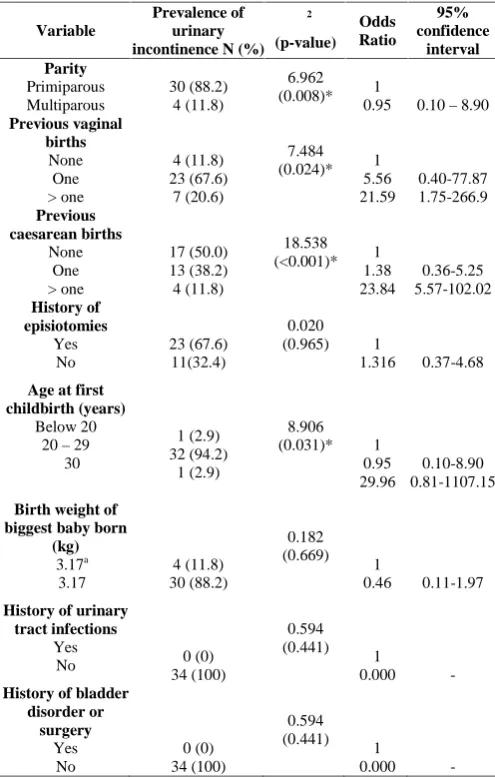
Table 2 Chi square and logistic regression test results of
association between prevalence of urinary incontinence and obstetric characteristics of the participants
Variable
Prevalence of urinary incontinence N (%)
χ2 (p-value) Odds Ratio 95% confidence interval Parity Primiparous Multiparous 30 (88.2) 4 (11.8) 6.962
(0.008)* 0.951 0.10–8.90
Previous vaginal births None One > one 4 (11.8) 23 (67.6) 7 (20.6) 7.484 (0.024)* 1 5.56 21.59 0.40-77.87 1.75-266.9 Previous caesarean births None One > one 17 (50.0) 13 (38.2) 4 (11.8) 18.538 (<0.001)* 1 1.38 23.84 0.36-5.25 5.57-102.02 History of episiotomies Yes No 23 (67.6) 11(32.4) 0.020 (0.965) 1 1.316 0.37-4.68
Age at first childbirth (years)
Below 20 20–29
≥ 30 1 (2.9) 32 (94.2) 1 (2.9) 8.906 (0.031)* 1 0.95 29.96 0.10-8.90 0.81-1107.15
Birth weight of biggest baby born
(kg)
≤ 3.17a ≥ 3.17 4 (11.8) 30 (88.2) 0.182 (0.669) 1 0.46 0.11-1.97
History of urinary tract infections
Yes
No 0 (0)
34 (100)
0.594 (0.441) 1
0.000
-History of bladder disorder or surgery Yes No 0 (0) 34 (100) 0.594 (0.441) 1 0.000
-* Significance at α = 0.05 a
respondents are presented in Table 1. Majority of the women were within The age range of 31-35 years (32%) and most were married (82.7%). More than half (70%) of the participants were primiparous. 34 participants (22.7%) reported urine leakage while 116 (77.3%) reported no experience of urine leakage. In table 2, the Chi-square and logistic regression test results of the association between prevalence of UI and obstetric characteristics of the participants were presented. The results showed a significant association between prevalence of UI and each of previous caesarean births (χ2 = 18.538; p = < 0.001), parity (χ2= 6.962; p = 0.008), previous vaginal births (χ2 = 7.484; p = 0.024) and maternal age at first childbirth (χ2 = 8.906; p = 0.031). Having first childbirth experience at≥ 30 years (OR = 29.96; CI = 0.81-1107.15), more than one ceaserean birth (OR = 23.84; CI = 5.57-102.02) and more than one vaginal birth (OR = 29.96; CI = 0.81-1107.15) were the commonest determinant factors of UI among the participants. Multiparous women had about 5 times chances of developing UI than primiparous women.
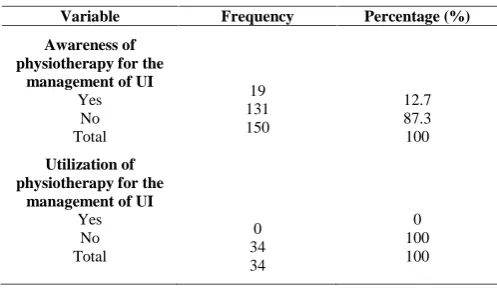
Information on the awareness of physiotherapy for the management of UI among the participants and the utilization of its services among the affected women are presented in table 3. Few of the participants (12.7%) were aware of physiotherapy as a management option for UI. None of the affected women had received physiotherapy interventions for the management of UI.
DISCUSSION
This study assessed the prevalence and correlates of UI and the utilization of physiotherapy services for its management among parous women in Enugu, Nigeria. 22.7% of the participants reported urine leakage. Other studies have previously shown varying prevalence rates of UI among Nigerian women (Okonkwo et al., 2001; Adaji et al., 2010; Ojengbede et al., 2011; Adedokun et al., 2010; Rabin et al., 2015; Udokang et
al., 2015; Obioha et al., 2015). The prevalence rate of UI in this study is in a similar range with the findings ofAdaji et al.
(2010)and Okonkwo et al. (2001), who reported prevalence of
21.1% and 19.5% respectively, among women in Northern and Eastern Nigeria. However,Ojengbede et al. (2011),Rabin et al. (2015) and Obioha et al. (2015) reported lower prevalence rates. Conversely,Udokang et al. (2015) showed a higher UI prevalence among women in Akwa Ibom State, Nigeria. These variations may be attributed to geographical factors and lifestyle practices of women in different cultures. Also, the
tentatively lies within the child-bearing age of Nigerian women
(Odetola, 2015; Orazulike, 2015; Onyemenam, 2016). Child
bearing is an established risk factor for UI among women
(Ogbong, 1984) and the child bearing years have been
associated with increased reports of UI (Thorp et al., 1999;
Morkved and Bo, 1999; Wesnes et al., 2007).
This study showed significant associations between the prevalence of UI and some obstetric factors including, parity, age at first childbirth, previous vaginal and caesarean births. This finding corroborates other studies which have reported significant associations between UI and parity (Foldspang et
al., 1992; Milson et al., 1993; Ojengbede et al., 2011). However, the direction of the existing associations in these studies contradicts the findings of the present study which showed a higher prevalence (88.2%) of UI in primiparous women. This trend may be attributed to a greater wealth of experience possessed by multiparous women on the prevention and management options of UI. On the other hand, the findings of this study disagree with previous studies (Burgio et al.,
1994; Okonkwo et al., 2001; Connolly et al., 2007) which have
reported no significant association between parity and prevalence of UI.
The study revealed that women who had their first childbirth experience at or beyond thirty years had about 30 times chances of experiencing urine leakage than women who had their first childbirth experience below thirty years. This relationship between age at first childbirth and prevalence of UI agrees with the findings of other authors (Persson et al., 2000; Dietz and Lanzarone, 2005; Rortveit and Hunskaar,
2006; Groutz et al., 2007), who revealed a preponderance in the
prevalence of UI among women who had their first childbirth at ages above 29 years. It is possible that as age advances, the integrity of the pelvic floor muscles get compromised. Contrary to the findings of the present study is the result ofAltmann et
al. (2006) which found no significant association between age of first childbirth and prevalence of UI.
From the results, women with more than one caesarean births were about twenty-four times at more risk of developing UI unlike those with one or no caesarean births. However, there is limited literature to compare this study finding. Meanwhile, women with more than one previous vaginal birth were also at more risk of experiencing UI (OR = 21.59) as compared to their counterparts with one or no vaginal births. Similar associations were shown in other studies (Kuh et al., 1999; MacLennan et al., 2000; Persson et al., 2000; Rortveit et al.,
2003; Ojengbede et al., 2011) which showed a relationship
between vaginal delivery and prevalence of UI. This may be attributed to the processes involved in vaginal deliveries including over stretching of and trauma to the perineal structures.Delancey et al. (2003) reported abnormalities in the Levator Ani muscle after vaginal deliveries and other authors have also stated that vaginal birth is the single most important risk factor for the development of pelvic floor dysfunctions including UI (Viktrup et al., 1992; Skoner et al., 1994; Mant et
al., 1997).
Furthermore, this study revealed that only 12.7% of the women were aware of physiotherapy as a treatment option for UI and one of the 34 women that reported urine leakage had ever
Table 3 Awareness and Utilization of physiotherapy for
the management of UI among the participants
Variable Frequency Percentage (%)
Awareness of physiotherapy for the
management of UI
Yes No Total
19 131 150
12.7 87.3 100
Utilization of physiotherapy for the
management of UI
Yes No Total
0 34 34
utilized physiotherapy services for the management of their condition. Many factors influence the decision to seek care for a health condition including poor knowledge of treatment options (Shaw et al., 2008). Thus, it is possible that the poor utilization of physiotherapy services by the participants in this study may be as a result of poor awareness levels. Many studies have also reported poor health-seeking behaviours among Nigerian women with UI (Adaji et al., 2010; Adedokun et al.,
2012; Udokang et al., 2015). Usually, most women feel shy to
discuss their experience of urine leakage even to their healthcare providers. Other reasons for the poor health-seeking behavior of women with UI may exist but the scope of this study did not cover that. Anyway, it is possible that the poor health seeking behavior as previously reported may be one of the factors affecting non-utilization of physiotherapy among the participants in this study.
There is paucity of data on the role and utilization of physiotherapy in the prevention and management of UI in Nigeria. Typically, utilization of physiotherapy services in Nigeria is dependent on the knowledge and attitudes of physicians towards physiotherapy (Odunaiya et al., 2013). Physiotherapy services in Nigeria are utilized by patients only on referral basis. Poor awareness and knowledge of physiotherapy among physicians in Nigeria have been previously reported (Ogbona, 1984) whereas more recent studies have revealed otherwise (Odunaiya, 2013). Relative to women’s health, the findings ofOdunaiya et al. (2013) revealed that obstetricians and gynaecologists in Nigeria showed a good knowledge of physiotherapy. However, physicians still possess poor attitudes of patient referral for physiotherapy. A recent study (Oke and Kubeyinje, 2013) in one of the tertiary hospitals in Nigeria reported poor referral rates to physiotherapy especially from the obstetrics and gynaecology department whereas they had the highest number of admissions annually. They attributed this gap to ineffective communication between physicians/ surgeons and the physiotherapists, inadequate knowledge and skepticism or lack of awareness of the components of physiotherapy (prevention, therapy and rehabilitation) among the physicians/ surgeons. Therefore, it is possible that women who with good health-seeking behavior may not have been referred to physiotherapy by their physicians. There is need for a better inter-disciplinary relationship between physiotherapists and other health professionals in Nigeria. This will undoubtedly improve patient outcomes (Odunaiya, 2013). Improved health policies on the accessibility of physiotherapists in Nigeria is recommended in order to reduce dependence of patients’ utilization of physiotherapy services on physicians’ referrals only. Proper education of women is also paramount in enhancing the utilization of physiotherapy services. Health-care professionals especially women’s health physiotherapist should aim at promoting therapeutic and lifestyle practices towards the prevention of UI in the child-bearing years as this will not only increase the awareness and utilization of their services among women but will help in reducing the risks and prevalence of UI.
CONCLUSION
Urinary incontinence is prevalent among parous women in Enugu, Nigeria. First childbirth experience at or beyond 30 years, more than one caesarean and one vaginal births and
multiparity were the major determinant factors of urinary incontinence. There is poor awareness and non- utilization of physiotherapy services for the management of UI among the women.
References
1. Abrams, P., Andersson, K.E., Birder, L., Brubaker, L., Cardozo, L., Chapple, C., Cottenden, A., Davila, W., De Ridder, D., Dmochowski, R. and Drake, M. (2010). Fourth International Consultation on Incontinence Recommendations of the International Scientific Committee: Evaluation and treatment of urinary incontinence, pelvic organ prolapse, and fecal incontinence. Neurourol. Urodyn., 29(1): 213-240. 2. Adaji, S.E., Shittu, O.S.., Bature, S.B., Nasir, S. And
Olatunji O. (2010) Suffering in silence: pregnant women's experience of urinary incontinence in Zaria, Nigeria. Eur J Obstet Gynecol Reprod Bio., 150(1):19-23.
3. Adedokun, B.O., Morhason-Bello, I.O., Ojengbede, O.A., Okonkwo, N.S. and Kolade, C. (2012). Help-seeking behavior among women currently leaking urine in Nigeria: is it any different from the rest of the world?. Patient Prefer. Adher., 6:815.
4. Adimora, G.N., Chukwudi, N.K. and Ejike, O. (2004). Birth Weights of Full Term Newborn Babies Among The Igbos Of Eastern Ncigeria. Niger J Clin Pract., 7(1):33-6.
5. Araki, I., Beppu, M., Kajiwara, M., Mikami, Y., Zakoji, H., Fukasawa, M. and Takeda, M. (2005). Prevalence and impact on generic quality of life of urinary incontinence in Japanese working women: assessment by ICI questionnaire and SF-36 Health Survey. Urology, 66(1): 88-93.
6. Badejoko, O.O., Bola-Oyebamiji., S., Awowole, I.O., Salako, A.A. and Ogunniyi, S.O. (2016). Urinary incontinence: prevalence, pattern, and opportunistic screening in Ile-Ife, Nigeria. Int Urogynecol J., 27(2):269-73.
7. Black, N.A. and Downs, S.H. (1996). The effectiveness of surgery for stress incontinence in women: a systematic review. Br J Urol., 78:497 510.
8. Bie, D. (1998). Conservative treatment of stress urinary incontinence in women: a systematic review of randomized clinical trials. Br J Urol., 82(2):181-91. 9. Bø, K. (2004). Pelvic floor muscle training is effective
in treatment of female stress urinary incontinence, but how does it work?. Int Urogynecol J., 15(2):76-84. 10. Bogner, H.R. (2004). Urinary incontinence and
psychological distress in community-dwelling older African Americans and whites. J Am Geriatr Soc., 52:1870–4.
11. Brittain, K.R. and Shaw, C. (2007). The social consequences of living with and dealing with incontinence – a carers perspective. Soc Sci Med., 65:1274–83.
Gerontology, 48(4):M167-M174.
13. Burgio, K.L., Ives, D.G., Locher, J.L., Arena, V.C., Kuller, L.H. (1994). Treatment seeking for urinary incontinence in older adults. J Am Geriatr Soc., 42(2):208-12.
14. Connolly, T.J., Litman, H.J., Tennstedt, S,L., Link, C.L. and McKinlay, J.B. (2007). The effect of mode of delivery, parity, and birth weight on risk of urinary incontinence. Int Urogynecol J., 18(9):1033-42. 15. Dietz, H.P. and Lanzarone, V. (2005). Levator trauma
after vaginal delivery. Obstet Gynecol., 106(4):707-12. 16. DeLancey, J.O., Kearney, R., Chou, Q., Speights, S.
and Binno, S. (2003). The appearance of levator ani muscle abnormalities in magnetic resonance images after vaginal delivery. Obstet Gynecol., 101(1):46. 17. Dumoulin, C. and Hay-Smith J. (2010). Pelvic floor
muscle training versus no treatment, or inactive control treatments, for urinary incontinence in women. Cochrane Database Syst Rev., 1(1).
18. Foldspang, A., Mommsen, S., Lam, G.W. and Elving, L. (1992). Parity as a correlate of adult female urinary incontinence prevalence. J Epidemiol Community
Health., 46(6):595-600.
19. Groutz, A., Helpman, L., Gold, R., Pauzner, D., Lessing, J.B. and Gordon, D. (2007). First vaginal delivery at an older age: does it carry an extra risk for the development of stress urinary incontinence?. Neurourol. Urodyn., 26(6):779-82.
20. Goldstein, M., Hawthorne, M.E., Engeberg, S., McDowell, B.J. and Burgio, K.L. (1992). Urinary incontinence: why people do not seek help. J Gerontol
Nurs., 18(4):15-20.
21. Ghaderi, F. and Oskouei, A.E. (2014). Physiotherapy for women with stress urinary incontinence: a review article. J Phys Ther Sci., 26(9):1493-9.
22. Hannestad, Y.S., Rortveit, G., Sandvik, H. And Hunskaar, S. (2000). A community-based epidemiological survey of female urinary incontinence: the Norwegian EPINCONT study. Epidemiology of Incontinence in the County of Nord-Trondelag. J Clin
Epidemiol., 53:1150–7.
23. Harrison, G.L. and Memel, D.S. (1994). Urinary incontinence in women: its prevalence and its management in a health promotion clinic. Br J Gen
Pract., 44:149–52.
24. Huebner, M., Antolic, A. and Tunn, R. (2010). The impact of pregnancy and vaginal delivery on urinary incontinence. Int J Gynaecol Obstet., 110(3):249-251. 25. Herbison, G.P. and Dean, N. (2002). Weighted vaginal
cones for urinary incontinence. Cochrane Database Syst Rev., 1.
26. Herderschee, R., Hay‐Smith, E.J., Herbison, G.P., Roovers, J.P. and Heineman, M.J. (2011). Feedback or biofeedback to augment pelvic floor muscle training for urinary incontinence in women. The Cochrane Library, 1.
27. Imamura, M., Jenkinson, D., Wallace, S., Buckley, B., Vale, L. and Pickard, R. (2013). Stress Urinary Incontinence Review Group. Conservative treatment
clinical update. Br J Gen Pract., 63(609):218-20. 28. Kuh, D., Cardozo, L. And Hardy, R. (1999). Urinary
incontinence in middle aged women: childhood enuresis and other lifetime risk factors in a British prospective cohort. J Epidemiol Community Health., 53:453-458
29. Lagro-Janssen, T.L.M., Debruyne, F.M.J., Smits, A.J.A. and Van Weel, C. (1991). Controlled trial of pelvic floor exercises in the treatment of urinary stress incontinence in general practice. Br J Gen Pract., 41:445 9.
30. MacLennan, A.H., Taylor, A.W., Wilson, D.H. and Wilson, D. (2000). The prevalence of pelvic floor disorders and their relationship to gender, age, parity and mode of delivery. BJOG., 107(12):1460-70. 31. Mant, J., Painter, R. and Vessey, M. (1997).
Epidemiology of genital prolapse: Observations from the Oxford Family Planning Association study. Br J
Obstet Gynaecol., 104:579–85. 10.
32. Milsom, I., Ekelund, P., Molander, U., Arvidsson, L. and Areskoug, B. (1993). The influence of age, parity, oral contraception, hysterectomy and menopause on the prevalence of urinary incontinence in women. J. Urol., 149(6):1459-62.
33. Minassian, V.A., Drutz, H.P. and Al-Badr, A. (2003): Urinary incontinence as a worldwide problem. Int J
Gynaecol Obstet., 82:327–338.
34. Mørkved, S. and Bø, K. (1999). Prevalence of urinary incontinence during pregnancy and postpartum. Int Urogynecol J., 10(6):394-8.
35. Nabi, G., Cody, J.D., Ellis, G., Hay-Smith, J. and Herbison, G.P. (2006). Anticholinergic drugs versus placebo for overactive bladder syndrome in adults. Cochrane Database Syst Rev., 4.
36. Obioha, K.C., Ugwu, E.O., Obi, S.N., Dim, C.C. and Oguanuo, T.C. (2015). Prevalence and predictors of urinary/anal incontinence after vaginal delivery: prospective study of Nigerian women. Int Urogynecol J., 26(9):1347-1354.
37. Odetola, T.D. (2015). Health care utilization among rural women of child-bearing age: a Nigerian experience. Pan Afr Med J., 20(151).
38. Odunaiya, N.A., Ilesanmi,T., Fawole, A.O. and Oguntibeju, O.O. (2013). Attitude and practices of obstetricians and gynecologists towards involvement of physiotherapists in management of obstetric and gynecologic conditions. Int. J. Wom. Health., 5:109. 39. Ogbona, P.U. (1984). Physiotherapy services.
Unpublished MSc thesis. Ibadan, Nigeria: Department of Physiotherapy, Faculty of Clinical Sciences, College of Medicine, University of Ibadan.
40. Ojengbede, O.A., Morhason‐Bello, I.O., Adedokun, B.O., Okonkwo, N.S. and Kolade, C.O. (2011). Prevalence and the associated trigger factors of urinary incontinence among 5000 black women in sub‐Saharan Africa: findings from a community survey. BJU Int., 107(11):1793-1800.
42. Okonkwo, J.E., Obionu, C.O. and Obiechina, N.J. (2001). Factors contributing to urinary incontinence and pelvic prolapse in Nigeria. Int J Gynaecol Obstet., 74(3):301-3.
43. Onyemenam, C.T. (2013). Female infertility:its effects on women of child-bearing age. Available at: https://www.articleng.com. Accessed 2ndAugust, 2016. 44. Orazulike, N.C., Jeremiah, I., Green, K.I. and Uzoigwe, S.A. (2015). Effect of Age on Childbearing in Port Harcourt, Nigeria. IJBS., 11(2):82.
45. Persson, J., Wølner-Hanssen, P. and Rydhstroem, H. (2000). Obstetric Risk Factors for Stress Urinary Incontinence: A Population‐Based Study. Obstet Gynecol., 96(3):440-5.
46. Rabin, A., Abubakar, I.S. and Garba, I. Prevalence of postpartum urinary incontinence among women attending postnatal clinic at Aminu Kano teaching hospital. Trop J Obstet Gynaecol., 32(2):37-144. 47. Rortveit, G., Daltveit, A.K., Hannestad, Y.S. and
Hunskaar, S. (2003). Urinary incontinence after vaginal delivery or cesarean section. N Engl J Med.,
348(10):900-7.
48. Rortveit, G., Hannestad, Y.S., Daltveit, A.K. and Hunskaar, S. (2001). Age‐and Type‐Dependent Effects of Parity on Urinary Incontinence: The Norwegian EPINCONT Study. Obstet Gynecol., 98(6):1004-10. 49. Rortveit, G. and Hunskaar, S. (2006). Urinary
incontinence and age at the first and last delivery: the Norwegian HUNT/EPINCONT study. Am J Obstet
Gynecol., 195(2):433-8.
50. Schussler, B. (1994). Introduction. In Schussler B, Laycock J, Norton P, Stanton S, eds. Pelvic Floor Re-Education, Vol. 1. London: Springer-Verlag., 3. 51. Shaikh, S., Ong, E.K., Glavind, K., Cook, J. and
N’Dow, J.M.O. (2006). Mechanical devices for urinary incontinence in women. Cochrane Database Syst Rev., 3.
52. Shaw, C., Tansey, R., Jackson, C., Hyde, C. and Allan, R. (2001). Barriers to help seeking in people with urinary symptoms. Fam. Pract., 18(1):48-52.
53. Shaw, C., Brittain, K., Tansey, R. and Williams, K. (2008). How people decide to seek health care: a qualitative study. Int J Nurs Stud., 45:1516–1524. 54. Skoner, M.M., Thompson, W.D. and Caron, V.A.
(1994). Factors associated with risk of stress urinary incontinence in women. Nurs Res., 43:301–6.
55. Thorp, J.M., Norton, P.A., Wall, L.L., Kuller, J.A., Eucker, B. and Wells, E. (1999). Urinary incontinence in pregnancy and the puerperium: a prospective study.
Am J Obstet Gynecol., 181(2):266-73.
56. Udokang, N.E., Inyang, O.I. and Dick, S.F. (2015). Urinary Incontinency in Women in Uyo Metropolis, South-South, Nigeria. EJSD., 5(1):145-52.
57. Viktrup, L,. Lose, G., Rolff, M. And Barfoed, K. (1992). The symptom of stress incontinence caused by pregnancy or delivery in primiparas. Obstet Gynecol., 79:945–9.
58. Wallace, S.A., Roe, B., Williams, K. and Palmer, M. (2004). Bladder training for urinary incontinence in adults. Cochrane Database Syst Rev., 1
59. Wesnes, S.L., Rortveit, G., Bø, K. And Hunskaar, S. (2007). Urinary incontinence during pregnancy. Obstet Gynecol., 109(4):922-928.
*******
How to cite this article: