I
I
I
N
N
N
T
T
T
E
E
E
R
R
R
N
N
N
A
A
A
T
T
T
I
I
I
O
O
O
N
N
N
A
A
A
L
L
L
J
J
J
O
O
O
U
U
U
R
R
R
N
N
N
A
A
A
L
L
L
O
O
O
F
F
F
R
R
R
E
E
E
S
S
S
E
E
E
A
A
A
R
R
R
C
C
C
H
H
H
I
I
I
N
N
N
C
C
C
O
O
O
M
M
M
M
M
M
E
E
E
R
R
R
C
C
C
E
E
E
,
,
,
I
I
I
T
T
T
A
A
A
N
N
N
D
D
D
M
M
M
A
A
A
N
N
N
A
A
A
G
G
G
E
E
E
M
M
M
E
E
E
N
N
N
T
T
T
A Monthly Double-Blind Peer Reviewed Refereed Open Access International e-Journal - Included in the International Serial Directories
Indexed & Listed at: Ulrich's Periodicals Directory ©, ProQuest, U.S.A., Index Copernicus Publishers Panel, Poland, Open J-Gage, India
C
C
C
CONTENTS
ONTENTS
ONTENTS
ONTENTS
Sr.
No.
TITLE & NAME OF THE AUTHOR (S)
Page No.
1
.
CONFLICT MANAGEMENT AND LEADERSHIP STYLE AS PREDICTORS OF ORGANISATIONAL LEARNINGARUNA B. BHAT, DR. SANTOSH RANGNEKAR & DR. MUKESH BARUA
1
2
.
A STUDY ON TRAINING FACTORS AND ITS IMPACT ON TRAINING EFFECTIVENESS IN KEDAH STATE DEVELOPMENT CORPORATION, KEDAH, MALAYSIADR. VIMALA SANJEEVKUMAR & HU YANAN
8
3
.
EDUCATIONAL HYPERMEDIA - IMPACTS ON TEACHING AND LEARNING PROCESSESDR. SALAH ALKHAFAJI. & B.SRIRAM.
16
4
.
TECHNOLOGICAL ‘CATCHING UP’ IN BANGLADESH-EPZS: A PERFORMANCE APPRAISALDR. TAIMUR SHARIF & DR. JAMAL UDDIN AHMED
21
5
.
APPRAISING ICT RELEVANCE IN POLITICAL ADVERTISINGDR. CHINENYE NWABUEZE, RITA OKEKE & FESTINUS OKOYE
32
6
.
EFFECTIVE MAINTENANCE MANAGEMENT IN PETROCHEMICAL INDUSTRIESN. K. K. PRASANNA & TUSHAR N. DESAI
36
7
.
IMPACT OF BUSINESS TYPES ON THE PROBLEMS FACED BY SHG WOMEN ENTREPRENEURSDR. M. R. VANITHAMANI & DR. S. SANDHYA MENON
41
8
.
MORALE AND MOTIVATION OF PUBLIC SECTOR BANK EMPLOYEES (A CASE STUDY OF KURNOOL CITY IN A.P.)DR. G. RAMA KRISHNA, P. BASAIAH, DR. A. HARI HARA NATH REDDY & K. VENU GOPAL RAO
45
9
.
HIDDEN MOTIVATORS OF TELECOM EMPLOYEESDR. PRATIMA VERMA
50
10
.
MICROFINANCE IN INDIAR. RAJENDRAKUMAR & DR. S. ASOKKUMAR
55
11
.
IDENTIFICATION OF IT GOVERNANCE PRACTICES & HUMAN RESOURCES IMPACTING BUSINESS - IT ALIGNMENT IN THE INDIAN IT CONTEXTLAKSHMI VISHNU MURTHY TUNUGUNTLA & DR. MU.SUBRAHMANIAN
57
12
.
CONSUMER’S PERCEPTION AND PURCHASE INTENTIONS TOWARDS GREEN PRODUCTSDASARI.PANDURANGARAO, SHAIK.CHAND BASHA & K.V.R.SATYAKUMAR
63
13
.
ROUGH SET THEORY IN ANALYSING THE CONSUMER AWARENESS ABOUT FACE WASH PRODUCTS IN CHENNAI CITYC.R.SENTHILNATHAN
67
14
.
A STUDY ON BRAND PREFERENCE OF MOBILE PHONE CUSTOMERS WITH REFERENCE TO ERODE CITYDR. P. KARTHIKEYAN
72
15
.
RELATIONSHIP BETWEEN WORKING CAPITAL AND PROFITABILITY: AN EMPIRICAL ANALYSISM. SUMAN KUMAR, S. MD. AZASH & N. VENKATA RAMANA
77
16
.
FEMALE WORKFORCE - A MISSING PILLAR OF HUMAN RESOURCE DEVELOPMENT IN THE GLOBALIZATION ERAFIONA JEELANI, ZEENAZ ELIZABETH & DR. PARVEZ A. MIR
81
17
.
AN ANALYSIS ON IMPACT OF MOBILE PHONES ON INDIAN CONSUMER - A COMPARATIVE STUDYSHEETAL SINGLA & DR. SANJIV BANSAL
86
18
.
‘SOFT SKILLS’- AN ESSENTIALITY IN TODAY’S BUSINESS ENGLISHJAYATEE CHAKRABORTY
96
19
.
ROLE OF RFID TECHNOLOGY IN HOSPITALSDR. L. KALYAN VISWANATH REDDY & RAMAIAH ITUMALLA
100
20
.
A COMPARATIVE STUDY OF CORPORATE GOVERNANCE DISCLOSURE PRACTICE OF ELECON AND GMMJAIMIN H. TRIVEDI & DIVYANG V. BHRAMBHATT
106
21
.
A STUDY ON WORKING CAPITAL MANAGEMENT IN TAMILNADU SUGAR CORPORATION LIMITED (TASCO)DR. P. KANAGARAJU
109
22
.
PERFORMANCE EVALUATION AND BARRIERS OF CRM PRACTICES IN HIGHER EDUCATIONDR. NARINDER TANWAR
113
23
.
SERVICE QUALITY GAP IN PRIVATE HOSPITALSVANISHREE
119
24
.
MEASURING IMPACT OF TRAINING ON DEVELOPMENT: A STATISTICAL APPROACHS. AMOLAK SINGH
122
25
.
IMPACT OF STRESS ON WORK-LIFE-BALANCE OF WOMEN EMPLOYEES WITH REFERENCE TO BPO AND EDUCATION SECTORS IN BANGALOREK. THRIVENI KUMARI
129
INTERNATIONAL JOURNAL OF RESEARCH IN COMMERCE, IT & MANAGEMENT
CHIEF PATRON
CHIEF PATRON
CHIEF PATRON
CHIEF PATRON
PROF. K. K. AGGARWAL
Chancellor, Lingaya’s University, Delhi
Founder Vice-Chancellor, Guru Gobind Singh Indraprastha University, Delhi
Ex. Pro Vice-Chancellor, Guru Jambheshwar University, Hisar
PATRON
PATRON
PATRON
PATRON
SH. RAM BHAJAN AGGARWAL
Ex. State Minister for Home & Tourism, Government of Haryana
Vice-President, Dadri Education Society, Charkhi Dadri
President, Chinar Syntex Ltd. (Textile Mills), Bhiwani
CO
CO
CO
CO----ORDINATOR
ORDINATOR
ORDINATOR
ORDINATOR
AMITA
Faculty, Government M. S., Mohali
ADVISORS
ADVISORS
ADVISORS
ADVISORS
DR. PRIYA RANJAN TRIVEDI
Chancellor, The Global Open University, Nagaland
PROF. M. S. SENAM RAJU
Director A. C. D., School of Management Studies, I.G.N.O.U., New Delhi
PROF. M. N. SHARMA
Chairman, M.B.A., Haryana College of Technology & Management, Kaithal
PROF. S. L. MAHANDRU
Principal (Retd.), Maharaja Agrasen College, Jagadhri
EDITOR
EDITOR
EDITOR
EDITOR
PROF. R. K. SHARMA
Professor, Bharti Vidyapeeth University Institute of Management & Research, New Delhi
CO
CO
CO
CO----EDITOR
EDITOR
EDITOR
EDITOR
DR. BHAVET
Faculty, M. M. Institute of Management, Maharishi Markandeshwar University, Mullana, Ambala, Haryana
EDITORIAL ADVISORY BOARD
EDITORIAL ADVISORY BOARD
EDITORIAL ADVISORY BOARD
EDITORIAL ADVISORY BOARD
DR. RAJESH MODI
Faculty, Yanbu Industrial College, Kingdom of Saudi Arabia
PROF. SANJIV MITTAL
University School of Management Studies, Guru Gobind Singh I. P. University, Delhi
PROF. ANIL K. SAINI
Chairperson (CRC), Guru Gobind Singh I. P. University, Delhi
DR. SAMBHAVNA
Faculty, I.I.T.M., Delhi
DR. MOHENDER KUMAR GUPTA
DR. SHIVAKUMAR DEENE
Asst. Professor, Government F. G. College Chitguppa, Bidar, Karnataka
MOHITA
Faculty, Yamuna Institute of Engineering & Technology, Village Gadholi, P. O. Gadhola, Yamunanagar
ASSOCIATE EDITORS
ASSOCIATE EDITORS
ASSOCIATE EDITORS
ASSOCIATE EDITORS
PROF. NAWAB ALI KHAN
Department of Commerce, Aligarh Muslim University, Aligarh, U.P.
PROF. ABHAY BANSAL
Head, Department of Information Technology, Amity School of Engineering & Technology, Amity University, Noida
PROF. A. SURYANARAYANA
Department of Business Management, Osmania University, Hyderabad
DR. ASHOK KUMAR
Head, Department of Electronics, D. A. V. College (Lahore), Ambala City
DR. SAMBHAV GARG
Faculty, M. M. Institute of Management, Maharishi Markandeshwar University, Mullana, Ambala, Haryana
DR. V. SELVAM
Divisional Leader – Commerce SSL, VIT University, Vellore
DR. PARDEEP AHLAWAT
Reader, Institute of Management Studies & Research, Maharshi Dayanand University, Rohtak
S. TABASSUM SULTANA
Asst. Professor, Department of Business Management, Matrusri Institute of P.G. Studies, Hyderabad
SURJEET SINGH
Asst. Professor, Department of Computer Science, G. M. N. (P.G.) College, Ambala Cantt.
TECHNICAL ADVISOR
TECHNICAL ADVISOR
TECHNICAL ADVISOR
TECHNICAL ADVISOR
AMITA
Faculty, Government H. S., Mohali
MOHITA
Faculty, Yamuna Institute of Engineering & Technology, Village Gadholi, P. O. Gadhola, Yamunanagar
FINANCIAL ADVISORS
FINANCIAL ADVISORS
FINANCIAL ADVISORS
FINANCIAL ADVISORS
DICKIN GOYAL
Advocate & Tax Adviser, Panchkula
NEENA
Investment Consultant, Chambaghat, Solan, Himachal Pradesh
LEGAL ADVISORS
LEGAL ADVISORS
LEGAL ADVISORS
LEGAL ADVISORS
JITENDER S. CHAHAL
Advocate, Punjab & Haryana High Court, Chandigarh U.T.
CHANDER BHUSHAN SHARMA
Advocate & Consultant, District Courts, Yamunanagar at Jagadhri
SUPERINTENDENT
SUPERINTENDENT
SUPERINTENDENT
SUPERINTENDENT
INTERNATIONAL JOURNAL OF RESEARCH IN COMMERCE, IT & MANAGEMENT
CALL FOR MANUSCRIPTS
CALL FOR MANUSCRIPTS
CALL FOR MANUSCRIPTS
CALL FOR MANUSCRIPTS
Weinvite unpublished novel, original, empirical and high quality research work pertaining to recent developments & practices in the area of Computer, Business, Finance, Marketing, Human Resource Management, General Management, Banking, Insurance, Corporate Governance and emerging paradigms in allied subjects like Accounting Education; Accounting Information Systems; Accounting Theory & Practice; Auditing; Behavioral Accounting; Behavioral Economics; Corporate Finance; Cost Accounting; Econometrics; Economic Development; Economic History; Financial Institutions & Markets; Financial Services; Fiscal Policy; Government & Non Profit Accounting; Industrial Organization; International Economics & Trade; International Finance; Macro Economics; Micro Economics; Monetary Policy; Portfolio & Security Analysis; Public Policy Economics; Real Estate; Regional Economics; Tax Accounting; Advertising & Promotion Management; Business Education; Business Information Systems (MIS); Business Law, Public Responsibility & Ethics; Communication; Direct Marketing; E-Commerce; Global Business; Health Care Administration; Labor Relations & Human Resource Management; Marketing Research; Marketing Theory & Applications; Non-Profit Organizations; Office Administration/Management; Operations Research/Statistics; Organizational Behavior & Theory; Organizational Development; Production/Operations; Public Administration; Purchasing/Materials Management; Retailing; Sales/Selling; Services; Small Business Entrepreneurship; Strategic Management Policy; Technology/Innovation; Tourism, Hospitality & Leisure; Transportation/Physical Distribution; Algorithms; Artificial Intelligence; Compilers & Translation; Computer Aided Design (CAD); Computer Aided Manufacturing; Computer Graphics; Computer Organization & Architecture; Database Structures & Systems; Digital Logic; Discrete Structures; Internet; Management Information Systems; Modeling & Simulation; Multimedia; Neural Systems/Neural Networks; Numerical Analysis/Scientific Computing; Object Oriented Programming; Operating Systems; Programming Languages; Robotics; Symbolic & Formal Logic and Web Design. The above mentioned tracks are only indicative, and not exhaustive.
Anybody can submit the soft copy of his/her manuscript anytime in M.S. Word format after preparing the same as per our submission guidelines duly available on our website under the heading guidelines for submission, at the email addresses: [email protected]or
GUIDELINES FOR SUBMISSION OF MANUSCRIPT
GUIDELINES FOR SUBMISSION OF MANUSCRIPT
GUIDELINES FOR SUBMISSION OF MANUSCRIPT
GUIDELINES FOR SUBMISSION OF MANUSCRIPT
1. COVERING LETTER FOR SUBMISSION:
DATED: _____________
THE EDITOR
IJRCM
Subject:SUBMISSION OF MANUSCRIPT IN THE AREA OF .
(e.g. Computer/IT/Engineering/Finance/Marketing/HRM/General Management/other, please specify).
DEAR SIR/MADAM
Please find my submission of manuscript titled ‘___________________________________________’ for possible publication in your journals.
I hereby affirm that the contents of this manuscript are original. Furthermore, it has neither been published elsewhere in any language fully or partly, nor is it under review for publication anywhere.
I affirm that all author (s) have seen and agreed to the submitted version of the manuscript and their inclusion of name (s) as co-author (s).
Also, if my/our manuscript is accepted, I/We agree to comply with the formalities as given on the website of journal & you are free to publish our contribution in any of your journals.
NAME OF CORRESPONDING AUTHOR:
Designation:
Affiliation with full address, contact numbers & Pin Code:
Residential address with Pin Code:
Mobile Number (s):
Landline Number (s):
E-mail Address:
Alternate E-mail Address:
2. MANUSCRIPT TITLE: The title of the paper should be in a 12 point Calibri Font. It should be bold typed, centered and fully capitalised.
3. AUTHOR NAME (S) & AFFILIATIONS: The author (s) full name, designation, affiliation (s), address, mobile/landline numbers, and email/alternate email address should be in italic & 11-point Calibri Font. It must be centered underneath the title.
4. ABSTRACT: Abstract should be in fully italicized text, not exceeding 250 words. The abstract must be informative and explain the background, aims, methods,
5. KEYWORDS: Abstract must be followed by list of keywords, subject to the maximum of five. These should be arranged in alphabetic order separated by commas and full stops at the end.
6. MANUSCRIPT: Manuscript must be in BRITISH ENGLISH prepared on a standard A4 size PORTRAIT SETTING PAPER. It must be prepared on a single space and
single column with 1” margin set for top, bottom, left and right. It should be typed in 8 point Calibri Font with page numbers at the bottom and centre of the every page. It should be free from grammatical, spelling and punctuation errors and must be thoroughly edited.
7. HEADINGS: All the headings should be in a 10 point Calibri Font. These must be bold-faced, aligned left and fully capitalised. Leave a blank line before each
heading.
8. SUB-HEADINGS: All the sub-headings should be in a 8 point Calibri Font. These must be bold-faced, aligned left and fully capitalised.
9. MAIN TEXT: The main text should follow the following sequence:
INTRODUCTION
REVIEW OF LITERATURE
NEED/IMPORTANCE OF THE STUDY
STATEMENT OF THE PROBLEM
OBJECTIVES
HYPOTHESES
RESEARCH METHODOLOGY
RESULTS & DISCUSSION
FINDINGS
RECOMMENDATIONS/SUGGESTIONS
CONCLUSIONS
SCOPE FOR FURTHER RESEARCH
ACKNOWLEDGMENTS
REFERENCES
APPENDIX/ANNEXURE
It should be in a 8 point Calibri Font, single spaced and justified. The manuscript should preferably not exceed 5000 words.
10. FIGURES &TABLES: These should be simple, centered, separately numbered & self explained, and titles must be above the table/figure. Sources of data should be mentioned below the table/figure. It should be ensured that the tables/figures are referred to from the main text.
11. EQUATIONS: These should be consecutively numbered in parentheses, horizontally centered with equation number placed at the right.
12. REFERENCES: The list of all references should be alphabetically arranged. The author (s) should mention only the actually utilised references in the preparation
of manuscript and they are supposed to follow Harvard Style of Referencing. The author (s) are supposed to follow the references as per following:
•
All works cited in the text (including sources for tables and figures) should be listed alphabetically.•
Use (ed.) for one editor, and (ed.s) for multiple editors.•
When listing two or more works by one author, use --- (20xx), such as after Kohl (1997), use --- (2001), etc, in chronologically ascending order.•
Indicate (opening and closing) page numbers for articles in journals and for chapters in books.•
The title of books and journals should be in italics. Double quotation marks are used for titles of journal articles, book chapters, dissertations, reports, working papers, unpublished material, etc.•
For titles in a language other than English, provide an English translation in parentheses.•
The location of endnotes within the text should be indicated by superscript numbers.PLEASE USE THE FOLLOWING FOR STYLE AND PUNCTUATION IN REFERENCES: BOOKS
•
Bowersox, Donald J., Closs, David J., (1996), "Logistical Management." Tata McGraw, Hill, New Delhi.•
Hunker, H.L. and A.J. Wright (1963), "Factors of Industrial Location in Ohio," Ohio State University.CONTRIBUTIONS TO BOOKS
•
Sharma T., Kwatra, G. (2008) Effectiveness of Social Advertising: A Study of Selected Campaigns, Corporate Social Responsibility, Edited by David Crowther & Nicholas Capaldi, Ashgate Research Companion to Corporate Social Responsibility, Chapter 15, pp 287-303.JOURNAL AND OTHER ARTICLES
•
Schemenner, R.W., Huber, J.C. and Cook, R.L. (1987), "Geographic Differences and the Location of New Manufacturing Facilities," Journal of Urban Economics, Vol. 21, No. 1, pp. 83-104.CONFERENCE PAPERS
•
Garg Sambhav (2011): "Business Ethics" Paper presented at the Annual International Conference for the All India Management Association, New Delhi, India, 19–22 June.UNPUBLISHED DISSERTATIONS AND THESES
•
Kumar S. (2011): "Customer Value: A Comparative Study of Rural and Urban Customers," Thesis, Kurukshetra University, Kurukshetra.ONLINE RESOURCES
•
Always indicate the date that the source was accessed, as online resources are frequently updated or removed.WEBSITE
INTERNATIONAL JOURNAL OF RESEARCH IN COMMERCE, IT & MANAGEMENT
MEASURING IMPACT OF TRAINING ON DEVELOPMENT: A STATISTICAL APPROACH
S. AMOLAK SINGH
ASST. PROFESSOR
SREE CHAITANYA P.G. COLLEGE
KARIMNAGAR
ABSTRACT
An organization can have the greatest business model in the world and the best systems, but if its people can’t handle the growth its doomed. Managers need to develop competencies to deal with the turbulence of change. This study proposes employee training relationship with development at workplace. Relationships between training and development were empirically found. Few researchers have found consistence evidence of their effect on outcomes. Chi-square independence and nominal symmetric measures were adopted to test the model. The results shows that training is positively influence to develop of both employee and organization. To know the impact of training programs on employee’s development, 105 employees are considered for analysis by using SPSS. Implications of the findings and conclusions for organizations are discussed.
KEYWORDS
Employee development, Impact of training, SPSS, Traning and development and Upgrading competencies.
INTRODUCTION
n the past human resources were considered a cost to be controlled. In the new economy it is an asset to be developed. Most companies now or in the near future will face a severe shortage of all types of labour, others indicate that the labour supply will be sufficient but that a rebounding economy will create pressures for companies to secure workers with the right skill sets. Much will depend on the balance between economic growth and technological innovation. External environment changes most often results in internal changes and every time more or less impact on employment skills. However it also creates new jobs that require higher levels of knowledge or skill than the old jobs it eliminated. Organizations are social units where individuals are conscious of their membership and legitimize their cooperative activities primarily by reference to the attainment of impersonal goal. The new competitive standards such as variety of products demanded by consumers, customization of products and services, affordability of convenience by consumers, and shorter product cycles times effect organizational structures, requiring a move away from top down systems towards more flexible networks and cohesive work teams. Technical Changes result in new work process and procedures require constant updating of employer specific technical knowledge. In a world of rapid change, obsolescence is an interminable danger and if skills don’t enhance it is like hitting axe on our own feet. As technology replaces more of the hands on work, more employees will be dedicated to service functions where they will spend more time face to face with co-employees and customers. The belief in organizing development programs for workers has taken root after the growing realization by corporate that about 80% of the people or workers and they can make or break the organization and its impact can be measured at several levels of economy, the organization and the employees. Hence, most of the forward looking organizations have focused on developmental programs using the term training to also signify development programs. As training is being increasingly used as a major tool for developing competencies and improving performance in various fields all over the world and companies has begun investing time, money and efforts in exploring ways and means to improve its delivery. Considering the present practices in the corporate sector we may say that the term training is being used for all types of development programs. In addition to technical training with regard to there jobs and machines development programs are being conducted in attitudinal, behavioral and self development areas for employees. A whole set of skills and competencies and a wider range of knowledge is required in the new economy where as training and development has become a critical tool to enable organizations to survive and compete which makes demonstrable difference in the ability to meet the new competitive standards with improved agility to an organization by providing required or forecasted knowledge, skills, attitudes, behavior and competencies which enable them to effectively carry out the machine and objectives of the organization and also continuously gain returns on investment to satisfy needs of customers, stake holders and employees. Finally, there is the issue of attracting and retaining the best people in the industry, which is critical to the success of any organization and is also a very real problem in the pharmaceutical industry at the moment. Developing the skills of employees is now seen as one of the attractions of a good employer and ensuring good personal skills development acts as a retention tool.
PERCEPTIONS OF TRAINING
An organization can have the greatest business model in the world and the best systems, but if its people can’t handle the growth its doomed. If the organization is not investing in training then it should think about all the organizations that are being admired as models for doing business right. They do business right because they have got not only good training programs but training is a part of their culture. Thus if the organization wants to breathe some life into its operation then it should start investing in its people by training and developing them. Organizations have begun to realize that training is tool not only for getting better job performance but also for creating organization-wide adaptability of good culture for healthy environment under the management roof. As the business environment has been and will continue to be changing rapidly these days and companies have to adapt so much faster than before to remain competitive along with increased diversity of the workforce, legal and organizational policy requirements and sanctions relating to discrimination and harassment. This will force companies in most industries to constantly realign their activities to meet new conditions. This requires people at all levels in the organization to be able to make day-to-day decisions that are linked to strategy. Likewise training activities will also need to be continually realigned to support the strategic direction of the company and the people who carry it out. The competitive environment even without technical innovation demands that organizations continuously upgrade the knowledge of their workforce. Consumer demands for higher quality products and services and the fiercely competitive global economy require employees at every level who are more knowledgeable, more committed to quality, show better judgment, and demonstrate more competencies than ever before. In today’s competitive business environment most companies have minimized the time it takes to move a product from the idea stage to the marketplace. This however puts great strains on the ability of the knowledge workers to be up to speed on the new products. The smart companies are now making time to knowledge as important as time to market. One of they are accomplishing this is by getting the training department involved early in the product development stage. Innovative knowledge delivery systems and increased breadth of training opportunities are other ways in which companies are creating more knowledgeable workers more quickly. A more knowledgeable workforce is double-edged sword for management. It completes the work with high efficiency in a given time frame. Here, training must be seen as integral part of the organization’s performance improvement system. If not it will continue to be seen as a cost center, providing less values contributions to the organizations. It helps to educate employees regarding mission, strategy, and objectives of the organization, and how these objectives translated to each employee’s job behaviors. Today’s generation of employees have different values, demanding a more balanced lifestyle and more focus on their needs, then their predecessors. The advancement of technology will assist in meeting the lifestyle needs of the current generation by allowing more employees to work outside company walls. These new work arrangements will require new workflow systems and management processes and training will be a key tool in this change process. Companies will need to figure out how to meet the different needs if their generational cohorts and fill the knowledge and leadership gaps. The fact is that one of the most powerful tools we have at our disposal to change the performance and help people to adapt more readily to that change is learning. Today’s market preferences are changing with lighting fast speed and to
organizations does not have any other alternate except cope up along with change and management have to bring out the opportunities out of them and moreover they should come out with effective training structure as a continuous performance improved process that is integrated with other systems and business strategies. During the training programs employees learn new habits, refined skills and use of knowledge during the training that helps employees in improved output. The success of any organization lies in well trained and effective employees.
PERCEPTIONS OF DEVELOPMENT
Human resources are the key resource which provides an organization its competitive advantage. Organization need continual up gradation of employees skills to maintain effective performance in order to realize their full potential so that the organization can sustain its competitive edge. The intent of development is to provide knowledge and understanding that will enable people to carry out their respective functions with more efficacies including problem solving, decision making and relating to people. As the development is flexible and continuous process linking an individual development to the goals of the job and organization as well as it provides the opportunity to acquire leadership qualities in a broad ways of core competencies that can be applied to many jobs in the organizations. Increasingly developing is seen more as the liability of individual employees rather than organization. Expanding employees core competencies will improve agility of the employees. The developed employees to be sure act as facilitators, guide to their own knowledge, to others and moreover they become mentor by themselves causes to reduced cost of supervision by handling the errors help them to become professional in their area. Development is relatively permanent change in the ability to exhibit behavior. This change occurs as a result of successful or unsuccessful experience content based intervention, leading to desired changes in behavior. It makes the employees usually know what goal they want to attain which causes to improve morale and accountability at workplace. These development attitudes increase the confidence levels and they show willingness to take additional risk to do new things. Systematic and planned effort, for more oriented towards broadening and individual skills for the future responsibilities. This is indispensable because in the success and the growth of an organization depends primarily on the managerial personnel which broadly covers technical knowledge along with proficiency in maintaining human skills concerned with employee relation skills for effective working and collaborative skills. Here conceptual skills are concerned with general management skills such as visioning, modeling, and in formulating strategic plans etc. The crucial requirement in the training in the modern organizations is the need to shift the emphasis from the delivery of content to the development of learning capability of employees. Continuous development of employees in today’s highly competitive and complex business scenario is essential for the survival and success of an organization. Therefore, development is sound business proposition when aligned with organizational objectives and mission. Organization can capitalize on their technology, business strategies and physical and financial resources fully when their employees are capable and competent.
NEED FOR THE STUDY
The company deals with pharmaceutical products, where a marginal or negligible mistake causes to wrong assumptions which spoil human lifes sometimes even occurrence of death and here there is no chance of mistake. For products like medicines which give new life 99% is not enough to market the products, as company believes 100% confidence level. The employees should possess complete competencies and/or professional. Pollution, research and development, technology, new diseases and others demand to improve the competencies of employees otherwise, they will be doomed.
OBJECTIVE
• To know and identify the impact of training programs on employees and organizational development.
STATISTICS IN BUSINESS MANAGEMENT AND DEGREE OF ACCURACY:
In any research degree of accuracy or precision desired by the investigator in his estimates or results is essential before starting any statistical enquiry. There is an increasing realization of the importance of statistics in various quarters. In any statistical enquiry perfect accuracy in final results is practically impossible to achieve because of the errors in measurement, collection of data, its analysis and interpretation of results. To be utilized in attaining it and a reasonable accuracy is enough to draw valid inferences. In planning the operations, setting the standards, and to control the functions etc. these are three main areas where statistics can be found useful in business enterprise.
INTERNATIONAL JOURNAL OF RESEARCH IN COMMERCE, IT & MANAGEMENT
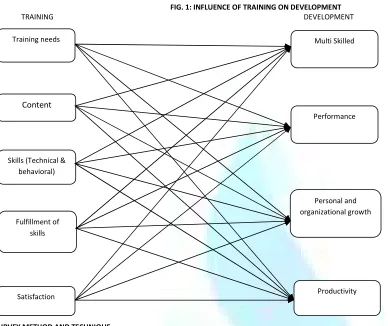
MODEL STUDY
FIG. 1: INFLUENCE OF TRAINING ON DEVELOPMENT
TRAINING
DEVELOPMENT
SURVEY METHOD AND TECHNIQUE
150 questionnaires were supplied to the employees of various departments of Dr. Reddy’s Lab, Hyderabad. However simple random sampling without replacement (srswor) and structured – non - disguised questionnaire methods were used. Out of 150 only 132 responses were collected and 105 (79.54) were found suitable for the purpose of further analysis.
STATISTICAL TOOLS
To draw valid conclusions and test them empirically, before starting the non parametric test the data was tested using mean, median, mode and skewness. Thus test represented the data is skewed. Thus an extensive statistical technique of Chi-square independence was used to examine the relationship between training and development variables. To further determine strength and significance of relationship, cramer’s V and contingency coefficient tests were also determined. These statistical tests on data were made by using SPSS. Literature offers some guidelines i.e., When mean, median and mode do not have the same value in a distribution, then it is known as skewed distribution. The direction of skewness is determined by ascertaining whether the mean is greater than the mode or less than the mode. If it is greater than the mode, then skewness is positive. But when the mean is less than the mode, it is negative. The difference between the mean and mode indicates the extent of departure from symmetry. A low significance value of Chi-square independence test typically below 0.05 indicates that there may be some relationship exists but it does not indicate strength of the relationship. The nominal symmetric measures indicate both the strength and significance of the relationship and the value ranges from 0 to 1.
TRAINING MEASURES
PERFECT SYSTEM FOLLOWED FOR IDENTIFICATION OF TRAINING NEEDS
Every organization should follow appropriate methods and techniques to identify the training needs as the remaining planning wholly depends on this. The respondents were asked to rate the statement on a five - point scale ( Excellent, Very good, Good, Satisfactory, Poor) as to indicate their agreement to the statement to their feel and support from the organization. Mean = 2.62, Median = 3, Mode =2, Skewness = 0.835. As the test indicates the mean is greater than mode. Thus, it is positive skewness. The Cronbach’s alpha value = 0.9382.
TRAINING CONTENT MATCH THE SKILL REQUIREMENT
The learned competencies will be implemented by the employees in the future. So, what organization wants to be performed by their employees depends on how you train them. The respondents were asked to rate the statement on a five - point scale (Strongly Agree, Agree, Cannot say, Disagree, Strongly disagree) as to indicate their agreement to the statement to their feel and support from the organization. Mean = 1.91, Median = 2, Mode =2, Skewness = -1.407. As the test indicates the mean is less than mode. Thus, it is negative skewness. The Cronbach’s alpha value = 0.8963.
COMBINATION OF SKILLS
Trend analysis demands several set of behaviors at work place and it has become equally important to all employees, they should learn attitudinal skills to bring out the excellence at work place. The respondents were asked to rate the statement on a five - point scale (Equal combination, More technical, More behavioral, Depends on employees requirement, depends upon company’s requirement) as to indicate their agreement to the statement to their feel and support from the organization. Mean = 2.73, Median = 2, Mode = 1, Skewness = 0.256. As the test indicates the mean is greater than mode. Thus, it is positive skewness. The Cronbach’s alpha value =.0.894.
TRAINING FULFILL REQUIREMENT OF COMPETENCIES
When the employee possess all competencies then, they will become an asset to organization otherwise vice-versa. The respondents were asked to rate the statement on a five - point scale (Strongly Agree, Agree, Cannot say, Dis Agree, Strongly disagree) as to indicate their agreement to the statement to their feel and support from the organization. Mean = 2.28, Median = 2, Mode =2, Skewness = 1.803. As the test indicates the mean is greater than mode. Thus, it is positive skewness. The Cronbach’s alpha value = 0.938.
OVERALL SATISFACTION WITH TRAINING PROGRAMS
Every training program cannot accomplish all the requirements of trainees but, if they feel satisfied results towadrs positive attitudes at work place. The respondents were asked to rate the statement on a five - point scale (Highly Satisfied, Partially satisfied, Satisfied, Dissatisfied, highly dissatisfied) as to indicate
Training needs
Content
Skills (Technical & behavioral)
Fulfillment of skills
Satisfaction
Performance Multi Skilled
Personal and organizational growth
their agreement to the statement to their feel and support from the organization. Mean = 1.93, Median = 2, Mode =2, Skewness = 1.075. As the test indicates the mean is less than mode. Thus, it is negative skewness. The Cronbach’s alpha value = 0.9323.
DEVELOPMENT MEASURES
TRAINING MAKES THE EMPLOYEES MULTI SKILLED
The environment demands the expertise at job along with managing the things according to situation is the other side of the coin expected by the organization. The respondents were asked to rate the statement on a five - point scale (Strongly agree, Agree, Cannot say, Disagree, Strongly dissatisfied) as to indicate their agreement to the statement to their feel and support from the organization. Mean = 1.85, Median = 2, Mode = 2, Skewness = 0.589. As the test indicates the mean is less than mode. Thus, it is negative skewness. The Cronbach’s alpha value = 0.8742.
IMPROVES THE PERFORMANCE:
Every organization expects healthy performance which is to be converted in monetary and implements several strategies for it because performance is the ultimate motto. The respondents were asked to rate the statement on a five - point scale (Strongly agree, Agree, Cannot say, Disagree, Strongly dissatisfied) as to indicate their agreement to the statement to their feel and support from the organization. Mean = 2.46, Median = 2, Mode = 2, Skewness = 1.158. As the test indicates the mean is greater than mode. Thus, it is positive skewness. The Cronbach’s alpha value = 0.8843.
TRAINING CONTRIBUTES TO PERSONAL AND ORGANIZATIONAL GROWTH
When the employee contributes either in monetary or non-monetary give benefits to organization directly or indirectly. The respondents were asked to rate the statement on a five - point scale (Strongly agree, Agree, Cannot say, Disagree, Strongly dissatisfied) as to indicate their agreement to the statement to their feel and support from the organization. Mean = 1.94, Median = 2, Mode = 2, Skewness = 1.226. As the test indicates the mean is less than mode. Thus, it is negative skewness. The Cronbach’s alpha value = 0.8905.
TRAINING PROGRAMS ADD VALUE TO PRODUCTIVITY
Today’s environment expecting not only completion of the work properly but getting the identify and values for it is most preferred. The respondents were asked to rate the statement on a five - point scale (Strongly agree, Agree, Cannot say, Disagree, Strongly disagree) as to indicate their agreement to the statement to their feel and support from the organization. Mean = 2, Median = 2, Mode = 2, Skewness = 1.278. As the test indicates the mean is equal mode. Thus it is considered as normal distribution. The Cronbach’s alpha value = 0.8883.
1) HYPOTHESIS
H0:There is no relationship between impacts of Perfect system followed to identify training needs on development.
H1:Relationship is exists between impacts of Perfect system followed to identify training needs on development.
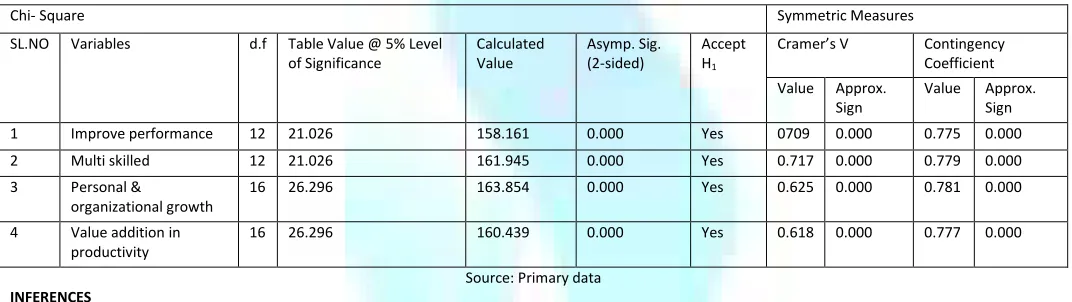
TABLE 1: PERFECT SYSTEM FOLLOWED TO IDENTIFY TRAINING NEEDS
Source: Primary data
INFERENCES
For all the above variables Chi-square Asymp.sig values are less than 0.05 indicates there is an existence of relationship between perfect system followed to identify training needs for development and Chi-square calculated values are also greater than chi-square table values at 5% level of significance falls into
rejection region there fore we accept alternative hypothesis (H1). The cramer’s V and contingency coefficient values of symmetric measures of training make the
employees multi skilled (0.717 and 0.779) which improve the efficiency of employees at workplace and it also improve performance (0.709 and 0.775) of the employees causes to higher productivity indicates strong strength and significance of relationship with perfect system followed to identify training needs than others. Symmetric measures for Personal & organizational growth (0.625 and 0.781) and Value addition in productivity (0.618 and 0.777) indicates the strength and significance of their relationship is fairly satisfactory.
MANAGERIAL IMPLICATIONS
Examining the organizational, operational and person analysis practices is more crucial to identify the training needs. Operational analysis provides the information about expected performance and person analysis provide the information about actual performance in the current environment. The specific gap enable the management to focus on skill requirement of current and future changes and verify the gap to identify specific reasons for KSA deficiency, reward/punishment incongruence, Inadequate feedback, obstacle in the system are needed to overcome. Results of above table : 1 indicate healthy strength of relationship between Perfect system followed to identify training needs for development. It means the methods and techniques which were implemented by the management for training need analysis was helpful in their further development at work place. The system identified to make their employees multi skilled and improve the performance of the work force. Secondailly needs are identified for personal and organizational growth and in adding the additional values to improve productivity at work place.
2) HYPOTHESIS
H0:There is no relationship between impacts of content of training program on development.
H1:Relationship is exists between impacts of content of training program on development.
Chi- Square Symmetric Measures
SL.NO Variables d.f Table Value @ 5% Level
of Significance
Calculated Value
Asymp. Sig. (2-sided)
Accept
H1
Cramer’s V Contingency
Coefficient
Value Approx.
Sign
Value Approx.
Sign
1 Improve performance 12 21.026 158.161 0.000 Yes 0709 0.000 0.775 0.000
2 Multi skilled 12 21.026 161.945 0.000 Yes 0.717 0.000 0.779 0.000
3 Personal &
organizational growth
16 26.296 163.854 0.000 Yes 0.625 0.000 0.781 0.000
4 Value addition in
productivity
INTERNATIONAL JOURNAL OF RESEARCH IN COMMERCE, IT & MANAGEMENT
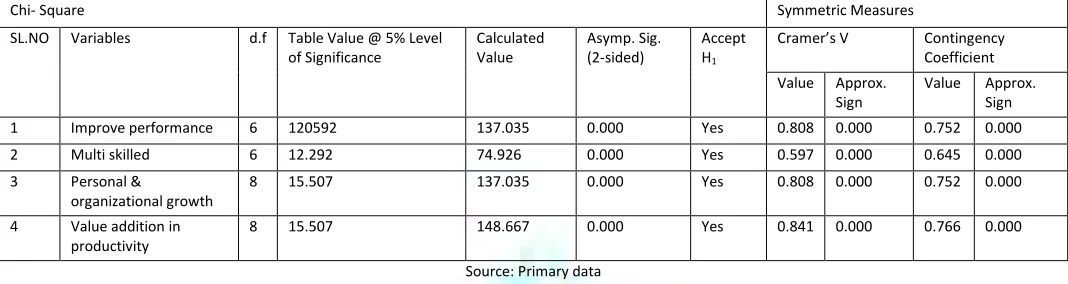
TABLE 2: TRAINING CONTENT MATCH THE SKILL REQUIREMENTSource: Primary data
INFERENCES
For all the above variables Chi-square Asymp.sig values are less than 0.05 indicates there is an existence of relationship between training content match the skill requirement for development and Chi-square calculated values are also greater than chi-square table values at 5% level of significance falls into rejection region
there fore we accept alternative hypothesis (H1). The cramer’s V and contingency coefficient values of symmetric measures for (0.841 and 0.766) value addition
in productivity upgrade the efficiencies of the employees to match the current and future requirements of the environment is indicate strong strength and significance of relationship with training content match the skill requirement than others. Symmetric measures for Personal & organizational growth (0.808 and 0.752) and improve performance (0.808 and 0.752) indicates the strength and significance of their relationship is fairly satisfactory. A symmetric measures value for content is useful to become multi skilled is (0.597 and 0.645) indicate satisfactory relationship but when compared with other development variables in the table: 2 indicate the relationship is fairly weak one.
MANAGERIAL IMPLICATIONS
The content will be dependent on trainer and trainee. The trainer has to understand the organization culture and climate. The outcome of the employees completely depends on what and how best they were trained in the training sessions and any faulty assumptions after need analysis causes deviate the objectives along with wastage of time, money and other resources. The percentage of content match with the required competencies similar percentage of improvement will be expected. The primary responsibility of every training program is to match the content with its objectives. The above table: 2 results indicate the strong relationship between content of the training program with development variables it means the content of the training program is similar and match the required skills to increase to means of production. The content of the training program is primarily focused to improve value addition in productivity of the employees. Secondarily the content is also helpful for personal and organization growth, to improve performance for better means of production and in making the employee’s multi skilled.
3) HYPOTHESIS
H0:There is no relationship between impacts of combination of skills in the training programs on development.
H1:Relationship is exists between impacts of combination of skills in the training programs on development.
TABLE 3: COMBINATION OF SKILLS IN TRAINING PROGRAMS
Source: Primary data
INFERENCES
For all the above variables Chi-square Asymp.sig values are less than 0.05 indicates there is an existence of relationship between Combination of skills in training programs for development and Chi-square calculated values are also greater than chi-square table values at 5% level of significance falls into rejection region
there fore we accept alternative hypothesis (H1). The cramer’s V and contingency coefficient values of symmetric measures for improve performance (0.640 and
0.743) indicate strong strength and significance of relationship with Combination of skills in training programs than others. Symmetric measures for Personal & organizational growth (0.620 and 0.778), Value addition in productivity (0.575 and 0.755) and multi skilled (0.560 and 0.696) indicates the strength and significance of their relationship is fairly satisfactory.
MANAGERIAL IMPLICATIONS
Pharmaceutical industry also requires team working skills within a project development setting. Prospective employees will need to be able to explore group dynamics and group development. They should also have some experience in team building. Furthermore, like in most industrial sectors and every work of life, effective communication and adequate presentation skills is an essential thing to have. Other skills that are necessary within the pharmaceutical industry include risk analysis, problem solving and decision making. Employee should also possess effective time management skills and delegation techniques. You might also have to work with team members in remote locations. Writing skills and having a comprehensive understanding of the regulatory issues within the pharmaceutical industry is also an important asset. The combination requirement changes due to internal and external many of the situations external only and it may vary based on the job, profile, department etc. In the current situation test shows the satisfactory results about strength of relationship which indicate the organization is followed neccessary combination of technica/behavioral skills to upgrade their employees skills to match with environmental requirements. Trend analysis indicates regular improvement in technical along with behavioral skills is necessary for sustainability. The combination of skills has improved the employees performance. Secondarily it was helpful to grow personally along with organizational growth by additions for improved value of productivity and to become multi skilled employee.
4) HYPOTHESIS
H0:There is no relationship between impacts of fulfillment of required competencies on development.
H1:Relationship is exists between impacts of fulfillment of required competencies on development.
Chi- Square Symmetric Measures
SL.NO Variables d.f Table Value @ 5% Level
of Significance Calculated Value Asymp. Sig. (2-sided) Accept H1
Cramer’s V Contingency
Coefficient
Value Approx.
Sign
Value Approx.
Sign
1 Improve performance 6 120592 137.035 0.000 Yes 0.808 0.000 0.752 0.000
2 Multi skilled 6 12.292 74.926 0.000 Yes 0.597 0.000 0.645 0.000
3 Personal &
organizational growth
8 15.507 137.035 0.000 Yes 0.808 0.000 0.752 0.000
4 Value addition in
productivity
8 15.507 148.667 0.000 Yes 0.841 0.000 0.766 0.000
Chi- Square Symmetric Measures
SL.NO Variables d.f Table Value @ 5% Level
of Significance Calculated Value Asymp. Sig. (2-sided) Accept H1
Cramer’s V Contingency
Coefficient
Value Approx.
Sign
Value Approx.
Sign
1 Improve performance 12 21.026 129.208 0.000 Yes 0.640 0.000 0.743 0.000
2 Multi skilled 12 21.026 98.924 0.000 Yes 0.560 0.000 0.696 0.000
3 Personal &
organizational growth
16 26.296 161.206 0.000 Yes 0.620 0.000 0.778 0.000
4 Value addition in
productivity
TABLE 4: TRAINING FULFILLS REQUIREMENT OF COMPETENCIES
Source: Primary data
INFERENCES
For all the above variables Chi-square Asymp.sig values are less than 0.05 indicates there is an existence of relationship between training fulfill the requirement of competencies for development and Chi-square calculated values are also greater than chi-square table values at 5% level of significance falls into rejection
region there fore we accept alternative hypothesis (H1). The cramer’s V and contingency coefficient values of symmetric measures for training make employees
multi skilled (0.908 and 0.844) which improve the efficiency of the employee at workplace is indicate strong strength and significance of relationship with training fulfill the requirements of competencies than others. Symmetric measures for Improve performance (0.785 and 0.806), value addition in productivity (0.716 and 0.820) and Personal & organizational growth (0.710 and 0.818) indicates the strength and significance of their relationship is fairly healthy.
MANAGERIAL IMPLICATIONS
Causes for poor performance may vary between employees and content of training programs cannot satisfy all the requirements of every employee. The content will be decided based on the common problems faced by majority of the employees. New methods and techniques will be implemented in the pedagogy for fast and easy learning to trainees though; it will be unable to fulfill complete skill requirements of all employees. How much extent the content and pedagogy has match with individual trainee needs only the similar skill enhancement will be expected in future. The ultimate motto of the training programs is to fulfill the needed competencies of the employees. Accomplishing the needed competencies (Technical/Behavioral) results in improved output and vice-versa. The test results in table: 4 indicates the healthy relationship between training and development varibales by which it may be stated that the management is almost succeeded in filling the required inputs. The training programs are majorly accomplished the competencies in making employees to perform multi skills. The information of training programs is also improved employees performance, by providing the additions in the values for improved productivity and for the growth of personal and organization.
5) HYPOTHESIS
H0:There is no relationship between impacts of overall satisfaction of training programs on development.
H1:Relationship is exists between impacts of overall satisfaction of training programs on development.
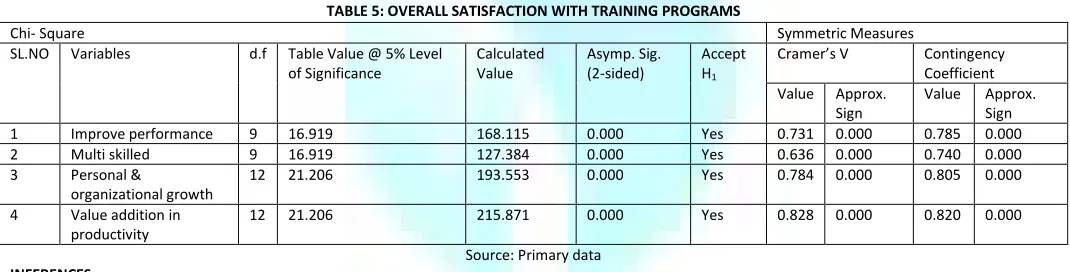
TABLE 5: OVERALL SATISFACTION WITH TRAINING PROGRAMS
Source: Primary data
INFERENCES
For all the above variables Chi-square Asymp.sig values are less than 0.05 indicates there is an existence of relationship between overall satisfaction of employees on training programs for development and Chi-square calculated values are also greater than chi-square table values at 5% level of significance falls
into rejection region there fore we accept alternative hypothesis (H1). The cramer’s V and contingency coefficient values of symmetric measures for training
improve Value addition in productivity (0.828 and 0.820) of the employee at workplace indicate strong strength and significance of relationship with overall satisfaction on training programs than others. Symmetric measures for Personal & organizational growth (0.784 and 0.805) and Improve performance (0.731 and 0.785) indicates the strength and significance of their relationship is fairly healthy. Symmetric measures value 0.636 and 0.740 of variable training makes the employee multi skilled indicates satisfactory relationship but when compared with other development variables indicate the relationship is fairly satisfactory one.
MANAGERIAL IMPLICATION
The satisfaction can be seen based on content, pedagogy, trainer, presentation skills, knowledge of resource person, environment and many others. It also depends on expectation and considerations of trainees for their satisfaction but in many of the situation satisfaction depends on the accomplishment of their needed skills. The test results in table: 5 indicates the healthy relationship between variables Overall Satisfaction in comparison with development which means most of the employees feel satisfied with the conducted training program at organization. The respondents are highly satisfied with the additions occurred by the training programs are more valued for improved productivity. The respondents are given satisfied response for their growth of personal and organizational by training programs and also for their improved performance. Respondents are also satisfied by becoming multi skilled but compared to others it was least preferred.
FINDINGS AND CONCLUSIONS
Need analysis has identified five needs to train employees. First identification is to make their employees multi skilled to match with the current and future scenarios of the environment. The content of the program has included with technical/behavioral skill though, it was moderately satisfied the employees but accomplished the required skills of the employees to perform multi tasks. Second identification is to improve the performance of the employees. The content of the training program was accomplished the requirement of employees by providing the combination skills for their improved performance and moderately satisfied response was given by the employees about their performance improvement. Thirdly, the growth of personal and organization is the next identification; technical/behavioral skills are focused in the content to achieve this need. Satisfactory feedback was given by the employees for accomplishing the required skills for their personal and organizational growth. Accomplishing the work in the way organization should be benefitted by employees productivity
Chi- Square Symmetric Measures
SL.NO Variables d.f Table Value @ 5% Level
of Significance Calculated Value Asymp. Sig. (2-sided) Accept H1
Cramer’s V Contingency
Coefficient
Value Approx.
Sign
Value Approx.
Sign
1 Improve performance 12 21.026 194.117 0.000 Yes 0.785 0.000 0.806 0.000
2 Multi skilled 12 21.026 259.949 0.000 Yes 0.908 0.000 0.844 0.000
3 Personal &
organizational growth
16 26.296 212.010 0.000 Yes 0.710 0.000 0.818 0.000
4 Value addition in
productivity
16 26.296 215.512 0.000 Yes 0.716 0.000 0.820 0.000
Chi- Square Symmetric Measures
SL.NO Variables d.f Table Value @ 5% Level
of Significance Calculated Value Asymp. Sig. (2-sided) Accept H1
Cramer’s V Contingency
Coefficient
Value Approx.
Sign
Value Approx.
Sign
1 Improve performance 9 16.919 168.115 0.000 Yes 0.731 0.000 0.785 0.000
2 Multi skilled 9 16.919 127.384 0.000 Yes 0.636 0.000 0.740 0.000
3 Personal &
organizational growth
12 21.206 193.553 0.000 Yes 0.784 0.000 0.805 0.000
4 Value addition in
productivity
INTERNATIONAL JOURNAL OF RESEARCH IN COMMERCE, IT & MANAGEMENT
and how much these outputs provide benefits to the organization in the form of monetary and/or non-monetary. The similar level of value will be received from organization for their skills and contributions. Finally, need analysis has identified how to improve the values for employee’s productivity. The test results shows that content of the program majorly focused on this need but the combination of skills are not fully concentrate on this need. Employees are satisfied as the training programs have moderately accomplished the required competencies.
The need identification has properly identified, technical/behavioral combination of content is accepted (Moderately or highly) by the employees. Though fluctuations in the acceptance levels are observed but, the training programs has accomplished the needed competencies of the employees and also accepted that these training programs are useful and benefitted for development. There are some deviations are observed in the test results between training and development variables but finally the employees given satisfactory response. So, it can be assumed that these deviations in the statistical results may be due to fluctuations in sample data, individual perceptions and change in departmental needs.
REFERENCES
1. Anthony, Una and Ian (2003), Yield managment (2/e), Thomson learning, bangalore – 560099, pp: 131 – 137.
2. Aswathappa (2010), Human Resource management: Text and cases (6/e), Tata Mc Graw Hill publishing house limited, New Delhi – 110008, pp: 238 – 264.
3. Beri (2003), Marketing research (3/e), Tata Mc Graw hill publishing house limited, New Delhi – 110008, pp: 120 – 127 & 234 – 245.
4. Beri (2008), Business Statistics (2/e), Tata Mc Graw Hill publishing company ltd, New Delhi – 110008, pp: 52 – 68, 72 – 90, 140 – 149, 300 – 318, & 334 –
351.
5. Bhattacharya (2010), research methodology (2/e), excel publications, new Delhi- 110028,pp: 112 - 122.
6. Biswajeet (2002), Human Resource management (eastern economy edition), Prentice Hall India, New Delhi – 110001, pp: 143 – 165.
7. Blanchard and Thacker (2009), Effective training (3/e), Perason education, Delhi – 110092, pp: 4 – 19, 30 – 51, 79 – 81, 101 – 139 and 440 – 456.
8. Decenzo & Robbins (2001), Human Resource management (7/e), John welly & sons India, Kondli – 131028, pp: 215 – 230.
9. Dessler (2004), Human Resource management (9/e), Pearson Education, Delhi – 110092, pp: 187 – 210.
10. French & Bell Jr. (2001), Organizational Development (1/e), Pearson Education, Delhi – 110092, pp: 243 – 250.
11. Gupta (2002), Statistical Methods (13/e), Sultan Chand & sons, New Delhi, pp: 1160-1161.
12. Gupta (2005), Fundamentals of Statistics (6/e), Himalaya Publishing house, Mumbai – 40004, pp: 1.5 – 1.9, 2.4 – 2.5, 3.21 – 3.24, 4.1 – 4.29, 4.33 – 4.48 and
18.1 – 18.27.
13. Jyothi and Vekatesh (2009), Human resource management (1/e), Oxford University press, New Delhi – 110001, pp: 166 – 191.
14. Michael (2004), Research Methodology in management (5/e), Himalaya publishing house, Mumbai-400004, pp: 254 - 269.
15. Rathan Reddy (2007), Effective human resource training and development strategy (2/e), Himalaya publishing house, Mumbai – 400004, pp: 13 – 18, 20 –
27 and 452 – 466.
16. Satish & Srininvasan (2010),” Total quality Management and innovation performance: An empirical study on the interrelationship and effects” South Asian
journal of management, vol: 17, issue No.3, July-September 2010, pp: 8 - 20 and 85 – 90.
17. Shaun tyson (2003), Strategic Prospects for HRM (2/e), Jaico publishing house, Mumbai – 400023, pp: 232 – 242.
18. Thirupathi (2002), Human resource Development (3/e), Sultan chand & sons, New Delhi – 110002, pp: 131 – 146.
19. Tull & Hawkins (2001), Marketing research: measurement and method (6/e), Prentice – Hall India, New Delhi – 110001, pp: 543 – 547.
20. Venkata Ratnam and Srinivasan (1999), Personnel management and Human resources (11/e), Tat Mc graw hill publishing company, New Delhi – 110008,
pp:148 – 163.
REQUEST FOR FEEDBACK
Dear Readers
At the very outset, International Journal of Research in Commerce, IT and Management (IJRCM)
acknowledges & appreciates your efforts in showing interest in our present issue under your kind perusal.
I would like to request you to supply your critical comments and suggestions about the material published
in this issue as well as on the journal as a whole, on our E-mails i.e.
or
for further improvements in the interest of research.
If you have any queries please feel free to contact us on our E-mail
.
I am sure that your feedback and deliberations would make future issues better – a result of our joint
effort.
Looking forward an appropriate consideration.
With sincere regards
Thanking you profoundly
Academically yours
Sd/-