Research Paper:
The Effectiveness of Acceptance and Commitment
Therapy on the Quality of Life and Psychosocial Flexibility
of Female Junior High School Students With Special
Learning Disorders in Sari
Maryam Enayati1 , Yarali Dousti1* , Bahram Mirzaian1
1. Department of Psychology, Islamic Azad University, Sari Branch, Sari, Iran.
* Corresponding Author:
Yarali Dousti, PhD.
Address: Department of Psychology, Islamic Azad University, Sari Branch, Sari, Iran. Tel: +98 (911) 4523678
E-mail: [email protected]
Introduction: Acceptance and Commitment Therapy (ACT) is one of the methods of improving the
quality of life and enhancing psychosocial flexibility in students with learning disorders.
Objectives: The aim of this study was to determine the effectiveness of ACT on the quality of life and psychological flexibility of female junior high school students with learning disorders in Sari, Iran.
Materials and Methods: The present quasi-experimental study used a Pre-test-Post-test design with a control group. The statistical population consisted of all female junior high school students in Sari. A total of 60 individuals were selected by convenience sampling method and were randomly assigned to the experimental and control groups. The intervention was performed for the experimental group. The 36-item short form health survey and cognitive flexibility inventory were used to collect the data. The data were analyzed by analysis of covariance, using SPSS version 21.
Results: The ACT had significant effects on the psychosocial flexibility and quality of life of female junior high school students with learning disorders (P<0.001).
Conclusion: The ACT improved the quality of life and psychological flexibility of female junior high school students with learning disorders.
A B S T R A C T
Keywords:
Quality of life, Learning disorders, Education, Female, Students
Citation Enayati M, Dousti Y, Mirzaian B. The Effectiveness of Acceptance and Commitment Therapy on the Quality of Life and Psychosocial Flexibility of Female Junior High School Students With Special Learning Disorders in Sari. Avicenna J of Neuropsycho -physiology. 2019; 5(3):139-146. http://dx.doi.org/10.32598/ajnpp.5.3.139
:
http://dx.doi.org/10.32598/ajnpp.5.3.139 Use your device to scan
and read the article online
Article info:
Introduction
learning disorder is a general term that
describes disorders in the Diagnostic and Statistical Manual of Mental Disorders, Fifth Edition, whose characteristics cause problems in academic achievement or everyday functioning [1]. The learning disorder in the United States is a term used to describe children, who
are impaired in the development of language and
com-munication skills. Children, whose learning problems are primarily because of visual, hearing, movement impairment and or emotional problems, cultural con
-straints, or general mental retardation, are not a part
of this group [2]. Students with learning abnormalities, such as reading, writing, and mathematics show inad
-equacies in basic reading, writing, and mathematics skills from the very beginning of the school. Reading disorder is marked by special damages in the develop
-ment of reading skills and math disorders are marked by specific injuries in the acquisition of math skills [3].
The main characteristic of disorder in spelling is that the child’s spelling of the letter is considerably less than the expected level regarding intelligence capacity and educational level [4]. The majority of learners with learning disabilities are regarded as passive learners ac
-cording to their psychological and behavioral character
-istics. They cannot use learning strategies to solve their educational problems and they do not believe in their abilities because the repeated experiences of failure make them disappointed and inefficient. The result of this cycle is the formation of a negative perception of one’s own abilities and a reduction in self-esteem and motivation that paves the way for the emergence of dif
-ferent problems [5].
Various studies have pointed out to the general
char-acteristics of students with learning disabilities; such disabilities include creating problems in the social, emo
-tional, and educational realms [6], failure in the process
-ing of social information [7], limited intimate friends [8], low level of positive social behaviors [9], social problems and low quality of life [10], poor reasoning ability and low problem-solving [11], self-regulation problems of
sensory processing [12], and low level of psychological well-being. The full understanding of the above-men
-tioned disabilities requires attention to the social, emo
-tional, and behavioral areas of individual life [13].
Quality of life is one of the variables that are likely to be weak or impaired because of learning disabilities in students. It seems that the difference in the quality of
life of students is because of the ability and the sense of self-efficacy. The quality of life is a range of human needs that are associated with a person’s and group’s perceptions of a sense of well-being [14].
According to the World Health Organization, the qual
-ity of life is the perception of individuals regarding the status of life in the realm of culture and the value system, in which they live, which is associated with goals, expec
-tations, criteria, and important affairs [15]. Based on a general agreement among researchers, the quality of life consists of objective factors (mental functions put more emphasis on life satisfaction, while objective factors fo
-cus on material needs and participation in interpersonal activities and relationships). Several factors such as age, culture, sex, education, class status, illness, social en
-vironment and, in general, behavioral factors, occupa
-tion, and resources of adjustment affect an individual’s
quality of life [16]. The degree of individuals’ flexibility is among the factors affecting the quality of life.
Flexibility is defined as the ability of cognitive sets to be adapted according to changing environmental stim -uli [17]. Cognitive flexibility means the extent, to which a person is open to experience regarding internal and external experiences. This personality trait determines the reaction of individuals against new experiences [18]. Flexibility requires the ability [19]. Flexible people are curious and their lives are rich in terms of experi
-ence. Not only they do not avoid encountering internal and external experiences but also they seek new expe -riences [20].
Among the effective treatments, interventions to im -prove the quality of life and increase the amount of
psychological flexibility is the Acceptance and Commit
-ment Therapy (ACT). The ACT is a cognitive-behavioral therapy based on functional contextualism. It is rooted in a new theory about language and cognition, which is called the theory of mental relations framework. In the ACT, it is assumed that humans consider many of their own internal feelings, emotions, or thoughts annoying
and constantly try to change or discharge these inner
experiences. These attempts to control them have been ineffective and contradictorily have resulted in the ex
-acerbation of feelings, emotions, and thoughts that the individual initially tried to avoid [21].
The ACT has 6 central processes that lead to psycho
-logical flexibility; the processes include acceptance vs. avoidance, dissonance vs. cognitive blending, self as a context vs. conceptualized self, the relation of the pres
-ent vs. the overcoming of the past and the conceptual
ized future, emphasis on values vs. the lack of clarity of values and their relation to them, and the commitment vs. being isolated [22]. In fact, this type of treatment is the main purpose of creating psychological flexibility; that is, the ability to make practical choices among dif
-ferent options that are more appropriate, rather than an action merely to avoid disturbing thoughts, emo
-tions, memories or desires, or actually imposed on an
individual [23].
The necessity of the present research is to identify and recognize the psychological problems in students with a learning disorder and taking action regarding their treatment and their problems, which should be con
-sidered by families and educators. On the one hand, in spite of the expansion of the present research scope, a few studies have been conducted. As long as there is no comprehensive research on effective methods and
techniques for improving the quality of life and
psy-chological flexibility, parents, teachers, and education officials cannot plan properly in this regard. Therefore, in order to prevent further problems, paying attention to these students and doing timely and preventive in
-terventions is necessary. The aim of this study was to determine the efficacy of ACT on the quality of life and psychological flexibility of female junior high school stu
-dents with learning disorders in Sari, Iran.
2. Materials and Methods
The present quasi-experimental study used a Pre-test-Post-test design with a control group. The statisti
-cal population included all female junior high school students with special learning disorders in Sari, who were referred to the learning disorders and counseling centers during the academic year 2018-2019. At first, between the two areas of the city, one district was ran
-domly selected and, then, 60 individuals were selected by the convenience sampling method; next, they were randomly assigned to the experimental and the control groups (30 in the experimental group and 30 in the con
-trol group). Based on the effect size of 0.25, alpha of 0.5, and power of 0.85 in the two groups, the minimum number of samples to achieve the desired power, 30 individuals in each group and a total of 60 individuals, was determined. The inclusion criteria include the oc
-currence of a particular learning disorder (reading and math), female gender, junior high school student, and the absence of other serious psychiatric disorders such as schizophrenia and bipolar disorder. The exclusion criteria included the absences of more than 2 sessions, disabling physical illness, and the provision of incom
-plete information. Both groups com-pleted the 36-item
Short Form health survey (SF-36) and the Cognitive Flex
-ibility Inventory (CFI) of Dennis and Vander Wal before the intervention. The experimental group was, then, subjected to the influence of the independent variable for 8 sessions (120 minutes for each session) and the control group received no training. In order to evaluate the effect of the training, the tests for both groups were completely optional. Before starting and participating in the project, they became familiar with the layout speci
-fications.
The attitudes and beliefs of the individuals were re
-spected. The members of the experimental and control groups were allowed to leave the research project at any stage. In addition, the group members were free to repeat the treatment sessions of the intervention group if they were interested in entering the interven
-tion group only at the end of the plan. All documents, questionnaires, and confidential records were available only to the administrators. The written and informed
consent of the parents or legal guardians of all the
can-didates was taken. The research was not registered in the Iranian Registry of Clinical Trials.
Cognitive Flexibility Inventory-Iranian Version
The CFI is a brief 20-item self-report instrument de
-signed to measure the aspects of cognitive flexibility that enables individuals to challenge and replace the maladaptive thoughts with more adaptive ones. It can be utilized in clinical and non-clinical areas and to as
-sess the individual’s progress in developing flexible thinking in cognitive behavioral therapy for depression and other psychopathological diseases. The CFI was originally developed to measure 3 aspects of cognitive flexibility; a. the tendency to perceive difficult situa
-tions as controllable; b. the ability to perceive multiple alternative explanations for life occurrences and hu
-man behaviors; c. the ability to generate multiple al
-ternative solutions to difficult situations, but it ended in two factors and demonstrated the adequate levels of validity, reliability, and internal consistency. More specifically, the Cronbach’s alphas for the CFI, control, alternatives, and subscales were 0.91, 0.84, and 0.91, respectively. The 7-week test-retest reliability coeffi
-cients for the CFI, control, and alternatives subscales were 0.81, 0.77, and 0.75, respectively [24]. In this study, Cronbach’s alpha of CFI was 0.79.
The 36-Item Short Form Health Survey
-ing (10 items), role limitations because of physical prob
-lems (4 items), bodily pain (2 items), general health per
-ceptions (5 items), vitality (4 items), social functioning (2 items), role limitations because of emotional problems (3 items), and perceived mental health (5 items). In ad
-dition, a single item that provides an indication of per
-ceived change in general health status over a 1-year pe
-riod (health transition) is also included in the SF-36 [25]. In this study, Cronbach’s alpha of the SF-36 was 0.73.
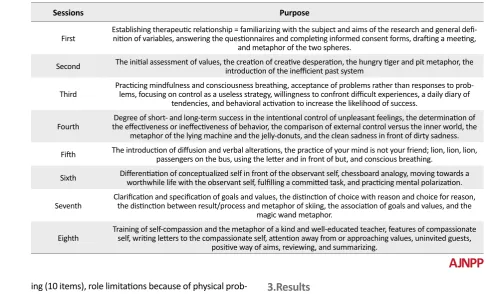
The intervention program of training ACT was set up based on the ACT in 8 sessions (120 minutes for each session) once a week for 2 months. Table 1 presents the
concise content of each session.
3.Results
The Mean±SD age of the experimental group and the control group was 16.51±0.451 and 16.21±0.730 years, respectively. The control and experimental groups were similar in terms of age, the field of study, and educa
-tional level (P>0.05).
To evaluate the efficacy of the treatment, the One-Way Analysis of Covariance (ANCOVA) test was used. The re
-sults of the ANCOVA test showed that the assumption of the normalization of the data in the traits measured at the error level of 0.05 was determined by the Shapiro Wilk and Kolmogorov-Smirnov tests (P>0.05). Also, the assumption of equality and mean in the Pre-test stage was reviewed and confirmed (P>0.05). The assumption Table 1. Setting the agenda of acceptance and commitment therapy
Sessions Purpose
First Establishing therapeutic relationship = familiarizing with the subject and aims of the research and general definition of variables, answering the questionnaires and completing informed consent forms, drafting a meeting, -and metaphor of the two spheres.
Second The initial assessment of values, the creation of creative desperation, the hungry tiger and pit metaphor, the introduction of the inefficient past system
Third Practicing mindfulness and consciousness breathing, acceptance of problems rather than responses to problems, focusing on control as a useless strategy, willingness to confront difficult experiences, a daily diary of -tendencies, and behavioral activation to increase the likelihood of success.
Fourth the effectiveness or ineffectiveness of behavior, the comparison of external control versus the inner world, the Degree of short- and long-term success in the intentional control of unpleasant feelings, the determination of metaphor of the lying machine and the jelly-donuts, and the clean sadness in front of dirty sadness. Fifth The introduction of diffusion and verbal alterations, the practice of your mind is not your friend; lion, lion, lion, passengers on the bus, using the letter and in front of but, and conscious breathing.
Sixth Differentiation of conceptualized self in front of the observant self, chessboard analogy, moving towards a worthwhile life with the observant self, fulfilling a committed task, and practicing mental polarization.
Seventh Clarification and specification of goals and values, the distinction of choice with reason and choice for reason, the distinction between result/process and metaphor of skiing, the association of goals and values, and the magic wand metaphor.
Eighth Training of self-compassion and the metaphor of a kind and well-educated teacher, features of compassionate self, writing letters to the compassionate self, attention away from or approaching values, uninvited guests, positive way of aims, reviewing, and summarizing.
Table 2. Psychosocial flexibility and quality of life during the study
Variable Time Mean±SD
Control Experimental
Psychosocial flexibility
Pre-test 77.97±13.65 78.60±15.50
Post-test 76.87±13.90 102.23±16.07
Follow-up 77.53±13.18 101.23±15.56
Quality of life
Pre-test 47.94±11.86 49.78±12.11
Post-test 47.78±11.38 73.92±11.74
of the homogeneity of the variance of the variable was considered during the study (P>0.05). Also, the linearity assumption of the relationship between the Pre-test-Post-test, Post-test-follow-up, and Pre-test-follow-up at the level of 0.05 was statistically significant (P<0.05). Regarding the homogeneity assumption of the slope of the regression line, all traits were also examined. It implied the confirmation of gradient homogeneity of the regression line; the F value obtained from the in
-teraction between the Pre-test score of the trait and the effect of the group was not significant at the error level of 0.05 (P>0.05). Therefore, considering that the conditions and assumptions of the ANCOVA test were established for each trait, to evaluate the efficacy of ACT therapy, the ANCOVA test was used. Tables 2 and 3
pres-ent the results of the treatmpres-ent.
In the Post-test phase, the Pre-test variable as a co
-variate variable in the model was significant for all variables (P<0.01). The total score of psychosocial flex
-ibility showed that the effect size of the ACT in the total psychosocial flexibility was 0.817. According to the results of the F test in the ANCOVA test and mean
values in Table 1, the increasing trend of this variable was significant (P<0.001). The changes in follow-up to Post-test and follow-up to Pre-test were evaluated. The efficacy of the ACT in follow-up to Pre-test was signifi
-cant (P<0.001) and the effect size was 0.885. In order to determine the stability of the treatment, the follow-up and Post-test were compared. The changes, in this case, were not significant in the two groups (P>0.05). In fact,
considering the mean values in Table 1, the groups were stable in the follow-up compared to the Post-test. Table 3. Analysis of covariance of psychosocial flexibility during the study
Phases SourceEffect SquaresSum of Degree of Freedom Mean of the Sum of Squares F P Effect Size
Post-test to Pre-test
Pre-test 156.847 1 156.847 32.823 <0.001 0.549
Group 574.228 1 574.228 120.169 <0.001 0.817
Error 129.020 27 4.779
Follow-up to Pre-test
Pre-test 140.308 1 140.308 38.991 <0.0001 0.591
Group 565.861 1 565.861 157.251 <0.0001 0.853
Error 97.158 27 3.598
Follow-up to Post-test
Pre-test 205.882 1 205.882 175.996 <0.0001 0.867
Group 3.960 1 3.960 3.385 0.077 0.111
Error 31.585 27 1.170
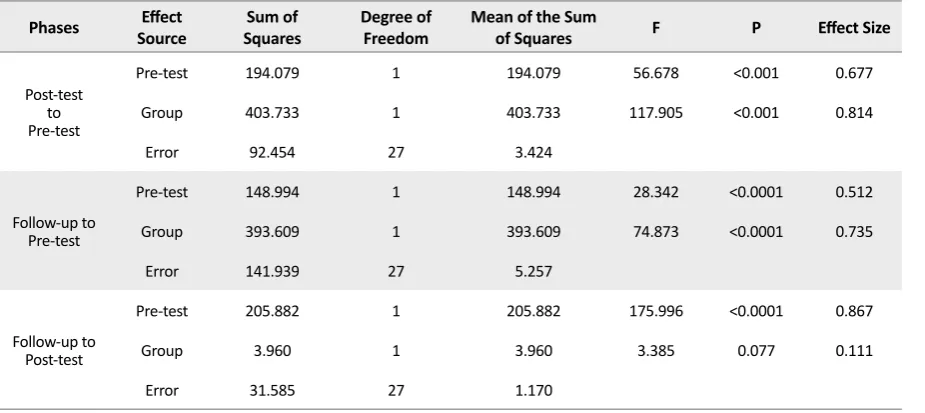
Table 4. Analysis of covariance of the quality of life during study
Phases SourceEffect SquaresSum of Degree of Freedom Mean of the Sum of Squares F P Effect Size
Post-test to Pre-test
Pre-test 194.079 1 194.079 56.678 <0.001 0.677
Group 403.733 1 403.733 117.905 <0.001 0.814
Error 92.454 27 3.424
Follow-up to Pre-test
Pre-test 148.994 1 148.994 28.342 <0.0001 0.512
Group 393.609 1 393.609 74.873 <0.0001 0.735
Error 141.939 27 5.257
Follow-up to Post-test
Pre-test 205.882 1 205.882 175.996 <0.0001 0.867
Group 3.960 1 3.960 3.385 0.077 0.111
The quality of life in post-test to pre-test of the effect of ACT was 0.814 and according to the results of the F test in the ANCOVA test and the mean values in Table 4, the incremental trend of this variable was significant (P<0.001). The changes in follow-up to the Pre-test also showed that treatment was effective in the follow-up compared to the pre-test (P<0.001) and the effect size was 0.735. In order to determine the stability of the treatment, the follow-up and post-test were compared. The changes in this period were not significant in the two groups (P<0.05). In fact, considering the mean val -ues in Table 1, the groups were stable in the follow-up compared to the post-test.
4. Discussion
The results of this study showed that the level of the to
-tal score of psychosocial flexibility was 77.97 and 78.60 in the pre-test of the control and experimental groups, respectively. In the post-test of the control group, this score was changed to 76.87 and in the Post-test of the experimental group, it changed to 102.23. In the experi
-mental group, after the treatment in comparison to be
-fore treatment, there was an increase in the pre-treat
-ment score; in the Post-test of the experi-mental group, it changed from 49.78 to 73.92 and in the follow-up, it changed to 74.57. The changes in the control group showed that the mean was 47.94 in the pre-test, 47.87 in the Post-test, and47.86 in the follow-up. This finding is consistent with the studies of Lappalainen et.al [26] Moazzezi et al. [27], and Clarke et al [28].
In the experimental group, how to improve the state of their life was taught rather than the intellectual and practi
-cal avoidance of social thoughts and situations by increas
-ing the acceptance of internal experiences and reach-ing specific values and goals. In fact, active and effective con
-frontation with emotions, avoiding evasion, changing atti
-tudes toward themselves and problems, revising goals and values, and ultimately committing to a social goal can be considered the main factors of this method, which improve social compatibility. The ACT helps individuals to identify life tensions (which reduces mental and emotional excite
-ment), copes with stressful resources and being helped when needed and improves social skills and the individual learns to accept and abandon unpleasant experiences of life without attempting to change them. Generally, the ACT helps students with learning disorders learn to become aware of their thoughts and emotions, abandon the previ
-ous maladaptive solutions that prevent them from reaching their adaptive goals and values, and get free from self-de
-structive struggle and improve the psychosocial flexibility.
As another finding of the present study, the quality of life of the experimental group was significantly in -creased compared to the quality of life of the control
group. The results of this study are consistent with the research by Bohlmeijer et al. [29], Arch et al. [30], and other studies that found the efficacy of this treatment in increasing quality of life. In explaining the efficacy of ACT on increasing the quality of life, it is worth not -ing that this treatment trains the learners to reduce
experiential avoidance and acceptance practices and discussions about goals and values. Assessing the ef
-fectiveness of measures to achieve them, identifying and focusing on thinking ruminations, as well as relax
-ing from them, and lack-ing judgment and respond-ing to unpleasant experiences result in an increase in the quality of life of students.
Each research has its own limitations that can affect its results. The impossibility to control intervening variables
such as socio-familial and familial status of students and
other individual characteristics, using the convenience sampling method and the effectiveness of treatment on female students were considered the limitations of this study. Based on the findings of this study, it is suggested that in other studies, the other demographic variables should be monitored for further accuracy so that the results can be attributed to the treatment program. In general, given the results of both hypotheses based on the positive effects of ACT on social adjustment and quality of life, it is suggested that this training should be provided in the form of general education through CD or brochure for all students in different stages and should be taught to school advisers.
5. Conclusion
The ACT increased the psychosocial flexibility and quality of life of female junior high school students with learning disorders.
Ethical Considerations
Compliance with ethical guidelines
Funding
This research did not receive any specific grant from funding agencies in the public, commercial, or not-for-profit sectors.
Authors' contributions
All authors contributed equally in preparing all parts of the research.
Conflict of interest
The authors have no conflict of interest.
References
[1] Snowling MJ, Hulme C. Annual Research Review: The nature and clas -sification of reading disorders-a commentary on proposals for DSM-5. Journal of Child Psychology and Psychiatry. 2012; 53(5):593-607.
[DOI:10.1111/j.1469-7610.2011.02495.x] [PMID] [PMCID]
[2] Miciak J, Cirino PT, Ahmed Y, Reid E, Vaughn S. Executive functions and response to intervention: Identification of students struggling with reading comprehension. Learning Disability Quarterly. 2019; 42(1):17-31. [DOI:10.1177%2F0731948717749935] [PMID] [PMCID]
[3] Cragg L, Richardson S, Hubber PJ, Keeble S, Gilmore C. When is working memory important for arithmetic? The impact of strategy and age. PloS One. 2017; 12(12):e0188693. [DOI:10.1371/journal. pone.0188693] [PMID] [PMCID]
[4] Gray S, Fox AB, Green S, Alt M, Hogan TP, Petscher Y, Cowan N. Working Memory Profiles of Children with Dyslexia, Developmen -tal Language Disorder, or Both. Journal of Speech, Language, and Hearing Research. 2019; 1-20. [DOI:10.1044/2019_JSLHR-L-18-0148] [PMID] [PMCID]
[5] Compton DL, Fuchs LS, Fuchs D, Lambert W, Hamlett C. The cog -nitive and academic profiles of reading and mathematics learning disabilities. Journal of Learning Disabilities. 2012; 45(1):79-95. [DOI :10.1177%2F0022219410393012] [PMID] [PMCID]
[6] Freilich R, Shechtman Z. The contribution of art therapy to the so-cial, emotional, and academic adjustment of children with learn -ing disabilities. The Arts in Psychotherapy. 2010; 37(2):97-105.
[DOI:10.1016/j.aip.2010.02.003]
[7] Bauminger N, Kimhi-Kind I. Social information processing, security of attachment, and emotion regulation in children with learning dis-abilities. Journal of Learning Disdis-abilities. 2008; 41(4):315-32. [DOI:1 0.1177%2F0022219408316095] [PMID]
[8] Løhre A, Moksnes UK, Lillefjell M. Gender differences in predictors of school wellbeing? Health Education Journal. 2014; 73(1):90-100.
[DOI:10.1177%2F0017896912470822]
[9] Slaughter V, Imuta K, Peterson CC, Henry JD. Meta-analysis of the -ory of mind and peer popularity in the preschool and early school years. Child Development. 2015; 86(4):1159-74. [DOI:10.1111/ cdev.12372] [PMID]
[10] Cooley JL, Fite PJ, Rubens SL, Tunno AM. Peer victimization, de -pressive symptoms, and rule-breaking behavior in adolescence: The moderating role of peer social support. Journal of Psychopathol -ogy and Behavioral Assessment. 2015; 37(3):512-22. [DOI:10.1007/ s10862-014-9473-7]
[11] Sideridis GD. International approaches to learning disabilities: More alike or more different? Learning Disabilities Research & Prac -tice. 2007; 22(3):210-5. [DOI:10.1111/j.1540-5826.2007.00249.x]
[12] Nelson JM, Harwood H. Learning disabilities and anxiety: A meta-analysis. Journal of Learning Disabilities. 2011; 44(1):3-17. [DOI:10.1 177%2F0022219409359939] [PMID]
[13] Gallegos J, Langley A, Villegas D. Anxiety, depression, and coping skills among Mexican school children: A comparison of students with and without learning disabilities. Learning Disability Quarterly. 2012; 35(1):54-61. [DOI:10.1177%2F0731948711428772] [PMID] [PMCID]
[14] Kiuru N, Leskinen E, Nurmi JE, Salmela-Aro K. Depressive symp -toms during adolescence: Do learning difficulties matter? Interna -tional Journal of Behavioral Development. 2011; 35(4):298-306.
[DOI:10.1177%2F0165025410396764]
[15] An BP. The role of academic motivation and engagement on the relationship between dual enrollment and academic performance. The Journal of Higher Education. 2015; 86(1):98-126. [DOI:10.1080/ 00221546.2015.11777358]
[16] Mullender-Wijnsma MJ, Hartman E, de Greeff JW, Bosker RJ, Doo -laard S, Visscher C. Improving academic performance of school-age children by physical activity in the classroom: 1-year program evalu -ation. Journal of School Health. 2015; 85(6):365-71. [DOI:10.1111/ josh.12259] [PMID]
[17] Hungerford A, Wait SK, Fritz AM, Clements CM. Exposure to in -timate partner violence and children’s psychological adjustment, cognitive functioning, and social competence: A review. Aggres -sion and Violent Behavior. 2012; 17(4):373-82. [DOI:10.1016/j. avb.2012.04.002]
[18] Leichtentritt J, Shechtman Z. Children with and without learning disabilities: A comparison of processes and outcomes following group counseling. Journal of Learning Disabilities. 2010; 43(2):169-79. [DOI:10.1177%2F0022219409345008] [PMID]
[19] Scanlon D. Specific learning disability and its newest defini -tion: Which is comprehensive? And which is insufficient? Jour -nal of Learning Disabilities. 2013; 46(1):26-33. [DOI:10.1177% 2F0022219412464342] [PMID]
[20] Hopkins IM, Gower MW, Perez TA, Smith DS, Amthor FR, Wim -satt FC, Biasini FJ. Avatar assistant: improving social skills in stu -dents with an ASD through a computer-based intervention. Journal of Autism and Developmental Disorders. 2011; 41(11):1543-55.
[DOI:10.1007/s10803-011-1179-z] [PMID]
[21] Pich J, Bibiloni MD, Pons A, Tur JA. Weight self-regulation process in adolescence: the relationship between control weight attitudes, behaviors, and body weight status. Frontiers in Nutrition. 2015; 2:14. [DOI:10.3389/fnut.2015.00014] [PMID] [PMCID]
[22] Hayes SC, Levin ME, Plumb-Vilardaga J, Villatte JL, Pistorello J. Acceptance and commitment therapy and contextual behavioral science: Examining the progress of a distinctive model of behav -ioral and cognitive therapy. Behavior Therapy. 2013; 44(2):180-98.
[DOI:10.1016/j.beth.2009.08.002] [PMID] [PMCID]
for smoking cessation using acceptance and commitment therapy. Drug and Alcohol Dependence. 2014; 143:87-94. [DOI:10.1016/j.
drugalcdep.2014.07.006] [PMID] [PMCID]
[24] Dennis JP, Vander Wal JS. The cognitive flexibility inventory: In -strument development and estimates of reliability and validity. Cognitive Therapy and Research. 2010; 34(3):241-53. [DOI:10.1007/ s10608-009-9276-4]
[25] Su CT, Ng HS, Yang AL, Lin CY. Psychometric evaluation of the Short Form 36 Health Survey (SF-36) and the World Health Organization Quality of Life Scale Brief Version (WHOQOL-BREF) for patients with schizophrenia. Psychological Assessment. 2014; 26(3):980.
[DOI:10.1037/a0036764] [PMID]
[26] Lappalainen P, Granlund A, Siltanen S, Ahonen S, Vitikainen M, Tolvanen A, Lappalainen R. ACT Internet-based vs face-to-face? A randomized controlled trial of two ways to deliver Acceptance and Commitment Therapy for depressive symptoms: An 18-month follow-up. Behaviour Research and Therapy. 2014; 61:43-54.
[DOI:10.1016/j.brat.2014.07.006] [PMID]
[27] Moazzezi M, Moghanloo VA, Moghanloo RA, Pishvaei M. Impact of acceptance and commitment therapy on perceived stress and special health self-efficacy in seven to fifteen-year-old children with diabetes mellitus. Iranian Journal of Psychiatry and Dehavioral Sci -ences. 2015; 9(2). [DOI:10.17795/ijpbs956] [PMID] [PMCID]
[28] Clarke S, Kingston J, James K, Bolderston H, Remington B. Ac -ceptance and Commitment Therapy group for treatment-resist-ant participtreatment-resist-ants: A randomized controlled trial. Journal of Con -textual Behavioral Science. 2014; 3(3):179-88. [DOI:10.1016/j. jcbs.2014.04.005]
[29] Bohlmeijer ET, Fledderus M, Rokx TA, Pieterse ME. Efficacy of an early intervention based on acceptance and commitment therapy for adults with depressive symptomatology: Evaluation in a ran -domized controlled trial. Behaviour research and therapy. 2011; 49(1):62-7. [DOI:10.1016/j.jpsychores.2009.10.005] [PMID]