Pandit, D., Yadav, S. M. and Vallabhbhai, S. (2015). Factors affecting efficient construction project design development: A perspective from India. International Journal of Construction Supply Chain Management Vol. 5, No. 2 (pp. 34-50). DOI: 10.14424/ijcscm502015-52-67
52
FACTORS AFFECTING EFFICIENT CONSTRUCTION
PROJECT DESIGN DEVELOPMENT: A PERSPECTIVE
FROM INDIA
Devanshu Pandit, CEPT University, India
Sanjay M. Yadav, National Institute of Technology, India
Sardar Vallabhbhai, National Institute of Technology, India
ABSTRACT
Internationally projects exhibit time and cost overrun. It is observed that problems during design development contribute significantly to delays. In India, projects undertaken by government were largely planned and designed by departmental planners and engineers. However, after globalization, projects have increased in number resulting in design outsourcing, but with attendant challenges. The paper is aimed at identifying and analysing factors in the design development phase that can have impact on project success. 30 factors related to design development were identified through two separate brainstorming sessions. A questionnaire was then administered to determine importance ranking of these factors. Relative importance index (RII) was used to prioritise these factors. Top ten factors in design development identified using RII include structural design parameters, soil investigations, design quality control, topographic survey, and architectural design parameters. The results can help firms improve their design development practices by prioritising activities that could have more impact on project performance.
KEYWORDS: Design development, Design management, Project success.
INTRODUCTION
Design plays an important role in construction projects. Performance of design process influences the performance of activities in subsequent phases and overall project performance. Quality of designs has direct impact on project success (Couto, 2012). Project failure occurs when technical issues are overlooked by management during design process (Williams & Johnson, 2014). However, not enough emphasis is laid on design management processes (Formoso et al., 1998; Takim et al., 2003).
The status report of the government of India shows that, out of 951 government projects, 309 projects reported cost overruns of about 55%. In terms of time overrun, 474 of the total projects investigated experienced delays ranging from 2 to 192 months (MOSPI, 2009). The reasons given for time and cost overrun include design related factors such as: delay in release and finalisation of drawings, change in scope, geological surprises, and underestimation of original costs amongst others.
Pandit, D., Yadav, S. M. and Vallabhbhai, S. (2015). Factors affecting efficient construction project design development: A perspective from India. International Journal of Construction Supply Chain Management Vol. 5, No. 2 (pp. 34-50). DOI: 10.14424/ijcscm502015-52-67
53
departments. A World Bank study had identified that insufficient supply of skilled personnel was a major barrier to the economic growth of India (Blom & Saeki, 2011). Shortage of in-house engineers meant design outsourcing in government projects and ultimately a significant growth of small consultancy organisations. There is anecdotal evidence that suggests that works carried out by relatively inexperienced consultants have raised concerns about design quality exhibited by project performance failures.
Ali et al. (2012) suggests that worldwide, construction projects experience schedule, cost, and quality deviations from their original plan. While there are several reasons for these deviations, one of the significant reason is the inadequate attention paid to design development practices. Sweis’s (2013) study of factors affecting time overrun in public construction projects in Jordan found poor qualification of consultants, engineers and staff assigned to project to be the top weighted factor. Furthermore, poor design brief, poor understanding of owner and stakeholder requirements, inadequate site investigations, and problems with the use of correct design parameters are some of the contributory factors to multiple revisions and rework. Designers need to have a comprehensive list of these factors that could impact on project results, and therefore prioritise their efforts in design management.
This paper aims at identifying factors in design development that may have significant influence on project results. Critical factors in the design development phase are identified through brainstorming sessions with owners/consultants. Thereafter importance ranking is undertaken using information from industry experts. The results are validated using statistical tests.
LITERATURE REVIEW
The literature review first explores design as a critical process linked to project performance. Subsequently processes and factors in design development and their importance in front-end planning were studied. The review further explores design process success indicators and their applicability.
Koskela et al. (1998) had defined transformation, flow, and value generation concepts of design. Hence design transforms clients’ requirement into final products. Design involves the flow of information and generates value for clients by fulfilling their requirements. To meet these requirements requires effective front-end planning because of its large impact on project performance (Hamilton & Gibson, 1996; Griffith et al., 1999; Cho & Gibson, 2001; Johansen & Wilson, 2006; Weerasinghe et al., 2007; Wang et al., 2009; Wang & Gibson, 2010). Design development is a major sub-process of front end planning. Williamson and Johnson (2014) suggested that design failure can be due to unprecedented technical causes or known causes overlooked in the design process. Williamson and Johnson further emphasise the need to establish standards for professional practice in design management.
Pandit, D., Yadav, S. M. and Vallabhbhai, S. (2015). Factors affecting efficient construction project design development: A perspective from India. International Journal of Construction Supply Chain Management Vol. 5, No. 2 (pp. 34-50). DOI: 10.14424/ijcscm502015-52-67
54
inspection are management techniques that lead project to engineering success (Williams & Johnson, 2014). Rekola et al. (2012) emphasized the role of design management in sustainable buildings and observed that quality of designs, design management, and product are related, but to determine their exact relationship is very challenging.
Time and cost overrun in projects are linked to design processes. Mahamid and Bruland (2011) attributes cost-overrun of highway projects to insufficient time for estimates, incomplete drawings, frequent design changes, and inadequate specifications. Out of total 51 factors identified in Mahamid and Bruland’s (2011) study, the top five factors contributing to cost overrun include two design related factors namely: experience of designers and incomplete drawings. Kpamma and Adjei-Kumi (2011) also observed that waste generated during the building design process is hidden and difficult to manage by consultants in Ghana, yet it has significant impact on project costs and schedules. Furthermore Durdyev et al. (2010) study identified design management factors: inadequate site investigations and design changes, as causing cost overrun in building projects. It is apparent that better design practices could positively influence project results.
Factors Affecting Design Management
A design development process starts with brief from project owners. Othman et al. (2005) advocate the need for better brief development for clients’ satisfaction and project success. Yu et al. (2010) observe that lack of comprehensive brief from the clients create conflicts and disputes during project implementation. Therefore a design development process that lack owners’ inputs is prone to multiple revisions and rework. Same is true for owners’ feedback and review. Williamson et al. (2010) study of building maintenance issues, linked them to building design issues.
Design engineers play an important role in the design process. George et al. (2012) observe that while design engineers have training and expertise to deal with technical aspects of project design, their role in front-end planning need to be strengthened. George et al further observe that the role of design engineers in design coordination, leadership, and strategic direction are often not well defined. While it may not be feasible for all design firms to appoint design coordinators and design managers, equipping design engineers with necessary tools to improve the design development process is very much achievable. Iyer and Jha (2005) emphasise effective project coordination amongst clients, consultants, and contractors for project success.
Design review impacts project quality. Bubshait and Ahmad (1996) note that design deficiencies result in large scale contract modifications. Design reviews reduce errors, omissions, and ambiguities. The reviews could be within organisations - in the form individual reviews - or as a team/squad check. Reviews could often be conducted by other consultants working on a project. For example where architectural and structural drawings are checked by services consultant for any conflicts. Thus design review could be in the form of third party review or proof checking.
Pandit, D., Yadav, S. M. and Vallabhbhai, S. (2015). Factors affecting efficient construction project design development: A perspective from India. International Journal of Construction Supply Chain Management Vol. 5, No. 2 (pp. 34-50). DOI: 10.14424/ijcscm502015-52-67
55
stakeholders are problems with existing systems. Whelton et al. (2007) consider design as a collaborative decision making process. Whelton et al. emphasise the importance of understanding the design process interface and group decision making processes.
Hammond et al. (2000) argue that planning and management of building design often carried out using traditional planning methods such as the Critical Path Method (CPM), do not really recognize the complexities of design processes. Similarly Ballard et al. (1998) consider that traditional project management techniques are not effective. Although the use of software is increasing for design aspects, but the design process, its coordination and monitoring is still being carried out in a traditional manner. Enterprise software are expensive for many small size design companies that employ 2-10 design engineers. It is uneconomical for these design companies to invest in management software and tools as they would for design and computer aided drafting software.
Performance Measurement Tools
The design quality indicator (DQI) launched in 2002 assesses the design quality of new buildings and the refurbishment of existing buildings (Gann et al., 2003). Whereas housing quality indicator measures the quality of the finished product. These tools focus more on building or end product than on design development processes and hence there is need to have specific measures for the design development process.
The Construction Industry Institute (CII), Austin (USA) undertook a study on project development and specifically on scope definition as a key to project success. It found that efforts in the project pre-implementation phase led to improved performance, as observed on industrial projects particularly in their cost, schedule, and operational characteristics (Cho & Gibson, 2001). The project development rating index (PDRI) developed by the CII includes basis for design as scope element which comprises site information, building design parameters, and equipment. PDRI assesses the probability of project success based on the level of scope definition at pre-construction stage (Cho & Gibson, 2001). PDRI considers design parameters, but it is limited to scope definition and the complete design process is not covered by the index.
Pandit, D., Yadav, S. M. and Vallabhbhai, S. (2015). Factors affecting efficient construction project design development: A perspective from India. International Journal of Construction Supply Chain Management Vol. 5, No. 2 (pp. 34-50). DOI: 10.14424/ijcscm502015-52-67
56
managers to prioritise design tasks. This is even more critical for developing countries owing to the shortage of technical manpower and lack of standardisation in designs.
RESEARCH METHODOLOGY
The methodology for the current study involves the identification of design development factors in the first step through a brainstorming session. In the next step, identified factors are grouped into design development categories based on existing literature and the authors’ experience. The third step involved a survey to determine the importance ranking of the categorized design development factors. In the analysis step, the relative importance index (RII) of the factors are determined using mean responses. RII is a simple technique that assigns relative weights to factors. Subsequently criterion related validity test is used to test the reliability and validity of the results. Further details of the research methodology are provided in the following subheadings.
Identifying Factors
To identify important factors in design development, the brainstorming technique for generating ideas from a group of informants was employed by the study. The technique is selected based on the level of researcher-informant and informant-informant interaction (Day & Bobeva, 2005). Inter-informant communication was relatively good in the current study, which makes it suitable for the use of the brainstorming technique.
To identify the factors in design development phase that may influence project performance, two separate brainstorming sessions were carried out: one with a government organisation and one with a private developer organisation. The Roads and Buildings (R&B) department of the government of Gujarat was selected for the study. R&B undertakes planning, designing, construction and maintenance of government buildings and infrastructure. Work done by the department can be considered to be representative of government works in India. At their brainstorming session, 10 engineers (having experience up to 30 years) were involved and they were able to generate 24 significant factors. The second brainstorming session was conducted with 12 architects and engineers of a multinational real estate company involved in housing and hotel projects. A further 11 factors that may influence project performance were identified, bringing the total to 35 factors.
Factor Grouping
Pandit, D., Yadav, S. M. and Vallabhbhai, S. (2015). Factors affecting efficient construction project design development: A perspective from India. International Journal of Construction Supply Chain Management Vol. 5, No. 2 (pp. 34-50). DOI: 10.14424/ijcscm502015-52-67
57
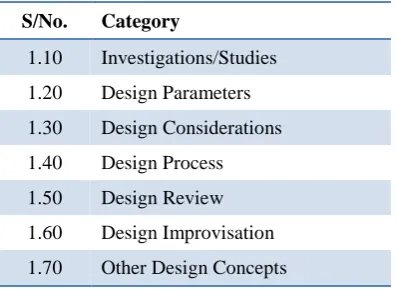
Table 1: Main categories of factors influencing project performance
S/No. Category
1.10 Investigations/Studies
1.20 Design Parameters
1.30 Design Considerations
1.40 Design Process
1.50 Design Review
1.60 Design Improvisation
1.70 Other Design Concepts
Investigations/Studies
This includes all surveys and investigations related to land and regulations. The factors under this category include topographic survey, soil investigations, coastal regulation zone (CRZ), environment, forest, and local byelaws.
Design parameters
Design parameters relate to quantitative and qualitative aspects of projects. Design parameters influence economy, safety, and service life, and have impact on the environment. This category includes four factors: architectural, structural, electrical and mechanical design parameters. Earthquake zoning, soil bearing capacity, and importance of building are some examples of structural design parameters.
Design considerations
Design considerations should be taken into account at the time of designing a building. These include design period, maintenance, future extensions, and weather considerations.
Design process
Design process pertains to steps which are to be followed in sequence to attain the final design. It includes user inputs, preparation of design intent, conceptual design alternatives, design quality control, and design standardisation.
Design review
Design review can be internal or external. Quality review within designers’ organisations or through third party proof consultants can highlight errors and omissions in the design, and deficiencies and deviations from the codes. After review by consultants, client reviews design functionality and accords design approval.
Design improvisation
Pandit, D., Yadav, S. M. and Vallabhbhai, S. (2015). Factors affecting efficient construction project design development: A perspective from India. International Journal of Construction Supply Chain Management Vol. 5, No. 2 (pp. 34-50). DOI: 10.14424/ijcscm502015-52-67
58
methods used previously in the design context to address the problem areas. It includes inputs from material suppliers, creativity, and design standardization.
Other design concepts
The remaining factors identified during the brainstorming sessions are put into this category. To generate better and efficient designs, design concepts such as design wastage and green concepts need to be considered.
Importance Ranking
The factors identified during the brainstorming sessions have varying degrees of influence on design development. It would be important for the industry to know which design development factor has more influence than others. In order to ascertain this, a questionnaire was prepared listing all the factors identified and categorised as described earlier. Respondents were asked to rank the factors on a scale of 1 to 5. 1 - Not Applicable; 2 - Moderately important; 3 - Strongly important; 4 - Very Strong and 5 - Extremely important.
Questionnaire Survey
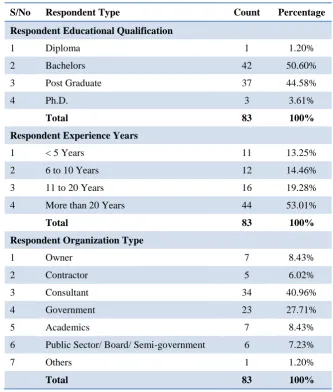
Initially 116 people were invited to participate in the survey through stratified and convenience sampling. Participants were selected from prominent government and construction organizations in India. Project owners and consultants were given higher weightage as they are closely connected with design development. Eighty-three valid responses were received giving a response rate of 71.55%. The higher response rate is attributed to the inclusion of respondents from two organizations with which brainstorming sessions were carried out. Wherever feasible, a small workshop was convened for five or more respondents, and the questionnaire administered to them. The questionnaire were sent through email and the responses received within the stipulated timeframe were used in the data analysis. Respondents ranged from Project Engineer to Director/President in private organizations and Assistant Engineers to Superintending Engineers in government organizations. Generally respondents included planners, design engineers, project managers, construction managers, procurement specialists, and contractors. It was also ensured that respondents had adequate industry exposure. Total experience of all respondents was 1843 years. The distribution of the respondents by qualification, experience, and organisations is represented in Table 2.
DATA ANALYSIS
Data generated were first checked for completeness. Isolated cases of missing data were noted and corrected by communicating with the respondent. Data were entered into an MS Excel file. Mean value and descriptive statistics were calculated using Excel functions.
Relative Importance Index (RII)
To determine the relative ranking of the factors, mean values were then transformed to importance indices based on the formula:
𝑅𝑒𝑙𝑎𝑡𝑖𝑣𝑒 𝐼𝑚𝑝𝑜𝑟𝑡𝑎𝑛𝑐𝑒 𝐼𝑛𝑑𝑒𝑥 (𝑅𝐼𝐼) = ∑ 𝑤
𝐴𝑁 =
5𝑛5 + 4𝑛4 + 3𝑛3+ 2𝑛2+ 1𝑛1
Pandit, D., Yadav, S. M. and Vallabhbhai, S. (2015). Factors affecting efficient construction project design development: A perspective from India. International Journal of Construction Supply Chain Management Vol. 5, No. 2 (pp. 34-50). DOI: 10.14424/ijcscm502015-52-67
59
where, w is the weight given to each factor by the respondent, ranging from 1 to 5, (n1 = number of respondents for very unsatisfied ... n5 = number of respondents for very
satisfied)
A is the highest weight (i.e. 5 in the study) and N is the total number of samples.
The relative importance index ranges from 0 to 1 (Le & Tam, 2007). Weighted Mean, RII, and the ranking of the most important factors are presented later in Table 5.
Table 2: Questionnaire respondents’ profile
S/No Respondent Type Count Percentage
Respondent Educational Qualification
1 Diploma 1 1.20%
2 Bachelors 42 50.60%
3 Post Graduate 37 44.58%
4 Ph.D. 3 3.61%
Total 83 100%
Respondent Experience Years
1 < 5 Years 11 13.25%
2 6 to 10 Years 12 14.46%
3 11 to 20 Years 16 19.28%
4 More than 20 Years 44 53.01%
Total 83 100%
Respondent Organization Type
1 Owner 7 8.43%
2 Contractor 5 6.02%
3 Consultant 34 40.96%
4 Government 23 27.71%
5 Academics 7 8.43%
6 Public Sector/ Board/ Semi-government 6 7.23%
7 Others 1 1.20%
Total 83 100%
Validation
Pandit, D., Yadav, S. M. and Vallabhbhai, S. (2015). Factors affecting efficient construction project design development: A perspective from India. International Journal of Construction Supply Chain Management Vol. 5, No. 2 (pp. 34-50). DOI: 10.14424/ijcscm502015-52-67
60 Criterion Related Validity
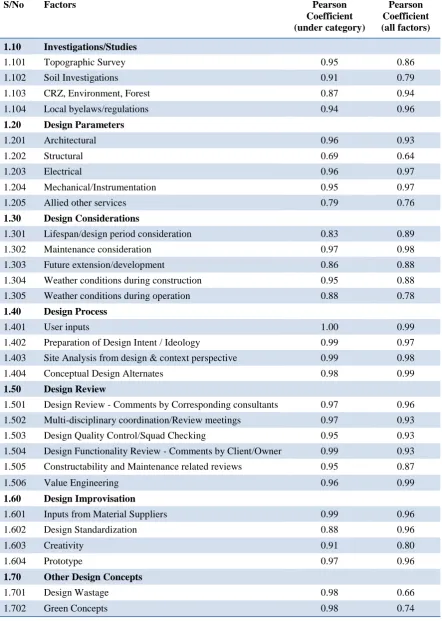
Criterion-related validity evidence can be tested by correlation, regression, and decision theory or group separation method (Ayodele, 2012). Criterion related validity can measure the correlation between scores on the new measure with other measures of the same construct or those with fundamentally similar constructs (Kimberlin & Winterstein, 2008). The correlation coefficient between one factor and the mean of the factors under that category was computed. It was found that the correlation coefficients between each item within each group, and the mean value of the related group were significant at 0.05 level. Furthermore the correlation coefficient between one factor and the overall mean of all the design factors was calculated. The results are shown in Table 3.
Split-Half Coefficient Method
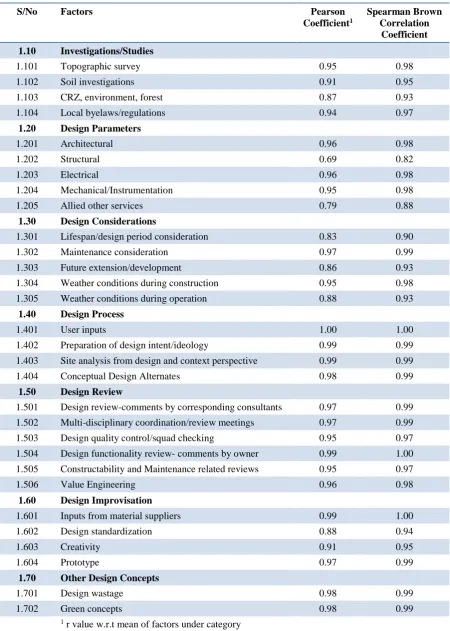
The Split-Half coefficient model of reliability analysis was used for reliability testing. This method splits the items in an instrument into two matched halves in terms of content and those having similar cumulative degree of difficulty. This is often achieved by assigning all odd numbered items to one group and all even numbered items into another (Ayodele, 2012). This method finds the Pearson correlation coefficient between the means of odd and even factors of each field of the questionnaire. Subsequently Pearson correlation coefficient is corrected by using the Spearman Brown correlation coefficient. The corrected correlation coefficient (consistency coefficient) is computed using the following equation:
Consistency coefficient
) 1 (
2
r
r
where, r is the Pearson correlation coefficient. It is the correlation coefficient between one factor and the mean value of the factors under that category. The correlation coefficient varies between +1 and -1, where +1 implies a perfect positive relationship (agreement), while -1 results from a perfect negative relation. Spearman’s rank correlation r measures and compares the association between the rankings of two parties (Assaf & Al-Hejji, 2006). The computed results were in the range of 0.82 and 1.00 for factors’ groups. This range is considered high, and ensures the reliability of the questionnaire. This is shown in Table 4
DISCUSSION OF RESULTS
Pandit, D., Yadav, S. M. and Vallabhbhai, S. (2015). Factors affecting efficient construction project design development: A perspective from India. International Journal of Construction Supply Chain Management Vol. 5, No. 2 (pp. 34-50). DOI: 10.14424/ijcscm502015-52-67
61
Table 3: Criterion related validity results
S/No Factors Pearson
Coefficient (under category)
Pearson Coefficient (all factors)
1.10 Investigations/Studies
1.101 Topographic Survey 0.95 0.86
1.102 Soil Investigations 0.91 0.79
1.103 CRZ, Environment, Forest 0.87 0.94
1.104 Local byelaws/regulations 0.94 0.96
1.20 Design Parameters
1.201 Architectural 0.96 0.93
1.202 Structural 0.69 0.64
1.203 Electrical 0.96 0.97
1.204 Mechanical/Instrumentation 0.95 0.97
1.205 Allied other services 0.79 0.76
1.30 Design Considerations
1.301 Lifespan/design period consideration 0.83 0.89
1.302 Maintenance consideration 0.97 0.98
1.303 Future extension/development 0.86 0.88
1.304 Weather conditions during construction 0.95 0.88
1.305 Weather conditions during operation 0.88 0.78
1.40 Design Process
1.401 User inputs 1.00 0.99
1.402 Preparation of Design Intent / Ideology 0.99 0.97
1.403 Site Analysis from design & context perspective 0.99 0.98
1.404 Conceptual Design Alternates 0.98 0.99
1.50 Design Review
1.501 Design Review - Comments by Corresponding consultants 0.97 0.96
1.502 Multi-disciplinary coordination/Review meetings 0.97 0.93
1.503 Design Quality Control/Squad Checking 0.95 0.93
1.504 Design Functionality Review - Comments by Client/Owner 0.99 0.93
1.505 Constructability and Maintenance related reviews 0.95 0.87
1.506 Value Engineering 0.96 0.99
1.60 Design Improvisation
1.601 Inputs from Material Suppliers 0.99 0.96
1.602 Design Standardization 0.88 0.96
1.603 Creativity 0.91 0.80
1.604 Prototype 0.97 0.96
1.70 Other Design Concepts
1.701 Design Wastage 0.98 0.66
Pandit, D., Yadav, S. M. and Vallabhbhai, S. (2015). Factors affecting efficient construction project design development: A perspective from India. International Journal of Construction Supply Chain Management Vol. 5, No. 2 (pp. 34-50). DOI: 10.14424/ijcscm502015-52-67
62
Table 4: Testing with Split Half Coefficient Method
S/No Factors Pearson
Coefficient1
Spearman Brown Correlation
Coefficient 1.10 Investigations/Studies
1.101 Topographic survey 0.95 0.98
1.102 Soil investigations 0.91 0.95
1.103 CRZ, environment, forest 0.87 0.93
1.104 Local byelaws/regulations 0.94 0.97
1.20 Design Parameters
1.201 Architectural 0.96 0.98
1.202 Structural 0.69 0.82
1.203 Electrical 0.96 0.98
1.204 Mechanical/Instrumentation 0.95 0.98
1.205 Allied other services 0.79 0.88
1.30 Design Considerations
1.301 Lifespan/design period consideration 0.83 0.90
1.302 Maintenance consideration 0.97 0.99
1.303 Future extension/development 0.86 0.93
1.304 Weather conditions during construction 0.95 0.98
1.305 Weather conditions during operation 0.88 0.93
1.40 Design Process
1.401 User inputs 1.00 1.00
1.402 Preparation of design intent/ideology 0.99 0.99
1.403 Site analysis from design and context perspective 0.99 0.99
1.404 Conceptual Design Alternates 0.98 0.99
1.50 Design Review
1.501 Design review-comments by corresponding consultants 0.97 0.99
1.502 Multi-disciplinary coordination/review meetings 0.97 0.99
1.503 Design quality control/squad checking 0.95 0.97
1.504 Design functionality review- comments by owner 0.99 1.00
1.505 Constructability and Maintenance related reviews 0.95 0.97
1.506 Value Engineering 0.96 0.98
1.60 Design Improvisation
1.601 Inputs from material suppliers 0.99 1.00
1.602 Design standardization 0.88 0.94
1.603 Creativity 0.91 0.95
1.604 Prototype 0.97 0.99
1.70 Other Design Concepts
1.701 Design wastage 0.98 0.99
1.702 Green concepts 0.98 0.99
Pandit, D., Yadav, S. M. and Vallabhbhai, S. (2015). Factors affecting efficient construction project design development: A perspective from India. International Journal of Construction Supply Chain Management Vol. 5, No. 2 (pp. 34-50). DOI: 10.14424/ijcscm502015-52-67
63
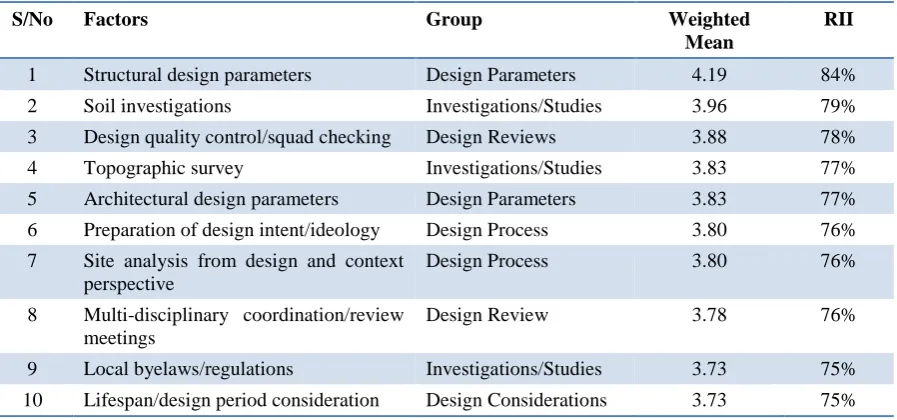
Table 5 : Top ten design development factors
S/No Factors Group Weighted
Mean
RII
1 Structural design parameters Design Parameters 4.19 84%
2 Soil investigations Investigations/Studies 3.96 79%
3 Design quality control/squad checking Design Reviews 3.88 78%
4 Topographic survey Investigations/Studies 3.83 77%
5 Architectural design parameters Design Parameters 3.83 77%
6 Preparation of design intent/ideology Design Process 3.80 76%
7 Site analysis from design and context perspective
Design Process 3.80 76%
8 Multi-disciplinary coordination/review meetings
Design Review 3.78 76%
9 Local byelaws/regulations Investigations/Studies 3.73 75%
10 Lifespan/design period consideration Design Considerations 3.73 75%
Structural design parameter is ranked highest. However it is worth noting that many participants had witnessed the aftermath of the devastating 2001 Bhuj (Gujarat) earthquake and were involved in damage assessment and rehabilitation of thousands of engineered and non-engineered buildings. There were also cases of building collapse in recent years. This may have influenced the study participants to put more weight on structural design parameters and investigations. It also justifies the inclusion of soil investigations. Improper site investigations are believed to be the reason for most failures as well as change orders during the construction phase. Inadequate site investigation had been identified by Durdyev et al. (2010) as a main factor affecting cost overruns in building projects.
While the designs carried out by government design engineers follow a standard review procedure which results in lesser errors in design, there is no guarantee of this in private organizations, particularly in medium and small sized projects. Design is a collaborative decision making process (Whelton et al., 2007). In absence of proper design management, design reviews are carried out casually. Insufficient design reviews results in revision in drawings during execution which cause delays. Multi-disciplinary coordination reviews ensure that designs are well coordinated.
Three architectural factors also appear in the top ten list presented in Table 5. These are: architectural design parameters, preparation of design intent and ideology, and site analysis. Issues in preparation of design intent and ideology are linked to clarity in designs. The need for detailed topographic survey in design is well established. Absence of site analysis results in scope changes. Architectural design parameters confirm CII findings on PDRI (Cho et al., 2001). Architectural designs need to consider local byelaws carefully. This is typically a problem with developing countries. Non-adherence to local byelaws results in work stoppage, demolition, and rework. It is obvious that, within overall design development, architectural designs are at forefront and any problem in architectural design development can have cascading effects on design leading to series of revisions.
Pandit, D., Yadav, S. M. and Vallabhbhai, S. (2015). Factors affecting efficient construction project design development: A perspective from India. International Journal of Construction Supply Chain Management Vol. 5, No. 2 (pp. 34-50). DOI: 10.14424/ijcscm502015-52-67
64
Factors such as prototypes, creativity, and design wastage are perhaps considered as value added factors rather than essential elements in design development. Processes such as value engineering and inputs from material suppliers are not formally used by designers in India. This indicates their priority, not that they are less useful. Some designers opined that the listed factors can be useful in improving their own design development process. It may be beneficial for owners and consultants to recognise the importance of these processes and formally include them in the designs.
Discussions with the owners, contractors, designers, and design managers provided an understanding that delays and cost overrun in projects can be attributed to deficient design development. Developing better understanding about the design development process is the first step towards improvement. The factors identified in the research could assist design managers to prioritise design tasks so that design process time is shortened. These factors could also serve as a checklist to designers. Emphasis on review process will result in less number of revisions, errors, and omissions.
CONCLUSION
Design management is a critical process at project development phase. While designs can be carried out according to codes and set procedures, the management of design process is not standardised. In India, outsourcing has resulted in the growth of small consultants who are not fully aware about the benefits of standardisation. Earlier studies by Gibson and Wang (2001) identified role of design parameters in front-end planning process and linked them successfully to the time and cost performance of construction projects. The research identified 30 significant factors in the design development process that could be used as a checklist to ensure that design processes are complete and considers important sub-processes such as standardization, value engineering, and reviews.
Design managers in developing countries can use these 30 factors and their weights to modify related design development processes. The priority ranking given to the design factors will be useful to design managers to plan, prioritise, and monitor design activities. These design managers could improve their inadequate design processes. Where such processes are already in existence then the emphasis given to that process can be evaluated. Overall check list can be prepared which can be completed before designs are rolled out for execution. The reason(s) for not following a particular process may also be documented.
Pandit, D., Yadav, S. M. and Vallabhbhai, S. (2015). Factors affecting efficient construction project design development: A perspective from India. International Journal of Construction Supply Chain Management Vol. 5, No. 2 (pp. 34-50). DOI: 10.14424/ijcscm502015-52-67
65 REFERENCES
Ali, A. S., Smith, A. & Pitt, M. (2012). Contractors' perception of factors contributing to project delay: Case studies of commercial projects in Klang Valley, Malaysia. Journal of Design and Built Environment, 7(1), 43-57.
Assaf, S. A. & Al-Hejji, S. (2006). Causes of delay in large construction projects. International Journal of Project Management, 24(4), 349-357.
Ayodele, J. (2012). Validity and reliability issues in educational research. Journal of Educational and Social Research, 2(2), May, 391-400.
Ballard, G. & Koskela, L. (1998). On the agenda of design management research. In 6th Annual Conference of the International Group for Lean Construction, Guaruja, Sao Paulo, Brazil. (p. 13).
Blom, A. & Saeki, H. (2011). Employability and skill set of newly graduated engineers in India (No. 5640). Retrieved from https://openknowledge.worldbank.com/handle/10986/3404
Bubshait, A. A. & Ahmad A. (1996). Design quality management activities. Journal of Professional Issues in Engineering Education and Practice, (July 1996), 104-106.
Cho, C.-S. & Gibson, G. E. (2001). Building project scope definition using project definition rating index.
Journal of Architectural Engineering, 7(4), 115-125.
Couto, J. P. (2012). Identifying of the reasons for the project design errors in the Portuguese construction industry. Natural and Applied Sciences, 3(2), 163-170.
Day, J. & Bobeva, M. (2005). A generic toolkit for the successful management of Delphi studies. The Electronic Journal of Business Research Methodology, 3(2), 103-116.
Durdyev, S., Ismail, S. & Bakar, N. A. (2010). Factors causing cost overruns in construction of residential projects: Case study of Turkey. Asian Journal of Management Research,1(1), 3-12.
Formoso, C. T., Tzotzopoulos, P., Jobim, M. S. S. & Liedtke, R. (1998). Developing a protocol for managing the design process in the building industry” In 6th Annual Conference of the International Group for Lean Construction (p. 13). Guaruja, Sao Paulo, Brazil.
Gann, D., Salter, A. & Whyte, J. (2003). Design Quality Indicator as a tool for thinking. Building Research & Information, 31(5), 318-333
George, R. T., Back, W. E. & Grau, D. (2012). Design engineer’s role in managing front end planning information. International Journal of Applied Science and Technology, 2(5), 1-16.
Gibson Jr, E. G. & Wang, Y. R. (2001, September). Scope Definition: A Key to Project Success. In COBRA 2001: Proceedings of the RICS Foundation Construction and Building Research Conference (pp. 3-5).
Golafshani, N. (2003). Understanding reliability and validity in qualitative research. The Qualitative Report,
8(4), 597-606.
Griffith, A., Gibson, G., Hamilton, M., Tortora, A. & Wilson, C. (1999). Project success index for capital facility construction projects. ASCE Journal of Performance of Constructed Facilities, 13(1), 39-45.
Hammond, J., Choo, H. J., Austin, S. & Tommelein, I. D. (2000). Integrating design planning, schedule and control with Deplan. Proceedings of the Eighth Annual Conference of the International Group for Lean Construction IGLC-8, University of Sussex, Brighton, UK, 17-19 July.
Hamilton, M. & Gibson, E. (1996). Benchmarking pre-project planning effort. ASCE Journal of Management in Engineering, 12(2), 25-33.
Iyer, K. C. & Jha, K. N. (2005). Factors affecting cost performance: Evidence from Indian construction projects.
International Journal of Project Management, 23(4), 283-295.
Johansen, E. & Wilson, B. (2006). Investigating first planning in construction. Construction Management and Economics, 24(12), 1305-1314.
Pandit, D., Yadav, S. M. and Vallabhbhai, S. (2015). Factors affecting efficient construction project design development: A perspective from India. International Journal of Construction Supply Chain Management Vol. 5, No. 2 (pp. 34-50). DOI: 10.14424/ijcscm502015-52-67
66 Kimberlin, C. L. & Winterstein, A. G. (2008). Validity and reliability of measurement instruments used in
research. Journal of the American Society of Health-System Pharmacists, 65(23), 2276-84.
Koskela, L., Huovila, P. & Leinonen, J. (2002). Design management in building construction: From theory to practice. Journal of Construction Research, 3(1), 1-16.
Kpamma, E. Z. & Adjei-Kumi, T. (2011). Management of waste in the building design process: The Ghanaian consultants’ perspective. Architectural Engineering and Design Management, 7(2), 102-112.
Le, K. N. & Tam, V. W. Y. (2007). A survey on effective assessment methods to enhance student learning.
Australasian Journal of Engineering Education, 13(2), 13-20.
Li, Y. & Taylor, T. R. B. (2014). Modeling the impact of design rework on transportation infrastructure construction project performance. Journal of Construction Engineering and Management, 140(9), 1-8.
Lopez, R. & Love, P. E. D. (2012). Design error costs in construction projects. Journal of Construction Engineering and Management, 138(5), 585-593.
Mahamid, I. & Bruland, A. (2011). Cost Overrun Causes in Road Construction Projects: Consultants’
Perspective. 2nd International Conference on Construction and Project Management IPEDR vol.15 (Vol. 15, pp. 6-10). Singapore: IACSIT Press.
MOSPI (2009). Project Implementation Status Report of Central Sector Projects Costing Rs.20 Crore & above. Ministry of Statistics & Program Implementation, Apr-Jun 2009, New Delhi.
Neely, A. (1999). The performance measurement revolution: why now and what next? International Journal of Operations & Production Management, 19(2), 205-228.
Olander, S. & Landin, A. (2005). Evaluation of stakeholder influence in the implementation of construction projects. International Journal of Project Management, 23(4), 321-328.
Othman, A. A. E., Hassan, T. M. & Pasquire, C. L. (2005). Analysis of factors that drive brief development in construction. Engineering, Construction and Architectural Management, 12(1), 69-87.
Rekola, M., Ma, T. & Ha¨kkinen, T. (2012). The role of design management in the sustainable building process.
Architectural Engineering and Design Management, 8(2), 78-90.
Sartori, R. & Pasini, M. (2006). Quality and quantity in test validity: How can we be sure that psychological tests measure what they have to? Quality Quantity, 41(3), 359-374.
Sweis, G. J. (2013). Factors affecting time overruns in public construction projects: The case of Jordan.
International Journal of Business and Management, 8(23), 120-129.
Takim, R, Akintoye, A. & Kelly, J. (2003) Performance measurement systems in construction. In: Greenwood, D J (Ed.), 19th Annual ARCOM Conference, 3-5 September 2003. University of Brighton. Vol. 1, 423-32.
Tzortzopoulos, P. & Cooper, R. (2007). Design management from a contractor’s perspective : The need for clarity. Architectural Engineering and Design Management, 3(21), 17-28.
Wang, Y., Chen, Y. & Huang, C. F. J. (2009). Applying neural network ensemble concepts for modelling project success. In 26th International Symposium on Automation and Robotics in Construction (ISARC 2009), 199-205.
Wang, Y.-R. & Edward, G. Jr. (2010). A study of preproject planning and project success using ANNs and regression models. Automation in Construction, 19(3), 341-346.
Whelton, M., Ballard, G. & Tommelein, I. (2007). Application of design rationale systems to project definition – Establishing a research project. In 9th Conference of the International Group for Lean Construction (IGLC). Singapore.
Weerasinghe, G., Soundararajan, K. & Ruwanpura, J. (2007). LEED–PDRI framework for pre-project planning of sustainable building projects. Journal of Green Building, 2(3), 123-143.
Pandit, D., Yadav, S. M. and Vallabhbhai, S. (2015). Factors affecting efficient construction project design development: A perspective from India. International Journal of Construction Supply Chain Management Vol. 5, No. 2 (pp. 34-50). DOI: 10.14424/ijcscm502015-52-67
67 Williamson, A, Williams, C. & Gameson, R. (2010). The consideration of maintenance issues during the design
process in the UK public sector. In: Egbu, C. (Ed) Proceedings 26th Annual ARCOM Conference, 6-8 September 2010, Leeds, UK, 1091-1100.
Yu, A. T. W., Chan, E. H. W., Chan, D. W. M., Lam, P. T. I. & Tang, P. W. L. (2010). Management of client requirements for design and build projects in the construction industry of Hong Kong. Facilities,