Quantifying the added value of using a Smart
Technology
RFID: A macroeconomic analysis
Author: Johannes Josef Diederichs
University of TwenteP.O. Box 217, 7500AE Enschede The Netherlands
The fourth industrial revolution of smart industry describes the use of cyber-physical
systems (Rüßmann et al., 2015). Since the complex field of smart industry
encompasses many technologies with far reaching consequences, to accurately
determine the added value on firm performance, its different components and
technologies need to be examined individually.
This paper contributes to smart industry adoption research by separately examining
the effect of using sensor technologies to monitor products of a supply chain.
Specifically, it is investigated what implications radio-frequency identification
(RFID) use has on operational performance.
A literature review shows that for every industry there are key supply chain
characteristics which can be improved in terms of operational performance by
adopting RFID technology. Thus, for certain supply chain problems RFID
technology solutions can be implemented in the same way to vastly different
industries and the results will always lead to the same benefits in operational
performance. This knowledge is new and refutes the prevailing notion that RFID
technology, like many other smart technologies, must be customised to every single
industry branch. This finding shall not in the least way imply that RFID is an
one-fit-all solution, but it points out that knowledge spillovers are occurring between
industries leading to consensuses in applications while increasing its popularity.
Even though the literature review has proven that ubiquitous uses and benefits of
smart tags exist for different industries, the results of the multiple regression show
insignificant results for the relationship between percentage of firms using RFID
and GDP. It has been assumed that there is a positive significant relationship between
the two variables, but that is not the case. Either there really is no relationship
between the two variables, or managers are still too uncertain on how to maximise
the RFID system potentials leading to application errors and profit losses.
Graduation Committee members:
Fons Wijnhoven
Raymond Loohuis
Keywords
Smart Industry, Industry 4.0, IoT, RFID, Profitability, macro-economic, supply chain
Permission to make digital or hard copies of all or part of this work for personal or classroom use is granted without fee provided that copies are not made or distributed for profit or commercial advantage and that copies bear this notice and the full citation on the first page. To copy otherwise, or republish, to post on servers or to redistribute to lists, requires prior specific permission and/or a fee.
11th IBA Bachelor Thesis Conference, July 10th, 2018, Enschede, The Netherlands.
1.
INTRODUCTION
The fourth industrial revolution of smart industry describes the use of cyber-physical systems (Rüßmann et al., 2015). In other words, it combines the physical processes of the value chain with digital, computer-based processes. The variety of smart technologies that result from the push of the upcoming industrial revolution called industry 4.0, or smart industry, are predicted to
change companies’ value chains significantly from producer to end-consumer (Valente & Neto, 2017). As illustrated in the
“Smart Industry” section, the predicted benefits are manifold.
But unlike any of the three previous industrial revolutions – the steam engine, mass production and the digital revolution – smart technologies are not pushed by a significant industrial increase in productivity benefiting society. Instead, smart technologies with its advantages in connectivity, enabling social networks and smart devices, have appealed to the society first, and are now steadily being implemented to the industrial sectors (Schuh, 2014). After more than a decade of introducing smart technologies for industrial use, corporations are still experimenting with smart technologies. Given the great variety in technologies of this development of interconnectivity with far reaching consequences, it is unclear what the added value is. Since the complex field of smart industry encompasses many technologies with far reaching consequences, to accurately determine the added value on firm performance, its different components and technologies need to be examined individually. This paper contributes to smart industry adoption research by separately examining the effect of using sensor technologies to monitor products of a supply chain. Specifically, it is investigated what implications radio-frequency identification (RFID) use has on operational performance. This section first introduces the construct of smart industry, and then, it is illustrated how RFID sensor technology relates to the field. After that, the scope and significance of this paper are defined.
1.1
What is Smart Industry?
Smart Industry is a development that is influenced by networks, latest manufacturing technologies, information and digitisations that improve and increase several factors such as quality, flexibility, automation, the participation of the value chain and importantly, enhance interaction with customers. It is aided by a network-centric approach, making use of information and appreciate its value, directed by ICT and upcoming manufacturing techniques. Smart Industry Adoption encompasses analytics, Big Data, Internet of Things (IoT). They are all interrelated. These technological developments introduce
what has been called the “smart factory,” in which cyber -physical systems monitor the -physical processes of the factory and make decentralised decisions (VID/VDE, 2015). The physical processes systems in Industry 4.0 is in direct relation to the Internet of Things which is the concept that is “basically
connecting any device with an on and off switch to the Internet and/or to each other” (Xia et al., 2012). Accordingly, IoT envisions a future in which digital and physical entities can be linked, by means of appropriate information and communication technologies, to enable a whole new class of applications and services. Analytics is a comprehensive and complex field that
‘involves statistical analysis, computational linguistics, and machine learning’ to find meaningful patterns and knowledge in recorded data (Gandomi & Haider, 2015). It is used to understand
“big data” which is a large amount of data that overwhelms
business on a daily basis. However, quantity is not of main importance but rather how business interacts with this data.
1.2
RFID
The smart technology of RFID “is a means of storing and
retrieving data through electromagnetic transmission” (Ni et al.,
2004). An RFID system is composed of readers and tags. The tags are physical chips which are attached to objects in a value chain. Through these chips information about the objects can be collected and wirelessly communicated to the readers. It is considered the backbone for information sharing within a supply chain as it creates an intelligent factory by connecting the products to computer systems.
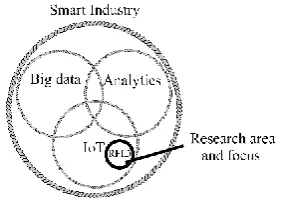
[image:2.595.314.458.254.357.2]With this definition of RFID, the smart technology perfectly fits in the field of IoT. Hence, an investigation of RFID system implementation and its implications for firm profitability contribute to the research progress of internet of things within the field of smart industry.
Figure 1: Research Focus
Figure 1: Research Focus
1.2.1
Advantages
RFID tags can, for each object individually, collect and communicate data about both the progress in the supply chain as
[image:2.595.315.543.496.765.2]well as the object’s purpose and characteristics like age, customisation, material quality. RFID is an innovative and non-invasive system, as it allows for automatic real-time collection and communication of data. With these advantages over traditional, labour intensive identification technologies, like bar codes, the benefits that can be reaped are manifold:
Table 1: Possible benefits of RFID implementation as compiled from Huang et al., 2009
• Improved manufacturing process efficiency.
• improved information accuracy.
• Reduced labour force.
• Reduced COGS (cost of goods sold).
• Reduced requirements for expensive logistics assets.
• Reduced cycle time.
• Improved re-work speed.
• Improved quality control.
• Improved operator efficiency.
• Accurate and complete records.
• Number of pallets handled daily has increased.
• More reliable information flow on material movements.
• Better tracking of food products.
• Eliminate/reduce errors in product processing.
• Eliminated/reduced mistakes in tracking WIP items.
• Reduced production downtime.
• Automatically creating an electronic routing and automatically updating its status.
• improved responses to trading partners in the supply chain. Improved schedules and monitoring.
• Increased labour, space and machine utilisation.
• Eliminate tedious, error-prone manual data entries.
• Reduced WIP inventory.
• Improved customer satisfaction level.
• Enhances coordination of complex assembly and distribution.
• Improves load balancing within and across multiple production linebetter material process planning.
1.2.2
Disadvantages
With the introduction of RFID
1.3
Problem statement
Today, companies face major challenges in sustaining competitive supply chain operations (Majeed & Rupasinghe, 2017), which is why a great portion of firms is continuously looking for new technologies to better manage or automate processes. During the last eight years corporations from all industry branches have been adopting RFIDs, so much so that the number of adopters multiplied threefold during the last eight years (Eurostat, 2016). In 2018 approximately every eighth European firm with more than 10 employees applies chip technology to track products and objects within the supply chain. Whereas in 2009 a mere three percent were using this smart technology. This significant increase of adopting firms calls for a second wave of research. As RFID systems evolve from a niche application to a widely used technology there is a need to investigate its success factors and implications for profitability from a macroeconomic view. The problem is that up until now the literature about RFID systems consists of theoretical models and case studies applicable to individual industries or products.
1.4
Research question
1. To what extent does the added value of adopting RFID affect firm profitability in a macroeconomic context? 1.1. What universally valid key supply chain
characteristics influence the added value of adopting RFID technology?
For clarification, the concepts of profitability, added value, macroeconomics, and universally valid key supply chain characteristics must be defined.
First, for this paper, the added value of RFID systems is an umbrella term for the various benefits resulting from this smart
technology’s implementation as reported by case studies (see
Table1).
Second, the concept of profitability is defined as the “degree to which a business or activity yields profit or financial gain.”
(Oxford Dictionary, 2018).
Third, the term macroeconomics is defined as the “branch of economics concerned with large-scale or general economic factors, such as interest rates and national productivity” (Oxford Dictionary, 2018). Thus, an analysis from a macroeconomic perspective investigates data of whole economies and countries. Fourth, supply chain characteristics encompasses all factors of all stages a product passes through on its way from producer to end-user. For this research, universally valid key supply chain characteristics compromise these factors that from the review of literature are found to be both applicable to all industry branches and significant to the increase or decrease of value added when adopting RFID.
1.5
Research Gap
Many researches based on case studies exists which state that RFID adoption can bring several advantages like cost efficiencies, operational flexibility, etc. Further these studies often list a few factors that determine the extent to which companies experience the added value. All these case studies have a very small scope limited to individual industries or even products, resulting in a collection of findings scattered across
hundreds of papers. This approach to research originates from the general understanding that RFID system implementation needs to be customised to a supply chain, hampering the ability to generalize the factors maximising the value added in terms of benefits.
Although it is true that there can be no one-fits all solution to such a smart technology, now that a significant portion of all firms in existence use RFID in all kinds of fields, indicates that this smart technology might have several universally applicable benefits. There must be overlapping factors that need to be considered to accurately determine the expected return on investment of RFID. If so, these factors should be highlighted and summarized to one model. This has scarcely happened yet.
1.6
Significance
This research aims to close the above described research gap, by first investigating whether there are such overlapping factors determining implementation success. Secondly the effect of these overlapping factors on profitability is estimated through a statistical analysis.
1.1. What universally valid key supply chain characteristics influence the added value of adopting RFID technology? Firstly, to identify the overlapping deciding factors for profitable RFID implementation the next section of “Theoretical Background” provides a literature review of existing papers which, based on theoretical models and case studies, all have investigated what supply chain and technology characteristics influence the implementation success of RFID in terms of profit increases. Reoccurring factors are highlighted and summarized in one simple model. This way managers are provided with guidance reducing uncertainty in assessing the usefulness of RFID implementation for every supply chain in question. Such a list of influential factors has the purpose of providing managers with clear instructions on what to take account of. Its contribution is to enable managers to quickly estimate whether RFID implementation has a positive ROI. If a supply chain’s characteristics fits the model’s deciding factors for profitability,
managers know that the concept of this cyber-physical system might increase their operational performance. In that case more research is necessary to make accurate predictions and managers must turn to the existing case studies. If the list is of no relevance to them, they know that RFID is of no help to their organisation. Such a model allows for quick make or break decision, saving a
manager’s most valuable asset – time.
1. To what extent does the added value of adopting RFID affect firm profitability from a macroeconomic perspective?
Secondly, given that the literature review validates that there are in fact generalisable factors influencing value added that apply to all industries, for researchers and managers alike, it is of importance to know whether this smart technology adoption’s
with all its implications and whether they are able to successfully implement it to their supply chain structure. This assumption is based on the fact that, as pointed out in the problem statement, previous research has validated that RFID use can lead to many benefits (see table 1). Given that RFID system implementation is an investment decision like every other, it is only acted upon, if managers predict it to be profitable. Therefore, if the macro-economic data reveals that there is no significant relationship between RFID use and profitability, it one factor for this result may well be that a significant portion of managers misinterpret the nature of RFID implications on their supply chain characteristics. Such errors in judgement would imply that managers are still uncertain about the concept of RFID, which
further validates the use of this paper’s partly contribution to
create an overview of certain important one-fit-all success factors
2.
THEORETICAL BACKGROUND
This literature review investigates the findings of RFID studies with vastly different scopes of analysis and focus on different industry branches. It is looked at which supply chain characteristics are favorable for RFID to maximise the benefits, and how these benefits relate to firm profitability. The aim is to generate a list of factors that can be improved by RFID use in any industry. To achieve this, first, this section investigates relevant papers individually, identifying universally applicable success factors that potentially maximise profitability. Secondly, these findings are interpreted with respect to each other and a list of key success factors is created to support the theory that RFID evolved to a smart technology which has certain success factors that apply to every industry. This list can then be a help for organisations by reducing the complexity of the concept of smart products, comprehensively providing researchers and managers with evidence of ubiquitous RFID implementation factors that if taken into account improve supply chain performance no matter the industry an organisation operates in.
The first paper is Mehrjerdi (2011). Its results are based on 10 case studies concerning RFID implementation to the supply chain of companies from all around the world and various
industries. The paper’s objective is to pinpoint the key benefits of RFID use. It is concluded that smart technologies can lead to cost efficiencies throughout the value chain by reducing labor costs and production mistakes. Less production errors lead to less write-offs and returned goods ultimately leading to lower inventory reorder points. These benefits are shown to collectively increase the operating income. It is reasoned that higher operating income entail greater profitability and firm performance, but the results are inconclusive and differentiate
between cases. The reason for that is that the firms’ operational
efficiency varies greatly. A company with complex production processes and high failure rates can make far greater use of tracking its products than firms with less complex value chains.
The value of smart technology “automation, transparency, asset
management, velocity, insight, traceability, security, reliability
and capability” (Mehrjerdi, 2011) depends on a value chain’s
failure rate and need for administrative processes.
The second paper investigates “The expected value of traceability information” (Aiello, 2015) for the sector of
perishable consumer goods with RFID technology as the enabling tool. The methodology of this paper consists of a stochastic calculus, conducting a cost-benefit analysis of RFID used in a hypothetical scenario. The scenario depicts a simplified supply chain, where there is one supplier and one retailer. For this mathematical procedure a formula is created, which compares the costs of RFID implementation with the costs of not implementing the smart technology. The costs of automatic data gathering considered are sensor cost, and chip cost. The
opportunity costs of no implementation originate from handling and transporting deteriorated products. The findings of this mathematical model imply that profitability is influenced by the two factors of value of the produced product per chip and sensor, and the probability of quality inefficiencies in relation to its consequences. The higher the value of the produced products, the less chips and sensors are needed per dollar earned, ultimately decreasing the cost per profit dollar generated. As for the probability of quality inefficiencies, the higher the average failure rate, the higher the cost savings. But the cost savings of early failure detection depend on the cost of early detection against the cost of late rejection. The research concludes that, next to the qualitative effects of increased customer satisfaction due to high quality products, automatic traceability via RFID technology can generate a profit, if the supply chain characteristics are right in the sense that traceability offers high cost saving potentials.
The paper provides insights as to what supply chain characteristics affect the cost reducing possibilities through automated control.
The third paper Cheng & Young (2007) investigates what key success factors are to be found for the industry of logistics service providers in Taiwan. An AHP method is used to not only identify certain factors but also rank them in terms of their importance for firm performance maximisation. The paper identifies many small factors, but the for this research interesting ubiquitous success factors are cost-benefit analysis of the cost of buying a system of sensors and receivers versus the estimated labour cost savings. Further, it concluded that firms that can make use of the globalisation trend can significantly improve their supply chain performance. This results from the fact that a globalised supply chain is highly complex and, thus, offers many opportunities to inefficiencies through automating processes. Last but not least, it found out that firms which produce products and / or services with occasional inefficiencies that directly affect customers can often reap advantages via the possibility of quality control and quicker response time through available automated information collection.
From this literature review the following list is created: Table 2: A list of supply chain characteristics both common
in every industry branch and improvable via RFID
• Complex production processes; complex, long distance
production processes often offer many possibilities to eliminate operational inefficiencies through automation. But it must be considered whether automation is possible, or whether administrative processes are too complex to handle.
• Failure rates; Supply chains with high failure rates due to
production imprecisions or transportation damage offer great advantage for RFID technology to improve performance via quality control and location tracking. This factor becomes even more important if customers are directly affected.
• Value of the product; The higher the value of the product or
machine, the lower the relative investment cost per sensor.
• Globalisation; If firms can make use of the globalisation
3.
METHODOLOGY
Now that the sub-question proved that RFID technology can in fact improve supply chain characteristics of any industry, there is evidence that RFID systems may improve profitability in a macroeconomic context. Thus, the main research question is validated and the effect of RFID implementation on profitability may be analysed via quantitative statistical analysis on a national level. The aim is to answer whether this ubiquitous application of RFID positively affects profitability in a macroeconomic context. To recall, the main research question of this paper is; To what extent does the added value of adopting RFID affect firm profitability from a macroeconomic perspective?
This primary research question is investigated via a regression analysis using the macro-economic data of EU countries. The variability explained by RFID use on profitability is compared across EU countries to determine, if the there is a significant relationship between the two concepts. The contribution of this quantitative analysis is to estimate whether it is accurate to claim that a firm, which adopted the smart technology of RFID, on average is more profitable than a company without an RFID system and whether that holds true across all industrial branches. Such a conclusion can be derived from the differences in percentages of firms having adopted RFID between countries. Having already defined the concepts of added value, RFID, profitability and macroeconomic perspective (see section 1.2 and 1.4), this section starts right of with naming the utilised data source. After that the research question is operationalised and it is explicated with which method the data is analysed.
3.1
Data source
The data input for this methodology is provided by the database Eurostat (Eurostat, 2018). Thus, secondary data is used for analysis. Eurostat is a governmental entity of the European Union. The statistical office collects data from millions of companies located in Europe. With such an enormous data pool the institution provides high quality statistics on a national and regional level, enabling high validity comparisons between countries and regions.
3.2
Operationalisation
To operationalise the relationship RFID technology has on profitability, the two concepts of RFID and profitability need to be translated into measurable variables. The variables must fully reflect both concepts. Additionally, to ensure the reliability of results, control variables must be added to the equation. Control variables are factors that researchers include in their work to rule out alternative explanations for their findings (Schmitt & Klimoski, 1991).
The concept of Profitability is fully operationalised through
Eurostat (2018)’s variable called “GDP and main components (output, expenditure and income)”. “Gross domestic product
(GDP) is a measure for the economic activity. It is defined as the value of all goods and services produced less the value of any goods or services used in their creation” (Eurostat, 2018). In other words, GDP equals the profitable output of a country. Thus, this variable perfectly fits within the definition of profitability. GDP is the dependent variable. The variable is reported in millions of Euros. This variable is called “GDP”.
The independent variable of RFID is operationalised via Eurostat
(2018)’s variable of “Enterprises using radio frequency identification (RFID) instrument”. Its given statistics report the percentage of firms using RFID technology. The collected
variable is defined as an “automatic identification method to store and remotely retrieve data using RFID tags or transponders
[…] a RFID tag is a device that can be applied to or incorporated into a product or object and transmits data via radiowaves.”
(Eurostat, 2018). The definition coincides perfectly with this papers definition, hence no other variable needs to be added to fully reflect RFID use. This variable is called “RFID %”. The control variable included is population size. It is the only variable that both significantly influences GDP and is reported by the European statistical office. The variable is measured in number of persons and the date of measurement has been 1st January, 2017. Howbeit population size is the only variable included controlling this statistical analysis, it is the number one
predictor for GDP and explains a great majority of a country’s
profitable output. Further, this variable makes it possible to compare the profitable output across different countries, as it corrects for the different population sizes of countries. This variable is called “Population Size”.
To sum up, the research question “to what extent does the added
value of adopting RFID affect firm profitability from a macroeconomic perspective?” is operationalised via the independent variables of (1) RFID % and (2) Population Size simultaneously (control variable) predicting the variation of the dependent variable (3) GDP.
3.3
Method
The quantitative statistical analysis tool used to interpret the collected data is a multiple regression analysis. The software used for this process is IBM SPSS Statistics 25.
4.
DATA ANALYSIS
The secondary data sample consists of 29 countries. The statistics for each country are derived from collecting data of all of its registered companies with at least ten employees or more.
[image:5.595.311.542.394.475.2]4.1
Data Presentation
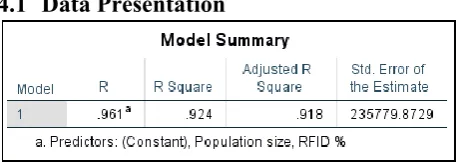
Figure 2: Variability of GDP explained by the two predictors of RFID % and population size
Figure 2 gives the number of predictors adjusted correlation coefficient R2=0.918. This means there is a very strong correlation between the two independent variables and the dependent variable as 91.8% of the of the variability in GDP is explained by the Population Size and by RFID %.
Figure 3: Individual variable analysis; direction and strength of the relationship
Figure 4 gives information about each individual variable. For
this paper’s research purpose, the important findings for the
constant are the Std. error=145163.413, and the P-value=0.061. For RFID % the informative values are the standard
error=9925.177, the Std. β=0.92 and the P-value=0.105. As for
the Population Size the Std. error=0.002, the Std. β=0.968 with a
[image:5.595.311.542.563.637.2]The standard error gives the average difference between the predicted value by the regression model and the actual value. Standardized coefficients tell how variability in the constant is explained by an individual predictor within the variability explained by the whole model as given by R2 in Figure 2. The P-value reports the likelihood of getting the results by pure chance.
4.2
Data Interpretation
Although a weak positive relationship is reported between RFID % and GDP the high standard error for both variables, which is half the size of the respective coefficient, make the predictions of this model unreliable. This shows in the P-values.
With α = 5% and P-value < 0.105, there is not enough evidence to conclude that the added value of adopting RFID significantly affect firm profitability from a macroeconomic perspective. It must be concluded that from this sample analysis no reliable assumptions can be made about the whole population of firms in the economy. The P-value indicates that there is a 10.5% chance to get these results randomly with a sample of this size.
4.3
Reliability and validity
Though the data of Eurostat is estimated to be highly reliable and valid, the result of their analysis through the tool of multiple regression has low reliability and validity. The reason for that might well be that the influence of RFID adoption on GDP is insignificant.
Another factor that influences the degree of reliability of a regression model is the sample size. The more data a sample holds, the more confident one can be that the results accurately represent the population, which as a result lowers the P-value. Thus, even in cases like this where the data source is likely to be reliable, without a large dataset, the probability, that the studied relationship is calculated to be significant, is low.
Further, GDP is a highly complex variable influenced by a large variety of factors. When investigating what indirect effect the single factor RFID adoption has on national profit output, the significance of this relationship is prone to be downplayed by the more significant direct influencers. An example of such a direct influencer is population size.
Moreover, even though the explained variability in GDP is extremely high, validity is slightly decreased by the fact that with such a complex concept as the dependent variable several control variables must be left out.
5.
RESULT
5.1.1
Literature review
The result of the literature review is a list of four factors that prove that RFID technology can in fact improve supply chain characteristics relevant to any industry.
The reported supply chain characteristics are as follows:
1. Complex production processes; complex, long distance
production processes often offer many possibilities to eliminate operational inefficiencies through automation. But it must be considered whether automation is possible, or whether administrative processes are too complex to handle.
2. Failure rates; Supply chains with high failure rates due to
production imprecisions or transportation damage offer great advantage for RFID technology to improve performance via quality control and location tracking. This factor becomes even more important if customers are directly affected.
3. Value of the product; The higher the value of the product or
machine, the lower the relative investment cost per sensor.
4. Globalisation; If firms can make use of the globalisation
trend by selling products and services to far distanced customers, the collection of data and its analysis can make various different improvements in terms tracking its products, analysing the customer demography and extending its reach via faster and more flexible often automated supply chain processes.
5.1.2
Statistical analysis
The results of the statistical analysis, estimating the variability in country profit explained by a countries total percentage of businesses using smart identification instruments, turned out to be insignificant.
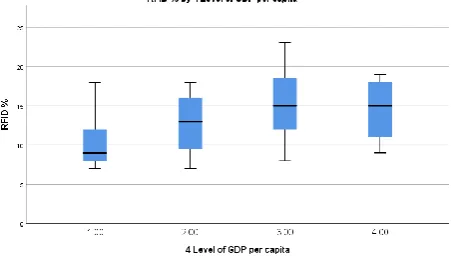
The P-value equals 10.5% with a small sample of 29 due to lack of available public data. Since the P-value is not only influenced by the data fit between the predictors and the dependent variable, but, also by the quantity of data analysed, there is a reasonable chance that the result might differ when analysing a larger dataset. If the same study is conducted with a large sample of say a hundred countries or firms from different branches, a bigger α
[image:6.595.314.540.350.478.2]= 10% can be utilised and the relationship between RFID use and profitability may be well be significant. Figure 4 illustrates that there is in fact a relationship between RFID % and GDP per capita for the EU member countries, even though it is weak, and unreliable.
Figure 4: Simplified depiction of the relationship between RFID % and GDP per capita
6.
CONCLUSION
7.
LIMITATIONS
A simplified model is used to estimate the variations in GDP, due to the lack of more control variables that are both publicly available and relevant to the model.
Further, although the sample size is sufficient for statistical analysis, more countries providing additional data would have increased the reliability.
8.
FURTHER RESEARCH
Now that the versatility of RFID is proven, large scale quantitative studies with firms of different branches should further investigate the differences and similarities in implementation approaches and what supply chain characteristics maximize its benefits. The findings of such studies may lead to even more knowledge spillovers, eliminating the remaining uncertainty of this smart technology, which should ultimately further accelerate its adoption. Incidentally, such large-scale studies of firms from different branches would, too, unambiguously determine to what extent profitability is actually increased by the use of RFID.
9.
REFERENCES
Schmitt, N. W., & Klimoski, R. J. (1991). Summarizing and Interpreting Human Resource Research Using Meta-ANalyses. In Research methods in human resource
management (pp. 403–429).
Huang, G. Q., Wright, P. K., & Newman, S. T. (2009). Wirelessmanufacturing: A literature review, recent developments, and case studies. International Journal of Computer Integrated Manufacturing, 22(7), 579–594. https://doi.org/10.1080/09511920701724934
Ni, L. M., Liu, Y., Lau, Y. C., & Patil, A. P. (2004). LANDMARC: Indoor Location Sensing Using Active RFID. Wireless Networks, 10(6), 701–710. https://doi.org/10.1023/B:WINE.0000044029.06344.dd
Schuh, G., Potente, T., Wesch-Potente, C., Weber, A. R., & Prote, J. P. (2014). Collaboration mechanisms to increase productivity in the context of industrie 4.0. In Procedia
CIRP (Vol. 19, pp. 51–56).
https://doi.org/10.1016/j.procir.2014.05.016
Mehrjerdi, Y. Z. (2011). RFID and its benefits: A multiple case analysis. Assembly Automation, 31(3), 251–262. https://doi.org/10.1108/01445151111150596
Aiello, G., Enea, M., & Muriana, C. (2015). The expected value of the traceability information. European Journal of Operational Research, 244(1), 176–186. https://doi.org/10.1016/j.ejor.2015.01.028
Xia, F., Yang, L. T., Wang, L., & Vinel, A. (2012). Internet of things. International Journal of Communication Systems. https://doi.org/10.1002/dac.2417
Gandomi, A., & Haider, M. (2015). Beyond the hype: Big data concepts, methods, and analytics. International Journal of Information Management, 35(2), 137–144. https://doi.org/10.1016/j.ijinfomgt.2014.10.007
Rüßmann, M., Lorenz, M., Gerbert, P., Waldner, M., Justus, J., Engel, P., & Harnisch, M. (2015). Industry 4.0. The Future of Productivity and Growth in Manufacturing. Boston Consulting. https://doi.org/10.1007/s12599-014-0334-4 Valente, F. J., & Neto, A. C. (2017). Intelligent steel inventory
tracking with IoT / RFID. In 2017 IEEE International Conference on RFID Technology and Application, RFID-TA 2017. https://doi.org/10.1109/RFID-TA.2017.8098639
Majeed, M. A. A., & Rupasinghe, T. D. (2017). Internet of things (IoT) embedded future supply chains for industry 4.0: An assessment from an ERP-based fashion apparel and footwear industry. International Journal of Supply Chain Management.
Cheng, Y. H., & Yang, A. S. (2007). Investigating key factors of
deciding RFID’s adoption in logistics service providers.
In Proceedings of the 2007 11th International Conference on Computer Supported Cooperative Work in Design, CSCWD. https://doi.org/10.1109/CSCWD.2007.4281599
Data & Tables:
Eurostat (2018). [tin00126] - Enterprises using radio frequency
identification (RFID) instrument. Retrieved from http://ec.europa.eu/eurostat/tgm/table.do?tab=table&init=1&lan guage=en&pcode=tin00126&plugin=1
Eurostat (2018). [tec00001] - Gross domestic product at market
prices - At current prices. Retrieved from http://ec.europa.eu/eurostat/tgm/table.do?tab=table&init=1&lan guage=en&pcode=tec00001&plugin=1
Eurostat (2018). [nama_10_gdp] - GDP and main components
(output, expenditure and income). Retrieved from http://appsso.eurostat.ec.europa.eu/nui/show.do?dataset=nama_ 10_gdp&lang=en
Eurostat (2018). [tps00001] - Population on 1 January – persons.
Retrieved from