How can data generated by smart home devices
help identify consumer needs?
Author: S.M. Spoor
University of Twente P.O. Box 217, 7500AE Enschede
The Netherlands
Not all data collected today from IoT-applications is fully used, nor exploited. Data
generated from IoT-applications, can help companies in their NPD-process, for
example the identification of consumers’ needs. This study explains how data
generated by smart home devices can help identify consumer needs. A literature
review is done in order to draw links between the concept of smart home devices
and the identification of consumer needs. These links are then tested through an
empirical study, in the form of an expert questionnaire. Main findings of this study
are that data generated by smart home devices helps identify consumers’ needs by
giving contextual awareness, doing predictive analysis & maintenance and by
usage (behavior) tracking. Literature and experts could not agree on whether
smart home devices also help identify consumers’ needs by giving product and
service feedback.
Supervisors: Dr. E. Constantinides
Dr. S. de Vries
Keywords
Internet of Things (IoT), smart home devices, consumer needs, innovation.
Permission to make digital or hard copies of all or part of this work for personal or classroom use is granted without fee provided that copies are not made or distributed for profit or commercial advantage and that copies bear this notice and the full citation on the first page. To copy otherwise, or republish, to post on servers or to redistribute to lists, requires prior specific permission and/or a fee.
7th IBA Bachelor Thesis Conference, July 1st, 2016, Enschede, The Netherlands.
1. INTRODUCTION
1.1 Context
The trend of Internet of Things (hereafter referred to as IoT) is shaping the development of technologies in the ICT sector (McKinsey, 2015). Estimations from McKinsey Global Institute are that IoT’s financial impact on the global economy will increase from $3.9 to $11.1 trillion by 2025. IoT can have a great influence in everyday life and behavior of potential users (Atzori, Iera, & Morabito, 2010). Cisco projects more than 24 billion Internet–connected objects by 2019 (Cloud and Mobile Network Traffic Forecast - Visual Networking Index (VNI), 2016). As this number increases, the amount of traffic they generate is expected to rise as well. Because of the upcoming, fast-growing market of IoT, research within this field is helpful to gain new insights on how the application of IoT can gain value.
One application of IoT is within houses, leading to the concept of smart homes. The smart home market is growing, and expected to grow at a compound annual growth rate of 29.5% between 2012 and 2020, according to Allied Market Research. They also projected the current market revenue of $4.8 billion in 2012 to grow up to $35.3 billion by 2020 (Global Smart Homes and Building Market: Opportunities and Forecasts, 2016). The number of houses with smart home functions will pass 31.4 million worldwide in 2017, and the market will be worth $9.4 billion. Thus, smart homes have a high market potential (Hong, Shin, & Lee, 2016). Also, consumer interest in smart homes almost doubled over the last three years, making the smart home market a relevant research topic (Google Trends: Zoekterm Smart Homes, 2016).
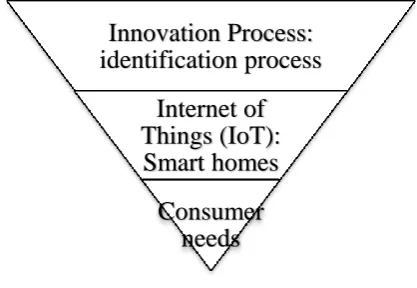
[image:2.595.56.265.499.643.2]This papers’ context (Fig.1) is characterized by the new product development (NPD), which visualizes the innovation process for companies. NPD can originate from a new technology or new market opportunities. It consists of four stages: opportunity identification; development; testing and launch. The identification of consumers’ needs is part of the first stage, on which IoT has most impact on in the NPD-process. Technologies of using sensors of RFID helps identify opportunities. Consumers make new products successful, by accepting and valuing them (Kleef, Trijp, & Luning, 2005).
Figure 1 Context of paper
In the past, companies had to rely on surveys and focus groups to determine consumers’ wishes. In recent years, social media and online ratings helped companies determine what consumers think of their products. Now, all connected devices, generate a lot of data that can be used to improve products as well as consumers’ experience (Gandhi & Gervet, 2016). According to McKinsey, not all data collected today, is used, or fully exploited (McKinsey, 2015). Therefore, at this point, it is helpful to do more research on identifying consumer needs and how IoT, smart homes in this case, can help improve this identification process.
By identifying unmet consumer needs, new opportunities for innovation will be created (Kleef, Trijp, & Luning, 2005).
1.2 Relevance
IoT’s influence is growing rapidly. One of its applications is in smart homes. The smart home market is growing substantially, as well as consumers’ interest for smart home devices. However, research in the field is still rather limited, since the topic is rather new. This makes it a relevant topic to research, to identify opportunities for the application of IoT in smart homes, in order for companies to better understand consumer needs and stay innovative. The identification of consumer needs is a critical stage in the NPD-process. With this information, gathered from the data generated by smart home devices, companies can adapt their current smart home devices to better meet consumer demands, as well as create new inventions, to meet unmet consumer demands (Dunn, Casey, Boyd, & Fisher, 2016). Previous research has focused on reviewing the present and future state of the smart home, preliminary focusing on the technologies (Hong, Shin, & Lee, 2016). In this paper, the focus lies on a particular IoT-application, smart homes. This way, this paper will contribute to previous studies.
1.3 Research problem
The main research problem of this paper is to determine ways how data generated by smart home devices can add to current methods of identifying consumer needs. In order to be able to answer this, some research questions need to be answered.
What is IoT? What are its characteristics, elements and applications?
What are smart homes? Of what elements do they consist, what types of smart homes are there and which types of household live in smart homes?
What methods are there to identify consumers’ needs? By answering these sub-questions, links can be drawn between the concept of smart homes and the identification of consumers’ needs, which will answer the main research problem.
1.4 Methodology
The methodology in this paper is the combination of a qualitative and quantitative method. First, a literature review will be done for the concepts of IoT, smart homes and methods to identify consumer needs. This will be done to get an understanding of these concepts, based on its various elements, characteristics and types. Sources used in the literature review are journals, research papers, conference proceedings and books. All the information obtained will be summarized in a table, which will help to draw links between smart homes and the identification of consumers’ needs. As a conclusion on the literature review, a model will be constructed, depicting these links drawn from literature. In order to justify these links, an empirical study is done, in the form of an expert questionnaire. This questionnaire consists of experts in the field of IoT. These experts are either professors, business owners or researchers, with specific knowledge of IoT. In this questionnaire the links will be explained and experts will be asked to give their opinion on whether they agree with the links suggested or not and why they feel this way. Similarities and differences can be found by comparing the links drawn from literature to experts’ opinions obtained from the questionnaire. From this, conclusions can be drawn, on what influence smart home devices actually have on helping the identification of consumers’ needs, but also implications for future research. The remainder of this paper is organized as follows. In section 2, a literature review will be done for the concepts of IoT, smart home devices and the methods to identify consumer needs. Then, in the following section, links will be drawn between smart home devices and the identification of consumer needs. These will be tested in an expert questionnaire, which will either support or
Innovation Process:
identification process
Internet of
Things (IoT):
Smart homes
disprove the links drawn. Conclusions and implications for future research will be given in section 4.
2. LITERATURE REVIEW
Within this section literature will be reviewed for the concept of IoT, the concept of smart homes and the methods for identifying consumers’ needs. Regarding the concept of IoT, different visions, definitions, technologies and applications will be discussed. Then, characteristics of smart homes will be elaborated on, such as the elements, classes and types of smart home households. Finally, methods of identifying consumers’ needs will be reviewed, according to the paper of Kleef et al. (2005) In addition, social media is included here, since they also influence ways consumer needs are determined (Gandhi & Gervet, 2016).
2.1 Internet of Things (IoT)
The basic idea of the concept of IoT is the prevalent presence of
things or objects around us, which are able to interact and collaborate with each other through unique addressing schemes. These things or objects can be Radio Frequency Identification (RFID), sensors, tags, mobile phones etc. (Giusto, Iera, Morabito, & Atzori, 2010).
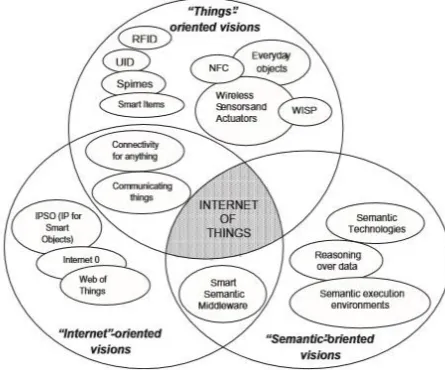
The name IoT is composed out of two terms: internet and things. This gives rise to two visions. (Fig. 2) The first moves towards a network oriented vision, while the latter focuses on generic “objects” (Atzori, Iera, & Morabito, 2010). “These differences in IoT visions arise from the fact that stakeholders, business alliances, research and standardization bodies start approaching the issue from either an ‘Internet-oriented’ or a ‘Things- oriented’-perspective, depending on their specific interests, finalities and backgrounds” (Atzori, Iera, & Morabito, 2010). Another perspective of IoT is the ‘Semantic-oriented
[image:3.595.70.293.479.664.2]’-perspective, because semantically, the term Internet of Things means “a world-wide network of interconnected objects uniquely addressable, based on standard communication protocols” (Bassi, 2008), introducing a disruptive innovation within the ICT-world (Atzori, Iera, & Morabito, 2010).
Figure 2 Visions of IoT according to Atzori et al. (2010)
2.1.1 IoT elements & technologies
IoT elements can be categorized along three components:
Hardware: made up of sensors, actuators and embedded communication.
Middleware: on demand storage and computing tools for data analytics.
Presentation: easy to understand visualization and interpretation tools which can be widely accessed on different platforms (Gubbi, Buyya, Marusic, & Palaniswami, 2013).
Next, technologies will be elaborated on, that together make up these three categories.
2.1.1.2 Radio Frequency Identification (RFID)
RFID technology enables the design of microchips for wireless data communication (Gubbi, Buyya, Marusic, & Palaniswami, 2013). They help identify anything automatically, acting as an electronic barcode (Welbourne, et al., 2009) (Juels, 2006). There are two types of RFID: passive and active. Passive RFID tags are not battery powered, they use the power of the reader’s interrogation signal to communicate the ID to the RFID reader. Applications are in retail and supply chain management, as well as transportation and access control-applications. Active RFID readers have their own battery supply and can instantiate the communication (Gubbi, Buyya, Marusic, & Palaniswami, 2013). An example of application is within port containers, monitoring cargo (Juels, 2006).2.1.1.3 Wireless Sensor Networks (WSN)
A sensor network consists of a large number of intelligent sensors, enabling the collection, processing, analysis and diffusion of valuable information, gathered in a variety of environments (Akyildiz, Su, Sankarasubramaniam, & Cayirci, 2002). In WSN, sensor data is shared among sensor nodes and sent to a distributed or centralized system for analytics (Gubbi, Buyya, Marusic, & Palaniswami, 2013). Due to recent technological advances, efficient, low cost, low power miniature devices have been developed for use in remote sensing- applications, improving the viability of using a sensor network (Akyildiz, Su, Sankarasubramaniam, & Cayirci, 2002).
2.1.2 IoT Applications
McKinsey (2015) has identified the following IoT-applications.
2.1.2.1 Human
Under this category falls ‘health and fitness’ and human productivity. IoT can have a great impact on human health. It can improve a patient’s adherence to prescribed therapies, avoid hospitalizations and improve the quality of life by using connected devices to monitor patients continuously as they live their lives. Patients can carry either wearable or fixed sensors to monitor their body temperature, blood pressure and patient activity in their environment (Moriandi, Sicari, De Pelligrini, & Chlamtac, 2012). Human productivity-applications include the use of augmented-reality devices. For example goggles through which information can be shared with factory workers to improve their performance, such as instructions for executing tasks. Companies can redesign jobs and processes by using data, generated by IoT, making them more efficient and effective. Also, IoT technology can help workers in the field to stay connected and work more effectively (McKinsey, 2015).
2.1.2.2 Home
2.1.2.3 Offices
IoT-applications in office settings are in security and energy management. Companies can monitor activity throughout their office buildings, by using digital security cameras with advanced image-processing capabilities. This eliminates the need for security personnel, to patrol or monitor video feeds. IoT-based energy management in offices could cut energy use by 20 percent (McKinsey, 2015).
2.1.2.4 Factories
Most value generated from the adoption of IoT, comes from this category. Value, created from implementing IoT, is generated from productivity improvements, including energy savings and improvements in labor efficiency. Other sources for value can be improvements in equipment maintenance, inventory optimization, worker health and safety (McKinsey, 2015). IoT can also be applied in retail, where it can monitor real-time product availability and maintain an accurate stock inventory. They can also play a role in after-market support, where consumers can retrieve information about the products they purchased (Moriandi, Sicari, De Pelligrini, & Chlamtac, 2012).
2.1.2.5 Worksites
Worksites can be defined as custom production environments, such as mines, oil and gas extraction sites and construction sites. Leading companies that operate in this setting have been early adopters of IoT. On oil drilling platforms, sensors are being used to monitor the performance of dozens of systems. In mining, self-driving vehicles are helping make operations more efficient and cheaper. Most value is generated through improved equipment maintenance. Using sensors to monitor the health of machinery in use, companies can shift to a condition-based maintenance model, instead of a regular maintenance schedule or repairing equipment only when it breaks down (McKinsey, 2015).
2.1.2.6 Cities
Within these so-called smart cities, IoT creates value in four main applications: transportation, public safety and health, resource management and service delivery. With the use of IoT, actual tracking data of a public transit system can be gathered and used to adjust commuting time. Since 70 percent of commuting time nowadays is ‘buffertime’ – extra time between when the rider
arrives at a stop and when the bus actually leaves – the use of IoT can lead to great time savings. This way, IoT provides an advanced traffic control system, by monitoring car traffic and deploying services that offer traffic routing advice, congestions can be prevented. Another application can be in the form of smart parking systems, based on RFID and sensors. Sensors can monitor the flow of traffic and retrieve information, such as average speed and numbers of cars (Moriandi, Sicari, De Pelligrini, & Chlamtac, 2012). IoT could also be used in public health. By using smart meters to reduce the loss of electricity in distribution and sensors to detect water leaks, air and water quality can be improved and pollution reduced. (McKinsey, 2015).
2.2 Smart Homes: Different Terms
There are different terms for smart homes, including home automation and integrated home systems. All these terms represent a system that controls home electronics and appliances, such as audio, video, telecommunications, security and lightning. These control systems can also provide information to residents and can be accessed from remote locations by phone or computer (Home Energy Magazine, 1998). A smart home is equipped with information and computing technologies that enhance comfort, convenience, security and entertainment for its occupants, by connecting in-home products with devices outside the home, including vehicles (Aldrich, 2003).
2.2.1 Elements of smart homes
There are various views on conceptualizing the elements of a smart home. One view distinguishes elements, while focusing on information, the latter focusing on technology and another on functionality. From all perspectives, elements that make up a smart home, will be discussed.
Dard (1996) monitored activities and resources brought by the new technology within the home, while focusing on the flow of information within the smart home. He classified three information flows:
Human flows: Supervising private and shared spaces (e.g. collecting data on how long people stay in the living room).
Energy flows: Monitoring energy consumption (e.g. gathering of data on what time the lights are turned on and off).
Information flows: Managing transmission and reception of messages (e.g. refrigerator alerts when to do groceries) (Aldrich, 2003).
Barlow and Gann (1998) focused on technology and distinguished three levels within the smart home:
Generic technologies: providing the basic, standard compatible building blocks for more elaborate systems.
Context-specific systems: adaptable to a wide variety of homes.
Personalized systems: tailored to specific individual and household requirements.
Gann et al. (1999) focused on the functionality available to the user, distinguishing two forms of smart homes:
Smart home: involves the use of ‘intelligent’ domestic appliances.
Smart home 2.0: involves interactive computing, communication and entertainment services within and beyond the home.
2.2.2 Types of households
Meyer and Schulze (1996) have made an attempt to categorize residents of smart homes to predict the uptake of smart home technology. This may be relevant, for understanding how various family set-ups or households make different use of smart home technology (Aldrich, 2003). They stated that the acceptance of smart home technology will depend on the following criteria:
Size and composition of the household.
Division of labor.
Stage in the family lifecycle.
Meyer and Schulze also argued that women are critical in the process of acceptance of smart home systems, since they are mainly responsible for the domestic tasks. Therefore, their acceptance of smart home technologies is related to their attitudes towards innovation (Gann, Barlow, & Venables, 1999). They concluded that households in which both partners are working, highly mobile single-person households and households with elderly or disabled people will me more likely to adopt smart home systems, since they have most to gain from the technology (Aldrich, 2003) (Gann, Barlow, & Venables, 1999).
Besides this, there may be other relevant criteria for categorizing the types of households using smart home systems. For example the geographical spread of family and friends, rural, suburban or urban household setting (Aldrich, 2003).
2.2.3 Classes of smart homes
classification showed smart home systems which are able to learn and which are not. It also highlighted different levels of communication of information within and outside the home, as well as distinguishing between homes which maintain constant awareness of occupants and objects, from those which do not (Aldrich, 2003).
He proposed five hierarchical classes of smart homes:
Homes which contain intelligent objects – homes contain single, standalone appliances and objects which function in an intelligent manner.
Homes which contain intelligent, communicating objects: homes contain appliances and objects which function intelligently in their own way and also exchange information between one another to increase functionality.
Connected homes: homes have internal and external networks, allowing interactive and remote control of systems, as well as access to services and information.
Learning homes: patterns of activity in the homes are recorded and the accumulated data are used to anticipate users’ needs and to control the technology accordingly.
Attentive homes: the activity and location of people and objects within the homes are constantly registered, and this information is used to control technology in anticipation of the occupants’ needs (Aldrich, 2003).
2.3 Consumer research methods
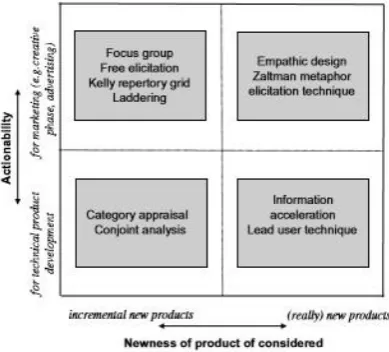
[image:5.595.66.261.488.664.2]Kleef et al. (2005) have developed a classification scheme (Fig. 3) of performance dimensions to help researchers choose between them. Methods of identifying consumer needs differ in their degree of actionability for marketing versus R&D and their ability to develop ‘out of the box’ ideas. The choice for a certain method depends on the purpose for which they are implemented and the innovation strategy, which they pursue. Therefore they are not direct substitutes. Methods are positioned against two dimensions: newness of product considered and actionability (Kleef, Trijp, & Luning, 2005).
Figure 3 Classification scheme according to Kleef et al. (2005)
The concept of smart homes falls under the bottom right quadrant: introducing really new products, such as a smart thermostat, or smart refrigerator, with the purpose of technical product development, making a “smart” home. Besides this, methods falling under the bottom left quadrant are also discussed, because once smart products are introduced and established on the market, they will be further developed to
improve the quality and performance of these products. Therefore, methods falling under this quadrant also prove relevant to review.
2.3.1 Category appraisal
Category appraisal is used to visualize positions products hold in the consumers’ minds. By visualizing, its shows the perceived or preferred market structure by consumers. Hereby, product developers can identify product opportunities and enable them to detect attributes which drive product choice. Category appraisal consists of internal and external preference analysis and Moskowitz’ category appraisal. (Kleef, Trijp, & Luning, 2005). Category appraisal is a consumer evaluation of a set of competitive products. Therefore, it is a product-driven method. The main objective is to develop an understanding of how consumer perceive and prefer products. Consumers assess a large number of products, ranking them according to criteria (Greenhoff & MacFie, 1994). Typically, ranking is done by filling in a questionnaire, and ranking is done based on criteria as perceived (dis)similarity, (sensory) attributes and/or on preference. The data collection is highly structured with category appraisal.
External preference analysis builds on perceptual judgements. A product map is derived from the respondents’ ratings. Internal preference analysis, gives priority to consumer preferences and uses perceptual information as a complementary source of information to create a multidimensional representation of consumers’ preferences and needs (Greenhoff & MacFie, 1994). Consumer needs are derived indirectly. With category appraisal underlying dimension are determined, that characterize how consumers differentiate between products.
2.3.2 Conjoint analysis
In conjoint analyses, consumers express their preference towards varied product profiles (Green & Srinivasan, 1978). Products are given different levels of certain attributes, after which a respondent is asked to rate these hypothetical products on a scale. The data collection is thus highly structured, since response categories are fixed. Conjoint analysis requires the evaluation of multiple products, based on preference. By performing data analysis, the relative importance of each attribute in a respondent’s preference function can be found. This data analysis consists of decomposing all collected preferences for certain products, so that different utilities can be linked to different attribute levels, making up that product. As such, consumer needs are indirectly derived (Kleef, Trijp, & Luning, 2005).
Two methods of collecting data are used: the ‘ two-factor-at-a-time procedure’ and the ‘full-profile approach’. The first, also
referred to as the ‘trade-offprocedure’ considers attributes on a two-at-time basis. Respondents are asked to rank various combinations of each pair of attribute levels from most preferred to least preferred. The two-factor-at-a-time procedure is simple to apply and reduces information overload on the part of the respondent. A limitation for this method is the loss of realism. The full-profile approach, uses the complete set of attributes. The major limitation of this approach is the possibility of information overload (Green & Srinivasan, 1978).
The method of conjoint analysis is also product-driven. Products or product concepts are evaluated, based on their attributes. Each attribute can have two or more levels. Conjoint analysis’ main focus is to determine which attribute and attribute levels consumers prefer and how much they value attributes. Using this method, products are primarily hypothetical and thus unfamiliar to the respondents (Kleef, Trijp, & Luning, 2005).
product choice, based on survey results regarding preferences and intentions to buy (Green, Krieger, & Wind, Thirty Years of Conjoint Analysis: Reflections and Prospects, 2001). They show the relative importance of levels of product attributes on consumer preference (Kleef, Trijp, & Luning, 2005). Conjoint analysis is a method for simulating how consumers react to changes regarding existing products and the arrival of new products (Green, Krieger, & Wind, Thirty Years of Conjoint Analysis: Reflections and Prospects, 2001).
2.3.3 Information acceleration
Information acceleration (hereafter referred to IA) is a concept testing method, employing multimedia stimuli and experimental set-ups (Kleef, Trijp, & Luning, 2005). A virtual environment is constructed, in which respondents can interact with all players in a real buying environment in the future. Consumer data is gathered on purchase intentions in order to forecast consumers’ responses to a totally new product, for example personal communication systems, new pharmaceutical drugs and theme parks. From this data, consumers’ needs are derived by measuring participants’ attitudes, preferences and purchase intentions (Urban, Weinberg, & Hauser, 1996).
This method is product-driven, since a ‘virtual’ prototype is used to obtain consumers’ feedback. This data is then used to predict sales potential. New products are unfamiliar to consumers and usually require consumer learning. However, IA tries to overcome this problem of unfamiliarity, by providing information in this virtual buying environment. The data collection is structured, because choice alternatives are all specified and quantitative (Kleef, Trijp, & Luning, 2005). IA can be used to ‘accelerate’ the majority of the market to where the lead users are positioned now. Consumers’ latent needs emerge when the product is shown to them. The aim of using this method is to provide information to product developers in an early stage (Kleef, Trijp, & Luning, 2005).
2.3.4 Lead user technique
With this method, consumers are used, who are familiar with the product and usage. They predict new successful products, by
finding solutions to their own problems. Lead users’ current needs will become general needs in the near future. Therefore, they can serve as a need-forecasting method, providing new product concepts and design data (von Hippel, 1986). Some lead users develop complete new products, responsive to their needs, in ways not anticipated by their manufacturers (Kleef, Trijp, & Luning, 2005).
The lead user technique is need-driven, because the aim is to gather specific ‘solution data’ form lead users, not to obtain consumers’ needs. The collection of data is highly unstructured Lead users are brought together in group problem-solving sessions, in which they come up with one or more product concepts (Kleef, Trijp, & Luning, 2005).
2.3.5 Social media
Nowadays, consumers turn to social media to give their opinions about products and services, but also let social media shape their opinions and wants. Social media is an effective and cost-efficient way to understand consumer needs, wants and perspectives. By using media monitoring services, companies can monitor every conversation and brand mention on social media. The way consumers feels about a brand or product is largely influenced by their interactions with the brand. Social media provides a tool for companies to take control of this issue, by interacting with their consumers and responding to complaints quicker (Keeping Up with Customer Needs and Wants through Social Media Monitoring, 2016). The power of social media is that it can turn consumers’ desires into consumer needs. By reading social comments and liking shared posts of friends, consumers are triggered to click the link and actually make a purchase. This way, social media can shape consumers’ needs (Elmerraji, 2016).
[image:6.595.54.551.483.750.2]Table 1 represents a summary of all reviewed concepts, including most important conclusions and key references of papers.
3. HOW SMART HOME DEVICES HELP
IDENTIFY CONSUMER NEEDS
[image:7.595.67.290.211.695.2]In this section, links will be drawn between the concept of smart homes and the identification of consumer needs. Each link will be described, based on literature, after which results regarding each link will be discussed. By comparing the links drawn from literature to the opinions gathered from experts, differences and similarities can be identified. From this, it can be determined whether the links drawn are justified and how data generated from smart home devices can help identify consumer needs.
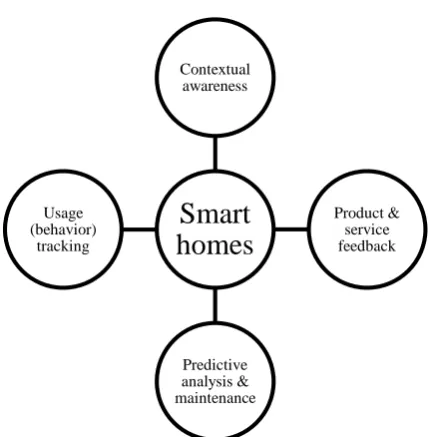
Figure 4 visualizes the links drawn between the concept of smart homes and the identification of consumer needs. There are four links:
Contextual awareness: connected physical objects are used to collect data from surroundings to dynamical adapt operations. This way, smart home devices can adapt to their environment, based on current consumer needs.
Product & service feedback: assessing connected products’ quality, behavior and improving development and service feedback. Smart home devices provide a crucial link in generating data for companies in order for them to continuously improve their products and services to serve consumers’ needs.
Predictive analysis & maintenance: analysis of connected things metrics to determine trends, patterns and issues. By forecasting and understanding patterns and trends, smart home developers can adapt their products accordingly, fulfilling unmet consumer needs.
[image:7.595.68.285.470.689.2] Usage (behavior) tracking: usage, consumption and interactions of a connected product or service are tracked and analyzed. Having information on which smart home devices consumers use, developers can modify their smart home device accordingly, making them better fit with current consumer needs (Pai, Pendyala, & Kerber, 2016).
Figure 4 Links between smart homes and the identification of consumer needs
3.1. Contextual awareness
Smart homes are context sensing infrastructures, which use the amount of data generated by sensors to better serve the needs of consumers. (Cortese, Lunghi, & Davide, 2005). According to
Schilit et al. (1995); Pascoe (1998); Dey & Abowd (1999), smart homes can lead to contextual awareness in three ways: presentation, execution and tagging.
Presentation: Context can be used to decide what information and services need to be presented to the users. In the case of a smart home, a context-aware mobile application can connect to the kitchen appliances, retrieve the shopping list and show it to the consumer
Execution: Automatic execution of services, based on context, through machine-to-machine communication. The consumers’ car communicates with the heating and coffee machine in the smart home, so that the house will be warm and coffee will be ready, once the consumer step into their house.
Tagging: There is a lot of sensor data collected, that needs to be analyzed and interpreted. By fusing data together, collected through sensors, necessary information can be collected from this data. In order to be able to fuse data together, context is needed. Context needs to be tagged together with the sensor data to be processed and understood later (Perera, Zaslavsky, Christen, & Georgakopoulos, 2013). Smart home appliances can provide context to the data gathered. For example, when there is a high consumption of energy in the living room at night, the data from the smart TV can provide context to why the energy consumption is high at night.
In table 2, results from the expert questionnaire are compared to the links drawn from literature. All respondents in the expert questionnaire agreed on the first link. They all felt smart home devices can help identify consumer needs, by providing contextual awareness. According to the respondents, the value of IoT lies not in the measurement, but in the actions taken upon it. Possible pitfalls were also highlighted: contextual awareness might lead to frustration in the beginning, and needs to be fully optimized, in order to fulfill consumer needs (Expert Questionnaire: How Smart Home Devices Help Improve Consumer Needs, 2016).
Literature Experts
Link 1: contextual awareness
+ +
Link 2: product & service feedback
+ +/-
Link 3: predictive analysis & maintenance
+ +
Link 4: usage (behavior) tracking
[image:7.595.310.543.492.622.2]+ +
Table 2 Links drawn from literature compared to results from expert questionnaire
3.2 Product & service feedback
Through IoT-applications, consumers give feedback by using the products. User feedback is no longer collected only in the early phases of product development, but throughout and after product release. Real-time product use is producing data that indicates current consumer preferences and needs. This serves as feedback to the companies that produce the products, allowing continuous improvement of their products and services (Unlocking User Value in IoT – UseIT, 2016). With IoT technology, consumers can customize and personalize their world. IoT enables a world of consumer-oriented products and services, through incorporating the consumers’ preferences and needs. Companies
Smart
homes
Contextual awareness
Product & service feedback
Predictive analysis & maintenance Usage
receive feedback automatically, enabling them to customize and revise their products, according to current consumer’s needs. Take Pandora for example, a music service for in a smart home, that relies on learning algorithms to learn an individual consumer’s preferences and suggest other relevant music to the consumer (Hagel & Brown, 2016). Another smart home system, called Homey, consumers can add other connected products to the device, creating their own preferred smart home. All this generated data is used to further enhance companies’ products and services, making an even better fit with consumers’ needs.
With regards to the questionnaire, experts’ opinions were divided. Half of the respondents do not think smart home devices can give product and service feedback, to make them better fit with consumers’ needs. They believe IoT devices in the future know consumers better than the feedback they give themselves. The link of contextual awareness, as described earlier, will play a more significant role in IoT. So, the actions smart home devices take, based upon data gathered from their surroundings, will fit more to consumers’ needs, then the feedback they provide to their producers. This is another point, highlighted by experts who disagreed: the feedback generated by smart home devices, will make it more helpful for producers to customize their products, rather than the consumers (Expert Questionnaire: How Smart Home Devices Help Improve Consumer Needs, 2016).
3.3 Predictive analysis & maintenance
With the use of IoT technologies, data gathered from smart home device is actual reliable data. Rather than performing routine inspections and maintenance, predictive analysis monitors products for failures and notifies when maintenance is necessary. This predictive analysis is done by sensors, which are embedded in equipment and products. They check for abnormal conditions and alert for maintenance when safe operating limits are breeched (O'Brien, 2016). This direct feed of information that shows how a product actually performs, helps answer problems like failure frequency, cause of failure and failure effects. Instead of forecasting failure rates, now there is real world data which validates and improves the accuracy of existing predictive methods (LNS Research, 2015). An example is that of SAP, a software which uses predictive analytics to help forecast and prevent future performance issues. Providing a single control center for managing all products, it uses sensing telemetry and machine-to-machine, business and third-party data, to monitor product conditions, predict machine health, proactively deliver spare parts, improve spare parts planning and ensure the right technician staffing (SAP, 2015).
Experts that responded in the questionnaire, all agreed on this link. The main argument that was given, why smart home devices can help identify consumers’ needs, by performing predictive analysis and maintenance, was that it improves human efficiency (Expert Questionnaire: How Smart Home Devices Help Improve Consumer Needs, 2016).
3.4 Usage (behavior) tracking
Through sensors, companies can track the products’ movements and even monitor interactions with them. So, they know exactly when the smart refrigerator is used and also know when consumers are in a certain area of their homes. With this behavioral data, companies can optimize for example their pricing (Chui, Löffler, & Roberts, 2016). An example of this is of energy producers. They are focusing on optimizing the use of energy, with the use of IoT. They call this behavioral billing, where consumers that are conscious about their energy usage, reducing high energy consumptions, gain the benefits of the cost savings (Pomerantz, 2104). Another example is in inventory management. Through RFID tagging, companies keep track of
how their product move through the supply chain. With this information, companies can reduce throughput time and make their supply chain more efficient.
Again, the expert questionnaire gave a conclusive answer: all respondents agreed with this link. It is the basis for the first link, contextual awareness. Without content, context cannot be created. Challenges here are privacy and usage. How can the data generated be protected and what are the rules of using this data, for example selling this data to third parties (Expert Questionnaire: How Smart Home Devices Help Improve Consumer Needs, 2016).
4. CONCLUSION
From the literature review, many applications of IoT were identified and discussed, as well as technologies that make up IoT-applications. One of this applications is in smart homes. Depending on the focus, information flow, technology or functionality, smart homes consist out of different elements. Through category appraisal, conjoint analysis, information acceleration, lead-user technique and social media, companies try and identify consumers’ needs. Based on the literature review, it can be concluded that there are links between smart homes and the identification of consumer needs. With the help of sensors, smart home devices can gather a lot of data. This data provides contextual awareness, gives product & service feedback, predictive analysis & maintenance and enables the tracking of usage behavior. This can help identify consumers’ needs.
Before evaluating the results, the method of researching needs to be discussed. The quality of the questionnaire was diminished by the number of respondents, making this the main limitation to this study. Having more respondents, could have led to different results, leading to maybe not all conclusive answers for the links tested. Even though the questionnaire was sent out in advance, allowing the experts some time to respond, response was very low. This ultimately has an effect on the conclusions that can be drawn from this paper. However, the questionnaire was only done to support the links drawn in this paper, therefore the few responses could still be used to support the proposed links. Another limitation regarding the questionnaire is time: having more time, would have allowed the questionnaire to be sent even earlier, so experts had more time to respond. This would have also allowed us to send the questionnaire to more experts sooner, when response-rate was low. Finally, the concepts of IoT and smart homes are relatively new, proving another limitation to this study. There is relatively limited research done in the field of IoT, proving it more difficult to find the right kind of literature to base the study on.
From my study it can be concluded that most of the links, drawn in the model, hold up. All experts were unanimous, that data generated by smart home devices can help identify consumer needs, by giving contextual awareness, doing predictive analysis & maintenance and by usage (behavior) tracking. One link drawn in the model, was not supported by the empirical study: ‘product & service feedback’. Experts highlighted that IoT-devices
needs. Concluding on this, smart home devices generate data that helps us track usage (behavior), create contextual awareness, give product & service feedback and perform predictive analysis & maintenance. By doing so, it can provide companies with crucial information on what current consumer needs are, how they change over time and help identify unmet consumer needs. This can serve as an innovation tool, since companies can distinguish themselves from competitors by fulfilling actual consumers ‘needs and identifying unmet consumers’ needs, based on data generated by smart home devices.
Future research should focus on trying to go more in-depth into the opportunities for smart home devices given in this paper, as well as try and find more. Since experts did not agree that smart homes help identify consumers’ needs by giving product & service feedback, this should be input for future research. Right now, it is clear that data generated by smart home devices can help identify consumer needs, but companies still need methods and tools to translate all this data into useful information. Since previous research mostly focused on the technology side of IoT, future research should focus more on applications, such as in smart homes, but also smart cities, offices and on humans in the form of wearables for example. Future challenges of smart home devices lie in the area of privacy and the usage of data. Companies need to guarantee consumers their privacy, need to be transparent about how they use the data generated and protect it. By unlocking the value of smart home devices, it can help companies innovate, trying to fulfill unmet or unknown consumer needs. Since we are only at the beginning of the era of smart home devices, many things are still to be discovered.
5. REFERENCES
(1998, May/June). Retrieved on May 5, 2016, from Home
Energy Magazine:
http://www.homeenergy.org/show/article/nav/washer dryer/id/1387/magazine/109/page/6
Akyildiz, I., Su, W., Sankarasubramaniam, Y., & Cayirci, E. (2002). Wireless sensor networks: a survey. Computer Networks, 393-422.
Aldrich, F. (2003). Smart Homes: Past, Present, and Future. In R. Harper, Inside the Smart Home (pp. 17, 31-36). London: Springer.
Atzori, L., Iera, A., & Morabito, G. (2010). The Internet of Things: A survey. Computer Networks, 2787-2790. Barlow, J., & Gann, D. (1998). A changing sense of place: are
integrated IT-systems reshaping the home?
Technological Futures, Urban Futures Conference, (p. 13). Durham.
Bassi, A. E. (2008). Internet of Things in 2020: A Roadmap for the Future.
Chui, M., Löffler, M., & Roberts, R. (2016). Our Insights: The Internet of Things. Retrieved on May 26, 2016, from McKinsey:
http://www.mckinsey.com/industries/high-tech/our-insights/the-internet-of-things
Cloud and Mobile Network Traffic Forecast - Visual Networking Index (VNI). (2016). Retrieved on March 30, 2016, from Cisco: http://cisco.com/c/en/us/solutions/service-provider/visual-networking-index-vni/index.html
Cortese, G., Lunghi, M., & Davide, F. (2005). Context-Awareness for Physical Service Environments. In G. Riva, F. Vatalaro, F. Davide, & M. Alcañiz, Ambient Intelligence (p. 71). IOS Press.
Dey, A., & Abowd, G. (1999). Towards a Better Understanding of Contect and Context-Awareness. Proceedings of the 1st international symposium on Handheld and Ubiquitous Computing (pp. 304-307). London, UK: Springer-Verlag.
Dunn, S., Casey, C., Boyd, D., & Fisher, M. (2016). Identifying Unmet Demand: The Key to Long-Term Innovation Success. The Nielsen Company, 1(3), 1-3.
Elmerraji, K. (2016, May 24). Top Ways That Social Media Influences Consumer Behavior. Opgehaald van The Cyphers Agency: http://tcapushnpull.com/social- media-2/top-ways-that-social-media-influences-consumer-behavior/
(2016, June 3). Expert Questionnaire: How Smart Home Devices Help Improve Consumer Needs. (H. Mischo, S. Spoor, B. ten Bok, D. Westerbeek, & R. Oliana, Interviewers)
Gandhi, S., & Gervet, E. (2016). Now That Your Products Can Talk: What Will They Tell You? MIT Sloan Management Review, 57(3), 49.
Gann, D., Barlow, J., & Venables, T. (1999). Digital Futures: Making Homes Smarter. Chartered Institute of Housing.
Giusto, D., Iera, A., Morabito, G., & Atzori, L. (2010). The Internet of Things: 20th Tyrrhenian Workshop on Digital Communications. Springer.
Global Smart Homes and Building Market: Opportunities and Forecasts. (2016). Retrieved on March 30, 2016, from
Allied Market Research:
http://www.alliedmarketresearch.com/smart-home-automated-building-market
Google Trends: Zoekterm Smart Homes. (2016). Retrieved on April 3, 2016, from Google Trensa: https://www.google.com/trends/explore#q=smart%20 home&date=1%2F2013%2035m&cmpt=q&tz=Etc% 2FGMT%2B8
Green, P., & Srinivasan, V. (1978). Conjoint Analysis in Consumer Research: Issues and Outlook. Journal of Consumer Research, 104,107-108.
Green, P., Krieger, A., & Wind, Y. (2001). Thirty Years of Conjoint Analysis: Reflections and Prospects.
Interfaces, 57.
Greenhoff, K., & MacFie, H. (1994). Preference mapping in practice. In H. T. MacFie, Measurement of food preferences (pp. 137-138). Glasgow: Blackie Academic & Professional.
Gubbi, J., Buyya, R., Marusic, S., & Palaniswami, M. (2013). Internet of Things (IoT): A vision, architectural elements, and future directions. Future Generation Computer Systems, 1647-1649.
Hagel, J., & Brown, J. (2016, May 26). How the Internet of Things Will Make Products Better and More Personal.
Opgehaald van Techonomy:
http://techonomy.com/2015/08/how-the-internet-of-things-will-make-products-better-and-more-personal/
Hong, J., Shin, J., & Lee, D. (2016). Strategic Management of Next-Generation Connected Life: Focusing on Smart Key and Car-Home Connectivity. Technological Forecasting & Social Change, 103, 12.
Juels, A. (2006). RFID security and privacy: a research survey.
Keeping Up with Customer Needs and Wants through Social Media Monitoring. (2016). Retrieved on May 5, 2016,
from CyberAlert:
http://www.cyberalert.com/blog/index.php/keeping- up-with-customer-needs-and-wants-through-social-media-monitoring/
Kleef, E. v., Trijp, H. v., & Luning, P. (2005). Consumer research in the early stages in new product development: a critical review of methods and techniques. Food Quality and Preference, 183, 187-197.
LNS Research. (2015). Levaraging the Internet of Things to Improve Product Quality: What You Need to Know.
LNS Research.
McKinsey. (2015). The Internet of Things: Mapping the Value Beyond the Hype. McKinsey Global Institue.
Moriandi, D., Sicari, S., De Pelligrini, F., & Chlamtac, I. (2012). Internet of Things: Vision, Applications and Research Challenges. Ad Hoc Networks, 1509-1511.
O'Brien, J. (2016). Improve Maintenance with the Internet of Things. Retrieved on May 27, 2016, from Reliable Plant:
http://www.reliableplant.com/Read/29962/internet-improve-maintenance
Pai, V., Pendyala, A., & Kerber, T. (2016, May 25).
Complementary Webcast: Leading With Data: Unlocking the Value of Connected Products.
Opgehaald van Parks Associates: https://www.parksassociates.com/value-of-data
Pascoe, J. (1998). Adding General Contextual Capabilities to Wearable Computers. Wearable Computers, Digest of Papers. Second International Symposium, (pp. 92-99). Perera, C., Zaslavsky, A., Christen, P., & Georgakopoulos, D. (2013). Context Aware Computing for The Internet of Things: A Survey. IEEE Communications Surveys & Tutorials, 8.
Pomerantz, A. (2104). IoT and Behavioral Billing to Optimize Use of Energy. CIO Review.
SAP. (2015). Leverage the Internet of Things to Transform Maintenance and Service Operations. SAP.
Unlocking User Value in IoT – UseIT. (2016). Retrieved on May 25, 2016, from Malmö Högskola: https://www.mah.se/Forskning/Sok-pagaende- forskning/User-Feedback-Infrastructures-in-IoT--UFIT/
Urban, G., Weinberg, B., & Hauser, J. (1996). Premarket Forecasting of Really-New Products. Journal of Marketing, 48-51.
von Hippel, E. (1986). Lead Users: A Source of Novel Product Concepts. Management Science, 792.