University of Twente Computer Science
Services, Cybersecurity and Safety
Master Thesis
Unboxing Security Analytics:
Towards Effective Data Driven Security Operations
Name:
Herman Slatman
Supervisors: Dr. R. B. N. Aly Dr. M. H. Everts
This thesis is dedicated to my parents, without whom I would not have been able to initiate, persevere through
A B ST R A C T
Security Operations Centers (SOCs) play a central role in protec-ting organizations from diverse threats targeprotec-ting their primary business processes. It is their mission to detect, analyze, re-spond to, report on and prevent security incidents. Despite sub-stantial investments in preventive and detective security con-trols, adversaries still manage to remain undetected for pro-longed periods of time which can result in a security breach.
SOCs face hard times when protecting their constituencies due to diverse causes. This thesis addresses these difficulties by introducing a holistic approach to security operations: Data Driven Security Operations.
We first performed an investigation of the challenges SOCs
face these days based on gray literature. We categorized the re-sulting challenges into four main categories: an increasingly complex IT environment, limited business alignment, ever -evolving adversaries and corresponding attacks, and finally, in-adequate resources with respect to people and technology. A description of each of these categories and its associated ele-ments are part of the problem analysis and formalization.
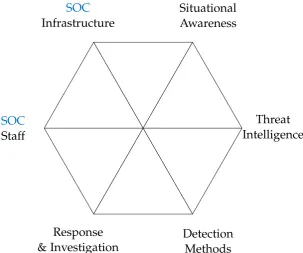
We address the challenges by presenting a holistic approach to security operations: the conceptual model forData Driven Se-curity Operations. The model consists of the following six facets:
Situational Awareness, Threat Intelligence, Detection Methods, Re-sponse & Investigation, SOC Staff and SOC Infrastructure. All six facets revolve around data and together they show how people, processes and technology are all crucial elements to perform security operations driven by data and analysis thereof.
We also created an instantiation of the conceptual model for
Data Driven Security Operations. SOCs can use it to assess their current status with respect to the six facets. Performing the assessment increases the tangibility of the model, lays the foun-dation for discussing the effectiveness of the SOCand provides recommendations for improvement.
Both the model and the instantiation were evaluated with five professionals. Although the interviewees indicated that they liked the instantiation, several improvement points were identified. The conceptual model itself was received positively.
"If you think technology can solve your security problems, then you don’t understand the problems and you
don’t understand the technology."
— Bruce Schneier
A C K N O W L E D G E M E N T S
This thesis is the result of my graduation project at the Univer-sity of Twente as part of the Kerckhoffs Institute. Completing this final step to attain my masters degree would not have been possible without the support of many people.
First I would like to thank my supervisors, Dr. Robin Aly and Dr. Maarten Everts for supporting me during the time of per-forming this thesis. They provided me with useful feedback and advice to get me back on and keep me on track of what I experienced as a rollercoaster ride.
I would also like to thank the interview participants, and the organizations they work for, for devoting some of their time to discuss my work. Their contribution was not only critical to the completion of my work, but also inspiring and fun.
Finally I would like to thank my family, friends and other peo-ple for supporting me in many ways whenever necessary, help-ing me cope with the obstacles I faced and providhelp-ing me with opportunities to disperse my attention from the subject at hand.
Enschede,6June2016
Herman Slatman
C O N T E N T S
1 introduction 1
1.1 Context . . . 1
1.2 Problem Statement . . . 3
1.3 Research Questions . . . 4
1.4 Approach . . . 4
1.5 Structure . . . 5
2 background 7 2.1 Security Operations . . . 7
2.1.1 An Introduction to Information Security . . . 7
2.1.2 The Security Operations Center . . . 11
2.2 Analytics . . . 16
2.2.1 Descriptive Analytics . . . 17
2.2.2 Predictive Analytics . . . 17
2.2.3 Prescriptive Analytics . . . 17
2.3 Design Science Research and Process . . . 18
2.3.1 Philosophical Assumptions of Design Science Research . . . 20
2.3.2 Problem Identification & Motivation . . . 20
2.3.3 Objectives of a Solution . . . 22
2.3.4 Design & Development . . . 22
2.3.5 Demonstration . . . 22
2.3.6 Evaluation . . . 22
2.3.7 Communication . . . 28
3 research strategy 29 3.1 Problem Identification & Motivation. . . 29
3.2 Proposing a Solution . . . 29
3.3 Development . . . 31
3.4 Demonstration & Evaluation . . . 31
3.5 Selecting an Evaluation Method . . . 32
3.6 Communication . . . 33
4 problem formalization 35 4.1 Problem Analysis . . . 35
4.2 Problem Justification . . . 41
5 artifact requirements 43
5.1 Conceptual Model Requirements . . . 43
5.2 Instantiation Requirements . . . 44
6 design of artifacts 47 6.1 Conceptual Model . . . 47
6.1.1 Data Driven Security Operations Summarized. . . 47
6.1.2 Formalizing the Conceptual Model . . . 57
6.1.3 Description of Data Driven Security Operations . . 60
6.2 Instantiation . . . 60
6.2.1 Design Rationale . . . 61
6.2.2 Implementation . . . 62
7 evaluation 67 7.1 Interview Setup . . . 67
7.2 Interview Results . . . 68
7.3 Evaluation of the Research Strategy . . . 75
7.4 Discussion . . . 78
8 conclusion 79 9 future work 83 a interview transcriptions 87 DIST . . . 87
MSSP1 . . . 97
CERT . . . 104
MSSP2 . . . 110
b facet descriptions 121 c model synopsis 131 d assessment 135 e report recommendations 141 acronyms 153 index 157 bibliography 159 Peer-reviewed Literature . . . 159
L I ST O F F I G U R E S
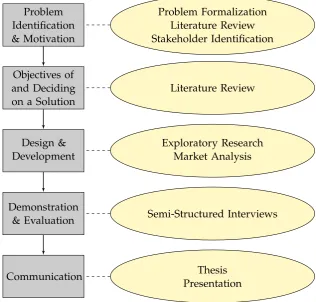
Figure1.1 Research strategy based on the Design Science
Research Process (DSRP) . . . 5
Figure2.1 Relationships among the elements of risk . . . . 11
Figure2.2 Steps for evaluation with Focus Groups (FGs). . . 27
Figure3.1 Research strategy based on theDSRP . . . 30
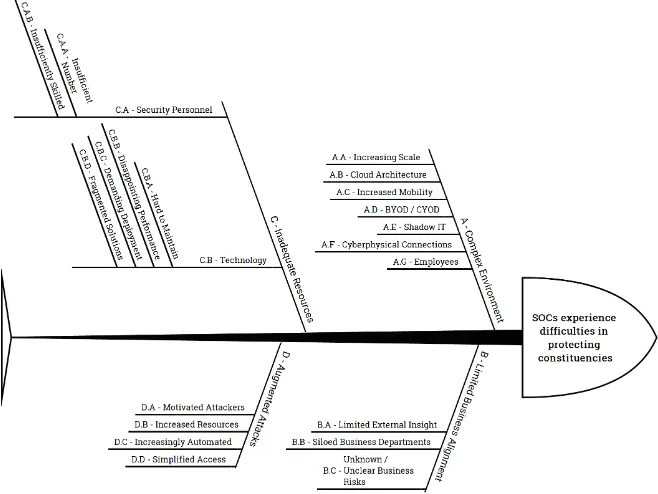
Figure4.1 Security Operations Center (SOC) challenges . . . 36
Figure6.1 Model forData Driven Security Operations . . . . 48
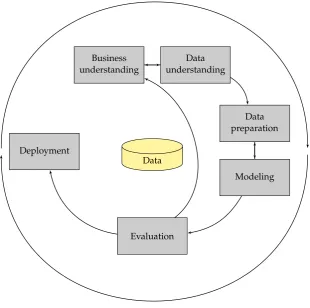
Figure6.2 CRISP-DMreference model for data mining . . . . 52
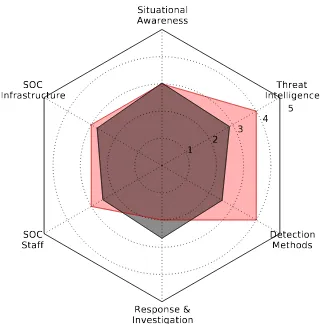
Figure6.3 Example radar chart . . . 65
Figure6.4 Example management summary part of report . . 66
Figure7.1 Perceived versus scored levels . . . 74
L I ST O F TA B L E S
Table2.1 Design Science Research (DSR) guidelines . . . . 19Table2.2 Philosophical assumptions of research perspectives 21 Table2.3 Design Science (DS) evaluation methods . . . 24
Table2.4 Focus Group (FG) guidelines by Gibson and Arnott 26 Table5.1 Model requirements . . . 43
Table5.2 Instantiation requirements . . . 45
Table7.1 Interview participants . . . 69
Table7.2 Code co-occurrence table . . . 72
Table7.3 DSRguidelines by Hevner et al. [47] . . . 75
Table D.1 Likert ratings used in the assessment . . . 135
Table D.2 Questions for Situational Awareness facet . . . . 136
Table D.3 Questions for Threat Intelligence facet . . . 137
Table D.4 Questions for Detection Methods facet . . . 138
Table D.5 Questions for Response & Investigation facet . . 138
Table D.6 Questions forSOCStaff facet . . . 139
Table D.7 Questions forSOCInfrastructure facet . . . 140
1
I N T R O D U C T I O N
This chapter introduces the context of this research and the problem we address in Sections 1.1 and 1.2 respectively. The research questions and a summary of the research strategy are described thereafter in Sections 1.3 and 1.4. The structure of this thesis is provided in Section1.5.
1.1 context
According to the yearly report on data breaches by Verizon, the number of confirmed occurrences of data breaches grew with55% between2013and2014[140,141]. Despite substantial investments in preventive security controls, rated by Hewlett-Packard (HP) at86% of the total budget available for security [117], organizations are still getting breached on a daily basis [141]. Employing preventive controls and relying solely on those is clearly not sufficient to stop attackers in their tracks.
To make matters worse, current detective security controls fail to detect persistent threats resulting in a median detec-tion time of 205 days [122]. In exceptional cases threats man-age to stay below the radar for over 15 years before being detected [135]. The massive number of malware instances re-ported by Dell [114], to a very large extent unique to an orga-nization1
, further strengthens the need for more advanced de-tection methods. Current detective security controls, typically implemented in systems like Intrusion Detection Systems (IDSs) and usually based on either predefined rules or anomaly detec-tion [35], also seem to fall short in practice nowadays.
In the continuous arms race between attackers and defend-ers a clear need for a data-driven approach to security has emerged in the minds of defenders [137]. Rudimentary im-plementations to realize this approach already exist: so-called Security Information and Event Management (SIEM) solutions.
A SIEM solution provides organizations with the technological
1 37 million malware instances, of which 70-90% are unique [141], meaning
having a distinct hash or signature.
means to aggregate event data produced by various security devices, network infrastructure, systems and applications [119]. Although SIEM technology has matured over the past couple of years, many deployments failed to realize their full poten-tial [111]. Some of the causes include integration of theSIEM in complex Information Technology (IT) environments and techni-cal and operational skill deficiencies within the Security Oper-ations Center (SOC) [70, p. xxv - xxi]. SIEM solutions also rely on pre-defined use cases to be implemented in order to detect threats and it can be hard to acquire the data necessary to op-erationalize the use cases.
The Security Operations Center (SOC) consists of the peo-ple, processes and technology to protect the organization and mitigate risks to critical business assets. It sits at the core of an organization and is responsible for security operations and Computer Network Defense (CND). The team of security an-alysts is organized to execute a single mission including de-tecting, analyzing, responding to, reporting on and preventing cybersecurity incidents [106, p. 9]. In order to fulfill their mis-sion, the SOC delivers a number of services and capabilities to its constituency. These capabilities can be categorized in real-time analysis, intel and trending, incident analysis and response, ar-tifact analysis, tool support, audit, assessments and outreach [106, p. 19 - 24]. Most of these are increasingly being supported by technology and data. One example is audit logging: logs of human interactions with information systems are analyzed in order to assess who may have had access to certain data. The
SOC’s mission is largely supported by technology and may fail when analysts do not have access to the right tools and data at the right time and in the right context. This motivates the need for the right technological solutions to be in place within the
SOC.
1.2 problem statement 3
threats2
. It could provide SOCs with the means to effectively
collect all sorts of security relevant data and process it in an ef-ficient and manageable way. Furthermore, it could also provide analysts with the technologies they need to extract actionable intelligence from the collected data, accomplished by perform-ing advanced pattern minperform-ing and ad-hoc analysis over com-plete data sets. The newly acquired intelligence can lead to improved situational awareness, a shorter time between breach and detection, improved investigation capabilities and reduced residual risk. The ultimate goal of SA could be described as providing organizations with the means to analyze their data to uncover potential security incidents in a more timely manner and to become more nimble in an ever-changing IT landscape that is constantly under attack by emerging threats.
1.2 problem statement
Organizations are facing an increased number of ever-evolving threats targeting their primary business processes. The rapid developments in the current threat landscape introduce com-plex challenges related to scalable and high speed data inte-gration and analysis, threat detection and incident response, severely taxing operators in the Security Operations Center (SOC). Without adequate technology at their disposal and processes in place, security operators are not capable of protecting their con-stituency.
By bridging between current detective controls, including Intrusion Detection Systems (IDSs) and Security Information and Event Management (SIEM) systems, and the possibilities provided by new technologies for processing complex data, the concept of Security Analytics (SA) certainly sounds promising.
It may provide security operators working within the SOCwith the tools they need to perform divergent types of analysis in a more efficient and effective manner and to detect threats earlier.
SA is still an ill-defined concept however, and current solu-tions marketed asSAare presented like a panacea that solves all of the security challenges an organization faces. Organizations keep buying and deploying boxes without being able to assess grounded evidence of the actual performance of these solutions
2 Definition based on the definition ofBig Databy the International Data
while vendors continue to make exorbitant claims. A complete view of what it takes to deploy and operate SA solutions, as characterized in Section 1.1, within a SOC is missing however, which is the problem we address in this thesis.
1.3 research questions
The goal of this research is to improve the understanding Se-curity Operations Centers (SOCs) have about Security Analyt-ics (SA) and what it takes to deploy and operate this class of
solutions. We argue that an integrated approach consisting of people, process and technology is necessary and we present this holistic approach as Data Driven Security Operations. In ad-dition to providing organizations with a complete overview of the concept, they need to be able to assess themselves within
Data Driven Security Operations to relate the concept to their practice and to increase their understanding of what it means to them specifically. To this end, we will answer the following research questions:
1. What challenges doSOCs face nowadays?
2. What should aSOCtake into account to address these challenges?
3. How canSOCs position themselves within
Data Driven Security Operations?
1.4 approach
mar-1.5 structure 5
Problem Identification & Motivation
Objectives of and Deciding on a Solution
Design & Development
Demonstration & Evaluation
Communication
Problem Formalization Literature Review Stakeholder Identification
Literature Review
Exploratory Research Market Analysis
Semi-Structured Interviews
[image:17.595.109.426.75.377.2]Thesis Presentation
Figure 1.1: The research strategy based on theDSRP. Applicable re-search methods have been added. Adapted from Peffers et al. [77].
keting material and technical manuals. In addition to the con-ceptual model, we also created an instantiation of the model which Security Operations Centers (SOCs) can use to position themselves within the conceptual model. A rigorous evalua-tion of how the research strategy was setup and executed can be seen in Table7.3, which is based on the guidelines by Hevner et al. [47]. More details about the Design Science Research Pro-cess (DSRP) andDSRcan be found in Section2.3and an extended version of the approach taken for performing this research is described in Chapter 3.
1.5 structure
expla-nation of Design Science Research (DSR) and its philosophical
assumptions in sections2.3and2.3.1respectively. It is followed by an extensive description of our research strategy in Chap-ter 3. Chapter 4 describes our investigation of the challenges that Security Operations Centers (SOCs) face nowadays, which
together form the basis for setting the requirements for address-ing the problem in Chapter5. Chapter6then describes the pro-cess of constructing the conceptual model and an instantiation and shows the final results, addressing the challenges faced by
2
B A C KG R O U N D
In this chapter we present material related to the context of our research. In Section 2.1we give a description of security opera-tions and Security Operaopera-tions Centers (SOCs). It is followed by an explanation of analytics in Section 2.2. Finally, we describe the Design Science Research Process (DSRP), a relatively novel approach to and process for designing artifacts using scientific methods, which we used to perform our research.
2.1 security operations
In this chapter we describe what security operations are and elaborate on what Security Operations Centers (SOCs) consist of. We will first give a basic overview of Information Security, because the main reason that SOCs exist in the first place is the need to secure Information Systems (IS) using a centralized
ap-proach. The parts thereafter describe what a SOC consists of, how it is organized, the types of work that are typically per-formed by the SOCstaff and how these activities are supported by technology.
2.1.1 An Introduction to Information Security
Many organizations heavily rely on Information and Communi-cation Technology (ICT) in order to execute their primary busi-ness processes effectively and efficiently. The types of appli-cations of ICT are ample and diverse, ranging from running administrative software on single desktops, through maintain-ing mainframes supportmaintain-ing an enormous number of employ-ees and applications, to deploying web applications on a global scale. Disruption of these primary business processes may re-sult in undesired losses to the organization, which is the prime reason to protect these processes and the Information Systems (IS) supporting them.
Information Security is defined as the preservation of Confi-dentiality, Integrity and Availability of information [51], often
scribed as the CIAtriad. It is realized by protecting information
and information systems from unauthorized access, use, disclo-sure, disruption, modification and destruction [87]. In addition to the security goals defined in the CIA triad the definition of Information Security can be extended with the properties de-scribed by Cherdantseva and Hilton [18]. They describe au-thenticity & trustworthiness, accountability, auditability, non-repudiation and privacy as additional properties.
The goal of Information Security as a whole is to ensure that security incidents from the past cannot occur (again) within an organization or will at least have a lower impact when they do occur. This goal is realized by establishing, implementing, monitoring and reviewing a suitable set of security controls, the process of which is supported by development of a Information Security Management System (ISMS) according to the specifica-tion in ISO 27001 [53]. The process described in ISO 27002 provides a systematic approach to develop and maintain the
ISMS [52]. The ISMSin turn provides a holistic view of the risks the organization is subject to by taking into account all aspects of Information Security. We describethreats,threat agents,assets,
vulnerabilities, countermeasuresand risks, the aspects to consider in Information Security, in the following subsections. The rela-tionships between all of the aspects are shown in Figure 2.1.
Threats and Threat Agents
A comprehensive definition of a threat in an Information Secu-rity context is given by the National Institute of Standards and Technology (NIST) [87].
A threat is:
any circumstance or event with the potential to ad-versely impact organizational operations (including mission, functions, image, or reputation), organiza-tional assets, individuals, other organizations, [. . . ] through an information system via unauthorized ac-cess, destruction, disclosure, modification of infor-mation, and/or denial of service.
Threats can either be accidental or intentional. Examples of the former include natural disasters and technical malfunctions, whereas the latter can be exemplified by criminal organizations and malicious insiders. We focus on the latter in this thesis.
2.1 security operations 9
Security (ENISA) threat landscape report that was published in
January2015[127]. The report lists15threats that organizations faced during 2014 in order of occurrence together with their trends since December 2013. Malicious code, web(application) attacks andbotnetswere the threats that manifested themselves the most during the analysis period. In addition to the trends in the current Information Technology (IT) landscape, the report also describes the trends that threats are subject to in emerging areas which include Mobile Computing (MC) and the Internet-of-Things (IoT).
Athreat agent(orthreat source) is an entity that can be catego-rized by intent and method that can manifest an intentional or accidental threat to happen [87]. Casey, Koeberl, and Vishik [15] present a threat agent classification that can be used to clas-sify threat agents. They discuss the Intel Threat Agent Library (TAL) [110], which addresses the historical problems of informa-tion about threats being fragmented, sensainforma-tionalized and lack-ing standard definitions. The TALdefines a total of21different threat agents, classified as either being non-hostile or hostile and ranging from employees to government spies. Identifica-tion of threats is based on the following 8attributes: intent,
ac-cess, outcome, limits, resources, skills, objective and visibility. Hav-ing a clear view of which threat agents are targetHav-ing the orga-nization is an important piece of information to take the right decisions when allocating security budget.
Threat analysis.is a method that can help to determine which threats an organization faces or will face in the future. It can be described as the examination of threat sources against system vulnerabilities to determine the threats for a particular system in a particular operational environment [90]. It is an important part in the process of threat modeling that results in a model that can be used to evaluate the security posture of a system [92] or that can help when performing security tests against applica-tions [94] or networks [69].
Vulnerabilities and Countermeasures
to. Countermeasures are the actions, devices, procedures, tech-niques or other measures that meet or oppose (i.e., counter) a threat, a vulnerability, or an attack by eliminating or preventing it, by minimizing the harm it can cause, or by discovering and reporting it so that corrective action can be taken [74].
Assets and Risk
Risk is the net negative impact of the exercise of a vulnera-bility, considering both the probability and the impact of oc-currence [89]. The proper management of risks within an or-ganization is a crucial step in the process of getting better at managing IT related risks. Security Risk Management (SRM) is a process that takes into account the identification of risks, assessments of risk and taking actions to reduce the risks an organization is subject to [89]. The ultimate goal of SRM is to improve the security of business critical IT systems within the organization, accurately estimating and budgeting IT security related purchases and supporting management in decisions re-garding authorization of ITsystems.
A so-called Security Risk Assessment (SRA) can be conducted to determine the risks an organization is subject to. A SRA is an objective analysis of the effectiveness of the current security controls that protect an organization’s assets and a determina-tion of the probability of losses to those assets [63]. The goal of an SRA ultimately is to reduce operational cyber security risks, which have been defined by Cebula and Young [16] as:
The operational risks to information and technology assets that have consequences affecting the confiden-tiality, availability or integrity of information or in-formation systems.
2.1 security operations 11
Assets
Threats to
Risk Countermeasures
Threat Agents
Owners
value to
to reduce
impose
wish to abuse and/or damage give rise to
that increase
[image:23.595.94.432.66.306.2]wishto minimize
Figure 2.1: Relationships among the elements of risk. Adapted from ISO15408-1:2009[50].
as described in the report: actions of people, system and tech-nology failures, failed internal processes and external events. The taxonomy also relates to other standards that describe cyber risk, including the Federal Information Security Management Act (FISMA) [1], NIST 800-53 [87] and the Operationally Critical Threat, Asset, and Vulnerability Evaluation (OCTAVE) methodol-ogy [11]. Continuous awareness of and adaptations to theSRM framework are necessary in order to account for changes in the organizations ITarchitecture and threat landscape.
2.1.2 The Security Operations Center
Organizations are increasingly being targeted by various threats. To get a better understanding of and counter these threats they can deploy a SOC, which sits at the core of an organization in
terms of information security and provides Computer Network Defense (CND). The SOC consists of the people, processes and technology to protect the organization and mitigate risks to crit-ical business assets. Its mission can be described as detecting, analyzing, responding to, reporting on and preventing cybersecurity incidents [106, p. 9]. As part of this mission the SOC delivers a number of services and capabilities which can be categorized as
anal-ysis and response, artifact analysis, tool support, audit, assessments
and outreach [106, p. 19 - 24]. Most of these services, capabili-ties and, consequently, theSOC’s mission, are increasingly being supported by technology and data. Having access to the right tools and data at the right time and in the right context is thus critical for theSOC staff to successfully fulfill their mission.
In the following subsections we describe in more detail what theSOCand its members do and what type of technology is typically deployed to perform these activities.
Security Operations, Services and Capabilities
Despite the fact that a clear definition for the SOC exists (see: Section 2.1.2), this does not mandate what a SOC should con-sist of and what it should do in reality. The number and types of services and capabilities offered by a SOC can differ
consid-erably across constituencies, which are ultimately what make up the SOC. These services and capabilities can be logically categorized in three categories: reactive, proactive and quality management services [103].
Reactive services are initiated after a trigger such as an alert or a request. Examples of these include the report of a com-promised host by an employee, a publication about a severe vulnerability or an alert generated by a Security Information and Event Management (SIEM) system. Depending on the crit-icality of the alert or request, the SOC has to triage the alert or escalate it to a security incident. Security incidents have to be analyzed, contained, eradicated and recovered from [22]. This also includes acquiring forensic evidence and analysis thereof, such as performing reverse engineering of malware [103] and disk or memory forensics [106]. Active coordination of all the aforementioned services is also part of the mission of the SOC.
rele-2.1 security operations 13
vant when assessing these specific threats and which are most important to focus on [106].
Services in the quality management category can be quite varied and are not necessarily performed only by the SOC or its sole responsibility. Often the members of the SOC have to
cooperate with other business departments, such as IT opera-tions and the legal department. Development and configura-tion of software and hardware used for performing the reac-tive and proacreac-tive services is only one of their tasks [106], but critical nonetheless. Because of their broad and deep subject matter expertise theSOCcan also provide input to risk analyses and business continuity planning, perform product evaluations and security consulting services and deliver security awareness training and education [103].
The number and variety of tasks that a SOC may perform, some of which we have mentioned above, is indeed daunting. A SOC should not focus on performing all of these all at once,
but gradually increase the number of capabilities and services offered and only when enough resources are available. It is better to get good at only a number of the tasks than to be mediocre or bad at all or some of them [103, 106]. Another factor that plays a role in what specific services and capabilities are offered by a SOC is the organization of the SOC, which we describe next.
SOC Organization
As described before, the organization of aSOC largely depends
on what services and capabilities are offered. Usually the SOC
consists of several tiers in which specific duties are performed [139]. The first tier may handle most of the events and alerts that can be handled fairly quickly during the initial triage. When a cer-tain alert needs more time to be addressed, second tier analysts can take over the analysis, which can optionally be followed by tier three analysis. In some situations more specialist knowl-edge is necessary, such as for performing memory, disk or mal-ware forensics. Other services and capabilities are less reactive, and may need constant or regular attention, which can be pro-vided by specificSOCmembers or during times that require less ad-hoc analyses.
Below we list several possible organizational models aSOC
number of employees and the number of connections to exter-nal entities.
• A group of IT operators, potentially dispersed within an organization, operating under a single person to address security alerts and incidents.
• A small to medium, internal SOC, offering security moni-toring and triage in two distinct tiers, but outsourcing the handling of security incidents to external parties having the right capabilities.
• A coordinating SOC managing multiple locations of the same constituency, which can be geographically dispersed, for example. Its role is to provide strategical and opera-tional guidance and is less focused on the tactical level.
• A full-fledged internal SOC offering most of the services and capabilities itself. In some cases the expertise from external parties can be called upon. This type of SOC is
typically operated in larger organizations.
• When offering all or some of the aforementioned services and capabilities as a service, the SOCcan be characterized as a Managed Security Services Provider (MSSP). Many smaller organizations are starting to realize the value of security monitoring and incident response, but do not have the resources to setup their own SOC and will pro-cure certain services via an MSSP.
These are only some of the possibilities of how a SOC can
be organized with respect to its constituency. TheSOCitself can also be organized in different ways, such as a flat and wide lay-out, distributed over several parts of the constituency or hybrid forms of these [118].
SOC Infrastructure
2.1 security operations 15
as IT operations, when setting up the infrastructure to deliver services and capabilities. An example of this is setting up and configuring logging on a proxy server, for which approval may be necessary.
There exist numerous technologies that enable the SOC to perform its job. The first element is the collector platform, which consists of several types of sensors and storage nodes. Sensors are entities that read aspects from one or more IT sys-tems, extract knowledge and generate data. Three characteris-tics that define what data can be generated by a sensor are its
vantage, domainandaction[26]. The vantage point defines what part of an IT environment a sensor is able to sense, such as a sin-gle networking link, a sinsin-gle host, or all of the network traffic. What kind of information a sensor can provide is determined by its domain, such as networks, hosts or services. The third characteristic that defines a sensor is what action it performs upon sensing its environment, which can consist of simply re-porting the data, signaling an event based on aggregated data, actively acting upon its environment or a combination of these. Some examples of sensors in the information security domain include anti-virus (AV), (application) firewalls, Intrusion Detec-tion Systems (IDSs), Intrusion Prevention Systems (IPSs) and net-work taps.
All of the data that is produced by the sensors has to be collected and stored. There are many aspects that one has to take into account when creating a (centralized) storage for se-curity data. The first is the format of the data that is going to be collected. Many types of sensors provide the notion of a log: a collection of event records, that together describe the sequential occurrence of events within an environment [8], such as state changes and user interaction. Good logs contain complete in-formation that describe what, where, when, and why a certain event happened and who is involved [21, 26].
Another type of data to be collected includes alert data, which may seem similar to events, but should be seen as a sep-arate type of data that demands actions to be taken. SOCs can also benefit a lot from looking at network capture data with various fidelity, ranging from packet meta data, flow data to full packet capture, to improve their visibility into complex net-works [79].
years the volume of data collected from the environment for security monitoring and incident response has grown dramati-cally, which resulted in the need for scalable technologies to be in place for data storage and processing. The prime example of secure, centralized (log) storage in recent years is the SIEM,
which provides analysts with a view of the IT environment as reported by all the logs that are configured to forward their contents to theSIEM system. In addition to providing a central-ized log storage facility, SIEMsystems also can be used to create
aggregated alerts resulting from running correlation rules on logs, alerts and network data. Depending on the quality of the correlation rules, these alerts ideally are a strong indicator of a security incident that has taken place which needs triage. In addition to providing security analysts with the necessary data for performing real-time security monitoring, the (centralized) storage of logs, alerts and networking data is also helpful when performing incident response and forensic investigations.
2.2 analytics
Analytics is the extensive use of data, statistical and quantita-tive analysis, explanatory as well as predicquantita-tive models and fact-based management to drive decisions and actions [32]. Within organizations it facilitates the realization of business objectives through reporting of data to analyze trends, creating predic-tive models to foresee future problems and opportunities and analyzing/optimizing business processes to enhance organiza-tional performance [33]. The latter is measured by Key Perfor-mance Indicators (KPIs).
Business Intelligence (BI) is a set of technologies and
pro-cesses that use data to understand and analyze business per-formance [32]. Business Analytics (BA) comprises both ana-lytics and BI. The term has been used in organizations to de-scribe the usage of information technology to gain insight from data. It applies to software products, analytics solutions areas, consultancy services, outsourced business processes and hard-ware [65].
2.2 analytics 17
of organizations can be categorized along five axes: access to information, insight, foresight, business agility and strategic align-ment [65].
The following subsections describe the three types of ana-lytics that are recognized. Each successive type described in the following subsections is increasingly sophisticated in terms of analysis approach and typically results in greater insights for improved decision making.
2.2.1 Descriptive Analytics
Descriptive Analytics (DsA) is the start of the process of gaining new insights from data. It is a set of technologies and pro-cesses used to understand and analyze the current business performance [65]. The main objective is to find out what has happened in the first place, why that event could take place and what is happening right now in order to learn from these events and identify business opportunities and problems [33]. Typical application ofDsAandBIsoftware results in dashboards and sales reports, often including visualizations of the avail-able data. DsA is useful to gain insight from past events and provides organizations with a single view of the past, which allows them to focus on the present and future [65].
2.2.2 Predictive Analytics
Predictive Analytics (PdA) is a step up from DsA and is about turning data into actionable and valuable intelligence. It is about taking historical data and understanding thereof to pre-dict future events [65]. It can be applied to both offline (e.g. de-termining similar groups of customers for targeted mail) and real-time processes, such as detecting fraudulent transactions. Various techniques can be applied using PdA, including
statis-tical analysis, predictive modeling and simulation as well as forecasting.
2.2.3 Prescriptive Analytics
algorithms to determine a set of alternative decision options based on business objectives, requirements and an arbitrary number of constraints. The decision options include the pos-sible implications of the option being taken which can be eval-uated by an analyst in order to take the best option for the organization at that point in time. Techniques applied in PsA
include optimization, expert systemsand simulation.
2.3 design science research and
process
Research in the Information Systems (IS) discipline can be de-scribed as a form of research where theory from other dis-ciplines is applied in a practical context [77]. Amongst oth-ers, these disciplines include Computer Science, Social Sciences and Mathematics. Theories from these disciplines are applied to solve problems that organizations are struggling with at a technological level, which revolve around Information Techno-logy (IT) systems a lot of the time.
The term Design Science (DS) was first coined by Buckmin-ster Fuller [9] who defined it as a systematic form of designing. This concept was further elaborated on by Simon [85], who per-suaded the creation and development of methodical and for-malized methodologies for design. Research in IS design has seen much debating on how research should be conducted from a philosophical view, relying on epistemology, theoretical per-spectives and methods from natural sciences research [29,102], which are aimed at trying to find the truth. In contrast, De-sign Science Research (DSR) tries to determine what is effective instead [47].
2.3 design science research and process 19
Table 2.1: DSRguidelines by Hevner et al. [47].
Guideline Description
Design as an Artifact DSRmust produce a viable artifact in the form of a construct, a model, a method, or an instan-tiation.
Problem Relevance The objective of DSR is to develop
technology-based solutions to important and relevant busi-ness problems.
Design Evaluation The utility, quality, and efficacy of a design arti-fact must be rigorously demonstrated via well-executed evaluation methods.
Research Contributions EffectiveDSRmust provide clear and verifiable contributions in the areas of the design artifact, design foundations, and/or design methodolo-gies.
Research Rigor DSR relies upon the application of rigorous methods in both the construction and evalua-tion of the design artifact.
Design as a Search Process
The search for an effective artifact requires uti-lizing available means to reach desired ends while satisfying laws in the problem environ-ment
Communication of Research
2.3.1 Philosophical Assumptions of Design Science Research Philosophical assumptions determine to a large extent how novel research is performed. They consist of ontology, epistemology and axiology. Vaishnavi and Kuechler [98] define these three concepts as listed below:
• Ontology is the study that describes the nature of reality.
What is real and what is not, i.e., what do we think is real? What is a fundamental element, and what is of derivative nature?
• Epistemology is the study that explores the nature of
knowledge. Where does our knowledge come from and how certain can we be about the knowledge that we have?
• Axiology is the study of values. What values does an
individual or group hold, why and what creates value for an individual or group?
Vaishnavi and Kuechler [97] also show that DS is based on multiple, contextually situated, alternative world-states. Knowl-edge is acquired by way of creation within a certain context. Circumscription of knowledge is employed to increase under-standing, meaning and certainty. The creation of one or more artifacts, continuous improvement thereof and understanding the problem, contribute value. Development is the core of the methodology employed in DSR. Table2.2shows the relation be-tween philosophical assumptions ofDSRand includes two other research perspectives for reference.
Peffers et al. [77] were the first to develop a mental model and conceptual process for carrying out DS in the IS discipline. They present the Design Science Research Process (DSRP), which consists of six activities and is based on existing scientific liter-ature on DS in the IS discipline. Their approach is consistent with the DS processes in other disciplines, provides a nominal process for conducting research and presents a mental model for what the output of research conducted using DS looks like.
A salient detail: the resulting DSRP was developed using the
DSRP itself.
2.3.2 Problem Identification & Motivation
valua-2.3 design science research and process 21
Table 2.2:Philosophical assumptions of three research perspectives. Adapted from Gregg, Kulkarni, and Vinzé [44] by Vaish-navi and Kuechler [97].
Research Perspective
Basic Belief Positivist Interpretive Design
Ontology A single reality. Knowable, proba-bilistic Multiple real-ities, socially constructed Multiple, contex-tually situated alternative world-states. Socio-technologically enabled Epistemology Objective;
dis-passionate. De-tached observer of truth Subjective, i.e., values and knowledge emerge from the researcher-participant interaction Knowing through mak-ing: objectively constrained con-structed within context. Iterative circumscription reveals meaning Methodology Observation; quantitative, statistical Participation; qualitative. Hermeneuti-cal, dialectical Developmental. Measure artifac-tual impacts on the composite system
tion of a solution helps the researcher and target audience to ac-tively pursue the solution. A complete understanding, gained by e.g., systematic inquiry and deep analysis, of the problem and its complexity is necessary to successfully complete this phase.
2.3.3 Objectives of a Solution
A solution always has the objective of solving a specific pro-blem. This activity includes specifying what a possible solution should accomplish, i.e., its requirements. The extent to which the solution solves a problem can either be quantitatively or qualitatively (or a combination of both) be determined along several axes. Knowledge about the problem and existing solu-tions is a necessity.
2.3.4 Design & Development
This activity revolves around determining the desired functio-nality of an artifact. After the desired functiofunctio-nality has been determined, the architecture of the solution and actually cre-ating the artifact is realized by moving from the objectives of a solution towards design of solution elements. This step re-quires knowledge about possible solution elements and how to apply them.
2.3.5 Demonstration
The produced artifact is demonstrated in order to determine its efficacy. There are several ways to determine the efficacy, in-cluding experimentation, simulation or a case study. It requires knowledge about the artifact and a sufficiently sized group of stakeholders in order to complete successfully.
2.3.6 Evaluation
2.3 design science research and process 23
to the objectives of the solution. Results of the evaluation can be used to improve the created artifact in an iterative approach. Table 2.3 lists various evaluation methods that can be applied inDSR.
Evaluation Methods in Design Science Research
As described in section 2.3.6, evaluation is a critical compo-nent of any research process. There has been much debate on what evaluation methods can be used effectively in DSR. Table 2.3 shows there are numerous evaluation methods that can be applied. Some frameworks for selecting and validat-ing which evaluation method to choose have been proposed in the past [23, 78]. Venable, Pries-Heje, and Baskerville [99] extended the framework by [78] and used it to construct a
Four-Step Method forDSREvaluation Research Design.
Venable, Pries-Heje, and Baskerville [99] adapted the 2x2 -matrix presented by [78] to construct aDSREvaluation Strategy Selection Framework. This resulted in two matrices, the first of which describes a mapping from relevant contextual aspects to the framework by Pries-Heje, Baskerville, and Venable [78]. These aspects include the purpose of the evaluation, the type and characteristics of the evaluand3
and specific goals of the evaluation itself. The second matrix ([99, fig. 3]) describes a mapping from the framework by Pries-Heje, Baskerville, and Venable [78] to existing evaluation methods.
Focus Groups for Evaluation of Design Science Research
In the social sciences, Focus Groups (FGs) are a widely used research method for evaluation [42]. It can be described as an interview with multiple respondents participating and interact-ing with each other, discussinteract-ing a specific topic [57]. They are designed to collect data through group interaction [71]. As a research method, they are located between participant observa-tion and semi-structured interviews [42]. They are aimed at getting an understanding of the topic from the different per-spectives participants have by analyzing the data that results from the discussion. Gibson and Arnott [42] argue that because of the interaction between participants, they can become more creative and can address the topic in greater depth when com-pared to normal interviews: novel ideas may emerge from the interaction. Two main types of FG exist: Exploratory Focus
Table 2.3:DSevaluation methods by Hevner et al. [47].
Method Examples
Observational Case Study: Study artifact in depth in business environ-ment
Field Study: Monitor use of artifact in multiple projects Analytical Static analysis: Examining structure of artifact for static
qualities (e.g. complexity)
Architecture analysis: Study fit of artifact into technical IS architecture
Optimization: Demonstrate inherent optimal properties of artifact or provide optimality bounds on artifact behavior
Dynamic analysis: Study artifact in use for dynamic quali-ties (e.g. performance)
Experimental Controlled experiment: Study artifact in controlled environ-ment for qualities (e.g. usability)
Simulation: Execute artifact with artificial data
Testing Functional (Black Box) Testing: Execute artifact interfaces to discover failures and identify defects
Structural (White Box) Testing: Perform coverage testing of some metric (e.g. execution paths) in the artifact imple-mentation
Descriptive Informed Argument: Use information from the knowledge base (e.g. relevant research) to build convincing argument for the artifacts utility
2.3 design science research and process 25
Groups (EFGs) and Confirmatory Focus Groups (CFGs) [95], the former of which is used during the design cycle whereas the latter is used at the final evaluation stage of the research.
Tremblay, Hevner, and Berndt [95] present a couple of rea-sons why focus groups are an adequate method for evaluation inDSR based on [88, p. 42]:
1. Flexibilityis provided by the open format of the FG.
2. Rich data can be gathered from the natural interaction
among participants in theFG.
3. New ideasand opinions emerge from the interaction among
participants which usually stay uncovered in normal inter-views.
4. Direct interactionbetween researcher and participants
al-lows him to clarify elements of the artifact that remain unclear from the initial explanation.
Figure 2.2 shows the steps typically taken in succession when performing a FG. It is adapted from Tremblay, Hevner, and Berndt [95, fig. 1], which is based on [71,88]. Performing a
FGis certainly not an easy task to accomplish, and thus Gibson and Arnott [42] have created six general guidelines for perform-ing these. Their guidelines are listed in table 2.4.
Strengths and Weaknesses of Focus Groups
Earlier we listed several properties of FGs that render it an ad-equate evaluation method for DSR. These included a flexible approach, rich data gathering, naturally emerging ideas and direct interaction between participants and researcher(s). The fact that several participants give their opinion on the utility, quality, and efficacy of a design artifact during a single session makes FGs a time-effective method for performing evaluations. A natural tendency to consensus amongst the participants re-lieves the researcher from extracting this consensus himself.
Table 2.4:FGguidelines by Gibson and Arnott [42].
Guideline Description
Maintain Focus Focus groups are not random discussions, they can solicit concentrated amount of focused data. Stay on track, plan questions carefully.
Be Selective with Participants and Group Size
Participants are rarely selected randomly. Avoid power differentials between participants. There must be a suitable level of diversity to encourage discussion, however too much will cause conflict amongst partic-ipants. Group size will be dictated by the research focus, participant availability, and level of participant involvement in the topic. Six to eight is a good starting point, but accommodate no-shows.
Be Selective with Facilitator
Choose a facilitator familiar with the research area, particularly if it’s specialized. They should be person-able, and be able to think on their feet. They should guide the group, not control it.
Be Prepared Carefully plan the facilitator guide, early effort will im-prove data collection through focused questions. Send any documents early, have spare copies ready on the day. Use fail-safes when technology is involved. Using assistants reduces the researcher’s workload, allowing them to focus on key matters. Be familiar with the lit-erature on focus groups, learn from the mistakes of others.
Allow Flexibility Adapt to change, allow participants to take discussion in useful directions, the facilitator guide should allow for this. Pursue unanticipated questions or comments. Remove questions already covered between groups. Take a Pragmatic
Approach to Analysis
2.3 design science research and process 27
Formulate Research
Problem
Identify Sample Frame
Identify Moderator
Develop and Pre-Test a
Question-ing Route
Recruit Participants
Conduct Focus Group
Analyze and Interpret Data
Report Results Identify
Moderator
[image:39.595.133.393.63.338.2]Conduct Focus Group
Figure 2.2: Steps to be performed in an evaluation by FG. Adapted from [95, fig. 1].
together, these factors increase the risk of insufficient or inade-quate results emerging from the evaluation.
Interviews for Evaluation of Design Science Research
The interview is a qualitative research method that has been used extensively in the social sciences [71]. It can also be used in DSR for data collection at several stages of the research
Strength and Weakness of Interviews
Performing an interview generally results in richer data when compared to conducting ordinary questionnaires, because more complex issues can be discussed and elaborated on [57] and the researcher has more control over what can be discussed [71]. An interview also allows for discussing novel ideas and arti-facts [30, p. 179]. The time planning and preparation for an interview takes is likely to be much smaller than for preparing
FGs. On the other hand, data analysis may take more time [57] because of the number of interviews necessary to perform. The data collected may not represent the truth because of a possi-bly limited, inaccurate or incomplete view an interviewee has of the subject [30, p. 179]. The quality of the data collected by interviews can also vary because of differing perspectives and knowledge level of the interviewees [42]. Additionally, the researcher has to take care not to introduce (personal) biases during the interview and the analysis thereof which will likely affect the end results [30, p. 179].
2.3.7 Communication
3
R E S E A R C H ST R AT E GY
We employed Design Science Research (DSR) as a guide when
constructing the strategy for this research. This chapter de-scribes how DSR was applied in our research, starting with which research methods were applied during each of the core activities of DSR. The six core activities, Problem Identification
& Motivation, Objectives of a Solution, Design & Development, Evaluation (usually combined with Demonstration) and Com-munication [77] and the accompanying research methods, are shown in Figure 3.1. The following subsections describe the re-search methods that were applied at each step and why these were chosen.
3.1 problem identification &
moti-vation
In Section 1.2 we already stated that Security Operations Cen-ters (SOCs) face many obstacles when defending their constituen-cies from threats. We performed an extensive literature survey to get a more complete view of the difficulties and their causes to get a better understanding of them. Many security solution vendors are offering many different types of solutions claiming to solve some or all of the SOC’s challenges, but their products are hard to assess with respect to their effectiveness. We ob-served that many of the difficulties faced by SOCs involve data and analysis thereof in some way, but simply deploying solu-tions offered by vendors is not enough. We determined that a complete view of the factors and a holistic approach to apply Security Analytics (SA) within a SOCwas missing.
3.2 proposing a solution
Because we wanted to transfer knowledge and make people un-derstand the bigger picture that we envision, we proposed to
Problem Identification & Motivation
Objectives of and Deciding on a Solution
Design & Development
Demonstration & Evaluation
Communication
Problem Formalization Literature Review Stakeholder Identification
Literature Review
Exploratory Research Market Analysis
Semi-Structured Interviews
[image:42.595.177.498.220.525.2]Thesis Presentation
3.3 development 31
create a conceptual model for what we call: Data Driven Security Operations. The model had to capture whatData Driven Security Operations consists of, which is what our interpretation of im-plementing Security Analytics (SA) entails, and should give Security Operations Centers (SOCs) and the more general
pub-lic a complete view of the concept too. In order to provide
SOCsa more concrete view of the concept, we also proposed to create an instantiation. Through interaction with the instanti-ation SOCs will be able to better relate the model to their own
practice. The second use of the instantiation is for the SOC to position itself within the field ofData Driven Security Operations, i.e. how well is the SOC doing? How can it become more effective?
We created a set of requirements for both the model and the instantiation that describe what the resulting solution should provide based on the literature review.
3.3 development
The first parts of our research required us to do extensive liter-ature research of many subjects, including security operations, analytics and identifying stakeholders. In our research we also assessed the current state of the market to get an idea of the di-rection security vendors are heading. The sources for these in-cluded scientific literature, market research reports, marketing material provided by vendors and general web sources, includ-ing weblogs and webinars, conference material, survey results and finally, a limited amount of practical experience with se-curity solutions and analytics platforms. The instantiation is based on the research performed for creating the conceptual model. Its format is based on existing methods and has been constructed according to generally-known formats for question-naires. Both the conceptual model and the instantiation are constructed while adhering to the requirements that were set in advance.
3.4 demonstration & evaluation
for-mal evaluation of the artifact [47]. In this thesis we first describe how an appropriate and valid evaluation method was selected, followed by a description of the chosen evaluation method. We also evaluated the entire research strategy using the guidelines published by Hevner et al. [47], which is described in Table7.3.
3.5 selecting an evaluation method
The evaluation of this research involves a socio-technical model as well as an instantiation as artifacts. The type of evaluation can be described as an implementation evaluation[104, ch.5], be-cause it is performed after the artifacts have been constructed and not during the design process. A certain level of conflict may exist, because of the fact that different types of stakehold-ers are involved in the evaluation and communication of the artifact. Because of time constraints, the amount of data that could be gathered and analyzed is limited. Furthermore, the quality of the gathered data is an important aspect. Because of these reasons, a qualitative evaluation method is preferred.
Given the properties described above the research would fall in the Ex Post / Naturalistic quarter of the 2 x 2 - matrix shown in [99, fig. 2]. An Ex Post evaluation is performed after an artifact has been created and can be described as an imple-mentation evaluation Because of the socio-technical nature of the artifact and real users being involved, both Focus Groups (FGs) and one-on-one interviews have been considered as ade-quate evaluation methods. Although performing a FGseemed more time-effective than performing one-on-one interviews, the risks associated with performing anFGwere considered too big
3.6 communication 33
3.6 communication
4
P R O B L E M
F O R M A L I Z AT I O N
In this chapter we describe how we formalized of the problem, the first activity in Design Science Research (DSR). This step serves several purposes, including getting a deep understand-ing of what the actual problem is and what it is caused by. We the justify the need for this research by defining a specific research problem and the value of a solution. We also show stakeholders why this research is necessary.
4.1 problem analysis
Security Operations Centers (SOCs) face numerous obstacles when protecting their constituencies and fulfilling their day-to-day operations. We performed a study of the factors that play a role in the impediments they face, which we summarized in the diagram shown in Figure 4.1. Most of the sources we con-sulted were either whitepapers, gray literature, analyst reports or the results from surveys, because these are more timely and closer to the practice of SOCs than scientific literature on these
subjects. We categorized the diverse set of causes of difficulties into four main categories. The following subsections describe the four categories listed below:
(A) An increasingly complex IT environment,
(B) Limited business alignment,
(C) Inadequate resources with respect to people and techno-logy, and finally,
(D) Ever-evolving adversaries and corresponding attacks.
Complex IT Environment
The first main type of difficulty for the SOC is related to the scale and complexity of the IT environment. During the past couple of years the IT environment within organizations has
Figure 4.1: Ishikawa diagram showing the causes of difficulties the
SOCfaces while trying to protect their constituency.
changed tremendously in diverse areas. Due to increased mo-bility, larger scale IT usage, usage of cloud infrastructure and employees having the ability to bring their own devices to work,
SOCshave less visibility into and control over what happens on the network and who has access to which business assets at what time [120, 124, 129, 136, 137, 138]. Employees are also in-creasingly making use of software not being provided by their employer for various reasons, such as for improving work per-formance, faster collaboration and better communication. This phenomenon is called Shadow IT. The main risks of Shadow IT
have been identified by Silic and Back [84] and include the de-crease or loss of data integrity and information leakage.
4.1 problem analysis 37
Another development that has attracted interest and will likely cause theSOChard times is the increase of industrial and ambient networks getting connected to the business network. These so-called cyber-physical systems, which control physical systems using computers, range from the Internet-of-Things to Industrial Control System (ICS), and can include anything from controlling devices to Supervisory Control and Data Acquisi-tion (SCADA). These systems use all kinds of lesser known, sometimes proprietary, protocols and hardware, requiring spe-cific technologies and specialist knowledge to protect [12, 46, 82], which theSOC often does not have available.
Adversaries are also increasingly making use of the intri-cacies of IT environments and legitimate applications to gain access, move laterally and persist within an organization. Keep-ing an IT environment up to date and configured appropriately is absolutely necessary to prevent it from falling prey to older or newly exploited CVEs. Usage of the Windows operating sys-tem, the Microsoft Office suite and its macro functionality is commonplace and necessary in enterprises of all sizes, but the latter is also frequently abused for infecting victims [113], for example through phishing. Using other built-in scripting lan-guages, including VBScript, JScript and PowerShell, which are available natively in Windows, adversaries can execute virtu-ally any type of action.
Limited Business Alignment
Inadequate Resources
The lack of resources, both in terms of technology as well as in human resources, summarizes the next big category of dif-ficulties we observed. The first technological aspect is the fact that it was not economically feasible to store and retain a large amount of security data in the past [7,13]. Related to this is the fact that it was nearly impossible to process the amounts of data already being stored [7, 13,136] and the fact that new, unstruc-tured, data sources were also increasingly being added to con-ventional databases [13,132]. As a consequence, many Security Information and Event Management (SIEM) deployments were crippled from the start by not feeding them with the right data to increase visibility [131]. Integrating SIEMtechnology is hard because they are relatively inflexible [124, 132], many point so-lutions have to be integrated and they require a lot of knowl-edge to implement properly. Furthermore, deploying a SOC
and its infrastructure is no sinecure: it takes continuous tun-ing of many knobs in order to make it run effectively [111] and out-of-the-box detection functionality is often insufficient [112]. Analysts are often flooded with alerts that are the result from in-adequate default detection method configuration(s) [7], which often also contain numerous false positives [129], resulting in even poorer performance. Security of the SOC infrastructure is another aspect to get right. Reliability and availability of SIEM
deployments has been a problem in the past [7, 13].
In addition to the various technological shortcomings, it is also generally well-known that SOCs are having a hard time employing enough people with the right skills. Staff deficien-cies have been reported about numerous times by Enterprise Strategy Group (ESG) [130, 131], Enterprise Management As-sociates (EMA) [124] and the SysAdmin, Audit, Network, and Security (SANS) Institute [137, 138].
Augmented Attacks
The fourth category of difficulties we observe in modern SOCs
meta-4.1 problem analysis 39
morphic malware are also commonplace, and packers offer ad-versaries the capability to avoid detection [3, 66]. Distributed Denial of Service (DDoS) attacks can easily be bought on the same underground marketplaces [108] or even via so-called booters [80], which can be described as commercial services of-fering "stress-testing" capabilities. Other ofof-ferings include bot-net rentals, bulletproof hosting and consulting services offering help in setting up various attacks [66]. No reliable statistics are available regarding the size and growth of cybercrime [25], but what is certainly true, is that it has evolved considerably over the years [24, 66].
Adversaries are also increasingly making use of automated attacks targeting low-hanging fruit. Scanning and analyzing the entire Internet IP space has become easily feasible with the emergence of software like ZMap [37] and platforms such as Shodan4
and Censys [38]. Crawling the web for websites run-ning on outdated software or making use of insecure exten-sions is performed constantly. Platforms such as WordPress and Magento are under constant scrutiny by attackers employ-ing scannemploy-ing tools such as WPScan5
, Nikto6
and Arachni7
to find exploitable websites and applications. The successful com-promise of a website can have various consequences, such as leakage of confidential data, becoming part of a botnet or other attacker infrastructure and serving exploit kits. Sometimes the compromise can lead to the attacker gaining full control over a machine, which can then serve as a stepping stone in a more advanced attack.
Advanced Persistent Threats (APTs) are at the other end of the spectrum. They can be described as adversaries having access to significant resources and expertise [49]. APTs have specific targets and clear objectives, are well-organized, have access to many resources, operate over prolonged periods of time and use stealth and evasion techniques during their at-tacks [17]. These characteristics define what APTs and distin-guish them from more traditional threats. Attacks by APTs are
often called campaigns due to their long-term, multi-phase ap-proach, which can be mapped to a construct called thecyber kill chain [48]. Various tactics used by APTs along the stages of the kill chain include spear-phishing, social engineering, watering hole
4 https://www.shodan.io/
5 https://wpvulndb.com/
6 https://cirt.net/Nikto2
attacks, data hidingand the use of so-called patched and un-known zero-day vulnerabilities [17]. They may employ custom malware that is not detected by conventional detection meth-ods, such as anti-virus and Intrusion Detection System (IDS), but they will also make use of run-off-the-mill and/or modified malicious code in their attacks. The Energetic Bear campaign is an example of this: the APT used "generally available" exploit kits for infecting their targets, but deployed custom backdoors for persistence and remote access [134].
Summary of Challenges
As described in the previous sections, SOCs face numerous dif-ficulties when protecting their constituencies. As illustrated in Figure 4.1, the difficulties that arise are very diverse and can be categorized into four categories. These categories are the increasingly complex IT environment, limited business align-ment, inadequate resources with respect to people and techno-logy, and finally, ever-evolving adversaries and attacks. The complexity of the IT environment makes it hard to see and un-derstand what is currently going on within an organization’s IT infrastructure. SOCs also often don’t know what the most criti-cal systems are and suffer from a limited view of the business processes. Not having enough resources in terms of technology and people make it next to impossible to protect against ever-evolving threats. All of these aspects make it harder for a SOC
to adequately protect its constituency.
![Figure 2.1: Relationships among the elements of risk. Adapted fromISO 15408-1:2009 [50].](https://thumb-us.123doks.com/thumbv2/123dok_us/9799139.481119/23.595.94.432.66.306/figure-relationships-elements-risk-adapted-fromiso.webp)
![Table 2.2: Philosophical assumptions of three research perspectives.Adapted from Gregg, Kulkarni, and Vinzé [44] by Vaish-navi and Kuechler [97].](https://thumb-us.123doks.com/thumbv2/123dok_us/9799139.481119/33.595.97.433.220.619/philosophical-assumptions-research-perspectives-adapted-kulkarni-vinze-kuechler.webp)
![Figure 2.2: Steps to be performed in an evaluation by FG. Adaptedfrom [95, fig. 1].](https://thumb-us.123doks.com/thumbv2/123dok_us/9799139.481119/39.595.133.393.63.338/figure-steps-performed-evaluation-fg-adaptedfrom-fig.webp)