Online Multitask Learning for Machine Translation Quality Estimation
Jos´e G. C. de Souza(1,2), Matteo Negri(1), Elisa Ricci(1), Marco Turchi(1) (1)FBK - Fondazione Bruno Kessler, Via Sommarive 18, 38123 Trento, Italy
(2) University of Trento, Italy
{desouza,negri,eliricci,turchi}@fbk.eu
Abstract
We present a method for predicting ma-chine translation output quality geared to the needs of computer-assisted translation. These include the capability to: i) con-tinuously learn and self-adapt to a stream of data coming from multiple translation jobs, ii) react to data diversity by ex-ploiting human feedback, andiii)leverage data similarity by learning and transferring knowledge across domains. To achieve these goals, we combine two supervised machine learning paradigms, online and multitask learning, adapting and unifying them in a single framework. We show the effectiveness of our approach in a re-gression task (HTER prediction), in which online multitask learning outperforms the competitive online single-task and pooling methods used for comparison. This in-dicates the feasibility of integrating in a CAT tool a single QE component capa-ble to simultaneously serve (and continu-ously learn from) multiple translation jobs involving different domains and users. 1 Introduction
Even if not perfect, machine translation (MT) is now getting reliable enough to support and speed-up human translation. Thanks to this progress, the work of professional translators is gradually shifting from full translation from scratch to MT post-editing. Advanced computer-assisted trans-lation (CAT) tools1 provide a natural framework for this activity by proposing, for each segment in a source document, one or more suggestions ob-tained either from a translation memory (TM) or from an MT engine. In both cases, accurate mech-anisms to indicate the reliability of a suggestion
1See for instance the open source MateCat tool (Federico et al., 2014).
are extremely useful to let the user decide whether to post-edit a given suggestion or ignore it and translate the source segment from scratch. How-ever, while scoring TM matches relies on standard methods based on fuzzy matching, predicting the quality of MT suggestions at run-time and without references is still an open issue.
This is the goal of MT quality estimation (QE), which aims to predict the quality of an automatic translation as a function of the estimated number of editing operations or the time required for man-ual correction (Specia et al., 2009; Soricut and Echihabi, 2010; Bach et al., 2011; Mehdad et al., 2012). So far, QE has been mainly approached in controlled settings where homogeneous train-ing and test data is used to learn and evaluate static predictors. Cast in this way, however, it does not fully reflect (nor exploit) the working conditions posed by the CAT framework, in which:
1. The QE module is exposed to a continuous stream of data. The amount of such data and the tight schedule of multiple, simultaneous translation jobs prevents from (theoretically feasible but impractical) complete re-training procedures in a batch fashion and advocate for continuous learning methods.
2. The input data can be diverse in nature. Con-tinuous learning should be sensitive to such differences, in a way that each translation job and user is supported by a reactive model that is robust to variable working conditions. 3. The input data can show similarities with
previous observations. Continuous learning should leverage such similarities, so that QE can capitalize from all the previously pro-cessed segments even if they come from dif-ferent domains, genres or users.
While previous QE research disregarded these challenges or addressed them in isolation, our
work tackles them in a single unifying framework based on the combination of two paradigms: on-lineandmultitasklearning. The former provides continuous learning capabilities that allow the QE model to be robust and self-adapt to a stream of potentially diverse data. The latter provides the model with the capability to exploit the similari-ties between data coming from different sources. Along this direction our contributions are:
• The first application of online multitask learning to QE, geared to the challenges posed by CAT technology. In this framework, our models are trained to predict MT quality in terms of HTER (Snover et al., 2006).2
• The extension of current online multitask learning methods to regression. Prior works in the machine learning field applied this paradigm to classification problems, but its use for HTER estimation requires real-valued predictions. To this aim, we propose a new regression algorithm that, at the same time, handles positive and negative transfer and performs online weight updates.
• A comparison between online multitask and alternative, state-of-the-art online learning strategies. Our experiments, carried out in a realistic scenario involving a stream of data from four domains, lead to consistent results that prove the effectiveness of our approach.
2 Related Work
In recent years, sentence-level QE has been mainly investigated in controlled evaluation sce-narios such as those proposed by the shared tasks organized within the WMT workshop on SMT (Callison-Burch et al., 2012; Bojar et al., 2013; Bojar et al., 2014). In this framework, systems trained from a collection of (source,target,label) instances are evaluated based on their capability to predict the correct label3 for new, unseen test items. Compared to our application scenario, the shared tasks setting differs in two main aspects.
2The HTER is the minimum edit distance between a trans-lation suggestion and its manually post-edited version in the [0,1] interval. Edit distance is calculated as the number of edits (word insertions, deletions, substitutions, and shifts) di-vided by the number of words in the reference.
3Possible label types include post-editing effort scores (e.g. 1-5 Likert scores indicating the estimated percentage of MT output that has to be corrected),HTERvalues, and post-editingtime(e.g.seconds per word).
First, the data used are substantially homogeneous (usually they come from the same domain, and tar-get translations are produced by the same MT sys-tem). Second, training and test are carried out as distinct, sequential phases. Instead, in the CAT en-vironment, a QE component should ideally serve, adapt to and continuously learn from simultaneous translation jobs involving different MT engines, domains, genres and users (Turchi et al., 2013).
These challenges have been separately ad-dressed from different perspectives in few recent works. Huang et al. (2014) proposed a method to adaptively train a QE model for document-specific MT post-editing. Adaptability, however, is achieved in a batch fashion, by re-training anad hocQE component for each document to be trans-lated. The adaptive approach proposed by Turchi et al. (2014) overcomes the limitations of batch methods by applying an online learning protocol to continuously learn from a stream of (potentially heterogeneous) data. Experimental results suggest the effectiveness of online learning as a way to ex-ploit user feedback to tailor QE predictions to their quality standards and to cope with the heterogene-ity of data coming from different domains. How-ever, though robust to user and domain changes, the method is solely driven by the distance com-puted between predicted and true labels, and it does not exploit any notion of similarity between tasks (e.g.domains, users, MT engines).
On the other way round, task relatedness is suc-cessfully exploited by Cohn and Specia (2013), who apply multitask learning to jointly learn from data obtained from several annotators with differ-ent levels of expertise and reliability. A similar ap-proach is adopted by de Souza et al. (2014a), who apply multitask learning to cope with situations in which a QE model has to be trained with scarce data from multiple domains/genres, different from the actual test domain. The two methods signifi-cantly outperform both individual single-task (in-domain) models and single pooled models. How-ever, operating in batch learning mode, none of them provides the continuous learning capabilities desirable in the CAT framework.
3 Online Multitask Learning for QE
Online learning takes place in a stepwise fash-ion. At each step, the learner processes an instance (in our case a feature vector extracted from source and target sentences) and predicts a label for it (in our case an HTER value). After the prediction, the learner receives the “true” label (in our case the ac-tual HTER computed from a human post-edition) and computes alossthat indicates the distance be-tween the predicted and the true label. Before go-ing to the next step, the weights are updated ac-cording to the suffered loss.
Multitask learning (MTL) aims to simultane-ously learn models for a set of possibly related tasks by exploiting their relationships. By do-ing this, improved generalization capabilities are obtained over models trained on the different tasks in isolation (single-task learning – STL). The relationships among tasks are provided by a shared structure, which can encode three types of relationships based on their correlation (Zhang and Yeung, 2010). Positive correlation indicates that the tasks are related and knowledge transfer should lead to similar model parameters. Negative correlation indicates that the tasks are likely to be unrelated and knowledge transfer should force an increase in the distance between model parame-ters. No correlation indicates that the tasks are in-dependent and no knowledge transfer should take place. In our case, a task is a set of (instance, la-bel) pairs obtained from source sentences coming from different translation jobs, together with their translations produced by several MT systems and the relative post-editions from various translators. In this paper the terms task and domain are used interchangeably.
Early MTL methods model only positive cor-relation (Caruana, 1997; Argyriou et al., 2008), which results in a positive knowledge transfer be-tween all the tasks, with the risk of impairing each other’s performance when they are unrelated or negatively correlated. Other methods (Jacob et al., 2009; Zhong and Kwok, 2012; Yan et al., 2014) cluster tasks into different groups and share knowledge only among those in the same cluster, thus implicitly identifying outlier tasks. A third class of algorithms considers all the three types of relationships by learning task interaction via the covariance of task-specific weights (Bonilla et al., 2008; Zhang and Yeung, 2010). All these
meth-ods, however, learn the task relationships in batch mode. To overcome this limitation, recent works propose the “lifelong learning” paradigm (Eaton and Ruvolo, 2013; Ruvolo and Eaton, 2014), in which all the instances of a task are given to the learner sequentially and the previously learned tasks are leveraged to improve generalization for future tasks. This approach, however, is not ap-plicable to our scenario as it assumes that all the instances of each task are processed as separate blocks.
In this paper we propose a novel MTL algorithm for QE that learns the structure shared by differ-ent tasks in an online fashion and from an input stream of instances from all the tasks. To this aim, we extend the online passive aggressive (PA) al-gorithm (Crammer et al., 2006) to the multitask scenario, learning a set of task-specific regression models. The multitask component of our method is given by an “interaction matrix” that defines to which extent each encoded task can “borrow” and “lend” knowledge from and to the other tasks. Op-posite to previous methods (Cavallanti et al., 2010) that assume fixed dependencies among tasks, we propose to learn the interaction matrix instance-by-instance from the data. To this aim we follow the recent work of Saha et al. (2011), extending it to a regression setting. The choice of PA is mo-tivated by practical reasons. Indeed, by provid-ing the best trade-off between accuracy and com-putational time (He and Wang, 2012) compared to other algorithms such as OnlineSVR (Parrella, 2007), it represents a good solution to meet the de-mand of efficiency posed by the CAT framework.
3.1 Passive Aggressive Algorithm
PA follows the typical online learning proto-col. At each round t the learner receives an in-stance, xt ∈ Rd (dis the number of features),
and predicts the label yˆt according to a function
parametrized by a set weights wt ∈ Rd. Next,
the learner receives the true labelyt, computes the
-insensitive loss,`, measuring the deviation
be-tween the predictionyˆt and the true label yt and
updates the weights. The weights are updated by solving the optimization problem:
wt= arg minw CP A(w) +Cξ (1) s.t. `(w,(xt, yt))≤ξandξ≥0 where CP A(w) = 12||w−wt−1||2 and` is the
`(w,(x, y)) =
(
0, if|y−w·x| ≤ |y−w·x| −, otherwise (2)
The loss is zero when the absolute difference be-tween the prediction and the true label is smaller or equal to , and grows linearly with this differ-ence otherwise. Theparameter is given as input and regulates the sensitivity to mistakes. The slack variableξacts as an upper-bound to the loss, while the C parameter is introduced to control the ag-gressiveness of the weights update. HighCvalues lead to more aggressive weight updates. However, when the labels present some degree of noise (a common situation in MT QE), they might cause the learner to drastically change the weight vector in a wrong direction. In these situations, settingC to small values is desirable. As shown in (Cram-mer et al., 2006), a closed form solution for the weights update in Eq.1 can be derived as:
wt=wt−1+sgn(yt−yˆt)τtxt (3)
withτt= min(C,||x`tt||2)and`t=`(w,(xt, yt)).
3.2 Passive Aggressive MTL Algorithm
Our Passive Aggressive Multitask Learning (PAMTL) algorithm extends the traditional PA for regression to multitask learning. Our approach is inspired by the Online Task Relationship Learning algorithm proposed by Saha et al. (2011) which, however, is only defined for classification.
The learning process considers one instance at each round t. The random sequence of instances belongs to a fixed set ofKtasks and the goal of the algorithm is to learnKlinear models, one for each task, parametrized by weight vectors wet,k, k ∈ {1, . . . , K}. Moreover, the algorithm also learns a positive semidefinite matrixΩ ∈ RK×K,
mod-eling the relationship among tasks. Algorithm 1 summarizes our approach. At each round t, the learner receives a pair (xt,it) wherext∈Rdis an
instance andit∈ {1, . . . , K}is the task identifier.
Each incoming instance is transformed to a com-pound vectorφt= [0, . . . ,0,xt,0, . . . ,0]∈RKd.
Then, the algorithm predicts the HTER score cor-responding to the labelyˆby using the weight vec-tor wet. The weight vector is a compound vector
e
wt = [wet,1, . . . ,wet,K] ∈ RKd, where wet,k ∈
Rd, k ∈ {1, . . . , K}. Next, the learner receives
the true HTER label y and computes the loss `
(Eq. 2) for roundt.
Algorithm 1PA Multitask Learning (PAMTL) Input:instances fromKtasks, number of roundsR >0, >0,C >0
Output:wandΩ, learned afterTrounds Initialization:Ω= 1
K×Ik,w=0 fort = 1 to Tdo
receive instance (xt,it) computeφtfromxt predict HTERyˆt= (we
T t ·φt) receive true HTER labelyt compute`t(Eq. 2)
computeτt= min(C,||φ`tt||2)
/* update weights */ e
wt=wet−1+sgn(yt−yˆt)τt(Ωt−1⊗Id) −1φ
t
/* update task matrix */
ift > Rthen
updateΩtwith Eq. 6 or Eq. 7 end if
end for
We propose to update the weights by solving:
e
wt,Ωt= argmin
w,Ω0 CMT L(w,Ω) +Cξ+D(Ω,Ωt−1)
s.t. `(w,(xt, yt))≤ξ, ξ≥0 (4)
The first term models the joint dependencies between the task weights and the interaction matrix and it is defined as CMT L(w,Ω) =
1
2(w −wet)TΩ⊗(w−wet), where Ω⊗ = Ω⊗
Id. The function D(·) represents the
diver-gence between a pair of positive definite matri-ces. Similar to (Saha et al., 2011), to define
D(·) we also consider the family of Bregman di-vergences and specifically the LogDet and the Von Neumann divergences. Given two matri-ces X,Y ∈ Rn×n, the LogDet divergence is DLD(X,Y) = tr(XY−1) − log|XY−1| − n,
while the Von Neumann divergence is computed asDV N(X,Y) =tr(XlogX−YlogY−X+Y). The optimization process to solve Eq.4 is per-formed with an alternate scheme: first, with a fixed Ω, we computew; then, givenw we opti-mize forΩ. The closed-form solution for updating
w, which we derived similarly to the PA update (Crammer et al., 2006), becomes:
e
wt=wet−1+sgn(yt−yˆt)τt(Ωt−1⊗Id) −1φ
t (5) In practice, the interaction matrix works as a learn-ing rate when updatlearn-ing the weights of each task. Similarly, following previous works (Tsuda et al., 2005), the update steps for the interaction matrix
Ωcan be easily derived. For the Log-Det diver-gence we have:
while for the Von Neumann we obtain:
Ωt= exp(logΩt−1−ηsym(WfTt−1Wft−1)) (7)
where Wft ∈ Rd×K is a matrix obtained by
column-wise reshaping the weight vector wet,
sym(X) = (X +XT)/2 and η is the learning
rate parameter. The sequence of steps to compute
Ωtandwetis summarized in Algorithm 1.
Impor-tantly, the weight vector is updated at each round t, whileΩtis initialized to a diagonal matrix and
it is only computed afterRiterations. In this way, at the beginning, the tasks are assumed to be in-dependent and the task-specific regression mod-els are learned in isolation. Then, afterRrounds, the interaction matrix is updated and the weights are refined considering tasks dependencies. This leads to a progressive increase in the correlation of weight vectors of related tasks. In the follow-ing, PAMTLvn refers to PAMTL with the Von
Neumann updates and PAMTLld to PAMTL with
LogDet updates.
4 Experimental Setting
In this section, we describe the data used in our ex-periments, the features extracted from the source and target sentences, the evaluation metric and the baselines used for comparison.
Data. We experiment with English-French datasets coming from Technology Entertainment Design talks (TED), Information Technology manuals (IT) and Education Material (EM). All datasets provide a set of tuples composed by (source, translation and post-edited translation).
The TED dataset is distributed in the Trace cor-pus4 and includes, as source sentences, the sub-titles of several talks spanning a range of topics presented in the TED conferences. Translations were generated by two different MT systems: a phrase-based statistical MT system and a commer-cial rule-based system. Post-editions were col-lected from four different translators, as described by Wisniewski et al. (2013).
The IT manuals data come from two language service providers, henceforth LSP1 and LSP2. The ITLSP1 tuples belong to a software manual translated by an SMT system trained using the Moses toolkit (Koehn et al., 2007). The post-editions were produced by one professional
trans-4http://anrtrace.limsi.fr/trace_
postedit.tar.bz2
Domain No. Vocab. Avg. Snt.
tokens Size Length
[image:5.595.325.507.62.187.2]TED src 20,048 3,452 20 TED tgt 21,565 3,940 22 ITLSP1src 12,791 2,013 13 ITLSP1tgt 13,626 2,321 13 EM src 15,327 3,200 15 EM tgt 17,857 3,149 17 ITLSP2src 15,128 2,105 13 ITLSP2tgt 17,109 2,104 14
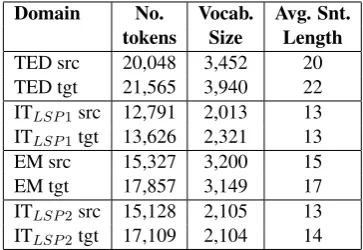
Table 1: Data statistics for each domain.
lator. TheITLSP2 data includes a software man-ual from the automotive industry; its source sen-tences are translated with an adaptive proprietary MT system and post-edited by several profes-sional translators. The EM corpus is also pro-vided byLSP2and regards educational material (e.g. courseware and assessments) of various text styles. The translations and post-editions are pro-duced in the same way as forITLSP2. TheITLSP2 and the EM datasets are derived from the Au-todesk Post-Editing Data corpus.5
In total, we end up with four domains (TED, ITLSP1, EM and ITLSP2), which allows us to eval-uate the PAMTL algorithm in realistic conditions where the QE component is exposed to a contin-uous stream of heterogeneous data. Each domain is composed by 1,000 tuples formed by:i)the En-glish source sentence,ii)its automatic translation in French, andiii)a real-valued quality label ob-tained by computing the HTER between the trans-lation and the post-edition with the TERCpp open source tool.6
Table 1 reports some macro-indicators (num-ber of tokens, vocabulary size, average sentence length) that give an idea about the similarities and differences between domains. Although they con-tain data from different software manuals, similar vocabulary size and sentence lengths for the two IT domains seem to reflect some commonalities in their technical style and jargon. Larger values for TED and EM evidence a higher lexical variability in the topics that compose these domains and the expected stylistic differences featured by speech transcriptions and non-technical writing. Over-all, these numbers suggest a possible
dissimilar-5https://autodesk.app.box.com/
Autodesk-PostEditing
6http://sourceforge.net/projects/
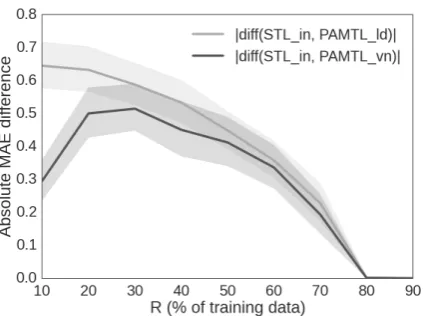
Figure 1: Validation curves for theRparameter.
ity between ITLSP1and ITLSP2and the other two domains, which might make knowledge transfer across them more difficult and QE model reactiv-ity to domain changes particularly important.
Features. Our models are trained using the 17 baseline features proposed in (Specia et al., 2009), extracted with the online version of the QuEst fea-ture extractor (Shah et al., 2014). These feafea-tures take into account the complexity of the source sen-tence (e.g. number of tokens, number of transla-tions per source word) and the fluency of the trans-lation (e.g. language model probabilities). Their description is available in (Callison-Burch et al., 2012). The results of previous WMT QE shared tasks have shown that these features are particu-larly competitive in the HTER prediction task.
Baselines. We compare the performance of PAMTL against three baselines: i)pooling mean, ii) pooling online single task learning (STLpool)
and iii) in-domain online single task learning (STLin). The pooling mean is obtained by
assign-ing a fixed prediction value to each test point. This value is the average HTER computed on the entire pool of training data. Although assigning the same prediction to each test instance would be useless in real applications, we compare against the mean baseline since it is often hard to beat in regression tasks, especially when dealing with heterogeneous data distributions (Rubino et al., 2013).
The two online single task baselines implement the PA algorithm described in Section 3.1. The choice of PA is to make them comparable to our method, so that we can isolate more precisely the contribution of multitask learning. STLpool results
[image:6.595.76.288.61.219.2]are obtained by a single model trained on the entire
Figure 2: Learning curves for all the domains, computed by calculating the mean MAE (↓) of the four domains.
pool of available training data presented in random order. STLin results are obtained by separately
training one model for each domain. These repre-sent two alternative strategies for the integration of QE in the CAT framework. The former would al-low a single model to simultaneously support mul-tiple translation jobs in different domains, without any notion about their relations. The latter would lead to a more complex architecture, organized as a pool of independent, specialized QE modules.
Evaluation metric. The performance of our re-gression models is evaluated in terms of mean ab-solute error (MAE), a standard error measure for regression problems commonly used also for QE (Callison-Burch et al., 2012). The MAE is the av-erage of the absolute errorsei =|yˆi−yi|, where
ˆ
yi is the prediction of the model andyi is the true
value for the ith instance. As it is an error
mea-sure, lower values indicate better performance (↓).
5 Results and Discussion
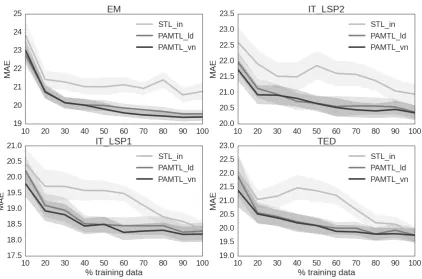
correla-Figure 3: Learning curves showing MAE (↓) variations for each domain.
tion matrix of the task weights.
For the evaluation, we uniformly sample 700 in-stances from each domain for training, leaving the remaining 300 instances for test. The training sets of all the domains are concatenated and shuffled to create a random sequence of points. To inves-tigate the impact of different amounts of data on the learning process, we create ten subsets of 10 to 100% of the training data. We optimize the pa-rameters of all the models with a grid search pro-cedure using 5-fold cross-validation. This process is repeated for 30 different train/test splits over the whole data. Results are presented with 95% confi-dence bands.7
Analysis of the R parameter. We empirically study the influence of the number of instances re-quired to start updating the interaction matrix (the R parameter in Algorithm 1). For that, we per-form a set of experiments where R is initialized with nine different values (expressed as percent-age of training data). Figure 1 shows the val-idation curves obtained in cross-valval-idation over the training data using the LogDet and Von Neu-mann updates. The curves report the performance (MAE) difference between STLin and PAMTLld
7Confidence bands are used to show whether performance differences between the models are statistically significant.
(black curve) and STLin and PAMTLvn (grey
curve). The higher the difference, the better. The PAMTLvn curve differs from PAMTLld one only
for small values ofR(<20), showing that the two divergences are substantially equivalent. It is in-teresting to note that with only 20% of the training data (R = 20), PAMTL is able to find a stable set of weights and to effectively update the inter-action matrix. Larger values ofRharm the perfor-mance, indicating that the interaction matrix up-dates require a reasonable amount of points to reli-ably transfer knowledge across tasks. We use this observation to set R for our final experiment, in which we evaluate the methods over the test data.
Evaluation on test data. Global evaluation re-sults are summarized in Figure 2, which shows five curves: one for each baseline (Mean, STLin,
STLpool) and two for the proposed online
mul-titask method (PAMTLvn and PAMTLld). The
curves are computed by calculating the average MAE achieved with different amounts of data on each domain’s test set.
The results show that PAMTLldand PAMTLvn
[image:7.595.89.512.60.339.2]sizes we experimented with. The maximum im-provement over the baselines (+1.3 MAE) is ob-served with 60% of the training data when com-paring PAMTLvn with STLin. Even if this is the
best baseline, also with 100% of the data its results are not competitive and of limited interest with re-spect to our application scenario (the integration of effective QE models in the CAT framework). In-deed, despite the STLindownward error trend, it’s
worth remarking that an increased competitive-ness would come at the cost of: i)collecting large amounts of annotated data andii)integrating the model in a complex CAT architecture organized as a pool of independent QE components. Under the tested conditions, it is also evident that the al-ternative strategy of using a single QE component to simultaneously serve multiple translation jobs is not viable. Indeed, STLpool is the worst
perform-ing baseline, with a constant distance of around 2 MAE points from the best PAMTL model for al-most all the training set sizes. The fact that, with increasing amounts of data, the STLpool
predic-tions get close to those of the simple mean base-line indicates its limitations to cope with the noise introduced by a continuous stream of diverse data. The capability to handle such stream by exploit-ing task relationships makes PAMTL a much bet-ter solution for our purposes.
Per-domain analysis. Figure 3 shows the MAE results achieved on each target domain by the most competitive baseline (STLin) and the proposed
on-line multitask method (PAMTLvn, PAMTLld).
For all the domains, the behavior of PAMTLld
and PAMTLvn is consistent and almost
identi-cal. With both divergences, the improvement of PAMTL over online single task learning becomes statistically significant when using more than 30% of the training data (210 instances). Interestingly, in all the plots, with 20% of the training data (140 instances for each domain, i.e. a total of 560 instances adding data from all the domains), PATML results are comparable to those achieved by STLinwith 80% of the training data (i.e. 560
in-domain instances). This confirms that PATML can effectively leverage data heterogeneity, and that a limited amount of in-domain data is suf-ficient to make it competitive. Nevertheless, for all domains except EM, the PATML and STLin
[image:8.595.311.522.71.208.2]curves converge to comparable performance when trained with 100% of the data. This is not surpris-ing if we consider that EM has a varied vocabulary
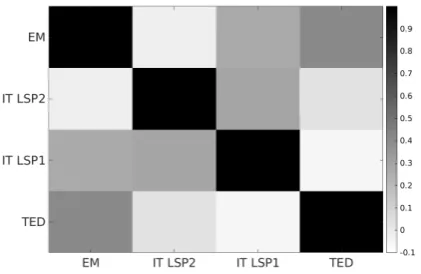
Figure 4: Correlation among the weights predicted by PATMLvnusing all the training data.
(see Table 1), which may be evidence of the pres-ence of different topics, increasing its similarity with other domains. The same assumption should also hold for TED, given that its source sentences belong to talks about different topics. The results for the TED domain, however, do not present the same degree of improvement as for EM.
To better understand the relationships learned by the PAMTL models, we compute the corre-lation between the weights inferred for each do-main (as performed by Saha et al. (2011)). Fig-ure 4 shows the correlations computed on the task weights learned by PATMLvn with all the
train-ing data. In the matrix, EM is the domain that presents the highest correlation with all the others. Instead, TED and ITLSP2 are the less correlated with the other domains (even though, being close to the other IT domain, ITLSP2 can share knowl-edge with it). This explains why the improvement measured on TED is smaller compared to EM. Al-though there is no canonical way to measure cor-relation among domains, the weights corcor-relation matrix and the improvements achieved by PAMTL show the capability of the method to identify task relationships and exploit them to improve the gen-eralization properties of the model.
6 Conclusion
bot-tleneck of periodically retraining the QE models in a batch fashion. On the other side, handling data heterogeneity requires the capability to lever-age data similarities and dissimilarities. While previous works addressed these two problems in isolation, by proposing approaches respectively based on online and multitask learning, our so-lution unifies the two paradigms in a single on-line multitask approach. To this aim, we devel-oped a novel regression algorithm, filling a gap left by current online multitask learning methods that only operate in classification mode. Our ap-proach, which is based on the passive aggressive algorithm, has been successfully evaluated against strong online single-task competitors in a scenario involving four domains. Our future objective is to extend our evaluation to streams of data com-ing from a larger number of domains. Findcom-ing reasonably-sized datasets for this purpose is cur-rently difficult. However, we are confident that the gradual shift of the translation industry towards human MT post-editing will not only push for fur-ther research on these problems, but also provide data for larger scale evaluations in a short time.
To allow for replicability of our results and promote further research on QE, the features ex-tracted from our data, the computed labels and the source code of the method are available at
https://github.com/jsouza/pamtl.
Acknowledgements
This work has been partially supported by the EC-funded H2020 project QT21 (grant agreement no. 645452). The authors would like to thank Dr. Ventsislav Zhechev for his support with the Au-todesk Post-Editing Data corpus.
References
Andreas Argyriou, Theodoros Evgeniou, and Massim-iliano Massimo Pontil. 2008. Convex multi-task feature learning. Machine Learning, 73(3):243– 272, January.
Nguyen Bach, F. Huang, and Y. Al-Onaizan. 2011. Goodness: A method for measuring machine trans-lation confidence. In 49th Annual Meeting of the Association for Computational Linguistics.
Ondˇrej Bojar, Christian Buck, Chris Callison-Burch, Christian Federmann, Barry Haddow, Philipp Koehn, Christof Monz, Matt Post, Radu Soricut, and Lucia Specia. 2013. Findings of the 2013 Work-shop on Statistical Machine Translation. In Eighth
Workshop on Statistical Machine Translation, pages 1–44, Sofia, Bulgaria, August.
Ondrej Bojar, Christian Buck, Christian Federmann, Barry Haddow, Philipp Koehn, Johannes Leveling, Christof Monz, Pavel Pecina, Matt Post, Herve Saint-Amand, Radu Soricut, Lucia Specia, and Aleˇs Tamchyna. 2014. Findings of the 2014 Workshop on Statistical Machine Translation. InProceedings of the Ninth Workshop on Statistical Machine Trans-lation, pages 12–58, Baltimore, USA, June. Edwin Bonilla, Kian Ming Chai, and Christopher
Williams. 2008. Multi-task Gaussian Process Pre-diction. InAdvances in Neural Information Process-ing Systems 20: NIPS’08.
Chris Callison-Burch, Philipp Koehn, Christof Monz, Matt Post, Radu Soricut, and Lucia Specia. 2012. Findings of the 2012 Workshop on Statistical Ma-chine Translation. InProceedings of the 7th Work-shop on Statistical Machine Translation, pages 10– 51, Montr´eal, Canada, June.
Rich Caruana. 1997. Multitask learning. InMachine Learning, pages 41–75.
Giovanni Cavallanti, N Cesa-Bianchi, and C Gentile. 2010. Linear algorithms for online multitask clas-sification. The Journal of Machine Learning Re-search, 11:2901–2934.
Trevor Cohn and Lucia Specia. 2013. Modelling Annotator Bias with Multi-task Gaussian Processes: An application to Machine Translation Quality Es-timation. InProceedings of the 51st Annual Meet-ing of the Association for Computational LMeet-inguis- Linguis-tics, pages 32–42, Sofia, Bulgaria, August.
Koby Crammer, Ofer Dekel, Joseph Keshet, Shai Shalev-Shwartz, and Yoram Singer. 2006. Online Passive-Aggressive Algorithms.The Journal of Ma-chine Learning Research, 7:551–585.
Jos´e G. C. de Souza, Marco Turchi, and Matteo Ne-gri. 2014a. Machine Translation Quality Estima-tion Across Domains. In Proceedings of COLING 2014, the 25th International Conference on Compu-tational Linguistics: Technical Papers, pages 409– 420, Dublin, Ireland, August.
Jos´e G. C. de Souza, Marco Turchi, and Matteo Negri. 2014b. Towards a Combination of Online and Mul-titask Learning for MT Quality Estimation: a Pre-liminary Study. InProceedings of Workshop on In-teractive and Adaptive Machine Translation in 2014 (IAMT 2014), Vancouver, BC, Canada, October. Eric Eaton and PL Ruvolo. 2013. ELLA: An efficient
lifelong learning algorithm. In Proceedings of the 30th International Conference on Machine Learn-ing, pages 507–515, Atlanta, Georgia, USA, June. Marcello Federico, Nicola Bertoldi, Mauro Cettolo,
Lupinetti, Andrea Martines, Alberto Massidda, Hol-ger Schwenk, Lo¨ıc Barrault, Frederic Blain, Philipp Koehn, Christian Buck, and Ulrich Germann. 2014. THE MATECAT TOOL. In Proceedings of COL-ING 2014, the 25th International Conference on Computational Linguistics: System Demonstrations, pages 129–132, Dublin, Ireland, August.
Fei Huang, Jian-Ming Xu, Abraham Ittycheriah, and Salim Roukos. 2014. Adaptive HTER Estimation for Document-Specific MT Post-Editing. In Pro-ceedings of the 52nd Annual Meeting of the Asso-ciation for Computational Linguistics (Volume 1: Long Papers), pages 861–870, Baltimore, Maryland, June.
Laurent Jacob, Jean-philippe Vert, Francis R Bach, and Jean-philippe Vert. 2009. Clustered Multi-Task Learning: A Convex Formulation. In D Koller, D Schuurmans, Y Bengio, and L Bottou, editors,
Advances in Neural Information Processing Systems 21, pages 745–752. Curran Associates, Inc.
Philipp Koehn, Hieu Hoang, Alexandra Birch, Chris Callison-Burch, Marcello Federico, Nicola Bertoldi, Brooke Cowan, Wade Shen, Christine Moran, Richard Zenz, Chris Dyer, Ondˇrej Bojar, Alexandra Constantin, and Evan Herbst. 2007. Moses: Open source toolkit for statistical machine translation. In
ACL 2007 Demo and Poster Sessions, pages 177– 180, Prague, Czech Republic, June.
Yashar Mehdad, Matteo Negri, and Marcello Fed-erico. 2012. Match without a Referee: Eval-uating MT Adequacy without Reference Transla-tions. In Proceedings of the Machine Translation Workshop (WMT2012), pages 171–180, Montr´eal, Canada, June.
Francesco Parrella. 2007. Online support vector re-gression. Master’s Thesis, Department of Informa-tion Science, University of Genoa, Italy.
Raphael Rubino, Jos´e G. C. de Souza, and Lucia Spe-cia. 2013. Topic Models for Translation Quality Estimation for Gisting Purposes. InMachine Trans-lation Summit XIV, pages 295–302.
Paul Ruvolo and Eric Eaton. 2014. Online Multi-Task Learning via Sparse Dictionary Optimization. In
Proceedings of the 28th AAAI Conference on Arti-ficial Intelligence (AAAI-14), Qu´ebec City, Qu´ebec, Canada, July.
Avishek Saha, Piyush Rai, Hal Daum´e, and Suresh Venkatasubramanian. 2011. Online Learning of Multiple Tasks and their Relationships. In Proceed-ings of the 14th International Conference on Ar-tificial Intelligence and Statistics (AISTATS), Fort Lauderdale, FL, USA, April.
Kashif Shah, Marco Turchi, and Lucia Specia. 2014. An Efficient and User-friendly Tool for Machine Translation Quality Estimation. InProceedings of the Ninth International Conference on Language Re-sources and Evaluation, Reykjavik, Iceland, May.
Matthew Snover, Bonnie Dorr, Richard Schwartz, Lin-nea Micciulla, and John Makhoul. 2006. A Study of Translation Edit Rate with Targeted Human An-notation. InAssociation for Machine Translation in the Americas, Cambridge, MA, USA, August. Radu Soricut and A Echihabi. 2010. Trustrank:
In-ducing trust in automatic translations via ranking. In
Proceedings of the 48th Annual Meeting of the Asso-ciation for Computational Linguistics, number July, pages 612–621.
Lucia Specia, Nicola Cancedda, Marc Dymetman, Marco Turchi, and Nello Cristianini. 2009. Estimat-ing the Sentence-Level Quality of Machine Transla-tion Systems. In Proceedings of the 13th Annual Conference of the EAMT, pages 28–35, Barcelona, Spain, May.
Koji Tsuda, Gunnar R¨atsch, and Manfred K Warmuth. 2005. Matrix exponentiated gradient updates for on-line learning and bregman projection. InJournal of Machine Learning Research, pages 995–1018. Marco Turchi, Matteo Negri, and Marcello Federico.
2013. Coping with the Subjectivity of Human Judgements in MT Quality Estimation. In Proceed-ings of the Eighth Workshop on Statistical Machine Translation (WMT), pages 240–251, Sofia, Bulgaria, August.
Marco Turchi, Antonios Anastasopoulos, Jos´e G. C. de Souza, and Matteo Negri. 2014. Adaptive Qual-ity Estimation for Machine Translation. In Proceed-ings of the 52nd Annual Meeting of the Association for Computational Linguistics (Volume 1: Long Pa-pers), pages 710–720, Baltimore, Maryland, USA, June.
Guillaume Wisniewski, Anil Kumar Singh, Natalia Se-gal, and Franc¸ois Yvon. 2013. Design and Anal-ysis of a Large Corpus of Post-Edited Translations: Quality Estimation, Failure Analysis and the Vari-ability of Post-Edition. In Machine Translation Summit XIV, pages 117–124.
Yan Yan, Elisa Ricci, Ramanathan Subramanian, Gaowen Liu, and Nicu Sebe. 2014. Multitask lin-ear discriminant analysis for view invariant action recognition. IEEE Transactions on Image Process-ing, 23(12):5599–5611.
Yu Zhang and Dit-yan Yeung. 2010. A Convex Formu-lation for Learning Task ReFormu-lationships in Multi-Task Learning. InProceedings of the Twenty-Sixth Con-ference Annual ConCon-ference on Uncertainty in Artifi-cial Intelligence (UAI-10), pages 733–742, Catalina Island, CA, USA, July.