Munich Personal RePEc Archive
Comparison between ideal and estimated
pv parameters using evolutionary
algorithms to save the economic costs
Rahmani, Javad and Sadeghian, Ehsan and Dolatiary, Soheil
Department of Islamic Azad University, Science And Research
BranchTehran, Iran, Islamic Azad University Central Tehran Branch
college, Tehran, Iran, Islamic Azad University Central Tehran
Branch college, Tehran, Iran
October 2018
Online at
https://mpra.ub.uni-muenchen.de/91708/
Comparison
between
Ideal
and
Estimated
PV
Parameters
Using
Evolutionary
Algorithms
to
Save
the
Economic
Costs
Javad Rahmani 1, Ehsan Sadeghian 2, Soheil Dolatiary3
1Graduate Student of Digital electronics Engineering, Department of Islamic Azad University, Science And Research
BranchTehran, Iran
2,3GraduatetudentofElectrical engineering, Islamic Azad University Central Tehran Branch college, Tehran, Iran
---***---Abstract – Microgridsarenowemergingfromlabmodules sites into commercial markets, driven by technological improvements, falling costs, a proven track record, and growingrecognitionoftheirbenefits.Theirmaincontribution istoimprovereliabilityandresilienceofelectricalgrids,to managetheadditionofdistributedcleanenergyresourceslike windandsolarphotovoltaic(PV)generationtoreducefossil fuelemissions,andtoprovideelectricityinareasnotservedby centralized electrical infrastructure. In between, the popularityofphotovoltaicpanelisnotdeniable.Inthispaper, the ideal and practical electrical model of PV is being discussed.DuetosignificantroleofthePVparameters,they areassessedbyseveralheuristicmethodsandtheresultsare compared.Henceanoptimalmethodforparameterestimation isdiscussedthatcanbeusedinmicrogridsimulationstoreach toanoptimalquiescentworkingcondition.
KeyWords:Microgrid,powersystem,PVpanel,heuristic optimization
1.INTRODUCTION
Over 99.9 per cent of Earth’s energy comes from the sun .In addition to sunlight reaching the earth’s surface, the sun is the source of all wind, hydro, and wave energy as well as biomass and fossil fuels which originated from organic matter and represents stored solar energy collected by photosynthesis over many millions of years [1, 2]. Enough direct sunlight reaches the earth to supply all of humankind’s energy needs many times over [3, 4]. For example, the yearly direct normal irradiation (DNI) component of solar energy from just the Northern Cape Province of South Africa is equivalent to more than six times the worldwide annual energy consumption [5, 6]. The necessity of energy management in a multi generation source network to ensure a reliable and continuous power supply, accelerates the integration of intermittent renewable energy resources in power grid [7, 8]. By associating a variety of distributed energy sources and loads in a power grid these issues are addressed in microgrd concept with ability of islanding operation with the main grid [9, 10]. Economic, environmental, and electricity supply quality and reliability are impacted
by deployments of micro grids. Reducing carbon dioxide emissions related to energy generation, guaranteeing a low cost of energy, and maintaining high continuity and/or quality of electric supply are drivers of coordination strategies in controllable local grids [7, 11, 12].
AC
DC
DC
DC
DC
DC
DC Bus
Inverter
[image:2.612.317.550.286.445.2]Grid
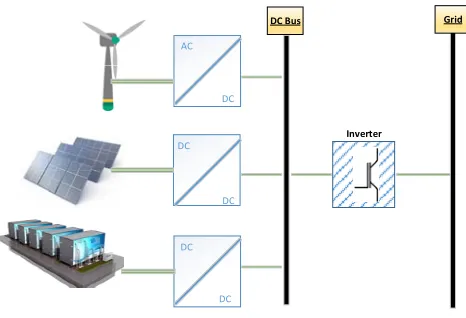
Fig. 1. Micro grid and renewable resources
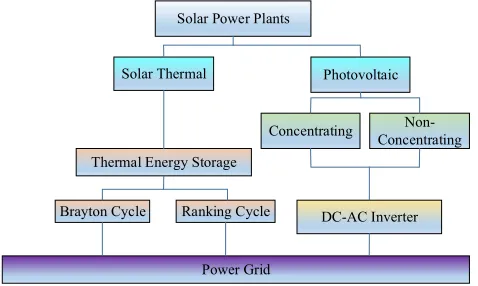
sun, or wind). In the end, considering economic issues and technology regulations, it is possible to expand the distribution network by using a series of adjacent grids [18, 19]. They share energy close together with each other and the main grid, in addition to maximizing the level of access, minimize the cost of generating electricity [20]. In the adjacent trenches that are also set up and operated by the private sector, large power plants can, in lieu of providing electricity to each consumer, if necessary, the power required by a grid or in case of emergency multi-grid connections. Hence, they can provide part of the electricity required by the global network [21, 22]. However, the dilute nature of sunlight reaching earth makes it relatively difficult to capture and convert into usable power. There are two methods commonly used to harvest solar energy for electricity. PV cells use semiconductors to directly convert light into electricity while solar thermal systems convert sunlight into thermal energy to generate electricity by means of a heat engine in much the same way as conventional power plants do. This happens by usage of focusing optics and solar tracking mechanisms to concentrate sunlight for producing high temperature thermal energy. Fig.1 shows a classification diagram of solar power in which a distinction is made between PV and solar thermal systems [23].
Solar Power Plants
Photovoltaic Solar Thermal
Non-Concentrating Concentrating
DC-AC Inverter Thermal Energy Storage
Ranking Cycle Brayton Cycle
Power Grid
[image:3.612.60.299.451.594.2]
Fig. 2 Classification diagram of solar power
The initial cost to make PVs is still high due to their low returns, but with the increasing progression of semiconductor technology, their initial prices are decreasing and their returns are increasing. In between different methods of optimization helped the grid operators to exploit the maximum benefit of the currently installed PVs. For example, a new method for application in communication circuit system is
proposed in [24-26] that it causes increasing the efficiency, PAE, output power and gain in which the author discusses about switching class of E-J and switching class of AB-J respectively. Application of neural network in power engineering as well as other branches of science is well established as in [27, 28] neural networks based models were successfully applied in external radiotherapy to track the dynamic of respiratorysystem in order to target tumors with high accuracy and prevent side effects of extra radiation. [29, 30] represents a framework for automatic segmentation of medical images of different kinds of tumors using adaptive neuro-fuzzy inference system. An Adaptive controller based on model reference control is designed for tracking control of manipulator of arm robots. Robust controller is used in [31, 32] to control nonlinear systems. In case of robotics, In [33, 34] a sliding mode controller is designed for spherical mobile robot t. A grid resilient framework is utilized in [35-37] to enhance the system outage recovery faced by extreme emergencies. Dealing with a lot of parameters, in [38, 39] new methods to reduce the dynamic model of power system is proposed. Resilient cyber method to defend against attacks id discussed in [40].The implemented optimizing engine helps rapid recovery of the power grid outage in case of loss of generators and is able to track the desired trajectory and remain stability of the micro grid [21, 41]. In this research, the parameters of the single-dihedral photovoltaic panel model (5 parameters) and two diode (7 parameters) are
estimated using various meta-optimization
optimization algorithms. The photovoltaic panel is characterized by experiments conducted at the Renewable Energy Laboratory of the University of Industrial Engineering and Advanced Technology, Then using the practical results, the problem of estimating the parameters in order to reduce the squared error has become a minimization problem and been solved with various optimization algorithms [42, 43]. In addition, the model obtained from the experiments is compared with the model derived from the panel data sheet. For this purpose, the photovoltaic panel model obtained from the panel data sheet is also obtained in standard conditions. In the end, the two models are compared with each other.
1.1PHOTOVOLTAICPANELMODELING
A. Ideal single diode photovoltaic panel
pv,cell 0,cell qV
I I - I [exp( ) -1]
akT
(1)
This equation depends on the radiation perpendicular to the panel surface and panel temperature and the photovoltaic panels used.
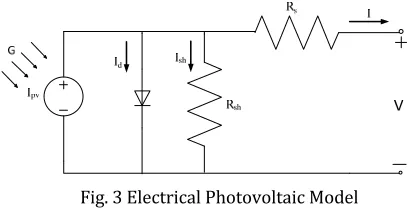
Fig. 3 Electrical Photovoltaic Model
The constants Ipv,cell stands for the flow generated by
the collision light (directly related to the received radiation), I0,cell reverse saturation current or diode
leakage current, q electron charge, K is Boltzmann's constant, T bond temperature and an is ideal constant of diode respectively [44, 45].
A. Practical photovoltaic panel modeling
The practical characteristics of the photovoltaic panel by (1) do not adequately describe the features of the experimental photovoltaic panel [46, 47]. In order to express the practical characteristics of the photovoltaic panel, the addition of other components requires equation (2). The experimental model of the photovoltaic panel is as follows:
s s
pv 0
t p
V R I V R I
I I I [exp( ) 1]
V a R
(2)
In which Ipv is photovoltaic current ,I0diode
saturation current ,T temperature of photovoltaic panel,Nsnumber of cell series,Npthe number of
parallel cells,Rsseries equivalent resistance,Rpparallel
equivalent resistance and a is the ideal coefficient of the panel. The photovoltaic and diode saturation flows are calculated according to the number of series and parallel cells in the panel using the following formulas:
pv pv,cell p
I (I ) (N ) (3)
0 0,cell p
I (I ) (N ) (4)
With the photovoltaic panel temperature and the number of series cells present in the panel, the photovoltaic panel temperature is obtained [48]. Therefore, (2) has five unknown parameters. These parameters are the photovoltaic current, the diode
saturation current, the equivalent series resistance, the equivalent parallel resistance, and the ideal coefficient of the panel [49]. All of these five parameters depend on the environmental factors affecting the panel, which are the most important factors of radiation and temperature [50, 51].
B. Two diode photovoltaic panel
By adding a diode to a single-dihedral photovoltaic panel model, a two-dihedral photovoltaic panel model (Fig. 3) is obtained [52, 53]. This model involves the effect of the open-ended loss in the space between the two links by adding an additional diode in the flow relation. This model increases the accuracy considerably, but also makes the calculation even more complicated. The equivalent circuit of the photovoltaic panel of the two diode is in Fig.3.
[image:4.612.75.282.149.253.2]
Figure. 4. Two diode photo voltaic cell model
s s s
pv 01 02
t 1 t 2 p
V R I V R I V R I
I I I [exp( ) 1] I [exp( ) 1]
V a V a R
(5)
In which I0 is diode saturation current
,Vttemperature of photovoltaic panel,Nsnumber of
series cells,Npthe number of parallel cells,Rsseries
equivalent resistance,Rpparallel equivalent resistance
and a is the ideal coefficient of the diodes is. In this equation, as the single-diode model with the photovoltaic panel temperature and the number of series cells in the panel and, the temperature of the photovoltaic panel can be obtained, but still, seven parameters are unknown. These parameters are the photovoltaic current, the diodes saturation current, the equivalent series resistance, the equivalent parallel resistance, and the ideal coefficients of the diodes respectively.
2. IMPROVEMENT OF PHOTOVOLTAIC PANEL
MODEL
diodes in the panel [54]. Two other parameters, are the photovoltaic flow of the panel and the saturation current, are modified by the use of (3) and (4). In these formulas, the photovoltaic panels are mainly effective from radiation and effective saturation flow from the panel temperature. This model does not respond appropriately to different solar conditions and temperatures, while changing at least four parameters of the five parameters are expected by different weather conditions [55, 56].
In this paper, an analytical model of a photovoltaic panel that is capable of representing the
characteristics of the photovoltaic panel
characteristic for different weather conditions has been used. Equivalent circuit parameters are obtained by solving a set of equations using the information in the panel data sheet under standard conditions and with the test and error method [57]. The superiority of this method is not using a particular method to solve the equation or using optimization algorithms, which makes it easier to implement this model in control devices such as microcontrollers. Also, by using the test and error method and the lack of use of approximation in equations, the more accurate answers are obtained, which is another advantage of this method.
The failure of this method is to create a new equation for the equivalent photovoltaic panel in a different condition than standard conditions [55, 58]. In the sense of the equation used in standard conditions, the equation of ordinary photovoltaic panel is adapted. In addition, the use of panel data values in standard conditions, which rarely happens, reduces the accuracy of the model. In any case, it is possible to use this model for different weather conditions on other models. The proposed model of the photovoltaic panel is represented by the following equation [21, 59]:
G ref s G ( [V K (T T )] IR )/ nT
G G pv o G
G ref s
sh
I( , T) I (T) I ( , T)(e 1)
[V K(T T )] IR R (6)
In this equation, radiation (G) is entered using the following equation:
G ref
G G
(7)
In which Gref the radiation in standard conditions is
1000 watts per square meter(mW2 ). The Ipvin (6) is
obtained by the following formula:
pv pv,n I
I (I K T) (8)
Therefore, the photovoltaic flow is equal to the previous formula and the other parameters obtained are different. K is a temperature coefficient that is an additional parameter than the previous formula. In this formula, series and parallel resistors are taken for each radiation and constant temperature [52]. In the previous chapter, the parameters were obtained by numerical methods [60, 61]. In this section, the parameters are obtained by an adaptive test and error method. This method is more suitable than other methods because of the lack of numerical methods and approximations [62]. In this method, the data of three points of short circuit, open circuit and maximum power, as well as the characteristic slope of the current voltage at short points and open circuit are used [46].
A. Calculating Parameters
In the method used the values of short circuit and open circuit and maximum power in the data sheet of the photovoltaic panel and the curve slope of the voltage characteristic of the short circuit and open circuit obtained from [40] are used.
• Short circuit pointV 0,I I sc,ref
sc,ref s ref
I R nT sc,ref s sc,ref L,ref o,ref
sh
I R
I I I (e 1)
R
(10)
• Short circuit slope point
sc,ref s ref sc,ref s ref sc,ref
I R nT o,ref ref sh
I R nT
V 0 sho
s o,ref ref sh I I
(I nT )e 1R
dI 1
dV 1 R ((I nT )e 1R ) R
(11)
• Open circuit point
oc,ref
V V ,I 0
oc,ref ref
V nT oc,ref L,ref o,ref
sh
V
0 I I (e 1)
R
(12)
• Open circuit gradient
oc,ref ref
oc,ref ref oc,ref
V nT
o,ref ref sh
V nT
V V so
s o,ref ref sh
I 0
(I nT )e 1 R
dI 1
dV 1 R ((I nT )e 1 R ) R
Maximum power point (V V mp,ref, I I mp,ref) (13)
mp,ref mp,ref s ref
(V I R nT ) mp,ref mp,ref s mp,ref L,ref o,ref
sh
V I R
I I I (e 1)
R
The formulas obtained from these parameters are approximated. Therefore, in this paper, these methods are directly used in the test and error method based on the change of n and Rs parameters
[54].
I. PARAMETER ESTIMATION ALGORITHM
The following algorithm is used to estimate the parameters:
1. Determine the initial values of the
parameters n and Rs
2. Insert values IL,refand Rshusing:
IL,ref Isc,ref Rsh Rsho
3. Calculation I0 using (4).
4. n is calculated using (6) and is compared
with the amount specified in step (1).
5. The steps 3 and 4 are repeated to obtain
the n value according to the desired accuracy.
6. Rs is calculated based on n from (7), is
compared with assumed value, and will change.
7. Steps 3,4 and 5 will be repeated.
s
R Re-calculated by (7) and compared to the
previous value and changed accordingly.
This process continues to reach the correct value. In this way, the system is solved by not simplifying any equations in a non-approximate form. Very simple programs that can be used to estimate these parameters in various control methods implement this process [63]. Matlab software has been used to run the algorithm. The results obtained by this method provide accurate and high-speed results. But the use of the initial values in the photovoltaic panel data sheet due to non-experimental information reduces the accuracy of the model. The parameters calculated for the regular commercial solar panel which are specified in the standard conditions are depicted in Table 1.
Table ‐1:Parameters calculated for the solar panel
under standard conditions
sh
R Rs n Io Ipv
131.7225(Ω) 0.27742(Ω) 0.002438(Ω)
3.7e-11(A) 5.311(A)
The only remaining unobstructed parameter K is the temperature coefficient obtained by the curve values of the voltage characteristic current in the panel data sheet. This coefficient is used to move the curve of the voltage characteristic curve to better position the curves.For a favorable temperature T* different than
ref
T , this parameter is obtained from the following equation [57, 64]:
* mp mp * * mp ref
V V
K
I (T T )
(14)
Which *
mp
V voltage and *
mp
I current at optimal
temperatures are presented in the panel data sheet. It is more appropriate to use radiation data of 1000 watts per square meter and a temperature of 75 degrees that is present in the data sheet of the curve of the current voltage curve. To do this, you can turn curve information into numbers using the Plot digitizer software [65, 66].
3.VALIDATIONOFTHEMODEL
This chapter uses the Newton algorithm to validate the previous chapter. Due to the complexity of the formula, the speed of the Newton algorithm decreases, but it still has the right precision. For radiation of 1000 W / m2 and at 25 ° C, the curve of the characteristic current-voltage and voltage-power characteristics of the panel in standard conditions, are shown in Fig .5 and Fig.6 respectively. As can be seen, the results for a given temperature and radiation are not quite as good as the results of the previous chapter, and the curves are somewhat biased [46, 67]. However, being able to operate in different environmental conditions is very suitable, in contrast to which low accuracy can be neglected. It should be noted, however, that the use of panel data information is one of the factors reducing model accuracy.
0 2 4 6 8 10 12 14 16 18 20
0 1 2 3 4 5
6 I-V curve
V [V]
I [A
]
Model
Exprimental data at STC
Chart ‐1: Comparision between current-voltage
0 2 4 6 8 10 12 14 16 18 20 0
10 20 30 40 50 60 70 80
P-V curve
V [V]
P[W
]
Model
Exprimental data at STC
Chart ‐2: Comparison between power-voltage characteristics
with ideal and optimized parameters
0 2 4 6 8 10 12 14 16 18 20
0 1 2 3 4 5
6 I-V curve
V [V]
I [A
]
(R=1000,T=25) (R=1000,T=25) (R=1000,T=25) (R=1000,T=25) (R=1000,T=25)
Model
Exprimenta data at STC
Chart ‐3: Comparison of with ideal and optimized
voltage-current profiles in different weather conditions
0 2 4 6 8 10 12 14 16 18 20
0 10 20 30 40 50 60 70 80
P-V curve
V [V]
P[
W
]
(R=1000,T=25) (R=1000,T=25) (R=1000,T=25) (R=1000,T=25) (R=1000,T=25) Model
Exprimenta data at STC
Chart ‐3: Comparison of with ideal and optimized
voltage-power profiles in different weather conditions
Modeling and Validation for different conditions are performed in Fig.7 and Fig.8. It is obvious that the resulting optimized model is accurate with proper accuracy for different atmospheric conditions. Hence, with the slightest neglect of precision, we can
use the model for different atmospheric conditions and different radiation and temperatures.
4.CONCLUSIONS
The costs of solar photovoltaic generation are rapidly reducing, to the point that they are closing in on cost parity with traditional electricity sources. Due to high penetration of PV panels having an accurate electrical model of it is necessary for micro grid simulation. Though first ideal mathematical model of a PV is discussed and then based on multiple heuristic methods, the optimized parameters are calculated. The proposed model for the photovoltaic panel has been improved and is capable of modeling a photovoltaic panel in different radiation and temperatures, and provides a good performance for designers and planners of photovoltaic systems. The model presented for different atmospheric conditions is used and validated for information obtained from field experiments, which results in the acceptable accuracy of this model.
ACKNOWLEDGEMENT(Optional)
REFERENCES
[1] S. M. Sze, Semiconductordevices:physicsand technology: John Wiley & Sons, 2008.
[2] S. Hettrick, M. Antonioletti, L. Carr, N. C. Hong, S. Crouch, D. De Roure,etal., "Uk research software
survey 2014," Availablefrom:DOI:http://dx.doi. org/10.5281/zenodo,vol. 14809, 2014.
[3] D. Rekioua and E. Matagne, Optimizationof
photovoltaicpowersystems:modelization,simulation andcontrol: Springer Science & Business Media,
2012.
[4] A. Hamedi and M. Ketabdar, "Energy Loss Estimation and Flow Simulation in the skimming flow Regime of Stepped Spillways with Inclined Steps and End Sill: A Numerical Model,"
InternationalJournalofScienceandEngineering Applications, vol. 5, pp. 399-407, 2016.
[5] P. J. Lunde, "Solar thermal engineering: space heating and hot water systems," NewYork,John WileyandSons,Inc.,1980.635p.,1980.
[6] G. Yachdav, T. Goldberg, S. Wilzbach, D. Dao, I. Shih, S. Choudhary,etal., "Cutting edge: anatomy of BioJS,
an open source community for the life sciences,"
Elife,vol. 4, p. e07009, 2015.
[7] S. S. Soulayman, "On the optimum tilt of solar absorber plates," RenewableEnergy, vol. 1, pp.
551-554, 1991.
multiple-load AGVs in Tandem layout," Journalof OptimizationinIndustrialEngineering, 2018.
[9] H. Garg, "Treatise on solar energy: fundamentals of solar energy, vol. 1," ed: New York: John Wiley & Sons, 1982.
[10] K. Gopinathan, "Solar radiation on variously oriented sloping surfaces," SolarEnergy, vol. 47, pp.
173-179, 1991.
[11] M. Ketabdar and A. Hamedi, "Intake Angle
Optimization in 90-degree Converged Bends in the Presence of Floating Wooden Debris: Experimental Development," FloridaCiv.Eng.J,vol. 2, pp.
22-27.2016, 2016.
[12] S. A. Nugroho, A. S. Prihatmanto, and A. S. Rohman, "Design and implementation of kinematics model and trajectory planning for NAO humanoid robot in a tic-tac-toe board game," in SystemEngineeringand Technology(ICSET),2014IEEE4thInternational Conferenceon, 2014, pp. 1-7.
[13] R. Eini and A. R. Noei, "Identification of Singular Systems under Strong Equivalency," International JournalofControlScienceandEngineering, vol. 3, pp.
73-80, 2013.
[14] M. Abdolzadeh and M. Mehrabian, "Heat gain of a solar collector under an optimum slope angle in Kerman, Iran," EnergySources,PartA:Recovery, Utilization,andEnvironmentalEffects,vol. 33, pp.
1375-1385, 2011.
[15] S. Sufi, N. C. Hong, S. Hettrick, M. Antonioletti, S. Crouch, A. Hay,etal., "Software in reproducible
research: advice and best practice collected from experiences at the collaborations workshop," in
Proceedingsofthe1stACMsigplanworkshopon reproducibleresearchmethodologiesandnew publicationmodelsincomputerengineering, 2014, p.
2.
[16] M. Abdolzadeh and M. Mehrabian, "Obtaining maximum input heat gain on a solar collector under optimum slope angle," InternationalJournalof SustainableEnergy, vol. 30, pp. 353-366, 2011.
[17] A. F. Taha, N. Gatsis, T. Summers, and S. Nugroho, "Time-varying sensor and actuator selection for uncertain cyber-physical systems," arXivpreprint arXiv:1708.07912, 2017.
[18] S. Beringer, H. Schilke, I. Lohse, and G. Seckmeyer, "Case study showing that the tilt angle of
photovoltaic plants is nearly irrelevant," Solar energy, vol. 85, pp. 470-476, 2011.
[19] F. Tao, J. Votion, and Y. Cao, "An Iterative Multi-Layer Unsupervised Learning Approach for Sensory Data Reliability Evaluation," IEEETransactionson IndustrialInformatics, 2018.
[20] R. Eini, "Flexible Beam Robust Loop Shaping Controller Design Using Particle Swarm Optimization," JournalofAdvancesinComputer Research,vol. 5, pp. 55-67, 2014.
[21] M. H. Imani, K. Yousefpour, M. J. Ghadi, and M. T. Andani, "Simultaneous presence of wind farm and V2G in security constrained unit commitment problem considering uncertainty of wind
generation," in TexasPowerandEnergyConference (TPEC),2018IEEE, 2018, pp. 1-6.
[22] A. Hamedi, M. Ketabdar, M. Fesharaki, and A. Mansoori, "Nappe Flow Regime Energy Loss in
Stepped Chutes Equipped with Reverse Inclined Steps: Experimental Development," FloridaCivil EngineeringJournal,vol. 2, pp. 28-37, 2016.
[23] R. Eini and S. Abdelwahed, "Time-varying Rotational Inverted Pendulum Control using Fuzzy Approach,"
arXivpreprintarXiv:1806.01788, 2018.
[24] F. Rahmani, F. Razaghian, and A. Kashaninia, "High Power Two-Stage Class-AB/J Power Amplifier with High Gain and Efficiency," 2014.
[25] F. Rahmani, F. Razaghian, and A. Kashaninia, "Novel Approach to Design of a Class-EJ Power Amplifier Using High Power Technology," WorldAcademyof Science,EngineeringandTechnology,International JournalofElectrical,Computer,Energetic,Electronic andCommunicationEngineering, vol. 9, pp. 541-546,
2015.
[26] F. Rahmani, "Electric Vehicle Charger based on DC/DC Converter Topology," InternationalJournal ofEngineeringScience, vol. 18879, 2018.
[27] L. Ghorbanzadeh, A. E. Torshabi, J. S. Nabipour, and M. A. Arbatan, "Development of a synthetic adaptive neuro-fuzzy prediction model for tumor motion tracking in external radiotherapy by evaluating various data clustering algorithms," Technologyin cancerresearch&treatment,vol. 15, pp. 334-347,
2016.
[28] L. Ghorbanzadeh and A. E. Torshabi, "An Investigation into the Performance of Adaptive Neuro-Fuzzy Inference System for Brain Tumor Delineation Using ExpectationMaximization Cluster Method; a Feasibility Study," FrontiersinBiomedical Technologies,vol. 3, pp. 8-19, 2017.
[29] A. Esmaili Torshabi and L. Ghorbanzadeh, "A Study on Stereoscopic X-ray Imaging Data Set on the Accuracy of Real-Time Tumor Tracking in External Beam Radiotherapy," Technologyincancerresearch &treatment, vol. 16, pp. 167-177, 2017.
[30] E. Sadeghian, "Modeling and Checking the Power Quality of High Pressure Sodium Vapor Lamp," 2018.
[31] T. Pourseif, M. T. Andani, Z. Ramezani, and M. Pourgholi, "Model Reference Adaptive Control for Robot Tracking Problem: Design & Performance Analysis," InternationalJournalofControlScience andEngineering,vol. 7, pp. 18-23, 2017.
[32] T. Summers, O. Ogunmolu, N. Gans, V. Renganathan, N. Kariotoglou, M. Kamgarpour,etal., "Robustness
Margins and Robust Guided Policy Search for Deep Reinforcement Learning," in IEEE/RSJInternational ConferenceonRobotsandIntelligent
Systems,(AbstractOnlyTrack), 2017.
[33] M. T. Andani and Z. Ramezani, "Robust Control of a Spherical Mobile Robot," 2017.
[34] R. Suresh, F. Tao, J. Votion, and Y. Cao, "Machine Learning Approaches for Multi-Sensor Data Pattern Recognition: K-means, Deep Neural Networks, and Multi-layer K-means," in 2018AIAAInformation Systems‐AIAAInfotech@Aerospace, ed, 2018, p.
1639.
[36] P. Dehghanian, S. Aslan, and P. Dehghanian,
"Quantifying power system resiliency improvement using network reconfiguration," in IEEE60th InternationalMidwestSymposiumonCircuitsand Systems(MWSCAS), 2017, pp. 1-4.
[37] P. Dehghanian, "Quantifying power system resilience improvement through network
reconfiguration in cases of extreme emergencies," 2017.
[38] M. Khatibi, H. Zargarzadeh, and M. Barzegaran, "Power system dynamic model reduction by means of an iterative SVD-Krylov model reduction method," in InnovativeSmartGridTechnologies Conference(ISGT),2016IEEEPower&Energy Society, 2016, pp. 1-6.
[39] M. Khatibi, T. Amraee, H. Zargarzadeh, and M. Barzegaran, "Comparative analysis of dynamic model reduction with application in power systems," in PowerSystemsConference(PSC),2016 ClemsonUniversity, 2016, pp. 1-6.
[40] M. Khatibi and S. Ahmed, "Optimal resilient defense strategy against false data injection attacks on power system state estimation," in 2018IEEEPower &EnergySocietyInnovativeSmartGridTechnologies Conference(ISGT), 2018, pp. 1-5.
[41] S. Silva, R. Suresh, F. Tao, J. Votion, and Y. Cao, "A Multi-Layer K-means Approach for Multi-Sensor Data Pattern Recognition in Multi-Target Localization," arXivpreprintarXiv:1705.10757,
2017.
[42] J. Khalesi, S. Modaresahmadi, and G. Atefi, "SEM Gamma Prime Observation in a Thermal and Stress Analysis of a First-stage Rene’80H gas Turbine Blade: Numerical and Experimental Investigation,"
IranianJournalofScienceandTechnology, TransactionsofMechanicalEngineering,pp. 1-14.
[43] M. Jafari, G. Atefi, and J. Khalesi, "Advances in nonlinear stress analysis of a steam cooled gas turbine blade," LatinAmericanappliedresearch, vol.
42, pp. 167-175, 2012.
[44] M. Jafari, G. Atefi, J. Khalesi, and A. Soleymani, "A new conjugate heat transfer method to analyse a 3D steam cooled gas turbine blade with temperature-dependent material properties," Proceedingsofthe InstitutionofMechanicalEngineers,PartC:Journalof MechanicalEngineeringScience, vol. 226, pp.
1309-1320, 2012.
[45] M. Jafari, H. Afshin, B. Farhanieh, and H.
Bozorgasareh, "Numerical aerodynamic evaluation and noise investigation of a bladeless fan," Journalof AppliedFluidMechanics, vol. 8, pp. 133-142, 2015.
[46] M. Moonem, T. Duman, and H. Krishnaswami, "Capacitor voltage balancing in a neutral-point clamped multilevel dc-dc dual active bridge converter," in PowerElectronicsforDistributed GenerationSystems(PEDG),2017IEEE8th InternationalSymposiumon, 2017, pp. 1-7.
[47] M. Ketabdar, "Numerical and Empirical Studies on the Hydraulic Conditions of 90 degree converged Bend with Intake," InternationalJournalofScience andEngineeringApplications, vol. 5, pp. 441-444,
2016.
[48] Y.-P. Chang, "Optimal the tilt angles for photovoltaic modules in Taiwan," InternationalJournalof
ElectricalPower&EnergySystems,vol. 32, pp.
956-964, 2010.
[49] J. Kaldellis and D. Zafirakis, "Experimental investigation of the optimum photovoltaic panels’ tilt angle during the summer period," Energy, vol.
38, pp. 305-314, 2012.
[50] B. Y. Liu and R. C. Jordan, "The long-term average performance of flat-plate solar-energy collectors: with design data for the US, its outlying possessions and Canada," Solarenergy,vol. 7, pp. 53-74, 1963.
[51] M. Jafari, H. Afshin, B. Farhanieh, and H. Bozorgasareh, "Experimental and Numerical Investigation of a 60cm Diameter Bladeless Fan,"
JournalofAppliedFluidMechanics,vol. 9, 2016.
[52] P. Shabestari, S. Ziaeinejad, and A. Mehrizi-Sani, "Reachability analysis for a grid-connected voltage-sourced converter (VSC)," in ProceedingsoftheIEEE AppliedPowerElectronicsConferenceandExposition (APEC),SanAntonio,TX,USA, 2018, pp. 4-8.
[53] M. Ketabdar, A. K. Moghaddam, S. A. Ahmadian, P. Hoseini, and M. Pishdadakhgari, "Experimental Survey of Energy Dissipation in Nappe Flow Regime in Stepped Spillway Equipped with Inclined Steps and Sill," InternationalJournalofResearchand Engineering,vol. 4, pp. 161-165, 2017.
[54] P. Trinuruk, C. Sorapipatana, and D. Chenvidhya, "Estimating operating cell temperature of BIPV modules in Thailand," Renewableenergy, vol. 34, pp.
2515-2523, 2009.
[55] E. Skoplaki and J. Palyvos, "Operating temperature of photovoltaic modules: A survey of pertinent correlations," Renewableenergy,vol. 34, pp. 23-29,
2009.
[56] G. Makrides, B. Zinsser, G. E. Georghiou, M. Schubert, and J. H. Werner, "Temperature behaviour of different photovoltaic systems installed in Cyprus and Germany," Solarenergymaterialsandsolarcells,
vol. 93, pp. 1095-1099, 2009.
[57] H. C. Hottel, "Performance of flat-plate solar heat collectors," Trans.ASME64, vol. 91, 1942.
[58] M. Jafari, H. Afshin, B. Farhanieh, and A. Sojoudi, "Numerical investigation of geometric parameter effects on the aerodynamic performance of a Bladeless fan," AlexandriaEngineeringJournal, vol.
55, pp. 223-233, 2016.
[59] K. Yousefpour, S. J. H. Molla, and S. M. Hosseini, "A dynamic approach for distribution system planning using particle swarm optimization," International JournalofControlScienceandEngineering,vol. 5, pp.
10-17, 2015.
[60] P. Shabestari, G. Gharehpetian, G. Riahy, and S. Mortazavian, "Voltage controllers for DC-DC boost converters in discontinuous current mode," in
EnergyandSustainabilityConference(IESC),2015 International, 2015, pp. 1-7.
[61] F. K. Purian and E. Sadeghian, "Mobile robots path planning using ant colony optimization and Fuzzy Logic algorithms in unknown dynamic
environments," in Control,Automation,Roboticsand EmbeddedSystems(CARE),2013International ConferenceOn, 2013, pp. 1-6.
distribution systems," in ElectricalPower
DistributionNetworks(EPDC),2012Proceedingsof 17thConferenceon, 2012, pp. 1-6.
[63] M. Shojaie, N. Elsayad, and O. Mohammed, "Design of an all-GaN bidirectional DC-DC converter for medium voltage DC ship power systems using series-stacked GaN modules," in AppliedPower ElectronicsConferenceandExposition(APEC),2018 IEEE, 2018, pp. 2155-2161.
[64] S. R. Hashemi and M. Montazeri-Gh, "Polynomial-based time-delay compensation for hardware-in-the-loop simulation of a jet engine fuel control unit PAPER RETRACTED," InternationalJournalof AutomationandControl,vol. 8, pp. 323-338, 2014.
[65] B. Rahmani and S. R. Hashemi, "Internet-based control of FCU hardware-in-the-loop simulators,"
SimulationModellingPracticeandTheory, vol. 56,
pp. 69-81, 2015.
[66] V. Morcos, "Optimum tilt angle and orientation for solar collectors in Assiut, Egypt," Renewableenergy,
vol. 4, pp. 291-298, 1994.
[67] S. Hashemi, M. Montazeri, and M. Nasiri, "The compensation of actuator delay for hardware-in-the-loop simulation of a jet engine fuel control unit,"