478
ANU-CSIRO at MEDIQA 2019:
Question Answering Using Deep Contextual Knowledge
Vincent Nguyen Australian National University
CSIRO Data61 [email protected]
Sarvnaz Karimi CSIRO Data61 Sydney, Australia [email protected]
Zhenchang Xing Australian National University
Canberra, Australia [email protected]
Abstract
We report on our system for textual inference and question entailment in the medical do-main for the ACL BioNLP 2019 Shared Task, MEDIQA. Textual inference is the task of find-ing the semantic relationships between pairs of text. Question entailment involves iden-tifying pairs of questions which have similar semantic content. To improve upon medical natural language inference and question en-tailment approaches to further medical ques-tion answering, we propose a system that in-corporates open-domain and biomedical do-main approaches to improve semantic under-standing and ambiguity resolution. Our mod-els achieve 80% accuracy on medical natural language inference (6.5% absolute improve-ment over the original baseline), 48.9% accu-racy on recognising medical question entail-ment, 0.248 Spearman’s rho for question an-swering ranking and 68.6% accuracy for ques-tion answering classificaques-tion.
1 Introduction
Medical health search is the second most searched thematic query, representing 5% of all queries on Google (Cocco et al., 2018). However, many queries are semantically identical and are poten-tially already answered by experts (Abacha and Demner-Fushman, 2016). However, these ques-tions may not be directly retrievable due to se-mantic ambiguity involving abbreviations (Wu et al., 2017), patient colloquialism (Graham and Brookey,2008) or esoteric terminology (Lee et al.,
2019). Furthermore, in regards to disease, tempo-rality is a key factor in determining the relevance of retrieved answers (Lee et al., 2019). For ex-ample, it is more appropriate to retrieve answers relating to thesummer coldin the summer.
As a means to retrieve these questions that are already answered by experts, question en-tailment has been proposed to discern relation-ships between pairs of questions. Recognising
Question Entailment (RQE) is the task of deter-mining the relationship between a question pair,
RQE(Q1, Q2), as either entailment or not en-tailment, where Abacha and Demner-Fushman
(2016) define question entailment as the situation where “a question, Q1, entails another question,
Q2, if every answer to Q2 is also a complete or partial answer toQ1.”
Natural Language Inference (NLI) is determin-ing the relationship between pairs of sentences, not just questions. NLI is the task of determin-ing whether a hypothesis, H, is inferred (entail-ment), not inferred (contradiction) or neither (neu-tral), given a premise. In the context of question answering (QA), it can be used to validate if the answer can be inferred from the question.
Though RQE and NLI have thrived in the open-domain setting (Bowman et al., 2015; Rajpurkar et al.,2016), there are unique challenges in apply-ing these tasks directly to the biomedical question answering field. Previous models in the medical domain that used NLI and RQE relied on mod-els which were shallowly bidirectional (Romanov and Shivade,2018) or rule-based approaches with shallow keyword matching techniques (Abacha and Demner-Fushman, 2016) which would not generalise well.
The MEDIQA (Ben Abacha et al.,2019) chal-lenge, as part of the ACL BioNLP workshop, aims to further research efforts in NLI and RQE by in-troducing their applications to Biomedical QA.
2 Datasets
MEDIQA 2019 (Ben Abacha et al., 2019) pro-vides datasets to be used for three different tasks.
Task 1: Natural Language Inference The MEDNLI dataset is used for this task (Romanov and Shivade,2018). A collection of 11232 med-ical premise-hypothesis pairs are used for train-ing, 2817 pairs for validation and 405 for testing. We preprocessed the text to remove punctuation, that were designed to ensure patient anonymity as a means to reduce noise while ensuring that sen-tence integrity was not broken.
For example, cerebrovascular accident in [**2948**]→cerebrovascular accident in 2948. Furthermore, we expand all medical abbreviations using the ADAM database (Wu et al.,2017). For example, On arrival to the ED T97 BP 184/94 HR 92→On arrival to the emergency department Temperature 97 Blood Pressure 184/94 Heart rate 92.
Task 2: Recognizing Question Entailment For RQE, a collection of 8588 medical question pairs for training, 302 pairs for validation (Abacha and Demner-Fushman,2016) and 230 pairs for testing is released. The RQE collection aims to match consumer health questions from the National Li-brary of Medicine with Frequently Asked Ques-tions (FAQs) from NIH websites.
Task 3: Question Answering Two sepa-rate training datasets were provided from the MEDIQA challenge (Ben Abacha et al.,2019):
LiveQAMed: 104 consumer health questions covering different types of questions about dis-eases and drugs alongside their associated an-swers.
Alexa: 104 simple questions about the most fre-quent diseases and associated answers.
No external data was used for any of the tasks as a conscious decision in order to assess the fine-tuning performance of our models. However, ex-ternal data has shown to be useful in knowledge-based approaches (Romanov and Shivade, 2018) and we leave this as future work.
3 Our System
Due to the similarity of our approaches in the three tasks, we first describe a shared model that was utilised by all the tasks. Our approach extends upon the current state-of-the-art models (Lee et al.,
Algorithm 1: Ensemble Approach for NLI, RQE and QA
Input:Training Data,x∈X, Test Data,
z∈Z, HyperparametersΘ,
Pre-trained ModelsMBrtandMBio
Output: Label Predictions,y∈Y X ←P reprocessT ext(X);
Z ←P reprocessT ext(Z);
whilenumEpochs<totalEpochsdo forbx∈Xdo
//bxis a minibatch ofX
MBioF T ←T rain(MBio, bx,Θ);
MBrtF T ←T rain(MBrt, bx,Θ);
//MF T denotes the fine-tuned model
end
numEpochs++;
end
forx∈Xdo
P redx
Bio←P redict(MBioF T, x); P redxBrt←P redict(MBrtF T, x); //P redis the softmax score outputs from
each model
SV M ←T rain(P redxBio⊕P redxBrt)
end
P redZ
Bio←P redict(MBioF T, Z); P redZBrt←P redict(MBrtF T, Z);
Y =P redict(SV M, P redZBio⊕P redZBrt);
returnY
2019; Devlin et al., 2019) in the open-domain and apply them to the MEDIQA biomedical tasks. As the state-of-the-art models currently employ transfer learning, we modelled an ensemble trans-fer learning approach used in the medical com-puter vision domain (Menegola et al., 2017; Ku-mar et al.,2017).
BERT As part of our strategy to combine open-domain approaches to a biomedical focused one, we elected to use a current state-of-the-art open-domain approach, BERT (Devlin et al., 2019), that is based on deeply bidirectional, unsupervised language representation that has been trained on Wikipedia.
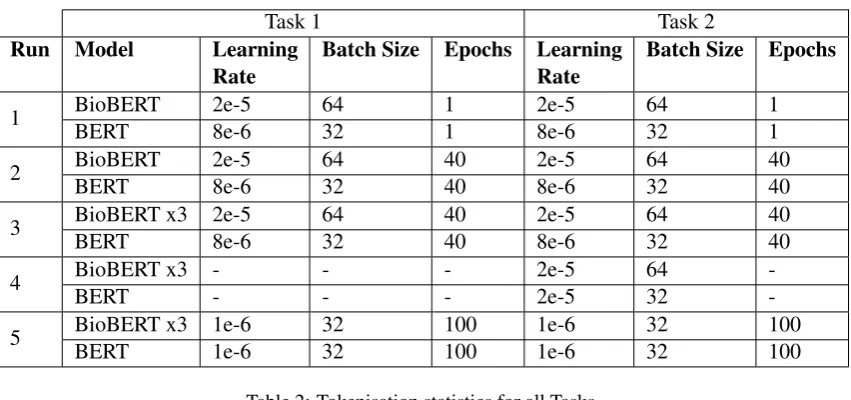
Table 1: Hyperparamters used for each run for Tasks 1 & 2.
Task 1 Task 2
Run Model Learning Rate
Batch Size Epochs Learning Rate
Batch Size Epochs
1 BioBERT 2e-5 64 1 2e-5 64 1
BERT 8e-6 32 1 8e-6 32 1
2 BioBERT 2e-5 64 40 2e-5 64 40
BERT 8e-6 32 40 8e-6 32 40
3 BioBERT x3 2e-5 64 40 2e-5 64 40
BERT 8e-6 32 40 8e-6 32 40
4 BioBERT x3 - - - 2e-5 64
-BERT - - - 2e-5 32
-5 BioBERT x3 1e-6 32 100 1e-6 32 100
[image:3.595.87.513.80.280.2]BERT 1e-6 32 100 1e-6 32 100
Table 2: Tokenisation statistics for all Tasks.
Task Statistic Training Validation Testing
1 Average Sequence Length 386 190 64
2 Average Sequence Length 176 276 230
3 Average Sequence Length 605 632 582
Portion of Docs>512 Sequence Length 0.32 0.37 0.32
Support Vector Machine We combined our predictions from our open-domain and biomedi-cal domain approaches using a support vector ma-chine (Cortes and Vapnik, 1995), which here, is akin to using a data-driven weighting function.
Learning-to-Rank We also used learning-to-rank models such as LambdaRank (Burges et al.,
2007) and RankNet (Burges et al., 2005), which were implemented in Tensorflow Ranking1for the ranking portion of the challenge.
Sentence Embeddings When encoding our fea-tures into sentence embeddings, we used bert-as-service2 in conjunction with BioBERT to cre-ate context-rich embeddings of text. In one of our post-challenge runs, we used a biomedical word2vec word embedding model (Chiu et al.,
2016).
Hyperparameters For all three tasks, we exper-imented with batch sizes (2N,n ∈ {3,4,5,6,7}) and learning rates (A×10B, A ∈ {1,2,3...10},
B ∈ {2,3,4,5,6}) and selected the parameters that maximised performance on the validation set. We used the default sequence length of 64 for training, validation and testing of all three tasks.
1
Tensorflow Ranking
2Bert-As-Service Sentence Embeddings
Algorithm For the classification tasks in the challenge, we used an ensemble approach (see Al-gorithm 1). First, the text training data, X, and testing data,Z, is preprocessed. This preprocess-ing is done differently dependpreprocess-ing on the submis-sion and task. Preprocessing includes punctuation removal and abbreviation expansion. This training data is used to train the BERT and BioBERT mod-els using hyperparameters,Θ. The softmax scores for each training example,X, predicted by the fi-nal fine-tuned models are concatenated (denoted by⊕and used to train an SVM). The final predic-tions for the testing set, Z, are collected by first using the fine-tuned models to predict the softmax scores. These softmax scores are concatenated and fed as input into the SVM which outputs predic-tions,Y, for the test set.
Task 1: Natural Language Inference
The models were trained as follows: For the first and second run, BERT3 is trained for a single epoch with a learning rate of 8e-6 with a batch size of 32, while the BioBERT4 models were trained with a learning rate of 2e-5 with a batch size of 64. The models had their predictions combined
3
BERT Base Model
via an SVM (sklearn-pandas, version 1.8.0) with a penalty of 1.0, RBF kernel and gamma with the ’auto’ parameter, which was then used as a data-driven weighting function. The code used for this portion was based on the following code from the BERT repository.5
For run 1, we established a baseline approach with no preprocessing and the models were trained only for one epoch. From run 2 onwards, prepro-cessing was done to the text to remove punctuation used for patient anonymity and expand medical abbreviations as mentioned previously. For runs 3 and 5, instead of using a single BioBERT model, the three variants of BioBERT were trained indi-vidually using the same parameters as in run 2. However, in the fourth run, early stop validation was used to select the best models that maximised validation accuracy. However, we excluded this run because it had the same predictions as run 3. In the final run, the learning rate was lowered and trained over a larger number of epochs.
Task 2: Recognizing Question Entailment
We use the same runs as Task 1. However, we did not do any preprocessing for any runs as it did not have any benefit on the validation set.
Task 3: Question Answering Task 3 was a 2-part challenge where answer snippets needed to be ranked and classified as relevant or irrelevant.
Algorithm 2:Ensemble Approach for Rank-ing QA
Input:Alexa Training Data,TA, LiveQA
Training Data,TL, Test Data,Z
Output: Ranked List,RL
whilenumEpochs<totalEpochsdo forba, bl∈(TA, TL)do
//bais a minibatch ofTA MAlexa←T rain(F E(ba),Θ); MLiveQA←T rain(F E(bl),Θ); //FE is a feature extractor that
vectorizes input
end
numEpochs++;
end
RLAlexa ←P redict(MAlexa, Z); RLLiveQA←P redict(MLiveQA, Z); RL←RankScore(RLAlexa, RLLiveQA)
returnRL
5Sentence Classification Bert Code
In this task, for the ranking task, we mainly used an ensemble of two separate learning-to-rank models that were trained on LiveQA and Alexa (see Algorithm2). We used the following features as input to the model:
1. BioBERT sentence embedding of Question 2. BioBERT sentence embedding of Answer 3. BioBERT sentence embedding of Entailed
Answer from MedQUAD
4. NLI predictions over all candidates summed 5. NLI predictions over all candidates averaged
The first two features were embeddings that were encoded using BioBERT, as mentioned pre-viously. The third feature was found through the following steps:
1. Use BM25 (Stephen Robertson,1994) to find the question candidates in MedQUAD, M, which are most related to a Question,Q.
2. Set a cut-off value, ρ to minimise the num-ber of candidates for RQE/NLI. For the chal-lenge, we setrho= 4.
3. Predict the question entailment between all questions, Q and candidates M us-ing the RQE model, predrqe(Q, m) = RQE(Q, m∈M).
4. Retain all candidate answers, R, that had questions predicted to be entailed to the Question.
5. Perform NLI on the answers in the origi-nal ranked list,L, and all candidate answers extracted from MedQUAD, prednli(l, r) = N LI(l∈L, r∈R).
6. Use the answer with the highest BM25 score for the third feature.
The fourth and fifth features were performed by summing NLI predictions, P
prednli(l ∈ L, r ∈ R), and averaging, |R1|P
prednli(l∈L, r∈R).
The features were fed into Tensorflow learning-to-rank models (RankNet for run 1 and Lamb-daRank for runs 3 and 4) with 2307 features us-ing the Adam optimizer (Kingma and Ba,2015), a group size of 2 and a learning rate of 0.001.
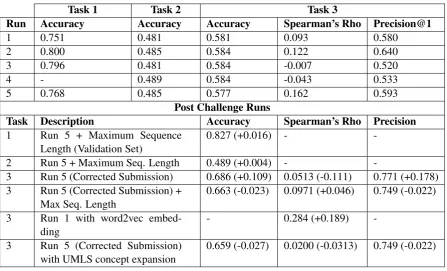
Table 3: Results for all 3 tasks in the MEDIQA shared task, additional post challenge runs are included. Note: With the exception of Task 1, all post challenge runs were evaluated using the official evaluation script.
Task 1 Task 2 Task 3
Run Accuracy Accuracy Accuracy Spearman’s Rho Precision@1
1 0.751 0.481 0.581 0.093 0.580
2 0.800 0.485 0.584 0.122 0.640
3 0.796 0.481 0.584 -0.007 0.520
4 - 0.489 0.584 -0.043 0.533
5 0.768 0.485 0.577 0.162 0.593
Post Challenge Runs
Task Description Accuracy Spearman’s Rho Precision
1 Run 5 + Maximum Sequence Length (Validation Set)
0.827 (+0.016) -
-2 Run 5 + Maximum Seq. Length 0.489 (+0.004) -
-3 Run 5 (Corrected Submission) 0.686 (+0.109) 0.0513 (-0.111) 0.771 (+0.178) 3 Run 5 (Corrected Submission) +
Max Seq. Length
0.663 (-0.023) 0.0971 (+0.046) 0.749 (-0.022)
3 Run 1 with word2vec embed-ding
- 0.284 (+0.189)
-3 Run 5 (Corrected Submission) with UMLS concept expansion
0.659 (-0.027) 0.0200 (-0.0313) 0.749 (-0.022)
Rs(d ∈ D) = 1/dr. We use RankScore to score
each item in the ranked lists of Alexa and LiveQA models. We then combine the items by summing the documents RankScore from each model and sorting.
For classification, the same architecture from Tasks 1 and 2 for Runs 3 - 5 was used (4-ensemble with SVM layer). For runs 2 and 5, we use soft-max scores output from the classification to rank documents.
4 Results and Discussion
Ensembles have been successfully utilised in other biomedical domains (Kumar et al., 2017; Bri-jesh and Zahid,2011), with the main idea behind using these being to incorporate complementary strengths of the members of the ensemble. Thus, BERT is used in conjunction with BioBERT in or-der to correct the mistakes that the model makes by injecting non-domain specific knowledge. This idea was supported in our baseline experiments on task 1 where BioBERT scored 0.7913 on val-idation, while BERT scored 0.7715 on valval-idation, but ensembling resulted in a higher final score of 0.7950.
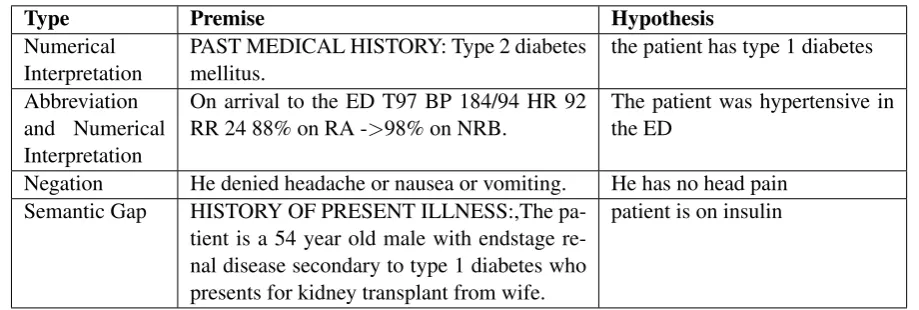
NLI Baseline System Problems Our baseline system made characteristic mistakes on the
vali-dation set, which is shown in Table4for Task 1. We found that our system had trouble with nu-merical interpretation and, for instance, was not able to determine the difference between type 1 and type 2 diabetes. Furthermore, this problem is exacerbated when abbreviations and numeri-cal interpretationare required in phrases such as T97 BP 184/94. Thus, to aid the system in dis-ambiguating abbreviations, we expanded all ab-breviations using the ADAM database of com-mon clinical abbreviations and resulted in an 0.049 increase in accuracy. Furthermore, the system would struggle with medical forms of negation. However, due to the use of BERT/BioBERT, con-ventional techniques such as NegEx or removal would break sentence integrity and reduce com-prehension, thereby affecting word context, and thus were not viable. Furthermore, punctuation, in terms of patient anonymisation, is also a prob-lem as the punctuation does not carry meaningful semantic content and will confuse the classifiers.
Table 4: Common mistakes made by the baseline system in Task 1.
Type Premise Hypothesis
Numerical Interpretation
PAST MEDICAL HISTORY: Type 2 diabetes mellitus.
the patient has type 1 diabetes
Abbreviation and Numerical Interpretation
On arrival to the ED T97 BP 184/94 HR 92 RR 24 88% on RA ->98% on NRB.
The patient was hypertensive in the ED
Negation He denied headache or nausea or vomiting. He has no head pain Semantic Gap HISTORY OF PRESENT ILLNESS:,The
pa-tient is a 54 year old male with endstage re-nal disease secondary to type 1 diabetes who presents for kidney transplant from wife.
patient is on insulin
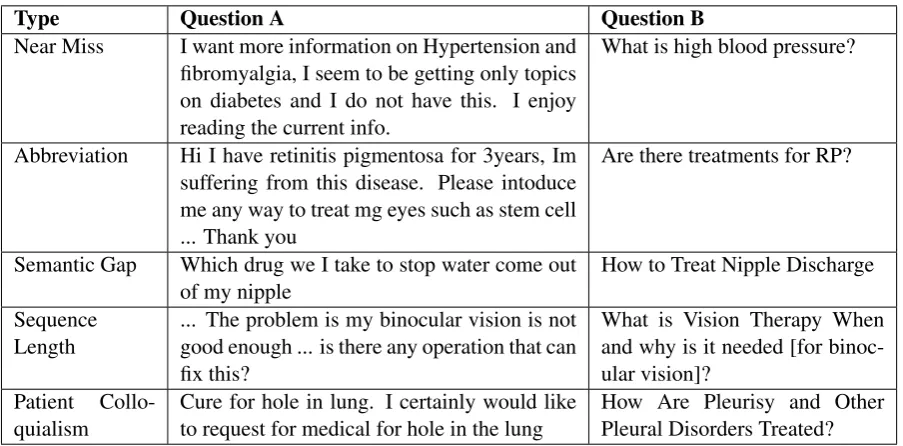
wants information on hypertension (high blood pressure). However, according to the gold stan-dard, this is not a form of entailment, partial or otherwise. We hypothesise that this lies on the borderline of the entailment definition or may be due to bias. Furthermore, our system struggles withabbreviations. However, the examples in the second task dataset are more related to problems with co-reference resolution where abbreviations appear in the original question but not in the FAQ question.
Furthermore, phrases like “come out of” should be aligned to terms such as “discharge”, which is an example of a semantic gap and require com-mon sense comprehension. This is problematic as BERT is known to struggle with this sort of rea-soning (Talmor et al., 2018). Also, we did not adjust thesequence length parameter (set to 64), which may have been a source of error. How-ever, a later investigation through a post-challenge run that shows that only Task 1 benefits from an increase in sequence length (see Table 3). Fi-nally,patient colloquialismpresents a unique chal-lenge where “hole in lung” is to be interpreted as “pleurisy” (lung inflammation). Although we did not address this complex problem, it could be po-tentially solved through crowd-sourcing of medi-cal forum data. This may be suitable as an area to investigate for future work.
We found that in all our submissions on the test set of the challenge, although our system was able to achieve high results on the validation set of 79%, the models were not well suited for the test set. Our model predicted entailment 92% of the time on the test set, suggesting that the model is overfitting, even though our baseline was trained for only one epoch. We found that the cases where
the models make errors are cases where the ques-tion contains words such asdiagnosisand the dis-ease is mentioned, but the semantic content of the question might be abouttreatmentrather than the diagnosis. This is very different from the training and validation datasets that were provided, which were much more straightforward and did not re-quire as much comprehension. An example il-lustrating this difficulty isQuestion A: Glaucoma: Can you mail me patient information about Glau-coma, I was recently diagnosed and want to learn all I can about the disease.”andQuestion B: How is glaucoma diagnosed?
Question Answering Submission Problems
Table 5: Common mistakes made by the baseline system in Task 2.
Type Question A Question B
Near Miss I want more information on Hypertension and fibromyalgia, I seem to be getting only topics on diabetes and I do not have this. I enjoy reading the current info.
What is high blood pressure?
Abbreviation Hi I have retinitis pigmentosa for 3years, Im suffering from this disease. Please intoduce me any way to treat mg eyes such as stem cell ... Thank you
Are there treatments for RP?
Semantic Gap Which drug we I take to stop water come out of my nipple
How to Treat Nipple Discharge
Sequence Length
... The problem is my binocular vision is not good enough ... is there any operation that can fix this?
What is Vision Therapy When and why is it needed [for binoc-ular vision]?
Patient Collo-quialism
Cure for hole in lung. I certainly would like to request for medical for hole in the lung
How Are Pleurisy and Other Pleural Disorders Treated?
close to 0. This results in the differences between scores of the documents to be very low (forming dense clusters) which reduces ranking quality as the ranking becomes more sensitive to noise and uncertainty (Siddhant and Lipton,2018).
Question Answering Baseline System Problems
Due to the error of our submissions for Task 3, we will not discuss the mistakes that occurred within the challenge for the pointwise ranking runs. In-stead, we will look at the mistakes that the post-challenge run encountered for those. However, for the pairwise runs within the challenge, we found that it performed much worse than expected. We attribute this ranking deficit to two important fac-tors.
The first is that BERT sentence embeddings are not useful to represent sentences because the vec-tor space is too condensed (vecvec-tor representations are very close together). The second is that our vector representations were too large, with BERT sentence embeddings producing embeddings up to 800 dimensions. Using 3 of these embeddings re-sults in a very large input which would take too long to train or hinder convergence. This effect was observed in a post-challenge run where we used Chiu et al. (2016)’s biomedical word2vec embeddings and achieved a much higher Spear-man’s Rho. The second factor was that the Lamb-daLoss (Burges et al., 2007) function was not a suitable objective function as the RankNet model performed better.
From Table 2, we find that Task 3 is more
ver-bose than the other two tasks and presents unique challenges as almost a third of the documents will have information loss due to the limitation of max-imum sequence length by BERT being 512 due to quadratic memory explosion (Liu et al.,2018). However, we did a post-challenge run where we increased the sequence length with no noticeable difference. This is because the majority of infor-mation in these long sequence can be safely dis-carded. Furthermore, the BERT truncation strat-egy is to truncate from the end of the sentence, im-plying that the important information is typically at the start of the answer.
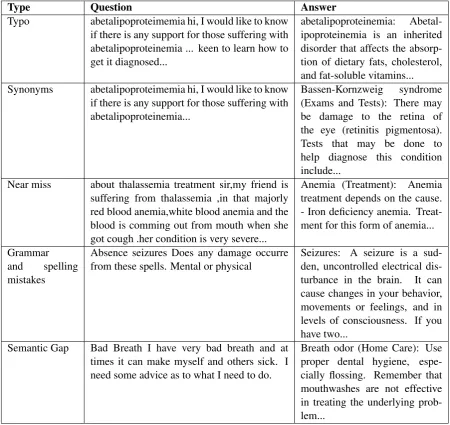
Table 6: Common mistakes made by baseline system in Task 3
Type Question Answer
Typo abetalipoproteimemia hi, I would like to know if there is any support for those suffering with abetalipoproteinemia ... keen to learn how to get it diagnosed...
abetalipoproteinemia: Abetal-ipoproteinemia is an inherited disorder that affects the absorp-tion of dietary fats, cholesterol, and fat-soluble vitamins... Synonyms abetalipoproteimemia hi, I would like to know
if there is any support for those suffering with abetalipoproteinemia...
Bassen-Kornzweig syndrome (Exams and Tests): There may be damage to the retina of the eye (retinitis pigmentosa). Tests that may be done to help diagnose this condition include...
Near miss about thalassemia treatment sir,my friend is suffering from thalassemia ,in that majorly red blood anemia,white blood anemia and the blood is comming out from mouth when she got cough .her condition is very severe...
Anemia (Treatment): Anemia treatment depends on the cause. - Iron deficiency anemia. Treat-ment for this form of anemia...
Grammar and spelling mistakes
Absence seizures Does any damage occurre from these spells. Mental or physical
Seizures: A seizure is a sud-den, uncontrolled electrical dis-turbance in the brain. It can cause changes in your behavior, movements or feelings, and in levels of consciousness. If you have two...
Semantic Gap Bad Breath I have very bad breath and at times it can make myself and others sick. I need some advice as to what I need to do.
Breath odor (Home Care): Use proper dental hygiene, espe-cially flossing. Remember that mouthwashes are not effective in treating the underlying prob-lem...
We found that the model performs better on the validation set than any of the post-challenge runs (79% accuracy, a 5% absolute increase over the other runs), but did not perform substantially bet-ter on the test set (see Table3).
Problems with Underlying Models One prob-lem in using models such asBERT andBioBERT is the limitation in the maximum sequence length. This is demonstrated in the test portion of the chal-lenge, where test set answers were much longer than those seen in the training and validation col-lection. These sequences were longer than the 512 sequence length limit allowed by the BERT ar-chitecture, which is constrained due to a problem known as the quadratic memory explosion (Liu et al.,2018) leading to exponentially longer train-ing times and memory usage.
Though there are ways to overcome these re-strictions such as striding the sentences pairs and labels, this results in contextual information being lost and label imbalance. This restriction also hin-ders the encoding of long-range dependencies be-tween sequences as only contexts within a fixed length can be considered (Dai et al.,2019).
mor-phemes are not being learned. For instance, arthr-(where - denotes prefix), means joints and -algias means pain, so the correct tokenisation should be arthralgias→arthr algia sso that the model can currently learn the semantic meaning behind the morpheme. We find that these limitations hindered the use of these models and their application to the MEDIQA tasks.
We emphasise that there is a real-world appli-cation with the models and methods in this chal-lenge. However, if we were to scale our ap-proach to real-world application, we would require external data. Therefore for future work, given more time, we would like to use external datasets such as emrQA (Pampari et al.,2018) and explore multi-task learning due to the similarity of the three tasks and aim to incorporate other medical tasks for a better generalisation of the biomedical question answering. We would also want to train the BERT models on biomedical-focused vocabu-lary and additional data in the future as a baseline to compare against multi-task learning.
5 Conclusions
In this shared task, we use and improve upon NLI and RQE techniques for medical question answer-ing. Our approach involves utilising deep con-textual relationships between words emphasising semantic understanding and resolving ambiguity. We combine biomedical and open-domain strate-gies to improve generalisation and bridge the gap between the open-domain and biomedical domain question answering.
Acknowledgements
This research is supported by the Australian Re-search Training Program and the CSIRO Postgrad-uate Scholarship.
References
Ben Abacha and Demner-Fushman. 2016. Recogniz-ing Question Entailment for Medical Question
An-swering.American Medical Informatics Association
Annual Symposium Proceedings, 2016:310–318.
Asma Ben Abacha, Chaitanya Shivade, and Dina Demner-Fushman. 2019. Overview of the MEDIQA 2019 shared task on textual inference, question en-tailment and question answering. InProceedings of the BioNLP 2019 workshop, Florence, Italy. Associ-ation for ComputAssoci-ational Linguistics.
Samuel Bowman, Gabor Angeli, Christopher Potts, and Christopher Manning. 2015. A large annotated cor-pus for learning natural language inference. In Pro-ceedings of the 2015 Conference on Empirical Meth-ods in Natural Language Processing (EMNLP), Lis-bon, Portugal. Association for Computational Lin-guistics.
Verma Brijesh and Hassan Syed Zahid. 2011. Hybrid ensemble approach for classification. Applied Intel-ligence, 34(2):258–278.
Chris Burges, Tal Shaked, Erin Renshaw, Ari Lazier, Matt Deeds, Nicole Hamilton, and Greg Hullender. 2005. Learning to rank using gradient descent. In
Proceedings of the 22Nd International Conference on Machine Learning, ICML ’05, pages 89–96, New York, NY. ACM.
Christopher Burges, Robert Ragno, and Quoc Le. 2007.
Learning to rank with nonsmooth cost functions. In
Advances in Neural Information Processing Systems 19, pages 193–200.
Billy Chiu, Gamal Crichton, Anna Korhonen, and Sampo Pyysalo. 2016. How to train good word
em-beddings for biomedical NLP. In Proceedings of
the 15th Workshop on Biomedical Natural Language Processing, pages 166–174, Berlin, Germany.
Anthony Cocco, Rachel Zordan, David Taylor, Tracey Weiland, Stuart Dilley, Joyce Kant, Mahesha Dom-bagolla, Andreas Hendarto, Fiona Lai, and Jennie Hutton. 2018. Dr Google in the ED: searching for online health information by adult emergency
de-partment patients. The Medical Journal of
Aus-tralia, 209:342–347.
Corinna Cortes and Vladimir Vapnik. 1995.
Support-vector networks. Machine Learning, 20(3):273–
297.
Zihang Dai, Zhilin Yang, Yiming Yang, Jaime Car-bonell, Quoc Le, and Ruslan Salakhutdinov. 2019.
Transformer-xl: Attentive language models beyond
a fixed-length context. Computing Research
Repos-itory, abs/1901.02860.
Jacob Devlin, Ming-Wei Chang, Kenton Lee, and Kristina Toutanova. 2019. BERT: Pre-training of deep bidirectional transformers for language
un-derstanding. In Proceedings of the Conference of
the North American Chapter of the Association for Computational Linguistics: Human Language Tech-nologies, Minneapolis, MN.
Suzanne Graham and John Brookey. 2008.Do patients
understand? The Permanente journal, 12(3):67–69.
Ashnil Kumar, Jinman Kim, David Lyndon, Michael Fulham, and Dagan Feng. 2017. An ensemble of fine-tuned convolutional neural networks for medi-cal image classification. IEEE Journal of Biomedi-cal and Health Informatics, 21(1):31–40.
Jinhyuk Lee, Wonjin Yoon, Sungdong Kim, Donghyeon Kim, Sunkyu Kim, Chan Ho So, and Jaewoo Kang. 2019. BioBERT: A pre-trained biomedical language representation model for
biomedical text mining. arXiv e-prints, page
arXiv:1901.08746.
Vincent Li, Paul Thomas, and David Hawking. 2013.
Merging algorithms for enterprise search. ACM
International Conference Proceeding Series, pages 42–49.
Peter Liu, Mohammad Saleh, Etienne Pot, Ben Goodrich, Ryan Sepassi, Lukasz Kaiser, and Noam Shazeer. 2018. Generating wikipedia by
summariz-ing long sequences. Computing Research
Reposi-tory, abs/1801.10198.
Afonso Menegola, Julia Tavares, Michel Fornaciali, Lin Li, Sandra Fontes de Avila, and Eduardo Valle. 2017. Recod titans at isic challenge 2017. Comput-ing Research Repository, abs/1703.04819.
Anusri Pampari, Preethi Raghavan, Jennifer Liang, and Jian Peng. 2018. emrqa: A large corpus for question
answering on electronic medical records.
Comput-ing Research Repository, abs/1809.00732.
Pranav Rajpurkar, Jian Zhang, Konstantin Lopyrev, and Percy Liang. 2016. Squad: 100, 000+ questions
for machine comprehension of text. Computing
Re-search Repository, abs/1606.05250.
Alexey Romanov and Chaitanya Shivade. 2018.
Lessons from natural language inference in the
clinical domain. Computing Research Repository,
abs/1808.06752.
Aditya Siddhant and Zachary Lipton. 2018. Deep bayesian active learning for natural language pro-cessing: Results of a large-scale empirical study. In Proceedings of the 2018 Conference on Empiri-cal Methods in Natural Language Processing, pages 2904–2909, Brussels, Belgium.
Susan Jones Micheline Hancock-Beaulieu Mike Gat-ford Stephen Robertson, Steve Walker. 1994. Okapi at trec-3. InProceedings of the Third Text REtrieval Conference (TREC 1994), Gaithersburg, MD.
Alon Talmor, Jonathan Herzig, Nicholas Lourie, and Jonathan Berant. 2018. Commonsenseqa: A question answering challenge targeting
common-sense knowledge. Computing Research Repository,
abs/1811.00937.
Yonghui Wu, Joshua Denny, Rosenbloom Trent, Ran-dolph Miller, Dario Giuse, Lulu Wang, Carmelo Blanquicett, Ergin Soysal, Jun Xu, and Hua Xu.
2017. A long journey to short abbreviations: de-veloping an open-source framework for clinical
ab-breviation recognition and disambiguation (CARD).