Munich Personal RePEc Archive
The Arab Spring was predictable in
2007: Empirics of Proof
Asongu, Simplice and Nwachukwu, Jacinta
June 2017
Online at
https://mpra.ub.uni-muenchen.de/85055/
1
A G D I Working Paper
WP/17/052
The Arab Spring was predictable in 2007: Empirics of Proof
Forthcoming in the Africagrowth Agenda
Simplice A. Asongu
African Governance and Development Institute, P.O. Box 8413, Yaoundé, Cameroon.
E-mails:[email protected]/[email protected]
Jacinta C. Nwachukwu
School of Economics, Finance and Accounting,
Faculty of Business and Law, Coventry University Priory Street, Coventry, CV1 5FB, UK
2
2017 African Governance and Development Institute WP/17/052
Research Department
The Arab Spring was predictable in 2007: Empirics of Proof
Simplice A. Asongu & Jacinta C. Nwachukwu
June 2017
Abstract
We model core demands for better governance (political, economic and institutional), more
employment and less consumer price inflation using a methodological innovation on the
complete elimination of cross-country differences in signals susceptible of sparking social
revolts. The empirical evidence based on 14 MENA countries show that the Arab Spring was
predictable in 2007 to occur between January 2011 and April 2012. While the findings predict
the wave of cross-country revolutions with almost mathematical precision, caveats and
cautions are discussed for the scholar to understand the expositional dimensions of the
empirics.
JEL Classification: N17; O11;O20; O47; P52
Keywords: Arab Spring; Political Instability; Timing; Economic Growth
1. Introduction
The Arab Spring has prompted many academics to revise their paradigms and initial
claims, raising concerns about the usefulness and legitimacy of existing theories. While the
promptness of scholars to recognize their inabilities to foresee major politico-economic
3
another debate as to whether such cross-country uprisings were predictable in the first place
(Adi, 2013). This debate is even more relevant with Mitchell (2004, p. 76) postulating that by
virtue of facts and figures, future trends should be predicted by social sciences with almost
mathematical precision. This note aims to investigate this Mitchell conjecture. The paper
attempts to practically answer the key concern on whether politico-economic trends were
common in the Middle East & North African (MENA) countries prior to the Arab Spring.
In the present empirical exercise, we are fully aware of shortcomings of investigating a
problem without a sound underlying theory. Nonetheless, the act of facts reporting remains a
useful scientific activity, even without a formal theoretical model. In this vein, we borrow
from recent literature in the postulation that the validation or refutation of economic theories
is not the only end of applied econometrics (Narayan et al., 2011).
From a theoretical standpoint, the Arab Spring could have either been a predictable
phenomenon or a spontaneous occurrence. Given the former hypothesis and the catch-up
intuition motivating the empirical underpinnings, one principal question comes to mind: does
the complete absence of dispersions in factors that cause social revolts among countries
foretell a general cross-country chaos? Two underlying assumptions address this question.
First, the presence of catch-up in signals that cause social uprisings means that countries with
bad signals are reaching the levels of their counterparts with worse signals. Second, full
catch-up implies that cross-country disparities in signals of revolt are inexistent such that there are
no distinctions between locality and nationality in the degree of such signals. While the
answer to the first question informs the policy maker about the feasibility of cross-country
revolutions, the answer to the second question indicates the timing for such a revolution
without distinction of nationality. Such negative signals include, inter alia: governance
standards (institutional, political and economic), unemployment and consumer price inflation.
The intuition for a possibility of cross-country harmonization in factors of a common
4
employed in a plethora of development areas (Narayan et al., 2011; Asongu, 2013a, 2013b;
Asongu & Nwachukwu, 2016). The rest of the paper is organized as follows.
2. Data and Methodology
2.1 Data
We investigate a panel of fourteen MENA countries with data from Development
Indicators of the World Bank for the period 1996-2006 such that we have a projection date of
2007. The dependent variables represent potentially negative signals of unrest:
unemployment, consumer price inflation and quality of government (institutional, political &
economic). The governance indicators are composite variables obtained from Principal
Component Analysis. The endogenous variables have been substantially documented in the
Arab Spring literature as possible causes of the uprisings (Khandelwal & Roitman, 2012).
Categorization of the government quality variables is in accordance with Kaufmann et al.
(2010). Economic governance is represented by regulation quality and government
effectiveness. Institutional governance is proxied by corruption-control and rule of law. Voice
& accountability and political stability are used for Political governance. Political
governance is the process by which authorities are selected and replaced; Economic
governance represents the capacity of government to formulate & implement policies as well
as deliver services and; Institutional governance denotes the respect for citizens and the state
of institutions that govern the interactions among them. We control for determinants of the
revolutions that have been documented in recent literature (Khandelwal & Roitman, 2012).
These include, inter alia: economic prosperity, external balances, population growth,
government expenditure, and trade openness. In what follows, we briefly substantiate the
relevance of the control variables.
Political unrest can result from the deterioration of macroeconomic conditions. Hence,
5
likely to increase unemployment owing to decreased economic output. From intuition,
vulnerabilities to external shocks can fuel socio-political unrest partly due to currency
depreciation and high inflation. High inflation generates inefficiencies that could ultimately
fuel social tensions because of reduced social welfare and economic growth (see Aisen &
Veiga, 2006) and decreased opportunities of investment because investors prefer less
ambiguous economic environments (Kelsey & Le Roux, 2017a, 2017b). Employment and
other socio-economic opportunities can be boosted through trade and more conducive
government expenditure. In addition, if population growth is associated with government
capacity to deliver more public goods and better living standards, the likelihood for political
instability would be limited.
2.2 Methodology
The adoption of beta-convergence as estimation technique is typically consistent with
the recent empirics (Narayan et al., 2011; Asongu, 2013b). The following two equations are
the standard procedures for investigating this beta catch-up if Wi,t exhibits strict exogeneity
(Fung, 2009).
t i t i t i t
i t
i a Y W
Y,) ln( , ) , ,
ln(
(1)
where a = 1+ β, Yi,t measures the signals of social unrest (inflation, unemployment and bad
governance) in country i at period t. Wi,t is a vector of determinants of the negative signals,
i
is a country-specific effect, t is a time-specific constant and i,t is an error term.
Consistent with the neoclassical growth model, a significantly negative beta coefficient in Eq.
(1) implies that countries relatively close to a state in which dependent variables will
6
2773). In the same light, consistent with Fung (2009, p. 59), when 0 a 1in Eq. (1), Yi,t is
dynamically stable. A means of dealing with the concern about the correlation between the
individual specific-effect and the lagged dependent variable involves suppressing the
individual-effect by first differencing. Therefore, Eq. (2) becomes:
) (
) (
) (
)) ln( ) (ln( )
ln( )
ln(Yi,t Yi,t a Yi,t Yi,t2 Wi,t Wi,t2 t t i,t i,t (2) We then employ the two-step system Generalized Method of Moments (GMM) that
exploits all the orthogonality conditions between the lagged endogenous variable and the error
term. Islam (1995, p. 323) has emphasized that yearly times are inappropriate for
investigating convergence because in such brief yearly time spans, short-term disturbances
may be considerable. To assess the rate of diminishing dispersion in the signals of social
unrests, we calculate the implied rate of convergence by computing: a/2. This implies in our
regressions, τ is set to 2. Thus, because we have used two-year NOI to control for business
cycle disturbances, we divide the estimated value of the lagged dependent indicator by 2. To
ascertain evidence of catch-up, the criterion used is the following: 0 a 1. This implies
that past differences have less proportionate effect on future differences.
3. Empirical Analysis
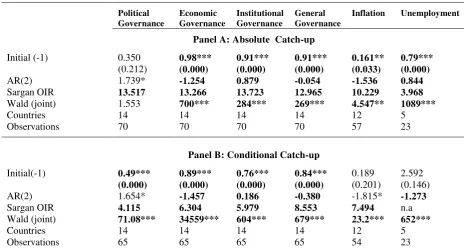
Table 2 summaries the findings from Table 3 below. Absolute or unconditional
catch-up is assessed with only the lagged difference of the endogenous variable whereas conditional
convergence is investigated in the presence of Wi,t. But for political governance (in both
panels of Table 3) and inflation (Panel B of Table 3) in which there is some evidence of
autocorrelation at the 10% significance level, the models are overwhelmingly valid: (1) failure
to reject the null hypotheses of AR(2) and Sargan tests and (2) the null hypothesis of the Wald
7
For an estimated initial value of 0.98 (the instruments are significant and there is no
autocorrelation in the residuals), the following could be established: (1) the catch-up rate is
49.00% ((0.98/2) × 100) and; (2) the length of time needed for full catch-up is 4.08 years
(200%/49.00%). Therefore, 4 years (yrs) and about 29 days are needed to reach a 100%
catch-up for an estimated initial value of 0.98 that is consistent with the information criterion:
1
0 a . In other words 4 years 29 days are needed for complete elimination of
cross-country dispersions of signals the cause social unrests. Catch-up from an economic point of
view implies that countries with lower levels in an economic signal are catching-up their
counterparts with higher levels in the economic signal. Full catch-up further implies
cross-country difference in the economic signal no longer exist. Hence, full catch-up provides
feasible avenues for harmonized policies related to the economic signal to be implemented
without distinction of country within a homogenous panel. Whereas the notion of catch-up
has fundamentally been based on positive macroeconomic variables such as per capita
positive signals (Jones, 2002; Ssozi & Asongu, 2016) and finance (Narayan et al., 2011;
Bruno et al., 2012; Asongu, 2013c), there is a recent stream of literature that has extended to
notion policy harmonization in negative signals, notably, in the fight against: software piracy
(Andrés & Asongu, 2016); capital flight (Asongu, 2014) and terrorism (Asongu &
Nwachukwu, 2017; Asongu et al., 2018). The argument behind extending the nation of
catch-up in economic phenomena to negative economic signals is that it is also logical to harmonize
cross-country policies in view of fighting negative socio-economic and political signals.
Against this background the following conclusions could be drawn. (1) The findings
of political governance are not significant. (2) Economic, institutional and general governance
results averagely reflect a full catch-up period of between 4.08 and 5. 26 years. (3) For
8
those of the latter broadly consistent with the findings from governance indicators (timing of
[image:9.595.64.529.332.582.2]5.06 years).
Table 2: Summary of results
Political Governance Economic Governance Institutional Governance General Governance
Inflation Unemployment
Panel A: Absolute Catch-up
Absolute Catch-up No Yes Yes Yes Yes Yes
Rate of Catch-up (%) n.a 49 45.5 45.5 8.05 39.5
Years to Full Catch-up n.a 4.08 4.39 4.39 24.8 5.06
Panel B: Conditional Catch-up
Conditional Catch-up No Yes Yes Yes No No
Rate of Catch-up (%) n.a 44.5 38.0 42.0 n.a n.a
Years to Full Catch-up n.a 4.49 5.26 4.76 n.a n.a
Yes: Significant evidence of Catch-up. No: insignificant evidence of Catch-up. n.a: not applicable due to absence of significant catch-up.
Table 3: Information criteria
Political Governance Economic Governance Institutional Governance General Governance
Inflation Unemployment
Panel A: Absolute Catch-up
Initial (-1) 0.350 0.98*** 0.91*** 0.91*** 0.161** 0.79***
(0.212) (0.000) (0.000) (0.000) (0.033) (0.000)
AR(2) 1.739* -1.254 0.879 -0.054 -1.536 0.844
Sargan OIR 13.517 13.266 13.723 12.965 10.229 3.968
Wald (joint) 1.553 700*** 284*** 269*** 4.547** 1089***
Countries 14 14 14 14 12 5
Observations 70 70 70 70 57 23
Panel B: Conditional Catch-up
Initial(-1) 0.49*** 0.89*** 0.76*** 0.84*** 0.189 2.592
(0.000) (0.000) (0.000) (0.000) (0.201) (0.146)
AR(2) 1.654* -1.457 0.186 -0.380 -1.815* -1.273
Sargan OIR 4.115 6.304 5.979 8.553 7.494 n.a
Wald (joint) 71.08*** 34559*** 604*** 679*** 23.2*** 652***
Countries 14 14 14 14 12 5
Observations 65 65 65 65 54 23
*,**,**: significance levels of 10%, 5% and 1% respectively. Initial (-1): Lagged dependent variable. AR(2): Second Order Autocorrelation test. OIR: Overidentifying Restrictions test. Z-statistics for AR(2) and Chi-square statistics for Sargan OIR and Wald (joint). The significance of bold values is twofold. 1) The significance of estimated coefficients and the Wald statistics. 2) The failure to reject the null hypotheses of: a) no autocorrelation in the AR(2) tests and; b) the validity of the instruments in the Sargan OIR test. P-values in brackets.
The small number of countries in the last column is due to missing observations in the outcome variable. Though inconsistent, the corresponding estimates are expositional and do not significantly influence the broad findings.
In light of the above, from a projection date of 2007, the Arab Spring should occur
between January 2011 and April 2012. In other words, in the latter interval, cross-country
differences in signals that could spark revolutions are inexistent, such that a social unrest in
9
locality or nationality. Under these conditions, the possibility of revolts is harmonized
completely across countries. This inference is in accordance with the recent bulk of catch-up
literature on IPR harmonization against software piracy (Andrés & Asongu, 2013; Asongu,
2013a), inter alia.
On cautions and caveats, four points are worth noting. First, findings of conditional
catch-up are contingent on the variable we choose and empirically test. Hence, the
conditioning information set may not reflect all determinants of signals in cross-country
revolutions. Therefore, using alternative variables is not likely to produce different results.
Nonetheless, the consistency of absolute and conditional catch-up results inherently
demonstrates less misspecification in the conditioning information set. Moreover, the findings
are also contingent on the year of forecast because we are unlikely find the same results if
2008 or 2009 became the year of forecast.
Second, signaling is crucial for a good appreciation of the dependent variables, since
the occurrences of revolutions and social unrests are most likely with negative information.
Whereas inflation in consumer prices and rising unemployment represent negative signal
indicators, governance variables may be seen to reflect positive signals. This does not
represent a major concern for the empirics because governance indicators are skewed to the
left.
Third, critics of the beta-convergence approach have emphasized two main
shortcomings that could render the catch-up hypothesis unfeasible: (1) differences in initial
endowments on or conditions in the signals of social unrests, such that movement of the
dispersion is contingent on the initial distribution of the variables and; (2) the possibility of
multiple equilibria that negates the hypotheses of long-run convergence towards the same
path.
Last, the employment of econometrics to accomplish beyond testing the validity of
10
solidly justified by the substantial bulk of a recent strand of studies in the convergence
literature, it is no less true that theories could originate from consistent empirics.
4. Conclusion
This paper contributes to the rising scholarly debates about whether the Arab Spring
came as a spontaneous phenomenon or could have been predicted by social sciences with
almost mathematical precision. It has practically answered the key concerns on whether
politico-economic trends were common in the MENA countries prior to the Arab Spring. We
have modeled core demands for better governance, less consumer price inflation and more
employment using a methodological innovation on the complete elimination of cross-country
dispersion in potential signals of social revolts. The empirical evidence based on 14 MENA
countries shows that the Arab Spring was predictable in 2007 to occur between January 2011
and April 2012. While the findings predict the wave of cross-country revolutions with almost
mathematical precision, caveats and cautions have been discussed for the scholar to
11
References
Adi, L. Z., (2013, May). “Does it matter that Middle East Studies failed to predict the ‘Arab
Spring’”? Center for Contemporary Arab Studies,
https://blogs.commons.georgetown.edu/alqawl/2013/05/08/does-it-matter-that-middle-east-studies-failed-to-predict-the-arab-spring-2/ (Accessed: 23/01/2014).
Andrés, A. R., & Asongu, S. A., (2013). “Global dynamic timelines for IPRs harmonization
against software piracy”, Economics Bulletin, 33(1), pp. 874-880.
Andrés, A. R., & Asongu, S. A., (2016). “Global trajectories, dynamics, and tendencies of business software piracy: Benchmarking IPRs harmonization”, Journal of Economic Studies, 43(5), pp. 780-800.
Aisen, A., & Veiga, F. J., (2006). “Does Political Instability Lead to Higher Inflation? A
Panel Data Analysis”, Journal of Money, Credit, and Banking, 38 (5), pp. 1379–89.
Asongu, S. A., (2013a). “Harmonizing IPRs on Software Piracy: Empirics of Trajectories in
Africa”, Journal of Business Ethics, 118(3), pp. 667-682.
Asongu, S. A., (2013b). “Modeling the future of knowledge economy: evidence from SSA
and MENA countries”, Economics Bulletin, 33(1), pp. 612-624.
Asongu, S. A., (2013c). “African Stock Market Performance Dynamics: A Multidimensional
Convergence Assessment”, Journal of African Business, 14(3), pp. 186-201.
Asongu, S. A. (2014). “Fighting African Capital Flight: Empirics on Benchmarking Policy Harmonization”, European Journal of Comparative Economics, 11(1), pp. 93-122.
Asongu, S. A., & Nwachukwu, J. C., (2016). “Revolution empirics: predicting the Arab Spring”, Empirical Economics, 51(2), pp. 439-482.
Asongu, S. A., & Nwachukwu, J. C., (2017). “Fighting Terrorism: Empirics on Policy
Harmonisation”, German Economic Review. DOI: 10.1111/geer.12126.
Asongu, S. A., Tchamyou, V. S., Asongu, N., Minkoua, N. J. R., & Tchamyou, N. P., (2018).
“Fighting terrorism in Africa: Benchmarking policy harmonization”, Physica A: Statistical Mechanics and its Applications, 492(February), pp. 1931-1957.
Bruno, G., De Bonis, R., & Silvestrini, A., (2012). “Do financial systems converge? New
evidence from financial assets in OECD countries”. Journal of Comparative Economics; 40(1), pp. 141-155.
Fung, M. K., (2009). “Financial development and economic growth: convergence or divergence?”. Journal of International Money and Finance, 28(1), pp.56-67.
Islam, N., (1995). “Growth Empirics: A Panel Data Approach”. The Quarterly Journal of Economics, 110 (4), pp. 1127-1170.
12
Kelsey, D., & le Roux, S., (2017a), “Dragon Slaying with Ambiguity: Theory and
Experiments”, Journal of Public Economic Theory, 19(1), pp. 178–197.
Kelsey, D., & le Roux, S., (2017b). “Strategic Ambiguity and Decision-making An
Experimental Study”, Theory and Decision. DOI: 10.1007/s11238-017-9618-8.
Kaufmann, D., Kraay, A & Mastruzzi, M., (2010). “The worldwide governance indicators:
Methodology and analytical Issues”. World Bank Policy Research Working Paper No 5430, Washington.
Khandelwal, P., & Roitman, A., (2012). “The Economics of Political Transitions: Implications for the Arab Spring”, IMF Working Paper No. 13/69, Washington.
Mitchell, T., (2004). “The Middle East in the Past and Future of Social Science”, David Szanton (ed.), The Politics of Knowledge: Area Studies and the Disciplines (University of California Press; Berkeley), pp. 74-118.
Narayan, P.K., Mishra, S., & Narayan, S., (2011). “Do market capitalization and stocks traded converge? New global evidence”. Journal of Banking and Finance, 35(10), pp.2771-2781.