Stabilization of Mine Waste Using Paper Sludge Ash under Laboratory Condition
Takaaki Wajima
*, Tomoe Shimizu and Yasuyuki Ikegami
Institute of Ocean Energy, Saga University, Imari 849-4256, Japan
The leaching of potentially toxic elements or the generation of acidity from mine waste often creates significant environmental pollution. A great deal of research has been undertaken to find an effective solution to the problem of acid mine drainage. An attractive solution has been proposed, not only efficient but also economical, as it uses another waste material. The objective of this study was to investigate the feasibility of stabilizing acidic mine waste using alkaline industrial waste, paper sludge ash, produced by the pulp and paper industry, under laboratory conditions. By mixing mine waste with paper sludge ash (the weight ratio of mine waste to paper sludge ash is 10: 4), the eluted solution became neutral, and the concentrations of almost all metals dropped below the Japanese effluent standard. The inhibition of acid mine drainage with addition of PSA is sustainable. Although Radish sprouts did not grow on mine waste, they could be grown on the waste mixed with paper sludge ash. These results suggest that it is possible to use paper sludge ash for afforestation of a mine waste site. [doi:10.2320/matertrans.MK200705]
(Received May 31, 2007; Accepted July 18, 2007; Published November 25, 2007)
Keywords: acid mine drainage, paper sludge ash, mine waste, neutralization, hazardous metals, afforestation
1. Introduction
Acid mine drainage (AMD) is one of the most serious environmental pollutions facing the mining industry. AMD occurs when pyrite and other sulfide minerals are exposed to air and water. AMD is water with a typically high concen-tration of dissolved heavy metals and sulfate and can have a pH as low as 2.1–3)AMD is discharged to pollute streams and aquifers, and the resulting overall effect on streams and waterway can be very dramatic. Some of the harmful effects of AMD on the environment include the disappearance of all aquatic life, the coating of river bottoms with layers of rust-like particles, and the decrease in pH of water and streams. It is therefore essential for the treatment of mine drainage to inhibit its negative effect on the environment.1)In order to
prevent this environmental pollution, a neutralization process for the removal of metals as metal hydroxides in AMD with the addition of alkaline materials has generally been used. However, this technology has the necessity of a semi-permanent treatment and a high cost.1)
In order to reduce AMD, several previous studies have been conducted either to reduce the oxygen necessary for the oxidation of pyrite4–8)or to recover mine tailing storage areas by using watertight barriers to prevent the infiltration of precipitated water. The construction of simple barriers using a layer of impermeable soil (clay, silt or till) could achieve better performance than oxygen reduction and turn out to be less costly than complex barriers. However, it seems to have a limited efficiency given the difficulty of maintaining the material at a high degree of saturation and to ensure its integrity in spite of intrusion by tree roots and climatic variations (freeze/thaw, wet/dry, etc.).9)Traditionally, these
barriers are constructed from natural materials, however, for economic reasons, it could be more interesting to use industrial residues.10)
Paper sludge ash (PSA) is one of the alkaline industrial wastes. During the manufacture of recycled paper, paper sludge is discharged as an industrial waste. The amount of
sludge increases annually. To reduce its volume, this sludge is incinerated, which produces PSA. At present, although PSA is used as an additive to cement and as a material for artificial aggregates,11,12)a large amount of the ash
(approx-imately 800000 ton/year in Japan) is disposed of by dumping. It has become more difficult to secure a sufficient capacity of land for the waste disposal. It is, therefore, essential to develop new techniques of ash utilization for further recycling.
PSA contains relatively high concentrations of SiO2,
Al2O3, and CaO, with CaO considered as a liming agent to
neutralize AMD. At present, AMD occurs in many abundant mine in Japan, and neutralization plants established. The treatment of mine waste in rock pile with PSA has the potential for stabilization and afforestation of rock piles, and neutralization plant would be no need. Furthermore, rock piles could be used as disposal sites for PSA. The amount of mine waste in rock piles is much larger than that of PSA, which means that it is easy to obtain disposal sites for PSA by the treatment of a part of rock piles in Japan. Both the decrease of AMD and the increase of disposal sites for PSA could be succeeded by the treatment of mine waste with PSA. In this study, we studied the stabilization of mine waste using PSA under laboratory conditions. The objective of this study is not only to prevent oxidation of the pyrite by the application of a covering layer made from alkaline PSA, but equally to neutralize the products of the reaction by the addition of alkaline PSA, which results in the precipitation of metals and inhibition of bacterial activity that catalyze the oxidation reaction of sulphuric minerals. From a recycling point of view, this study uses an industrial waste material to rehabilitate another industrial material. We determined the effect of PSA addition on AMD discharged from mine waste, and attempted to grow plants on the mixture of PSA and mine waste for afforestation of a mine. We report the underlying chemistry in the addition of PSA to mine waste.
2. Materials and Methods
2.1 Samples
The mine waste rock was collected from Matsuo Mine in Iwate prefecture, Japan. The rock was crushed and ground by
*Present address: Department of Materials-process Engineering and
Applied Chemistry for Environments, Faculty of Engineering and Resource Science, Akita University, Akita 010-8502, Japan
mill. Particles less than 1 mm were sorted, and dried in air. Therefore the samples used in this study were oxidized and highly reactive to water.
PSA was obtained from a paper company in Fuji, Japan. The particle diameter was around 10mm. The ash used in this study was dried at 60C in a drying oven overnight.
2.2 Elution test
2.2.1 Inhibition of PSA for discharge of AMD from
mine waste
We determined the effect of PSA addition on AMD discharged from mine waste by an elution test. The elution test was performed as follows. 0–50 g of PSA was mixed with 100 g of mine waste, and the mixture was added to 100 mL of distilled water in a 200 mL Erlenmeyer flask. The flask was set in an incubator at 60C, and shaken for 6 h, and then filtered to determine the elements eluted from the mixture. 2.2.2 The stability of inhibition of PSA addition
We determined the stability of inhibition for discharging AMD from mine waste with addition of PSA. 40 g of PSA was mixed with 100 g of the mine waste, and the mixture was added to 100 mL of distilled water in a 200 mL Erlenmeyer flask. The flask was set in an incubator at 60C, and shaken for 6 h, and then filtered. The solid residue was added again to fresh distilled water, and the same procedure repeated 6 times to determine the elements eluted from the mixture for each procedure.
2.3 The possibility for afforestation of mine waste site using PSA
We tried to grow plants on the mixture of mine waste and PSA after the elution test. The test plant was radish sprouts (Raphanus sativus), which were cultivated for 10 days to investigate the possibility of using the mixture of PSA and mine waste for afforestation of a mine. Mine waste and the mixture were spread on trays (10cm7cm1cm) to sow 50 seeds of Radish Sprout on each. We supplied distilled water to the seeds on the trays once per day by sprayer.
2.4 Characterization
The pH value of the filtrate was measured by pH meter (MA-130, HORIBA). Major and trace elements in the filtrate were determined by an ICP-AES (ICPS-7500, SHIMADZU), and SO42was measured by an ion
chromato-graph (DX-120, DIONEX). The solid samples (mine waste, PSA, the residues after elution test) were analyzed by X-ray diffraction (XRD, XRD-DSC-XII, RIGAKU), X-ray fluores-cence spectrometry (XRF, ZSX101e, RIGAKU), Fourier transform infra red spectrometry (FT-IR, FTIR-8400S, SHIMADZU), and scanning electron microscopy (SEM, TOPCOM, SM-200).
3. Results and Discussion
3.1 Mine Waste and PSA
Table 1 shows the chemical compositions of mine waste and PSA, and Figure 1 shows the X-ray diffraction patterns of mine waste and PSA. Mine waste was mainly composed of Fe2O3, SO3, and SiO2, which originate from pyrite and
crystobalite. PSA was mainly composed of SiO2, Al2O3, and
CaO, which originate from gehlenite and anorthite. Other elements of both samples were minor.
3.2 Inhibition of AMD with PSA addition
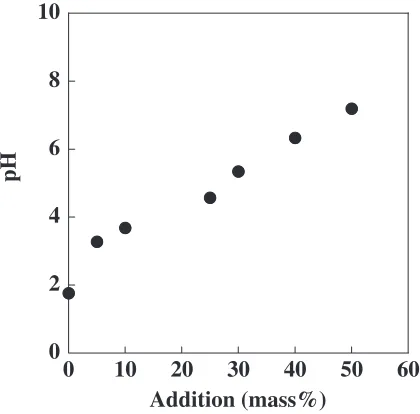
We determined the effect of PSA addition on the inhibition of AMD from mine waste. Figure 2 shows the pH of the solution eluted from mine waste with addition of PSA. The horizontal axis indicates the weight percentage of the addition of PSA to mine waste. Without addition of PSA, pH of the solution is acidic (around pH 2), and with increasing addition of PSA, pH of the solution gradually increased. The solution was neutralized (around pH 6) when the percentage of the PSA addition was 40%. Hereafter, we mixed 100 g of mine waste with 40 g of PSA to determine the properties of the mixture for the elution, which were compared with that of raw mine waste.
[image:2.595.305.547.79.464.2]Table 2 shows the pH of the solution and the elements eluted from mine waste and the mixture. Considering the chemical compositions of samples and the Japanese effluent standard, Al, Si, Ca, B, Cr, Mn, Fe, Cu, Zn, As, Cd, and Pb were selected as the detected elements. Various elements were eluted from the mine waste, and the concentrations of Fe, Cu, Zn, As, Cd, and Pb were above the Japanese effluent standards, indicated in the bottom line, and the pH of the
Table 1 Chemical compositions of mine waste and PSA.
Oxide (%) Mine waste PSA
Fe2O3 23.4 2.5
SO3 27.9 0.6
SiO2 44.4 24.2
Al2O3 0.9 17.8
Na2O — —
K2O 0.3 0.2
MgO 0.3 5.0
CaO 0.6 44.7
TiO2 1.9 3.5
Total 99.6 98.5
0 10 20 30 40 50 60
Intensity (a.u.)
degree, 2
θ
: Gypsum : Cristobalite : Sulfur : Pyrite
: Gehlenite : Anorthite
/
°
solution was strongly acidic (pH 1.9). The eluted concen-trations of Al, Fe, and As were 8.8 mg/L, 270 mg/L, and 8.3 mg/L, respectively, which are in good accordance with the results of AMD from mine waste of Matsuo mine reported by Nishiyama et al.13) On the other hand, the
concentrations of all elements eluted from the mixture were below the Japanese effluent standards, and the pH of the solution was neutralized to pH 6.4. It is noted that the concentrations of Si and Ca from the mixture were higher than those from raw waste, which is not a problem for human health and the environment. Therefore, it can be stated that PSA neutralizes eluted solution, and inhibits the discharge of most metals from mine waste such that they are below Japanese effluent standards.
Next, we determined the stability of inhibition with PSA addition. Figure 3 shows the pH of the solution eluted from mine waste and the mixture as a function of the number of elution tests. In the case of raw mine waste, the pH of the solution is initially around pH 2, and increases to become constant at about pH 4. This means that mine waste continues to generate acidic solution with pH 4. On the other hand, in the case of the mixture, the pH of the solution is kept constant at around pH 6. This means that the neutralization with addition of PSA is stable.
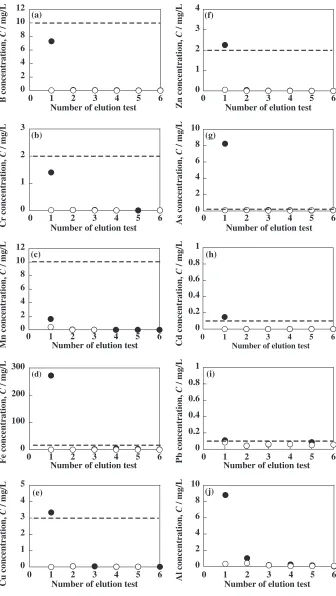
Figure 4 shows the element concentrations of (a) B, (b) Cr, (c) Mn, (d) Fe, (e) Cu, (f) Zn, (g) As, (h) Cd, (i) Pb, and (j) Al in the solution eluted from mine waste and the mixture. The dotted lines indicate Japanese effluent standards. In the case
of raw mine waste, as mentioned above, large amounts of elements were discharged during the first elution, and the concentrations of Fe, Cu, Zn, As, Cd, and Pb were above Japanese effluent standards. After 2 elutions, there were few detectable elements. This means that the elements in raw mine waste are highly soluble and almost all soluble elements eluted to the solution during the first elution. On the other hand, in the case of the mixture, the concentrations of all elements eluted from the mixture were below Japanese effluent standards regardless of the number of elution tests. This means that the inhibition of AMD with PSA addition is sustainable.
From these results, by mixing mine waste with PSA at a weight ratio of mine waste to ash of 10:4, the eluted solution becomes neutral and the concentration of most metals in the leachant drops below the Japanese effluent standards. The inhibition of AMD with addition of PSA is sustainable.
3.3 Chemical properties of the mixture
We determined the properties of the mixture after the elution test.
Table 3 shows the chemical compositions of mine waste and the mixture after the elution test. The third column indicates the chemical composition of the mixture before the elution test, which was calculated from the chemical compositions on Table 1. The Fe content of mine waste after the elution test decreased due to the elution of a large amount of Fe, as shown in Table 2. The mixture after the
0
2
4
6
8
10
0
10
20
30
40
50
60
pH
Addition (mass%)
[image:3.595.65.275.75.282.2]Fig. 2 pH of solution eluted from mine waste with addition of PSA.
Table 2 pH of the solution and the elements eluted from mine waste and the mixture.
Eluted elements (mg/L)
pH
Al Si Ca B Cr Mn Fe Cu Zn As Cd Pb
Mine waste 8.9 2.2 26.8 7.3 1.4 1.6 272 3.4 2.3 8.3 0.15 0.11 1.9
Mine waste + PSA (40%) 0.3 3.7 318 0.05 N.D. 0.4 N.D. N.D. 0.06 0.08 N.D. 0.08 6.4
Quality standard of waste water <10 <2 <10 <10 <3 <2 <0:1 <0:1 <0:1 5.8–8.6
N.D.=Not determined
0
2
4
6
8
10
0
1
2
3
4
5
6
Mine waste
Paper sludge ash
pH
Number of elution test
[image:3.595.319.534.75.285.2] [image:3.595.47.551.351.422.2]elution test had almost the same content as that before the elution test. Therefore, the chemical composition of the mixture is maintained due to little elution of elements from the mixture.
Figure 5 shows SEM photographs of (a) raw mine waste and (b) the mixture after the elution test. Although mine
wastes are fragments of rocks as shown in Fig. 5(a), platy crystals and gel-like materials on the surface of fragments could be observed in the mixture after the elution test, as shown in Fig. 5(b). The sizes of fragments after the elution test are almost the same as those before the elution test.
Figure 6 shows X-ray diffraction patterns of the mixture 0
2 4 6 8 10 12
0 1 2 3 4 5 6
B concentration,
C
/ mg/L
Number of elution test (a)
0 1 2 3
0 1 2 3 4 5 6
Cr concentration,
C
/ mg/L
Number of elution test (b)
0 2 4 6 8 10 12
0 1 2 3 4 5 6
Mn concentration,
C
/ mg/L
Number of elution test (c)
0 100 200 300
0 1 2 3 4 5 6
Fe concentration,
C
/ mg/L
Number of elution test
(d)
0 1 2 3 4 5
0 1 2 3 4 5 6
Cu concentration,
C
/ mg/L
Number of elution test (e)
0 1 2 3 4
0 1 2 3 4 5 6
Zn concentration,
C
/ mg/L
Number of elution test (f)
0 2 4 6 8 10
0 1 2 3 4 5 6
As concentration,
C
/ mg/L
Number of elution test (g)
0 0.2 0.4 0.6 0.8 1
0 1 2 3 4 5 6
Cd concentration,
C
/ mg/L
Number of elution test
(h)
0 0.2 0.4 0.6 0.8 1
0 1 2 3 4 5 6
Pb concentration,
C
/ mg/L
Number of elution test (i)
0 2 4 6 8 10
0 1 2 3 4 5 6
Al concentration,
C
/ mg/L
Number of elution test (j)
[image:4.595.130.466.71.667.2]after the elution test. The crystalline phases in mine waste were almost the same, those of gehlenite and anorthite in PSA diminished, and the formation of gypsum occured. It is considered that the platy crystals shown in Fig. 5 could be gypsum, and the crystalline phases in mine waste are maintained.
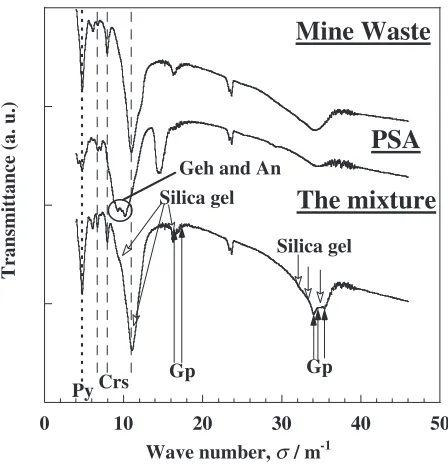
[image:5.595.284.541.83.469.2]Figure 7 shows FT-IR spectra of mine waste, PSA, and the mixture. The spectrum of the mixture is similar to that of mine waste, and most of the spectra of PSA, e.g.gehlenite and anorthite,14)diminishes for the mixture. For the spectrum
Table 3 Chemical compositions of mine waste and the mixture after elution test.
Oxide(%) Mine waste after elution test The mixture after elution test The mixture before elution test (calculated)
Fe2O3 6.1 11.2 17.5
SO3 26.4 20.7 20.2
SiO2 62.9 40.6 38.9
Al2O3 1.3 9.2 5.8
Na2O 0.2 — —
K2O 0.3 0.2 0.2
MgO 0.1 2.0 1.6
CaO 0.2 13.0 13.3
TiO2 2.1 2.4 2.3
Total 99.5 99.4 100.0
(a)
(b)
Fig. 5 Scanning electron micrographs of (a) raw mine waste and (b) the mixture after elution test.
0
10
20
30
40
50
60
Intensity (a.u.)
degree, 2
/
°
The mixture after elution test
: Gypsum : Cristobalite : Sulfur : Pyrite
θ
Fig. 6 X-ray diffraction patterns of the mixture after elution test.
0 10 20 30 40 50
Transmittance (a. u.)
Wave number, / mσ -1
Mine Waste
PSA
The mixture
Crs Py
Geh and An
Gp Gp
Silica gel Silica gel
[image:5.595.49.327.101.617.2] [image:5.595.315.539.525.757.2]of the mixture, the bands of cristobalite at 10.95, 7.95, and 6.23 m1, those of pyrite at 4.15 m1 sustained from mine waste, and those of gypsum at 35.49, 34.96, 34.04, 16.85, and 16.60 m1 appear,14) which are in good accordance with
XRD patterns as shown in Fig. 6. According to the report presented by Wajima et al.,15) a broad band centered at
33.8 m1corresponds to a merger by two bands at 35.0 and
32.0 m1, which are assigned to Si-OH and O-H bonds,
respectively. The band at 16.4 m1 is assigned to O-H
bending. The intense band at 11.0 m1 corresponds to Si-O
stretching bonds with the shoulder at 9.2 m1assigned to
Si-OH silanols. As a whole, the bands appear to originate from silica gel. The four bands are observed in the mixture, but not in raw mine waste and PSA. The FT-IR spectra, therefore, clarify the formation of silica gel (Si(OH)4) in the mixture.
This explains why Si remains in the solid in spite of the dissolution of two silicates, gehlenite and anorthite.
3.4 Growth Test
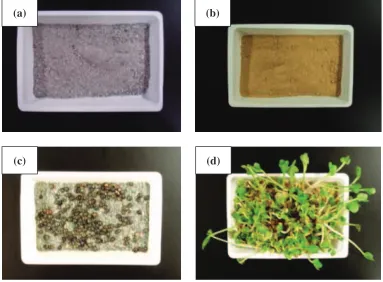
We applied the addition of PSA to afforestation of a mine site. Figure 8 shows the results of growth tests. The soils used for the growth tests were raw mine waste with a black color and the mixture with a whitish-brown color, which was a color combination of the brown hydroxide of Fe and white gypsum. Although Radish sprout did not grow on the mine waste, they could be grown on the mine waste treated with PSA. These results suggest that it is possible to apply the treatment of PSA for afforestation of a mine site.
3.5 Reaction mechanism
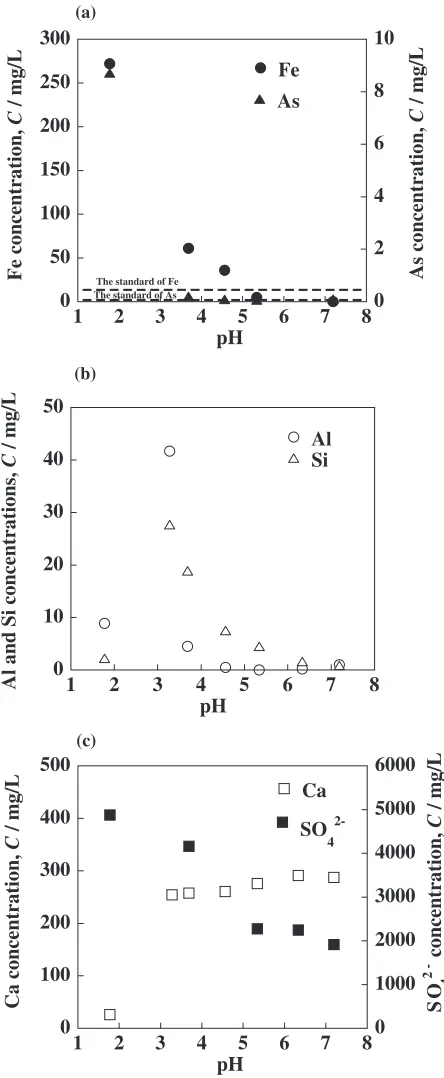
We attempt to propose the reaction mechanism for addition of PSA to mine waste. Figure 9 shows the
concen-trations of (a) Fe, As, (b) Al, Si, (c) Ca, SO42in the solution
eluted from mine waste with addition of PSA as a function of pH of the eluted solution after the elution test. The concentrations of Fe, As, and SO42, which mainly
origi-nated from mine waste, are marked by solid circle, triangle, and square, respectively. The concentrations of Al, Si, and Ca, which mainly originated from PSA, are marked by open circle, triangle, and square, respectively. The dotted lines in Fig. 9(a) indicate Japanese effluent standards of Fe and As. Without addition of PSA, pH of the solution was around 2. The eluted concentrations of Fe, As, and SO42 were high
(250 mg/L, 15 mg/L, and 5000 mg/L, respectively), and those of Si, Al, and Ca were low (2 mg/L, 8.9 mg/L, and 26.8 mg/L, respectively). The eluted elements, such as Fe, As, and SO42, was mainly originated from sulfide minerals,
pyrite and arsenopyrite. In the presence of oxygen and water, the oxidation of pyrite can be represented by the following reaction:
FeS2(s)þ7/2O2þH2O!Fe2þþ2SO42þ2Hþ ð1Þ
Fe2þþ1/4 O2þHþ!Fe3þþ1/2H2O ð2Þ
14Fe3þþFeS
2þH2O!15Fe2þþ2SO42þ16Hþ ð3Þ
The reaction (2) was promoted by bacteria, and increased the contents of Fe3þ, SO
42, and Hþ. The oxidation of
arsenopyrite is as follows:
4FeAsSþ11 O2þ6H2O
!4Fe2þþ4SO42þ4H3AsO3 ð4Þ
Fe2þþ1/4O
2þHþ!Fe3þþ1/2 H2O ð5Þ
FeAsSþ11Fe3þþ7H 2O !12Fe2þþH
3AsO3þHSO4þ10Hþ ð6Þ
(a)
(b)
(c)
(d)
[image:6.595.106.489.75.357.2]The reaction (5) was also promoted by bacteria, and increased the contents of Fe3þ, SO
42, H3AsO3and Hþ. The
dissolution of pyrite and arsenopyrite supplied Fe3þinto the solution according to the reaction (2) and (5), and promote the dissolution of pyrite and arsenopyrite according to reaction (3) and (6). At the same time, the similar oxidation reaction of other sulfide minerals, such as chalcopyrite, wurtzite, sphalerite, alabandite, and galena, occurred. From these results, pH of the solution was acidic (around 2), and the concentrations of eluted elements were high. It is noted
that Fe and As in the solution would be mostly present as Fe3þand As5þ, respectively, due to the oxidation of As3þto As5þ.16,17)
With addition of PSA, the concentrations of Si, Al, and Ca increased due to the dissolution of PSA. Dissolution of silicates, such as gehlenite and anorthite, can neutralize acid by the consumption of protons (Hþ), but their dissolution rate is slow in the neutral pH range. These minerals dissolve more rapidly as pH decreases, and provide more acid neutralization under acidic conditions, as follows:18)
Ca2Al2SiO7þ10Hþ!2Ca2þþ2Al3þþSi(OH)4 ð7Þ
CaAl2Si2O8þ8Hþ!Ca2þþ2Al3þþ2Si(OH)4 ð8Þ
[image:7.595.56.278.73.612.2]The mine waste easily dissolved the elements into the solution, and became strongly acidic. With addition of PSA, silicates in PSA dissolved into and neutralized strongly acidic solution, and diminished after the elution test, as shown in Fig. 6.
With increasing pH of the solution due to the dissolution of PSA, the eluted concentrations of Fe and As gradually deceased to be below Japanese effluent standards at 5.3 and 4.6, respectively (Fig. 9(a)). The concentrations of Al and Si, also decreased (Fig. 9(b)). The solubility of hydroxide of Fe and other metals (Cu, Zn, Pb, Al, Cd) decrease with increasing pH, and hydroxylate and precipitate as solid in neutralized solution.19,20) The large amount of Fe in the solution precipitated as Fe hydroxide, and anionic metals (As, Cr, Mn, B, Si) in the solution coprecipitate with Fe hydroxide.21,22) Furthermore, the increasing in the pH to neutral enables the reduction or retardation of the catalytic bacterial activity and therefore can reduce the rate of the biological oxidation of the sulphur present in the mining residues.23) On the other hand, with increasing pH of the
solution, the concentration of Ca was constant at approx-imately 300 mg/L, and that of SO42decreased (Fig. 9(c)). It
is reported that the amount of Ca dissolved from PSA in HCl solution in the same pH range is approximately 1500 mg/ L.15)It is considered that dissolved Ca2þreacted with SO
42
to form gypsum and equilibrated around 300 mg/L for the concentration of Ca, that is to say, the quantity of dissolved Ca that was more than 300 mg/L reacted with SO42 in the
solution to decrease the concentration of SO42.
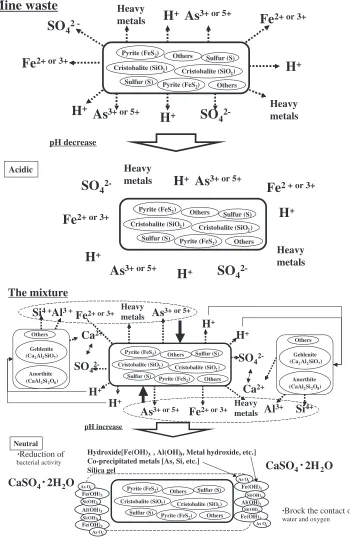
In summary, we propose the following mechanism for the treatment of mine waste with PSA, as shown in Fig. 10. In the case of raw mine waste, the soluble phases, such as pyrite, sulfur, etc., dissolve to water, and the pH of the solution decreases. As a result, sulfuric AMD with heavy metals generates. In the case of mine waste with PSA, PSA is alkaline and the solubility in water is little. Mine waste generates acidic solution to dissolve PSA into the solution. Silicate crystalline phases, gehlenite and anorthite, dissolve into the acidic solution to neutralize the pH of the solution. By neutralizing the solution, dissolved metals from mine waste, such as Fe, As and other heavy metals, and Si and Al from PSA hydroxylate, precipitate, and co-precipitate in the solid. In precipitation, Si reacts with Al, Fe, and other metals to generate gel.24) The gel retains the heavy metals, and is covered with particles of mine waste to disturb the contact of the waste with water and oxygen, which is a similar phenomenon to silica coating reported in previous
pa-0 50 100 150 200 250 300
0 2 4 6 8 10
1 2 3 4 5 6 7 8
Fe
As
Fe concentration,
C
/ mg/L
As concentration,
C
/ mg/L
pH
(a)
The standard of Fe The standard of As
0 10 20 30 40 50
1 2 3 4 5 6 7 8
Al Si
Al and Si concentrations,
C
/ mg/L
pH
(b)
0 100 200 300 400 500
0 1000 2000 3000 4000 5000 6000
1 2 3 4 5 6 7 8
Ca
SO
4
2-Ca concentration,
C
/ mg/L
SO
4
2 - concentration,
C
/ mg/L
pH
(c)
pers.25–27) Additionally, the increase in pH permits the
reduction of catalytic bacterial activity and reduces the rate of oxidation in the mining residue. It is considered that these phenomena inhibit the oxidation and dissolution of the sulphuric minerals. On the other hand, Ca from PSA reacted with SO42from mine waste to generate gypsum. Therefore,
the color of mine waste with PSA after the elution test is white-brown, which is a blend of brown Fe(OH)3and white
gypsum. From these results, mine waste mixed with PSA is a favorable material for afforestation for a mine waste site.
4. Conclusion
In this study, we studied remediation of mine waste using paper sludge ash. We determined the effect of the addition of PSA to AMD discharged from mine waste. We also attempted to grow plants on a mixture of PSA and AMD to assist with afforestation of mine areas.
The results showed that by mixing mine waste with paper sludge ash (at a weight ratio of mine waste to ash of 10:4) the eluted solution became neutral and the concentrations of
3+ or 5+
H
+Sulfur (S) Pyrite (FeS )2
Mine waste
Others
pH decrease
Acidic
Cristobalite (SiO )2
Sulfur (S)
Others
Fe
2+ or 3+SO
42-As
3+ or 5+SO
42-Fe
2+ or 3+Heavy metals Heavy
metals
As
H
+H
+H
+Sulfur (S)
Pyrite (FeS )2 Others
Cristobalite (SiO )2
Sulfur (S)
Others
Fe
2 + or 3+SO
42-As
3+ or 5+SO
42-Fe
2+ or 3+Heavy metals Heavy
metals
As
3+ or 5+H
+H
+H
+H
+Anorthite (CaAl2Si O2 8)
Gehlenite (Ca2Al2SiO7)
Others
Sulfur (S)
The mixture
Others
pH increase
Cristobalite (SiO )2 Sulfur (S)
Pyrite (FeS )2 Others
Fe
2+ or 3+SO
42-As
3+ or 5+SO
42-Heavy metals Heavy
metals
H
+H
+H
+H
+Anorthite (CaAl2Si2O8)
Gehlenite (Ca2Al2SiO7)
Others
Si
4+Al
3+Si
4 +Al
3 +Ca
2+Ca
2+As
3+ or 5+Fe
2+ or 3+Sulfur (S) Others
Cristobalite (SiO )2 Sulfur (S)
Pyrite (FeS )2 Others
CaSO
4·
2H
2O
CaSO
4·
2H
2O
Neutral
Hydroxide[Fe(OH)3 3, Metal hydroxide, etc.]
Co-precipitated metals [As, Si, etc.] Silica gel
Fe(OH)3
Fe(OH)3
Al(OH)3
Al(OH)3 As O4 -As O4
-Si(OH)4 Si(OH)4
Fe(OH)3 As O4 -Si(OH)4
Fe(OH)3 As O4 -Si(OH)4
bacterial activity
water and oxygen
Cristobalite (SiO )2
Pyrite (FeS )2
Cristobalite (SiO )2
Pyrite (FeS )2
Cristobalite (SiO )2 Pyrite (FeS )2
Cristobalite (SiO )2 Pyrite (FeS )2
, Al(OH)
·Brock the contact of
[image:8.595.124.474.76.614.2]·Reduction of
most metals in the leachant dropped below the Japanese effluent standards. The inhibition of discharge AMD with addition of PSA is sustainable. Although Radish sprouts did not grow on the mine waste, they could be grown on the waste mixed with paper sludge ash. These results suggested that it is possible to use paper sludge ash for the remediation of mine waste sites.
REFERENCES
1) B. Gazea, K. Adam and A. Kontopoulos: Miner. Eng.9(1996) 23–42. 2) D. Feng, C. Aldrich and H. Tan: Miner. Eng.13(2000) 623–642. 3) D. M. Nicola and M. G. Stapleton: Environ. Pollut.119(2002) 303–
315.
4) E. K. Yanful, V. A. Bell and R. M. Woyshner: Can. Geothech. J.30
(1993) 578–587.
5) R. V. Nicholson, R. W. Ghillham, J. A. Cherry and E. J. Reardon: Can. Geotech. J.26(1988) 1–8.
6) R. V. Nicholson, R. W. Ghillham, J. A. Cherry and E. J. Reardon: Can. Geotech. J.29(1990) 402-3.
7) S. L. Barbour: Can. Geotech. J.27(1990) 398–401.
8) F. F. Akindunni, R. W. Ghillham and R. V. Nicholson: Can. Geotech. J.
28(1991) 446–451.
9) M. Aubertin: 2ndInt. Conf. Reduct. AMD, (1991) pp. 1–25. 10) B. Bussiere, J. Lelievre, J. Ouallet and D. Bois: Conf. on Min. Environ.,
(1995) pp. 59–68.
11) M. Singh and M. Garg: Cem. Concr. Res.29(1999) 309–314. 12) R. Kikuchi: Resour. Conserv. Recycl.31(2001) 137–147.
13) T. Nishiyama, T. Hodo, M. Yamada and M. Bessho: J. Jpn. Soc. Eng. Geol.43(2003) 390–395.
14) V. C. Farmer:The Infrared Spectra of Minerals(Mineralogical Society, London, 1974) pp. 111–370.
15) T. Wajima, K. Kuzawa, H. Ishimoto, O. Tamada, and T. Nishiyama: Am. Mineral.89(2004) 1694–1700.
16) Y. Tomioka, N. Hiroyoshi, and M. Tsunekawa: Shigen-to-Sozai121
(2005) 399–406.
17) Y. Tomioka, N. Hiroyoshi, and M. Tsunekawa: Resour. Process.52
(2005) 145–150.
18) A. K. Lapakko: 3rdInt. Conf. on Abat. Acidic Drain. (1994) pp. 129– 137.
19) J. Kragten: Atlas of Metal-Legand Equilibria in Aqueous Solution, (Ellis Horwood Limited, 1978).
20) V. A. Metzner: Water Sew. Work.124(1977) 98.
21) S. Tokunaga: J. Water Environ. Technol.20(1997) 452–454. 22) M. Bessho, T. Wajima, K. Nakazawa and T. Nishiyama:
Shigen-to-Sozai116(2000) 131–135.
23) G. J. Zagury, S. K. Narasiah and R. D. Tyagi: Environ. Technol.15
(1994) 517.
24) R. K. Iler:The Chemistry of Silica(John Wiley & Sons, Inc., New York, 1979) pp. 25–30.
25) V. P. Evangelou: Ecol. Eng.17(2001) 165–178. 26) K. Fytas and P. Bousquet: CIM Bull.95(2002) 96–99.