Computerized Analysis of a Verbal Fluency Test
James O. Ryan1, Serguei Pakhomov1, Susan Marino1, Charles Bernick2, and Sarah Banks2
1College of Pharmacy, University of Minnesota 2Lou Ruvo Center for Brain Health, Cleveland Clinic
{ryanx765, pakh0002, marin007}@umn.edu {bernicc, bankss2}@ccf.org
Abstract
We present a system for automated pho-netic clustering analysis of cognitive tests of phonemic verbal fluency, on which one must name words starting with a specific letter (e.g., ‘F’) for one minute. Test re-sponses are typically subjected to man-ual phonetic clustering analysis that is labor-intensive and subject to inter-rater variability. Our system provides an
au-tomated alternative. In a pilot study,
we applied this system to tests of 55 novice and experienced professional fight-ers (boxfight-ers and mixed martial artists) and found that experienced fighters produced significantly longer chains of phonetically similar words, while no differences were found in the total number of words pro-duced. These findings are preliminary, but strongly suggest that our system can be used to detect subtle signs of brain damage due to repetitive head trauma in individu-als that are otherwise unimpaired.
1 Introduction
The neuropsychological test of phonemic verbal fluency (PVF) consists of asking the patient to generate as many words as he or she can in a lim-ited time (usually 60 seconds) that begin with a specific letter of the alphabet (Benton et al., 1989). This test has been used extensively as part of larger cognitive test batteries to study cognitive impair-ment resulting from a number of neurological con-ditions, including Parkinson’s and Huntington’s diseases, various forms of dementia, and traumatic brain injury (Troyer et al., 1998a,b; Raskin et al., 1992; Ho et al., 2002). Patients with these dis-orders tend to generate significantly fewer words on this test than do healthy individuals. Prior studies have also found that clustering (the degree
to which patients generate groups of phonetically similar words) and switching (transitioning from one cluster to the next) behaviors are also sensi-tive to the effects of these neurological conditions. Contact sports such as boxing, mixed martial arts, football, and hockey are well known for high prevalence of repetitive head trauma. In re-cent years, the long-term effects of repetitive head trauma in athletes has become the subject of inten-sive research. In general, repetitive head trauma is a known risk factor for chronic traumatic en-cephalopathy (CTE), a devastating and untreat-able condition that ultimately results in permanent disability and premature death (Omalu et al., 2010; Gavett et al., 2011). However, little is currently known about the relationship between the amount of exposure to head injury and the magnitude of risk for developing these conditions. Furthermore, the development of new behavioral methods aimed at detection of subtle early signs of brain impair-ment is an active area of research.
The PVF test is an excellent target for this re-search because it is very easy to administer and has been shown to be sensitive to the effects of acute traumatic brain injury (Raskin and Rearick, 1996). However, a major obstacle to using this test widely for early detection of brain impairment is that clus-tering and switching analyses needed to detect these subtle changes have to be done manually. These manual approaches are extremely labor-intensive, and are therefore limited in the types of clustering analyses that can be performed. Manual methods are also not scalable to large numbers of tests and are subject to inter-rater variability, mak-ing the results difficult to compare across subjects, as well as across different studies. Moreover, tra-ditional manual clustering and switching analyses rely primarily on word orthography to determine phonetic similarity (e.g., by comparing the first two letters of two words), rather than phonetic rep-resentations, which would be prohibitively
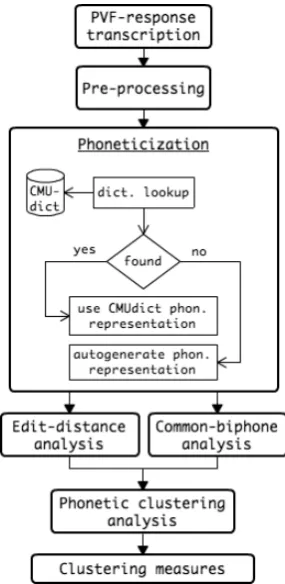
Figure 1: High-level system architecture and workflow.
consuming to obtain by hand.
Phonetic similarity has been investigated in ap-plication to a number of research areas, including spelling correction (Toutanova and Moore, 2002), machine translation (Knight and Graehl, 1998; Kondrak et al., 2003), cross-lingual information retrieval (Melamed, 1999; Fujii and Ishikawa, 2001), language acquisition (Somers, 1998), his-torical linguistics (Raman et al., 1997), and social-media informatics (Liu et al., 2012); we propose a novel clinical application.
Our objective was to develop and pilot-test a relatively simple, but robust, system for automatic identification of word clusters, based on phonetic content, that uses the CMU Pronouncing Dictio-nary, a decision tree-based algorithm for gener-ating pronunciations for out-of-dictionary words, and two different approaches to calculating pho-netic similarity between words.
We first describe the system architecture and our phonetic-similarity computation methods, and then present the results of a pilot study, using data from professional fighters, demonstrating the util-ity of this system for early detection of subtle signs of brain impairment.
[image:2.595.109.252.61.354.2]2 Automated Clustering Analysis
Figure 1 shows the high-level architecture and workflow of our system.
2.1 Pronunciation Dictionary
We use a dictionary developed for speech recog-nition and synthesis applications at the Carnegie Mellon University (CMUdict). CMUdict contains phonetic transcriptions, using a phone set based on ARPABET (Rabiner and Juang, 1993), for North American English word pronunciations (Weide,
1998). We used the latest version, cmudict.0.7a,
which contains 133,746 entries.
From the full set of entries in CMUdict, we removed alternative pronunciations for each word, leaving a single phonetic representation for each heteronymous set. Additionally, all vowel symbols were stripped of numeric stress
mark-ings (e.g., AH1 → AH), and all multicharacter
phone symbols were converted to arbitrary single-character symbols, in lowercase to distinguish these symbols from the original single-character
ARPABET symbols (e.g., AH → c). Finally,
whitespace between the symbols constituting each phonetic representation was removed, yielding compact phonetic-representation strings suitable for computing our similarity measures.
To illustrate, the CMUdict pronunciation entry
for the wordphonetic,[F AH0 N EH1 T IH0
K], would be represented asFcNiTmK.
2.2 Similarity Computation
Our system uses two methods for determining phonetic similarity: edit distance and a common-biphone check. Each of these methods gives a measure of similarity for a pair of phonetic
repre-sentations, which we respectively call a
phonetic-similarity score (PSS) and a common-biphone
score(CBS).
For PSS, we first compute the Levenshtein distance (Levenshtein, 1966) between compact phonetic-representation strings and normalize that to the length of the longer string; then, that value
is subtracted from 1. PSS values range from0to
1, with higher scores indicating greater similarity.
The CBS is binary, with a score of1given for two
phonetic representations that have a common
ini-tial and/or final biphone, and0for two strings that
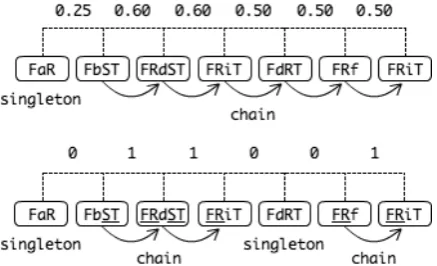
Figure 2: Phonetic chain and common-biphone chain (below) for an example PVF response.
2.3 Phonetic Clustering
We distinguish between two ways of defining
pho-netic clusters. Traditionally, any sequence of n
words in a PVF response is deemed to form a clus-ter if all pairwise word combinations for that se-quence are determined to be phonetically similar by some metric. In addition to this method, we developed a less stringent approach in which we
definechainsinstead of clusters.
A chain comprises a sequence for which the phonetic representation of each word is similar to that of the word immediately prior to it in the chain (unless it is chain-initial) and the word sub-sequent to it (unless it is chain-final). Lone words
that do not belong to any cluster constitute
sin-gletonclusters. We call chains based on the
edit-distance methodphonetic chains, and chains based
on the common-biphone methodcommon-biphone
chains; both are illustrated in Figure 2.
Unlike the binary CBS method, the PSS method produces continuous edit-distance values, and therefore requires a threshold for categorizing a word pair as similar or dissimilar. We determine the threshold empirically for each letter by taking a random sample of 1000 words starting with that letter in CMUdict, computing PSS scores for each
pairwise combination (n = 499,500), and then
setting the threshold as the value separating the upper quintile of these scores. With the common-biphone method, two words are considered
pho-netically similar simply if their CBS is1.
2.4 System Overview
Our system is written in Python, and is available
online.1 The system accepts transcriptions of a
1http://rxinformatics.umn.edu/
downloads.html
PVF response for a specific letter and, as a pre-processing step, removes any words that do not be-gin with that letter. After pre-processing, all words are phoneticized by dictionary lookup in our mod-ified CMUdict. For out-of-dictionary words, we automatically generate a phonetic representation with a decision tree-based grapheme-to-phoneme algorithm trained on the CMUdict (Pagel et al., 1998).
Next, PSSs and CBSs are computed sequen-tially for each pair of contiguous phonetic rep-resentations, and are used in their respective methods to compute the following measures:
mean pairwise similarity score (MPSS), mean
chain length (MCL), and maximum chain length
(MXCL). Singletons are included in these
calcula-tions as chains of length1.
We also calculate equivalent measures for clus-ters, but do not present these results here due to space limitations, as they are similar to those for chains. In addition to these measures, our sys-tem produces a count of the total number of words that start with the letter specified for the PVF test (WCNT), and a count of repeated words (RCNT).
3 Pilot Study
3.1 Participants
We used PVF tests from 55 boxers and mixed
martial artists (4 women, 51 men; mean age27.7
y.o., SD6.0) that participated in the Professional
Fighters Brain Health Study (PFBH). The PFBH is a longitudinal study of unarmed active profes-sional fighters, retired profesprofes-sional fighters, and age/education matched controls (Bernick et al., in press). It is designed to enroll over 400 partici-pants over the next five years. The 55 participartici-pants in our pilot represent a sample from the first wave of assessments, conducted in summer of 2012. All 55 participants were fluent speakers of English and were able to read at at least a 4th-grade level. None of these participants fought in a professional or amateur competition within 45 days prior to test-ing.
3.2 Methods
0.0 0.1 0.2 0.3
Common Biphone Edit−Distance
mPSS
Fighter_Group
High Exposure Low Exposure
(a) Mean pairwise similarity score
0 1 2 3
Common Biphone Edit−Distance Manual
mCL
Fighter_Group
High Exposure Low Exposure
(b) Mean chain/cluster length
0 2 4
Common Biphone Edit−Distance Manual
mxCL
Fighter_Group
High Exposure Low Exposure
(c) Max chain/cluster length
Figure 3: Computation-method and exposure-group comparisons showing significant differences
be-tween the low- and high-exposure fighter groups on MPSS, MCL, and MXCL measures. Error bars
represent 95% confidence intervals around the means.
Fighters with zero professional fights were
as-signed a score of0; fighters with between 1 and 15
total fights, but only one or fewer fights per year,
were assigned a score of1; fighters with 1-15
to-tal fights, and more than one fight per year, got a
score of2; fighters with more than 15 total fights,
but only one or fewer fights per year, got a score
of3; remaining fighters, with more than 15 fights
and more than one fight per year, were assigned
the highest score of4.
Due to the relatively small sample size in our pilot study, we combined groups with scores of
0 and 1 to constitute the low-exposure group
(n = 25), and the rest were assigned to the
high-exposuregroup (n= 30).
All participants underwent a cognitive test bat-tery that included the PVF test (letter ‘F’). Their responses were processed by our system, and means for our chaining variables of interest, as well as counts of total words and repetitions, were compared across the low- and high-exposure groups. Additionally, all 55 PVF responses were
subjected tomanualphonetic clustering analysis,
following the methodology of Troyer et al. (1997). With this approach, clusters are used instead of chains, and two words are considered phonetically similar if they meet any of the following condi-tions: they begin with the same two orthographic letters; they rhyme; they differ by only a vowel
sound (e.g.,flipandflop); or they are homophones.
For each clustering method, the differences in means between the groups were tested for sta-tistical significance using one-way ANOVA ad-justed for the effects of age and years of education. Spearman correlation was used to test for
associ-ations between continuous variables, due to non-linearity, and to directly compare manually deter-mined clustering measures with corresponding au-tomatically determined chain measures.
4 Results
The results of comparisons between the clustering methods, as well as between the low- and
high-exposure groups, are illustrated in Figure 3.2
We found a significant difference (p < 0.02)
in MPSS between the high- and low-exposure
groups using the common-biphone method (0.15
vs. 0.11), while with edit distance the difference
was small (0.29vs.0.28) and not significant
(Fig-ure 3a). Due to infeasibility,MPSS was not
calcu-lated manually.
Mean chain sizes determined by the common-biphone method correlated with manually deter-mined cluster sizes more strongly than did chain
sizes determined by edit distance (ρ = 0.73, p <
0.01 vs. ρ = 0.48, p < 0.01). Comparisons of
maximum chain and cluster sizes showed a
sim-ilar pattern (ρ = 0.71, p < 0.01 vs. ρ = 0.39,
p <0.01).
Both automatic methods showed significant
dif-ferences (p < 0.01) between the two groups in
MCL andMXCL, with each finding longer chains
in the high-exposure group (Figure 3b, 3c); how-ever, slightly larger differences were observed
us-ing the common-biphone method (MCL:2.79 vs.
2.21by common-biphone method, 3.23 vs. 2.80
by edit-distance method;MXCL:3.94vs.2.64by
common biphone,4.94vs. 3.76by edit distance).
Group differences for manually determined MCL
and MXCL were also significant (p < 0.05 and
p < 0.02, respectively), but less so (MCL:1.71
vs.1.46;MXCL:4.0vs.3.04).
5 Discussion
While manual phonetic clustering analysis yielded significant differences between the low- and high-exposure fighter groups, our automatic approach, which utilizes phonetic word representations, ap-pears to be more sensitive to these differences; it also appears to produce less variability on cluster-ing measures. Furthermore, as discussed above, automatic analysis is much less labor-intensive, and thus is more scalable to large numbers of tests. Moreover, our system is not prone to human error during analysis, nor to inter-rater variability.
Of the two automatic clustering methods, the common-biphone method, which uses binary sim-ilarity values, found greater differences between
groups in MPSS, MCL, and MXCL; thus, it
ap-pears to be more sensitive than the edit-distance method in detecting group differences. Common-biphone measures were also found to better cor-relate with manual measures; however, both au-tomated methods disagreed with the manual ap-proach to some extent. The fact that the auto-mated common-biphone method shows significant differences between group means, while having less variability in measurements, suggests that it may be a more suitable measure of phonetic clus-tering than the traditional manual method.
These results are particularly important in light of the difference in WCNT means between low-and high-exposure groups being small low-and not
sig-nificant (WCNT:17.6, SD5.1vs. 18.7, SD4.7;
p= 0.24). Other studies that used manual
cluster-ing and switchcluster-ing analyses reported significantly more switches for healthy controls than for indi-viduals with neurological conditions (Troyer et al., 1997). These studies also reported differences in the total number of words produced, likely due to investigating already impaired individuals.
Our findings show that the low- and high-exposure groups produced similar numbers of words, but the high-exposure group tended to produce longer sequences of phonetically simi-lar words. The latter phenomenon may be
inter-preted as a mild form of perseverative (
stuck-in-set/repetitive) behavior that is characteristic of
dis-orders involving damage to frontal and subcortical brain structures.
To test this interpretation, we correlated MCL
and MXCL, the two measures with greatest
dif-ferences between low- and high-exposure fighters, with the count of repeated words (RCNT). The
resulting correlations were 0.41 (p = 0.01) and
0.48(p <0.001), respectively, which supports the
perseverative-behavior interpretation of our find-ings.
Clearly, these findings are preliminary and need to be confirmed in larger samples; however, they plainly demonstrate the utility of our fully auto-mated and quantifiable approach to characteriz-ing and measurcharacteriz-ing clustercharacteriz-ing behavior on PVF tests. Pending further clinical validation, this sys-tem may be used for large-scale screening for sub-tle signs of certain types of brain damage or de-generation not only in contact-sports athletes, but also in the general population.
6 Acknowledgements
We thank the anonymous reviewers for their in-sightful feedback.
References
Atsushi Fujii and Tetsuya Ishikawa. 2001.
Japanese/English cross-language information
retrieval: Exploration of query translation and
transliteration. In Computers and the Humanities
35.4.
A.L. Benton, K.D. Hamsher, and A.B. Sivan. 1989. Multilingual aphasia examination.
C. Bernick, S.J. Banks, S. Jones, W. Shin, M. Phillips, M. Lowe, M. Modic. In press. Professional Fight-ers Brain Health Study: Rationale and methods. In
American Journal of Epidemiology.
Brandon E. Gavett, Robert A. Stern, and Ann C. Mc-Kee. 2011. Chronic traumatic encephalopathy: A potential late effect of sport-related concussive and
subconcussive head trauma. In Clinics in Sports
Medicine 30, no. 1.
Aileen K. Ho, Barbara J. Sahakian, Trevor W. Rob-bins, Roger A. Barker, Anne E. Rosser, and John R. Hodges. 2002. Verbal fluency in Huntington’s dis-ease: A longitudinal analysis of phonemic and
se-mantic clustering and switching. In
Neuropsycholo-gia 40, no. 8.
Vladimir I. Levenshtein. 1966. Binary codes capable of correcting deletions, insertions and reversals. In
Fei Liu, Fuliang Weng, and Xiao Jiang. 2012. A broad-coverage normalization system for social media
lan-guage. In Proceedings of the 50th Annual Meeting
of the Association for Computational Linguistics: Long Papers-Volume 1. Association for Computa-tional Linguistics.
Kevin Knight and Jonathan Graehl. 1998. Machine transliteration. InComputational Linguistics 24.4.
Grzegorz Kondrak, Daniel Marcu, and Kevin Knight. 2003. Cognates can improve statistical translation
models. In Proceedings of the 2003 Conference
of the North American Chapter of the Association for Computational Linguistics on Human Language Technology: Companion Volume of the Proceed-ings of HLT-NAACL 2003. Association for Compu-tational Linguistics.
I. Dan Melamed. 1999. Bitext maps and alignment
via pattern recognition. InComputational
Linguis-tics 25.1.
Bennet I. Omalu, Julian Bailes, Jennifer Lynn Ham-mers, and Robert P. Fitzsimmons. 2010. Chronic traumatic encephalopathy, suicides and parasuicides in professional American athletes: The role of the
forensic pathologist. In The American Journal of
Forensic Medicine and Pathology 31, no. 2.
Vincent Pagel, Kevin Lenzo, and Alan Black. 1998. Letter to sound rules for accented lexicon compres-sion.
Lawrence Rabiner and Biing-Hwang Juang. 1993. Fun-damentals of speech recognition.
Anand Raman, John Newman, and Jon Patrick. 1997. A complexity measure for diachronic
Chi-nese phonology. InProceedings of the SIGPHON97
Workshop on Computational Linguistics at the ACL97/EACL97.
Sarah A. Raskin, Martin Sliwinski, and Joan C. Borod. 1992. Clustering strategies on tasks of verbal fluency in Parkinson’s disease. InNeuropsychologia 30, no. 1.
Sarah A. Raskin and Elizabeth Rearick. 1996. Verbal fluency in individuals with mild traumatic brain in-jury. InNeuropsychology 10, no. 3.
Harold L. Somers. 1998. Similarity metrics for align-ing children’s articulation data. InProceedings of the 36th Annual Meeting of the Association for Compu-tational Linguistics and 17th International Confer-ence on Computational Linguistics-Volume 2. Asso-ciation for Computational Linguistics.
Kristina Toutanova and Robert C. Moore. 2002. Pro-nunciation modeling for improved spelling
correc-tion. InProceedings of the 40th Annual Meeting of
the Association for Computational Linguistics. As-sociation for Computational Linguistics.
Angela K. Troyer, Morris Moscovitch, and Gor-don Winocur. 1997. Clustering and switching as two components of verbal fluency: Evidence from
younger and older healthy adults. In
Neuropsychol-ogy, 11.
Angela K. Troyer, Morris Moscovitch, Gordon Winocur, Michael P. Alexander, and Don Stuss. 1998a. Clustering and switching on verbal fluency: The effects of focal frontal- and temporal-lobe le-sions. InNeuropsychologia.
Angela K. Troyer, Morris Moscovitch, Gordon Winocur, Larry Leach, and Morris Freedman. 1998b. Clustering and switching on verbal fluency tests in Alzheimer’s and Parkinson’s disease. In
Journal of the International Neuropsychological So-ciety 4, no. 2.
Robert Weide. 2008. Carnegie
Mel-lon Pronouncing Dictionary, v. 0.7a.