1
PERCEPTION DIFFERENCES AND
SIMILARITIES REGARDING
SUPPLIER SATISFACTION – A
CASE STUDY
Master thesis
Student: B.D.B. (Bas) Brake, te
University of Twente
Faculty: Behavioural, Management and Social Sciences
Programme: Master in Business Administration
Track: Purchase and Supply Management
First supervisor: Dr. A.G. Sigurdardottir
Second supervisor: Prof. Dr. habil. H. Schiele Groenlo, 15 January, 2019
2
Abstract
The conducted research involves the exploration, which consists of a description and
explanation, of possible perception differences regarding supplier satisfaction within a buyer-supplier relationship. The goal of this master thesis is to answer the following research question “how is supplier satisfaction perceived from the buyer and supplier’s perspectives? ” The research was conducted at Alpha and included in total nineteen semi-structured interviews. Five participants from the buyer’s perspective were interviewed and fourteen participants divided among six strategic suppliers were interviewed. The collected data is analysed through a thematic framework approach, in order to compare within and between cases, thus the buyer’s and supplier’s perspective. Results indicate that the buyer’s and supplier’s perception in the conducted research, differ regarding some aspects on supplier satisfaction, this is relevant for both the buyer’s and supplier’s perspective, due to that perception gaps can provide a source for misunderstandings. However, considering the amount of analysed data it can be stated that ‘perceptual distance’ regarding ‘supplier satisfaction’ is limited. Based upon the concept of ‘social identification in organisational settings’ an explanation is provided why actors perceive ‘supplier satisfaction’ differently or similarly. It is assumed that an actor can identify himself on 1) organisational 2) team or subunit 3) or occupational level to evaluate ‘supplier satisfaction. This new insight contributes to a better understanding to the observed gap in literature if
‘supplier satisfaction’ is establish between entire organisations or individuals.1 Another finding is
that a supplier can be satisfied, while the supplier perceives that the relationship is not
profitable.2 A third contribution to existing research is that a distinction should be made between how satisfied a supplier is with the operative excellence of a buyer, when the supplier serves multiple business units from the buyer’s perspective. A final contribution is that results indicate that perception gaps are limited regarding supplier-satisfaction in a buyer-supplier relationship. Additionally, results do not indicate that there occurred any conflict caused by perception differences3 A limitation of the research is the cross-language setting of the interviewed participants, which threatens the validity of the research. In order to reduce the threat of the
1 See Hüttinger et al. ( 2012), p. 1204 2 See Vos et al. (2016), p. 4614
3
4
Table of contents:
1. The need to determine if the buyer and supplier’s perception about the quality of the relationship
differ ... 10
1.1 The goal to describe and explain (potential) perception differences regarding supplier satisfaction 12 1.2 A dyadic view regarding supplier satisfaction enriches our understanding of the buyer-supplier relationship ... 12
2. A review of relevant literature in order to answer the research question ... 14
2.1.1 Preferred customer a new approach in order to gain competitive advantage ... 14
2.1.2 The concept of ‘preferred customer’ explained through the social exchange theory ... 15
2.2 Customer attractiveness as antecedent in order to become a preferred customer ... 16
2.2.1 Customer attractiveness as antecedent for preferred customer ... 16
2.2.2 Customer attractiveness determined by the supplier’s expectations for future benefits ... 17
2.2.3 Operationalization of customer attractiveness between buyer and supplier ... 17
2.3 Supplier satisfaction the second antecedent in order to become a preferred customer ... 18
2.3.1 Satisfying suppliers in order to maintain access to capable suppliers from the buyers’ perspective ... 18
2.3.2 Supplier satisfaction is established when the supplier’s expectations are fulfilled ... 19
2.3.3 A review of the operationalization of supplier satisfaction ... 20
2.4 The same social stimuli perceived differently ... 23
2.4.1 Perception can be regarded as a form of categorisation ... 23
2.4.2 Individual differences determine how actors interpret and perceive the world ... 23
2.5 The influence of being part of a group ... 24
2.5.1 Social Identity theory as an explanation for group behaviour ... 25
2.5.2 The group ‘norm’ and the actor’s attitude and behaviour are determined by the social category ... 26
2.5.2 Self-categorization within organisations to differentiate different groups ... 27
2.5.3 Social identification in organisational contexts as an explanation for the actor’s evaluation of satisfaction ... 28
2.6 Conflicts created through a different perception ... 29
2.6.1 Conflict as a consequence of perceptual distance ... 29
5
2.7 A brief summary of the reviewed literature ... 31
2.8 Explanation and justification of research model ... 32
3. Research Methodology ... 36
3.1. Data Collection through semi-structured interviews... 36
3.2 Case study as the selected research design ... 38
3.2.1 Five autonomous business units from the buyer’s perspective and the shared relationship with the same supply-base ... 39
3.3 Reliability and validity of the conducted research ... 40
3.4 Analysis of the collected data through a thematic framework approach: ... 42
4. Perception differences and similarities described from the buyer’s and supplier’s perspective. ... 45
4.1 Within-case analysis to determine what the buyer perceives ... 45
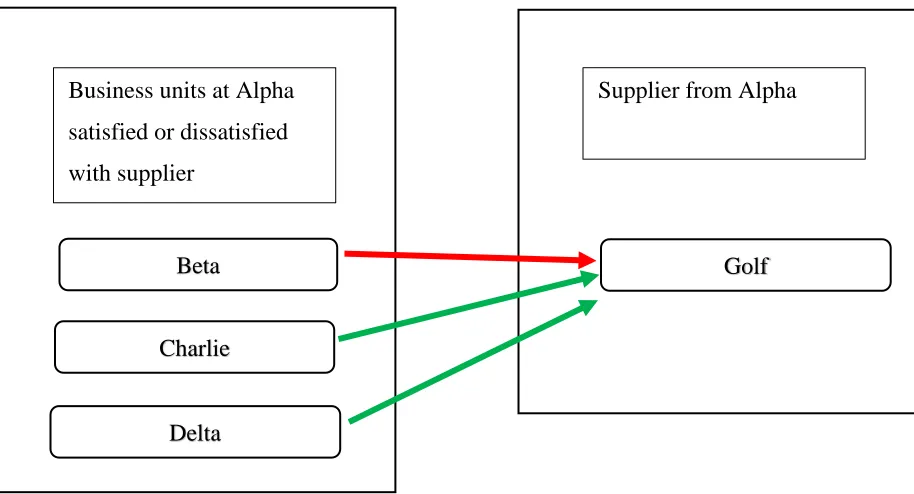
4.1.1 Beta is not satisfied with the supplier Golf, while Charlie and Delta are satisfied ... 46
4.1.2 Delta perceives Hotel not as reliable and is therefore dissatisfied ... 48
4.1.3 Delta, Echo and Foxtrot are satisfied with the supplier India; however, Foxtrot perceives growth opportunities, operative excellence, reliability and profitability differently. ... 51
4.1.4 Both Beta and Echo are satisfied with the supplier Juliet, no perceptual distance between the business units. ... 53
4.1.5. Foxtrot perceives that Lima is only satisfied with a certain business unit, while Lima is dissatisfied about Alpha as an organisation ... 55
4.1.6. No major differences between Charlie and Beta and their relation with Kilo ... 57
4.2 Within-case analysis to determine what the suppliers perceive ... 58
4.2.1 From a commercial and operational role ‘innovation possibilities’ is perceived differently at the supplier Golf ... 59
4.2.2 From Hotel’s account manager’s perspective ‘operative excellence’ should be measured at business unit level rather than the buying organisation as a whole. ... 62
6
4.2.4 Juliet consider themselves as service provider and is therefore not interested in innovation
possibilities ... 66
4.2.5 Lima is satisfied with Foxtrot, while being dissatisfied about Alpha as a whole organisation ... 68
4.2.6 Kilo is satisfied with Alpha, despite of delay in decision-making at the buyer’s perspective. ... 71
4.3. Cross-case analysis – to determine if there are differences between what the buyer and supplier perceive. ... 73
4.3.1 No major perceptual differences between the actors of Golf and Alpha ... 73
4.3.2 The expectations of the supplier Hotel are perceived to be fulfilled, confirmed by both the supplier’s and buyers’ perspective ... 73
4.3.3 Perceptual distance between Alpha and India regarding ‘operative excellence’. ... 74
4.3.4 Alpha perceives that Juliet is satisfied with the offered innovation possibilities, while Juliet is not interested in innovation possibilities ... 74
4.3.5 Lima recognises the growth opportunities, while Alpha believes that Lima is dissatisfied about the growth opportunities ... 74
4.3.6 Kilo perceives that ‘operative excellence’ can be improved, while Alpha perceives that Kilo is satisfied ... 75
4.3.7 Conclusion, results indicate that perceptual distance is limited regarding ‘supplier satisfaction’ within a buyer-supplier relationship ... 75
5. New insights regarding supplier satisfaction from a dyadic view and limitations of the research ... 76
5.1. Discussion: Social identification in organisational context as explanation for ‘perceptual distance’ ... 76
5.3 Managerial implications: Identifying ‘perceptual distance’ and improving ‘perceptual alignment’ due to ‘social identification in organisation settings’. ... 79
5.4 The main recommendation for future research is to integrate social identification in organisational settings into the concept of supplier satisfaction ... 80
6.3 Limitations of the research ... 81
References ... 83
8
Index of figures
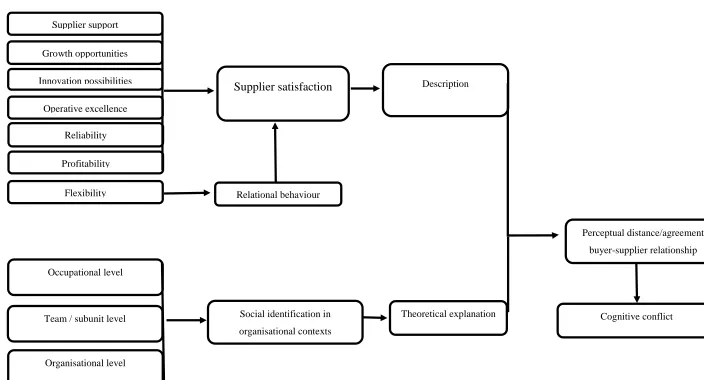
Figure 1: Research Model 34
Figure 2: An overview of the relationships between the business units and suppliers 40
Figure 3:Satisfaction overview from the buyer’s perspective regarding Golf 48
Figure 4: Satisfaction overview from the buyer’s perspective regarding Hotel 51
Figure 5: Satisfaction overview from the buyer’s perspective regarding India 53
Figure 6: Satisfaction overview from the buyer’s perspective regarding Juliet 55
Figure 7: Satisfaction overview from the buyer’s perspective regarding Lima 58
Figure 8: Satisfaction overview from the buyer’s perspective regarding Kilo 59
Figure 9: Satisfaction overview from Golf perspective regarding Alpha 62
Figure 10: Satisfaction overview from Hotel’s perspective regarding Alpha 65
Figure 11: Satisfaction overview from India’s perspective regarding Alpha 67
Figure 12: Satisfaction overview from Juliet’s perspective regarding Alpha 68
Figure 13: Satisfaction overview from Lima’s perspective regarding Alpha 71
Figure 14: Satisfaction overview from Kilo’s perspective regarding Alpha 73
Index of tables
Table 1 : Operationalization of supplier satisfaction 23
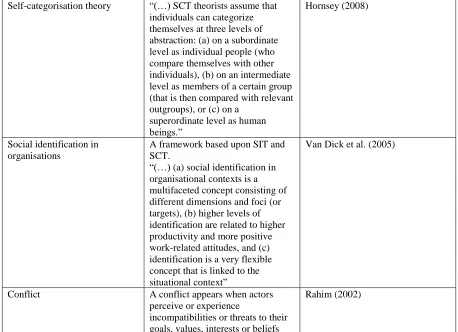
Table 2: Social identification in organizational settings 28
Table 3: An overview of the reviewed literature 32
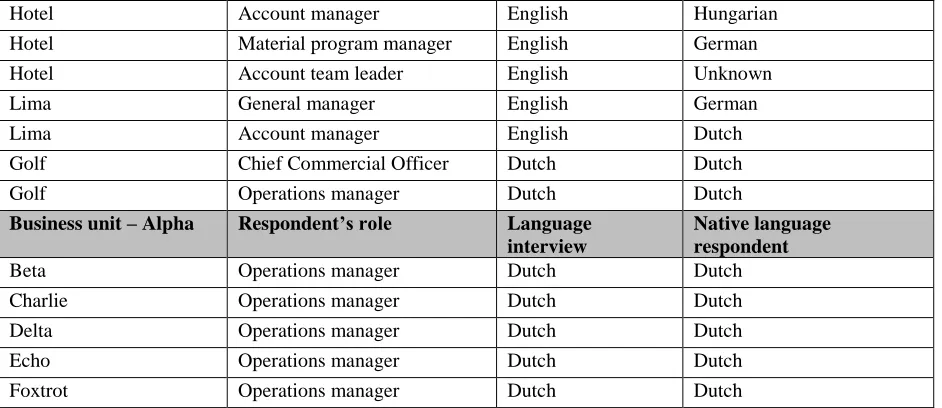
Table 4: Overview of interviewed participants and cross-language setting of the research 41-42
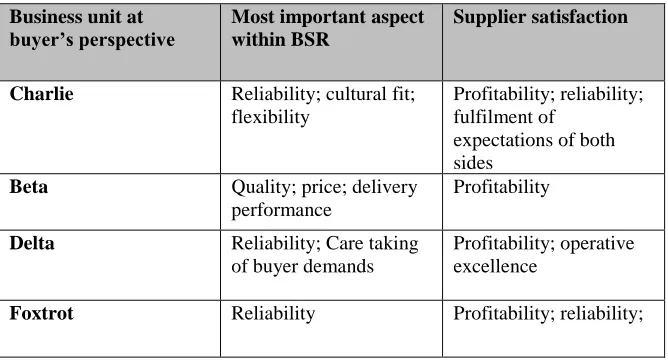
Table 5: The buyer’s perspective opinion regarding supplier satisfaction 45-46
Table 6: Supplier overview Golf 59
Table 7: Supplier overview Hotel 62
9
Table 9: Supplier overview Juliet 66
Table 10: Supplier overview Lima 68
10
1.
The need to determine if the buyer and supplier’s perception about
the quality of the relationship differ
Nowadays the relationship of an organisation with their supplier(s) is recognized as a potential tool to improve organisational performance. Since the increased attention given to purchasing as a strategic tool, companies reduced their supply base and invested in long-term supplier
relationships.4 A requirement to develop from a buyer’s perspective, a powerful relationship with
a supplier is to have a small number of suppliers. The developments of supply base reduction and long-term supplier development has lead organisations move towards a more cooperative,
mutually-beneficial relationship with their supplier. Due to a reduced supply base and
outsourcing of production activities organisations increased their dependency on their supply base.5 It can be stated that changes within the supply base has changed the current buyer-supplier’s relationships.
As a consequence of these developments’ organisations are developing collaborative
relationships with their environment. Organisations are building collaborative relationships with their supply chain partners in order to improve organisational performance such as, efficiency, flexibility and competitive advantage. Such collaborative relationships require a long-term approach with joint involvement of both parties in order to create unique value, in which a partner can’t operate independently.6 According to the literature preferred customers are
expected to gain competitive advantage, an advantage obtained due to preferential treatment from their supplier. The special form of customer attractiveness is referred as ‘preferred
customer’. In order to obtain a preferential treatment, the concepts of customer attractiveness and supplier satisfaction are claimed to play a role.7 The preferential treatment “(…) received from a buyer perspective includes preferential resource allocation and pricing behaviour”8. A literature
stream that builds on these developments is the introduced concept of ‘preferred customer’. As a consequence of increased significance of collaborative relationships, the concept of preferred customer is introduced in the field of suppliers’ management.
11
Within the concept of ‘preferred customer’ a clarification of identified issues in previous studies is desired. A general question regarding customer attractiveness, supplier satisfaction and preferred customer status is “(..)if these concepts are developed at between individuals or between firms e.g. are entire firms satisfied with each other, or individuals satisfied with their peers from the other perspective satisfied with each other.”9 Additionally, preferred customers have better access to suppliers’ technological capabilities. Furthermore, the overall qualitative judgement of a supplier motivates suppliers exchange behaviour. Due to this reason “(…) preferred customers should assess the perceived quality “supplier satisfaction” of their suppliers.”10 To conclude according to literature customers should consistently determine if suppliers are satisfied and how satisfaction is developed.
In alignment with the previous identified statements, other scholars emphasized the need of research regarding dyadic relationships. In addition“(…) potential perception gaps are relevant for investigation because they provide sources for misunderstandings that can lead to the dissatisfaction of a partner and the consequent termination of the business relationship by that partner.”11 Moreover, there is a lack of studies that focus on a dyadic perspective in the literature stream of buyer – supplier relationships, since most studies focus on the buyer’s perspective In addition, previous studies indicate that partners within a supply chain can have different perceptions about the quality of a relationship.12 The perceived quality of the relationship
“supplier satisfaction” is “(...)mainly driven by the nature of the buyer – supplier relationship, and not on performance.”13 Hence it can be concluded that a research regarding supplier
satisfaction from a dyadic view enriches our understanding of supplier satisfaction as a part of the concept of ‘preferred customer’. The focus of the research is on one specific element within, of the introduced concept preferred customer, namely ‘supplier satisfaction’, and how supplier satisfaction is perceived from both perspectives with in a buyer – supplier relationship
9 See Hüttinger et al. (2012), p. 1204 10 See Ellis et al. (2012), “p. 1265-1266” 11 See Praxmer-Carus et al. (2013), p. 203 12 See Chen et al. (2016), p. 312
12
1.1 The goal to describe and explain (potential) perception differences regarding
supplier satisfaction
To begin with since a dyadic view of supplier satisfaction enriches our understanding of supplier satisfaction, the purpose of this thesis is ‘The exploration, explanation and description, of
(potential) perception differences regarding supplier satisfaction within a buyer-supplier relationship’. The goal of this study leads to the following main-research question: “How is supplier satisfaction perceived from both buyers and supplier’s perspectives”. Supported by the following sub questions 1) How can differences and similarities between or within both
perspectives be explained? 2) How is ‘supplier satisfaction’ between buyer-supplier in the current relationship perceived and described? This includes different purchasing functions across business units from both a buyer and suppliers’ perspective.
1.2 A dyadic view regarding supplier satisfaction enriches our understanding of the
buyer-supplier relationship
To date most conducted studies regarding buyer-supplier relationships, focused on the buyers – perspective. Among a review of four academic journals about buyer-supplier relationship studies between 1986 and 2005, of the 151 buyer-supplier studies in only six studies both the buyer and supplier participated.14 By focussing on a dyadic perspective this research contributes to the stream of literature on supplier satisfaction and buyer – supplier relationships. The contribution of this research is relevant for academic and practical purposes for several reasons: A one-sided analysis focusses one subject that frequently consist of two-sides, which is the cases in a buyer-supplier relationship. Due to an overlap and contrast in a dyadic analysis it is possible to enhance the understanding the nature from a buyer – supplier relationship.15 By analysing the relationship
on micro-level between micro-dyads a better understanding of the explanatory power of this level of analysis is gained.16 Furthermore, as described earlier (potential) perception gaps are
relevant for investigation, since perception gaps can lead to misunderstanding and
dissatisfaction. Therefore, this research contributes to a better understanding on which aspects the buyer’s and supplier’s perspective differ regarding ‘supplier satisfaction’.
14 See Terpend et al. (2008), p. 41
13
In the first chapter of this thesis the research goal and the relevance of the research are discussed. Followed by a literature review in chapter two and in chapter three the research method is
explained. In chapter four the empirical results, similarities and differences regarding ‘supplier satisfaction’ from a dyadic perspective are presented. Finally, in chapter five conclusions, future research recommendations and limitations are discussed. The research only focusses on
individuals involved into the purchasing process, strategic or operational from a buyer’s
perspective and its strategic key suppliers. Furthermore, the research focusses on the concept of ‘supplier satisfaction’. According to existing literature a buyer-supplier relationship is affected by many factors e.g. communication, trust, power-dependency and commitment, these factors are however not researched in this study.17 There are several constructs that contribute to supplier satisfaction. For this research the identified categories by Hüttinger et al. (2014) are used in order to answer the research. The identified categories are; growth opportunity, innovation potential, operative excellence, reliability, support of suppliers, supplier involvement, contact accessibility and relational behaviour.18 An overview of the constructs which are included in this research are presented in the research model in paragraph 3.4. To answer the stated research, question the next chapter will explain and discuss relevant theoretical concepts. The third section of this thesis clarifies how data is gathered and analysed, followed by an analysis and the results of the retrieved data. In the final part the conclusions, limitations and future research directions are discussed.
14
2.
A review of relevant literature in order to answer the research
question
To start with a recent stream in literature introduced the concept of ‘preferred customer’ as a special kind of customer attractiveness. In this chapter the concept of ‘preferred customer’ is clarified. To begin with the reasoning behind the concept is explained. Followed by a review of the perceived benefits and disadvantages obtained through to the concept of ‘preferred customer’ Furthermore, the social exchange theory is reviewed as an explanation in order to obtain the status of a ‘preferred customer’.
2.1.1
Preferred customer a new approach in order to gain competitive advantage
A definition of preferential treatment received by a buyer is “(…) A firm has preferred customer status with a supplier, if the supplier offers the buyer preferential resource allocation.”19
Preferred customer status can be established in several ways. In the stream of literature
‘preferred customers’ are expected to gain competitive advantage, an advantage obtained due to preferential treatment received from their supply base. Competing organisations might utilize the same supply base, therefore it is not certain that a buying organisation which collaborates with their supply base gains competitive advantage.20 Therefore, it is assumed that buying
organisations that obtain better resources than their competitors from their supply base gain competitive advantage
From a traditional point of view in marketing literature, suppliers attempt to be attractive as possible for (potential) buyers. In the traditional marketing approach supplying organisations are assumed to be attractive in order to attract possible buyers. They argued the traditional point of view, by exploring the perspective of buyers to be attractive as possible for suppliers. There are several reasons why the traditional marketing approach, where supplier intend to attract
(potential) buyers, has been argued. The developments regarding supply base reduction and long-term supplier development, has lead organisations move towards a more cooperative, mutually-beneficial relationship with their suppliers. Due to a reduced supply base and increase in the outsourcing of production activities, organisations increased their dependency on their supply
15
base.21 Another driver is the highly competitive environment, which can be described as an
‘outsourcing economy’. An outsourcing economy is characterized by an increased focus on organisational activities and utilizing external resources, capabilities and competencies at the same time.22As a consequence of the developments within the supply base, a new concept was introduced in which a buyer tries to be attractive as possible for the supply base.
The importance of an organisation which got awarded with the concept of ‘preferred customer’ is emphasized, when a situation of scarcity of capable suppliers occurs. 23A proposed benefit of ‘preferred customers’ is that buyers receive a preferential treatment regarding, product quality and availability, support, delivery and/or prices compared to other buyers from a supplier.24 A supplier may dedicate its best personnel to joint new product development, customize its products according to the customer's wishes, offer innovations or even enter into an exclusivity agreement. The supplier might also ensure privileged treatment if bottlenecks occur due to constraints in production capacity”. Furthermore, the title ‘preferred customer’ has a positive influence on supplier innovativeness and benevolent pricing.25 To summarize it is assumed in literature and observed from empirical data that the concept of ‘preferred customer’ can lead to a preferential treatment received by a buying organisation.
2.1.2 The concept of ‘preferred customer’ explained through the social exchange
theory
A theory that is used in the literature stream to explain the concept of ‘preferred customer’ is the social exchange theory. The social exchange theory is suited to describe relationships and the social exchange theory includes questions related to the initiation, continuation and termination of a relationship.26 The social exchange theory is one of the most dominant models to understand workplace behaviour. 27 In addition, three steps are identified which are linked to the social exchange theory and the concept of ‘preferred customer are; (1) expectations; (2) the comparison level and (3) the comparison of alternatives.”28 Expectations at the beginning phase of a
21 See Steinle and Schiele (2008), p. 1178 22 See Hätönen and Eriksson (2009), p. 143 23 See Steinle Schiele (2008), p. 6
24 See Nollet et al. (2012), p. 1187 25 See Schiele et al. (2011), “p. 3-5” 26 See Schiele et al. (2012), “p. 1180-1181” 27 See R. Cropanzano (2005), p. 874
16
relationship determine the level of attraction between a buyer and supplier, thus it is assumed that customer attractiveness is a condition for preferential customer treatment. Within a relationship an actor, an actor can be described as an individual who is involved in the relationship, uses relative and absolute criteria to evaluate the relationship, this statement is applicable to “the comparison level”. After the “comparison level” which is linked to ‘supplier satisfaction ‘involved actors need to decide about the future of the relationship.29 Hence supplier
satisfaction is believed to be a driver of a preferred customer treatment. In the third phase ‘comparison of alternatives’ of the identified cycle of preferred customer a supplier assigns a preferred status to a buyer, regular status or decides to terminate the relationship.30 In past research it is observed that suppliers do not treat all their customers equally, suppliers classify their customers according to different variables such as customer attractiveness, strategic importance, cost to serve and relationship value.31
2.2 Customer attractiveness as antecedent in order to become a preferred customer
As discussed at the begin of this master thesis the cycle of preferred customer consists of several antecedents and phases. It is assumed that the first antecedent in order to become a preferred customer is customer attractiveness.
2.2.1 Customer attractiveness as antecedent for preferred customer
According to the literature a special form of customer attractiveness is referred as ‘preferred customer’. Attraction has been described in various ways over time in different streams of literature. Attraction can be defined as “(...)“the degree to which buyer and seller achieve – in their interaction with each other – a reward–cost outcome in excess of some minimum level.”32 In addition, the exchange of both tangible and intangible, resources and knowledge-based resources are essential for value co-creation and thus to enhancement of the relationship.33 Additionally, attraction is considered as an antecedent for the development of trust and commitment in a relationship and influences the continuation of the relationship trough time.34According to the concept of ‘preferred customers’ are expected to gain competitive
29 See Schiele et al. (2012), p. 1180
30 See Hüttinger et al. (2012) p. 700 31 See Nollet et al. (2012), pp. 1187 32 See Hald (2012), p. 1231 33 See Baxter (2012), p. 1251
17
advantage, an advantage received due to preferential treatment from their supplier base.35
Despite the introduction of ‘preferred customer’ the idea of customer attractiveness is poorly defined and remains vague to what extent customer attractiveness can be defined.36 In short, in order to conduct this research a clarification of the concept of customer attractiveness is required.
2.2.2 Customer attractiveness determined by the supplier’s expectations for future
benefits
A clarification for customer attractiveness is the supplier’s actors’ expectations related to the benefits gained from the relationship with the customer, where the expectations of the actor are oriented towards the future.37 From the perspective of ‘social exchange theory’, which is been widely used in marketing and relational literature, attractiveness is described from a value and reward viewpoint. Moreover, through the lens of ‘social exchange theory’ expected value, perceived trust and perceived dependency are essential dimensions for perceived customer attractiveness. Hence, customer attractiveness is determined by the actor’s expected outcome of the relationship. 38 Due to the explanatory power of ‘social exchange theory’ the social exchange
theory is a general theory used in research regarding customer attractiveness. 39To conclude it can be stated that the foundation of ‘social exchange theory’ is useful to carry out this research since customer attractiveness and supplier satisfaction are interconnected into the cycle of preferred customer.
2.2.3 Operationalization of customer attractiveness between buyer and supplier
A clarification of customer attractiveness is required in order to understand the ‘preferred
customer’ concept. In his research Harris et al. (2003) identified three main drivers for customer attractiveness namely; economic benefits, social compatibility and access to important resources-based drivers.40 With the intention to quantify customer attractiveness Hüttinger et al. (2012) developed an initial overarching conceptual model for preferential treatment received from suppliers, the following antecedents for customer attractiveness were identified; market growth,
35 See Pulles et al. (2016), “p. 130-131” 36 See La Rocca et al. (2012), p. 1241 37 See Hald (2012), p. 1230
38 See Hovmøller Mortensen et al. (2008), p. 208 39 See Tóth et al. (2015), “p. 725-726”
18
risk, technological, economic and social factors.41A study conducted by La Rocca et al. (2012)
identified four factors regarding customer attractiveness namely; development potential,
intimacy, relational fit and profitability. A limitation of the concept of customer attractiveness is that the term is relative and supplier specific.42 In a developed conceptual model Tanskanen and Aminoff (2015) described four categories of attractiveness in a strategic buyer-supplier
relationship namely; economic, behavioural, resource- and bridging bases.43 These findings are in alignment with previous research that proposed that attractiveness is a function of perceived expected value, perceived trust and perceived dependence.
To conclude it can be stated that the social exchange theory is a suitable theory to describe customer attractiveness. However, it has to be emphasized that customer attractiveness is relative and supplier specific. Additionally, actors within an organisation might perceive attractiveness different.
2.3 Supplier satisfaction the second antecedent in order to become a preferred
customer
It is assumed that the second antecedent in order to become a preferred customer is supplier satisfaction.44
2.3.1 Satisfying suppliers in order to maintain access to capable suppliers from the
buyers’ perspective
Customer attractiveness and supplier satisfaction are closely related, supplier satisfaction and customer attractiveness are closely related due to “(..) suppliers enter into a relationship with a certain expectation, this expectation determines the level of satisfaction when both parties interact”45. Where customer attractiveness focuses on expected value of a future relationship,
supplier satisfaction is determined by perceived value in a current relationship.46 To gain and
maintain access to capable suppliers and their capabilities in the current environment, supplier
41 See Hüttinger et al. (2012), p. 1203 42 See La Rocca et al. (2012), p. 1245 43 See Tanskanen and Aminoff (2015), p. 128 44 See Pulles et al. (2016), p. 133
19
satisfaction is essential.47 Developments in the market has led to a reduction of the supply base
and outsourced production activities, which makes a buying company more dependent on their supplier than in the past, and thus supplier satisfaction gained importance. Hence, supplier satisfaction is perceived as the current value of the relationship and influences accessibility of resources from the supply base. In an empirical research among 91 suppliers Pulles et al. (2016) measured the influence of customer attractiveness and supplier satisfaction on preferred
customers. Supplier satisfactions points out to be a significant mediator between customer attractiveness and a preferential treatment given by the supplier. From a buyer’s perspective, when actors fail to develop a certain level of equity or fulfilment in the supplier’s experience, buyers might fail to achieve preferred customer status.48 As described in the framework of the cycle of preferred customer actors should decide about the continuation of the relationship.49 Thus, supplier satisfaction influences the decision for a supplier’s perspective to terminate or continue the relationship.
2.3.2 Supplier satisfaction is established when the supplier’s expectations are
fulfilled
To clarify, supplier satisfaction is defined as “(..)the buyer’s ability to live up the expectations of the supplier.”50 The moment when supplier satisfaction is established is determined when the expectation of the supplier is fulfilled. A major influence on the level of satisfaction is the relationship between buyer and supplier. Generally, satisfaction can be described as the
experienced sense of pleasure versus displeasure.51 It is assumed that dissatisfaction could lead to a change in the relationship. Evaluation of a supplier and determination of factors that affect supplier satisfaction, could lead to a change in relationship management towards the supplier. Satisfaction is a response of an actor to the difference between what the actor expects and what he receives, this can also be described as an actor’s cognitive and affective evaluation based upon experiences within the relationship. 52 Expected value can be described as the perceived trade-off between the future advantages and disadvantages of an interaction within a
47 See Vos et al. (2016), p. 4613
48 See Pulles et al.(2016), “p. 131-137” 49 See Schiele et al.(2012), p. 1181 50 See Schiele et al.(2012), p. 1181 51 See Wong, (2000), p. 428
20
relationship.53 A buyer-supplier relationship is evaluated by comparing the expectations against
the actual performance of an relationship, this includes as well absolute as relative criteria, e.g. the costs and rewards for the buyer and supplier.54 The social exchange theory is a widely used theory to describe organisational behaviour. It can be assumed that the evaluation of the
perceived trade-offs between advantages and disadvantages determines when a party is satisfied.
2.3.3 A review of the operationalization of supplier satisfaction
One of the first authors that named and emphasized the term supplier satisfaction is Wong in 2000. He stated that co-operative culture, commitment to supplier satisfaction and constructive controversy are factors leading to supplier satisfaction and eventually to customer satisfaction. Furthermore, he emphasized that supplier satisfaction is assumed to play a role for organisation which desire to achieve business excellence through customer satisfaction.55
In 2003 Maunu conducted an extensive research regarding possible antecedents of supplier satisfaction. She identified two different categories of supplier satisfaction namely ‘business related dimensions’ and ‘communication related dimensions’, in total 9 dimensions were identified. Dimensions which belong to the business-related category are; profitability,
agreements, early supplier involvement, business continuity and forecast planning. The second category which refer to communication aspects include; roles and responsibilities, openness and trust, feedback and the company values. These antecedents were however not empirically tested by. Additionally, money, time, long-term-relationship, communication, quality, trust,
commitment, innovation and flexibility were recognized from existing literature as elements of supplier satisfaction.56
In an explorative study Essig and Amann (2009) proposed a supplier satisfaction index. Data was gathered from 491 suppliers with a return rate of 30% and the questionnaire consists of 36 closed questions related supplier satisfaction. The proposed supplier satisfaction index includes several levels such as a ‘strategic level’ ‘operative level’ and ‘accompanying level’. Each level consists of one or multiple (sub)factors the strategic level contains of ‘intensity of cooperation’. Secondly the operative level consists of ‘billing/delivery’ and ‘order’ as subordinate groups. The
21
accompanying level includes factors as ‘communication’, ‘conflict management’, and ‘general’ view.57
In comparison to customer attractiveness, supplier satisfaction mainly refers to the
operationalization of how buyer and supplier should organise activities once interaction has started.58 Hüttinger et al. (2014) derived several categories as antecedents, by using a world café method, for customer attractiveness, supplier satisfaction and preferred customer status. Once they had gathered all data, they used an inductive coding approach to categorize all required data. The identified categories are; growth opportunity, innovation potential, operative excellence, reliability, support of suppliers, supplier involvement, contact accessibility and relational behaviour. Additionally, they empirically tested these categories and results indicate that growth opportunity, reliability and relational behaviour have a significant impact on supplier satisfaction, where innovation potential, operative excellence, support, supplier involvement and contact accessibility do not indicate a significant impact on supplier satisfaction. Even though, that the results regarding relational behaviour are in line with other studies regarding supplier satisfaction. A limitation of the research is that the antecedents of supplier satisfaction might be industry-specific.59 Drivers that influence customer attractiveness before and during a
relationship, and thus influence supplier satisfaction, are related to economic, technological and social factors.60
A replica study by Vos et al. (2016), expanded Hüttinger et al. (2014) their original model, by making a distinction between direct and indirect procurement, and by adding profitability as an antecedent for supplier satisfaction. Regardless of direct or indirect procurement the results indicate that relational factors, such as reliability and operative excellence, are perceived to influence supplier satisfaction similar or even have more influence as economic factors like profitability and growth opportunity. This finding suggests “(...)that even when a buyer is considered not to have a great economic value, the buyer still might receive a preferential treatment due to relational factors”61.
22
The definitions of constructs for supplier satisfaction identified by Hüttinger et al. (2014) and the antecedent, profitability, introduced by Vos et al. (2016) are used in the interview guide, which will be discussed in the research methodology chapter. Since they are one of the first authors that observed that significant key antecedent exists regarding supplier satisfaction. Added by
‘flexibility’ as construct which is part of relational behaviour. Buyers should strive for flexibility, solidarity and mutuality in order to gain a preferential treatment.62 It has to be pointed out that for this research only flexibility as part of relational behaviour is measured. An overview of the definitions used definitions for this study are presented in table 1.
Antecedents Description Reference
Growth opportunity The ability to grow together and to generate new opportunities through the relationship
Hüttinger et al. (2014
Innovation capabilities The supplier’s possibility to generate innovations within the relationship due to the buyer’s capabilities and contribution to the joint innovation process
Hüttinger et al. (2014)
Operative excellence The supplier’s perception that the operations within the relationship are managed in an efficient way
Hüttinger et al. (2014)
Reliability “(…) Perception that the other party acts in a consistent as well as a reliable manner and fulfil its agreements”
Hüttinger et al. (2014)
Support of suppliers The effort and assistance of buyers to increase the performance of a supplier within a relationship
Hüttinger et al. (2014)
Supplier involvement The degree to which a supplier participates directly in the product development of a customer. Furthermore, a contact which develops and advances exchanges process, in order to develop structural bonds
Hüttinger et al. (2014)
Profitability Margins achieved and a positive influence of the profitability on our firm.
Vos et al. (2016)
Relational behaviour “(…) Relational behaviour refers to the buying firm's behaviour towards the supplier
with regards to the relational focus of exchange capturing multiple facets of the exchange behaviour such as solidarity, mutuality, and flexibility.”
Hüttinger et al. (2014)
Flexibility The level of how one party their
attitude is towards special requests
Griffith, Harvey, and Lusch (2006)
23
relating to, delivery times, handling of products, etc.
Table 1: Operationalization of supplier satisfaction
To conclude the significance of supplier satisfaction has to be acknowledged, since supplier satisfaction influences the future of a relationship with a supplier.
2.4 The same social stimuli perceived differently
Actors from both the buyer and supplier perspective can have different perceptions about certain aspects related to the concept of supplier satisfaction.
2.4.1 Perception can be regarded as a form of categorisation
From a social perceptual theory perspective an actor experiences other individuals and events phenomenologically, this implies that actors perceive and experience, objects and events as the foundation for the investigation of reality. Perceptual distance or difference is defined as “(…) the variance in the perceptions of the same social stimulus”. High perceptual differences refer to the situation where a large variation in perception occurs between individuals or teams, where low perceptual differences imply the opposite. Furthermore, perception functions as a form of categorization. Since the perceived categories prove guide lines for processing information, perception can be considered as a form of a problem-solving technique.63 In the process of
perception processes the role of sense making plays a central role, since it involves how an actor gives purpose to an experience.64 Furthermore, individuals themselves can give meaning to an
observed phenomenon rather than this correspond with objective reality. Social perception can be reflected through the lens of observed social cues, includes personality traits and social
skills.65 From the process of how perceptions are formed, it can be stated that each individual can observe the same object differently, in addition perception can be considered as a method to categorize experiences.
2.4.2 Individual differences determine how actors interpret and perceive the world
It is important to point out that actors often have different perceptions about the same social stimulus, due to differences in personality, experience, interpersonal skills, empathic ability,
63 See Cristiana B et al. (2001), p. 256-260 64 See Hasson et al. (2016), p. 296
24
dispositions and cognitive complexity.66 Additionally, there is the possibility that temporarily
motivational factors influence perceptions regarding the immediate context. Differences in perceptions can arise from various different identified social styles, perception variables included in his research are 1) versatility 2) trust 3) credibility 4) power 5) attraction and 6) similarity. Social style refers to observable patterns of interpersonal communication behaviour with others in a relationship can perceive in order to describe a person. Accordingly, communication behaviour as part of our social style, significantly determines a number of perceptions, and thus influences the nature of the buyer-supplier relationship.67 The perceptual process is influenced by individual differences such as; experience, personality and cognitive complexity. These factors determine how people perceive and interpret the world from a social perceptual theory
perspective, actors experience events and other actors phenomenologically, due to the
complexity of social stimuli and limitations in the information processing capabilities. Hence, the perceptual process is influenced by many individual differences, according to the social
perceptual theory, these individual differences determine how actors perceive and interpret the world. Since actors within a team or organisation most likely vary in experience, personality, skills and values are assumed to perceive objects differently. In addition, ‘collective cognition’ is a term that refers to that a team possess cognitive properties that are distinct from the
combination of the cognition of individual members.68
It can be concluded that actors perceive the same phenomenon in a working environment different or similar, mainly due to individual characteristics such as personality, past experience and skills.
2.5 The influence of being part of a group
From individual level it is observed that there is a probability that actors observe the same stimuli differently or similarly. However, a working environment is shaped by several factors, including the perceptions of each individual, therefore this section describes how being part of a group influences the individual.
66 See Cristiana B et al. (2001), “p. 256-260” 67 See Snavely (1981), “p.132-135”
25
2.5.1 Social Identity theory as an explanation for group behaviour
Social identity theory (SIT) was developed in order to explain bias, discrimination and
intergroup conflict without the implications of personality or individual differences and without reducing large shared phenomena among individuals.69 Additionally, the combination of social
identity theory and self-categorisation theory (SCT) can provide a theoretical basis for
organisational identification and for the explanation of work-related attitudes and behaviours. According to SCT, SCT refers to the categorisation process which is essential in SIT, there are three levels of self-categorisation namely 1) human identity 2) social identity) and 3) personal identity.70The main three assumption of the ‘SIT’ are: 1) Individuals aim for the development or an improvement of positive self-esteem 2) The individuals social identity is based on the
individual’s group membership, as part of the person’s self-concept 3) In order to maintain a positive social identity, the individual aims for positive differentiation between the individual’s ingroup and relevant outgroups.71 Furthermore, SIT consists of several conceptual components
which serve different explanatory functions of group memberships. Within ‘SIT’ a social identity is an individual’s knowledge that he or she belongs to a group, which is referred as a social category. A social category is described as ‘as social category is a set of individuals who hold a common social identification or view themselves as members of the same social category’. The establishment of a social category involves two main processes, namely self-categorization and social comparison. Firstly, self-categorisation refers to the process of an individual perceiving similarities and differences between group members and persons outside the group.72 When someone categorizes another individual into a group, this process is called stereotyping “(…) you view them as being similar to one another and all having outgroup attributes.” Secondly, social comparison refers to the process where a person compares themselves with group members, persons in other groups, and the comparison of their own group with other groups.73
69 See Hogg, et al. (2004), p. 248
70 See Hornsey (2008), p. 208
26
2.5.2 The group ‘norm’ and the actor’s attitude and behaviour are determined by
the social category
SIT processes are driven by two motivations namely, self-enhancement and uncertainty
reduction. An assumption of intergroup social comparison idea is that groups strive to be better than another group. Individuals believe that belonging to a ‘better’ group has positive effect on self-esteem. Regarding intergroup relations, SIT, explains why groups compete with each other. The other motive is to reduce uncertainty, social categorization serves as a function to reduce uncertainty. Additionally, the self-categorisation process and depersonalisation process explains how individuals follow group-norms. Since a social category can be considered as a cognitive representation of group norms, where norms are determined and bounded by group
memberships, and describe behaviour that defines group membership.74 Norms are described as “(…), norms are the source of social influence in groups because they are prescriptive, not merely descriptive. The self-categorization and depersonalization process explain how people conform to or enact group norms.”75 Conformity is the process in which an individual transforms its behaviour to the appropriate prescribed behaviour of the group. Once the norm has been established or recognised by a social category, the norm serves two functions. The first function is to emphasize ingroup similarities and ingroup identity. Secondly, to differentiate the group from other groups.76 Additionally, depersonalisation refers to “(…) the change in
self-conceptualisation and the basis of perception of others, it does not have the negative
connotations of such terms as deindividuation or dehumanisation.”77 The different dimensions of social-identity can be summarized into four dimensions namely 1) cognitive dimensions,
awareness of being a member of a group2) affective, the emotional attachment to the group 3) evaluative dimension, the association assigned of belonging to that group from the outside and 4) behavioural dimensions, a representation of the behavioural aspects of identifications. Finally, the main implication of ‘SIT’ for organisational contexts is that the more an individual self-categorise in terms of membership in an organisational group, such as team, organisation or occupation, the more the attitudes and behaviours are influenced by the group membership.78
27
2.5.2 Self-categorization within organisations to differentiate different groups
Approximately 10 years after the introduction of SIT, another theory named self-categorisation theory was introduced as an expansion of ‘SIT’, therefore it has to be emphasized that self-categorisation incorporates ‘SIT’. Firstly, self-categorization theory is a theory that elaborates the operation of social-categorisation process as a cognitive fundament for group behaviour. Social categorization can be described as the process where an individual categorises it ‘self’ and ‘others’ into ingroups and outgroups. The emphasis is on the perceived similarities of the target to relevant ingroup or outgroup prototype. The term prototype is defined as “cognitive
representation of features that describe and prescribe attributes of the group”. Targets can be described that individuals are no longer personified as unique individuals but rather as a personification of the relevant prototype. It is assumed that self-categorisation produces normative behaviour, positive ingroup attitudes and cohesion, collective behaviour, shared norms, mutual influence, stereotyping, ethnocentrism, emotional contagion and empathy.79
Organisations, units or divisions within an organisation and professions or sociodemographic categories that are distributed across organisation can be regarded as a ‘ social category’.80 In
addition, SIT is a general approach to the analysis of group membership and group phenomena. Furthermore, the self-categorisation process of being a member of an organisation, determines why an individual perceives successes and failures of the organisation as their own, therefore the individuals aims for a positive outcome for the organisation.81 Additionally, the cognitive aspect
of the individual is critical in differentiating. Based upon the self-categorisation theory, individuals can identify themselves on personal level and social level into different categories within an organisation namely 1) personal level (own career) and 2) with different subunits with their organisation such as, work groups, departments, business units and occupational group., referred as foci.82
28
2.5.3 Social identification in organisational contexts as an explanation for the
actor’s evaluation of satisfaction
Based upon ‘SCT’ and ‘SIT’ a new concept is introduced in the stream of literature namely ‘social identification in organisational contexts’. The introduced concept of ‘social identification in organisational contexts’ is based upon three assumptions namely 1) Social identification within organisation settings is a versatile concept including different dimensions and foci (targets) 2) Higher levels of identification are related to positive organisational outcomes 3) The concept of social identification is flexible and connected to the situational context. An overview of the identified dimensions and foci based upon ‘SIT’ and ‘self-categorisation theory’ derived for social identification is represented in table 2.
Foci / targets
Personal Identity Social Identity
Dimen
sio
ns
Cognitive: actor's awareness
of being a group member Career Team Organisation Occupation
Evaluative: association assigned of belonging to that
group from the outside
Affective: emotional attachment to the group
Behavioural: representation of the behavioural aspects of
the group
[image:28.612.69.593.295.685.2]
29
Cognitive, evulative, affective and behavioral are dimensions that are extracted from ‘SIT’. Additionally, from a ‘SCT’ perspective a distinguistion is required regarding on which level an individual can identify himself. As mentioned earlier an individual can identify himself on personal and social level which are relevant for organisational settings.83 Furthermore, earlier studies indicate that identification influences work-related attitudes and behaviour. Especially the ‘cognitive’ dimensions are relevant for this master thesis, since the cognitive dimension is related to the perception of the individual belonging to a group. The ‘cognitive’ dimensions refer to the actor’s awareness and knowledge of belonging to a certain group.84 Perception and cognition are
terms which are related to each other. Our decisions, beliefs and actions are guided by perception. Furthermore, cognition influences how we perceive and interpret the world.85 As described earlier the general concept of ‘satisfaction’ can be described as an actor’s cognitive and affective evaluation based upon experiences within the relationship.86 Identification with different foci are sources for conflict, due to that an actor identifies himself strongly with his team but not as much with his organisation as whole, in that case the norms from the team which contradict the norms of the organisation will be assumed to be followed.87 Therefore it as
assumed that when an actor is ‘’satisfied’ is influenced by the ‘cognitive’ dimensions, since norms are established through the ‘social identity’. From a theoretical foundation the concept of ‘social identification in organisation contexts’ provides a theoretical explanation for differences within a buyer-supplier relationship on several levels.
2.6 Conflicts created through a different perception
In the previous section we introduced theories to explain the perceptions of individuals and organisations/teams. In this chapter as a consequence of perceptual distance between or within organisations the possible consequences are reviewed.
2.6.1 Conflict as a consequence of perceptual distance
In the current organisational environment, it is assumed that most organisations require interdependence among team members. As a consequence of the required interdependency
83 See Van Dick et al.(2005), “p. 192-193” 84 See Van Dick et al. (2005), p. 192 85 See Tacca (2011), p. 1
30
among team members or departments the importance of cooperation has increased.
Simultaneously the risk of a conflict between actors has increased or is even inevitable, due to different interests of actors within the working environment.88 A conflict appears when actors perceive or experience incompatibilities or threats to their goals, values, interests or beliefs. Past research proposed that there are several kinds of conflicts that can occur within relationships. Throughout the literature stream regarding conflict management two main dimensions of
conflicts have been identified namely cognitive and affective conflicts. These dimensions refer to conflicts that either occur due to disagreements relating to tasks or conflicts related to
interpersonal or emotional issues. 89 As a consequence of perceptual distance within or organisations or between organisations it is possible that conflicts occur.90 Additionally, it is stated that conflict in top management is unavoidable, this due to that different positions perceive the environment differently.91 The way of how conflicts are managed determines how the
conflict affects the relationship.92
2.6.2 Conflict as a tool for organisational learning
To begin with several studies identified the positive consequence of conflict. It is assumed that there is a possibility that organisations stagnate, when there no or little conflicts occur.
Therefore, there consists a shared belief among researchers that a moderate amount of conflict is necessary in order to realize organisational effectiveness. As mentioned earlier there are two different types of conflict identified namely conflicts related to tasks or emotional issues. It is assumed that organisations can benefit from task conflicts, since task conflicts often involves an extensive debate which leads to improved decision-making and performance.93 It is proposed that teams or organisations can benefit from cognitive conflicts due to debate and discussions, thus implies promotion of better decision making.94 Furthermore, previous studies have
recognized task conflicts as an event that stimulates innovation, efficiency and discourage self-satisfaction of members.95 In addition, teams should encourage cognitive conflicts and
88 See Yang(2015), p. 282
89 See Rahim (2002), “p. 210-211” 90 See Yang(2015), p. 282
91 See Amason (1996), p. 127 92 See Yang and Li (2018), p. 107 93 See Rahim (2002), “p. 211-212” 94 See Yang (2015), p. 283
31
discourage affective conflicts, this with the intention to reach higher levels of perceptual agreement and affective acceptance.96
2.7 A brief summary of the reviewed literature
As quite some literature has been reviewed in the second section of this study, a brief summary of key concepts and theory appears to be suitable are listed in table three.
Constructs Description Reference
Customer attractiveness Customer attractiveness as the supplier’s actors’ expectations related to the benefits gained from the relationship with the customer, the expectations of the actor are oriented towards the future
Hald (2012)
Supplier satisfaction The buyer’s ability to live up the expectations of the supplier, and results in a positive affective state
Schiele et al. (2012)
Preferred customer status Preferred customer status is a relative status when, a firm has preferred customer status with a supplier, if the supplier offers the buyer preferential resource allocation
Steinle and Schiele (2008)
Social perceptual theory Actors experience events and other actors phenomenologically, due to the complexity of social stimuli and limitations in the information processing capabilities. The perceptual process is influenced by many individual differences, according to the social perceptual theory.
Gibson et al. (2009)
Perceptual distance “(…) The variance in the perceptions of the same social stimulus”. High perceptual differences refer to the situation where a large variation in perception occurs between individuals or teams, where low perceptual differences imply the opposite”
(Cristiana B, Gibson; Jay, Conger; Cecily, 2001)
Social identification theory “(…)That part of an individual’s self-concept which derives from his knowledge of his or her
membership of a social group (or groups) together with
the value and emotional significance attached to that membership”
Van Dick et al. (2005)
32
Self-categorisation theory “(…) SCT theorists assume that individuals can categorize themselves at three levels of abstraction: (a) on a subordinate level as individual people (who compare themselves with other individuals), (b) on an intermediate level as members of a certain group (that is then compared with relevant outgroups), or (c) on a
superordinate level as human beings.”
Hornsey (2008)
Social identification in organisations
A framework based upon SIT and SCT.
“(…) (a) social identification in organisational contexts is a multifaceted concept consisting of different dimensions and foci (or targets), (b) higher levels of identification are related to higher productivity and more positive work-related attitudes, and (c) identification is a very flexible concept that is linked to the situational context”
Van Dick et al. (2005)
Conflict A conflict appears when actors
perceive or experience
incompatibilities or threats to their goals, values, interests or beliefs
[image:32.612.84.542.73.405.2]Rahim (2002)
Table 3: An overview of the reviewed literature
2.8 Explanation and justification of research model
With the stated research question and purpose of this master thesis in mind relevant theories and observations have been reviewed in this section. Since the stated research question as mentioned at the beginning of this report: the description and explanation of (potential) perception
33
key antecedents for supplier satisfaction exist. Furthermore, the tools developed by (Maunu, 2003) and (Essig & Amann, 2009) were not empirically tested in later studies. The ‘social perceptual theory’ emphasized that there is the (possibility) that each individual perceives observations differently. Therefore, an explanation of the ‘cognition process’ of individuals within an organisation is required. Due to that ‘social identification in organisational contexts’ influences individuals on several dimensions which is described in 2.5, including cognition and work-related behaviour and attitudes. The concept of ‘social identification in organisation contexts’ is used to determine why actors within a buyer-supplier relationship perceive the antecedents of supplier satisfaction differently or similarly. According to ‘social identification in organisations’ the cognition of an individual depends upon if the individuals identifies itself on; team; organisation or occupational level. Furthermore, it is assumed that self-categorisation, and thus identification in organisational settings, produces normative behaviour, positive ingroup attitudes and cohesion, collective behaviour, shared norms, mutual influence.97
34
Figure 1 Research model: description and explanation of perceptual distance/similarities buyer-supplier relationship regarding supplier satisfaction
Growth opportunities
Supplier satisfaction
Innovation possibilities
Operative excellence
Reliability
Profitability
Flexibility Relational behaviour
Social identification in organisational contexts
Theoretical explanation
Perceptual distance/agreement buyer-supplier relationship Supplier support
Description
Occupational level
Team / subunit level
Organisational level
35
With this in mind the individual can identify himself regarding the antecedents of supplier satisfaction on team; organisation or occupational level and therefore be satisfied or dissatisfied. For example, two individuals belonging to the same organisation ‘social identity’, both
individuals identify themselves into a different occupation, sales versus purchasing, might differ regarding cognitive, evaluative, affective and behavioural dimensions. Due to that the
identification for the one individual with his ‘occupation’ is stronger than his identification with the ‘organisation’ or ‘subunit’. However, it has to be emphasized that identification is a flexible concept which is connected to situational context. Finally, as part of a determination if
36
3.
Research Methodology
This section of the master thesis will describe and explain how required data is gathered and analysed.
3.1. Data Collection through semi-structured interviews
The goal of this study is to describe and explain how ‘supplier satisfaction’ is perceived from a dyadic perspective. A semi-structured interview instrument is used in order to collect data. A semi-structured interview as instrument is suitable to explore different attitudes, value, beliefs and motives. A qualitative semi-structured interview method to collect data allows to emerge new viewpoints freely.98 For both the supplier and buyer’s perspective an interview guide was
developed and divided in three segments as proposed in the literature stream of how to develop a semi-structured interview guide.99 At the beginning of the interview the purpose was to gain a better understanding of the participants role and his opinion about supplier satisfaction. Afterwards, the intention was to gather data about how the participant perceives the buyer-supplier relationship with their peer on the other side. Participants from both perspectives were asked how satisfied the participants were with the determined antecedents of supplier
satisfaction, as explained in 2.6. Participants were asked to rate the selected antecedents from 1 to 10, where a 1 indicates very dissatisfied and 10 very satisfied. The closed questions in combination with the open-questions were helpful in comparing and analysing the different perceptions. In the third part of the interview the participants were asked questions about their opinion on perceptual agreement within the organisation at which the participants were employed and occurred conflicts within the relationship. Finally, participants could give
additional information about the already discussed topics in the closing segment of the interview.
An overview of the developed interview guide can be found in appendix A. The collected data was analysed through a thematic framework approach. The researcher can include the following types of data in a framework approach; direct quotes, summaries, paraphrases or abstracts, researchers’ explanations, ratings or summarized judgement and combination of these types of data.100 How the ‘framework approach’ is carried out in order to analyse and interpret data is
98 See Aira et al. (2003), p. 271 99 See Gale et al. (2013)
37
described in 3.4. As described earlier, participants were asked to grade certain statements. Therefore, the analysed matrixes include both codes and grades generated from the analysed data.
To start with, the relevant employees from both the buyer’s and supplier’s perspective were on beforehand selected by the external supervisor Before interviews took place the main contact persons at the suppliers’ and buyers’ perspective were informed by the case company, namely Alpha . In this e-mail both perspectives were informed about the background and scope of the research, at this stage (possible) participants weren’t approached yet by the researcher. In the first week of June, actors from the buyer’s perspective were personally invited by the research to participate in this research, once again participants were informed about the background, goal and procedures of the interview. After the participants were invited, interviews at the buyer’s perspective took place in a timeframe of two weeks. From the buyer’s perspective in total five participants were interviewed divided among five different business units. In the meanwhile, actors from the supplier’s side were invited by the researcher and interviews were scheduled in a timeframe of four weeks. Afterwards, in total six, different key suppliers were interviewed during this research. The mean duration of the interview was 35 minutes. Interviews took place in two languages, namely Dutch and English, therefore this master thesis has a cross-case language setting.
As soon as interviews were conducted a verbatim transcription of the interviews were sent to the participants for validation. After all interviews were conducted and transcribed, gathered data was analysed as discussed later on in paragraph 3.4. In total 19 persons were interviewed during this research. Additionally, after all the suppliers were interview four more questions were asked to participants from the buyer’s perceptive. These questions were added later to the interview guide and the purpose of these questions was to compare results and validate gathered