The rapid development of biotechnology has launched genetically modified plants (GMPs) into the environ-ment and GMPs derived products into the market. Since the techniques for plant transformation were established, tested and optimised, a wide range of applications have been investigated and performed to solve existing prob-lems of the agriculture. Genetic modification of plants has thus been used to enhance natural plant resistance to pests and diseases or to introduce foreign DNA se-quences with similar effects. Genes conferring resis-tance to herbicides – chemical compounds killing weeds – allow the use of new classes of herbicides that will not kill the specially developed crop. The new classes of herbicides in use decrease tillage and thus soil ero-sion and are considered safer for the environment be-cause of their increased biodegradability (SHAHet al. 1986).
One of such widely used herbicides is Roundup®. Roundup® contains glyphosate as an active compound. In pure chemical terms glyphosate is an organophosphate in that it contains carbon and phosphorus. However, it does not affect the nervous system as organophosphate
insecticides, and is not a cholinesterase inhibitor. The acute toxicity of glyphosate itself for mammals is very low. According to the World Health Organisation, the oral LD50 in the rat of pure glyphosate is 4.230 mg/kg (http://ace.ace.orst.edu/info/extoxnet/pips/glyphosa.htm, WAUCHOPEet al. 1992; LU 1995).
Glyphosate is a broad spectrum, non-selective system-ic herbsystem-icide. It is effective in killing all plant types in-cluding grasses, perennials and woody plants. As an herbicide, glyphosate works by being absorbed into the plant mainly through its leaves but also through soft stalk tissue (DUKE 1996). It is then transported through-out the plant where it acts on various enzyme systems inhibiting amino acid metabolism in what is known as the shikimic acid pathway (KISHORE & SHAH 1988; STEINRUCKEN & AMRHEIN 1984). This pathway ex-ists in higher plants and microorganisms but not in ani-mals (LEVIN & SPRINSON 1964; STEINRUCKEN & AMRHEIN 1980). Plants treated with glyphosate slowly die over a period of days or weeks, and because the chemical is transported throughout the plant, no part survives (ANONYM 1986).
Comparison of Different PCR-based Protocols for Detection of Roundup
Ready Soybean
JAROSLAVA OVESNÁ
1, LENKA D
Ě
DI
Č
OVÁ
1, JI
ŘÍ HORÁČ
EK
2, EVA SADILOVÁ
2,
LADISLAV KU
Č
ERA
1and LUDMILA M
Ě
SKOVÁ
11
Research Institute of Crop Production – Division of Genetics and Plant Breeding,
Prague-Ruzyn
ě
, Czech Republic;
2Agritec Ltd., Šumperk, Czech Republic
Abstract: Genetically modified organisms have become a part of our environment and food chain. Roundup Ready soybean is at
the moment the most frequent one that man can meet. National regulations require careful monitoring and detection of GMOs. We present in this investigation comparison of several protocols and individual steps, which are included in the whole detection procedure. Currently used CTAB based protocol is suitable for DNA isolation from the green plant tissue but also from the flour. Lectin coding sequence specific primers were suitable for soybean DNA detection unlike leu-tRNA gene specific primers. Only one of the tested CaMV sequence specific primer pairs did not amplify unspecific products under condition tested. NOS termina-tor specific primer pair was found suitable for routine screening. EPSPS gene was detected using two different protocols; the same primers did not identify other Roundup Ready GM crops.
Key words: GMO; Roundup Ready soybean; PCR; detection
Roundup is a total herbicide and scientists and breed-ers have been unsuccessful in producing glyphosate-tol-erant plants using classical techniques like selection, mutagenesis or crossing. Recombinant DNA techniques have been used to confer glyphosate tolerance to a vari-ety of crop plant species. They are known as Roundup Ready cultivars (MONSANTO 1997) and they are known as genetically modified plants (GMPs).
In Europe EC directives and national laws drive the GMPs handling. Precautionary principle was accepted in EC. Labelling and traceability of GMPs and trans-genes containing food products is required (EU direc-tives). Similar laws were accepted in the Czech Republic – Law 153/2000 regulates the release of GMPs into the environment and 306/2000 Sb. regulates the use of GMPs in the food chain. Careful monitoring of GMPs and derived products is also required to protect consum-ers and environment. Therefore robust, reliable and sen-sitive techniques are required for these purposes. First comprehensive EU guidelines for the detection of pro-teins and nucleic acids in genetically modified organ-isms (GMO), used for human and animal feeding was published in 1999 (BERTHEAU 1999).
There are two main approaches considered for GMPs and derived products detection: (1) specific protein de-tection using e.g. ELISA (enzyme linked immunosor-bent assay), suitable for analysis of raw material and (2) specific DNA sequence detection (GACHETet al. 1998; DUIJN et al. 1999; LIPPet al. 2001). The polymerase chain reaction (PCR) is a highly specific and sensitive method for detection of small amount of nucleic acid (MULLIS &FALOORA1987; MEYERet al. 1996). Gen-erally, two approaches are used. Transgens introduced into plants consist of regulation sequences recognised by plants and specific gene(s). Usually, GMPs, which are in use nowadays, contain 35S CaMV (small sub-units of cauliflower mosaic virus) promoter, which is a strong constitutive one and NOS (Nopalin synthase) terminator from Agrobacterium plasmid. These se-quences are used for routine screening (LIPP et al. 1999a, b). Complementary, it is also possible to detect coding sequence of the transgene itself. This approach is often used in case of Roundup Ready soybean (PAS -QUALONE 2000).
In this study we present the performance testing re-sults of several protocols using different matrices in-cluding reference standardised sample material for detection of Roundup Ready transgene in soybean. Commercial detection kit is also included.
MATERIALS AND METHODS
List of analysed materials: CRM IRMM standards (Certified Reference Materials – Institute for Reference Materials and Measurements, Geel, Belgium) (Fluka
310R-soybean powder standard set), Roundup Ready soybean (obtained as a commercial lot), leaves of Roundup Ready wheat and Bt corn (kindly provided by Monsanto), transgenic potatoes (developed in RICP Pra-gue), non modified soybean cultivar (Monsanto), non modified cultivars of barley, corn, potato, rapeseed, sug-ar beet and wheat. Seeds were cultivated in the pots and plants were harvested after 2 weeks and stored at –80°C upon further processed. Also soybean flour was used being prepared from soybean kernels using a mill and a 100 µm sieve.
DNA isolation: DNA was isolated from soybean leaves, soybean seedlings, grounded soybean powder standard set, soybean flour and leaves of other above mentioned species. Three basic protocols were tested: (1) The procedure following the methods described in the German Official Collection of Test Procedures us-ing commercial kit Hanse Analytik (CTAB – cetyl-tri-metyl-amonium-bromide method), (2) protocol according to SAGHAI-MAROOFet al. 1984 (CTAB method) briefly: 1–2 g of plant material was carefully grounded into the fine powder, incubated in CTAB buffer at 65°C, proteins were degraded by proteinase K and cell debris was re-moved by centrifugation after chloroform extraction, DNA was precipitated from aqueous phase by isopro-panol, ribonucleic acids were degraded by RNase, (3) mini-preparation from 100 mg of tissue was performed using DNeasy Plant Mini Kit (Quiagen, Plant Mini Kit Handbook, product No. 69104), procedure is based on separation of DNA using silicagel membrane, (4) addi-tionally DNA was purified using WIZARD DNA clean-up system (Promega, Cat. No. A7280).
Specific detection of soybean internal gene: Three primer combinations were tested to identify the pres-ence of soybean DNA – (1) specific leu-t-RNA gene and (2) soybean lectin gene.
(1) leu-t-RNA (leyucyl t-RNA) primers (provided kindly by ISCI Fiorenzuola d’Arda, Italy)
5´-ATT gCA gCA TTC TTC ggA ggA-3´ 5´-ACT ACT ggT TTg TTg Aag Aag C-3´
were used under following conditions: Reaction mix-ture (total volume 25 µl) consisted of 1× buffer sup-plied with Taq polymerase, 2.5 mM MgCl2, 0.2 mM each of dNTP, 0.5 µM of each primer, 50 ng of template DNA and 1.25 U Ampli Taq Gold DNA polymerase (Applied Biosystems). Ampli Taq Gold was used in all experi-ments described in this work. Amplification was per-formed in a PE thermal cycler 9600 using following cycling: 12 min 92°C initial denaturation, followed by 40 cycles of 30 s at 95°C, annealing 30 s at 60°C, 30 s extension at 72°C and final extension 10 min at 72°C.
(2) Protocol suggested by PIETSCHet al. (1997) was used to amplify a part of lectin gene. Primer sequences were designed as followed:
Reaction mixture (total volume 25 µl) consisted of 1× buffer supplied with Taq polymerase, 2.5 mM MgCl2, 0.2 mM each of dNTP, 0.5 µM of each primer, 1.25 U Ampli Taq Gold DNA polymerase (Applied Biosystem) and 50 ng of template DNA. Amplification was per-formed in a PE thermal cycler 9600 using following cycling: 12 min 92°C initial denaturation, followed by 40 cycles of 30 s at 92°C, annealing 30 s at 60°C, 30 s extension at 72°C and final extension 10 min at 72°C.
Detection of CaMV promoter sequence: CaMV pro-moter sequence was amplified using two approaches.
(1) Primers (VOLLENHOFER et al. 1999) were de-signed as follows:
5´-CCg ACA gTg gTC CCA Aag Atg gAC-3´ 5´-ATA Tag Agg Aag ggT CTT gCg AAg g-3´
Reaction mixture (total volume 25 µl) consisted of 1× buffer supplied with Taq polymerase, 2.5 mM MgCl2, 0.2 mM each of dNTP, 0.5 µM of each primer, 1.25 U Ampli Taq Gold DNA polymerase (Applied Biosys-tems) and 50 ng of template DNA. Amplification was performed in a PE thermal cycler 9600 using: 12 min 92°C initial denaturation, followed by 40 cycles of 1 min 95°C, annealing 30 s at 66°C, 30 s extension at 72°C and final extension 10 min at 72°C.
(2) Primers suggested by LIPPet al. (1999b): 5´-gCT CCT ACA AAT gCC ATC A-3´
5´ -gAT AgT ggg ATT gTg CgT CA-3´
Reaction mixture (total volume 25 µl) consisted of 1× buffer supplied with Taq polymerase, 2.5 mM MgCl2, 0.2 mM each of dNTP, 0.5 µM of each primer, 1.25 U Ampli Taq Gold DNA polymerase (Applied Biosystem) and 50 ng of template DNA. For amplification was used a PE thermal cycler 9600 12 min 92°C initial denatur-ation, followed by 40 cycles of 1 min 95°C, annealing 30 s at 66°C, 30 s extension at 72°C and final extension 10 min at 72°C.
Detection of Roundup Ready soybean: Two proto-cols were tested:
(1) Primer sequences proposed by VOLLENHOFERet al. (1999) were used
5´-TCA TTT CAT TTg gAg Agg ACA Cg-3´ 5´-ggA ATT ggg ATT Aag ggT TTg TAT C-3´
Reaction mixture (total volume 25 µl) consisted of 1× buffer supplied with Taq polymerase, 2.5 mM MgCl2, 0.2 mM each of dNTP, 0.5 µM of each primer, 1.25 U Ampli Taq Gold DNA polymerase (Applied Biosys-tems) and 50 ng of template DNA. Amplification was performed in a PE thermal cycler 9600 using following cycling: 12 min. 92°C initial denaturation, followed by 40 cycles of 1 min T 95°C, annealing 30 s at 62°C, 30 s extension at 72°C and final extension 10 min at 72°C.
(2) Detection of the Roundup Ready soybean DNA using the commercial kit Gene Check (Hanse Analytik). The detection procedure follows the methods described in the German Official Collection of Test Procedures. One control reaction and one specific reaction are
car-ried out. In the control reaction a part of the lectin gene typical for native and genetically modified soybean is amplified and helps verify accordance with the test pa-rameters. The specific reaction is based on amplifica-tion at the point of transiamplifica-tion of the 35-S-promoter and the transit peptide-sequence (originated from Petunia). Detection of NOS terminator: NOS terminator was detected using protocol of VOLLENHOFERet al. (1999). Primer sequences were as followed:
5´-gAA TCC TgT TgC Cgg TCT TgC gAT g-3´ 5´-TCg CgT ATT AAA TgT ATA ATT gCg ggA CTC-3´
Reaction mixture (total volume 25 µl) consisted of 1× buffer supplied with Taq polymerase, 2.5 mM MgCl2, 0.2 mM each of dNTP, 0.5 µM of each primer, 1.25 U Ampli Taq Gold DNA polymerase (Applied Biosys-tems) and 50 ng of template DNA. PE thermal cycler 9600 was used for the amplification. Amplification pro-file consisted of 12 min. 92°C initial denaturation, fol-lowed by 40 cycles of 1 min T 95°C, annealing 30 s at 68°C, 30 s extension at 72°C and final extension 10 min at 72°C.
Detection of CaMV virus: CaMV virus can be detect-ed according to WOLFet al. (2000). Two primer pairs were used:
(1) 5´-gCg TAY ACA ACA AgT Cag CAA ACA-3´ 5´-TCC Tgg AgA TTA TTA CTC ggg TAg A-3´ (2) 5´-CCA gAA gAA CAT Tgg gTC AAT gC-3´
5´-ATA gCT gAC AgA AgT TgT TgC Cg-3´´
Reaction conditions were used as described by authors except for Ampli Taq Gold and PE thermocycler.
RESULTS AND DISCUSSION
Reliable protocols are required for routine detection of GMOs and their parts in the environment and food chains. Whereas protein analysis allow detection of GMOs only in non-processed material, pieces of DNA can be extracted from any matrices. After, GMO specif-ic DNA can be detected. PCR based approach is con-sidered very suitable for detection of a specific DNA sequence (GADANI et al. 2000). Protocols consist of several steps – DNA isolation, DNA quality verifica-tion, targeted sequences amplification and products analysis. Up to now, EC have not issued validated pro-tocols for GMO detection up to now. We compared re-sults obtained by Hanse Analytik detection kit and protocols currently recommended in literature, which are cheaper to perform.
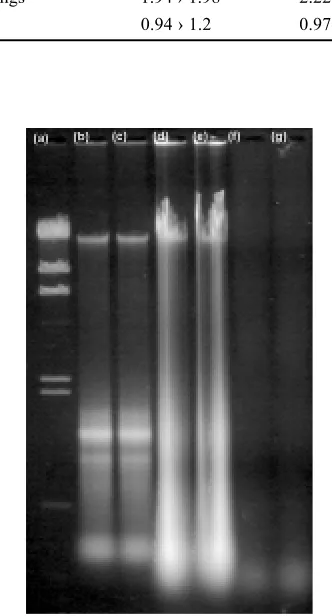
several methods of DNA isolation and purification. Three basic protocols were used to prepare DNA from different matrices (leaf tissue, young seedlings and soy-bean flour). Fresh leaf and seedling tissues are usually easy matrices for DNA isolation, soybean flour can be rich in some types of polysaccharides. (1) Hanse Ana-lytik kit yielded a low amount of DNA in comparison with SAGHAI-MAROOFet al. (1984) protocol, especial-ly in the case of flour. More over RNA is not removed during the Hanse Analytik procedure, so that subse-quently higher primer concentrations may be required later for amplification. Subsequent purification of DNA using Wizard (Promega) did not substantially improved the DNA quality (Table 1 and Fig. 1). RNaseA is used
[image:4.595.312.539.320.436.2]to remove RNAs from the nucleic acid extract accord-ing to SAGHAI-MAROOF protocol (2). Usually, more then 500 µg of DNA could be isolated from 2 g of leaf tissue or seedlings (Table 2). The protocol is suitable for isolation of DNA from fresh or frozen leaf tissue and young seedling. The DNA quality was satisfactory as verified by agarose electrophoresis and spectropho-tometry (A260/280≤ 1.6). When DNA from flour was iso-lated, chloroform extraction had to be repeated twice to remove proteins and to reach similar DNA quality as in the case of leaf tissue and seedlings. As a consequence of repeated chloroform extraction step the DNA yield was slightly lower. Even though the both Hanse Analy-tik and SAGHAI-MAROOF et al. (1984) protocols are
Table 2. Quantity and quality of soybean DNAs isolated using Commercial kit Hanse Analytik (HA) and Saghai Maroof protocol (SM) from 2 g of different matrices
Matrices Average yield of DNA A260/280
[image:4.595.69.299.357.421.2]Leaf – HA 500 ng 1.74 Leaf – SM 400 mg 1.5 Seedling/HA 200 mg 1.94 Seedling/SM 500 mg 1.6 Flour/HA 50 ng 0.94 Flour/SM 100 mg 1.4
Table 1. Comparison of DNAs quality after their isolations by Hanse Analytik kit and after their subsequent purifications by Wizard kit. First number in the column – Hanse Analytik kit, second number indicates the quality after purification by Wizard protocol. Ratios of absorbance (A) at different wavelength (in nm) indicate presence of impurities
Matrices A260/280 A260/230
Leaves 1.74 ›1.69 2.41 › 2.75 Seedlings 1.94 › 1.98 2.22 › 2.26 Flour 0.94 › 1.2 0.97 › 1.23
Fig. 1. DNA isolated from soybean leaves (b, c), young seedling (d, e) and flour (f, g) using Hanse Analytik kit. DNA ladder l/HindIII (MBI Fermentas) lane (a) was used beside spectro-photometrical evaluation to estimate DNA concentration
based on the same principle – a selective precipitation of nucleic acid in the CTAB and NaCl solution, the yield was substantially different. Hanse Analytik kit is suited for isolation of DNAs from different matrixes and is not probably suited to get maximum yield. DNeasy (3) iso-lation kit (Quiagen) is intended for isoiso-lation of DNA from small amount of tissue (approximatelly100 mg). The total DNA yield – 1500 ng was stable in the case of all the three matrices. The purity of isolated samples was also comparable (A260/A280 = 1.8–1.9). From the point of view of DNA quality, which can be detected spectrophotometrically and after electrophoretic sepa-ration, all the three methods are comparable. Hanse Analytik protocol, however, does provide substantially lower amount of DNA.
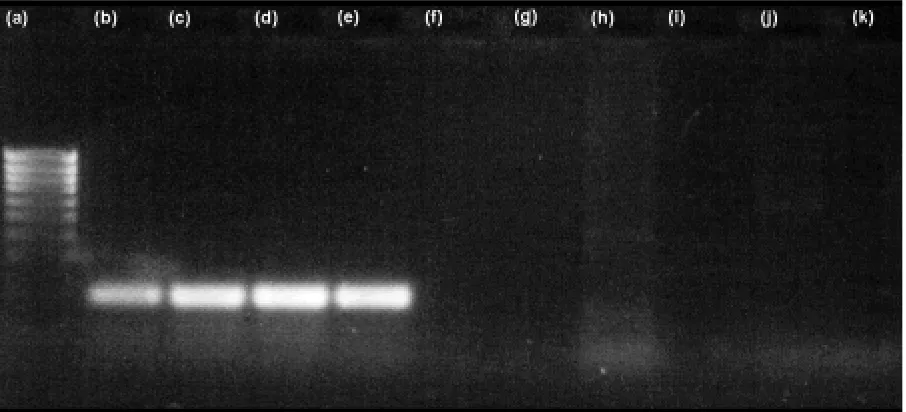
[image:4.595.94.260.399.707.2]Protocol proposed by Hanse Analytik (1) identified soybean DNAs; however, unspecific products could be detected after PCR reactions, which do not contain soybean DNA (Fig. 2). Lectin specific customer made (2) primers identified all soybean DNA containing samples. No products – specific or unspecific were detected when corn, potato, wheat, rapeseed, barley or sugar beet DNAs were used as the templates (Fig. 3). Leu-tRNA gene (3) specific primer pair did amplify the products from various templates, so this one can be used for verification of the presence of different plant DNAs, not for detection of soybean DNA specifically. Leu-tRNA is a housekeeping, conservative gene, so that homology between different species could be rather high KI -NOUCHIet al. (2000). We conclude, that lectin-specific primer pair designed by PIETSCHet al. (1997) is highly specific and it is possible to use it successfully for identification of soybean DNA.
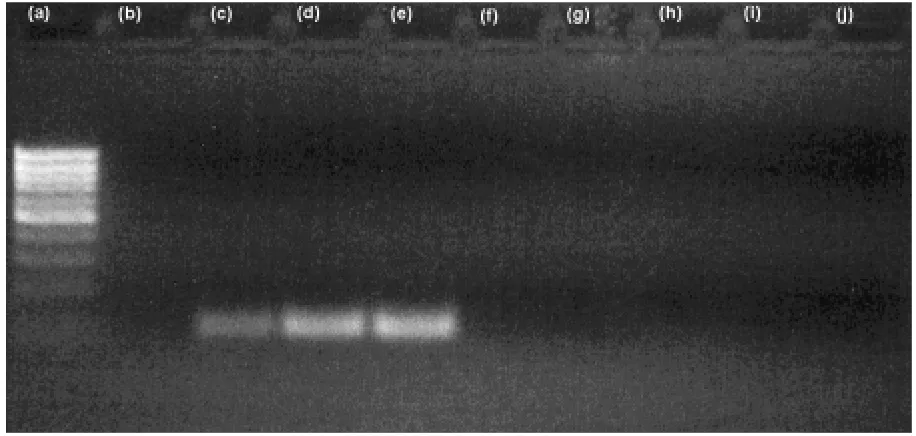
CaMV promoter and NOS terminator sequences are commonly used for routine GMP screening. This screen-ing step is not compulsory included in the Hanse Ana-lytik protocol. So that only two different customer made primer pairs were tested for CaMV promoter detection. The first (VOLLENHOFERet al. 1999) one amplifies spe-cifically CaMV sequence not only in soybean, but also in transgenic potato and transgenic Bt corn. In addition, the primer pair amplifies corresponding virus sequence, too. The virus DNA was purchased from German Na-tional Laboratory. The second tested primer pair (LIPP
et al. 1999a, b) amplified also some unspecific products under reaction conditions tested. This primer pair is therefore not suitable for routine screening or the proto-col needs to be better optimised (thermocycler type,
composition of reaction mixture, PCR polymerase types, etc).
[image:5.595.301.520.87.353.2]It was shown, that some matrices might contain CaMV virus itself. CaMV virus can contaminate especially vegetable containing samples. (LIPP et al. 1999a, b;
Fig. 2. Detection of the lectin gene in soybean DNA (a) DNA ladder. (b) reaction control, (c) leaf DNA, (d) seedling DNA, (e) flour DNA, (f) positive control – Hanse Analytik, (g) template-free, (h) DNA ladder
[image:5.595.67.520.510.716.2]WOLF et al. 2000). The combined results from 27 lab-oratories indicated that the probability of false positive results is on average only about 1% for soybeans (LIPP
et al. 1999a, b), however nonzero. To posses a tool ap-plicable to exclude possible false positives another prim-er pair was additionally used. We did not detect virus particles in any analysed sample.
[image:6.595.77.534.87.296.2]Only one NOS terminator specific primer pair was tested. Products of expected size were amplified using RR soybean DNA, transgenic potato and corn. No prod-ucts were amplified when non-modified corn, potato, wheat, rapeseed, barley or sugar beet DNAs were used as the templates.
Fig. 4. Detection of CaMV promotor using VOLLENHOFER et al. (1999) primer pairs: left to right DNA ladder, non-modified soybeans (IMMR standard), GM soybeans (0.1% IMMR standard), GM soybeans (0.5% IMMR standard), GM soyabeans (2.0% IMMR standard), non-modified soya leaf, sugar-beat leaf, wheat leaf, corn flour, corn leaf, template-free control
[image:6.595.68.526.478.696.2]Two EPSPS specific primer pairs were tested. (1) Primer pair from Hanse Analytik kit, sequence of which is not known, and (2) primer pair designed by VOLLEN -HOFERet al. (1999). In the both cases forward primer was complementary to a sequence of transit peptide and reverse primer fitted to EPSPS coding sequence. EPSPS enzyme, the target of glyphosate action, is synthesised in the cytoplasm and then transported to the chloroplast (KISHORE & SHAH 1988). The translocation of the pro-tein to the chloroplast is carried out by an N-terminal protein sequence called the chloroplast transit peptide (CTP) (DELLA-CIOPPAet al. 1986, 1987).
It is known, that limit (L) Ltheor for the detection of Roundup Ready soybean DNA with the PCR set-up applied can be 0.005% genetically modified organism (GMO/non-GMO – w/w) that corresponds to 30 copies of the GMO soybean genome per single PCR reaction. In pre-mixed powder preparations of soybean it is pos-sible to detect 0.1% GMO/non-GMO (w/w), i.e. this is the Lprac (JANKIEWITZet al. 1999). Roundup Ready soy-bean and CRM IRMM standards (0.1, 0.5, 1, 2 and 5% of transgenic RR soybean [w/w]) were therefore used to test the sensitivity of the reaction. It was possible to amplify the target sequence from 50 ng of DNA con-taining 0.1% of transgenic DNA (50 pg) without modi-fication of the protocol. To check the sensitivity of the reaction 1% standard was also diluted 1:1, 1:5, 1:10 and 1:20 with non-transgenic corn DNA. Again, the target sequence was amplified in all the cases, it means, that it was possible to amplify target sequence from 25 pg of transgenic DNA.
Both the primer pairs identify reliably RR soybean. No product was detected in RR corn or RR using these primers. In fact, three genes which provide field-level tolerance to glyphosate, the active ingredient in Round-up® herbicide, have been introduced into commercial cultivars. The first glyphosate-tolerant EPSPS gene was isolated from a soil bacterium, Agrobacterium (BARRY
et al. 1994; DUKE 1996). Recently, the EPSPS gene from corn (Zea mays) has been mutagenised in vitro to obtain a glyphosate-tolerant enzyme. And this enzyme is 99.3 % identical to the parent enzyme (MONSANTO 1997). Also, a gene that encodes for a glyphosate-de-grading enzyme called glyphosate oxidoreductase (GOX) was isolated from Achromobacter strain LBAA, a soil bacterium ubiquitous in nature (BARRY et al. 1994). The encoded enzyme deactivates the herbicidal effect of glyphosate. More over, in order to achieve ef-ficient expression of bacterial genes within plants, it has been common for researchers to modify the codon us-age pattern of genes of bacterial origin prior to intro-ducing them into plants (CROON 1996). So that it is difficult to use the same protocol for the detection of the gene conferring herbicide resistance in other plant species. No products were amplified across different non-modified species – corn, potato, wheat, rapeseed,
barley or tomato. We can conclude, that these primers are highly specific and probably can discriminate Roundup Ready soybeans (Monsanto) only.
Acknowledgement: We thank Veronika Machalová for the excellent technical assistance.
R e f e r e n c e s
ANONYM (1986): Pesticide Fact Sheet: Glyphosate. Office of Pesticide Programs, U.S. Environmental Protection Agen-cy, Washington, DC. EPA Publ. No. 540/FS-88-124. BARRY G.F., TAYLOR M.L., PADGETTE S.R., KOLACZ K.H.,
HALLAS L.E., DELLA-CIOPPA G., KISORE G.M. (1994): Cloning and Expression in Escherichia coli of the Glypho-sate-to-Aminomethylphosphonic Acid Degrading Activity from Achromobacter sp. strain LBAA. Monsanto Techni-cal Report MSLB13245, St. Louis.
BERTHAU Y. (1999): Detection of GMO in raw and derived products: general guidelines for a normalized approach. In: Proc. 5th Int. Conf. Pests in Agriculture. Part I, Montpel-lier, France, 7–9 December: 15–16.
CROON K.S. (1996): Petition for Determination of Nonregu-lated Status: Insect-protected Roundup Ready Corn Line MON 802. USDA Petition, No. 96-317-01P.
DELLA-CIOOPA G., BAUER S.C., KLEIN B.K., SHAH D.M., FRALEY R.T., KISHORE G. (1986): Translocation of the precursor of 5-enolpyruvylshikimate-3-phosphate synthase into chloroplasts of higher plants in vitro. Proc. Natl. Acad. Sci. U.S.A., 83: 6873–6877.
DELLA-CIOPPA G., BAUER S.C., TAYLOR M.T., ROCHESTER
D.E., KLEIN B.K., SHAH D.M., FRALEY R.T., KISHORE
G.M. (1987): Targeting a herbicide-resistant enzyme from
Escherichia coli to chloroplasts of higher plants. Bio/Tech-nol.. 5: 579–584.
DUIJN G. van, BIERT R. van, BLEEKER-MARCELIS H., PEP
-PELMAN H., HESSING M. GRASSERBAUER M. (1999): De-tection methods for genetically modified crops. KNOWLES
M., KUIPER H.A., GENDRE F. (eds.): Detection methods for novel food derived from genetically modified organ-isms. Food Control. (Spec. Issue), 10: 375–378.
DUKE S.O. (1996): Herbicide Resistant Crops. CRC Press, New York.
GADANI F., BINDLER G., PIJNENBURG H., ROSSI L., ZUBER
J. (2000): Current PCR methods for the detection, identifi-cation and quantifiidentifi-cation of genetically modified organisms (GMOs): a brief review. Beitr. Tabakfors. Int., 19: 85–96. GACHET E., MARTIN G.G., VIGNEAU F., MEYER G. (1998): Detection of genetically modified organisms (GMOs) by PCR: a brief review of methodologies available. Trends Food Sci. Technol., 9: 380–388.
INIS M.A, GELFAND D.H., SNINSKY J.J., SNINSKY J.I. (1995): The PCR Strategies. Acad. Press, New York.
(German Food Act LMBG 35): a semi-quantitative study of sensitivity limits with glyphosate-tolerant soybeans (Roundup Ready) and insect-resistant Bt maize (Maximiz-er). Eur. Food Res. Technol., 209: 77–82.
KINOUCHI M., KANAYA S., IKEMURA T., KUDO Y. (2000): Detection of tRNA Based on the Cloverleaf Secondary Struc-ture. In: DUNKER K., KONAGAYA A., MIYANO S., TAKAGI
T. (eds.): Genome Informatics 2000. Univ. Acad. Press, To-kyo, 11: 301–302.
KISHORE G., SHAH D. (1988): Amino acid biosynthesis in-hibitors as herbicides. Annu. Rev. BioChem., 57: 627–663. LEVIN J.G., SPRINSON D.B. (1964): The enzymatic forma-tion and isolaforma-tion of 5-enolpyruvylshikimate-3-phosphate. J. Biol. Chem., 239: 1142–1150.
LIPP M., ANKLAM E., BRODMANN P., PIETSCH K., PAUWELS
J., GASSERBAUER M. (2001): Results of an interlaboratory assessment of a screening method of genetically modified organisms in soya beans and maize. In: KNOWLES M., KUIPER H.A., GENDRE F. (eds.): Detection methods for novel food derived from genetically modified organisms. Food Control. (Spec. Issue), 10: 379–383.
LIPP M., BLUTH A., EYQUEM F., KRUSE L., SCHIMMEL H., EEDE G. van den, ANKLAM E. van den, EEDE G. (1999a): Validation of a method based on polymerase chain reaction for the detection of genetically modified organisms in var-ious processed foodstuffs. Eur. Food Res. Technol., 212: 497–504.
LIPP M., BRODMANN P., PIETSCH K., PAUWELS J., ANKLAM
E. (1999b): UPAC collaborative trial study of a method to detect genetically modified soy beans and maize in dried powder. J. AOAC Int., 82: 923–928.
LU F.C. (1995): A review of the acceptable daily intakes of pesticides assessed by the World Health Organization. Regul. Toxicol. Pharmacol., 21: 351–364.
MARTYNKOVÁ R., OVESNÁ J., KUČERA L. (1997): Evalua-tion of wheat (Triticum aestivum L.) cultivars with standard Gli/Glu alleles using PCR and leaf tissue as a direct tem-plate. Czech J. Genet. Plant Breed., 33: 251–260. MEYER R., CHARDONNENS F., HUBNER P., LUTHY J. (1996):
Polymerase Chain Reaction (PCR) in the quality and safe-ty assurance of food detection of soya in processed meat product. Z. Lebensmittel Unters. Fors., 203: 339–344. MONSANTO (1997): Petition for determination of
nonregu-lated status: Roundup Ready Corn Line GA21 (Submitted to United States Department of Agriculture), Petition No. 97-099-01P.
MULLIS K.B., FALOORA F. (1987): Specific synthesis of DNA
in vitro via a polymerase catalyzed chain reaction. Meth-ods Enzymol., 155: 335–350.
PASQUALONE A. (2000): Analytical methods for detecting genetically modified organisms in food: rules, theoretical basis and critical points. Industrie-Alimentari, 39: 444–451. PECCHIONI N., FACCIOLI P., MONETTI A., STANCA M., TERZI
V. (1996): Molecular markers for genotype identification in small grain cereals. J. Genet. Breed., 50: 203–219. PIETSCH K., WAIBLINGER H., BRODMANN P., WURZ A.
(1997): Screeningverfahren zur Identifizierung „genetisch verandered“. Pfl. Lebensmit., Dtsch. Lebensmit. Rundschau, 93: 35–38.
SAGHAI-MAROOF M.A., SOLIMAN K.M., JORGENSEN R.A., ALLARD R.W. (1984): Ribosomal DNA spacer-length poly-morphism in barley. Mendelian inheritance, chromosomal location and population dynamics. Proc. Natl. Acad. Sci., 81: 8014–8018.
SHAH D., HORSCH R., KLEE H., KISHOR G., WIINTER J., TUMER
N., HIRONAKA C., SANDERS P., GASSER C., AYKENT S., SIEGEL N., ROGERS S., FRALEY R. (1986): Engineering her-bicide tolerance in transgenic plants. Science, 233: 478–481. STEINRUCKEN H.C., AMRHEIN N. (1980): The herbicide gly-phosate is a potent inhibitor of 5-enolpyruvyl-shikimate-3-phosphate synthase. Biochem. Biophys. Res. Comm., 94: 1207–1212.
STEINRUCKEN H.C., AMRHEIN N. (1984): 5-Enolpyruvylshiki-mate-3-phosphate synthase of Klebsiella pneumoniae: in-hibition by glyphosate [N-(phosphonomethyl)-glycine]. Eur. J. Biochem., 143: 351–357.
VOLLENHOFER S., BURG K., SCHMIDT J., KROATH H. (1999): Genetically modified organisms in food – screening and specific detection by polymerase chain reaction. J. Agr. Food Chem., 47: 5038–5043.
WAUCHOPE R.D., BUTTLER T.M., HORNSBY A.G., AUGUS
-TIJN BECKERS P.W.M., BURT J.P. (1992): SCS/ARS/CES pesticide properties database for environmental decision-making. Rev. Environ. Contam. Toxicol., 123: 1–157. WOLF C., SCHERZINGER M., WURZ A., PAULI U., HUBNER
P., LUTHY J. (2000): Detection of cauliflower mosaic virus by the polymerase chain reaction: testing of food compo-nents for false positive 35S promotor screening results. Eur. Food Res. Technol., 210: 367–372.
Received for publication January 2, 2002
Accepted after corrections February 21, 2002
Souhrn
OVESNÁ J., DĚDIČOVÁ L., HORÁČEKJ., SADILOVÁE., KUČERA L., MĚSKOVÁ L. (2002): Porovnání několika metod založených na PCR pro detekci Roundup-Ready sóji. Czech J. Genet. Plant Breed., 38: 55–63.
Corresponding author:
RNDr. JAROSLAVA OVESNÁ, Výzkumný ústav rostlinné výroby, odbor genetiky a šlechtění rostlin, 161 06 Praha 6-Ruzyně, Česká republika
tel.: + 420 2 33 02 22 86, fax: + 420 2 33 02 22 86, e-mail [email protected]
a jejich částí v potravním řetězci. V předkládané publikaci porovnáváme jednotlivé kroky, které jsou částmi několika po-stupů detekce. Běžně používaný postup izolace DNA založený na selektivní precipitaci v prostředí CTAB se ukázal vhod-ným nejen pro izolaci DNA ze zelených pletiv, ale také z mouky. Na rozdíl od primerů amplifikujících sekvenci leu-tRNA genu je PCR detekce přítomnosti genu pro lectin naprosto specifická. Pouze jeden z testovaných primerových kombinací pro amplifikaci 35S CaMV promotoru neamplifikoval za testovaných podmínek nespecifické produkty. Primerový pár de-tekující specificky sekvenci NOS terminátoru byl shledán vhodným pro rutinní detekci. Gen kódující protein EPSPS byl amplifikován podle dvou odlišných protokolů. Tytéž primerové páry neidentifikovaly jiné GM plodiny obsahující genetic-kou modifikace se stejnou funkcí.