A Thesis Submitted for the Degree of PhD at the University of Warwick
Permanent WRAP URL:
http://wrap.warwick.ac.uk/108561/
Copyright and reuse:
This thesis is made available online and is protected by original copyright. Please scroll down to view the document itself.
Please refer to the repository record for this item for information to help you to cite it. Our policy information is available from the repository home page.
Oxetane-Based Peptidomimetics
by
Jonathan Beadle
A thesis submitted in partial fulfilment of the requirements for the degree
of Doctor of Philosophy in Chemistry
Table of Contents
Acknowledgements 6
Declaration 7
Abstract 8
Abbreviations 9
Chapter 1: Introduction 13
1.1 Project Aims 13
1.2 Peptidomimetics 13
1.2.1 Peptidomimetics via Modification of the Peptide Backbone 14
1.3 Oxetanes in Medicinal Chemistry 16
1.3.1 Oxetane 16
1.3.2 Oxetanes in Natural Products 17
1.3.3 Oxetanes as Replacement Groups in Medicinal Chemistry 17
1.3.3.1 Oxetane as a Replacement for gem-Dimethyl Groups 18
1.3.3.2 Oxetane as a Replacement for Carbonyl Groups 19
1.3.3.3 Spirocyclic Oxetanes as a Replacement for Morpholine 21
1.4 Oxetane-Containing Peptidomimetics 22
1.4.1 Homo-Oligomers of Oxetin 22
1.4.2 Oxetane-Modified Peptides 23
1.4.3 Oxetane-Modification of Proteins 33
1.5 Conclusions 36
Chapter 2: Synthesis of Oxetane- and Azetidine-Containing Spirocycles
Related to the 2,5-Diketopiperazine Framework 37
2.1 Previous Work and Project Aims 37
2.2 Introduction 37
2.2.1 2,5-Diketopiperazines 38
2.2.2 Spirocycles in Drug Discovery 39
2.3 Results and Discussion 41
2.3.1 Optimisation of Reduction and Cyclisation Conditions 41
2.3.2 Synthesis of Oxetane-Modified Diketopiperazine Precursors 42
2.3.3 Synthesis of Oxetane-Containing Spirocycles 45
2.3.4 Synthesis of Azetidine-Containing Spirocycles 46
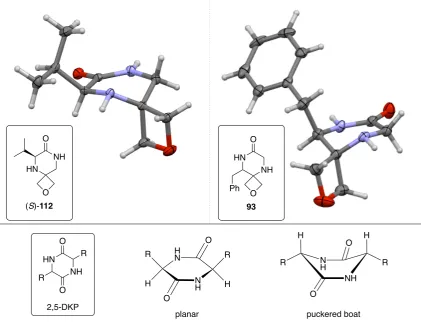
2.3.5 X-Ray Crystal Structures of Oxetane-Containing Spirocycles 49
2.4 Conclusions 52
Chapter 3: Solid-Phase Synthesis of Oxetane-Modified Peptides 54
3.1 Project Aims 54
3.2 Introduction 54
3.2.1 Solid-Phase Peptide Synthesis 54
3.2.2 Solid-Phase Synthesis of Peptidomimetics 57
3.3 Results and Discussion 59
3.3.1 SPPS Route to Oxetane-Modified Peptides 59
3.3.2 Initial Synthesis of an Oxetane-Containing Dipeptide Building Block 59
3.3.3 Initial Solid-Phase Synthesis of an Oxetane-Modified Peptide 60
3.3.4 Synthesis of Oxetane-Containing Dipeptide Building Blocks 61
3.3.5 Solution-Phase Chemistry of Oxetane-Containing Building Blocks 70
3.3.6 Solid-Phase Synthesis of Oxetane-Modified Peptides 73
3.3.6 Further Synthesis of Oxetane-Containing Dipeptide Building Blocks 75
3.3.7 Binding Affinity Studies of Oxetane-Modified Analogues of Met-
and Leu-Enkephalin 76
3.4 Enzymatically-Stable Oxetane-Based Dipeptide Hydrogels 81
3.5 Conclusions 84
Chapter 4: Incorporation of Oxetanes into α-Helices 86
4.1 Project Aims 86
4.2 Introduction 87
4.2.1 The α-Helix 87
4.2.2 Alanine-Based Helical Peptides 87
4.3 Results and Discussion 89
4.3.1 Design of Alanine-Based Model Peptides 89
4.3.2 Towards the Stereocontrolled Synthesis of Oxetane-Containing
Dipeptide Building Blocks 91
4.3.2.1 Addition of Chiral Amines to Trisubstituted Nitroalkenes 91
4.3.2.2 Optimisation Studies for the Addition of (S)-273 to Nitroalkene 128 98
4.3.2.3 Addition of (S)-273 to Trisubstituted Nitroalkenes 103
4.3.2.4 Modified Route to Oxetane-Containing Dipeptide Building Blocks 108
4.3.3 Solid-Phase Synthesis of Oxetane-Modified Peptides 112
4.3.4 Conformational Analysis of Oxetane-Modified Peptides 115
4.3.4.2 CD Analysis of Oxetane-Modified Peptides 116
4.3.4.3 Conclusions from Circular Dichroism Analysis 123
4.4 Conclusions 123
Chapter 5: Key Findings and Future Work 125
5.1 Key Findings 125
5.2 Future Work 128
Chapter 6: Experimental Section 133
6.1 General Details 133
6.2 General Procedures 134
6.3 Experimental Procedures and Characterisation 140
6.4 Chiral NMR Analysis of (S)-112 Using Pirkle’s Alcohol 194 6.5 Configurational Integrity of (S,S)-219 and (S,R)-219 196 6.6 Microwave Assisted Solid-Phase Synthesis of Peptides 199
6.7Determination of Diastereomeric Ratio 201
6.8Diastereomeric Purity of (R,S)-277 and (S,R)-277 203
6.9 HPLC Analysis of (±,S)-255, (R,S)-255 and (S,S)-255 204
6.10 Solid-Phase Synthesis of KAAAA Peptides 205
6.11 Circular Dichroism 208
Acknowledgements
Firstly, I would like to thank Professor Mike Shipman for all of his guidance, encouragement and support throughout the course of my PhD, and for giving me the opportunity to work on such an interesting and enjoyable project. Secondly, I would like to thank Dr Piotr Raubo for all his help and assistance with the project and for looking after me during my placement at AstraZeneca. I would also like to thank Dr Nicola Powell for all her work on this project. Funding from the Warwick Collaborative Postgraduate Research Scholarship and AstraZeneca is gratefully acknowledged.
I would like to thank a number of people for their collaboration as part of this project. I am especially grateful to Dr Andrew Jamieson for all his help with the solid-phase and hydrogel projects, and for looking after me during my time at the University of Leicester. I would also like to thank Dr Astrid Knuhtsen and Dr Alex Hoose for their help with the solid-phase project and members of the Jamieson research group at the University of Leicester for helping me during my time there. Thanks also to Professor Dave Adams, Laura McDougall and Dr Emily Draper for their work on the hydrogel project. I am also grateful for the invaluable help provided by Dr Guy Clarkson with X-ray crystallography. I am also thankful to Dr Nikola Chmel and Marco Pinto for their help with the CD experiments, and to Dr Ann Dixon for her expertise regarding NMR and CD spectroscopy. I also thank Dr John Traynor for his studies on the enkephalin analogues. Thanks also to Lijiang Song, Phil Aston, Robert Perry and Ivan Prokes for their analytical expertise.
I would like to thank members of the Shipman and Chan groups for making my journey at Warwick enjoyable and productive: Alpa, Conor, Dave, George, Greg, Ina, Jo, Leo, Martin, Nastja, Nat, Paul, Raj, Stefan and Stuart. In particular, I am very grateful to Ina for all her help with the helix project and to Stefan for proofreading this thesis. Many thanks also to Anaïs and Lauren for being great students. Thanks also to members of the Chaplin group for invaluable discussions at the weekly Research Refresh meeting.
Declaration
This thesis is submitted to the University of Warwick in support of my application for the degree of Doctor of Philosophy. It has been composed by myself and has not been submitted in any previous application for any degree.
The work presented in this thesis is an account of my own work carried out at the University of Warwick, the University of Leicester and AstraZeneca, Cambridge, between October 2014 and May 2018, except in the cases outlined below:
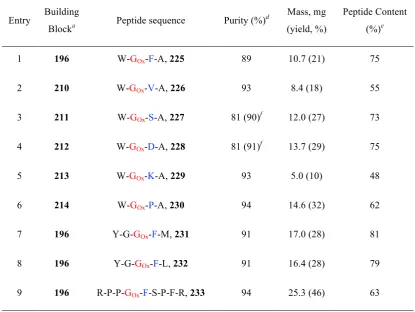
Chapter 3: Peptides 225-233 were synthesised and analysed by Dr Astrid Knuhtsen, Dr Alex Hoose and Dr Andrew Jamieson at the University of Glasgow. Binding affinity studies of Met- and Leu-enkephalin analogues 231 and 232 were carried out in the laboratories of Dr John Traynor at the University of Michigan, USA. The preparation and analysis of hydrogels was carried out by Laura McDougall, Dr Emily Draper, Dr Andrew Jamieson and Professor Dave Adams at the University of Glasgow.
Chapter 4: Peptides 246, 248, 252 and 254 were synthesised by Dr Ina Wilkening at the University of Warwick.
At the time of submission, elements of this work have appeared in the scientific literature:
Beadle, J. D.; Powell, N. H.; Raubo, P.; Clarkson, G. J.; Shipman, M. Synthesis of Oxetane- and Azetidine-Containing Spirocycles Related to the 2,5-Diketopiperazine Framework. Synlett2015, 27, 169–172.
Beadle, J. D.; Knuhtsen, A.; Hoose, A.; Raubo, P.; Jamieson, A. G.; Shipman, M. Solid-Phase Synthesis of Oxetane Modified Peptides. Org. Lett.2017, 19, 3303–3306.
McDougall, L.; Draper, E. R.; Beadle, J. D.; Shipman, M.; Raubo, P.; Jamieson, A. G.;
Adams, D. J.; Enzymatically-Stable Oxetane-Based Dipeptide Hydrogels. Chem.
Abstract
This thesis describes the synthesis, structural preferences and biological properties of oxetane-containing peptidomimetics in which one of the amide C=O bonds of a peptide backbone is replaced by an oxetane ring. Chapter 1 gives a brief introduction on peptidomimetics, oxetanes in medicinal chemistry and oxetane-containing peptidomimetics.
Chapter 2 describes the development of a simple two-step sequence to spirocyclic analogues of 2,5-diketopiperazines. Conjugate addition of α-amino methyl esters to nitroalkenes, generated from oxetan-3-one or N-Boc-azetidin-3-one, followed by reduction of the nitro group with Raney Ni under an atmosphere of hydrogen provides, after spontaneous cyclisation of the primary amine, the spirocycles in good overall yields. These novel spirocycles can be functionalised by selective N-alkylations as well as by carbonyl reduction to the corresponding piperazines.
Chapter 3 describes the development of a practical route to oxetane-modified peptides (OMPs) using solid-phase peptide synthesis (SPPS) techniques. Our approach involves the application of oxetane-containing dipeptide building blocks which are easily prepared in three steps in solution. The building blocks are then integrated into peptide chains
using conventional Fmoc/tBu SPPS. This approach was used to prepare a range of OMPs
in high purity including oxetane analogues of Met- and Leu-enkephalin and the nonapeptide bradykinin.
Chapter 4 explores the impact of oxetane-modification on the structure and stability of α -helices. Initially, an asymmetric route to a dipeptide building block in which the oxetane-residue is based on alanine is described. Following this, the SPPS methodology described in Chapter 3 was used to prepare oxetane-modified analogues of an alanine-based α -helical peptide in which a single alanine residue is replaced with an oxetane-modified residue. The structural preferences of the oxetane-modified analogues were then studied using circular-dichroism (CD) spectroscopy. These studies revealed that introduction of an oxetane-modification results in a helix-destabilising effect.
Chapter 5 gives a summary of the key findings and possible future work.
Abbreviations
[α]D Optical rotation
[θ]MRW Mean residue ellipticity
1D 1 Dimensional
2D 2 Dimensional
Å Angstrom
AA Amino Acid
Ac Acetyl
Alloc Allyloxycarbonyl
AOx Oxetane-modified alanine
APT Attached proton test
aq. Aqueous
Ar Aryl
b Broad
Bn Benzyl
Boc tert-Butyloxycarbonyl
Bt Benzatriazole
Bu Butyl
c Concentration
Calcd. Calculated
Cbz Carboxybenzyl
CD Circular Dichroism
COSY Correlation Spectroscopy
d Doublet
Da Dalton
DCC N,N’-Dicyclohexylcarbodiimide
DCE 1,2-Dichloroethane
de Diastereomeric excess
deg Degrees
DIAD Diisopropyl azodicarboxylate
DIC N,N′-Diisopropylcarbodiimide
DIPEA N,N-Diisopropylethylamine
DMAP 4-Dimethylaminopyridine
DMB Dimethoxybenzyl
DMF Dimethylformamide
DMSO Dimethyl sulfoxide
dr Diastereomeric ratio
EDC N-(3-Dimethylaminopropyl)-N’-ethylcarbodiimide
eq Equation
equiv Equivalent
ESI Electrospray Ionisation
Et Ethyl
FDA Food and Drug Administration
𝑓H Mean helix content
Fmoc Fluorenylmethyloxycarbonyl
FOx Oxetane-modified phenylalanine
GOx Oxetane-modified glycine
h Hour
HATU 1-[Bis(dimethylamino)methylene]-1H
-1,2,3-triazolo[4,5-b]pyridinium 3-oxide hexafluorophosphate
HBTU 3-[Bis(dimethylamino)methyliumyl]-3H-benzotriazol-1-oxide
hexafluorophosphate
HCTU O-(1H-6-Chlorobenzotriazole-1-yl)-1,1,3,3-tetramethyluronium
hexafluorophosphate
HFP Hexafluoroisopropanol
HPLC High Performance Liquid Chromatography
HRMS High Resolution Mass Spectroscopy
Hz Hertz
iPr iso-Propyl
IR Infrared
J Coupling constant
K Kelvin
LC-MS Liquid Chromatography Mass Spectrometry
lit. Literature
m Multiplet
MD Molecular Dynamics
Me Methyl
MHz Megahertz
min Minute
mp Melting Point
Ms Methanesulfonyl
MS Mass Spectrometry
n Normal
NMM 4-Methylmorpholine
NMR Nuclear Magnetic Resonance
Nu Nucleophile
OMP Oxetane-modified peptide
Ox Oxetane
Pbf Pentamethyl-2,3-dihydrobenzofuran-5-sulfonyl
Pg Protecting group
Ph Phenyl
Pi Phosphate
POx Oxetane-modified proline
ppm Parts per million
PyBOP (Benzotriazol-1-yloxy)tripyrrolidinophosphonium
hexafluorophosphate
q Quartet
quint Quintet
Ref. Reference
Rf Retention factor
rt Room temperature
s Second, Singlet
sep Septet
solv. Solvent
SPPS Solid-phase peptide synthesis
Su Succinimide
t Temperature
t Time, Triplet
TBTU 2-(1H-Benzotriazole-1-yl)-1,1,3,3-tetramethylaminium tetrafluoroborate
tBu tert-Butyl
Tf Trifluoromethanesulfonyl
TFA Trifluoroacetic acid
THF Tetrahydrofuran
TIS Triisopropylsilane
TLC Thin Layer Chromatography
tR Retention time
Tris 2-Amino-2-(hydroxymethyl)-1,3-propanediol
Trt Triphenylmethyl
Ts Tosyl
UPLC-MS Ultra-Performance Liquid Chromatography Mass Spectrometry
UV Ultraviolet
v Volume
VOx Oxetane-modified valine
YOx Oxetane-modified tyrosine
δ Chemical shift
ε Extinction coefficient
λ Wavelength
Chapter 1: Introduction
1.1 Project Aims
This thesis builds upon previous research within our group and describes the synthesis, structural preferences and biological properties of novel oxetane-containing peptidomimetics, in which one of the amide C=O bonds of a peptide backbone is replaced by an oxetane ring (Figure 1.1).1 Initially, the project will focus on the development of practical methods for the synthesis of oxetane-modified peptides (OMPs). Following this, the emergent chemical methods will be used to investigate the impact of oxetane-modification on the properties and structure of biologically interesting peptides. Through these investigations, we hope to gain the tools and knowledge to selectively modify peptides and learn how the changes induced by oxetane-modification influence the properties and secondary structure of peptides.
Figure 1.1 Oxetane-modified peptides (OMPs).1
1.2 Peptidomimetics
Peptides and their larger counterparts, proteins, are oligomers of amino acids covalently
linked together by amide bonds (peptide bonds).2 Although they are constructed from
relatively simple building blocks, the resulting oligomeric structures form complex architectures that play vital roles in almost all biological processes, for example functioning as hormones, enzyme inhibitors or substrates, growth promoters or inhibitors and neurotransmitters.3,4 Consequently, the therapeutic application of peptides and proteins is of great interest in biomedical research.5–7 Despite this, the use of peptides as therapeutics is limited by their vulnerability to proteases, poor bioavailability and undesired effects due to interaction of flexible peptides with several receptors.8,9 To tackle these problems, molecules called peptidomimetics have been designed to mimic the structure and/or action of a natural peptide and potentially improve the physicochemical and biochemical properties.
N H
R
O
H N
R H
N O
R
O N
H R
H N
R H
N O
R
O
O
conventional
1.2.1 Peptidomimetics via Modification of the Peptide Backbone
There are a number of excellent reviews on the synthesis and medicinal chemistry of peptidomimetics.4,8–12 This section does not aim to replicate these reports but to highlight some relevant examples.
A common method for preparing peptidomimetics is via modification of the amino acid
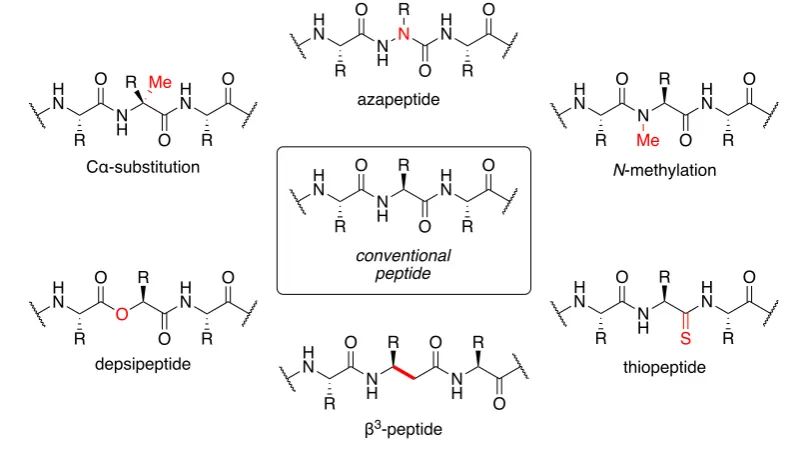
[image:15.595.124.530.297.530.2]backbone of native peptides.4 Such modifications can create novel structures with increased bioavailability, enzymatic stability and increased activity and/or selectivity for a target receptor. Examples of backbone modifications include: isosteric replacement or alkylation of the amino functionality, substitution or replacement of the α-carbon, backbone extension and modification of the carbonyl group (Figure 1.2).
Figure 1.2 Peptidomimetics with modification of the peptide backbone.4
Azapeptides are peptide analogues in which the α-carbon of one or more of the amino
acid residues is replaced with a nitrogen atom and can be easily prepared via acylation of hydrazines.4,13,14 They exhibit a preference to adopt β-turn conformations and are more resistant to enzymatic hydrolysis. Azapeptides are attractive targets in drug discovery and have been used as inhibitors of hepatitis C virus NS3 serine protease and human immunodeficiency virus (HIV) protease.15,16 Atazanavir 1 (ReyatazTM), a highly active HIV protease inhibitor, is an example of an FDA-approved azapeptide drug (Figure 1.3).17 N H N R H N R H N O R O O N R H N R H N O R O O Me N H H N R H N O R O O R Me N H R H N R H N O R O S O R H N R H N O R O O N H R H N R H N O R O O conventional peptide azapeptide N-methylation Cα-substitution depsipeptide thiopeptide N H H N O O N H O R R R
Figure 1.3 Atazanavir 1 an azapeptide inhibitor of HIV protease.17
Depsipeptides are peptidomimetics in which one or more amino groups in the peptide chain is replaced by an oxygen atom.4 Replacement of the N-H group results in reduced H-bonding ability and a lower barrier of rotation for cis-trans isomerisation than native peptides, which has a significant effect on the secondary structure of depsipeptides.18 Numerous depsipeptides, particularly cyclic structures, have been isolated from various microorganisms and exhibit a wide spectrum of biological activity including antimicrobial, antitumour and immunosuppressive activity.19 Consequently, naturally occurring depsipeptides have emerged as promising lead structures for the development of novel synthetically derived drugs.20 Romidepsin 2 (IstodaxTM) is an FDA-approved cyclic depsipeptide anticancer drug used for the treatment of cutaneous T-cell lymphoma. (Figure 1.4).21
Figure 1.4 Romidepsin 2, a depsipeptide anticancer drug.21
Thiopeptides, perhaps one of the simplest modifications, are peptide analogues in which
the oxygen atom of one or more of the amide bonds is replaced with a sulphur atom.22
Despite their similarity, replacement of an amide bond with a thioamide has a significant impact on the structural and biological properties of a peptide. This is a result of the significantly longer C=S bond and change in H-bonding properties. These aspects have been utilised in the design and study of synthetic foldamers, such as β-sheets and α
-MeO N
H O
O H
N N
N H
H N
O OMe
Ph OH
N
O
Atazanavir, 1 HIV protease inhibitor
HN HN NH HN
O O O
O
O O
S S
helices.23,24 In addition, thiopeptides have displayed enhanced in vivo activity due to their increased resistance to enzymatic hydrolysis.25 This has been demonstrated by Strømgaard and co-workers, who identified thiopeptide 3 as a potent and plasma-stable inhibitor of the postsynaptic density-95 (PSD-95) and N-methyl-D-aspartate (NMDA) receptor interaction, which is a potential target in the treatment of Alzheimer’s disease (Figure 1.5).26
Figure 1.5 Thiopeptide 3, a potent and plasma-stable inhibitor of the PSD-95/NMDA receptor interaction.26
1.3 Oxetanes in Medicinal Chemistry
There are a number of excellent reviews on the synthesis, reactivity and medicinal chemistry of oxetanes.27–31 This section does not aim to replicate these reports but to highlight the relevance of oxetanes in medicinal chemistry.
1.3.1 Oxetane
Oxetane 4 is a four-membered heterocyclic ring containing an oxygen atom that adopts an essentially planar conformation with a small puckering angle of ~9° at 140 K and ~11° at 90 K (Figure 1.6).27,32 The oxetane ring is an excellent H-bond acceptor and is used as a stable motif in medicinal chemistry to influence the physicochemical properties of potential drug candidates.27,29 In addition, the oxetane ring is a valuable synthetic intermediate due to its ability to undergo ring-opening reactions under acidic conditions.27,28 These characteristics have led to the development of numerous synthetic approaches to novel oxetane derivatives.27,29
N H
H N O
N H O
S H
N CO2H Me
OH H CO2H
Figure 1.6 Structure and ring puckering of oxetane 4.32
1.3.2 Oxetanes in Natural Products
There are relatively few natural products that contain the oxetane ring.27 The structures of those that do range from simple β-peptides to highly functionalised fused ring systems (Figure 1.7). Perhaps, the most well-known example is paclitaxel, sold under the brand name Taxol 5, which was first isolated in 1971 by McPhail and co-workers and is used as a chemotherapy drug.33 Other examples include the β-amino acid oxetin 6,34 which displays antibacterial and herbicidal activity, the nucleoside analogue oxetanocin A 7,35 which is a potent antitumour, antiviral and antibacterial agent, and the marine diterpene dictyoxetane 8,36 whose biological properties are currently not well understood.
Figure 1.7 Oxetane-containing natural products.
1.3.3 Oxetanes as Replacement Groups in Medicinal Chemistry
Studies by Carreira, Roger-Evans, Müller and co-workers have demonstrated the benefits of the oxetane motif as an isosteric replacement for gem-dimethyl, carbonyl and morpholine groups in medicinal chemistry.29,30,37,38
O H
H H
H H
H
Oxetane, 4 Ring puckering:
~11° at 90 K. O
O OH
O
H O
O O Ph
O HO O O
O O
OH Ph
NH Ph O
O
H2N CO2H
O
N HO
OH N
N N
NH2
Taxol, 5
Oxetin, 6 Oxetanocin A, 7
OH
Me iPr
H
O
Me
Me O
1.3.3.1 Oxetane as a Replacement for gem-Dimethyl Groups
gem-Dimethyl groups have commonly been used in medicinal chemistry to block metabolic attack of methylene groups. However, replacement of the hydrogen atoms with methyl groups results in a significant increase in lipophilicity, which can have an adverse effect on the physicochemical and pharmacological properties.37 In addition, the gem -dimethyl group itself can become a target of metabolic attack. Carreira and co-workers have proposed that the oxetane ring can be used as a polar equivalent of the gem-dimethyl group, as the oxetane ring is similar in molecular volume to the gem-dimethyl group and can provide a reduction in lipophilicity and metabolic vulnerability (Figure 1.8).29,37
Figure 1.8 Comparison of gem-dimethyl and oxetane modules.37
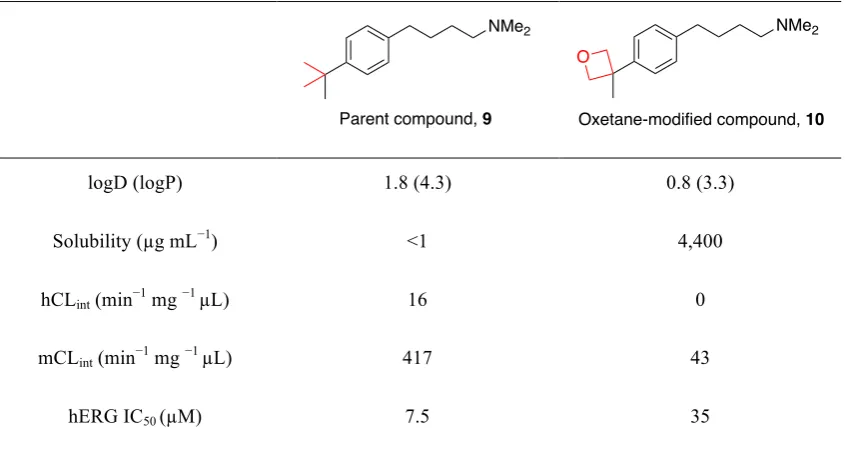
The impact of replacing a gem-dimethyl unit with an oxetane ring was demonstrated by replacing the tert-butyl group in parent compound 9 with a methyl-substituted oxetane 10 (Table 1.1).37 Comparison of the physicochemical and biochemical properties revealed that oxetane-modified 10 was significantly more polar and soluble than the parent compound 9. In addition, oxetane-modified 10 had improved metabolic stability as indicated by reduced intrinsic clearance rates (CLint) measured in human (h) and mouse (m) liver microsomes. Replacement of the tert-butyl group with a methyl-substituted
oxetane also resulted in reduction of hERG (human ether-a-go-go-related gene)
inhibition, as a result of the decrease in lipophilicity. Me
Me
R1 R2 R1 R2
R1 R2 O metabolic attack
metabolically
at risk metabolicallyrobust
logD (logP) 1.8 (4.3) 0.8 (3.3)
Solubility (µg mL−1) <1 4,400
hCLint (min−1 mg −1 µL) 16 0
mCLint (min−1 mg −1 µL) 417 43
hERG IC50 (µM) 7.5 35
Table 1.1 Physicochemical and biochemical properties of parent compound 9 and oxetane-modified compound 10.37
1.3.3.2 Oxetane as a Replacement for Carbonyl Groups
Carreira and co-workers have examined the benefits of oxetanes as replacements for carbonyl groups in medicinal chemistry.29,30 Oxetane can be a valuable replacement for a carbonyl group due to their similar dipoles, H-bonding properties and spatial arrangement of lone pair electrons (Figure 1.9). In addition, carbonyl functional groups in drug-like structures are susceptible to enzymatic modification and to epimerisation at neighbouring stereogenic centres, whereas oxetane derivatives are stable to both of these concerns. One main difference between an oxetane and carbonyl group is the longer length and larger volume, which could potentially be beneficial or detrimental at a receptor pocket.
Figure 1.9 Comparison between carbonyl and oxetane.29
The impact of oxetane as a replacement for a carbonyl group was studied by comparison of the physicochemical and biochemical properties of carbonyl-containing heterocycle compounds (11 and 13) with their oxetane-containing spirocyclic derivatives (12 and 14, Table 1.2).38 In both the piperidine and pyrrolidine series, replacement of the carbonyl group with an oxetane ring resulted in a decrease in solubility. No significant change in
NMe2
Parent compound, 9
NMe2 O
Oxetane-modified compound, 10
O
R2 R1
O
R2 R1
[image:20.595.117.540.65.290.2]lipophilicity was observed for the piperidine series, whilst a small increase was observed for oxetane-modified pyrrolidine 14. However, both oxetane-modified analogues 12 and 14 had improved metabolic profiles as indicated by reduced intrinsic clearance rates (CLint) measured in human (h) and mouse (m) liver microsomes.
logD (logP) 1.2 (1.6) 1.0 (2.0) −0.1 (−0.1) 0.7 (1.5)
Solubility (µg mL−1) 4,000 1,400 4,100 730
hCLint (min−1 mg −1 µL) 120 6 100 2
mCLint (min−1 mg −1 µL) 88 22 580 27
Table 1.2 Physicochemical and biochemical properties of 11-14.38
In an additional study, Carreira and co-workers investigated the impact of carbonyl to oxetane substitution in the drugs thalidomide 15 and lenalidomide 16 (Figure 1.10).39 The two enantiomers of thalidomide are known to rapidly interconvert in vivo, and each enantiomer causes a distinct effect, with (R)-15 acting as a sedative and (S)-15 as a teratogen. Substitution of the imide C=O with an oxetane ring produced analogues 17 and 18 which displayed similar physiochemical and in vitro properties to the parent drugs, but were significantly more stable in human plasma. Importantly, oxetane-modification of thalidomide prevents in vivo racemisation. This work did not include any studies into the biological activities of oxetane-modified analogues 17 and 18.
Figure 1.10 Oxetane analogues of thalidomide and lenalidomide.39
In addition to these reports, a recent study by Ballatore and co-workers has demonstrated that oxetan-3-ol may be considered as an alternative bioisostere to the carboxylic acid functional group (Figure 1.11).40 The authors’ investigation revealed that replacement of
R =
O
O RN O
11
RN
12
O RN
O 13
RN
14 O
N O
O
NH O
O R
N O
O
NH O
R
oxetane-modification
Thalidomide, 15 (R = H) Lenalidomide, 16 (R = NH2)
Oxetano-thalidomide, 17 (R = H) Oxetano-lenalidomide, 18 (R = NH2) O
* *
racemisable
the carboxylic acid group in model compound 19 with oxetan-3-ol causes a significant decrease in acidic character and an increase in permeability. These properties are desirable in context of central nervous system (CNS) drug design, when isosteric replacement of the carboxylic acid is often required to improve the brain penetration of a candidate compound.
Figure 1.11 Oxetan-3-ol as a bioisostere of the carboxylic acid functional group.40 a Effective permeability.
1.3.3.3 Spirocyclic Oxetanes as a Replacement for Morpholine
Morpholine units are often introduced into drug scaffolds to improve aqueous solubility. However, morpholine is known to be vulnerable to oxidative metabolism. Carreira and co-workers have proposed that spirocyclic oxetanes can be considered as structural analogues of morpholine, as they are able to increase solubility while remaining stable towards oxidative metabolism (Figure 1.12).38
Figure 1.12 Spirocyclic oxetane as a replacement for morpholine.38
Following this publication, Carreira and co-workers reported the synthesis of 1,6-heteroatom-substituted spiro[3.3]heptanes 22 as alternatives to 1,3-heteroatom-substituted cyclohexanes 21 (Figure 1.13).41 The instability of 21 has prevented their application in drug discovery. In contrast, spiro[3.3]heptanes 22 have no associated instability and are able to position the heteroatoms in a similar orientation to 21, hence making them attractive replacements.
OH O
OH O
oxetane-modification
19 pKa = 4.64 Pe (cm/s)a = 1.66E−06
20 pKa = >12 Pe (cm/s)a = 8.27E−06
N O R N O
Figure 1.13 1,6-Heteroatom-substituted spiro[3.3]heptanes 22 as alternatives to 1,3-heteroatom-substituted cyclohexanes 21.41
1.4 Oxetane-Containing Peptidomimetics
1.4.1 Homo-Oligomers of Oxetin
Aitken and co-workers have prepared homo-oligomers of oxetin 6 (Figure 1.7) and studied their conformational preferences in solution and solid state.42 Analysis of the secondary structure using 1H-NMR, CD and X-ray diffraction techniques indicate that C- and N-terminal protected oxetin-hexamer 23 adopts an uncommon left-handed 10-helix
β-peptide manifold, wherein a network of 10-membered ring H-bonds is formed between
the NH group at position i to the C=O at position i + 1. The 10-helix is further stabilised by a cooperative 5-membered ring H-bonding network between the NH at position i with the O(oxetane) at position i – 1 (Figure 1.14). Helical patterns of β-peptides have been shown to possess promising biological activity, hence the 10-helix architecture of oxetin homo-oligomers may have applications in medicinal chemistry. Similar studies have been reported by Fleet and co-workers, who have demonstrated that hexamers of C4-substituted oxetins also preferentially adopt 10-helix β-peptide architectures.43,44
X 1
Y 3
X, Y = NR, O, SO2
X 6
Y 1
labile building blocks
X, Y = NR, O, SO2 stable building blocks
Figure 1.14 Cooperative 5- (blue arrows) and membered (red arrows) ring interactions in the 10-helix folding of oxetin hexamer 23 and X-ray structure of 23.42 Figure of X-ray structure taken from Chem. Commun. 2018, 54, 1968-1971.42
1.4.2 Oxetane-Modified Peptides
In 2014, Shipman and co-workers reported the preparation of a new class of peptidomimetic in which one of the amide C=O bonds of a peptide backbone is replaced by an oxetane ring (Figure 1.1).1 Several features of oxetane-modified peptides were expected to make them of interest as peptidomimetics. Firstly, substitution of an amide bond with the 3-aminooxetane unit was expected to produce peptidomimetics with greatly reduced vulnerability to proteases. Secondly, the 3-aminooxetane is able to participate in H-bonding, as both a donor and acceptor, therefore OMPs were expected to support conventional secondary structures. Finally, changes in the conformational preferences of OMPs, arising from removal of the double bond character of the peptide bond, might open up new areas of peptide structural space.
Initially, the authors’ investigation focused on the preparation of oxetane-containing tripeptide analogues, in which the central C=O amide bond was substituted for an oxetane ring.1 The general synthetic approach is given in Scheme 1.1. The first step involved conjugate addition of a chiral α-amino ester 25 to oxetane-substituted nitroalkene 24. Following this, reduction of the nitro group in 26, and coupling of the resulting amine 27 with an N-protected amino acid gave the protected peptidomimetic with the oxetane residue centrally located. Deprotection of the N- and C- terminal protecting groups provided the desired oxetane-modified tripeptide 28.
O
N H O
N O
O
N
O
N N OBn
O O
N O tBuO
H O H O
H O
H O
H O
23 i
i + 1
i + 2
i + 3
i + 4
Scheme 1.1 Synthetic strategy to oxetane-based peptidomimetics developed by Shipman and co-workers.1
Two oxetane-substituted nitroalkenes 30 (R1 = H) and 31 (R2 = Bn) were used in this study to produce peptidomimetics of glycine (GOx) and phenylalanine (FOx), respectively (Scheme 1.2).1 The nitroalkeneswere prepared via nitro-aldol reaction of commercially available oxetan-3-one 29 with the appropriate nitroalkane and elimination of the resulting alcohol with methanesulfonyl chloride. In the case of nitroalkene 30 (R = H), it proved more convenient to generate 30 in situ and react it directly without work-up. Following this, conjugate addition of an amino ester to nitroalkene 30 or 31 generally gave the addition products 32 in good overall yields. A wide selection of polar and hydrophobic amino esters, as well as dipeptide based nucleophiles, were demonstrated in the addition step. Interestingly, addition of L-valine methyl ester to trisubstituted nitroalkene 31 (R = Bn) gave the addition product 36 as a mixture of diastereoisomers, with the inherent chirality of L-valine exerting little influence on the resulting stereochemistry. The diastereoisomers were inseparable by column chromatography.
O O2N R
H2N CO2Pg R
conjugate addition
O2N R
O H
N CO2Pg R
H2N R
O H
N CO2Pg R i. PgHN CO2H
R ii. deprotection N
H R
O H
N CO2H R H2N
O
R
+
reduction 26
24 25
Scheme 1.2 Conjugate addition of a variety of amino esters and dipeptides to oxetane-substituted nitroalkenes.1,45
Next, reduction of the nitro group and coupling of the resulting amine with a N-terminal protected amino acid was demonstrated.1 The most reliable conditions for reduction proved to be indium in aq. HCl-THF followed by immediate coupling of the resulting amine with EDC and the appropriate N-Cbz protected amino acid (Scheme 1.3). Finally, concomitant removal of the Cbz and benzyl ester groups by hydrogenolysis gave the oxetane-modified tripeptides 41-46 in high purity and good overall yields.
O
O
i. R1CH
2NO2, NEt3 ii. MsCl, NEt3
O O2N R1
CO2R3 H2N
R2
O2N R1
O H
N CO2R3 R2 30 (R1 = H)
31 (R1 = Bn)
32 12 examples 29
NEt3, CH2Cl2 48-83%
NO2 H
N CO2Bn
O
NO2 H
N CO2Bn
O Ph
NO2 H N
O
CO2Bn
OH H
O H N
O
N
H CO2Bn
O2N Ph
O H
N CO2Me
O H N
O
N
H CO2Bn O2N
Ph Examples include:
O2N H
33, 52% 34, 73% 35, 56%
36, 80% (dr 55:45)
Schemes 1.3 Synthesis of oxetane-containing tripeptide motifs.1
In addition to mid-chain oxetane-containing tripeptides, the authors also prepared N-and C-terminal oxetane-modified tripeptides (47 and 49) using variations of the chemistry described above (Scheme 1.4).45
(a)
(b)
Scheme 1.4 Synthesis and structure of (a) N-terminal 47 and (b) C-terminal 49 oxetane peptidomimetics.45
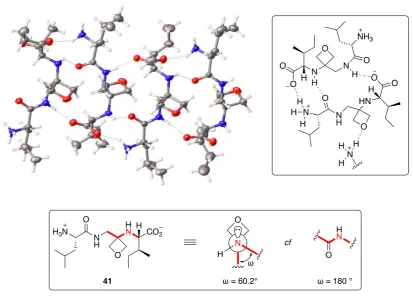
Following the synthesis of oxetane-modified tripeptides, the authors investigated the structural preferences of these novel peptidomimetics.1 In the solid state, oxetane-modified tripeptide 41 was shown to be zwitterionic with the terminal amine protonated, not the secondary amine of the 3-aminooxetane unit, and displayed antiparallel sheet-like arrangements (Figure 1.15). Both the secondary amine and the oxygen of the 3-aminooxetane unit were involved in the hydrogen bonding network, with the oxygen of the oxetane hydrogen bonding outside the plane of the sheet. Further analysis of the
X-i. In, THF, aq. HCl H2N O N H H N CO2H R1 O R2 O2N H N CO2Bn R1 O 39 40
ii. Cbz-AA-OH, EDC HOBt, NMM iii. H2, Pd/C, MeOH
H2N O
N H
H
N CO2H
O H
H2N O
N H
H
N CO2H
O
H2N O
N H
H
N CO2H
O Ph
41, 53% 42, 44% 43, 58%
H2N O
N H
H
N CO2H
O Ph H H2N O N H H
N CO2H
O H2N O N H H
N CO2H
O Me
44, 56% 45, 41% 46, 44%
O2N O H N N H O
CO2Bn
H2, 10% Pd/C MeOH, rt
H2N O H N N H O
CO2H
37 47, 72%
O2N Ph
O OH O
O
BnCH2NO2
NEt3, rt OH
H2N O H N O N H Ph O i. H2, 10% Pd/C, MeOH, rt
ii. Cbz-Gly-Gly-OH, EDC HCl HOBt, NMM, EtOH, rt iii. H2, 10% Pd/C, MeOH, rt
ray crystal structure revealed that the nitrogen atom adjacent to the oxetane is pyramidal and the averaged C-N-COx-C torsional angle (ω) was 60.2°. This is compared to a conventional sp2-hybridised peptide bond where the nitrogen atom is trigonal and ω = ~180° (Figure 1.15).
[image:28.595.121.535.159.462.2]
Figure 1.15 Antiparallel sheet-like arrangement of 41 in the solid state.1 Figure of X-ray structure taken from Chem. Commun. 2014, 50, 8797-8800.1
Molecular dynamic (MD) simulations indicate that oxetane-modified tripeptide 41 has
greater conformational flexibility compared to the native tripeptide 50.1 Snapshots of the two most populated clusters for 50 and 41 are shown in Figure 1.16. The native tripeptide 50 adopts extended conformations in which the C- and N-termini are separated by >7 Å. In contrast, oxetane-modified tripeptide 41 adopts folded conformations in which the C- and N- termini distance is 3-4 Å. The preference for 41 to adopt folded conformations likely arises from the change in hybridisation (sp2 to sp3) and dihedral angle at the 3-aminooxetane unit. These observations suggest that oxetane-modification could give rise to turn-like conformations in longer chain peptidomimetics.
NH3
N O
H N
H O
O O
H
H N H
H NH
O HN
O O
O H
H N H
H
H3N N H O
H N CO2
H
O
O
N H
cf
ω
H N O
ω = 60.2° ω = 180 °
Figure 1.16 Snapshots of the two most populated clusters of 50 and 41 derived from MD simulations, along with the percentages of total structures accounted for by each cluster.1 Figure of MD derived snapshots taken from Chem. Commun. 2014, 50, 8797-8800.1
Shortly after the publication of this work, Carreira and co-workers independently reported on the chemical synthesis of oxetane-modified peptides.46 The authors developed a similar approach to oxetane-containing dipeptides 52via conjugate addition of α-amino n-propyl esters to nitroalkene 24 followed by nitro reduction with Raney Ni and in situ protection of the resulting amine (Scheme 1.5). Similar to observations reported by Shipman and co-workers, addition of chiral amino esters to trisubstituted nitroalkenes 24 (R1 ≠ H) gave the addition products as a mixture of diastereoisomers which were inseparable by column chromatography. Subsequent deprotection of the N- or C-terminal protecting group, followed by standard amide coupling conditions gave longer chain peptidomimetics. This work did not include any structural insights into the folding of oxetane-modified peptides.
50% 43%
H3N O
N H
O H N CO2
H
50
47% 44%
H3N O
N H
H N H CO2
Scheme 1.5 Synthetic route to oxetane-containing dipeptides developed by Carreira and co-workers.46
The synthetic approach to oxetane-modified peptides, developed independently by Shipman1 and Carreira,46 is highly efficient for the preparation of oxetane-containing peptides in which the oxetane residue is based on glycine (GOx). However, this route is currently not suitable for the preparation of oxetane-containing peptides in which the oxetane residue is based on residues other than glycine as a mixture of inseparable diastereoisomers is obtained.
In 2017, during the course of the authors’ research described in this thesis, Carreira and co-workers published an asymmetric route to oxetane-containing dipeptide building blocks 53.47 Their expeditious route involved substitution of activated (i.e. X = OTf) enantiopure hydroxyesters 55 with enantiopure 3-aminooxetanes 54 (Scheme 1.6). The enantiopure amines 54 were prepared via addition of an organometallic reagent to chiral imine 56, which in turn, was accessed from commercially available Tris hydrochloride 58. Enantiopure hydroxyesters 55 were derived from D-amino acids.
CO2nPr H2N
R2 O2N
O
20 examples 52-98%
H
N CO2nPr
O R2
Raney Ni, H2 Boc2O or CbzOSu
PgHN H
N CO2nPr
O R
19 examples 28-85%
24 51
R1
O2N
R1 R1
52 Pg = Boc or Cbz
BocHN H
N CO2nPr
O Me
BocHN N
O CO2
nPr CbzHN
H
N CO2nPr O
N Trt N Examples include:
BocHN H
N CO2nPr
O
BocHN H
N CO2nPr
O Ts N
CbzHN H
N CO2nPr
O BocHN
NHBoc
Scheme 1.6 Carreira and co-workers’ synthetic approach to oxetane-containing dipeptide building blocks.47
Chiral imine 63 was prepared in 7 steps from Tris·HCl 58 (Scheme 1.7).47 Tris·HCl 58 was first converted to hydroxy-oxetane 61 using a route that involved protection of the amine and formation of the oxetane ring. Following this, Swern oxidation and condensation of the resulting aldehyde with Ellman’s auxiliary 62 gave the desired chiral imine 63.
Scheme 1.7 Carreira and co-workers’ synthesis of chiral imine 63.47
Chiral imine 63 served as a crucial intermediate for the synthesis of enantiopure 3-aminooxetane building blocks 54. For example, the synthetic route to an oxetane-modified alanine (AOx) building block 66 is detailed below (Scheme 1.8).47 Addition of methyllithium to chiral imine 63 gave the addition product 64 as a single diastereoisomer (dr >95:5). Following this, cleavage of Ellman’s auxiliary and Boc-protection of the resulting amine gave intermediate 65. Finally, tosyl and benzyl deprotection gave the desired AOx residue 66 as a single enantiomer. Using variations of this route, Carreira and
PgHN R1 O H N R2 CO2R3 PgHN R1 O NH2 R2 CO2R3 X + NH2•HCl OH OH OH
Tris•HCl, 58
CO2H H2N
R2 D-amino acid, 57
53 54 55
H N Pg2 Pg1 O N S O tBu 56
NH2•HCl
OH OH OH
Tris•HCl, 58
MeO OMe
pTsOH, DMF, rt i.
ii. TsCl, DMAP, K2CO3
then BnBr, K2CO3, TBAI
MeCN, reflux
O O
N OH Ts
Bn
iii. MsCl, NEt3
CH2Cl2, 0 °C iv. aq. HCl, THF
80 °C OH OH N OMs Ts
Bn
v. KOH, NaI EtOH, reflux HO O N Ts Bn
61, 26% over 5 steps
O S tBu NH
2
Ti(OEt)4, THF, 40 °C
ii.
i. (COCl)2, DMSO, NEt3
CH2Cl2, −78 °C to rt
H N S tBu O O N Ts Bn
63, 79% over 2 steps
59 60
co-workers were able to prepare several enantiopure 3-aminooxetane building blocks 54, including analogues of phenylalanine (FOx), tyrosine (YOx), valine (VOx) and proline (POx).
Scheme 1.8 Carreira and co-workers’ synthesis of enantiopure 3-aminooxetane 66.47
Effenberger and co-workers have demonstrated that displacement of triflates with an amine proceeds exclusively in an SN2fashion to produce a single enantiomer.48 On this basis, Carreira and co-workers prepared a number of triflates 69 from the corresponding hydroxyesters 68, which in turn, were prepared from D-amino acids 57 (Scheme 1.9).47
Scheme 1.9 Synthesis of triflates from D-amino acids.47
With access to a variety of enantiopure 3-aminooxetanes 54 and activated hydroxyesters 55, a collection of oxetane-containing dipeptide building blocks 53 were prepared (Scheme, 1.10).47 Alkylation of enantiopure 3-aminooxetanes 54 with triflates 55 proceeded exclusively in an SN2 fashion to provide the building blocks 53 as single diastereoisomers. In the case of dipeptides incorporating a glycine residue, commercially available bromo acetates were used.
H N S tBu
O
O N Ts
Bn
N H
O N Ts
Bn
BocHN N
O Me Ts
Bn BocHN NH2
O Me 1. Mg, MeOH, rt
1. HCl in dioxane MeOH/CH2Cl2, 0 °C
Me S tBu
O MeLi, THF
−78 °C
64, 81% (dr >95:5)
66, 95% 65, 94%
63
2. Boc2O, CH2Cl2, rt
2. Pd/C, H2, MeOH, rt
CO2H H2N
R2
CO2H HO
R2
CO2R3 HO
R2
CO2R3 TfO
R2 NaNO2, H2SO4
H2O, rt
R3X, base for alkyl, Bn or DCC DMAP, tBuOH
Tf2O, 2,6-lutidine CH2Cl2, −78 °C
D-amino acid, 57 67
Scheme 1.10 Carreira and co-workers’ synthesis of oxetane-containing dipeptide building blocks.47
Although the approach developed by Carreira provided access to dipeptide building blocks containing a variety of oxetane-modified residues, the route to prepare enantiopure 3-aminooxetanes 54 was not particularly practical. The route involved a significant number of steps, requiring the use of a number of protecting groups and chromatographic purifications. Therefore, shorter routes to enantiopure 3-aminooxetanes 54 would be of advantage.
The authors demonstrated the application of these building blocks by preparing analogues of Leu-enkephalin 75, an opioid peptide that modulates the reception of pain,3 wherein each amide bond was sequentially replaced by the 3-aminooxetane unit (Figure 1.17).47 Investigations on the impact of oxetane-modification on the biological activity of Leu-enkephalin revealed that the oxetane-modified analogues showed largely improved hydrolytic stability in human serum and two of the analogues retained affinity towards the δ-opioid receptor comparable to the native system. These results provide proof of concept that oxetane-modification of an amide bond can be used to increase the stability of a peptide towards proteases while retaining bioactivity. A more detailed discussion on the stability and biological activity of oxetane-modified Leu-enkephalin analogues is included in Chapter 3.
PgHN R1
O
NH2 + X CO2R 3 R2
DIPEA, MeCN 30-60 °C
PgHN R1
O H
N CO2R3 R2 Pg = Boc, Cbz when R2 = H, X = Br
when R2 ≠ H, X = OTf
53, 18 examples 39-98% SN2
55 54
BocHN Me
O H
N CO2Bn
BocHN O
H
N CO2Bn Me
CbzHN BnO
O H
N CO2Me
Examples include:
CbzHN Ph
O H
N CO2Bn BocHN O
H
N CO2Bn
Ph
70, 56% 71, 79% 72, 72%
Figure 1.17 Example of an oxetane-modified analogue 76 of Leu-enkephalin 75 with improved hydrolytic stability in human serum.47
1.4.3 Oxetane-Modification of Proteins
Recently, Bernardes and co-workers have reported a method for the chemoselective introduction of oxetane moieties into proteins through alkylation of cysteine residues under mild conditions.49 Initially, the authors demonstrated the site-selective incorporation of the 3-S-oxetane motif into proteins via SN2 reaction of 3-bromooxetane
79 with single-Cys mutants of the C2A domain of Synaptotagmin-I Cys95 (C2Am, 77)
and Annexin-V (AnxV, 78) to afford Cys-to-oxetane alkylation products 80 and 81 in >95% conversion (Scheme 1.11). Stability studies revealed that the 3-S-oxetane motif was stable upon incubation with human plasma, reduced glutathione (GSH), and other S- and N-nucleophiles. Importantly, C2Am-3-S-Ox 80 retained its inherent binding activity against phosphatidylserine (PS), an internal membrane lipid externalised during apoptosis.
Scheme 1.11 Site-selective modification of proteins with oxetanes.49a P
i = phosphate.
Next, the authors reported an extension of this chemistry to include other oxetanes. Reaction of C2Am 77 with 3,3-bis(bromomethyl)oxetane 82 afforded C2Am-S -Ox-CH2Br 83 in >95% conversion (Scheme 1.12).49 The resulting modified protein 83
H2N N H O
O H N
N H
O Ph
O H
N CO2H H2N
N H O
H N
N H
O Ph
O H
N CO2H
OH OH
O
oxetane-modification
Leu-enkephalin, 75 Serum half-life ≈ 10 min
oxetane-modified Leu-enkephalin, 76 Serum half-life ≈ 18 h
SH Br O
NaPi (50 mM, pH 11)a 20% DMF in H2O, 37 °C
>95%
79 S
O N- and S-Nu
C2Am, 77 AnxV, 78
contained an electrophilic handle (S-Ox-CH2Br) amenable to a second round of chemical modification after incubation with an appropriate nucleophile (e.g. post-translational modifications, cytotoxics and spectroscopic tags). Subsequently, incubation of 83 with 2-mercaptoethanol, βGalSNa, thiophenol and benzylamine gave substitution products 84a-d in >95% conversion. Interestingly, the oxetane linker (S-CH2-Ox-CH2-S/N) proved to be a more rigid scaffold compared to a common aliphatic linker (S-CH2-CH2-CH2-S/N) containing the same number of carbons. Hence, this rigid and soluble oxetane linker may find application in the development of vaccine conjugates.
Scheme 1.12 Selective incorporation of an S-to-S/N oxetane linker on proteins.49a P
i = phosphate.
Following this study, Bernardes and co-workers reported an efficient method for the site-selective installation of an oxetane-containing constraint for disulphide containing peptides and proteins under mild and biocompatible aqueous conditions (Figure 1.13).50 Somatostatin 85 and octreotide 87, which can be used for imaging and treating neuroendocrine tumours, were reacted simultaneously with
tris(2-carboxyethyl)-phosphine (TCEP) and 82 in 10% DMF in water to give, after HPLC purification, the
grafted cyclic peptides 86 and 88 in 76% and 81% yield, respectively. Investigations into the binding properties of these derivatives to the somatostatin receptor 2 (SSTR2) revealed that octreotide 87 and oxetane-grafted surrogate 88 had similar affinity against this receptor, while oxetane-grafted 86 showed a 4-fold enhancement in binding affinity
compared to somatostatin 85. MD simulations suggested that oxetane-grafted
somatostatin 86 was more rigid and displayed a more defined conformation in solution than 85, which is ideal for a more efficient binding to the receptor. Both oxetane-grafted peptides 86 and 88 were stable in human plasma and in the presence of GSH.
SH
S
O
S
O Nu Br
Br
O 82
NaPi (50 mM, pH 8-11)a 10% DMF in H2O, 37 °C
>95%
Br
N- and S-Nu
C2Am-S-Ox-CH2Br, 83
Stable in human plasma and reduced GSH C2Am, 77
C2Am-S-Ox-CH2Nu, 84a-d
O
HO OH
HO
OH S
HO S S
H N Nucleophile scope:
Scheme 1.13 Installation of an oxetane-containing constraint for disulphide-containing cyclic peptides.50
Next, the authors demonstrated the utility of this chemistry to prepare oxetane-grafted antibodies (Scheme 1.14).50 The exposed disulphide bond of a Fab fragment of Herceptin (Fab-Her, 89), an antibody currently used to treat Her2+ breast cancer patients, was reacted with 82 under aqueous buffered conditions in the presence of TCEP to give oxetane-grafted Fab-Her 90 in >95% conversion. Unlike the native antibody 89,
oxetane-grafted 90 was stable under reducing conditions and in human plasma, which is a key
aspect in antibody therapeutics design as thiol-exchange reactions in plasma lowers efficacy and adds side-toxicity. Importantly, oxetane-grafted 90 showed a small increase in binding affinity (KD) to the Her2 receptor compared with the native antibody 89. Taken together, these results demonstrate that installation of an oxetane-graft in disulphides present in peptides and proteins enables stabilisation of folded structures and results in disulphide-grafted products with improved bioactivity that are stable under biological conditions.
F T
S S
O G
K S
T F T K W F F N A
S S
C C
O
86, 76% Ox-grafted somatostatin
F W L T
C C
88, 81% Ox-grafted octreotide
F T
S S
F W L T
C C
Octreotide, 87
Br Br
O
10% DMF in H2O rt to 37 °C, 12 h
82 TCEP, K2CO3 G
K S
T F T K W F F N A
S S
C C
Somatostatin, 85
Br Br
O
10% DMF in H2O rt to 37 °C, 12 h
Scheme 1.14 Representation of a disulphide constraint in native antibody sequences using an oxetane graft.50a P
i = phosphate.
1.5 Conclusions
This chapter has discussed the relevance of peptidomimetics and oxetanes in medicinal chemistry. Recently, these exciting areas of research have led to the development of a novel class of peptidomimetic in which one of the amide C=O bonds of a peptide backbone is replaced by an oxetane ring. Independent publications by Shipman1 and Carreira46,47 have begun to explore the properties and structure of these novel peptidomimetics, and have demonstrated that oxetane-modification within a peptide sequence can promote turn-like conformations and improve stability towards proteases. In order to establish the full potential of oxetane-modified peptides, it is important to further develop methods for their synthesis and to investigate the impact of oxetane-modification on the properties and structure of biologically interesting peptides.
S S
O
Br Br
O
NaPi (pH 8.5, 100 mM)a 37 °C
>95% conversion 82 TCEP
Ox-grafted Fab-Her, 90 S
S
Fab-Her, 89
Stable in human plasma and reduced GSH Unstable in human plasma
and reduced GSH
Chapter 2: Synthesis of Oxetane- and Azetidine-Containing
Spirocycles Related to the 2,5-Diketopiperazine Framework
2.1 Previous Work and Project Aims
Previous research in our group explored conditions for the reduction of the nitro group in nitro amino esters to the corresponding amine for the synthesis of oxetane-containing peptides. During this investigation, reduction of the nitro group in 91 using samarium (II) iodide failed to give the desired primary amine 92 but instead gave oxetane-containing spirocycle 93, as a result of reduction followed by spontaneous cyclisation. This novel spirocyclic scaffold is similar in structure to the 2,5-diketopiperazine framework (2,5-DKP 94, Scheme 2.1).45
Scheme 2.1 Synthesis of 93 via reduction of the nitro group of 91.
As part of an ongoing interest in the preparation of spirocyclic heterocycles, oxetane-containing frameworks and 2,5-DKP templates in drug discovery projects,31,51–53 we thought it would be worthwhile to examine the feasibility of optimising this process and preparing a series of novel spirocyclic scaffolds related to the 2,5-DKP framework. Additionally, this investigation would allow us to further examine the scope of the conjugate addition chemistry developed in earlier publications by us1,45 and by Carreira.46 Furthermore, this project would serve as a good starting point for the author to familiarise himself with the chemistry previously developed.
2.2 Introduction
There are a number of excellent reviews written on 2,5-DKPs53,54 and spirocyclic heterocycles.31,51,52 This short introduction does not aim to replicate these reports but to highlight the relevance of 2,5-DKPs and spirocyclic heterocycles in drug discovery.
O2N Ph
O H
N CO2Me
SmI2 (0.1 M in THF) MeOH, rt
H2N Ph
O H
N CO2Me +
Ph
NH HN
O
O
91 92, 0% 93, 33%
HN NH O
O R
R
2.2.1 2,5-Diketopiperazines
2,5-Diketopiperazines (2,5-DKPs, Scheme 2.1) are the smallest possible cyclic peptides derived from the condensation of two α-amino acids and are found in numerous natural products and biologically active compounds. These small, conformationally constrained, chiral scaffolds contain multiple H-bond donors and acceptors, are stable to proteolysis and have the potential for derivatisation at up to four positions. These properties make them attractive motifs in drug discovery.53
The structures of bioactive natural products containing the 2,5-DKP framework range from simple cyclic dipeptides to highly functionalised fused ring systems. Examples include, the naturally occurring peptide antibiotic brevianamide F 9555 and bicyclomycin 96,56 as well as the indolic alkaloid spirotryprostatin A 97,57 a promising antimitotic arrest agent (Figure 2.1). Due to their therapeutic potential, the total syntheses of natural products containing the 2,5-DKP framework is a major pursuit of organic chemists.
Figure 2.1 Bioactive natural products containing the 2,5-DKP framework.
Chirally enriched 2,5-DKPs are easily prepared from readily available α-amino acids using robust chemistry and have been used as core templates from which to construct libraries of compounds in medicinal chemistry projects. Structure-activity relationship (SAR) has been investigated for many of these compounds, and has led to the development of several clinical drugs. Examples include the marketed drug Tadalafil 9858,59 and Retosiban 99,60,61 as well as Plinabulin 100, which is currently in phase 3 clinical trials for non-small cell lung cancer (Figure 2.2).62,63
N N O
O
Spirotryprostatin A 97 HN
N O
O HN
H
Brevianamide F 95
HN NH O
O
OH OH Me
OH O
HO
Bicyclomycin 96
H HN
O
Figure 2.2 Therapeutic agents containing the 2,5-DKP framework.
In addition to this, peptidomimetics containing 2,5-DKPs have been used to construct conformational mimics of linear peptides. For example, 2,5-DKP 101, containing a carboxylic acid and amino functionality in a cis-relationship, has been used to prepare peptide sequences that result in the formation of β-hairpin mimic 101 containing 10- and
18-membered H-bonded rings (Scheme 2.2).64
Scheme 2.2 Bifunctional 2,5-DKP 101 acting as a β-hairpin inducer.64
2.2.2 Spirocycles in Drug Discovery
Spiro compounds (spirocycles) are molecules containing two rings linked together by the same atom, referred to as the spiroatom. Recent progress towards the synthesis of spirocyclic systems has seen a significant increase in the incorporation of spirocycles into pharmaceutically active molecules. Properties of spirocycles that make them of benefit in medicinal chemistry projects include their inherent rigidity, ability to place functional groups precisely in three-dimensional space, and structural novelty for patentability.31,51,52
Recent examples of spirocyclic compounds in drug development projects include Zoliflodacin (ETX0914) 103,65 a novel oral antibiotic currently in clinical trials for the
treatment of gonorrhoea, and AMG-8718 104, a BACE1 (β-site APP cleaving enzyme)
N N N H O O O O H Tadalafil 98 Erectile dysfunction Lilly HN N O O N O O O N H Retosiban 99 Preterm labour GSK HN NH O O Ph NH N tBu Plinabulin 100 Non-small cell lung cancer BeyondSpring Pharmaceuticals HN NBn O O O H N N H H N N O H N H O O N H O Me O Me H H HN NBn O O
CO2H
NHBoc
inhibitor which is a potential target for the development of an Alzheimer’s disease therapy.66 Irbesartan 105, which is widely used to treat high blood pressure, is an example of a marketed drug containing a spirocyclic moiety (Figure 2.3).51,67
Figure 2.3 Therapeutic agents containing spirocyclic scaffolds.
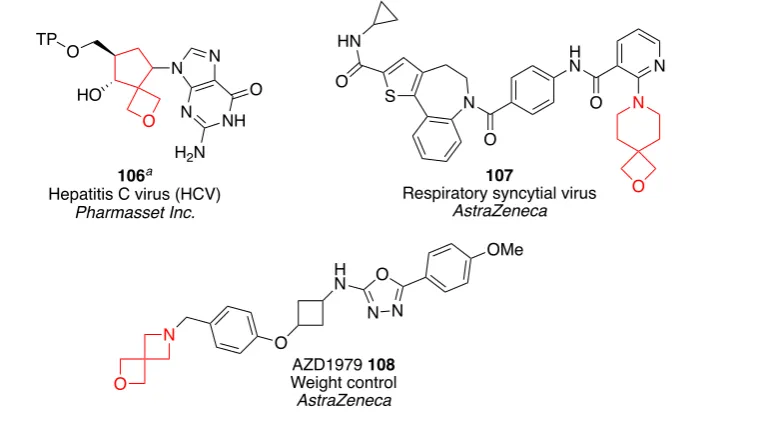
More recently, as part of an ongoing interest in four-membered rings and the need to access novel structures, there has been a significant increase in the number of oxetane- and azetidine-containing spirocycles in drug discovery programmes (Figure 2.4).31,52 Examples include spiro-oxetane 106 as a potential anti-hepatitis C virus (HCV) agent,68 spiro-oxetane 107 a potent inhibitor of respiratory syncytial virus (RSV) RNA polymerase,69 and spiro-oxetane-azetidine 108 a clinical candidate for weight loss.70
Figure 2.4 Spirocyclic compounds incorporating oxetane and azetidine rings. a TP = triphosphate
It is worth noting that it is often difficult to determine whether a spirocycle has been introduced to improve the pharmaceutical properties of a compound or to create novel scaffolds that do not impede on existing intellectual property space.52
N F
O N
O O
N H2N
AMG-8718 104 Alzheimer’s disease Amgen N O NH H N N O N O O F H O O O ETX0914 103 Gonorrhea AstraZeneca N N nBu O N N N NH Irbesartan 105 Hypertension Sanofi-Aventis N N N NH O
H2N O HO O
106a
Hepatitis C virus (HCV) Pharmasset Inc. N O N O H N O N S O HN 107
Respiratory syncytial virus AstraZeneca
AZD1979 108
2.3 Results and Discussion
2.3.1 Optimisation of Reduction and Cyclisation Conditions
The first task was to make suitable substrates to optimise the reduction-cyclisation sequence presented in Scheme 2.1. Methyl ester (S)-109, benzyl ester 110 and tert-butyl ester 111, all possessing the same valine backbone substitution, were selected as test substrates and were prepared following a previously described literature procedure (Scheme 2.3).1 Conjugate addition of the appropriate valine ester (2.0 equiv) to 3-(nitromethylene)oxetane 30 (1.0 equiv), which was prepared in situ from oxetane-3-one 29 (1.0 equiv) and nitromethane (1.4 equiv), gave the desired oxetane-modified DKP precursors.
Scheme 2.3 Synthesis of test substrates. a Method: MeNO
2 (1.4 equiv), oxetan-3-one (1.0 equiv), NEt3 (0.2 equiv); NEt3 (2.0 equiv), MsCl (1.0 equiv); amino ester hydrochloride (2.0 equiv), NEt3 (2.0 equiv).
With these test-substrates in hand, a variety of conditions for the controlled reduction of the nitro group in methyl ester (S)-109 were explored (Table 3.1, entries 1-6). In each case, the DKP analogue 112 was isolated as a result of spontaneous cyclisation of the reduced primary amine. Reduction using zinc71,72 and indium73 under acidic conditions gave 112 in poor yields. Catalytic hydrogenation using Pd/C gave 112 in a slightly improved yield of 50%, whereas Pt/C gave a lower yield of 21%. The use of Raney Ni under an atmosphere of hydrogen proved to be most effective. Under these conditions, which were adapted from chemistry previously reported by Carreira and co-workers (see Scheme 1.5),46112 was isolated in 81% yield after chromatography. Following this result, the impact of the C-terminal ester group on the cyclisation was investigated (Table 3.1, entries 7-8). When benzyl ester 110 was subjected to the optimised conditions, 112 was isolated in a significantly lower yield. The tert-butyl group of 111 prevented cyclisation
O2N
H N O
CO2R
O
O
i. MeNO2, NEt3, rt, 1 h
O2N
O
H2N CO2R
NEt3, CH2Cl2
−78 °C to rt, 16 ha
29 30
ii. MsCl, NEt3, CH2Cl2
−78 °C, 1.5 h
•HCl
H N
O
CO2Me
(S)-109, 56%
H N
O
CO2Bn
110, 54%
H N
O
CO2tBu
111, 57%