Genes 2014, 5, 285-309; doi:10.3390/genes5020285
genes
ISSN 2073-4425 www.mdpi.com/journal/genes ReviewReading and Language Disorders: The Importance of Both
Quantity and Quality
Dianne F. Newbury 1,*, Anthony P. Monaco 2and Silvia Paracchini 3
1 Wellcome Trust Centre for Human Genetics, University of Oxford, Oxford OX3 7BN, UK 2 Tufts University, Ballou Hall, Medford, MA 02155, USA; E-Mail: [email protected] 3 School of Medicine, University of St. Andrews, St. Andrews, KY16 9TF, UK;
E-Mail: [email protected]
* Author to whom correspondence should be addressed; E-Mail: [email protected]; Tel.: +44-1865-287-652; Fax: +44-1865-287-501.
Received: 2 December 2013; in revised form: 11 March 2014 / Accepted: 12 March 2014 / Published: 4 April 2014
Abstract: Reading and language disorders are common childhood conditions that often co-occur with each other and with other neurodevelopmental impairments. There is strong evidence that disorders, such as dyslexia and Specific Language Impairment (SLI), have a genetic basis, but we expect the contributing genetic factors to be complex in nature. To date, only a few genes have been implicated in these traits. Their functional characterization has provided novel insight into the biology of neurodevelopmental disorders. However, the lack of biological markers and clear diagnostic criteria have prevented the collection of the large sample sizes required for well-powered genome-wide screens. One of the main challenges of the field will be to combine careful clinical assessment with high throughput genetic technologies within multidisciplinary collaborations.
Keywords: Specific Language Impairment (SLI); dyslexia; genetics
1. Introduction
The disturbance of speech and language development is a common feature of many neurodevelopmental disorders [1]. Language impairment is often secondary to more pressing clinical features (e.g., in autistic disorders, epilepsy or periventricular heterotopia), but in some cases may represent the primary
clinical concern (“specific language disorders”, e.g., in Specific Language Impairment (SLI) and
dyslexia) [1]. Specific language disorders typically occur in the absence of any gross neurodevelopmental difficulties, neurological or sensory impairments and with normal non-verbal intelligence. SLI is defined as a disturbance of oral language skills, whereas dyslexia is an impairment in the use and/or understanding of written language [2]. Both show a strong familial bias, and heritability estimates indicate that a high proportion of the phenotypic variation in each of these disorders can be attributed to genetic variation [3–5].
2. Complex Traits, Complex Definitions
Whilst the terms “dyslexia” and “SLI” are widely used in the clinical and research literature, both disorders lack clear diagnostic guidelines and are often defined chiefly in terms of exclusionary criteria [6]. DSM-5 (Diagnostic and Statistical Manual) classifies SLI as a language disorder, while dyslexia is categorized as a specific learning disorder. However, both diagnoses require that “the individual’s difficulties must not be better explained by developmental, neurological, sensory (vision or hearing), or motor disorders and must significantly interfere with academic achievement, occupational performance, or activities of daily living” [7]. To complicate things further, deficits of language may vary considerably both between individuals and over the developmental trajectory in addition to the modality of language affected [6,8]. It is generally accepted that dyslexia primarily reflects a difficulty in the domain of phonological decoding (translating written letters into speech sounds) [9]. Nonetheless, it is very common to observe a phonological deficit in combination with other manifestations, like sensory or fine motor control problems [10,11]. SLI has been proposed to reflect a deficit in phonological short-term memory (the retention of verbal information for short periods of time) [12], auditory perception (the processing of brief and/or rapid auditory stimuli) [13] and/or the development and application of grammatical rules [14]. However, all of these theories are supported by varying amounts of evidence in the primary research literature.
3. Changing and Heterogeneous Phenotypes
and dyslexia may still have separate etiologies, and the co-incidence may simply represent comorbidity, as seen with other neurodevelopmental disorders [19]. Identifying the genetic underpinning of these disorders is required to inform this debate and reach more definitive conclusions about the diagnosis. For example, are there shared or partially overlapping genetic factors that contribute to separate disorders? Can we talk about common etiologies? Or do the DSM-5 definitions correlate with distinct biological pathways? While it would be tempting to simplistically ask if candidate genes for a single disorder can also influence a disorder with a different diagnosis, we might be asking the wrong questions if the initial diagnoses are artificial clinical constructs and misleading with regards to etiology.
4. Monogenic Conditions Back in the Picture
For many language disorders that are associated with known syndromes, the genetic cause of the syndrome itself is known. These involve a wide range of genetic mutations, from point mutations (for example, MECP2 mutations in Rett syndrome [27]), to nucleotide expansions (for example, the expansion of the FMR1 gene in Fragile X [16]) and deletion syndromes, such as velo-cardio-facial syndrome, which results from a 3-Mb deletion on chromosome 22q11.2 [28], or the duplication or deletion of an entire chromosome, such as Down syndrome and Turner syndrome [29–31]. Thus, it is likely that any population selected to have language impairment will harbor a subset of children with these recognized syndromes [32]. Single gene mutations have also been described for some specific language disorders. Mutations and disruptions of the FOXP2 gene lead to childhood apraxia of speech [33,34], and point mutations in genes in the lysosomal pathway (GNPTAB, GNPTG and NAGPA) have been associated with persistent stuttering [35]. However, even in these severe and exceptional cases, there is often a high degree of heterogeneity between individuals. While some generalizations can be made, there is still considerable inter-individual variation. For example, individuals with FOXP2 disruptions invariably present with dyspraxic speech (the inability to make fine-tuned oromotor movements necessary for coherent speech), while others can present with both receptive and expressive language difficulties, only an expressive deficit, only with intellectual deficits or good performance on non-verbal intelligence tasks [36].
5. Genetic Windows into Development
only be relevant in a subset of cases [43]. Nonetheless, genetic contributions to the majority of specific language disorders are expected to be complex in nature and involve genetic variation in many genes, which combine to determine an overall risk of disorder [44].
6. Classical Approaches
Genetic contributions to neurodevelopmental disorders (both syndromic and specific forms) can be traced by linkage analyses. This approach can be applied to extended multi-generational families or large collections of small nuclear families and can involve the investigation of linkage-disequilibrium patterns [45]. Linkage analysis allows the identification of broad chromosome regions that co-segregate with a disorder in a given family unit. Since such studies consider segregation patterns rather than specific genetic variants, they can enable the identification of shared chromosome regions even when the pathological variants in each region differ between family units. This methodology is particularly powerful for the identification of genetic variants with high penetrance and expressivity and can be applied to more complex situations, such as that expected for both SLI and dyslexia.
7. SLI and Dyslexia Linkage Loci
Genome-wide screens or targeted analyses of dyslexic families have allowed the identification of linkage loci on chromosomes 15q21 (DYX1—OMIM#127700) [46,47], 6p22.3-p21.3 (DYX2—
OMIM#600202) [46,48–51], 2p16-p15 (DYX3—OMIM#604254) [52,53], 3p12-q13 (DYX5—
OMIM#606896) [54,55], 18p11.2 (DYX6—OMIM#606616) [56], 11 (DYX7—OMIM#127700) [57], 1p36-p34 (DYX8—OMIM#608995) [58,59] and Xq27.2-q28 (DYX9—OMIM#300509) [60]. Subsequent fine-mapping efforts across linked loci, through the investigation of specific genetic variations or the characterization of individuals with chromosome imbalances, have led to the identification of putative risk variants in the DCDC2 [61], KIAA0319 [62–64], DYX1C1 [65,66], C2orf3/MRPL19 [67], CYP19A1 [68] and ROBO1 [54] genes. Each of these candidate genes has a variable amount of support, ranging from observations limited to a single family to replication across multiple cohorts [69]. Nonetheless, functional analyses have led to an intriguing conversion upon pathways involving neuronal migration [70–76] and cilia motility [72,77–79], as discussed in later sections. Investigations of SLI are less advanced, but linkage studies have identified four loci of interest on chromosomes 7q35-q36 (SLI4—OMIM#612514) [80], 13q21 (SLI3—OMIM#607134) [81,82], 16q (SLI1—OMIM#606711) [83–86] and 19q (SLI2—OMIM#606712) [83–86], and subsequent studies have identified two candidate genes; CMIP and ATP2C2, both in SLI1 [87]. Microdeletions in the ZNF277 gene on chromosome 7 have also been implicated in SLI [88], as has the Human Leukocyte Antigen (HLA) locus [89].
8. GWA Studies
Advances in genetic technologies over the last decade have allowed enormous leaps in our characterization and understanding of both rare and common genetic variations at the sequence level. Projects, such as the HapMap ([91]) and 1000 Genomes ([92]), have provided us with catalogues of expected variations across multiple populations. Methodological advances, such as microarrays and high throughput genotyping and sequencing platforms, have allowed us to characterize known variants efficiently. Accordingly, gene identification shifted from linkage analysis to genome-wide association (GWA) studies [93]. GWA studies usually interrogate large cohorts of cases and controls (typical sample sizes range from 1000 up to 1,000,000), but can be extended to a regression analysis of variant frequency upon performance in phenotype-related quantitative tasks (quantitative GWA study). Since GWA studies consider the frequency of each variant independently, there is an underlying assumption that the causal variation (or a Single Nucleotide Polymorphism (SNP) in linkage disequilibrium with the causal variant) will be common across cases. As such, association studies do not allow for a high level of genetic heterogeneity between cases.
9. GWA Studies of Speech and Language-Related Traits
Recently, it has been proposed that parent-of-origin effects could explain part of the missing heritability of complex traits, suggesting that the addition of these effects within GWA studies may be fruitful [100]. A recent study of 278 families with a language-impaired child, investigated child genotype and parent-of-origin effects [101]. They identified significant evidence for paternal parent-of-origin effects on chromosome 14q12 (p = 3.74 × 10⁻⁸) and suggestive evidence for maternal parent-of-origin effects on chromosome 5p13 (p = 1.16 × 10⁻⁷) [101]. The paternally-associated SNP on chromosome 14 yields a non-synonymous coding change within the NOP9 gene, which has been reported to be significantly dysregulated in individuals with schizophrenia.
10. GWA Study Design Factors
The ability of GWA studies to identify risk variants depends upon several factors. These include the effect size of the variants, the frequency of the variants in the population under study and the population as a whole and, of course, sample size and study design [102]. The lack of replication described in the previous section is therefore perhaps not surprising: each started with a different hypothesis and definition of disorder and applied different selection procedures and association methodologies. Inconsistency across studies makes it hard to assess whether non-replication indicates the presence of false positives or is simply a function of study design or power to detect an association. In addition, the variations between independent studies means that it is not possible to simply combine existing cohorts to generate adequately powered meta-analyses.
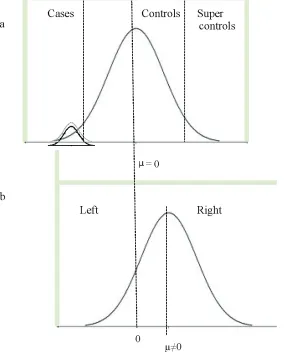
As discussed above, some of the language-related GWA studies used population-based samples and chose to select low language-performing subjects as cases (i.e., the lower tail end of the distribution,
marked as “cases” Figure 1a). Others studied speech and language-related traits across the entire distribution in a quantitative GWA approach (i.e., the entire normal distribution in Figure 1a). Such population-based approaches assume that genetic contributions to disorders of speech and language will be the same as those that contribute to speech and language-related traits across the entire distribution. This assumption is dependent upon the way in which disorders, such as SLI and dyslexia, are conceptualized: do they just represent the lower tail of the normal distribution with respect to speech and language (dimensional model) or is there a qualitative difference between dyslexic individuals and poor readers (categorical model)? (i.e., the difference between the “cases” and the
Figure 1. Study design for quantitative phenotypes (a) genome-wide association (GWA) studies for speech and language-related traits typically use phenotypes across the entire distribution (population-based quantitative GWA studies). Others might apply a binary affection status under which low language-performing individuals are defined as “cases” and individuals within the “normal” language range (usually performance above the mean) as “controls”. Under certain conditions, “super-controls” can provide more power, as they
11. Dimensional and Categorical Models of Language Disorder
The distinction between dimensional and categorical models of language disorders is still a matter of debate. Leonard argues that perhaps there is no tangible cause for SLI, and the mental representations of children with the label SLI are not distinct from other children [103]. Taxonomic and principal component analyses support this view, demonstrating that relationships between language-related measures do not differ between children affected by SLI and those with normal language development [104–106]. In addition, the ease of the acquisition of specific language features has also been shown to be consistent between children affected by SLI and those with normal language development [107]. Under this dimensional model, one can consider variation across the range when attempting to identify underlying genetic effects. Twin studies of SLI instead support a categorical distinction [4,108–111]. Such studies indicate that children who have speech and language difficulties that are severe enough to warrant clinical referral have a qualitatively different profile of impairment, which shows increased levels of heritability [110]. Thus, it is possible that some forms of speech and language impairment, at least, have different underlying pathology from those mechanisms that are important in normal language variation (i.e., the distinct lower normal distribution in Figure 1a). Under this hypothesis, one needs to specifically select children with SLI to identify these distinct underlying genetic effects. It is, of course, possible that both models contribute to some level: studies of the effects of specific genetic risk variants upon language development indicate that some genetic risk variants play a role across the entire distribution of ability [87,112–114], while others appear to play a role that is specific to impairment [87,113]. These data suggest that a variety of approaches will be required to delineate genetic effects underlying language impairment: GWA studies of individuals across a range of abilities will identify genes that contribute across the entire distribution, while studies of specific disorder subsets will be required to identify genes with more specific effects.
12. Cross-Linguistic Difficulties of Speech and Language Disorders
this cohort did not reveal any statistically significant association, highlighting many of the challenges covered in this review [116]. As discussed previously, universal inclusion/exclusion criteria are a good strategy to facilitate meta-analyses or cross-linguistic categorical GWA studies. Nonetheless, they do not entirely solve the challenge of obtaining large sample sizes for quantitative analyses. For example, single word reading tests tend to assess accuracy in English versus speed in transparent languages, like Italian or German. A composite score, including both accuracy and speed, as used by the NeuroDys study, can address this, but does not necessarily reflect the real reading difficulty in different populations. It is interesting to note that despite these differences, associations with candidate genes have been replicated in different languages; association with the DCDC2 gene has been reported in English-speaking (Meng et al. 2005 [61], Scerri et al. 2011 [113]) and German-speaking (Schumacher et al. 2006 [117]) cohorts. Similarly, cross-linguistic studies find that features of the native language can act to modulate given aspects of the SLI phenotype. In general, those linguistic features that are
considered “hardest” for a normally developing child to understand will represent areas of particular problem for children with SLI [118,119]. Within-child differences indicate that this generalization extends to bilingual children. Bilingual children with SLI encounter similar problems to monolingual children with SLI, and these problems appear to be language-specific [120]. These cross-linguistic variations represent an extra complication for meta-analyses and collaborative studies of speech and language impairments. If the features of the disorder vary across populations, the measurement of disability will be language-specific. Thus, multi-site efforts will not only need to consider the best way to overcome cross-ethnicity genetic differences, but also cross-ethnicity language differences.
13. Mega-, Meta- and Mixed-GWA Studies
Many successful GWA studies in the literature now include hundreds of thousands of individuals (diabetes, body mass index, height) [121–125] compared to the hundreds employed in the studies
described above. Such “mega-GWA studies” have been relatively successful in identifying significant and consistent loci that contribute to either disease status or continuous traits across the general population. However, it is clear from these large studies that each genetic risk variant is likely to explain only a small amount of the heritability and that several hundred risk loci are likely to underlie any given trait or disorder [126]. Besides an increased sample sizes, a possible route of future investigation may be provided by a model adopted in the study of psychiatric disorders. Much like SLI and dyslexia, there is much evidence for the existence of shared genetic effects between psychiatric disorders, such as bipolar disorder, depressive disorder and schizophrenia. “Mixed-GWA study”
investigations of mixed cohorts across these disorders have recently identified risk factors that span these clinical boundaries, suggesting that there may be some common pathophysiologies across related disorders [127,128]. The above studies suggest that meta-analyses across the existing SLI and dyslexia cohorts would be a worthwhile effort, despite the challenges involved in the amalgamation of these highly heterogeneous samples.
14. Quantitative vs. Qualitative, or Both
addition, we must consider that the genetic effects might depend on sample stratification for a neurodevelopmental disorder definition.
15. Filling the Gap
Collecting large-scale GWA cohorts takes time, effort, funding and usually a concerted and collaborative effort between multiple research and clinical teams. Does this mean that we cannot make progress in this field until such statistical criteria are met? Perhaps the application of next-generation sequencing technologies to existing sample sets with detailed phenotypic information has the potential to fill this gap. While small individual family-based units do not provide enough power to map variants through linkage analyses alone, the application of this technique in combination with high-throughput sequencing can provide a powerful paradigm. The whole-exome or whole-genome sequencing of sporadic cases and their parents under the assumption of causative de novo mutations has proven successful in disorders, such as autism [135–138] and intellectual disability [139]. The sequencing of
larger family units with multiple recurrent cases have allowed the identification of “ultra-rare”
(often defined as <0.01%) or private (unique to the given family) mutations with high functional impact (i.e., the gain of a stop codon and frame shift mutations) that cosegregate with disorder [140,141]. A recent exome sequencing study of children with childhood apraxia of speech investigated known candidate genes for language development [142]. They reported potentially deleterious variants in FOXP1, CNTNAP2, ATP13A4, CNTNAP1, KIAA0319 and SETX, providing support for the role of these candidate genes [142].
16. Difficulties of High-Throughput Sequencing Studies
developmental disorders in which mutations and/or copy number events combine in an additive or epistatic manner to modulate the exact clinical presentation [136,144–148].
17. Translational Relevance
The pathway from association to functional evidence is a long, but necessary road if we are to truly elucidate the biological mechanisms underlying speech and language disorders. While a p-value < 0.5 × 10⁻⁸ or the observation or private mutations in conserved motifs are certainly robust indicators of a genuine genetic susceptibility, these findings remain statistical predictions if they are not coupled by functional data. It is important to keep in mind that the risk variants identified by GWA studies are not necessarily functional and often represent proxies for the functional variant [102]. Functional investigations are being further progressed by projects, such as the Encyclopedia Of DNA Elements (ENCODE) and the Genetic European Variation in Health and Disease (GEUVADIS) project, which apply high-throughput methods to the study of gene expression and regulation to facilitate our understanding of the findings of GWA studies [149,150].The functionality of rare coding mutations or copy number events is more tractable, but still not straightforward, especially when they are private. Changes to the coding sequence do not always result in protein dysfunction, and the interpretation of the severity of a given mutation often relies on in silico predictions [151]. Once the identity of the functional variant is established, its biological contribution to disorder needs to be clarified, a step which is usually achieved in animal models. The development of translational targets is not always clear, even for fully penetrant monogenic mutations with clear functional effects [152,153]. These limitations reflect the importance of considering genetic variants within relevant pathways and networks and are likely to be exacerbated for complex disorders.
18. Biology beyond the p-Values
19. Converging Evidence towards Biological Pathways
More direct evidence in support of the dyslexia-specific PCSK6 association comes from very recent functional studies. We have already eluded to the apparently connected functional role of dyslexia candidate genes. Functional studies and in vivo techniques have demonstrated that several of the dyslexia candidates described above (KIAA0319, DCDC2 and DYX1C1) are involved in early phases of fetal brain development and, in particular, in neuronal migration processes. In addition, ROBO1 is a neuronal axon guidance receptor that is also important for cortex development. The importance of neuronal migration processes in dyslexia is thus now generally accepted in the literature [158]. However, it is not clear which exact mechanisms these candidate genes mediate. More recently, a role for cilia function and development has also been suggested as a common biological pathway between dyslexia candidate genes [159]. Cilia are essential in the establishment of left/right axis determination in the first weeks of embryogenesis by the activation of the NODAL pathway on the left side of the embryo. Mutations in genes controlling cilia function lead to a class of conditions often characterized by laterality defects (ciliopathies). DCDC2, DYX1C1 and KIAA0319 have recently been reported to form a novel co-expressed module in ciliated cells [79]. Dcdc2 has been implicated in the control of cilia length [72], and disruption of Dyx1c1 in mice and zebrafish [77,78] leads to laterality defects and impairments in cilia function, resembling that observed in primary ciliary dyskinesia (PCD). In humans, DYX1C1 mutations have been identified in 12 families with PCD [77]. KIAA0319 is characterized by five polycystic kidney disease (PKD) domains [160] typically found in proteins (e.g., PKD1 and PKD2) playing key roles in cilia function [161].
Cilial structures control many processes. In particular, they are important in neuronal migration, where they play a guiding role during cortical development. It has therefore been suggested that the roles of cilia in neuronal migration may be directly implicated in leading to cortical defects, which are at the basis of cognitive deficits in neurodevelopmental disorders [162]. Taken together, these observations support a possible interaction between biological pathways controlling the establishment of left/right structural asymmetries and neuronal migration early in development with genes implicated in dyslexia [159]. These interactions could be mediated by concomitant actions in controlling cilia function and could explain the PCSK6 association observed specifically in individuals with dyslexia. Furthermore, these data suggest for the first time that the mechanisms that control left/right body asymmetries maybe also be relevant in establishing functional brain asymmetries, contrary to previous evidence [163]. Incorrect reference order
20. Conclusions
study of speech and language is the challenge of defining cases and ascertaining homogeneous cohorts with phenotypic measures that are universally relevant at the biological level. The translational application of genetic research to complex disorders will require the integration of large genomic datasets, functional genomic screenings and basic research projects aimed at studying the human brain. We know that genes and proteins do not act in isolation, and their functions differ between individuals, tissues, environments and over time; yet, we still consider risk variants as independent entities with fixed effects. Although we must accept that it is not currently possible to simultaneously consider all these effects within a single model, perhaps it is time to question the adherence to clinically defined strata in the genetic study of developmental disorders and, instead, promote the acceptance of cross-disorder studies that fully consider comorbidities across clinical symptoms and environmental factors, as well as regulatory effects and epigenetics. This reiterates the need for multidisciplinary collaborations to enable an increase in sample sizes, while maintaining detailed phenotypic assessments that ultimately will inform the definition of diagnostic criteria. In terms of future directions, it is difficult to establish whether resources would be better spent collecting large cohorts that meet a superficial categorical cutoff or, alternatively, in assembling smaller cohorts characterized across a range of detailed developmental phenotypes. What is clear is that the definition of universal guidelines will facilitate the coordinated collection of uniform and international cohorts, easing the burden of downstream analyses. Although larger collaborations are needed, a meta-analysis of existing resources would be a good starting point to establish such efforts. The reporting of complete data sets, even when events are considered non-significant or uninteresting in isolation, will also be crucial to the planning of future collections. Ultimately, functional evidence is necessary to definitely prove the downstream effects of genetic variants and to understand the biology of underlying disorders and neurodevelopment. Despite the lack of advances from genome-wide screening in speech and language disorders, the functional assessment of candidate genes has allowed considerable progress in the identification of specific biological processes that may be important in these phenotypes. In particular, neuronal migration and ciliogenesis have been highlighted as two, perhaps related, processes that may play a role in developmental dyslexia. These encouraging findings demonstrate the importance of the systematic integration of functional studies and genetic association or sequencing studies.
Acknowledgments
We would like to thank all the families, professionals and individuals who participated in our research. Dianne Newbury is a Medical Research Council (MRC) Career Development Fellow and a Junior Research Fellow at St. John’s College, University of Oxford. The work of the Newbury lab is
funded by the Medical Research Council (G1000569/1 and MR/J003719/1). Anthony P. Monaco is the President of Tufts University and a Visiting Professor at the Wellcome Trust Centre for Human Genetics. The work of the Monaco lab is funded by a program grant from the Wellcome Trust (092071). Silvia Paracchini is a Royal Society University Research Fellow. The work of the Wellcome Trust Centre in Oxford is supported by the Wellcome Trust (090532/Z/09/Z).
Author Contributions
Conflicts of Interest
The authors declare no conflict of interest.
References
1. Harel, S.; Greenstein, Y.; Kramer, U.; Yifat, R.; Samuel, E.; Nevo, Y.; Leitner, Y.; Kutai, M.; Fattal, A.; Shinnar, S. Clinical characteristics of children referred to a child development center for evaluation of speech, language, and communication disorders. Pediatr. Neurol. 1996, 15, 305–311.
2. American-Psychiatric-Association. Diagnostic and Statistical Manual of Mental Disorders, 4th ed. (dsm-iv); American Psychiatric Association: Washington, DC, USA, 1994.
3. Bishop, D.V. The role of genes in the etiology of specific language impairment. J. Commun. Disord. 2002, 35, 311–328.
4. Hayiou-Thomas, M.E. Genetic and environmental influences on early speech, language and literacy development. J. Commun. Disord. 2008, 41, 397–408.
5. DeFries, J.C.; Fulker, D.W.; LaBuda, M.C. Evidence for a genetic aetiology in reading disability of twins. Nature 1987, 329, 537–539.
6. Bishop, D.V.M. Uncommon Understanding: Development and Disorders of Language Comprehension in Children; Psychology Press: Hove, UK, 1997.
7. American Psychiatric Association. Diagnostic and Statistical Manual of Mental Disorders: DSM-5, 5th ed.; American Psychiatric Publishing: Arlington, VA, USA, 2013.
8. Conti-Ramsden, G.; Botting, N. Characteristics of children attending language units in england: A national study of 7-year-olds. Int. J. Lang. Commun. Disord. 1999, 34, 359–366.
9. Snowling, M.J. Phonemic deficits in developmental dyslexia. Psychol. Res. 1981, 43, 219–234. 10. Ramus, F. Neurobiology of dyslexia: A reinterpretation of the data. Trends Neurosci. 2004, 27,
720–726.
11. Peterson, R.L.; Pennington, B.F. Developmental dyslexia. Lancet 2012, 379, 1997–2007.
12. Gathercole, S.E.; Baddeley, A.D. Phonological memory deficits in language disordered children: Is there a causal connection? J. Mem. Lang. 1990, 29, 336–360.
13. Tallal, P.; Piercy, M. Defects of non-verbal auditory perception in children with developmental aphasia. Nature 1973, 241, 468–469.
14. Gopnik, M. Feature-blind grammar and dysphagia. Nature 1990, 344, 715.
15. Bishop, D.V. The underlying nature of specific language impairment. J. Child Psychol. Psychiatry Allied Discip. 1992, 33, 3–66.
16. Abbeduto, L.; Brady, N.; Kover, S.T. Language development and fragile x syndrome: Profiles, syndrome-specificity, and within-syndrome differences. Ment. Retard. Dev. Disabil. Res. Rev. 2007, 13, 36–46.
18. McArthur, G.M.; Hogben, J.H.; Edwards, V.T.; Heath, S.M.; Mengler, E.D. On the “specifics” of
specific reading disability and specific language impairment. J. Child Psychol. Psychiatry Allied Discip. 2000, 41, 869–874.
19. Catts, H.W.; Adlof, S.M.; Hogan, T.P.; Weismer, S.E. Are specific language impairment and dyslexia distinct disorders? J. Speech Lang. Hear. Res. 2005, 48, 1378–1396.
20. Pieters, S.; de Block, K.; Scheiris, J.; Eyssen, M.; Desoete, A.; Deboutte, D.; van Waelvelde, H.; Roeyers, H. How common are motor problems in children with a developmental disorder: Rule or exception? Child Care Health Dev. 2012, 38, 139–145.
21. Flapper, B.C.; Schoemaker, M.M. Developmental coordination disorder in children with specific language impairment: Co-morbidity and impact on quality of life. Res. Dev. Disabil. 2013, 34, 756–763.
22. Gooch, D.; Hulme, C.; Nash, H.M.; Snowling, M.J. Comorbidities in preschool children at family risk of dyslexia. J. Child Psychol. Psychiatry Allied Discip. 2013, 55, 237–246.
23. Bloom, J.S.; Garcia-Barrera, M.A.; Miller, C.J.; Miller, S.R.; Hynd, G.W. Planum temporale morphology in children with developmental dyslexia. Neuropsychologia 2013, 51, 1684–1692. 24. Johnson, B.W.; McArthur, G.; Hautus, M.; Reid, M.; Brock, J.; Castles, A.; Crain, S. Lateralized
auditory brain function in children with normal reading ability and in children with dyslexia. Neuropsychologia 2013, 51, 633–641.
25. Badcock, N.A.; Bishop, D.V.; Hardiman, M.J.; Barry, J.G.; Watkins, K.E. Co-localisation of abnormal brain structure and function in specific language impairment. Brain Lang. 2012, 120, 310–320.
26. Stoodley, C.J.; Fawcett, A.J.; Nicolson, R.I.; Stein, J.F. Impaired balancing ability in dyslexic children. Exp. Brain Res. 2005, 167, 370–380.
27. Budden, S. Clinical variability in early speech-language development in females with rett syndrome. Dev. Med. Child Neurol. 2012, 54, 392–393.
28. Roizen, N.J.; Antshel, K.M.; Fremont, W.; AbdulSabur, N.; Higgins, A.M.; Shprintzen, R.J.; Kates, W.R. 22q11.2ds deletion syndrome: Developmental milestones in infants and toddlers. J. Dev. Behav. Pediatr. 2007, 28, 119–124.
29. Starke, M.; Albertsson Wikland, K.; Moller, A. Parents’ descriptions of development and problems
associated with infants with turner syndrome: A retrospective study. J. Paediatr. Child Health 2003, 39, 293–298.
30. Laws, G.; Bishop, D.V. Verbal deficits in down’s syndrome and specific language impairment:
A comparison. Int. J. Lang. Commun. Disord. 2004, 39, 423–451.
31. Laws, G.; Bishop, D.V. A comparison of language abilities in adolescents with down syndrome and children with specific language impairment. J. Speech Lang. Hear. Res. 2003, 46, 1324–1339. 32. Simpson, N.H.; Addis, L.; Brandler, W.M.; Slonims, V.; Clark, A.; Watson, J.; Scerri, T.S.;
Hennessy, E.R.; Bolton, P.F.; Conti-Ramsden, G.; et al. Increased prevalence of sex chromosome aneuploidies in specific language impairment and dyslexia. Dev. Med. Child Neurol. 2013, doi:10.1111/dmcn.12294.
34. Fisher, S.E.; Scharff, C. Foxp2 as a molecular window into speech and language. Trends Genet. 2009, 25, 166–177.
35. Kang, C.; Riazuddin, S.; Mundorff, J.; Krasnewich, D.; Friedman, P.; Mullikin, J.C.; Drayna, D. Mutations in the lysosomal enzyme-targeting pathway and persistent stuttering. N. Engl. J. Med. 2010, 362, 677–685.
36. Vernes, S.C.; Nicod, J.; Elahi, F.M.; Coventry, J.A.; Kenny, N.; Coupe, A.M.; Bird, L.E.; Davies, K.E.; Fisher, S.E. Functional genetic analysis of mutations implicated in a human speech and language disorder. Hum. Mol. Genet. 2006, 15, 3154–3167.
37. Vernes, S.C.; Newbury, D.F.; Abrahams, B.S.; Winchester, L.; Nicod, J.; Groszer, M.; Alarcon, M.; Oliver, P.L.; Davies, K.E.; Geschwind, D.H.; et al. A functional genetic link between distinct developmental language disorders. N. Engl. J. Med. 2008, 359, 2337–2345.
38. Alarcon, M.; Abrahams, B.S.; Stone, J.L.; Duvall, J.A.; Perederiy, J.V.; Bomar, J.M.; Sebat, J.; Wigler, M.; Martin, C.L.; Ledbetter, D.H.; et al. Linkage, association, and gene-expression analyses identify cntnap2 as an autism-susceptibility gene. Am. J. Hum. Genet. 2008, 82, 150–159. 39. Arking, D.E.; Cutler, D.J.; Brune, C.W.; Teslovich, T.M.; West, K.; Ikeda, M.; Rea, A.; Guy, M.;
Lin, S.; Cook, E.H.; et al. A common genetic variant in the neurexin superfamily member cntnap2 increases familial risk of autism. Am. J. Hum. Genet. 2008, 82, 160–164.
40. Friedman, J.I.; Vrijenhoek, T.; Markx, S.; Janssen, I.M.; van der Vliet, W.A.; Faas, B.H.; Knoers, N.V.; Cahn, W.; Kahn, R.S.; Edelmann, L.; et al. Cntnap2 gene dosage variation is associated with schizophrenia and epilepsy. Mol. Psychiatry 2008, 13, 261–266.
41. Allison, D.B.; Thiel, B.; St Jean, P.; Elston, R.C.; Infante, M.C.; Schork, N.J. Multiple phenotype modeling in gene-mapping studies of quantitative traits: Power advantages. Am. J. Hum. Genet. 1998, 63, 1190–1201.
42. Whitehouse, A.J.; Bishop, D.V.; Ang, Q.W.; Pennell, C.E.; Fisher, S.E. Cntnap2 variants affect early language development in the general population. Genes Brain Behav. 2011, 10, 451–456. 43. Blair, D.R.; Lyttle, C.S.; Mortensen, J.M.; Bearden, C.F.; Jensen, A.B.; Khiabanian, H.;
Melamed, R.; Rabadan, R.; Bernstam, E.V.; Brunak, S.; et al. A nondegenerate code of deleterious variants in mendelian loci contributes to complex disease risk. Cell 2013, 155, 70–80. 44. Tallal, P.; Ross, R.; Curtiss, S. Familial aggregation in specific language impairment. J. Speech
Hear. Disord. 1989, 54, 167–173.
45. Almasy, L.; Blangero, J. Human qtl linkage mapping. Genetica 2009, 136, 333–340.
46. Grigorenko, E.L.; Wood, F.B.; Meyer, M.S.; Hart, L.A.; Speed, W.C.; Shuster, A.; Pauls, D.L. Susceptibility loci for distinct components of developmental dyslexia on chromosomes 6 and 15. Am. J. Hum. Genet. 1997, 60, 27–39.
47. Schulte-Korne, G.; Grimm, T.; Nothen, M.M.; Muller-Myhsok, B.; Cichon, S.; Vogt, I.R.; Propping, P.; Remschmidt, H. Evidence for linkage of spelling disability to chromosome 15. Am. J. Hum. Genet. 1998, 63, 279–282.
48. Cardon, L.R.; Smith, S.D.; Fulker, D.W.; Kimberling, W.J.; Pennington, B.F.; DeFries, J.C. Quantitative trait locus for reading disability on chromosome 6. Science 1994, 266, 276–279. 49. Fisher, S.E.; Marlow, A.J.; Lamb, J.; Maestrini, E.; Williams, D.F.; Richardson, A.J.; Weeks, D.E.;
50. Gayan, J.; Smith, S.D.; Cherny, S.S.; Cardon, L.R.; Fulker, D.W.; Brower, A.M.; Olson, R.K.; Pennington, B.F.; DeFries, J.C. Quantitative-trait locus for specific language and reading deficits on chromosome 6p. Am. J. Hum. Genet. 1999, 64, 157–164.
51. Kaplan, D.E.; Gayan, J.; Ahn, J.; Won, T.W.; Pauls, D.; Olson, R.K.; DeFries, J.C.; Wood, F.; Pennington, B.F.; Page, G.P.; et al. Evidence for linkage and association with reading disability on 6p21.3–22. Am. J. Hum. Genet. 2002, 70, 1287–1298.
52. Fagerheim, T.; Raeymaekers, P.; Tonnessen, F.E.; Pedersen, M.; Tranebjaerg, L.; Lubs, H.A. A new gene (dyx3) for dyslexia is located on chromosome 2. J. Med. Genet. 1999, 36, 664–669. 53. Francks, C.; Fisher, S.E.; Olson, R.K.; Pennington, B.F.; Smith, S.D.; DeFries, J.C.; Monaco, A.P.
Fine mapping of the chromosome 2p12–16 dyslexia susceptibility locus: Quantitative association analysis and positional candidate genes sema4f and otx1. Psychiatr. Genet. 2002, 12, 35–41. 54. Hannula-Jouppi, K.; Kaminen-Ahola, N.; Taipale, M.; Eklund, R.; Nopola-Hemmi, J.;
Kaariainen, H.; Kere, J. The axon guidance receptor gene robo1 is a candidate gene for developmental dyslexia. PLoS Genet. 2005, 1, e50.
55. Nopola-Hemmi, J.; Myllyluoma, B.; Haltia, T.; Taipale, M.; Ollikainen, V.; Ahonen, T.; Voutilainen, A.; Kere, J.; Widen, E. A dominant gene for developmental dyslexia on chromosome 3. J. Med. Genet. 2001, 38, 658–664.
56. Fisher, S.E.; Francks, C.; Marlow, A.J.; MacPhie, I.L.; Newbury, D.F.; Cardon, L.R.; Ishikawa-Brush, Y.; Richardson, A.J.; Talcott, J.B.; Gayan, J.; et al. Independent genome-wide scans identify a chromosome 18 quantitative-trait locus influencing dyslexia. Nat. Genet. 2002, 30, 86–91. 57. Hsiung, G.Y.; Kaplan, B.J.; Petryshen, T.L.; Lu, S.; Field, L.L. A dyslexia susceptibility locus
(dyx7) linked to dopamine d4 receptor (drd4) region on chromosome 11p15.5. Am. J. Med. Genet. Part B Neuropsychiatr. Genet. 2004, 125B, 112–119.
58. Grigorenko, E.L.; Wood, F.B.; Meyer, M.S.; Pauls, J.E.; Hart, L.A.; Pauls, D.L. Linkage studies suggest a possible locus for developmental dyslexia on chromosome 1p. Am. J. Med. Genet. 2001, 105, 120–129.
59. Rabin, M.; Wen, X.L.; Hepburn, M.; Lubs, H.A.; Feldman, E.; Duara, R. Suggestive linkage of developmental dyslexia to chromosome 1p34-p36. Lancet 1993, 342, 178.
60. De Kovel, C.G.; Franke, B.; Hol, F.A.; Lebrec, J.J.; Maassen, B.; Brunner, H.; Padberg, G.W.; Platko, J.; Pauls, D. Confirmation of dyslexia susceptibility loci on chromosomes 1p and 2p, but not 6p in a dutch sib-pair collection. Am. J. Med. Genet. Part B Neuropsychiatr. Genet. 2008, 147, 294–300.
61. Meng, H.; Smith, S.D.; Hager, K.; Held, M.; Liu, J.; Olson, R.K.; Pennington, B.F.; DeFries, J.C.;
Gelernter, J.; O’Reilly-Pol, T.; et al. Dcdc2 is associated with reading disability and modulates neuronal development in the brain. Proc. Natl. Acad. Sci. USA 2005, 102, 17053–17058.
62. Francks, C.; Paracchini, S.; Smith, S.D.; Richardson, A.J.; Scerri, T.S.; Cardon, L.R.; Marlow, A.J.; MacPhie, I.L.; Walter, J.; Pennington, B.F.; et al. A 77-kilobase region of chromosome 6p22.2 is associated with dyslexia in families from the united kingdom and from the united states. Am. J. Hum. Genet. 2004, 75, 1046–1058.
63. Cope, N.; Harold, D.; Hill, G.; Moskvina, V.; Stevenson, J.; Holmans, P.; Owen, M.J.;
O’Donovan, M.C.; Williams, J. Strong evidence that kiaa0319 on chromosome 6p is a
64. Paracchini, S.; Thomas, A.; Castro, S.; Lai, C.; Paramasivam, M.; Wang, Y.; Keating, B.J.; Taylor, J.M.; Hacking, D.F.; Scerri, T.; et al. The chromosome 6p22 haplotype associated with dyslexia reduces the expression of kiaa0319, a novel gene involved in neuronal migration. Hum. Mol. Genet. 2006, 15, 1659–1666.
65. Taipale, M.; Kaminen, N.; Nopola-Hemmi, J.; Haltia, T.; Myllyluoma, B.; Lyytinen, H.; Muller, K.; Kaaranen, M.; Lindsberg, P.J.; Hannula-Jouppi, K.; et al. A candidate gene for developmental dyslexia encodes a nuclear tetratricopeptide repeat domain protein dynamically regulated in brain. Proc. Natl. Acad. Sci. USA 2003, 100, 11553–11558.
66. Bates, T.C.; Lind, P.A.; Luciano, M.; Montgomery, G.W.; Martin, N.G.; Wright, M.J. Dyslexia and dyx1c1: Deficits in reading and spelling associated with a missense mutation. Mol. Psychiatry 2009, 15, 1190–1196.
67. Anthoni, H.; Zucchelli, M.; Matsson, H.; Muller-Myhsok, B.; Fransson, I.; Schumacher, J.; Massinen, S.; Onkamo, P.; Warnke, A.; Griesemann, H.; et al. A locus on 2p12 containing the co-regulated mrpl19 and c2orf3 genes is associated to dyslexia. Hum. Mol. Genet. 2007, 16, 667–677.
68. Anthoni, H.; Sucheston, L.E.; Lewis, B.A.; Tapia-Paez, I.; Fan, X.; Zucchelli, M.; Taipale, M.; Stein, C.M.; Hokkanen, M.E.; Castren, E.; et al. The aromatase gene cyp19a1: Several genetic and functional lines of evidence supporting a role in reading, speech and language. Behav. Genet. 2012, 42, 509–527.
69. Scerri, T.S.; Schulte-Korne, G. Genetics of developmental dyslexia. Eur. Child Adolesc. Psychiatry 2010, 19, 179–197.
70. Currier, T.A.; Etchegaray, M.A.; Haight, J.L.; Galaburda, A.M.; Rosen, G.D. The effects of embryonic knockdown of the candidate dyslexia susceptibility gene homologue dyx1c1 on the distribution of gabaergic neurons in the cerebral cortex. Neuroscience 2011, 172, 535–546. 71. Tammimies, K.; Vitezic, M.; Matsson, H.; Le Guyader, S.; Burglin, T.R.; Ohman, T.; Stromblad, S.;
Daub, C.O.; Nyman, T.A.; Kere, J.; et al. Molecular networks of dyx1c1 gene show connection to neuronal migration genes and cytoskeletal proteins. Biol. Psychiatry 2013, 73, 583–590. 72. Massinen, S.; Hokkanen, M.E.; Matsson, H.; Tammimies, K.; Tapia-Paez, I.; Dahlstrom-Heuser, V.;
Kuja-Panula, J.; Burghoorn, J.; Jeppsson, K.E.; Swoboda, P.; et al. Increased expression of the dyslexia candidate gene dcdc2 affects length and signaling of primary cilia in neurons. PLoS One 2011, 6, e20580.
73. Adler, W.T.; Platt, M.P.; Mehlhorn, A.J.; Haight, J.L.; Currier, T.A.; Etchegaray, M.A.; Galaburda, A.M.; Rosen, G.D. Position of neocortical neurons transfected at different gestational ages with shrna targeted against candidate dyslexia susceptibility genes. PLoS One 2013, 8, e65179.
74. Platt, M.P.; Adler, W.T.; Mehlhorn, A.J.; Johnson, G.C.; Wright, K.A.; Choi, R.T.; Tsang, W.H.; Poon, M.W.; Yeung, S.Y.; Waye, M.M.; et al. Embryonic disruption of the candidate dyslexia susceptibility gene homolog kiaa0319-like results in neuronal migration disorders. Neuroscience 2013, 248C, 585–593.
76. Szalkowski, C.E.; Fiondella, C.G.; Galaburda, A.M.; Rosen, G.D.; Loturco, J.J.; Fitch, R.H. Neocortical disruption and behavioral impairments in rats following in utero rnai of candidate dyslexia risk gene kiaa0319. Int. J. Dev. Neurosci. 2012, 30, 293–302.
77. Tarkar, A.; Loges, N.T.; Slagle, C.E.; Francis, R.; Dougherty, G.W.; Tamayo, J.V.; Shook, B.; Cantino, M.; Schwartz, D.; Jahnke, C.; et al. Dyx1c1 is required for axonemal dynein assembly and ciliary motility. Nat. Genet. 2013, 45, 995–1003.
78. Chandrasekar, G.; Vesterlund, L.; Hultenby, K.; Tapia-Paez, I.; Kere, J. The zebrafish orthologue of the dyslexia candidate gene dyx1c1 is essential for cilia growth and function. PLoS One 2013, 8, e63123.
79. Ivliev, A.E.; 't Hoen, P.A.C.; van Roon-Mom, W.M.; Peters, D.J.M.; Sergeeva, M.G. Exploring the transcriptome of ciliated cells using in silico dissection of human tissues. PLoS One 2012, 7, e35618. 80. Villanueva, P.; Newbury, D.F.; Jara, L.; de Barbieri, Z.; Mirza, G.; Palomino, H.M.; Fernandez,
M.A.; Cazier, J.B.; Monaco, A.P.; Palomino, H. Genome-wide analysis of genetic susceptibility to language impairment in an isolated chilean population. Eur. J. Hum. Genet. 2011, 19, 687–695. 81. Bartlett, C.W.; Flax, J.F.; Logue, M.W.; Smith, B.J.; Vieland, V.J.; Tallal, P.; Brzustowicz, L.M.
Examination of potential overlap in autism and language loci on chromosomes 2, 7, and 13 in two independent samples ascertained for specific language impairment. Hum. Hered. 2004, 57, 10–20.
82. Bartlett, C.W.; Flax, J.F.; Logue, M.W.; Vieland, V.J.; Bassett, A.S.; Tallal, P.; Brzustowicz, L.M. A major susceptibility locus for specific language impairment is located on 13q21. Am. J. Hum. Genet. 2002, 71, 45–55.
83. SLI Consortium (SLIC). Highly significant linkage to the sli1 locus in an expanded sample of individuals affected by specific language impairment. Am. J. Hum. Genet. 2004, 74, 1225–1238. 84. SLI Consortium. A genomewide scan identifies two novel loci involved in specific language
impairment. Am. J. Hum. Genet. 2002, 70, 384–398.
85. Monaco, A.P. Multivariate linkage analysis of specific language impairment (sli). Ann. Hum. Genet. 2007, 71, 660–673.
86. Falcaro, M.; Pickles, A.; Newbury, D.F.; Addis, L.; Banfield, E.; Fisher, S.E.; Monaco, A.P.; Simkin, Z.; Conti-Ramsden, G. Genetic and phenotypic effects of phonological short-term memory and grammatical morphology in specific language impairment. Genes Brain Behav. 2008, 7, 393–402.
87. Newbury, D.F.; Winchester, L.; Addis, L.; Paracchini, S.; Buckingham, L.L.; Clark, A.; Cohen, W.; Cowie, H.; Dworzynski, K.; Everitt, A.; et al. Cmip and atp2c2 modulate phonological short-term memory in language impairment. Am. J. Hum. Genet. 2009, 85, 264–272.
88. Ceroni, F.; Simpson, N.H.; Francks, C.; Baird, G.; Conti-Ramsden, G.; Clark, A.; Bolton, P.F.; Hennessy, E.R.; Donnelly, P.; Bentley, D.R.; et al. Homozygous microdeletion of exon 5 in znf277 in a girl with specific language impairment. Eur. J. Hum. Genet. 2014, doi:10.1038/ejhg.2014.4. 89. Nudel, R.; Simpson, N.H.; Baird, G.; O’Hare, A.; Conti-Ramsden, G.; Bolton, P.F.; Hennessy, E.R.;
Consortium, S.L.I.; Monaco, A.P.; Knight, J.C.; et al. Associations of hla alleles with specific language impairment. J. Neurodev. Disord. 2014, doi:10.1186/1866-1955-6-1.
90. Zollner, S.; Pritchard, J.K. Overcoming the winner’s curse: Estimating penetrance parameters
91. The International Hapmap Project. Available online: http://www.hapmap.org/ (accessed on 31 March 2014).
92. 1000 Genomes: A Deep Catalogue of Human Genetic Variation. Available online: http://www.1000genomes.org/ (accessed on 31 March 2014).
93. Visscher, P.M.; Brown, M.A.; McCarthy, M.I.; Yang, J. Five years of GWAS discovery. Am. J. Hum. Genet. 2012, 90, 7–24.
94. Meaburn, E.L.; Harlaar, N.; Craig, I.W.; Schalkwyk, L.C.; Plomin, R. Quantitative trait locus association scan of early reading disability and ability using pooled DNA and 100k snp microarrays in a sample of 5760 children. Mol. Psychiatry 2008, 13, 729–740.
95. Roeske, D.; Ludwig, K.U.; Neuhoff, N.; Becker, J.; Bartling, J.; Bruder, J.; Brockschmidt, F.F.; Warnke, A.; Remschmidt, H.; Hoffmann, P.; et al. First genome-wide association scan on neurophysiological endophenotypes points to trans-regulation effects on slc2a3 in dyslexic children. Mol. Psychiatry 2011, 16, 97–107.
96. Risch, N.; Merikangas, K. The future of genetic studies of complex human diseases. Science 1996, 273, 1516–1517.
97. Field, L.L.; Shumansky, K.; Ryan, J.; Truong, D.; Swiergala, E.; Kaplan, B.J. Dense-map genome scan for dyslexia supports loci at 4q13, 16p12, 17q22; suggests novel locus at 7q36. Genes Brain Behav. 2013, 12, 56–69.
98. Luciano, M.; Evans, D.M.; Hansell, N.K.; Medland, S.E.; Montgomery, G.W.; Martin, N.G.; Wright, M.J.; Bates, T.C. A genome-wide association study for reading and language abilities in two population cohorts. Genes Brain Behav. 2013, 12, 645–652.
99. Eicher, J.D.; Powers, N.R.; Miller, L.L.; Akshoomoff, N.; Amaral, D.G.; Bloss, C.S.; Libiger, O.; Schork, N.J.; Darst, B.F.; Casey, B.J.; et al. Genome-wide association study of shared components of reading disability and language impairment. Genes Brain Behav. 2013, 12, 792–801.
100. Mott, R.; Yuan, W.; Kaisaki, P.; Gan, X.; Cleak, J.; Edwards, A.; Baud, A.; Flint, J. The architecture of parent-of-origin effects in mice. Cell 2014, 156, 332–342.
101. Nudel, R.; Simpson, N.H.; Baird, G.; O’Hare, A.; Conti-Ramsden, G.; Bolton, P.F.; Hennessy, E.R.; SLIC; Ring, S.M.; Davey Smith, G.; et al. Genome-wide association analyses of child genotype effects and parent-of-origin effects in specific language impairment (sli). Genes Brain Behav. 2014, doi:10.1111/gbb.12127.
102. McCarthy, M.I.; Hirschhorn, J.N. Genome-wide association studies: Potential next steps on a genetic journey. Hum. Mol. Genet. 2008, 17, R156–R165.
103. Leonard, L. Is specific language impairment a useful construct? In Cambridge Monographs and Texts in Applied Psycholinguistics; Rosenberg, S., Ed.; Cambridge University Press: Cambridge, UK, 1987; pp. 1–39.
104. Rescorla, L.; Ratner, N.B. Phonetic profiles of toddlers with specific expressive language impairment (sli-e). J. Speech Hear. Res. 1996, 39, 153–165.
105. Dollaghan, C.A. Taxometric analyses of specific language impairment in 3- and 4-year-old children. J. Speech Lang. Hear. Res. 2004, 47, 464–475.
106. Dollaghan, C.A. Taxometric analyses of specific language impairment in 6-year-old children. J. Speech Lang. Hear. Res. 2011, 54, 1361–1371.
108. Bishop, D.V. Is specific language impairment a valid diagnostic category? Genetic and psycholinguistic evidence. Philos. Trans. R. Soc. Lond. Ser. B Biol. Sci. 1994, 346, 105–111. 109. Hayiou-Thomas, M.E.; Oliver, B.; Plomin, R. Genetic influences on specific versus nonspecific
language impairment in 4-year-old twins. J. Learn. Disabil. 2005, 38, 222–232.
110. Bishop, D.V.; Hayiou-Thomas, M.E. Heritability of specific language impairment depends on diagnostic criteria. Genes Brain Behav. 2008, 7, 365–372.
111. Eley, T.C.; Bishop, D.V.; Dale, P.S.; Oliver, B.; Petrill, S.A.; Price, T.S.; Purcell, S.; Saudino, K.J.; Simonoff, E.; Stevenson, J.; et al. Genetic and environmental origins of verbal and performance components of cognitive delay in 2-year-olds. Dev. Psychol. 1999, 35, 1122–1131.
112. Paracchini, S.; Steer, C.D.; Buckingham, L.L.; Morris, A.P.; Ring, S.; Scerri, T.; Stein, J.; Pembrey, M.E.; Ragoussis, J.; Golding, J.; et al. Association of the kiaa0319 dyslexia susceptibility gene with reading skills in the general population. Am. J. Psychiatry 2008, 165, 1576–1584.
113. Scerri, T.S.; Morris, A.P.; Buckingham, L.L.; Newbury, D.F.; Miller, L.L.; Monaco, A.P.; Bishop, D.V.; Paracchini, S. Dcdc2, kiaa0319 and cmip are associated with reading-related traits. Biol. Psychiatry 2011, 70, 237–245.
114. Newbury, D.F.; Paracchini, S.; Scerri, T.S.; Winchester, L.; Addis, L.; Richardson, A.J.; Walter, J.; Stein, J.F.; Talcott, J.B.; Monaco, A.P. Investigation of dyslexia and sli risk variants in reading- and language-impaired subjects. Behav. Genet. 2011, 41, 90–104.
115. Landerl, K.; Ramus, F.; Moll, K.; Lyytinen, H.; Leppanen, P.H.; Lohvansuu, K.; O’Donovan, M.;
Williams, J.; Bartling, J.; Bruder, J.; et al. Predictors of developmental dyslexia in european orthographies with varying complexity. J. Child Psychol. Psychiatry Allied Discip. 2013, 54, 686–694.
116. Becker, J.; Czamara, D.; Scerri, T.S.; Ramus, F.; Csepe, V.; Talcott, J.B.; Stein, J.; Morris, A.; Ludwig, K.U.; Hoffmann, P.; et al. Genetic analysis of dyslexia candidate genes in the european cross-linguistic neurodys cohort. Eur. J. Hum. Genet. 2013, doi:10.1038/ejhg.2013.199.
117. Schumacher, J.; Anthoni, H.; Dahdouh, F.; Konig, I.R.; Hillmer, A.M.; Kluck, N.; Manthey, M.; Plume, E.; Warnke, A.; Remschmidt, H.; et al. Strong genetic evidence of dcdc2 as a susceptibility gene for dyslexia. Am. J. Hum. Genet. 2006, 78, 52–62.
118. Bedore, L.M.; Leonard, L.B. Grammatical morphology deficits in spanish-speaking children with specific language impairment. J. Speech Lang. Hear. Res. 2001, 44, 905–924.
119. Dispaldro, M.; Leonard, L.B.; Deevy, P. Clinical markers in italian-speaking children with and without specific language impairment: A study of non-word and real word repetition as predictors of grammatical ability. Int. J. Lang. Commun. Disord. 2013, 48, 554–564.
120. Paradis, J.; Crago, M.; Genesee, F.; Rice, M. French-english bilingual children with sli: How do they compare with their monolingual peers? J. Speech Lang. Hear. Res. 2003, 46, 113–127. 121. Do, R.; Willer, C.J.; Schmidt, E.M.; Sengupta, S.; Gao, C.; Peloso, G.M.; Gustafsson, S.;
Kanoni, S.; Ganna, A.; Chen, J.; et al. Common variants associated with plasma triglycerides and risk for coronary artery disease. Nat. Genet. 2013, 45, 1345–1352.
123. Magi, R.; Manning, S.; Yousseif, A.; Pucci, A.; Santini, F.; Karra, E.; Querci, G.; Pelosini, C.; McCarthy, M.I.; Lindgren, C.M.; et al. Contribution of 32 GWAS-identified common variants to severe obesity in european adults referred for bariatric surgery. PLoS One 2013, 8, e70735. 124. Berndt, S.I.; Gustafsson, S.; Magi, R.; Ganna, A.; Wheeler, E.; Feitosa, M.F.; Justice, A.E.;
Monda, K.L.; Croteau-Chonka, D.C.; Day, F.R.; et al. Genome-wide meta-analysis identifies 11 new loci for anthropometric traits and provides insights into genetic architecture. Nat. Genet. 2013, 45, 501–512.
125. Yang, J.; Loos, R.J.; Powell, J.E.; Medland, S.E.; Speliotes, E.K.; Chasman, D.I.; Rose, L.M.; Thorleifsson, G.; Steinthorsdottir, V.; Magi, R.; et al. Fto genotype is associated with phenotypic variability of body mass index. Nature 2012, 490, 267–272.
126. Lango, H.; Consortium, U.K.T.D.G.; Palmer, C.N.; Morris, A.D.; Zeggini, E.; Hattersley, A.T.; McCarthy, M.I.; Frayling, T.M.; Weedon, M.N. Assessing the combined impact of 18 common genetic variants of modest effect sizes on type 2 diabetes risk. Diabetes 2008, 57, 3129–3135. 127. Cross-Disorder Group of the Psychiatric Genomics Consortium; Genetic Risk Outcome of
Psychosis (GROUP) Consortium. Identification of risk loci with shared effects on five major psychiatric disorders: A genome-wide analysis. Lancet 2013, 381, 1371–1379.
128. Cross-Disorder Group of the Psychiatric Genomics Consortium; Lee, S.H.; Ripke, S.; Neale, B.M.; Faraone, S.V.; Purcell, S.M.; Perlis, R.H.; Mowry, B.J.; Thapar, A.; Goddard, M.E.; et al. Genetic relationship between five psychiatric disorders estimated from genome-wide snps. Nat. Genet. 2013, 45, 984–994.
129. Scerri, T.S.; Brandler, W.M.; Paracchini, S.; Morris, A.P.; Ring, S.M.; Talcott, J.B.; Stein, J.; Monaco, A.P. Pcsk6 is associated with handedness in individuals with dyslexia. Hum. Mol. Genet. 2011, 20, 608–614.
130. Brandler, W.M.; Morris, A.P.; Evans, D.M.; Scerri, T.S.; Kemp, J.P.; Timpson, N.J.; St Pourcain, B.; Smith, G.D.; Ring, S.M.; Stein, J.; et al. Common variants in left/right asymmetry genes and pathways are associated with relative hand skill. PLoS Genet. 2013, 9, e1003751.
131. Hamada, H.; Meno, C.; Watanabe, D.; Saijoh, Y. Establishment of vertebrate left-right asymmetry. Nat. Rev. Genet. 2002, 3, 103–113.
132. Ludwig, K.U.; Samann, P.; Alexander, M.; Becker, J.; Bruder, J.; Moll, K.; Spieler, D.; Czisch, M.; Warnke, A.; Docherty, S.J.; et al. A common variant in myosin-18b contributes to mathematical abilities in children with dyslexia and intraparietal sulcus variability in adults. Transl. Psychiatry 2013, 3, e229.
133. Medland, S.E.; Lindgren, C.M.; Magi, R.; Neale, B.M.; Albrecht, E.; Esko, T.; Evans, D.M.; Hottenga, J.J.; Ikram, M.A.; Mangino, M.; et al. Meta-Analysis of GWAS for Handedness: Results from the ENGAGE consortium. Available online: http://www.ashg.org/2009meeting/ abstracts/fulltext/f21141.htm/ (accessed on 31 March 2014).
134. Eriksson, N.; Macpherson, J.M.; Tung, J.Y.; Hon, L.S.; Naughton, B.; Saxonov, S.; Avey, L.;
Wojcicki, A.; Pe’er, I.; Mountain, J. Web-based, participant-driven studies yield novel genetic associations for common traits. PLoS Genet. 2010, 6, e1000993.
136. O’Roak, B.J.; Deriziotis, P.; Lee, C.; Vives, L.; Schwartz, J.J.; Girirajan, S.; Karakoc, E.; Mackenzie, A.P.; Ng, S.B.; Baker, C.; et al. Exome sequencing in sporadic autism spectrum disorders identifies severe de novo mutations. Nat. Genet. 2011, 43, 585–589.
137. Neale, B.M.; Kou, Y.; Liu, L.; Ma’ayan, A.; Samocha, K.E.; Sabo, A.; Lin, C.F.; Stevens, C.; Wang, L.S.; Makarov, V.; et al. Patterns and rates of exonic de novo mutations in asd. Nature 2012, 485, 242–245.
138. O’Roak, B.J.; Vives, L.; Girirajan, S.; Karakoc, E.; Krumm, N.; Coe, B.P.; Levy, R.; Ko, A.; Lee, C.; Smith, J.D.; et al. Sporadic autism exomes reveal a highly interconnected protein network of de novo mutations. Nature 2012, 485, 246–250.
139. Vissers, L.E.; de Ligt, J.; Gilissen, C.; Janssen, I.; Steehouwer, M.; de Vries, P.; van Lier, B.; Arts, P.; Wieskamp, N.; del Rosario, M.; et al. A de novo paradigm for mental retardation. Nat. Genet. 2011, 42, 1109–1112.
140. Toma, C.; Torrico, B.; Hervas, A.; Valdes-Mas, R.; Tristan-Noguero, A.; Padillo, V.; Maristany, M.; Salgado, M.; Arenas, C.; Puente, X.S.; et al. Exome sequencing in multiplex autism families suggests a major role for heterozygous truncating mutations. Mol. Psychiatry 2013, doi:10.1038/mp.2013.106. 141. Yu, T.W.; Chahrour, M.H.; Coulter, M.E.; Jiralerspong, S.; Okamura-Ikeda, K.; Ataman, B.;
Schmitz-Abe, K.; Harmin, D.A.; Adli, M.; Malik, A.N.; et al. Using whole-exome sequencing to identify inherited causes of autism. Neuron 2013, 77, 259–273.
142. Worthey, E.A.; Raca, G.; Laffin, J.J.; Wilk, B.M.; Harris, J.M.; Jakielski, K.J.; Dimmock, D.P.; Strand, E.A.; Shriberg, L.D. Whole-exome sequencing supports genetic heterogeneity in childhood apraxia of speech. J. Neurodev. Disord. 2013, 5, 29.
143. Kong, A.; Frigge, M.L.; Masson, G.; Besenbacher, S.; Sulem, P.; Magnusson, G.; Gudjonsson, S.A.; Sigurdsson, A.; Jonasdottir, A.; Jonasdottir, A.; et al. Rate of de novo mutations and the
importance of father’s age to disease risk. Nature 2012, 488, 471–475.
144. Girirajan, S.; Rosenfeld, J.A.; Coe, B.P.; Parikh, S.; Friedman, N.; Goldstein, A.; Filipink, R.A.; McConnell, J.S.; Angle, B.; Meschino, W.S.; et al. Phenotypic heterogeneity of genomic disorders and rare copy-number variants. N. Engl. J. Med. 2012, 367, 1321–1331.
145. Girirajan, S.; Rosenfeld, J.A.; Cooper, G.M.; Antonacci, F.; Siswara, P.; Itsara, A.; Vives, L.; Walsh, T.; McCarthy, S.E.; Baker, C.; et al. A recurrent 16p12.1 microdeletion supports a two-hit model for severe developmental delay. Nat. Genet. 2010, 42, 203–209.
146. Cooper, G.M.; Coe, B.P.; Girirajan, S.; Rosenfeld, J.A.; Vu, T.H.; Baker, C.; Williams, C.; Stalker, H.; Hamid, R.; Hannig, V.; et al. A copy number variation morbidity map of developmental delay. Nat. Genet. 2011, 43, 838–846.
147. Leblond, C.S.; Jutta, H.; Delorme, R.; Proepper, C.; Betancur, C.; Huguet, G.; Konyukh, M.; Chaste, P.; Ey, E.; Rastam, M.; et al. Genetic and functional analyses of shank2 mutations suggest a multiple hit model of autism spectrum disorders. PLoS Genet. 2012, 8, e1002521. 148. Newbury, D.F.; Mari, F.; Sadighi Akha, E.; Macdermot, K.D.; Canitano, R.; Monaco, A.P.;
149. Consortium, E.P.; Birney, E.; Stamatoyannopoulos, J.A.; Dutta, A.; Guigo, R.; Gingeras, T.R.; Margulies, E.H.; Weng, Z.; Snyder, M.; Dermitzakis, E.T.; et al. Identification and analysis of functional elements in 1% of the human genome by the encode pilot project. Nature 2007, 447, 799–816.
150. Lappalainen, T.; Sammeth, M.; Friedlander, M.R.; 't Hoen, P.A.; Monlong, J.; Rivas, M.A.; Gonzalez-Porta, M.; Kurbatova, N.; Griebel, T.; Ferreira, P.G.; et al. Transcriptome and genome sequencing uncovers functional variation in humans. Nature 2013, 501, 506–511.
151. Gratten, J.; Visscher, P.M.; Mowry, B.J.; Wray, N.R. Interpreting the role of de novo protein-coding mutations in neuropsychiatric disease. Nat. Genet. 2013, 45, 234–238.
152. Laederich, M.B.; Horton, W.A. Fgfr3 targeting strategies for achondroplasia. Expert Rev. Mol. Med. 2012, 14, e11.
153. Foldynova-Trantirkova, S.; Wilcox, W.R.; Krejci, P. Sixteen years and counting: The current understanding of fibroblast growth factor receptor 3 (fgfr3) signaling in skeletal dysplasias. Hum. Mutat. 2012, 33, 29–41.
154. Eglinton, E.; Annett, M. Handedness and dyslexia: A meta-analysis. Percept. Mot. Skills 1994, 79, 1611–1616.
155. Bishop, D.V. How to increase your chances of obtaining a significant association between handedness and disorder. J. Clin. Exp. Neuropsychol. 1990, 12, 812–816.
156. Dragovic, M.; Hammond, G. Handedness in schizophrenia: A quantitative review of evidence. Acta Psychiatr. Scand. 2005, 111, 410–419.
157. Bishop, D.V. Cerebral asymmetry and language development: Cause, correlate, or consequence? Science 2013, doi:10.1126/science.1230531.
158. Paracchini, S.; Scerri, T.; Monaco, A.P. The genetic lexicon of dyslexia. Annu. Rev. Genomics Hum. Genet. 2007, 8, 57–79.
159. Brandler, W.M.; Paracchini, S. The genetic relationship between handedness and neurodevelopmental disorders. Trends Mol. Med. 2014, 20, 83–90.
160. Velayos-Baeza, A.; Toma, C.; da Roza, S.; Paracchini, S.; Monaco, A.P. Alternative splicing in the dyslexia-associated gene kiaa0319. Mamm. Genome 2007, 18, 627–634.
161. Field, S.; Riley, K.L.; Grimes, D.T.; Hilton, H.; Simon, M.; Powles-Glover, N.; Siggers, P.; Bogani, D.; Greenfield, A.; Norris, D.P. Pkd1l1 establishes left-right asymmetry and physically interacts with pkd2. Development 2011, 138, 1131–1142.
162. Lee, J.E.; Gleeson, J.G. Cilia in the nervous system: Linking cilia function and neurodevelopmental disorders. Curr. Opin. Neurol. 2011, 24, 98–105.
163. Sun, T.; Walsh, C.A. Molecular approaches to brain asymmetry and handedness. Nat. Rev. Neurosci. 2006, 7, 655–662.