Will my Spoken Dialogue System be a Slow Learner ?
Layla El Asri
Orange Labs / UMI 2958 (IMS-MaLIS) Issy-les-Moulineaux (France) / Metz (France)
Romain Laroche
Orange Labs
Issy-les-Moulineaux (France)
Abstract
This paper presents a practical methodology for the integration of reinforcement learning during the design of a Spoken Dialogue System (SDS). It proposes a method that enables SDS designers to know, in advance, the number of dialogues that their system will need in order to learn the value of each state-action couple. We ask the designer to provide a user model in a simple way. Then, we run simulations with this model and we compute confidence intervals for the mean of the expected return of the state-action couples.
1 Introduction
The Dialogue Manager (DM) of a Spoken Di-alogue System (SDS) selects actions accord-ing to its current beliefs concernaccord-ing the state of the dialogue. Reinforcement Learning (RL) has been more and more used for the optimisa-tion of dialogue management, freeing designers from having to fully implement the strategy of the DM.
A framework known as Module-Variable Decision Process (MVDP) was proposed by Laroche et al. (2009) who integrated RL into an automaton-based DM. This led to the de-ployment of the first commercial SDS imple-menting RL (Putois et al., 2010).
Our work intends to continue this effort in bridging the gap between research advances on RL-based SDS and industrial release. One important issue concerning the design of an RL-based SDS is that it is difficult to evalu-ate the number of training dialogues that will
be necessary for the system to learn an opti-mal behaviour. The underlying mathematical problem is the estimation of the training sam-ple size needed by the RL algorithm for con-vergence. Yet, designers are often not experts in RL. Therefore, this paper presents a simple methodology for evaluating the necessary sam-ple size for an RL algorithm embedded into an SDS. This methodology does not require any RL expertise from designers. The latter are asked to provide a model of user behaviour in a simple way. According to this model, numer-ous simulations are run and the sample size for each module-state-action triple of the DM is estimated. This methodology was tested on an SDS designed during the CLASSiC Euro-pean project1 (Laroche et al., 2011) and we show that these computations are robust to varying models of user behaviour.
2 Dialogue Management as a Module-Variable Decision Process
Module-Variable Decision Processes (MVDP) factorise learning into modules, each module having its own state and action spaces. For-mally, an MVDP is a tuple (M, VM, AM, T)
whereM is the module space,VM is the space
oflocal contexts, for each modulem,Vm⊂VM
is the set of variables which are relevant for m’s decision making. Am ⊂AM is the set of
possible actions, an action beeing a transition in the automaton. T ⊂Ris the time scale. In the following, time is measured in number of dialogue turns, a turn being the time elapsed between two ASR results.
1Computational Learning in Adaptive Systems for
Spoken Conversation, http://www.classic-project.org/
2.1 The Compliance Based Reinforcement Learning Algorithm
The Compliance-Based Reinforcement Learn-ing algorithm (CBRL, Laroche et al., 2009) is an adaptation of the Monte Carlo algorithm to online off-policy learning. Each evaluation phase in the Monte Carlo procedure requires numerous new episodes. CBRL enables to ac-celerate this process by adjusting the current policy not after a set of many new episodes but right after each episode and using all the previous episodes to evaluate the policy. Each dialogue is modelled as a sequence of decisions dt= (mt, st, at, t) where mt is the module
en-countered at timet,stis the current local
con-text of mt and at is the action chosen by mt.
Each decisiondtleads to an immediate reward
Rt. Withγ a discount factor, the return for a
decision dtis rt=∑ttfi=tγ
ti−tR
ti,tf being the
final turn of the dialogue. For a given module m, the value of any state-action couple (s, a) is the expected return starting from (s, a) and then choosing actions according toπ, the pol-icy of the system: Qπm(s, a) = E[rt | mt =
m, st = s, at = a, π]. π is the set of all the
policies of the modules: π ={πm1, ..., πm|M|}.
After a dialogue is taken under policy π, the value of any triple (m, s, a) is updated as in Equation 1.
Qπm(s, a) =
∑
Θm(s,a)
ωtrt
Ωm(s, a)
(1)
where Ωm(s, a) = ∑
Θm(s,a)
ωt,
and Θm(s, a) ={dt}mt=m;st=s;at=a (2)
For any module m, the algorithm evaluates the value of each couple (s, a) according to all the decisions in which this tuple has been in-volved from the beginning of learning (the set of decisions Θm(s, a)). After each evaluation
of the Q-function, the policyπ is updated fol-lowing an exploratory strategy based on the
Upper Confidence Bound 1 - Tuned approach (Auer et al., 2002). The weights ωt in
Equa-tion 1 are there to take into account the fact thatπis evaluated according to all the rewards observed since the beginning of learning, re-wards that were obtained following other poli-cies. A local compliance cπ(dt) is associated
with each decision dt: it is the expected
re-gret induced by at not being the optimal
ac-tion according to the system’s current policy π,cπ(dt) =Qπmt(st, at)−maxa∈AmtQπmt(st, a).
The global compliance withπ of the decisions following dt is a discounted sum of the local
compliances. The weightwtis then an
increas-ing function of the global compliance.
3 Problem Resolution
3.1 Approach
The problem to be solved is the follow-ing. Let an MVDP (M, VM, AM, T). For
each triple (m, s, a), we want to compute the error made on the estimate Qm(s, a) of
E[r | m, s, a] according to the number of ob-servations Θm(s, a). Let r1, ..., r|Θm(s,a)| be
the returns corresponding to the decisions in Θm(s, a) andσm(s,a) the variance of these
re-turns. We build a confidence interval for E[r|m, s, a], centered in the estimateQm(s, a)
from user simulations with a bi-gram model specified by the designer.
3.2 User Simulations
3.3 Confidence Intervals
According to the Lyapunov central limit theorem, Qm(s, a) converges in law to the
normal distribution of mean E[Qm(s, a)] =
E∑[r | m, s, a] and variance var(Qm(s, a)) =
Θm(s,a)w
2 k
Ω2 m(s, a)
σm2(s, a). However, sinceσm2(s, a)
is unknown and the observations are not nec-essarily distributed according to a normal law, we can only rely on an asymptotic result ac-cording to which, for a sufficiently large num-ber of samples, the previous convergence re-sult holds with the unbiased estimate of the returns variance ˜σm(s, a). A confidence
inter-val of probability 1−α for E[r | m, s, a] is then:
[Qm(s, a)−ϵm,s,a, Qm(s, a) +ϵm,s,a] (3)
We noteuα= Φ−N1(0,1)(1−α2), with ΦN(0,1) the
cumulative distribution function ofN(0,1):
ϵm,s,a =
∑
Θm(s,a)
ωk2
Ωm(s, a)
˜
σm(s, a)uα (4)
In the non-weighted case, the previous asymp-totic result is generally considered to hold for a number of samples greater than 30. We thus consider the confidence intervals to be valid for
Ωm(s, a) =
Ω2m(s, a)
∑
Θm(s,a)ω
2 k
>30.
3.4 β-Convergence Definition
A confidence interval can be computed for each (m, s, a) triple of the system. From this com-putation, we deduce the number of dialogues necessary for convergence i.e. for the width of the confidence interval to be under a given threshold. The confidence interval radius of a triple (m, s, a) depends on the variance of ob-served returns (see equation 4) so we define the normalised confidence interval radius:
ϵm,s,a=
ϵm,s,a
ˆ σm(s, a)
= √ uα Ωm(s, a)−1
(5)
[image:3.595.324.508.66.171.2]We will consider that a triple (m, s, a) will have β-converged once the normalised confi-dence interval radius will have come under β.
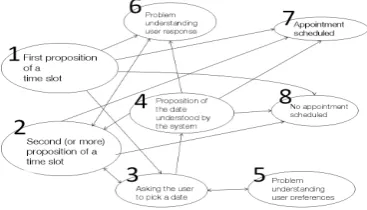
Figure 1: A schematic view of the system.
4 Experiments
4.1 System Description
The negotiation strategy of the system is hard-coded (see Figure 1). The system starts each dialogue proposing to the user its first avail-ability (module 1). Then, if the user rejects the proposition, the system asks them to give their first availability (module 3). If the first two steps have not resulted in success, the sys-tem proposes its next availabilities (module 2) until an appointment is booked (module 7) or the system has no more propositions to make (module 8). When a user proposes a date, the system asks for a confirmation through mod-ule 4. Two error-repair modmod-ules (modmod-ules 6 and 5) notify the user that they have not been understood or heard (in case of a time out). More details can be found in (Laroche et al., 2011). Each module has to choose between three actions: uttering with a calm (action 1), neutral (action 2) or dynamic (action 3) tone. In our experiments, user simulation was mod-elled so that the first two alternatives were ar-tificially disadvantaged: the number of failures was slightly increased whenever one of them was chosen. We modelled here the fact that users would always prefer the dynamic intona-tion.
We ran 2000 simulations, one simulation consisting of a complete dialogue ending with an update of the state-action value function for each of the system’s modules. The following results are averages on 100 runs.
We set the hanging-up rate to 10%. α was set to 0.05 and β to 0.1. In the following sec-tion, we use the notation (i, j, k) to refer to (mi, sj, ak).2
2s
j is always equal to 1 because the local contexts
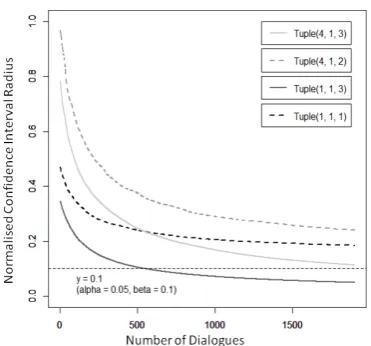
Figure 2: Evolution of ϵm,s,a for triples (1, 1,
1), (1, 1, 3), (4, 1, 2) and (4, 1, 3) according to the total number of dialogues. Users prefer action 3.
4.2 Results
By the end of our experiments, modules 4, 5 and 8 had not β0.1-converged. Module 5 was
not likely to be visited quite often according to our specification of user behaviour. The same happened for module 4, only accessible from module 3 (see Figure 1), which was not itself often visited. Module 1 is, with module 8, a starting module of the system. At the begin-ning of a dialogue, module 1 had a 95% proba-bility of being visited whereas this probaproba-bility was of 5% for module 8 (this only happened when all available appointments had already been booked). Therefore, module 1 was vis-ited once during almost every dialogue. We will now focus on modules 1 and 4 for clarity of presentation.
We can conclude from Figure 2 that triple (1, 1, 3) β0.1-converged after about 640
di-alogues, corresponding to about 425 visits whereas neither triple (1, 1, 1) nor (4, 1, 2) nor (4, 1, 3)β0.1-converged, even after 2000
di-alogues. Indeed, these triples did not receive enough visits during the simulations. Triple (1, 1, 3) β0.1-converged whereas (1, 1, 1) did
not because, at one point, the growth of the number of visits to (1, 1, 1) slowed down as module 1 favoured action 3 and reduced its exploration of other actions. The fact is that the RL algorithm did not need such a precise estimation for (1, 1, 1) to understand action 1 (the neutral tone) was suboptimal.
The variance over the 100 runs of the final estimation of ϵm,s,a was below 0.01. For all
triples of the system, the variance was very low after about 500 dialogues only (from 10−5
to 0.02). This means that the approximate user behaviour, defined with probability win-dows, only had a limited impact on the reli-ability of the computed confidence intervals. The probability windows used in the experi-ments were narrow (of an average size of 10%) so user behaviour did not change drastically from a run to another. With a behaviour much more erratic (larger probability windows), the variance over 10 runs was higher but did not exceed 0.02.
5 Related Work
Suendermann et al. (2010) tackled the issue of reducing the risk induced by on-line learning for commercial SDS with contender-based di-alogue management. Our study relates to this work but within the more complex learning structure of RL.
Closer to our study, Tetreault et al. (2007) compared confidence intervals for the expected return for different MDPs, all modelling the same SDS but with a different state space. They showed how the intervals bounds as well as the expected cumulative returns estima-tions could be used in order to select an appro-priate state space. More recently, Daubigney et al. (2011) as well as Gasic et al. (2011) de-veloped an efficient exploration strategy for an MDP-based DM based on the uncertainties on the expected returns estimations. The differ-ence between these two approaches and ours is that they compute the confidence intervals for a known policy whereas we compute the expected confidence intervals for an unknown policy that will be learnt on-line.
6 Conclusion
References
Senthilkumar Chandramohan, Matthieu Geist, Fabrice Lef`evre, and Olivier Pietquin. 2011. User simula-tion in dialogue systems using inverse reinforcement learning. InProceedings of Interspeech.
Lucie Daubigney, Milica Gasic, Senthilkumar Chan-dramohan, Matthieu Geist, Olivier Pietquin, and Steve Young. 2011. Uncertainty management for on-line optimisation of a pomdp-based large-scale spoken dialogue system. In Proceedings of Inter-speech, pages 1301–1304.
Wieland Eckert, Esther Levin, and Roberto Pieraccini. 1997. User modeling for spoken dialogue system evaluation. In Proceedings of IEEE ASRU, pages 80–87.
Milica Gasic, Filip Jurcicek, Blaise Thomson, Kai Yu, and Steve Young. 2011. On-line policy optimisation of spoken dialogue systems via live interaction with human subjects. InProceedings of IEEE ASRU.
Kallirroi Georgila, James Henderson, and Oliver Lemon. 2006. User simulation for spoken dialogue systems: Learning and evaluation. InProceedings of Interspeech.
Romain Laroche, Ghislain Putois, Philippe Bretier, and Bernadette Bouchon-Meunier. 2009. Hybridis-ation of expertise and reinforcement learning in di-alogue systems. InProceedings of Interspeech.
Romain Laroche, Ghislain Putois, Philippe Bretier, Martin Aranguren, Julia Velkovska, Helen Hastie, Simon Keizer, Kai Yu, Filip Jurcicek, Oliver Lemon, and Steve Young. 2011. D6.4: Final evaluation of classic towninfo and appointment scheduling sys-tems. Technical report, CLASSIC Project.
Olivier Pietquin and Helen Hastie. 2010. Metrics for the evaluation of user simulations. Technical Report Deliverable 3.5, CLASSIC Project.
Ghislain Putois, Romain Laroche, and Philippe Bretier. 2010. Enhanced monitoring tools and on-line dialogue optimisation merged into a new spoken dialogue system design experience. InProceedings of SIGdial Workshop on Discourse and Dialogue, pages 185–192.
Antoine Raux, Brian Langner, Allan Black, and Max-ine Eskenazi. 2003. LET’S GO: Improving Spoken Dialog Systems for the Elderly and Non-natives. In
Proceedings of Eurospeech.
Konrad Scheffler and Steve Young. 2002. Automatic learning of dialogue strategy using dialogue simula-tion and reinforcement learning. In Proceedings of HLT, pages 12–18.
David Suendermann, John Liscombe, and Roberto Pieraccini. 2010. Contender. In Proceedings of IEEE SLT, pages 330–335.
Joel R. Tetreault, Dan Bohus, and Diane J. Litman. 2007. Estimating the reliability of mdp policies: A confidence interval approach. In Proceedings of HLT-NAACL, pages 276–283.