Resolving Task Specification and Path Inconsistency in Taxonomy
Construction
Hui Yang
Department of Computer Science Georgetown University
37th and O street NW Washington, DC, 20057
Abstract
Taxonomies, such as Library of Congress Subject Headings and Open Directory Project, are widely used to support browsing-style information access in document collections. We call them browsing taxonomies. Most existing browsing taxonomies are manually constructed thus they could not eas-ily adapt to arbitrary document collections. In this paper, we investigate both automatic and interactive techniques to derive taxonomies from scratch for ar-bitrary document collections. Particular, we focus on encoding user feedback in taxonomy construc-tion process to handle task-specificaconstruc-tion rising from a given document collection. We also addresses the problem of path inconsistency due to local relation recognition in existing taxonomy construction algo-rithms. The user studies strongly suggest that the proposed approach successfully resolve task specifi-cation and path inconsistency in taxonomy construc-tion.
1 Introduction
Taxonomies, such as Library of Congress Subject Headings (LCSH, 2011) and Open Directory Project (ODP, 2011), are widely used to support browsing-style information access in document collections. We call them browsing taxonomies. Browsing tax-onomies are tree-structured hierarchies built upon a given document collection. Each term in a browsing hierarchy categorizes a set of documents related to this term. Driven by their needs, users can navigate
through a the hierarchical structure of a browsing taxonomy to access particular documents. A brows-ing taxonomy can benefit information access via (1) providing an overview of (important) concepts in a document collection, (2) increasing the visibility of documents ranked low in a list (e.g. documents or-dered by search relevance), and (3) presenting to-gether documents about the same concept to allow more focused reading.
Most existing browsing taxonomies are manually constructed thus they could not easily adapt to arbi-trary document collections. However, it is not un-common that document collections are given ad-hoc for specific tasks, such as search result organiza-tion in for individual search queries (Carpineto et al., 2009) and literature investigation for a new research topic (Chau et al., 2011). There is a necessity to ex-plore automatic or interactive techniques to support
quickconstruction of browsing taxonomies for
arbi-trary document collections.
Most research on automatic taxonomy construc-tion focuses on identifying local relaconstruc-tions between concept pairs (Etzioni et al., 2005; Pantel and Pen-nacchiotti, 2006). The infamous problem of path
inconsistency, which are usually caused by the
lo-cal nature of most relation recognition algorithms when building a taxonomy, commonly exists in cur-rent research. Oftentimes, when a connecting con-cept for two pairs of parent-child concon-cepts has mul-tiple senses or represent mixed perspectives, the problem shows up. For example, while financial
institute→bank and bank→river bank are correct;
the pathfinancial institute→bank→river bankis se-mantically inconsistent.
In this paper, we propose a semi-supervised dis-tance learning method to construct task-specific tax-onomies. Assuming that a user is present to con-struct a taxonomy for browsing, the proposed ap-proach directly learns semantic distances from the manual guidance provided by the user to predict se-mantically meaningful browsing taxonomies. More-over, We tackle path inconsistency by posing con-straints over root-to-leaf paths in a hierarchy to en-sure concept consistency within paths
The contributions of our work include:
• It offers an opportunity for handling task spec-ifications.
• Unlike most algorithms, our work takes care of path consistency during taxonomy construc-tion.
The remainder of this paper is organized as fol-lows: Section 2 describes the related work. Sec-tion 3 details the proposed automated algorithm for taxonomy construction. Section 4 presents the in-teractive algorithm to incorporate user feedback un-der a supervised semantic distance learning frame-work. Section 5 describes the evaluation and Section 6 concludes the paper.
2 Related Work
Most research conducted in the NLP community fo-cuses on extracting local relations between concept pairs (Hearst, 1992; Berland and Charniak, 1999; Ravichandran and Hovy, 2002; Girju et al., 2003; Etzioni et al., 2005; Pantel and Pennacchiotti, 2006; Kozareva et al., 2008). More recently, more atten-tion has been paid in building full taxonomies. For example, (Kozareva and Hovy, 2010) proposed to connect local concept pairs by finding the longest path in a subsumption graph. Both (Snow et al., 2006) and (Yang and Callan, 2009) incrementally grew taxonomies by adding new concepts at opti-mal positions within the existing structures. Specifi-cally, Snow et al. estimated conditional probabilities by using syntactic parse features and decided taxo-nomic structure via maximizing overall likelihood of taxonomy. Yang and Callan proposed the M E framework to model the semantic distanced(cx, cy) between concepts cx andcy as a weighted combi-nation of numerous lexical and semantic features:
P
jweightj∗featurej(cx, cy)and determine the tax-onomic structure by minimizing overall distances.
An advantage in M E is that it allows manipu-lations to concept positions by incorporating vari-ous constraints to taxonomic structures. For exam-ple, M E handled concept generality-specificity by learning different distance functions for general con-cepts (located at upper levels) and specific concon-cepts (located at lower levels) in a taxonomy.
In the Information Retrieval (IR) community, browsing taxonomies. also often called browsing hierarchies or Web directories, has been studied as an alternative to the ranked list representation for search results by the Information Retrieval (IR) community. The proposed forms of browsing struc-tures include topic clusters (Cutting et al., 1992) and monothetic concept hierarchies (Sanderson and Croft, 1999; Lawrie et al., 2001; Kummamuru et al., 2004; Carpineto et al., 2009). The latter uses single concepts to represent documents containing them and organizes the concepts into hierarchies; they are in fact taxonomies. The major drawback of these approaches is that they often fail to produce mean-ingful taxonomic structures due to neglecting the semantics among concepts. For instance, (Sander-son and Croft, 1999) used document frequency and (Lawrie et al., 2001) used conditional probability to deriveis-arelations. Moreover, they also suffer from path inconsistency when building full taxonomies.
3 Browsing Taxonomy Construction
even when an important concept for the collection is missing, we will “make do” withC. This may lead to some errors, but can be later corrected by users through proposing new concepts interactively (Sec-tion 4).
This section presents how to automatically build taxonomies. We introduce the semantic distance learning method in Section 3.1 and present how to achieve path consistency control in Section 3.2.
3.1 Semantic Distance Learning
To support browsing in arbitrary collections, in this paper, we propose to incorporate task specification in a taxonomy. One way to achieve it is to define task-specific distances among concepts. Moreover, through controlling distance scores among concepts, we can enforce path consistency in taxonomies. For example, when the distance between financial
in-stitute and river bank is big, the path financial
institute→bank→river bankwill be pruned and the
concepts will be repositioned. Inspired byM E, we take a distance learning approach to deal with path consistency (Section 3) and task specification (Sec-tion 4) in taxonomy construc(Sec-tion. In this sec(Sec-tion, we demonstrate how to estimate semantic distances from training data.
We assume that there are some underlying fea-ture functions that measure semantic dissimilarity for two concepts from various aspects and a good semantic distance is a combination of all features. Different fromM E, we model the semantic distance between concepts(cx, cy)as a Mahalanobis distance (Mahalanobis, 1936):
dcx,cy =
q
Φ(cx, cy)TW−1Φ(cx, xy) (1)
dcx,cy =
p
Φ(cx, cy)TW−1Φ(cx, xy), where
Φ(cx, cy) represents the set of pairwise underlying feature functions, where each feature function is φk : (cx, cy) with k=1,...,|Φ|. W is a weight ma-trix, whose diagonal values weigh the underlying feature functions. When only diagonal values ofW are taken into account,W is equivalent to assigning weights to different axes in the random vectors.
Note that a semantic distance is still a distance metric. One important characteristic of a valid dis-tance metric is that it must represent valid cluster-ing partitions, which means that the clustercluster-ing
parti-tions represented by the distance metric should be consistent. Therefore, certain constraints need to be satisfied. An obvious one is that concepts in the same cluster should have smaller distance scores than those in different clusters. Moreover, a valid distance metric should be non-negative and satisfy the triangle inequality. To ensure such regularities, we need to constrainW to be positive semi-definite (PSD) (Bhatia, 2006):
W 0.
Since we assume that a good semantic distance is a combination of all these features, we can decom-pose the task of semantic distance learning into two subtasks - identifying good features and learning the weight matrix from training data.
In our approach, we employ a wide range of fea-tures to cover various aspects in measuring dissimi-larity between concepts. Given two conceptscxand cy, a feature is defined as a functionφ: (cx, cy) en-erating a value within [0,1]. In total, we used 31 features, including lexical-syntactic patterns,
con-textual, co-occurrence, syntactic dependency, and
definitions.
Similar to the linguistic approaches, we use
lexical-syntactic patterns to evaluate relations
among concepts. Our patterns include hypernym patterns such as “cx, and othercy”, sibling patterns such as “cxandcy”, and part-of patterns such as “cx
consists ofcy”. Each feature returns a boolean value
of wether it can find instances for the pattern in text. Besides patterns, we used more semantic features. For example, since word meanings can be inferred from and represented by contexts, we develop
sev-eralcontextualfeatures. One isLocal Context
KL-Divergence, which measures the Kullback-Leibler
divergence between two unigram language models built forcx andcy upon all left two and right two words surrounding them. Moreover, we formulate
theco-occurrencefeatures as point-wise mutual
in-formation between (cx,cy):
pmi(cx, cy) =log
Count(cx, cy) Count(cx)Count(cy)
,
on the first page of Google search results for query-ingcx,cy, orcxcy.
We also generate syntactic dependency features via syntactic parse1and semantic role labeling2. For example, we measure how many overlaps exist be-tween cx’s andcy’s modifiers. Lastly, we measure
definition overlaps betweencx andcy by counting
the number of nonstop word overlaps between their definitions obtained by querying google.com with “define:cx” and “define:cy”.
To achieve a comprehensive distance measure for concepts, we propose to effectively combine these features. Our goal is to find a parametric distance metric functions which allows combining various features and assigning different weights for them. It also needs to produce distances that satisfy non-negativity and triangle inequality.
We further estimateW by minimizing the squared errors between the semantic distances d generated from the training data and the expected value dˆ. Moreover, we constrainW to be PSD. The parame-ter estimation is:
min
W
|C|
X
x=1 |C|
X
y=1
dcx,cy−
q
Φ(cx, cy)TW−1Φ(cx, cy) 2
(2) subject toW 0. The optimization can be done by any standard semi-definite programming (SDP) solver. We used (Sedumi, 2011) and (Yalmip, 2011) to perform the optimization.
In our framework, the major source of training data is user feedback. Another source is existing hierarchies such as WordNet (Fellbaum, 1998) and ODP (ODP, 2011) (Section 3). Nonetheless, we ob-tain the semantic distance for a concept pair(cx, cy) in training data by summing up edge weights along the shortest path fromcx tocy in a training hierar-chy. The edge weight can be assigned based on the types of relations that an edge represent as in Section 4.1.
The learned modelW can be used to predict dis-tance scores for testing concept pairs by applying Eq. 1 on them.
1
Done by Minipar: http://www.cs.ualberta.ca/lindek/minipar.htm.
2Done by Assert: http://cemantix.org/assert/.
3.2 Resolving Path Inconsistency
With the pair-wise semantic distances, we are ready to build the full taxonomy. As inM E, we also take an incremental taxonomy construction framework, where concepts are inserted one at a time. Partic-ularly, we propose that at each insertion, a concept czis tried as either a parent or a child concept to all existing nodes in the current partial taxonomy Tn. The evaluation of the best position depends on the semantic distances betweenczand all other concepts in the taxonomy.
To enforce consistency along a path from the root to a leaf in a taxonomy, we propose to require all concepts on the path to be about the same topic. They need to be coherent no matter how far away two concepts are apart in this path. We achieve this by enforcing the sum of semantic distances in a path to be as small as possible. Particularly, when a new conceptcz is added into a taxonomyT, we require that the optimal root-to-leaf path Pˆ containing cx should satisfy the following condition:
ˆ
Pcz = arg min
P0
cz
X
cx,cy∈P0
cz,x<y
d(cx, cy) (3)
wherePcz is a root-to-leaf path includingcz,x < y
defines the order of the concepts so we only compute a pair-wise distance between two concepts once.
To incorporate path consistency into taxonomy construction, we introduce a variable λ ∈ [0,1]to control the contributions from overall semantic dis-tance minimization (as in M E) and path distance minimization. We formulate the optimization as:
minλu+ (1−λ)v (4)
subject tou = |P
cx,cy∈Cn∪{cz},x<yd(cx, cy) −
P
cx,cy∈Cn,x<yd(cx, cy)|, v =
P
cj,ck∈Pcz0 ,j<kd(cj, ck), 0 ≤ λ ≤ 1, where u
denotes “minimization of overall semantic dis-tance”,v denotes the “path consistency”, andCnis the concept set for thenthpartial taxonomy.
4 Resolving Task Specification
task wants to keep in the browsing taxonomy. More-over, Section 3 learns distance functions from Word-Net and ODP, which suggests that the algorithm will roughly follow how WordNet and ODP define rela-tions. In practice, a task may require completely dif-ferent organizations, e.g., by question-answer pairs or by topics. The ever-changing task specifications can only be captured by the user/constructor who ad-justs a browsing taxonomy to suit the requirements. This section studies how to incorporate task spec-ifications in the taxonomy construction. Particularly, how to allow the machine learning algorithm to learn from the user, and how to produce a task-specific browsing taxonomy according to the user’s guid-ance. The framework is expected to produce tax-onomies that reflect personal preferences as a con-sequence of learning from manual guidance.
We present a general framework that enables tax-onomy construction taking into account user-defined concept organization. Basically, to guide how to or-ganize the concepts, a user trains the supervised dis-tance learning model using a taxonomy construction tool that supports editing functions such as dragging and dropping, adding, deleting, and renaming nodes that allows the user to intuitively modify a taxon-omy.
Particularly, an initial taxonomy is constructed by the automatic taxonomy construction framework presented in Section 3. Starting from the initial tax-onomy, a user can teach the machine learning rithm by providing manual guidance to it. The algo-rithm learns from the manual guidance and adjusts the distance learning function and modifies the tax-onomy accordingly. When a user putcx undercy, it indicates that the user wants a relation demonstrated by cx → cy to be true in this taxonomy. We cap-ture the user inputs as manual guidance and make use of it to adjust the distance learning model to or-ganize other concepts agreeing with the user. The teaching and the learning alternate until the user is satisfied with the taxonomy. The resulting taxonomy contains both the user’s inputs and the machine’s ad-justed organization for the concepts.
4.1 Collecting and Learning from Manual Guidance
The most challenging part of incorporating manual guidance in the machine learning process is how to
translate it into a format that the machine can easily understand and incorporate into its learning models. In this research, browsing taxonomies are tree struc-tures. Trees. however, are not straightforward for a machine learning algorithm to manipulate. In or-der to capture the changes between each version of the manual editions, the learning algorithm needs both the training and the test data to be in a for-mat which is easy to handle. Matrix representation can be easily understood and manipulated by many machine learning algorithms. We therefore convert taxonomies from trees to matrices and use a matrix representation for all the intermediate editions in the taxonomy construction process.
We propose to convert a taxonomy from a tree to matrices of neighboring nodes and represent the dif-ferences in matrices before and after human edits as
manual guidance. We then train the learning
frame-work to adjust to it and make predictions for unor-ganized concepts.
We represent the organization of concepts before a user’s modifications as abefore matrix; likewise, the new organization of concepts after her modifica-tions is represented as a after matrix. Given these two matrixes,manual guidanceis a submatrix in
af-ter matrixthat shows the differences betweenbefore
matrixandafter matrix.
We compare the before matrixAand the after ma-trixB to derive the manual guidanceM. The man-ual guidance is not simply the matrix difference be-tween the before matrix and the after hierarchy ma-trix. It is part of the after matrix because it is the after matrix that indicates where the user wants the taxonomy to develop. We define manual guidance M as a submatrix which consists of some entries of
theafter matrixB; at these entries, there exist
dif-ferences between thebefore matrixAand theafter
matrixB.
For simple cases when the set of concepts re-main unchanged before and after human modifica-tions, the above definition and calculation of manual guidance work. However, oftentimes the user adds, deletes or renames concepts, and the concept set changes. When the concept set changes, the above definition of manual guidanceM needs a slight al-teration.
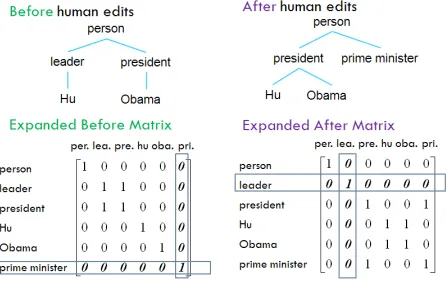
Figure 1: A taxonomy before and after human modifica-tions (concept set changes; relation type =sibling).
the human modification is {person, leader,
presi-dent, Hu, Obama}. The taxonomy’s before matrix
Ais:
A=
person leader president Hu Obama
person 1 0 0 0 0
leader 0 1 1 0 0
president 0 1 1 0 0
Hu 0 0 0 1 0
Obama 0 0 0 0 1
.
The user modifies the taxonomy at several places. In particular, leader is deleted, Hu is moved to be underpresident, andprime ministeris inserted as a new concept into this taxonomy. Therefore the con-cept set changes to{person, president, Hu, Obama,
prime minister}. Theafter matrixBis:
B =
person president Hu Obama P M
person 1 0 0 0 0
president 0 1 0 0 1
Hu 0 0 1 1 0
Obama 0 0 1 1 0
P M 0 1 0 0 1
.
Since the concept sets before and after the human modifications change, we cannot simply use matrix subtraction to get the difference between the before and after matrices. Suppose the concept set in the taxonomy before the modifications is CA, and the concept set after modifications isCB, we define an expanded set of conceptsCEas the union ofCAand CB.
For taxonomies with concept changes, we define the manual We then define manual guidanceMas a submatrix which consists of some entries of the
af-ter matrixB; at these entries, there exist differences
from theexpanded before matrixA0to theexpanded
after matrixB0. The expanded rows and columns in
A0 andB0are filled with0for non-diagonal entries, and1 for diagonal entries. Note that the concepts corresponding to these entries should exist in CB, the unexpanded set of concepts after human modifi-cations. Formally,
M =B[r;c]
wherer = {i :bij −aij 6= 0,ci ∈ CB},c = {j : bij −aij 6= 0,cj ∈CB},aij is the(i, j)thentry in A0, andbij is the(i, j)thentry inB0.
For the example in Figure 1, the manual guidance M is:
M =B[2,3,4,5; 2,3,4,5] =
1 0 0 1
0 1 1 0
0 1 1 0
1 0 0 1
.
Based on M, we can create training data D = 1−M, for the supervised distance learning algo-rithm, which aims to learn a good model which best preserves the regularity defined by the task and the user using the techniques proposed in Section 3.1.
5 Evaluation
To evaluate the effectiveness of our approach, We conducted two user studies, one to evaluate brows-ing effectiveness and another to evaluate quality of taxonomies. Five users (graduate students and rela-tives of the authors) in the first study were asked to construct browsing taxonomies with a task in mind - “writing a survey paper about the collection”.
In the second study (24 graduates and undergrad-uates), we compared taxonomies constructed by dif-ferent users to identify where mixed perspectives in taxonomies come from in Section 5.3. We also in-vestigated whether the differences are due to self-inconsistency in Section 5.4. Moreover, we manu-ally select relations violating path consistency and report our approach’s ability to handle path consis-tency in Section 5.2.
5.1 Datasets
NAICS-0 0.1 0.2 0.3 0.4 0.5 0.6 0.7 0.8 0.9 1
NAICS-‐2 Web
Pa
th Erro
r
[image:7.612.99.269.59.129.2]w/ path consistency w/o path consistency
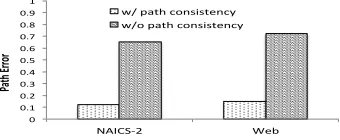
Figure 2: Path error w/ and w/o path consistency control.
1) with comparable taxonomies derived by tech-niques presented in this paper (we call them NAICS-2). Since the original collection used to build of-ficial NAICS taxonomies is not available, we cre-ated document collections by crawling search results
fromgoogle.comfor concepts in NAICS-1 excerpts.
The participants worked on the collection to create NAICS-2 taxonomies. Each NAICS-1 or NAICS-2 taxonomy contains about 40 concepts.
We also evaluate our techniques on Web search result organization. Five Web datasets were created by submitting 4 to 5 queries3 to and collecting the
returned Web documents from search engines Bing and Google. Around 100 Web documents and 40 concepts are collected for a topic. We manually judged relevant documents for each topic.
5.2 Path Consistency
To evaluate how well our method can handle path inconsistency, we compare the path error rate before and after applying path consistency control. The evaluation is only conducted for the automated algo-rithm (Section 3) on the NAICS-2 and Web datasets. No user study is involved.
Two human assessors manually evaluated the path errors4 in a taxonomy by the following procedure: (1) Starting from the root concept, perform a depth-first traverse in the taxonomy; (2) along each path, count the number of wrong ancestor-descendant pairs due to word sense ambiguity or mixed perspec-tives; (3) sum up the errors that both assessors agree and normalize them by the taxonomy size. Note that path errors are evaluated for concepts are not
immediately connected, whereas differences due to mixed perspectives (Section 5.3) refer to immediate relations. Figure 2 shows that with path consistency
3
E.g., queries “trip to DC”, “Washington DC”, “DC”, and “Washington” were submitted for the topic “plan a trip to DC”.
4Other types of errors were ignored in the assessment.
0 100 200 300
0
5
10
15
20
Information
Number of concept pairs
Nu
mb
er
of
ag
re
eme
nts
0 100 200 300
0
5
10
15
20
Kindergarten
Number of concept pairs
Nu
mb
er
of
ag
re
eme
[image:7.612.320.524.63.138.2]nts
Figure 3: Agreements among participants for the parent-child pairs for datasetsinformationandkindergarten.
control, we can statistically significantly reduce path errors due to word sense ambiguity and mixed per-spectives by 500% (p-value<.001, t-test). It strongly indicates that our technique to control path inconsis-tency in taxonomy construction is effective.
5.3 Mixed Perspectives in Taxonomies
To better understand mixed perspectives in tax-onomies constructed, we look for commonality and differences among the taxonomies constructed by the 24 participants for the same topic in the second user study. We break each taxonomy into parent-child pairs, and count how many participants agreed on a pair. The agreements range from 1 to 24. The taxonomies we examined are NAICS-2 and Web.
We plot the number of agreements for every con-cept pair and observe a long-tail power-law distri-bution for all datasets. Figure 3 shows that for the dataset “information”, which contains about 300 unique concept pairs, while in “kindergarten”, more than 200 unique concept pairs exist. This suggests that people use rich and diverse expressions to con-struct taxonomies and organize information differ-ently within them. Although commonality (can be as high as 24 out of 24) and differences co-exist in tax-onomies created for the same topic, the differences are much more dominate than the commonality.
We manually break down the types of differ-ences in producing parent-child pairs into the fol-lowing categories: mixed parents (a concept has different parent concepts due to word sense ambi-guity), mixed ancestors (a concept is assigned to grandparents, not the direct parent),mixed relation
types(a pair show relations other thanis-a, such as
mixed parents
23%
mixed ancesters
10%
flat structure
13% mixed
rela6on types
17% morphologi
cal 13%
new concepts
18% errors
[image:8.612.117.253.55.144.2]5% typo 1%
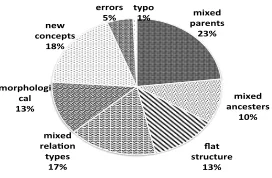
Figure 4: Sources of differences in NAICS-2 and Web.
infant→school director),flat structure(some partic-ipants liked to assign a large portion of concepts as children to the root), andtypo.
Figure 4 illustrates the break-down of various types of differences. Mixed parents is the largest contributor with 23% share, followed by new
con-cepts(18%) andmixed relation types(17%). Among
all the types, mixed parents, new concepts, and
mixed relation typesindicate mixed perspectives or
word sense ambiguity; in total they contribute about 58% differences in taxonomies. Flat structure and
mixed ancestors are about confusions in taxonomy
topology, which contribute about 23% differences. Other differences due to morphological changes, ty-pos and errors contribute about 19% differences. The break-down reveals that mixed perspective, one of main foci in this paper, is indeed the biggest source of difference in taxonomy construction.
5.4 Self-agreement
Another doubt is that maybe the differences come from randomness? To find out if the variations among taxonomies is due to randomness, we de-signed a repeat phase in the second user study. We randomly invited 12 participants to repeat the same tasks in the same order 3 weeks5 after the initial phase and compare the taxonomies constructed in both phases for the NAICS-2 and Web datasets.
We use Fragment-Based Similarity (FBS) pro-posed by (Yang, 2011) to calculate the similarity between taxonomies constructed in the initial phase and in the repeat phase by the same participant. FBS for two taxonomiesTi andTj is calculated as: F BS(Ti, Tj) = max1(U,V)Pmp=1simcos(tip, tjp), where U and V is the number of concepts in Ti and Tj respectively, m is the number of matched
5
The three week period ensured that participants only had limited memory of the details about the tasks.
Self agreement (in FBS) Max Min Average per participant per dataset 1 0.37 0.74 per participant 0.81 0.63 0.74
[image:8.612.333.520.56.96.2]per dataset 0.95 0.62 0.74
Table 1: Self-agreement; measured in FBS.
pairs based on the highest cosine similarity,simcos is the cosine similarity between vectors for subtrees of conceptstipandtjp.
Table 1 indicate the self-agreement between tax-onomies for any participant and/or any topic. The max self-agreement is as high as 1. The average self-agreement is 0.74, which is high at the range of FBS. It suggests that the participants are quite self-consistent when constructing taxonomies at differ-ent times. It builds the foundation for our study on multiple perspectives in taxonomy construction.
6 Conclusion
This paper explores techniques to quickly derive
task-specifictaxonomies supporting browsing in
ar-bitrary document sets. It addresses two issues in tax-onomy construction: path inconsistency due to word sense ambiguity and mixed perspectives, and task specifications in arbitrary collections. We tackle both issues in a supervised distance learning frame-work via minimizing distances along a path and us-ing user inputs as trainus-ing data, respectively. The user studies strongly suggest that the proposed tech-niques are highly effective in constructing browsing taxonomies as well as handling path consistency.
References
J. R. Bellegarda, J. W. Butzberger, Yen-Lu Chow, N. B. Coccaro, and D. Naik. 1996. A novel word clustering algorithm based on latent semantic analysis. In Pro-ceedings of the Acoustics, Speech, and Signal Process-ing, 1996. on Conference Proceedings., 1996 IEEE International Conference - Volume 01, ICASSP ’96, pages 172–175, Washington, DC, USA. IEEE Com-puter Society.
Matthew Berland and Eugene Charniak. 1999. Finding parts in very large corpora. InProceedings of the 27th Annual Meeting for the Association for Computational Linguistics (ACL 1999).
Claudio Carpineto, Stefano Mizzaro, Giovanni Romano, and Matteo Snidero. 2009. Mobile information re-trieval with search results clustering: Prototypes and evaluations. Journal of American Society for Informa-tion Science and Technology (JASIST), pages 877–895. Duen Horng Chau, Aniket Kittur, Jason I. Hong, and Christos Faloutsos. 2011. Apolo: making sense of large network data by combining rich user interaction and machine learning. InCHI, pages 167–176. Gouglass R. Cutting, David R. Karger, Jan R. Petersen,
and John W. Tukey. 1992. Scatter/Gather: A cluster-based approach to browsing large document collec-tions. In Proceedings of the fifteenth Annual ACM Conference on Research and Development in Informa-tion Retrieval (SIGIR 1992).
Oren Etzioni, Michael Cafarella, Doug Downey, Ana-Maria Popescu, Tal Shaked, Stephen Soderland, Daniel S. Weld, and Alexander Yates. 2005. Unsu-pervised named-entity extraction from the web: an ex-perimental study. InArtificial Intelligence, 165(1):91-134, June.
Christiane Fellbaum. 1998.WordNet: an electronic lexi-cal database. MIT Press.
Roxana Girju, Adriana Badulescu, and Dan Moldovan. 2003. Learning semantic constraints for the automatic discovery of part-whole relations. InProceedings of the Human Language Technology Conference/Annual Conference of the North American Chapter of the As-sociation for Computational Linguistics (HLT/NAACL 2003).
Marti A. Hearst. 1992. Automatic acquisition of hy-ponyms from large text corpora. In Proceedings of the 14th International Conference on Computational Linguistics (COLING 1992).
Zornitsa Kozareva and Eduard Hovy. 2010. A semi-supervised method to learn and construct taxonomies using the web. InProceedings of the 2010 Conference on Empirical Methods in Natural Language Process-ing, pages 1110–1118, Cambridge, MA, October. As-sociation for Computational Linguistics.
Zornitsa Kozareva, Ellen Riloff, and Eduard Hovy. 2008. Semantic class learning from the web with hyponym pattern linkage graphs. InProceedings of the 46th An-nual Meeting for the Association for Computational Linguistics (ACL 2008).
Krishna Kummamuru, Rohit Lotlikar, Shourya Roy, Karan Singal, and Raghu Krishnapuram. 2004. A hi-erarchical monothetic document clustering algorithm for summarization and browsing search results. Pro-ceedings of the 13th conference on World Wide Web WWW 04, page 658.
Dawn Lawrie, W. Bruce Croft, and Arnold Rosenberg. 2001. Finding topic words for hierarchical
summa-rization. InProceedings of the 24th Annual ACM Con-ference on Research and Development in Information Retrieval (SIGIR 2001), pages 349–357.
LCSH. 2011. Library of congress subject headings.
http://www.loc.gov/.
P. C. Mahalanobis. 1936. On the generalised distance in statistics. InProceedings of the National Institute of Sciences of India 2 (1): 495.
ODP. 2011. Open directory project. http://www.
dmoz.org/.
Patrick Pantel and Marco Pennacchiotti. 2006. Espresso: Leveraging generic patterns for automatically harvest-ing semantic relations. InProceedings of the 44th An-nual Meeting for the Association for Computational Linguistics (ACL 2006).
Deepak Ravichandran and Eduard Hovy. 2002. Learning surface text patterns for a question answering system. InProceedings of the 40th Annual Meeting for the As-sociation for Computational Linguistics (ACL 2002). Mark Sanderson and W. Bruce Croft. 1999. Deriving
concept hierarchies from text. InProceedings of the 22nd Annual International ACM SIGIR Conference on Research and Development in Information Retrieval (SIGIR 1999).
Sedumi. 2011. http://sedumi.mcmaster.ca. Rion Snow, Daniel Jurafsky, and Andrew Y. Ng. 2006.
Semantic taxonomy induction from heterogenous evi-dence. InProceedings of the 21st International Con-ference on Computational Linguistics and 44th Annual Meeting of the Association for Computational Linguis-tics (ACL/COLING 2006).
Yalmip. 2011. http://users.isy.liu.se/
johanl/yalmip.
Hui Yang and Jamie Callan. 2009. A metric-based framework for automatic taxonomy induction. In Pro-ceedings of the 47th Annual Meeting for the Associa-tion for ComputaAssocia-tional Linguistics (ACL 2009). Hui Yang. 2011. Personalized Concept Hierarchy
Construction. Ph.D. thesis, Carnegie Mellon Univer-sity. http://www.cs.cmu.edu/˜huiyang/